 Home
Home Login
Login Register
1
 Recent Posts
5
1 Fundamental Concepts and Operations / Fundamental Concepts and Operations
« Last post by Henry Miller on March 13, 2012, 03:02:15 pm »Fundamental Concepts and Operations
[/b]1-1 Numbers and Literal Symbols
Mathematics has played a most important role in the development and understanding of the various fields of technology, and in the endless chain of technological and scientific advances of our time.
6
Math / Solving cubic equations by intersecting a parabola with a circle.
« Last post by Omar Khayyam on March 07, 2012, 09:01:03 pm »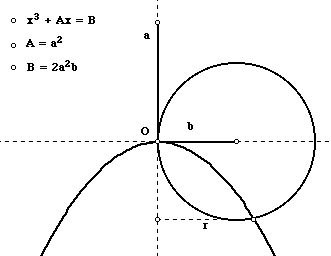
7
Math / An angle in a semicircle is a right angle.
« Last post by Thales of Miletus on March 07, 2012, 08:23:36 pm »
8
Math / Euclid's Elements Book I
« Last post by Henry Miller on March 06, 2012, 04:52:26 pm »http://www.greenlion.com/Eu-I-1-7.pdf
Euclid's Elements Book I
Definitions
1. A point is that which has no part.
2. A line is breadthless length.
3. The extremities of a line are points.
4. A straight line is a line which lies evenly with the points on itself.
5. A surface is that which has length and breadth only.
6. The extremities of a surface are lines.
7. A plane surface is a surface which lies evenly with the straight lines on itself.
8. A plane angle is the inclination to one another of two lines in a plane which meet one another and do not lie in a straight line.
9. And when the lines containing the angle are straight, the angle is called
rectilineal.
10. When a straight line set up on a straight line makes the adjacent angles equal to one another, each of the equal angles is right, and the straight line standing on the other is called a perpendicular to that on which it stands.
11. An obtuse angle is an angle greater than a right angle.
12. An acute angle is an angle less than a right angle.
13. A boundary is that which is an extremity of anything.
14. A figure is that which is contained by any boundary or boundaries.
15. A circle is a plane figure contained by one line such that all the straight lines falling upon it from one point among those lying within the figure are equal to one another;
16. And the point is called the centre of the circle.
17. A diameter of the circle is any straight line drawn through the centre and terminated in both directions by the circumference of the circle, and such a straight line also bisects the circle.
Euclid's definitions, postulates, and common notions?if Euclid is indeed their author? were not numbered, separated, or italicized until translators began to introduce that practice. The Greek text, however, as far back as the 1533 first printed edition, presented the definitions in a running narrative, more as a preface discussing how the terms would be used than as an axiomatic foundation for the propositions to come. We follow Heath?s formatting here. ?Ed.
1
Book One: Definitions, Postulates, Common Notions
18. A semicircle is the figure contained by the diameter and the circumference cut off by it. And the centre of the semicircle is the same as that of the circle.
19. Rectilineal figures are those which are contained by straight lines, trilateral figures being those contained by three, quadrilateral those contained by four, and multilateral those contained by more than four straight lines.
20. Of trilateral figures, an equilateral triangle is that which has its three sides equal, an isosceles triangle that which has two of its sides alone equal, and a scalene triangle that which has its three sides unequal.
21. Further, of trilateral figures, a right-angled triangle is that which has a right angle, an obtuse-angled triangle that which has an obtuse angle, and an acute- angled triangle that which has its three angles acute.
22. Of quadrilateral figures, a square is that which is both equilateral and right-angled; an oblong that which is right-angled but not equilateral; a rhombus that which is equilateral but not right-angled; and a rhomboid that which has its opposite sides and angles equal to one another but is neither equilateral nor right-angled. And let quadrilaterals other than these be called trapezia.
23. Parallel straight lines are straight lines which, being in the same plane and being produced indefinitely in both directions, do not meet one another in either direction.
Postulates
Let the following be postulated: 1. To draw a straight line from any point to any point. 2. To produce a finite straight line continuously in a straight line. 3. To describe a circle with any centre and distance. 4. That all right angles are equal to one another.
5. That, if a straight line falling on two straight lines make the interior angles on the same side less than two right angles, the two straight lines, if pro- duced indefinitely, meet on that side on which are the angles less than the two right angles.
Common Notions
1. Things which are equal to the same thing are also equal to one another. 2. If equals be added to equals, the wholes are equal. 3. If equals be subtracted from equals, the remainders are equal. 4. Things which coincide with one another are equal to one another.
5. The whole is greater than the part.
2
Book One: Propositions 1?2
Proposition 1
On a given finite straight line to construct an equilateral triangle. Let AB be the given finite straight line.
Thus it is required to construct an equilateral triangle on the straight line AB. With centre A and distance AB let the circle BCD be described; [Post. 3] again, with centre B and distance BA
let the circle ACE be described; [Post. 3] and from the point C, in which the circles cut one another, to the points A, B let the straight lines CA, CB be joined. [Post. 1]
Now, since the point A is the centre of the circle CDB, AC is equal to AB.
Again, since the point B is the centre of the circle CAE, BC is equal to BA.
But CA was also proved equal to AB; therefore each of the straight lines CA, CB is equal to AB.
[Def. 15]
[Def. 15]
And things which are equal to the same thing are also equal to one another;
[C.N. 1]
therefore CA is also equal to CB. Therefore the three straight lines CA, AB, BC are equal to one another.
Therefore the triangle ABC is equilateral; and it has been constructed on the given finite straight line AB.
Being what it was required to do.
Proposition 2
To place at a given point [as an extremity]1 a straight line equal to a given straight line.
Let A be the given point, and BC the given straight line.
Thus it is required to place at the point A [as an extremity] a straight line equal to the given straight line BC.
From the point A to the point B let the straight line AB be joined; [Post. 1] and on it let the equilateral triangle DAB be constructed. [I. 1]
1. Square brackets indicate material which Heath identified as having been supplied by him, adding clarification but not literally present in the Greek text. ?Ed.
3
Book One: Propositions 2?3
Let the straight lines AE, BF be produced in a straight line with DA, DB; [Post. 2] with centre B and distance BC let the circle CGH be described; [Post. 3] and again, with centre D and distance DG let the circle GKL be described. [Post. 3]
Then, since the point B is the centre of the circle CGH,
BC is equal to BG. Again, since the point D is the centre of the
[C.N. 3]
circle GKL, And in these DA is equal to DB;
DL is equal to DG. therefore the remainder AL is equal to the remainder BG.
But BC was also proved equal to BG; therefore each of the straight lines AL, BC is equal to BG.
And things which are equal to the same thing are also equal to one another;
[C.N. 1]
therefore AL is also equal to BC. Therefore at the given point A the straight line AL is placed equal to the given
straight line BC.
Being what it was required to do.
Proposition 3
Given two unequal straight lines, to cut off from the greater a straight line equal to the less.
Let AB, C be the two given unequal straight lines, and let AB be the greater of them.
Thus it is required to cut off from AB the greater a straight line equal to C the less.
At the point A let AD be placed equal to the straight line C; [I. 2] and with centre A and distance AD let the circle DEF be described. [Post. 3]
Now, since the point A is the centre of the circle DEF,
AE is equal to AD. [Def. 15] But C is also equal to AD.
Therefore each of the straight lines AE, C is equal to AD; so that AE is also equal to C. [C.N. 1]
Therefore, given the two straight lines AB, C, from AB the greater AE has been cut off equal to C the less.
Being what it was required to do.
4
Book One: Propositions 4?5
Proposition 4
If two triangles have the two sides equal to two sides respectively, and have the angles contained by the equal straight lines equal, they will also have the base equal to the base, the triangle will be equal to the triangle, and the remaining angles will be equal to the remaining angles respectively, namely those which the equal sides subtend.
Let ABC, DEF be two triangles having the two sides AB, AC equal to the two sides DE, DF respectively, namely AB to DE and AC to DF, and the angle BAC equal to the angle EDF.
I say that the base BC is also equal to the base EF, the triangle ABC will be equal to the tri- angle DEF, and the remaining angles will be equal to the remaining angles respectively, namely those which the equal sides subtend, that is, the angle ABC to the angle DEF, and the angle ACB to the angle DFE.
For, if the triangle ABC be applied to the triangle DEF, and if the point A be placed on the point D and the straight line AB on DE, then the point B will also coincide with E, because AB is equal to DE.
Again, AB coinciding with DE, the straight line AC will also coincide with DF, because the angle BAC is equal to the angle EDF; hence the point C will also coincide with the point F, because AC is again equal to DF.
But B also coincided with E; hence the base BC will coincide with the base EF,
and will be equal to it.
Thus the whole triangle ABC will coincide with the whole triangle DEF, and will be equal to it.
[C.N. 4]
[C.N. 4]
And the remaining angles will also coincide with the remaining angles and will be equal to them,
Therefore etc.
the angle ABC to the angle DEF, and the angle ACB to the angle DFE.
Proposition 5
[C.N. 4]
Q.E.D.2
In isosceles triangles the angles at the base are equal to one another, and, if the equal straight lines be produced further, the angles under the base will be equal to one another.
2. Q.E.D. stands for the Latin quod erat demonstrandum, that which was to have been demonstrated. The use of this and of Q.E.F., quod erat faciendum, that which was to have been done, is explained in the introduction. ?Ed.
5
Book One: Propositions 5?6
Let ABC be an isosceles triangle having the side AB equal to the side AC; and let the straight lines BD, CE be produced further in a straight line with AB, AC. [Post. 2]
I say that the angle ABC is equal to the angle ACB, and the angle CBD to the angle BCE.
Let a point F be taken at random on BD; from AE the greater let AG be cut off equal to AF the less;
[I. 3] and let the straight lines FC, GB be joined. [Post. 1]
Then, since AF is equal to AG and AB to AC, the two sides FA, AC are equal to the two sides GA, AB, respectively;
and they contain a common angle, the angle FAG.
Therefore the base FC is equal to the base GB, and the triangle AFC is equal to the triangle AGB, and the remaining angles will be equal to the remaining angles respectively,
namely those which the equal sides subtend, that is, the angle ACF to the angle ABG,
and the angle AFC to the angle AGB. [I. 4] And, since the whole AF is equal to the whole AG, and in these AB is equal to AC,
the remainder BF is equal to the remainder CG.
But FC was also proved equal to GB; therefore the two sides BF, FC are equal to the two sides CG, GB respectively;
and the angle BFC is equal to the angle CGB, while the base BC is common to them; therefore the triangle BFC is also equal to the triangle CGB, and the remaining angles will be equal to the remaining angles respectively, namely those which the equal sides subtend;
therefore the angle FBC is equal to the angle GCB, and the angle BCF to the angle CBG.
Accordingly, since the whole angle ABG was proved equal to the angle ACF, and in these the angle CBG is equal to the angle BCF,
the remaining angle ABC is equal to the remaining angle ACB; and they are at the base of the triangle ABC.
But the angle FBC was also proved equal to the angle GCB; and they are under the base.
Therefore etc.
Proposition 6
If in a triangle two angles be equal to one another, the sides which subtend the equal angles will also be equal to one another.
Let ABC be a triangle having the angle ABC equal to the angle ACB; I say that the side AB is also equal to the side AC.
Q.E.D.
6
Book One: Propositions 6?7
For, if AB is unequal to AC, one of them is greater.
Let AB be greater; and from AB the greater let DB be cut off equal to AC the less; let DC be joined.
Then, since DB is equal to AC, and BC is common, the two sides DB, BC are equal to the two sides AC, CB respectively; and the angle DBC is equal to the angle ACB;
therefore the base DC is equal to the base AB, and the triangle DBC will be equal to the triangle ACB, the less to the greater: which is absurd.
Therefore AB is not unequal to AC; it is therefore equal to it.
Therefore etc.
Proposition 7
Given two straight lines constructed on a straight line [from its extremities] and meeting in a point, there cannot be constructed on the same straight line [from its extremities], and on the same side of it, two other straight lines meeting in another point and equal to the former two respectively, namely each to that which has the same extremity with it.
Q.E.D.
For, if possible, given two straight lines AC, CB constructed on the straight line AB and meeting at the point C, let two other straight lines AD, DB be constructed on the same straight line AB, on the same side of it, meeting in another point D and equal to the former two respectively, namely each to that which has the same extremity with it, so that CA is equal to DA which has the same extremity A with it,
and CB to DB which has the same extremity B with it; and let CD be joined.
Then, since AC is equal to AD, the angle ACD is also equal to the angle ADC;
therefore the angle ADC is greater than the angle DCB; therefore the angle CDB is much greater than the angle DCB.
Again, since CB is equal to DB, the angle CDB is also equal to the angle DCB.
But it was also proved much greater than it: which is impossible.
Therefore etc.
[I. 5]
Q.E.D.
7
Euclid's Elements Book I
Definitions
1. A point is that which has no part.
2. A line is breadthless length.
3. The extremities of a line are points.
4. A straight line is a line which lies evenly with the points on itself.
5. A surface is that which has length and breadth only.
6. The extremities of a surface are lines.
7. A plane surface is a surface which lies evenly with the straight lines on itself.
8. A plane angle is the inclination to one another of two lines in a plane which meet one another and do not lie in a straight line.
9. And when the lines containing the angle are straight, the angle is called
rectilineal.
10. When a straight line set up on a straight line makes the adjacent angles equal to one another, each of the equal angles is right, and the straight line standing on the other is called a perpendicular to that on which it stands.
11. An obtuse angle is an angle greater than a right angle.
12. An acute angle is an angle less than a right angle.
13. A boundary is that which is an extremity of anything.
14. A figure is that which is contained by any boundary or boundaries.
15. A circle is a plane figure contained by one line such that all the straight lines falling upon it from one point among those lying within the figure are equal to one another;
16. And the point is called the centre of the circle.
17. A diameter of the circle is any straight line drawn through the centre and terminated in both directions by the circumference of the circle, and such a straight line also bisects the circle.
Euclid's definitions, postulates, and common notions?if Euclid is indeed their author? were not numbered, separated, or italicized until translators began to introduce that practice. The Greek text, however, as far back as the 1533 first printed edition, presented the definitions in a running narrative, more as a preface discussing how the terms would be used than as an axiomatic foundation for the propositions to come. We follow Heath?s formatting here. ?Ed.
1
Book One: Definitions, Postulates, Common Notions
18. A semicircle is the figure contained by the diameter and the circumference cut off by it. And the centre of the semicircle is the same as that of the circle.
19. Rectilineal figures are those which are contained by straight lines, trilateral figures being those contained by three, quadrilateral those contained by four, and multilateral those contained by more than four straight lines.
20. Of trilateral figures, an equilateral triangle is that which has its three sides equal, an isosceles triangle that which has two of its sides alone equal, and a scalene triangle that which has its three sides unequal.
21. Further, of trilateral figures, a right-angled triangle is that which has a right angle, an obtuse-angled triangle that which has an obtuse angle, and an acute- angled triangle that which has its three angles acute.
22. Of quadrilateral figures, a square is that which is both equilateral and right-angled; an oblong that which is right-angled but not equilateral; a rhombus that which is equilateral but not right-angled; and a rhomboid that which has its opposite sides and angles equal to one another but is neither equilateral nor right-angled. And let quadrilaterals other than these be called trapezia.
23. Parallel straight lines are straight lines which, being in the same plane and being produced indefinitely in both directions, do not meet one another in either direction.
Postulates
Let the following be postulated: 1. To draw a straight line from any point to any point. 2. To produce a finite straight line continuously in a straight line. 3. To describe a circle with any centre and distance. 4. That all right angles are equal to one another.
5. That, if a straight line falling on two straight lines make the interior angles on the same side less than two right angles, the two straight lines, if pro- duced indefinitely, meet on that side on which are the angles less than the two right angles.
Common Notions
1. Things which are equal to the same thing are also equal to one another. 2. If equals be added to equals, the wholes are equal. 3. If equals be subtracted from equals, the remainders are equal. 4. Things which coincide with one another are equal to one another.
5. The whole is greater than the part.
2
Book One: Propositions 1?2
Proposition 1
On a given finite straight line to construct an equilateral triangle. Let AB be the given finite straight line.
Thus it is required to construct an equilateral triangle on the straight line AB. With centre A and distance AB let the circle BCD be described; [Post. 3] again, with centre B and distance BA
let the circle ACE be described; [Post. 3] and from the point C, in which the circles cut one another, to the points A, B let the straight lines CA, CB be joined. [Post. 1]
Now, since the point A is the centre of the circle CDB, AC is equal to AB.
Again, since the point B is the centre of the circle CAE, BC is equal to BA.
But CA was also proved equal to AB; therefore each of the straight lines CA, CB is equal to AB.
[Def. 15]
[Def. 15]
And things which are equal to the same thing are also equal to one another;
[C.N. 1]
therefore CA is also equal to CB. Therefore the three straight lines CA, AB, BC are equal to one another.
Therefore the triangle ABC is equilateral; and it has been constructed on the given finite straight line AB.
Being what it was required to do.
Proposition 2
To place at a given point [as an extremity]1 a straight line equal to a given straight line.
Let A be the given point, and BC the given straight line.
Thus it is required to place at the point A [as an extremity] a straight line equal to the given straight line BC.
From the point A to the point B let the straight line AB be joined; [Post. 1] and on it let the equilateral triangle DAB be constructed. [I. 1]
1. Square brackets indicate material which Heath identified as having been supplied by him, adding clarification but not literally present in the Greek text. ?Ed.
3
Book One: Propositions 2?3
Let the straight lines AE, BF be produced in a straight line with DA, DB; [Post. 2] with centre B and distance BC let the circle CGH be described; [Post. 3] and again, with centre D and distance DG let the circle GKL be described. [Post. 3]
Then, since the point B is the centre of the circle CGH,
BC is equal to BG. Again, since the point D is the centre of the
[C.N. 3]
circle GKL, And in these DA is equal to DB;
DL is equal to DG. therefore the remainder AL is equal to the remainder BG.
But BC was also proved equal to BG; therefore each of the straight lines AL, BC is equal to BG.
And things which are equal to the same thing are also equal to one another;
[C.N. 1]
therefore AL is also equal to BC. Therefore at the given point A the straight line AL is placed equal to the given
straight line BC.
Being what it was required to do.
Proposition 3
Given two unequal straight lines, to cut off from the greater a straight line equal to the less.
Let AB, C be the two given unequal straight lines, and let AB be the greater of them.
Thus it is required to cut off from AB the greater a straight line equal to C the less.
At the point A let AD be placed equal to the straight line C; [I. 2] and with centre A and distance AD let the circle DEF be described. [Post. 3]
Now, since the point A is the centre of the circle DEF,
AE is equal to AD. [Def. 15] But C is also equal to AD.
Therefore each of the straight lines AE, C is equal to AD; so that AE is also equal to C. [C.N. 1]
Therefore, given the two straight lines AB, C, from AB the greater AE has been cut off equal to C the less.
Being what it was required to do.
4
Book One: Propositions 4?5
Proposition 4
If two triangles have the two sides equal to two sides respectively, and have the angles contained by the equal straight lines equal, they will also have the base equal to the base, the triangle will be equal to the triangle, and the remaining angles will be equal to the remaining angles respectively, namely those which the equal sides subtend.
Let ABC, DEF be two triangles having the two sides AB, AC equal to the two sides DE, DF respectively, namely AB to DE and AC to DF, and the angle BAC equal to the angle EDF.
I say that the base BC is also equal to the base EF, the triangle ABC will be equal to the tri- angle DEF, and the remaining angles will be equal to the remaining angles respectively, namely those which the equal sides subtend, that is, the angle ABC to the angle DEF, and the angle ACB to the angle DFE.
For, if the triangle ABC be applied to the triangle DEF, and if the point A be placed on the point D and the straight line AB on DE, then the point B will also coincide with E, because AB is equal to DE.
Again, AB coinciding with DE, the straight line AC will also coincide with DF, because the angle BAC is equal to the angle EDF; hence the point C will also coincide with the point F, because AC is again equal to DF.
But B also coincided with E; hence the base BC will coincide with the base EF,
and will be equal to it.
Thus the whole triangle ABC will coincide with the whole triangle DEF, and will be equal to it.
[C.N. 4]
[C.N. 4]
And the remaining angles will also coincide with the remaining angles and will be equal to them,
Therefore etc.
the angle ABC to the angle DEF, and the angle ACB to the angle DFE.
Proposition 5
[C.N. 4]
Q.E.D.2
In isosceles triangles the angles at the base are equal to one another, and, if the equal straight lines be produced further, the angles under the base will be equal to one another.
2. Q.E.D. stands for the Latin quod erat demonstrandum, that which was to have been demonstrated. The use of this and of Q.E.F., quod erat faciendum, that which was to have been done, is explained in the introduction. ?Ed.
5
Book One: Propositions 5?6
Let ABC be an isosceles triangle having the side AB equal to the side AC; and let the straight lines BD, CE be produced further in a straight line with AB, AC. [Post. 2]
I say that the angle ABC is equal to the angle ACB, and the angle CBD to the angle BCE.
Let a point F be taken at random on BD; from AE the greater let AG be cut off equal to AF the less;
[I. 3] and let the straight lines FC, GB be joined. [Post. 1]
Then, since AF is equal to AG and AB to AC, the two sides FA, AC are equal to the two sides GA, AB, respectively;
and they contain a common angle, the angle FAG.
Therefore the base FC is equal to the base GB, and the triangle AFC is equal to the triangle AGB, and the remaining angles will be equal to the remaining angles respectively,
namely those which the equal sides subtend, that is, the angle ACF to the angle ABG,
and the angle AFC to the angle AGB. [I. 4] And, since the whole AF is equal to the whole AG, and in these AB is equal to AC,
the remainder BF is equal to the remainder CG.
But FC was also proved equal to GB; therefore the two sides BF, FC are equal to the two sides CG, GB respectively;
and the angle BFC is equal to the angle CGB, while the base BC is common to them; therefore the triangle BFC is also equal to the triangle CGB, and the remaining angles will be equal to the remaining angles respectively, namely those which the equal sides subtend;
therefore the angle FBC is equal to the angle GCB, and the angle BCF to the angle CBG.
Accordingly, since the whole angle ABG was proved equal to the angle ACF, and in these the angle CBG is equal to the angle BCF,
the remaining angle ABC is equal to the remaining angle ACB; and they are at the base of the triangle ABC.
But the angle FBC was also proved equal to the angle GCB; and they are under the base.
Therefore etc.
Proposition 6
If in a triangle two angles be equal to one another, the sides which subtend the equal angles will also be equal to one another.
Let ABC be a triangle having the angle ABC equal to the angle ACB; I say that the side AB is also equal to the side AC.
Q.E.D.
6
Book One: Propositions 6?7
For, if AB is unequal to AC, one of them is greater.
Let AB be greater; and from AB the greater let DB be cut off equal to AC the less; let DC be joined.
Then, since DB is equal to AC, and BC is common, the two sides DB, BC are equal to the two sides AC, CB respectively; and the angle DBC is equal to the angle ACB;
therefore the base DC is equal to the base AB, and the triangle DBC will be equal to the triangle ACB, the less to the greater: which is absurd.
Therefore AB is not unequal to AC; it is therefore equal to it.
Therefore etc.
Proposition 7
Given two straight lines constructed on a straight line [from its extremities] and meeting in a point, there cannot be constructed on the same straight line [from its extremities], and on the same side of it, two other straight lines meeting in another point and equal to the former two respectively, namely each to that which has the same extremity with it.
Q.E.D.
For, if possible, given two straight lines AC, CB constructed on the straight line AB and meeting at the point C, let two other straight lines AD, DB be constructed on the same straight line AB, on the same side of it, meeting in another point D and equal to the former two respectively, namely each to that which has the same extremity with it, so that CA is equal to DA which has the same extremity A with it,
and CB to DB which has the same extremity B with it; and let CD be joined.
Then, since AC is equal to AD, the angle ACD is also equal to the angle ADC;
therefore the angle ADC is greater than the angle DCB; therefore the angle CDB is much greater than the angle DCB.
Again, since CB is equal to DB, the angle CDB is also equal to the angle DCB.
But it was also proved much greater than it: which is impossible.
Therefore etc.
[I. 5]
Q.E.D.
7
9
Math / Euclid's Elements
« Last post by Henry Miller on March 06, 2012, 04:46:28 pm »http://farside.ph.utexas.edu/euclid/Elements.pdf
EUCLID'S ELEMENTS OF GEOMETRY
The Greek text of J.L. Heiberg (1883?1885) from Euclidis Elementa, edidit et Latine interpretatus est I.L. Heiberg, in aedibus
B.G. Teubneri, 1883?1885
edited, and provided with a modern English translation, by
Richard Fitzpatrick
First edition - 2007 Revised and corrected - 2008
ISBN 978-0-6151-7984-1
Introduction Book 1 Book 2 Book 3
Book 4 Book 5 Book 6 Book 7 Book 8 Book 9 Book 10 Book 11 Book 12 Book 13 Greek-English Lexicon
4
5 49 69 109 129 155 193 227 253 281 423 471 505 539
Contents
Introduction
Euclid's Elements is by far the most famous mathematical work of classical antiquity, and also has the distinction of being the world?s oldest continuously used mathematical textbook. Little is known about the author, beyond the fact that he lived in Alexandria around 300 BCE. The main subjects of the work are geometry, proportion, and number theory.
Most of the theorems appearing in the Elements were not discovered by Euclid himself, but were the work of earlier Greek mathematicians such as Pythagoras (and his school), Hippocrates of Chios, Theaetetus of Athens, and Eudoxus of Cnidos. However, Euclid is generally credited with arranging these theorems in a logical manner, so as to demonstrate (admittedly, not always with the rigour demanded by modern mathematics) that they necessarily follow from five simple axioms. Euclid is also credited with devising a number of particularly ingenious proofs of previously discovered theorems: e.g., Theorem 48 in Book 1.
The geometrical constructions employed in the Elements are restricted to those which can be achieved using a straight-rule and a compass. Furthermore, empirical proofs by means of measurement are strictly forbidden: i.e., any comparison of two magnitudes is restricted to saying that the magnitudes are either equal, or that one is greater than the other.
The Elements consists of thirteen books. Book 1 outlines the fundamental propositions of plane geometry, includ- ing the three cases in which triangles are congruent, various theorems involving parallel lines, the theorem regarding the sum of the angles in a triangle, and the Pythagorean theorem. Book 2 is commonly said to deal with ?geometric algebra?, since most of the theorems contained within it have simple algebraic interpretations. Book 3 investigates circles and their properties, and includes theorems on tangents and inscribed angles. Book 4 is concerned with reg- ular polygons inscribed in, and circumscribed around, circles. Book 5 develops the arithmetic theory of proportion. Book 6 applies the theory of proportion to plane geometry, and contains theorems on similar figures. Book 7 deals with elementary number theory: e.g., prime numbers, greatest common denominators, etc. Book 8 is concerned with geometric series. Book 9 contains various applications of results in the previous two books, and includes theorems on the infinitude of prime numbers, as well as the sum of a geometric series. Book 10 attempts to classify incommen- surable (i.e., irrational) magnitudes using the so-called ?method of exhaustion?, an ancient precursor to integration. Book 11 deals with the fundamental propositions of three-dimensional geometry. Book 12 calculates the relative volumes of cones, pyramids, cylinders, and spheres using the method of exhaustion. Finally, Book 13 investigates the five so-called Platonic solids.
This edition of Euclid?s Elements presents the definitive Greek text?i.e., that edited by J.L. Heiberg (1883? 1885)?accompanied by a modern English translation, as well as a Greek-English lexicon. Neither the spurious books 14 and 15, nor the extensive scholia which have been added to the Elements over the centuries, are included. The aim of the translation is to make the mathematical argument as clear and unambiguous as possible, whilst still adhering closely to the meaning of the original Greek. Text within square parenthesis (in both Greek and English) indicates material identified by Heiberg as being later interpolations to the original text (some particularly obvious or unhelpful interpolations have been omitted altogether). Text within round parenthesis (in English) indicates material which is implied, but not actually present, in the Greek text.
My thanks to Mariusz Wodzicki (Berkeley) for typesetting advice, and to Sam Watson & Jonathan Fenno (U. Mississippi), and Gregory Wong (UCSD) for pointing out a number of errors in Book 1.
4
ELEMENTS BOOK 1
Fundamentals of Plane Geometry Involving Straight-Lines
5
.
αʹ. Σημεῖόν ἐστιν, οὗ μέρος οὐθέν. βʹ. Γραμμὴ δὲ μῆκος ἀπλατές. γʹ. Γραμμῆς δὲ πέρατα σημεῖα. δʹ. Εὐθεῖα γραμμή ἐστιν, ἥτις ἐξ ἴσου τοῖς ἐφ ̓ ἑαυτῆς
σημείοις κεῖται. εʹ. ̓Επιφάνεια δέ ἐστιν, ὃ μῆκος καὶ πλάτος μόνον ἔχει. ϛʹ. ̓Επιφανείας δὲ πέρατα γραμμαί. ζʹ. ̓Επίπεδος ἐπιφάνειά ἐστιν, ἥτις ἐξ ἴσου ταῖς ἐφ ̓
ἑαυτῆς εὐθείαις κεῖται. ηʹ. ̓Επίπεδος δὲ γωνία ἐστὶν ἡ ἐν ἐπιπέδῳ δύο γραμμῶν
ἁπτομένων ἀλλήλων καὶ μὴ ἐπ ̓ εὐθείας κειμένων πρὸς ἀλλήλας τῶν γραμμῶν κλίσις.
θʹ. ῞Οταν δὲ αἱ περιέχουσαι τὴν γωνίαν γραμμαὶ εὐθεῖαι ὦσιν, εὐθύγραμμος καλεῖται ἡ γωνία.
ιʹ. ῞Οταν δὲ εὐθεῖα ἐπ ̓ εὐθεῖαν σταθεῖσα τὰς ἐφεξῆς γωνίας ἴσας ἀλλήλαις ποιῇ, ὀρθὴ ἑκατέρα τῶν ἴσων γωνιῶν ἐστι, καὶ ἡ ἐφεστηκυῖα εὐθεῖα κάθετος καλεῖται, ἐφ ̓ ἣν ἐφέστηκεν.
ιαʹ. ̓Αμβλεῖα γωνία ἐστὶν ἡ μείζων ὀρθῆς. ιβʹ. ̓Οξεῖα δὲ ἡ ἐλάσσων ὀρθῆς. ιγʹ. ῞Ορος ἐστίν, ὅ τινός ἐστι πέρας. ιδʹ. Σχῆμά ἐστι τὸ ὑπό τινος ἤ τινων ὅρων περιεχόμενον. ιεʹ. Κύκλος ἐστὶ σχῆμα ἐπίπεδον ὑπὸ μιᾶς γραμμῆς
περιεχόμενον [ἣ καλεῖται περιφέρεια], πρὸς ἣν ἀφ ̓ ἑνὸς σημείου τῶν ἐντὸς τοῦ σχήματος κειμένων πᾶσαι αἱ προσπίπτουσαι εὐθεῖαι [πρὸς τὴν τοῦ κύκλου περιφέρειαν] ἴσαι ἀλλήλαις εἰσίν.
ιϛʹ. Κέντρον δὲ τοῦ κύκλου τὸ σημεῖον καλεῖται.
ιζʹ. Διάμετρος δὲ τοῦ κύκλου ἐστὶν εὐθεῖά τις διὰ τοῦ κέντρου ἠγμένη καὶ περατουμένη ἐφ ̓ ἑκάτερα τὰ μέρη ὑπὸ τῆς τοῦ κύκλου περιφερείας, ἥτις καὶ δίχα τέμνει τὸν κύκλον.
ιηʹ. ̔Ημικύκλιον δέ ἐστι τὸ περιεχόμενον σχῆμα ὑπό τε τῆς διαμέτρου καὶ τῆς ἀπολαμβανομένης ὑπ ̓ αὐτῆς περι- φερείας. κέντρον δὲ τοῦ ἡμικυκλίου τὸ αὐτό, ὃ καὶ τοῦ κύκλου ἐστίν.
ιθʹ. Σχήματα εὐθύγραμμά ἐστι τὰ ὑπὸ εὐθειῶν πε- ριεχόμενα, τρίπλευρα μὲν τὰ ὑπὸ τριῶν, τετράπλευρα δὲ τὰ ὑπὸ τεσσάρων, πολύπλευρα δὲ τὰ ὑπὸ πλειόνων ἢ τεσσάρων εὐθειῶν περιεχόμενα.
κʹ. Τῶν δὲ τριπλεύρων σχημάτων ἰσόπλευρον μὲν τρίγωνόν ἐστι τὸ τὰς τρεῖς ἴσας ἔχον πλευράς, ἰσοσκελὲς δὲ τὸ τὰς δύο μόνας ἴσας ἔχον πλευράς, σκαληνὸν δὲ τὸ τὰς τρεῖς ἀνίσους ἔχον πλευράς.
καʹ ῎Ετι δὲ τῶν τριπλεύρων σχημάτων ὀρθογώνιον μὲν τρίγωνόν ἐστι τὸ ἔχον ὀρθὴν γωνίαν, ἀμβλυγώνιον δὲ τὸ ἔχον ἀμβλεῖαν γωνίαν, ὀξυγώνιον δὲ τὸ τὰς τρεῖς ὀξείας ἔχον γωνίας.
ELEMENTS BOOK 1
Definitions
1. A point is that of which there is no part. 2. And a line is a length without breadth. 3. And the extremities of a line are points. 4. A straight-line is (any) one which lies evenly with
points on itself. 5. And a surface is that which has length and breadth
only. 6. And the extremities of a surface are lines. 7. A plane surface is (any) one which lies evenly with
the straight-lines on itself. 8. And a plane angle is the inclination of the lines to
one another, when two lines in a plane meet one another, and are not lying in a straight-line.
9. And when the lines containing the angle are straight then the angle is called rectilinear.
10. And when a straight-line stood upon (another) straight-line makes adjacent angles (which are) equal to one another, each of the equal angles is a right-angle, and the former straight-line is called a perpendicular to that upon which it stands.
11. An obtuse angle is one greater than a right-angle. 12. And an acute angle (is) one less than a right-angle. 13. A boundary is that which is the extremity of some-
thing. 14. A figure is that which is contained by some bound-
ary or boundaries. 15. A circle is a plane figure contained by a single line
[which is called a circumference], (such that) all of the straight-lines radiating towards [the circumference] from one point amongst those lying inside the figure are equal to one another.
16. And the point is called the center of the circle.
17. And a diameter of the circle is any straight-line, being drawn through the center, and terminated in each direction by the circumference of the circle. (And) any such (straight-line) also cuts the circle in half.?
18. And a semi-circle is the figure contained by the diameter and the circumference cuts off by it. And the center of the semi-circle is the same (point) as (the center of) the circle.
19. Rectilinear figures are those (figures) contained by straight-lines: trilateral figures being those contained by three straight-lines, quadrilateral by four, and multi- lateral by more than four.
20. And of the trilateral figures: an equilateral trian- gle is that having three equal sides, an isosceles (triangle) that having only two equal sides, and a scalene (triangle) that having three unequal sides.
6
κβʹ. Τὼν δὲ τετραπλεύρων σχημάτων τετράγωνον μέν ἐστιν, ὃ ἰσόπλευρόν τέ ἐστι καὶ ὀρθογώνιον, ἑτερόμηκες δέ, ὃ ὀρθογώνιον μέν, οὐκ ἰσόπλευρον δέ, ῥόμβος δέ, ὃ ἰσόπλευρον μέν, οὐκ ὀρθογώνιον δέ, ῥομβοειδὲς δὲ τὸ τὰς ἀπεναντίον πλευράς τε καὶ γωνίας ἴσας ἀλλήλαις ἔχον, ὃ οὔτε ἰσόπλευρόν ἐστιν οὔτε ὀρθογώνιον? τὰ δὲ παρὰ ταῦτα τετράπλευρα τραπέζια καλείσθω.
κγʹ. Παράλληλοί εἰσιν εὐθεῖαι, αἵτινες ἐν τῷ αὐτῷ ἐπιπέδῳ οὖσαι καὶ ἐκβαλλόμεναι εἰς ἄπειρον ἐφ ̓ ἑκάτερα τὰ μέρη ἐπὶ μηδέτερα συμπίπτουσιν ἀλλήλαις.
ELEMENTS BOOK 1
21. And further of the trilateral figures: a right-angled triangle is that having a right-angle, an obtuse-angled (triangle) that having an obtuse angle, and an acute- angled (triangle) that having three acute angles.
22. And of the quadrilateral figures: a square is that which is right-angled and equilateral, a rectangle that which is right-angled but not equilateral, a rhombus that which is equilateral but not right-angled, and a rhomboid that having opposite sides and angles equal to one an- other which is neither right-angled nor equilateral. And let quadrilateral figures besides these be called trapezia.
23. Parallel lines are straight-lines which, being in the same plane, and being produced to infinity in each direc- tion, meet with one another in neither (of these direc- tions).
? This should really be counted as a postulate, rather than as part of a definition.
αʹ. ̓Ηιτήσθω ἀπὸ παντὸς σημείου ἐπὶ πᾶν σημεῖον εὐθεῖαν γραμμὴν ἀγαγεῖν.
βʹ. Καὶ πεπερασμένην εὐθεῖαν κατὰ τὸ συνεχὲς ἐπ ̓ εὐθείας ἐκβαλεῖν.
γʹ. Καὶ παντὶ κέντρῳ καὶ διαστήματι κύκλον γράφεσθαι. δʹ. Καὶ πάσας τὰς ὀρθὰς γωνίας ἴσας ἀλλήλαις εἶναι. εʹ. Καὶ ἐὰν εἰς δύο εὐθείας εὐθεῖα ἐμπίπτουσα τὰς ἐντὸς
καὶ ἐπὶ τὰ αὐτὰ μέρη γωνίας δύο ὀρθῶν ἐλάσσονας ποιῇ, ἐκβαλλομένας τὰς δύο εὐθείας ἐπ ̓ ἄπειρον συμπίπτειν, ἐφ ̓ ἃ μέρη εἰσὶν αἱ τῶν δύο ὀρθῶν ἐλάσσονες.
Postulates
1. Let it have been postulated? to draw a straight-line from any point to any point.
2. And to produce a finite straight-line continuously in a straight-line.
3. And to draw a circle with any center and radius. 4. And that all right-angles are equal to one another. 5. And that if a straight-line falling across two (other)
straight-lines makes internal angles on the same side (of itself whose sum is) less than two right-angles, then the two (other) straight-lines, being produced to infinity, meet on that side (of the original straight-line) that the (sum of the internal angles) is less than two right-angles (and do not meet on the other side).?
? The Greek present perfect tense indicates a past action with present significance. Hence, the 3rd-person present perfect imperative could be translated as ?let it be postulated?, in the sense ?let it stand as postulated?, but not ?let the postulate be now brought forward?. The literal translation ?let it have been postulated? sounds awkward in English, but more accurately captures the meaning of the Greek. ? This postulate effectively specifies that we are dealing with the geometry of flat, rather than curved, space.
αʹ. Τὰ τῷ αὐτῷ ἴσα καὶ ἀλλήλοις ἐστὶν ἴσα. βʹ. Καὶ ἐὰν ἴσοις ἴσα προστεθῇ, τὰ ὅλα ἐστὶν ἴσα. γʹ. Καὶ ἐὰν ἀπὸ ἴσων ἴσα ἀφαιρεθῇ, τὰ καταλειπόμενά
ἐστιν ἴσα. δʹ. Καὶ τὰ ἐφαρμόζοντα ἐπ ̓ ἀλλήλα ἴσα ἀλλήλοις ἐστίν. εʹ. Καὶ τὸ ὅλον τοῦ μέρους μεῖζόν [ἐστιν].
Common Notions
1. Things equal to the same thing are also equal to one another.
2. And if equal things are added to equal things then the wholes are equal.
3. And if equal things are subtracted from equal things then the remainders are equal.?
4. And things coinciding with one another are equal to one another.
5. And the whole [is] greater than the part. ? As an obvious extension of C.N.s 2 & 3?if equal things are added or subtracted from the two sides of an inequality then the inequality remains
7
an inequality of the same type.
ELEMENTS BOOK 1
. Proposition 1
̓Επὶ τῆς δοθείσης εὐθείας πεπερασμένης τρίγωνον To construct an equilateral triangle on a given finite ἰσόπλευρον συστήσασθαι. straight-line.
ΓC
∆ΑΒΕDABE
῎Εστω ἡ δοθεῖσα εὐθεῖα πεπερασμένη ἡ ΑΒ.
Δεῖ δὴ ἐπὶ τῆς ΑΒ εὐθείας τρίγωνον ἰσόπλευρον συστήσασθαι.
Κέντρῳ μὲν τῷ Α διαστήματι δὲ τῷ ΑΒ κύκλος γεγράφθω ὁ ΒΓΔ, καὶ πάλιν κέντρῳ μὲν τῷ Β διαστήματι δὲ τῷ ΒΑ κύκλος γεγράφθω ὁ ΑΓΕ, καὶ ἀπὸ τοῦ Γ σημείου, καθ ̓ ὃ τέμνουσιν ἀλλήλους οἱ κύκλοι, ἐπί τὰ Α, Β σημεῖα ἐπεζεύχθωσαν εὐθεῖαι αἱ ΓΑ, ΓΒ.
Καὶ ἐπεὶ τὸ Α σημεῖον κέντρον ἐστὶ τοῦ ΓΔΒ κύκλου, ἴση ἐστὶν ἡ ΑΓ τῇ ΑΒ? πάλιν, ἐπεὶ τὸ Β σημεῖον κέντρον ἐστὶ τοῦ ΓΑΕ κύκλου, ἴση ἐστὶν ἡ ΒΓ τῇ ΒΑ. ἐδείχθη δὲ καὶ ἡ ΓΑ τῇ ΑΒ ἴση? ἑκατέρα ἄρα τῶν ΓΑ, ΓΒ τῇ ΑΒ ἐστιν ἴση. τὰ δὲ τῷ αὐτῷ ἴσα καὶ ἀλλήλοις ἐστὶν ἴσα? καὶ ἡ ΓΑ ἄρα τῇ ΓΒ ἐστιν ἴση? αἱ τρεῖς ἄρα αἱ ΓΑ, ΑΒ, ΒΓ ἴσαι ἀλλήλαις εἰσίν.
̓Ισόπλευρον ἄρα ἐστὶ τὸ ΑΒΓ τρίγωνον. καὶ συνέσταται ἐπὶ τῆς δοθείσης εὐθείας πεπερασμένης τῆς ΑΒ. ὅπερ ἔδει ποιῆσαι.
Let AB be the given finite straight-line.
So it is required to construct an equilateral triangle on the straight-line AB.
Let the circle BCD with center A and radius AB have been drawn [Post. 3], and again let the circle ACE with center B and radius BA have been drawn [Post. 3]. And let the straight-lines C A and C B have been joined from the point C, where the circles cut one another,? to the points A and B (respectively) [Post. 1].
And since the point A is the center of the circle CDB, AC is equal to AB [Def. 1.15]. Again, since the point B is the center of the circle CAE, BC is equal to BA [Def. 1.15]. But CA was also shown (to be) equal to AB. Thus, CA and CB are each equal to AB. But things equal to the same thing are also equal to one another [C.N. 1]. Thus, CA is also equal to CB. Thus, the three (straight- lines) CA, AB, and BC are equal to one another.
Thus, the triangle ABC is equilateral, and has been constructed on the given finite straight-line AB. (Which is) the very thing it was required to do.
? The assumption that the circles do indeed cut one another should be counted as an additional postulate. There is also an implicit assumption that two straight-lines cannot share a common segment.
.
Πρὸς τῷ δοθέντι σημείῳ τῇ δοθείσῃ εὐθείᾳ ἴσην εὐθεῖαν θέσθαι.
῎Εστω τὸ μὲν δοθὲν σημεῖον τὸ Α, ἡ δὲ δοθεῖσα εὐθεῖα ἡ ΒΓ? δεῖ δὴ πρὸς τῷ Α σημείῳ τῇ δοθείσῃ εὐθείᾳ τῇ ΒΓ ἴσην εὐθεῖαν θέσθαι.
̓Επεζεύχθω γὰρ ἀπὸ τοῦ Α σημείου ἐπί τὸ Β σημεῖον εὐθεῖα ἡ ΑΒ, καὶ συνεστάτω ἐπ ̓ αὐτῆς τρίγωνον ἰσόπλευρον τὸ ΔΑΒ, καὶ ἐκβεβλήσθωσαν ἐπ ̓ εὐθείας ταῖς ΔΑ, ΔΒ
Proposition 2?
To place a straight-line equal to a given straight-line at a given point (as an extremity).
Let A be the given point, and BC the given straight- line. So it is required to place a straight-line at point A equal to the given straight-line BC.
For let the straight-line AB have been joined from point A to point B [Post. 1], and let the equilateral trian- gle DAB have been been constructed upon it [Prop. 1.1].
8
εὐθεῖαι αἱ ΑΕ, ΒΖ, καὶ κέντρῳ μὲν τῷ Β διαστήματι δὲ τῷ ΒΓ κύκλος γεγράφθω ὁ ΓΗΘ, καὶ πάλιν κέντρῳ τῷ Δ καὶ διαστήματι τῷ ΔΗ κύκλος γεγράφθω ὁ ΗΚΛ.
ELEMENTS BOOK 1
And let the straight-lines AE and BF have been pro- duced in a straight-line with DA and DB (respectively) [Post. 2]. And let the circle CGH with center B and ra- dius BC have been drawn [Post. 3], and again let the cir- cle GKL with center D and radius DG have been drawn [Post. 3].
ΓC
ΘH ΚK
∆D ΒB
ΑA ΗG
ΖF
ΛL
ΕE
̓Επεὶ οὖν τὸ Β σημεῖον κέντρον ἐστὶ τοῦ ΓΗΘ, ἴση ἐστὶν ἡ ΒΓ τῇ ΒΗ. πάλιν, ἐπεὶ τὸ Δ σημεῖον κέντρον ἐστὶ τοῦ ΗΚΛκύκλου,ἴσηἐστὶνἡΔΛτῇΔΗ,ὧνἡΔΑτῇΔΒἴση ἐστίν. λοιπὴ ἄρα ἡ ΑΛ λοιπῇ τῇ ΒΗ ἐστιν ἴση. ἐδείχθη δὲ καὶ ἡ ΒΓ τῇ ΒΗ ἴση? ἑκατέρα ἄρα τῶν ΑΛ, ΒΓ τῇ ΒΗ ἐστιν ἴση. τὰ δὲ τῷ αὐτῷ ἴσα καὶ ἀλλήλοις ἐστὶν ἴσα? καὶ ἡ ΑΛ ἄρα τῇ ΒΓ ἐστιν ἴση.
Πρὸς ἄρα τῷ δοθέντι σημείῳ τῷ Α τῇ δοθείσῃ εὐθείᾳ τῇ ΒΓ ἴση εὐθεῖα κεῖται ἡ ΑΛ? ὅπερ ἔδει ποιῆσαι.
Therefore, since the point B is the center of (the cir- cle) CGH, BC is equal to BG [Def. 1.15]. Again, since the point D is the center of the circle GKL, DL is equal to DG [Def. 1.15]. And within these, DA is equal to DB. Thus, the remainder AL is equal to the remainder BG [C.N. 3]. But BC was also shown (to be) equal to BG. Thus, AL and BC are each equal to BG. But things equal to the same thing are also equal to one another [C.N. 1]. Thus, AL is also equal to BC.
Thus, the straight-line AL, equal to the given straight- line BC, has been placed at the given point A. (Which is) the very thing it was required to do.
? This proposition admits of a number of different cases, depending on the relative positions of the point A and the line BC. In such situations, Euclid invariably only considers one particular case?usually, the most difficult?and leaves the remaining cases as exercises for the reader.
.
Δύο δοθεισῶν εὐθειῶν ἀνίσων ἀπὸ τῆς μείζονος τῇ ἐλάσσονι ἴσην εὐθεῖαν ἀφελεῖν.
῎Εστωσαν αἱ δοθεῖσαι δύο εὐθεῖαι ἄνισοι αἱ ΑΒ, Γ, ὧν μείζων ἔστω ἡ ΑΒ? δεῖ δὴ ἀπὸ τῆς μείζονος τῆς ΑΒ τῇ ἐλάσσονι τῇ Γ ἴσην εὐθεῖαν ἀφελεῖν.
Κείσθω πρὸς τῷ Α σημείῳ τῇ Γ εὐθείᾳ ἴση ἡ ΑΔ? καὶ κέντρῳ μὲν τῷ Α διαστήματι δὲ τῷ ΑΔ κύκλος γεγράφθω ὁ ΔΕΖ.
Καὶ ἐπεὶ τὸ Α σημεῖον κέντρον ἐστὶ τοῦ ΔΕΖ κύκλου,
Proposition 3
For two given unequal straight-lines, to cut off from the greater a straight-line equal to the lesser.
Let AB and C be the two given unequal straight-lines, of which let the greater be AB. So it is required to cut off a straight-line equal to the lesser C from the greater AB.
Let the line AD, equal to the straight-line C, have been placed at point A [Prop. 1.2]. And let the circle DEF have been drawn with center A and radius AD [Post. 3].
9
ἴσηἐστὶνἡΑΕτῇΑΔ?ἀλλὰκαὶἡΓτῇΑΔἐστινἴση. ἑκατέρα ἄρα τῶν ΑΕ, Γ τῇ ΑΔ ἐστιν ἴση? ὥστε καὶ ἡ ΑΕ τῇ Γ ἐστιν ἴση.
ELEMENTS BOOK 1
And since point A is the center of circle DEF, AE is equal to AD [Def. 1.15]. But, C is also equal to AD. Thus, AE and C are each equal to AD. So AE is also equal to C [C.N. 1].
Γ
C
∆
D
Α
A
B
ΖF
Δύο ἄρα δοθεισῶν εὐθειῶν ἀνίσων τῶν ΑΒ, Γ ἀπὸ τῆς μείζονος τῆς ΑΒ τῇ ἐλάσσονι τῇ Γ ἴση ἀφῄρηται ἡ ΑΕ? ὅπερ ἔδει ποιῆσαι.
.
̓Εὰν δύο τρίγωνα τὰς δύο πλευρὰς [ταῖς] δυσὶ πλευραῖς ἴσας ἔχῃ ἑκατέραν ἑκατέρᾳ καὶ τὴν γωνίαν τῇ γωνίᾳ ἴσην ἔχῃ τὴν ὑπὸ τῶν ἴσων εὐθειῶν περιεχομένην, καὶ τὴν βάσιν τῂ βάσει ἴσην ἕξει, καὶ τὸ τρίγωνον τῷ τριγώνῳ ἴσον ἔσται, καὶ αἱ λοιπαὶ γωνίαι ταῖς λοιπαῖς γωνίαις ἴσαι ἔσονται ἑκατέρα ἑκατέρᾳ, ὑφ ̓ ἃς αἱ ἴσαι πλευραὶ ὑποτείνουσιν.
Thus, for two given unequal straight-lines, AB and C, the (straight-line) AE, equal to the lesser C, has been cut off from the greater AB. (Which is) the very thing it was required to do.
Proposition 4
If two triangles have two sides equal to two sides, re- spectively, and have the angle(s) enclosed by the equal straight-lines equal, then they will also have the base equal to the base, and the triangle will be equal to the tri- angle, and the remaining angles subtended by the equal sides will be equal to the corresponding remaining an- gles.
Ε
Β
E
Α∆AD
ΒΓΕΖBCEF
῎Εστω δύο τρίγωνα τὰ ΑΒΓ, ΔΕΖ τὰς δύο πλευρὰς τὰς ΑΒ, ΑΓ ταῖς δυσὶ πλευραῖς ταῖς ΔΕ, ΔΖ ἴσας ἔχοντα ἑκατέραν ἑκατέρᾳ τὴν μὲν ΑΒ τῇ ΔΕ τὴν δὲ ΑΓ τῇ ΔΖ καὶ γωνίαν τὴν ὑπὸ ΒΑΓ γωνίᾳ τῇ ὑπὸ ΕΔΖ ἴσην. λέγω, ὅτι καὶ βάσις ἡ ΒΓ βάσει τῇ ΕΖ ἴση ἐστίν, καὶ τὸ ΑΒΓ τρίγωνον τῷ ΔΕΖ τριγώνῳ ἴσον ἔσται, καὶ αἱ λοιπαὶ γωνίαι ταῖς λοιπαῖς γωνίαις ἴσαι ἔσονται ἑκατέρα ἑκατέρᾳ, ὑφ ̓ ἃς αἱ ἴσαι πλευραὶ ὑποτείνουσιν, ἡ μὲν ὑπὸ ΑΒΓ τῇ ὑπὸ ΔΕΖ, ἡ δὲ ὑπὸ ΑΓΒ τῇ ὑπὸ ΔΖΕ.
̓Εφαρμοζομένου γὰρ τοῦ ΑΒΓ τριγώνου ἐπὶ τὸ ΔΕΖ τρίγωνον καὶ τιθεμένου τοῦ μὲν Α σημείου ἐπὶ τὸ Δ σημεῖον
Let ABC and DEF be two triangles having the two sides AB and AC equal to the two sides DE and DF , re- spectively. (That is) AB to DE, and AC to DF . And (let) the angle BAC (be) equal to the angle EDF. I say that the base BC is also equal to the base EF, and triangle ABC will be equal to triangle DEF, and the remaining angles subtended by the equal sides will be equal to the corresponding remaining angles. (That is) ABC to DEF , andACBtoDFE.
For if triangle ABC is applied to triangle DEF,? the point A being placed on the point D, and the straight-line
10
τῆς δὲ ΑΒ εὐθείας ἐπὶ τὴν ΔΕ, ἐφαρμόσει καὶ τὸ Β σημεῖον ἐπὶ τὸ Ε διὰ τὸ ἴσην εἶναι τὴν ΑΒ τῇ ΔΕ? ἐφαρμοσάσης δὴ τῆς ΑΒ ἐπὶ τὴν ΔΕ ἐφαρμόσει καὶ ἡ ΑΓ εὐθεῖα ἐπὶ τὴν ΔΖ διὰ τὸ ἴσην εἶναι τὴν ὑπὸ ΒΑΓ γωνίαν τῇ ὑπὸ ΕΔΖ? ὥστε καὶ τὸ Γ σημεῖον ἐπὶ τὸ Ζ σημεῖον ἐφαρμόσει διὰ τὸ ἴσην πάλιν εἶναι τὴν ΑΓ τῇ ΔΖ. ἀλλὰ μὴν καὶ τὸ Β ἐπὶ τὸ Ε ἐφηρμόκει? ὥστε βάσις ἡ ΒΓ ἐπὶ βάσιν τὴν ΕΖ ἐφαρμόσει. εἰ γὰρ τοῦ μὲνΒἐπὶτὸΕἐφαρμόσαντοςτοῦδὲΓἐπὶτὸΖἡΒΓβάσις ἐπὶ τὴν ΕΖ οὐκ ἐφαρμόσει, δύο εὐθεῖαι χωρίον περιέξουσιν? ὅπερ ἐστὶν ἀδύνατον. ἐφαρμόσει ἄρα ἡ ΒΓ βάσις ἐπὶ τὴν ΕΖ καὶ ἴση αὐτῇ ἔσται? ὥστε καὶ ὅλον τὸ ΑΒΓ τρίγωνον ἐπὶ ὅλον τὸ ΔΕΖ τρίγωνον ἐφαρμόσει καὶ ἴσον αὐτῷ ἔσται, καὶ αἱ λοιπαὶ γωνίαι ἐπὶ τὰς λοιπὰς γωνίας ἐφαρμόσουσι καὶ ἴσαι αὐταῖς ἔσονται, ἡ μὲν ὑπὸ ΑΒΓ τῇ ὑπὸ ΔΕΖ ἡ δὲ ὑπὸ ΑΓΒ τῇ ὑπὸ ΔΖΕ.
̓Εὰν ἄρα δύο τρίγωνα τὰς δύο πλευρὰς [ταῖς] δύο πλευραῖς ἴσας ἔχῃ ἑκατέραν ἑκατέρᾳ καὶ τὴν γωνίαν τῇ γωνίᾳ ἴσην ἔχῃ τὴν ὑπὸ τῶν ἴσων εὐθειῶν περιεχομένην, καὶ τὴν βάσιν τῂ βάσει ἴσην ἕξει, καὶ τὸ τρίγωνον τῷ τριγώνῳ ἴσον ἔσται, καὶ αἱ λοιπαὶ γωνίαι ταῖς λοιπαῖς γωνίαις ἴσαι ἔσονται ἑκατέρα ἑκατέρᾳ, ὑφ ̓ ἃς αἱ ἴσαι πλευραὶ ὑποτείνουσιν? ὅπερ ἔδει δεῖξαι.
ELEMENTS BOOK 1
AB on DE, then the point B will also coincide with E, on account of AB being equal to DE. So (because of) AB coinciding with DE, the straight-line AC will also coincide with DF, on account of the angle BAC being equal to EDF . So the point C will also coincide with the point F , again on account of AC being equal to DF . But, point B certainly also coincided with point E, so that the base BC will coincide with the base EF. For if B coin- cides with E, and C with F, and the base BC does not coincide with EF , then two straight-lines will encompass an area. The very thing is impossible [Post. 1].? Thus, the base BC will coincide with EF, and will be equal to it [C.N. 4]. So the whole triangle ABC will coincide with the whole triangle DEF , and will be equal to it [C.N. 4]. And the remaining angles will coincide with the remain- ing angles, and will be equal to them [C.N. 4]. (That is) ABC to DEF, and ACB to DFE [C.N. 4].
Thus, if two triangles have two sides equal to two sides, respectively, and have the angle(s) enclosed by the equal straight-line equal, then they will also have the base equal to the base, and the triangle will be equal to the tri- angle, and the remaining angles subtended by the equal sides will be equal to the corresponding remaining an- gles. (Which is) the very thing it was required to show.
? The application of one figure to another should be counted as an additional postulate. ? Since Post. 1 implicitly assumes that the straight-line joining two given points is unique.
.
Τῶν ἰσοσκελῶν τριγώνων αἱ τρὸς τῇ βάσει γωνίαι ἴσαι ἀλλήλαις εἰσίν, καὶ προσεκβληθεισῶν τῶν ἴσων εὐθειῶν αἱ ὑπὸ τὴν βάσιν γωνίαι ἴσαι ἀλλήλαις ἔσονται.
ΑA
ΒΓ BC ΖΗ FG
∆ΕDE
῎Εστω τρίγωνον ἰσοσκελὲς τὸ ΑΒΓ ἴσην ἔχον τὴν ΑΒ πλευρὰν τῇ ΑΓ πλευρᾷ, καὶ προσεκβεβλήσθωσαν ἐπ ̓ εὐθείας ταῖς ΑΒ, ΑΓ εὐθεῖαι αἱ ΒΔ, ΓΕ? λέγω, ὅτι ἡ μὲν ὑπὸ ΑΒΓ γωνία τῇ ὑπὸ ΑΓΒ ἴση ἐστίν, ἡ δὲ ὑπὸ ΓΒΔ τῇ ὑπὸ ΒΓΕ.
Εἰλήφθω γὰρ ἐπὶ τῆς ΒΔ τυχὸν σημεῖον τὸ Ζ, καὶ ἀφῃρήσθω ἀπὸ τῆς μείζονος τῆς ΑΕ τῇ ἐλάσσονι τῇ ΑΖ
Let ABC be an isosceles triangle having the side AB equal to the side AC, and let the straight-lines BD and CE have been produced in a straight-line with AB and AC (respectively) [Post. 2]. I say that the angle ABC is equal to ACB, and (angle) CBD to BCE.
For let the point F have been taken at random on BD, and let AG have been cut off from the greater AE, equal
11
Proposition 5
For isosceles triangles, the angles at the base are equal to one another, and if the equal sides are produced then the angles under the base will be equal to one another.
ἴση ἡ ΑΗ, καὶ ἐπεζεύχθωσαν αἱ ΖΓ, ΗΒ εὐθεῖαι. ̓ΕπεὶοὖνἴσηἐστὶνἡμὲνΑΖτῇΑΗἡδὲΑΒτῇΑΓ, δύο δὴ αἱ ΖΑ, ΑΓ δυσὶ ταῖς ΗΑ, ΑΒ ἴσαι εἰσὶν ἑκατέρα ἑκατέρᾳ? καὶ γωνίαν κοινὴν περιέχουσι τὴν ὑπὸ ΖΑΗ? βάσις ἄρα ἡ ΖΓ βάσει τῇ ΗΒ ἴση ἐστίν, καὶ τὸ ΑΖΓ τρίγωνον τῷ ΑΗΒ τριγώνῳ ἴσον ἔσται, καὶ αἱ λοιπαὶ γωνίαι ταῖς λοιπαῖς γωνίαις ἴσαι ἔσονται ἑκατέρα ἑκατέρᾳ, ὑφ ̓ ἃς αἱ ἴσαι πλευραὶ ὑποτείνουσιν, ἡ μὲν ὑπὸ ΑΓΖ τῇ ὑπὸ ΑΒΗ, ἡ δὲ ὑπὸ ΑΖΓ τῇ ὑπὸ ΑΗΒ. καὶ ἐπεὶ ὅλη ἡ ΑΖ ὅλῃ τῇ ΑΗ ἐστιν ἴση, ὧν ἡ ΑΒ τῇ ΑΓ ἐστιν ἴση, λοιπὴ ἄρα ἡ ΒΖ λοιπῇ τῇ ΓΗ ἐστιν ἴση. ἐδείχθη δὲ καὶ ἡ ΖΓ τῇ ΗΒ ἴση? δύο δὴ αἱ ΒΖ, ΖΓ δυσὶ ταῖς ΓΗ, ΗΒ ἴσαι εἰσὶν ἑκατέρα ἑκατέρᾳ? καὶ γωνία ἡ ὑπὸ ΒΖΓ γωνίᾳ τῃ ὑπὸ ΓΗΒ ἴση, καὶ βάσις αὐτῶν κοινὴ ἡ ΒΓ? καὶ τὸ ΒΖΓ ἄρα τρίγωνον τῷ ΓΗΒ τριγώνῳ ἴσον ἔσται, καὶ αἱ λοιπαὶ γωνίαι ταῖς λοιπαῖς γωνίαις ἴσαι ἔσονται ἑκατέρα ἑκατέρᾳ, ὑφ ̓ ἃς αἱ ἴσαι πλευραὶ ὑποτείνουσιν? ἴση ἄρα ἐστὶν ἡμὲνὑπὸΖΒΓτῇὑπὸΗΓΒἡδὲὑπὸΒΓΖτῇὑπὸΓΒΗ. ἐπεὶ οὖν ὅλη ἡ ὑπὸ ΑΒΗ γωνία ὅλῃ τῇ ὑπὸ ΑΓΖ γωνίᾳ ἐδείχθη ἴση, ὧν ἡ ὑπὸ ΓΒΗ τῇ ὑπὸ ΒΓΖ ἴση, λοιπὴ ἄρα ἡ ὑπὸ ΑΒΓ λοιπῇ τῇ ὑπὸ ΑΓΒ ἐστιν ἴση? καί εἰσι πρὸς τῇ βάσει τοῦ ΑΒΓ τριγώνου. ἐδείχθη δὲ καὶ ἡ ὑπὸ ΖΒΓ τῇ
ὑπὸ ΗΓΒ ἴση? καί εἰσιν ὑπὸ τὴν βάσιν. Τῶν ἄρα ἰσοσκελῶν τριγώνων αἱ τρὸς τῇ βάσει γωνίαι
ἴσαι ἀλλήλαις εἰσίν, καὶ προσεκβληθεισῶν τῶν ἴσων εὐθειῶν αἱ ὑπὸ τὴν βάσιν γωνίαι ἴσαι ἀλλήλαις ἔσονται? ὅπερ ἔδει δεῖξαι.
.
̓Εὰν τριγώνου αἱ δύο γωνίαι ἴσαι ἀλλήλαις ὦσιν, καὶ αἱ ὑπὸ τὰς ἴσας γωνίας ὑποτείνουσαι πλευραὶ ἴσαι ἀλλήλαις ἔσονται.
ELEMENTS BOOK 1
to the lesser AF [Prop. 1.3]. Also, let the straight-lines F C and GB have been joined [Post. 1].
In fact, since AF is equal to AG, and AB to AC, the two (straight-lines) FA, AC are equal to the two (straight-lines) GA, AB, respectively. They also encom- pass a common angle, F AG. Thus, the base F C is equal to the base GB, and the triangle AF C will be equal to the triangle AGB, and the remaining angles subtendend by the equal sides will be equal to the corresponding remain- ing angles [Prop. 1.4]. (That is) ACF to ABG, and AF C to AGB. And since the whole of AF is equal to the whole of AG, within which AB is equal to AC, the remainder BF is thus equal to the remainder CG [C.N. 3]. But FC was also shown (to be) equal to GB. So the two (straight- lines) BF , F C are equal to the two (straight-lines) CG, GB, respectively, and the angle BFC (is) equal to the angle CGB, and the base BC is common to them. Thus, the triangle BFC will be equal to the triangle CGB, and the remaining angles subtended by the equal sides will be equal to the corresponding remaining angles [Prop. 1.4]. Thus, FBC is equal to GCB, and BCF to CBG. There- fore, since the whole angle ABG was shown (to be) equal to the whole angle ACF, within which CBG is equal to BCF , the remainder ABC is thus equal to the remainder ACB [C.N. 3]. And they are at the base of triangle ABC. And FBC was also shown (to be) equal to GCB. And they are under the base.
Thus, for isosceles triangles, the angles at the base are equal to one another, and if the equal sides are produced then the angles under the base will be equal to one an- other. (Which is) the very thing it was required to show.
Proposition 6
If a triangle has two angles equal to one another then the sides subtending the equal angles will also be equal to one another.
ΑA ∆D
ΒΓBC
῎Εστω τρίγωνον τὸ ΑΒΓ ἴσην ἔχον τὴν ὑπὸ ΑΒΓ γωνίαν τῇ ὑπὸ ΑΓΒ γωνίᾳ? λέγω, ὅτι καὶ πλευρὰ ἡ ΑΒ πλευρᾷ τῇ ΑΓ ἐστιν ἴση.
Let ABC be a triangle having the angle ABC equal to the angle ACB. I say that side AB is also equal to side AC.
12
Εἰ γὰρ ἄνισός ἐστιν ἡ ΑΒ τῇ ΑΓ, ἡ ἑτέρα αὐτῶν μείζων ἐστίν. ἔστω μείζων ἡ ΑΒ, καὶ ἀφῃρήσθω ἀπὸ τῆς μείζονος τῆς ΑΒ τῇ ἐλάττονι τῇ ΑΓ ἴση ἡ ΔΒ, καὶ ἐπεζεύχθω ἡ ΔΓ.
̓ΕπεὶοὖνἴσηἐστὶνἡΔΒτῇΑΓκοινὴδὲἡΒΓ,δύοδὴ αἱ ΔΒ, ΒΓ δύο ταῖς ΑΓ, ΓΒ ἴσαι εἰσὶν ἑκατέρα ἑκατέρᾳ, καὶ γωνία ἡ ὑπὸ ΔΒΓ γωνίᾳ τῇ ὑπὸ ΑΓΒ ἐστιν ἴση? βάσις ἄρα ἡ ΔΓ βάσει τῇ ΑΒ ἴση ἐστίν, καὶ τὸ ΔΒΓ τρίγωνον τῷ ΑΓΒ τριγώνῳ ἴσον ἔσται, τὸ ἔλασσον τῷ μείζονι? ὅπερ ἄτοπον? οὐκ ἄρα ἄνισός ἐστιν ἡ ΑΒ τῇ ΑΓ? ἴση ἄρα.
̓Εὰν ἄρα τριγώνου αἱ δὑο γωνίαι ἴσαι ἀλλήλαις ὦσιν, καὶ αἱ ὑπὸ τὰς ἴσας γωνίας ὑποτείνουσαι πλευραὶ ἴσαι ἀλλήλαις ἔσονται? ὅπερ ἔδει δεῖξαι.
ELEMENTS BOOK 1
For if AB is unequal to AC then one of them is greater. Let AB be greater. And let DB, equal to the lesser AC, have been cut off from the greater AB [Prop. 1.3]. And let DC have been joined [Post. 1].
Therefore, since DB is equal to AC, and BC (is) com- mon, the two sides DB, BC are equal to the two sides AC, CB, respectively, and the angle DBC is equal to the angle ACB. Thus, the base DC is equal to the base AB, and the triangle DBC will be equal to the triangle ACB [Prop. 1.4], the lesser to the greater. The very notion (is) absurd [C.N. 5]. Thus, AB is not unequal to AC. Thus, (it is) equal.?
Thus, if a triangle has two angles equal to one another then the sides subtending the equal angles will also be equal to one another. (Which is) the very thing it was required to show.
? Here, use is made of the previously unmentioned common notion that if two quantities are not unequal then they must be equal. Later on, use is made of the closely related common notion that if two quantities are not greater than or less than one another, respectively, then they must be equal to one another.
.
̓Επὶ τῆς αὐτῆς εὐθείας δύο ταῖς αὐταῖς εὐθείαις ἄλλαι δύο εὐθεῖαι ἴσαι ἑκατέρα ἑκατέρᾳ οὐ συσταθήσονται πρὸς ἄλλῳ καὶ ἄλλῳ σημείῳ ἐπὶ τὰ αὐτὰ μέρη τὰ αὐτὰ πέρατα ἔχουσαι ταῖς ἐξ ἀρχῆς εὐθείαις.
Proposition 7
On the same straight-line, two other straight-lines equal, respectively, to two (given) straight-lines (which meet) cannot be constructed (meeting) at a different point on the same side (of the straight-line), but having the same ends as the given straight-lines.
ΓC ∆D
ΑΒAB
Εἰ γὰρ δυνατόν, ἐπὶ τῆς αὐτῆς εὐθείας τῆς ΑΒ δύο ταῖς αὐταῖς εὐθείαις ταῖς ΑΓ, ΓΒ ἄλλαι δύο εὐθεῖαι αἱ ΑΔ, ΔΒ ἴσαι ἑκατέρα ἑκατέρᾳ συνεστάτωσαν πρὸς ἄλλῳ καὶ ἄλλῳ σημείῳ τῷ τε Γ καὶ Δ ἐπὶ τὰ αὐτὰ μέρη τὰ αὐτὰ πέρατα ἔχουσαι, ὥστε ἴσην εἶναι τὴν μὲν ΓΑ τῇ ΔΑ τὸ αὐτὸ πέρας ἔχουσαν αὐτῇ τὸ Α, τὴν δὲ ΓΒ τῇ ΔΒ τὸ αὐτὸ πέρας ἔχου- σαν αὐτῇ τὸ Β, καὶ ἐπεζεύχθω ἡ ΓΔ.
̓Επεὶ οὖν ἴση ἐστὶν ἡ ΑΓ τῇ ΑΔ, ἴση ἐστὶ καὶ γωνία ἡ ὑπὸ ΑΓΔ τῇ ὑπὸ ΑΔΓ? μείζων ἄρα ἡ ὑπὸ ΑΔΓ τῆς ὑπὸ ΔΓΒ? πολλῷ ἄρα ἡ ὑπὸ ΓΔΒ μείζων ἐστί τῆς ὑπὸ ΔΓΒ. πάλιν ἐπεὶ ἴση ἐστὶν ἡ ΓΒ τῇ ΔΒ, ἴση ἐστὶ καὶ γωνία ἡ ὑπὸ ΓΔΒ γωνίᾳ τῇ ὑπὸ ΔΓΒ. ἐδείχθη δὲ αὐτῆς καὶ πολλῷ μείζων? ὅπερ ἐστὶν ἀδύνατον.
For, if possible, let the two straight-lines AC, CB, equal to two other straight-lines AD, DB, respectively, have been constructed on the same straight-line AB, meeting at different points, C and D, on the same side (of AB), and having the same ends (on AB). So CA is equal to DA, having the same end A as it, and CB is equal to DB, having the same end B as it. And let CD have been joined [Post. 1].
Therefore, since AC is equal to AD, the angle ACD is also equal to angle ADC [Prop. 1.5]. Thus, ADC (is) greater than DCB [C.N. 5]. Thus, CDB is much greater than DCB [C.N. 5]. Again, since CB is equal to DB, the angle CDB is also equal to angle DCB [Prop. 1.5]. But it was shown that the former (angle) is also much greater
Οὐκ ἄρα ἐπὶ τῆς αὐτῆς εὐθείας δύο ταῖς αὐταῖς εὐθείαις 13
ἄλλαι δύο εὐθεῖαι ἴσαι ἑκατέρα ἑκατέρᾳ συσταθήσονται πρὸς ἄλλῳ καὶ ἄλλῳ σημείῳ ἐπὶ τὰ αὐτὰ μέρη τὰ αὐτὰ πέρατα ἔχουσαι ταῖς ἐξ ἀρχῆς εὐθείαις? ὅπερ ἔδει δεῖξαι.
.
̓Εὰν δύο τρίγωνα τὰς δύο πλευρὰς [ταῖς] δύο πλευραῖς ἴσας ἔχῃ ἑκατέραν ἑκατέρᾳ, ἔχῃ δὲ καὶ τὴν βάσιν τῇ βάσει ἴσην, καὶ τὴν γωνίαν τῇ γωνίᾳ ἴσην ἕξει τὴν ὑπὸ τῶν ἴσων εὐθειῶν περιεχομένην.
ELEMENTS BOOK 1
(than the latter). The very thing is impossible. Thus, on the same straight-line, two other straight- lines equal, respectively, to two (given) straight-lines (which meet) cannot be constructed (meeting) at a dif- ferent point on the same side (of the straight-line), but having the same ends as the given straight-lines. (Which
is) the very thing it was required to show.
Proposition 8
If two triangles have two sides equal to two sides, re- spectively, and also have the base equal to the base, then they will also have equal the angles encompassed by the equal straight-lines.
Α∆ΗADG
ΖF ΓC
ΒΕBE
῎Εστω δύο τρίγωνα τὰ ΑΒΓ, ΔΕΖ τὰς δύο πλευρὰς τὰς ΑΒ, ΑΓ ταῖς δύο πλευραῖς ταῖς ΔΕ, ΔΖ ἴσας ἔχοντα ἑκατέραν ἑκατέρᾳ, τὴν μὲν ΑΒ τῇ ΔΕ τὴν δὲ ΑΓ τῇ ΔΖ? ἐχέτω δὲ καὶ βάσιν τὴν ΒΓ βάσει τῇ ΕΖ ἴσην? λέγω, ὅτι καὶ γωνία ἡ ὑπὸ ΒΑΓ γωνίᾳ τῇ ὑπὸ ΕΔΖ ἐστιν ἴση.
̓Εφαρμοζομένου γὰρ τοῦ ΑΒΓ τριγώνου ἐπὶ τὸ ΔΕΖ τρίγωνον καὶ τιθεμένου τοῦ μὲν Β σημείου ἐπὶ τὸ Ε σημεῖον τῆς δὲ ΒΓ εὐθείας ἐπὶ τὴν ΕΖ ἐφαρμόσει καὶ τὸ Γ σημεῖον ἐπὶ τὸ Ζ διὰ τὸ ἴσην εἶναι τὴν ΒΓ τῇ ΕΖ? ἐφαρμοσάσης δὴ τῆς ΒΓ ἐπὶ τὴν ΕΖ ἐφαρμόσουσι καὶ αἱ ΒΑ, ΓΑ ἐπὶ τὰς ΕΔ, ΔΖ. εἰ γὰρ βάσις μὲν ἡ ΒΓ ἐπὶ βάσιν τὴν ΕΖ ἐφαρμόσει, αἱ δὲ ΒΑ, ΑΓ πλευραὶ ἐπὶ τὰς ΕΔ, ΔΖ οὐκ ἐφαρμόσουσιν ἀλλὰ παραλλάξουσιν ὡς αἱ ΕΗ, ΗΖ, συσταθήσονται ἐπὶ τῆς αὐτῆς εὐθείας δύο ταῖς αὐταῖς εὐθείαις ἄλλαι δύο εὐθεῖαι ἴσαι ἑκατέρα ἑκατέρᾳ πρὸς ἄλλῳ καὶ ἄλλῳ σημείῳ ἐπὶ τὰ αὐτὰ μέρη τὰ αὐτὰ πέρατα ἔχουσαι. οὐ συνίστανται δέ? οὐκ ἄρα ἐφαρμοζομένης τῆς ΒΓ βάσεως ἐπὶ τὴν ΕΖ βάσιν οὐκ ἐφαρμόσουσι καὶ αἱ ΒΑ, ΑΓ πλευραὶ ἐπὶ τὰς ΕΔ, ΔΖ. ἐφαρμόσουσιν ἄρα? ὥστε καὶ γωνία ἡ ὑπὸ ΒΑΓ ἐπὶ γωνίαν τὴν ὑπὸ ΕΔΖ ἐφαρμόσει καὶ ἴση αὐτῇ ἔσται.
̓Εὰν ἄρα δύο τρίγωνα τὰς δύο πλευρὰς [ταῖς] δύο πλευραῖς ἴσας ἔχῃ ἑκατέραν ἑκατέρᾳ καὶ τὴν βάσιν τῇ βάσει ἴσην ἔχῃ, καὶ τὴν γωνίαν τῇ γωνίᾳ ἴσην ἕξει τὴν ὑπὸ τῶν ἴσων εὐθειῶν περιεχομένην? ὅπερ ἔδει δεῖξαι.
Let ABC and DEF be two triangles having the two sides AB and AC equal to the two sides DE and DF, respectively. (That is) AB to DE, and AC to DF. Let them also have the base BC equal to the base EF. I say that the angle BAC is also equal to the angle EDF.
For if triangle ABC is applied to triangle DEF, the point B being placed on point E, and the straight-line BC on EF, then point C will also coincide with F, on account of BC being equal to EF. So (because of) BC coinciding with EF, (the sides) BA and CA will also co- incide with ED and DF (respectively). For if base BC coincides with base EF , but the sides AB and AC do not coincide with ED and DF (respectively), but miss like EG and GF (in the above figure), then we will have con- structed upon the same straight-line, two other straight- lines equal, respectively, to two (given) straight-lines, and (meeting) at a different point on the same side (of the straight-line), but having the same ends. But (such straight-lines) cannot be constructed [Prop. 1.7]. Thus, the base BC being applied to the base EF, the sides BA and AC cannot not coincide with ED and DF (respec- tively). Thus, they will coincide. So the angle BAC will also coincide with angle EDF, and will be equal to it [C.N. 4].
Thus, if two triangles have two sides equal to two side, respectively, and have the base equal to the base,
14
.
Τὴν δοθεῖσαν γωνίαν εὐθύγραμμον δίχα τεμεῖν.
Α
ELEMENTS BOOK 1
then they will also have equal the angles encompassed by the equal straight-lines. (Which is) the very thing it was required to show.
Proposition 9 To cut a given rectilinear angle in half.
A
∆Ε DE
ΖF ΒΓBC
῎Εστω ἡ δοθεῖσα γωνία εὐθύγραμμος ἡ ὑπὸ ΒΑΓ. δεῖ δὴ αὐτὴν δίχα τεμεῖν.
Εἰλήφθω ἐπὶ τῆς ΑΒ τυχὸν σημεῖον τὸ Δ, καὶ ἀφῃρήσθω ἀπὸ τῆς ΑΓ τῇ ΑΔ ἴση ἡ ΑΕ, καὶ ἐπεζεύχθω ἡ ΔΕ, καὶ συνεστάτω ἐπὶ τῆς ΔΕ τρίγωνον ἰσόπλευρον τὸ ΔΕΖ, καὶ ἐπεζεύχθω ἡ ΑΖ? λέγω, ὅτι ἡ ὑπὸ ΒΑΓ γωνία δίχα τέτμηται ὑπὸ τῆς ΑΖ εὐθείας.
̓Επεὶ γὰρ ἴση ἐστὶν ἡ ΑΔ τῇ ΑΕ, κοινὴ δὲ ἡ ΑΖ, δύο δὴ αἱ ΔΑ, ΑΖ δυσὶ ταῖς ΕΑ, ΑΖ ἴσαι εἰσὶν ἑκατέρα ἑκατέρᾳ. καὶ βάσις ἡ ΔΖ βάσει τῇ ΕΖ ἴση ἐστίν? γωνία ἄρα ἡ ὑπὸ ΔΑΖ γωνίᾳ τῇ ὑπὸ ΕΑΖ ἴση ἐστίν.
̔Η ἄρα δοθεῖσα γωνία εὐθύγραμμος ἡ ὑπὸ ΒΑΓ δίχα τέτμηται ὑπὸ τῆς ΑΖ εὐθείας? ὅπερ ἔδει ποιῆσαι.
.
Τὴν δοθεῖσαν εὐθεῖαν πεπερασμένην δίχα τεμεῖν.
῎Εστω ἡ δοθεῖσα εὐθεῖα πεπερασμένη ἡ ΑΒ? δεῖ δὴ τὴν ΑΒ εὐθεῖαν πεπερασμένην δίχα τεμεῖν.
Συνεστάτω ἐπ ̓ αὐτῆς τρίγωνον ἰσόπλευρον τὸ ΑΒΓ, καὶ τετμήσθω ἡ ὑπὸ ΑΓΒ γωνία δίχα τῇ ΓΔ εὐθείᾳ? λέγω, ὅτι ἡ ΑΒ εὐθεῖα δίχα τέτμηται κατὰ τὸ Δ σημεῖον.
̓Επεὶ γὰρ ἴση ἐστὶν ἡ ΑΓ τῇ ΓΒ, κοινὴ δὲ ἡ ΓΔ, δύο δὴ αἱ ΑΓ, ΓΔ δύο ταῖς ΒΓ, ΓΔ ἴσαι εἰσὶν ἑκατέρα ἑκατέρᾳ? καὶ γωνία ἡ ὑπὸ ΑΓΔ γωνίᾳ τῇ ὑπὸ ΒΓΔ ἴση ἐστίν? βάσις ἄρα
Let BAC be the given rectilinear angle. So it is re- quired to cut it in half.
Let the point D have been taken at random on AB, and let AE, equal to AD, have been cut off from AC [Prop. 1.3], and let DE have been joined. And let the equilateral triangle DEF have been constructed upon DE [Prop. 1.1], and let AF have been joined. I say that the angle BAC has been cut in half by the straight-line AF.
For since AD is equal to AE, and AF is common, the two (straight-lines) DA, AF are equal to the two (straight-lines) EA, AF, respectively. And the base DF is equal to the base EF. Thus, angle DAF is equal to angle EAF [Prop. 1.8].
Thus, the given rectilinear angle BAC has been cut in half by the straight-line AF . (Which is) the very thing it was required to do.
Proposition 10
To cut a given finite straight-line in half.
Let AB be the given finite straight-line. So it is re- quired to cut the finite straight-line AB in half.
Let the equilateral triangle ABC have been con- structed upon (AB) [Prop. 1.1], and let the angle ACB have been cut in half by the straight-line CD [Prop. 1.9]. I say that the straight-line AB has been cut in half at point D.
For since AC is equal to CB, and CD (is) common,
15
ELEMENTS BOOK 1
the two (straight-lines) AC, CD are equal to the two (straight-lines) BC, CD, respectively. And the angle ACD is equal to the angle BCD. Thus, the base AD is equal to the base BD [Prop. 1.4].
C
ἡ ΑΔ βάσει τῇ ΒΔ ἴση ἐστίν.
Γ
ΑΒ ∆D
AB
̔Η ἄρα δοθεῖσα εὐθεῖα πεπερασμένη ἡ ΑΒ δίχα τέτμηται κατὰ τὸ Δ? ὅπερ ἔδει ποιῆσαι.
.
Τῇ δοθείσῃ εὐθείᾳ ἀπὸ τοῦ πρὸς αὐτῇ δοθέντος σημείου πρὸς ὀρθὰς γωνίας εὐθεῖαν γραμμὴν ἀγαγεῖν.
Thus, the given finite straight-line AB has been cut in half at (point) D. (Which is) the very thing it was required to do.
Proposition 11
To draw a straight-line at right-angles to a given straight-line from a given point on it.
ΖF
ΑΒAB ∆ΓΕ DCE
῎Εστω ἡ μὲν δοθεῖσα εὐθεῖα ἡ ΑΒ τὸ δὲ δοθὲν σημεῖον ἐπ ̓ αὐτῆς τὸ Γ? δεῖ δὴ ἀπὸ τοῦ Γ σημείου τῇ ΑΒ εὐθείᾳ πρὸς ὀρθὰς γωνίας εὐθεῖαν γραμμὴν ἀγαγεῖν.
Εἰλήφθω ἐπὶ τῆς ΑΓ τυχὸν σημεῖον τὸ Δ, καὶ κείσθω τῇ ΓΔ ἴση ἡ ΓΕ, καὶ συνεστάτω ἐπὶ τῆς ΔΕ τρίγωνον ἰσόπλευρον τὸ ΖΔΕ, καὶ ἐπεζεύχθω ἡ ΖΓ? λέγω, ὅτι τῇ δοθείσῃ εὐθείᾳ τῇ ΑΒ ἀπὸ τοῦ πρὸς αὐτῇ δοθέντος σημείου τοῦ Γ πρὸς ὀρθὰς γωνίας εὐθεῖα γραμμὴ ἦκται ἡ ΖΓ.
̓Επεὶ γὰρ ἴση ἐστὶν ἡ ΔΓ τῇ ΓΕ, κοινὴ δὲ ἡ ΓΖ, δύο δὴ αἱ ΔΓ, ΓΖ δυσὶ ταῖς ΕΓ, ΓΖ ἴσαι εἰσὶν ἑκατέρα ἑκατέρᾳ? καὶ βάσις ἡ ΔΖ βάσει τῇ ΖΕ ἴση ἐστίν? γωνία ἄρα ἡ ὑπὸ ΔΓΖ γωνίᾳ τῇ ὑπὸ ΕΓΖ ἴση ἐστίν? καί εἰσιν ἐφεξῆς. ὅταν δὲ εὐθεῖα ἐπ ̓ εὐθεῖαν σταθεῖσα τὰς ἐφεξῆς γωνίας ἴσας ἀλλήλαις ποιῇ, ὀρθὴ ἑκατέρα τῶν ἴσων γωνιῶν ἐστιν? ὀρθὴ ἄρα ἐστὶν ἑκατέρα τῶν ὑπὸ ΔΓΖ, ΖΓΕ.
Let AB be the given straight-line, and C the given point on it. So it is required to draw a straight-line from the point C at right-angles to the straight-line AB.
Let the point D be have been taken at random on AC, and let CE be made equal to CD [Prop. 1.3], and let the equilateral triangle FDE have been constructed on DE [Prop. 1.1], and let F C have been joined. I say that the straight-line FC has been drawn at right-angles to the given straight-line AB from the given point C on it.
For since DC is equal to CE, and CF is common, the two (straight-lines) DC, CF are equal to the two (straight-lines), EC, CF, respectively. And the base DF is equal to the base FE. Thus, the angle DCF is equal to the angle ECF [Prop. 1.8], and they are adjacent. But when a straight-line stood on a(nother) straight-line
16
Τῇ ἄρα δοθείσῃ εὐθείᾳ τῇ ΑΒ ἀπὸ τοῦ πρὸς αὐτῇ δοθέντος σημείου τοῦ Γ πρὸς ὀρθὰς γωνίας εὐθεῖα γραμμὴ ἦκται ἡ ΓΖ? ὅπερ ἔδει ποιῆσαι.
.
̓Επὶ τὴν δοθεῖσαν εὐθεῖαν ἄπειρον ἀπὸ τοῦ δοθέντος σημείου, ὃ μή ἐστιν ἐπ ̓ αὐτῆς, κάθετον εὐθεῖαν γραμμὴν ἀγαγεῖν.
ELEMENTS BOOK 1
makes the adjacent angles equal to one another, each of the equal angles is a right-angle [Def. 1.10]. Thus, each of the (angles) DCF and FCE is a right-angle.
Thus, the straight-line CF has been drawn at right- angles to the given straight-line AB from the given point C on it. (Which is) the very thing it was required to do.
Proposition 12
To draw a straight-line perpendicular to a given infi- nite straight-line from a given point which is not on it.
ΖF
ΓC
ΑΒAB ΗΘΕ GHE
∆D
῎Εστω ἡ μὲν δοθεῖσα εὐθεῖα ἄπειρος ἡ ΑΒ τὸ δὲ δοθὲν σημεῖον, ὃ μή ἐστιν ἐπ ̓ αὐτῆς, τὸ Γ? δεῖ δὴ ἐπὶ τὴν δοθεῖσαν εὐθεῖαν ἄπειρον τὴν ΑΒ ἀπὸ τοῦ δοθέντος σημείου τοῦ Γ, ὃ μή ἐστιν ἐπ ̓ αὐτῆς, κάθετον εὐθεῖαν γραμμὴν ἀγαγεῖν.
Εἰλήφθω γὰρ ἐπὶ τὰ ἕτερα μέρη τῆς ΑΒ εὐθείας τυχὸν σημεῖον τὸ Δ, καὶ κέντρῳ μὲν τῷ Γ διαστήματι δὲ τῷ ΓΔ κύκλος γεγράφθω ὁ ΕΖΗ, καὶ τετμήσθω ἡ ΕΗ εὐθεῖα δίχα κατὰ τὸ Θ, καὶ ἐπεζεύχθωσαν αἱ ΓΗ, ΓΘ, ΓΕ εὐθεῖαι? λέγω, ὅτι ἐπὶ τὴν δοθεῖσαν εὐθεῖαν ἄπειρον τὴν ΑΒ ἀπὸ τοῦ δοθέντος σημείου τοῦ Γ, ὃ μή ἐστιν ἐπ ̓ αὐτῆς, κάθετος ἦκται ἡ ΓΘ.
̓Επεὶ γὰρ ἴση ἐστὶν ἡ ΗΘ τῇ ΘΕ, κοινὴ δὲ ἡ ΘΓ, δύο δὴ αἱ ΗΘ, ΘΓ δύο ταῖς ΕΘ, ΘΓ ἴσαι εἱσὶν ἑκατέρα ἑκατέρᾳ? καὶ βάσις ἡ ΓΗ βάσει τῇ ΓΕ ἐστιν ἴση? γωνία ἄρα ἡ ὑπὸ ΓΘΗ γωνίᾳ τῇ ὑπὸ ΕΘΓ ἐστιν ἴση. καί εἰσιν ἐφεξῆς. ὅταν δὲ εὐθεῖα ἐπ ̓ εὐθεῖαν σταθεῖσα τὰς ἐφεξῆς γωνίας ἴσας ἀλλήλαις ποιῇ, ὀρθὴ ἑκατέρα τῶν ἴσων γωνιῶν ἐστιν, καὶ ἡ ἐφεστηκυῖα εὐθεῖα κάθετος καλεῖται ἐφ ̓ ἣν ἐφέστηκεν.
̓Επὶ τὴν δοθεῖσαν ἄρα εὐθεῖαν ἄπειρον τὴν ΑΒ ἀπὸ τοῦ δοθέντος σημείου τοῦ Γ, ὃ μή ἐστιν ἐπ ̓ αὐτῆς, κάθετος ἦκται ἡ ΓΘ? ὅπερ ἔδει ποιῆσαι.
Let AB be the given infinite straight-line and C the given point, which is not on (AB). So it is required to draw a straight-line perpendicular to the given infinite straight-line AB from the given point C, which is not on (AB).
For let point D have been taken at random on the other side (to C) of the straight-line AB, and let the circle EFG have been drawn with center C and radius CD [Post. 3], and let the straight-line EG have been cut in half at (point) H [Prop. 1.10], and let the straight- lines CG, CH, and CE have been joined. I say that the (straight-line) CH has been drawn perpendicular to the given infinite straight-line AB from the given point C, which is not on (AB).
For since GH is equal to HE, and HC (is) common, the two (straight-lines) GH, HC are equal to the two (straight-lines) EH, HC, respectively, and the base CG is equal to the base CE. Thus, the angle CHG is equal to the angle EHC [Prop. 1.8], and they are adjacent. But when a straight-line stood on a(nother) straight-line makes the adjacent angles equal to one another, each of the equal angles is a right-angle, and the former straight- line is called a perpendicular to that upon which it stands [Def. 1.10].
Thus, the (straight-line) CH has been drawn perpen- dicular to the given infinite straight-line AB from the
17
.
̓Εὰν εὐθεῖα ἐπ ̓ εὐθεῖαν σταθεῖσα γωνίας ποιῇ, ἤτοι δύο ὀρθὰς ἢ δυσὶν ὀρθαῖς ἴσας ποιήσει.
ELEMENTS BOOK 1
given point C, which is not on (AB). (Which is) the very thing it was required to do.
Proposition 13
If a straight-line stood on a(nother) straight-line makes angles, it will certainly either make two right- angles, or (angles whose sum is) equal to two right- angles.
ΕΑ EA
∆ΒΓDBC
Εὐθεῖα γάρ τις ἡ ΑΒ ἐπ ̓ εὐθεῖαν τὴν ΓΔ σταθεῖσα γωνίας ποιείτω τὰς ὑπὸ ΓΒΑ, ΑΒΔ? λὲγω, ὅτι αἱ ὑπὸ ΓΒΑ, ΑΒΔ γωνίαι ἤτοι δύο ὀρθαί εἰσιν ἢ δυσὶν ὀρθαῖς ἴσαι.
Εἰ μὲν οὖν ἴση ἐστὶν ἡ ὑπὸ ΓΒΑ τῇ ὑπὸ ΑΒΔ, δύο ὀρθαί εἰσιν. εἰ δὲ οὔ, ἤχθω ἀπὸ τοῦ Β σημείου τῇ ΓΔ [εὐθείᾳ] πρὸς ὀρθὰς ἡ ΒΕ? αἱ ἄρα ὑπὸ ΓΒΕ, ΕΒΔ δύο ὀρθαί εἰσιν? καὶ ἐπεὶ ἡ ὑπὸ ΓΒΕ δυσὶ ταῖς ὑπὸ ΓΒΑ, ΑΒΕ ἴση ἐστίν, κοινὴ προσκείσθω ἡ ὑπὸ ΕΒΔ? αἱ ἄρα ὑπὸ ΓΒΕ, ΕΒΔ τρισὶ ταῖς ὑπὸ ΓΒΑ, ΑΒΕ, ΕΒΔ ἴσαι εἰσίν. πάλιν, ἐπεὶ ἡ ὑπὸ ΔΒΑ δυσὶ ταῖς ὑπὸ ΔΒΕ, ΕΒΑ ἴση ἐστίν, κοινὴ προσκείσθω ἡ ὑπὸ ΑΒΓ? αἱ ἄρα ὑπὸ ΔΒΑ, ΑΒΓ τρισὶ ταῖς ὑπὸ ΔΒΕ, ΕΒΑ, ΑΒΓ ἴσαι εἰσίν. ἐδείχθησαν δὲ καὶ αἱ ὑπὸ ΓΒΕ, ΕΒΔ τρισὶ ταῖς αὐταῖς ἴσαι? τὰ δὲ τῷ αὐτῷ ἴσα καὶ ἀλλήλοις ἐστὶν ἴσα? καὶ αἱ ὑπὸ ΓΒΕ, ΕΒΔ ἄρα ταῖς ὑπὸ ΔΒΑ, ΑΒΓ ἴσαι εἰσίν? ἀλλὰ αἱ ὑπὸ ΓΒΕ, ΕΒΔ δύο ὀρθαί εἰσιν? καὶ αἱ ὑπὸ ΔΒΑ, ΑΒΓ ἄρα δυσὶν ὀρθαῖς ἴσαι εἰσίν.
̓Εὰν ἄρα εὐθεῖα ἐπ ̓ εὐθεῖαν σταθεῖσα γωνίας ποιῇ, ἤτοι δύο ὀρθὰς ἢ δυσὶν ὀρθαῖς ἴσας ποιήσει? ὅπερ ἔδει δεῖξαι.
For let some straight-line AB stood on the straight- line CD make the angles CBA and ABD. I say that the angles CBA and ABD are certainly either two right- angles, or (have a sum) equal to two right-angles.
In fact, if CBA is equal to ABD then they are two right-angles [Def. 1.10]. But, if not, let BE have been drawn from the point B at right-angles to [the straight- line] CD [Prop. 1.11]. Thus, CBE and EBD are two right-angles. And since CBE is equal to the two (an- gles) CBA and ABE, let EBD have been added to both. Thus, the (sum of the angles) CBE and EBD is equal to the (sum of the) three (angles) CBA, ABE, and EBD [C.N. 2]. Again, since DBA is equal to the two (an- gles) DBE and EBA, let ABC have been added to both. Thus, the (sum of the angles) DBA and ABC is equal to the (sum of the) three (angles) DBE, EBA, and ABC [C.N. 2]. But (the sum of) CBE and EBD was also shown (to be) equal to the (sum of the) same three (an- gles). And things equal to the same thing are also equal to one another [C.N. 1]. Therefore, (the sum of) CBE and EBD is also equal to (the sum of) DBA and ABC. But, (the sum of) CBE and EBD is two right-angles. Thus, (the sum of) ABD and ABC is also equal to two right-angles.
Thus, if a straight-line stood on a(nother) straight- line makes angles, it will certainly either make two right- angles, or (angles whose sum is) equal to two right- angles. (Which is) the very thing it was required to show.
18
.
̓Εὰν πρός τινι εὐθείᾳ καὶ τῷ πρὸς αὐτῇ σημείῳ δύο εὐθεῖαι μὴ ἐπὶ τὰ αὐτὰ μέρη κείμεναι τὰς ἐφεξῆς γωνίας δυσὶν ὀρθαῖς ἴσας ποιῶσιν, ἐπ ̓ εὐθείας ἔσονται ἀλλήλαις αἱ εὐθεῖαι.
ELEMENTS BOOK 1
Proposition 14
If two straight-lines, not lying on the same side, make adjacent angles (whose sum is) equal to two right-angles with some straight-line, at a point on it, then the two straight-lines will be straight-on (with respect) to one an- other.
ΑΕAE
ΓΒ∆CBD
Πρὸς γάρ τινι εὐθείᾳ τῇ ΑΒ καὶ τῷ πρὸς αὐτῇ σημείῳ τῷ Β δύο εὐθεῖαι αἱ ΒΓ, ΒΔ μὴ ἐπὶ τὰ αὐτὰ μέρη κείμεναι τὰς ἐφεξῆς γωνίας τὰς ὑπὸ ΑΒΓ, ΑΒΔ δύο ὀρθαῖς ἴσας ποιείτωσαν? λέγω, ὅτι ἐπ ̓ εὐθείας ἐστὶ τῇ ΓΒ ἡ ΒΔ.
Εἰ γὰρ μή ἐστι τῇ ΒΓ ἐπ ̓ εὐθείας ἡ ΒΔ, ἔστω τῇ ΓΒ ἐπ ̓ εὐθείας ἡ ΒΕ.
̓Επεὶ οὖν εὐθεῖα ἡ ΑΒ ἐπ ̓ εὐθεῖαν τὴν ΓΒΕ ἐφέστηκεν, αἱ ἄρα ὑπὸ ΑΒΓ, ΑΒΕ γωνίαι δύο ὀρθαῖς ἴσαι εἰσίν? εἰσὶ δὲ καὶ αἱ ὑπὸ ΑΒΓ, ΑΒΔ δύο ὀρθαῖς ἴσαι? αἱ ἄρα ὑπὸ ΓΒΑ, ΑΒΕ ταῖς ὑπὸ ΓΒΑ, ΑΒΔ ἴσαι εἰσίν. κοινὴ ἀφῃρήσθω ἡ ὑπὸ ΓΒΑ? λοιπὴ ἄρα ἡ ὑπὸ ΑΒΕ λοιπῇ τῇ ὑπὸ ΑΒΔ ἐστιν ἴση, ἡ ἐλάσσων τῇ μείζονι? ὅπερ ἐστὶν ἀδύνατον. οὐκ ἄρα ἐπ ̓ εὐθείας ἐστὶν ἡ ΒΕ τῇ ΓΒ. ὁμοίως δὴ δείξομεν, ὅτι οὐδὲ ἄλλη τις πλὴν τῆς ΒΔ? ἐπ ̓ εὐθείας ἄρα ἐστὶν ἡ ΓΒ τῇ ΒΔ.
̓Εὰν ἄρα πρός τινι εὐθείᾳ καὶ τῷ πρὸς αὐτῇ σημείῳ δύο εὐθεῖαι μὴ ἐπὶ αὐτὰ μέρη κείμεναι τὰς ἐφεξῆς γωνίας δυσὶν ὀρθαῖς ἴσας ποιῶσιν, ἐπ ̓ εὐθείας ἔσονται ἀλλήλαις αἱ εὐθεῖαι? ὅπερ ἔδει δεῖξαι.
.
̓Εὰν δύο εὐθεῖαι τέμνωσιν ἀλλήλας, τὰς κατὰ κορυφὴν γωνίας ἴσας ἀλλήλαις ποιοῦσιν.
For let two straight-lines BC and BD, not lying on the same side, make adjacent angles ABC and ABD (whose sum is) equal to two right-angles with some straight-line AB, at the point B on it. I say that BD is straight-on with respect to CB.
For if BD is not straight-on to BC then let BE be straight-on to CB.
Therefore, since the straight-line AB stands on the straight-line CBE, the (sum of the) angles ABC and ABE is thus equal to two right-angles [Prop. 1.13]. But (the sum of) ABC and ABD is also equal to two right- angles. Thus, (the sum of angles) CBA and ABE is equal to (the sum of angles) CBA and ABD [C.N. 1]. Let (an- gle) CBA have been subtracted from both. Thus, the re- mainder ABE is equal to the remainder ABD [C.N. 3], the lesser to the greater. The very thing is impossible. Thus, BE is not straight-on with respect to CB. Simi- larly, we can show that neither (is) any other (straight- line) than BD. Thus, CB is straight-on with respect to BD.
Thus, if two straight-lines, not lying on the same side, make adjacent angles (whose sum is) equal to two right- angles with some straight-line, at a point on it, then the two straight-lines will be straight-on (with respect) to one another. (Which is) the very thing it was required to show.
Proposition 15
If two straight-lines cut one another then they make the vertically opposite angles equal to one another.
19
Δύο γὰρ εὐθεῖαι αἱ ΑΒ, ΓΔ τεμνέτωσαν ἀλλήλας κατὰ τὸ Ε σημεῖον? λέγω, ὅτι ἴση ἐστὶν ἡ μὲν ὑπὸ ΑΕΓ γωνία τῇ ὑπὸ ΔΕΒ, ἡ δὲ ὑπὸ ΓΕΒ τῇ ὑπὸ ΑΕΔ.
ELEMENTS BOOK 1
For let the two straight-lines AB and CD cut one an- other at the point E. I say that angle AEC is equal to (angle) DEB, and (angle) CEB to (angle) AED.
ΑA
ΕE ∆ΓDC
ΒB
̓Επεὶ γὰρ εὐθεῖα ἡ ΑΕ ἐπ ̓ εὐθεῖαν τὴν ΓΔ ἐφέστηκε γωνίας ποιοῦσα τὰς ὑπὸ ΓΕΑ, ΑΕΔ, αἱ ἄρα ὑπὸ ΓΕΑ, ΑΕΔ γωνίαι δυσὶν ὀρθαῖς ἴσαι εἰσίν. πάλιν, ἐπεὶ εὐθεῖα ἡ ΔΕ ἐπ ̓ εὐθεῖαν τὴν ΑΒ ἐφέστηκε γωνίας ποιοῦσα τὰς ὑπὸ ΑΕΔ, ΔΕΒ, αἱ ἄρα ὑπὸ ΑΕΔ, ΔΕΒ γωνίαι δυσὶν ὀρθαῖς ἴσαι εἰσίν. ἐδείχθησαν δὲ καὶ αἱ ὑπὸ ΓΕΑ, ΑΕΔ δυσὶν ὀρθαῖς ἴσαι? αἱ ἄρα ὑπὸ ΓΕΑ, ΑΕΔ ταῖς ὑπὸ ΑΕΔ, ΔΕΒ ἴσαι εἰσίν. κοινὴ ἀφῃρήσθω ἡ ὑπὸ ΑΕΔ? λοιπὴ ἄρα ἡ ὑπὸ ΓΕΑ λοιπῇ τῇ ὑπὸ ΒΕΔ ἴση ἐστίν? ὁμοίως δὴ δειχθήσεται, ὅτι καὶ αἱ ὑπὸ ΓΕΒ, ΔΕΑ ἴσαι εἰσίν.
̓Εὰν ἄρα δύο εὐθεῖαι τέμνωσιν ἀλλήλας, τὰς κατὰ κο- ρυφὴν γωνίας ἴσας ἀλλήλαις ποιοῦσιν? ὅπερ ἔδει δεῖξαι.
.
Παντὸς τριγώνου μιᾶς τῶν πλευρῶν προσεκβληθείσης ἡ ἐκτὸς γωνία ἑκατέρας τῶν ἐντὸς καὶ ἀπεναντίον γωνιῶν μείζων ἐστίν.
῎Εστω τρίγωνον τὸ ΑΒΓ, καὶ προσεκβεβλήσθω αὐτοῦ μία πλευρὰ ἡ ΒΓ ἐπὶ τὸ Δ? λὲγω, ὅτι ἡ ἐκτὸς γωνία ἡ ὑπὸ ΑΓΔ μείζων ἐστὶν ἑκατέρας τῶν ἐντὸς καὶ ἀπεναντίον τῶν ὑπὸ ΓΒΑ, ΒΑΓ γωνιῶν.
Τετμήσθω ἡ ΑΓ δίχα κατὰ τὸ Ε, καὶ ἐπιζευχθεῖσα ἡ ΒΕ ἐκβεβλήσθω ἐπ ̓ εὐθείας ἐπὶ τὸ Ζ, καὶ κείσθω τῇ ΒΕ ἴση ἡ ΕΖ, καὶ ἐπεζεύχθω ἡ ΖΓ, καὶ διήχθω ἡ ΑΓ ἐπὶ τὸ Η.
̓ΕπεὶοὖνἴσηἐστὶνἡμὲνΑΕτῇΕΓ,ἡδὲΒΕτῇΕΖ,δύο δὴ αἱ ΑΕ, ΕΒ δυσὶ ταῖς ΓΕ, ΕΖ ἴσαι εἰσὶν ἑκατέρα ἑκατέρᾳ? καὶ γωνία ἡ ὑπὸ ΑΕΒ γωνίᾳ τῇ ὑπὸ ΖΕΓ ἴση ἐστίν? κατὰ κορυφὴν γάρ? βάσις ἄρα ἡ ΑΒ βάσει τῇ ΖΓ ἴση ἐστίν, καὶ τὸ ΑΒΕ τρίγωνον τῷ ΖΕΓ τριγώνῳ ἐστὶν ἴσον, καὶ αἱ λοιπαὶ
For since the straight-line AE stands on the straight- line CD, making the angles CEA and AED, the (sum of the) angles CEA and AED is thus equal to two right- angles [Prop. 1.13]. Again, since the straight-line DE stands on the straight-line AB, making the angles AED and DEB, the (sum of the) angles AED and DEB is thus equal to two right-angles [Prop. 1.13]. But (the sum of) CEA and AED was also shown (to be) equal to two right-angles. Thus, (the sum of) CEA and AED is equal to (the sum of) AED and DEB [C.N. 1]. Let AED have been subtracted from both. Thus, the remainder CEA is equal to the remainder BED [C.N. 3]. Similarly, it can be shown that CEB and DEA are also equal.
Thus, if two straight-lines cut one another then they make the vertically opposite angles equal to one another. (Which is) the very thing it was required to show.
Proposition 16
For any triangle, when one of the sides is produced, the external angle is greater than each of the internal and opposite angles.
Let ABC be a triangle, and let one of its sides BC have been produced to D. I say that the external angle ACD is greater than each of the internal and opposite angles, CBA and BAC.
Let the (straight-line) AC have been cut in half at (point) E [Prop. 1.10]. And BE being joined, let it have been produced in a straight-line to (point) F.? And let EF be made equal to BE [Prop. 1.3], and let FC have been joined, and let AC have been drawn through to (point) G.
Therefore, since AE is equal to EC, and BE to EF, the two (straight-lines) AE, EB are equal to the two
20
γωνίαι ταῖς λοιπαῖς γωνίαις ἴσαι εἰσὶν ἑκατέρα ἑκατέρᾳ, ὑφ ̓ ἃς αἱ ἴσαι πλευραὶ ὑποτείνουσιν? ἴση ἄρα ἐστὶν ἡ ὑπὸ ΒΑΕ τῇ ὑπὸ ΕΓΖ. μείζων δέ ἐστιν ἡ ὑπὸ ΕΓΔ τῆς ὑπὸ ΕΓΖ? μείζων ἄρα ἡ ὑπὸ ΑΓΔ τῆς ὑπὸ ΒΑΕ. ̔Ομοίως δὴ τῆς ΒΓ τετμημένης δίχα δειχθήσεται καὶ ἡ ὑπὸ ΒΓΗ, τουτέστιν ἡ ὑπὸ ΑΓΔ, μείζων καὶ τῆς ὑπὸ ΑΒΓ.
ELEMENTS BOOK 1
(straight-lines) CE, EF, respectively. Also, angle AEB is equal to angle FEC, for (they are) vertically opposite [Prop. 1.15]. Thus, the base AB is equal to the base FC, and the triangle ABE is equal to the triangle FEC, and the remaining angles subtended by the equal sides are equal to the corresponding remaining angles [Prop. 1.4]. Thus, BAE is equal to ECF. But ECD is greater than ECF. Thus, ACD is greater than BAE. Similarly, by having cut BC in half, it can be shown (that) BCG?that is to say, ACD?(is) also greater than ABC.
ΑΖAF
ΕE
Β∆BD ΓC
ΗG
Παντὸς ἄρα τριγώνου μιᾶς τῶν πλευρῶν προσεκ- βληθείσης ἡ ἐκτὸς γωνία ἑκατέρας τῶν ἐντὸς καὶ ἀπε- ναντίον γωνιῶν μείζων ἐστίν? ὅπερ ἔδει δεῖξαι.
Thus, for any triangle, when one of the sides is pro- duced, the external angle is greater than each of the in- ternal and opposite angles. (Which is) the very thing it was required to show.
? The implicit assumption that the point F lies in the interior of the angle ABC should be counted as an additional postulate.
.
Παντὸς τριγώνου αἱ δύο γωνίαι δύο ὀρθῶν ἐλάσσονές εἰσι πάντῇ μεταλαμβανόμεναι.
Proposition 17
For any triangle, (the sum of) two angles taken to- gether in any (possible way) is less than two right-angles.
ΑA
ΒΓ∆BCD
῎Εστω τρίγωνον τὸ ΑΒΓ? λέγω, ὅτι τοῦ ΑΒΓ τριγώνου αἱ δύο γωνίαι δύο ὀρθῶν ἐλάττονές εἰσι πάντῃ μεταλαμ- βανόμεναι.
Let ABC be a triangle. I say that (the sum of) two angles of triangle ABC taken together in any (possible way) is less than two right-angles.
21
̓Εκβεβλήσθω γὰρ ἡ ΒΓ ἐπὶ τὸ Δ.
Καὶ ἐπεὶ τριγώνου τοῦ ΑΒΓ ἐκτός ἐστι γωνία ἡ ὑπὸ ΑΓΔ, μείζων ἐστὶ τῆς ἐντὸς καὶ ἀπεναντίον τῆς ὑπὸ ΑΒΓ. κοινὴ προσκείσθω ἡ ὑπὸ ΑΓΒ? αἱ ἄρα ὑπὸ ΑΓΔ, ΑΓΒ τῶν ὑπὸ ΑΒΓ, ΒΓΑ μείζονές εἰσιν. ἀλλ ̓ αἱ ὑπὸ ΑΓΔ, ΑΓΒ δύο ὀρθαῖς ἴσαι εἰσίν? αἱ ἄρα ὑπὸ ΑΒΓ, ΒΓΑ δύο ὀρθῶν ἐλάσσονές εἰσιν. ὁμοίως δὴ δείξομεν, ὅτι καὶ αἱ ὑπὸ ΒΑΓ, ΑΓΒ δύο ὀρθῶν ἐλάσσονές εἰσι καὶ ἔτι αἱ ὑπὸ ΓΑΒ, ΑΒΓ.
Παντὸς ἄρα τριγώνου αἱ δύο γωνίαι δύο ὀρθῶν ἐλάσς- ονές εἰσι πάντῇ μεταλαμβανόμεναι? ὅπερ ἔδει δεῖξαι.
.
Παντὸς τριγώνου ἡ μείζων πλευρὰ τὴν μείζονα γωνίαν ὑποτείνει.
ELEMENTS BOOK 1
For let BC have been produced to D.
And since the angle ACD is external to triangle ABC, it is greater than the internal and opposite angle ABC [Prop. 1.16]. Let ACB have been added to both. Thus, the (sum of the angles) ACD and ACB is greater than the (sum of the angles) ABC and BCA. But, (the sum of) AC D and AC B is equal to two right-angles [Prop. 1.13]. Thus, (the sum of) ABC and BCA is less than two right- angles. Similarly, we can show that (the sum of) BAC and ACB is also less than two right-angles, and further (that the sum of) CAB and ABC (is less than two right- angles).
Thus, for any triangle, (the sum of) two angles taken together in any (possible way) is less than two right- angles. (Which is) the very thing it was required to show.
Proposition 18
In any triangle, the greater side subtends the greater angle.
ΑA
∆D
ΒΓBC
῎Εστω γὰρ τρίγωνον τὸ ΑΒΓ μείζονα ἔχον τὴν ΑΓ πλευρὰν τῆς ΑΒ? λέγω, ὅτι καὶ γωνία ἡ ὑπὸ ΑΒΓ μείζων ἐστὶ τῆς ὑπὸ ΒΓΑ?
̓Επεὶ γὰρ μείζων ἐστὶν ἡ ΑΓ τῆς ΑΒ, κείσθω τῇ ΑΒ ἴση ἡ ΑΔ, καὶ ἐπεζεύχθω ἡ ΒΔ.
Καὶ ἐπεὶ τριγώνου τοῦ ΒΓΔ ἐκτός ἐστι γωνία ἡ ὑπὸ ΑΔΒ, μείζων ἐστὶ τῆς ἐντὸς καὶ ἀπεναντίον τῆς ὑπὸ ΔΓΒ? ἴσηδὲἡὑπὸΑΔΒτῇὑπὸΑΒΔ,ἐπεὶκαὶπλευρὰἡΑΒτῇ ΑΔ ἐστιν ἴση? μείζων ἄρα καὶ ἡ ὑπὸ ΑΒΔ τῆς ὑπὸ ΑΓΒ? πολλῷ ἄρα ἡ ὑπὸ ΑΒΓ μείζων ἐστὶ τῆς ὑπὸ ΑΓΒ.
Παντὸς ἄρα τριγώνου ἡ μείζων πλευρὰ τὴν μείζονα γωνίαν ὑποτείνει? ὅπερ ἔδει δεῖξαι.
.
Παντὸς τριγώνου ὑπὸ τὴν μείζονα γωνίαν ἡ μείζων πλευρὰ ὑποτείνει.
῎Εστω τρίγωνον τὸ ΑΒΓ μείζονα ἔχον τὴν ὑπὸ ΑΒΓ γωνίαν τῆς ὑπὸ ΒΓΑ? λέγω, ὅτι καὶ πλευρὰ ἡ ΑΓ πλευρᾶς τῆς ΑΒ μείζων ἐστίν.
For let ABC be a triangle having side AC greater than AB. I say that angle ABC is also greater than BCA.
For since AC is greater than AB, let AD be made equal to AB [Prop. 1.3], and let BD have been joined.
And since angle ADB is external to triangle BCD, it is greater than the internal and opposite (angle) DCB [Prop. 1.16]. But ADB (is) equal to ABD, since side AB is also equal to side AD [Prop. 1.5]. Thus, ABD is also greater than ACB. Thus, ABC is much greater than ACB.
Thus, in any triangle, the greater side subtends the greater angle. (Which is) the very thing it was required to show.
Proposition 19
In any triangle, the greater angle is subtended by the greater side.
Let ABC be a triangle having the angle ABC greater than BCA. I say that side AC is also greater than side AB.
22
Εἰ γὰρ μή, ἤτοι ἴση ἐστὶν ἡ ΑΓ τῇ ΑΒ ἢ ἐλάσσων? ἴση μὲνοὖνοὐκἔστινἡΑΓτῇΑΒ?ἴσηγὰρἂνἦνκαὶγωνίαἡ ὑπὸ ΑΒΓ τῇ ὑπὸ ΑΓΒ? οὐκ ἔστι δέ? οὐκ ἄρα ἴση ἐστὶν ἡ ΑΓ τῇ ΑΒ. οὐδὲ μὴν ἐλάσσων ἐστὶν ἡ ΑΓ τῆς ΑΒ? ἐλάσσων γὰρ ἂν ἦν καὶ γωνία ἡ ὑπὸ ΑΒΓ τῆς ὑπὸ ΑΓΒ? οὐκ ἔστι δέ? οὐκ ἄρα ἐλάσσων ἐστὶν ἡ ΑΓ τῆς ΑΒ. ἐδείχθη δέ, ὅτι οὐδὲ ἴση ἐστίν. μείζων ἄρα ἐστὶν ἡ ΑΓ τῆς ΑΒ.
ELEMENTS BOOK 1
For if not, AC is certainly either equal to, or less than, AB.Infact,ACisnotequaltoAB.ForthenangleABC would also have been equal to ACB [Prop. 1.5]. But it is not. Thus, AC is not equal to AB. Neither, indeed, is AC less than AB. For then angle ABC would also have been less than ACB [Prop. 1.18]. But it is not. Thus, AC is not less than AB. But it was shown that (AC) is not equal (to AB) either. Thus, AC is greater than AB.
ΑA
ΒB
ΓC
Παντὸς ἄρα τριγώνου ὑπὸ τὴν μείζονα γωνίαν ἡ μείζων πλευρὰ ὑποτείνει? ὅπερ ἔδει δεῖξαι.
.
Παντὸς τριγώνου αἱ δύο πλευραὶ τῆς λοιπῆς μείζονές εἰσι πάντῃ μεταλαμβανόμεναι.
Thus, in any triangle, the greater angle is subtended by the greater side. (Which is) the very thing it was re- quired to show.
Proposition 20
In any triangle, (the sum of) two sides taken to- gether in any (possible way) is greater than the remaining (side).
∆D
ΑA
ΒΓBC
῎Εστω γὰρ τρίγωνον τὸ ΑΒΓ? λέγω, ὅτι τοῦ ΑΒΓ τριγώνου αἱ δύο πλευραὶ τῆς λοιπῆς μείζονές εἰσι πάντῃ μεταλαμβανόμεναι, αἱ μὲν ΒΑ, ΑΓ τῆς ΒΓ, αἱ δὲ ΑΒ, ΒΓ τῆς ΑΓ, αἱ δὲ ΒΓ, ΓΑ τῆς ΑΒ.
For let ABC be a triangle. I say that in triangle ABC (the sum of) two sides taken together in any (possible way) is greater than the remaining (side). (So), (the sum of) BA and AC (is greater) than BC, (the sum of) AB
23
Διήχθω γὰρ ἡ ΒΑ ἐπὶ τὸ Δ σημεῖον, καὶ κείσθω τῇ ΓΑ ἴση ἡ ΑΔ, καὶ ἐπεζεύχθω ἡ ΔΓ.
̓Επεὶ οὖν ἴση ἐστὶν ἡ ΔΑ τῇ ΑΓ, ἴση ἐστὶ καὶ γωνία ἡ ὑπὸ ΑΔΓ τῇ ὑπὸ ΑΓΔ? μείζων ἄρα ἡ ὑπὸ ΒΓΔ τῆς ὑπὸ ΑΔΓ? καὶ ἐπεὶ τρίγωνόν ἐστι τὸ ΔΓΒ μείζονα ἔχον τὴν ὑπὸ ΒΓΔ γωνίαν τῆς ὑπὸ ΒΔΓ, ὑπὸ δὲ τὴν μείζονα γωνίαν ἡ μείζων πλευρὰ ὑποτείνει, ἡ ΔΒ ἄρα τῆς ΒΓ ἐστι μείζων. ἴση δὲ ἡ ΔΑ τῇ ΑΓ? μείζονες ἄρα αἱ ΒΑ, ΑΓ τῆς ΒΓ? ὁμοίως δὴ δείξομεν, ὅτι καὶ αἱ μὲν ΑΒ, ΒΓ τῆς ΓΑ μείζονές εἰσιν, αἱ δὲ ΒΓ, ΓΑ τῆς ΑΒ.
Παντὸς ἄρα τριγώνου αἱ δύο πλευραὶ τῆς λοιπῆς μείζονές εἰσι πάντῃ μεταλαμβανόμεναι? ὅπερ ἔδει δεῖξαι.
.
̓Εὰν τριγώνου ἐπὶ μιᾶς τῶν πλευρῶν ἀπὸ τῶν περάτων δύο εὐθεῖαι ἐντὸς συσταθῶσιν, αἱ συσταθεῖσαι τῶν λοιπῶν τοῦ τριγώνου δύο πλευρῶν ἐλάττονες μὲν ἔσονται, μείζονα δὲ γωνίαν περιέξουσιν.
ELEMENTS BOOK 1
and BC than AC, and (the sum of) BC and CA than AB.
For let BA have been drawn through to point D, and let AD be made equal to CA [Prop. 1.3], and let DC have been joined.
Therefore, since DA is equal to AC, the angle ADC is also equal to ACD [Prop. 1.5]. Thus, BCD is greater than ADC. And since DCB is a triangle having the angle BCD greater than BDC, and the greater angle subtends the greater side [Prop. 1.19], DB is thus greater than BC. But DA is equal to AC. Thus, (the sum of) BA and AC is greater than BC. Similarly, we can show that (the sum of) AB and BC is also greater than CA, and (the sum of) BC and CA than AB.
Thus, in any triangle, (the sum of) two sides taken to- gether in any (possible way) is greater than the remaining (side). (Which is) the very thing it was required to show.
Proposition 21
If two internal straight-lines are constructed on one of the sides of a triangle, from its ends, the constructed (straight-lines) will be less than the two remaining sides of the triangle, but will encompass a greater angle.
ΑA ΕE
∆D
ΒΓBC
Τριγώνου γὰρ τοῦ ΑΒΓ ἐπὶ μιᾶς τῶν πλευρῶν τῆς ΒΓ ἀπὸ τῶν περάτων τῶν Β, Γ δύο εὐθεῖαι ἐντὸς συνεστάτωσαν αἱ ΒΔ, ΔΓ? λέγω, ὅτι αἱ ΒΔ, ΔΓ τῶν λοιπῶν τοῦ τριγώνου δύο πλευρῶν τῶν ΒΑ, ΑΓ ἐλάσσονες μέν εἰσιν, μείζονα δὲ γωνίαν περιέχουσι τὴν ὑπὸ ΒΔΓ τῆς ὑπὸ ΒΑΓ.
Διήχθω γὰρ ἡ ΒΔ ἐπὶ τὸ Ε. καὶ ἐπεὶ παντὸς τριγώνου αἱ δύο πλευραὶ τῆς λοιπῆς μείζονές εἰσιν, τοῦ ΑΒΕ ἄρα τριγώνου αἱ δύο πλευραὶ αἱ ΑΒ, ΑΕ τῆς ΒΕ μείζονές εἰσιν? κοινὴ προσκείσθω ἡ ΕΓ? αἱ ἄρα ΒΑ, ΑΓ τῶν ΒΕ, ΕΓ μείζονές εἰσιν. πάλιν, ἐπεὶ τοῦ ΓΕΔ τριγώνου αἱ δύο πλευραὶ αἱ ΓΕ, ΕΔ τῆς ΓΔ μείζονές εἰσιν, κοινὴ προσκείσθω ἡ ΔΒ? αἱ ΓΕ, ΕΒ ἄρα τῶν ΓΔ, ΔΒ μείζονές εἰσιν. ἀλλὰ τῶν ΒΕ, ΕΓ μείζονες ἐδείχθησαν αἱ ΒΑ, ΑΓ? πολλῷ ἄρα αἱ ΒΑ, ΑΓ τῶν ΒΔ, ΔΓ μείζονές εἰσιν.
Πάλιν, ἐπεὶ παντὸς τριγώνου ἡ ἐκτὸς γωνία τῆς ἐντὸς καὶ ἀπεναντίον μείζων ἐστίν, τοῦ ΓΔΕ ἄρα τριγώνου ἡ ἐκτὸς γωνία ἡ ὑπὸ ΒΔΓ μείζων ἐστὶ τῆς ὑπὸ ΓΕΔ. διὰ ταὐτὰ τοίνυν καὶ τοῦ ΑΒΕ τριγώνου ἡ ἐκτὸς γωνία ἡ ὑπὸ
For let the two internal straight-lines BD and DC have been constructed on one of the sides BC of the tri- angle ABC, from its ends B and C (respectively). I say that BD and DC are less than the (sum of the) two re- maining sides of the triangle BA and AC, but encompass an angle BDC greater than BAC.
For let BD have been drawn through to E. And since in any triangle (the sum of any) two sides is greater than the remaining (side) [Prop. 1.20], in triangle ABE the (sum of the) two sides AB and AE is thus greater than BE. Let EC have been added to both. Thus, (the sum of) BA and AC is greater than (the sum of) BE and EC. Again, since in triangle CED the (sum of the) two sides CE and ED is greater than CD, let DB have been added to both. Thus, (the sum of) CE and EB is greater than (the sum of) CD and DB. But, (the sum of) BA and AC was shown (to be) greater than (the sum of) BE and EC. Thus, (the sum of) BA and AC is much greater than
24
ΓΕΒ μείζων ἐστὶ τῆς ὑπὸ ΒΑΓ. ἀλλὰ τῆς ὑπὸ ΓΕΒ μείζων ἐδείχθη ἡ ὑπὸ ΒΔΓ? πολλῷ ἄρα ἡ ὑπὸ ΒΔΓ μείζων ἐστὶ τῆς ὑπὸ ΒΑΓ.
̓Εὰν ἄρα τριγώνου ἐπὶ μιᾶς τῶν πλευρῶν ἀπὸ τῶν περάτων δύο εὐθεῖαι ἐντὸς συσταθῶσιν, αἱ συσταθεῖσαι τῶν λοιπῶν τοῦ τριγώνου δύο πλευρῶν ἐλάττονες μέν εἰσιν, μείζονα δὲ γωνίαν περιέχουσιν? ὅπερ ἔδει δεῖξαι.
.
̓Εκ τριῶν εὐθειῶν, αἵ εἰσιν ἴσαι τρισὶ ταῖς δοθείσαις [εὐθείαις], τρίγωνον συστήσασθαι? δεῖ δὲ τὰς δύο τῆς λοιπῆς μείζονας εἶναι πάντῃ μεταλαμβανομένας [διὰ τὸ καὶ παντὸς τριγώνου τὰς δύο πλευρὰς τῆς λοιπῆς μείζονας εἶναι πάντῃ μεταλαμβανομένας].
ELEMENTS BOOK 1
(the sum of) BD and DC. Again, since in any triangle the external angle is
greater than the internal and opposite (angles) [Prop. 1.16], in triangle CDE the external angle BDC is thus greater than CED. Accordingly, for the same (reason), the external angle CEB of the triangle ABE is also greater than BAC. But, BDC was shown (to be) greater than CEB. Thus, BDC is much greater than BAC.
Thus, if two internal straight-lines are constructed on one of the sides of a triangle, from its ends, the con- structed (straight-lines) are less than the two remain- ing sides of the triangle, but encompass a greater angle. (Which is) the very thing it was required to show.
Proposition 22
To construct a triangle from three straight-lines which are equal to three given [straight-lines]. It is necessary for (the sum of) two (of the straight-lines) taken together in any (possible way) to be greater than the remaining (one), [on account of the (fact that) in any triangle (the sum of) two sides taken together in any (possible way) is greater than the remaining (one) [Prop. 1.20] ].
ΑA ΒB ΓC
ΚK
∆ΖΗΘΕDFGHE ΛL
῎Εστωσαν αἱ δοθεῖσαι τρεῖς εὐθεῖαι αἱ Α, Β, Γ, ὧν αἱ δύο τῆς λοιπῆς μείζονες ἔστωσαν πάντῃ μεταλαμβανόμεναι, αἱμὲνΑ,ΒτῆςΓ,αἱδὲΑ,ΓτῆςΒ,καὶἔτιαἱΒ,ΓτῆςΑ? δεῖ δὴ ἐκ τῶν ἴσων ταῖς Α, Β, Γ τρίγωνον συστήσασθαι.
̓Εκκείσθω τις εὐθεῖα ἡ ΔΕ πεπερασμένη μὲν κατὰ τὸ Δ ἄπειρος δὲ κατὰ τὸ Ε, καὶ κείσθω τῇ μὲν Α ἴση ἡ ΔΖ, τῇδὲΒἴσηἡΖΗ,τῇδὲΓἴσηἡΗΘ?καὶκέντρῳμὲντῷ Ζ, διαστήματι δὲ τῷ ΖΔ κύκλος γεγράφθω ὁ ΔΚΛ? πάλιν κέντρῳ μὲν τῷ Η, διαστήματι δὲ τῷ ΗΘ κύκλος γεγράφθω ὁ ΚΛΘ, καὶ ἐπεζεύχθωσαν αἱ ΚΖ, ΚΗ? λέγω, ὅτι ἐκ τριῶν εὐθειῶν τῶν ἴσων ταῖς Α, Β, Γ τρίγωνον συνέσταται τὸ ΚΖΗ.
̓Επεὶ γὰρ τὸ Ζ σημεῖον κέντρον ἐστὶ τοῦ ΔΚΛ κύκλου, ἴσηἐστὶνἡΖΔτῇΖΚ?ἀλλὰἡΖΔτῇΑἐστινἴση. καὶἡ
Let A, B, and C be the three given straight-lines, of which let (the sum of) two taken together in any (possible way) be greater than the remaining (one). (Thus), (the sum of) A and B (is greater) than C, (the sum of) A and C than B, and also (the sum of) B and C than A. So it is required to construct a triangle from (straight-lines) equal to A, B, and C.
Let some straight-line DE be set out, terminated at D, and infinite in the direction of E. And let DF made equal to A, and FG equal to B, and GH equal to C [Prop. 1.3]. And let the circle DKL have been drawn with center F and radius FD. Again, let the circle KLH have been drawn with center G and radius GH . And let K F and K G have been joined. I say that the triangle K F G has
25
ΚΖ ἄρα τῇ Α ἐστιν ἴση. πάλιν, ἐπεὶ τὸ Η σημεῖον κέντρον ἐστὶ τοῦ ΛΚΘ κύκλου, ἴση ἐστὶν ἡ ΗΘ τῇ ΗΚ? ἀλλὰ ἡ ΗΘ τῇΓἐστινἴση?καὶἡΚΗἄρατῇΓἐστινἴση. ἐστὶδὲκαὶἡ ΖΗ τῇ Β ἴση? αἱ τρεῖς ἄρα εὐθεῖαι αἱ ΚΖ, ΖΗ, ΗΚ τρισὶ ταῖς Α, Β, Γ ἴσαι εἰσίν.
̓Εκ τριῶν ἄρα εὐθειῶν τῶν ΚΖ, ΖΗ, ΗΚ, αἵ εἰσιν ἴσαι τρισὶ ταῖς δοθείσαις εὐθείαις ταῖς Α, Β, Γ, τρίγωνον συνέσταται τὸ ΚΖΗ? ὅπερ ἔδει ποιῆσαι.
.
Πρὸς τῇ δοθείσῃ εὐθείᾳ καὶ τῷ πρὸς αὐτῇ σημείῳ τῇ δοθείσῃ γωνίᾳ εὐθυγράμμῳ ἴσην γωνίαν εὐθύγραμμον συστήσασθαι.
ELEMENTS BOOK 1
been constructed from three straight-lines equal to A, B, andC.
For since point F is the center of the circle DKL, FD is equal to FK. But, FD is equal to A. Thus, KF is also equal to A. Again, since point G is the center of the circle LKH, GH is equal to GK. But, GH is equal to C. Thus, KG is also equal to C. And FG is also equal to B. Thus, the three straight-lines K F , F G, and GK are equal to A, B, and C (respectively).
Thus, the triangle KFG has been constructed from the three straight-lines KF, FG, and GK, which are equal to the three given straight-lines A, B, and C (re- spectively). (Which is) the very thing it was required to do.
Proposition 23
To construct a rectilinear angle equal to a given recti- linear angle at a (given) point on a given straight-line.
∆D ΓC
ΕE ΖF
ΑΗΒAGB
῎Εστω ἡ μὲν δοθεῖσα εὐθεῖα ἡ ΑΒ, τὸ δὲ πρὸς αὐτῇ σημεῖον τὸ Α, ἡ δὲ δοθεῖσα γωνία εὐθύγραμμος ἡ ὑπὸ ΔΓΕ? δεῖ δὴ πρὸς τῇ δοθείσῃ εὐθείᾳ τῇ ΑΒ καὶ τῷ πρὸς αὐτῇ σημείῳ τῷ Α τῇ δοθείσῃ γωνίᾳ εὐθυγράμμῳ τῇ ὑπὸ ΔΓΕ ἴσην γωνίαν εὐθύγραμμον συστήσασθαι.
Εἰλήφθω ἐφ ̓ ἑκατέρας τῶν ΓΔ, ΓΕ τυχόντα σημεῖα τὰ Δ, Ε, καὶ ἐπεζεύχθω ἡ ΔΕ? καὶ ἐκ τριῶν εὐθειῶν, αἵ εἰσιν ἴσαι τρισὶ ταῖς ΓΔ, ΔΕ, ΓΕ, τρίγωνον συνεστάτω τὸ ΑΖΗ, ὥστε ἴσην εἶναι τὴν μὲν ΓΔ τῇ ΑΖ, τὴν δὲ ΓΕ τῇ ΑΗ, καὶ ἔτι τὴν ΔΕ τῇ ΖΗ.
̓Επεὶ οὖν δύο αἱ ΔΓ, ΓΕ δύο ταῖς ΖΑ, ΑΗ ἴσαι εἰσὶν ἑκατέρα ἑκατέρᾳ, καὶ βάσις ἡ ΔΕ βάσει τῇ ΖΗ ἴση, γωνία ἄρα ἡ ὑπὸ ΔΓΕ γωνίᾳ τῇ ὑπὸ ΖΑΗ ἐστιν ἴση.
Πρὸς ἄρα τῇ δοθείσῃ εὐθείᾳ τῇ ΑΒ καὶ τῷ πρὸς αὐτῇ σημείῳ τῷ Α τῇ δοθείσῃ γωνίᾳ εὐθυγράμμῳ τῇ ὑπὸ ΔΓΕ ἴση γωνία εὐθύγραμμος συνέσταται ἡ ὑπὸ ΖΑΗ? ὅπερ ἔδει ποιῆσαι.
Let AB be the given straight-line, A the (given) point on it, and DCE the given rectilinear angle. So it is re- quired to construct a rectilinear angle equal to the given rectilinear angle DCE at the (given) point A on the given straight-line AB.
Let the points D and E have been taken at random on each of the (straight-lines) C D and C E (respectively), and let DE have been joined. And let the triangle AFG have been constructed from three straight-lines which are equal to CD, DE, and CE, such that CD is equal to AF, CE to AG, and further DE to FG [Prop. 1.22].
Therefore, since the two (straight-lines) DC, CE are equal to the two (straight-lines) FA, AG, respectively, and the base DE is equal to the base F G, the angle DCE is thus equal to the angle F AG [Prop. 1.8].
Thus, the rectilinear angle FAG, equal to the given rectilinear angle DCE, has been constructed at the (given) point A on the given straight-line AB. (Which
26
.
̓Εὰν δύο τρίγωνα τὰς δύο πλευρὰς [ταῖς] δύο πλευραῖς ἴσας ἔχῃ ἑκατέραν ἑκατέρᾳ, τὴν δὲ γωνίαν τῆς γωνίας μείζονα ἔχῃ τὴν ὑπὸ τῶν ἴσων εὐθειῶν περιεχομένην, καὶ τὴν βάσιν τῆς βάσεως μείζονα ἕξει.
ELEMENTS BOOK 1
is) the very thing it was required to do.
Proposition 24
If two triangles have two sides equal to two sides, re- spectively, but (one) has the angle encompassed by the equal straight-lines greater than the (corresponding) an- gle (in the other), then (the former triangle) will also have a base greater than the base (of the latter).
Α∆ AD
ΕE ΒB
ΗΖ GF ΓC
῎Εστω δύο τρίγωνα τὰ ΑΒΓ, ΔΕΖ τὰς δύο πλευρὰς τὰς ΑΒ, ΑΓ ταῖς δύο πλευραῖς ταῖς ΔΕ, ΔΖ ἴσας ἔχοντα ἑκατέραν ἑκατέρᾳ, τὴν μὲν ΑΒ τῇ ΔΕ τὴν δὲ ΑΓ τῇ ΔΖ, ἡ δὲ πρὸς τῷ Α γωνία τῆς πρὸς τῷ Δ γωνίας μείζων ἔστω? λέγω, ὅτι καὶ βάσις ἡ ΒΓ βάσεως τῆς ΕΖ μείζων ἐστίν.
̓Επεὶ γὰρ μείζων ἡ ὑπὸ ΒΑΓ γωνία τῆς ὑπὸ ΕΔΖ γωνίας, συνεστάτω πρὸς τῇ ΔΕ εὐθείᾳ καὶ τῷ πρὸς αὐτῇ σημείῳ τῷ Δ τῇ ὑπὸ ΒΑΓ γωνίᾳ ἴση ἡ ὑπὸ ΕΔΗ, καὶ κείσθω ὁποτέρᾳ τῶν ΑΓ, ΔΖ ἴση ἡ ΔΗ, καὶ ἐπεζεύχθωσαν αἱ ΕΗ, ΖΗ.
̓ΕπεὶοὖνἴσηἐστὶνἡμὲνΑΒτῇΔΕ,ἡδὲΑΓτῇΔΗ, δύο δὴ αἱ ΒΑ, ΑΓ δυσὶ ταῖς ΕΔ, ΔΗ ἴσαι εἰσὶν ἑκατέρα ἑκατέρᾳ? καὶ γωνία ἡ ὑπὸ ΒΑΓ γωνίᾳ τῇ ὑπὸ ΕΔΗ ἴση? βάσις ἄρα ἡ ΒΓ βάσει τῇ ΕΗ ἐστιν ἴση. πάλιν, ἐπεὶ ἴση ἐστὶν ἡ ΔΖ τῇ ΔΗ, ἴση ἐστὶ καὶ ἡ ὑπὸ ΔΗΖ γωνία τῇ ὑπὸ ΔΖΗ? μείζων ἄρα ἡ ὑπὸ ΔΖΗ τῆς ὑπὸ ΕΗΖ? πολλῷ ἄρα μείζων ἐστὶν ἡ ὑπὸ ΕΖΗ τῆς ὑπὸ ΕΗΖ. καὶ ἐπεὶ τρίγωνόν ἐστι τὸ ΕΖΗ μείζονα ἔχον τὴν ὑπὸ ΕΖΗ γωνίαν τῆς ὑπὸ ΕΗΖ, ὑπὸ δὲ τὴν μείζονα γωνίαν ἡ μείζων πλευρὰ ὑποτείνει, μείζων ἄρα καὶ πλευρὰ ἡ ΕΗ τῆς ΕΖ. ἴση δὲ ἡ ΕΗ τῇ ΒΓ? μείζων ἄρα καὶ ἡ ΒΓ τῆς ΕΖ.
̓Εὰν ἄρα δύο τρίγωνα τὰς δύο πλευρὰς δυσὶ πλευραῖς ἴσας ἔχῃ ἑκατέραν ἑκατέρᾳ, τὴν δὲ γωνίαν τῆς γωνίας μείζονα ἔχῃ τὴν ὑπὸ τῶν ἴσων εὐθειῶν περιεχομένην, καὶ τὴν βάσιν τῆς βάσεως μείζονα ἕξει? ὅπερ ἔδει δεῖξαι.
Let ABC and DEF be two triangles having the two sides AB and AC equal to the two sides DE and DF, respectively. (That is), AB (equal) to DE, and AC to DF. Let them also have the angle at A greater than the angle at D. I say that the base BC is also greater than thebaseEF.
For since angle BAC is greater than angle EDF, let (angle) EDG, equal to angle BAC, have been constructed at the point D on the straight-line DE [Prop. 1.23]. And let DG be made equal to either of ACorDF[Prop.1.3],andletEGandFGhavebeen joined.
Therefore, since AB is equal to DE and AC to DG, the two (straight-lines) BA, AC are equal to the two (straight-lines) ED, DG, respectively. Also the angle BAC is equal to the angle EDG. Thus, the base BC is equal to the base EG [Prop. 1.4]. Again, since DF is equal to DG, angle DGF is also equal to angle DFG [Prop. 1.5]. Thus, DF G (is) greater than EGF . Thus, EF G is much greater than EGF . And since triangle EF G has angle EF G greater than EGF , and the greater angle is subtended by the greater side [Prop. 1.19], side EG (is) thus also greater than EF. But EG (is) equal to BC. Thus, BC (is) also greater than EF .
Thus, if two triangles have two sides equal to two sides, respectively, but (one) has the angle encompassed by the equal straight-lines greater than the (correspond- ing) angle (in the other), then (the former triangle) will also have a base greater than the base (of the latter).
27
.
̓Εὰν δύο τρίγωνα τὰς δύο πλευρὰς δυσὶ πλευραῖς ἴσας ἔχῃ ἑκατέραν ἑκατέρᾳ, τὴν δὲ βάσιν τῆς βάσεως μείζονα ἔχῃ, καὶ τὴν γωνίαν τῆς γωνίας μείζονα ἕξει τὴν ὑπὸ τῶν ἴσων εὐθειῶν περιεχομένην.
ELEMENTS BOOK 1
(Which is) the very thing it was required to show.
Proposition 25
If two triangles have two sides equal to two sides, respectively, but (one) has a base greater than the base (of the other), then (the former triangle) will also have the angle encompassed by the equal straight-lines greater than the (corresponding) angle (in the latter).
ΑA ΓC
∆D ΒB
ΕΖEF
῎Εστω δύο τρίγωνα τὰ ΑΒΓ, ΔΕΖ τὰς δύο πλευρὰς τὰς ΑΒ, ΑΓ ταῖς δύο πλευραῖς ταῖς ΔΕ, ΔΖ ἴσας ἔχοντα ἑκατέραν ἑκατέρᾳ, τὴν μὲν ΑΒ τῇ ΔΕ, τὴν δὲ ΑΓ τῇ ΔΖ? βάσις δὲ ἡ ΒΓ βάσεως τῆς ΕΖ μείζων ἔστω? λέγω, ὅτι καὶ γωνία ἡ ὑπὸ ΒΑΓ γωνίας τῆς ὑπὸ ΕΔΖ μείζων ἐστίν.
Εἰ γὰρ μή, ἤτοι ἴση ἐστὶν αὐτῇ ἢ ἐλάσσων? ἴση μὲν οὖν οὐκ ἔστιν ἡ ὑπὸ ΒΑΓ τῇ ὑπὸ ΕΔΖ? ἴση γὰρ ἂν ἦν καὶ βάσις ἡ ΒΓ βάσει τῇ ΕΖ? οὐκ ἔστι δέ. οὐκ ἄρα ἴση ἐστὶ γωνία ἡ ὑπὸ ΒΑΓ τῇ ὑπὸ ΕΔΖ? οὐδὲ μὴν ἐλάσσων ἐστὶν ἡ ὑπὸ ΒΑΓ τῆς ὑπὸ ΕΔΖ? ἐλάσσων γὰρ ἂν ἦν καὶ βάσις ἡ ΒΓ βάσεως τῆς ΕΖ? οὐκ ἔστι δέ? οὐκ ἄρα ἐλάσσων ἐστὶν ἡ ὑπὸ ΒΑΓ γωνία τῆς ὑπὸ ΕΔΖ. ἐδείχθη δέ, ὅτι οὐδὲ ἴση? μείζων ἄρα ἐστὶν ἡ ὑπὸ ΒΑΓ τῆς ὑπὸ ΕΔΖ.
̓Εὰν ἄρα δύο τρίγωνα τὰς δύο πλευρὰς δυσὶ πλευραῖς ἴσας ἔχῃ ἑκατέραν ἑκάτερᾳ, τὴν δὲ βασίν τῆς βάσεως μείζονα ἔχῃ, καὶ τὴν γωνίαν τῆς γωνίας μείζονα ἕξει τὴν ὑπὸ τῶν ἴσων εὐθειῶν περιεχομένην? ὅπερ ἔδει δεῖξαι.
.
̓Εὰν δύο τρίγωνα τὰς δύο γωνίας δυσὶ γωνίαις ἴσας ἔχῃ ἑκατέραν ἑκατέρᾳ καὶ μίαν πλευρὰν μιᾷ πλευρᾷ ἴσην ἤτοι τὴν πρὸς ταῖς ἴσαις γωνίαις ἢ τὴν ὑποτείνουσαν ὑπὸ μίαν τῶν ἴσων γωνιῶν, καὶ τὰς λοιπὰς πλευρὰς ταῖς λοιπαῖς πλευραῖς ἴσας ἕξει [ἑκατέραν ἑκατέρᾳ] καὶ τὴν λοιπὴν γωνίαν τῇ λοιπῇ γωνίᾳ.
Let ABC and DEF be two triangles having the two sides AB and AC equal to the two sides DE and DF, respectively (That is), AB (equal) to DE, and AC to DF . And let the base BC be greater than the base EF. I say that angle BAC is also greater than EDF.
For if not, (BAC) is certainly either equal to, or less than, (EDF ). In fact, BAC is not equal to EDF . For then the base BC would also have been equal to the base EF [Prop. 1.4]. But it is not. Thus, angle BAC is not equal to EDF . Neither, indeed, is BAC less than EDF . For then the base BC would also have been less than the base EF [Prop. 1.24]. But it is not. Thus, angle BAC is not less than EDF. But it was shown that (BAC is) not equal (to EDF ) either. Thus, BAC is greater than EDF .
Thus, if two triangles have two sides equal to two sides, respectively, but (one) has a base greater than the base (of the other), then (the former triangle) will also have the angle encompassed by the equal straight-lines greater than the (corresponding) angle (in the latter). (Which is) the very thing it was required to show.
Proposition 26
If two triangles have two angles equal to two angles, respectively, and one side equal to one side?in fact, ei- ther that by the equal angles, or that subtending one of the equal angles?then (the triangles) will also have the remaining sides equal to the [corresponding] remaining sides, and the remaining angle (equal) to the remaining angle.
῎Εστω δύο τρίγωνα τὰ ΑΒΓ, ΔΕΖ τὰς δύο γωνίας τὰς 28
ὑπὸ ΑΒΓ, ΒΓΑ δυσὶ ταῖς ὑπὸ ΔΕΖ, ΕΖΔ ἴσας ἔχοντα ἑκατέραν ἑκατέρᾳ, τὴν μὲν ὑπὸ ΑΒΓ τῇ ὑπὸ ΔΕΖ, τὴν δὲ ὑπὸ ΒΓΑ τῇ ὑπὸ ΕΖΔ? ἐχέτω δὲ καὶ μίαν πλευρὰν μιᾷ πλευρᾷ ἴσην, πρότερον τὴν πρὸς ταῖς ἴσαις γωνίαις τὴν ΒΓ τῇ ΕΖ? λέγω, ὅτι καὶ τὰς λοιπὰς πλευρὰς ταῖς λοιπαῖς πλευραῖς ἴσας ἕξει ἑκατέραν ἑκατέρᾳ, τὴν μὲν ΑΒ τῇ ΔΕ τὴν δὲ ΑΓ τῇ ΔΖ, καὶ τὴν λοιπὴν γωνίαν τῇ λοιπῇ γωνίᾳ, τὴν ὑπὸ ΒΑΓ τῇ ὑπὸ ΕΔΖ.
ELEMENTS BOOK 1
Let ABC and DEF be two triangles having the two angles ABC and BCA equal to the two (angles) DEF and EF D, respectively. (That is) ABC (equal) to DEF , and BCA to EF D. And let them also have one side equal to one side. First of all, the (side) by the equal angles. (That is) BC (equal) to EF. I say that they will have the remaining sides equal to the corresponding remain- ing sides. (That is) AB (equal) to DE, and AC to DF. And (they will have) the remaining angle (equal) to the remaining angle. (That is) BAC (equal) to EDF .
Α
∆D A
ΗG ΕΖ
ΒΘΓBHC
EF
Εἰ γὰρ ἄνισός ἐστιν ἡ ΑΒ τῇ ΔΕ, μία αὐτῶν μείζων ἐστίν. ἔστω μείζων ἡ ΑΒ, καὶ κείσθω τῇ ΔΕ ἴση ἡ ΒΗ, καὶ ἐπεζεύχθω ἡ ΗΓ.
̓ΕπεὶοὖνἴσηἐστὶνἡμὲνΒΗτῇΔΕ,ἡδὲΒΓτῇΕΖ,δύο δὴ αἱ ΒΗ, ΒΓ δυσὶ ταῖς ΔΕ, ΕΖ ἴσαι εἰσὶν ἑκατέρα ἑκατέρᾳ? καὶ γωνία ἡ ὑπὸ ΗΒΓ γωνίᾳ τῇ ὑπὸ ΔΕΖ ἴση ἐστίν? βάσις ἄρα ἡ ΗΓ βάσει τῇ ΔΖ ἴση ἐστίν, καὶ τὸ ΗΒΓ τρίγωνον τῷ ΔΕΖ τριγώνῳ ἴσον ἐστίν, καὶ αἱ λοιπαὶ γωνίαι ταῖς λοιπαῖς γωνίαις ἴσαι ἔσονται, ὑφ ̓ ἃς αἱ ἴσαι πλευραὶ ὑποτείνουσιν? ἴση ἄρα ἡ ὑπὸ ΗΓΒ γωνία τῇ ὑπὸ ΔΖΕ. ἀλλὰ ἡ ὑπὸ ΔΖΕ τῇ ὑπὸ ΒΓΑ ὑπόκειται ἴση? καὶ ἡ ὑπὸ ΒΓΗ ἄρα τῇ ὑπὸ ΒΓΑ ἴση ἐστίν, ἡ ἐλάσσων τῇ μείζονι? ὅπερ ἀδύνατον. οὐκ ἄρα ἄνισόςἐστινἡΑΒτῇΔΕ.ἴσηἄρα. ἔστιδὲκαὶἡΒΓτῇΕΖ ἴση? δύο δὴ αἱ ΑΒ, ΒΓ δυσὶ ταῖς ΔΕ, ΕΖ ἴσαι εἰσὶν ἑκατέρα ἑκατέρᾳ? καὶ γωνία ἡ ὑπὸ ΑΒΓ γωνίᾳ τῇ ὑπὸ ΔΕΖ ἐστιν ἴση? βάσις ἄρα ἡ ΑΓ βάσει τῇ ΔΖ ἴση ἐστίν, καὶ λοιπὴ γωνία ἡ ὑπὸ ΒΑΓ τῇ λοιπῇ γωνίᾳ τῇ ὑπὸ ΕΔΖ ἴση ἐστίν.
̓Αλλὰ δὴ πάλιν ἔστωσαν αἱ ὑπὸ τὰς ἴσας γωνίας πλευραὶ ὑποτείνουσαι ἴσαι, ὡς ἡ ΑΒ τῇ ΔΕ? λέγω πάλιν, ὅτι καὶ αἱ λοιπαὶ πλευραὶ ταῖς λοιπαῖς πλευραῖς ἴσαι ἔσονται, ἡ μὲν ΑΓ τῇΔΖ,ἡδὲΒΓτῇΕΖκαὶἔτιἡλοιπὴγωνίαἡὑπὸΒΑΓ τῇ λοιπῇ γωνίᾳ τῇ ὑπὸ ΕΔΖ ἴση ἐστίν.
Εἰ γὰρ ἄνισός ἐστιν ἡ ΒΓ τῇ ΕΖ, μία αὐτῶν μείζων ἐστίν. ἔστω μείζων, εἰ δυνατόν, ἡ ΒΓ, καὶ κείσθω τῇ ΕΖ ἴση ἡ ΒΘ, καὶ ἐπεζεύχθω ἡ ΑΘ. καὶ ἐπὲι ἴση ἐστὶν ἡ μὲν ΒΘ τῇ ΕΖ ἡδὲΑΒτῇΔΕ,δύοδὴαἱΑΒ,ΒΘδυσὶταῖςΔΕ,ΕΖἴσαι εἰσὶν ἑκατέρα ἑκαρέρᾳ? καὶ γωνίας ἴσας περιέχουσιν? βάσις ἄρα ἡ ΑΘ βάσει τῇ ΔΖ ἴση ἐστίν, καὶ τὸ ΑΒΘ τρίγωνον τῷ ΔΕΖ τριγώνῳ ἴσον ἐστίν, καὶ αἱ λοιπαὶ γωνίαι ταῖς λοιπαῖς γωνίαις ἴσαι ἔσονται, ὑφ ̓ ἃς αἱ ἴσας πλευραὶ ὑποτείνουσιν? ἴση ἄρα ἐστὶν ἡ ὑπὸ ΒΘΑ γωνία τῇ ὑπὸ ΕΖΔ. ἀλλὰ ἡ ὑπὸ
For if AB is unequal to DE then one of them is greater. Let AB be greater, and let BG be made equal to DE [Prop. 1.3], and let GC have been joined.
Therefore, since BG is equal to DE, and BC to EF, the two (straight-lines) GB, BC? are equal to the two (straight-lines) DE, EF, respectively. And angle GBC is equal to angle DEF. Thus, the base GC is equal to the base DF , and triangle GBC is equal to triangle DEF , and the remaining angles subtended by the equal sides will be equal to the (corresponding) remaining angles [Prop. 1.4]. Thus, GCB (is equal) to DF E. But, DF E was assumed (to be) equal to BCA. Thus, BCG is also equal to BCA, the lesser to the greater. The very thing (is) impossible. Thus, AB is not unequal to DE. Thus, (it is) equal. And BC is also equal to EF. So the two (straight-lines) AB, BC are equal to the two (straight- lines) DE, EF, respectively. And angle ABC is equal to angle DEF . Thus, the base AC is equal to the base DF , and the remaining angle BAC is equal to the remaining angle EDF [Prop. 1.4].
But, again, let the sides subtending the equal angles be equal: for instance, (let) AB (be equal) to DE. Again, I say that the remaining sides will be equal to the remain- ing sides. (That is) AC (equal) to DF, and BC to EF. Furthermore, the remaining angle BAC is equal to the remaining angle EDF .
For if BC is unequal to EF then one of them is greater. If possible, let BC be greater. And let BH be made equal to EF [Prop. 1.3], and let AH have been joined. And since BH is equal to EF, and AB to DE, the two (straight-lines) AB, BH are equal to the two
29
ΕΖΔ τῇ ὑπὸ ΒΓΑ ἐστιν ἴση? τριγώνου δὴ τοῦ ΑΘΓ ἡ ἐκτὸς γωνία ἡ ὑπὸ ΒΘΑ ἴση ἐστὶ τῇ ἐντὸς καὶ ἀπεναντίον τῇ ὑπὸ ΒΓΑ? ὅπερ ἀδύνατον. οὐκ ἄρα ἄνισός ἐστιν ἡ ΒΓ τῇ ΕΖ? ἴση ἄρα. ἐστὶδὲκαὶἡΑΒτῇΔΕἴση. δύοδὴαἱΑΒ,ΒΓδύο ταῖς ΔΕ, ΕΖ ἴσαι εἰσὶν ἑκατέρα ἑκατέρᾳ? καὶ γωνίας ἴσας περιέχουσι? βάσις ἄρα ἡ ΑΓ βάσει τῇ ΔΖ ἴση ἐστίν, καὶ τὸ ΑΒΓ τρίγωνον τῷ ΔΕΖ τριγώνῳ ἴσον καὶ λοιπὴ γωνία ἡ ὑπὸ ΒΑΓ τῇ λοιπῂ γωνίᾳ τῇ ὑπὸ ΕΔΖ ἴση.
̓Εὰν ἄρα δύο τρίγωνα τὰς δύο γωνίας δυσὶ γωνίαις ἴσας ἔχῃ ἑκατέραν ἑκατέρᾳ καὶ μίαν πλευρὰν μιᾷ πλευρᾷ ἴσην ἤτοι τὴν πρὸς ταῖς ἴσαις γωνίαις, ἢ τὴν ὑποτείνουσαν ὑπὸ μίαν τῶν ἴσων γωνιῶν, καὶ τὰς λοιπὰς πλευρὰς ταῖς λοιπαῖς πλευραῖς ἴσας ἕξει καὶ τὴν λοιπὴν γωνίαν τῇ λοιπῇ γωνίᾳ? ὅπερ ἔδει δεῖξαι.
? The Greek text has ?BG, BC?, which is obviously a mistake. .
̓Εὰν εἰς δύο εὐθείας εὐθεῖα ἐμπίπτουσα τὰς ἐναλλὰξ γωνίας ἴσας ἀλλήλαις ποιῇ, παράλληλοι ἔσονται ἀλλήλαις αἱ εὐθεῖαι.
ELEMENTS BOOK 1
(straight-lines) DE, EF, respectively. And the angles they encompass (are also equal). Thus, the base AH is equal to the base DF, and the triangle ABH is equal to the triangle DEF, and the remaining angles subtended by the equal sides will be equal to the (corresponding) remaining angles [Prop. 1.4]. Thus, angle BHA is equal to EFD. But, EFD is equal to BCA. So, in triangle AHC, the external angle BHA is equal to the internal and opposite angle BCA. The very thing (is) impossi- ble [Prop. 1.16]. Thus, BC is not unequal to EF. Thus, (it is) equal. And AB is also equal to DE. So the two (straight-lines) AB, BC are equal to the two (straight- lines) DE, EF, respectively. And they encompass equal angles. Thus, the base AC is equal to the base DF, and triangle ABC (is) equal to triangle DEF, and the re- maining angle BAC (is) equal to the remaining angle EDF [Prop. 1.4].
Thus, if two triangles have two angles equal to two angles, respectively, and one side equal to one side?in fact, either that by the equal angles, or that subtending one of the equal angles?then (the triangles) will also have the remaining sides equal to the (corresponding) re- maining sides, and the remaining angle (equal) to the re- maining angle. (Which is) the very thing it was required to show.
Proposition 27
If a straight-line falling across two straight-lines makes the alternate angles equal to one another then the (two) straight-lines will be parallel to one another.
ΑΕΒ AEB ΗG
ΓΖ∆CFD
Εἰς γὰρ δύο εὐθείας τὰς ΑΒ, ΓΔ εὐθεῖα ἐμπίπτουσα ἡ ΕΖ τὰς ἐναλλὰξ γωνίας τὰς ὑπὸ ΑΕΖ, ΕΖΔ ἴσας ἀλλήλαις ποιείτω? λέγω, ὅτι παράλληλός ἐστιν ἡ ΑΒ τῇ ΓΔ.
Εἰ γὰρ μή, ἐκβαλλόμεναι αἱ ΑΒ, ΓΔ συμπεσοῦνται ἤτοι ἐπὶ τὰ Β, Δ μέρη ἢ ἐπὶ τὰ Α, Γ. ἐκβεβλήσθωσαν καὶ συμ- πιπτέτωσαν ἐπὶ τὰ Β, Δ μέρη κατὰ τὸ Η. τριγώνου δὴ τοῦ ΗΕΖ ἡ ἐκτὸς γωνία ἡ ὑπὸ ΑΕΖ ἴση ἐστὶ τῇ ἐντὸς καὶ ἀπε- ναντίον τῇ ὑπὸ ΕΖΗ? ὅπερ ἐστὶν ἀδύνατον? οὐκ ἄρα αἱ ΑΒ, ΔΓ ἐκβαλλόμεναι συμπεσοῦνται ἐπὶ τὰ Β, Δ μέρη. ὁμοίως
For let the straight-line EF, falling across the two straight-lines AB and CD, make the alternate angles AEF and EFD equal to one another. I say that AB and C D are parallel.
For if not, being produced, AB and CD will certainly meet together: either in the direction of B and D, or (in the direction) of A and C [Def. 1.23]. Let them have been produced, and let them meet together in the di- rection of B and D at (point) G. So, for the triangle
30
δὴ δειχθήσεται, ὅτι οὐδὲ ἐπὶ τὰ Α, Γ? αἱ δὲ ἐπὶ μηδέτερα τὰ μέρη συμπίπτουσαι παράλληλοί εἰσιν? παράλληλος ἄρα ἐστὶν ἡ ΑΒ τῇ ΓΔ.
̓Εὰν ἄρα εἰς δύο εὐθείας εὐθεῖα ἐμπίπτουσα τὰς ἐναλλὰξ γωνίας ἴσας ἀλλήλαις ποιῇ, παράλληλοι ἔσονται αἱ εὐθεῖαι? ὅπερ ἔδει δεῖξαι.
.
̓Εὰν εἰς δύο εὐθείας εὐθεῖα ἐμπίπτουσα τὴν ἐκτὸς γωνίαν τῇ ἐντὸς καὶ ἀπεναντίον καὶ ἐπὶ τὰ αὐτὰ μέρη ἴσην ποιῇ ἢ τὰς ἐντὸς καὶ ἐπὶ τὰ αὐτὰ μέρη δυσὶν ὀρθαῖς ἴσας, παράλληλοι ἔσονται ἀλλήλαις αἱ εὐθεῖαι.
ELEMENTS BOOK 1
GEF, the external angle AEF is equal to the interior and opposite (angle) EFG. The very thing is impossible [Prop. 1.16]. Thus, being produced, AB and CD will not meet together in the direction of B and D. Similarly, it can be shown that neither (will they meet together) in (the direction of) A and C. But (straight-lines) meeting in neither direction are parallel [Def. 1.23]. Thus, AB and CD are parallel.
Thus, if a straight-line falling across two straight-lines makes the alternate angles equal to one another then the (two) straight-lines will be parallel (to one another). (Which is) the very thing it was required to show.
Proposition 28
If a straight-line falling across two straight-lines makes the external angle equal to the internal and oppo- site angle on the same side, or (makes) the (sum of the) internal (angles) on the same side equal to two right- angles, then the (two) straight-lines will be parallel to one another.
ΕE ΑΗΒAGB
ΓΘ∆CHD
ΖF
Εἰς γὰρ δύο εὐθείας τὰς ΑΒ, ΓΔ εὐθεῖα ἐμπίπτουσα ἡ ΕΖ τὴν ἐκτὸς γωνίαν τὴν ὑπὸ ΕΗΒ τῇ ἐντὸς καὶ ἀπεναντίον γωνίᾳ τῇ ὑπὸ ΗΘΔ ἴσην ποιείτω ἢ τὰς ἐντὸς καὶ ἐπὶ τὰ αὐτὰ μέρη τὰς ὑπὸ ΒΗΘ, ΗΘΔ δυσὶν ὀρθαῖς ἴσας? λέγω, ὅτι παράλληλός ἐστιν ἡ ΑΒ τῇ ΓΔ.
̓Επεὶ γὰρ ἴση ἐστὶν ἡ ὑπὸ ΕΗΒ τῇ ὑπὸ ΗΘΔ, ἀλλὰ ἡ ὑπὸ ΕΗΒ τῇ ὑπὸ ΑΗΘ ἐστιν ἴση, καὶ ἡ ὑπὸ ΑΗΘ ἄρα τῇ ὑπὸ ΗΘΔ ἐστιν ἴση? καί εἰσιν ἐναλλάξ? παράλληλος ἄρα ἐστὶν ἡ ΑΒ τῇ ΓΔ.
Πάλιν, ἐπεὶ αἱ ὑπὸ ΒΗΘ, ΗΘΔ δύο ὀρθαῖς ἴσαι εἰσίν, εἰσὶ δὲ καὶ αἱ ὑπὸ ΑΗΘ, ΒΗΘ δυσὶν ὀρθαῖς ἴσαι, αἱ ἄρα ὑπὸ ΑΗΘ, ΒΗΘ ταῖς ὑπὸ ΒΗΘ, ΗΘΔ ἴσαι εἰσίν? κοινὴ ἀφῃρήσθω ἡ ὑπὸ ΒΗΘ? λοιπὴ ἄρα ἡ ὑπὸ ΑΗΘ λοιπῇ τῇ ὑπὸ ΗΘΔ ἐστιν ἴση? καί εἰσιν ἐναλλάξ? παράλληλος ἄρα ἐστὶν ἡ ΑΒ τῇ ΓΔ.
̓Εὰν ἄρα εἰς δύο εὐθείας εὐθεῖα ἐμπίπτουσα τὴν ἐκτὸς γωνίαν τῇ ἐντὸς καὶ ἀπεναντίον καὶ ἐπὶ τὰ αὐτὰ μέρη ἴσην
For let EF, falling across the two straight-lines AB and CD, make the external angle EGB equal to the in- ternal and opposite angle GHD, or the (sum of the) in- ternal (angles) on the same side, BGH and GHD, equal to two right-angles. I say that AB is parallel to CD.
For since (in the first case) EGB is equal to GHD, but EGB is equal to AGH [Prop. 1.15], AGH is thus also equal to GHD. And they are alternate (angles). Thus, AB is parallel to CD [Prop. 1.27].
Again, since (in the second case, the sum of) BGH and GHD is equal to two right-angles, and (the sum of) AGH and BGH is also equal to two right-angles [Prop. 1.13], (the sum of) AGH and BGH is thus equal to (the sum of) BGH and GHD. Let BGH have been subtracted from both. Thus, the remainder AGH is equal to the remainder GHD. And they are alternate (angles). Thus, AB is parallel to CD [Prop. 1.27].
31
ποιῇ ἢ τὰς ἐντὸς καὶ ἐπὶ τὰ αὐτὰ μέρη δυσὶν ὀρθαῖς ἴσας, παράλληλοι ἔσονται αἱ εὐθεῖαι? ὅπερ ἔδει δεῖξαι.
.
̔Η εἰς τὰς παραλλήλους εὐθείας εὐθεῖα ἐμπίπτουσα τάς τε ἐναλλὰξ γωνίας ἴσας ἀλλήλαις ποιεῖ καὶ τὴν ἐκτὸς τῇ ἐντὸς καὶ ἀπεναντίον ἴσην καὶ τὰς ἐντὸς καὶ ἐπὶ τὰ αὐτὰ μέρη δυσὶν ὀρθαῖς ἴσας.
ELEMENTS BOOK 1
Thus, if a straight-line falling across two straight-lines makes the external angle equal to the internal and oppo- site angle on the same side, or (makes) the (sum of the) internal (angles) on the same side equal to two right- angles, then the (two) straight-lines will be parallel (to one another). (Which is) the very thing it was required to show.
Proposition 29
A straight-line falling across parallel straight-lines makes the alternate angles equal to one another, the ex- ternal (angle) equal to the internal and opposite (angle), and the (sum of the) internal (angles) on the same side equal to two right-angles.
ΕE ΑΗΒAGB
ΓΘ∆CHD
ΖF
Εἰς γὰρ παραλλήλους εὐθείας τὰς ΑΒ, ΓΔ εὐθεῖα ἐμπιπτέτω ἡ ΕΖ? λέγω, ὅτι τὰς ἐναλλὰξ γωνίας τὰς ὑπὸ ΑΗΘ, ΗΘΔ ἴσας ποιεῖ καὶ τὴν ἐκτὸς γωνίαν τὴν ὑπὸ ΕΗΒ τῇ ἐντὸς καὶ ἀπεναντίον τῇ ὑπὸ ΗΘΔ ἴσην καὶ τὰς ἐντὸς καὶ ἐπὶ τὰ αὐτὰ μέρη τὰς ὑπὸ ΒΗΘ, ΗΘΔ δυσὶν ὀρθαῖς ἴσας.
Εἰ γὰρ ἄνισός ἐστιν ἡ ὑπὸ ΑΗΘ τῇ ὑπὸ ΗΘΔ, μία αὐτῶν μείζων ἐστίν. ἔστω μείζων ἡ ὑπὸ ΑΗΘ? κοινὴ προσκείσθω ἡ ὑπὸ ΒΗΘ? αἱ ἄρα ὑπὸ ΑΗΘ, ΒΗΘ τῶν ὑπὸ ΒΗΘ, ΗΘΔ μείζονές εἰσιν. ἀλλὰ αἱ ὑπὸ ΑΗΘ, ΒΗΘ δυσὶν ὀρθαῖς ἴσαι εἰσίν. [καὶ] αἱ ἄρα ὑπὸ ΒΗΘ, ΗΘΔ δύο ὀρθῶν ἐλάσσονές εἰσιν. αἱ δὲ ἀπ ̓ ἐλασσόνων ἢ δύο ὀρθῶν ἐκβαλλόμεναι εἰς ἄπειρον συμπίπτουσιν? αἱ ἄρα ΑΒ, ΓΔ ἐκβαλλόμεναι εἰς ἄπειρον συμπεσοῦνται? οὐ συμπίπτουσι δὲ διὰ τὸ πα- ραλλήλους αὐτὰς ὑποκεῖσθαι? οὐκ ἄρα ἄνισός ἐστιν ἡ ὑπὸ ΑΗΘ τῇ ὑπὸ ΗΘΔ? ἴση ἄρα. ἀλλὰ ἡ ὑπὸ ΑΗΘ τῇ ὑπὸ ΕΗΒ ἐστιν ἴση? καὶ ἡ ὑπὸ ΕΗΒ ἄρα τῇ ὑπὸ ΗΘΔ ἐστιν ἴση? κοινὴ προσκείσθω ἡ ὑπὸ ΒΗΘ? αἱ ἄρα ὑπὸ ΕΗΒ, ΒΗΘ ταῖς ὑπὸ ΒΗΘ, ΗΘΔ ἴσαι εἰσίν. ἀλλὰ αἱ ὑπὸ ΕΗΒ, ΒΗΘ δύο ὀρθαῖς ἴσαι εἰσίν? καὶ αἱ ὑπὸ ΒΗΘ, ΗΘΔ ἄρα δύο ὀρθαῖς ἴσαι εἰσίν.
̔Η ἄρα εἰς τὰς παραλλήλους εὐθείας εὐθεῖα ἐμπίπτουσα τάς τε ἐναλλὰξ γωνίας ἴσας ἀλλήλαις ποιεῖ καὶ τὴν ἐκτὸς τῇ ἐντὸς καὶ ἀπεναντίον ἴσην καὶ τὰς ἐντὸς καὶ ἐπὶ τὰ αὐτὰ
For let the straight-line EF fall across the parallel straight-lines AB and CD. I say that it makes the alter- nate angles, AGH and GHD, equal, the external angle EGB equal to the internal and opposite (angle) GHD, and the (sum of the) internal (angles) on the same side, BGH and GHD, equal to two right-angles.
For if AGH is unequal to GHD then one of them is greater. Let AGH be greater. Let BGH have been added to both. Thus, (the sum of) AGH and BGH is greater than (the sum of) BGH and GHD. But, (the sum of) AGH and BGH is equal to two right-angles [Prop 1.13]. Thus, (the sum of) BGH and GHD is [also] less than two right-angles. But (straight-lines) being produced to infinity from (internal angles whose sum is) less than two right-angles meet together [Post. 5]. Thus, AB and CD, being produced to infinity, will meet together. But they do not meet, on account of them (initially) being assumed parallel (to one another) [Def. 1.23]. Thus, AGH is not unequal to GHD. Thus, (it is) equal. But, AGH is equal to EGB [Prop. 1.15]. And EGB is thus also equal to GHD. Let BGH be added to both. Thus, (the sum of) EGB and BGH is equal to (the sum of) BGH and GHD. But, (the sum of) EGB and BGH is equal to two right-
32
μέρη δυσὶν ὀρθαῖς ἴσας? ὅπερ ἔδει δεῖξαι.
.
Αἱ τῇ αὐτῇ εὐθείᾳ παράλληλοι καὶ ἀλλήλαις εἰσὶ παράλλη- λοι.
ELEMENTS BOOK 1
angles [Prop. 1.13]. Thus, (the sum of) BGH and GHD is also equal to two right-angles.
Thus, a straight-line falling across parallel straight- lines makes the alternate angles equal to one another, the external (angle) equal to the internal and opposite (an- gle), and the (sum of the) internal (angles) on the same side equal to two right-angles. (Which is) the very thing it was required to show.
Proposition 30
(Straight-lines) parallel to the same straight-line are also parallel to one another.
ΑΗΒAGB ΕΘΖEHF ΓΚ∆CKD
῎Εστω ἑκατέρα τῶν ΑΒ, ΓΔ τῇ ΕΖ παράλληλος? λέγω, ὅτι καὶ ἡ ΑΒ τῇ ΓΔ ἐστι παράλληλος.
̓Εμπιπτέτω γὰρ εἰς αὐτὰς εὐθεῖα ἡ ΗΚ.
Καὶ ἐπεὶ εἰς παραλλήλους εὐθείας τὰς ΑΒ, ΕΖ εὐθεῖα ἐμπέπτωκεν ἡ ΗΚ, ἴση ἄρα ἡ ὑπὸ ΑΗΚ τῇ ὑπὸ ΗΘΖ. πάλιν, ἐπεὶ εἰς παραλλήλους εὐθείας τὰς ΕΖ, ΓΔ εὐθεῖα ἐμπέπτωκεν ἡ ΗΚ, ἴση ἐστὶν ἡ ὑπὸ ΗΘΖ τῇ ὑπὸ ΗΚΔ. ἐδείχθη δὲ καὶ ἡ ὑπὸ ΑΗΚ τῇ ὑπὸ ΗΘΖ ἴση. καὶ ἡ ὑπὸ ΑΗΚ ἄρα τῇ ὑπὸ ΗΚΔ ἐστιν ἴση? καί εἰσιν ἐναλλάξ. παράλληλος ἄρα ἐστὶν ἡ ΑΒ τῇ ΓΔ.
[Αἱ ἄρα τῇ αὐτῇ εὐθείᾳ παράλληλοι καὶ ἀλλήλαις εἰσὶ παράλληλοι?] ὅπερ ἔδει δεῖξαι.
.
Διὰ τοῦ δοθέντος σημείου τῇ δοθείσῃ εὐθείᾳ παράλληλον εὐθεῖαν γραμμὴν ἀγαγεῖν.
῎Εστω τὸ μὲν δοθὲν σημεῖον τὸ Α, ἡ δὲ δοθεῖσα εὐθεῖα ἡ ΒΓ? δεῖ δὴ διὰ τοῦ Α σημείου τῇ ΒΓ εὐθείᾳ παράλληλον εὐθεῖαν γραμμὴν ἀγαγεῖν.
Εἰλήφθω ἐπὶ τῆς ΒΓ τυχὸν σημεῖον τὸ Δ, καὶ ἐπεζεύχθω ἡ ΑΔ? καὶ συνεστάτω πρὸς τῇ ΔΑ εὐθείᾳ καὶ τῷ πρὸς αὐτῇ σημείῳ τῷ Α τῇ ὑπὸ ΑΔΓ γωνίᾳ ἴση ἡ ὑπὸ ΔΑΕ? καὶ
Let each of the (straight-lines) AB and CD be parallel to EF. I say that AB is also parallel to CD.
For let the straight-line GK fall across (AB, CD, and EF).
And since the straight-line GK has fallen across the parallel straight-lines AB and EF , (angle) AGK (is) thus equal to GHF [Prop. 1.29]. Again, since the straight-line GK has fallen across the parallel straight-lines EF and CD, (angle) GHF is equal to GKD [Prop. 1.29]. But AGK was also shown (to be) equal to GH F . Thus, AGK is also equal to GKD. And they are alternate (angles). Thus, AB is parallel to CD [Prop. 1.27].
[Thus, (straight-lines) parallel to the same straight- line are also parallel to one another.] (Which is) the very thing it was required to show.
Proposition 31
To draw a straight-line parallel to a given straight-line, through a given point.
Let A be the given point, and BC the given straight- line. So it is required to draw a straight-line parallel to the straight-line BC, through the point A.
Let the point D have been taken a random on BC, and let AD have been joined. And let (angle) DAE, equal to angle ADC, have been constructed on the straight-line
33
ELEMENTS BOOK 1 ἐκβεβλήσθω ἐπ ̓ εὐθείας τῇ ΕΑ εὐθεῖα ἡ ΑΖ. DA at the point A on it [Prop. 1.23]. And let the straight-
line AF have been produced in a straight-line with EA. ΕΑΖEAF
ΒΓBC ∆D
Καὶ ἐπεὶ εἰς δύο εὐθείας τὰς ΒΓ, ΕΖ εὐθεῖα ἐμπίπτουσα ἡ ΑΔ τὰς ἐναλλὰξ γωνίας τὰς ὑπὸ ΕΑΔ, ΑΔΓ ἴσας ἀλλήλαις πεποίηκεν, παράλληλος ἄρα ἐστὶν ἡ ΕΑΖ τῇ ΒΓ.
Διὰ τοῦ δοθέντος ἄρα σημείου τοῦ Α τῇ δοθείσῃ εὐθείᾳ τῇ ΒΓ παράλληλος εὐθεῖα γραμμὴ ἦκται ἡ ΕΑΖ? ὅπερ ἔδει ποιῆσαι.
.
Παντὸς τριγώνου μιᾶς τῶν πλευρῶν προσεκβληθείσης ἡ ἐκτὸς γωνία δυσὶ ταῖς ἐντὸς καὶ ἀπεναντίον ἴση ἐστίν, καὶ αἱ ἐντὸς τοῦ τριγώνου τρεῖς γωνίαι δυσὶν ὀρθαῖς ἴσαι εἰσίν.
And since the straight-line AD, (in) falling across the two straight-lines BC and EF, has made the alternate angles EAD and ADC equal to one another, EAF is thus parallel to BC [Prop. 1.27].
Thus, the straight-line EAF has been drawn parallel to the given straight-line BC, through the given point A. (Which is) the very thing it was required to do.
Proposition 32
In any triangle, (if) one of the sides (is) produced (then) the external angle is equal to the (sum of the) two internal and opposite (angles), and the (sum of the) three internal angles of the triangle is equal to two right-angles.
ΑΕ AE
ΒΓ∆BCD
῎Εστω τρίγωνον τὸ ΑΒΓ, καὶ προσεκβεβλήσθω αὐτοῦ μία πλευρὰ ἡ ΒΓ ἐπὶ τὸ Δ? λέγω, ὅτι ἡ ἐκτὸς γωνία ἡ ὑπὸ ΑΓΔ ἴση ἐστὶ δυσὶ ταῖς ἐντὸς καὶ ἀπεναντίον ταῖς ὑπὸ ΓΑΒ, ΑΒΓ, καὶ αἱ ἐντὸς τοῦ τριγώνου τρεῖς γωνίαι αἱ ὑπὸ ΑΒΓ, ΒΓΑ, ΓΑΒ δυσὶν ὀρθαῖς ἴσαι εἰσίν.
῎Ηχθω γὰρ διὰ τοῦ Γ σημείου τῇ ΑΒ εὐθείᾳ παράλληλος ἡ ΓΕ.
Καὶ ἐπεὶ παράλληλός ἐστιν ἡ ΑΒ τῇ ΓΕ, καὶ εἰς αὐτὰς ἐμπέπτωκεν ἡ ΑΓ, αἱ ἐναλλὰξ γωνίαι αἱ ὑπὸ ΒΑΓ, ΑΓΕ ἴσαι ἀλλήλαις εἰσίν. πάλιν, ἐπεὶ παράλληλός ἐστιν ἡ ΑΒ τῇ ΓΕ, καὶ εἰς αὐτὰς ἐμπέπτωκεν εὐθεῖα ἡ ΒΔ, ἡ ἐκτὸς γωνία ἡ ὑπὸ ΕΓΔ ἴση ἐστὶ τῇ ἐντὸς καὶ ἀπεναντίον τῇ ὑπὸ ΑΒΓ. ἐδείχθη δὲ καὶ ἡ ὑπὸ ΑΓΕ τῇ ὑπὸ ΒΑΓ ἴση? ὅλη ἄρα ἡ ὑπὸ ΑΓΔ γωνία ἴση ἐστὶ δυσὶ ταῖς ἐντὸς καὶ ἀπεναντίον ταῖς ὑπὸ ΒΑΓ, ΑΒΓ.
Let ABC be a triangle, and let one of its sides BC have been produced to D. I say that the external angle ACD is equal to the (sum of the) two internal and oppo- site angles CAB and ABC, and the (sum of the) three internal angles of the triangle?ABC, BCA, and CAB? is equal to two right-angles.
For let CE have been drawn through point C parallel to the straight-line AB [Prop. 1.31].
And since AB is parallel to CE, and AC has fallen across them, the alternate angles BAC and ACE are equal to one another [Prop. 1.29]. Again, since AB is parallel to CE, and the straight-line BD has fallen across them, the external angle ECD is equal to the internal and opposite (angle) ABC [Prop. 1.29]. But ACE was also shown (to be) equal to BAC. Thus, the whole an-
34
Κοινὴ προσκείσθω ἡ ὑπὸ ΑΓΒ? αἱ ἄρα ὑπὸ ΑΓΔ, ΑΓΒ τρισὶ ταῖς ὑπὸ ΑΒΓ, ΒΓΑ, ΓΑΒ ἴσαι εἰσίν. ἀλλ ̓ αἱ ὑπὸ ΑΓΔ, ΑΓΒ δυσὶν ὀρθαῖς ἴσαι εἰσίν? καὶ αἱ ὑπὸ ΑΓΒ, ΓΒΑ, ΓΑΒ ἄρα δυσὶν ὀρθαῖς ἴσαι εἰσίν.
Παντὸς ἄρα τριγώνου μιᾶς τῶν πλευρῶν προσεκ- βληθείσης ἡ ἐκτὸς γωνία δυσὶ ταῖς ἐντὸς καὶ ἀπεναντίον ἴση ἐστίν, καὶ αἱ ἐντὸς τοῦ τριγώνου τρεῖς γωνίαι δυσὶν ὀρθαῖς ἴσαι εἰσίν? ὅπερ ἔδει δεῖξαι.
.
Αἱ τὰς ἴσας τε καὶ παραλλήλους ἐπὶ τὰ αὐτὰ μέρη ἐπι- ζευγνύουσαι εὐθεῖαι καὶ αὐταὶ ἴσαι τε καὶ παράλληλοί εἰσιν.
ELEMENTS BOOK 1
gle ACD is equal to the (sum of the) two internal and opposite (angles) BAC and ABC.
Let ACB have been added to both. Thus, (the sum of) ACD and ACB is equal to the (sum of the) three (angles) ABC, BCA, and CAB. But, (the sum of) ACD and ACB is equal to two right-angles [Prop. 1.13]. Thus, (the sum of) ACB, CBA, and CAB is also equal to two right-angles.
Thus, in any triangle, (if) one of the sides (is) pro- duced (then) the external angle is equal to the (sum of the) two internal and opposite (angles), and the (sum of the) three internal angles of the triangle is equal to two right-angles. (Which is) the very thing it was required to show.
Proposition 33
Straight-lines joining equal and parallel (straight- lines) on the same sides are themselves also equal and parallel.
ΒΑBA
∆ΓDC
῎Εστωσαν ἴσαι τε καὶ παράλληλοι αἱ ΑΒ, ΓΔ, καὶ ἐπι- ζευγνύτωσαν αὐτὰς ἐπὶ τὰ αὐτὰ μέρη εὐθεῖαι αἱ ΑΓ, ΒΔ? λέγω, ὅτι καὶ αἱ ΑΓ, ΒΔ ἴσαι τε καὶ παράλληλοί εἰσιν.
̓Επεζεύχθω ἡ ΒΓ. καὶ ἐπεὶ παράλληλός ἐστιν ἡ ΑΒ τῇ ΓΔ, καὶ εἰς αὐτὰς ἐμπέπτωκεν ἡ ΒΓ, αἱ ἐναλλὰξ γωνίαι αἱ ὑπὸ ΑΒΓ, ΒΓΔ ἴσαι ἀλλήλαις εἰσίν. καὶ ἐπεὶ ἴση ἐστὶν ἡ ΑΒ τῇΓΔκοινὴδὲἡΒΓ,δύοδὴαἱΑΒ,ΒΓδύοταῖςΒΓ,ΓΔἴσαι εἰσίν? καὶ γωνία ἡ ὑπὸ ΑΒΓ γωνίᾳ τῇ ὑπὸ ΒΓΔ ἴση? βάσις ἄρα ἡ ΑΓ βάσει τῇ ΒΔ ἐστιν ἴση, καὶ τὸ ΑΒΓ τρίγωνον τῷ ΒΓΔ τριγώνῳ ἴσον ἐστίν, καὶ αἱ λοιπαὶ γωνίαι ταῖς λοιπαῖς γωνίαις ἴσαι ἔσονται ἑκατέρα ἑκατέρᾳ, ὑφ ̓ ἃς αἱ ἴσαι πλευραὶ ὑποτείνουσιν? ἴση ἄρα ἡ ὑπὸ ΑΓΒ γωνία τῇ ὑπὸ ΓΒΔ. καὶ ἐπεὶ εἰς δύο εὐθείας τὰς ΑΓ, ΒΔ εὐθεῖα ἐμπίπτουσα ἡ ΒΓ τὰς ἐναλλὰξ γωνίας ἴσας ἀλλήλαις πεποίηκεν, παράλληλος ἄρα ἐστὶν ἡ ΑΓ τῇ ΒΔ. ἐδείχθη δὲ αὐτῇ καὶ ἴση.
Αἱ ἄρα τὰς ἴσας τε καὶ παραλλήλους ἐπὶ τὰ αὐτὰ μέρη ἐπιζευγνύουσαι εὐθεῖαι καὶ αὐταὶ ἴσαι τε καὶ παράλληλοί εἰσιν? ὅπερ ἔδει δεῖξαι.
Let AB and CD be equal and parallel (straight-lines), and let the straight-lines AC and BD join them on the same sides. I say that AC and BD are also equal and parallel.
Let BC have been joined. And since AB is paral- lel to CD, and BC has fallen across them, the alter- nate angles ABC and BCD are equal to one another [Prop. 1.29]. And since AB is equal to CD, and BC is common, the two (straight-lines) AB, BC are equal to the two (straight-lines) DC, CB.?And the angle ABC is equal to the angle BCD. Thus, the base AC is equal to the base BD, and triangle ABC is equal to triangle DCB?, and the remaining angles will be equal to the corresponding remaining angles subtended by the equal sides [Prop. 1.4]. Thus, angle ACB is equal to CBD. Also, since the straight-line BC, (in) falling across the two straight-lines AC and BD, has made the alternate angles (ACB and CBD) equal to one another, AC is thus parallel to BD [Prop. 1.27]. And (AC) was also shown (to be) equal to (BD).
Thus, straight-lines joining equal and parallel (straight-
35
? The Greek text has ?BC, CD?, which is obviously a mistake. ? The Greek text has ?DCB?, which is obviously a mistake.
.
Τῶν παραλληλογράμμων χωρίων αἱ ἀπεναντίον πλευραί τε καὶ γωνίαι ἴσαι ἀλλήλαις εἰσίν, καὶ ἡ διάμετρος αὐτὰ δίχα τέμνει.
ELEMENTS BOOK 1
lines) on the same sides are themselves also equal and parallel. (Which is) the very thing it was required to show.
Proposition 34
In parallelogrammic figures the opposite sides and angles are equal to one another, and a diagonal cuts them in half.
ΑΒAB
Γ∆CD
῎Εστω παραλληλόγραμμον χωρίον τὸ ΑΓΔΒ, διάμετρος δὲ αὐτοῦ ἡ ΒΓ? λέγω, ὅτι τοῦ ΑΓΔΒ παραλληλογράμμου αἱ ἀπεναντίον πλευραί τε καὶ γωνίαι ἴσαι ἀλλήλαις εἰσίν, καὶ ἡ ΒΓ διάμετρος αὐτὸ δίχα τέμνει.
̓Επεὶ γὰρ παράλληλός ἐστιν ἡ ΑΒ τῇ ΓΔ, καὶ εἰς αὐτὰς ἐμπέπτωκεν εὐθεῖα ἡ ΒΓ, αἱ ἐναλλὰξ γωνίαι αἱ ὑπὸ ΑΒΓ, ΒΓΔ ἴσαι ἀλλήλαις εἰσίν. πάλιν ἐπεὶ παράλληλός ἐστιν ἡ ΑΓ τῇ ΒΔ, καὶ εἰς αὐτὰς ἐμπέπτωκεν ἡ ΒΓ, αἱ ἐναλλὰξ γωνίαι αἱ ὑπὸ ΑΓΒ, ΓΒΔ ἴσαι ἀλλήλαις εἰσίν. δύο δὴ τρίγωνά ἐστι τὰ ΑΒΓ, ΒΓΔ τὰς δύο γωνίας τὰς ὑπὸ ΑΒΓ, ΒΓΑ δυσὶ ταῖς ὑπὸ ΒΓΔ, ΓΒΔ ἴσας ἔχοντα ἑκατέραν ἑκατέρᾳ καὶ μίαν πλευρὰν μιᾷ πλευρᾷ ἴσην τὴν πρὸς ταῖς ἴσαις γωνίαις κοινὴν αὐτῶν τὴν ΒΓ? καὶ τὰς λοιπὰς ἄρα πλευρὰς ταῖς λοιπαῖς ἴσας ἕξει ἑκατέραν ἑκατέρᾳ καὶ τὴν λοιπὴν γωνίαν τῇ λοιπῇ γωνίᾳ?ἴσηἄραἡμὲνΑΒπλευρὰτῇΓΔ,ἡδὲΑΓτῇΒΔ, καὶ ἔτι ἴση ἐστὶν ἡ ὑπὸ ΒΑΓ γωνία τῇ ὑπὸ ΓΔΒ. καὶ ἐπεὶ ἴση ἐστὶν ἡ μὲν ὑπὸ ΑΒΓ γωνία τῇ ὑπὸ ΒΓΔ, ἡ δὲ ὑπὸ ΓΒΔ τῇ ὑπὸ ΑΓΒ, ὅλη ἄρα ἡ ὑπὸ ΑΒΔ ὅλῃ τῇ ὑπὸ ΑΓΔ ἐστιν ἴση. ἐδείχθη δὲ καὶ ἡ ὑπὸ ΒΑΓ τῇ ὑπὸ ΓΔΒ ἴση.
Τῶν ἄρα παραλληλογράμμων χωρίων αἱ ἀπεναντίον πλευραί τε καὶ γωνίαι ἴσαι ἀλλήλαις εἰσίν.
Λέγω δή, ὅτι καὶ ἡ διάμετρος αὐτὰ δίχα τέμνει. ἐπεὶ γὰρ ἴσηἐστὶνἡΑΒτῇΓΔ,κοινὴδὲἡΒΓ,δύοδὴαἱΑΒ,ΒΓ δυσὶ ταῖς ΓΔ, ΒΓ ἴσαι εἰσὶν ἑκατέρα ἑκατέρᾳ? καὶ γωνία ἡ ὑπὸ ΑΒΓ γωνίᾳ τῇ ὑπὸ ΒΓΔ ἴση. καὶ βάσις ἄρα ἡ ΑΓ τῇ ΔΒ ἴση. καὶ τὸ ΑΒΓ [ἄρα] τρίγωνον τῷ ΒΓΔ τριγώνῳ ἴσον ἐστίν.
̔Η ἄρα ΒΓ διάμετρος δίχα τέμνει τὸ ΑΒΓΔ παραλ- ληλόγραμμον? ὅπερ ἔδει δεῖξαι.
Let ACDB be a parallelogrammic figure, and BC its diagonal. I say that for parallelogram ACDB, the oppo- site sides and angles are equal to one another, and the diagonal BC cuts it in half.
For since AB is parallel to CD, and the straight-line BC has fallen across them, the alternate angles ABC and BCD are equal to one another [Prop. 1.29]. Again, since AC is parallel to BD, and BC has fallen across them, the alternate angles ACB and CBD are equal to one another [Prop. 1.29]. So ABC and BCD are two tri- angles having the two angles ABC and BCA equal to the two (angles) BCD and CBD, respectively, and one side equal to one side?the (one) by the equal angles and common to them, (namely) BC. Thus, they will also have the remaining sides equal to the corresponding re- maining (sides), and the remaining angle (equal) to the remaining angle [Prop. 1.26]. Thus, side AB is equal to CD, and AC to BD. Furthermore, angle BAC is equal to CDB. And since angle ABC is equal to BCD, and CBD to ACB, the whole (angle) ABD is thus equal to the whole (angle) ACD. And BAC was also shown (to be) equal to CDB.
Thus, in parallelogrammic figures the opposite sides and angles are equal to one another.
And, I also say that a diagonal cuts them in half. For since AB is equal to CD, and BC (is) common, the two (straight-lines) AB, BC are equal to the two (straight- lines) DC, CB?, respectively. And angle ABC is equal to angle BCD. Thus, the base AC (is) also equal to DB,
36
? The Greek text has ?CD, BC?, which is obviously a mistake. ? The Greek text has ?ABCD?, which is obviously a mistake.
.
Τὰ παραλληλόγραμμα τὰ ἐπὶ τῆς αὐτῆς βάσεως ὄντα καὶ ἐν ταῖς αὐταῖς παραλλήλοις ἴσα ἀλλήλοις ἐστίν.
ELEMENTS BOOK 1
and triangle ABC is equal to triangle BCD [Prop. 1.4]. Thus, the diagonal BC cuts the parallelogram ACDB? in half. (Which is) the very thing it was required to show.
Proposition 35
Parallelograms which are on the same base and be- tween the same parallels are equal? to one another. Α∆ΕΖADEF
ΗG
ΒΓ BC
῎Εστω παραλληλόγραμμα τὰ ΑΒΓΔ, ΕΒΓΖ ἐπὶ τῆς αὐτῆς βάσεως τῆς ΒΓ καὶ ἐν ταῖς αὐταῖς παραλλήλοις ταῖς ΑΖ, ΒΓ? λέγω, ὅτι ἴσον ἐστὶ τὸ ΑΒΓΔ τῷ ΕΒΓΖ παραλλη- λογράμμῳ.
̓Επεὶ γὰρ παραλληλόγραμμόν ἐστι τὸ ΑΒΓΔ, ἴση ἐστὶν ἡΑΔτῇΒΓ.διὰτὰαὐτὰδὴκαὶἡΕΖτῇΒΓἐστινἴση? ὥστε καὶ ἡ ΑΔ τῇ ΕΖ ἐστιν ἴση? καὶ κοινὴ ἡ ΔΕ? ὅλη ἄρα ἡ ΑΕ ὅλῃ τῇ ΔΖ ἐστιν ἴση. ἔστι δὲ καὶ ἡ ΑΒ τῇ ΔΓ ἴση? δύο δὴ αἱ ΕΑ, ΑΒ δύο ταῖς ΖΔ, ΔΓ ἴσαι εἰσὶν ἑκατέρα ἑκατέρᾳ? καὶ γωνία ἡ ὑπὸ ΖΔΓ γωνίᾳ τῇ ὑπὸ ΕΑΒ ἐστιν ἴση ἡ ἐκτὸς τῇ ἐντός? βάσις ἄρα ἡ ΕΒ βάσει τῇ ΖΓ ἴση ἐστίν, καὶ τὸ ΕΑΒ τρίγωνον τῷ ΔΖΓ τριγώνῳ ἴσον ἔσται? κοινὸν ἀφῃρήσθω τὸ ΔΗΕ? λοιπὸν ἄρα τὸ ΑΒΗΔ τραπέζιον λοιπῷ τῷ ΕΗΓΖ τραπεζίῳ ἐστὶν ἴσον? κοινὸν προσκείσθω τὸ ΗΒΓ τρίγωνον? ὅλον ἄρα τὸ ΑΒΓΔ παραλληλόγραμμον ὅλῳ τῷ ΕΒΓΖ παραλληλογράμμῳ ἴσον ἐστίν.
Τὰ ἄρα παραλληλόγραμμα τὰ ἐπὶ τῆς αὐτῆς βάσεως ὄντα καὶ ἐν ταῖς αὐταῖς παραλλήλοις ἴσα ἀλλήλοις ἐστίν? ὅπερ ἔδει δεῖξαι.
Let ABCD and EBCF be parallelograms on the same base BC, and between the same parallels AF and BC. I say that ABCD is equal to parallelogram EBCF.
For since ABCD is a parallelogram, AD is equal to BC [Prop. 1.34]. So, for the same (reasons), EF is also equaltoBC. SoADisalsoequaltoEF. AndDEis common. Thus, the whole (straight-line) AE is equal to the whole (straight-line) DF. And AB is also equal to DC. So the two (straight-lines) EA, AB are equal to the two (straight-lines) FD, DC, respectively. And angle FDC is equal to angle EAB, the external to the inter- nal [Prop. 1.29]. Thus, the base EB is equal to the base F C, and triangle EAB will be equal to triangle DF C [Prop. 1.4]. Let DGE have been taken away from both. Thus, the remaining trapezium ABGD is equal to the re- maining trapezium EGCF . Let triangle GBC have been added to both. Thus, the whole parallelogram ABCD is equal to the whole parallelogram EBCF .
Thus, parallelograms which are on the same base and between the same parallels are equal to one another. (Which is) the very thing it was required to show.
? Here, for the first time, ?equal? means ?equal in area?, rather than ?congruent?. .
Proposition 36
Τὰ παραλληλόγραμμα τὰ ἐπὶ ἴσων βάσεων ὄντα καὶ ἐν ταῖς αὐταῖς παραλλήλοις ἴσα ἀλλήλοις ἐστίν.
῎Εστω παραλληλόγραμμα τὰ ΑΒΓΔ, ΕΖΗΘ ἐπὶ ἴσων βάσεων ὄντα τῶν ΒΓ, ΖΗ καὶ ἐν ταῖς αὐταῖς παραλλήλοις ταῖς ΑΘ, ΒΗ? λέγω, ὅτι ἴσον ἐστὶ τὸ ΑΒΓΔ παραλ-
Parallelograms which are on equal bases and between the same parallels are equal to one another.
Let ABCD and EFGH be parallelograms which are on the equal bases BC and FG, and (are) between the same parallels AH and BG. I say that the parallelogram
37
ELEMENTS BOOK 1
ληλόγραμμον τῷ ΕΖΗΘ. ABCD is equal to EFGH. Α∆ΕΘ ADEH
ΒΓ ΖΗBC FG
̓Επεζεύχθωσαν γὰρ αἱ ΒΕ, ΓΘ. καὶ ἐπεὶ ἴση ἐστὶν ἡ ΒΓτῇΖΗ,ἀλλὰἡΖΗτῇΕΘἐστινἴση,καὶἡΒΓἄρατῇ ΕΘ ἐστιν ἴση. εἰσὶ δὲ καὶ παράλληλοι. καὶ ἐπιζευγνύουσιν αὐτὰς αἱ ΕΒ, ΘΓ? αἱ δὲ τὰς ἴσας τε καὶ παραλλήλους ἐπὶ τὰ αὐτὰ μέρη ἐπιζευγνύουσαι ἴσαι τε καὶ παράλληλοί εἰσι [καὶ αἱ ΕΒ, ΘΓ ἄρα ἴσαι τέ εἰσι καὶ παράλληλοι]. παραλ- ληλόγραμμον ἄρα ἐστὶ τὸ ΕΒΓΘ. καί ἐστιν ἴσον τῷ ΑΒΓΔ? βάσιν τε γὰρ αὐτῷ τὴν αὐτὴν ἔχει τὴν ΒΓ, καὶ ἐν ταῖς αὐταῖς παραλλήλοις ἐστὶν αὐτῷ ταῖς ΒΓ, ΑΘ. δὶα τὰ αὐτὰ δὴ καὶ τὸ ΕΖΗΘ τῷ αὐτῷ τῷ ΕΒΓΘ ἐστιν ἴσον? ὥστε καὶ τὸ ΑΒΓΔ παραλληλόγραμμον τῷ ΕΖΗΘ ἐστιν ἴσον.
Τὰ ἄρα παραλληλόγραμμα τὰ ἐπὶ ἴσων βάσεων ὄντα καὶ ἐν ταῖς αὐταῖς παραλλήλοις ἴσα ἀλλήλοις ἐστίν? ὅπερ ἔδει δεῖξαι.
.
Τὰ τρίγωνα τὰ ἐπὶ τῆς αὐτῆς βάσεως ὄντα καὶ ἐν ταῖς αὐταῖς παραλλήλοις ἴσα ἀλλήλοις ἐστίν.
For let BE and CH have been joined. And since BC is equal to FG, but FG is equal to EH [Prop. 1.34], BC is thus equal to EH. And they are also parallel, and EB and HC join them. But (straight-lines) joining equal and par- allel (straight-lines) on the same sides are (themselves) equal and parallel [Prop. 1.33] [thus, EB and HC are also equal and parallel]. Thus, EBCH is a parallelogram [Prop. 1.34], and is equal to ABCD. For it has the same base, BC, as (ABCD), and is between the same paral- lels, BC and AH, as (ABCD) [Prop. 1.35]. So, for the same (reasons), EFGH is also equal to the same (par- allelogram) EBCH [Prop. 1.34]. So that the parallelo- gram ABCD is also equal to EFGH.
Thus, parallelograms which are on equal bases and between the same parallels are equal to one another. (Which is) the very thing it was required to show.
Proposition 37
Triangles which are on the same base and between the same parallels are equal to one another.
ΕΑ∆ΖEAD
ΒΓBC
F
῎Εστω τρίγωνα τὰ ΑΒΓ, ΔΒΓ ἐπὶ τῆς αὐτῆς βάσεως τῆς ΒΓ καὶ ἐν ταῖς αὐταῖς παραλλήλοις ταῖς ΑΔ, ΒΓ? λέγω, ὅτι ἴσον ἐστὶ τὸ ΑΒΓ τρίγωνον τῷ ΔΒΓ τριγώνῳ.
̓Εκβεβλήσθω ἡ ΑΔ ἐφ ̓ ἑκάτερα τὰ μέρη ἐπὶ τὰ Ε, Ζ, καὶ διὰ μὲν τοῦ Β τῇ ΓΑ παράλληλος ἤχθω ἡ ΒΕ, δὶα δὲ τοῦ Γ τῇ ΒΔ παράλληλος ἤχθω ἡ ΓΖ. παραλληλόγραμμον ἄρα ἐστὶν ἑκάτερον τῶν ΕΒΓΑ, ΔΒΓΖ? καί εἰσιν ἴσα? ἐπί τε γὰρ τῆς αὐτῆς βάσεώς εἰσι τῆς ΒΓ καὶ ἐν ταῖς αὐταῖς παραλλήλοις ταῖς ΒΓ, ΕΖ? καί ἐστι τοῦ μὲν ΕΒΓΑ παραλληλογράμμου ἥμισυ τὸ ΑΒΓ τρίγωνον? ἡ γὰρ ΑΒ διάμετρος αὐτὸ δίχα τέμνει? τοῦ δὲ ΔΒΓΖ παραλληλογράμμου ἥμισυ τὸ ΔΒΓ τρίγωνον? ἡ γὰρ ΔΓ διάμετρος αὐτὸ δίχα τέμνει. [τὰ δὲ
Let ABC and DBC be triangles on the same base BC, and between the same parallels AD and BC. I say that triangle ABC is equal to triangle DBC.
Let AD have been produced in both directions to E and F, and let the (straight-line) BE have been drawn through B parallel to CA [Prop. 1.31], and let the (straight-line) CF have been drawn through C parallel to BD [Prop. 1.31]. Thus, EBCA and DBCF are both parallelograms, and are equal. For they are on the same base BC, and between the same parallels BC and EF [Prop. 1.35]. And the triangle ABC is half of the paral- lelogram EBCA. For the diagonal AB cuts the latter in
38
τῶν ἴσων ἡμίση ἴσα ἀλλήλοις ἐστίν]. ἴσον ἄρα ἐστὶ τὸ ΑΒΓ τρίγωνον τῷ ΔΒΓ τριγώνῳ.
Τὰ ἄρα τρίγωνα τὰ ἐπὶ τῆς αὐτῆς βάσεως ὄντα καὶ ἐν ταῖς αὐταῖς παραλλήλοις ἴσα ἀλλήλοις ἐστίν? ὅπερ ἔδει δεῖξαι.
? This is an additional common notion. .
Τὰ τρίγωνα τὰ ἐπὶ ἴσων βάσεων ὄντα καὶ ἐν ταῖς αὐταῖς παραλλήλοις ἴσα ἀλλήλοις ἐστίν.
ELEMENTS BOOK 1
half [Prop. 1.34]. And the triangle DBC (is) half of the parallelogram DBCF. For the diagonal DC cuts the lat- ter in half [Prop. 1.34]. [And the halves of equal things are equal to one another.]? Thus, triangle ABC is equal to triangle DBC.
Thus, triangles which are on the same base and between the same parallels are equal to one another. (Which is) the very thing it was required to show.
Proposition 38
Triangles which are on equal bases and between the same parallels are equal to one another.
ΗΑ∆Θ GADH
ΒΓ ΕΖBC EF
῎Εστω τρίγωνα τὰ ΑΒΓ, ΔΕΖ ἐπὶ ἴσων βάσεων τῶν ΒΓ, ΕΖ καὶ ἐν ταῖς αὐταῖς παραλλήλοις ταῖς ΒΖ, ΑΔ? λέγω, ὅτι ἴσον ἐστὶ τὸ ΑΒΓ τρίγωνον τῷ ΔΕΖ τριγώνῳ.
̓Εκβεβλήσθω γὰρ ἡ ΑΔ ἐφ ̓ ἑκάτερα τὰ μέρη ἐπὶ τὰ Η, Θ, καὶ διὰ μὲν τοῦ Β τῇ ΓΑ παράλληλος ἤχθω ἡ ΒΗ, δὶα δὲ τοῦ Ζ τῇ ΔΕ παράλληλος ἤχθω ἡ ΖΘ. παραλληλόγραμμον ἄρα ἐστὶν ἑκάτερον τῶν ΗΒΓΑ, ΔΕΖΘ? καὶ ἴσον τὸ ΗΒΓΑ τῷ ΔΕΖΘ? ἐπί τε γὰρ ἴσων βάσεών εἰσι τῶν ΒΓ, ΕΖ καὶ ἐν ταῖς αὐταῖς παραλλήλοις ταῖς ΒΖ, ΗΘ? καί ἐστι τοῦ μὲν ΗΒΓΑ παραλληλογράμμου ἥμισυ τὸ ΑΒΓ τρίγωνον. ἡ γὰρ ΑΒ διάμετρος αὐτὸ δίχα τέμνει? τοῦ δὲ ΔΕΖΘ παραλλη- λογράμμου ἥμισυ τὸ ΖΕΔ τρίγωνον? ἡ γὰρ ΔΖ δίαμετρος αὐτὸ δίχα τέμνει [τὰ δὲ τῶν ἴσων ἡμίση ἴσα ἀλλήλοις ἐστίν]. ἴσον ἄρα ἐστὶ τὸ ΑΒΓ τρίγωνον τῷ ΔΕΖ τριγώνῳ.
Τὰ ἄρα τρίγωνα τὰ ἐπὶ ἴσων βάσεων ὄντα καὶ ἐν ταῖς αὐταῖς παραλλήλοις ἴσα ἀλλήλοις ἐστίν? ὅπερ ἔδει δεῖξαι.
.
Τὰ ἴσα τρίγωνα τὰ ἐπὶ τῆς αὐτῆς βάσεως ὄντα καὶ ἐπὶ τὰ αὐτὰ μέρη καὶ ἐν ταῖς αὐταῖς παραλλήλοις ἐστίν.
῎Εστω ἴσα τρίγωνα τὰ ΑΒΓ, ΔΒΓ ἐπὶ τῆς αὐτῆς βάσεως ὄντα καὶ ἐπὶ τὰ αὐτὰ μέρη τῆς ΒΓ? λέγω, ὅτι καὶ ἐν ταῖς
Let ABC and DEF be triangles on the equal bases BC and EF, and between the same parallels BF and AD. I say that triangle ABC is equal to triangle DEF.
For let AD have been produced in both directions to G and H, and let the (straight-line) BG have been drawn through B parallel to CA [Prop. 1.31], and let the (straight-line) FH have been drawn through F parallel to DE [Prop. 1.31]. Thus, GBCA and DEFH are each parallelograms. And GBCA is equal to DEFH. For they are on the equal bases BC and EF, and between the same parallels BF and GH [Prop. 1.36]. And triangle ABC is half of the parallelogram GBCA. For the diago- nal AB cuts the latter in half [Prop. 1.34]. And triangle FED (is) half of parallelogram DEFH. For the diagonal DF cuts the latter in half. [And the halves of equal things are equal to one another.] Thus, triangle ABC is equal to triangle DEF .
Thus, triangles which are on equal bases and between the same parallels are equal to one another. (Which is) the very thing it was required to show.
Proposition 39
Equal triangles which are on the same base, and on the same side, are also between the same parallels.
Let ABC and DBC be equal triangles which are on the same base BC, and on the same side (of it). I say that
39
ELEMENTS BOOK 1 αὐταῖς παραλλήλοις ἐστίν. they are also between the same parallels.
Α∆AD ΕE
ΒΓBC
̓Επεζεύχθω γὰρ ἡ ΑΔ? λέγω, ὅτι παράλληλός ἐστιν ἡ ΑΔ τῇ ΒΓ.
Εἰ γὰρ μή, ἤχθω διὰ τοῦ Α σημείου τῇ ΒΓ εὐθείᾳ παράλληλος ἡ ΑΕ, καὶ ἐπεζεύχθω ἡ ΕΓ. ἴσον ἄρα ἐστὶ τὸ ΑΒΓ τρίγωνον τῷ ΕΒΓ τριγώνῳ? ἐπί τε γὰρ τῆς αὐτῆς βάσεώς ἐστιν αὐτῷ τῆς ΒΓ καὶ ἐν ταῖς αὐταῖς παραλλήλοις. ἀλλὰ τὸ ΑΒΓ τῷ ΔΒΓ ἐστιν ἴσον? καὶ τὸ ΔΒΓ ἄρα τῷ ΕΒΓ ἴσον ἐστὶ τὸ μεῖζον τῷ ἐλάσσονι? ὅπερ ἐστὶν ἀδύνατον? οὐκ ἄρα παράλληλός ἐστιν ἡ ΑΕ τῇ ΒΓ. ὁμοίως δὴ δείξομεν, ὅτι οὐδ ̓ ἄλλη τις πλὴν τῆς ΑΔ? ἡ ΑΔ ἄρα τῇ ΒΓ ἐστι παράλληλος.
Τὰ ἄρα ἴσα τρίγωνα τὰ ἐπὶ τῆς αὐτῆς βάσεως ὄντα καὶ ἐπὶ τὰ αὐτὰ μέρη καὶ ἐν ταῖς αὐταῖς παραλλήλοις ἐστίν? ὅπερ ἔδει δεῖξαι.
.
Τὰ ἴσα τρίγωνα τὰ ἐπὶ ἴσων βάσεων ὄντα καὶ ἐπὶ τὰ αὐτὰ μέρη καὶ ἐν ταῖς αὐταῖς παραλλήλοις ἐστίν.
For let AD have been joined. I say that AD and BC are parallel.
For, if not, let AE have been drawn through point A parallel to the straight-line BC [Prop. 1.31], and let EC have been joined. Thus, triangle ABC is equal to triangle EBC. For it is on the same base as it, BC, and between the same parallels [Prop. 1.37]. But ABC is equal to DBC. Thus, DBC is also equal to EBC, the greater to the lesser. The very thing is impossible. Thus, AE is not parallel to BC. Similarly, we can show that neither (is) any other (straight-line) than AD. Thus, AD is parallel toBC.
Thus, equal triangles which are on the same base, and on the same side, are also between the same parallels. (Which is) the very thing it was required to show.
Proposition 40? Equal triangles which are on equal bases, and on the
same side, are also between the same parallels.
Α∆AD ΖF
ΒΓΕBCE
῎Εστω ἴσα τρίγωνα τὰ ΑΒΓ, ΓΔΕ ἐπὶ ἴσων βάσεων τῶν ΒΓ, ΓΕ καὶ ἐπὶ τὰ αὐτὰ μέρη. λέγω, ὅτι καὶ ἐν ταῖς αὐταῖς παραλλήλοις ἐστίν.
̓Επεζεύχθω γὰρ ἡ ΑΔ? λέγω, ὅτι παράλληλός ἐστιν ἡ ΑΔ τῇ ΒΕ.
Εἰ γὰρ μή, ἤχθω διὰ τοῦ Α τῇ ΒΕ παράλληλος ἡ ΑΖ, καὶ ἐπεζεύχθω ἡ ΖΕ. ἴσον ἄρα ἐστὶ τὸ ΑΒΓ τρίγωνον τῷ ΖΓΕ τριγώνῳ? ἐπί τε γὰρ ἴσων βάσεών εἰσι τῶν ΒΓ, ΓΕ καὶ ἐν ταῖς αὐταῖς παραλλήλοις ταῖς ΒΕ, ΑΖ. ἀλλὰ τὸ ΑΒΓ τρίγωνον ἴσον ἐστὶ τῷ ΔΓΕ [τρίγωνῳ]? καὶ τὸ ΔΓΕ ἄρα [τρίγωνον] ἴσον ἐστὶ τῷ ΖΓΕ τριγώνῳ τὸ μεῖζον τῷ
Let ABC and CDE be equal triangles on the equal bases BC and CE (respectively), and on the same side (of BE). I say that they are also between the same par- allels.
For let AD have been joined. I say that AD is parallel to BE.
For if not, let AF have been drawn through A parallel to BE [Prop. 1.31], and let FE have been joined. Thus, triangle ABC is equal to triangle FCE. For they are on equal bases, BC and CE, and between the same paral- lels, BE and AF [Prop. 1.38]. But, triangle ABC is equal
40
ἐλάσσονι? ὅπερ ἐστὶν ἀδύνατον? οὐκ ἄρα παράλληλος ἡ ΑΖ τῇ ΒΕ. ὁμοίως δὴ δείξομεν, ὅτι οὐδ ̓ ἄλλη τις πλὴν τῆς ΑΔ? ἡ ΑΔ ἄρα τῇ ΒΕ ἐστι παράλληλος.
Τὰ ἄρα ἴσα τρίγωνα τὰ ἐπὶ ἴσων βάσεων ὄντα καὶ ἐπὶ τὰ αὐτὰ μέρη καὶ ἐν ταῖς αὐταῖς παραλλήλοις ἐστίν? ὅπερ ἔδει δεῖξαι.
ELEMENTS BOOK 1
to [triangle] DCE. Thus, [triangle] DCE is also equal to triangle FCE, the greater to the lesser. The very thing is impossible. Thus, AF is not parallel to BE. Similarly, we can show that neither (is) any other (straight-line) than AD. Thus, AD is parallel to BE.
Thus, equal triangles which are on equal bases, and on the same side, are also between the same parallels. (Which is) the very thing it was required to show.
? This whole proposition is regarded by Heiberg as a relatively early interpolation to the original text.
.
̓Εὰν παραλληλόγραμμον τριγώνῳ βάσιν τε ἔχῃ τὴν αὐτὴν καὶ ἐν ταῖς αὐταῖς παραλλήλοις ᾖ, διπλάσιόν ἐστί τὸ παραλληλόγραμμον τοῦ τριγώνου.
Proposition 41
Ifaparallelogramhasthesamebaseasatriangle,and is between the same parallels, then the parallelogram is double (the area) of the triangle.
Α∆ΕADE
ΒΓBC
Παραλληλόγραμμον γὰρ τὸ ΑΒΓΔ τριγώνῳ τῷ ΕΒΓ βάσιν τε ἐχέτω τὴν αὐτὴν τὴν ΒΓ καὶ ἐν ταῖς αὐταῖς πα- ραλλήλοις ἔστω ταῖς ΒΓ, ΑΕ? λέγω, ὅτι διπλάσιόν ἐστι τὸ ΑΒΓΔ παραλληλόγραμμον τοῦ ΒΕΓ τριγώνου.
̓Επεζεύχθω γὰρ ἡ ΑΓ. ἴσον δή ἐστι τὸ ΑΒΓ τρίγωνον τῷ ΕΒΓ τριγώνῳ? ἐπί τε γὰρ τῆς αὐτῆς βάσεώς ἐστιν αὐτῷ τῆς ΒΓ καὶ ἐν ταῖς αὐταῖς παραλλήλοις ταῖς ΒΓ, ΑΕ. ἀλλὰ τὸ ΑΒΓΔ παραλληλόγραμμον διπλάσιόν ἐστι τοῦ ΑΒΓ τριγώνου? ἡ γὰρ ΑΓ διάμετρος αὐτὸ δίχα τέμνει? ὥστε τὸ ΑΒΓΔ παραλληλόγραμμον καὶ τοῦ ΕΒΓ τριγώνου ἐστὶ διπλάσιον.
̓Εὰν ἄρα παραλληλόγραμμον τριγώνῳ βάσιν τε ἔχῃ τὴν αὐτὴν καὶ ἐν ταῖς αὐταῖς παραλλήλοις ᾖ, διπλάσιόν ἐστί τὸ παραλληλόγραμμον τοῦ τριγώνου? ὅπερ ἔδει δεῖξαι.
.
Τῷ δοθέντι τριγώνῳ ἴσον παραλληλόγραμμον συστή- σασθαι ἐν τῇ δοθείσῃ γωνίᾳ εὐθυγράμμῳ.
῎Εστω τὸ μὲν δοθὲν τρίγωνον τὸ ΑΒΓ, ἡ δὲ δοθεῖσα γωνία εὐθύγραμμος ἡ Δ? δεῖ δὴ τῷ ΑΒΓ τριγώνῳ ἴσον πα- ραλληλόγραμμον συστήσασθαι ἐν τῇ Δ γωνίᾳ εὐθυγράμμῳ.
For let parallelogram ABCD have the same base BC as triangle EBC, and let it be between the same parallels, BC and AE. I say that parallelogram ABCD is double (the area) of triangle BEC.
For let AC have been joined. So triangle ABC is equal to triangle EBC. For it is on the same base, BC, as (EBC), and between the same parallels, BC and AE [Prop. 1.37]. But, parallelogram ABCD is double (the area) of triangle ABC. For the diagonal AC cuts the for- mer in half [Prop. 1.34]. So parallelogram ABCD is also double (the area) of triangle EBC.
Thus, if a parallelogram has the same base as a trian- gle, and is between the same parallels, then the parallel- ogram is double (the area) of the triangle. (Which is) the very thing it was required to show.
Proposition 42
To construct a parallelogram equal to a given triangle in a given rectilinear angle.
Let ABC be the given triangle, and D the given recti- linear angle. So it is required to construct a parallelogram equal to triangle ABC in the rectilinear angle D.
41
ELEMENTS BOOK 1
∆D ΑΖΗAFG
ΒΕΓ BEC
Τετμήσθω ἡ ΒΓ δίχα κατὰ τὸ Ε, καὶ ἐπεζεύχθω ἡ ΑΕ, καὶ συνεστάτω πρὸς τῇ ΕΓ εὐθείᾳ καὶ τῷ πρὸς αὐτῇ σημείῳ τῷΕτῇΔγωνίᾳἴσηἡὑπὸΓΕΖ,καὶδιὰμὲντοῦΑτῇΕΓ παράλληλος ἤχθω ἡ ΑΗ, διὰ δὲ τοῦ Γ τῇ ΕΖ παράλληλος ἤχθω ἡ ΓΗ? παραλληλόγραμμον ἄρα ἐστὶ τὸ ΖΕΓΗ. καὶ ἐπεὶ ἴση ἐστὶν ἡ ΒΕ τῇ ΕΓ, ἴσον ἐστὶ καὶ τὸ ΑΒΕ τρίγωνον τῷ ΑΕΓ τριγώνῳ? ἐπί τε γὰρ ἴσων βάσεών εἰσι τῶν ΒΕ, ΕΓ καὶ ἐν ταῖς αὐταῖς παραλλήλοις ταῖς ΒΓ, ΑΗ? διπλάσιον ἄρα ἐστὶ τὸ ΑΒΓ τρίγωνον τοῦ ΑΕΓ τριγώνου. ἔστι δὲ καὶ τὸ ΖΕΓΗ παραλληλόγραμμον διπλάσιον τοῦ ΑΕΓ τριγώνου? βάσιν τε γὰρ αὐτῷ τὴν αὐτὴν ἔχει καὶ ἐν ταῖς αὐταῖς ἐστιν αὐτῷ παραλλήλοις? ἴσον ἄρα ἐστὶ τὸ ΖΕΓΗ παραλληλόγραμμον τῷ ΑΒΓ τριγώνῳ. καὶ ἔχει τὴν ὑπὸ ΓΕΖ γωνίαν ἴσην τῇ δοθείσῃ τῇ Δ.
Τῷ ἄρα δοθέντι τριγώνῳ τῷ ΑΒΓ ἴσον παραλληλόγραμ- μον συνέσταται τὸ ΖΕΓΗ ἐν γωνίᾳ τῇ ὑπὸ ΓΕΖ, ἥτις ἐστὶν ἴση τῇ Δ? ὅπερ ἔδει ποιῆσαι.
.
Παντὸς παραλληλογράμμου τῶν περὶ τὴν διάμετρον πα- ραλληλογράμμων τὰ παραπληρώματα ἴσα ἀλλήλοις ἐστίν.
῎Εστω παραλληλόγραμμον τὸ ΑΒΓΔ, διάμετρος δὲ αὐτοῦ ἡ ΑΓ, περὶ δὲ τὴν ΑΓ παραλληλόγραμμα μὲν ἔστω τὰ ΕΘ, ΖΗ, τὰ δὲ λεγόμενα παραπληρώματα τὰ ΒΚ, ΚΔ? λέγω, ὅτι ἴσον ἐστὶ τὸ ΒΚ παραπλήρωμα τῷ ΚΔ παρα- πληρώματι.
̓Επεὶ γὰρ παραλληλόγραμμόν ἐστι τὸ ΑΒΓΔ, διάμετρος δὲ αὐτοῦ ἡ ΑΓ, ἴσον ἐστὶ τὸ ΑΒΓ τρίγωνον τῷ ΑΓΔ τριγώνῳ. πάλιν, ἐπεὶ παραλληλόγραμμόν ἐστι τὸ ΕΘ, διάμετρος δὲ αὐτοῦ ἐστιν ἡ ΑΚ, ἴσον ἐστὶ τὸ ΑΕΚ τρίγωνον τῷ ΑΘΚ τριγώνῳ. διὰ τὰ αὐτὰ δὴ καὶ τὸ ΚΖΓ τρίγωνον τῷ ΚΗΓ ἐστιν ἴσον. ἐπεὶ οὖν τὸ μὲν ΑΕΚ τρίγωνον τῷ ΑΘΚ τριγώνῳ ἐστὶν ἴσον, τὸ δὲ ΚΖΓ τῷ ΚΗΓ, τὸ ΑΕΚ τρίγωνον μετὰ τοῦ ΚΗΓ ἴσον ἐστὶ τῷ ΑΘΚ τριγώνῳ μετὰ τοῦ ΚΖΓ? ἔστι δὲ καὶ ὅλον τὸ ΑΒΓ τρίγωνον ὅλῳ τῷ ΑΔΓ ἴσον? λοιπὸν ἄρα τὸ ΒΚ παραπλήρωμα λοιπῷ τῷ ΚΔ παρα-
Let BC have been cut in half at E [Prop. 1.10], and let AE have been joined. And let (angle) CEF, equal to angle D, have been constructed at the point E on the straight-line EC [Prop. 1.23]. And let AG have been drawn through A parallel to EC [Prop. 1.31], and let CG have been drawn through C parallel to EF [Prop. 1.31]. Thus, FECG is a parallelogram. And since BE is equal to EC, triangle ABE is also equal to triangle AEC. For they are on the equal bases, BE and EC, and between the same parallels, BC and AG [Prop. 1.38]. Thus, tri- angle ABC is double (the area) of triangle AEC. And parallelogram F ECG is also double (the area) of triangle AEC. For it has the same base as (AEC), and is between the same parallels as (AEC) [Prop. 1.41]. Thus, paral- lelogram F ECG is equal to triangle ABC. (F ECG) also has the angle CEF equal to the given (angle) D.
Thus, parallelogram FECG, equal to the given trian- gle ABC, has been constructed in the angle CEF, which is equal to D. (Which is) the very thing it was required to do.
Proposition 43
For any parallelogram, the complements of the paral- lelograms about the diagonal are equal to one another.
Let ABCD be a parallelogram, and AC its diagonal. AndletEHandFGbetheparallelogramsaboutAC,and BK and KD the so-called complements (about AC). I say that the complement BK is equal to the complement KD.
For since ABCD is a parallelogram, and AC its diago- nal, triangle ABC is equal to triangle ACD [Prop. 1.34]. Again, since EH is a parallelogram, and AK is its diago- nal, triangle AEK is equal to triangle AHK [Prop. 1.34]. So, for the same (reasons), triangle KFC is also equal to (triangle) KGC. Therefore, since triangle AEK is equal to triangle AHK, and KFC to KGC, triangle AEK plus KGC is equal to triangle AHK plus KFC. And the whole triangle ABC is also equal to the whole (triangle) ADC. Thus, the remaining complement BK is equal to
42
ELEMENTS BOOK 1
πληρώματί ἐστιν ἴσον. the remaining complement KD. ΑΘ∆AHD
ΕΚΖEKF
ΒΗΓBGC
Παντὸς ἄρα παραλληλογράμμου χωρίου τῶν περὶ τὴν διάμετρον παραλληλογράμμων τὰ παραπληρώματα ἴσα ἀλλή- λοις ἐστίν? ὅπερ ἔδει δεῖξαι.
.
Παρὰ τὴν δοθεῖσαν εὐθεῖαν τῷ δοθέντι τριγώνῳ ἴσον πα- ραλληλόγραμμον παραβαλεῖν ἐν τῇ δοθείσῃ γωνίᾳ εὐθυγράμ- μῳ.
Thus, for any parallelogramic figure, the comple- ments of the parallelograms about the diagonal are equal to one another. (Which is) the very thing it was required to show.
Proposition 44
To apply a parallelogram equal to a given triangle to a given straight-line in a given rectilinear angle.
∆D ΓC
ΖΕΚFEK
ΗΒΜ GBM ΘΑΛHAL
῎Εστω ἡ μὲν δοθεῖσα εὐθεῖα ἡ ΑΒ, τὸ δὲ δοθὲν τρίγωνον τὸ Γ, ἡ δὲ δοθεῖσα γωνία εὐθύγραμμος ἡ Δ? δεῖ δὴ παρὰ τὴν δοθεῖσαν εὐθεῖαν τὴν ΑΒ τῷ δοθέντι τριγώνῳ τῷ Γ ἴσον παραλληλόγραμμον παραβαλεῖν ἐν ἴσῃ τῇ Δ γωνίᾳ.
Συνεστάτω τῷ Γ τριγώνῳ ἴσον παραλληλόγραμμον τὸ ΒΕΖΗ ἐν γωνίᾳ τῇ ὑπὸ ΕΒΗ, ἥ ἐστιν ἴση τῇ Δ? καὶ κείσθω ὥστε ἐπ ̓ εὐθείας εἶναι τὴν ΒΕ τῇ ΑΒ, καὶ διήχθω ἡ ΖΗ ἐπὶ τὸ Θ, καὶ διὰ τοῦ Α ὁποτέρᾳ τῶν ΒΗ, ΕΖ παράλληλος ἤχθω ἡ ΑΘ, καὶ ἐπεζεύχθω ἡ ΘΒ. καὶ ἐπεὶ εἰς παραλλήλους τὰς ΑΘ, ΕΖ εὐθεῖα ἐνέπεσεν ἡ ΘΖ, αἱ ἄρα ὑπὸ ΑΘΖ, ΘΖΕ γωνίαι δυσὶν ὀρθαῖς εἰσιν ἴσαι. αἱ ἄρα ὑπὸ ΒΘΗ, ΗΖΕ δύο ὀρθῶν ἐλάσσονές εἰσιν? αἱ δὲ ἀπὸ ἐλασσόνων ἢ δύο ὀρθῶν εἰς ἄπειρον ἐκβαλλόμεναι συμπίπτουσιν? αἱ ΘΒ, ΖΕ
Let AB be the given straight-line, C the given trian- gle, and D the given rectilinear angle. So it is required to apply a parallelogram equal to the given triangle C to the given straight-line AB in an angle equal to (angle) D.
Let the parallelogram BEF G, equal to the triangle C, have been constructed in the angle EBG, which is equal to D [Prop. 1.42]. And let it have been placed so that BE is straight-on to AB.? And let FG have been drawn through to H, and let AH have been drawn through A parallel to either of BG or EF [Prop. 1.31], and let HB have been joined. And since the straight-line HF falls across the parallels AH and EF, the (sum of the) an- gles AH F and H F E is thus equal to two right-angles
43
ἄρα ἐκβαλλόμεναι συμπεσοῦνται. ἐκβεβλήσθωσαν καὶ συμ- πιπτέτωσαν κατὰ τὸ Κ, καὶ διὰ τοῦ Κ σημείου ὁποτέρᾳ τῶν ΕΑ, ΖΘ παράλληλος ἤχθω ἡ ΚΛ, καὶ ἐκβεβλήσθωσαν αἱ ΘΑ, ΗΒ ἐπὶ τὰ Λ, Μ σημεῖα. παραλληλόγραμμον ἄρα ἐστὶ τὸ ΘΛΚΖ, διάμετρος δὲ αὐτοῦ ἡ ΘΚ, περὶ δὲ τὴν ΘΚ παραλληλόγραμμα μὲν τὰ ΑΗ, ΜΕ, τὰ δὲ λεγόμενα παρα- πληρώματα τὰ ΛΒ, ΒΖ? ἴσον ἄρα ἐστὶ τὸ ΛΒ τῷ ΒΖ. ἀλλὰ τὸ ΒΖ τῷ Γ τριγώνῳ ἐστὶν ἴσον? καὶ τὸ ΛΒ ἄρα τῷ Γ ἐστιν ἴσον. καὶ ἐπεὶ ἴση ἐστὶν ἡ ὑπὸ ΗΒΕ γωνία τῇ ὑπὸ ΑΒΜ, ἀλλὰ ἡ ὑπὸ ΗΒΕ τῇ Δ ἐστιν ἴση, καὶ ἡ ὑπὸ ΑΒΜ ἄρα τῇ Δ γωνίᾳ ἐστὶν ἴση.
Παρὰ τὴν δοθεῖσαν ἄρα εὐθεῖαν τὴν ΑΒ τῷ δοθέντι τριγώνῳ τῷ Γ ἴσον παραλληλόγραμμον παραβέβληται τὸ ΛΒ ἐν γωνίᾳ τῇ ὑπὸ ΑΒΜ, ἥ ἐστιν ἴση τῇ Δ? ὅπερ ἔδει ποιῆσαι.
? This can be achieved using Props. 1.3, 1.23, and 1.31. .
Τῷ δοθέντι εὐθυγράμμῳ ἴσον παραλληλόγραμμον συστ- ήσασθαι ἐν τῇ δοθείσῃ γωνίᾳ εὐθυγράμμῳ.
῎Εστω τὸ μὲν δοθὲν εὐθύγραμμον τὸ ΑΒΓΔ, ἡ δὲ δοθεῖσα γωνία εὐθύγραμμος ἡ Ε? δεῖ δὴ τῷ ΑΒΓΔ εὐθυ- γράμμῳ ἴσον παραλληλόγραμμον συστήσασθαι ἐν τῇ δοθείσῃ γωνίᾳ τῇ Ε.
̓Επεζεύχθω ἡ ΔΒ, καὶ συνεστάτω τῷ ΑΒΔ τριγώνῳ ἴσον παραλληλόγραμμον τὸ ΖΘ ἐν τῇ ὑπὸ ΘΚΖ γωνίᾳ, ἥ ἐστιν ἴση τῇ Ε? καὶ παραβεβλήσθω παρὰ τὴν ΗΘ εὐθεῖαν τῷ ΔΒΓ τριγώνῳ ἴσον παραλληλόγραμμον τὸ ΗΜ ἐν τῇ ὑπὸ ΗΘΜ γωνίᾳ, ἥ ἐστιν ἴση τῇ Ε. καὶ ἐπεὶ ἡ Ε γωνία ἑκατέρᾳ τῶν ὑπὸ ΘΚΖ, ΗΘΜ ἐστιν ἴση, καὶ ἡ ὑπὸ ΘΚΖ ἄρα τῇ ὑπὸ ΗΘΜ ἐστιν ἴση. κοινὴ προσκείσθω ἡ ὑπὸ ΚΘΗ? αἱ ἄρα ὑπὸ ΖΚΘ, ΚΘΗ ταῖς ὑπὸ ΚΘΗ, ΗΘΜ ἴσαι εἰσίν. ἀλλ ̓ αἱ ὑπὸ ΖΚΘ, ΚΘΗ δυσὶν ὀρθαῖς ἴσαι εἰσίν? καὶ αἱ ὑπὸ ΚΘΗ, ΗΘΜ ἄρα δύο ὀρθαῖς ἴσαι εἰσίν. πρὸς δή τινι εὐθεῖᾳ τῇ ΗΘ καὶ τῷ πρὸς αὐτῇ σημείῳ τῷ Θ δύο εὐθεῖαι αἱ ΚΘ, ΘΜ μὴ ἐπὶ τὰ αὐτὰ μέρη κείμεναι τὰς ἐφεξῆς γωνίας δύο ὀρθαῖς ἴσας ποιοῦσιν? ἐπ ̓ εὐθείας ἄρα ἐστὶν ἡ ΚΘ τῇ ΘΜ? καὶ ἐπεὶ εἰς παραλλήλους τὰς ΚΜ, ΖΗ εὐθεῖα ἐνέπεσεν ἡ ΘΗ, αἱ ἐναλλὰξ γωνίαι αἱ ὑπὸ ΜΘΗ, ΘΗΖ ἴσαι ἀλλήλαις εἰσίν. κοινὴ προσκείσθω ἡ ὑπὸ ΘΗΛ? αἱ ἄρα ὑπὸ ΜΘΗ, ΘΗΛ ταῖς ὑπὸ ΘΗΖ, ΘΗΛ ἴσαι εἰσιν. ἀλλ ̓ αἱ ὑπὸ ΜΘΗ, ΘΗΛ δύο ὀρθαῖς ἴσαι εἰσίν? καὶ αἱ ὑπὸ ΘΗΖ, ΘΗΛ ἄρα δύο ὀρθαῖς ἴσαι εἰσίν? ἐπ ̓ εὐθείας ἄρα ἐστὶν ἡ ΖΗ τῇ ΗΛ. καὶ ἐπεὶ ἡ ΖΚ τῇ ΘΗ ἴση τε καὶ παράλληλός ἐστιν, ἀλλὰ καὶ ἡ ΘΗ τῇ ΜΛ, καὶ ἡ ΚΖ ἄρα τῇ ΜΛ ἴση τε καὶ παράλληλός ἐστιν? καὶ
ELEMENTS BOOK 1
[Prop. 1.29]. Thus, (the sum of) BHG and GFE is less than two right-angles. And (straight-lines) produced to infinity from (internal angles whose sum is) less than two right-angles meet together [Post. 5]. Thus, being pro- duced, H B and F E will meet together. Let them have been produced, and let them meet together at K. And let KL have been drawn through point K parallel to either of EA or FH [Prop. 1.31]. And let HA and GB have been produced to points L and M (respectively). Thus, HLKF is a parallelogram, and HK its diagonal. And AG and ME (are) parallelograms, and LB and BF the so-called complements, about H K . Thus, LB is equal to BF [Prop. 1.43]. But, BF is equal to triangle C. Thus, LB is also equal to C. Also, since angle GBE is equal to ABM [Prop. 1.15], but GBE is equal to D, ABM is thus also equal to angle D.
Thus, the parallelogram LB, equal to the given trian- gle C, has been applied to the given straight-line AB in the angle ABM, which is equal to D. (Which is) the very thing it was required to do.
Proposition 45
To construct a parallelogram equal to a given rectilin- ear figure in a given rectilinear angle.
Let ABCD be the given rectilinear figure,? and E the given rectilinear angle. So it is required to construct a parallelogram equal to the rectilinear figure ABCD in the given angle E.
Let DB have been joined, and let the parallelogram FH, equal to the triangle ABD, have been constructed in the angle H K F , which is equal to E [Prop. 1.42]. And let the parallelogram GM, equal to the triangle DBC, have been applied to the straight-line GH in the angle GH M , which is equal to E [Prop. 1.44]. And since angle E is equal to each of (angles) HKF and GHM, (an- gle) HKF is thus also equal to GHM. Let KHG have been added to both. Thus, (the sum of) FKH and KHG is equal to (the sum of) KHG and GHM. But, (the sum of) F K H and K H G is equal to two right-angles [Prop. 1.29]. Thus, (the sum of) KHG and GHM is also equal to two right-angles. So two straight-lines, KH and H M , not lying on the same side, make adjacent an- gles with some straight-line GH, at the point H on it, (whose sum is) equal to two right-angles. Thus, KH is straight-on to HM [Prop. 1.14]. And since the straight- line H G falls across the parallels K M and F G, the al- ternate angles M H G and H GF are equal to one another [Prop. 1.29]. Let HGL have been added to both. Thus, (the sum of) MHG and HGL is equal to (the sum of)
44
ἐπιζευγνύουσιν αὐτὰς εὐθεῖαι αἱ ΚΜ, ΖΛ? καὶ αἱ ΚΜ, ΖΛ ἄρα ἴσαι τε καὶ παράλληλοί εἰσιν? παραλληλόγραμμον ἄρα ἐστὶ τὸ ΚΖΛΜ. καὶ ἐπεὶ ἴσον ἐστὶ τὸ μὲν ΑΒΔ τρίγωνον τῷ ΖΘ παραλληλογράμμῳ, τὸ δὲ ΔΒΓ τῷ ΗΜ, ὅλον ἄρα τὸ ΑΒΓΔ εὐθύγραμμον ὅλῳ τῷ ΚΖΛΜ παραλληλογράμμῳ ἐστὶν ἴσον.
ELEMENTS BOOK 1
HGF and HGL. But, (the sum of) MHG and HGL is equal to two right-angles [Prop. 1.29]. Thus, (the sum of) H GF and H GL is also equal to two right-angles. Thus, F G is straight-on to GL [Prop. 1.14]. And since F K is equal and parallel to H G [Prop. 1.34], but also H G to M L [Prop. 1.34], K F is thus also equal and parallel to M L [Prop. 1.30]. And the straight-lines K M and F L join them. Thus, KM and FL are equal and parallel as well [Prop. 1.33]. Thus, KFLM is a parallelogram. And since triangle ABD is equal to parallelogram FH, and DBC to GM, the whole rectilinear figure ABCD is thus equal to the whole parallelogram KFLM.
∆D
ΓC ΑA
ΕE ΒB
ΖΗΛ FGL
ΚΘΜ KHM
Τῷ ἄρα δοθέντι εὐθυγράμμῳ τῷ ΑΒΓΔ ἴσον παραλ- ληλόγραμμον συνέσταται τὸ ΚΖΛΜ ἐν γωνίᾳ τῇ ὑπὸ ΖΚΜ, ἥ ἐστιν ἴση τῇ δοθείσῃ τῇ Ε? ὅπερ ἔδει ποιῆσαι.
Thus, the parallelogram KFLM, equal to the given rectilinear figure ABCD, has been constructed in the an- gle FKM, which is equal to the given (angle) E. (Which is) the very thing it was required to do.
? The proof is only given for a four-sided figure. However, the extension to many-sided figures is trivial.
.
̓Απὸ τῆς δοθείσης εὐθείας τετράγωνον ἀναγράψαι.
῎Εστω ἡ δοθεῖσα εὐθεῖα ἡ ΑΒ? δεῖ δὴ ἀπὸ τῆς ΑΒ εὐθείας τετράγωνον ἀναγράψαι.
῎Ηχθω τῇ ΑΒ εὐθείᾳ ἀπὸ τοῦ πρὸς αὐτῇ σημείου τοῦ Α πρὸς ὀρθὰς ἡ ΑΓ, καὶ κείσθω τῇ ΑΒ ἴση ἡ ΑΔ? καὶ διὰ μὲν τοῦ Δ σημείου τῇ ΑΒ παράλληλος ἤχθω ἡ ΔΕ, διὰ δὲ τοῦ Β σημείου τῇ ΑΔ παράλληλος ἤχθω ἡ ΒΕ. παραλ- ληλόγραμμον ἄρα ἐστὶ τὸ ΑΔΕΒ? ἴση ἄρα ἐστὶν ἡ μὲν ΑΒ τῇΔΕ,ἡδὲΑΔτῇΒΕ.ἀλλὰἡΑΒτῇΑΔἐστινἴση? αἱ τέσσαρες ἄρα αἱ ΒΑ, ΑΔ, ΔΕ, ΕΒ ἴσαι ἀλλήλαις εἰσίν? ἰσόπλευρον ἄρα ἐστὶ τὸ ΑΔΕΒ παραλληλόγραμμον. λέγω δή, ὅτι καὶ ὀρθογώνιον. ἐπεὶ γὰρ εἰς παραλλήλους τὰς ΑΒ, ΔΕ εὐθεῖα ἐνέπεσεν ἡ ΑΔ, αἱ ἄρα ὑπὸ ΒΑΔ, ΑΔΕ γωνίαι δύο ὀρθαῖς ἴσαι εἰσίν. ὀρθὴ δὲ ἡ ὑπὸ ΒΑΔ? ὀρθὴ ἄρα καὶ
Proposition 46
To describe a square on a given straight-line.
Let AB be the given straight-line. So it is required to describe a square on the straight-line AB.
Let AC have been drawn at right-angles to the straight-line AB from the point A on it [Prop. 1.11], and let AD have been made equal to AB [Prop. 1.3]. And let DE have been drawn through point D parallel to AB [Prop. 1.31], and let BE have been drawn through point B parallel to AD [Prop. 1.31]. Thus, ADEB is a parallelogram. Therefore, AB is equal to DE, and AD to BE [Prop. 1.34]. But, AB is equal to AD. Thus, the four (sides) BA, AD, DE, and EB are equal to one another. Thus, the parallelogram ADEB is equilateral. So I say that (it is) also right-angled. For since the straight-line
45
ἡ ὑπὸ ΑΔΕ. τῶν δὲ παραλληλογράμμων χωρίων αἱ ἀπε- ναντίον πλευραί τε καὶ γωνίαι ἴσαι ἀλλήλαις εἰσίν? ὀρθὴ ἄρα καὶ ἑκατέρα τῶν ἀπεναντίον τῶν ὑπὸ ΑΒΕ, ΒΕΔ γωνιῶν? ὀρθογώνιον ἄρα ἐστὶ τὸ ΑΔΕΒ. ἐδείχθη δὲ καὶ ἰσόπλευρον.
ELEMENTS BOOK 1
AD falls across the parallels AB and DE, the (sum of the) angles BAD and ADE is equal to two right-angles [Prop. 1.29]. But BAD (is a) right-angle. Thus, ADE (is) also a right-angle. And for parallelogrammic figures, the opposite sides and angles are equal to one another [Prop. 1.34]. Thus, each of the opposite angles ABE and BED (are) also right-angles. Thus, ADEB is right- angled. And it was also shown (to be) equilateral.
ΓC
∆Ε DE
ΑΒ AB
Τετράγωνον ἄρα ἐστίν? καί ἐστιν ἀπὸ τῆς ΑΒ εὐθείας ἀναγεγραμμένον? ὅπερ ἔδει ποιῆσαι.
.
̓Εν τοῖς ὀρθογωνίοις τριγώνοις τὸ ἀπὸ τῆς τὴν ὀρθὴν γωνίαν ὑποτεινούσης πλευρᾶς τετράγωνον ἴσον ἐστὶ τοῖς ἀπὸ τῶν τὴν ὀρθὴν γωνίαν περιεχουσῶν πλευρῶν τε- τραγώνοις.
῎Εστω τρίγωνον ὀρθογώνιον τὸ ΑΒΓ ὀρθὴν ἔχον τὴν ὑπὸ ΒΑΓ γωνίαν? λέγω, ὅτι τὸ ἀπὸ τῆς ΒΓ τετράγωνον ἴσον ἐστὶ τοῖς ἀπὸ τῶν ΒΑ, ΑΓ τετραγώνοις.
̓Αναγεγράφθω γὰρ ἀπὸ μὲν τῆς ΒΓ τετράγωνον τὸ ΒΔΕΓ, ἀπὸ δὲ τῶν ΒΑ, ΑΓ τὰ ΗΒ, ΘΓ, καὶ διὰ τοῦ Α ὁποτέρᾳ τῶν ΒΔ, ΓΕ παράλληλος ἤχθω ἡ ΑΛ? καὶ ἐπεζεύχθωσαν αἱ ΑΔ, ΖΓ. καὶ ἐπεὶ ὀρθή ἐστιν ἑκατέρα τῶν ὑπὸ ΒΑΓ, ΒΑΗ γωνιῶν, πρὸς δή τινι εὐθείᾳ τῇ ΒΑ καὶ τῷ πρὸς αὐτῇ σημείῳ τῷ Α δύο εὐθεῖαι αἱ ΑΓ, ΑΗ μὴ ἐπὶ τὰ αὐτὰ μέρη κείμεναι τὰς ἐφεξῆς γωνίας δυσὶν ὀρθαῖς ἴσας ποιοῦσιν? ἐπ ̓ εὐθείας ἄρα ἐστὶν ἡ ΓΑ τῇ ΑΗ. διὰ τὰ αὐτὰ δὴ καὶ ἡ ΒΑ τῇ ΑΘ ἐστιν ἐπ ̓ εὐθείας. καὶ ἐπεὶ ἴση ἐστὶν ἡ ὑπὸ ΔΒΓ γωνία τῇ ὑπὸ ΖΒΑ? ὀρθὴ γὰρ ἑκατέρα? κοινὴ προσκείσθω ἡ ὑπὸ ΑΒΓ? ὅλη ἄρα ἡ ὑπὸ ΔΒΑ ὅλῃ τῇ ὑπὸ ΖΒΓ ἐστιν ἴση. καὶ ἐπεὶ ἴση ἐστὶν ἡ μὲν ΔΒ τῇ ΒΓ, ἡ δὲΖΒτῇΒΑ,δύοδὴαἱΔΒ,ΒΑδύοταῖςΖΒ,ΒΓἴσαιεἰσὶν ἑκατέρα ἑκατέρᾳ? καὶ γωνία ἡ ὑπὸ ΔΒΑ γωνίᾳ τῇ ὑπὸ ΖΒΓ ἴση? βάσις ἄρα ἡ ΑΔ βάσει τῇ ΖΓ [ἐστιν] ἴση, καὶ τὸ ΑΒΔ
Thus, (ADEB) is a square [Def. 1.22]. And it is de- scribed on the straight-line AB. (Which is) the very thing it was required to do.
Proposition 47
In right-angled triangles, the square on the side sub- tending the right-angle is equal to the (sum of the) squares on the sides containing the right-angle.
Let ABC be a right-angled triangle having the angle BACa right-angle. I say that the square on BC is equal to the (sum of the) squares on BA and AC.
For let the square BDEC have been described on BC, and (the squares) GB and HC on AB and AC (respectively) [Prop. 1.46]. And let AL have been drawn through point A parallel to either of BD or CE [Prop. 1.31]. And let AD and F C have been joined. And since angles BAC and BAG are each right-angles, then two straight-lines AC and AG, not lying on the same side, make the adjacent angles with some straight-line BA, at the point A on it, (whose sum is) equal to two right-angles. Thus, CA is straight-on to AG [Prop. 1.14]. So, for the same (reasons), BA is also straight-on to AH. And since angle DBC is equal to FBA, for (they are) both right-angles, let ABC have been added to both. Thus, the whole (angle) DBA is equal to the whole (an- gle) FBC. And since DB is equal to BC, and FB to BA, the two (straight-lines) DB, BA are equal to the
46
τρίγωνον τῷ ΖΒΓ τριγώνῳ ἐστὶν ἴσον? καί [ἐστι] τοῦ μὲν ΑΒΔ τριγώνου διπλάσιον τὸ ΒΛ παραλληλόγραμμον? βάσιν τε γὰρ τὴν αὐτὴν ἔχουσι τὴν ΒΔ καὶ ἐν ταῖς αὐταῖς εἰσι παραλλήλοις ταῖς ΒΔ, ΑΛ? τοῦ δὲ ΖΒΓ τριγώνου διπλάσιον τὸ ΗΒ τετράγωνον? βάσιν τε γὰρ πάλιν τὴν αὐτὴν ἔχουσι τὴν ΖΒ καὶ ἐν ταῖς αὐταῖς εἰσι παραλλήλοις ταῖς ΖΒ, ΗΓ. [τὰ δὲ τῶν ἴσων διπλάσια ἴσα ἀλλήλοις ἐστίν?] ἴσον ἄρα ἐστὶ καὶ τὸ ΒΛ παραλληλόγραμμον τῷ ΗΒ τετραγώνῳ. ὁμοίως δὴ ἐπιζευγνυμένων τῶν ΑΕ, ΒΚ δειχθήσεται καὶ τὸ ΓΛ παραλληλόγραμμον ἴσον τῷ ΘΓ τετραγώνῳ? ὅλον ἄρα τὸ ΒΔΕΓ τετράγωνον δυσὶ τοῖς ΗΒ, ΘΓ τετραγώνοις ἴσον ἐστίν. καί ἐστι τὸ μὲν ΒΔΕΓ τετράγωνον ἀπὸ τῆς ΒΓ ἀνα- γραφέν, τὰ δὲ ΗΒ, ΘΓ ἀπὸ τῶν ΒΑ, ΑΓ. τὸ ἄρα ἀπὸ τῆς ΒΓ πλευρᾶς τετράγωνον ἴσον ἐστὶ τοῖς ἀπὸ τῶν ΒΑ, ΑΓ πλευρῶν τετραγώνοις.
ELEMENTS BOOK 1
two (straight-lines) CB, BF,? respectively. And angle DBA (is) equal to angle FBC. Thus, the base AD [is] equal to the base FC, and the triangle ABD is equal to the triangle FBC [Prop. 1.4]. And parallelogram BL [is] double (the area) of triangle ABD. For they have the same base, BD, and are between the same parallels, BD and AL [Prop. 1.41]. And square GB is double (the area) of triangle FBC. For again they have the same base, F B, and are between the same parallels, F B and GC [Prop. 1.41]. [And the doubles of equal things are equal to one another.]? Thus, the parallelogram BL is also equal to the square GB. So, similarly, AE and BK being joined, the parallelogram CL can be shown (to be) equal to the square HC. Thus, the whole square BDEC is equal to the (sum of the) two squares GB and HC. And the square BDEC is described on BC, and the (squares) GB and HC on BA and AC (respectively). Thus, the square on the side BC is equal to the (sum of the) squares on the sides BA and AC.
ΘH
ΚK ΗG
ΑA
ΖF ΒΓBC
∆ΛΕDLE
̓Εν ἄρα τοῖς ὀρθογωνίοις τριγώνοις τὸ ἀπὸ τῆς τὴν ὀρθὴν γωνίαν ὑποτεινούσης πλευρᾶς τετράγωνον ἴσον ἐστὶ τοῖς ἀπὸ τῶν τὴν ὀρθὴν [γωνίαν] περιεχουσῶν πλευρῶν τε- τραγώνοις? ὅπερ ἔδει δεῖξαι.
? The Greek text has ?F B, BC?, which is obviously a mistake. ? This is an additional common notion.
Thus, in right-angled triangles, the square on the side subtending the right-angle is equal to the (sum of the) squares on the sides surrounding the right-[angle]. (Which is) the very thing it was required to show.
47
.
̓Εὰν τριγώνου τὸ ἀπὸ μιᾶς τῶν πλευρῶν τετράγωνον ἴσον ᾖ τοῖς ἀπὸ τῶν λοιπῶν τοῦ τριγώνου δύο πλευρῶν τετραγώνοις, ἡ περιεχομένη γωνία ὑπὸ τῶν λοιπῶν τοῦ τριγώνου δύο πλευρῶν ὀρθή ἐστιν.
ELEMENTS BOOK 1
Proposition 48
If the square on one of the sides of a triangle is equal to the (sum of the) squares on the two remaining sides of the triangle then the angle contained by the two remain- ing sides of the triangle is a right-angle.
ΓC
∆ΑΒ DAB
Τριγώνου γὰρ τοῦ ΑΒΓ τὸ ἀπὸ μιᾶς τῆς ΒΓ πλευρᾶς τετράγωνον ἴσον ἔστω τοῖς ἀπὸ τῶν ΒΑ, ΑΓ πλευρῶν τε- τραγώνοις? λέγω, ὅτι ὀρθή ἐστιν ἡ ὑπὸ ΒΑΓ γωνία.
῎Ηχθω γὰρ ἀπὸ τοῦ Α σημείου τῇ ΑΓ εὐθείᾳ πρὸς ὀρθὰς ἡ ΑΔ καὶ κείσθω τῇ ΒΑ ἴση ἡ ΑΔ, καὶ ἐπεζεύχθω ἡ ΔΓ. ἐπεὶ ἴση ἐστὶν ἡ ΔΑ τῇ ΑΒ, ἴσον ἐστὶ καὶ τὸ ἀπὸ τῆς ΔΑ τετράγωνον τῷ ἀπὸ τῆς ΑΒ τετραγώνῳ. κοινὸν προ- σκείσθω τὸ ἀπὸ τῆς ΑΓ τετράγωνον? τὰ ἄρα ἀπὸ τῶν ΔΑ, ΑΓ τετράγωνα ἴσα ἐστὶ τοῖς ἀπὸ τῶν ΒΑ, ΑΓ τετραγώνοις. ἀλλὰ τοῖς μὲν ἀπὸ τῶν ΔΑ, ΑΓ ἴσον ἐστὶ τὸ ἀπὸ τῆς ΔΓ? ὀρθὴ γάρ ἐστιν ἡ ὑπὸ ΔΑΓ γωνία? τοῖς δὲ ἀπὸ τῶν ΒΑ, ΑΓ ἴσον ἐστὶ τὸ ἀπὸ τῆς ΒΓ? ὑπόκειται γάρ? τὸ ἄρα ἀπὸ τῆς ΔΓ τετράγωνον ἴσον ἐστὶ τῷ ἀπὸ τῆς ΒΓ τετραγώνῳ? ὥστε καὶ πλευρὰ ἡ ΔΓ τῇ ΒΓ ἐστιν ἴση? καὶ ἐπεὶ ἴση ἐστὶν ἡΔΑτῇΑΒ,κοινὴδὲἡΑΓ,δύοδὴαἱΔΑ,ΑΓδύοταῖς ΒΑ, ΑΓ ἴσαι εἰσίν? καὶ βάσις ἡ ΔΓ βάσει τῇ ΒΓ ἴση? γωνία ἄρα ἡ ὑπὸ ΔΑΓ γωνίᾳ τῇ ὑπὸ ΒΑΓ [ἐστιν] ἴση. ὀρθὴ δὲ ἡ ὑπὸ ΔΑΓ? ὀρθὴ ἄρα καὶ ἡ ὑπὸ ΒΑΓ.
̓Εὰν ἀρὰ τριγώνου τὸ ἀπὸ μιᾶς τῶν πλευρῶν τετράγωνον ἴσον ᾖ τοῖς ἀπὸ τῶν λοιπῶν τοῦ τριγώνου δύο πλευρῶν τετραγώνοις, ἡ περιεχομένη γωνία ὑπὸ τῶν λοιπῶν τοῦ τριγώνου δύο πλευρῶν ὀρθή ἐστιν? ὅπερ ἔδει δεῖξαι.
For let the square on one of the sides, BC, of triangle ABC be equal to the (sum of the) squares on the sides BA and AC. I say that angle BAC is a right-angle.
For let AD have been drawn from point A at right- angles to the straight-line AC [Prop. 1.11], and let AD have been made equal to BA [Prop. 1.3], and let DC have been joined. Since DA is equal to AB, the square on DA is thus also equal to the square on AB.? Let the square on AC have been added to both. Thus, the (sum of the) squares on DA and AC is equal to the (sum of the) squares on BA and AC. But, the (square) on DC is equal to the (sum of the squares) on DA and AC. For an- gle DAC is a right-angle [Prop. 1.47]. But, the (square) on BC is equal to (sum of the squares) on BA and AC. For (that) was assumed. Thus, the square on DC is equal to the square on BC. So side DC is also equal to (side) BC. And since DA is equal to AB, and AC (is) com- mon, the two (straight-lines) DA, AC are equal to the two (straight-lines) BA, AC. And the base DC is equal to the base BC. Thus, angle DAC [is] equal to angle BAC [Prop. 1.8]. But DAC is a right-angle. Thus, BAC is also a right-angle.
Thus, if the square on one of the sides of a triangle is equal to the (sum of the) squares on the remaining two sides of the triangle then the angle contained by the re- maining two sides of the triangle is a right-angle. (Which is) the very thing it was required to show.
? Here, use is made of the additional common notion that the squares of equal things are themselves equal. Later on, the inverse notion is used.
48
ELEMENTS BOOK 2
Fundamentals of Geometric Algebra
49
.
αʹ. Πᾶν παραλληλόγραμμον ὀρθογώνιον περιέχεσθαι λέγεται ὑπὸ δύο τῶν τὴν ὀρθὴν γωνίαν περιεχουσῶν εὐθειῶν.
βʹ. Παντὸς δὲ παραλληλογράμμου χωρίου τῶν περὶ τὴν διάμετρον αὐτοῦ παραλληλογράμμων ἓν ὁποιονοῦν σὺν τοῖς δυσὶ παραπληρώμασι γνώμων καλείσθω.
.
̓Εὰν ὦσι δύο εὐθεῖαι, τμηθῇ δὲ ἡ ἑτέρα αὐτῶν εἰς ὁσα- δηποτοῦν τμήματα, τὸ περιεχόμενον ὀρθογώνιον ὑπὸ τῶν δύο εὐθειῶν ἴσον ἐστὶ τοῖς ὑπό τε τῆς ἀτμήτου καὶ ἑκάστου τῶν τμημάτων περιεχομένοις ὀρθογωνίοις.
ELEMENTS BOOK 2
Definitions
1. Any rectangular parallelogram is said to be con- tained by the two straight-lines containing the right- angle.
2. And in any parallelogrammic figure, let any one whatsoever of the parallelograms about its diagonal, (taken) with its two complements, be called a gnomon.
Proposition 1?
If there are two straight-lines, and one of them is cut into any number of pieces whatsoever, then the rectangle contained by the two straight-lines is equal to the (sum of the) rectangles contained by the uncut (straight-line), and every one of the pieces (of the cut straight-line).
ΑA Β∆ΕΓBDEC
Η ΚΛΘG KLH ΖF
῎Εστωσαν δύο εὐθεῖαι αἱ Α, ΒΓ, καὶ τετμήσθω ἡ ΒΓ, ὡς ἔτυχεν, κατὰ τὰ Δ, Ε σημεῖα? λέγω, ὅτι τὸ ὑπὸ τῶν Α, ΒΓ περιεχομένον ὀρθογώνιον ἴσον ἐστὶ τῷ τε ὑπὸ τῶν Α, ΒΔ περιεχομένῳ ὀρθογωνίῳ καὶ τῷ ὑπὸ τῶν Α, ΔΕ καὶ ἔτι τῷ ὑπὸ τῶν Α, ΕΓ.
῎Ηχθω γὰρ ἀπὸ τοῦ Β τῇ ΒΓ πρὸς ὀρθὰς ἡ ΒΖ, καὶ κείσθω τῇ Α ἴση ἡ ΒΗ, καὶ διὰ μὲν τοῦ Η τῇ ΒΓ παράλληλος ἤχθω ἡ ΗΘ, διὰ δὲ τῶν Δ, Ε, Γ τῇ ΒΗ παράλληλοι ἤχθωσαν αἱ ΔΚ, ΕΛ, ΓΘ.
῎Ισον δή ἐστι τὸ ΒΘ τοῖς ΒΚ, ΔΛ, ΕΘ. καί ἐστι τὸ μὲν ΒΘ τὸ ὑπὸ τῶν Α, ΒΓ? περιέχεται μὲν γὰρ ὑπὸ τῶν ΗΒ,ΒΓ,ἴσηδὲἡΒΗτῇΑ?τὸδὲΒΚτὸὑπὸτῶνΑ,ΒΔ? περιέχεται μὲν γὰρ ὑπὸ τῶν ΗΒ, ΒΔ, ἴση δὲ ἡ ΒΗ τῇ Α. τὸ δὲΔΛτὸὑπὸτῶνΑ,ΔΕ?ἴσηγὰρἡΔΚ,τουτέστινἡΒΗ, τῇΑ.καὶἔτιὁμοίωςτὸΕΘτὸὑπὸτῶνΑ,ΕΓ?τὸἄραὑπὸ τῶνΑ,ΒΓἴσονἐστὶτῷτεὑπὸΑ,ΒΔκαὶτῷὑπὸΑ,ΔΕ καὶ ἔτι τῷ ὑπὸ Α, ΕΓ.
̓Εὰν ἄρα ὦσι δύο εὐθεῖαι, τμηθῇ δὲ ἡ ἑτέρα αὐτῶν εἰς ὁσαδηποτοῦν τμήματα, τὸ περιεχόμενον ὀρθογώνιον ὑπὸ τῶν δύο εὐθειῶν ἴσον ἐστὶ τοῖς ὑπό τε τῆς ἀτμήτου καὶ ἑκάστου τῶν τμημάτων περιεχομένοις ὀρθογωνίοις? ὅπερ
Let A and BC be the two straight-lines, and let BC be cut, at random, at points D and E. I say that the rect- angle contained by A and BC is equal to the rectangle(s) contained by A and BD, by A and DE, and, finally, by A and EC.
For let BF have been drawn from point B, at right- angles to BC [Prop. 1.11], and let BG be made equal to A [Prop. 1.3], and let GH have been drawn through (point) G, parallel to BC [Prop. 1.31], and let DK, EL, and CH have been drawn through (points) D, E, and C (respectively), parallel to BG [Prop. 1.31].
So the (rectangle) BH is equal to the (rectangles) BK, DL, and EH. And BH is the (rectangle contained) byAandBC.ForitiscontainedbyGBandBC,andBG (is) equal to A. And BK (is) the (rectangle contained) by AandBD. ForitiscontainedbyGBandBD,andBG (is) equal to A. And DL (is) the (rectangle contained) by A and DE. For DK, that is to say BG [Prop. 1.34], (is) equal to A. Similarly, EH (is) also the (rectangle con- tained) by A and EC. Thus, the (rectangle contained) by A and BC is equal to the (rectangles contained) by A
50
ἔδει δεῖξαι.
ELEMENTS BOOK 2
and BD, by A and DE, and, finally, by A and EC. Thus, if there are two straight-lines, and one of them is cut into any number of pieces whatsoever, then the rectangle contained by the two straight-lines is equal to the (sum of the) rectangles contained by the uncut (straight-line), and every one of the pieces (of the cut straight-line). (Which is) the very thing it was required
to show. ? Thispropositionisageometricversionofthealgebraicidentity:a(b+c+d+???)=ab+ac+ad+???.
.
̓Εὰν εὐθεῖα γραμμὴ τμηθῇ, ὡς ἔτυχεν, τὸ ὑπὸ τῆς ὅλης καὶ ἑκατέρου τῶν τμημάτων περιεχόμενον ὀρθογώνιον ἴσον ἐστὶ τῷ ἀπὸ τῆς ὅλης τετραγώνῳ.
Proposition 2?
If a straight-line is cut at random then the (sum of the) rectangle(s) contained by the whole (straight-line), and each of the pieces (of the straight-line), is equal to the square on the whole.
ΑΓΒACB
∆ΖΕDFE
Εὐθεῖα γὰρ ἡ ΑΒ τετμήσθω, ὡς ἔτυχεν, κατὰ τὸ Γ σημεῖον? λέγω, ὅτι τὸ ὑπὸ τῶν ΑΒ, ΒΓ περιεχόμενον ὀρθογώνιον μετὰ τοῦ ὑπὸ ΒΑ, ΑΓ περιεχομένου ὀρθο- γωνίου ἴσον ἐστὶ τῷ ἀπὸ τῆς ΑΒ τετραγώνῳ.
̓Αναγεγράφθω γὰρ ἀπὸ τῆς ΑΒ τετράγωνον τὸ ΑΔΕΒ, καὶ ἤχθω διὰ τοῦ Γ ὁποτέρᾳ τῶν ΑΔ, ΒΕ παράλληλος ἡ ΓΖ.
῎Ισον δή ἐστὶ τὸ ΑΕ τοῖς ΑΖ, ΓΕ. καί ἐστι τὸ μὲν ΑΕ τὸ ἀπὸ τῆς ΑΒ τετράγωνον, τὸ δὲ ΑΖ τὸ ὑπὸ τῶν ΒΑ, ΑΓ περιεχόμενον ὀρθογώνιον? περιέχεται μὲν γὰρ ὑπὸ τῶν ΔΑ,ΑΓ,ἴσηδὲἡΑΔτῇΑΒ?τὸδὲΓΕτὸὑπὸτῶνΑΒ, ΒΓ?ἴσηγὰρἡΒΕτῇΑΒ.τὸἄραὑπὸτῶνΒΑ,ΑΓμετὰ τοῦ ὑπὸ τῶν ΑΒ, ΒΓ ἴσον ἐστὶ τῷ ἀπὸ τῆς ΑΒ τετραγώνῳ.
̓Εὰν ἄρα εὐθεῖα γραμμὴ τμηθῇ, ὡς ἔτυχεν, τὸ ὑπὸ τῆς ὅλης καὶ ἑκατέρου τῶν τμημάτων περιεχόμενον ὀρθογώνιον ἴσον ἐστὶ τῷ ἀπὸ τῆς ὅλης τετραγώνῳ? ὅπερ ἔδει δεῖξαι.
For let the straight-line AB have been cut, at random, at point C. I say that the rectangle contained by AB and BC, plus the rectangle contained by BA and AC, is equal to the square on AB.
For let the square ADEB have been described on AB [Prop. 1.46], and let C F have been drawn through C , parallel to either of AD or BE [Prop. 1.31].
So the (square) AE is equal to the (rectangles) AF and CE. And AE is the square on AB. And AF (is) the rectangle contained by the (straight-lines) BA and AC. ForitiscontainedbyDAandAC,andAD(is)equalto AB. And CE (is) the (rectangle contained) by AB and BC. For BE (is) equal to AB. Thus, the (rectangle con- tained) by BA and AC, plus the (rectangle contained) by AB and BC, is equal to the square on AB.
Thus, if a straight-line is cut at random then the (sum of the) rectangle(s) contained by the whole (straight- line), and each of the pieces (of the straight-line), is equal to the square on the whole. (Which is) the very thing it was required to show.
51
? This proposition is a geometric version of the algebraic identity: a b + a c = a2 if a = b + c. .
ELEMENTS BOOK 2
Proposition 3?
̓Εὰν εὐθεῖα γραμμὴ τμηθῇ, ὡς ἔτυχεν, τὸ ὑπὸ τῆς ὅλης καὶ ἑνὸς τῶν τμημάτων περιεχόμενον ὀρθογώνιον ἴσον ἐστὶ τῷ τε ὑπὸ τῶν τμημάτων περιεχομένῳ ὀρθογωνίῳ καὶ τῷ ἀπὸ τοῦ προειρημένου τμήματος τετραγώνῳ.
If a straight-line is cut at random then the rectangle contained by the whole (straight-line), and one of the pieces (of the straight-line), is equal to the rectangle con- tained by (both of) the pieces, and the square on the aforementioned piece.
ΑΓΒACB
Ζ∆ΕFDE
Εὐθεῖα γὰρ ἡ ΑΒ τετμήσθω, ὡς ἔτυχεν, κατὰ τὸ Γ? λέγω, ὅτι τὸ ὑπὸ τῶν ΑΒ, ΒΓ περιεχόμενον ὀρθογώνιον ἴσον ἐστὶ τῷ τε ὑπὸ τῶν ΑΓ, ΓΒ περιεχομένῳ ὀρθογωνίῳ μετὰ τοῦ ἀπὸ τῆς ΒΓ τετραγώνου.
̓Αναγεγράφθω γὰρ ἀπὸ τῆς ΓΒ τετράγωνον τὸ ΓΔΕΒ, καὶ διήχθω ἡ ΕΔ ἐπὶ τὸ Ζ, καὶ διὰ τοῦ Α ὁποτέρᾳ τῶν ΓΔ, ΒΕ παράλληλος ἤχθω ἡ ΑΖ. ἴσον δή ἐστι τὸ ΑΕ τοῖς ΑΔ, ΓΕ? καί ἐστι τὸ μὲν ΑΕ τὸ ὑπὸ τῶν ΑΒ, ΒΓ περιεχόμενον ὀρθογώνιον? περιέχεται μὲν γὰρ ὑπὸ τῶν ΑΒ, ΒΕ, ἴση δὲ ἡ ΒΕτῇΒΓ?τὸδὲΑΔτὸὑπὸτῶνΑΓ,ΓΒ?ἴσηγὰρἡΔΓ τῇ ΓΒ? τὸ δὲ ΔΒ τὸ ἀπὸ τῆς ΓΒ τετράγωνον? τὸ ἄρα ὑπὸ τῶν ΑΒ, ΒΓ περιεχόμενον ὀρθογώνιον ἴσον ἐστὶ τῷ ὑπὸ τῶν ΑΓ, ΓΒ περιεχομένῳ ὀρθογωνίῳ μετὰ τοῦ ἀπὸ τῆς ΒΓ τετραγώνου.
̓Εὰν ἄρα εὐθεῖα γραμμὴ τμηθῇ, ὡς ἔτυχεν, τὸ ὑπὸ τῆς ὅλης καὶ ἑνὸς τῶν τμημάτων περιεχόμενον ὀρθογώνιον ἴσον ἐστὶ τῷ τε ὑπὸ τῶν τμημάτων περιεχομένῳ ὀρθογωνίῳ καὶ τῷ ἀπὸ τοῦ προειρημένου τμήματος τετραγώνῳ? ὅπερ ἔδει δεῖξαι.
For let the straight-line AB have been cut, at random, at (point) C. I say that the rectangle contained by AB and BC is equal to the rectangle contained by AC and CB, plus the square on BC.
For let the square CDEB have been described on CB [Prop. 1.46], and let ED have been drawn through to F, and let AF have been drawn through A, parallel to either of CD or BE [Prop. 1.31]. So the (rectangle) AE is equal to the (rectangle) AD and the (square) CE. And AEistherectanglecontainedbyABandBC. Foritis contained by AB and BE, and BE (is) equal to BC. And AD (is) the (rectangle contained) by AC and CB. For DC (is) equal to CB. And DB (is) the square on CB. Thus, the rectangle contained by AB and BC is equal to the rectangle contained by AC and CB, plus the square onBC.
Thus, if a straight-line is cut at random then the rect- angle contained by the whole (straight-line), and one of the pieces (of the straight-line), is equal to the rectangle contained by (both of) the pieces, and the square on the aforementioned piece. (Which is) the very thing it was required to show.
? This proposition is a geometric version of the algebraic identity: (a + b) a = a b + a2 . .
Proposition 4?
̓Εὰν εὐθεῖα γραμμὴ τμηθῇ, ὡς ἔτυχεν, τὸ ἀπὸ τῆς ὅλης τετράγωνον ἴσον ἐστὶ τοῖς τε ἀπὸ τῶν τμημάτων τε- τραγώνοις καὶ τῷ δὶς ὑπὸ τῶν τμημάτων περιεχομένῳ ὀρθο-
If a straight-line is cut at random then the square on the whole (straight-line) is equal to the (sum of the) squares on the pieces (of the straight-line), and twice the
52
ELEMENTS BOOK 2 γωνίῳ. rectangle contained by the pieces.
ΑΓΒACB ΘΚHK
∆ΖΕDFE
G
Η
Εὐθεῖα γὰρ γραμμὴ ἡ ΑΒ τετμήσθω, ὡς ἔτυχεν, κατὰ τὸ Γ. λέγω, ὅτι τὸ ἀπὸ τῆς ΑΒ τετράγωνον ἴσον ἐστὶ τοῖς τε ἀπὸ τῶν ΑΓ, ΓΒ τετραγώνοις καὶ τῷ δὶς ὑπὸ τῶν ΑΓ, ΓΒ περιεχομένῳ ὀρθογωνίῳ.
̓Αναγεγράφθω γὰρ ἀπὸ τῆς ΑΒ τετράγωνον τὸ ΑΔΕΒ, καὶ ἐπεζεύχθω ἡ ΒΔ, καὶ διὰ μὲν τοῦ Γ ὁποτέρᾳ τῶν ΑΔ, ΕΒ παράλληλος ἤχθω ἡ ΓΖ, διὰ δὲ τοῦ Η ὁποτέρᾳ τῶν ΑΒ, ΔΕ παράλληλος ἤχθω ἡ ΘΚ. καὶ ἐπεὶ παράλληλός ἐστιν ἡ ΓΖ τῇ ΑΔ, καὶ εἰς αὐτὰς ἐμπέπτωκεν ἡ ΒΔ, ἡ ἐκτὸς γωνία ἡ ὑπὸ ΓΗΒ ἴση ἐστὶ τῇ ἐντὸς καὶ ἀπεναντίον τῇ ὑπὸ ΑΔΒ. ἀλλ ̓ ἡ ὑπὸ ΑΔΒ τῇ ὑπὸ ΑΒΔ ἐστιν ἴση, ἐπεὶ καὶ πλευρὰ ἡ ΒΑ τῇ ΑΔ ἐστιν ἴση? καὶ ἡ ὑπὸ ΓΗΒ ἄρα γωνιά τῇ ὑπὸ ΗΒΓ ἐστιν ἴση? ὥστε καὶ πλευρὰ ἡ ΒΓ πλευρᾷ τῇ ΓΗ ἐστιν ἴση? ἀλλ ̓ἡμὲνΓΒτῇΗΚἐστινἴση. ἡδὲΓΗτῇΚΒ?καὶἡΗΚ ἄρα τῇ ΚΒ ἐστιν ἴση? ἰσόπλευρον ἄρα ἐστὶ τὸ ΓΗΚΒ. λέγω δή, ὅτι καὶ ὀρθογώνιον. ἐπεὶ γὰρ παράλληλός ἐστιν ἡ ΓΗ τῇ ΒΚ [καὶ εἰς αὐτὰς ἐμπέπτωκεν εὐθεῖα ἡ ΓΒ], αἱ ἄρα ὑπὸ ΚΒΓ, ΗΓΒ γωνίαι δύο ὀρθαῖς εἰσιν ἴσαι. ὀρθὴ δὲ ἡ ὑπὸ ΚΒΓ? ὀρθὴ ἄρα καὶ ἡ ὑπὸ ΒΓΗ? ὥστε καὶ αἱ ἀπεναντίον αἱ ὑπὸ ΓΗΚ, ΗΚΒ ὀρθαί εἰσιν. ὀρθογώνιον ἄρα ἐστὶ τὸ ΓΗΚΒ? ἐδείχθη δὲ καὶ ἰσόπλευρον? τετράγωνον ἄρα ἐστίν? καί ἐστιν ἀπὸ τῆς ΓΒ. διὰ τὰ αὐτὰ δὴ καὶ τὸ ΘΖ τετράγωνόν ἐστιν? καί ἐστιν ἀπὸ τῆς ΘΗ, τουτέστιν [ἀπὸ] τῆς ΑΓ? τὰ ἄρα ΘΖ, ΚΓ τετράγωνα ἀπὸ τῶν ΑΓ, ΓΒ εἰσιν. καὶ ἐπεὶ ἴσον ἐστὶ τὸ ΑΗ τῷ ΗΕ, καί ἐστι τὸ ΑΗ τὸ ὑπὸ τῶν ΑΓ, ΓΒ? ἴση γὰρ ἡ ΗΓ τῇ ΓΒ? καὶ τὸ ΗΕ ἄρα ἴσον ἐστὶ τῷ ὑπὸ ΑΓ, ΓΒ? τὰ ἄρα ΑΗ, ΗΕ ἴσα ἐστὶ τῷ δὶς ὑπὸ τῶν ΑΓ, ΓΒ. ἔστι δὲ καὶ τὰ ΘΖ, ΓΚ τετράγωνα ἀπὸ τῶν ΑΓ, ΓΒ? τὰ ἄρα τέσσαρα τὰ ΘΖ, ΓΚ, ΑΗ, ΗΕ ἴσα ἐστὶ τοῖς τε ἀπὸ τῶν ΑΓ, ΓΒ τετραγώνοις καὶ τῷ δὶς ὑπὸ τῶν ΑΓ, ΓΒ περιεχομένῳ ὀρθογωνίῳ. ἀλλὰ τὰ ΘΖ, ΓΚ, ΑΗ, ΗΕ ὅλον ἐστὶ τὸ ΑΔΕΒ, ὅ ἐστιν ἀπὸ τῆς ΑΒ τετράγωνον? τὸ ἄρα ἀπὸ τῆς ΑΒ τετράγωνον ἴσον ἐστὶ τοῖς τε ἀπὸ τῶν ΑΓ, ΓΒ τετραγώνοις καὶ τῷ δὶς ὑπὸ τῶν ΑΓ, ΓΒ περιεχομένῳ ὀρθογωνίῳ.
For let the straight-line AB have been cut, at random, at (point) C. I say that the square on AB is equal to the (sum of the) squares on AC and CB, and twice the rectangle contained by AC and CB.
For let the square ADEB have been described on AB [Prop. 1.46], and let BD have been joined, and let CF have been drawn through C, parallel to either of AD or EB [Prop. 1.31], and let HK have been drawn through G, parallel to either of AB or DE [Prop. 1.31]. And since CF is parallel to AD, and BD has fallen across them, the external angle CGB is equal to the internal and opposite (angle) ADB [Prop. 1.29]. But, ADB is equal to ABD, since the side BA is also equal to AD [Prop. 1.5]. Thus, angle CGB is also equal to GBC. So the side BC is equal to the side CG [Prop. 1.6]. But, CB is equal to GK, and CG to KB [Prop. 1.34]. Thus, GK is also equal to KB. Thus, CGKB is equilateral. So I say that (it is) also right-angled. For since CG is parallel to BK [and the straight-line CB has fallen across them], the angles KBC and GCB are thus equal to two right-angles [Prop. 1.29]. But KBC (is) a right-angle. Thus, BCG (is) also a right- angle. So the opposite (angles) C GK and GK B are also right-angles [Prop. 1.34]. Thus, C GK B is right-angled. And it was also shown (to be) equilateral. Thus, it is a square. And it is on CB. So, for the same (reasons), HF isalsoasquare. AnditisonHG,thatistosay[on] AC [Prop. 1.34]. Thus, the squares HF and KC are on AC and CB (respectively). And the (rectangle) AG is equal to the (rectangle) GE [Prop. 1.43]. And AG is the (rectangle contained) by AC and CB. For GC (is) equal to CB. Thus, GE is also equal to the (rectangle contained) by AC and CB. Thus, the (rectangles) AG and GE are equal to twice the (rectangle contained) by AC and CB. And HF and CK are the squares on AC and CB (respectively). Thus, the four (figures) HF, CK, AG, and GE are equal to the (sum of the) squares on
̓Εὰν ἄρα εὐθεῖα γραμμὴ τμηθῇ, ὡς ἔτυχεν, τὸ ἀπὸ τῆς 53
ὅλης τετράγωνον ἴσον ἐστὶ τοῖς τε ἀπὸ τῶν τμημάτων τε- τραγώνοις καὶ τῷ δὶς ὑπὸ τῶν τμημάτων περιεχομένῳ ὀρθο- γωνίῳ? ὅπερ ἔδει δεῖξαι.
ELEMENTS BOOK 2
AC and BC, and twice the rectangle contained by AC and CB. But, the (figures) HF, CK, AG, and GE are (equivalent to) the whole of ADEB, which is the square on AB. Thus, the square on AB is equal to the (sum of the) squares on AC and CB, and twice the rectangle contained by AC and CB.
Thus, if a straight-line is cut at random then the square on the whole (straight-line) is equal to the (sum of the) squares on the pieces (of the straight-line), and twice the rectangle contained by the pieces. (Which is) the very thing it was required to show.
? This proposition is a geometric version of the algebraic identity: (a + b)2 = a2 + b2 + 2 a b. .
Proposition 5?
̓Εὰν εὐθεῖα γραμμὴ τμηθῇ εἰς ἴσα καὶ ἄνισα, τὸ ὑπὸ τῶν ἀνίσων τῆς ὅλης τμημάτων περιεχόμενον ὀρθογώνιον μετὰ τοῦ ἀπὸ τῆς μεταξὺ τῶν τομῶν τετραγώνου ἴσον ἐστὶ τῷ ἀπὸ τῆς ἡμισείας τετραγώνῳ.
If a straight-line is cut into equal and unequal (pieces) then the rectangle contained by the unequal pieces of the whole (straight-line), plus the square on the (difference) between the (equal and unequal) pieces, is equal to the square on half (of the straight-line).
ΑΓ∆ΒACDB
ΚΛΜΜKLNM ΞP
ΕΗΖEGF
O
H
Ν
Θ
Εὐθεῖα γάρ τις ἡ ΑΒ τετμήσθω εἰς μὲν ἴσα κατὰ τὸ Γ, εἰς δὲ ἄνισα κατὰ τὸ Δ? λέγω, ὅτι τὸ ὑπὸ τῶν ΑΔ, ΔΒ περιεχόμενον ὀρθογώνιον μετὰ τοῦ ἀπὸ τῆς ΓΔ τετραγώνου ἴσον ἐστὶ τῷ ἀπὸ τῆς ΓΒ τετραγώνῳ.
̓Αναγεγράφθω γὰρ ἀπὸ τῆς ΓΒ τετράγωνον τὸ ΓΕΖΒ, καὶ ἐπεζεύχθω ἡ ΒΕ, καὶ διὰ μὲν τοῦ Δ ὁποτέρᾳ τῶν ΓΕ, ΒΖ παράλληλος ἤχθω ἡ ΔΗ, διὰ δὲ τοῦ Θ ὁποτέρᾳ τῶν ΑΒ, ΕΖ παράλληλος πάλιν ἤχθω ἡ ΚΜ, καὶ πάλιν διὰ τοῦ Α ὁποτέρᾳ τῶν ΓΛ, ΒΜ παράλληλος ἤχθω ἡ ΑΚ. καὶ ἐπεὶ ἴσον ἐστὶ τὸ ΓΘ παραπλήρωμα τῷ ΘΖ παραπληρώματι, κοινὸν προσκείσθω τὸ ΔΜ? ὅλον ἄρα τὸ ΓΜ ὅλῳ τῷ ΔΖ ἴσον ἐστίν. ἀλλὰ τὸ ΓΜ τῷ ΑΛ ἴσον ἐστίν, ἐπεὶ καὶ ἡ ΑΓ τῇ ΓΒ ἐστιν ἴση? καὶ τὸ ΑΛ ἄρα τῷ ΔΖ ἴσον ἐστίν. κοινὸν προσκείσθω τὸ ΓΘ? ὅλον ἄρα τὸ ΑΘ τῷ ΜΝΞ? γνώμονι ἴσον ἐστίν. ἀλλὰ τὸ ΑΘ τὸ ὑπὸ τῶν ΑΔ, ΔΒ ἐστιν? ἴση γὰρ ἡ ΔΘ τῇ ΔΒ? καὶ ὁ ΜΝΞ ἄρα γνώμων ἴσος ἐστὶ τῷ ὑπὸ ΑΔ, ΔΒ. κοινὸν προσκείσθω τὸ ΛΗ, ὅ ἐστιν ἴσον τῷ ἀπὸ τῆς ΓΔ? ὁ ἄρα ΜΝΞ γνώμων καὶ τὸ ΛΗ ἴσα ἐστὶ τῷ ὑπὸ τῶν ΑΔ, ΔΒ περιεχομένῳ ὀρθογωνίῳ καὶ τῷ ἀπὸ τῆς
For let any straight-line AB have been cut?equally at C, and unequally at D. I say that the rectangle contained by AD and DB, plus the square on CD, is equal to the square on CB.
For let the square CEF B have been described on CB [Prop. 1.46], and let BE have been joined, and let DG have been drawn through D, parallel to either of CE or BF [Prop. 1.31], and again let KM have been drawn through H, parallel to either of AB or EF [Prop. 1.31], and again let AK have been drawn through A, parallel to either of CL or BM [Prop. 1.31]. And since the comple- ment CH is equal to the complement HF [Prop. 1.43], let the (square) DM have been added to both. Thus, the whole (rectangle) CM is equal to the whole (rect- angle) DF. But, (rectangle) CM is equal to (rectangle) AL, since AC is also equal to CB [Prop. 1.36]. Thus, (rectangle) AL is also equal to (rectangle) DF . Let (rect- angle) CH have been added to both. Thus, the whole (rectangle) AH is equal to the gnomon N OP . But, AH
54
ΓΔ τετραγώνῳ. ἀλλὰ ὁ ΜΝΞ γνώμων καὶ τὸ ΛΗ ὅλον ἐστὶ τὸ ΓΕΖΒ τετράγωνον, ὅ ἐστιν ἀπὸ τῆς ΓΒ? τὸ ἄρα ὑπὸ τῶν ΑΔ, ΔΒ περιεχόμενον ὀρθογώνιον μετὰ τοῦ ἀπὸ τῆς ΓΔ τετραγώνου ἴσον ἐστὶ τῷ ἀπὸ τῆς ΓΒ τετραγώνῳ.
̓Εὰν ἄρα εὐθεῖα γραμμὴ τμηθῇ εἰς ἴσα καὶ ἄνισα, τὸ ὑπὸ τῶν ἀνίσων τῆς ὅλης τμημάτων περιεχόμενον ὀρθογώνιον μετὰ τοῦ ἀπὸ τῆς μεταξὺ τῶν τομῶν τετραγώνου ἴσον ἐστὶ τῷ ἀπὸ τῆς ἡμισείας τετραγώνῳ. ὅπερ ἔδει δεῖξαι.
ELEMENTS BOOK 2
is the (rectangle contained) by AD and DB. For DH (is) equal to DB. Thus, the gnomon NOP is also equal to the (rectangle contained) by AD and DB. Let LG, which is equal to the (square) on CD, have been added to both. Thus, the gnomon NOP and the (square) LG are equal to the rectangle contained by AD and DB, and the square on CD. But, the gnomon NOP and the (square) LG is (equivalent to) the whole square CEFB, which is on CB. Thus, the rectangle contained by AD and DB, plus the square on CD, is equal to the square on CB.
Thus, if a straight-line is cut into equal and unequal (pieces) then the rectangle contained by the unequal pieces of the whole (straight-line), plus the square on the (difference) between the (equal and unequal) pieces, is equal to the square on half (of the straight-line). (Which is) the very thing it was required to show.
? Note the (presumably mistaken) double use of the label M in the Greek text. ? This proposition is a geometric version of the algebraic identity: a b + [(a + b)/2 − b]2 = [(a + b)/2]2 .
.
̓Εὰν εὐθεῖα γραμμὴ τμηθῇ δίχα, προστεθῇ δέ τις αὐτῇ εὐθεῖα ἐπ ̓ εὐθείας, τὸ ὑπὸ τῆς ὅλης σὺν τῇ προσκειμένῃ καὶ τῆς προσκειμένης περιεχόμενον ὀρθόγώνιον μετὰ τοῦ ἀπὸ τῆς ἡμισείας τετραγώνου ἴσον ἐστὶ τῷ ἀπὸ τῆς συγκειμένης ἔκ τε τῆς ἡμισείας καὶ τῆς προσκειμένης τετραγώνῳ.
Proposition 6?
If a straight-line is cut in half, and any straight-line added to it straight-on, then the rectangle contained by the whole (straight-line) with the (straight-line) having being added, and the (straight-line) having being added, plus the square on half (of the original straight-line), is equal to the square on the sum of half (of the original straight-line) and the (straight-line) having been added.
ΑΓΒ∆ACBD
ΚΛΝΜKLM Ο
ΕΗΖ EGF
O
H
N
P
Ξ
Θ
Εὐθεῖα γάρ τις ἡ ΑΒ τετμήσθω δίχα κατὰ τὸ Γ σημεῖον, προσκείσθω δέ τις αὐτῇ εὐθεῖα ἐπ ̓ εὐθείας ἡ ΒΔ? λέγω, ὅτι τὸ ὑπὸ τῶν ΑΔ, ΔΒ περιεχόμενον ὀρθογώνιον μετὰ τοῦ ἀπὸ τῆς ΓΒ τετραγώνου ἴσον ἐστὶ τῷ ἀπὸ τῆς ΓΔ τε- τραγώνῳ.
̓Αναγεγράφθω γὰρ ἀπὸ τῆς ΓΔ τετράγωνον τὸ ΓΕΖΔ, καὶ ἐπεζεύχθω ἡ ΔΕ, καὶ διὰ μὲν τοῦ Β σημείου ὁποτέρᾳ τῶν ΕΓ, ΔΖ παράλληλος ἤχθω ἡ ΒΗ, διὰ δὲ τοῦ Θ σημείου ὁποτέρᾳ τῶν ΑΒ, ΕΖ παράλληλος ἤχθω ἡ ΚΜ, καὶ ἔτι διὰ τοῦ Α ὁποτέρᾳ τῶν ΓΛ, ΔΜ παράλληλος ἤχθω ἡ ΑΚ.
̓Επεὶ οὖν ἴση ἐστὶν ἡ ΑΓ τῇ ΓΒ, ἴσον ἐστὶ καὶ τὸ ΑΛ
For let any straight-line AB have been cut in half at point C, and let any straight-line BD have been added to it straight-on. I say that the rectangle contained by AD and DB, plus the square on CB, is equal to the square onCD.
For let the square CEFD have been described on CD [Prop. 1.46], and let DE have been joined, and let BG have been drawn through point B, parallel to either of EC or DF [Prop. 1.31], and let KM have been drawn through point H, parallel to either of AB or EF [Prop. 1.31], and finally let AK have been drawn
55
τῷΓΘ.ἀλλὰτὸΓΘτῷΘΖἴσονἐστίν.καὶτὸΑΛἄρατῷ ΘΖ ἐστιν ἴσον. κοινὸν προσκείσθω τὸ ΓΜ? ὅλον ἄρα τὸ ΑΜ τῷ ΝΞΟ γνώμονί ἐστιν ἴσον. ἀλλὰ τὸ ΑΜ ἐστι τὸ ὑπὸ τῶνΑΔ,ΔΒ?ἴσηγάρἐστινἡΔΜτῇΔΒ?καὶὁΝΞΟἄρα γνώμων ἴσος ἐστὶ τῷ ὑπὸ τῶν ΑΔ, ΔΒ [περιεχομένῳ ὀρθο- γωνίῳ]. κοινὸν προσκείσθω τὸ ΛΗ, ὅ ἐστιν ἴσον τῷ ἀπὸ τῆς ΒΓ τετραγώνῳ? τὸ ἄρα ὑπὸ τῶν ΑΔ, ΔΒ περιεχόμενον ὀρθογώνιον μετὰ τοῦ ἀπὸ τῆς ΓΒ τετραγώνου ἴσον ἐστὶ τῷ ΝΞΟ γνώμονι καὶ τῷ ΛΗ. ἀλλὰ ὁ ΝΞΟ γνώμων καὶ τὸ ΛΗ ὅλον ἐστὶ τὸ ΓΕΖΔ τετράγωνον, ὅ ἐστιν ἀπὸ τῆς ΓΔ? τὸ ἄρα ὑπὸ τῶν ΑΔ, ΔΒ περιεχόμενον ὀρθογώνιον μετὰ τοῦ ἀπὸ τῆς ΓΒ τετραγώνου ἴσον ἐστὶ τῷ ἀπὸ τῆς ΓΔ τετραγώνῳ.
̓Εὰν ἄρα εὐθεῖα γραμμὴ τμηθῇ δίχα, προστεθῇ δέ τις αὐτῇ εὐθεῖα ἐπ ̓ εὐθείας, τὸ ὑπὸ τῆς ὅλης σὺν τῇ προ- σκειμένῃ καὶ τῆς προσκειμένης περιεχόμενον ὀρθόγώνιον μετὰ τοῦ ἀπὸ τῆς ἡμισείας τετραγώνου ἴσον ἐστὶ τῷ ἀπὸ τῆς συγκειμένης ἔκ τε τῆς ἡμισείας καὶ τῆς προσκειμένης τετραγώνῳ? ὅπερ ἔδει δεῖξαι.
ELEMENTS BOOK 2
through A, parallel to either of CL or DM [Prop. 1.31]. Therefore, since AC is equal to CB, (rectangle) AL is also equal to (rectangle) CH [Prop. 1.36]. But, (rectan- gle) C H is equal to (rectangle) H F [Prop. 1.43]. Thus, (rectangle) AL is also equal to (rectangle) H F . Let (rect- angle) CM have been added to both. Thus, the whole
(rectangle) AM is equal to the gnomon N OP . But, AM is the (rectangle contained) by AD and DB. For DM is equal to DB. Thus, gnomon NOP is also equal to the [rectangle contained] by AD and DB. Let LG, which is equal to the square on BC, have been added to both. Thus, the rectangle contained by AD and DB, plus the square on CB, is equal to the gnomon NOP and the (square) LG. But the gnomon NOP and the (square) LG is (equivalent to) the whole square CEFD, which is on CD. Thus, the rectangle contained by AD and DB, plus the square on CB, is equal to the square on CD.
Thus, if a straight-line is cut in half, and any straight- line added to it straight-on, then the rectangle contained by the whole (straight-line) with the (straight-line) hav- ing being added, and the (straight-line) having being added, plus the square on half (of the original straight- line), is equal to the square on the sum of half (of the original straight-line) and the (straight-line) having been added. (Which is) the very thing it was required to show.
? This proposition is a geometric version of the algebraic identity: (2 a + b) b + a2 = (a + b)2 . .
Proposition 7?
̓Εὰν εὐθεῖα γραμμὴ τμηθῇ, ὡς ἔτυχεν, τὸ ἀπὸ τῆς ὅλης καὶ τὸ ἀφ ̓ ἑνὸς τῶν τμημάτων τὰ συναμφότερα τετράγωνα ἴσα ἐστὶ τῷ τε δὶς ὑπὸ τῆς ὅλης καὶ τοῦ εἰρημένου τμήματος περιεχομένῳ ὀρθογωνίῳ καὶ τῷ ἀπὸ τοῦ λοιποῦ τμήματος τετραγώνῳ.
If a straight-line is cut at random then the sum of the squares on the whole (straight-line), and one of the pieces (of the straight-line), is equal to twice the rectan- gle contained by the whole, and the said piece, and the square on the remaining piece.
ΑΓΒACB
ΘΖHF
∆ΝΕDNE
L
K
G
M
Λ
ΚΗ Μ
Εὐθεῖα γάρ τις ἡ ΑΒ τετμήσθω, ὡς ἔτυχεν, κατὰ τὸ Γ σημεῖον? λέγω, ὅτι τὰ ἀπὸ τῶν ΑΒ, ΒΓ τετράγωνα ἴσα ἐστὶ τῷ τε δὶς ὑπὸ τῶν ΑΒ, ΒΓ περιεχομένῳ ὀρθογωνίῳ καὶ τῷ
For let any straight-line AB have been cut, at random, at point C. I say that the (sum of the) squares on AB and BC is equal to twice the rectangle contained by AB and
56
ἀπὸ τῆς ΓΑ τετραγώνῳ. ̓Αναγεγράφθω γὰρ ἀπὸ τῆς ΑΒ τετράγωνον τὸ ΑΔΕΒ?
καὶ καταγεγράφθω τὸ σχῆμα. ̓Επεὶ οὖν ἴσον ἐστὶ τὸ ΑΗ τῷ ΗΕ, κοινὸν προσκείσθω
τὸ ΓΖ? ὅλον ἄρα τὸ ΑΖ ὅλῳ τῷ ΓΕ ἴσον ἐστίν? τὰ ἄρα ΑΖ, ΓΕ διπλάσιά ἐστι τοῦ ΑΖ. ἀλλὰ τὰ ΑΖ, ΓΕ ὁ ΚΛΜ ἐστι γνώμων καὶ τὸ ΓΖ τετράγωνον? ὁ ΚΛΜ ἄρα γνώμων καὶ τὸ ΓΖ διπλάσιά ἐστι τοῦ ΑΖ. ἔστι δὲ τοῦ ΑΖ διπλάσιον καὶτὸδὶςὑπὸτῶνΑΒ,ΒΓ?ἴσηγὰρἡΒΖτῇΒΓ?ὁἄρα ΚΛΜ γνώμων καὶ τὸ ΓΖ τετράγωνον ἴσον ἐστὶ τῷ δὶς ὑπὸ τῶν ΑΒ, ΒΓ. κοινὸν προσκείσθω τὸ ΔΗ, ὅ ἐστιν ἀπὸ τῆς ΑΓ τετράγωνον? ὁ ἄρα ΚΛΜ γνώμων καὶ τὰ ΒΗ, ΗΔ τετράγωνα ἴσα ἐστὶ τῷ τε δὶς ὑπὸ τῶν ΑΒ, ΒΓ περιεχομένῳ ὀρθογωνίῳ καὶ τῷ ἀπὸ τῆς ΑΓ τετραγώνῳ. ἀλλὰ ὁ ΚΛΜ γνώμων καὶ τὰ ΒΗ, ΗΔ τετράγωνα ὅλον ἐστὶ τὸ ΑΔΕΒ καὶ τὸ ΓΖ, ἅ ἐστιν ἀπὸ τῶν ΑΒ, ΒΓ τετράγωνα? τὰ ἄρα ἀπὸ τῶν ΑΒ, ΒΓ τετράγωνα ἴσα ἐστὶ τῷ [τε] δὶς ὑπὸ τῶν ΑΒ, ΒΓ περιεχομένῳ ὀρθογωνίῳ μετὰ τοῦ ἀπὸ τῆς ΑΓ τετραγώνου.
̓Εὰν ἄρα εὐθεῖα γραμμὴ τμηθῇ, ὡς ἔτυχεν, τὸ ἀπὸ τῆς ὅλης καὶ τὸ ἀφ ̓ ἑνὸς τῶν τμημάτων τὰ συναμφότερα τετράγωνα ἴσα ἐστὶ τῷ τε δὶς ὑπὸ τῆς ὅλης καὶ τοῦ εἰρημένου τμήματος περιεχομένῳ ὀρθογωνίῳ καὶ τῷ ἀπὸ τοῦ λοιποῦ τμήματος τετραγώνῳ? ὅπερ ἔδει δεῖξαι.
ELEMENTS BOOK 2
BC, and the square on CA. For let the square ADEB have been described on AB
[Prop. 1.46], and let the (rest of) the figure have been drawn.
Therefore, since (rectangle) AG is equal to (rectan- gle) GE [Prop. 1.43], let the (square) CF have been added to both. Thus, the whole (rectangle) AF is equal to the whole (rectangle) CE. Thus, (rectangle) AF plus (rectangle) C E is double (rectangle) AF . But, (rectan- gle) AF plus (rectangle) C E is the gnomon K LM , and the square C F . Thus, the gnomon K LM , and the square C F , is double the (rectangle) AF . But double the (rect- angle) AF is also twice the (rectangle contained) by AB and BC. For BF (is) equal to BC. Thus, the gnomon K LM , and the square C F , are equal to twice the (rect- angle contained) by AB and BC. Let DG, which is the square on AC, have been added to both. Thus, the gnomon KLM, and the squares BG and GD, are equal to twice the rectangle contained by AB and BC, and the square on AC . But, the gnomon K LM and the squares BG and GD is (equivalent to) the whole of ADEB and CF , which are the squares on AB and BC (respectively). Thus, the (sum of the) squares on AB and BC is equal to twice the rectangle contained by AB and BC, and the square on AC.
Thus, if a straight-line is cut at random then the sum of the squares on the whole (straight-line), and one of the pieces (of the straight-line), is equal to twice the rect- angle contained by the whole, and the said piece, and the square on the remaining piece. (Which is) the very thing it was required to show.
? This proposition is a geometric version of the algebraic identity: (a + b)2 + a2 = 2 (a + b) a + b2 .
.
̓Εὰν εὐθεῖα γραμμὴ τμηθῇ, ὡς ἔτυχεν, τὸ τετράκις ὑπὸ τῆς ὅλης καὶ ἑνὸς τῶν τμημάτων περιεχόμενον ὀρθογώνιον μετὰ τοῦ ἀπὸ τοῦ λοιποῦ τμήματος τετραγώνου ἴσον ἐστὶ τῷ ἀπό τε τῆς ὅλης καὶ τοῦ εἰρημένου τμήματος ὡς ἀπὸ μιᾶς ἀναγραφέντι τετραγώνῳ.
Εὐθεῖα γάρ τις ἡ ΑΒ τετμήσθω, ὡς ἔτυχεν, κατὰ τὸ Γ σημεῖον? λέγω, ὅτι τὸ τετράκις ὑπὸ τῶν ΑΒ, ΒΓ πε- ριεχόμενον ὀρθογώνιον μετὰ τοῦ ἀπὸ τῆς ΑΓ τετραγώνου ἴσον ἐστὶ τῷ ἀπὸ τῆς ΑΒ, ΒΓ ὡς ἀπὸ μιᾶς ἀναγραφέντι τετραγώνῳ.
̓Εκβεβλήσθω γὰρ ἐπ ̓ εὐθείας [τῇ ΑΒ εὐθεῖα] ἡ ΒΔ, καὶ κείσθω τῇ ΓΒ ἴση ἡ ΒΔ, καὶ ἀναγεγράφθω ἀπὸ τῆς ΑΔ τετράγωνον τὸ ΑΕΖΔ, καὶ καταγεγράφθω διπλοῦν τὸ σχῆμα.
Proposition 8?
If a straight-line is cut at random then four times the rectangle contained by the whole (straight-line), and one of the pieces (of the straight-line), plus the square on the remaining piece, is equal to the square described on the whole and the former piece, as on one (complete straight- line).
For let any straight-line AB have been cut, at random, at point C. I say that four times the rectangle contained by AB and BC, plus the square on AC, is equal to the square described on AB and BC, as on one (complete straight-line).
For let BD have been produced in a straight-line [with the straight-line AB], and let BD be made equal to CB [Prop. 1.3], and let the square AEFD have been described on AD [Prop. 1.46], and let the (rest of the) figure have been drawn double.
57
ELEMENTS BOOK 2
ΑΓΒ∆ACBD ΜΝMN
ΞΟOP
ΕΘΛΖEHLF
G
T
K
S
QR
U
Η
Τ
Κ
ΣΠΡ Υ
̓ΕπεὶοὖνἴσηἐστὶνἡΓΒτῇΒΔ,ἀλλὰἡμὲνΓΒτῇΗΚ ἐστινἴση,ἡδὲΒΔτῇΚΝ,καὶἡΗΚἄρατῇΚΝἐστινἴση. διὰ τὰ αὐτὰ δὴ καὶ ἡ ΠΡ τῇ ΡΟ ἐστιν ἴση. καὶ ἐπεὶ ἴση ἐστὶν ἡΒΓτῂΒΔ,ἡδὲΗΚτῇΚΝ,ἴσονἄραἐστὶκαὶτὸμὲν ΓΚτῷΚΔ,τὸδὲΗΡτῷΡΝ.ἀλλὰτὸΓΚτῷΡΝἐστιν ἴσον? παραπληρώματα γὰρ τοῦ ΓΟ παραλληλογράμμου? καὶ τὸ ΚΔ ἄρα τῷ ΗΡ ἴσον ἐστίν? τὰ τέσσαρα ἄρα τὰ ΔΚ, ΓΚ, ΗΡ, ΡΝ ἴσα ἀλλήλοις ἐστίν. τὰ τέσσαρα ἄρα τετραπλάσιά ἐστι τοῦ ΓΚ. πάλιν ἐπεὶ ἴση ἐστὶν ἡ ΓΒ τῇ ΒΔ, ἀλλὰ ἡ μὲν ΒΔ τῇ ΒΚ, τουτέστι τῇ ΓΗ ἴση, ἡ δὲ ΓΒ τῇ ΗΚ, τουτέστι τῇ ΗΠ, ἐστιν ἴση, καὶ ἡ ΓΗ ἄρα τῇ ΗΠ ἴση ἐστίν. καὶ ἐπεὶ ἴσηἐστὶνἡμὲνΓΗτῇΗΠ,ἡδὲΠΡτῇΡΟ,ἴσονἐστὶκαὶτὸ μὲνΑΗτῷΜΠ,τὸδὲΠΛτῷΡΖ.ἀλλὰτὸΜΠτῷΠΛἐστιν ἴσον? παραπληρώματα γὰρ τοῦ ΜΛ παραλληλογράμμου? καὶ τὸ ΑΗ ἄρα τῷ ΡΖ ἴσον ἐστίν? τὰ τέσσαρα ἄρα τὰ ΑΗ, ΜΠ, ΠΛ, ΡΖ ἴσα ἀλλήλοις ἐστίν? τὰ τέσσαρα ἄρα τοῦ ΑΗ ἐστι τετραπλάσια. ἐδείχθη δὲ καὶ τὰ τέσσαρα τὰ ΓΚ, ΚΔ, ΗΡ, ΡΝ τοῦ ΓΚ τετραπλάσια? τὰ ἄρα ὀκτώ, ἃ περιέχει τὸν ΣΤΥ γνώμονα, τετραπλάσιά ἐστι τοῦ ΑΚ. καὶ ἐπεὶ τὸ ΑΚ τὸ ὑπὸ τῶν ΑΒ, ΒΔ ἐστιν? ἴση γὰρ ἡ ΒΚ τῇ ΒΔ? τὸ ἄρα τετράκις ὑπὸ τῶν ΑΒ, ΒΔ τετραπλάσιόν ἐστι τοῦ ΑΚ. ἐδείχθη δὲ τοῦ ΑΚ τετραπλάσιος καὶ ὁ ΣΤΥ γνώμων? τὸ ἄρα τετράκις ὑπὸ τῶν ΑΒ, ΒΔ ἴσον ἐστὶ τῷ ΣΤΥ γνώμονι. κοινὸν προ- σκείσθω τὸ ΞΘ, ὅ ἐστιν ἴσον τῷ ἀπὸ τῆς ΑΓ τετραγώνῳ? τὸ ἄρα τετράκις ὑπὸ τῶν ΑΒ, ΒΔ περιεχόμενον ὀρθογώνιον μετὰ τοῦ ἀπὸ ΑΓ τετραγώνου ἴσον ἐστὶ τῷ ΣΤΥ γνώμονι καὶ τῷ ΞΘ. ἀλλὰ ὁ ΣΤΥ γνώμων καὶ τὸ ΞΘ ὅλον ἐστὶ τὸ ΑΕΖΔ τετράγωνον, ὅ ἐστιν ἀπὸ τῆς ΑΔ? τὸ ἄρα τετράκις ὑπὸ τῶν ΑΒ, ΒΔ μετὰ τοῦ ἀπὸ ΑΓ ἴσον ἐστὶ τῷ ἀπὸ ΑΔ τετραγώνῳ? ἴση δὲ ἡ ΒΔ τῇ ΒΓ. τὸ ἄρα τετράκις ὑπὸ τῶν ΑΒ, ΒΓ περιεχόμενον ὀρθογώνιον μετὰ τοῦ ἀπὸ ΑΓ τε- τραγώνου ἴσον ἐστὶ τῷ ἀπὸ τῆς ΑΔ, τουτέστι τῷ ἀπὸ τῆς ΑΒ καὶ ΒΓ ὡς ἀπὸ μιᾶς ἀναγραφέντι τετραγώνῳ.
̓Εὰν ἄρα εὐθεῖα γραμμὴ τμηθῇ, ὡς ἔτυχεν, τὸ τετράκις ὑπὸ τῆς ὅλης καὶ ἑνὸς τῶν τμημάτων περιεχόμενον ὀρθογώ- νιον μετὰ τοῦ ἀπὸ τοῦ λοιποῦ τμήματος τετραγώνου ἴσου
Therefore, since CB is equal to BD, but CB is equal to GK [Prop. 1.34], and BD to KN [Prop. 1.34], GK is thus also equal to KN. So, for the same (reasons), QR is equaltoRP.AndsinceBCisequaltoBD,andGKto KN, (square) CK is thus also equal to (square) KD, and (square) GR to (square) RN [Prop. 1.36]. But, (square) CK is equal to (square) RN. For (they are) comple- ments in the parallelogram CP [Prop. 1.43]. Thus, (square) KD is also equal to (square) GR. Thus, the four (squares) DK, CK, GR, and RN are equal to one another. Thus, the four (taken together) are quadruple (square) CK. Again, since CB is equal to BD, but BD (is) equal to BK?that is to say, CG?and CB is equal to GK?that is to say, GQ?CG is thus also equal to GQ. And since CG is equal to GQ, and QR to RP, (rectan- gle) AG is also equal to (rectangle) M Q, and (rectangle) QL to (rectangle) RF [Prop. 1.36]. But, (rectangle) M Q is equal to (rectangle) QL. For (they are) complements in the parallelogram ML [Prop. 1.43]. Thus, (rectangle) AG is also equal to (rectangle) RF . Thus, the four (rect- angles) AG, MQ, QL, and RF are equal to one another. Thus, the four (taken together) are quadruple (rectan- gle) AG. And it was also shown that the four (squares) CK, KD, GR, and RN (taken together are) quadruple (square) C K . Thus, the eight (figures taken together), which comprise the gnomon STU, are quadruple (rect- angle) AK. And since AK is the (rectangle contained) by AB and BD, for BK (is) equal to BD, four times the (rectangle contained) by AB and BD is quadruple (rect- angle) AK. But the gnomon STU was also shown (to be equal to) quadruple (rectangle) AK. Thus, four times the (rectangle contained) by AB and BD is equal to the gnomon STU. Let OH, which is equal to the square on AC, have been added to both. Thus, four times the rect- angle contained by AB and BD, plus the square on AC, is equal to the gnomon STU, and the (square) OH. But,
58
ἐστὶ τῷ ἀπό τε τῆς ὅλης καὶ τοῦ εἰρημένου τμήματος ὡς ἀπὸ μιᾶς ἀναγραφέντι τετραγώνῳ? ὅπερ ἔδει δεῖξαι.
ELEMENTS BOOK 2
the gnomon ST U and the (square) OH is (equivalent to) the whole square AEFD, which is on AD. Thus, four times the (rectangle contained) by AB and BD, plus the (square) on AC, is equal to the square on AD. And BD (is) equal to BC. Thus, four times the rectangle con- tained by AB and BC, plus the square on AC, is equal to the (square) on AD, that is to say the square described on AB and BC, as on one (complete straight-line).
Thus, if a straight-line is cut at random then four times the rectangle contained by the whole (straight-line), and one of the pieces (of the straight-line), plus the square on the remaining piece, is equal to the square described on the whole and the former piece, as on one (complete straight-line). (Which is) the very thing it was required to show.
? This proposition is a geometric version of the algebraic identity: 4 (a + b) a + b2 = [(a + b) + a]2 .
.
̓Εὰν εὐθεῖα γραμμὴ τμηθῇ εἰς ἴσα καὶ ἄνισα, τὰ ἀπὸ τῶν ἀνίσων τῆς ὅλης τμημάτων τετράγωνα διπλάσιά ἐστι τοῦ τε ἀπὸ τῆς ἡμισείας καὶ τοῦ ἀπὸ τῆς μεταξὺ τῶν τομῶν τετραγώνου.
Proposition 9?
If a straight-line is cut into equal and unequal (pieces) then the (sum of the) squares on the unequal pieces of the whole (straight-line) is double the (sum of the) square on half (the straight-line) and (the square) on the (dif- ference) between the (equal and unequal) pieces.
ΕE
ΗΖ GF
Α Γ∆ΒA CDB
Εὐθεῖα γάρ τις ἡ ΑΒ τετμήσθω εἰς μὲν ἴσα κατὰ τὸ Γ, εἱς δὲ ἄνισα κατὰ τὸ Δ? λέγω, ὅτι τὰ ἀπὸ τῶν ΑΔ, ΔΒ τετράγωνα διπλάσιά ἐστι τῶν ἀπὸ τῶν ΑΓ, ΓΔ τετραγώνων.
῎Ηχθω γὰρ ἀπὸ τοῦ Γ τῇ ΑΒ πρὸς ὀρθὰς ἡ ΓΕ, καὶ κείσθω ἴση ἑκατέρᾳ τῶν ΑΓ, ΓΒ, καὶ ἐπεζεύχθωσαν αἱ ΕΑ, ΕΒ, καὶ διὰ μὲν τοῦ Δ τῇ ΕΓ παράλληλος ἤχθω ἡ ΔΖ, διὰ δὲ τοῦ Ζ τῇ ΑΒ ἡ ΖΗ, καὶ ἐπεζεύχθω ἡ ΑΖ. καὶ ἐπεὶ ἴση ἐστὶν ἡ ΑΓ τῇ ΓΕ, ἴση ἐστὶ καὶ ἡ ὑπὸ ΕΑΓ γωνία τῇ ὑπὸ ΑΕΓ. καὶ ἐπεὶ ὀρθή ἐστιν ἡ πρὸς τῷ Γ, λοιπαὶ ἄρα αἱ ὑπὸ ΕΑΓ, ΑΕΓ μιᾷ ὀρθῇ ἴσαι εἰσίν? καί εἰσιν ἴσαι? ἡμίσεια ἄρα ὀρθῆς ἐστιν ἑκατέρα τῶν ὑπὸ ΓΕΑ, ΓΑΕ. δὶα τὰ αὐτὰ δὴ καὶ ἑκατέρα τῶν ὑπὸ ΓΕΒ, ΕΒΓ ἡμίσειά ἐστιν ὀρθῆς? ὅλη ἄρα ἡ ὑπὸ ΑΕΒ ὀρθή ἐστιν. καὶ ἐπεὶ ἡ ὑπὸ ΗΕΖ ἡμίσειά ἐστιν ὀρθῆς, ὀρθὴ δὲ ἡ ὑπὸ ΕΗΖ? ἴση γάρ ἐστι τῇ ἐντὸς καὶ ἀπεναντίον τῇ ὑπὸ ΕΓΒ? λοιπὴ ἄρα ἡ ὑπὸ ΕΖΗ ἡμίσειά ἐστιν
For let any straight-line AB have been cut?equally at C, and unequally at D. I say that the (sum of the) squares on AD and DB is double the (sum of the squares) on AC and CD.
For let CE have been drawn from (point) C, at right- angles to AB [Prop. 1.11], and let it be made equal to each of AC and CB [Prop. 1.3], and let EA and EB have been joined. And let DF have been drawn through (point) D, parallel to EC [Prop. 1.31], and (let) FG (have been drawn) through (point) F, (parallel) to AB [Prop. 1.31]. And let AF have been joined. And since AC is equal to CE, the angle EAC is also equal to the (angle) AEC [Prop. 1.5]. And since the (angle) at C is a right-angle, the (sum of the) remaining angles (of tri- angle AEC), EAC and AEC, is thus equal to one right-
59
ὀρθῆς? ἴση ἄρα [ἐστὶν] ἡ ὑπὸ ΗΕΖ γωνία τῇ ὑπὸ ΕΖΗ? ὥστε καὶ πλευρὰ ἡ ΕΗ τῇ ΗΖ ἐστιν ἴση. πάλιν ἐπεὶ ἡ πρὸς τῷ Β γωνία ἡμίσειά ἐστιν ὀρθῆς, ὀρθὴ δὲ ἡ ὑπὸ ΖΔΒ? ἴση γὰρ πάλιν ἐστὶ τῇ ἐντὸς καὶ ἀπεναντίον τῇ ὑπὸ ΕΓΒ? λοιπὴ ἄρα ἡ ὑπὸ ΒΖΔ ἡμίσειά ἐστιν ὀρθῆς? ἴση ἄρα ἡ πρὸς τῷ Β γωνία τῇ ὑπὸ ΔΖΒ? ὥστε καὶ πλευρὰ ἡ ΖΔ πλευρᾷ τῇ ΔΒ ἐστιν ἴση. καὶ ἐπεὶ ἴση ἐστὶν ἡ ΑΓ τῇ ΓΕ, ἴσον ἐστὶ καὶ τὸ ἀπὸ ΑΓ τῷ ἀπὸ ΓΕ? τὰ ἄρα ἀπὸ τῶν ΑΓ, ΓΕ τετράγωνα διπλάσιά ἐστι τοῦ ἀπὸ ΑΓ. τοῖς δὲ ἀπὸ τῶν ΑΓ, ΓΕ ἴσον ἐστὶ τὸ ἀπὸ τῆς ΕΑ τετράγωνον? ὀρθὴ γὰρ ἡ ὑπὸ ΑΓΕ γωνία? τὸ ἄρα ἀπὸ τῆς ΕΑ διπλάσιόν ἐστι τοῦ ἀπὸ τῆς ΑΓ. πάλιν, ἐπεὶ ἴση ἐστὶνἡΕΗτῇΗΖ,ἴσονκαὶτὸἀπὸτῆςΕΗτῷἀπὸτῆςΗΖ? τὰ ἄρα ἀπὸ τῶν ΕΗ, ΗΖ τετράγωνα διπλάσιά ἐστι τοῦ ἀπὸ τῆς ΗΖ τετραγώνου. τοῖς δὲ ἀπὸ τῶν ΕΗ, ΗΖ τετραγώνοις ἴσον ἐστὶ τὸ ἀπὸ τῆς ΕΖ τετράγωνον? τὸ ἄρα ἀπὸ τῆς ΕΖ τετράγωνον διπλάσιόν ἐστι τοῦ ἀπὸ τῆς ΗΖ. ἴση δὲ ἡ ΗΖ τῇ ΓΔ? τὸ ἄρα ἀπὸ τῆς ΕΖ διπλάσιόν ἐστι τοῦ ἀπὸ τῆς ΓΔ. ἔστι δὲ καὶ τὸ ἀπὸ τῆς ΕΑ διπλάσιον τοῦ ἀπὸ τῆς ΑΓ? τὰ ἄρα ἀπὸ τῶν ΑΕ, ΕΖ τετράγωνα διπλάσιά ἐστι τῶν ἀπὸ τῶν ΑΓ, ΓΔ τετραγώνων. τοῖς δὲ ἀπὸ τῶν ΑΕ, ΕΖ ἴσον ἐστὶ τὸ ἀπὸ τῆς ΑΖ τετράγωνον? ὀρθὴ γάρ ἐστιν ἡ ὑπὸ ΑΕΖ γωνία? τὸ ἄρα ἀπὸ τῆς ΑΖ τετράγωνον διπλάσιόν ἐστι τῶν ἀπὸτῶνΑΓ,ΓΔ.τῷδὲἀπὸτῆςΑΖἴσατὰἀπὸτῶνΑΔ, ΔΖ? ὀρθὴ γὰρ ἡ πρὸς τῷ Δ γωνία? τὰ ἄρα ἀπὸ τῶν ΑΔ, ΔΖ διπλάσιά ἐστι τῶν ἀπὸ τῶν ΑΓ, ΓΔ τετραγώνων. ἴση δὲ ἡ ΔΖ τῇ ΔΒ? τὰ ἄρα ἀπὸ τῶν ΑΔ, ΔΒ τετράγωνα διπλάσιά ἐστι τῶν ἀπὸ τῶν ΑΓ, ΓΔ τετράγώνων.
̓Εὰν ἄρα εὐθεῖα γραμμὴ τμηθῇ εἰς ἴσα καὶ ἄνισα, τὰ ἀπὸ τῶν ἀνίσων τῆς ὅλης τμημάτων τετράγωνα διπλάσιά ἐστι τοῦ τε ἀπὸ τῆς ἡμισείας καὶ τοῦ ἀπὸ τῆς μεταξὺ τῶν τομῶν τετραγώνου? ὅπερ ἔδει δεῖξαι.
ELEMENTS BOOK 2
angle [Prop. 1.32]. And they are equal. Thus, (angles) CEA and CAE are each half a right-angle. So, for the same (reasons), (angles) CEB and EBC are also each half a right-angle. Thus, the whole (angle) AEB is a right-angle. And since GEF is half a right-angle, and EGF (is) a right-angle?for it is equal to the internal and opposite (angle) ECB [Prop. 1.29]?the remaining (an- gle) EFG is thus half a right-angle [Prop. 1.32]. Thus, angle GEF [is] equal to EFG. So the side EG is also equal to the (side) GF [Prop. 1.6]. Again, since the an- gle at B is half a right-angle, and (angle) FDB (is) a right-angle?for again it is equal to the internal and op- posite (angle) ECB [Prop. 1.29]?the remaining (angle) BF D is half a right-angle [Prop. 1.32]. Thus, the angle at B (is) equal to DFB. So the side FD is also equal to the side DB [Prop. 1.6]. And since AC is equal to CE, the (square) on AC (is) also equal to the (square) on CE. Thus, the (sum of the) squares on AC and CE is dou- ble the (square) on AC. And the square on EA is equal to the (sum of the) squares on AC and CE. For angle ACE (is) a right-angle [Prop. 1.47]. Thus, the (square) on EA is double the (square) on AC. Again, since EG is equal to GF, the (square) on EG (is) also equal to the (square) on GF. Thus, the (sum of the squares) on EG and GF is double the square on GF. And the square on EF is equal to the (sum of the) squares on EG and GF [Prop. 1.47]. Thus, the square on EF is double the (square) on GF . And GF (is) equal to C D [Prop. 1.34]. Thus, the (square) on EF is double the (square) on CD. And the (square) on EA is also double the (square) on AC. Thus, the (sum of the) squares on AE and EF is double the (sum of the) squares on AC and CD. And the square on AF is equal to the (sum of the squares) on AE and EF. For the angle AEF is a right-angle [Prop. 1.47]. Thus, the square on AF is double the (sum of the squares) on AC and CD. And the (sum of the squares) on AD and DF (is) equal to the (square) on AF. For the angle at D is a right-angle [Prop. 1.47]. Thus, the (sum of the squares) on AD and DF is double the (sum of the) squares on AC and CD. And DF (is) equal to DB. Thus, the (sum of the) squares on AD and DB is double the (sum of the) squares on AC and CD.
Thus, if a straight-line is cut into equal and unequal (pieces) then the (sum of the) squares on the unequal pieces of the whole (straight-line) is double the (sum of the) square on half (the straight-line) and (the square) on the (difference) between the (equal and unequal) pieces. (Which is) the very thing it was required to show.
? This proposition is a geometric version of the algebraic identity: a2 + b2 = 2[([a + b]/2)2 + ([a + b]/2 − b)2]. 60
.
̓Εὰν εὐθεῖα γραμμὴ τμηθῇ δίχα, προστεθῇ δέ τις αὐτῇ εὐθεῖα ἐπ ̓ εὐθείας, τὸ ἀπὸ τῆς ὅλης σὺν τῇ προσκειμένῃ καὶ τὸ ἀπὸ τῆς προσκειμένης τὰ συναμφότερα τετράγωνα διπλάσιά ἐστι τοῦ τε ἀπὸ τῆς ἡμισείας καὶ τοῦ ἀπὸ τῆς συγ- κειμένης ἔκ τε τῆς ἡμισείας καὶ τῆς προσκειμένης ὡς ἀπὸ μιᾶς ἀναγραφέντος τετραγώνου.
ELEMENTS BOOK 2
Proposition 10?
If a straight-line is cut in half, and any straight-line added to it straight-on, then the sum of the square on the whole (straight-line) with the (straight-line) having been added, and the (square) on the (straight-line) hav- ing been added, is double the (sum of the square) on half (the straight-line), and the square described on the sum of half (the straight-line) and (straight-line) having been added, as on one (complete straight-line).
ΕΖEF
ΑΓΒ∆A ΗG
D
For let any straight-line AB have been cut in half at (point) C, and let any straight-line BD have been added to it straight-on. I say that the (sum of the) squares on AD and DB is double the (sum of the) squares on AC and CD.
For let CE have been drawn from point C, at right- angles to AB [Prop. 1.11], and let it be made equal to each of AC and CB [Prop. 1.3], and let EA and EB have been joined. And let EF have been drawn through E, parallel to AD [Prop. 1.31], and let F D have been drawn through D, parallel to CE [Prop. 1.31]. And since some straight-line EF falls across the parallel straight-lines EC and FD, the (internal angles) CEF and EFD are thus equal to two right-angles [Prop. 1.29]. Thus, FEB and EFD are less than two right-angles. And (straight-lines) produced from (internal angles whose sum is) less than two right-angles meet together [Post. 5]. Thus, being pro- duced in the direction of B and D, the (straight-lines) EB and FD will meet. Let them have been produced, and let them meet together at G, and let AG have been joined. And since AC is equal to CE, angle EAC is also equal to (angle) AEC [Prop. 1.5]. And the (angle) at C (is) a right-angle. Thus, EAC and AEC [are] each half a right-angle [Prop. 1.32]. So, for the same (rea- sons), CEB and EBC are also each half a right-angle. Thus, (angle) AEB is a right-angle. And since EBC is half a right-angle, DBG (is) thus also half a right- angle [Prop. 1.15]. And BDG is also a right-angle. For it is equal to DCE. For (they are) alternate (angles)
CB
Εὐθεῖα γάρ τις ἡ ΑΒ τετμήσθω δίχα κατὰ τὸ Γ, προ- σκείσθω δέ τις αὐτῇ εὐθεῖα ἐπ ̓ εὐθείας ἡ ΒΔ? λέγω, ὅτι τὰ ἀπὸ τῶν ΑΔ, ΔΒ τετράγωνα διπλάσιά ἐστι τῶν ἀπὸ τῶν ΑΓ, ΓΔ τετραγώνων.
῎Ηχθω γὰρ ἀπὸ τοῦ Γ σημείου τῇ ΑΒ πρὸς ὀρθὰς ἡ ΓΕ, καὶ κείσθω ἴση ἑκατέρᾳ τῶν ΑΓ, ΓΒ, καὶ ἐπεζεύχθωσαν αἱ ΕΑ, ΕΒ? καὶ διὰ μὲν τοῦ Ε τῇ ΑΔ παράλληλος ἤχθω ἡ ΕΖ, διὰ δὲ τοῦ Δ τῇ ΓΕ παράλληλος ἤχθω ἡ ΖΔ. καὶ ἐπεὶ εἰς παραλλήλους εὐθείας τὰς ΕΓ, ΖΔ εὐθεῖά τις ἐνέπεσεν ἡ ΕΖ, αἱ ὑπὸ ΓΕΖ, ΕΖΔ ἄρα δυσὶν ὀρθαῖς ἴσαι εἰσίν? αἱ ἄρα ὑπὸ ΖΕΒ, ΕΖΔ δύο ὀρθῶν ἐλάσσονές εἰσιν? αἱ δὲ ἀπ ̓ ἐλασσόνων ἢ δύο ὀρθῶν ἐκβαλλόμεναι συμπίπτουσιν? αἱ ἄρα ΕΒ, ΖΔ ἐκβαλλόμεναι ἐπὶ τὰ Β, Δ μέρη συμ- πεσοῦνται. ἐκβεβλήσθωσαν καὶ συμπιπτέτωσαν κατὰ τὸ Η, καὶ ἐπεζεύχθω ἡ ΑΗ. καὶ ἐπεὶ ἴση ἐστὶν ἡ ΑΓ τῇ ΓΕ, ἴση ἐστὶ καὶ γωνία ἡ ὑπὸ ΕΑΓ τῇ ὑπὸ ΑΕΓ? καὶ ὀρθὴ ἡ πρὸς τῷ Γ? ἡμίσεια ἄρα ὀρθῆς [ἐστιν] ἑκατέρα τῶν ὑπὸ ΕΑΓ, ΑΕΓ. διὰ τὰ αὐτὰ δὴ καὶ ἑκατέρα τῶν ὑπὸ ΓΕΒ, ΕΒΓ ἡμίσειά ἐστιν ὀρθῆς? ὀρθὴ ἄρα ἐστὶν ἡ ὑπὸ ΑΕΒ. καὶ ἐπεὶ ἡμίσεια ὀρθῆς ἐστιν ἡ ὑπὸ ΕΒΓ, ἡμίσεια ἄρα ὀρθῆς καὶ ἡ ὑπὸ ΔΒΗ. ἔστι δὲ καὶ ἡ ὑπὸ ΒΔΗ ὀρθή? ἴση γάρ ἐστι τῇ ὑπὸ ΔΓΕ? ἐναλλὰξ γάρ? λοιπὴ ἅρα ἡ ὑπὸ ΔΗΒ ἡμίσειά ἐστιν ὀρθῆς? ἡ ἄρα ὑπὸ ΔΗΒ τῇ ὑπὸ ΔΒΗ ἐστιν ἴση? ὥστε καὶ πλευρὰ ἡ ΒΔ πλευρᾷ τῇ ΗΔ ἐστιν ἴση. πάλιν, ἐπεὶ ἡ ὑπὸ ΕΗΖ ἡμίσειά ἐστιν ὀρθῆς, ὀρθὴ δὲ ἡ πρὸς τῷ Ζ? ἴση γάρ ἐστι τῇ ἀπεναντίον τῇ πρὸς τῷ Γ? λοιπὴ ἄρα ἡ ὑπὸ ΖΕΗ ἡμίσειά ἐστιν ὀρθῆς? ἴση ἄρα ἡ ὑπὸ ΕΗΖ γωνία τῇ ὑπὸ ΖΕΗ? ὥστε καὶ πλευρὰ ἡ ΗΖ πλευρᾷ τῇ ΕΖ ἐστιν ἴση. καὶ ἐπεὶ [ἴση ἐστὶν ἡ ΕΓ τῇ ΓΑ], ἴσον ἐστὶ [καὶ] τὸ ἀπὸ τῆς ΕΓ τετράγωνον τῷ ἀπὸ τῆς ΓΑ
61
τετραγώνῳ? τὰ ἄρα ἀπὸ τῶν ΕΓ, ΓΑ τετράγωνα διπλάσιά ἐστι τοῦ ἀπὸ τῆς ΓΑ τετραγώνου. τοῖς δὲ ἀπὸ τῶν ΕΓ, ΓΑ ἴσον ἐστὶ τὸ ἀπὸ τῆς ΕΑ? τὸ ἄρα ἀπὸ τῆς ΕΑ τετράγωνον διπλάσιόν ἐστι τοῦ ἀπὸ τῆς ΑΓ τετραγώνου. πάλιν, ἐπεὶ ἴση ἐστὶνἡΖΗτῇΕΖ,ἴσονἐστὶκαὶτὸἀπὸτῆςΖΗτῷἀπὸτῆς ΖΕ? τὰ ἄρα ἀπὸ τῶν ΗΖ, ΖΕ διπλάσιά ἐστι τοῦ ἀπὸ τῆς ΕΖ. τοῖς δὲ ἀπὸ τῶν ΗΖ, ΖΕ ἴσον ἐστὶ τὸ ἀπὸ τῆς ΕΗ? τὸ ἄρα ἀπὸ τῆς ΕΗ διπλάσιόν ἐστι τοῦ ἀπὸ τῆς ΕΖ. ἴση δὲ ἡ ΕΖ τῇ ΓΔ? τὸ ἄρα ἀπὸ τῆς ΕΗ τετράγωνον διπλάσιόν ἐστι τοῦ ἀπὸ τῆς ΓΔ. ἐδείχθη δὲ καὶ τὸ ἀπὸ τῆς ΕΑ διπλάσιον τοῦ ἀπὸ τῆς ΑΓ? τὰ ἄρα ἀπὸ τῶν ΑΕ, ΕΗ τετράγωνα διπλάσιά ἐστι τῶν ἀπὸ τῶν ΑΓ, ΓΔ τετραγώνων. τοῖς δὲ ἀπὸ τῶν ΑΕ, ΕΗ τετραγώνοις ἴσον ἐστὶ τὸ ἀπὸ τῆς ΑΗ τετράγωνον? τὸ ἄρα ἀπὸ τῆς ΑΗ διπλάσιόν ἐστι τῶν ἀπὸ τῶν ΑΓ, ΓΔ. τῷ δὲἀπὸτῆςΑΗἴσαἐστὶτὰἀπὸτῶνΑΔ,ΔΗ?τὰἄραἀπὸ τῶν ΑΔ, ΔΗ [τετράγωνα] διπλάσιά ἐστι τῶν ἀπὸ τῶν ΑΓ, ΓΔ [τετραγώνων]. ἴση δὲ ἡ ΔΗ τῇ ΔΒ? τὰ ἄρα ἀπὸ τῶν ΑΔ, ΔΒ [τετράγωνα] διπλάσιά ἐστι τῶν ἀπὸ τῶν ΑΓ, ΓΔ τετραγώνων.
̓Εὰν ἄρα εὐθεῖα γραμμὴ τμηθῇ δίχα, προστεθῇ δέ τις αὐτῇ εὐθεῖα ἐπ ̓ εὐθείας, τὸ ἀπὸ τῆς ὅλης σὺν τῇ προ- σκειμένῃ καὶ τὸ ἀπὸ τῆς προσκειμένης τὰ συναμφότερα τετράγωνα διπλάσιά ἐστι τοῦ τε ἀπὸ τῆς ἡμισείας καὶ τοῦ ἀπὸ τῆς συγκειμένης ἔκ τε τῆς ἡμισείας καὶ τῆς προ- σκειμένης ὡς ἀπὸ μιᾶς ἀναγραφέντος τετραγώνου? ὅπερ ἔδει δεῖξαι.
ELEMENTS BOOK 2
[Prop. 1.29]. Thus, the remaining (angle) DGB is half a right-angle. Thus, DGB is equal to DBG. So side BD is also equal to side GD [Prop. 1.6]. Again, since EGF is half a right-angle, and the (angle) at F (is) a right-angle, for it is equal to the opposite (angle) at C [Prop. 1.34], the remaining (angle) FEG is thus half a right-angle. Thus, angle EGF (is) equal to FEG. So the side GF is also equal to the side EF [Prop. 1.6]. And since [EC is equal to CA] the square on EC is [also] equal to the square on CA. Thus, the (sum of the) squares on EC and C A is double the square on C A. And the (square) on EA is equal to the (sum of the squares) on EC and CA [Prop. 1.47]. Thus, the square on EA is double the square on AC. Again, since F G is equal to EF , the (square) on F G is also equal to the (square) on F E. Thus, the (sum of the squares) on GF and FE is dou- ble the (square) on EF . And the (square) on EG is equal to the (sum of the squares) on GF and F E [Prop. 1.47]. Thus, the (square) on EG is double the (square) on EF. And EF (is) equal to CD [Prop. 1.34]. Thus, the square on EG is double the (square) on CD. But it was also shown that the (square) on EA (is) double the (square) on AC. Thus, the (sum of the) squares on AE and EG is double the (sum of the) squares on AC and CD. And the square on AG is equal to the (sum of the) squares on AE and EG [Prop. 1.47]. Thus, the (square) on AG is double the (sum of the squares) on AC and CD. And the (sum of the squares) on AD and DG is equal to the (square) on AG [Prop. 1.47]. Thus, the (sum of the) [squares] on AD and DG is double the (sum of the) [squares] on AC and CD. And DG (is) equal to DB. Thus, the (sum of the) [squares] on AD and DB is double the (sum of the) squares on AC and CD.
Thus, if a straight-line is cut in half, and any straight- line added to it straight-on, then the sum of the square on the whole (straight-line) with the (straight-line) hav- ing been added, and the (square) on the (straight-line) having been added, is double the (sum of the square) on half (the straight-line), and the square described on the sum of half (the straight-line) and (straight-line) having been added, as on one (complete straight-line). (Which is) the very thing it was required to show.
? This proposition is a geometric version of the algebraic identity: (2 a + b)2 + b2 = 2 [a2 + (a + b)2 ].
.
Τὴν δοθεῖσαν εὐθεῖαν τεμεῖν ὥστε τὸ ὑπὸ τῆς ὅλης καὶ τοῦ ἑτέρου τῶν τμημάτων περιεχόμενον ὀρθογώνιον ἴσον εἶναι τῷ ἀπὸ τοῦ λοιποῦ τμήματος τετραγώνῳ.
Proposition 11?
To cut a given straight-line such that the rectangle contained by the whole (straight-line), and one of the pieces (of the straight-line), is equal to the square on the remaining piece.
62
ELEMENTS BOOK 2
ΖΗ FG
ΑΘΒAHB
Ε
E
ΓΚ∆ CKD
῎Εστω ἡ δοθεῖσα εὐθεῖα ἡ ΑΒ? δεῖ δὴ τὴν ΑΒ τεμεῖν ὥστε τὸ ὑπὸ τῆς ὅλης καὶ τοῦ ἑτέρου τῶν τμημάτων περιεχόμενον ὀρθογώνιον ἴσον εἶναι τῷ ἀπὸ τοῦ λοιποῦ τμήματος τετραγώνῳ.
̓Αναγεγράφθω γὰρ ἀπὸ τῆς ΑΒ τετράγωνον τὸ ΑΒΔΓ, καὶ τετμήσθω ἡ ΑΓ δίχα κατὰ τὸ Ε σημεῖον, καὶ ἐπεζεύχθω ἡ ΒΕ, καὶ διήχθω ἡ ΓΑ ἐπὶ τὸ Ζ, καὶ κείσθω τῇ ΒΕ ἴση ἡ ΕΖ, καὶ ἀναγεγράφθω ἀπὸ τῆς ΑΖ τετράγωνον τὸ ΖΘ, καὶ διήχθω ἡ ΗΘ ἐπὶ τὸ Κ? λέγω, ὅτι ἡ ΑΒ τέτμηται κατὰ τὸ Θ, ὥστε τὸ ὑπὸ τῶν ΑΒ, ΒΘ περιεχόμενον ὀρθογώνιον ἴσον ποιεῖν τῷ ἀπὸ τῆς ΑΘ τετραγώνῳ.
̓Επεὶ γὰρ εὐθεῖα ἡ ΑΓ τέτμηται δίχα κατὰ τὸ Ε, πρόσκειται δὲ αὐτῇ ἡ ΖΑ, τὸ ἄρα ὑπὸ τῶν ΓΖ, ΖΑ πε- ριεχόμενον ὀρθογώνιον μετὰ τοῦ ἀπὸ τῆς ΑΕ τετραγώνου ἴσον ἐστὶ τῷ ἀπὸ τῆς ΕΖ τετραγώνῳ. ἴση δὲ ἡ ΕΖ τῇ ΕΒ? τὸ ἄρα ὑπὸ τῶν ΓΖ, ΖΑ μετὰ τοῦ ἀπὸ τῆς ΑΕ ἴσον ἐστὶ τῷ ἀπὸ ΕΒ. ἀλλὰ τῷ ἀπὸ ΕΒ ἴσα ἐστὶ τὰ ἀπὸ τῶν ΒΑ, ΑΕ? ὀρθὴ γὰρ ἡ πρὸς τῷ Α γωνία? τὸ ἄρα ὑπὸ τῶν ΓΖ, ΖΑ μετὰ τοῦ ἀπὸ τῆς ΑΕ ἴσον ἐστὶ τοῖς ἀπὸ τῶν ΒΑ, ΑΕ. κοινὸν ἀφῃρήσθω τὸ ἀπὸ τῆς ΑΕ? λοιπὸν ἄρα τὸ ὑπὸ τῶν ΓΖ, ΖΑ περιεχόμενον ὀρθογώνιον ἴσον ἐστὶ τῷ ἀπὸ τῆς ΑΒ τετραγώνῳ. καί ἐστι τὸ μὲν ὑπὸ τῶν ΓΖ, ΖΑ τὸ ΖΚ? ἴση γὰρἡΑΖτῇΖΗ?τὸδὲἀπὸτῆςΑΒτὸΑΔ?τὸἄραΖΚἴσον ἐστὶ τῷ ΑΔ. κοινὸν ἀρῃρήσθω τὸ ΑΚ? λοιπὸν ἄρα τὸ ΖΘ τῷ ΘΔ ἴσον ἐστίν. καί ἐστι τὸ μὲν ΘΔ τὸ ὑπὸ τῶν ΑΒ, ΒΘ?ἴσηγὰρἡΑΒτῇΒΔ?τὸδὲΖΘτὸἀπὸτῆςΑΘ?τὸ ἄρα ὑπὸ τῶν ΑΒ, ΒΘ περιεχόμενον ὀρθογώνιον ἴσον ἐστὶ τῷ ἀπὸ ΘΑ τετραγώνῳ.
̔Η ἄρα δοθεῖσα εὐθεῖα ἡ ΑΒ τέτμηται κατὰ τὸ Θ ὥστε τὸ ὑπὸ τῶν ΑΒ, ΒΘ περιεχόμενον ὀρθογώνιον ἴσον ποιεῖν τῷ ἀπὸ τῆς ΘΑ τετραγώνῳ? ὅπερ ἔδει ποιῆσαι.
Let AB be the given straight-line. So it is required to cut AB such that the rectangle contained by the whole (straight-line), and one of the pieces (of the straight- line), is equal to the square on the remaining piece.
For let the square ABDC have been described on AB [Prop. 1.46], and let AC have been cut in half at point E [Prop. 1.10], and let BE have been joined. And let CA have been drawn through to (point) F, and let EF be made equal to BE [Prop. 1.3]. And let the square F H have been described on AF [Prop. 1.46], and let GH have been drawn through to (point) K. I say that AB has been cut at H such as to make the rectangle contained by AB and BH equal to the square on AH.
For since the straight-line AC has been cut in half at E, and FA has been added to it, the rectangle contained by CF and FA, plus the square on AE, is thus equal to the square on EF [Prop. 2.6]. And EF (is) equal to EB. Thus, the (rectangle contained) by C F and F A, plus the (square) on AE, is equal to the (square) on EB. But, the (sum of the squares) on BA and AE is equal to the (square) on EB. For the angle at A (is) a right-angle [Prop. 1.47]. Thus, the (rectangle contained) by CF and FA, plus the (square) on AE, is equal to the (sum of the squares) on BA and AE. Let the square on AE have been subtracted from both. Thus, the remaining rectan- glecontainedbyCF andFAisequaltothesquareon AB. And FK is the (rectangle contained) by CF and F A. For AF (is) equal to F G. And AD (is) the (square) on AB. Thus, the (rectangle) F K is equal to the (square) AD. Let (rectangle) AK have been subtracted from both. Thus, the remaining (square) F H is equal to the (rectan- gle) HD. And HD is the (rectangle contained) by AB and BH. For AB (is) equal to BD. And FH (is) the (square) on AH. Thus, the rectangle contained by AB
63
ELEMENTS BOOK 2
and BH is equal to the square on HA. Thus, the given straight-line AB has been cut at
(point) H such as to make the rectangle contained by AB and BH equal to the square on HA. (Which is) the very thing it was required to do.
? This manner of cutting a straight-line?so that the ratio of the whole to the larger piece is equal to the ratio of the larger to the smaller piece?is sometimes called the ?Golden Section?.
.
̓Εν τοῖς ἀμβλυγωνίοις τριγώνοις τὸ ἀπὸ τῆς τὴν ἀμβλεῖαν γωνίαν ὑποτεινούσης πλευρᾶς τετράγωνον μεῖζόν ἐστι τῶν ἀπὸ τῶν τὴν ἀμβλεῖαν γωνίαν περιεχουσῶν πλευρῶν τετραγώνων τῷ περιεχομένῳ δὶς ὑπὸ τε μιᾶς τῶν περὶ τὴν ἀμβλεῖαν γωνίαν, ἐφ ̓ ἣν ἡ κάθετος πίπτει, καὶ τῆς ἀπολαμβανομένης ἐκτὸς ὑπὸ τῆς καθέτου πρὸς τῇ ἀμβλείᾳ γωνίᾳ.
Proposition 12?
In obtuse-angled triangles, the square on the side sub- tending the obtuse angle is greater than the (sum of the) squares on the sides containing the obtuse angle by twice the (rectangle) contained by one of the sides around the obtuse angle, to which a perpendicular (straight-line) falls, and the (straight-line) cut off outside (the triangle) by the perpendicular (straight-line) towards the obtuse angle.
ΒB
∆ΑΓDAC
῎Εστω ἀμβλυγώνιον τρίγωνον τὸ ΑΒΓ ἀμβλεῖαν ἔχον τὴν ὑπὸ ΒΑΓ, καὶ ἤχθω ἀπὸ τοῦ Β σημείου ἐπὶ τὴν ΓΑ ἐκβληθεῖσαν κάθετος ἡ ΒΔ. λέγω, ὅτι τὸ ἀπὸ τῆς ΒΓ τετράγωνον μεῖζόν ἐστι τῶν ἀπὸ τῶν ΒΑ, ΑΓ τετραγώνων τῷ δὶς ὑπὸ τῶν ΓΑ, ΑΔ περιεχομένῳ ὀρθογωνίῳ.
̓Επεὶ γὰρ εὐθεῖα ἡ ΓΔ τέτμηται, ὡς ἔτυχεν, κατὰ τὸ Α σημεῖον, τὸ ἄρα ἀπὸ τῆς ΔΓ ἴσον ἐστὶ τοῖς ἀπὸ τῶν ΓΑ, ΑΔ τετραγώνοις καὶ τῷ δὶς ὑπὸ τῶν ΓΑ, ΑΔ περιεχομένῳ ὀρθογωνίῳ. κοινὸν προσκείσθω τὸ ἀπὸ τῆς ΔΒ? τὰ ἄρα ἀπὸ τῶν ΓΔ, ΔΒ ἴσα ἐστὶ τοῖς τε ἀπὸ τῶν ΓΑ, ΑΔ, ΔΒ τε- τραγώνοις καὶ τῷ δὶς ὑπὸ τῶν ΓΑ, ΑΔ [περιεχομένῳ ὀρθο- γωνίῳ]. ἀλλὰ τοῖς μὲν ἀπὸ τῶν ΓΔ, ΔΒ ἴσον ἐστὶ τὸ ἀπὸ τῆς ΓΒ? ὀρθὴ γὰρ ἡ προς τῷ Δ γωνία? τοῖς δὲ ἀπὸ τῶν ΑΔ, ΔΒ ἴσον τὸ ἀπὸ τῆς ΑΒ? τὸ ἄρα ἀπὸ τῆς ΓΒ τετράγωνον ἴσον ἐστὶ τοῖς τε ἀπὸ τῶν ΓΑ, ΑΒ τετραγώνοις καὶ τῷ δὶς ὑπὸ τῶν ΓΑ, ΑΔ περιεχομένῳ ὀρθογωνίῳ? ὥστε τὸ ἀπὸ τῆς ΓΒ τετράγωνον τῶν ἀπὸ τῶν ΓΑ, ΑΒ τετραγώνων μεῖζόν ἐστι τῷ δὶς ὑπὸ τῶν ΓΑ, ΑΔ περιεχομένῳ ὀρθογωνίῳ.
̓Εν ἄρα τοῖς ἀμβλυγωνίοις τριγώνοις τὸ ἀπὸ τῆς τὴν ἀμβλεῖαν γωνίαν ὑποτεινούσης πλευρᾶς τετράγωνον μεῖζόν ἐστι τῶν ἀπὸ τῶν τὴν ἀμβλεῖαν γωνίαν περιεχουσῶν
Let ABC be an obtuse-angled triangle, having the an- gle BAC obtuse. And let BD be drawn from point B, perpendicular to CA produced [Prop. 1.12]. I say that the square on BC is greater than the (sum of the) squares on BA and AC, by twice the rectangle contained by CA and AD.
For since the straight-line CD has been cut, at ran- dom, at point A, the (square) on DC is thus equal to the (sum of the) squares on CA and AD, and twice the rectangle contained by CA and AD [Prop. 2.4]. Let the (square) on DB have been added to both. Thus, the (sum of the squares) on CD and DB is equal to the (sum of the) squares on CA, AD, and DB, and twice the [rect- angle contained] by CA and AD. But, the (square) on CB is equal to the (sum of the squares) on CD and DB. For the angle at D (is) a right-angle [Prop. 1.47]. And the (square) on AB (is) equal to the (sum of the squares) on AD and DB [Prop. 1.47]. Thus, the square on CB is equal to the (sum of the) squares on CA and AB, and twice the rectangle contained by CA and AD. So the square on CB is greater than the (sum of the) squares on
64
πλευρῶν τετραγώνων τῷ περιχομένῳ δὶς ὑπό τε μιᾶς τῶν περὶ τὴν ἀμβλεῖαν γωνίαν, ἐφ ̓ ἣν ἡ κάθετος πίπτει, καὶ τῆς ἀπολαμβανομένης ἐκτὸς ὑπὸ τῆς καθέτου πρὸς τῇ ἀμβλείᾳ γωνίᾳ? ὅπερ ἔδει δεῖξαι.
ELEMENTS BOOK 2
C A and AB by twice the rectangle contained by C A and AD.
Thus, in obtuse-angled triangles, the square on the side subtending the obtuse angle is greater than the (sum of the) squares on the sides containing the obtuse an- gle by twice the (rectangle) contained by one of the sides around the obtuse angle, to which a perpendicu- lar (straight-line) falls, and the (straight-line) cut off out- side (the triangle) by the perpendicular (straight-line) to- wards the obtuse angle. (Which is) the very thing it was required to show.
? This proposition is equivalent to the well-known cosine formula: BC 2 = AB 2 + AC 2 − 2 AB AC cos BAC, since cos BAC = −AD/AB.
.
̓Εν τοῖς ὀξυγωνίοις τριγώνοις τὸ ἀπὸ τῆς τὴν ὀξεῖαν γωνίαν ὑποτεινούσης πλευρᾶς τετράγωνον ἔλαττόν ἐστι τῶν ἀπὸ τῶν τὴν ὀξεῖαν γωνίαν περιεχουσῶν πλευρῶν τε- τραγώνων τῷ περιεχομένῳ δὶς ὑπό τε μιᾶς τῶν περὶ τὴν ὀξεῖαν γωνίαν, ἐφ ̓ ἣν ἡ κάθετος πίπτει, καὶ τῆς ἀπολαμβα- νομένης ἐντὸς ὑπὸ τῆς καθέτου πρὸς τῇ ὀξείᾳ γωνίᾳ.
Proposition 13?
In acute-angled triangles, the square on the side sub- tending the acute angle is less than the (sum of the) squares on the sides containing the acute angle by twice the (rectangle) contained by one of the sides around the acute angle, to which a perpendicular (straight-line) falls, and the (straight-line) cut off inside (the triangle) by the perpendicular (straight-line) towards the acute angle.
ΑA
Β∆Γ BDC
῎Εστω ὀξυγώνιον τρίγωνον τὸ ΑΒΓ ὀξεῖαν ἔχον τὴν πρὸς τῷ Β γωνίαν, καὶ ἤχθω ἀπὸ τοῦ Α σημείου ἐπὶ τὴν ΒΓ κάθετος ἡ ΑΔ? λέγω, ὅτι τὸ ἀπὸ τῆς ΑΓ τετράγωνον ἔλαττόν ἐστι τῶν ἀπὸ τῶν ΓΒ, ΒΑ τετραγώνων τῷ δὶς ὑπὸ τῶν ΓΒ, ΒΔ περιεχομένῳ ὀρθογωνίῳ.
̓Επεὶ γὰρ εὐθεῖα ἡ ΓΒ τέτμηται, ὡς ἔτυχεν, κατὰ τὸ Δ, τὰ ἄρα ἀπὸ τῶν ΓΒ, ΒΔ τετράγωνα ἴσα ἐστὶ τῷ τε δὶς ὑπὸ τῶν ΓΒ, ΒΔ περιεχομένῳ ὀρθογωνίῳ καὶ τῷ ἀπὸ τῆς ΔΓ τετραγώνῳ. κοινὸν προσκείσθω τὸ ἀπὸ τῆς ΔΑ τετράγωνον? τὰ ἄρα ἀπὸ τῶν ΓΒ, ΒΔ, ΔΑ τετράγωνα ἴσα ἐστὶ τῷ τε δὶς ὑπὸ τῶν ΓΒ, ΒΔ περιεχομένῳ ὀρθογωνίῳ καὶ τοῖς ἀπὸ τῶν ΑΔ, ΔΓ τετραγώνιος. ἀλλὰ τοῖς μὲν ἀπὸ τῶνΒΔ,ΔΑἴσοντὸἀπὸτῆςΑΒ?ὀρθὴγὰρἡπρὸςτῷΔ γωνίᾳ? τοῖς δὲ ἀπὸ τῶν ΑΔ, ΔΓ ἴσον τὸ ἀπὸ τῆς ΑΓ? τὰ ἄραἀπὸτῶνΓΒ,ΒΑἴσαἐστὶτῷτεἀπὸτῆςΑΓκαὶτῷδὶς ὑπὸ τῶν ΓΒ, ΒΔ? ὥστε μόνον τὸ ἀπὸ τῆς ΑΓ ἔλαττόν ἐστι
Let ABC be an acute-angled triangle, having the an- gle at (point) B acute. And let AD have been drawn from point A, perpendicular to BC [Prop. 1.12]. I say that the square on AC is less than the (sum of the) squares on CB and BA, by twice the rectangle contained by CB and BD.
For since the straight-line CB has been cut, at ran- dom, at (point) D, the (sum of the) squares on CB and BD is thus equal to twice the rectangle contained by CB and BD, and the square on DC [Prop. 2.7]. Let the square on DA have been added to both. Thus, the (sum of the) squares on CB, BD, and DA is equal to twice the rectangle contained by CB and BD, and the (sum of the) squares on AD and DC. But, the (square) on AB (is) equal to the (sum of the squares) on BD and DA. For the angle at (point) D is a right-angle [Prop. 1.47].
65
τῶν ἀπὸ τῶν ΓΒ, ΒΑ τετραγώνων τῷ δὶς ὑπὸ τῶν ΓΒ, ΒΔ περιεχομένῳ ὀρθογωνίῳ.
̓Εν ἄρα τοῖς ὀξυγωνίοις τριγώνοις τὸ ἀπὸ τῆς τὴν ὀξεῖαν γωνίαν ὑποτεινούσης πλευρᾶς τετράγωνον ἔλαττόν ἐστι τῶν ἀπὸ τῶν τὴν ὀξεῖαν γωνίαν περιεχουσῶν πλευρῶν τε- τραγώνων τῷ περιεχομένῳ δὶς ὑπό τε μιᾶς τῶν περὶ τὴν ὀξεῖαν γωνίαν, ἐφ ̓ ἣν ἡ κάθετος πίπτει, καὶ τῆς ἀπολαμβα- νομένης ἐντὸς ὑπὸ τῆς καθέτου πρὸς τῇ ὀξείᾳ γωνίᾳ? ὅπερ ἔδει δεῖξαι.
ELEMENTS BOOK 2
And the (square) on AC (is) equal to the (sum of the squares) on AD and DC [Prop. 1.47]. Thus, the (sum of the squares) on CB and BA is equal to the (square) on AC, and twice the (rectangle contained) by CB and BD. So the (square) on AC alone is less than the (sum of the) squares on CB and BA by twice the rectangle contained by CB and BD.
Thus, in acute-angled triangles, the square on the side subtending the acute angle is less than the (sum of the) squares on the sides containing the acute angle by twice the (rectangle) contained by one of the sides around the acute angle, to which a perpendicular (straight-line) falls, and the (straight-line) cut off inside (the triangle) by the perpendicular (straight-line) towards the acute angle. (Which is) the very thing it was required to show.
? This proposition is equivalent to the well-known cosine formula: AC 2 = AB 2 + BC 2 − 2 AB BC cos ABC, since cos ABC = BD/AB.
.
Τῷ δοθέντι εὐθυγράμμῳ ἴσον τετράγωνον συστήσας- θαι.
Proposition 14
To construct a square equal to a given rectilinear fig- ure.
ΘH ΑA
ΒΕΖBE Γ∆CD
F
Η
G
῎Εστω τὸ δοθὲν εὐθύγραμμον τὸ Α? δεῖ δὴ τῷ Α εὐθυγράμμῳ ἴσον τετράγωνον συστήσασθαι.
Συνεστάτω γὰρ τῷ Α ἐυθυγράμμῳ ἴσον παραλληλό- γραμμον ὀρθογώνιον τὸ ΒΔ? εἰ μὲν οὖν ἴση ἐστὶν ἡ ΒΕ τῇ ΕΔ, γεγονὸς ἂν εἴη τὸ ἐπιταχθέν. συνέσταται γὰρ τῷ Α εὐθυγράμμῳ ἴσον τετράγωνον τὸ ΒΔ? εἰ δὲ οὔ, μία τῶν ΒΕ, ΕΔ μείζων ἐστίν. ἔστω μείζων ἡ ΒΕ, καὶ ἐκβεβλήσθω ἐπὶ τὸ Ζ, καὶ κείσθω τῇ ΕΔ ἴση ἡ ΕΖ, καὶ τετμήσθω ἡ ΒΖ δίχα κατὰ τὸ Η, καὶ κέντρῳ τῷ Η, διαστήματι δὲ ἑνὶ τῶν ΗΒ, ΗΖ ἡμικύκλιον γεγράφθω τὸ ΒΘΖ, καὶ ἐκβεβλήσθω ἡ ΔΕ ἐπὶ τὸ Θ, καὶ ἐπεζεύχθω ἡ ΗΘ.
̓Επεὶ οὖν εὐθεῖα ἡ ΒΖ τέτμηται εἰς μὲν ἴσα κατὰ τὸ Η, εἰς δὲ ἄνισα κατὰ τὸ Ε, τὸ ἄρα ὑπὸ τῶν ΒΕ, ΕΖ περιεχόμενον ὀρθογώνιον μετὰ τοῦ ἀπὸ τῆς ΕΗ τετραγώνου ἴσον ἐστὶ τῷ ἀπὸ τῆς ΗΖ τετραγώνῳ. ἴση δὲ ἡ ΗΖ τῇ ΗΘ? τὸ ἄρα ὑπὸ τῶν ΒΕ, ΕΖ μετὰ τοῦ ἀπὸ τῆς ΗΕ ἴσον ἐστὶ τῷ ἀπὸ τῆςΗΘ.τῷδὲἀπὸτῆςΗΘἴσαἐστὶτὰἀπὸτῶνΘΕ,ΕΗ
Let A be the given rectilinear figure. So it is required to construct a square equal to the rectilinear figure A.
For let the right-angled parallelogram BD, equal to the rectilinear figure A, have been constructed [Prop. 1.45]. Therefore, if BE is equal to ED then that (which) was prescribed has taken place. For the square BD, equal to the rectilinear figure A, has been constructed. And if not, then one of the (straight-lines) BE or ED is greater (than the other). Let BE be greater, and let it have been produced to F, and let EF be made equal to ED [Prop. 1.3]. And let BF have been cut in half at (point) G [Prop. 1.10]. And, with center G, and radius one of the (straight-lines) GB or GF, let the semi-circle BHF have been drawn. And let DE have been produced to H, and let GH have been joined.
Therefore, since the straight-line BF has been cut? equally at G, and unequally at E?the rectangle con-
66
τετράγωνα? τὸ ἄρα ὑπὸ τῶν ΒΕ, ΕΖ μετὰ τοῦ ἀπὸ ΗΕ ἴσα ἐστὶ τοῖς ἀπὸ τῶν ΘΕ, ΕΗ. κοινὸν ἀφῃρήσθω τὸ ἀπὸ τῆς ΗΕ τετράγωνον? λοιπὸν ἄρα τὸ ὑπὸ τῶν ΒΕ, ΕΖ περιεχόμενον ὄρθογώνιον ἴσον ἐστὶ τῷ ἀπὸ τῆς ΕΘ τετραγώνῳ. ἀλλὰ τὸ ὑπὸτῶνΒΕ,ΕΖτὸΒΔἐστιν?ἴσηγὰρἡΕΖτῇΕΔ?τὸ ἄρα ΒΔ παραλληλόγραμμον ἴσον ἐστὶ τῷ ἀπὸ τῆς ΘΕ τε- τραγώνῳ. ἴσον δὲ τὸ ΒΔ τῷ Α εὐθυγράμμῳ. καὶ τὸ Α ἄρα εὐθύγραμμον ἴσον ἐστὶ τῷ ἀπὸ τῆς ΕΘ ἀναγραφησομένῳ τετραγώνῳ.
Τῷ ἄρα δοθέντι εὐθυγράμμῳ τῷ Α ἴσον τετράγωνον συνέσταται τὸ ἀπὸ τῆς ΕΘ ἀναγραφησόμενον? ὅπερ ἔδει ποιῆσαι.
ELEMENTS BOOK 2
tained by BE and EF, plus the square on EG, is thus equal to the square on GF [Prop. 2.5]. And GF (is) equal to GH. Thus, the (rectangle contained) by BE and EF, plus the (square) on GE, is equal to the (square) on GH. Andthe(sumofthe)squaresonHEandEGisequalto the (square) on GH [Prop. 1.47]. Thus, the (rectangle contained) by BE and EF, plus the (square) on GE, is equal to the (sum of the squares) on HE and EG. Let the square on GE have been taken from both. Thus, the remaining rectangle contained by BE and EF is equal to the square on EH. But, BD is the (rectangle contained) by BE and EF. For EF (is) equal to ED. Thus, the par- allelogram BD is equal to the square on HE. And BD (is) equal to the rectilinear figure A. Thus, the rectilin- ear figure A is also equal to the square (which) can be described on EH.
Thus, a square?(namely), that (which) can be de- scribed on EH?has been constructed, equal to the given rectilinear figure A. (Which is) the very thing it was re- quired to do.
67
68
ELEMENTS BOOK 3
Fundamentals of Plane Geometry Involving Circles
69
.
αʹ. ῎Ισοι κύκλοι εἰσίν, ὧν αἱ διάμετροι ἴσαι εἰσίν, ἢ ὧν αἱ ἐκ τῶν κέντρων ἴσαι εἰσίν.
βʹ. Εὐθεῖα κύκλου ἐφάπτεσθαι λέγεται, ἥτις ἁπτομένη τοῦ κύκλου καὶ ἐκβαλλομένη οὐ τέμνει τὸν κύκλον.
γʹ. Κύκλοι ἐφάπτεσθαι ἀλλήλων λέγονται οἵτινες ἁπτό- μενοι ἀλλήλων οὐ τέμνουσιν ἀλλήλους.
δʹ. ̓Εν κύκλῳ ἴσον ἀπέχειν ἀπὸ τοῦ κέντρου εὐθεῖαι λέγονται, ὅταν αἱ ἀπὸ τοῦ κέντρου ἐπ ̓ αὐτὰς κάθετοι ἀγόμεναι ἴσαι ὦσιν.
εʹ. Μεῖζον δὲ ἀπέχειν λέγεται, ἐφ ̓ ἣν ἡ μείζων κάθετος πίπτει.
ϛʹ. Τμῆμα κύκλου ἐστὶ τὸ περιεχόμενον σχῆμα ὑπό τε εὐθείας καὶ κύκλου περιφερείας.
ζʹ. Τμήματος δὲ γωνία ἐστὶν ἡ περιεχομένη ὑπό τε εὐθείας καὶ κύκλου περιφερείας.
ηʹ. ̓Εν τμήματι δὲ γωνία ἐστίν, ὅταν ἐπὶ τῆς περι- φερείας τοῦ τμήματος ληφθῇ τι σημεῖον καὶ ἀπ ̓ αὐτοῦ ἐπὶ τὰ πέρατα τῆς εὐθείας, ἥ ἐστι βάσις τοῦ τμήματος, ἐπι- ζευχθῶσιν εὐθεῖαι, ἡ περιεχομένη γωνία ὑπὸ τῶν ἐπιζευ- χθεισῶν εὐθειῶν.
θʹ. ῞Οταν δὲ αἱ περιέχουσαι τὴν γωνίαν εὐθεῖαι ἀπο- λαμβάνωσί τινα περιφέρειαν, ἐπ ̓ ἐκείνης λέγεται βεβηκέναι ἡ γωνία.
ιʹ. Τομεὺς δὲ κύκλου ἐστίν, ὅταν πρὸς τῷ κέντρῷ τοῦ κύκλου συσταθῇ γωνία, τὸ περιεχόμενον σχῆμα ὑπό τε τῶν τὴν γωνίαν περιεχουσῶν εὐθειῶν καὶ τῆς ἀπολαμβανομένης ὑπ ̓ αὐτῶν περιφερείας.
ιαʹ. ῞Ομοία τμήματα κύκλων ἐστὶ τὰ δεχόμενα γωνίας ἴσας, ἤ ἐν οἷς αἱ γωνίαι ἴσαι ἀλλήλαις εἰσίν.
.
Τοῦ δοθέντος κύκλου τὸ κέντρον εὑρεῖν.
῎Εστω ὁ δοθεὶς κύκλος ὁ ΑΒΓ? δεῖ δὴ τοῦ ΑΒΓ κύκλου τὸ κέντρον εὑρεῖν.
Διήχθω τις εἰς αὐτόν, ὡς ἔτυχεν, εὐθεῖα ἡ ΑΒ, καὶ τετμήσθω δίχα κατὰ τὸ Δ σημεῖον, καὶ ἀπὸ τοῦ Δ τῇ ΑΒ πρὸς ὀρθὰς ἤχθω ἡ ΔΓ καὶ διήχθω ἐπὶ τὸ Ε, καὶ τετμήσθω ἡ ΓΕ δίχα κατὰ τὸ Ζ? λέγω, ὅτι τὸ Ζ κέντρον ἐστὶ τοῦ ΑΒΓ [κύκλου].
Μὴ γάρ, ἀλλ ̓ εἰ δυνατόν, ἔστω τὸ Η, καὶ ἐπεζεύχθωσαν αἱΗΑ,ΗΔ,ΗΒ.καὶἐπεὶἴσηἐστὶνἡΑΔτῇΔΒ,κοινὴδὲἡ ΔΗ, δύο δὴ αἱ ΑΔ, ΔΗ δύο ταῖς ΗΔ, ΔΒ ἴσαι εἰσὶν ἑκατέρα ἑκατέρᾳ? καὶ βάσις ἡ ΗΑ βάσει τῇ ΗΒ ἐστιν ἴση? ἐκ κέντρου γάρ? γωνία ἄρα ἡ ὑπὸ ΑΔΗ γωνίᾳ τῇ ὑπὸ ΗΔΒ ἴση ἐστίν.
ELEMENTS BOOK 3
Definitions
1. Equal circles are (circles) whose diameters are equal, or whose (distances) from the centers (to the cir- cumferences) are equal (i.e., whose radii are equal).
2. A straight-line said to touch a circle is any (straight- line) which, meeting the circle and being produced, does not cut the circle.
3. Circles said to touch one another are any (circles) which, meeting one another, do not cut one another.
4. In a circle, straight-lines are said to be equally far from the center when the perpendiculars drawn to them from the center are equal.
5. And (that straight-line) is said to be further (from the center) on which the greater perpendicular falls (from the center).
6. A segment of a circle is the figure contained by a straight-line and a circumference of a circle.
7. And the angle of a segment is that contained by a straight-line and a circumference of a circle.
8. And the angle in a segment is the angle contained by the joined straight-lines, when any point is taken on the circumference of a segment, and straight-lines are joined from it to the ends of the straight-line which is the base of the segment.
9. And when the straight-lines containing an angle cut off some circumference, the angle is said to stand upon that (circumference).
10. And a sector of a circle is the figure contained by the straight-lines surrounding an angle, and the circum- ference cut off by them, when the angle is constructed at the center of a circle.
11. Similar segments of circles are those accepting equal angles, or in which the angles are equal to one an- other.
Proposition 1
To find the center of a given circle.
Let ABC be the given circle. So it is required to find the center of circle ABC.
Let some straight-line AB have been drawn through (ABC), at random, and let (AB) have been cut in half at point D [Prop. 1.9]. And let DC have been drawn from D, at right-angles to AB [Prop. 1.11]. And let (CD) have been drawn through to E. And let CE have been cut in half at F [Prop. 1.9]. I say that (point) F is the center of the [circle] ABC.
For (if) not then, if possible, let G (be the center of the circle), and let GA, GD, and GB have been joined. And since AD is equal to DB, and DG (is) common, the two
70
ὅταν δὲ εὐθεῖα ἐπ ̓ εὐθεῖαν σταθεῖσα τὰς ἐφεξῆς γωνίας ἴσας ἀλλήλαις ποιῇ, ὀρθὴ ἑκατέρα τῶν ἴσων γωνιῶν ἐστιν?
ὀρθὴ ἄρα ἐστὶν ἡ ὑπὸ ΗΔΒ. ἐστὶ δὲ καὶ ἡ ὑπὸ ΖΔΒ ὀρθή? ἴση ἄρα ἡ ὑπὸ ΖΔΒ τῇ ὑπὸ ΗΔΒ, ἡ μείζων τῇ ἐλάττονι? ὅπερ ἐστὶν ἀδύνατον. οὐκ ἄρα τὸ Η κέντρον ἐστὶ τοῦ ΑΒΓ κύκλου. ὁμοίως δὴ δείξομεν, ὅτι οὐδ ̓ ἄλλο τι πλὴν τοῦ Ζ.
ELEMENTS BOOK 3
(straight-lines) AD, DG are equal to the two (straight- lines) BD, DG,? respectively. And the base GA is equal
to the base GB. For (they are both) radii. Thus, angle ADG is equal to angle GDB [Prop. 1.8]. And when a straight-line stood upon (another) straight-line make ad- jacent angles (which are) equal to one another, each of the equal angles is a right-angle [Def. 1.10]. Thus, GDB is a right-angle. And FDB is also a right-angle. Thus, FDB (is) equal to GDB, the greater to the lesser. The very thing is impossible. Thus, (point) G is not the center of the circle ABC. So, similarly, we can show that neither is any other (point) except F .
ΓC
ΗG ΖF
Α∆Β ADB ΕE
Τὸ Ζ ἄρα σημεῖον κέντρον ἐστὶ τοῦ ΑΒΓ [κύκλου].
.
̓Εκ δὴ τούτου φανερόν, ὅτι ἐὰν ἐν κύκλῳ εὐθεῖά τις εὐθεῖάν τινα δίχα καὶ πρὸς ὀρθὰς τέμνῃ, ἐπὶ τῆς τεμνούσης ἐστὶ τὸ κέντρον τοῦ κύκλου. ? ὅπερ ἔδει ποιῆσαι.
? The Greek text has ?GD, DB?, which is obviously a mistake. .
̓Εὰν κύκλου ἐπὶ τῆς περιφερείας ληφθῇ δύο τυχόντα σημεῖα, ἡ ἐπὶ τὰ σημεῖα ἐπιζευγνυμένη εὐθεῖα ἐντὸς πεσεῖται τοῦ κύκλου.
῎Εστω κύκλος ὁ ΑΒΓ, καὶ ἐπὶ τῆς περιφερείας αὐτοῦ εἰλήφθω δύο τυχόντα σημεῖα τὰ Α, Β? λέγω, ὅτι ἡ ἀπὸ τοῦ Α ἐπὶ τὸ Β ἐπιζευγνυμένη εὐθεῖα ἐντὸς πεσεῖται τοῦ κύκλου.
Μὴ γάρ, ἀλλ ̓ εἰ δυνατόν, πιπτέτω ἐκτὸς ὡς ἡ ΑΕΒ, καὶ εἰλήφθω τὸ κέντρον τοῦ ΑΒΓ κύκλου, καὶ ἔστω τὸ Δ, καὶ ἐπεζεύχθωσαν αἱ ΔΑ, ΔΒ, καὶ διήχθω ἡ ΔΖΕ.
̓Επεὶ οὖν ἴση ἐστὶν ἡ ΔΑ τῇ ΔΒ, ἴση ἄρα καὶ γωνία ἡ ὑπὸ ΔΑΕ τῇ ὑπὸ ΔΒΕ? καὶ ἐπεὶ τριγώνου τοῦ ΔΑΕ μία
Thus, point F is the center of the [circle] ABC. Corollary
So, from this, (it is) manifest that if any straight-line in a circle cuts any (other) straight-line in half, and at right-angles, then the center of the circle is on the for- mer (straight-line). ? (Which is) the very thing it was required to do.
Proposition 2
If two points are taken at random on the circumfer- ence of a circle then the straight-line joining the points will fall inside the circle.
Let ABC be a circle, and let two points A and B have been taken at random on its circumference. I say that the straight-line joining A to B will fall inside the circle.
For (if) not then, if possible, let it fall outside (the circle), like AEB (in the figure). And let the center of the circle ABC have been found [Prop. 3.1], and let it be (at point) D. And let DA and DB have been joined, and let DF E have been drawn through.
Therefore, since DA is equal to DB, the angle DAE
71
πλευρὰ προσεκβέβληται ἡ ΑΕΒ, μείζων ἄρα ἡ ὑπὸ ΔΕΒ γωνία τῆς ὑπὸ ΔΑΕ. ἴση δὲ ἡ ὑπὸ ΔΑΕ τῇ ὑπὸ ΔΒΕ? μείζων ἄρα ἡ ὑπὸ ΔΕΒ τῆς ὑπὸ ΔΒΕ. ὑπὸ δὲ τὴν μείζονα γωνίαν ἡ μείζων πλευρὰ ὑποτείνει? μείζων ἄρα ἡ ΔΒ τῆς ΔΕ.ἴσηδὲἡΔΒτῇΔΖ.μείζωνἄραἡΔΖτῆςΔΕἡ ἐλάττων τῆς μείζονος? ὅπερ ἐστὶν ἀδύνατον. οὐκ ἄρα ἡ ἀπὸ τοῦ Α ἐπὶ τὸ Β ἐπιζευγνυμένη εὐθεῖα ἐκτὸς πεσεῖται τοῦ κύκλου. ὁμοίως δὴ δείξομεν, ὅτι οὐδὲ ἐπ ̓ αὐτῆς τῆς περιφερείας? ἐντὸς ἄρα.
ELEMENTS BOOK 3
(is) thus also equal to DBE [Prop. 1.5]. And since in tri- angle DAE the one side, AEB, has been produced, an- gle DEB (is) thus greater than DAE [Prop. 1.16]. And DAE (is) equal to DBE [Prop. 1.5]. Thus, DEB (is) greater than DBE. And the greater angle is subtended by the greater side [Prop. 1.19]. Thus, DB (is) greater than DE. And DB (is) equal to DF. Thus, DF (is) greater than DE, the lesser than the greater. The very thing is impossible. Thus, the straight-line joining A to B will not fall outside the circle. So, similarly, we can show that neither (will it fall) on the circumference itself. Thus, (it will fall) inside (the circle).
Α
ΓC
∆D A
F ΒEB
Ζ Ε
̓Εὰν ἄρα κύκλου ἐπὶ τῆς περιφερείας ληφθῇ δύο τυχόντα σημεῖα, ἡ ἐπὶ τὰ σημεῖα ἐπιζευγνυμένη εὐθεῖα ἐντὸς πεσεῖται τοῦ κύκλου? ὅπερ ἔδει δεῖξαι.
.
̓Εὰν ἐν κύκλῳ εὐθεῖά τις διὰ τοῦ κέντρου εὐθεῖάν τινα μὴ διὰ τοῦ κέντρου δίχα τέμνῃ, καὶ πρὸς ὀρθὰς αὐτὴν τέμνει? καὶ ἐὰν πρὸς ὀρθὰς αὐτὴν τέμνῃ, καὶ δίχα αὐτὴν τέμνει.
῎Εστω κύκλος ὁ ΑΒΓ, καὶ ἐν αὐτῷ εὐθεῖά τις διὰ τοῦ κέντρου ἡ ΓΔ εὐθεῖάν τινα μὴ διὰ τοῦ κέντρου τὴν ΑΒ δίχα τεμνέτω κατὰ τὸ Ζ σημεῖον? λέγω, ὅτι καὶ πρὸς ὀρθὰς αὐτὴν τέμνει.
Εἰλήφθω γὰρ τὸ κέντρον τοῦ ΑΒΓ κύκλου, καὶ ἔστω τὸ Ε, καὶ ἐπεζεύχθωσαν αἱ ΕΑ, ΕΒ.
Καὶ ἐπεὶ ἴση ἐστὶν ἡ ΑΖ τῇ ΖΒ, κοινὴ δὲ ἡ ΖΕ, δύο δυσὶν ἴσαι [εἰσίν]? καὶ βάσις ἡ ΕΑ βάσει τῇ ΕΒ ἴση? γωνία ἄρα ἡ ὑπὸ ΑΖΕ γωνίᾳ τῇ ὑπὸ ΒΖΕ ἴση ἐστίν. ὅταν δὲ εὐθεῖα ἐπ ̓ εὐθεῖαν σταθεῖσα τὰς ἐφεξῆς γωνίας ἴσας ἀλλήλαις ποιῇ, ὀρθὴ ἑκατέρα τῶν ἴσων γωνιῶν ἐστιν? ἑκατέρα ἄρα τῶν ὑπὸ ΑΖΕ, ΒΖΕ ὀρθή ἐστιν. ἡ ΓΔ ἄρα διὰ τοῦ κέντρου οὖσα τὴν ΑΒ μὴ διὰ τοῦ κέντρου οὖσαν δίχα τέμνουσα καὶ πρὸς ὀρθὰς τέμνει.
Thus, if two points are taken at random on the cir- cumference of a circle then the straight-line joining the points will fall inside the circle. (Which is) the very thing it was required to show.
Proposition 3
In a circle, if any straight-line through the center cuts in half any straight-line not through the center then it also cuts it at right-angles. And (conversely) if it cuts it at right-angles then it also cuts it in half.
Let ABC be a circle, and, within it, let some straight- line through the center, CD, cut in half some straight-line not through the center, AB, at the point F. I say that (CD) also cuts (AB) at right-angles.
For let the center of the circle ABC have been found [Prop. 3.1], and let it be (at point) E, and let EA and EB have been joined.
And since AF is equal to FB, and FE (is) common, two (sides of triangle AFE) [are] equal to two (sides of triangle BFE). And the base EA (is) equal to the base EB. Thus, angle AF E is equal to angle BF E [Prop. 1.8]. And when a straight-line stood upon (another) straight- line makes adjacent angles (which are) equal to one an- other, each of the equal angles is a right-angle [Def. 1.10]. Thus, AFE and BFE are each right-angles. Thus, the
72
ELEMENTS BOOK 3
(straight-line) CD, which is through the center and cuts in half the (straight-line) AB, which is not through the center, also cuts (AB) at right-angles.
ΓC
ΕE ΑΖΒAFB
∆D
̓Αλλὰ δὴ ἡ ΓΔ τὴν ΑΒ πρὸς ὀρθὰς τεμνέτω? λέγω, ὅτι καὶ δίχα αὐτὴν τέμνει, τουτέστιν, ὅτι ἴση ἐστὶν ἡ ΑΖ τῇ ΖΒ. Τῶν γὰρ αὐτῶν κατασκευασθέντων, ἐπεὶ ἴση ἐστὶν ἡ ΕΑ τῇ ΕΒ, ἴση ἐστὶ καὶ γωνία ἡ ὑπὸ ΕΑΖ τῇ ὑπὸ ΕΒΖ. ἐστὶ δὲ καὶ ὀρθὴ ἡ ὑπὸ ΑΖΕ ὀρθῇ τῇ ὑπὸ ΒΖΕ ἴση? δύο ἄρα τρίγωνά ἐστι ΕΑΖ, ΕΖΒ τὰς δύο γωνίας δυσὶ γωνίαις ἴσας ἔχοντα καὶ μίαν πλευρὰν μιᾷ πλευρᾷ ἴσην κοινὴν αὐτῶν τὴν ΕΖ ὑποτείνουσαν ὑπὸ μίαν τῶν ἴσων γωνιῶν? καὶ τὰς λοιπὰς ἄρα πλευρὰς ταῖς λοιπαῖς πλευραῖς ἴσας ἕξει? ἴση ἄρα
ἡ ΑΖ τῇ ΖΒ. ̓Εὰν ἄρα ἐν κύκλῳ εὐθεῖά τις διὰ τοῦ κέντρου εὐθεῖάν
τινα μὴ διὰ τοῦ κέντρου δίχα τέμνῃ, καὶ πρὸς ὀρθὰς αὐτὴν τέμνει? καὶ ἐὰν πρὸς ὀρθὰς αὐτὴν τέμνῃ, καὶ δίχα αὐτὴν τέμνει? ὅπερ ἔδει δεῖξαι.
.
̓Εὰν ἐν κύκλῳ δύο εὐθεῖαι τέμνωσιν ἀλλήλας μὴ δὶα τοῦ κέντρου οὖσαι, οὐ τέμνουσιν ἀλλήλας δίχα.
῎Εστω κύκλος ὁ ΑΒΓΔ, καὶ ἐν αὐτῷ δύο εὐθεῖαι αἱ ΑΓ, ΒΔ τεμνέτωσαν ἀλλήλας κατὰ τὸ Ε μὴ διὰ τοῦ κέντρου οὖσαι? λέγω, ὅτι οὐ τέμνουσιν ἀλλήλας δίχα.
Εἰ γὰρ δυνατόν, τεμνέτωσαν ἀλλήλας δίχα ὥστε ἴσην εἶναι τὴν μὲν ΑΕ τῇ ΕΓ, τὴν δὲ ΒΕ τῇ ΕΔ? καὶ εἰλήφθω τὸ κέντρον τοῦ ΑΒΓΔ κύκλου, καὶ ἔστω τὸ Ζ, καὶ ἐπεζεύχθω ἡ ΖΕ.
̓Επεὶ οὖν εὐθεῖά τις διὰ τοῦ κέντρου ἡ ΖΕ εὐθεῖάν τινα μὴ διὰ τοῦ κέντρου τὴν ΑΓ δίχα τέμνει, καὶ πρὸς ὀρθὰς αὐτὴν τέμνει? ὀρθὴ ἄρα ἐστὶν ἡ ὑπὸ ΖΕΑ? πάλιν, ἐπεὶ εὐθεῖά τις ἡ ΖΕ εὐθεῖάν τινα τὴν ΒΔ δίχα τέμνει, καὶ πρὸς ὀρθὰς αὐτὴν τέμνει? ὀρθὴ ἄρα ἡ ὑπὸ ΖΕΒ. ἐδείχθη δὲ καὶ ἡ ὑπὸ ΖΕΑ ὀρθή? ἴση ἄρα ἡ ὑπὸ ΖΕΑ τῇ ὑπὸ ΖΕΒ ἡ ἐλάττων τῇ
And so let CD cut AB at right-angles. I say that it also cuts (AB) in half. That is to say, that AF is equal to FB.
For, with the same construction, since EA is equal to EB, angle EAF is also equal to EBF [Prop. 1.5]. And the right-angle AF E is also equal to the right-angle BF E. Thus, EAF and EF B are two triangles having two angles equal to two angles, and one side equal to one side?(namely), their common (side) EF, subtend- ing one of the equal angles. Thus, they will also have the remaining sides equal to the (corresponding) remaining sides [Prop. 1.26]. Thus, AF (is) equal to F B.
Thus, in a circle, if any straight-line through the cen- ter cuts in half any straight-line not through the center then it also cuts it at right-angles. And (conversely) if it cuts it at right-angles then it also cuts it in half. (Which is) the very thing it was required to show.
Proposition 4
In a circle, if two straight-lines, which are not through the center, cut one another then they do not cut one an- other in half.
Let ABCD be a circle, and within it, let two straight- lines, AC and BD, which are not through the center, cut one another at (point) E. I say that they do not cut one another in half.
For, if possible, let them cut one another in half, such that AE is equal to EC, and BE to ED. And let the center of the circle ABCD have been found [Prop. 3.1], and let it be (at point) F , and let F E have been joined.
Therefore, since some straight-line through the center, FE, cuts in half some straight-line not through the cen- ter, AC, it also cuts it at right-angles [Prop. 3.3]. Thus, F EA is a right-angle. Again, since some straight-line F E
73
μείζονι? ὅπερ ἐστὶν ἀδύνατον. οὐκ ἄρα αἱ ΑΓ, ΒΔ τέμνουσιν ἀλλήλας δίχα.
ELEMENTS BOOK 3
cuts in half some straight-line BD, it also cuts it at right- angles [Prop. 3.3]. Thus, FEB (is) a right-angle. But FEA was also shown (to be) a right-angle. Thus, FEA (is) equal to FEB, the lesser to the greater. The very thing is impossible. Thus, AC and BD do not cut one another in half.
Α
Ζ∆ FD A
Β
̓Εὰν ἄρα ἐν κύκλῳ δύο εὐθεῖαι τέμνωσιν ἀλλήλας μὴ δὶα τοῦ κέντρου οὖσαι, οὐ τέμνουσιν ἀλλήλας δίχα? ὅπερ ἔδει δεῖξαι.
.
̓Εὰν δύο κύκλοι τέμνωσιν ἀλλήλους, οὐκ ἔσται αὐτῶν τὸ αὐτὸ κέντρον.
Thus, in a circle, if two straight-lines, which are not through the center, cut one another then they do not cut one another in half. (Which is) the very thing it was re- quired to show.
Proposition 5
If two circles cut one another then they will not have the same center.
ΑΓ AC ∆D
Β
ΕE ΖBF
ΗG
Ε
E
ΓC B
Δύο γὰρ κύκλοι οἱ ΑΒΓ, ΓΔΗ τεμνέτωσαν ἀλλήλους κατὰ τὰ Β, Γ σημεῖα. λέγω, ὅτι οὐκ ἔσται αὐτῶν τὸ αὐτὸ κέντρον.
Εἰ γὰρ δυνατόν, ἔστω τὸ Ε, καὶ ἐπεζεύχθω ἡ ΕΓ, καὶ διήχθω ἡ ΕΖΗ, ὡς ἔτυχεν. καὶ ἐπεὶ τὸ Ε σημεῖον κέντρον ἐστὶ τοῦ ΑΒΓ κύκλου, ἵση ἐστὶν ἡ ΕΓ τῇ ΕΖ. πάλιν, ἐπεὶ τὸ Ε σημεῖον κέντρον ἐστὶ τοῦ ΓΔΗ κύκλου, ἴση ἐστὶν ἡ ΕΓ τῇΕΗ?ἐδείχθηδὲἡΕΓκαὶτῇΕΖἴση?καὶἡΕΖἄρατῇΕΗ ἐστιν ἴση ἡ ἐλάσσων τῇ μείζονι? ὅπερ ἐστὶν ἀδύνατον. οὐκ ἄρα τὸ Ε σημεῖον κέντρον ἐστὶ τῶν ΑΒΓ, ΓΔΗ κύκλων.
For let the two circles ABC and CDG cut one another at points B and C. I say that they will not have the same center.
For, if possible, let E be (the common center), and let EC have been joined, and let EFG have been drawn through (the two circles), at random. And since point E is the center of the circle ABC, EC is equal to EF. Again, since point E is the center of the circle CDG, EC is equal to EG. But EC was also shown (to be) equal to EF. Thus, EF is also equal to EG, the lesser to the greater. The very thing is impossible. Thus, point E is not
̓Εὰν ἄρα δύο κύκλοι τέμνωσιν ἀλλήλους, οὐκ ἔστιν 74
αὐτῶν τὸ αὐτὸ κέντρον? ὅπερ ἔδει δεῖξαι.
.
̓Εὰν δύο κύκλοι ἐφάπτωνται ἀλλήλων, οὐκ ἔσται αὐτῶν τὸ αὐτὸ κέντρον.
ELEMENTS BOOK 3
the (common) center of the circles ABC and CDG. Thus, if two circles cut one another then they will not have the same center. (Which is) the very thing it was
required to show.
Proposition 6
If two circles touch one another then they will not have the same center.
ΓC
ΖF ΕΒ EB
∆D ΑA
Δύο γὰρ κύκλοι οἱ ΑΒΓ, ΓΔΕ ἐφαπτέσθωσαν ἀλλήλων κατὰ τὸ Γ σημεῖον? λέγω, ὅτι οὐκ ἔσται αὐτῶν τὸ αὐτὸ κέντρον.
Εἰ γὰρ δυνατόν, ἔστω τὸ Ζ, καὶ ἐπεζεύχθω ἡ ΖΓ, καὶ διήχθω, ὡς ἔτυχεν, ἡ ΖΕΒ.
̓Επεὶ οὖν τὸ Ζ σημεῖον κέντρον ἐστὶ τοῦ ΑΒΓ κύκλου, ἴση ἐστὶν ἡ ΖΓ τῇ ΖΒ. πάλιν, ἐπεὶ τὸ Ζ σημεῖον κέντρον ἐστὶ τοῦ ΓΔΕ κύκλου, ἴση ἐστὶν ἡ ΖΓ τῇ ΖΕ. ἐδείχθη δὲ ἡ ΖΓ τῇ ΖΒ ἴση? καὶ ἡ ΖΕ ἄρα τῇ ΖΒ ἐστιν ἴση, ἡ ἐλάττων τῇ μείζονι? ὅπερ ἐστὶν ἀδύνατον. οὐκ ἄρα τὸ Ζ σημεῖον κέντρον ἐστὶ τῶν ΑΒΓ, ΓΔΕ κύκλων.
̓Εὰν ἄρα δύο κύκλοι ἐφάπτωνται ἀλλήλων, οὐκ ἔσται αὐτῶν τὸ αὐτὸ κέντρον? ὅπερ ἔδει δεῖξαι.
.
̓Εὰν κύκλου ἐπὶ τῆς διαμέτρου ληφθῇ τι σημεῖον, ὃ μή ἐστι κέντρον τοῦ κύκλου, ἀπὸ δὲ τοῦ σημείου πρὸς τὸν κύκλον προσπίπτωσιν εὐθεῖαί τινες, μεγίστη μὲν ἔσται, ἐφ ̓ ἧς τὸ κέντρον, ἐλαχίστη δὲ ἡ λοιπή, τῶν δὲ ἄλλων ἀεὶ ἡ ἔγγιον τῆς δὶα τοῦ κέντρου τῆς ἀπώτερον μείζων ἐστίν, δύο δὲ μόνον ἴσαι ἀπὸ τοῦ σημείου προσπεσοῦνται πρὸς τὸν κύκλον ἐφ ̓ ἑκάτερα τῆς ἐλαχίστης.
For let the two circles ABC and CDE touch one an- other at point C. I say that they will not have the same center.
For, if possible, let F be (the common center), and let F C have been joined, and let F EB have been drawn through (the two circles), at random.
Therefore, since point F is the center of the circle ABC, FC is equal to FB. Again, since point F is the center of the circle CDE, FC is equal to FE. But FC was shown (to be) equal to F B. Thus, F E is also equal to FB, the lesser to the greater. The very thing is impos- sible. Thus, point F is not the (common) center of the circles ABC and CDE.
Thus, if two circles touch one another then they will not have the same center. (Which is) the very thing it was required to show.
Proposition 7
If some point, which is not the center of the circle, is taken on the diameter of a circle, and some straight- lines radiate from the point towards the (circumference of the) circle, then the greatest (straight-line) will be that on which the center (lies), and the least the remainder (of the same diameter). And for the others, a (straight- line) nearer? to the (straight-line) through the center is always greater than a (straight-line) further away. And only two equal (straight-lines) will radiate from the point towards the (circumference of the) circle, (one) on each
75
ELEMENTS BOOK 3 (side) of the least (straight-line).
ΓΗ CG ΒB
ΑΖ∆AFD ΕE
Θ ΚK
H
῎Εστω κύκλος ὁ ΑΒΓΔ, διάμετρος δὲ αὐτοῦ ἔστω ἡ ΑΔ, καὶ ἐπὶ τῆς ΑΔ εἰλήφθω τι σημεῖον τὸ Ζ, ὃ μή ἐστι κέντρον τοῦ κύκλου, κέντρον δὲ τοῦ κύκλου ἔστω τὸ Ε, καὶ ἀπὸ τοῦ Ζ πρὸς τὸν ΑΒΓΔ κύκλον προσπιπτέτωσαν εὐθεῖαί τινες αἱ ΖΒ, ΖΓ, ΖΗ? λέγω, ὅτι μεγίστη μέν ἐστιν ἡ ΖΑ, ἐλαχίστη δὲἡΖΔ,τῶνδὲἄλλωνἡμὲνΖΒτῆςΖΓμείζων,ἡδὲΖΓ τῆς ΖΗ.
̓Επεζεύχθωσαν γὰρ αἱ ΒΕ, ΓΕ, ΗΕ. καὶ ἐπεὶ παντὸς τριγώνου αἱ δύο πλευραὶ τῆς λοιπῆς μείζονές εἰσιν, αἱ ἄρα ΕΒ, ΕΖ τῆς ΒΖ μείζονές εἰσιν. ἴση δὲ ἡ ΑΕ τῇ ΒΕ [αἱ ἄρα ΒΕ, ΕΖ ἴσαι εἰσὶ τῇ ΑΖ]? μείζων ἄρα ἡ ΑΖ τῆς ΒΖ. πάλιν, ἐπεὶἴσηἐστὶνἡΒΕτῇΓΕ,κοινὴδὲἡΖΕ,δύοδὴαἱΒΕ, ΕΖ δυσὶ ταῖς ΓΕ, ΕΖ ἴσαι εἰσίν. ἀλλὰ καὶ γωνία ἡ ὑπὸ ΒΕΖ γωνίας τῆς ὑπὸ ΓΕΖ μείζων? βάσις ἄρα ἡ ΒΖ βάσεως τῆς ΓΖ μείζων ἐστίν. διὰ τὰ αὐτὰ δὴ καὶ ἡ ΓΖ τῆς ΖΗ μείζων ἐστίν.
Πάλιν, ἐπεὶ αἱ ΗΖ, ΖΕ τῆς ΕΗ μείζονές εἰσιν, ἴση δὲ ἡ ΕΗ τῇ ΕΔ, αἱ ἄρα ΗΖ, ΖΕ τῆς ΕΔ μείζονές εἰσιν. κοινὴ ἀφῃρήσθω ἡ ΕΖ? λοιπὴ ἄρα ἡ ΗΖ λοιπῆς τῆς ΖΔ μείζων ἐστίν. μεγίστη μὲν ἄρα ἡ ΖΑ, ἐλαχίστη δὲ ἡ ΖΔ, μείζων δὲ ἡ μὲν ΖΒ τῆς ΖΓ, ἡ δὲ ΖΓ τῆς ΖΗ.
Λέγω, ὅτι καὶ ἀπὸ τοῦ Ζ σημείου δύο μόνον ἴσαι προ- σπεσοῦνται πρὸς τὸν ΑΒΓΔ κύκλον ἐφ ̓ ἑκάτερα τῆς ΖΔ ἐλαχίστης. συνεστάτω γὰρ πρὸς τῇ ΕΖ εὐθείᾳ καὶ τῷ πρὸς αὐτῇ σημείῳ τῷ Ε τῇ ὑπὸ ΗΕΖ γωνίᾳ ἴση ἡ ὑπὸ ΖΕΘ, καὶ ἐπεζεύχθω ἡ ΖΘ. ἐπεὶ οὖν ἴση ἐστὶν ἡ ΗΕ τῇ ΕΘ, κοινὴ δὲ ἡ ΕΖ, δύο δὴ αἱ ΗΕ, ΕΖ δυσὶ ταῖς ΘΕ, ΕΖ ἴσαι εἰσίν? καὶ γωνία ἡ ὑπὸ ΗΕΖ γωνίᾳ τῇ ὑπὸ ΘΕΖ ἴση? βάσις ἄρα ἡ ΖΗ βάσει τῇ ΖΘ ἴση ἐστίν. λέγω δή, ὅτι τῇ ΖΗ ἄλλη ἴση οὐ προσπεσεῖται πρὸς τὸν κύκλον ἀπὸ τοῦ Ζ σημείου. εἰ γὰρ δυνατόν, προσπιπτέτω ἡ ΖΚ. καὶ ἐπεὶ ἡ ΖΚ τῇ ΖΗ ἴση ἐστίν, ἀλλὰ ἡ ΖΘ τῇ ΖΗ [ἴση ἐστίν], καὶ ἡ ΖΚ ἄρα τῇ ΖΘ ἐστιν ἴση, ἡ ἔγγιον τῆς διὰ τοῦ κέντρου τῇ ἀπώτερον ἴση? ὅπερ ἀδύνατον. οὐκ ἄρα ἀπὸ τοῦ Ζ σημείου ἑτέρα τις
Let ABCD be a circle, and let AD be its diameter, and let some point F, which is not the center of the circle, have been taken on AD. Let E be the center of the circle. And let some straight-lines, F B, F C, and F G, radiate from F towards (the circumference of) circle ABCD. I say that F A is the greatest (straight-line), F D the least, and of the others, F B (is) greater than F C, and F C than FG.
For let BE, CE, and GE have been joined. And since for every triangle (any) two sides are greater than the remaining (side) [Prop. 1.20], EB and EF is thus greater thanBF. AndAE(is)equaltoBE[thus,BEandEF is equal to AF ]. Thus, AF (is) greater than BF . Again, since BE is equal to CE, and FE (is) common, the two (straight-lines) BE, EF are equal to the two (straight- lines) CE, EF (respectively). But, angle BEF (is) also greater than angle CEF.? Thus, the base BF is greater than the base CF. Thus, the base BF is greater than the base C F [Prop. 1.24]. So, for the same (reasons), C F is also greater than F G.
Again, since GF and FE are greater than EG [Prop. 1.20], and EG (is) equal to ED, GF and FE are thus greater than ED. Let EF have been taken from both. Thus, the remainder GF is greater than the re- mainder F D. Thus, F A (is) the greatest (straight-line), FD the least, and FB (is) greater than FC, and FC than FG.
I also say that from point F only two equal (straight- lines) will radiate towards (the circumference of) circle ABCD, (one) on each (side) of the least (straight-line) FD. For let the (angle) FEH, equal to angle GEF, have been constructed on the straight-line EF, at the point E on it [Prop. 1.23], and let F H have been joined. There- fore, since GE is equal to EH, and EF (is) common,
76
προσπεσεῖται πρὸς τὸν κύκλον ἴση τῇ ΗΖ? μία ἄρα μόνη. ̓Εὰν ἄρα κύκλου ἐπὶ τῆς διαμέτρου ληφθῇ τι σημεῖον, ὃ μή ἐστι κέντρον τοῦ κύκλου, ἀπὸ δὲ τοῦ σημείου πρὸς τὸν κύκλον προσπίπτωσιν εὐθεῖαί τινες, μεγίστη μὲν ἔσται, ἐφ ̓ ἧς τὸ κέντρον, ἐλαχίστη δὲ ἡ λοιπή, τῶν δὲ ἄλλων ἀεὶ ἡ ἔγγιον τῆς δὶα τοῦ κέντρου τῆς ἀπώτερον μείζων ἐστίν, δύο δὲ μόνον ἴσαι ἀπὸ τοῦ αὐτοῦ σημείου προσπεσοῦνται πρὸς
τὸν κύκλον ἐφ ̓ ἑκάτερα τῆς ἐλαχίστης? ὅπερ ἔδει δεῖξαι.
? Presumably, in an angular sense. ? This is not proved, except by reference to the figure.
.
̓Εὰν κύκλου ληφθῇ τι σημεῖον ἐκτός, ἀπὸ δὲ τοῦ σημείου πρὸς τὸν κύκλον διαχθῶσιν εὐθεῖαί τινες, ὧν μία μὲν διὰ τοῦ κέντρου, αἱ δὲ λοιπαί, ὡς ἔτυχεν, τῶν μὲν πρὸς τὴν κοίλην περιφέρειαν προσπιπτουσῶν εὐθειῶν μεγίστη μέν ἐστιν ἡ διὰ τοῦ κέντρου, τῶν δὲ ἄλλων ἀεὶ ἡ ἔγγιον τῆς διὰ τοῦ κέντρου τῆς ἀπώτερον μείζων ἐστίν, τῶν δὲ πρὸς τὴν κυρτὴν περιφέρειαν προσπιπτουσῶν εὐθειῶν ἐλαχίστη μέν ἐστιν ἡ μεταξὺ τοῦ τε σημείου καὶ τῆς διαμέτρου, τῶν δὲ ἄλλων ἀεὶ ἡ ἔγγιον τῆς ἐλαχίστης τῆς ἀπώτερόν ἐστιν ἐλάττων, δύο δὲ μόνον ἴσαι ἀπὸ τοῦ σημείου προσπεσοῦνται πρὸς τὸν κύκλον ἐφ ̓ ἑκάτερα τῆς ἐλαχίστης.
῎Εστω κύκλος ὁ ΑΒΓ, καὶ τοῦ ΑΒΓ εἰλήφθω τι σημεῖον ἐκτὸς τὸ Δ, καὶ ἀπ ̓ αὐτοῦ διήχθωσαν εὐθεῖαί τινες αἱ ΔΑ, ΔΕ, ΔΖ, ΔΓ, ἔστω δὲ ἡ ΔΑ διὰ τοῦ κέντρου. λέγω, ὅτι τῶν μὲν πρὸς τὴν ΑΕΖΓ κοίλην περιφέρειαν προσπι- πτουσῶν εὐθειῶν μεγίστη μέν ἐστιν ἡ διὰ τοῦ κέντρου ἡ ΔΑ,μείζωνδὲἡμὲνΔΕτῆςΔΖἡδὲΔΖτῆςΔΓ,τῶν δὲ πρὸς τὴν ΘΛΚΗ κυρτὴν περιφέρειαν προσπιπτουσῶν εὐθειῶν ἐλαχίστη μέν ἐστιν ἡ ΔΗ ἡ μεταξὺ τοῦ σημείου καὶ τῆς διαμέτρου τῆς ΑΗ, ἀεὶ δὲ ἡ ἔγγιον τῆς ΔΗ ἐλαχίστης ἐλάττων ἐστὶ τῆς ἀπώτερον, ἡ μὲν ΔΚ τῆς ΔΛ, ἡ δὲ ΔΛ
ELEMENTS BOOK 3
the two (straight-lines) GE, EF are equal to the two (straight-lines) HE, EF (respectively). And angle GEF (is) equal to angle HEF. Thus, the base FG is equal to the base F H [Prop. 1.4]. So I say that another (straight- line) equal to F G will not radiate towards (the circumfer- ence of) the circle from point F . For, if possible, let F K (so) radiate. And since FK is equal to FG, but FH [is equal] to FG, FK is thus also equal to FH, the nearer to the (straight-line) through the center equal to the fur- ther away. The very thing (is) impossible. Thus, another (straight-line) equal to GF will not radiate from the point F towards (the circumference of) the circle. Thus, (there is) only one (such straight-line).
Thus, if some point, which is not the center of the circle, is taken on the diameter of a circle, and some straight-lines radiate from the point towards the (circum- ference of the) circle, then the greatest (straight-line) will be that on which the center (lies), and the least the remainder (of the same diameter). And for the oth- ers, a (straight-line) nearer to the (straight-line) through the center is always greater than a (straight-line) further away. And only two equal (straight-lines) will radiate from the same point towards the (circumference of the) circle, (one) on each (side) of the least (straight-line). (Which is) the very thing it was required to show.
Proposition 8
If some point is taken outside a circle, and some straight-lines are drawn from the point to the (circum- ference of the) circle, one of which (passes) through the center, the remainder (being) random, then for the straight-lines radiating towards the concave (part of the) circumference, the greatest is that (passing) through the center. For the others, a (straight-line) nearer? to the (straight-line) through the center is always greater than one further away. For the straight-lines radiating towards the convex (part of the) circumference, the least is that between the point and the diameter. For the others, a (straight-line) nearer to the least (straight-line) is always less than one further away. And only two equal (straight- lines) will radiate from the point towards the (circum- ference of the) circle, (one) on each (side) of the least (straight-line).
Let ABC be a circle, and let some point D have been taken outside ABC, and from it let some straight-lines, DA, DE, DF, and DC, have been drawn through (the circle), and let DA be through the center. I say that for the straight-lines radiating towards the concave (part of
77
τῆς ΔΘ.
ELEMENTS BOOK 3
the) circumference, AEFC, the greatest is the one (pass- ing) through the center, (namely) AD, and (that) DE (is) greater than DF , and DF than DC. For the straight-lines radiating towards the convex (part of the) circumference, HLKG, the least is the one between the point and the di- ameter AG, (namely) DG, and a (straight-line) nearer to the least (straight-line) DG is always less than one far- ther away, (so that) DK (is less) than DL, and DL than than DH.
∆D
Θ ΛΚ ΖF
B ΝN
Γ
ΒC
ΜM ΕE
ΑA
Εἰλήφθω γὰρ τὸ κέντρον τοῦ ΑΒΓ κύκλου καὶ ἔστω τὸ Μ? καὶ ἐπεζεύχθωσαν αἱ ΜΕ, ΜΖ, ΜΓ, ΜΚ, ΜΛ, ΜΘ.
Καὶ ἐπεὶ ἴση ἐστὶν ἡ ΑΜ τῇ ΕΜ, κοινὴ προσκείσθω ἡ ΜΔ? ἡ ἄρα ΑΔ ἴση ἐστὶ ταῖς ΕΜ, ΜΔ. ἀλλ ̓ αἱ ΕΜ, ΜΔ τῆς ΕΔ μείζονές εἰσιν? καὶ ἡ ΑΔ ἄρα τῆς ΕΔ μείζων ἐστίν. πάλιν, ἐπεὶ ἴση ἐστὶν ἡ ΜΕ τῇ ΜΖ, κοινὴ δὲ ἡ ΜΔ, αἱ ΕΜ, ΜΔ ἄρα ταῖς ΖΜ, ΜΔ ἴσαι εἰσίν? καὶ γωνία ἡ ὑπὸ ΕΜΔ γωνίαςτῆςὑπὸΖΜΔμείζωνἐστίν.βάσιςἄραἡΕΔβάσεως τῆς ΖΔ μείζων ἐστίν? ὁμοίως δὴ δείξομεν, ὅτι καὶ ἡ ΖΔ τῆς ΓΔ μείζων ἐστίν? μεγίστη μὲν ἄρα ἡ ΔΑ, μείζων δὲ ἡ μὲν ΔΕ τῆς ΔΖ, ἡ δὲ ΔΖ τῆς ΔΓ.
Καὶ ἐπεὶ αἱ ΜΚ, ΚΔ τῆς ΜΔ μείζονές εἰσιν, ἴση δὲ ἡ ΜΗ τῇ ΜΚ, λοιπὴ ἄρα ἡ ΚΔ λοιπῆς τῆς ΗΔ μείζων ἐστίν? ὥστε ἡ ΗΔ τῆς ΚΔ ἐλάττων ἐστίν? καὶ ἐπεὶ τριγώνου τοῦ ΜΛΔ ἐπὶ μιᾶς τῶν πλευρῶν τῆς ΜΔ δύο εὐθεῖαι ἐντὸς συνεστάθησαν αἱ ΜΚ, ΚΔ, αἱ ἄρα ΜΚ, ΚΔ τῶν ΜΛ, ΛΔ ἐλάττονές εἰσιν? ἴση δὲ ἡ ΜΚ τῇ ΜΛ? λοιπὴ ἄρα ἡ ΔΚ λοιπῆς τῆς ΔΛ ἐλάττων ἐστίν. ὁμοίως δὴ δείξομεν, ὅτι καὶ ἡ ΔΛ τῆς ΔΘ ἐλάττων ἐστίν? ἐλαχίστη μὲν ἄρα ἡ ΔΗ, ἐλάττων δὲ ἡ μὲν ΔΚ τῆς ΔΛ ἡ δὲ ΔΛ τῆς ΔΘ.
Λέγω, ὅτι καὶ δύο μόνον ἴσαι ἀπὸ τοῦ Δ σημείου προσπεσοῦνται πρὸς τὸν κύκλον ἐφ ̓ ἑκάτερα τῆς ΔΗ ἐλαχίστης? συνεστάτω πρὸς τῇ ΜΔ εὐθείᾳ καὶ τῷ πρὸς αὐτῇ σημείῳ τῷ Μ τῇ ὑπὸ ΚΜΔ γωνίᾳ ἴση γωνία ἡ ὑπὸ ΔΜΒ, καὶ ἐπεζεύχθω ἡ ΔΒ. καὶ ἐπεὶ ἴση ἐστὶν ἡ ΜΚ τῇ ΜΒ,κοινὴδὲἡΜΔ,δύοδὴαἱΚΜ,ΜΔδύοταῖςΒΜ,ΜΔ
For let the center of the circle have been found [Prop. 3.1], and let it be (at point) M [Prop. 3.1]. And let ME, MF, MC, MK, ML, and MH have been joined.
And since AM is equal to EM, let MD have been added to both. Thus, AD is equal to EM and MD. But, EM and MD is greater than ED [Prop. 1.20]. Thus, AD is also greater than ED. Again, since ME is equal toMF,andMD(is)common,the(straight-lines)EM, MD are thus equal to FM, MD. And angle EMD is greater than angle F M D.? Thus, the base ED is greater than the base FD [Prop. 1.24]. So, similarly, we can show that F D is also greater than CD. Thus, AD (is) the greatest (straight-line), and DE (is) greater than DF, and DF than DC.
And since MK and KD is greater than MD [Prop. 1.20], and M G (is) equal to M K , the remainder K D is thus greater than the remainder GD. So GD is less than KD. And since in triangle MLD, the two inter- nal straight-lines M K and K D were constructed on one of the sides, MD, then MK and KD are thus less than ML and LD [Prop. 1.21]. And MK (is) equal to ML. Thus, the remainder DK is less than the remainder DL. So, similarly, we can show that DL is also less than DH. Thus, DG (is) the least (straight-line), and DK (is) less than DL, and DL than DH .
I also say that only two equal (straight-lines) will radi-
H LK ΗG
78
ἴσαι εἰσὶν ἑκατέρα ἑκατέρᾳ? καὶ γωνία ἡ ὑπὸ ΚΜΔ γωνίᾳ τῇ ὑπὸ ΒΜΔ ἴση? βάσις ἄρα ἡ ΔΚ βάσει τῇ ΔΒ ἴση ἐστίν. λέγω [δή], ὅτι τῇ ΔΚ εὐθείᾳ ἄλλη ἴση οὐ προσπεσεῖται πρὸς τὸν κύκλον ἀπὸ τοῦ Δ σημείου. εἰ γὰρ δυνατόν, προ- σπιπτέτω καὶ ἔστω ἡ ΔΝ. ἐπεὶ οὖν ἡ ΔΚ τῇ ΔΝ ἐστιν ἴση, ἀλλ ̓ἡΔΚτῇΔΒἐστινἴση,καὶἡΔΒἄρατῇΔΝἐστιν ἴση, ἡ ἔγγιον τῆς ΔΗ ἐλαχίστης τῇ ἀπώτερον [ἐστιν] ἴση? ὅπερ ἀδύνατον ἐδείχθη. οὐκ ἄρα πλείους ἢ δύο ἴσαι πρὸς τὸν ΑΒΓ κύκλον ἀπὸ τοῦ Δ σημείου ἐφ ̓ ἑκάτερα τῆς ΔΗ ἐλαχίστης προσπεσοῦνται.
̓Εὰν ἄρα κύκλου ληφθῇ τι σημεῖον ἐκτός, ἀπὸ δὲ τοῦ σημείου πρὸς τὸν κύκλον διαχθῶσιν εὐθεῖαί τινες, ὧν μία μὲν διὰ τοῦ κέντρου αἱ δὲ λοιπαί, ὡς ἔτυχεν, τῶν μὲν πρὸς τὴν κοίλην περιφέρειαν προσπιπτουσῶν εὐθειῶν μεγίστη μέν ἐστιν ἡ διὰ τοῦ κέντου, τῶν δὲ ἄλλων ἀεὶ ἡ ἔγγιον τῆς διὰ τοῦ κέντρου τῆς ἀπώτερον μείζων ἐστίν, τῶν δὲ πρὸς τὴν κυρτὴν περιφέρειαν προσπιπτουσῶν εὐθειῶν ἐλαχίστη μέν ἐστιν ἡ μεταξὺ τοῦ τε σημείου καὶ τῆς διαμέτρου, τῶν δὲ ἄλλων ἀεὶ ἡ ἔγγιον τῆς ἐλαχίστης τῆς ἀπώτερόν ἐστιν ἐλάττων, δύο δὲ μόνον ἴσαι ἀπὸ τοῦ σημείου προσπεσοῦνται πρὸς τὸν κύκλον ἐφ ̓ ἑκάτερα τῆς ἐλαχίστης? ὅπερ ἔδει δεῖξαι.
? Presumably, in an angular sense. ? This is not proved, except by reference to the figure.
.
̓Εὰν κύκλου ληφθῇ τι σημεῖον ἐντός, ἀπο δὲ τοῦ σημείου πρὸς τὸν κύκλον προσπίπτωσι πλείους ἢ δύο ἴσαι εὐθεῖαι, τὸ ληφθὲν σημεῖον κέντρον ἐστὶ τοῦ κύκλου.
῎Εστω κύκλος ὁ ΑΒΓ, ἐντὸς δὲ αὐτοῦ σημεῖον τὸ Δ, καὶ ἀπὸ τοῦ Δ πρὸς τὸν ΑΒΓ κύκλον προσπιπτέτωσαν πλείους ἢ δύο ἴσαι εὐθεῖαι αἱ ΔΑ, ΔΒ, ΔΓ? λέγω, ὅτι τὸ Δ σημεῖον κέντρον ἐστὶ τοῦ ΑΒΓ κύκλου.
ELEMENTS BOOK 3
ate from point D towards (the circumference of) the cir- cle, (one) on each (side) on the least (straight-line), DG. Let the angle DMB, equal to angle KMD, have been constructed on the straight-line MD, at the point M on it [Prop. 1.23], and let DB have been joined. And since MK is equal to MB, and MD (is) common, the two (straight-lines) K M , M D are equal to the two (straight- lines) BM, MD, respectively. And angle KMD (is) equal to angle BMD. Thus, the base DK is equal to the base DB [Prop. 1.4]. [So] I say that another (straight- line) equal to DK will not radiate towards the (circum- ference of the) circle from point D. For, if possible, let (such a straight-line) radiate, and let it be DN. There- fore, since DK is equal to DN, but DK is equal to DB, then DB is thus also equal to DN, (so that) a (straight- line) nearer to the least (straight-line) DG [is] equal to one further away. The very thing was shown (to be) im- possible. Thus, not more than two equal (straight-lines) will radiate towards (the circumference of) circle ABC from point D, (one) on each side of the least (straight- line) DG.
Thus, if some point is taken outside a circle, and some straight-lines are drawn from the point to the (circumfer- ence of the) circle, one of which (passes) through the cen- ter, the remainder (being) random, then for the straight- lines radiating towards the concave (part of the) circum- ference, the greatest is that (passing) through the center. For the others, a (straight-line) nearer to the (straight- line) through the center is always greater than one fur- ther away. For the straight-lines radiating towards the convex (part of the) circumference, the least is that be- tween the point and the diameter. For the others, a (straight-line) nearer to the least (straight-line) is always less than one further away. And only two equal (straight- lines) will radiate from the point towards the (circum- ference of the) circle, (one) on each (side) of the least (straight-line). (Which is) the very thing it was required to show.
Proposition 9
If some point is taken inside a circle, and more than two equal straight-lines radiate from the point towards the (circumference of the) circle, then the point taken is the center of the circle.
Let ABC be a circle, and D a point inside it, and let more than two equal straight-lines, DA, DB, and DC, ra- diate from D towards (the circumference of) circle ABC.
79
ELEMENTS BOOK 3 I say that point D is the center of circle ABC.
ΛL ΒΖΓ BFC
ΕΗEG Κ∆ KD
ΑA ΘH
̓Επεζεύχθωσαν γὰρ αἱ ΑΒ, ΒΓ καὶ τετμήσθωσαν δίχα κατὰ τὰ Ε, Ζ σημεῖα, καὶ ἐπιζευχθεῖσαι αἱ ΕΔ, ΖΔ διήχθωσαν ἐπὶ τὰ Η, Κ, Θ, Λ σημεῖα.
̓Επεὶ οὖν ἴση ἐστὶν ἡ ΑΕ τῇ ΕΒ, κοινὴ δὲ ἡ ΕΔ, δύο δὴ αἱ ΑΕ, ΕΔ δύο ταῖς ΒΕ, ΕΔ ἴσαι εἰσίν? καὶ βάσις ἡ ΔΑ βάσει τῇ ΔΒ ἴση? γωνία ἄρα ἡ ὑπὸ ΑΕΔ γωνίᾳ τῇ ὑπὸ ΒΕΔ ἴση ἐστίν? ὀρθὴ ἄρα ἑκατέρα τῶν ὑπὸ ΑΕΔ, ΒΕΔ γωνιῶν? ἡ ΗΚ ἄρα τὴν ΑΒ τέμνει δίχα καὶ πρὸς ὀρθάς. καὶ ἐπεί, ἐὰν ἐν κύκλῳ εὐθεῖά τις εὐθεῖάν τινα δίχα τε καὶ πρὸς ὀρθὰς τέμνῃ, ἐπὶ τῆς τεμνούσης ἐστὶ τὸ κέντρον τοῦ κύκλου, ἐπὶ τῆς ΗΚ ἄρα ἐστὶ τὸ κέντρον τοῦ κύκλου. διὰ τὰ αὐτὰ δὴ καὶ ἐπὶ τῆς ΘΛ ἐστι τὸ κέντρον τοῦ ΑΒΓ κύκλου. καὶ οὐδὲν ἕτερον κοινὸν ἔχουσιν αἱ ΗΚ, ΘΛ εὐθεῖαι ἢ τὸ Δ σημεῖον? τὸ Δ ἄρα σημεῖον κέντρον ἐστὶ τοῦ ΑΒΓ κύκλου.
̓Εὰν ἄρα κύκλου ληφθῇ τι σημεῖον ἐντός, ἀπὸ δὲ τοῦ σημείου πρὸς τὸν κύκλον προσπίπτωσι πλείους ἢ δύο ἴσαι εὐθεῖαι, τὸ ληφθὲν σημεῖον κέντρον ἐστὶ τοῦ κύκλου? ὅπερ ἔδει δεῖξαι.
.
Κύκλος κύκλον οὐ τέμνει κατὰ πλείονα σημεῖα ἢ δύο.
Εἰ γὰρ δυνατόν, κύκλος ὁ ΑΒΓ κύκλον τὸν ΔΕΖ τεμνέτω κατὰ πλείονα σημεῖα ἢ δύο τὰ Β, Η, Ζ, Θ, καὶ ἐπιζευχθεῖσαι αἱ ΒΘ, ΒΗ δίχα τεμνέσθωσαν κατὰ τὰ Κ, Λ σημεῖα? καὶ ἀπὸ τῶν Κ, Λ ταῖς ΒΘ, ΒΗ πρὸς ὀρθὰς ἀχθεῖσαι αἱ ΚΓ, ΛΜ διήχθωσαν ἐπὶ τὰ Α, Ε σημεῖα.
For let AB and BC have been joined, and (then) have been cut in half at points E and F (respectively) [Prop. 1.10]. And ED and FD being joined, let them have been drawn through to points G, K , H , and L.
Therefore, since AE is equal to EB, and ED (is) com- mon, the two (straight-lines) AE, ED are equal to the two (straight-lines) BE, ED (respectively). And the base DA (is) equal to the base DB. Thus, angle AED is equal to angle BED [Prop. 1.8]. Thus, angles AED and BED (are) each right-angles [Def. 1.10]. Thus, GK cuts AB in half, and at right-angles. And since, if some straight-line in a circle cuts some (other) straight-line in half, and at right-angles, then the center of the circle is on the former (straight-line) [Prop. 3.1 corr.], the center of the circle is thus on GK. So, for the same (reasons), the center of circle ABC is also on HL. And the straight-lines GK and HL have no common (point) other than point D. Thus, point D is the center of circle ABC.
Thus, if some point is taken inside a circle, and more than two equal straight-lines radiate from the point to- wards the (circumference of the) circle, then the point taken is the center of the circle. (Which is) the very thing it was required to show.
Proposition 10
A circle does not cut a(nother) circle at more than two points.
For, if possible, let the circle ABC cut the circle DEF at more than two points, B, G, F, and H. And BH and BG being joined, let them (then) have been cut in half at points K and L (respectively). And KC and LM be- ing drawn at right-angles to BH and BG from K and L (respectively) [Prop. 1.11], let them (then) have been drawn through to points A and E (respectively).
80
ΑA ∆Β
ELEMENTS BOOK 3
DB
ΘΚ HK ΛΞΕ LOE
ΝΟ NP ΜM
Η ΖF
ΓC
G
̓Επεὶ οὖν ἐν κύκλῳ τῷ ΑΒΓ εὐθεῖά τις ἡ ΑΓ εὐθεῖάν τινα τὴν ΒΘ δίχα καὶ πρὸς ὀρθὰς τέμνει, ἐπὶ τῆς ΑΓ ἄρα ἐστὶ τὸ κέντρον τοῦ ΑΒΓ κύκλου. πάλιν, ἐπεὶ ἐν κύκλῳ τῷ αὐτῷ τῷ ΑΒΓ εὐθεῖά τις ἡ ΝΞ εὐθεῖάν τινα τὴν ΒΗ δίχα καὶ πρὸς ὀρθὰς τέμνει, ἐπὶ τῆς ΝΞ ἄρα ἐστὶ τὸ κέντρον τοῦ ΑΒΓ κύκλου. ἐδείχθη δὲ καὶ ἐπὶ τῆς ΑΓ, καὶ κατ ̓ οὐδὲν συμβάλλουσιν αἱ ΑΓ, ΝΞ εὐθεῖαι ἢ κατὰ τὸ Ο? τὸ Ο ἄρα σημεῖον κέντρον ἐστὶ τοῦ ΑΒΓ κύκλου. ὁμοίως δὴ δείξομεν, ὅτι καὶ τοῦ ΔΕΖ κύκλου κέντρον ἐστὶ τὸ Ο? δύο ἄρα κύκλων τεμνόντων ἀλλήλους τῶν ΑΒΓ, ΔΕΖ τὸ αὐτό ἐστι κέντρον τὸ Ο? ὅπερ ἐστὶν ἀδύνατον.
Οὐκ ἄρα κύκλος κύκλον τέμνει κατὰ πλείονα σημεῖα ἢ δύο? ὅπερ ἔδει δεῖξαι.
.
̓Εὰν δύο κύκλοι ἐφάπτωνται ἀλλήλων ἐντός, καὶ ληφθῇ αὐτῶν τὰ κέντρα, ἡ ἐπὶ τὰ κέντρα αὐτῶν ἐπιζευγνυμένη εὐθεῖα καὶ ἐκβαλλομένη ἐπὶ τὴν συναφὴν πεσεῖται τῶν κύκλων.
Δύο γὰρ κύκλοι οἱ ΑΒΓ, ΑΔΕ ἐφαπτέσθωσαν ἀλλήλων ἐντὸς κατὰ τὸ Α σημεῖον, καὶ εἰλήφθω τοῦ μὲν ΑΒΓ κύκλου κέντροντὸΖ,τοῦδὲΑΔΕτὸΗ?λέγω,ὅτιἡἀπὸτοῦΗἐπὶ τὸ Ζ ἐπιζευγνυμένη εὐθεῖα ἐκβαλλομένη ἐπὶ τὸ Α πεσεῖται.
Μὴ γάρ, ἀλλ ̓ εἰ δυνατόν, πιπτέτω ὡς ἡ ΖΗΘ, καὶ ἐπεζεύχθωσαν αἱ ΑΖ, ΑΗ.
̓Επεὶ οὖν αἱ ΑΗ, ΗΖ τῆς ΖΑ, τουτέστι τῆς ΖΘ, μείζονές εἰσιν, κοινὴ ἀφῃρήσθω ἡ ΖΗ? λοιπὴ ἄρα ἡ ΑΗ λοιπῆς τῆς ΗΘμείζωνἐστίν.ἴσηδὲἡΑΗτῇΗΔ?καὶἡΗΔἄρα τῆς ΗΘ μείζων ἐστὶν ἡ ἐλάττων τῆς μείζονος? ὅπερ ἐστὶν ἀδύνατον? οὐκ ἄρα ἡ ἀπὸ τοῦ Ζ ἐπὶ τὸ Η ἐπιζευγνυμένη εὐθεὶα ἐκτὸς πεσεῖται? κατὰ τὸ Α ἄρα ἐπὶ τῆς συναφῆς πεσεῖται.
Therefore, since in circle ABC some straight-line AC cuts some (other) straight-line BH in half, and at right-angles, the center of circle ABC is thus on AC [Prop. 3.1 corr.]. Again, since in the same circle ABC some straight-line N O cuts some (other straight-line) BG in half, and at right-angles, the center of circle ABC is thus on NO [Prop. 3.1 corr.]. And it was also shown (to be) on AC . And the straight-lines AC and N O meet at no other (point) than P. Thus, point P is the center of circle ABC. So, similarly, we can show that P is also the center of circle DEF. Thus, two circles cutting one an- other, ABC and DEF , have the same center P . The very thing is impossible [Prop. 3.5].
Thus, a circle does not cut a(nother) circle at more than two points. (Which is) the very thing it was required to show.
Proposition 11
If two circles touch one another internally, and their centers are found, then the straight-line joining their cen- ters, being produced, will fall upon the point of union of the circles.
For let two circles, ABC and ADE, touch one another internally at point A, and let the center F of circle ABC have been found [Prop. 3.1], and (the center) G of (cir- cle) ADE [Prop. 3.1]. I say that the straight-line joining G to F , being produced, will fall on A.
For (if) not then, if possible, let it fall like FGH (in the figure), and let AF and AG have been joined.
Therefore, since AG and GF is greater than F A, that is to say F H [Prop. 1.20], let F G have been taken from both. Thus, the remainder AG is greater than the re- mainder GH. And AG (is) equal to GD. Thus, GD is also greater than GH, the lesser than the greater. The very thing is impossible. Thus, the straight-line joining F to G will not fall outside (one circle but inside the other). Thus, it will fall upon the point of union (of the circles)
81
ELEMENTS BOOK 3
at point A. ΘH
Α
∆A Η
Ζ
Ε ΓC
D
E
̓Εὰν ἄρα δύο κύκλοι ἐφάπτωνται ἀλλήλων ἐντός, [καὶ ληφθῇ αὐτῶν τὰ κέντρα], ἡ ἐπὶ τὰ κέντρα αὐτῶν ἐπιζευ- γνυμένη εὐθεῖα [καὶ ἐκβαλλομένη] ἐπὶ τὴν συναφὴν πεσεῖται τῶν κύκλων? ὅπερ ἔδει δεῖξαι.
.
̓Εὰν δύο κύκλοι ἐφάπτωνται ἀλλήλων ἐκτός, ἡ ἐπὶ τὰ κέντρα αὐτῶν ἐπιζευγνυμένη διὰ τῆς ἐπαφῆς ἐλεύσεται.
Thus, if two circles touch one another internally, [and their centers are found], then the straight-line joining their centers, [being produced], will fall upon the point of union of the circles. (Which is) the very thing it was required to show.
Proposition 12
If two circles touch one another externally then the (straight-line) joining their centers will go through the point of union.
ΒB
Ζ
F
Γ
Α ∆
C
A D
G ΒFB
Η
G
ΕE
Δύο γὰρ κύκλοι οἱ ΑΒΓ, ΑΔΕ ἐφαπτέσθωσαν ἀλλήλων ἐκτὸς κατὰ τὸ Α σημεῖον, καὶ εἰλήφθω τοῦ μὲν ΑΒΓ κέντρον τὸ Ζ, τοῦ δὲ ΑΔΕ τὸ Η? λέγω, ὅτι ἡ ἀπὸ τοῦ Ζ ἐπὶ τὸ Η ἐπιζευγνυμένη εὐθεῖα διὰ τῆς κατὰ τὸ Α ἐπαφῆς ἐλεύσεται.
Μὴ γάρ, ἀλλ ̓ εἰ δυνατόν, ἐρχέσθω ὡς ἡ ΖΓΔΗ, καὶ ἐπεζεύχθωσαν αἱ ΑΖ, ΑΗ.
̓Επεὶ οὖν τὸ Ζ σημεῖον κέντρον ἐστὶ τοῦ ΑΒΓ κύκλου, ἴση ἐστὶν ἡ ΖΑ τῇ ΖΓ. πάλιν, ἐπεὶ τὸ Η σημεῖον κέντρον ἐστὶ τοῦ ΑΔΕ κύκλου, ἴση ἐστὶν ἡ ΗΑ τῇ ΗΔ. ἐδείχθη
For let two circles, ABC and ADE, touch one an- other externally at point A, and let the center F of ABC have been found [Prop. 3.1], and (the center) G of ADE [Prop. 3.1]. I say that the straight-line joining F to G will go through the point of union at A.
For (if) not then, if possible, let it go like FCDG (in the figure), and let AF and AG have been joined.
Therefore, since point F is the center of circle ABC, FA is equal to FC. Again, since point G is the center of circle ADE, GA is equal to GD. And F A was also shown
82
δὲκαὶἡΖΑτῇΖΓἴση?αἱἄραΖΑ,ΑΗταῖςΖΓ,ΗΔἴσαι εἰσίν? ὥστε ὅλη ἡ ΖΗ τῶν ΖΑ, ΑΗ μείζων ἐστίν? ἀλλὰ καὶ ἐλάττων? ὅπερ ἐστὶν ἀδύνατον. οὐκ ἄρα ἡ ἀπὸ τοῦ Ζ ἐπὶ τὸ Η ἐπιζευγνυμένη εὐθεῖα διὰ τῆς κατὰ τὸ Α ἐπαφῆς οὐκ ἐλεύσεται? δι ̓ αὐτῆς ἄρα.
̓Εὰν ἄρα δύο κύκλοι ἐφάπτωνται ἀλλήλων ἐκτός, ἡ ἐπὶ τὰ κέντρα αὐτῶν ἐπιζευγνυμένη [εὐθεῖα] διὰ τῆς ἐπαφῆς ἐλεύσεται? ὅπερ ἔδει δεῖξαι.
.
Κύκλος κύκλου οὐκ ἐφάπτεται κατὰ πλείονα σημεῖα ἢ καθ ̓ ἕν, ἐάν τε ἐντὸς ἐάν τε ἐκτὸς ἐφάπτηται.
ELEMENTS BOOK 3
(to be) equal to F C . Thus, the (straight-lines) F A and AG are equal to the (straight-lines) F C and GD. So the whole of F G is greater than F A and AG. But, (it is) also less [Prop. 1.20]. The very thing is impossible. Thus, the straight-line joining F to G cannot not go through the point of union at A. Thus, (it will go) through it.
Thus, if two circles touch one another externally then the [straight-line] joining their centers will go through the point of union. (Which is) the very thing it was re- quired to show.
Proposition 13
A circle does not touch a(nother) circle at more than one point, whether they touch internally or externally.
Κ ΑA
ΓC ΕE
ΗΘ GH Β∆BD
ΖF
K
Εἰ γὰρ δυνατόν, κύκλος ὁ ΑΒΓΔ κύκλου τοῦ ΕΒΖΔ ἐφαπτέσθω πρότερον ἐντὸς κατὰ πλείονα σημεῖα ἢ ἓν τὰ Δ, Β.
Καὶ εἰλήφθω τοῦ μὲν ΑΒΓΔ κύκλου κέντρον τὸ Η, τοῦ δὲ ΕΒΖΔ τὸ Θ.
̔Η ἄρα ἀπὸ τοῦ Η ἐπὶ τὸ Θ ἐπιζευγνυμένη ἐπὶ τὰ Β, Δ πεσεῖται. πιπτέτω ὡς ἡ ΒΗΘΔ. καὶ ἐπεὶ τὸ Η σημεῖον κέντρον ἐστὶ τοῦ ΑΒΓΔ κύκλου, ἴση ἐστὶν ἡ ΒΗ τῇ ΗΔ? μείζων ἄρα ἡ ΒΗ τῆς ΘΔ? πολλῷ ἄρα μείζων ἡ ΒΘ τῆς ΘΔ. πάλιν, ἐπεὶ τὸ Θ σημεῖον κέντρον ἐστὶ τοῦ ΕΒΖΔ κύκλου, ἴση ἐστὶν ἡ ΒΘ τῇ ΘΔ? ἐδείχθη δὲ αὐτῆς καὶ πολλῷ μείζων? ὅπερ ἀδύνατον? οὐκ ἄρα κύκλος κύκλου ἐφάπτεται ἐντὸς κατὰ πλείονα σημεῖα ἢ ἕν.
Λέγω δή, ὅτι οὐδὲ ἐκτός.
Εἰ γὰρ δυνατόν, κύκλος ὁ ΑΓΚ κύκλου τοῦ ΑΒΓΔ ἐφαπτέσθω ἐκτὸς κατὰ πλείονα σημεῖα ἢ ἓν τὰ Α, Γ, καὶ ἐπεζεύχθω ἡ ΑΓ.
῎Επεὶ οὖν κύκλων τῶν ΑΒΓΔ, ΑΓΚ εἴληπται ἐπὶ τῆς περιφερείας ἑκατέρου δύο τυχόντα σημεῖα τὰ Α, Γ, ἡ ἐπὶ τὰ σημεῖα ἐπιζευγνυμένη εὐθεῖα ἐντὸς ἑκατέρου πεσεῖται? ἀλλὰ τοῦ μὲν ΑΒΓΔ ἐντὸς ἔπεσεν, τοῦ δὲ ΑΓΚ ἐκτός? ὅπερ ἄτοπον? οὐκ ἄρα κύκλος κύκλου ἐφάπτεται ἐκτὸς κατὰ πλείονα σημεῖα ἢ ἕν. ἐδείχθη δέ, ὅτι οὐδὲ ἐντός.
For, if possible, let circle ABDC? touch circle EBF D? first of all, internally?at more than one point, D and B. And let the center G of circle ABDC have been found
[Prop. 3.1], and (the center) H of EBFD [Prop. 3.1]. Thus, the (straight-line) joining G and H will fall on B and D [Prop. 3.11]. Let it fall like BGHD (in the figure). And since point G is the center of circle ABDC, BG is equal to GD. Thus, BG (is) greater than HD. Thus, BH (is) much greater than HD. Again, since point H is the center of circle EBFD, BH is equal to HD. But it was also shown (to be) much greater than it. The very thing (is) impossible. Thus, a circle does not touch
a(nother) circle internally at more than one point. So, I say that neither (does it touch) externally (at
more than one point). For, if possible, let circle ACK touch circle ABDC
externally at more than one point, A and C. And let AC have been joined.
Therefore, since two points, A and C, have been taken at random on the circumference of each of the circles ABDC and ACK, the straight-line joining the points will fall inside each (circle) [Prop. 3.2]. But, it fell inside ABDC, and outside ACK [Def. 3.3]. The very thing
83
Κύκλος ἄρα κύκλου οὐκ ἐφάπτεται κατὰ πλείονα σημεῖα ἢ [καθ ̓] ἕν, ἐάν τε ἐντὸς ἐάν τε ἐκτὸς ἐφάπτηται? ὅπερ ἔδει δεῖξαι.
? The Greek text has ?ABCD?, which is obviously a mistake. .
̓Εν κύκλῳ αἱ ἴσαι εὐθεῖαι ἴσον ἀπέχουσιν ἀπὸ τοῦ κέντρου, καὶ αἱ ἴσον ἀπέχουσαι ἀπὸ τοῦ κέντρου ἴσαι ἀλλήλαις εἰσίν.
ELEMENTS BOOK 3
(is) absurd. Thus, a circle does not touch a(nother) circle externally at more than one point. And it was shown that neither (does it) internally.
Thus, a circle does not touch a(nother) circle at more than one point, whether they touch internally or exter- nally. (Which is) the very thing it was required to show.
Proposition 14
In a circle, equal straight-lines are equally far from the center, and (straight-lines) which are equally far from the center are equal to one another.
Β
∆D
B ΕΗ EG
F
ΓC ΑA
Ζ
῎Εστω κύκλος ὁ ΑΒΓΔ, καὶ ἐν αὐτῷ ἴσαι εὐθεῖαι ἔστω- σαν αἱ ΑΒ, ΓΔ? λέγω, ὅτι αἱ ΑΒ, ΓΔ ἴσον ἀπέχουσιν ἀπὸ τοῦ κέντρου.
Εἰλήφθω γὰρ τὸ κέντον τοῦ ΑΒΓΔ κύκλου καὶ ἔστω τὸ Ε, καὶ ἀπὸ τοῦ Ε ἐπὶ τὰς ΑΒ, ΓΔ κάθετοι ἤχθωσαν αἱ ΕΖ, ΕΗ, καὶ ἐπεζεύχθωσαν αἱ ΑΕ, ΕΓ.
̓Επεὶ οὖν εὐθεῖά τις δὶα τοῦ κέντρου ἡ ΕΖ εὐθεῖάν τινα μὴ διὰ τοῦ κέντρου τὴν ΑΒ πρὸς ὀρθὰς τέμνει, καὶ δίχα αὐτὴν τέμνει. ἴση ἄρα ἡ ΑΖ τῇ ΖΒ? διπλῆ ἄρα ἡ ΑΒ τῆς ΑΖ. διὰ τὰ αὐτὰ δὴ καὶ ἡ ΓΔ τῆς ΓΗ ἐστι διπλῆ? καί ἐστιν ἴσηἡΑΒτῇΓΔ?ἴσηἄρακαὶἡΑΖτῇΓΗ.καὶἐπεὶἴσηἐστὶν ἡΑΕτῇΕΓ,ἴσονκαὶτὸἀπὸτῆςΑΕτῷἀπὸτῆςΕΓ.ἀλλὰ τῷμὲνἀπὸτῆςΑΕἴσατὰἀπὸτῶνΑΖ,ΕΖ?ὀρθὴγὰρἡ πρὸς τῷ Ζ γωνία? τῷ δὲ ἀπὸ τῆς ΕΓ ἴσα τὰ ἀπὸ τῶν ΕΗ, ΗΓ? ὀρθὴ γὰρ ἡ πρὸς τῷ Η γωνία? τὰ ἄρα ἀπὸ τῶν ΑΖ, ΖΕ ἴσα ἐστὶ τοῖς ἀπὸ τῶν ΓΗ, ΗΕ, ὧν τὸ ἀπὸ τῆς ΑΖ ἴσον ἐστὶ τῷ ἀπὸ τῆς ΓΗ? ἴση γάρ ἐστιν ἡ ΑΖ τῇ ΓΗ? λοιπὸν ἄρα τὸ ἀπὸ τῆςΖΕτῷἀπὸτῆςΕΗἴσονἐστίν?ἴσηἄραἡΕΖτῇΕΗ.ἐν δὲ κύκλῳ ἴσον ἀπέχειν ἀπὸ τοῦ κέντρου εὐθεῖαι λέγονται, ὅταν αἱ ἀπὸ τοῦ κέντρου ἐπ ̓ αὐτὰς κάθετοι ἀγόμεναι ἴσαι ὦσιν? αἱ ἄρα ΑΒ, ΓΔ ἴσον ἀπέχουσιν ἀπὸ τοῦ κέντρου.
̓Αλλὰ δὴ αἱ ΑΒ, ΓΔ εὐθεῖαι ἴσον ἀπεχέτωσαν ἀπὸ τοῦ κέντρου, τουτέστιν ἴση ἔστω ἡ ΕΖ τῇ ΕΗ. λέγω, ὅτι ἴση ἐστὶ καὶ ἡ ΑΒ τῇ ΓΔ.
Let ABDC? be a circle, and let AB and CD be equal straight-lines within it. I say that AB and CD are equally far from the center.
For let the center of circle ABDC have been found [Prop. 3.1], and let it be (at) E. And let EF and EG have been drawn from (point) E, perpendicular to AB and CD (respectively) [Prop. 1.12]. And let AE and EC have been joined.
Therefore, since some straight-line, EF, through the center (of the circle), cuts some (other) straight-line, AB, not through the center, at right-angles, it also cuts it in half [Prop. 3.3]. Thus, AF (is) equal to FB. Thus, AB (is) double AF . So, for the same (reasons), C D is also double CG. And AB is equal to CD. Thus, AF (is) also equal to CG. And since AE is equal to EC, the (square) on AE (is) also equal to the (square) on EC. But, the (sum of the squares) on AF and EF (is) equal to the (square) on AE. For the angle at F (is) a right- angle [Prop. 1.47]. And the (sum of the squares) on EG and GC (is) equal to the (square) on EC. For the angle at G (is) a right-angle [Prop. 1.47]. Thus, the (sum of the squares) on AF and F E is equal to the (sum of the squares) on CG and GE, of which the (square) on AF is equal to the (square) on CG. For AF is equal to CG.
84
Τῶν γὰρ αὐτῶν κατασκευασθέντων ὁμοίως δείξομεν, ὅτι διπλῆ ἐστιν ἡ μὲν ΑΒ τῆς ΑΖ, ἡ δὲ ΓΔ τῆς ΓΗ? καὶ ἐπεὶ ἴσηἐστὶνἡΑΕτῇΓΕ,ἴσονἐστὶτὸἀπὸτῆςΑΕτῷἀπὸ τῆς ΓΕ? ἀλλὰ τῷ μὲν ἀπὸ τῆς ΑΕ ἴσα ἐστὶ τὰ ἀπὸ τῶν ΕΖ, ΖΑ,τῷδὲἀπὸτῆςΓΕἴσατὰἀπὸτῶνΕΗ,ΗΓ.τὰἄραἀπὸ τῶν ΕΖ, ΖΑ ἴσα ἐστὶ τοῖς ἀπὸ τῶν ΕΗ, ΗΓ? ὧν τὸ ἀπὸ τῆς ΕΖ τῷ ἀπὸ τῆς ΕΗ ἐστιν ἴσον? ἴση γὰρ ἡ ΕΖ τῇ ΕΗ? λοιπὸν ἄρατὸἀπὸτῆςΑΖἴσονἐστὶτῷἀπὸτῆςΓΗ?ἴσηἄραἡΑΖ τῇ ΓΗ? καί ἐστι τῆς μὲν ΑΖ διπλῆ ἡ ΑΒ, τῆς δὲ ΓΗ διπλῆ ἡ ΓΔ? ἴση ἄρα ἡ ΑΒ τῇ ΓΔ.
̓Εν κύκλῳ ἄρα αἱ ἴσαι εὐθεῖαι ἴσον ἀπέχουσιν ἀπὸ τοῦ κέντρου, καὶ αἱ ἴσον ἀπέχουσαι ἀπὸ τοῦ κέντρου ἴσαι ἀλλήλαις εἰσίν? ὅπερ ἔδει δεῖξαι.
? The Greek text has ?ABCD?, which is obviously a mistake. .
̓Εν κύκλῳ μεγίστη μὲν ἡ διάμετρος, τῶν δὲ ἄλλων ἀεὶ ἡ ἔγγιον τοῦ κέντρου τῆς ἀπώτερον μείζων ἐστίν.
῎Εστω κύκλος ὁ ΑΒΓΔ, διάμετρος δὲ αὐτοῦ ἔστω ἡ ΑΔ, κέντρον δὲ τὸ Ε, καὶ ἔγγιον μὲν τῆς ΑΔ διαμέτρου ἔστω ἡ ΒΓ, ἀπώτερον δὲ ἡ ΖΗ? λέγω, ὅτι μεγίστη μέν ἐστιν ἡ ΑΔ, μείζων δὲ ἡ ΒΓ τῆς ΖΗ.
῎Ηχθωσαν γὰρ ἀπὸ τοῦ Ε κέντρου ἐπὶ τὰς ΒΓ, ΖΗ κάθετοι αἱ ΕΘ, ΕΚ. καὶ ἐπεὶ ἔγγιον μὲν τοῦ κέντρου ἐστὶν ἡ ΒΓ, ἀπώτερον δὲ ἡ ΖΗ, μείζων ἄρα ἡ ΕΚ τῆς ΕΘ. κείσθω τῇ ΕΘ ἴση ἡ ΕΛ, καὶ διὰ τοῦ Λ τῇ ΕΚ πρὸς ὀρθὰς ἀχθεῖσα ἡ ΛΜ διήχθω ἐπὶ τὸ Ν, καὶ ἐπεζεύχθωσαν αἱ ΜΕ, ΕΝ, ΖΕ, ΕΗ.
ΚαὶἐπεὶἴσηἐστὶνἡΕΘτῇΕΛ,ἴσηἐστὶκαὶἡΒΓτῇ ΜΝ.πάλιν,ἐπεὶἴσηἐστὶνἡμὲνΑΕτῇΕΜ,ἡδὲΕΔτῇ ΕΝ, ἡ ἄρα ΑΔ ταῖς ΜΕ, ΕΝ ἴση ἐστίν. ἀλλ ̓ αἱ μὲν ΜΕ, ΕΝ τῆς ΜΝ μείζονές εἰσιν [καὶ ἡ ΑΔ τῆς ΜΝ μείζων ἐστίν], ἴσηδὲἡΜΝτῇΒΓ?ἡΑΔἄρατῆςΒΓμείζωνἐστίν.καὶ ἐπεὶ δύο αἱ ΜΕ, ΕΝ δύο ταῖς ΖΕ, ΕΗ ἴσαι εἰσίν, καὶ γωνία ἡ ὑπὸ ΜΕΝ γωνίας τῆς ὑπὸ ΖΕΗ μείζων [ἐστίν], βάσις ἄρα
ELEMENTS BOOK 3
Thus, the remaining (square) on F E is equal to the (re- maining square) on EG. Thus, EF (is) equal to EG. And straight-lines in a circle are said to be equally far from the center when perpendicular (straight-lines) which are drawn to them from the center are equal [Def. 3.4]. Thus, AB and CD are equally far from the center.
So, let the straight-lines AB and CD be equally far fromthecenter.Thatistosay,letEFbeequaltoEG.I say that AB is also equal to CD.
For, with the same construction, we can, similarly, show that AB is double AF , and C D (double) C G. And since AE is equal to CE, the (square) on AE is equal to the (square) on CE. But, the (sum of the squares) on EF and FA is equal to the (square) on AE [Prop. 1.47]. And the (sum of the squares) on EG and GC (is) equal to the (square) on CE [Prop. 1.47]. Thus, the (sum of the squares) on EF and FA is equal to the (sum of the squares) on EG and GC, of which the (square) on EF is equal to the (square) on EG. For EF (is) equal to EG. Thus, the remaining (square) on AF is equal to the (re- maining square) on CG. Thus, AF (is) equal to CG. And AB is double AF, and CD double CG. Thus, AB (is) equal to CD.
Thus, in a circle, equal straight-lines are equally far from the center, and (straight-lines) which are equally far from the center are equal to one another. (Which is) the very thing it was required to show.
Proposition 15
In a circle, a diameter (is) the greatest (straight-line), and for the others, a (straight-line) nearer to the center is always greater than one further away.
Let ABCD be a circle, and let AD be its diameter, and E (its) center. And let BC be nearer to the diameter AD,? and F G further away. I say that AD is the greatest (straight-line), and BC (is) greater than F G.
For let EH and EK have been drawn from the cen- ter E, at right-angles to BC and FG (respectively) [Prop. 1.12]. And since BC is nearer to the center, and FG further away, EK (is) thus greater than EH [Def. 3.5]. Let EL be made equal to EH [Prop. 1.3]. And LM being drawn through L, at right-angles to EK [Prop. 1.11], let it have been drawn through to N. And let ME, EN, FE, and EG have been joined.
And since EH is equal to EL, BC is also equal to MN [Prop. 3.14]. Again, since AE is equal to EM, and EDtoEN,ADisthusequaltoMEandEN.But,ME and EN is greater than MN [Prop. 1.20] [also AD is
85
ἡ ΜΝ βάσεως τῆς ΖΗ μείζων ἐστίν. ἀλλὰ ἡ ΜΝ τῇ ΒΓ ἐδείχθη ἴση [καὶ ἡ ΒΓ τῆς ΖΗ μείζων ἐστίν]. μεγίστη μὲν ἄρα ἡ ΑΔ διάμετρος, μείζων δὲ ἡ ΒΓ τῆς ΖΗ.
ELEMENTS BOOK 3
greater than MN], and MN (is) equal to BC. Thus, AD is greater than BC. And since the two (straight-lines) ME, EN are equal to the two (straight-lines) FE, EG (respectively), and angle MEN [is] greater than angle FEG,? the base MN is thus greater than the base FG [Prop. 1.24]. But, MN was shown (to be) equal to BC [(so) BC is also greater than FG]. Thus, the diameter AD (is) the greatest (straight-line), and BC (is) greater than F G.
ΑA ΜM
ΒB ΖF
ΚΛΕ KLE ΘH
ΗG Ν∆Γ NDC
̓Εν κύκλῳ ἄρα μεγίστη μὲν έστιν ἡ διάμετρος, τῶν δὲ ἄλλων ἀεὶ ἡ ἔγγιον τοῦ κέντρου τῆς ἀπώτερον μείζων ἐστίν? ὅπερ ἔδει δεῖξαι.
Thus, in a circle, a diameter (is) the greatest (straight- line), and for the others, a (straight-line) nearer to the center is always greater than one further away. (Which is) the very thing it was required to show.
? Euclid should have said ?to the center?, rather than ?to the diameter AD?, since BC, AD and F G are not necessarily parallel. ? This is not proved, except by reference to the figure.
.
̔Η τῇ διαμέτρῳ τοῦ κύκλου πρὸς ὀρθὰς ἀπ ̓ ἄκρας ἀγομένη ἐκτὸς πεσεῖται τοῦ κύκλου, καὶ εἰς τὸν μεταξὺ τόπον τῆς τε εὐθείας καὶ τῆς περιφερείας ἑτέρα εὐθεῖα οὐ παρεμπεσεῖται, καὶ ἡ μὲν τοῦ ἡμικυκλίου γωνία ἁπάσης γωνίας ὀξείας εὐθυγράμμου μείζων ἐστίν, ἡ δὲ λοιπὴ ἐλάττων.
῎Εστω κύκλος ὁ ΑΒΓ περὶ κέντρον τὸ Δ καὶ διάμετρον τὴν ΑΒ? λέγω, ὅτι ἡ ἀπὸ τοῦ Α τῇ ΑΒ πρὸς ὀρθὰς ἀπ ̓ ἄκρας ἀγομένη ἐκτὸς πεσεῖται τοῦ κύκλου.
Μὴ γάρ, ἀλλ ̓ εἰ δυνατόν, πιπτέτω ἐντὸς ὡς ἡ ΓΑ, καὶ ἐπεζεύχθω ἡ ΔΓ.
̓Επεὶ ἴση ἐστὶν ἡ ΔΑ τῇ ΔΓ, ἴση ἐστὶ καὶ γωνία ἡ ὑπὸ ΔΑΓ γωνίᾳ τῇ ὑπὸ ΑΓΔ. ὀρθὴ δὲ ἡ ὑπὸ ΔΑΓ? ὀρθὴ ἄρα καὶ ἡ ὑπὸ ΑΓΔ? τριγώνου δὴ τοῦ ΑΓΔ αἱ δύο γωνίαι αἱ ὑπὸ ΔΑΓ, ΑΓΔ δύο ὀρθαῖς ἴσαι εἰσίν? ὅπερ ἐστὶν ἀδύνατον. οὐκ ἄρα ἡ ἀπὸ τοῦ Α σημείου τῇ ΒΑ πρὸς ὀρθὰς ἀγομένη ἐντὸς πεσεῖται τοῦ κύκλου. ὁμοίως δὴ δεῖξομεν, ὅτι οὐδ ̓ ἐπὶ τῆς περιφερείας? ἐκτὸς ἄρα.
Proposition 16
A (straight-line) drawn at right-angles to the diameter of a circle, from its end, will fall outside the circle. And another straight-line cannot be inserted into the space be- tween the (aforementioned) straight-line and the circum- ference. And the angle of the semi-circle is greater than any acute rectilinear angle whatsoever, and the remain- ing (angle is) less (than any acute rectilinear angle).
Let ABC be a circle around the center D and the di- ameter AB. I say that the (straight-line) drawn from A, at right-angles to AB [Prop 1.11], from its end, will fall outside the circle.
For (if) not then, if possible, let it fall inside, like CA (in the figure), and let DC have been joined.
Since DA is equal to DC, angle DAC is also equal to angle ACD [Prop. 1.5]. And DAC (is) a right-angle. Thus, ACD (is) also a right-angle. So, in triangle ACD, the two angles DAC and ACD are equal to two right- angles. The very thing is impossible [Prop. 1.17]. Thus, the (straight-line) drawn from point A, at right-angles
86
ELEMENTS BOOK 3
to BA, will not fall inside the circle. So, similarly, we can show that neither (will it fall) on the circumference. Thus, (it will fall) outside (the circle).
ΒB
ΓC ∆D
ΘH
ΖΗF ΕΑEA
Πιπτέτω ὡς ἡ ΑΕ? λέγω δή, ὅτι εἰς τὸν μεταξὺ τόπον τῆς τε ΑΕ εὐθείας καὶ τῆς ΓΘΑ περιφερείας ἑτέρα εὐθεῖα οὐ παρεμπεσεῖται.
Εἰ γὰρ δυνατόν, παρεμπιπτέτω ὡς ἡ ΖΑ, καὶ ἤχθω ἀπὸ τοῦ Δ σημείου ἐπὶ τῆν ΖΑ κάθετος ἡ ΔΗ. καὶ ἐπεὶ ὀρθή ἐστιν ἡ ὑπὸ ΑΗΔ, ἐλάττων δὲ ὀρθῆς ἡ ὑπὸ ΔΑΗ, μείζων ἄραἡΑΔτῆςΔΗ.ἴσηδὲἡΔΑτῇΔΘ?μείζωνἄραἡΔΘ τῆς ΔΗ, ἡ ἐλάττων τῆς μείζονος? ὅπερ ἐστὶν ἀδύνατον. οὐκ ἄρα εἰς τὸν μεταξὺ τόπον τῆς τε εὐθείας καὶ τῆς περιφερείας ἑτέρα εὐθεῖα παρεμπεσεῖται.
Λέγω, ὅτι καὶ ἡ μὲν τοῦ ἡμικυκλίου γωνία ἡ περιεχομένη ὑπό τε τῆς ΒΑ εὐθείας καὶ τῆς ΓΘΑ περιφερείας ἁπάσης γωνίας ὀξείας εὐθυγράμμου μείζων ἐστίν, ἡ δὲ λοιπὴ ἡ πε- ριεχομένη ὑπό τε τῆς ΓΘΑ περιφερείας καὶ τῆς ΑΕ εὐθείας ἁπάσης γωνίας ὀξείας εὐθυγράμμου ἐλάττων ἐστίν.
Εἰ γὰρ ἐστί τις γωνία εὐθύγραμμος μείζων μὲν τῆς περιεχομένης ὑπό τε τῆς ΒΑ εὐθείας καὶ τῆς ΓΘΑ περι- φερείας, ἐλάττων δὲ τῆς περιεχομένης ὑπό τε τῆς ΓΘΑ περιφερείας καὶ τὴς ΑΕ εὐθείας, εἰς τὸν μεταξὺ τόπον τῆς τε ΓΘΑ περιφερείας καὶ τῆς ΑΕ εὐθείας εὐθεῖα παρεμ- πεσεῖται, ἥτις ποιήσει μείζονα μὲν τῆς περιεχομένης ὑπὸ τε τῆς ΒΑ εὐθείας καὶ τῆς ΓΘΑ περιφερείας ὑπὸ εὐθειῶν περιεχομένην, ἐλάττονα δὲ τῆς περιεχομένης ὑπό τε τῆς ΓΘΑ περιφερείας καὶ τῆς ΑΕ εὐθείας. οὐ παρεμπίπτει δέ? οὐκ ἄρα τῆς περιεχομένης γωνίας ὑπό τε τῆς ΒΑ εὐθείας καὶ τῆς ΓΘΑ περιφερείας ἔσται μείζων ὀξεῖα ὑπὸ εὐθειῶν περιεχομένη, οὐδὲ μὴν ἐλάττων τῆς περιεχομένης ὑπό τε τῆς ΓΘΑ περιφερείας καὶ τῆς ΑΕ εὐθείας.
G
Let it fall like AE (in the figure). So, I say that another straight-line cannot be inserted into the space between the straight-line AE and the circumference CHA.
For, if possible, let it be inserted like FA (in the fig- ure), and let DG have been drawn from point D, perpen- dicular to FA [Prop. 1.12]. And since AGD is a right- angle, and DAG (is) less than a right-angle, AD (is) thus greater than DG [Prop. 1.19]. And DA (is) equal to DH. Thus, DH (is) greater than DG, the lesser than the greater. The very thing is impossible. Thus, another straight-line cannot be inserted into the space between the straight-line (AE) and the circumference.
And I also say that the semi-circular angle contained by the straight-line BA and the circumference CHA is greater than any acute rectilinear angle whatsoever, and the remaining (angle) contained by the circumference C H A and the straight-line AE is less than any acute rec- tilinear angle whatsoever.
For if any rectilinear angle is greater than the (an- gle) contained by the straight-line BA and the circum- ference C H A, or less than the (angle) contained by the circumference CHA and the straight-line AE, then a straight-line can be inserted into the space between the circumference CHA and the straight-line AE?anything which will make (an angle) contained by straight-lines greater than the angle contained by the straight-line BA and the circumference CHA, or less than the (angle) contained by the circumference C H A and the straight- line AE. But (such a straight-line) cannot be inserted. Thus, an acute (angle) contained by straight-lines cannot be greater than the angle contained by the straight-line BA and the circumference CHA, neither (can it be) less than the (angle) contained by the circumference CHA and the straight-line AE.
87
.
̓Εκ δὴ τούτου φανερόν, ὅτι ἡ τῇ διαμέτρῳ τοῦ κύκλου πρὸς ὀρθὰς ἀπ ̓ ἄκρας ἀγομένη ἐφάπτεται τοῦ κύκλου [καὶ ὅτι εὐθεῖα κύκλου καθ ̓ ἓν μόνον ἐφάπτεται σημεῖον, ἐπειδήπερ καὶ ἡ κατὰ δύο αὐτῷ συμβάλλουσα ἐντὸς αὐτοῦ πίπτουσα ἐδείχθη]? ὅπερ ἔδει δεῖξαι.
.
̓Απὸ τοῦ δοθέντος σημείου τοῦ δοθέντος κύκλου ἐφα- πτομένην εὐθεῖαν γραμμὴν ἀγαγεῖν.
ELEMENTS BOOK 3
Corollary
So, from this, (it is) manifest that a (straight-line) drawn at right-angles to the diameter of a circle, from its extremity, touches the circle [and that the straight-line touches the circle at a single point, inasmuch as it was also shown that a (straight-line) meeting (the circle) at two (points) falls inside it [Prop. 3.2] ]. (Which is) the very thing it was required to show.
Proposition 17
To draw a straight-line touching a given circle from a given point.
ΑA ΖF
∆D ΒB
ΓΗ CG ΕE
῎Εστω τὸ μὲν δοθὲν σημεῖον τὸ Α, ὁ δὲ δοθεὶς κύκλος ὁ ΒΓΔ? δεῖ δὴ ἀπὸ τοῦ Α σημείου τοῦ ΒΓΔ κύκλου ἐφα- πτομένην εὐθεῖαν γραμμὴν ἀγαγεῖν.
Εἰλήφθω γὰρ τὸ κέντρον τοῦ κύκλου τὸ Ε, καὶ ἐπεζεύχθω ἡ ΑΕ, καὶ κέντρῳ μὲν τῷ Ε διαστήματι δὲ τῷ ΕΑ κύκλος γεγράφθω ὁ ΑΖΗ, καὶ ἀπὸ τοῦ Δ τῇ ΕΑ πρὸς ὀρθὰς ἤχθω ἡ ΔΖ, καὶ ἐπεζεύχθωσαν αἱ ΕΖ, ΑΒ? λέγω, ὅτι ἀπὸ τοῦ Α σημείου τοῦ ΒΓΔ κύκλου ἐφαπτομένη ἦκται ἡ ΑΒ.
̓Επεὶ γὰρ τὸ Ε κέντρον ἐστὶ τῶν ΒΓΔ, ΑΖΗ κύκλων, ἴσηἄραἐστὶνἡμὲνΕΑτῇΕΖ,ἡδὲΕΔτῇΕΒ?δύοδὴ αἱ ΑΕ, ΕΒ δύο ταῖς ΖΕ, ΕΔ ἴσαι εἰσίν? καὶ γωνίαν κοινὴν περιέχουσι τὴν πρὸς τῷ Ε? βάσις ἄρα ἡ ΔΖ βάσει τῇ ΑΒ ἴση ἐστίν, καὶ τὸ ΔΕΖ τρίγωνον τῷ ΕΒΑ τριγώνῳ ἴσον ἐστίν, καὶ αἱ λοιπαὶ γωνίαι ταῖς λοιπαῖς γωνίαις? ἴση ἄρα ἡ ὑπὸ ΕΔΖ τῇ ὑπὸ ΕΒΑ. ὀρθὴ δὲ ἡ ὑπὸ ΕΔΖ? ὀρθὴ ἄρα καὶ ἡ ὑπὸ ΕΒΑ. καί ἐστιν ἡ ΕΒ ἐκ τοῦ κέντρου? ἡ δὲ τῇ διαμέτρῳ τοῦ κύκλου πρὸς ὀρθὰς ἀπ ̓ ἄκρας ἀγομένη ἐφάπτεται τοῦ κύκλου? ἡ ΑΒ ἄρα ἐφάπτεται τοῦ ΒΓΔ κύκλου.
̓Απὸ τοῦ ἄρα δοθέντος σημείου τοῦ Α τοῦ δοθέντος κύκλου τοῦ ΒΓΔ ἐφαπτομένη εὐθεῖα γραμμὴ ἦκται ἡ ΑΒ? ὅπερ ἔδει ποιῆσαι.
Let A be the given point, and BCD the given circle. So it is required to draw a straight-line touching circle BCD from point A.
For let the center E of the circle have been found [Prop. 3.1], and let AE have been joined. And let (the circle) AF G have been drawn with center E and radius EA. And let DF have been drawn from from (point) D, at right-angles to EA [Prop. 1.11]. And let EF and AB have been joined. I say that the (straight-line) AB has been drawn from point A touching circle BCD.
For since E is the center of circles BCD and AFG, EA is thus equal to EF, and ED to EB. So the two (straight-lines) AE, EB are equal to the two (straight- lines) FE, ED (respectively). And they contain a com- mon angle at E. Thus, the base DF is equal to the base AB, and triangle DEF is equal to triangle EBA, and the remaining angles (are equal) to the (corre- sponding) remaining angles [Prop. 1.4]. Thus, (angle) EDF (is) equal to EBA. And EDF (is) a right-angle. Thus, EBA (is) also a right-angle. And EB is a ra- dius. And a (straight-line) drawn at right-angles to the diameter of a circle, from its extremity, touches the circle [Prop. 3.16 corr.]. Thus, AB touches circle BCD.
Thus, the straight-line AB has been drawn touching
88
.
̓Εὰν κύκλου ἐφάπτηταί τις εὐθεῖα, ἀπὸ δὲ τοῦ κέντρου ἐπὶ τὴν ἁφὴν ἐπιζευχθῇ τις εὐθεῖα, ἡ ἐπιζευχθεῖσα κάθετος ἔσται ἐπὶ τὴν ἐφαπτομένην.
ELEMENTS BOOK 3
the given circle BCD from the given point A. (Which is) the very thing it was required to do.
Proposition 18
If some straight-line touches a circle, and some (other) straight-line is joined from the center (of the cir- cle) to the point of contact, then the (straight-line) so joined will be perpendicular to the tangent.
Α
A
∆ ΖΒΗ FBG
ΓC
ΕE
Κύκλου γὰρ τοῦ ΑΒΓ ἐφαπτέσθω τις εὐθεῖα ἡ ΔΕ κατὰ τὸ Γ σημεῖον, καὶ εἰλήφθω τὸ κέντρον τοῦ ΑΒΓ κύκλου τὸ Ζ,καὶἀπὸτοῦΖἐπὶτὸΓἐπεζεύχθωἡΖΓ?λέγω,ὅτιἡΖΓ κάθετός ἐστιν ἐπὶ τὴν ΔΕ.
Εἰ γὰρ μή, ἤχθω ἀπὸ τοῦ Ζ ἐπὶ τὴν ΔΕ κάθετος ἡ ΖΗ.
̓Επεὶ οὖν ἡ ὑπὸ ΖΗΓ γωνία ὀρθή ἐστιν, ὀξεῖα ἄρα ἐστὶν ἡ ὑπὸ ΖΓΗ? ὑπὸ δὲ τὴν μείζονα γωνίαν ἡ μείζων πλευρὰ ὑποτείνει? μείζων ἄρα ἡ ΖΓ τῆς ΖΗ? ἴση δὲ ἡ ΖΓ τῇ ΖΒ? μείζων ἄρα καὶ ἡ ΖΒ τῆς ΖΗ ἡ ἐλάττων τῆς μείζονος? ὅπερ ἐστὶν ἀδύνατον. οὐκ ἄρα ἡ ΖΗ κάθετός ἐστιν ἐπὶ τὴν ΔΕ. ὁμοίως δὴ δεῖξομεν, ὅτι οὐδ ̓ ἄλλη τις πλὴν τῆς ΖΓ? ἡ ΖΓ ἄρα κάθετός ἐστιν ἐπὶ τὴν ΔΕ.
̓Εὰν ἄρα κύκλου ἐφάπτηταί τις εὐθεῖα, ἀπὸ δὲ τοῦ κέντρου ἐπὶ τὴν ἁφὴν ἐπιζευχθῇ τις εὐθεῖα, ἡ ἐπιζευχθεῖσα κάθετος ἔσται ἐπὶ τὴν ἐφαπτομένην? ὅπερ ἔδει δεῖξαι.
.
̓Εὰν κύκλου ἐφάπτηταί τις εὐθεῖα, ἀπὸ δὲ τῆς ἁφῆς τῇ ἐφαπτομένῃ πρὸς ὀρθὰς [γωνίας] εὐθεῖα γραμμὴ ἀχθῇ, ἐπὶ τῆς ἀχθείσης ἔσται τὸ κέντρον τοῦ κύκλου.
Κύκλου γὰρ τοῦ ΑΒΓ ἐφαπτέσθω τις εὐθεῖα ἡ ΔΕ κατὰ τὸ Γ σημεῖον, καὶ ἀπὸ τοῦ Γ τῇ ΔΕ πρὸς ὀρθὰς ἤχθω ἡ ΓΑ? λέγω, ὅτι ἐπὶ τῆς ΑΓ ἐστι τὸ κέντρον τοῦ κύκλου.
For let some straight-line DE touch the circle ABC at point C, and let the center F of circle ABC have been found [Prop. 3.1], and let F C have been joined from F to C. I say that FC is perpendicular to DE.
For if not, let FG have been drawn from F, perpen- dicular to DE [Prop. 1.12].
Therefore, since angle F GC is a right-angle, (angle) F C G is thus acute [Prop. 1.17]. And the greater angle is subtended by the greater side [Prop. 1.19]. Thus, F C (is) greater than FG. And FC (is) equal to FB. Thus, FB (is) also greater than F G, the lesser than the greater. The very thing is impossible. Thus, F G is not perpendicular to DE. So, similarly, we can show that neither (is) any other (straight-line) except F C . Thus, F C is perpendicular to DE.
Thus, if some straight-line touches a circle, and some (other) straight-line is joined from the center (of the cir- cle) to the point of contact, then the (straight-line) so joined will be perpendicular to the tangent. (Which is) the very thing it was required to show.
Proposition 19
If some straight-line touches a circle, and a straight- line is drawn from the point of contact, at right-[angles] to the tangent, then the center (of the circle) will be on the (straight-line) so drawn.
For let some straight-line DE touch the circle ABC at point C. And let CA have been drawn from C, at right-
89
D
Β
ELEMENTS BOOK 3 angles to DE [Prop. 1.11]. I say that the center of the
circle is on AC. ΑA
ΖBF
∆ΓΕDCE
Μὴ γάρ, ἀλλ ̓ εἰ δυνατόν, ἔστω τὸ Ζ, καὶ ἐπεζεύχθω ἡ ΓΖ.
̓Επεὶ [οὖν] κύκλου τοῦ ΑΒΓ ἐφάπτεταί τις εὐθεῖα ἡ ΔΕ, ἀπὸ δὲ τοῦ κέντρου ἐπὶ τὴν ἁφὴν ἐπέζευκται ἡ ΖΓ, ἡ ΖΓ ἄρα κάθετός ἐστιν ἐπὶ τὴν ΔΕ? ὀρθὴ ἄρα ἐστὶν ἡ ὑπὸ ΖΓΕ. ἐστὶ δὲ καὶ ἡ ὑπὸ ΑΓΕ ὀρθή? ἴση ἄρα ἐστὶν ἡ ὑπὸ ΖΓΕ τῇ ὑπὸ ΑΓΕ ἡ ἐλάττων τῇ μείζονι? ὅπερ ἐστὶν ἀδύνατον. οὐκ ἄρα τὸ Ζ κέντρον ἐστὶ τοῦ ΑΒΓ κύκλου. ὁμοίως δὴ δείξομεν, ὅτι οὐδ ̓ ἄλλο τι πλὴν ἐπὶ τῆς ΑΓ.
̓Εὰν ἄρα κύκλου ἐφάπτηταί τις εὐθεῖα, ἀπὸ δὲ τῆς ἁφῆς τῇ ἐφαπτομένῃ πρὸς ὀρθὰς εὐθεῖα γραμμὴ ἀχθῇ, ἐπὶ τῆς ἀχθείσης ἔσται τὸ κέντρον τοῦ κύκλου? ὅπερ ἔδει δεῖξαι.
.
̓Εν κύκλῳ ἡ πρὸς τῷ κέντρῳ γωνία διπλασίων ἐστὶ τῆς πρὸς τῇ περιφερείᾳ, ὅταν τὴν αὐτὴν περιφέρειαν βάσιν ἔχω- σιν αἱ γωνίαι.
῎Εστω κύκλος ὁ ΑΒΓ, καὶ πρὸς μὲν τῷ κέντρῳ αὐτοῦ γωνία ἔστω ἡ ὑπὸ ΒΕΓ, πρὸς δὲ τῇ περιφερείᾳ ἡ ὑπὸ ΒΑΓ, ἐχέτωσαν δὲ τὴν αὐτὴν περιφέρειαν βάσιν τὴν ΒΓ? λέγω, ὅτι διπλασίων ἐστὶν ἡ ὑπὸ ΒΕΓ γωνία τῆς ὑπὸ ΒΑΓ.
̓Επιζευχθεῖσα γὰρ ἡ ΑΕ διήχθω ἐπὶ τὸ Ζ.
̓Επεὶ οὖν ἴση ἐστὶν ἡ ΕΑ τῇ ΕΒ, ἴση καὶ γωνία ἡ ὑπὸ ΕΑΒ τῇ ὑπὸ ΕΒΑ? αἱ ἄρα ὑπὸ ΕΑΒ, ΕΒΑ γωνίαι τῆς ὑπὸ ΕΑΒ διπλασίους εἰσίν. ἴση δὲ ἡ ὑπὸ ΒΕΖ ταῖς ὑπὸ ΕΑΒ, ΕΒΑ? καὶ ἡ ὑπὸ ΒΕΖ ἄρα τῆς ὑπὸ ΕΑΒ ἐστι διπλῆ. διὰ τὰ αὐτὰ δὴ καὶ ἡ ὑπὸ ΖΕΓ τῆς ὑπὸ ΕΑΓ ἐστι διπλῆ. ὅλη ἄρα ἡ ὑπὸ ΒΕΓ ὅλης τῆς ὑπὸ ΒΑΓ ἐστι διπλῆ.
For (if) not, if possible, let F be (the center of the circle), and let CF have been joined.
[Therefore], since some straight-line DE touches the circle ABC, and FC has been joined from the center to the point of contact, FC is thus perpendicular to DE [Prop. 3.18]. Thus, FCE is a right-angle. And ACE is also a right-angle. Thus, FCE is equal to ACE, the lesser to the greater. The very thing is impossible. Thus, F is not the center of circle ABC. So, similarly, we can show that neither is any (point) other (than one) on AC.
Thus, if some straight-line touches a circle, and a straight- line is drawn from the point of contact, at right-angles to the tangent, then the center (of the circle) will be on the (straight-line) so drawn. (Which is) the very thing it was required to show.
Proposition 20
In a circle, the angle at the center is double that at the circumference, when the angles have the same circumfer- ence base.
Let ABC be a circle, and let BEC be an angle at its center, and BAC (one) at (its) circumference. And let them have the same circumference base BC. I say that angle BEC is double (angle) BAC.
For being joined, let AE have been drawn through to
F.
Therefore, since EA is equal to EB, angle EAB (is) also equal to EBA [Prop. 1.5]. Thus, angle EAB and EBA is double (angle) EAB. And BEF (is) equal to EAB and EBA [Prop. 1.32]. Thus, BEF is also double EAB. So, for the same (reasons), FEC is also double EAC. Thus, the whole (angle) BEC is double the whole (angle) BAC.
90
Α
ELEMENTS BOOK 3
∆AD ΕE
ΓC
ΗΖGF ΒB
Κεκλάσθω δὴ πάλιν, καὶ ἔστω ἑτέρα γωνία ἡ ὑπὸ ΒΔΓ, καὶ ἐπιζευχθεῖσα ἡ ΔΕ ἐκβεβλήσθω ἐπὶ τὸ Η. ὁμοίως δὴ δείξομεν, ὅτι διπλῆ ἐστιν ἡ ὑπὸ ΗΕΓ γωνία τῆς ὑπὸ ΕΔΓ, ὧν ἡ ὑπὸ ΗΕΒ διπλῆ ἐστι τῆς ὑπὸ ΕΔΒ? λοιπὴ ἄρα ἡ ὑπὸ ΒΕΓ διπλῆ ἐστι τῆς ὑπὸ ΒΔΓ.
̓Εν κύκλῳ ἄρα ἡ πρὸς τῷ κέντρῳ γωνία διπλασίων ἐστὶ τῆς πρὸς τῇ περιφερείᾳ, ὅταν τὴν αὐτὴν περιφέρειαν βάσιν ἔχωσιν [αἱ γωνίαι]? ὅπερ ἔδει δεῖξαι.
.
̓Εν κύκλῳ αἱ ἐν τῷ αὐτῷ τμήματι γωνίαι ἴσαι ἀλλήλαις εἰσίν.
Α
So let another (straight-line) have been inflected, and let there be another angle, BDC. And DE being joined, let it have been produced to G. So, similarly, we can show that angle GEC is double EDC, of which GEB is double EDB. Thus, the remaining (angle) BEC is double the (remaining angle) BDC.
Thus, in a circle, the angle at the center is double that at the circumference, when [the angles] have the same circumference base. (Which is) the very thing it was re- quired to show.
Proposition 21
In a circle, angles in the same segment are equal to one another.
A
ΖΕ FE Β∆BD
ΓC
῎Εστω κύκλος ὁ ΑΒΓΔ, καὶ ἐν τῷ αὐτῷ τμήματι τῷ ΒΑΕΔ γωνίαι ἔστωσαν αἱ ὑπὸ ΒΑΔ, ΒΕΔ? λέγω, ὅτι αἱ ὑπὸ ΒΑΔ, ΒΕΔ γωνίαι ἴσαι ἀλλήλαις εἰσίν.
Εἰλήφθω γὰρ τοῦ ΑΒΓΔ κύκλου τὸ κέντρον, καὶ ἔστω τὸ Ζ, καὶ ἐπεζεύχθωσαν αἱ ΒΖ, ΖΔ.
Καὶ ἐπεὶ ἡ μὲν ὑπὸ ΒΖΔ γωνία πρὸς τῷ κέντρῳ ἐστίν, ἡ δὲ ὑπὸ ΒΑΔ πρὸς τῇ περιφερείᾳ, καὶ ἔχουσι τὴν αὐτὴν πε- ριφέρειαν βάσιν τὴν ΒΓΔ, ἡ ἄρα ὑπὸ ΒΖΔ γωνία διπλασίων ἐστὶ τῆς ὑπὸ ΒΑΔ. διὰ τὰ αὐτὰ δὴ ἡ ὑπὸ ΒΖΔ καὶ τῆς ὑπὸ
Let ABCD be a circle, and let BAD and BED be angles in the same segment BAED. I say that angles BAD and BED are equal to one another.
For let the center of circle ABCD have been found [Prop. 3.1], and let it be (at point) F. And let BF and F D have been joined.
And since angle BFD is at the center, and BAD at the circumference, and they have the same circumference base BCD, angle BF D is thus double BAD [Prop. 3.20].
91
ΒΕΔ ἐστι διπλσίων? ἴση ἄρα ἡ ὑπὸ ΒΑΔ τῇ ὑπὸ ΒΕΔ. ̓Εν κύκλῳ ἄρα αἱ ἐν τῷ αὐτῷ τμήματι γωνίαι ἴσαι
ἀλλήλαις εἰσίν? ὅπερ ἔδει δεῖξαι.
.
Τῶν ἐν τοῖς κύκλοις τετραπλεύρων αἱ ἀπεναντίον γωνίαι δυσὶν ὀρθαῖς ἴσαι εἰσίν.
ELEMENTS BOOK 3
So, for the same (reasons), BFD is also double BED. Thus, BAD (is) equal to BED.
Thus, in a circle, angles in the same segment are equal to one another. (Which is) the very thing it was required to show.
Proposition 22
For quadrilaterals within circles, the (sum of the) op- posite angles is equal to two right-angles.
ΒB
ΑA
∆
ΓC D
῎Εστω κύκλος ὁ ΑΒΓΔ, καὶ ἐν αὐτῷ τετράπλευρον ἔστω τὸ ΑΒΓΔ? λέγω, ὅτι αἱ ἀπεναντίον γωνίαι δυσὶν ὀρθαῖς ἴσαι εἰσίν.
̓Επεζεύχθωσαν αἱ ΑΓ, ΒΔ.
̓Επεὶ οὖν παντὸς τριγώνου αἱ τρεῖς γωνίαι δυσὶν ὀρθαῖς ἴσαι εἰσίν, τοῦ ΑΒΓ ἄρα τριγώνου αἱ τρεῖς γωνίαι αἱ ὑπὸ ΓΑΒ, ΑΒΓ, ΒΓΑ δυσὶν ὀρθαῖς ἴσαι εἰσίν. ἴση δὲ ἡ μὲν ὑπὸ ΓΑΒ τῇ ὑπὸ ΒΔΓ? ἐν γὰρ τῷ αὐτῷ τμήματί εἰσι τῷ ΒΑΔΓ? ἡ δὲ ὑπὸ ΑΓΒ τῇ ὑπὸ ΑΔΒ? ἐν γὰρ τῷ αὐτῷ τμήματί εἰσι τῷ ΑΔΓΒ? ὅλη ἄρα ἡ ὑπὸ ΑΔΓ ταῖς ὑπὸ ΒΑΓ, ΑΓΒ ἴση ἐστίν. κοινὴ προσκείσθω ἡ ὑπὸ ΑΒΓ? αἱ ἄρα ὑπὸ ΑΒΓ, ΒΑΓ, ΑΓΒ ταῖς ὑπὸ ΑΒΓ, ΑΔΓ ἴσαι εἰσίν. ἀλλ ̓ αἱ ὑπὸ ΑΒΓ, ΒΑΓ, ΑΓΒ δυσὶν ὀρθαῖς ἴσαι εἰσίν. καὶ αἱ ὑπὸ ΑΒΓ, ΑΔΓ ἄρα δυσὶν ὀρθαῖς ἴσαι εἰσίν. ὁμοίως δὴ δείξομεν, ὅτι καὶ αἱ ὑπὸ ΒΑΔ, ΔΓΒ γωνίαι δυσὶν ὀρθαῖς ἴσαι εἰσίν.
Τῶν ἄρα ἐν τοῖς κύκλοις τετραπλεύρων αἱ ἀπεναντίον γωνίαι δυσὶν ὀρθαῖς ἴσαι εἰσίν? ὅπερ ἔδει δεῖξαι.
.
̓Επὶ τῆς αὐτῆς εὐθείας δύο τμήματα κύκλων ὅμοια καὶ ἄνισα οὐ συσταθήσεται ἐπὶ τὰ αὐτὰ μέρη.
Εἰ γὰρ δυνατόν, ἐπὶ τῆς αὐτῆς εὐθείας τῆς ΑΒ δύο τμήματα κύκλων ὅμοια καὶ ἄνισα συνεστάτω ἐπὶ τὰ αὐτὰ μέρη τὰ ΑΓΒ, ΑΔΒ, καὶ διήχθω ἡ ΑΓΔ, καὶ ἐπεζεύχθωσαν
Let ABCD be a circle, and let ABCD be a quadrilat- eral within it. I say that the (sum of the) opposite angles is equal to two right-angles.
Let AC and BD have been joined.
Therefore, since the three angles of any triangle are equal to two right-angles [Prop. 1.32], the three angles CAB, ABC, and BCA of triangle ABC are thus equal to two right-angles. And CAB (is) equal to BDC. For they are in the same segment BADC [Prop. 3.21]. And ACB (is equal) to ADB. For they are in the same seg- ment ADCB [Prop. 3.21]. Thus, the whole of ADC is equal to BAC and ACB. Let ABC have been added to both. Thus, ABC, BAC, and ACB are equal to ABC and ADC. But, ABC, BAC, and ACB are equal to two right-angles. Thus, ABC and ADC are also equal to two right-angles. Similarly, we can show that angles BAD and DCB are also equal to two right-angles.
Thus, for quadrilaterals within circles, the (sum of the) opposite angles is equal to two right-angles. (Which is) the very thing it was required to show.
Proposition 23
Two similar and unequal segments of circles cannot be constructed on the same side of the same straight-line.
For, if possible, let the two similar and unequal seg- ments of circles, ACB and ADB, have been constructed on the same side of the same straight-line AB. And let
92
ELEMENTS BOOK 3 αἱ ΓΒ, ΔΒ. ACD have been drawn through (the segments), and let
CB and DB have been joined. ∆D
ΓC
ΑΒAB
̓Επεὶ οὖν ὅμοιόν ἐστι τὸ ΑΓΒ τμῆμα τῷ ΑΔΒ τμήματι, ὅμοια δὲ τμήματα κύκλων ἐστὶ τὰ δεχόμενα γωνίας ἴσας, ἴση ἄρα ἐστὶν ἡ ὑπὸ ΑΓΒ γωνία τῇ ὑπὸ ΑΔΒ ἡ ἐκτὸς τῇ ἐντός? ὅπερ ἐστὶν ἀδύνατον.
Οὐκ ἄρα ἐπὶ τῆς αὐτῆς εὐθείας δύο τμήματα κύκλων ὅμοια καὶ ἄνισα συσταθήσεται ἐπὶ τὰ αὐτὰ μέρη? ὅπερ ἔδει δεῖξαι.
.
Τὰ ἐπὶ ἴσων εὐθειῶν ὅμοια τμήματα κύλων ἴσα ἀλλήλοις ἐστίν.
Therefore, since segment ACB is similar to segment ADB, and similar segments of circles are those accept- ing equal angles [Def. 3.11], angle ACB is thus equal to ADB, the external to the internal. The very thing is impossible [Prop. 1.16].
Thus, two similar and unequal segments of circles cannot be constructed on the same side of the same straight-line.
Proposition 24
Similar segments of circles on equal straight-lines are equal to one another.
ΕE
ΑΒAB ΗG
ΖF
Γ∆CD
῎Εστωσαν γὰρ ἐπὶ ἴσων εὐθειῶν τῶν ΑΒ, ΓΔ ὅμοια τμήματα κύκλων τὰ ΑΕΒ, ΓΖΔ? λέγω, ὅτι ἴσον ἐστὶ τὸ ΑΕΒ τμῆμα τῷ ΓΖΔ τμήματι.
̓Εφαρμοζομένου γὰρ τοῦ ΑΕΒ τμήματος ἐπὶ τὸ ΓΖΔ καὶ τιθεμένου τοῦ μὲν Α σημείου ἐπὶ τὸ Γ τῆς δὲ ΑΒ εὐθείας ἐπὶ τὴν ΓΔ, ἐφαρμόσει καὶ τὸ Β σημεῖον ἐπὶ τὸ Δ σημεῖον διὰ τὸ ἴσην εἶναι τὴν ΑΒ τῇ ΓΔ? τῆς δὲ ΑΒ ἐπὶ τὴν ΓΔ ἐφαρ- μοσάσης ἐφαρμόσει καὶ τὸ ΑΕΒ τμῆμα ἐπὶ τὸ ΓΖΔ. εἰ γὰρ ἡ ΑΒ εὐθεῖα ἐπὶ τὴν ΓΔ ἐφαρμόσει, τὸ δὲ ΑΕΒ τμῆμα ἐπὶ τὸ ΓΖΔ μὴ ἐφαρμόσει, ἤτοι ἐντὸς αὐτοῦ πεσεῖται ἢ ἐκτὸς ἢ παραλλάξει, ὡς τὸ ΓΗΔ, καὶ κύκλος κύκλον τέμνει κατὰ πλείονα σημεῖα ἢ δύο? ὅπερ ἐστίν ἀδύνατον. οὐκ ἄρα ἐφαρ- μοζομένης τῆς ΑΒ εὐθείας ἐπὶ τὴν ΓΔ οὐκ ἐφαρμόσει καὶ
For let AEB and CFD be similar segments of circles on the equal straight-lines AB and CD (respectively). I say that segment AEB is equal to segment CFD.
For if the segment AEB is applied to the segment CFD, and point A is placed on (point) C, and the straight-line AB on CD, then point B will also coincide with point D, on account of AB being equal to CD. And if AB coincides with CD then the segment AEB will also coincide with CFD. For if the straight-line AB coincides with CD, and the segment AEB does not coincide with CF D, then it will surely either fall inside it, outside (it),? or it will miss like CGD (in the figure), and a circle (will) cut (another) circle at more than two points. The very
93
τὸ ΑΕΒ τμῆμα ἐπὶ τὸ ΓΖΔ? ἐφαρμόσει ἄρα, καὶ ἴσον αὐτῷ ἔσται.
Τὰ ἄρα ἐπὶ ἴσων εὐθειῶν ὅμοια τμήματα κύκλων ἴσα ἀλλήλοις ἐστίν? ὅπερ ἔδει δεῖξαι.
? Both this possibility, and the previous one, are precluded by Prop. 3.23. .
Κύκλου τμήματος δοθέντος προσαναγράψαι τὸν κύκλον, οὗπέρ ἐστι τμῆμα.
ELEMENTS BOOK 3
thing is impossible [Prop. 3.10]. Thus, if the straight-line AB is applied to CD, the segment AEB cannot not also coincide with CFD. Thus, it will coincide, and will be equal to it [C.N. 4].
Thus, similar segments of circles on equal straight- lines are equal to one another. (Which is) the very thing it was required to show.
Proposition 25
For a given segment of a circle, to complete the circle, the very one of which it is a segment.
ΑΑΑAAA
Β∆ΕΒ∆Β∆BDEBDBD ΕE
ΓΓΓC
CC
῎Εστω τὸ δοθὲν τμῆμα κύκλου τὸ ΑΒΓ? δεῖ δὴ τοῦ ΑΒΓ τμήματος προσαναγράψαι τὸν κύκλον, οὖπέρ ἐστι τμῆμα.
Τετμήσθω γὰρ ἡ ΑΓ δίχα κατὰ τὸ Δ, καὶ ἤχθω ἀπὸ τοῦ Δ σημείου τῇ ΑΓ πρὸς ὀρθὰς ἡ ΔΒ, καὶ ἐπεζεύχθω ἡ ΑΒ? ἡ ὑπὸ ΑΒΔ γωνία ἄρα τῆς ὑπὸ ΒΑΔ ἤτοι μείζων ἐστὶν ἢ ἴση ἢ ἐλάττων.
῎Εστω πρότερον μείζων, καὶ συνεστάτω πρὸς τῇ ΒΑ εὐθείᾳ καὶ τῷ πρὸς αὐτῇ σημείῳ τῷ Α τῇ ὑπὸ ΑΒΔ γωνίᾳ ἴση ἡ ὑπὸ ΒΑΕ, καὶ διήχθω ἡ ΔΒ ἐπὶ τὸ Ε, καὶ ἐπεζεύχθω ἡ ΕΓ. ἐπεὶ οὖν ἴση ἐστὶν ἡ ὑπὸ ΑΒΕ γωνία τῇ ὑπὸ ΒΑΕ, ἴση ἄρα ἐστὶ καὶ ἡ ΕΒ εὐθεῖα τῇ ΕΑ. καὶ ἐπεὶ ἴση ἐστὶν ἡ ΑΔτῇΔΓ,κοινὴδὲἡΔΕ,δύοδὴαἱΑΔ,ΔΕδύοταῖς ΓΔ, ΔΕ ἴσαι εἰσὶν ἑκατέρα ἑκατέρᾳ? καὶ γωνία ἡ ὑπὸ ΑΔΕ γωνίᾳ τῇ ὑπὸ ΓΔΕ ἐστιν ἴση? ὀρθὴ γὰρ ἑκατέρα? βάσις ἄρα ἡ ΑΕ βάσει τῇ ΓΕ ἐστιν ἴση. ἀλλὰ ἡ ΑΕ τῇ ΒΕ ἐδείχθη ἴση? καὶ ἡ ΒΕ ἄρα τῇ ΓΕ ἐστιν ἴση? αἱ τρεῖς ἄρα αἱ ΑΕ, ΕΒ, ΕΓ ἴσαι ἀλλήλαις εἰσίν? ὁ ἄρα κέντρῷ τῷ Ε διαστήματι δὲ ἑνὶ τῶν ΑΕ, ΕΒ, ΕΓ κύκλος γραφόμενος ἥξει καὶ διὰ τῶν λοιπῶν σημείων καὶ ἔσται προσαναγεγραμμένος. κύκλου ἄρα τμήματος δοθέντος προσαναγέγραπται ὁ κύκλος. καὶ δῆλον, ὡς τὸ ΑΒΓ τμῆμα ἔλαττόν ἐστιν ἡμικυκλίου διὰ τὸ τὸ Ε κέντρον ἐκτὸς αὐτοῦ τυγχάνειν.
̔Ομοίως [δὲ] κἂν ᾖ ἡ ὑπὸ ΑΒΔ γωνία ἴση τῇ ὑπὸ ΒΑΔ, τῆς ΑΔ ἴσης γενομένης ἑκατέρᾳ τῶν ΒΔ, ΔΓ αἱ τρεῖς αἱ ΔΑ, ΔΒ, ΔΓ ἴσαι ἀλλήλαις ἔσονται, καὶ ἔσται τὸ Δ κέντρον τοῦ προσαναπεπληρωμένου κύκλου, καὶ δηλαδὴ ἔσται τὸ ΑΒΓ ἡμικύκλιον.
̓Εὰν δὲ ἡ ὑπὸ ΑΒΔ ἐλάττων ᾖ τῆς ὑπὸ ΒΑΔ, καὶ συ- στησώμεθα πρὸς τῇ ΒΑ εὐθείᾳ καὶ τῷ πρὸς αὐτῇ σημείῳ
Let ABC be the given segment of a circle. So it is re- quired to complete the circle for segment ABC, the very one of which it is a segment.
For let AC have been cut in half at (point) D [Prop. 1.10], and let DB have been drawn from point D, at right-angles to AC [Prop. 1.11]. And let AB have been joined. Thus, angle ABD is surely either greater than, equal to, or less than (angle) BAD.
First of all, let it be greater. And let (angle) BAE, equal to angle ABD, have been constructed on the straight-line BA, at the point A on it [Prop. 1.23]. And let DB have been drawn through to E, and let EC have been joined. Therefore, since angle ABE is equal to BAE, the straight-line EB is thus also equal to EA [Prop. 1.6]. And since AD is equal to DC, and DE (is) common, the two (straight-lines) AD, DE are equal to the two (straight-lines) CD, DE, respectively. And angle ADE is equal to angle CDE. For each (is) a right-angle. Thus, the base AE is equal to the base CE [Prop. 1.4]. But, AE was shown (to be) equal to BE. Thus, BE is also equal to CE. Thus, the three (straight-lines) AE, EB, and EC are equal to one another. Thus, if a cir- cle is drawn with center E, and radius one of AE, EB, or EC, it will also go through the remaining points (of the segment), and the (associated circle) will have been completed [Prop. 3.9]. Thus, a circle has been completed from the given segment of a circle. And (it is) clear that the segment ABC is less than a semi-circle, because the center E happens to lie outside it.
94
τῷ Α τῇ ὑπὸ ΑΒΔ γωνίᾳ ἴσην, ἐντὸς τοῦ ΑΒΓ τμήματος πεσεῖται τὸ κέντρον ἐπὶ τῆς ΔΒ, καὶ ἔσται δηλαδὴ τὸ ΑΒΓ τμῆμα μεῖζον ἡμικυκλίου.
Κύκλου ἄρα τμήματος δοθέντος προσαναγέγραπται ὁ κύκλος? ὅπερ ἔδει ποιῆσαι.
.
̓Εν τοῖς ἴσοις κύκλοις αἱ ἴσαι γωνίαι ἐπὶ ἴσων περιφε- ρειῶν βεβήκασιν, ἐάν τε πρὸς τοῖς κέντροις ἐάν τε πρὸς ταῖς περιφερείαις ὦσι βεβηκυῖαι.
ELEMENTS BOOK 3
[And], similarly, even if angle ABD is equal to BAD, (since) AD becomes equal to each of BD [Prop. 1.6] and DC, the three (straight-lines) DA, DB, and DC will be equal to one another. And point D will be the center of the completed circle. And ABC will manifestly be a semi-circle.
And if ABD is less than BAD, and we construct (an- gle BAE), equal to angle ABD, on the straight-line BA, at the point A on it [Prop. 1.23], then the center will fall on DB, inside the segment ABC. And segment ABC will manifestly be greater than a semi-circle.
Thus, a circle has been completed from the given seg- ment of a circle. (Which is) the very thing it was required to do.
Proposition 26
In equal circles, equal angles stand upon equal cir- cumferences whether they are standing at the center or at the circumference.
ΑA ∆D
ΗΘGH
BCEF ΚΛKL
ΒΓΕΖ
῎Εστωσαν ἴσοι κύκλοι οἱ ΑΒΓ, ΔΕΖ καὶ ἐν αὐτοῖς ἴσαι γωνίαι ἔστωσαν πρὸς μὲν τοῖς κέντροις αἱ ὑπὸ ΒΗΓ, ΕΘΖ, πρὸς δὲ ταῖς περιφερείαις αἱ ὑπὸ ΒΑΓ, ΕΔΖ? λέγω, ὅτι ἴση ἐστὶν ἡ ΒΚΓ περιφέρεια τῇ ΕΛΖ περιφερείᾳ.
̓Επεζεύχθωσαν γὰρ αἱ ΒΓ, ΕΖ.
Καὶ ἐπεὶ ἴσοι εἰσὶν οἱ ΑΒΓ, ΔΕΖ κύκλοι, ἴσαι εἰσὶν αἱ ἐκ τῶν κέντρων? δύο δὴ αἱ ΒΗ, ΗΓ δύο ταῖς ΕΘ, ΘΖ ἴσαι? καὶ γωνία ἡ πρὸς τῷ Η γωνίᾳ τῇ πρὸς τῷ Θ ἴση? βάσις ἄρα ἡ ΒΓ βάσει τῇ ΕΖ ἐστιν ἴση. καὶ ἐπεὶ ἴση ἐστὶν ἡ πρὸς τῷ Α γωνία τῇ πρὸς τῷ Δ, ὅμοιον ἄρα ἐστὶ τὸ ΒΑΓ τμῆμα τῷ ΕΔΖ τμήματι? καί εἰσιν ἐπὶ ἴσων εὐθειῶν [τῶν ΒΓ, ΕΖ]? τὰ δὲ ἐπὶ ἴσων εὐθειῶν ὅμοια τμήματα κύκλων ἴσα ἀλλήλοις ἐστίν? ἴσον ἄρα τὸ ΒΑΓ τμῆμα τῷ ΕΔΖ. ἔστι δὲ καὶ ὅλος ὁ ΑΒΓ κύκλος ὅλῳ τῷ ΔΕΖ κύκλῳ ἴσος? λοιπὴ ἄρα ἡ ΒΚΓ περιφέρεια τῇ ΕΛΖ περιφερείᾳ ἐστὶν ἴση.
̓Εν ἄρα τοῖς ἴσοις κύκλοις αἱ ἴσαι γωνίαι ἐπὶ ἴσων περι- φερειῶν βεβήκασιν, ἐάν τε πρὸς τοῖς κέντροις ἐάν τε πρὸς ταῖς περιφερείας ὦσι βεβηκυῖαι? ὅπερ ἔδει δεῖξαι.
Let ABC and DEF be equal circles, and within them let BGC and EHF be equal angles at the center, and BAC and EDF (equal angles) at the circumference. I say that circumference BKC is equal to circumference ELF.
For let BC and EF have been joined.
And since circles ABC and DEF are equal, their radii are equal. So the two (straight-lines) BG, GC (are) equal to the two (straight-lines) EH, HF (respectively). And the angle at G (is) equal to the angle at H. Thus, the base BC is equal to the base EF [Prop. 1.4]. And since the angle at A is equal to the (angle) at D, the segment BAC is thus similar to the segment EDF [Def. 3.11]. And they are on equal straight-lines [BC and EF]. And simi- lar segments of circles on equal straight-lines are equal to one another [Prop. 3.24]. Thus, segment BAC is equal to (segment) EDF . And the whole circle ABC is also equal to the whole circle DEF. Thus, the remaining circum- ference BKC is equal to the (remaining) circumference ELF.
Thus, in equal circles, equal angles stand upon equal circumferences, whether they are standing at the center
95
.
̓Εν τοῖς ἴσοις κύκλοις αἱ ἐπὶ ἴσων περιφερειῶν βεβηκυῖαι γωνίαι ἴσαι ἀλλήλαις εἰσίν, ἐάν τε πρὸς τοῖς κέντροις ἐάν τε πρὸς ταῖς περιφερείαις ὦσι βεβηκυῖαι.
ELEMENTS BOOK 3
or at the circumference. (Which is) the very thing which it was required to show.
Proposition 27
In equal circles, angles standing upon equal circum- ferences are equal to one another, whether they are standing at the center or at the circumference.
Α∆AD
ΗΘGH
ΒΓΕΖBCEF ΚK
̓Εν γὰρ ἴσοις κύκλοις τοῖς ΑΒΓ, ΔΕΖ ἐπὶ ἴσων περι- φερειῶν τῶν ΒΓ, ΕΖ πρὸς μὲν τοῖς Η, Θ κέντροις γωνίαι βεβηκέτωσαν αἱ ὑπὸ ΒΗΓ, ΕΘΖ, πρὸς δὲ ταῖς περιφερείαις αἱ ὑπὸ ΒΑΓ, ΕΔΖ? λέγω, ὅτι ἡ μὲν ὑπὸ ΒΗΓ γωνία τῇ ὑπὸ ΕΘΖ ἐστιν ἴση, ἡ δὲ ὑπὸ ΒΑΓ τῇ ὑπὸ ΕΔΖ ἐστιν ἴση.
Εἰ γὰρ ἄνισός ἐστιν ἡ ὑπὸ ΒΗΓ τῇ ὑπὸ ΕΘΖ, μία αὐτῶν μείζων ἐστίν. ἔστω μείζων ἡ ὑπὸ ΒΗΓ, καὶ συνεστάτω πρὸς τῇ ΒΗ εὐθείᾳ καὶ τῷ πρὸς αὐτῇ σημείῳ τῷ Η τῇ ὑπὸ ΕΘΖ γωνίᾳ ἴση ἡ ὑπὸ ΒΗΚ? αἱ δὲ ἴσαι γωνίαι ἐπὶ ἴσων περιφερειῶν βεβήκασιν, ὅταν πρὸς τοῖς κέντροις ὦσιν? ἴση ἄρα ἡ ΒΚ περιφέρεια τῇ ΕΖ περιφερείᾳ. ἀλλὰ ἡ ΕΖ τῇ ΒΓ ἐστιν ἴση? καὶ ἡ ΒΚ ἄρα τῇ ΒΓ ἐστιν ἴση ἡ ἐλάττων τῇ μείζονι? ὅπερ ἐστὶν ἀδύνατον. οὐκ ἄρα ἄνισός ἐστιν ἡ ὑπὸ ΒΗΓ γωνία τῇ ὑπὸ ΕΘΖ? ἴση ἄρα. καί ἐστι τῆς μὲν ὑπὸ ΒΗΓ ἡμίσεια ἡ πρὸς τῷ Α, τῆς δὲ ὑπὸ ΕΘΖ ἡμίσεια ἡ πρὸς τῷ Δ? ἴση ἄρα καὶ ἡ πρὸς τῷ Α γωνία τῇ πρὸς τῷ Δ.
̓Εν ἄρα τοῖς ἴσοις κύκλοις αἱ ἐπὶ ἴσων περιφερειῶν βε- βηκυῖαι γωνίαι ἴσαι ἀλλήλαις εἰσίν, ἐάν τε πρὸς τοῖς κέντροις ἐάν τε πρὸς ταῖς περιφερείαις ὦσι βεβηκυῖαι? ὅπερ ἔδει δεῖξαι.
.
̓Εν τοῖς ἴσοις κύκλοις αἱ ἴσαι εὐθεῖαι ἴσας περιφερείας ἀφαιροῦσι τὴν μὲν μείζονα τῇ μείζονι τὴν δὲ ἐλάττονα τῇ ἐλάττονι.
῎Εστωσαν ἴσοι κύκλοι οἱ ΑΒΓ, ΔΕΖ, καὶ ἐν τοῖς κύκλοις ἴσαι εὐθεῖαι ἔστωσαν αἱ ΑΒ, ΔΕ τὰς μὲν ΑΓΒ, ΑΖΕ περι- φερείας μείζονας ἀφαιροῦσαι τὰς δὲ ΑΗΒ, ΔΘΕ ἐλάττονας? λέγω, ὅτι ἡ μὲν ΑΓΒ μείζων περιφέρεια ἴση ἐστὶ τῇ ΔΖΕ μείζονι περιφερείᾳ ἡ δὲ ΑΗΒ ἐλάττων περιφέρεια τῇ ΔΘΕ.
For let the angles BGC and EHF at the centers G and H, and the (angles) BAC and EDF at the circum- ferences, stand upon the equal circumferences BC and EF, in the equal circles ABC and DEF (respectively). I say that angle BGC is equal to (angle) EHF, and BAC is equal to EDF .
ForifBGC isunequaltoEHF,oneofthemisgreater. Let BGC be greater, and let the (angle) BGK, equal to angle EHF, have been constructed on the straight-line BG, at the point G on it [Prop. 1.23]. But equal angles (in equal circles) stand upon equal circumferences, when they are at the centers [Prop. 3.26]. Thus, circumference BK (is) equal to circumference EF. But, EF is equal to BC. Thus, BK is also equal to BC, the lesser to the greater. The very thing is impossible. Thus, angle BGC is not unequal to EHF. Thus, (it is) equal. And the (angle) at A is half BGC, and the (angle) at D half EHF [Prop. 3.20]. Thus, the angle at A (is) also equal to the (angle) at D.
Thus, in equal circles, angles standing upon equal cir- cumferences are equal to one another, whether they are standing at the center or at the circumference. (Which is) the very thing it was required to show.
Proposition 28
In equal circles, equal straight-lines cut off equal cir- cumferences, the greater (circumference being equal) to the greater, and the lesser to the lesser.
Let ABC and DEF be equal circles, and let AB and DE be equal straight-lines in these circles, cutting off the greater circumferences ACB and DFE, and the lesser (circumferences) AGB and DHE (respectively). I say that the greater circumference ACB is equal to the greater circumference DFE, and the lesser circumfer-
96
ELEMENTS BOOK 3
ence AGB to (the lesser) DHE. ΓΖCF
ΚΛKL
For let the centers of the circles, K and L, have been found [Prop. 3.1], and let AK, KB, DL, and LE have been joined.
And since (ABC and DEF) are equal circles, their radii are also equal [Def. 3.1]. So the two (straight- lines) AK, KB are equal to the two (straight-lines) DL, LE (respectively). And the base AB (is) equal to the base DE. Thus, angle AKB is equal to angle DLE [Prop. 1.8]. And equal angles stand upon equal circum- ferences, when they are at the centers [Prop. 3.26]. Thus, circumference AGB (is) equal to DHE. And the whole circle ABC is also equal to the whole circle DEF. Thus, the remaining circumference ACB is also equal to the remaining circumference DF E.
Thus, in equal circles, equal straight-lines cut off equal circumferences, the greater (circumference being equal) to the greater, and the lesser to the lesser. (Which is) the very thing it was required to show.
Proposition 29
In equal circles, equal straight-lines subtend equal cir- cumferences.
BDE
ΑΒ∆ΕA ΗΘGH
Εἰλήφθω γὰρ τὰ κέντρα τῶν κύκλων τὰ Κ, Λ, καὶ ἐπεζεύχθωσαν αἱ ΑΚ, ΚΒ, ΔΛ, ΛΕ.
Καὶ ἐπεὶ ἴσοι κύκλοι εἰσίν, ἴσαι εἰσὶ καὶ αἱ ἐκ τῶν κέντρων? δύο δὴ αἱ ΑΚ, ΚΒ δυσὶ ταῖς ΔΛ, ΛΕ ἴσαι εἰσίν? καὶ βάσις ἡ ΑΒ βάσει τῇ ΔΕ ἴση? γωνία ἄρα ἡ ὑπὸ ΑΚΒ γωνίᾳ τῇ ὑπὸ ΔΛΕ ἴση ἐστίν. αἱ δὲ ἴσαι γωνίαι ἐπὶ ἴσων περιφερειῶν βεβήκασιν, ὅταν πρὸς τοῖς κέντροις ὦσιν? ἴση ἄρα ἡ ΑΗΒ περιφέρεια τῇ ΔΘΕ. ἐστὶ δὲ καὶ ὅλος ὁ ΑΒΓ κύκλος ὅλῳ τῷ ΔΕΖ κύκλῳ ἴσος? καὶ λοιπὴ ἄρα ἡ ΑΓΒ περιφέρεια λοιπῇ τῇ ΔΖΕ περιφερείᾳ ἴση ἐστίν.
̓Εν ἄρα τοῖς ἴσοις κύκλοις αἱ ἴσαι εὐθεῖαι ἴσας πε- ριφερείας ἀφαιροῦσι τὴν μὲν μείζονα τῇ μείζονι τὴν δὲ ἐλάττονα τῇ ἐλάττονι? ὅπερ ἔδει δεῖξαι.
.
̓Εν τοῖς ἴσοις κύκλοις τὰς ἴσας περιφερείας ἴσαι εὐθεῖαι ὑποτείνουσιν.
Α∆AD
ΚΛKL
ΒΓΕΖ ΗΘGH
῎Εστωσαν ἴσοι κύκλοι οἱ ΑΒΓ, ΔΕΖ, καὶ ἐν αὐτοῖς ἴσαι περιφέρειαι ἀπειλήφθωσαν αἱ ΒΗΓ, ΕΘΖ, καὶ ἐπεζεύχθωσαν αἱ ΒΓ, ΕΖ εὐθεῖαι? λέγω, ὅτι ἴση ἐστὶν ἡ ΒΓ τῇ ΕΖ.
Εἰλήφθω γὰρ τὰ κέντρα τῶν κύκλων, καὶ ἔστω τὰ Κ, Λ, καὶ ἐπεζεύχθωσαν αἱ ΒΚ, ΚΓ, ΕΛ, ΛΖ.
Καὶ ἐπεὶ ἴση ἐστὶν ἡ ΒΗΓ περιφέρεια τῇ ΕΘΖ περιφερείᾳ,
Let ABC and DEF be equal circles, and within them let the equal circumferences BGC and EHF have been cut off. And let the straight-lines BC and EF have been joined. I say that BC is equal to EF.
For let the centers of the circles have been found [Prop. 3.1], and let them be (at) K and L. And let BK,
97
BCEF
ἴση ἐστὶ καὶ γωνία ἡ ὑπὸ ΒΚΓ τῇ ὑπὸ ΕΛΖ. καὶ ἐπεὶ ἴσοι εἰσὶν οἱ ΑΒΓ, ΔΕΖ κύκλοι, ἴσαι εἰσὶ καὶ αἱ ἐκ τῶν κέντρων? δύο δὴ αἱ ΒΚ, ΚΓ δυσὶ ταῖς ΕΛ, ΛΖ ἴσαι εἰσίν? καὶ γωνίας ἴσας περιέχουσιν? βάσις ἄρα ἡ ΒΓ βάσει τῇ ΕΖ ἴση ἐστίν?
̓Εν ἄρα τοῖς ἴσοις κύκλοις τὰς ἴσας περιφερείας ἴσαι εὐθεῖαι ὑποτείνουσιν? ὅπερ ἔδει δεῖξαι.
.
Τὴν δοθεῖσαν περιφέρειαν δίχα τεμεῖν.
ELEMENTS BOOK 3
KC, EL, and LF have been joined. And since the circumference BGC is equal to the cir-
cumference EHF, the angle BKC is also equal to (an- gle) ELF [Prop. 3.27]. And since the circles ABC and DEF are equal, their radii are also equal [Def. 3.1]. So the two (straight-lines) BK, KC are equal to the two (straight-lines) EL, LF (respectively). And they contain equal angles. Thus, the base BC is equal to the base EF [Prop. 1.4].
Thus, in equal circles, equal straight-lines subtend equal circumferences. (Which is) the very thing it was required to show.
Proposition 30 To cut a given circumference in half.
∆D
ΑΓΒACB
῎Εστω ἡ δοθεῖσα περιφέρεια ἡ ΑΔΒ? δεῖ δὴ τὴν ΑΔΒ περιφέρειαν δίχα τεμεῖν.
̓Επεζεύχθω ἡ ΑΒ, καὶ τετμήσθω δίχα κατὰ τὸ Γ, καὶ ἀπὸ τοῦ Γ σημείου τῇ ΑΒ εὐθείᾳ πρὸς ὀρθὰς ἤχθω ἡ ΓΔ, καὶ ἐπεζεύχθωσαν αἱ ΑΔ, ΔΒ.
Καὶ ἐπεὶ ἴση ἐστὶν ἡ ΑΓ τῇ ΓΒ, κοινὴ δὲ ἡ ΓΔ, δύο δὴ αἱ ΑΓ, ΓΔ δυσὶ ταῖς ΒΓ, ΓΔ ἴσαι εἰσίν? καὶ γωνία ἡ ὑπὸ ΑΓΔ γωνίᾳ τῇ ὑπὸ ΒΓΔ ἴση? ὀρθὴ γὰρ ἑκατέρα? βάσις ἄρα ἡ ΑΔ βάσει τῇ ΔΒ ἴση ἐστίν. αἱ δὲ ἴσαι εὐθεῖαι ἴσας περιφερείας ἀφαιροῦσι τὴν μὲν μείζονα τῇ μείζονι τὴν δὲ ἐλάττονα τῇ ἐλάττονι? κάι ἐστιν ἑκατέρα τῶν ΑΔ, ΔΒ πε- ριφερειῶν ἐλάττων ἡμικυκλίου? ἴση ἄρα ἡ ΑΔ περιφέρεια τῇ ΔΒ περιφερείᾳ.
̔Η ἄρα δοθεῖσα περιφέρεια δίχα τέτμηται κατὰ τὸ Δ σημεῖον? ὅπερ ἔδει ποιῆσαι.
.
̓Εν κύκλῳ ἡ μὲν ἐν τῷ ἡμικυκλίῳ γωνία ὀρθή ἐστιν, ἡ δὲ ἐν τῷ μείζονι τμήματι ἐλάττων ὀρθῆς, ἡ δὲ ἐν τῷ ἐλάττονι τμήματι μείζων ὀρθῆς? καὶ ἔπι ἡ μὲν τοῦ μείζονος τμήματος γωνία μείζων ἐστὶν ὀρθῆς, ἡ δὲ τοῦ ἐλάττονος τμήματος γωνία ἐλάττων ὀρθῆς.
Let ADB be the given circumference. So it is required to cut circumference ADB in half.
Let AB have been joined, and let it have been cut in half at (point) C [Prop. 1.10]. And let CD have been drawn from point C, at right-angles to AB [Prop. 1.11]. And let AD, and DB have been joined.
And since AC is equal to CB, and CD (is) com- mon, the two (straight-lines) AC , C D are equal to the two (straight-lines) BC, CD (respectively). And angle ACD (is) equal to angle BCD. For (they are) each right- angles. Thus, the base AD is equal to the base DB [Prop. 1.4]. And equal straight-lines cut off equal circum- ferences, the greater (circumference being equal) to the greater, and the lesser to the lesser [Prop. 1.28]. And the circumferences AD and DB are each less than a semi- circle. Thus, circumference AD (is) equal to circumfer- ence DB.
Thus, the given circumference has been cut in half at point D. (Which is) the very thing it was required to do.
Proposition 31
In a circle, the angle in a semi-circle is a right-angle, and that in a greater segment (is) less than a right-angle, and that in a lesser segment (is) greater than a right- angle. And, further, the angle of a segment greater (than a semi-circle) is greater than a right-angle, and the an-
98
ELEMENTS BOOK 3
gle of a segment less (than a semi-circle) is less than a
right-angle.
ΖF ∆D
Α
ΓC
A ΕE
ΒB
῎Εστω κύκλος ὁ ΑΒΓΔ, διάμετρος δὲ αὐτοῦ ἔστω ἡ ΒΓ, κέντρον δὲ τὸ Ε, καὶ ἐπεζεύχθωσαν αἱ ΒΑ, ΑΓ, ΑΔ, ΔΓ? λέγω, ὅτι ἡ μὲν ἐν τῷ ΒΑΓ ἡμικυκλίῳ γωνία ἡ ὑπὸ ΒΑΓ ὀρθή ἐστιν, ἡ δὲ ἐν τῷ ΑΒΓ μείζονι τοῦ ἡμικυκλίου τμήματι γωνία ἡ ὑπὸ ΑΒΓ ἐλάττων ἐστὶν ὀρθῆς, ἡ δὲ ἐν τῷ ΑΔΓ ἐλάττονι τοῦ ἡμικυκλίου τμήματι γωνία ἡ ὑπὸ ΑΔΓ μείζων ἐστὶν ὀρθῆς.
̓Επεζεύχθω ἡ ΑΕ, καὶ διήχθω ἡ ΒΑ ἐπὶ τὸ Ζ.
Καὶ ἐπεὶ ἴση ἐστὶν ἡ ΒΕ τῇ ΕΑ, ἴση ἐστὶ καὶ γωνία ἡ ὑπὸ ΑΒΕ τῇ ὑπὸ ΒΑΕ. πάλιν, ἐπεὶ ἴση ἐστὶν ἡ ΓΕ τῇ ΕΑ, ἴσηἐστὶκαὶἡὑπὸΑΓΕτῇὑπὸΓΑΕ?ὅληἄραἡὑπὸΒΑΓ δυσὶ ταῖς ὑπὸ ΑΒΓ, ΑΓΒ ἴση ἐστίν. ἐστὶ δὲ καὶ ἡ ὑπὸ ΖΑΓ ἐκτὸς τοῦ ΑΒΓ τριγώνου δυσὶ ταῖς ὑπὸ ΑΒΓ, ΑΓΒ γωνίαις ἴση? ἴση ἄρα καὶ ἡ ὑπὸ ΒΑΓ γωνία τῇ ὑπὸ ΖΑΓ? ὀρθὴ ἄρα ἑκατέρα? ἡ ἄρα ἐν τῷ ΒΑΓ ἡμικυκλίῳ γωνία ἡ ὑπὸ ΒΑΓ ὀρθή ἐστιν.
Καὶ ἐπεὶ τοῦ ΑΒΓ τρίγωνου δύο γωνίαι αἱ ὑπὸ ΑΒΓ, ΒΑΓ δύο ὀρθῶν ἐλάττονές εἰσιν, ὀρθὴ δὲ ἡ ὑπὸ ΒΑΓ, ἐλάττων ἄρα ὀρθῆς ἐστιν ἡ ὑπὸ ΑΒΓ γωνία? καί ἐστιν ἐν τῷ ΑΒΓ μείζονι τοῦ ἡμικυκλίου τμήματι.
Καὶ ἐπεὶ ἐν κύκλῳ τετράπλευρόν ἐστι τὸ ΑΒΓΔ, τῶν δὲ ἐν τοῖς κύκλοις τετραπλεύρων αἱ ἀπεναντίον γωνίαι δυσὶν ὀρθαῖς ἴσαι εἰσίν [αἱ ἄρα ὑπὸ ΑΒΓ, ΑΔΓ γωνίαι δυσὶν ὀρθαῖς ἴσας εἰσίν], καί ἐστιν ἡ ὑπὸ ΑΒΓ ἐλάττων ὀρθῆς? λοιπὴ ἄρα ἡ ὑπὸ ΑΔΓ γωνία μείζων ὀρθῆς ἐστιν? καί ἐστιν ἐν τῷ ΑΔΓ ἐλάττονι τοῦ ἡμικυκλίου τμήματι.
Λέγω, ὅτι καὶ ἡ μὲν τοῦ μείζονος τμήματος γωνία ἡ πε- ριεχομένη ὑπό [τε] τῆς ΑΒΓ περιφερείας καὶ τῆς ΑΓ εὐθείας μείζων ἐστὶν ὀρθῆς, ἡ δὲ τοῦ ἐλάττονος τμήματος γωνία ἡ περιεχομένη ὑπό [τε] τῆς ΑΔ[Γ] περιφερείας καὶ τῆς ΑΓ εὐθείας ἐλάττων ἐστὶν ὀρθῆς. καί ἐστιν αὐτόθεν φανερόν. ἐπεὶ γὰρ ἡ ὑπὸ τῶν ΒΑ, ΑΓ εὐθειῶν ὀρθή ἐστιν, ἡ ἄρα ὑπὸ τῆς ΑΒΓ περιφερείας καὶ τῆς ΑΓ εὐθείας περιεχομένη μείζων ἐστὶν ὀρθῆς. πάλιν, ἐπεὶ ἡ ὑπὸ τῶν ΑΓ, ΑΖ εὐθειῶν ὀρθή ἐστιν, ἡ ἄρα ὑπὸ τῆς ΓΑ εὐθείας καὶ τῆς ΑΔ[Γ] περι-
Let ABCD be a circle, and let BC be its diameter, and E its center. And let BA, AC, AD, and DC have been joined. I say that the angle BAC in the semi-circle BAC is a right-angle, and the angle ABC in the segment ABC, (which is) greater than a semi-circle, is less than a right- angle, and the angle ADC in the segment ADC, (which is) less than a semi-circle, is greater than a right-angle.
Let AE have been joined, and let BA have been drawn through to F .
And since BE is equal to EA, angle ABE is also equal to BAE [Prop. 1.5]. Again, since CE is equal to EA, ACE is also equal to CAE [Prop. 1.5]. Thus, the whole (angle) BAC is equal to the two (angles) ABC and ACB. And FAC, (which is) external to triangle ABC, is also equal to the two angles ABC and ACB [Prop. 1.32]. Thus, angle BAC (is) also equal to FAC. Thus, (they are) each right-angles. [Def. 1.10]. Thus, the angle BAC in the semi-circle BAC is a right-angle.
And since the two angles ABC and BAC of trian- gle ABC are less than two right-angles [Prop. 1.17], and BAC is a right-angle, angle ABC is thus less than a right- angle. And it is in segment ABC, (which is) greater than a semi-circle.
And since ABCD is a quadrilateral within a circle, and for quadrilaterals within circles the (sum of the) op- posite angles is equal to two right-angles [Prop. 3.22] [angles ABC and ADC are thus equal to two right- angles], and (angle) ABC is less than a right-angle. The remaining angle ADC is thus greater than a right-angle. And it is in segment ADC, (which is) less than a semi- circle.
I also say that the angle of the greater segment, (namely) that contained by the circumference ABC and the straight-line AC, is greater than a right-angle. And the angle of the lesser segment, (namely) that contained
99
φερείας περιεχομένη ἐλάττων ἐστὶν ὀρθῆς. ̓Εν κύκλῳ ἄρα ἡ μὲν ἐν τῷ ἡμικυκλίῳ γωνία ὀρθή ἐστιν,
ἡ δὲ ἐν τῷ μείζονι τμήματι ἐλάττων ὀρθῆς, ἡ δὲ ἐν τῷ ἐλάττονι [τμήματι] μείζων ὀρθῆς? καὶ ἔπι ἡ μὲν τοῦ μείζονος τμήματος [γωνία] μείζων [ἐστὶν] ὀρθῆς, ἡ δὲ τοῦ ἐλάττονος τμήματος [γωνία] ἐλάττων ὀρθῆς? ὅπερ ἔδει δεῖξαι.
.
̓Εὰν κύκλου ἐφάπτηταί τις εὐθεῖα, ἀπὸ δὲ τῆς ἁφῆς εἰς τὸν κύκλον διαχθῇ τις εὐθεῖα τέμνουσα τὸν κύκλον, ἃς ποιεῖ γωνίας πρὸς τῇ ἐφαπτομένῃ, ἴσαι ἔσονται ταῖς ἐν τοῖς ἐναλλὰξ τοῦ κύκλου τμήμασι γωνίαις.
ELEMENTS BOOK 3
by the circumference AD[C] and the straight-line AC, is less than a right-angle. And this is immediately apparent. For since the (angle contained by) the two straight-lines BA and AC is a right-angle, the (angle) contained by the circumference ABC and the straight-line AC is thus greater than a right-angle. Again, since the (angle con- tained by) the straight-lines AC and AF is a right-angle, the (angle) contained by the circumference AD[C] and the straight-line CA is thus less than a right-angle.
Thus, in a circle, the angle in a semi-circle is a right- angle, and that in a greater segment (is) less than a right-angle, and that in a lesser [segment] (is) greater than a right-angle. And, further, the [angle] of a seg- ment greater (than a semi-circle) [is] greater than a right- angle, and the [angle] of a segment less (than a semi- circle) is less than a right-angle. (Which is) the very thing it was required to show.
Proposition 32
If some straight-line touches a circle, and some (other) straight-line is drawn across, from the point of contact into the circle, cutting the circle (in two), then those angles the (straight-line) makes with the tangent will be equal to the angles in the alternate segments of the circle.
AA DD
CC
EFEF BB
Κύκλου γὰρ τοῦ ΑΒΓΔ ἐφαπτέσθω τις εὐθεῖα ἡ ΕΖ κατὰ τὸ Β σημεῖον, καὶ ἀπὸ τοῦ Β σημείου διήχθω τις εὐθεῖα εἰς τὸν ΑΒΓΔ κύκλον τέμνουσα αὐτὸν ἡ ΒΔ. λέγω, ὅτι ἃς ποιεῖ γωνίας ἡ ΒΔ μετὰ τῆς ΕΖ ἐφαπτομένης, ἴσας ἔσονται ταῖς ἐν τοῖς ἐναλλὰξ τμήμασι τοῦ κύκλου γωνίαις, τουτέστιν, ὅτι ἡ μὲν ὑπὸ ΖΒΔ γωνία ἴση ἐστὶ τῇ ἐν τῷ ΒΑΔ τμήματι συνισταμένῃ γωνίᾳ, ἡ δὲ ὑπὸ ΕΒΔ γωνία ἴση ἐστὶ τῇ ἐν τῷ ΔΓΒ τμήματι συνισταμένῃ γωνίᾳ.
῎Ηχθω γὰρ ἀπὸ τοῦ Β τῇ ΕΖ πρὸς ὀρθὰς ἡ ΒΑ, καὶ εἰλήφθω ἐπὶ τῆς ΒΔ περιφερείας τυχὸν σημεῖον τὸ Γ, καὶ ἐπεζεύχθωσαν αἱ ΑΔ, ΔΓ, ΓΒ.
For let some straight-line EF touch the circle ABCD at the point B, and let some (other) straight-line BD have been drawn from point B into the circle ABCD, cutting it (in two). I say that the angles BD makes with the tangent EF will be equal to the angles in the alter- nate segments of the circle. That is to say, that angle F BD is equal to the angle constructed in segment BAD, and angle EBD is equal to the angle constructed in seg- ment DCB.
For let BA have been drawn from B, at right-angles to EF [Prop. 1.11]. And let the point C have been taken at random on the circumference BD. And let AD, DC,
Καὶ ἐπεὶ κύκλου τοῦ ΑΒΓΔ ἐφάπτεταί τις εὐθεῖα ἡ ΕΖ 100
κατὰ τὸ Β, καὶ ἀπὸ τῆς ἁφῆς ἦκται τῇ ἐφαπτομένῃ πρὸς ὀρθὰς ἡ ΒΑ, ἐπὶ τῆς ΒΑ ἄρα τὸ κέντρον ἐστὶ τοῦ ΑΒΓΔ κύκλου. ἡ ΒΑ ἄρα διάμετός ἐστι τοῦ ΑΒΓΔ κύκλου? ἡ ἄρα ὑπὸ ΑΔΒ γωνία ἐν ἡμικυκλίῳ οὖσα ὀρθή ἐστιν. λοιπαὶ ἄρα αἱ ὑπὸ ΒΑΔ, ΑΒΔ μιᾷ ὀρθῇ ἴσαι εἰσίν. ἐστὶ δὲ καὶ ἡ ὑπὸ ΑΒΖ ὀρθή? ἡ ἄρα ὑπὸ ΑΒΖ ἴση ἐστὶ ταῖς ὑπὸ ΒΑΔ, ΑΒΔ. κοινὴ ἀφῃρήσθω ἡ ὑπὸ ΑΒΔ? λοιπὴ ἄρα ἡ ὑπὸ ΔΒΖ γωνία ἴση ἐστὶ τῇ ἐν τῷ ἐναλλὰξ τμήματι τοῦ κύκλου γωνίᾳ τῇ ὑπὸ ΒΑΔ. καὶ ἐπεὶ ἐν κύκλῳ τετράπλευρόν ἐστι τὸ ΑΒΓΔ, αἱ ἀπεναντίον αὐτοῦ γωνίαι δυσὶν ὀρθαῖς ἴσαι εἰσίν. εἰσὶ δὲ καὶ αἱ ὑπὸ ΔΒΖ, ΔΒΕ δυσὶν ὀρθαῖς ἴσαι? αἱ ἄρα ὑπὸ ΔΒΖ, ΔΒΕ ταῖς ὑπὸ ΒΑΔ, ΒΓΔ ἴσαι εἰσίν, ὧν ἡ ὑπὸ ΒΑΔ τῇ ὑπὸ ΔΒΖ ἐδείχθη ἴση? λοιπὴ ἄρα ἡ ὑπὸ ΔΒΕ τῇ ἐν τῷ ἐναλλὰξ τοῦ κύκλου τμήματι τῷ ΔΓΒ τῇ ὑπὸ ΔΓΒ γωνίᾳ ἐστὶν ἴση.
̓Εὰν ἄρα κύκλου ἐφάπτηταί τις εὐθεῖα, ἀπὸ δὲ τῆς ἁφῆς εἰς τὸν κύκλον διαχθῇ τις εὐθεῖα τέμνουσα τὸν κύκλον, ἃς ποιεῖ γωνίας πρὸς τῇ ἐφαπτομένῃ, ἴσαι ἔσονται ταῖς ἐν τοῖς ἐναλλὰξ τοῦ κύκλου τμήμασι γωνίαις? ὅπερ ἔδει δεῖξαι.
.
̓Επὶ τῆς δοθείσης εὐθείας γράψαι τμῆμα κύκλου δεχόμε- νον γωνίαν ἴσην τῇ δοθείσῃ γωνίᾳ εὐθυγράμμῳ.
ELEMENTS BOOK 3
and C B have been joined. And since some straight-line EF touches the circle
ABCD at point B, and BA has been drawn from the point of contact, at right-angles to the tangent, the center of circle ABCD is thus on BA [Prop. 3.19]. Thus, BA is a diameter of circle ABCD. Thus, angle ADB, being in a semi-circle, is a right-angle [Prop. 3.31]. Thus, the remaining angles (of triangle ADB) BAD and ABD are equal to one right-angle [Prop. 1.32]. And ABF is also a right-angle. Thus, ABF is equal to BAD and ABD. Let ABD have been subtracted from both. Thus, the remain- ing angle DBF is equal to the angle BAD in the alternate segment of the circle. And since ABCD is a quadrilateral in a circle, (the sum of) its opposite angles is equal to two right-angles [Prop. 3.22]. And DBF and DBE is also equal to two right-angles [Prop. 1.13]. Thus, DBF and DBE is equal to BAD and BCD, of which BAD was shown (to be) equal to DBF. Thus, the remaining (angle) DBE is equal to the angle DCB in the alternate segment DCB of the circle.
Thus, if some straight-line touches a circle, and some (other) straight-line is drawn across, from the point of contact into the circle, cutting the circle (in two), then those angles the (straight-line) makes with the tangent will be equal to the angles in the alternate segments of the circle. (Which is) the very thing it was required to show.
Proposition 33
To draw a segment of a circle, accepting an angle equal to a given rectilinear angle, on a given straight-line.
CCC
ΓΓΓAAA ∆Α∆ΑΑ∆DDD
Θ
H
Ζ
F
ΖΕ ΗΖΗ
Β
FE GFG
B
ΒB ΕΒΕEBE
῎Εστω ἡ δοθεῖσα εὐθεῖα ἡ ΑΒ, ἡ δὲ δοθεῖσα γωνία εὐθύγραμμος ἡ πρὸς τῷ Γ? δεῖ δὴ ἐπὶ τῆς δοθείσης εὐθείας τῆς ΑΒ γράψαι τμῆμα κύκλου δεχόμενον γωνίαν ἴσην τῇ πρὸς τῷ Γ.
̔Η δὴ πρὸς τῷ Γ [γωνία] ἤτοι ὀξεῖά ἐστιν ἢ ὀρθὴ ἢ ἀμβλεῖα? ἔστω πρότερον ὀξεῖα, καὶ ὡς ἐπὶ τῆς πρώτης κα- ταγραφῆς συνεστάτω πρὸς τῇ ΑΒ εὐθείᾳ καὶ τῷ Α σημείῳ τῇ πρὸς τῷ Γ γωνίᾳ ἴση ἡ ὑπὸ ΒΑΔ? ὀξεῖα ἄρα ἐστὶ καὶ ἡ ὑπὸ ΒΑΔ. ἤχθω τῇ ΔΑ πρὸς ὀρθὰς ἡ ΑΕ, καὶ τετμήσθω ἡ ΑΒ δίχα κατὰ τὸ Ζ, καὶ ἤχθω ἀπὸ τοῦ Ζ σημείου τῇ ΑΒ
Let AB be the given straight-line, and C the given rectilinear angle. So it is required to draw a segment of a circle, accepting an angle equal to C, on the given straight-line AB.
So the [angle] C is surely either acute, a right-angle, or obtuse. First of all, let it be acute. And, as in the first diagram (from the left), let (angle) BAD, equal to angle C, have been constructed on the straight-line AB, at the point A (on it) [Prop. 1.23]. Thus, BAD is also acute. Let AE have been drawn, at right-angles to DA [Prop. 1.11].
101
πρὸς ὀρθὰς ἡ ΖΗ, καὶ ἐπεζεύχθω ἡ ΗΒ. ΚαὶἐπεὶἴσηἐστὶνἡΑΖτῇΖΒ,κοινὴδὲἡΖΗ,δύοδὴ
αἱ ΑΖ, ΖΗ δύο ταῖς ΒΖ, ΖΗ ἴσαι εἰσίν? καὶ γωνία ἡ ὑπὸ ΑΖΗ [γωνίᾳ] τῇ ὑπὸ ΒΖΗ ἴση? βάσις ἄρα ἡ ΑΗ βάσει τῇ ΒΗ ἴση ἐστίν. ὁ ἄρα κέντρῳ μὲν τῷ Η διαστήματι δὲ τῷ ΗΑ κύκλος γραφόμενος ἥξει καὶ διὰ τοῦ Β. γεγράφθω καὶ ἔστω ὁ ΑΒΕ, καὶ ἐπεζεύχθω ἡ ΕΒ. ἐπεὶ οὖν ἀπ ̓ ἄκρας τῆς ΑΕ διαμέτρου ἀπὸ τοῦ Α τῇ ΑΕ πρὸς ὀρθάς ἐστιν ἡ ΑΔ, ἡ ΑΔ ἄρα ἐφάπτεται τοῦ ΑΒΕ κύκλου? ἐπεὶ οὖν κύκλου τοῦ ΑΒΕ ἐφάπτεταί τις εὐθεῖα ἡ ΑΔ, καὶ ἀπὸ τῆς κατὰ τὸ Α ἁφῆς εἰς τὸν ΑΒΕ κύκλον διῆκταί τις εὐθεῖα ἡ ΑΒ, ἡ ἄρα ὑπὸ ΔΑΒ γωνία ἴση ἐστὶ τῇ ἐν τῷ ἐναλλὰξ τοῦ κύκλου τμήματι γωνίᾳ τῇ ὑπὸ ΑΕΒ. ἀλλ ̓ ἡ ὑπὸ ΔΑΒ τῇ πρὸς τῷ Γ ἐστιν ἴση? καὶ ἡ πρὸς τῷ Γ ἄρα γωνία ἴση ἐστὶ τῇ ὑπὸ ΑΕΒ.
̓Επὶ τῆς δοθείσης ἄρα εὐθείας τῆς ΑΒ τμῆμα κύκλου γέγραπται τὸ ΑΕΒ δεχόμενον γωνίαν τὴν ὑπὸ ΑΕΒ ἴσην τῇ δοθείσῃ τῇ πρὸς τῷ Γ.
̓Αλλὰ δὴ ὀρθὴ ἔστω ἡ πρὸς τῷ Γ? καὶ δέον πάλιν ἔστω ἐπὶ τῆς ΑΒ γράψαι τμῆμα κύκλου δεχόμενον γωνίαν ἴσην τῇ πρὸς τῷ Γ ὀρθῇ [γωνίᾳ]. συνεστάτω [πάλιν] τῇ πρὸς τῷ Γ ὀρθῇ γωνίᾳ ἴση ἡ ὑπὸ ΒΑΔ, ὡς ἔχει ἐπὶ τῆς δευτέρας κατα- γραφῆς, καὶ τετμήσθω ἡ ΑΒ δίχα κατὰ τὸ Ζ, καὶ κέντρῳ τῷ Ζ, διαστήματι δὲ ὁποτέρῳ τῶν ΖΑ, ΖΒ, κύκλος γεγράφθω ὁ ΑΕΒ.
̓Εφάπτεται ἄρα ἡ ΑΔ εὐθεῖα τοῦ ΑΒΕ κύκλου διὰ τὸ ὀρθὴν εἶναι τὴν πρὸς τῷ Α γωνίαν. καὶ ἴση ἐστὶν ἡ ὑπὸ ΒΑΔ γωνία τῇ ἐν τῷ ΑΕΒ τμήματι? ὀρθὴ γὰρ καὶ αὐτὴ ἐν ἡμικυκλίῳ οὖσα. ἀλλὰ καὶ ἡ ὑπὸ ΒΑΔ τῇ πρὸς τῷ Γ ἴση ἐστίν. καὶ ἡ ἐν τῷ ΑΕΒ ἄρα ἴση ἐστὶ τῇ πρὸς τῷ Γ.
Γέγραπται ἄρα πάλιν ἐπὶ τῆς ΑΒ τμῆμα κύκλου τὸ ΑΕΒ δεχόμενον γωνίαν ἴσην τῇ πρὸς τῷ Γ.
̓Αλλὰ δὴ ἡ πρὸς τῷ Γ ἀμβλεῖα ἔστω? καὶ συνεστάτω αὐτῇ ἴση πρὸς τῇ ΑΒ εὐθείᾳ καὶ τῷ Α σημείῳ ἡ ὑπὸ ΒΑΔ, ὡς ἔχει ἐπὶ τῆς τρίτης καταγραφῆς, καὶ τῇ ΑΔ πρὸς ὀρθὰς ἤχθω ἡ ΑΕ, καὶ τετμήσθω πάλιν ἡ ΑΒ δίχα κατὰ τὸ Ζ, καὶ τῇ ΑΒ πρὸς ὀρθὰς ἤχθω ἡ ΖΗ, καὶ ἐπεζεύχθω ἡ ΗΒ.
Καὶ ἐπεὶ πάλιν ἴση ἐστὶν ἡ ΑΖ τῇ ΖΒ, καὶ κοινὴ ἡ ΖΗ, δύο δὴ αἱ ΑΖ, ΖΗ δύο ταῖς ΒΖ, ΖΗ ἴσαι εἰσίν? καὶ γωνία ἡ ὑπὸ ΑΖΗ γωνίᾳ τῇ ὑπὸ ΒΖΗ ἴση? βάσις ἄρα ἡ ΑΗ βάσει τῇ ΒΗ ἴση ἐστίν? ὁ ἄρα κέντρῳ μὲν τῷ Η διαστήματι δὲ τῷ ΗΑ κύκλος γραφόμενος ἥξει καὶ διὰ τοῦ Β. ἐρχέσθω ὡς ὁ ΑΕΒ. καὶ ἐπεὶ τῇ ΑΕ διαμέτρῳ ἀπ ̓ ἄκρας πρὸς ὀρθάς ἐστιν ἡ ΑΔ, ἡ ΑΔ ἄρα ἐφάπτεται τοῦ ΑΕΒ κύκλου. καὶ ἀπὸ τῆς κατὰ τὸ Α ἐπαφῆς διῆκται ἡ ΑΒ? ἡ ἄρα ὑπὸ ΒΑΔ γωνία ἴση ἐστὶ τῇ ἐν τῷ ἐναλλὰξ τοῦ κύκλου τμήματι τῷ ΑΘΒ συνισταμένῃ γωνίᾳ. ἀλλ ̓ ἡ ὑπὸ ΒΑΔ γωνία τῇ πρὸς τῷ Γ ἴση ἐστίν. καὶ ἡ ἐν τῷ ΑΘΒ ἄρα τμήματι γωνία ἴση ἐστὶ τῇ πρὸς τῷ Γ.
̓Επὶ τῆς ἄρα δοθείσης εὐθείας τῆς ΑΒ γέγραπται τμῆμα κύκλου τὸ ΑΘΒ δεχόμενον γωνίαν ἴσην τῇ πρὸς τῷ Γ? ὅπερ ἔδει ποιῆσαι.
ELEMENTS BOOK 3
And let AB have been cut in half at F [Prop. 1.10]. And let F G have been drawn from point F , at right-angles to AB [Prop. 1.11]. And let GB have been joined.
And since AF is equal to FB, and FG (is) common, the two (straight-lines) AF, FG are equal to the two (straight-lines) BF , F G (respectively). And angle AF G (is) equal to [angle] BF G. Thus, the base AG is equal to the base BG [Prop. 1.4]. Thus, the circle drawn with center G, and radius GA, will also go through B (as well as A). Let it have been drawn, and let it be (de- noted) ABE. And let EB have been joined. Therefore, since AD is at the extremity of diameter AE, (namely, point) A, at right-angles to AE, the (straight-line) AD thus touches the circle ABE [Prop. 3.16 corr.]. There- fore, since some straight-line AD touches the circle ABE, and some (other) straight-line AB has been drawn across from the point of contact A into circle ABE, angle DAB is thus equal to the angle AEB in the alternate segment of the circle [Prop. 3.32]. But, DAB is equal to C. Thus, angle C is also equal to AEB.
Thus, a segment AEB of a circle, accepting the angle AEB (which is) equal to the given (angle) C, has been drawn on the given straight-line AB.
And so let C be a right-angle. And let it again be necessary to draw a segment of a circle on AB, accepting an angle equal to the right-[angle] C. Let the (angle) BAD [again] have been constructed, equal to the right- angle C [Prop. 1.23], as in the second diagram (from the left). And let AB have been cut in half at F [Prop. 1.10]. And let the circle AEB have been drawn with center F, and radius either F A or F B.
Thus, the straight-line AD touches the circle ABE, on account of the angle at A being a right-angle [Prop. 3.16 corr.]. And angle BAD is equal to the angle in segment AEB. For (the latter angle), being in a semi-circle, is also a right-angle [Prop. 3.31]. But, BAD is also equal to C. Thus, the (angle) in (segment) AEB is also equal to C.
Thus, a segment AEB of a circle, accepting an angle equal to C, has again been drawn on AB.
And so let (angle) C be obtuse. And let (angle) BAD, equal to (C), have been constructed on the straight-line AB, at the point A (on it) [Prop. 1.23], as in the third diagram (from the left). And let AE have been drawn, at right-angles to AD [Prop. 1.11]. And let AB have again been cut in half at F [Prop. 1.10]. And let F G have been drawn, at right-angles to AB [Prop. 1.10]. And let GB have been joined.
And again, since AF is equal to FB, and FG (is) common, the two (straight-lines) AF , F G are equal to the two (straight-lines) BF , F G (respectively). And an- gle AF G (is) equal to angle BF G. Thus, the base AG is
102
.
̓Απὸ τοῦ δοθέντος κύκλου τμῆμα ἀφελεῖν δεχόμενον γωνίαν ἴσην τῇ δοθείσῃ γωνίᾳ εὐθυγράμμῳ.
ELEMENTS BOOK 3
equal to the base BG [Prop. 1.4]. Thus, a circle of center G, and radius GA, being drawn, will also go through B (as well as A). Let it go like AEB (in the third diagram from the left). And since AD is at right-angles to the di- ameter AE, at its extremity, AD thus touches circle AEB [Prop. 3.16 corr.]. And AB has been drawn across (the circle) from the point of contact A. Thus, angle BAD is equal to the angle constructed in the alternate segment AHB of the circle [Prop. 3.32]. But, angle BAD is equal to C. Thus, the angle in segment AHB is also equal to C.
Thus, a segment AHB of a circle, accepting an angle equal to C, has been drawn on the given straight-line AB. (Which is) the very thing it was required to do.
Proposition 34
To cut off a segment, accepting an angle equal to a given rectilinear angle, from a given circle.
Ζ
Β
ΓC F
B
∆D ΕΑEA
῎Εστω ὁ δοθεὶς κύκλος ὁ ΑΒΓ, ἡ δὲ δοθεῖσα γωνία εὐθύγραμμος ἡ πρὸς τῷ Δ? δεῖ δὴ ἀπὸ τοῦ ΑΒΓ κύκλου τμῆμα ἀφελεῖν δεχόμενον γωνίαν ἴσην τῇ δοθείσῃ γωνίᾳ εὐθυγράμμῳ τῇ πρὸς τῷ Δ.
῎Ηχθω τοῦ ΑΒΓ ἐφαπτομένη ἡ ΕΖ κατὰ τὸ Β σημεῖον, καὶ συνεστάτω πρὸς τῇ ΖΒ εὐθείᾳ καὶ τῷ πρὸς αὐτῇ σημείῳ τῷ Β τῇ πρὸς τῷ Δ γωνίᾳ ἴση ἡ ὑπὸ ΖΒΓ.
̓Επεὶ οὖν κύκλου τοῦ ΑΒΓ ἐφάπτεταί τις εὐθεῖα ἡ ΕΖ, καὶ ἀπὸ τῆς κατὰ τὸ Β ἐπαφῆς διῆκται ἡ ΒΓ, ἡ ὑπὸ ΖΒΓ ἄρα γωνία ἴση ἐστὶ τῇ ἐν τῷ ΒΑΓ ἐναλλὰξ τμήματι συνισταμένῃ γωνίᾳ. ἀλλ ̓ ἡ ὑπὸ ΖΒΓ τῇ πρὸς τῷ Δ ἐστιν ἴση? καὶ ἡ ἐν τῷ ΒΑΓ ἄρα τμήματι ἴση ἐστὶ τῇ πρὸς τῷ Δ [γωνίᾳ].
̓Απὸ τοῦ δοθέντος ἄρα κύκλου τοῦ ΑΒΓ τμῆμα ἀφῄρηται τὸ ΒΑΓ δεχόμενον γωνίαν ἴσην τῇ δοθείσῃ γωνίᾳ εὐθυγράμ- μῳ τῇ πρὸς τῷ Δ? ὅπερ ἔδει ποιῆσαι.
Let ABC be the given circle, and D the given rectilin- ear angle. So it is required to cut off a segment, accepting an angle equal to the given rectilinear angle D, from the given circle ABC.
Let EF have been drawn touching ABC at point B.? And let (angle) FBC, equal to angle D, have been con- structed on the straight-line FB, at the point B on it [Prop. 1.23].
Therefore, since some straight-line EF touches the circle ABC, and BC has been drawn across (the circle) from the point of contact B, angle FBC is thus equal to the angle constructed in the alternate segment BAC [Prop. 1.32]. But, FBC is equal to D. Thus, the (angle) in the segment BAC is also equal to [angle] D.
Thus, the segment BAC, accepting an angle equal to the given rectilinear angle D, has been cut off from the given circle ABC. (Which is) the very thing it was re- quired to do.
? Presumably, by finding the center of ABC [Prop. 3.1], drawing a straight-line between the center and point B, and then drawing EF through
103
ELEMENTS BOOK 3
point B, at right-angles to the aforementioned straight-line [Prop. 1.11]. . Proposition 35
̓Εὰν ἐν κύκλῳ δύο εὐθεῖαι τέμνωσιν ἀλλήλας, τὸ ὑπὸ If two straight-lines in a circle cut one another then τῶν τῆς μιᾶς τμημάτων περιεχόμενον ὀρθογώνιον ἴσον ἐστὶ the rectangle contained by the pieces of one is equal to τῷ ὑπὸ τῶν τῆς ἑτέρας τμημάτων περιεχομένῳ ὀρθογωνίῳ. the rectangle contained by the pieces of the other.
ΑA ∆D
ΑA ΒΕ∆ΖBEDF
ΗΘG
H
E ΓΒΓCBC
Ε
̓Εν γὰρ κύκλῳ τῷ ΑΒΓΔ δύο εὐθεῖαι αἱ ΑΓ, ΒΔ τεμνέτωσαν ἀλλήλας κατὰ τὸ Ε σημεῖον? λέγω, ὅτι τὸ ὑπὸ τῶν ΑΕ, ΕΓ περιεχόμενον ὀρθογώνιον ἴσον ἐστὶ τῷ ὑπὸ τῶν ΔΕ, ΕΒ περιεχομένῳ ὀρθογωνίῳ.
Εἰ μὲν οὖν αἱ ΑΓ, ΒΔ διὰ τοῦ κέντρου εἰσὶν ὥστε τὸ Ε κέντρον εἶναι τοῦ ΑΒΓΔ κύκλου, φανερόν, ὅτι ἴσων οὐσῶν τῶν ΑΕ, ΕΓ, ΔΕ, ΕΒ καὶ τὸ ὑπὸ τῶν ΑΕ, ΕΓ περιεχόμενον ὀρθογώνιον ἴσον ἐστὶ τῷ ὑπὸ τῶν ΔΕ, ΕΒ περιεχομένῳ ὀρθογωνίῳ.
Μὴ ἔστωσαν δὴ αἱ ΑΓ, ΔΒ διὰ τοῦ κέντρου, καὶ εἰλήφθω τὸ κέντρον τοῦ ΑΒΓΔ, καὶ ἔστω τὸ Ζ, καὶ ἀπὸ τοῦ Ζ ἐπὶ τὰς ΑΓ, ΔΒ εὐθείας κάθετοι ἤχθωσαν αἱ ΖΗ, ΖΘ, καὶ ἐπεζεύχθωσαν αἱ ΖΒ, ΖΓ, ΖΕ.
Καὶ ἐπεὶ εὐθεῖά τις διὰ τοῦ κέντρου ἡ ΗΖ εὐθεῖάν τινα μὴ διὰ τοῦ κέντρου τὴν ΑΓ πρὸς ὀρθὰς τέμνει, καὶ δίχα αὐτὴν τέμνει? ἴση ἄρα ἡ ΑΗ τῇ ΗΓ. ἐπεὶ οὖν εὐθεῖα ἡ ΑΓ τέτμηται εἰς μὲν ἴσα κατὰ τὸ Η, εἰς δὲ ἄνισα κατὰ τὸ Ε, τὸ ἄρα ὑπὸ τῶν ΑΕ, ΕΓ περιεχόμενον ὀρθογώνιον μετὰ τοῦ ἀπὸ τῆς ΕΗ τετραγώνου ἴσον ἐστὶ τῷ ἀπὸ τῆς ΗΓ? [κοινὸν] προσκείσθω τὸ ἀπὸ τῆς ΗΖ? τὸ ἄρα ὑπὸ τῶν ΑΕ, ΕΓ μετὰ τῶν ἀπὸ τῶν ΗΕ, ΗΖ ἴσον ἐστὶ τοῖς ἀπὸ τῶν ΓΗ, ΗΖ. ἀλλὰ τοῖς μὲν ἀπὸ τῶν ΕΗ, ΗΖ ἴσον ἐστὶ τὸ ἀπὸ τῆς ΖΕ, τοὶς δὲ ἀπὸ τῶν ΓΗ, ΗΖ ἴσον ἐστὶ τὸ ἀπὸ τῆς ΖΓ? τὸ ἄρα ὑπὸ τῶν ΑΕ, ΕΓ μετὰ τοῦ ἀπὸ τῆς ΖΕ ἴσον ἐστὶ τῷ ἀπὸ τῆς ΖΓ.ἴσηδὲἡΖΓτῇΖΒ?τὸἄραὑπὸτῶνΑΕ,ΕΓμετὰτοῦ ἀπὸ τῆς ΕΖ ἴσον ἐστὶ τῷ ἀπὸ τῆς ΖΒ. διὰ τὰ αὐτὰ δὴ καὶ τὸ ὑπὸ τῶν ΔΕ, ΕΒ μετὰ τοῦ ἀπὸ τῆς ΖΕ ἰσον ἐστὶ τῷ ἀπὸ τῆς ΖΒ. ἐδείχθη δὲ καὶ τὸ ὑπὸ τῶν ΑΕ, ΕΓ μετὰ τοῦ ἀπὸ τῆς ΖΕ ἴσον τῷ ἀπὸ τῆς ΖΒ? τὸ ἄρα ὑπὸ τῶν ΑΕ, ΕΓ μετὰ τοῦ ἀπὸ τῆς ΖΕ ἴσον ἐστὶ τῷ ὑπὸ τῶν ΔΕ, ΕΒ μετὰ τοῦ ἀπὸ τῆς ΖΕ. κοινὸν ἀφῇρήσθω τὸ ἀπὸ τῆς ΖΕ? λοιπὸν ἄρα τὸ ὑπὸ τῶν ΑΕ, ΕΓ περιεχόμενον ὀρθογώνιον ἴσον ἐστὶ τῷ ὑπὸ τῶν ΔΕ, ΕΒ περιεχομένῳ ὀρθογωνίῳ.
̓Εὰν ἄρα ἐν κύκλῳ εὐθεῖαι δύο τέμνωσιν ἀλλήλας, τὸ ὑπὸ τῶν τῆς μιᾶς τμημάτων περιεχόμενον ὀρθογώνιον ἴσον
For let the two straight-lines AC and BD, in the circle ABCD, cut one another at point E. I say that the rect- angle contained by AE and EC is equal to the rectangle contained by DE and EB.
In fact, if AC and BD are through the center (as in the first diagram from the left), so that E is the center of circle ABCD, then (it is) clear that, AE, EC, DE, and EB being equal, the rectangle contained by AE and EC is also equal to the rectangle contained by DE and EB.
So let AC and DB not be though the center (as in the second diagram from the left), and let the center of ABCD have been found [Prop. 3.1], and let it be (at) F. And let F G and F H have been drawn from F , perpen- dicular to the straight-lines AC and DB (respectively) [Prop. 1.12]. And let F B, F C, and F E have been joined.
And since some straight-line, GF , through the center, cuts at right-angles some (other) straight-line, AC, not through the center, then it also cuts it in half [Prop. 3.3]. Thus, AG (is) equal to GC. Therefore, since the straight- line AC is cut equally at G, and unequally at E, the rectangle contained by AE and EC plus the square on EG is thus equal to the (square) on GC [Prop. 2.5]. Let the (square) on GF have been added [to both]. Thus, the (rectangle contained) by AE and EC plus the (sum ofthesquares)onGEandGFisequaltothe(sumof the squares) on C G and GF . But, the (square) on F E is equal to the (sum of the squares) on EG and GF [Prop. 1.47], and the (square) on F C is equal to the (sum of the squares) on CG and GF [Prop. 1.47]. Thus, the (rectangle contained) by AE and EC plus the (square) on FE is equal to the (square) on FC. And FC (is) equal to FB. Thus, the (rectangle contained) by AE and EC plus the (square) on F E is equal to the (square) on FB. So, for the same (reasons), the (rectangle con- tained) by DE and EB plus the (square) on FE is equal
104
ἐστὶ τῷ ὑπὸ τῶν τῆς ἑτέρας τμημάτων περιεχομένῳ ὀρθο- γωνίῳ? ὅπερ ἔδει δεῖξαι.
.
̓Εὰν κύκλου ληφθῇ τι σημεῖον ἐκτός, καὶ ἀπ ̓ αὐτοῦ πρὸς τὸν κύκλον προσπίπτωσι δύο εὐθεῖαι, καὶ ἡ μὲν αὐτῶν τέμνῃ τὸν κύκλον, ἡ δὲ ἐφάπτηται, ἔσται τὸ ὑπὸ ὅλης τῆς τεμνούσης καὶ τῆς ἐκτὸς ἀπολαμβανομένης μεταξὺ τοῦ τε σημείου καὶ τῆς κυρτῆς περιφερείας ἴσον τῷ ἀπὸ τῆς ἐφα- πτομένης τετραγώνῳ.
ELEMENTS BOOK 3
to the (square) on FB. And the (rectangle contained) by AE and EC plus the (square) on FE was also shown (to be) equal to the (square) on FB. Thus, the (rect- angle contained) by AE and EC plus the (square) on FE is equal to the (rectangle contained) by DE and EB plus the (square) on FE. Let the (square) on FE have been taken from both. Thus, the remaining rectangle con- tained by AE and EC is equal to the rectangle contained by DE and EB.
Thus, if two straight-lines in a circle cut one another then the rectangle contained by the pieces of one is equal to the rectangle contained by the pieces of the other. (Which is) the very thing it was required to show.
Proposition 36
If some point is taken outside a circle, and two straight-lines radiate from it towards the circle, and (one) of them cuts the circle, and the (other) touches (it), then the (rectangle contained) by the whole (straight-line) cutting (the circle), and the (part of it) cut off outside (the circle), between the point and the convex circumfer- ence, will be equal to the square on the tangent (line).
ΑA
ΒΖΕBFE ΑA
ΓΖ CF Γ∆ΒCDB
∆D
Κύκλου γὰρ τοῦ ΑΒΓ εἰλήφθω τι σημεῖον ἐκτὸς τὸ Δ, καὶ ἀπὸ τοῦ Δ πρὸς τὸν ΑΒΓ κύκλον προσπιπτέτωσαν δύο εὐθεῖαι αἱ ΔΓ[Α], ΔΒ? καὶ ἡ μὲν ΔΓΑ τεμνέτω τὸν ΑΒΓ κύκλον, ἡ δὲ ΒΔ ἐφαπτέσθω? λέγω, ὅτι τὸ ὑπὸ τῶν ΑΔ, ΔΓ περιεχόμενον ὀρθογώνιον ἴσον ἐστὶ τῷ ἀπὸ τῆς ΔΒ τετραγώνῳ.
̔Η ἄρα [Δ]ΓΑ ἤτοι διὰ τοῦ κέντρου ἐστὶν ἢ οὔ. ἔστω πρότερον διὰ τοῦ κέντρου, καὶ ἔστω τὸ Ζ κέντρον τοῦ ΑΒΓ κύκλου, καὶ ἐπεζεύχθω ἡ ΖΒ? ὀρθὴ ἄρα ἐστὶν ἡ ὑπὸ ΖΒΔ. καὶ ἐπεὶ εὐθεῖα ἡ ΑΓ δίχα τέτμηται κατὰ τὸ Ζ, πρόσκειται δὲαὐτῇἡΓΔ,τὸἄραὑπὸτῶνΑΔ,ΔΓμετὰτοῦἀπὸτῆς ΖΓἴσονἐστὶτῷἀπὸτῆςΖΔ.ἴσηδὲἡΖΓτῇΖΒ?τὸἄρα ὑπὸ τῶν ΑΔ, ΔΓ μετὰ τοῦ ἀπὸ τῆς ΖΒ ἴσον ἐστὶ τῷ ἀπὸ τὴςΖΔ.τῷδὲἀπὸτῆςΖΔἴσαἐστὶτὰἀπὸτῶνΖΒ,ΒΔ? τὸ ἄρα ὑπὸ τῶν ΑΔ, ΔΓ μετὰ τοῦ ἀπὸ τῆς ΖΒ ἴσον ἐστὶ τοῖς ἀπὸ τῶν ΖΒ, ΒΔ. κοινὸν ἀφῃρήσθω τὸ ἀπὸ τῆς ΖΒ? λοιπὸν ἄρα τὸ ὑπὸ τῶν ΑΔ, ΔΓ ἴσον ἐστὶ τῷ ἀπὸ τῆς ΔΒ
For let some point D have been taken outside circle ABC, and let two straight-lines, DC[A] and DB, radi- ate from D towards circle ABC. And let DCA cut circle ABC, and let BD touch (it). I say that the rectangle contained by AD and DC is equal to the square on DB.
[D]CA is surely either through the center, or not. Let it first of all be through the center, and let F be the cen- ter of circle ABC, and let FB have been joined. Thus, (angle) FBD is a right-angle [Prop. 3.18]. And since straight-line AC is cut in half at F, let CD have been added to it. Thus, the (rectangle contained) by AD and DC plus the (square) on FC is equal to the (square) on FD [Prop. 2.6]. And FC (is) equal to FB. Thus, the (rectangle contained) by AD and DC plus the (square) on F B is equal to the (square) on F D. And the (square) on FD is equal to the (sum of the squares) on FB and BD [Prop. 1.47]. Thus, the (rectangle contained) by AD
105
ἐφαπτομένης. ̓Αλλὰ δὴ ἡ ΔΓΑ μὴ ἔστω διὰ τοῦ κέντρου τοῦ ΑΒΓ
κύκλου, καὶ εἰλήφθω τὸ κέντρον τὸ Ε, καὶ ἀπὸ τοῦ Ε ἐπὶ τὴν ΑΓ κάθετος ἤχθω ἡ ΕΖ, καὶ ἐπεζεύχθωσαν αἱ ΕΒ, ΕΓ, ΕΔ? ὀρθὴ ἄρα ἐστὶν ἡ ὑπὸ ΕΒΔ. καὶ ἐπεὶ εὐθεῖά τις διὰ τοῦ κέντρου ἡ ΕΖ εὐθεῖάν τινα μὴ διὰ τοῦ κέντρου τὴν ΑΓ πρὸς ὀρθὰς τέμνει, καὶ δίχα αὐτὴν τέμνει? ἡ ΑΖ ἄρα τῇ ΖΓ ἐστιν ἴση. καὶ ἐπεὶ εὐθεῖα ἡ ΑΓ τέτμηται δίχα κατὰ τὸ Ζ σημεῖον, πρόσκειται δὲ αὐτῇ ἡ ΓΔ, τὸ ἄρα ὑπὸ τῶν ΑΔ, ΔΓ μετὰ τοῦ ἀπὸ τῆς ΖΓ ἴσον ἐστὶ τῷ ἀπὸ τῆς ΖΔ. κοινὸν προσκείσθω τὸ ἀπὸ τῆς ΖΕ? τὸ ἄρα ὑπὸ τῶν ΑΔ, ΔΓ μετὰ τῶν ἀπὸ τῶν ΓΖ, ΖΕ ἴσον ἐστὶ τοῖς ἀπὸ τῶν ΖΔ, ΖΕ. τοῖς δὲ ἀπὸ τῶν ΓΖ, ΖΕ ἴσον ἐστὶ τὸ ἀπὸ τῆς ΕΓ? ὀρθὴ γὰρ [ἐστιν] ἡ ὑπὸ ΕΖΓ [γωνία]? τοῖς δὲ ἀπὸ τῶν ΔΖ, ΖΕ ἴσον ἐστὶ τὸ ἀπὸ τῆς ΕΔ? τὸ ἄρα ὑπὸ τῶν ΑΔ, ΔΓ μετὰ τοῦ ἀπὸ τῆς ΕΓ ἴσον ἐστὶτῷἀπὸτῆςΕΔ.ἴσηδὲἡΕΓτῂΕΒ?τὸἄραὑπὸτῶν ΑΔ, ΔΓ μετὰ τοῦ ἀπὸ τῆς ΕΒ ἴσον ἐστὶ τῷ ἄπὸ τῆς ΕΔ. τῷ δὲ ἀπὸ τῆς ΕΔ ἴσα ἐστὶ τὰ ἀπὸ τῶν ΕΒ, ΒΔ? ὀρθὴ γὰρ ἡ ὑπὸ ΕΒΔ γωνία? τὸ ἄρα ὑπὸ τῶν ΑΔ, ΔΓ μετὰ τοῦ ἀπὸ τῆς ΕΒ ἴσον ἐστὶ τοῖς ἀπὸ τῶν ΕΒ, ΒΔ. κοινὸν ἀφῃρήσθω τὸ ἀπὸ τῆς ΕΒ? λοιπὸν ἄρα τὸ ὑπὸ τῶν ΑΔ, ΔΓ ἴσον ἐστὶ τῷ ἀπὸ τῆς ΔΒ.
̓Εὰν ἄρα κύκλου ληφθῇ τι σημεῖον ἐκτός, καὶ ἀπ ̓ αὐτοῦ πρὸς τὸν κύκλον προσπίπτωσι δύο εὐθεῖαι, καὶ ἡ μὲν αὐτῶν τέμνῃ τὸν κύκλον, ἡ δὲ ἐφάπτηται, ἔσται τὸ ὑπὸ ὅλης τῆς τεμνούσης καὶ τῆς ἐκτὸς ἀπολαμβανομένης μεταξὺ τοῦ τε σημείου καὶ τῆς κυρτῆς περιφερείας ἴσον τῷ ἀπὸ τῆς ἐφα- πτομένης τετραγώνῳ? ὅπερ ἔδει δεῖξαι.
.
̓Εὰν κύκλου ληφθῇ τι σημεῖον ἐκτός, ἀπὸ δὲ τοῦ σημείου πρὸς τὸν κύκλον προσπίπτωσι δύο εὐθεῖαι, καὶ ἡ μὲν αὐτῶν τέμνῃ τὸν κύκλον, ἡ δὲ προσπίπτῃ, ᾖ δὲ τὸ ὑπὸ [τῆς] ὅλης τῆς τεμνούσης καὶ τῆς ἐκτὸς ἀπολαμβα-
ELEMENTS BOOK 3
and DC plus the (square) on FB is equal to the (sum of the squares) on FB and BD. Let the (square) on F B have been subtracted from both. Thus, the remain- ing (rectangle contained) by AD and DC is equal to the (square) on the tangent DB.
And so let DCA not be through the center of cir- cle ABC, and let the center E have been found, and let EF have been drawn from E, perpendicular to AC [Prop. 1.12]. And let EB, EC, and ED have been joined. (Angle) EBD (is) thus a right-angle [Prop. 3.18]. And since some straight-line, EF, through the center, cuts some (other) straight-line, AC, not through the center, at right-angles, it also cuts it in half [Prop. 3.3]. Thus, AF is equal to FC. And since the straight-line AC is cut in half at point F , let C D have been added to it. Thus, the (rectangle contained) by AD and DC plus the (square) on FC is equal to the (square) on FD [Prop. 2.6]. Let the (square) on F E have been added to both. Thus, the (rectangle contained) by AD and DC plus the (sum of the squares) on CF and FE is equal to the (sum of the squares) on F D and F E. But the (square) on EC is equal to the (sum of the squares) on CF and FE. For [angle] EFC [is] a right-angle [Prop. 1.47]. And the (square) on ED is equal to the (sum of the squares) on DF and F E [Prop. 1.47]. Thus, the (rectangle contained) by AD and DC plus the (square) on EC is equal to the (square) on ED. And EC (is) equal to EB. Thus, the (rectan- gle contained) by AD and DC plus the (square) on EB is equal to the (square) on ED. And the (sum of the squares) on EB and BD is equal to the (square) on ED. For EBD (is) a right-angle [Prop. 1.47]. Thus, the (rect- angle contained) by AD and DC plus the (square) on EB is equal to the (sum of the squares) on EB and BD. Let the (square) on EB have been subtracted from both. Thus, the remaining (rectangle contained) by AD and DC is equal to the (square) on BD.
Thus, if some point is taken outside a circle, and two straight-lines radiate from it towards the circle, and (one) of them cuts the circle, and (the other) touches (it), then the (rectangle contained) by the whole (straight-line) cutting (the circle), and the (part of it) cut off outside (the circle), between the point and the convex circumfer- ence, will be equal to the square on the tangent (line). (Which is) the very thing it was required to show.
Proposition 37
If some point is taken outside a circle, and two straight-lines radiate from the point towards the circle, and one of them cuts the circle, and the (other) meets (it), and the (rectangle contained) by the whole (straight-
106
νομένης μεταξὺ τοῦ τε σημείου καὶ τῆς κυρτῆς περιφερείας ἴσον τῷ ἀπὸ τῆς προσπιπτούσης, ἡ προσπίπτουσα ἐφάψεται τοῦ κύκλου.
ELEMENTS BOOK 3
line) cutting (the circle), and the (part of it) cut off out- side (the circle), between the point and the convex cir- cumference, is equal to the (square) on the (straight-line) meeting (the circle), then the (straight-line) meeting (the circle) will touch the circle.
∆D ΕE
ΓΖ CF ΒΑ BA
Κύκλου γὰρ τοῦ ΑΒΓ εἰλήφθω τι σημεῖον ἐκτὸς τὸ Δ, καὶ ἀπὸ τοῦ Δ πρὸς τὸν ΑΒΓ κύκλον προσπιπτέτωσαν δύο εὐθεῖαι αἱ ΔΓΑ, ΔΒ, καὶ ἡ μὲν ΔΓΑ τεμνέτω τὸν κύκλον, ἡ δὲ ΔΒ προσπιπτέτω, ἔστω δὲ τὸ ὑπὸ τῶν ΑΔ, ΔΓ ἴσον τῷ ἀπὸ τῆς ΔΒ. λέγω, ὅτι ἡ ΔΒ ἐφάπτεται τοῦ ΑΒΓ κύκλου.
῎Ηχθω γὰρ τοῦ ΑΒΓ ἐφαπτομένη ἡ ΔΕ, καὶ εἰλήφθω τὸ κέντρον τοῦ ΑΒΓ κύκλου, καὶ ἔστω τὸ Ζ, καὶ ἐπεζεύχθωσαν αἱ ΖΕ, ΖΒ, ΖΔ. ἡ ἄρα ὑπὸ ΖΕΔ ὀρθή ἐστιν. καὶ ἐπεὶ ἡ ΔΕ ἐφάπτεται τοῦ ΑΒΓ κύκλου, τέμνει δὲ ἡ ΔΓΑ, τὸ ἄρα ὑπὸ τῶν ΑΔ, ΔΓ ἴσον ἐστὶ τῷ ἀπὸ τῆς ΔΕ. ἦν δὲ καὶ τὸ ὑπὸ τῶν ΑΔ, ΔΓ ἴσον τῷ ἀπὸ τῆς ΔΒ? τὸ ἄρα ἀπὸ τῆς ΔΕ ἴσονἐστὶτῷἀπὸτῆςΔΒ?ἴσηἄραἡΔΕτῇΔΒ.ἐστὶδὲ καὶἡΖΕτῇΖΒἴση?δύοδὴαἱΔΕ,ΕΖδύοταῖςΔΒ,ΒΖ ἴσαι εἰσίν? καὶ βάσις αὐτῶν κοινὴ ἡ ΖΔ? γωνία ἄρα ἡ ὑπὸ ΔΕΖ γωνίᾳ τῇ ὑπὸ ΔΒΖ ἐστιν ἴση. ὀρθὴ δὲ ἡ ὑπὸ ΔΕΖ? ὀρθὴ ἄρα καὶ ἡ ὑπὸ ΔΒΖ. καί ἐστιν ἡ ΖΒ ἐκβαλλομένη διάμετρος? ἡ δὲ τῇ διαμέτρῳ τοῦ κύκλου πρὸς ὀρθὰς ἀπ ̓ ἄκρας ἀγομένη ἐφάπτεται τοῦ κύκλου? ἡ ΔΒ ἄρα ἐφάπτεται τοῦ ΑΒΓ κύκλου. ὁμοίως δὴ δειχθήσεται, κἂν τὸ κέντρον ἐπὶ τῆς ΑΓ τυγχάνῃ.
̓Εὰν ἄρα κύκλου ληφθῇ τι σημεῖον ἐκτός, ἀπὸ δὲ τοῦ σημείου πρὸς τὸν κύκλον προσπίπτωσι δύο εὐθεῖαι, καὶ ἡ μὲν αὐτῶν τέμνῃ τὸν κύκλον, ἡ δὲ προσπίπτῃ, ᾖ δὲ τὸ ὑπὸ ὅλης τῆς τεμνούσης καὶ τῆς ἐκτὸς ἀπολαμβανομένης μεταξὺ τοῦ τε σημείου καὶ τῆς κυρτῆς περιφερείας ἴσον τῷ ἀπὸ τῆς προσπιπτούσης, ἡ προσπίπτουσα ἐφάψεται τοῦ κύκλου? ὅπερ ἔδει δεῖξαι.
For let some point D have been taken outside circle ABC, and let two straight-lines, DCA and DB, radiate from D towards circle ABC, and let DCA cut the circle, and let DB meet (the circle). And let the (rectangle con- tained) by AD and DC be equal to the (square) on DB. I say that DB touches circle ABC.
For let DE have been drawn touching ABC [Prop. 3.17], and let the center of the circle ABC have been found, and let it be (at) F. And let FE, FB, and FD have been joined. (Angle) FED is thus a right-angle [Prop. 3.18]. And since DE touches circle ABC, and DCA cuts (it), the (rectangle contained) by AD and DC is thus equal to the (square) on DE [Prop. 3.36]. And the (rectangle contained) by AD and DC was also equal to the (square) on DB. Thus, the (square) on DE is equal to the (square) on DB. Thus, DE (is) equal to DB. And F E is also equal to F B. So the two (straight-lines) DE, EF are equal to the two (straight-lines) DB, BF (re- spectively). And their base, F D, is common. Thus, angle DEF is equal to angle DBF [Prop. 1.8]. And DEF (is) a right-angle. Thus, DBF (is) also a right-angle. And F B produced is a diameter, And a (straight-line) drawn at right-angles to a diameter of a circle, at its extremity, touches the circle [Prop. 3.16 corr.]. Thus, DB touches circle ABC. Similarly, (the same thing) can be shown, even if the center happens to be on AC.
Thus, if some point is taken outside a circle, and two straight-lines radiate from the point towards the circle, and one of them cuts the circle, and the (other) meets (it), and the (rectangle contained) by the whole (straight- line) cutting (the circle), and the (part of it) cut off out- side (the circle), between the point and the convex cir- cumference, is equal to the (square) on the (straight-line) meeting (the circle), then the (straight-line) meeting (the circle) will touch the circle. (Which is) the very thing it
107
ELEMENTS BOOK 3
was required to show.
108
ELEMENTS BOOK 4
Construction of Rectilinear Figures In and Around Circles
109
.
αʹ. Σχῆμα εὐθύγραμμον εἰς σχῆμα εὐθύγραμμον ἐγγράφ- εσθαι λέγεται, ὅταν ἑκάστη τῶν τοῦ ἐγγραφομένου σχήματ- ος γωνιῶν ἑκάστης πλευρᾶς τοῦ, εἰς ὃ ἐγγράφεται, ἅπτηται.
βʹ. Σχῆμα δὲ ὁμοίως περὶ σχῆμα περιγράφεσθαι λέγεται, ὅταν ἑκάστη πλευρὰ τοῦ περιγραφομένου ἑκάστης γωνίας τοῦ, περὶ ὃ περιγράφεται, ἅπτηται.
γʹ. Σχῆμα εὐθύγραμμον εἰς κύκλον ἐγγράφεσθαι λέγεται, ὅταν ἑκάστη γωνία τοῦ ἐγγραφομένου ἅπτηται τῆς τοῦ κύκλου περιφερείας.
δʹ. Σχῆμα δὲ εὐθύγραμμον περὶ κύκλον περιγράφε- σθαι λέγεται, ὅταν ἑκάστη πλευρὰ τοῦ περιγραφομένου ἐφάπτηται τῆς τοῦ κύκλου περιφερείας.
εʹ. Κύκλος δὲ εἰς σχῆμα ὁμοίως ἐγγράφεσθαι λέγεται, ὅταν ἡ τοῦ κύκλου περιφέρεια ἑκάστης πλευρᾶς τοῦ, εἰς ὃ ἐγγράφεται, ἅπτηται.
ϛʹ. Κύκλος δὲ περὶ σχῆμα περιγράφεσθαι λέγεται, ὅταν ἡ τοῦ κύκλου περιφέρεια ἑκάστης γωνίας τοῦ, περὶ ὃ πε- ριγράφεται, ἅπτηται.
ζʹ. Εὐθεῖα εἰς κύκλον ἐναρμόζεσθαι λέγεται, ὅταν τὰ πέρατα αὐτῆς ἐπὶ τῆς περιφερείας ᾖ τοῦ κύκλου.
.
Εἰς τὸν δοθέντα κύκλον τῇ δοθείσῃ εὐθείᾳ μὴ μείζονι οὔσῃ τῆς τοῦ κύκλου διαμέτρου ἴσην εὐθεῖαν ἐναρμόσαι.
ELEMENTS BOOK 4
Definitions
1. A rectilinear figure is said to be inscribed in a(nother) rectilinear figure when the respective angles of the inscribed figure touch the respective sides of the (figure) in which it is inscribed.
2. And, similarly, a (rectilinear) figure is said to be cir- cumscribed about a(nother rectilinear) figure when the respective sides of the circumscribed (figure) touch the respective angles of the (figure) about which it is circum- scribed.
3. A rectilinear figure is said to be inscribed in a cir- cle when each angle of the inscribed (figure) touches the circumference of the circle.
4. And a rectilinear figure is said to be circumscribed about a circle when each side of the circumscribed (fig- ure) touches the circumference of the circle.
5. And, similarly, a circle is said to be inscribed in a (rectilinear) figure when the circumference of the circle touches each side of the (figure) in which it is inscribed.
6. And a circle is said to be circumscribed about a rectilinear (figure) when the circumference of the circle touches each angle of the (figure) about which it is cir- cumscribed.
7. A straight-line is said to be inserted into a circle when its extemities are on the circumference of the circle.
Proposition 1
To insert a straight-line equal to a given straight-line into a circle, (the latter straight-line) not being greater than the diameter of the circle.
Β
∆D
ΑA
ΕΓBEC
Ζ
F
Let ABC be the given circle, and D the given straight- line (which is) not greater than the diameter of the cir- cle. So it is required to insert a straight-line, equal to the straight-line D, into the circle ABC.
Let a diameter BC of circle ABC have been drawn.?
῎Εστω ὁ δοθεὶς κύκλος ὁ ΑΒΓ, ἡ δὲ δοθεῖσα εὐθεῖα μὴ μείζων τῆς τοῦ κύκλου διαμέτρου ἡ Δ. δεῖ δὴ εἰς τὸν ΑΒΓ κύκλον τῇ Δ εὐθείᾳ ἴσην εὐθεῖαν ἐναρμόσαι.
῎Ηχθω τοῦ ΑΒΓ κύκλου διάμετρος ἡ ΒΓ. εἰ μὲν οὖν ἴση ἐστὶν ἡ ΒΓ τῇ Δ, γεγονὸς ἂν εἴη τὸ ἐπιταχθέν? ἐνήρμοσται
110
γὰρ εἰς τὸν ΑΒΓ κύκλον τῇ Δ εὐθείᾳ ἴση ἡ ΒΓ. εἰ δὲ μείζων ἐστὶν ἡ ΒΓ τῆς Δ, κείσθω τῇ Δ ἴση ἡ ΓΕ, καὶ κέντρῳ τῷ Γ διαστήματι δὲ τῷ ΓΕ κύκλος γεγράφθω ὁ ΕΑΖ, καὶ ἐπεζεύχθω ἡ ΓΑ.
̓Επεὶ οὖν το Γ σημεῖον κέντρον ἐστὶ τοῦ ΕΑΖ κύκλου, ἴσηἐστὶνἡΓΑτῇΓΕ.ἀλλὰτῇΔἡΓΕἐστινἴση?καὶἡΔ ἄρα τῇ ΓΑ ἐστιν ἴση.
Εἰς ἄρα τὸν δοθέντα κύκλον τὸν ΑΒΓ τῇ δοθείσῃ εὐθείᾳ τῇ Δ ἴση ἐνήρμοσται ἡ ΓΑ? ὅπερ ἔδει ποιῆσαι.
ELEMENTS BOOK 4
Therefore, if BC is equal to D then that (which) was prescribed has taken place. For the (straight-line) BC, equal to the straight-line D, has been inserted into the circle ABC. And if BC is greater than D then let CE be made equal to D [Prop. 1.3], and let the circle EAF have beendrawnwithcenterCandradiusCE. AndletCA have been joined.
Therefore, since the point C is the center of circle EAF, CA is equal to CE. But, CE is equal to D. Thus, D is also equal to CA.
Thus, CA, equal to the given straight-line D, has been inserted into the given circle ABC. (Which is) the very thing it was required to do.
? Presumably, by finding the center of the circle [Prop. 3.1], and then drawing a line through it. .
Proposition 2
Εἰς τὸν δοθέντα κύκλον τῷ δοθέντι τριγώνῳ ἰσογώνιον τρίγωνον ἐγγράψαι.
To inscribe a triangle, equiangular with a given trian- gle, in a given circle.
Η
ΒΕBE
ΖF ΓC
G ∆D
ΑA ΘH
῎Εστω ὁ δοθεὶς κύκλος ὁ ΑΒΓ, τὸ δὲ δοθὲν τριγωνον τὸ ΔΕΖ? δεῖ δὴ εἰς τὸν ΑΒΓ κύκλον τῷ ΔΕΖ τριγώνῳ ἰσογώνιον τρίγωνον ἐγγράψαι.
῎Ηχθω τοῦ ΑΒΓ κύκλου ἐφαπτομένη ἡ ΗΘ κατὰ τὸ Α, καὶ συνεστάτω πρὸς τῇ ΑΘ εὐθείᾳ καὶ τῷ πρὸς αὐτῇ σημείῳ τῷΑτῇὑπὸΔΕΖγωνίᾳἴσηἡὑπὸΘΑΓ,πρὸςδὲτῇΑΗ εὐθείᾳ καὶ τῷ πρὸς αὐτῇ σημείῳ τῷ Α τῇ ὑπὸ ΔΖΕ [γωνίᾳ] ἴση ἡ ὑπὸ ΗΑΒ, καὶ ἐπεζεύχθω ἡ ΒΓ.
̓Επεὶ οὖν κύκλου τοῦ ΑΒΓ ἐφάπτεταί τις εὐθεῖα ἡ ΑΘ, καὶ ἀπὸ τῆς κατὰ τὸ Α ἐπαφῆς εἰς τὸν κύκλον διῆκται εὐθεῖα ἡ ΑΓ, ἡ ἄρα ὑπὸ ΘΑΓ ἴση ἐστὶ τῇ ἐν τῷ ἐναλλὰξ τοῦ κύκλου τμήματι γωνίᾳ τῇ ὑπὸ ΑΒΓ. ἀλλ ̓ ἡ ὑπὸ ΘΑΓ τῇ ὑπὸ ΔΕΖ ἐστιν ἴση? καὶ ἡ ὑπὸ ΑΒΓ ἄρα γωνία τῇ ὑπὸ ΔΕΖ ἐστιν ἴση. διὰ τὰ αὐτὰ δὴ καὶ ἡ ὑπὸ ΑΓΒ τῇ ὑπὸ ΔΖΕ ἐστιν ἴση? καὶ λοιπὴ ἄρα ἡ ὑπὸ ΒΑΓ λοιπῇ τῇ ὑπὸ ΕΔΖ ἐστιν ἴση [ἰσογώνιον ἄρα ἐστὶ τὸ ΑΒΓ τρίγωνον τῷ ΔΕΖ τριγώνῳ, καὶ ἐγγέγραπται εἰς τὸν ΑΒΓ κύκλον].
Εἰς τὸν δοθέντα ἄρα κύκλον τῷ δοθέντι τριγώνῳ ἰσογώνιον τρίγωνον ἐγγέγραπται? ὅπερ ἔδει ποιῆσαι.
Let ABC be the given circle, and DEF the given tri- angle. So it is required to inscribe a triangle, equiangular with triangle DEF , in circle ABC.
Let GH have been drawn touching circle ABC at A.? And let (angle) HAC, equal to angle DEF, have been constructed on the straight-line AH at the point A on it, and (angle) GAB, equal to [angle] DF E, on the straight- line AG at the point A on it [Prop. 1.23]. And let BC have been joined.
Therefore, since some straight-line AH touches the circle ABC, and the straight-line AC has been drawn across (the circle) from the point of contact A, (angle) HAC is thus equal to the angle ABC in the alternate segment of the circle [Prop. 3.32]. But, HAC is equal to DEF . Thus, angle ABC is also equal to DEF . So, for the same (reasons), ACB is also equal to DF E. Thus, the re- maining (angle) BAC is equal to the remaining (angle) EDF [Prop. 1.32]. [Thus, triangle ABC is equiangu- lar with triangle DEF, and has been inscribed in circle
111
? See the footnote to Prop. 3.34.
ELEMENTS BOOK 4
ABC]. Thus, a triangle, equiangular with the given triangle,
has been inscribed in the given circle. (Which is) the very thing it was required to do.
Proposition 3
To circumscribe a triangle, equiangular with a given triangle, about a given circle.
.
Περὶ τὸν δοθέντα κύκλον τῷ δοθέντι τριγώνῳ ἰσογώνιον τρίγωνον περιγράψαι.
ΜΘ MH Ζ∆ FD
ΑA ΒB
ΚΕ KE
ΗG ΛΓΝLCN
῎Εστω ὁ δοθεὶς κύκλος ὁ ΑΒΓ, τὸ δὲ δοθὲν τρίγωνον τὸ ΔΕΖ? δεῖ δὴ περὶ τὸν ΑΒΓ κύκλον τῷ ΔΕΖ τριγώνῳ ἰσογώνιον τρίγωνον περιγράψαι.
̓Εκβεβλήσθω ἡ ΕΖ ἐφ ̓ ἑκάτερα τὰ μέρη κατὰ τὰ Η, Θ σημεῖα, καὶ εἰλήφθω τοῦ ΑΒΓ κύκλου κέντρον τὸ Κ, καὶ διήχθω, ὡς ἔτυχεν, εὐθεῖα ἡ ΚΒ, καὶ συνεστάτω πρὸς τῇ ΚΒ εὐθείᾳ καὶ τῷ πρὸς αὐτῇ σημείῳ τῷ Κ τῇ μὲν ὑπὸ ΔΕΗ γωνίᾳ ἴση ἡ ὑπὸ ΒΚΑ, τῇ δὲ ὑπὸ ΔΖΘ ἴση ἡ ὑπὸ ΒΚΓ, καὶ διὰ τῶν Α, Β, Γ σημείων ἤχθωσαν ἐφαπτόμεναι τοῦ ΑΒΓ κύκλου αἱ ΛΑΜ, ΜΒΝ, ΝΓΛ.
Καὶ ἐπεὶ ἐφάπτονται τοῦ ΑΒΓ κύκλου αἱ ΛΜ, ΜΝ, ΝΛ κατὰ τὰ Α, Β, Γ σημεῖα, ἀπὸ δὲ τοῦ Κ κέντρου ἐπὶ τὰ Α, Β, Γ σημεῖα ἐπεζευγμέναι εἰσὶν αἱ ΚΑ, ΚΒ, ΚΓ, ὀρθαὶ ἄρα εἰσὶν αἱ πρὸς τοῖς Α, Β, Γ σημείοις γωνίαι. καὶ ἐπεὶ τοῦ ΑΜΒΚ τετραπλεύρου αἱ τέσσαρες γωνίαι τέτρασιν ὀρθαῖς ἴσαι εἰσίν, ἐπειδήπερ καὶ εἰς δύο τρίγωνα διαιρεῖται τὸ ΑΜΒΚ, καί εἰσιν ὀρθαὶ αἱ ὑπὸ ΚΑΜ, ΚΒΜ γωνίαι, λοιπαὶ ἄρα αἱ ὑπὸ ΑΚΒ, ΑΜΒ δυσὶν ὀρθαῖς ἴσαι εἰσίν. εἰσὶ δὲ καὶ αἱ ὑπὸ ΔΕΗ, ΔΕΖ δυσὶν ὀρθαῖς ἴσαι? αἱ ἄρα ὑπὸ ΑΚΒ, ΑΜΒ ταῖς ὑπὸ ΔΕΗ, ΔΕΖ ἴσαι εἰσίν, ὧν ἡ ὑπὸ ΑΚΒ τῇ ὑπὸ ΔΕΗ ἐστιν ἴση? λοιπὴ ἄρα ἡ ὑπὸ ΑΜΒ λοιπῇ τῇ ὑπὸ ΔΕΖ ἐστιν ἴση. ὁμοίως δὴ δειχθήσεται, ὅτι καὶ ἡ ὑπὸ ΛΝΒ τῇ ὑπὸ ΔΖΕ ἐστιν ἴση? καὶ λοιπὴ ἄρα ἡ ὑπὸ ΜΛΝ [λοιπῇ] τῇ ὑπὸ ΕΔΖ ἐστιν ἴση. ἰσογώνιον ἄρα ἐστὶ τὸ ΛΜΝ τρίγωνον τῷ ΔΕΖ τριγώνῳ? καὶ περιγέγραπται περὶ τὸν ΑΒΓ κύκλον.
Περὶ τὸν δοθέντα ἄρα κύκλον τῷ δοθέντι τριγώνῳ ἰσογώνιον τρίγωνον περιγέγραπται? ὅπερ ἔδει ποιῆσαι.
Let ABC be the given circle, and DEF the given tri- angle. So it is required to circumscribe a triangle, equian- gular with triangle DEF, about circle ABC.
Let EF have been produced in each direction to points G and H. And let the center K of circle ABC have been found [Prop. 3.1]. And let the straight-line KB have been drawn, at random, across (ABC). And let (angle) BKA, equal to angle DEG, have been con- structed on the straight-line KB at the point K on it, and (angle) BKC, equal to DFH [Prop. 1.23]. And let the (straight-lines) LAM, MBN, and NCL have been drawn through the points A, B, and C (respectively), touching the circle ABC.?
And since LM, MN, and NL touch circle ABC at points A, B, and C (respectively), and KA, KB, and KC are joined from the center K to points A, B, and C (respectively), the angles at points A, B, and C are thus right-angles [Prop. 3.18]. And since the (sum of the) four angles of quadrilateral AMBK is equal to four right- angles, inasmuch as AMBK (can) also (be) divided into two triangles [Prop. 1.32], and angles KAM and KBM are (both) right-angles, the (sum of the) remaining (an- gles), AKB and AMB, is thus equal to two right-angles. And DEG and DEF is also equal to two right-angles [Prop. 1.13]. Thus, AKB and AMB is equal to DEG and DEF, of which AKB is equal to DEG. Thus, the re- mainder AMB is equal to the remainder DEF. So, sim- ilarly, it can be shown that LNB is also equal to DFE. Thus, the remaining (angle) MLN is also equal to the
112
? See the footnote to Prop. 3.34.
ELEMENTS BOOK 4
[remaining] (angle) EDF [Prop. 1.32]. Thus, triangle LM N is equiangular with triangle DEF . And it has been drawn around circle ABC.
Thus, a triangle, equiangular with the given triangle, has been circumscribed about the given circle. (Which is) the very thing it was required to do.
Proposition 4 To inscribe a circle in a given triangle.
.
Εἰς τὸ δοθὲν τρίγωνον κύκλον ἐγγράψαι.
ΑA
ΕΗ EG
∆
D
ΒΖΓBFC
῎Εστω τὸ δοθὲν τρίγωνον τὸ ΑΒΓ? δεῖ δὴ εἰς τὸ ΑΒΓ τρίγωνον κύκλον ἐγγράψαι.
Τετμήσθωσαν αἱ ὑπὸ ΑΒΓ, ΑΓΒ γωνίαι δίχα ταῖς ΒΔ, ΓΔ εὐθείαις, καὶ συμβαλλέτωσαν ἀλλήλαις κατὰ τὸ Δ σημεῖον, καὶ ἤχθωσαν ἀπὸ τοῦ Δ ἐπὶ τὰς ΑΒ, ΒΓ, ΓΑ εὐθείας κάθετοι αἱ ΔΕ, ΔΖ, ΔΗ.
Καὶ ἐπεὶ ἴση ἐστὶν ἡ ὑπὸ ΑΒΔ γωνία τῇ ὑπὸ ΓΒΔ, ἐστὶ δὲ καὶ ὀρθὴ ἡ ὑπὸ ΒΕΔ ὀρθῇ τῇ ὑπὸ ΒΖΔ ἴση, δύο δὴ τρίγωνά ἐστι τὰ ΕΒΔ, ΖΒΔ τὰς δύο γωνίας ταῖς δυσὶ γωνίαις ἴσας ἔχοντα καὶ μίαν πλευρὰν μιᾷ πλευρᾷ ἴσην τὴν ὑποτείνουσαν ὑπὸ μίαν τῶν ἴσων γωνιῶν κοινὴν αὐτῶν τὴν ΒΔ? καὶ τὰς λοιπὰς ἄρα πλευρὰς ταῖς λοιπαῖς πλευραῖς ἴσας ἕξουσιν?ἴσηἄραἡΔΕτῇΔΖ.διὰτὰαὐτὰδὴκαὶἡΔΗ τῇ ΔΖ ἐστιν ἴση. αἱ τρεῖς ἄρα εὐθεῖαι αἱ ΔΕ, ΔΖ, ΔΗ ἴσαι ἀλλήλαις εἰσίν? ὁ ἄρα κέντρῷ τῷ Δ καὶ διαστήματι ἑνὶ τῶν Ε, Ζ, Η κύκλος γραφόμενος ἥξει καὶ διὰ τῶν λοιπῶν σημείων καὶ ἐφάψεται τῶν ΑΒ, ΒΓ, ΓΑ εὐθειῶν διὰ τὸ ὀρθὰς εἶναι τὰς πρὸς τοῖς Ε, Ζ, Η σημείοις γωνίας. εἰ γὰρ τεμεῖ αὐτάς, ἔσται ἡ τῇ διαμέτρῳ τοῦ κύκλου πρὸς ὀρθὰς ἀπ ̓ ἄκρας ἀγομένη ἐντὸς πίπτουσα τοῦ κύκλου? ὅπερ ἄτο- πον ἐδείχθη? οὐκ ἄρα ὁ κέντρῳ τῷ Δ διαστήματι δὲ ἑνὶ τῶν Ε, Ζ, Η γραφόμενος κύκλος τεμεῖ τὰς ΑΒ, ΒΓ, ΓΑ εὐθείας? ἐφάψεται ἄρα αὐτῶν, καὶ ἔσται ὁ κύκλος ἐγγεγραμμένος εἰς τὸ ΑΒΓ τρίγωνον. ἐγγεγράφθω ὡς ὁ ΖΗΕ.
Εἰς ἄρα τὸ δοθὲν τρίγωνον τὸ ΑΒΓ κύκλος ἐγγέγραπται ὁ ΕΖΗ? ὅπερ ἔδει ποιῆσαι.
Let ABC be the given triangle. So it is required to inscribe a circle in triangle ABC.
Let the angles ABC and ACB have been cut in half by the straight-lines BD and CD (respectively) [Prop. 1.9], and let them meet one another at point D, and let DE, DF , and DG have been drawn from point D, perpendic- ular to the straight-lines AB, BC, and CA (respectively) [Prop. 1.12].
And since angle ABD is equal to CBD, and the right- angle BED is also equal to the right-angle BFD, EBD and F BD are thus two triangles having two angles equal to two angles, and one side equal to one side?the (one) subtending one of the equal angles (which is) common to the (triangles)?(namely), BD. Thus, they will also have the remaining sides equal to the (corresponding) remain- ing sides [Prop. 1.26]. Thus, DE (is) equal to DF. So, for the same (reasons), DG is also equal to DF. Thus, the three straight-lines DE, DF, and DG are equal to one another. Thus, the circle drawn with center D, and radius one of E, F, or G,? will also go through the re- maining points, and will touch the straight-lines AB, BC, and CA, on account of the angles at E, F, and G being right-angles. For if it cuts (one of) them then it will be a (straight-line) drawn at right-angles to a diameter of the circle, from its extremity, falling inside the circle. The very thing was shown (to be) absurd [Prop. 3.16]. Thus, the circle drawn with center D, and radius one of E, F,
113
ELEMENTS BOOK 4
or G, does not cut the straight-lines AB, BC, and CA. Thus, it will touch them and will be the circle inscribed in triangle ABC. Let it have been (so) inscribed, like F GE (in the figure).
Thus, the circle EFG has been inscribed in the given triangle ABC. (Which is) the very thing it was required to do.
? Here, and in the following propositions, it is understood that the radius is actually one of DE, DF , or DG. . Proposition 5
Περὶ τὸ δοθὲν τρίγωνον κύκλον περιγράψαι. To circumscribe a circle about a given triangle.
ΑΑΑAAA ∆D
ΒB ∆ΕΕDEE
∆Ε DE
Ζ
ΒΖΓΖΓFBFCFC
ΒB ΓC
῎Εστω τὸ δοθὲν τρίγωνον τὸ ΑΒΓ? δεῖ δὲ περὶ τὸ δοθὲν τρίγωνον τὸ ΑΒΓ κύκλον περιγράψαι.
Τετμήσθωσαν αἱ ΑΒ, ΑΓ εὐθεῖαι δίχα κατὰ τὰ Δ, Ε σημεῖα, καὶ ἀπὸ τῶν Δ, Ε σημείων ταῖς ΑΒ, ΑΓ πρὸς ὀρθὰς ἤχθωσαν αἱ ΔΖ, ΕΖ? συμπεσοῦνται δὴ ἤτοι ἐντὸς τοῦ ΑΒΓ τριγώνου ἢ ἐπὶ τῆς ΒΓ εὐθείας ἢ ἐκτὸς τῆς ΒΓ.
Συμπιπτέτωσαν πρότερον ἐντὸς κατὰ τὸ Ζ, καὶ ἐπεζεύχθ- ωσαν αἱ ΖΒ, ΖΓ, ΖΑ. καὶ ἐπεὶ ἴση ἐστὶν ἡ ΑΔ τῇ ΔΒ, κοινὴ δὲ καὶ πρὸς ὀρθὰς ἡ ΔΖ, βάσις ἄρα ἡ ΑΖ βάσει τῇ ΖΒ ἐστιν ἴση. ὁμοίως δὴ δείξομεν, ὅτι καὶ ἡ ΓΖ τῇ ΑΖ ἐστιν ἴση? ὥστε καὶ ἡ ΖΒ τῇ ΖΓ ἐστιν ἴση? αἱ τρεῖς ἄρα αἱ ΖΑ, ΖΒ, ΖΓ ἴσαι ἀλλήλαις εἰσίν. ὁ ἄρα κέντρῳ τῷ Ζ διαστήματι δὲ ἑνὶ τῶν Α, Β, Γ κύκλος γραφόμενος ἥξει καὶ διὰ τῶν λοιπῶν σημείων, καὶ ἔσται περιγεγραμμένος ὁ κύκλος περὶ τὸ ΑΒΓ τρίγωνον. περιγεγράφθω ὡς ὁ ΑΒΓ.
̓Αλλὰ δὴ αἱ ΔΖ, ΕΖ συμπιπτέτωσαν ἐπὶ τῆς ΒΓ εὐθείας κατὰ τὸ Ζ, ὡς ἔχει ἐπὶ τῆς δευτέρας καταγραφῆς, καὶ ἐπεζεύχθω ἡ ΑΖ. ὁμοίως δὴ δείξομεν, ὅτι τὸ Ζ σημεῖον κέντρον ἐστὶ τοῦ περὶ τὸ ΑΒΓ τρίγωνον περιγραφομένου κύκλου.
̓Αλλὰ δὴ αἱ ΔΖ, ΕΖ συμπιπτέτωσαν ἐκτὸς τοῦ ΑΒΓ τριγώνου κατὰ τὸ Ζ πάλιν, ὡς ἔχει ἐπὶ τῆς τρίτης κατα- γραφῆς, καί ἐπεζεύχθωσαν αἱ ΑΖ, ΒΖ, ΓΖ. καὶ ἐπεὶ πάλιν ἴση ἐστὶν ἡ ΑΔ τῇ ΔΒ, κοινὴ δὲ καὶ πρὸς ὀρθὰς ἡ ΔΖ, βάσις ἄρα ἡ ΑΖ βάσει τῇ ΒΖ ἐστιν ἴση. ὁμοίως δὴ δείξομεν, ὅτι καὶἡΓΖτῇΑΖἐστινἴση?ὥστεκαὶἡΒΖτῇΖΓἐστινἴση? ὁ ἄρα [πάλιν] κέντρῳ τῷ Ζ διαστήματι δὲ ἑνὶ τῶν ΖΑ, ΖΒ, ΖΓ κύκλος γραφόμενος ἥξει καὶ διὰ τῶν λοιπῶν σημείων, καὶ ἔσται περιγεγραμμένος περὶ τὸ ΑΒΓ τρίγωνον.
Περὶ τὸ δοθὲν ἄρα τρίγωνον κύκλος περιγέγραπται? ὅπερ ἔδει ποιῆσαι.
Let ABC be the given triangle. So it is required to circumscribe a circle about the given triangle ABC.
Let the straight-lines AB and AC have been cut in half at points D and E (respectively) [Prop. 1.10]. And let DF and EF have been drawn from points D and E, at right-angles to AB and AC (respectively) [Prop. 1.11]. So (DF and EF ) will surely either meet inside triangle ABC, on the straight-line BC, or beyond BC.
Let them, first of all, meet inside (triangle ABC) at (point) F, and let FB, FC, and FA have been joined. And since AD is equal to DB, and DF is common and at right-angles, the base AF is thus equal to the base F B [Prop. 1.4]. So, similarly, we can show that CF is also equal to AF. So that FB is also equal to FC. Thus, the three (straight-lines) F A, F B, and F C are equal to one another. Thus, the circle drawn with center F , and radius one of A, B, or C, will also go through the remaining points. And the circle will have been circumscribed about triangle ABC. Let it have been (so) circumscribed, like ABC (in the first diagram from the left).
And so, let DF and EF meet on the straight-line BC at (point) F, like in the second diagram (from the left). And let AF have been joined. So, similarly, we can show that point F is the center of the circle circumscribed about triangle ABC.
And so, let DF and EF meet outside triangle ABC, again at (point) F, like in the third diagram (from the left). And let AF , BF , and CF have been joined. And, again, since AD is equal to DB, and DF is common and at right-angles, the base AF is thus equal to the base BF [Prop. 1.4]. So, similarly, we can show that CF is also equal to AF. So that BF is also equal to FC. Thus,
114
.
Εἰς τὸν δοθέντα κύκλον τετράγωνον ἐγγράψαι.
ELEMENTS BOOK 4
[again] the circle drawn with center F, and radius one of F A, F B, and F C, will also go through the remaining points. And it will have been circumscribed about trian- gle ABC.
Thus, a circle has been circumscribed about the given triangle. (Which is) the very thing it was required to do.
Proposition 6 To inscribe a square in a given circle.
ΑA
ΒΕ∆BED
ΓC
῎Εστω ἡ δοθεὶς κύκλος ὁ ΑΒΓΔ? δεῖ δὴ εἰς τὸν ΑΒΓΔ κύκλον τετράγωνον ἐγγράψαι.
῎Ηχθωσαν τοῦ ΑΒΓΔ κύκλου δύο διάμετροι πρὸς ὀρθὰς ἀλλήλαις αἱ ΑΓ, ΒΔ, καὶ ἐπεζεύχθωσαν αἱ ΑΒ, ΒΓ, ΓΔ, ΔΑ.
Καὶ ἐπεὶ ἴση ἐστὶν ἡ ΒΕ τῇ ΕΔ? κέντρον γὰρ τὸ Ε? κοινὴ δὲ καὶ πρὸς ὀρθὰς ἡ ΕΑ, βάσις ἄρα ἡ ΑΒ βάσει τῇ ΑΔ ἴση ἐστίν. διὰ τὰ αὐτὰ δὴ καὶ ἑκατέρα τῶν ΒΓ, ΓΔ ἑκατέρᾳ τῶν ΑΒ, ΑΔ ἴση ἐστίν? ἰσόπλευρον ἄρα ἐστὶ τὸ ΑΒΓΔ τετράπλευρον. λέγω δή, ὅτι καὶ ὀρθογώνιον. ἐπεὶ γὰρ ἡ ΒΔ εὐθεῖα διάμετρός ἐστι τοῦ ΑΒΓΔ κύκλου, ἡμικύκλιον ἄρα ἐστὶ τὸ ΒΑΔ? ὀρθὴ ἄρα ἡ ὑπὸ ΒΑΔ γωνία. διὰ τὰ αὐτὰ δὴ καὶ ἑκάστη τῶν ὑπὸ ΑΒΓ, ΒΓΔ, ΓΔΑ ὀρθή ἐστιν? ὀρθογώνιον ἄρα ἐστὶ τὸ ΑΒΓΔ τετράπλευρον. ἐδείχθη δὲ καὶ ἰσόπλευρον? τετράγωνον ἄρα ἐστίν. καὶ ἐγγέγραπται εἰς τὸν ΑΒΓΔ κύκλον.
Εἰς ἄρα τὸν δοθέντα κύκλον τετράγωνον ἐγγέγραπται τὸ ΑΒΓΔ? ὅπερ ἔδει ποιῆσαι.
Let ABCD be the given circle. So it is required to inscribe a square in circle ABCD.
Let two diameters of circle ABCD, AC and BD, have been drawn at right-angles to one another.? And let AB, BC, CD, and DA have been joined.
And since BE is equal to ED, for E (is) the center (of the circle), and EA is common and at right-angles, the base AB is thus equal to the base AD [Prop. 1.4]. So, for the same (reasons), each of BC and CD is equal to each of AB and AD. Thus, the quadrilateral ABCD is equilateral. So I say that (it is) also right-angled. For since the straight-line BD is a diameter of circle ABCD, BAD is thus a semi-circle. Thus, angle BAD (is) a right- angle [Prop. 3.31]. So, for the same (reasons), (angles) ABC, BCD, and CDA are also each right-angles. Thus, the quadrilateral ABCD is right-angled. And it was also shown (to be) equilateral. Thus, it is a square [Def. 1.22]. And it has been inscribed in circle ABCD.
Thus, the square ABCD has been inscribed in the given circle. (Which is) the very thing it was required to do.
? Presumably, by finding the center of the circle [Prop. 3.1], drawing a line through it, and then drawing a second line through it, at right-angles to the first [Prop. 1.11].
.
Περὶ τὸν δοθέντα κύκλον τετράγωνον περιγράψαι.
Proposition 7 To circumscribe a square about a given circle.
115
ELEMENTS BOOK 4 ῎Εστω ὁ δοθεὶς κύκλος ὁ ΑΒΓΔ? δεῖ δὴ περὶ τὸν ΑΒΓΔ Let ABCD be the given circle. So it is required to
κύκλον τετράγωνον περιγράψαι. circumscribe a square about circle ABCD. ΗΑΖ GAF
Β∆BD
ΘΓΚ HCK
E
Ε
῎Ηχθωσαν τοῦ ΑΒΓΔ κύκλου δύο διάμετροι πρὸς ὀρθὰς ἀλλήλαις αἱ ΑΓ, ΒΔ, καὶ διὰ τῶν Α, Β, Γ, Δ σημείων ἤχθω- σαν ἐφαπτόμεναι τοῦ ΑΒΓΔ κύκλου αἱ ΖΗ, ΗΘ, ΘΚ, ΚΖ.
̓Επεὶ οὖν ἐφάπτεται ἡ ΖΗ τοῦ ΑΒΓΔ κύκλου, ἀπὸ δὲ τοῦ Ε κέντρου ἐπὶ τὴν κατὰ τὸ Α ἐπαφὴν ἐπέζευκται ἡ ΕΑ, αἱ ἄρα πρὸς τῷ Α γωνίαι ὀρθαί εἰσιν. διὰ τὰ αὐτὰ δὴ καὶ αἱ πρὸς τοῖς Β, Γ, Δ σημείοις γωνίαι ὀρθαί εἰσιν. καὶ ἐπεὶ ὀρθή ἐστιν ἡ ὑπὸ ΑΕΒ γωνία, ἐστὶ δὲ ὀρθὴ καὶ ἡ ὑπὸ ΕΒΗ, παράλληλος ἄρα ἐστὶν ἡ ΗΘ τῇ ΑΓ. διὰ τὰ αὐτὰ δὴ καὶ ἡ ΑΓ τῇ ΖΚ ἐστι παράλληλος. ὥστε καὶ ἡ ΗΘ τῇ ΖΚ ἐστι παράλληλος. ὁμοίως δὴ δείξομεν, ὅτι καὶ ἑκατέρα τῶν ΗΖ, ΘΚ τῇ ΒΕΔ ἐστι παράλληλος. παραλληλόγραμμα ἄρα ἐστὶ τὰ ΗΚ, ΗΓ, ΑΚ, ΖΒ, ΒΚ? ἴση ἄρα ἐστὶν ἡ μὲν ΗΖτῇΘΚ,ἡδὲΗΘτῇΖΚ.καὶἐπεὶἴσηἐστὶνἡΑΓτῇ ΒΔ, ἀλλὰ καὶ ἡ μὲν ΑΓ ἑκατέρᾳ τῶν ΗΘ, ΖΚ, ἡ δὲ ΒΔ ἑκατέρᾳ τῶν ΗΖ, ΘΚ ἐστιν ἴση [καὶ ἑκατέρα ἄρα τῶν ΗΘ, ΖΚ ἑκατέρᾳ τῶν ΗΖ, ΘΚ ἐστιν ἴση], ἰσόπλευρον ἄρα ἐστὶ τὸ ΖΗΘΚ τετράπλευρον. λέγω δή, ὅτι καὶ ὀρθογώνιον. ἐπεὶ γὰρ παραλληλόγραμμόν ἐστι τὸ ΗΒΕΑ, καί ἐστιν ὀρθὴ ἡ ὑπὸ ΑΕΒ, ὀρθὴ ἄρα καὶ ἡ ὑπὸ ΑΗΒ. ὁμοίως δὴ δείξομεν, ὅτι καὶ αἱ πρὸς τοῖς Θ, Κ, Ζ γωνίαι ὀρθαί εἰσιν. ὀρθογώνιον ἄρα ἐστὶ τὸ ΖΗΘΚ. ἐδείχθη δὲ καὶ ἰσόπλευρον? τετράγωνον ἄρα ἐστίν. καὶ περιγέγραπται περὶ τὸν ΑΒΓΔ κύκλον.
Περὶτὸνδοθένταἄρακύκλοντετράγωνονπεριγέγραπται? ὅπερ ἔδει ποιῆσαι.
? See the footnote to the previous proposition. ? See the footnote to Prop. 3.34.
Let two diameters of circle ABCD, AC and BD, have been drawn at right-angles to one another.? And let F G, GH , H K , and K F have been drawn through points A, B, C, and D (respectively), touching circle ABCD.?
Therefore, since FG touches circle ABCD, and EA has been joined from the center E to the point of contact A, the angles at A are thus right-angles [Prop. 3.18]. So, for the same (reasons), the angles at points B, C, and D are also right-angles. And since angle AEB is a right- angle, and EBG is also a right-angle, GH is thus parallel to AC [Prop. 1.29]. So, for the same (reasons), AC is also parallel to F K . So that GH is also parallel to F K [Prop. 1.30]. So, similarly, we can show that GF and HK are each parallel to BED. Thus, GK, GC, AK, FB, and BK are (all) parallelograms. Thus, GF is equal to HK, and GH to FK [Prop. 1.34]. And since AC is equal to BD, but AC (is) also (equal) to each of GH and FK, and BD is equal to each of GF and HK [Prop. 1.34] [and each of GH and FK is thus equal to each of GF and H K ], the quadrilateral F GH K is thus equilateral. So I say that (it is) also right-angled. For since GBEA is a parallelogram, and AEB is a right-angle, AGB is thus also a right-angle [Prop. 1.34]. So, similarly, we can showthattheanglesatH,K,andFarealsoright-angles. Thus, F GH K is right-angled. And it was also shown (to be) equilateral. Thus, it is a square [Def. 1.22]. And it has been circumscribed about circle ABCD.
Thus, a square has been circumscribed about the given circle. (Which is) the very thing it was required to do.
116
.
Εἰς τὸ δοθὲν τετράγωνον κύκλον ἐγγράψαι.
῎Εστω τὸ δοθὲν τετράγωνον τὸ ΑΒΓΔ. δεῖ δὴ εἰς τὸ ΑΒΓΔ τετράγωνον κύκλον ἐγγράψαι.
ELEMENTS BOOK 4
Proposition 8
To inscribe a circle in a given square.
Let the given square be ABCD. So it is required to inscribe a circle in square ABCD.
ΑΕ∆ AED
ΖΚFK
ΒΘΓ BHC
G
Η
Τετμήσθω ἑκατέρα τῶν ΑΔ, ΑΒ δίχα κατὰ τὰ Ε, Ζ σημεῖα, καὶ διὰ μὲν τοῦ Ε ὁποτέρᾳ τῶν ΑΒ, ΓΔ παράλληλος ἤχθω ὁ ΕΘ, διὰ δὲ τοῦ Ζ ὁποτέρᾳ τῶν ΑΔ, ΒΓ παράλληλος ἤχθω ἡ ΖΚ? παραλληλόγραμμον ἄρα ἐστὶν ἕκαστον τῶν ΑΚ, ΚΒ, ΑΘ, ΘΔ, ΑΗ, ΗΓ, ΒΗ, ΗΔ, καὶ αἱ ἀπεναντίον αὐτῶν πλευραὶ δηλονότι ἴσαι [εἰσίν]. καὶ ἐπεὶ ἴση ἐστὶν ἡ ΑΔ τῇ ΑΒ, καί ἐστι τῆς μὲν ΑΔ ἡμίσεια ἡ ΑΕ, τῆς δὲ ΑΒ ἡμίσειαἡΑΖ,ἴσηἄρακαὶἡΑΕτῇΑΖ?ὥστεκαὶαἱἀπε- ναντίον? ἴση ἄρα καὶ ἡ ΖΗ τῇ ΗΕ. ὁμοίως δὴ δείξομεν, ὅτι καὶ ἑκατέρα τῶν ΗΘ, ΗΚ ἑκατέρᾳ τῶν ΖΗ, ΗΕ ἐστιν ἴση? αἱ τέσσαρες ἄρα αἱ ΗΕ, ΗΖ, ΗΘ, ΗΚ ἴσαι ἀλλήλαις [εἰσίν]. ὁ ἄρα κέντρῳ μὲν τῷ Η διαστήματι δὲ ἑνὶ τῶν Ε, Ζ, Θ, Κ κύκλος γραφόμενος ἥξει καὶ διὰ τῶν λοιπῶν σημείων? καὶ ἐφάψεται τῶν ΑΒ, ΒΓ, ΓΔ, ΔΑ εὐθειῶν διὰ τὸ ὀρθὰς εἶναι τὰς πρὸς τοῖς Ε, Ζ, Θ, Κ γωνίας? εἰ γὰρ τεμεῖ ὁ κύκλος τὰς ΑΒ, ΒΓ, ΓΔ, ΔΑ, ἡ τῇ διαμέτρῳ τοῦ κύκλου πρὸς ὀρθὰς ἀπ ̓ ἄκρας ἀγομένη ἐντὸς πεσεῖται τοῦ κύκλου? ὅπερ ἄτοπον ἐδείχθη. οὐκ ἄρα ὁ κέντρῳ τῷ Η διαστήματι δὲ ἑνὶ τῶν Ε, Ζ, Θ, Κ κύκλος γραφόμενος τεμεῖ τὰς ΑΒ, ΒΓ, ΓΔ, ΔΑ εὐθείας. ἐφάψεται ἄρα αὐτῶν καὶ ἔσται ἐγγεγραμμένος εἰς τὸ ΑΒΓΔ τετράγωνον.
Εἰς ἄρα τὸ δοθὲν τετράγωνον κύκλος ἐγγέγραπται? ὅπερ ἔδει ποιῆσαι.
.
Περὶ τὸ δοθὲν τετράγωνον κύκλον περιγράψαι.
῎Εστω τὸ δοθὲν τετράγωνον τὸ ΑΒΓΔ? δεῖ δὴ περὶ τὸ ΑΒΓΔ τετράγωνον κύκλον περιγράψαι.
Let AD and AB each have been cut in half at points E and F (respectively) [Prop. 1.10]. And let EH have been drawn through E, parallel to either of AB or CD, and let F K have been drawn through F , parallel to either of AD or BC [Prop. 1.31]. Thus, AK, KB, AH, HD, AG, GC, BG, and GD are each parallelograms, and their opposite sides [are] manifestly equal [Prop. 1.34]. And since AD isequaltoAB,andAEishalfofAD,andAFhalfof AB, AE (is) thus also equal to AF. So that the opposite (sides are) also (equal). Thus, FG (is) also equal to GE. So, similarly, we can also show that each of GH and GK is equal to each of FG and GE. Thus, the four (straight- lines) GE, GF, GH, and GK [are] equal to one another. Thus, the circle drawn with center G, and radius one of E, F, H, or K, will also go through the remaining points. And it will touch the straight-lines AB, BC, CD, and DA, on account of the angles at E, F, H, and K being right-angles. For if the circle cuts AB, BC, CD, or DA, then a (straight-line) drawn at right-angles to a diameter of the circle, from its extremity, will fall inside the circle. The very thing was shown (to be) absurd [Prop. 3.16]. Thus, the circle drawn with center G, and radius one of E, F, H, or K, does not cut the straight-lines AB, BC, CD, or DA. Thus, it will touch them, and will have been inscribed in the square ABCD.
Thus, a circle has been inscribed in the given square. (Which is) the very thing it was required to do.
Proposition 9
To circumscribe a circle about a given square.
Let ABCD be the given square. So it is required to circumscribe a circle about square ABCD.
117
ELEMENTS BOOK 4 ̓Επιζευχθεῖσαι γὰρ αἱ ΑΓ, ΒΔ τεμνέτωσαν ἀλλήλας AC and BD being joined, let them cut one another at
κατὰ τὸ Ε. E. ΑA
ΒΕ∆BED
ΓC
Καὶ ἐπεὶ ἴση ἐστὶν ἡ ΔΑ τῇ ΑΒ, κοινὴ δὲ ἡ ΑΓ, δύο δὴ αἱ ΔΑ, ΑΓ δυσὶ ταῖς ΒΑ, ΑΓ ἴσαι εἰσίν? καὶ βάσις ἡ ΔΓ βάσει τῇ ΒΓ ἴση? γωνία ἄρα ἡ ὑπὸ ΔΑΓ γωνίᾳ τῇ ὑπὸ ΒΑΓ ἴση ἐστίν? ἡ ἄρα ὑπὸ ΔΑΒ γωνία δίχα τέτμηται ὑπὸ τῆς ΑΓ. ὁμοίως δὴ δείξομεν, ὅτι καὶ ἑκάστη τῶν ὑπὸ ΑΒΓ, ΒΓΔ, ΓΔΑ δίχα τέτμηται ὑπὸ τῶν ΑΓ, ΔΒ εὐθειῶν. καὶ ἐπεὶ ἴση ἐστὶν ἡ ὑπὸ ΔΑΒ γωνία τῇ ὑπὸ ΑΒΓ, καί ἐστι τῆς μὲν ὑπὸ ΔΑΒ ἡμίσεια ἡ ὑπὸ ΕΑΒ, τῆς δὲ ὑπὸ ΑΒΓ ἡμίσεια ἡ ὑπὸ ΕΒΑ, καὶ ἡ ὑπὸ ΕΑΒ ἄρα τῇ ὑπὸ ΕΒΑ ἐστιν ἴση? ὥστε καὶ πλευρὰ ἡ ΕΑ τῇ ΕΒ ἐστιν ἴση. ὁμοίως δὴ δείξομεν, ὅτι καὶ ἑκατέρα τῶν ΕΑ, ΕΒ [εὐθειῶν] ἑκατέρᾳ τῶν ΕΓ, ΕΔ ἴση ἐστίν. αἱ τέσσαρες ἄρα αἱ ΕΑ, ΕΒ, ΕΓ, ΕΔ ἴσαι ἀλλήλαις εἰσίν. ὁ ἄρα κέντρῳ τῷ Ε καὶ διαστήματι ἑνὶ τῶν Α, Β, Γ, Δ κύκλος γραφόμενος ἥξει καὶ διὰ τῶν λοιπῶν σημείων καὶ ἔσται περιγεγραμμένος περὶ τὸ ΑΒΓΔ τετράγωνον. περιγεγράφθω ὡς ὁ ΑΒΓΔ.
Περὶ τὸ δοθὲν ἄρα τετράγωνον κύκλος περιγέγραπται? ὅπερ ἔδει ποιῆσαι.
.
̓Ισοσκελὲς τρίγωνον συστήσασθαι ἔχον ἑκατέραν τῶν πρὸς τῇ βάσει γωνιῶν διπλασίονα τῆς λοιπῆς.
̓Εκκείσθω τις εὐθεῖα ἡ ΑΒ, καὶ τετμήσθω κατὰ τὸ Γ σημεῖον, ὥστε τὸ ὑπὸ τῶν ΑΒ, ΒΓ περιεχόμενον ὀρθογώνιον ἴσον εἶναι τῷ ἀπὸ τῆς ΓΑ τετραγώνῳ? καὶ κέντρῳ τῷ Α καὶ διαστήματι τῷ ΑΒ κύκλος γεγράφθω ὁ ΒΔΕ, καὶ ἐνηρμόσθω εἰς τὸν ΒΔΕ κύκλον τῇ ΑΓ εὐθείᾳ μὴ μείζονι οὔσῃ τῆς τοῦ ΒΔΕ κύκλου διαμέτρου ἴση εὐθεῖα ἡ ΒΔ? καὶ ἐπεζεύχθωσαν αἱ ΑΔ, ΔΓ, καὶ περιγεγράφθω περὶ τὸ ΑΓΔ τρίγωνον κύκλος ὁ ΑΓΔ.
And since DA is equal to AB, and AC (is) common, the two (straight-lines) DA, AC are thus equal to the two (straight-lines) BA, AC. And the base DC (is) equal to the base BC. Thus, angle DAC is equal to angle BAC [Prop. 1.8]. Thus, the angle DAB has been cut in half by AC. So, similarly, we can show that ABC, BCD, and CDA have each been cut in half by the straight-lines AC and DB. And since angle DAB is equal to ABC, and EAB is half of DAB, and EBA half of ABC, EAB is thus also equal to EBA. So that side EA is also equal to EB [Prop. 1.6]. So, similarly, we can show that each of the [straight-lines] EA and EB are also equal to each of EC and ED. Thus, the four (straight-lines) EA, EB, EC, and ED are equal to one another. Thus, the circle drawn with center E, and radius one of A, B, C, or D, will also go through the remaining points, and will have been circumscribed about the square ABCD. Let it have been (so) circumscribed, like ABCD (in the figure).
Thus, a circle has been circumscribed about the given square. (Which is) the very thing it was required to do.
Proposition 10
To construct an isosceles triangle having each of the angles at the base double the remaining (angle).
Let some straight-line AB be taken, and let it have been cut at point C so that the rectangle contained by AB and BC is equal to the square on CA [Prop. 2.11]. And let the circle BDE have been drawn with center A, and radius AB. And let the straight-line BD, equal to the straight-line AC, being not greater than the diame- ter of circle BDE, have been inserted into circle BDE [Prop. 4.1]. And let AD and DC have been joined. And let the circle ACD have been circumscribed about trian- gle ACD [Prop. 4.5].
118
ELEMENTS BOOK 4
ΒB ΓC
∆D ΑA
ΕE
Καὶ ἐπεὶ τὸ ὑπὸ τῶν ΑΒ, ΒΓ ἴσον ἐστὶ τῷ ἀπὸ τῆς ΑΓ,ἴσηδὲἡΑΓτῇΒΔ,τὸἄραὑπὸτῶνΑΒ,ΒΓἴσον ἐστὶ τῷ ἀπὸ τῆς ΒΔ. καὶ ἐπεὶ κύκλου τοῦ ΑΓΔ εἴληπταί τι σημεῖον ἐκτὸς τὸ Β, καὶ ἀπὸ τοῦ Β πρὸς τὸν ΑΓΔ κύκλον προσπεπτώκασι δύο εὐθεῖαι αἱ ΒΑ, ΒΔ, καὶ ἡ μὲν αὐτῶν τέμνει, ἡ δὲ προσπίπτει, καί ἐστι τὸ ὑπὸ τῶν ΑΒ, ΒΓ ἴσον τῷ ἀπὸ τῆς ΒΔ, ἡ ΒΔ ἄρα ἐφάπτεται τοῦ ΑΓΔ κύκλου. ἐπεὶ οὖν ἐφάπτεται μὲν ἡ ΒΔ, ἀπὸ δὲ τῆς κατὰ τὸ Δ ἐπαφῆς διῆκται ἡ ΔΓ, ἡ ἄρα ὑπὸ ΒΔΓ γωνιά ἴση ἐστὶ τῇ ἐν τῷ ἐναλλὰξ τοῦ κύκλου τμήματι γωνίᾳ τῇ ὑπὸ ΔΑΓ. ἐπεὶ οὖν ἴση ἐστὶν ἡ ὑπὸ ΒΔΓ τῇ ὑπὸ ΔΑΓ, κοινὴ προσκείσθω ἡ ὑπὸ ΓΔΑ? ὅλη ἄρα ἡ ὑπὸ ΒΔΑ ἴση ἐστὶ δυσὶ ταῖς ὑπὸ ΓΔΑ, ΔΑΓ. ἀλλὰ ταῖς ὑπὸ ΓΔΑ, ΔΑΓ ἴση ἐστὶν ἡ ἐκτὸς ἡ ὑπὸ ΒΓΔ? καὶ ἡ ὑπὸ ΒΔΑ ἄρα ἴση ἐστὶ τῇ ὑπὸ ΒΓΔ. ἀλλὰ ἡ ὑπὸ ΒΔΑ τῇ ὑπὸ ΓΒΔ ἐστιν ἴση, ἐπεὶ καὶ πλευρὰ ἡ ΑΔ τῇ ΑΒ ἐστιν ἴση? ὥστε καὶ ἡ ὑπὸ ΔΒΑ τῇ ὑπὸ ΒΓΔ ἐστιν ἴση. αἱ τρεῖς ἄρα αἱ ὑπὸ ΒΔΑ, ΔΒΑ, ΒΓΑ ἴσαι ἀλλήλαις εἰσίν. καὶ ἐπεὶ ἴση ἐστὶν ἡ ὑπὸ ΔΒΓ γωνία τῇ ὑπὸ ΒΓΔ, ἴση ἐστὶ καὶ πλευρὰ ἡ ΒΔ πλευρᾷ τῇ ΔΓ. ἀλλὰ ἡ ΒΔ τῇ ΓΑ ὑπόκειται ἴση? καὶ ἡ ΓΑ ἄρα τῇ ΓΔ ἐστιν ἴση? ὥστε καὶ γωνία ἡ ὑπὸ ΓΔΑ γωνίᾳ τῇ ὑπὸ ΔΑΓ ἐστιν ἴση? αἱ ἄρα ὑπὸ ΓΔΑ, ΔΑΓ τῆς ὑπὸ ΔΑΓ εἰσι διπλασίους. ἴση δὲ ἡ ὑπὸ ΒΓΔ ταῖς ὑπὸ ΓΔΑ, ΔΑΓ? καὶ ἡ ὑπὸ ΒΓΔ ἄρα τῆς ὑπὸ ΓΑΔ ἐστι διπλῆ. ἴση δὲ ἡ ὑπὸ ΒΓΔ ἑκατέρᾳ τῶν ὑπὸ ΒΔΑ, ΔΒΑ? καὶ ἑκατέρα ἄρα τῶν ὑπὸ ΒΔΑ, ΔΒΑ τῆς ὑπὸ ΔΑΒ ἐστι διπλῆ.
̓Ισοσκελὲς ἄρα τρίγωνον συνέσταται τὸ ΑΒΔ ἔχον ἑκατέραν τῶν πρὸς τῇ ΔΒ βάσει γωνιῶν διπλασίονα τῆς λοιπῆς? ὅπερ ἔδει ποιῆσαι.
.
Εἰς τὸν δοθέντα κύκλον πεντάγωνον ἰσόπλευρόν τε καὶ 119
And since the (rectangle contained) by AB and BC is equal to the (square) on AC, and AC (is) equal to BD, the (rectangle contained) by AB and BC is thus equal to the (square) on BD. And since some point B has been taken outside of circle ACD, and two straight- lines BA and BD have radiated from B towards the cir- cle ACD, and (one) of them cuts (the circle), and (the other) meets (the circle), and the (rectangle contained) by AB and BC is equal to the (square) on BD, BD thus touches circle ACD [Prop. 3.37]. Therefore, since BD touches (the circle), and DC has been drawn across (the circle) from the point of contact D, the angle BDC is thus equal to the angle DAC in the alternate segment of the circle [Prop. 3.32]. Therefore, since BDC is equal to DAC, let CDA have been added to both. Thus, the whole of BDA is equal to the two (angles) CDA and DAC. But, the external (angle) BCD is equal to CDA and DAC [Prop. 1.32]. Thus, BDA is also equal to BCD. But, BDA is equal to CBD, since the side AD is also equal to AB [Prop. 1.5]. So that DBA is also equal to BCD. Thus, the three (angles) BDA, DBA, and BCD are equal to one another. And since angle DBC is equal to BCD, side BD is also equal to side DC [Prop. 1.6]. But, BD was assumed (to be) equal to CA. Thus, CA is also equal to CD. So that angle CDA is also equal to angle DAC [Prop. 1.5]. Thus, CDA and DAC is double DAC. But BCD (is) equal to CDA and DAC. Thus, BCD is also double CAD. And BCD (is) equal to to each of BDA and DBA. Thus, BDA and DBA are each double DAB.
Thus, the isosceles triangle ABD has been con- structed having each of the angles at the base BD double the remaining (angle). (Which is) the very thing it was required to do.
Proposition 11 To inscribe an equilateral and equiangular pentagon
ELEMENTS BOOK 4
ἰσογώνιον ἐγγράψαι. in a given circle. ΑA
ΖF ΒΕBE
Γ∆ΗΘCDGH
῎Εστω ὁ δοθεὶς κύκλος ὁ ΑΒΓΔΕ? δεῖ δὴ εἰς τὸν ΑΒΓΔΕ κύκλον πεντάγωνον ἰσόπλευρόν τε καὶ ἰσογώνιον ἐγγράψαι.
̓Εκκείσθω τρίγωνον ἰσοσκελὲς τὸ ΖΗΘ διπλασίονα ἔχον ἑκατέραν τῶν πρὸς τοῖς Η, Θ γωνιῶν τῆς πρὸς τῷ Ζ, καὶ ἐγγεγράφθω εἰς τὸν ΑΒΓΔΕ κύκλον τῷ ΖΗΘ τριγώνῳ ἰσογώνιον τρίγωνον τὸ ΑΓΔ, ὥστε τῇ μὲν πρὸς τῷ Ζ γωνίᾳ ἴσην εἶναι τὴν ὑπὸ ΓΑΔ, ἑκατέραν δὲ τῶν πρὸς τοῖς Η, Θ ἴσην ἑκατέρᾳ τῶν ὑπὸ ΑΓΔ, ΓΔΑ? καὶ ἑκατέρα ἄρα τῶν ὑπὸ ΑΓΔ, ΓΔΑ τῆς ὑπὸ ΓΑΔ ἐστι διπλῆ. τετμήσθω δὴ ἑκατέρα τῶν ὑπὸ ΑΓΔ, ΓΔΑ δίχα ὑπὸ ἑκατέρας τῶν ΓΕ, ΔΒ εὐθειῶν, καὶ ἐπεζεύχθωσαν αἱ ΑΒ, ΒΓ, ΔΕ, ΕΑ.
̓Επεὶ οὖν ἑκατέρα τῶν ὑπὸ ΑΓΔ, ΓΔΑ γωνιῶν δι- πλασίων ἐστὶ τῆς ὑπὸ ΓΑΔ, καὶ τετμημέναι εἰσὶ δίχα ὑπὸ τῶν ΓΕ, ΔΒ εὐθειῶν, αἱ πέντε ἄρα γωνίαι αἱ ὑπὸ ΔΑΓ, ΑΓΕ, ΕΓΔ, ΓΔΒ, ΒΔΑ ἴσαι ἀλλήλαις εἰσίν. αἱ δὲ ἴσαι γωνίαι ἐπὶ ἴσων περιφερειῶν βεβήκασιν? αἱ πέντε ἄρα πε- ριφέρειαι αἱ ΑΒ, ΒΓ, ΓΔ, ΔΕ, ΕΑ ἴσαι ἀλλήλαις εἰσίν. ὑπὸ δὲ τὰς ἴσας περιφερείας ἴσαι εὐθεῖαι ὑποτείνουσιν? αἱ πέντε ἄρα εὐθεῖαι αἱ ΑΒ, ΒΓ, ΓΔ, ΔΕ, ΕΑ ἴσαι ἀλλήλαις εἰσίν? ἰσόπλευρον ἄρα ἐστὶ τὸ ΑΒΓΔΕ πεντάγωνον. λέγω δή, ὅτι καὶ ἰσογώνιον. ἐπεὶ γὰρ ἡ ΑΒ περιφέρεια τῇ ΔΕ πε- ριφερείᾳ ἐστὶν ἴση, κοινὴ προσκείσθω ἡ ΒΓΔ? ὅλη ἄρα ἡ ΑΒΓΔ περιφέρια ὅλῃ τῇ ΕΔΓΒ περιφερείᾳ ἐστὶν ἴση. καὶ βέβηκεν ἐπὶ μὲν τῆς ΑΒΓΔ περιφερείας γωνία ἡ ὑπὸ ΑΕΔ, ἐπὶ δὲ τῆς ΕΔΓΒ περιφερείας γωνία ἡ ὑπὸ ΒΑΕ? καὶ ἡ ὑπὸ ΒΑΕ ἄρα γωνία τῇ ὑπὸ ΑΕΔ ἐστιν ἴση. διὰ τὰ αὐτὰ δὴ καὶ ἑκάστη τῶν ὑπὸ ΑΒΓ, ΒΓΔ, ΓΔΕ γωνιῶν ἑκατέρᾳ τῶν ὑπὸ ΒΑΕ, ΑΕΔ ἐστιν ἴση? ἰσογώνιον ἄρα ἐστὶ τὸ ΑΒΓΔΕ πεντάγωνον. ἐδείχθη δὲ καὶ ἰσόπλευρον.
Εἰς ἄρα τὸν δοθέντα κύκλον πεντάγωνον ἰσόπλευρόν τε καὶ ἰσογώνιον ἐγγέγραπται? ὅπερ ἔδει ποιῆσαι.
.
Περὶ τὸν δοθέντα κύκλον πεντάγωνον ἰσόπλευρόν τε καὶ ἰσογώνιον περιγράψαι.
Let ABCDE be the given circle. So it is required to inscribed an equilateral and equiangular pentagon in cir- cle ABCDE.
Let the the isosceles triangle FGH be set up hav- ing each of the angles at G and H double the (angle) at F [Prop. 4.10]. And let triangle ACD, equiangular to FGH, have been inscribed in circle ABCDE, such that CAD is equal to the angle at F, and the (angles) at G and H (are) equal to ACD and CDA, respectively [Prop. 4.2]. Thus, ACD and CDA are each double CAD. So let ACD and CDA have been cut in half by the straight-lines CE and DB, respectively [Prop. 1.9]. And let AB, BC, DE and EA have been joined.
Therefore, since angles ACD and CDA are each dou- ble CAD, and are cut in half by the straight-lines CE and DB, the five angles DAC, ACE, ECD, CDB, and BDA are thus equal to one another. And equal angles stand upon equal circumferences [Prop. 3.26]. Thus, the five circumferences AB, BC, CD, DE, and EA are equal to one another [Prop. 3.29]. Thus, the pentagon ABCDE is equilateral. So I say that (it is) also equiangular. For since the circumference AB is equal to the circumfer- ence DE, let BCD have been added to both. Thus, the whole circumference ABCD is equal to the whole cir- cumference EDCB. And the angle AED stands upon circumference ABCD, and angle BAE upon circumfer- ence EDCB. Thus, angle BAE is also equal to AED [Prop. 3.27]. So, for the same (reasons), each of the an- gles ABC, BCD, and CDE is also equal to each of BAE and AED. Thus, pentagon ABCDE is equiangular. And it was also shown (to be) equilateral.
Thus, an equilateral and equiangular pentagon has been inscribed in the given circle. (Which is) the very thing it was required to do.
Proposition 12
To circumscribe an equilateral and equiangular pen- tagon about a given circle.
120
ELEMENTS BOOK 4
ΗG ΕAE
Α ΘΜHM
ΖF Β∆BD
ΚΓΛ KCL
῎Εστω ὁ δοθεὶς κύκλος ὁ ΑΒΓΔΕ? δεῖ δὲ περὶ τὸν ΑΒΓΔΕ κύκλον πεντάγωνον ἰσόπλευρόν τε καὶ ἰσογώνιον περιγράψαι.
Νενοήσθω τοῦ ἐγγεγραμμένου πενταγώνου τῶν γωνιῶν σημεῖα τὰ Α, Β, Γ, Δ, Ε, ὥστε ἴσας εἶναι τὰς ΑΒ, ΒΓ, ΓΔ, ΔΕ, ΕΑ περιφερείας? καὶ διὰ τῶν Α, Β, Γ, Δ, Ε ἤχθωσαν τοῦ κύκλου ἐφαπτόμεναι αἱ ΗΘ, ΘΚ, ΚΛ, ΛΜ, ΜΗ, καὶ εἰλήφθω τοῦ ΑΒΓΔΕ κύκλου κέντρον τὸ Ζ, καὶ ἐπεζεύχθωσαν αἱ ΖΒ, ΖΚ, ΖΓ, ΖΛ, ΖΔ.
Καὶ ἐπεὶ ἡ μὲν ΚΛ εὐθεῖα ἐφάπτεται τοῦ ΑΒΓΔΕ κατὰ τὸ Γ, ἀπὸ δὲ τοῦ Ζ κέντρου ἐπὶ τὴν κατὰ τὸ Γ ἐπαφὴν ἐπέζευκται ἡ ΖΓ, ἡ ΖΓ ἄρα κάθετός ἐστιν ἐπὶ τὴν ΚΛ? ὀρθὴ ἄρα ἐστὶν ἑκατέρα τῶν πρὸς τῷ Γ γωνιῶν. διὰ τὰ αὐτὰ δὴ καὶ αἱ πρὸς τοῖς Β, Δ σημείοις γωνίαι ὀρθαί εἰσιν. καὶ ἐπεὶ ὀρθή ἐστιν ἡ ὑπὸ ΖΓΚ γωνία, τὸ ἄρα ἀπὸ τῆς ΖΚ ἴσον ἐστὶ τοῖς ἀπὸ τῶν ΖΓ, ΓΚ. διὰ τὰ αὐτὰ δὴ καὶ τοῖς ἀπὸ τῶν ΖΒ, ΒΚ ἴσον ἐστὶ τὸ ἀπὸ τῆς ΖΚ? ὥστε τὰ ἀπὸ τῶν ΖΓ, ΓΚ τοῖς ἀπὸ τῶν ΖΒ, ΒΚ ἐστιν ἴσα, ὧν τὸ ἀπὸ τῆς ΖΓ τῷ ἀπὸ τῆς ΖΒ ἐστιν ἴσον? λοιπὸν ἄρα τὸ ἀπὸ τῆς ΓΚ τῷ ἀπὸ τῆς ΒΚ ἐστιν ἴσον. ἴση ἄρα ἡ ΒΚ τῇ ΓΚ. καὶ ἐπεὶ ἴση ἐστὶν ἡΖΒτῇΖΓ,καὶκοινὴἡΖΚ,δύοδὴαἱΒΖ,ΖΚδυσὶταῖς ΓΖ, ΖΚ ἴσαι εἰσίν? καὶ βάσις ἡ ΒΚ βάσει τῇ ΓΚ [ἐστιν] ἴση? γωνία ἄρα ἡ μὲν ὑπὸ ΒΖΚ [γωνίᾳ] τῇ ὑπὸ ΚΖΓ ἐστιν ἴση? ἡδὲὑπὸΒΚΖτῇὑπὸΖΚΓ?διπλῆἄραἡμὲνὑπὸΒΖΓτῆς ὑπὸ ΚΖΓ, ἡ δὲ ὑπὸ ΒΚΓ τῆς ὑπὸ ΖΚΓ. διὰ τὰ αὐτὰ δὴ καὶ ἡ μὲν ὑπὸ ΓΖΔ τῆς ὑπὸ ΓΖΛ ἐστι διπλῆ, ἡ δὲ ὑπὸ ΔΛΓ τῆς ὑπὸ ΖΛΓ. καὶ ἐπεὶ ἴση ἐστὶν ἡ ΒΓ περιφέρεια τῇ ΓΔ, ἴση ἐστὶ καὶ γωνία ἡ ὑπὸ ΒΖΓ τῇ ὑπὸ ΓΖΔ. καί ἐστιν ἡ μὲν ὑπὸ ΒΖΓ τῆς ὑπὸ ΚΖΓ διπλῆ, ἡ δὲ ὑπὸ ΔΖΓ τῆς ὑπὸ ΛΖΓ?ἴσηἄρακαὶἡὑπὸΚΖΓτῇὑπὸΛΖΓ?ἐστὶδὲκαὶἡ ὑπὸ ΖΓΚ γωνία τῇ ὑπὸ ΖΓΛ ἴση. δύο δὴ τρίγωνά ἐστι τὰ ΖΚΓ, ΖΛΓ τὰς δύο γωνίας ταῖς δυσὶ γωνίαις ἴσας ἔχοντα καὶ μίαν πλευρὰν μιᾷ πλευρᾷ ἴσην κοινὴν αὐτῶν τὴν ΖΓ? καὶ τὰς λοιπὰς ἄρα πλευρὰς ταῖς λοιπαῖς πλευραῖς ἴσας ἕξει καὶ τὴν λοιπὴν γωνίαν τῇ λοιπῇ γωνίᾳ? ἴση ἄρα ἡ μὲν ΚΓ εὐθεῖα τῇ ΓΛ, ἡ δὲ ὑπὸ ΖΚΓ γωνία τῇ ὑπὸ ΖΛΓ. καὶ ἐπεὶ ἴση ἐστὶνἡΚΓτῇΓΛ,διπλῆἄραἡΚΛτῆςΚΓ.διὰτὰαὐταδὴ δειχθήσεται καὶ ἡ ΘΚ τῆς ΒΚ διπλῆ. καί ἐστιν ἡ ΒΚ τῇ ΚΓ ἴση? καὶ ἡ ΘΚ ἄρα τῇ ΚΛ ἐστιν ἴση. ὁμοίως δὴ δειχθήσεται
Let ABCDE be the given circle. So it is required to circumscribe an equilateral and equiangular pentagon about circle ABCDE.
Let A, B, C, D, and E have been conceived as the an- gular points of a pentagon having been inscribed (in cir- cle ABCDE) [Prop. 3.11], such that the circumferences AB, BC, CD, DE, and EA are equal. And let GH, HK, K L, LM , and M G have been drawn through (points) A, B, C, D, and E (respectively), touching the circle.? And let the center F of the circle ABCDE have been found [Prop. 3.1]. And let FB, FK, FC, FL, and FD have been joined.
And since the straight-line KL touches (circle) ABCDE at C, and FC has been joined from the center F to the point of contact C , F C is thus perpendicular to K L [Prop. 3.18]. Thus, each of the angles at C is a right- angle. So, for the same (reasons), the angles at B and D are also right-angles. And since angle F C K is a right- angle, the (square) on FK is thus equal to the (sum of the squares) on FC and CK [Prop. 1.47]. So, for the same (reasons), the (square) on F K is also equal to the (sum of the squares) on FB and BK. So that the (sum of the squares) on FC and CK is equal to the (sum of the squares) on FB and BK, of which the (square) on F C is equal to the (square) on F B. Thus, the remain- ing (square) on CK is equal to the remaining (square) on BK. Thus, BK (is) equal to CK. And since FB is equal to F C , and F K (is) common, the two (straight- lines) BF , F K are equal to the two (straight-lines) CF , FK. And the base BK [is] equal to the base CK. Thus, angle BF K is equal to [angle] KF C [Prop. 1.8]. And BKF (is equal) to FKC [Prop. 1.8]. Thus, BFC (is) double KF C, and BKC (is double) F KC. So, for the same (reasons), CF D is also double CF L, and DLC (is also double) FLC. And since circumference BC is equal to CD, angle BF C is also equal to CF D [Prop. 3.27]. And BFC is double KFC, and DFC (is double) LFC. Thus, KFC is also equal to LFC. And angle FCK is also equal to FCL. So, FKC and FLC are two triangles hav-
121
καὶ ἑκάστη τῶν ΘΗ, ΗΜ, ΜΛ ἑκατέρᾳ τῶν ΘΚ, ΚΛ ἴση? ἰσόπλευρον ἄρα ἐστὶ τὸ ΗΘΚΛΜ πεντάγωνον. λέγω δή, ὅτι καὶ ἰσογώνιον. ἐπεὶ γὰρ ἴση ἐστὶν ἡ ὑπὸ ΖΚΓ γωνία τῇ ὑπὸ ΖΛΓ, καὶ ἐδείχθη τῆς μὲν ὑπὸ ΖΚΓ διπλῆ ἡ ὑπὸ ΘΚΛ, τῆς δὲ ὑπὸ ΖΛΓ διπλῆ ἡ ὑπὸ ΚΛΜ, καὶ ἡ ὑπὸ ΘΚΛ ἄρα τῇ ὑπὸ ΚΛΜ ἐστιν ἴση. ὁμοίως δὴ δειχθήσεται καὶ ἑκάστη τῶν ὑπὸ ΚΘΗ, ΘΗΜ, ΗΜΛ ἑκατέρᾳ τῶν ὑπὸ ΘΚΛ, ΚΛΜ ἴση? αἱ πέντε ἄρα γωνίαι αἱ ὑπὸ ΗΘΚ, ΘΚΛ, ΚΛΜ, ΛΜΗ, ΜΗΘ ἴσαι ἀλλήλαις εἰσίν. ἰσογώνιον ἄρα ἐστὶ τὸ ΗΘΚΛΜ πεντάγωνον. ἐδείχθη δὲ καὶ ἰσόπλευρον, καὶ περιγέγραπται περὶ τὸν ΑΒΓΔΕ κύκλον.
[Περὶ τὸν δοθέντα ἄρα κύκλον πεντάγωνον ἰσόπλευρόν τε καὶ ἰσογώνιον περιγέγραπται]? ὅπερ ἔδει ποιῆσαι.
? See the footnote to Prop. 3.34.
.
Εἰς τὸ δοθὲν πεντάγωνον, ὅ ἐστιν ἰσόπλευρόν τε καὶ ἰσογώνιον, κύκλον ἐγγράψαι.
ELEMENTS BOOK 4
ing two angles equal to two angles, and one side equal to one side, (namely) their common (side) FC. Thus, they will also have the remaining sides equal to the (cor- responding) remaining sides, and the remaining angle to the remaining angle [Prop. 1.26]. Thus, the straight-line KC (is) equal to CL, and the angle FKC to FLC. And since KC is equal to CL, KL (is) thus double KC. So, for the same (reasons), it can be shown that HK (is) also double BK. And BK is equal to KC. Thus, HK is also equal to KL. So, similarly, each of HG, GM, and ML can also be shown (to be) equal to each of HK and KL. Thus, pentagon GHKLM is equilateral. So I say that (it is) also equiangular. For since angle FKC is equal to FLC, and HKL was shown (to be) double FKC, and KLM double FLC, HKL is thus also equal to KLM. So, similarly, each of KHG, HGM, and GML can also be shown (to be) equal to each of HKL and KLM. Thus, the five angles GHK, HKL, KLM, LMG, and MGH are equal to one another. Thus, the pentagon GHKLM is equiangular. And it was also shown (to be) equilateral, and has been circumscribed about circle ABCDE.
[Thus, an equilateral and equiangular pentagon has been circumscribed about the given circle]. (Which is) the very thing it was required to do.
Proposition 13
To inscribe a circle in a given pentagon, which is equi- lateral and equiangular.
ΑA ΜGM
Η ΒΕBE
ΖF ΘΛHL
ΓΚ∆ CKD
῎Εστω τὸ δοθὲν πεντάγωνον ἰσόπλευρόν τε καὶ ἰσογώνι- ον τὸ ΑΒΓΔΕ? δεῖ δὴ εἰς τὸ ΑΒΓΔΕ πεντάγωνον κύκλον ἐγγράψαι.
Τετμήσθω γὰρ ἑκατέρα τῶν ὑπὸ ΒΓΔ, ΓΔΕ γωνιῶν δίχα ὑπὸ ἑκατέρας τῶν ΓΖ, ΔΖ εὐθειῶν? καὶ ἀπὸ τοῦ Ζ σημείου, καθ ̓ ὃ συμβάλλουσιν ἀλλήλαις αἱ ΓΖ, ΔΖ εὐθεῖαι, ἐπεζεύχθωσαν αἱ ΖΒ, ΖΑ, ΖΕ εὐθεῖαι. καὶ ἐπεὶ ἴση ἐστὶν
Let ABCDE be the given equilateral and equiangular pentagon. So it is required to inscribe a circle in pentagon ABCDE.
For let angles BCD and CDE have each been cut in half by each of the straight-lines CF and DF (re- spectively) [Prop. 1.9]. And from the point F , at which the straight-lines CF and DF meet one another, let the
122
ἡΒΓτῇΓΔ,κοινὴδὲἡΓΖ,δύοδὴαἱΒΓ,ΓΖδυσὶταῖς ΔΓ, ΓΖ ἴσαι εἰσίν? καὶ γωνία ἡ ὑπὸ ΒΓΖ γωνίᾳ τῇ ὑπὸ ΔΓΖ [ἐστιν] ἴση? βάσις ἄρα ἡ ΒΖ βάσει τῇ ΔΖ ἐστιν ἴση, καὶ τὸ ΒΓΖ τρίγωνον τῷ ΔΓΖ τριγώνῳ ἐστιν ἴσον, καὶ αἱ λοιπαὶ γωνίαι ταῖς λοιπαῖς γωνίαις ἴσαι ἔσονται, ὑφ ̓ ἃς αἱ ἴσαι πλευραὶ ὑποτείνουσιν? ἴση ἄρα ἡ ὑπὸ ΓΒΖ γωνία τῇ ὑπὸ ΓΔΖ. καὶ ἐπεὶ διπλῆ ἐστιν ἡ ὑπὸ ΓΔΕ τῆς ὑπὸ ΓΔΖ, ἴσηδὲἡμὲνὑπὸΓΔΕτῇὑπὸΑΒΓ,ἡδὲὑπὸΓΔΖτῇὑπὸ ΓΒΖ, καὶ ἡ ὑπὸ ΓΒΑ ἄρα τῆς ὑπὸ ΓΒΖ ἐστι διπλῆ? ἴση ἄρα ἡ ὑπὸ ΑΒΖ γωνία τῇ ὑπὸ ΖΒΓ? ἡ ἄρα ὑπὸ ΑΒΓ γωνία δίχα τέτμηται ὑπὸ τῆς ΒΖ εὐθείας. ὁμοίως δὴ δειχθήσεται, ὅτι καὶ ἑκατέρα τῶν ὑπὸ ΒΑΕ, ΑΕΔ δίχα τέτμηται ὑπὸ ἑκατέρας τῶν ΖΑ, ΖΕ εὐθειῶν. ἤχθωσαν δὴ ἀπὸ τοῦ Ζ σημείου ἐπὶ τὰς ΑΒ, ΒΓ, ΓΔ, ΔΕ, ΕΑ εὐθείας κάθετοι αἱ ΖΗ, ΖΘ, ΖΚ, ΖΛ, ΖΜ. καὶ ἐπεὶ ἴση ἐστὶν ἡ ὑπὸ ΘΓΖ γωνία τῇ ὑπὸ ΚΓΖ, ἐστὶ δὲ καὶ ὀρθὴ ἡ ὑπὸ ΖΘΓ [ὀρθῇ] τῇ ὑπὸ ΖΚΓ ἴση, δύο δὴ τρίγωνά ἐστι τὰ ΖΘΓ, ΖΚΓ τὰς δύο γωνίας δυσὶ γωνίαις ἴσας ἔχοντα καὶ μίαν πλευρὰν μιᾷ πλευρᾷ ἴσην κοινὴν αὐτῶν τὴν ΖΓ ὑποτείνουσαν ὑπὸ μίαν τῶν ἴσων γωνιῶν? καὶ τὰς λοιπὰς ἄρα πλευρὰς ταῖς λοιπαῖς πλευραῖς ἴσας ἕξει? ἴση ἄρα ἡ ΖΘ κάθετος τῂ ΖΚ καθέτῳ. ὁμοίως δὴ δειχθήσεται, ὅτι καὶ ἑκάστη τῶν ΖΛ, ΖΜ, ΖΗ ἑκατέρᾳ τῶν ΖΘ, ΖΚ ἴση ἐστίν? αἱ πέντε ἄρα εὐθεῖαι αἱ ΖΗ, ΖΘ, ΖΚ, ΖΛ, ΖΜ ἴσαι ἀλλήλαις εἰσίν. ὁ ἄρα κέντρῳ τῷ Ζ διαστήματι δὲ ἑνὶ τῶν Η, Θ, Κ, Λ, Μ κύκλος γραφόμενος ἥξει καὶ διὰ τῶν λοιπῶν σημείων καὶ ἐφάψεται τῶν ΑΒ, ΒΓ, ΓΔ, ΔΕ, ΕΑ εὐθειῶν διὰ τὸ ὀρθὰς εἶναι τὰς πρὸς τοῖς Η, Θ, Κ, Λ, Μ σημείοις γωνίας. εἰ γὰρ οὐκ ἐφάψεται αὐτῶν, ἀλλὰ τεμεῖ αὐτάς, συμβήσεται τὴν τῇ διαμέτρῳ τοῦ κύκλου πρὸς ὀρθὰς ἀπ ̓ ἄκρας ἀγομένην ἐντὸς πίπτειν τοῦ κύκλου? ὅπερ ἄτοπον ἐδείχθη. οὐκ ἄρα ὁ κέντρῳ τῷ Ζ διαστήματι δὲ ἑνὶ τῶν Η, Θ, Κ, Λ, Μ σημείων γραφόμενος κύκλος τεμεῖ τὰς ΑΒ, ΒΓ, ΓΔ, ΔΕ, ΕΑ εὐθείας? ἐφάψεται ἄρα αὐτῶν. γεγράφθω ὡς ὁ ΗΘΚΛΜ.
Εἰς ἄρα τὸ δοθὲν πεντάγωνον, ὅ ἐστιν ἰσόπλευρόν τε καὶ ἰσογώνιον, κύκλος ἐγγέγραπται? ὅπερ ἔδει ποιῆσαι.
.
Περὶ τὸ δοθὲν πεντάγωνον, ὅ ἐστιν ἰσόπλευρόν τε καὶ ἰσογώνιον, κύκλον περιγράψαι.
ELEMENTS BOOK 4
straight-lines F B, F A, and F E have been joined. And since BC is equal to CD, and CF (is) common, the two (straight-lines) BC, CF are equal to the two (straight- lines) DC, CF. And angle BCF [is] equal to angle DCF. Thus, the base BF is equal to the base DF, and triangle BCF is equal to triangle DCF, and the remain- ing angles will be equal to the (corresponding) remain- ing angles which the equal sides subtend [Prop. 1.4]. Thus, angle CBF (is) equal to CDF. And since CDE is double CDF, and CDE (is) equal to ABC, and CDF to CBF , CBA is thus also double CBF . Thus, angle ABF is equal to FBC. Thus, angle ABC has been cut in half by the straight-line BF. So, similarly, it can be shown that BAE and AED have been cut in half by the straight-lines FA and FE, respectively. So let FG, FH, FK, FL, and FM have been drawn from point F, per- pendicular to the straight-lines AB, BC, CD, DE, and EA (respectively) [Prop. 1.12]. And since angle HCF is equal to KCF, and the right-angle FHC is also equal to the [right-angle] F KC, F HC and F KC are two tri- angles having two angles equal to two angles, and one side equal to one side, (namely) their common (side) F C , subtending one of the equal angles. Thus, they will also have the remaining sides equal to the (corresponding) remaining sides [Prop. 1.26]. Thus, the perpendicular F H (is) equal to the perpendicular F K . So, similarly, it can be shown that FL, FM, and FG are each equal to each of F H and F K . Thus, the five straight-lines F G, FH, FK, FL, and FM are equal to one another. Thus, the circle drawn with center F, and radius one of G, H, K , L, or M , will also go through the remaining points, and will touch the straight-lines AB, BC, CD, DE, and EA, on account of the angles at points G, H, K, L, and M being right-angles. For if it does not touch them, but cuts them, it follows that a (straight-line) drawn at right- angles to the diameter of the circle, from its extremity, falls inside the circle. The very thing was shown (to be) absurd [Prop. 3.16]. Thus, the circle drawn with center F, and radius one of G, H, K, L, or M, does not cut the straight-lines AB, BC, CD, DE, or EA. Thus, it will touch them. Let it have been drawn, like GHKLM (in the figure).
Thus, a circle has been inscribed in the given pen- tagon which is equilateral and equiangular. (Which is) the very thing it was required to do.
Proposition 14
To circumscribe a circle about a given pentagon which is equilateral and equiangular.
῎Εστω τὸ δοθὲν πεντάγωνον, ὅ ἐστιν ἰσόπλευρόν τε καὶ 123
Let ABCDE be the given pentagon which is equilat-
ELEMENTS BOOK 4 ἰσογώνιον, τὸ ΑΒΓΔΕ? δεῖ δὴ περὶ τὸ ΑΒΓΔΕ πεντάγωνον eral and equiangular. So it is required to circumscribe a
κύκλον περιγράψαι.
circle about the pentagon ABCDE. ΑA
ΒΕBE ΖF
Γ∆CD
Τετμήσθω δὴ ἑκατέρα τῶν ὑπὸ ΒΓΔ, ΓΔΕ γωνιῶν δίχα ὑπὸ ἑκατέρας τῶν ΓΖ, ΔΖ, καὶ ἀπὸ τοῦ Ζ σημείου, καθ ̓ ὃ συμβάλλουσιν αἱ εὐθεῖαι, ἐπὶ τὰ Β, Α, Ε σημεῖα ἐπεζεύχθωσαν εὐθεῖαι αἱ ΖΒ, ΖΑ, ΖΕ. ὁμοίως δὴ τῷ πρὸ τούτου δειχθήσεται, ὅτι καὶ ἑκάστη τῶν ὑπὸ ΓΒΑ, ΒΑΕ, ΑΕΔ γωνιῶν δίχα τέτμηται ὑπὸ ἑκάστης τῶν ΖΒ, ΖΑ, ΖΕ εὐθειῶν. καὶ ἐπεὶ ἴση ἐστὶν ἡ ὑπὸ ΒΓΔ γωνία τῇ ὑπὸ ΓΔΕ, καί ἐστι τῆς μὲν ὑπὸ ΒΓΔ ἡμίσεια ἡ ὑπὸ ΖΓΔ, τῆς δὲ ὑπὸ ΓΔΕ ἡμίσεια ἡ ὑπὸ ΓΔΖ, καὶ ἡ ὑπὸ ΖΓΔ ἄρα τῇ ὑπὸ ΖΔΓ ἐστιν ἴση? ὥστε καὶ πλευρὰ ἡ ΖΓ πλευρᾷ τῇ ΖΔ ἐστιν ἴση. ὁμοίως δὴ δειχθήσεται, ὅτι καὶ ἑκάστη τῶν ΖΒ, ΖΑ, ΖΕ ἑκατέρᾳ τῶν ΖΓ, ΖΔ ἐστιν ἴση? αἱ πέντε ἄρα εὐθεῖαι αἱ ΖΑ, ΖΒ, ΖΓ, ΖΔ, ΖΕ ἴσαι ἀλλήλαις εἰσίν. ὀ ἄρα κέντρῳ τῷ Ζ καὶ διαστήματι ἑνὶ τῶν ΖΑ, ΖΒ, ΖΓ, ΖΔ, ΖΕ κύκλος γραφόμενος ἥξει καὶ διὰ τῶν λοιπῶν σημείων καὶ ἔσται πε- ριγεγραμμένος. περιγεγράφθω καὶ ἔστω ὁ ΑΒΓΔΕ.
Περὶ ἄρα τὸ δοθὲν πεντάγωνον, ὅ ἐστιν ἰσόπλευρόν τε καὶ ἰσογώνιον, κύκλος περιγέγραπται? ὅπερ ἔδει ποιῆσαι.
.
Εἰς τὸν δοθέντα κύκλον ἑξάγωνον ἰσόπλευρόν τε καὶ ἰσογώνιον ἐγγράψαι.
῎Εστω ὁ δοθεὶς κύκλος ὁ ΑΒΓΔΕΖ? δεῖ δὴ εἰς τὸν ΑΒΓΔΕΖ κύκλον ἑξάγωνον ἰσόπλευρόν τε καὶ ἰσογώνιον ἐγγράψαι.
῎Ηχθω τοῦ ΑΒΓΔΕΖ κύκλου διάμετρος ἡ ΑΔ, καὶ εἰλήφθω τὸ κέντρον τοῦ κύκλου τὸ Η, καὶ κέντρῳ μὲν τῷ Δ διαστήματι δὲ τῷ ΔΗ κύκλος γεγράφθω ὁ ΕΗΓΘ, καὶ ἐπιζευχθεῖσαι αἱ ΕΗ, ΓΗ διήχθωσαν ἐπὶ τὰ Β, Ζ σημεῖα, καὶ ἐπεζεύχθωσαν αἱ ΑΒ, ΒΓ, ΓΔ, ΔΕ, ΕΖ, ΖΑ? λέγω, ὅτι
So let angles BCD and CDE have been cut in half by the (straight-lines) CF and DF, respectively [Prop. 1.9]. And let the straight-lines FB, FA, and FE have been joined from point F, at which the straight-lines meet, to the points B, A, and E (respectively). So, similarly, to the (proposition) before this (one), it can be shown that angles CBA, BAE, and AED have also been cut in half by the straight-lines F B, F A, and F E, respec- tively. And since angle BCD is equal to CDE, and FCD is half of BCD, and CDF half of CDE, FCD is thus also equal to FDC. So that side FC is also equal to side F D [Prop. 1.6]. So, similarly, it can be shown that F B, FA, and FE are also each equal to each of FC and FD. Thus, the five straight-lines FA, FB, FC, FD, and FE are equal to one another. Thus, the circle drawn with center F, and radius one of FA, FB, FC, FD, or FE, will also go through the remaining points, and will have been circumscribed. Let it have been (so) circumscribed, and let it be ABCDE.
Thus, a circle has been circumscribed about the given pentagon, which is equilateral and equiangular. (Which is) the very thing it was required to do.
Proposition 15
To inscribe an equilateral and equiangular hexagon in a given circle.
Let ABCDEF be the given circle. So it is required to inscribe an equilateral and equiangular hexagon in circle ABCDEF.
Let the diameter AD of circle ABCDEF have been drawn,? and let the center G of the circle have been found [Prop. 3.1]. And let the circle EGCH have been drawn, with center D, and radius DG. And EG and CG being joined, let them have been drawn across (the cir-
124
ELEMENTS BOOK 4
τὸ ΑΒΓΔΕΖ ἑξάγωνον ἰσόπλευρόν τέ ἐστι καὶ ἰσογώνιον. cle) to points B and F (respectively). And let AB, BC, CD, DE, EF, and FA have been joined. I say that the
hexagon ABCDEF is equilateral and equiangular. ΘH
∆D
ΓΕCE ΗG
ΒΖBF ΑA
̓Επεὶ γὰρ τὸ Η σημεῖον κέντρον ἐστὶ τοῦ ΑΒΓΔΕΖ κύκλου, ἴση ἐστὶν ἡ ΗΕ τῇ ΗΔ. πάλιν, ἐπεὶ τὸ Δ σημεῖον κέντρον ἐστὶ τοῦ ΗΓΘ κύκλου, ἴση ἐστὶν ἡ ΔΕ τῇ ΔΗ. ἀλλ ̓ἡΗΕτῇΗΔἐδείχθηἴση?καὶἡΗΕἄρατῇΕΔἴση ἐστίν? ἰσόπλευρον ἄρα ἐστὶ τὸ ΕΗΔ τρίγωνον? καὶ αἱ τρεῖς ἄρα αὐτοῦ γωνίαι αἱ ὑπὸ ΕΗΔ, ΗΔΕ, ΔΕΗ ἴσαι ἀλλήλαις εἰσίν, ἐπειδήπερ τῶν ἰσοσκελῶν τριγώνων αἱ πρὸς τῇ βάσει γωνίαι ἴσαι ἀλλήλαις εἰσίν? καί εἰσιν αἱ τρεῖς τοῦ τριγώνου γωνίαι δυσὶν ὀρθαῖς ἴσαι? ἡ ἄρα ὑπὸ ΕΗΔ γωνία τρίτον ἐστὶ δύο ὀρθῶν. ὁμοίως δὴ δειχθήσεται καὶ ἡ ὑπὸ ΔΗΓ τρίτον δύο ὀρθῶν. καὶ ἐπεὶ ἡ ΓΗ εὐθεῖα ἐπὶ τὴν ΕΒ σταθεῖσα τὰς ἐφεξῆς γωνίας τὰς ὑπὸ ΕΗΓ, ΓΗΒ δυσὶν ὀρθαῖς ἴσας ποιεῖ, καὶ λοιπὴ ἄρα ἡ ὑπὸ ΓΗΒ τρίτον ἐστὶ δύο ὀρθῶν? αἱ ἄρα ὑπὸ ΕΗΔ, ΔΗΓ, ΓΗΒ γωνίαι ἴσαι ἀλλήλαις εἰσίν? ὥστε καὶ αἱ κατὰ κορυφὴν αὐταῖς αἱ ὑπὸ ΒΗΑ, ΑΗΖ, ΖΗΕ ἴσαι εἰσὶν [ταῖς ὑπὸ ΕΗΔ, ΔΗΓ, ΓΗΒ]. αἱ ἓξ ἄρα γωνίαι αἱ ὑπὸ ΕΗΔ, ΔΗΓ, ΓΗΒ, ΒΗΑ, ΑΗΖ, ΖΗΕ ἴσαι ἀλλήλαις εἰσίν. αἱ δὲ ἴσαι γωνίαι ἐπὶ ἴσων περιφερειῶν βεβήκασιν? αἱ ἓξ ἄρα πε- ριφέρειαι αἱ ΑΒ, ΒΓ, ΓΔ, ΔΕ, ΕΖ, ΖΑ ἴσαι ἀλλήλαις εἰσίν. ὑπὸ δὲ τὰς ἴσας περιφερείας αἱ ἴσαι εὐθεῖαι ὑποτείνουσιν? αἱ ἓξ ἄρα εὐθεῖαι ἴσαι ἀλλήλαις εἰσίν? ἰσόπλευρον ἄρα ἐστὶ το ΑΒΓΔΕΖ ἑξάγωνον. λέγω δή, ὅτι καὶ ἰσογώνιον. ἐπεὶ γὰρ ἴση ἐστὶν ἡ ΖΑ περιφέρεια τῇ ΕΔ περιφερείᾳ, κοινὴ προσκείσθω ἡ ΑΒΓΔ περιφέρεια? ὅλη ἄρα ἡ ΖΑΒΓΔ ὅλῃ τῇ ΕΔΓΒΑ ἐστιν ἴση? καὶ βέβηκεν ἐπὶ μὲν τῆς ΖΑΒΓΔ περιφερείας ἡ ὑπὸ ΖΕΔ γωνία, ἐπὶ δὲ τῆς ΕΔΓΒΑ περι- φερείας ἡ ὑπὸ ΑΖΕ γωνία? ἴση ἄρα ἡ ὑπὸ ΑΖΕ γωνία τῇ ὑπὸ ΔΕΖ. ὁμοίως δὴ δειχθήσεται, ὅτι καὶ αἱ λοιπαὶ γωνίαι τοῦ ΑΒΓΔΕΖ ἑξαγώνου κατὰ μίαν ἴσαι εἰσὶν ἑκατέρᾳ τῶν ὑπὸ ΑΖΕ, ΖΕΔ γωνιῶν? ἰσογώνιον ἄρα ἐστὶ τὸ ΑΒΓΔΕΖ ἑξάγωνον. ἐδείχθη δὲ καὶ ἰσόπλευρον? καὶ ἐγγέγραπται εἰς τὸν ΑΒΓΔΕΖ κύκλον.
For since point G is the center of circle ABCDEF, GE is equal to GD. Again, since point D is the cen- ter of circle GCH, DE is equal to DG. But, GE was shown (to be) equal to GD. Thus, GE is also equal to ED. Thus, triangle EGD is equilateral. Thus, its three angles EGD, GDE, and DEG are also equal to one an- other, inasmuch as the angles at the base of isosceles tri- angles are equal to one another [Prop. 1.5]. And the three angles of the triangle are equal to two right-angles [Prop. 1.32]. Thus, angle EGD is one third of two right- angles. So, similarly, DGC can also be shown (to be) one third of two right-angles. And since the straight-line CG, standing on EB, makes adjacent angles EGC and CGB equal to two right-angles [Prop. 1.13], the remain- ing angle CGB is thus also one third of two right-angles. Thus, angles EGD, DGC, and CGB are equal to one an- other. And hence the (angles) opposite to them BGA, AGF , and F GE are also equal [to EGD, DGC, and CGB (respectively)] [Prop. 1.15]. Thus, the six angles EGD, DGC, CGB, BGA, AGF, and FGE are equal to one another. And equal angles stand on equal cir- cumferences [Prop. 3.26]. Thus, the six circumferences AB, BC, CD, DE, EF, and FA are equal to one an- other. And equal circumferences are subtended by equal straight-lines [Prop. 3.29]. Thus, the six straight-lines (AB, BC, CD, DE, EF, and FA) are equal to one another. Thus, hexagon ABCDEF is equilateral. So, I say that (it is) also equiangular. For since circumfer- ence F A is equal to circumference ED, let circumference ABCD have been added to both. Thus, the whole of FABCD is equal to the whole of EDCBA. And angle F ED stands on circumference F ABCD, and angle AF E on circumference EDCBA. Thus, angle AFE is equal
Εἰς ἄρα τὸν δοθέντα κύκλον ἑξάγωνον ἰσόπλευρόν τε 125
καὶ ἰσογώνιον ἐγγέγραπται? ὅπερ ἔδει ποιῆσαι.
.
̓Εκ δὴ τούτου φανερόν, ὅτι ἡ τοῦ ἑξαγώνου πλευρὰ ἴση ἐστὶ τῇ ἐκ τοῦ κέντρου τοῦ κύκλου.
̔Ομοίως δὲ τοῖς ἐπὶ τοῦ πενταγώνου ἐὰν διὰ τῶν κατὰ τὸν κύκλον διαιρέσεων ἐφαπτομένας τοῦ κύκλου ἀγάγωμεν, περιγραφήσεται περὶ τὸν κύκλον ἑξάγωνον ἰσόπλευρόν τε καὶ ἰσογώνιον ἀκολούθως τοῖς ἐπὶ τοῦ πενταγώνου εἰρημένοις. καὶ ἔτι διὰ τῶν ὁμοίων τοῖς ἐπὶ τοῦ πενταγώνου εἰρημένοις εἰς τὸ δοθὲν ἑξάγωνον κύκλον ἐγγράψομέν τε καὶ περιγράψομεν? ὅπερ ἔδει ποιῆσαι.
? See the footnote to Prop. 4.6.
.
Εἰς τὸν δοθέντα κύκλον πεντεκαιδεκάγωνον ἰσόπλευρόν τε καὶ ἰσογώνιον ἐγγράψαι.
ELEMENTS BOOK 4
to DEF [Prop. 3.27]. Similarly, it can also be shown that the remaining angles of hexagon ABCDEF are in- dividually equal to each of the angles AFE and FED. Thus, hexagon ABCDEF is equiangular. And it was also shown (to be) equilateral. And it has been inscribed in circle ABCDE.
Thus, an equilateral and equiangular hexagon has been inscribed in the given circle. (Which is) the very thing it was required to do.
Corollary
So, from this, (it is) manifest that a side of the hexagon is equal to the radius of the circle.
And similarly to a pentagon, if we draw tangents to the circle through the (sixfold) divisions of the (cir- cumference of the) circle, an equilateral and equiangu- lar hexagon can be circumscribed about the circle, analo- gously to the aforementioned pentagon. And, further, by (means) similar to the aforementioned pentagon, we can inscribe and circumscribe a circle in (and about) a given hexagon. (Which is) the very thing it was required to do.
Proposition 16
To inscribe an equilateral and equiangular fifteen- sided figure in a given circle.
ΑA
ΒB ΕE
Γ∆CD
῎Εστω ὁ δοθεὶς κύκλος ὁ ΑΒΓΔ? δεῖ δὴ εἰς τὸν ΑΒΓΔ κύκλον πεντεκαιδεκάγωνον ἰσόπλευρόν τε καὶ ἰσογώνιον ἐγγράψαι.
̓Εγγεγράφθω εἰς τὸν ΑΒΓΔ κύκλον τριγώνου μὲν ἰσο- πλεύρου τοῦ εἰς αὐτὸν ἐγγραφομένου πλευρὰ ἡ ΑΓ, πεν- ταγώνου δὲ ἰσοπλεύρου ἡ ΑΒ? οἵων ἄρα ἐστὶν ὁ ΑΒΓΔ κύκλος ἴσων τμήματων δεκαπέντε, τοιούτων ἡ μὲν ΑΒΓ περιφέρεια τρίτον οὖσα τοῦ κύκλου ἔσται πέντε, ἡ δὲ ΑΒ περιφέρεια πέμτον οὖσα τοῦ κύκλου ἔσται τριῶν? λοιπὴ ἄρα
Let ABCD be the given circle. So it is required to in- scribe an equilateral and equiangular fifteen-sided figure in circle ABCD.
Let the side AC of an equilateral triangle inscribed in (the circle) [Prop. 4.2], and (the side) AB of an (in- scribed) equilateral pentagon [Prop. 4.11], have been in- scribed in circle ABCD. Thus, just as the circle ABCD is (made up) of fifteen equal pieces, the circumference ABC, being a third of the circle, will be (made up) of five
126
ἡ ΒΓ τῶν ἴσων δύο. τετμήσθω ἡ ΒΓ δίχα κατὰ τὸ Ε? ἑκατέρα ἄρα τῶν ΒΕ, ΕΓ περιφερειῶν πεντεκαιδέκατόν ἐστι τοῦ ΑΒΓΔ κύκλου.
̓Εὰν ἄρα ἐπιζεύξαντες τὰς ΒΕ, ΕΓ ἴσας αὐταῖς κατὰ τὸ συνεχὲς εὐθείας ἐναρμόσωμεν εἰς τὸν ΑΒΓΔ[Ε] κύκλον, ἔσται εἰς αὐτὸν ἐγγεγραμμένον πεντεκαιδεκάγωνον ἰσόπλευ- ρόν τε καὶ ἰσογώνιον? ὅπερ ἔδει ποιῆσαι.
̔Ομοίως δὲ τοῖς ἐπὶ τοῦ πενταγώνου ἐὰν διὰ τῶν κατὰ τὸν κύκλον διαιρέσεων ἐφαπτομένας τοῦ κύκλου ἀγάγωμεν, περιγραφήσεται περὶ τὸν κύκλον πεντεκαι- δεκάγωνον ἰσόπλευρόν τε καὶ ἰσογώνιον. ἔτι δὲ διὰ τῶν ὁμοίων τοῖς ἐπὶ τοῦ πενταγώνου δείξεων καὶ εἰς τὸ δοθὲν πεντεκαιδεκάγωνον κύκλον ἐγγράψομέν τε καὶ πε- ριγράψομεν? ὅπερ ἔδει ποιῆσαι.
ELEMENTS BOOK 4
such (pieces), and the circumference AB, being a fifth of the circle, will be (made up) of three. Thus, the remain- der BC (will be made up) of two equal (pieces). Let (cir- cumference) BC have been cut in half at E [Prop. 3.30]. Thus, each of the circumferences BE and EC is one fif- teenth of the circle ABCDE.
Thus, if, joining BE and EC, we continuously in- sert straight-lines equal to them into circle ABCD[E] [Prop. 4.1], then an equilateral and equiangular fifteen- sided figure will have been inserted into (the circle). (Which is) the very thing it was required to do.
And similarly to the pentagon, if we draw tangents to the circle through the (fifteenfold) divisions of the (cir- cumference of the) circle, we can circumscribe an equilat- eral and equiangular fifteen-sided figure about the circle. And, further, through similar proofs to the pentagon, we can also inscribe and circumscribe a circle in (and about) a given fifteen-sided figure. (Which is) the very thing it was required to do.
127
128
ELEMENTS BOOK 5
Proportion?
?The theory of proportion set out in this book is generally attributed to Eudoxus of Cnidus. The novel feature of this theory is its ability to deal with irrational magnitudes, which had hitherto been a major stumbling block for Greek mathematicians. Throughout the footnotes in this book, α, β, γ, etc., denote general (possibly irrational) magnitudes, whereas m, n, l, etc., denote positive integers.
129
.
αʹ. Μέρος ἐστὶ μέγεθος μεγέθους τὸ ἔλασσον τοῦ μείζονος, ὅταν καταμετρῇ τὸ μεῖζον.
βʹ. Πολλαπλάσιον δὲ τὸ μεῖζον τοῦ ἐλάττονος, ὅταν κα- ταμετρῆται ὑπὸ τοῦ ἐλάττονος.
γʹ. Λόγος ἐστὶ δύο μεγεθῶν ὁμογενῶν ἡ κατὰ πη- λικότητά ποια σχέσις.
δʹ. Λόγον ἔχειν πρὸς ἄλληλα μεγέθη λέγεται, ἃ δύναται πολλαπλασιαζόμενα ἀλλήλων ὑπερέχειν.
εʹ. ̓Εν τῷ αὐτῷ λόγῳ μεγέθη λέγεται εἶναι πρῶτον πρὸς δεύτερον καὶ τρίτον πρὸς τέταρτον, ὅταν τὰ τοῦ πρώτου καί τρίτου ἰσάκις πολλαπλάσια τῶν τοῦ δευτέρου καὶ τετάρτου ἰσάκις πολλαπλασίων καθ ̓ ὁποιονοῦν πολλα- πλασιασμὸν ἑκάτερον ἑκατέρου ἢ ἅμα ὑπερέχῃ ἢ ἅμα ἴσα ᾖ ἢ ἅμα ἐλλείπῇ ληφθέντα κατάλληλα.
ϛʹ. Τὰ δὲ τὸν αὐτὸν ἔχοντα λόγον μεγέθη ἀνάλογον καλείσθω.
ζʹ. ῞Οταν δὲ τῶν ἰσάκις πολλαπλασίων τὸ μὲν τοῦ πρώτου πολλαπλάσιον ὑπερέχῃ τοῦ τοῦ δευτέρου πολ- λαπλασίου, τὸ δὲ τοῦ τρίτου πολλαπλάσιον μὴ ὑπερέχῃ τοῦ τοῦ τετάρτου πολλαπλασίου, τότε τὸ πρῶτον πρὸς τὸ δεύτερον μείζονα λόγον ἔχειν λέγεται, ἤπερ τὸ τρίτον πρὸς τὸ τέταρτον.
ηʹ. ̓Αναλογία δὲ ἐν τρισὶν ὅροις ἐλαχίστη ἐστίν.
θʹ. ῞Οταν δὲ τρία μεγέθη ἀνάλογον ᾖ, τὸ πρῶτον πρὸς τὸ τρίτον διπλασίονα λόγον ἔχειν λέγεται ἤπερ πρὸς τὸ δεύτερον.
ιʹ. ῞Οταν δὲ τέσσαρα μεγέθη ἀνάλογον ᾖ, τὸ πρῶτον πρὸς τὸ τέταρτον τριπλασίονα λόγον ἔχειν λέγεται ἤπερ πρὸς τὸ δεύτερον, καὶ ἀεὶ ἑξῆς ὁμοίως, ὡς ἂν ἡ ἀναλογία ὑπάρχῃ.
ιαʹ. ̔Ομόλογα μεγέθη λέγεται τὰ μὲν ἡγούμενα τοῖς ἡγουμένοις τὰ δὲ ἑπόμενα τοῖς ἑπομένοις.
ιβʹ. ̓Εναλλὰξ λόγος ἐστὶ λῆψις τοῦ ἡγουμένου πρὸς τὸ ἡγούμενον καὶ τοῦ ἑπομένου πρὸς τὸ ἑπόμενον.
ιγʹ. ̓Ανάπαλιν λόγος ἐστὶ λῆψις τοῦ ἑπομένου ὡς ἡγουμένου πρὸς τὸ ἡγούμενον ὡς ἑπόμενον.
ιδʹ. Σύνθεσις λόγου ἐστὶ λῆψις τοῦ ἡγουμένου μετὰ τοῦ ἑπομένου ὡς ἑνὸς πρὸς αὐτὸ τὸ ἑπόμενον.
ιεʹ. Διαίρεσις λόγου ἐστὶ λῆψις τῆς ὑπεροχῆς, ᾗ ὑπερέχει τὸ ἡγούμενον τοῦ ἑπομένου, πρὸς αὐτὸ τὸ ἑπόμενον.
ιϛʹ. ̓Αναστροφὴ λόγου ἐστὶ λῆψις τοῦ ἡγουμένου πρὸς τὴν ὑπεροχήν, ᾗ ὑπερέχει τὸ ἡγούμενον τοῦ ἑπομένου.
ιζʹ. Δι ̓ ἴσου λόγος ἐστὶ πλειόνων ὄντων μεγεθῶν καὶ ἄλλων αὐτοῖς ἴσων τὸ πλῆθος σύνδυο λαμβανομένων καὶ ἐν τῷ αὐτῷ λόγῳ, ὅταν ᾖ ὡς ἐν τοῖς πρώτοις μεγέθεσι τὸ πρῶτον πρὸς τὸ ἔσχατον, οὕτως ἐν τοῖς δευτέροις μεγέθεσι τὸ πρῶτον πρὸς τὸ ἔσχατον? ἢ ἄλλως? λῆψις τῶν ἄκρων
ELEMENTS BOOK 5
Definitions
1. A magnitude is a part of a(nother) magnitude, the lesser of the greater, when it measures the greater.?
2. And the greater (magnitude is) a multiple of the lesser when it is measured by the lesser.
3. A ratio is a certain type of condition with respect to size of two magnitudes of the same kind.?
4. (Those) magnitudes are said to have a ratio with re- spect to one another which, being multiplied, are capable of exceeding one another.?
5. Magnitudes are said to be in the same ratio, the first to the second, and the third to the fourth, when equal multiples of the first and the third either both exceed, are both equal to, or are both less than, equal multiples of the second and the fourth, respectively, being taken in corre- sponding order, according to any kind of multiplication whatever.?
6. And let magnitudes having the same ratio be called proportional.∗
7. And when for equal multiples (as in Def. 5), the multiple of the first (magnitude) exceeds the multiple of the second, and the multiple of the third (magnitude) does not exceed the multiple of the fourth, then the first (magnitude) is said to have a greater ratio to the second than the third (magnitude has) to the fourth.
8. And a proportion in three terms is the smallest (possible).$
9. And when three magnitudes are proportional, the first is said to have to the third the squared∥ ratio of that (it has) to the second.??
10. And when four magnitudes are (continuously) proportional, the first is said to have to the fourth the cubed?? ratio of that (it has) to the second.?? And so on, similarly, in successive order, whatever the (continuous) proportion might be.
11. These magnitudes are said to be corresponding (magnitudes): the leading to the leading (of two ratios), and the following to the following.
12. An alternate ratio is a taking of the (ratio of the) leading (magnitude) to the leading (of two equal ratios), and (setting it equal to) the (ratio of the) following (mag- nitude) to the following.??
13. An inverse ratio is a taking of the (ratio of the) fol- lowing (magnitude) as the leading and the leading (mag- nitude) as the following.∗∗
14. A composition of a ratio is a taking of the (ratio of the) leading plus the following (magnitudes), as one, to the following (magnitude) by itself.$$
130
καθ ̓ ὑπεξαίρεσιν τῶν μέσων. ιηʹ. Τεταραγμένη δὲ ἀναλογία ἐστίν, ὅταν τριῶν ὄντων
μεγεθῶν καὶ ἄλλων αὐτοῖς ἴσων τὸ πλῆθος γίνηται ὡς μὲν ἐν τοῖς πρώτοις μεγέθεσιν ἡγούμενον πρὸς ἐπόμενον, οὕτως ἐν τοῖς δευτέροις μεγέθεσιν ἡγούμενον πρὸς ἑπόμενον, ὡς δὲ ἐν τοῖς πρώτοις μεγέθεσιν ἑπόμενον πρὸς ἄλλο τι, οὕτως ἐν τοῖς δευτέροις ἄλλο τι πρὸς ἡγούμενον.
? Inotherwords,αissaidtobeapartofβifβ=mα.
ELEMENTS BOOK 5
15. A separation of a ratio is a taking of the (ratio of the) excess by which the leading (magnitude) exceeds the following to the following (magnitude) by itself.∥∥
16. A conversion of a ratio is a taking of the (ratio of the) leading (magnitude) to the excess by which the leading (magnitude) exceeds the following.
17. There being several magnitudes, and other (mag- nitudes) of equal number to them, (which are) also in the same ratio taken two by two, a ratio via equality (or ex aequali) occurs when as the first is to the last in the first (set of) magnitudes, so the first (is) to the last in the sec- ond (set of) magnitudes. Or alternately, (it is) a taking of the (ratio of the) outer (magnitudes) by the removal of the inner (magnitudes).
18. There being three magnitudes, and other (magni- tudes) of equal number to them, a perturbed proportion occurs when as the leading is to the following in the first (set of) magnitudes, so the leading (is) to the following in the second (set of) magnitudes, and as the following (is) to some other (i.e., the remaining magnitude) in the first (set of) magnitudes, so some other (is) to the leading in the second (set of) magnitudes.
? In modern notation, the ratio of two magnitudes, α and β, is denoted α : β.
? Inotherwords,αhasaratiowithrespecttoβifmα>βandnβ>α,forsomemandn.
? In other words, α : β :: γ : δ if and only if m α > n β whenever m γ > n δ, and m α = n β whenever m γ = n δ, and m α < n β whenever
m γ < n δ, for all m and n. This definition is the kernel of Eudoxus? theory of proportion, and is valid even if α, β, etc., are irrational.
∗ Thus if α and β have the same ratio as γ and δ then they are proportional. In modern notation, α : β :: γ : δ.
$ In modern notation, a proportion in three terms?α, β, and γ?is written: α : β :: β : γ.
∥ Literally, ?double?.
?? Inotherwords,ifα:β::β:γthenα:γ::α2 :β2.
?? Literally, ?triple?.
?? Inotherwords,ifα:β::β:γ::γ:δthenα:δ::α3 :β3.
?? Inotherwords,ifα:β::γ:δthenthealternateratiocorrespondstoα:γ::β:δ.
∗∗ In other words, if α : β then the inverse ratio corresponds to β : α.
$$ In other words, if α : β then the composed ratio corresponds to α + β : β.
∥∥ In other words, if α : β then the separated ratio corresponds to α − β : β.
In other words, if α : β then the converted ratio corresponds to α : α − β.
In other words, if α,β,γ are the first set of magnitudes, and δ,ǫ,ζ the second set, and α : β : γ :: δ : ǫ : ζ, then the ratio via equality (or ex
aequali) corresponds to α : γ :: δ : ζ.
In other words, if α, β, γ are the first set of magnitudes, and δ, ǫ, ζ the second set, and α : β :: δ : ǫ as well as β : γ :: ζ : δ, then the proportion is said to be perturbed.
.
̓Εὰν ᾖ ὁποσαοῦν μεγέθη ὁποσωνοῦν μεγεθῶν ἴσων τὸ πλῆθος ἕκαστον ἑκάστου ἰσάκις πολλαπλάσιον, ὁσαπλάσιόν ἐστιν ἓν τῶν μεγεθῶν ἑνός, τοσαυταπλάσια ἔσται καὶ τὰ
Proposition 1?
If there are any number of magnitudes whatsoever (which are) equal multiples, respectively, of some (other) magnitudes, of equal number (to them), then as many
131
ELEMENTS BOOK 5
πάντα τῶν πάντων. times as one of the (first) magnitudes is (divisible) by one (of the second), so many times will all (of the first
magnitudes) also (be divisible) by all (of the second).
ΑΗΒΓΘ∆AGBCHD
ΕΖEF
῎Εστω ὁποσαοῦν μεγέθη τὰ ΑΒ, ΓΔ ὁποσωνοῦν με- γεθῶν τῶν Ε, Ζ ἴσων τὸ πλῆθος ἕκαστον ἑκάστου ἰσάκις πολλαπλάσιον? λέγω, ὅτι ὁσαπλάσιόν ἐστι τὸ ΑΒ τοῦ Ε, τοσαυταπλάσια ἔσται καὶ τὰ ΑΒ, ΓΔ τῶν Ε, Ζ.
̓Επεὶ γὰρ ἰσάκις ἐστὶ πολλαπλάσιον τὸ ΑΒ τοῦ Ε καὶ τὸΓΔτοῦΖ,ὅσαἄραἐστὶνἐντῷΑΒμεγέθηἴσατῷΕ, τοσαῦτα καὶ ἐν τῷ ΓΔ ἴσα τῷ Ζ. διῃρήσθω τὸ μὲν ΑΒ εἰς τὰ τῷΕμεγέθηἴσατὰΑΗ,ΗΒ,τὸδὲΓΔεἰςτὰτῷΖἴσατὰ ΓΘ, ΘΔ? ἔσται δὴ ἴσον τὸ πλῆθος τῶν ΑΗ, ΗΒ τῷ πλήθει τῶνΓΘ,ΘΔ.καὶἐπεὶἴσονἐστὶτὸμὲνΑΗτῷΕ,τὸδὲΓΘ τῷΖ,ἴσονἄρατὸΑΗτῷΕ,καὶτὰΑΗ,ΓΘτοῖςΕ,Ζ.διὰ τὰαὐτὰδὴἴσονἐστὶτὸΗΒτῷΕ,καὶτὰΗΒ,ΘΔτοῖςΕ, Ζ?ὅσαἄραἐστὶνἐντῷΑΒἴσατῷΕ,τοσαῦτακαὶἐντοῖς ΑΒ,ΓΔἴσατοῖςΕ,Ζ?ὁσαπλάσιονἄραἐστὶτὸΑΒτοῦΕ, τοσαυταπλάσια ἔσται καὶ τὰ ΑΒ, ΓΔ τῶν Ε, Ζ.
̓Εὰν ἄρα ᾖ ὁποσαοῦν μεγέθη ὁποσωνοῦν μεγεθῶν ἴσων τὸ πλῆθος ἕκαστον ἑκάστου ἰσάκις πολλαπλάσιον, ὁσαπλάσιόν ἐστιν ἓν τῶν μεγεθῶν ἑνός, τοσαυταπλάσια ἔσται καὶ τὰ πάντα τῶν πάντων? ὅπερ ἔδει δεῖξαι.
Let there be any number of magnitudes whatsoever, AB, CD, (which are) equal multiples, respectively, of some (other) magnitudes, E, F, of equal number (to them). I say that as many times as AB is (divisible) by E, so many times will AB, CD also be (divisible) by E, F.
For since AB, CD are equal multiples of E, F, thus as many magnitudes as (there) are in AB equal to E, so many(arethere)alsoinCDequaltoF. LetABhave been divided into magnitudes AG, GB, equal to E, and CD into (magnitudes) CH, HD, equal to F. So, the number of (divisions) AG, GB will be equal to the num- ber of (divisions) CH, HD. And since AG is equal to E, andCHtoF,AG(is)thusequaltoE,andAG,CHtoE, F.So,forthesame(reasons),GBisequaltoE,andGB, HD to E, F. Thus, as many (magnitudes) as (there) are in AB equal to E, so many (are there) also in AB, CD equal to E, F. Thus, as many times as AB is (divisible) by E, so many times will AB, CD also be (divisible) by E,F.
Thus, if there are any number of magnitudes what- soever (which are) equal multiples, respectively, of some (other) magnitudes, of equal number (to them), then as many times as one of the (first) magnitudes is (divisi- ble) by one (of the second), so many times will all (of the first magnitudes) also (be divisible) by all (of the second). (Which is) the very thing it was required to show.
? Inmodernnotation,thispropositionreadsmα+mβ+???=m(α+β+???). .
Proposition 2?
̓Εὰν πρῶτον δευτέρου ἰσάκις ᾖ πολλαπλάσιον καὶ τρίτον τετάρτου, ᾖ δὲ καὶ πέμπτον δευτέρου ἰσάκις πολλαπλάσιον καὶ ἕκτον τετάρτου, καὶ συντεθὲν πρῶτον καὶ πέμπτον δευτέρου ἰσάκις ἔσται πολλαπλάσιον καὶ τρίτον καὶ ἕκτον τετάρτου.
Πρῶτον γὰρ τὸ ΑΒ δευτέρου τοῦ Γ ἰσάκις ἔστω πολ- λαπλάσιον καὶ τρίτον τὸ ΔΕ τετάρτου τοῦ Ζ, ἔστω δὲ καὶ πέμπτον τὸ ΒΗ δευτέρου τοῦ Γ ἰσάκις πολλαπλάσιον καὶ ἕκτον τὸ ΕΘ τετάρτου τοῦ Ζ? λέγω, ὅτι καὶ συντεθὲν πρῶτον καὶ πέμπτον τὸ ΑΗ δευτέρου τοῦ Γ ἰσάκις ἔσται πολλαπλάσιον καὶ τρίτον καὶ ἕκτον τὸ ΔΘ τετάρτου τοῦ Ζ.
If a first (magnitude) and a third are equal multiples of a second and a fourth (respectively), and a fifth (mag- nitude) and a sixth (are) also equal multiples of the sec- ond and fourth (respectively), then the first (magnitude) and the fifth, being added together, and the third and the sixth, (being added together), will also be equal multiples of the second (magnitude) and the fourth (respectively).
For let a first (magnitude) AB and a third DE be equal multiples of a second C and a fourth F (respec- tively). And let a fifth (magnitude) BG and a sixth EH also be (other) equal multiples of the second C and the fourth F (respectively). I say that the first (magnitude) and the fifth, being added together, (to give) AG, and the third (magnitude) and the sixth, (being added together,
132
ELEMENTS BOOK 5 to give) DH, will also be equal multiples of the second
(magnitude) C and the fourth F (respectively). ΑΒΗABG
ΓC ∆ΕΘDEH
ΖF
̓Επεὶ γὰρ ἰσάκις ἐστὶ πολλαπλάσιον τὸ ΑΒ τοῦ Γ καὶ τὸ ΔΕ τοῦ Ζ, ὅσα ἄρα ἐστὶν ἐν τῷ ΑΒ ἴσα τῷ Γ, τοσαῦτα καὶ ἐντῷΔΕἴσατῷΖ.διὰτὰαὐτὰδὴκαὶὅσαἐστὶνἐντῷΒΗ ἴσα τῷ Γ, τοσαῦτα καὶ ἐν τῷ ΕΘ ἴσα τῷ Ζ? ὅσα ἄρα ἐστὶν ἐν ὅλῳτῷΑΗἴσατῷΓ,τοσαῦτακαὶἐνὅλῳτῷΔΘἴσατῷΖ? ὁσαπλάσιον ἄρα ἐστὶ τὸ ΑΗ τοῦ Γ, τοσαυταπλάσιον ἔσται καὶ τὸ ΔΘ τοῦ Ζ. καὶ συντεθὲν ἄρα πρῶτον καὶ πέμπτον τὸ ΑΗ δευτέρου τοῦ Γ ἰσάκις ἔσται πολλαπλάσιον καὶ τρίτον καὶ ἕκτον τὸ ΔΘ τετάρτου τοῦ Ζ.
̓Εὰν ἄρα πρῶτον δευτέρου ἰσάκις ᾖ πολλαπλάσιον καὶ τρίτον τετάρτου, ᾖ δὲ καὶ πέμπτον δευτέρου ἰσάκις πολ- λαπλάσιον καὶ ἕκτον τετάρτου, καὶ συντεθὲν πρῶτον καὶ πέμπτον δευτέρου ἰσάκις ἔσται πολλαπλάσιον καὶ τρίτον καὶ ἕκτον τετάρτου? ὅπερ ἔδει δεῖξαι.
? In modern notation, this propostion reads m α + n α = (m + n) α. .
̓Εὰν πρῶτον δευτέρου ἰσάκις ᾖ πολλαπλάσιον καὶ τρίτον τετάρτου, ληφθῇ δὲ ἰσάκις πολλαπλάσια τοῦ τε πρώτου καὶ τρίτου, καὶ δι ̓ ἴσου τῶν ληφθέντων ἑκάτερον ἑκατέρου ἰσάκις ἔσται πολλαπλάσιον τὸ μὲν τοῦ δευτέρου τὸ δὲ τοῦ τετάρτου.
Πρῶτον γὰρ τὸ Α δευτέρου τοῦ Β ἰσάκις ἔστω πολ- λαπλάσιον καὶ τρίτον τὸ Γ τετάρτου τοῦ Δ, καὶ εἰλήφθω τῶν Α, Γ ἰσάκις πολλαπλάσια τὰ ΕΖ, ΗΘ? λέγω, ὅτι ἰσάκις ἐστὶ πολλαπλάσιον τὸ ΕΖ τοῦ Β καὶ τὸ ΗΘ τοῦ Δ.
̓Επεὶ γὰρ ἰσάκις ἐστὶ πολλαπλάσιον τὸ ΕΖ τοῦ Α καὶ τὸ ΗΘ τοῦ Γ, ὅσα ἄρα ἐστὶν ἐν τῷ ΕΖ ἴσα τῷ Α, τοσαῦτα καὶἐντῷΗΘἴσατῷΓ.διῃρήσθωτὸμὲνΕΖεἰςτὰτῷΑ μεγέθηἴσατὰΕΚ,ΚΖ,τὸδὲΗΘεἰςτὰτῷΓἴσατὰΗΛ,
For since AB and DE are equal multiples of C and F (respectively), thus as many (magnitudes) as (there) are inABequaltoC,somany(arethere)alsoinDEequalto F . And so, for the same (reasons), as many (magnitudes) as (there) are in BG equal to C, so many (are there) also in EH equal to F. Thus, as many (magnitudes) as (there) are in the whole of AG equal to C, so many (are there) also in the whole of DH equal to F . Thus, as many times as AG is (divisible) by C, so many times will DH also be divisible by F. Thus, the first (magnitude) and the fifth, being added together, (to give) AG, and the third (magnitude) and the sixth, (being added together, to give) DH, will also be equal multiples of the second (magnitude) C and the fourth F (respectively).
Thus, if a first (magnitude) and a third are equal mul- tiples of a second and a fourth (respectively), and a fifth (magnitude) and a sixth (are) also equal multiples of the second and fourth (respectively), then the first (magni- tude) and the fifth, being added together, and the third and sixth, (being added together), will also be equal mul- tiples of the second (magnitude) and the fourth (respec- tively). (Which is) the very thing it was required to show.
Proposition 3?
If a first (magnitude) and a third are equal multiples of a second and a fourth (respectively), and equal multi- ples are taken of the first and the third, then, via equality, the (magnitudes) taken will also be equal multiples of the second (magnitude) and the fourth, respectively.
For let a first (magnitude) A and a third C be equal multiples of a second B and a fourth D (respectively), and let the equal multiples EF and GH have been taken of A and C (respectively). I say that EF and GH are equal multiples of B and D (respectively).
For since EF and GH are equal multiples of A and C (respectively), thus as many (magnitudes) as (there) areinEF equaltoA,somany(arethere)alsoinGH
133
ΛΘ? ἔσται δὴ ἴσον τὸ πλῆθος τῶν ΕΚ, ΚΖ τῷ πλήθει τῶν ΗΛ, ΛΘ. καὶ ἐπεὶ ἰσάκις ἐστὶ πολλαπλάσιον τὸ Α τοῦ Β καὶ τὸΓτοῦΔ,ἴσονδὲτὸμὲνΕΚτῷΑ,τὸδὲΗΛτῷΓ, ἰσάκις ἄρα ἐστὶ πολλαπλάσιον τὸ ΕΚ τοῦ Β καὶ τὸ ΗΛ τοῦ Δ. διὰ τὰ αὐτὰ δὴ ἰσάκις ἐστὶ πολλαπλάσιον τὸ ΚΖ τοῦ Β καὶ τὸ ΛΘ τοῦ Δ. ἐπεὶ οὖν πρῶτον τὸ ΕΚ δευτέρου τοῦ Β ἴσάκις ἐστὶ πολλαπλάσιον καὶ τρίτον τὸ ΗΛ τετάρτου τοῦ Δ, ἔστι δὲ καὶ πέμπτον τὸ ΚΖ δευτέρου τοῦ Β ἰσάκις πολ- λαπλάσιον καὶ ἕκτον τὸ ΛΘ τετάρτου τοῦ Δ, καὶ συντεθὲν ἄρα πρῶτον καὶ πέμπτον τὸ ΕΖ δευτέρου τοῦ Β ἰσάκις ἐστὶ πολλαπλάσιον καὶ τρίτον καὶ ἕκτον τὸ ΗΘ τετάρτου τοῦ Δ.
ELEMENTS BOOK 5
equal to C. Let EF have been divided into magnitudes EK, KF equal to A, and GH into (magnitudes) GL, LH equaltoC. So,thenumberof(magnitudes)EK,KF will be equal to the number of (magnitudes) GL, LH. And since A and C are equal multiples of B and D (re- spectively), and EK (is) equal to A, and GL to C, EK and GL are thus equal multiples of B and D (respec- tively). So, for the same (reasons), KF and LH are equal multiples of B and D (respectively). Therefore, since the first (magnitude) EK and the third GL are equal mul- tiples of the second B and the fourth D (respectively), and the fifth (magnitude) KF and the sixth LH are also equal multiples of the second B and the fourth D (re- spectively), then the first (magnitude) and fifth, being added together, (to give) EF, and the third (magnitude) and sixth, (being added together, to give) GH, are thus also equal multiples of the second (magnitude) B and the fourth D (respectively) [Prop. 5.2].
ΑA ΒB
ΕΚΖ
EKF
ΓC ∆D
ΗΛΘ
̓Εὰν ἄρα πρῶτον δευτέρου ἰσάκις ᾖ πολλαπλάσιον καὶ τρίτον τετάρτου, ληφθῇ δὲ τοῦ πρώτου καὶ τρίτου ἰσάκις πολλαπλάσια, καὶ δι ̓ ἴσου τῶν ληφθέντων ἑκάτερον ἑκατέρου ἰσάκις ἔσται πολλαπλάσιον τὸ μὲν τοῦ δευτέρου τὸ δὲ τοῦ τετάρτου? ὅπερ ἔδει δεῖξαι.
? In modern notation, this proposition reads m(n α) = (m n) α. .
̓Εὰν πρῶτον πρὸς δεύτερον τὸν αὐτὸν ἔχῃ λόγον καὶ τρίτον πρὸς τέταρτον, καὶ τὰ ἰσάκις πολλαπλάσια τοῦ τε πρώτου καὶ τρίτου πρὸς τὰ ἰσάκις πολλαπλάσια τοῦ δευτέρου καὶ τετάρτου καθ ̓ ὁποιονοῦν πολλαπλασιασμὸν τὸν αὐτὸν ἕξει λόγον ληφθέντα κατάλληλα.
Πρῶτον γὰρ τὸ Α πρὸς δεύτερον τὸ Β τὸν αὐτὸν ἐχέτω λόγον καὶ τρίτον τὸ Γ πρὸς τέταρτον τὸ Δ, καὶ εἰλήφθω τῶν μὲν Α, Γ ἰσάκις πολλαπλάσια τὰ Ε, Ζ, τῶν δὲ Β, Δ ἄλλα, ἃ ἔτυχεν, ἰσάκις πολλαπλάσια τὰ Η, Θ? λέγω, ὅτι ἐστὶν ὡς τὸ Ε πρὸς τὸ Η, οὕτως τὸ Ζ πρὸς τὸ Θ.
GLH
Thus, if a first (magnitude) and a third are equal mul- tiples of a second and a fourth (respectively), and equal multiples are taken of the first and the third, then, via equality, the (magnitudes) taken will also be equal mul- tiples of the second (magnitude) and the fourth, respec- tively. (Which is) the very thing it was required to show.
Proposition 4?
If a first (magnitude) has the same ratio to a second that a third (has) to a fourth then equal multiples of the first (magnitude) and the third will also have the same ratio to equal multiples of the second and the fourth, be- ing taken in corresponding order, according to any kind of multiplication whatsoever.
For let a first (magnitude) A have the same ratio to a second B that a third C (has) to a fourth D. And let equal multiples E and F have been taken of A and C (respectively), and other random equal multiples G and
134
ELEMENTS BOOK 5 H of B and D (respectively). I say that as E (is) to G, so
F (is) to H. ΑA
ΒB ΕE ΗG ΚK ΜM ΓC ∆D ΖF ΘH ΛL ΝN
Εἰλήφθω γὰρ τῶν μὲν Ε, Ζ ἰσάκις πολλαπλάσια τὰ Κ, Λ, τῶν δὲ Η, Θ ἄλλα, ἃ ἔτυχεν, ἰσάκις πολλαπλάσια τὰ Μ, Ν.
[Καὶ] ἐπεὶ ἰσάκις ἐστὶ πολλαπλάσιον τὸ μὲν Ε τοῦ Α, τὸ δὲ Ζ τοῦ Γ, καὶ εἴληπται τῶν Ε, Ζ ἴσάκις πολλαπλάσια τὰ Κ, Λ, ἴσάκις ἄρα ἐστὶ πολλαπλάσιον τὸ Κ τοῦ Α καὶ τὸ Λ τοῦ Γ. διὰ τὰ αὐτὰ δὴ ἰσάκις ἐστὶ πολλαπλάσιον τὸ Μ τοῦ Β καὶ τὸ ΝτοῦΔ.καὶἐπείἐστινὡςτὸΑπρὸςτὸΒ,οὕτωςτὸΓ πρὸς τὸ Δ, καὶ εἴληπται τῶν μὲν Α, Γ ἰσάκις πολλαπλάσια τὰ Κ, Λ, τῶν δὲ Β, Δ ἄλλα, ἃ ἔτυχεν, ἰσάκις πολλαπλάσια τὰ Μ, Ν, εἰ ἄρα ὑπερέχει τὸ Κ τοῦ Μ, ὑπερέχει καὶ τὸ Λ τοῦ Ν, καὶ εἰ ἴσον, ἴσον, καὶ εἰ ἔλαττον, ἔλαττον. καί ἐστι τὰ μὲν Κ, Λ τῶν Ε, Ζ ἰσάκις πολλαπλάσια, τὰ δὲ Μ, Ν τῶν Η, Θ ἄλλα, ἃ ἔτυχεν, ἰσάκις πολλαπλάσια? ἔστιν ἄρα ὡς τὸ Ε πρὸς τὸ Η, οὕτως τὸ Ζ πρὸς τὸ Θ.
̓Εὰν ἄρα πρῶτον πρὸς δεύτερον τὸν αὐτὸν ἔχῃ λόγον καὶ τρίτον πρὸς τέταρτον, καὶ τὰ ἰσάκις πολλαπλάσια τοῦ τε πρώτου καὶ τρίτου πρὸς τὰ ἰσάκις πολλαπλάσια τοῦ δευτέρου καὶ τετάρτου τὸν αὐτὸν ἕξει λόγον καθ ̓ ὁποιονοῦν πολλα- πλασιασμὸν ληφθέντα κατάλληλα? ὅπερ ἔδει δεῖξαι.
For let equal multiples K and L have been taken of E and F (respectively), and other random equal multiples M and N of G and H (respectively).
[And] since E and F are equal multiples of A and C (respectively), and the equal multiples K and L have been taken of E and F (respectively), K and L are thus equal multiples of A and C (respectively) [Prop. 5.3]. So, for the same (reasons), M and N are equal multiples of B and D (respectively). And since as A is to B, so C (is) to D, and the equal multiples K and L have been taken of A and C (respectively), and the other random equal multiples M and N of B and D (respectively), then if K exceeds M then L also exceeds N , and if (K is) equal (to M then L is also) equal (to N), and if (K is) less (than M then L is also) less (than N ) [Def. 5.5]. And K and L are equal multiples of E and F (respectively), and M and N other random equal multiples of G and H (respectively). Thus,asE(is)toG,soF(is)toH[Def.5.5].
Thus, if a first (magnitude) has the same ratio to a second that a third (has) to a fourth then equal multi- ples of the first (magnitude) and the third will also have the same ratio to equal multiples of the second and the fourth, being taken in corresponding order, according to any kind of multiplication whatsoever. (Which is) the very thing it was required to show.
? Inmodernnotation,thispropositionreadsthatifα:β::γ:δthenmα:nβ::mγ:nδ,forallmandn.
135
.
̓Εὰν μέγεθος μεγέθους ἰσάκις ᾖ πολλαπλάσιον, ὅπερ ἀφαιρεθὲν ἀφαιρεθέντος, καὶ τὸ λοιπὸν τοῦ λοιποῦ ἰσάκις ἔσται πολλαπλάσιον, ὁσαπλάσιόν ἐστι τὸ ὅλον τοῦ ὅλου.
ELEMENTS BOOK 5
Proposition 5?
If a magnitude is the same multiple of a magnitude that a (part) taken away (is) of a (part) taken away (re- spectively) then the remainder will also be the same mul- tiple of the remainder as that which the whole (is) of the whole (respectively).
ΑΕΒAEB
ΗΓΖ∆ GCFD
Μέγεθος γὰρ τὸ ΑΒ μεγέθους τοῦ ΓΔ ἰσάκις ἔστω πολ- λαπλάσιον, ὅπερ ἀφαιρεθὲν τὸ ΑΕ ἀφαιρεθέντος τοῦ ΓΖ? λέγω, ὅτι καὶ λοιπὸν τὸ ΕΒ λοιποῦ τοῦ ΖΔ ἰσάκις ἔσται πολλαπλάσιον, ὁσαπλάσιόν ἐστιν ὅλον τὸ ΑΒ ὅλου τοῦ ΓΔ.
̔Οσαπλάσιον γάρ ἐστι τὸ ΑΕ τοῦ ΓΖ, τοσαυταπλάσιον γεγονέτω καὶ τὸ ΕΒ τοῦ ΓΗ.
Καὶ ἐπεὶ ἰσάκις ἐστὶ πολλαπλάσιον τὸ ΑΕ τοῦ ΓΖ καὶ τὸ ΕΒ τοῦ ΗΓ, ἰσάκις ἄρα ἐστὶ πολλαπλάσιον τὸ ΑΕ τοῦ ΓΖ καὶ τὸ ΑΒ τοῦ ΗΖ. κεῖται δὲ ἰσάκις πολλαπλάσιον τὸ ΑΕ τοῦ ΓΖ καὶ τὸ ΑΒ τοῦ ΓΔ. ἰσάκις ἄρα ἐστὶ πολλαπλάσιον τὸ ΑΒ ἑκατέρου τῶν ΗΖ, ΓΔ? ἴσον ἄρα τὸ ΗΖ τῷ ΓΔ. κοινὸν ἀφῃρήσθω τὸ ΓΖ? λοιπὸν ἄρα τὸ ΗΓ λοιπῷ τῷ ΖΔ ἴσον ἐστίν. καὶ ἐπεὶ ἰσάκις ἐστὶ πολλαπλάσιον τὸ ΑΕ τοῦ ΓΖ καὶ τὸ ΕΒ τοῦ ΗΓ, ἴσον δὲ τὸ ΗΓ τῷ ΔΖ, ἰσάκις ἄρα ἐστὶ πολλαπλάσιον τὸ ΑΕ τοῦ ΓΖ καὶ τὸ ΕΒ τοῦ ΖΔ. ἰσάκις δὲ ὑπόκειται πολλαπλάσιον τὸ ΑΕ τοῦ ΓΖ καὶ τὸ ΑΒ τοῦ ΓΔ? ἰσάκις ἄρα ἐστὶ πολλαπλάσιον τὸ ΕΒ τοῦ ΖΔ καὶ τὸ ΑΒ τοῦ ΓΔ. καὶ λοιπὸν ἄρα τὸ ΕΒ λοιποῦ τοῦ ΖΔ ἰσάκις ἔσται πολλαπλάσιον, ὁσαπλάσιόν ἐστιν ὅλον τὸ ΑΒ ὅλου τοῦ ΓΔ.
̓Εὰν ἄρα μέγεθος μεγέθους ἰσάκις ᾖ πολλαπλάσιον, ὅπερ ἀφαιρεθὲν ἀφαιρεθέντος, καὶ τὸ λοιπὸν τοῦ λοιποῦ ἰσάκις ἔσται πολλαπλάσιον, ὁσαπλάσιόν ἐστι καὶ τὸ ὅλον τοῦ ὅλου? ὅπερ ἔδει δεῖξαι.
? In modern notation, this proposition reads m α − m β = m (α − β). .
̓Εὰν δύο μεγέθη δύο μεγεθῶν ἰσάκις ᾖ πολλαπλάσια, καὶ ἀφαιρεθέντα τινὰ τῶν αὐτῶν ἰσάκις ᾖ πολλαπλάσια, καὶ τὰ λοιπὰ τοῖς αὐτοῖς ἤτοι ἴσα ἐστὶν ἢ ἰσάκις αὐτῶν πολ- λαπλάσια.
For let the magnitude AB be the same multiple of the magnitude CD that the (part) taken away AE (is) of the (part) taken away CF (respectively). I say that the re- mainder EB will also be the same multiple of the remain- der F D as that which the whole AB (is) of the whole CD (respectively).
For as many times as AE is (divisible) by CF , so many times let EB also have been made (divisible) by CG.
And since AE and EB are equal multiples of CF and GC (respectively), AE and AB are thus equal multiples of CF and GF (respectively) [Prop. 5.1]. And AE and AB are assumed (to be) equal multiples of C F and C D (respectively). Thus, AB is an equal multiple of each of GF and CD. Thus, GF (is) equal to CD. Let CF have been subtracted from both. Thus, the remainder GC is equal to the remainder F D. And since AE and EB are equal multiples of CF and GC (respectively), and GC (is) equal to DF, AE and EB are thus equal multiples of CF and FD (respectively). And AE and AB are assumed (to be) equal multiples of C F and C D (respectively). Thus, EB and AB are equal multiples of FD and CD (respectively). Thus, the remainder EB will also be the same multiple of the remainder FD as that which the whole AB (is) of the whole CD (respectively).
Thus, if a magnitude is the same multiple of a magni- tude that a (part) taken away (is) of a (part) taken away (respectively) then the remainder will also be the same multiple of the remainder as that which the whole (is) of the whole (respectively). (Which is) the very thing it was required to show.
Proposition 6?
If two magnitudes are equal multiples of two (other) magnitudes, and some (parts) taken away (from the for- mer magnitudes) are equal multiples of the latter (mag- nitudes, respectively), then the remainders are also either equal to the latter (magnitudes), or (are) equal multiples
Δύο γὰρ μεγέθη τὰ ΑΒ, ΓΔ δύο μεγεθῶν τῶν Ε, Ζ 136
ἰσάκις ἔστω πολλαπλάσια, καὶ ἀφαιρεθέντα τὰ ΑΗ, ΓΘ τῶν αὐτῶν τῶν Ε, Ζ ἰσάκις ἔστω πολλαπλάσια? λέγω, ὅτι καὶ λοιπὰ τὰ ΗΒ, ΘΔ τοῖς Ε, Ζ ἤτοι ἴσα ἐστὶν ἢ ἰσάκις αὐτῶν πολλαπλάσια.
ELEMENTS BOOK 5
of them (respectively). For let two magnitudes AB and CD be equal multi-
ples of two magnitudes E and F (respectively). And let the (parts) taken away (from the former) AG and CH be equal multiples of E and F (respectively). I say that the remainders GB and HD are also either equal to E and F (respectively), or (are) equal multiples of them.
ΑΗΒAGB
ΕE ΚΓΘ∆KCHD
ΖF
῎Εστω γὰρ πρότερον τὸ ΗΒ τῷ Ε ἴσον? λέγω, ὅτι καὶ τὸ ΘΔ τῷ Ζ ἴσον ἐστίν.
Κείσθω γὰρ τῷ Ζ ἴσον τὸ ΓΚ. ἐπεὶ ἰσάκις ἐστὶ πολ- λαπλάσιοντὸΑΗτοῦΕκαὶτὸΓΘτοῦΖ,ἴσονδὲτὸμὲνΗΒ τῷ Ε, τὸ δὲ ΚΓ τῷ Ζ, ἰσάκις ἄρα ἐστὶ πολλαπλάσιον τὸ ΑΒ τοῦ Ε καὶ τὸ ΚΘ τοῦ Ζ. ἰσάκις δὲ ὑπόκειται πολλαπλάσιον τὸ ΑΒ τοῦ Ε καὶ τὸ ΓΔ τοῦ Ζ? ἴσάκις ἄρα ἐστὶ πολλαπλάσιον τὸ ΚΘ τοῦ Ζ καὶ τὸ ΓΔ τοῦ Ζ. ἐπεὶ οὖν ἑκάτερον τῶν ΚΘ, ΓΔ τοῦ Ζ ἰσάκις ἐστὶ πολλαπλάσιον, ἴσον ἄρα ἐστὶ τὸ ΚΘ τῷ ΓΔ. κοινὸν ἀφῃρήσθω τὸ ΓΘ? λοιπὸν ἄρα τὸ ΚΓ λοιπῷ τῷ ΘΔ ἴσον ἐστίν. ἀλλὰ τὸ Ζ τῷ ΚΓ ἐστιν ἴσον? καὶ τὸ ΘΔ ἄρα τῷ Ζ ἴσον ἐστίν. ὥστε εἰ τὸ ΗΒ τῷ Ε ἴσον ἐστίν, καὶ τὸ ΘΔ ἴσον ἔσται τῷ Ζ.
̔Ομοίως δὴ δείξομεν, ὅτι, κᾂν πολλαπλάσιον ᾖ τὸ ΗΒ τοῦ Ε, τοσαυταπλάσιον ἔσται καὶ τὸ ΘΔ τοῦ Ζ.
̓Εὰν ἄρα δύο μεγέθη δύο μεγεθῶν ἰσάκις ᾖ πολ- λαπλάσια, καὶ ἀφαιρεθέντα τινὰ τῶν αὐτῶν ἰσάκις ᾖ πολ- λαπλάσια, καὶ τὰ λοιπὰ τοῖς αὐτοῖς ἤτοι ἴσα ἐστὶν ἢ ἰσάκις αὐτῶν πολλαπλάσια? ὅπερ ἔδει δεῖξαι.
? In modern notation, this proposition reads m α − n α = (m − n) α. .
Τὰ ἴσα πρὸς τὸ αὐτὸ τὸν αὐτὸν ἔχει λόγον καὶ τὸ αὐτὸ πρὸς τὰ ἴσα.
῎Εστω ἴσα μεγέθη τὰ Α, Β, ἄλλο δέ τι, ὃ ἔτυχεν, μέγεθος τὸ Γ? λέγω, ὅτι ἑκάτερον τῶν Α, Β πρὸς τὸ Γ τὸν αὐτὸν ἔχει λόγον, καὶ τὸ Γ πρὸς ἑκάτερον τῶν Α, Β.
For let GB be, first of all, equal to E. I say that HD is also equal to F .
For let CK be made equal to F. Since AG and CH are equal multiples of E and F (respectively), and GB (is) equal to E, and KC to F, AB and KH are thus equal multiples of E and F (respectively) [Prop. 5.2]. And AB and CD are assumed (to be) equal multiples of E and F (respectively). Thus, K H and C D are equal multiples of F and F (respectively). Therefore, KH and CD are each equal multiples of F. Thus, KH is equal to CD. Let CH have be taken away from both. Thus, the remainder KC is equal to the remainder HD. But, F is equal to KC. Thus, HD is also equal to F. Hence, if GB is equal to E then HD will also be equal to F.
So, similarly, we can show that even if GB is a multi- ple of E then HD will also be the same multiple of F.
Thus, if two magnitudes are equal multiples of two (other) magnitudes, and some (parts) taken away (from the former magnitudes) are equal multiples of the latter (magnitudes, respectively), then the remainders are also either equal to the latter (magnitudes), or (are) equal multiples of them (respectively). (Which is) the very thing it was required to show.
Proposition 7
Equal (magnitudes) have the same ratio to the same (magnitude), and the latter (magnitude has the same ra- tio) to the equal (magnitudes).
Let A and B be equal magnitudes, and C some other random magnitude. I say that A and B each have the
137
ELEMENTS BOOK 5 same ratio to C, and (that) C (has the same ratio) to
each of A and B. Α∆ AD
ΒΕ BE ΓΖ CF
Εἰλήφθω γὰρ τῶν μὲν Α, Β ἰσάκις πολλαπλάσια τὰ Δ, Ε, τοῦ δὲ Γ ἄλλο, ὃ ἔτυχεν, πολλαπλάσιον τὸ Ζ.
̓Επεὶ οὖν ἰσάκις ἐστὶ πολλαπλάσιον τὸ Δ τοῦ Α καὶ τὸ ΕτοῦΒ,ἴσονδὲτὸΑτῷΒ,ἴσονἄρακαὶτὸΔτῷΕ.ἄλλο δέ, ὅ ἔτυχεν, τὸ Ζ. Εἰ ἄρα ὑπερέχει τὸ Δ τοῦ Ζ, ὑπερέχει καὶ τὸ Ε τοῦ Ζ, καὶ εἰ ἴσον, ἴσον, καὶ εἰ ἔλαττον, ἔλαττον. καί ἐστι τὰ μὲν Δ, Ε τῶν Α, Β ἰσάκις πολλαπλάσια, τὸ δὲ Ζ τοῦ Γ ἄλλο, ὃ ἔτυχεν, πολλαπλάσιον? ἔστιν ἄρα ὡς τὸ Α πρὸς τὸ Γ, οὕτως τὸ Β πρὸς τὸ Γ.
Λέγω [δή], ὅτι καὶ τὸ Γ πρὸς ἑκάτερον τῶν Α, Β τὸν αὐτὸν ἔχει λόγον.
Τῶν γὰρ αὐτῶν κατασκευασθέντων ὁμοίως δείξομεν, ὅτι ἴσον ἐστὶ τὸ Δ τῷ Ε? ἄλλο δέ τι τὸ Ζ? εἰ ἄρα ὑπερέχει τὸ Ζ τοῦ Δ, ὑπερέχει καὶ τοῦ Ε, καὶ εἰ ἴσον, ἴσον, καὶ εἰ ἔλαττον, ἔλαττον. καί ἐστι τὸ μὲν Ζ τοῦ Γ πολλαπλάσιον, τὰ δὲ Δ, Ε τῶν Α, Β ἄλλα, ἃ ἔτυχεν, ἰσάκις πολλαπλάσια? ἔστιν ἄρα ὡς τὸ Γ πρὸς τὸ Α, οὕτως τὸ Γ πρὸς τὸ Β.
Τὰ ἴσα ἄρα πρὸς τὸ αὐτὸ τὸν αὐτὸν ἔχει λόγον καὶ τὸ αὐτὸ πρὸς τὰ ἴσα.
.
̓Εκ δὴ τούτου φανερόν, ὅτι ἐὰν μεγέθη τινὰ ἀνάλογον ᾖ, καὶ ἀνάπαλιν ἀνάλογον ἔσται. ὅπερ ἔδει δεῖξαι.
For let the equal multiples D and E have been taken of A and B (respectively), and the other random multiple FofC.
Therefore, since D and E are equal multiples of A and B (respectively), and A (is) equal to B, D (is) thus also equal to E. And F (is) different, at random. Thus, if D exceeds F then E also exceeds F , and if (D is) equal (to F then E is also) equal (to F), and if (D is) less (than F then E is also) less (than F). And D and E are equal multiples of A and B (respectively), and F another random multiple of C. Thus, as A (is) to C, so B (is) to C [Def. 5.5].
[So] I say that C? also has the same ratio to each of A and B.
For, similarly, we can show, by the same construction, that D is equal to E. And F (has) some other (value). Thus, if F exceeds D then it also exceeds E, and if (F is) equal (to D then it is also) equal (to E), and if (F is) less (than D then it is also) less (than E). And F is a multiple of C, and D and E other random equal multiples of A and B. Thus, as C (is) to A, so C (is) to B [Def. 5.5].
Thus, equal (magnitudes) have the same ratio to the same (magnitude), and the latter (magnitude has the same ratio) to the equal (magnitudes).
Corollary?
So (it is) clear, from this, that if some magnitudes are proportional then they will also be proportional inversely. (Which is) the very thing it was required to show.
? The Greek text has ?E?, which is obviously a mistake. ? Inmodernnotation,thiscorollaryreadsthatifα:β::γ:δthenβ:α::δ:γ.
.
Τῶν ἀνίσων μεγεθῶν τὸ μεῖζον πρὸς τὸ αὐτὸ μείζονα λόγον ἔχει ἤπερ τὸ ἔλαττον. καὶ τὸ αὐτὸ πρὸς τὸ ἔλαττον μείζονα λόγον ἔχει ἤπερ πρὸς τὸ μεῖζον.
῎Εστω ἄνισα μεγέθη τὰ ΑΒ, Γ, καὶ ἔστω μεῖζον τὸ ΑΒ, ἄλλο δέ, ὃ ἔτυχεν, τὸ Δ? λέγω, ὅτι τὸ ΑΒ πρὸς τὸ Δ μείζονα λόγον ἔχει ἤπερ τὸ Γ πρὸς τὸ Δ, καὶ τὸ Δ πρὸς τὸ Γ μείζονα λόγον ἔχει ἤπερ πρὸς τὸ ΑΒ.
Proposition 8
For unequal magnitudes, the greater (magnitude) has a greater ratio than the lesser to the same (magnitude). And the latter (magnitude) has a greater ratio to the lesser (magnitude) than to the greater.
Let AB and C be unequal magnitudes, and let AB be the greater (of the two), and D another random magni- tude. I say that AB has a greater ratio to D than C (has) to D, and (that) D has a greater ratio to C than (it has) to AB.
138
̓Επεὶ γὰρ μεῖζόν ἐστι τὸ ΑΒ τοῦ Γ, κείσθω τῷ Γ ἴσον τὸ ΒΕ? τὸ δὴ ἔλασσον τῶν ΑΕ, ΕΒ πολλαπλασιαζόμενον ἔσται ποτὲ τοῦ Δ μεῖζον. ἔστω πρότερον τὸ ΑΕ ἔλαττον τοῦ ΕΒ, καὶ πεπολλαπλασιάσθω τὸ ΑΕ, καὶ ἔστω αὐτοῦ πολλαπλάσιον τὸ ΖΗ μεῖζον ὂν τοῦ Δ, καὶ ὁσαπλάσιόν ἐστι τὸ ΖΗ τοῦ ΑΕ, τοσαυταπλάσιον γεγονέτω καὶ τὸ μὲν ΗΘ τοῦ ΕΒ τὸ δὲ Κ τοῦ Γ? καὶ εἰλήφθω τοῦ Δ διπλάσιον μὲν τὸ Λ, τριπλάσιον δὲ τὸ Μ, καὶ ἑξῆς ἑνὶ πλεῖον, ἕως ἂν τὸ λαμβανόμενον πολλαπλάσιον μὲν γένηται τοῦ Δ, πρώτως δὲ μεῖζον τοῦ Κ. εἰλήφθω, καὶ ἔστω τὸ Ν τετραπλάσιον μὲν τοῦ Δ, πρώτως δὲ μεῖζον τοῦ Κ.
̓Επεὶ οὖν τὸ Κ τοῦ Ν πρώτως ἐστὶν ἔλαττον, τὸ Κ ἄρα τοῦ Μ οὔκ ἐστιν ἔλαττον. καὶ ἐπεὶ ἰσάκις ἐστὶ πολλαπλάσιον τὸ ΖΗ τοῦ ΑΕ καὶ τὸ ΗΘ τοῦ ΕΒ, ἰσάκις ἄρα ἐστὶ πολ- λαπλάσιον τὸ ΖΗ τοῦ ΑΕ καὶ τὸ ΖΘ τοῦ ΑΒ. ἰσάκις δέ ἐστι πολλαπλάσιον τὸ ΖΗ τοῦ ΑΕ καὶ τὸ Κ τοῦ Γ? ἰσάκις ἄρα ἐστὶ πολλαπλάσιον τὸ ΖΘ τοῦ ΑΒ καὶ τὸ Κ τοῦ Γ. τὰ ΖΘ, Κ ἄρα τῶν ΑΒ, Γ ἰσάκις ἐστὶ πολλαπλάσια. πάλιν, ἐπεὶ ἰσάκις ἐστὶ πολλαπλάσιον τὸ ΗΘ τοῦ ΕΒ καὶ τὸ Κ τοῦ Γ, ἴσονδὲτὸΕΒτῷΓ,ἴσονἄρακαὶτὸΗΘτῷΚ.τὸδὲΚ τοῦ Μ οὔκ ἐστιν ἔλαττον? οὐδ ̓ ἄρα τὸ ΗΘ τοῦ Μ ἔλαττόν ἐστιν. μεῖζον δὲ τὸ ΖΗ τοῦ Δ? ὅλον ἄρα τὸ ΖΘ συναμ- φοτέρων τῶν Δ, Μ μεῖζόν ἐστιν. ἀλλὰ συναμφότερα τὰ Δ, Μ τῷ Ν ἐστιν ἴσα, ἐπειδήπερ τὸ Μ τοῦ Δ τριπλάσιόν ἐστιν, συναμφότερα δὲ τὰ Μ, Δ τοῦ Δ ἐστι τετραπλάσια, ἔστι δὲ καὶ τὸ Ν τοῦ Δ τετραπλάσιον? συναμφότερα ἄρα τὰ Μ, Δ τῷ Ν ἴσα ἐστίν. ἀλλὰ τὸ ΖΘ τῶν Μ, Δ μεῖζόν ἐστιν? τὸ ΖΘ ἄρα τοῦ Ν ὑπερέχει? τὸ δὲ Κ τοῦ Ν οὐχ ὑπερέχει. καί ἐστι τὰ μὲν ΖΘ, Κ τῶν ΑΒ, Γ ἰσάκις πολλαπλάσια, τὸ δὲ Ν τοῦ Δ ἄλλο, ὃ ἔτυχεν, πολλαπλάσιον? τὸ ΑΒ ἄρα πρὸς τὸ Δ μείζονα λόγον ἔχει ἤπερ τὸ Γ πρὸς τὸ Δ.
Λέγω δή, ὅτι καὶ τὸ Δ πρὸς τὸ Γ μείζονα λόγον ἔχει ἤπερ τὸ Δ πρὸς τὸ ΑΒ.
Τῶν γὰρ αὐτῶν κατασκευασθέντων ὁμοίως δείξομεν, ὅτι τὸ μὲν Ν τοῦ Κ ὑπερέχει, τὸ δὲ Ν τοῦ ΖΘ οὐχ ὑπερέχει. καί ἐστι τὸ μὲν Ν τοῦ Δ πολλαπλάσιον, τὰ δὲ ΖΘ, Κ τῶν ΑΒ, Γ ἄλλα, ἃ ἔτυχεν, ἰσάκις πολλαπλάσια? τὸ Δ ἄρα πρὸς τὸ Γ μείζονα λόγον ἔχει ἤπερ τὸ Δ πρὸς τὸ ΑΒ.
̓Αλλὰ δὴ τὸ ΑΕ τοῦ ΕΒ μεῖζον ἔστω. τὸ δὴ ἔλαττον τὸ ΕΒ πολλαπλασιαζόμενον ἔσται ποτὲ τοῦ Δ μεῖζον. πε-
ELEMENTS BOOK 5
AEB AEB
CC FGHFGH
KK DD LL MM
NN
For since AB is greater than C, let BE be made equal to C. So, the lesser of AE and EB, being multiplied, will sometimes be greater than D [Def. 5.4]. First of all, let AE be less than EB, and let AE have been multiplied, and let FG be a multiple of it which (is) greater than D. And as many times as FG is (divisible) by AE, so many times let GH also have become (divisible) by EB, and K by C. And let the double multiple L of D have been taken, and the triple multiple M , and several more, (each increasing) in order by one, until the (multiple) taken becomes the first multiple of D (which is) greater than K. Let it have been taken, and let it also be the quadruple multiple N of D?the first (multiple) greater thanK.
Therefore, since K is less than N first, K is thus not less than M. And since FG and GH are equal multi- ples of AE and EB (respectively), F G and F H are thus equal multiples of AE and AB (respectively) [Prop. 5.1]. And FG and K are equal multiples of AE and C (re- spectively). Thus, F H and K are equal multiples of AB and C (respectively). Thus, F H , K are equal multiples of AB, C. Again, since GH and K are equal multiples of EB and C, and EB (is) equal to C, GH (is) thus also equal to K. And K is not less than M. Thus, GH not less than M either. And FG (is) greater than D. Thus, the whole of F H is greater than D and M (added) together. But, D and M (added) together is equal to N, inasmuch as M is three times D, and M and D (added) together is four times D, and N is also four times D. Thus, M and D (added) together is equal to N . But, F H is greater than MandD.Thus,FHexceedsN.AndKdoesnotexceed N. And FH, K are equal multiples of AB, C, and N another random multiple of D. Thus, AB has a greater ratio to D than C (has) to D [Def. 5.7].
So, I say that D also has a greater ratio to C than D (has) to AB.
For, similarly, by the same construction, we can show that N exceeds K, and N does not exceed FH. And N is a multiple of D, and FH, K other random equal multiples of AB, C (respectively). Thus, D has a greater
139
πολλαπλασιάσθω, καὶ ἔστω τὸ ΗΘ πολλαπλάσιον μὲν τοῦ ΕΒ, μεῖζον δὲ τοῦ Δ? καὶ ὁσαπλάσιόν ἐστι τὸ ΗΘ τοῦ ΕΒ, τοσαυταπλάσιον γεγονέτω καὶ τὸ μὲν ΖΗ τοῦ ΑΕ, τὸ δὲ Κ τοῦ Γ. ὁμοίως δὴ δείξομεν, ὅτι τὰ ΖΘ, Κ τῶν ΑΒ, Γ ἰσάκις ἐστὶ πολλαπλάσια? καὶ εἰλήφθω ὁμοίως τὸ Ν πολλαπλάσιον μὲν τοῦ Δ, πρώτως δὲ μεῖζον τοῦ ΖΗ? ὥστε πάλιν τὸ ΖΗ τοῦ Μ οὔκ ἐστιν ἔλασσον. μεῖζον δὲ τὸ ΗΘ τοῦ Δ? ὅλον ἄρα τὸ ΖΘ τῶν Δ, Μ, τουτέστι τοῦ Ν, ὑπερέχει. τὸ δὲ Κ τοῦ Ν οὐχ ὑπερέχει, ἐπειδήπερ καὶ τὸ ΖΗ μεῖζον ὂν τοῦ ΗΘ, τουτέστι τοῦ Κ, τοῦ Ν οὐχ ὑπερέχει. καὶ ὡσαύτως κατακολουθοῦντες τοῖς ἐπάνω περαίνομεν τὴν ἀπόδειξιν.
Τῶν ἄρα ἀνίσων μεγεθῶν τὸ μεῖζον πρὸς τὸ αὐτὸ μείζονα λόγον ἔχει ἤπερ τὸ ἔλαττον? καὶ τὸ αὐτὸ πρὸς τὸ ἔλαττον μείζονα λόγον ἔχει ἤπερ πρὸς τὸ μεῖζον? ὅπερ ἔδει δεῖξαι.
.
Τὰ πρὸς τὸ αὐτὸ τὸν αὐτὸν ἔχοντα λὸγον ἴσα ἀλλήλοις ἐστίν? καὶ πρὸς ἃ τὸ αὐτὸ τὸν αὐτὸν ἕχει λόγον, ἐκεῖνα ἴσα ἐστίν.
ELEMENTS BOOK 5
ratio to C than D (has) to AB [Def. 5.5]. And so let AE be greater than EB. So, the lesser,
EB, being multiplied, will sometimes be greater than D. Let it have been multiplied, and let GH be a multiple of EB (which is) greater than D. And as many times as GH is (divisible) by EB, so many times let F G also have become (divisible) by AE, and K by C. So, similarly (to the above), we can show that FH and K are equal multiples of AB and C (respectively). And, similarly (to the above), let the multiple N of D, (which is) the first (multiple) greater than F G, have been taken. So, F G is again not less than M. And GH (is) greater than D. Thus, the whole of FH exceeds D and M, that is to say N . And K does not exceed N , inasmuch as F G, which (is) greater than GH ?that is to say, K ?also does not exceed N. And, following the above (arguments), we (can) complete the proof in the same manner.
Thus, for unequal magnitudes, the greater (magni- tude) has a greater ratio than the lesser to the same (mag- nitude). And the latter (magnitude) has a greater ratio to the lesser (magnitude) than to the greater. (Which is) the very thing it was required to show.
Proposition 9
(Magnitudes) having the same ratio to the same (magnitude) are equal to one another. And those (mag- nitudes) to which the same (magnitude) has the same ratio are equal.
ΑΒAB ΓC
̓Εχέτω γὰρ ἑκάτερον τῶν Α, Β πρὸς τὸ Γ τὸν αὐτὸν λόγον? λέγω, ὅτι ἴσον ἐστὶ τὸ Α τῷ Β.
Εἰ γὰρ μή, οὐκ ἂν ἑκάτερον τῶν Α, Β πρὸς τὸ Γ τὸν αὐτὸν εἶχε λόγον? ἔχει δέ? ἴσον ἄρα ἐστὶ τὸ Α τῷ Β.
̓Εχέτω δὴ πάλιν τὸ Γ πρὸς ἑκάτερον τῶν Α, Β τὸν αὐτὸν λόγον? λέγω, ὅτι ἴσον ἐστὶ τὸ Α τῷ Β.
Εἰ γὰρ μή, οὐκ ἂν τὸ Γ πρὸς ἑκάτερον τῶν Α, Β τὸν αὐτὸν εἶχε λόγον? ἔχει δέ? ἴσον ἄρα ἐστὶ τὸ Α τῷ Β.
Τὰ ἄρα πρὸς τὸ αὐτὸ τὸν αὐτὸν ἔχοντα λόγον ἴσα ἀλλήλοις ἐστίν? καὶ πρὸς ἃ τὸ αὐτὸ τὸν αὐτὸν ἔχει λόγον, ἐκεῖνα ἴσα ἐστίν? ὅπερ ἔδει δεῖξαι.
.
Τῶν πρὸς τὸ αὐτὸ λόγον ἐχόντων τὸ μείζονα λόγον ἔχον ἐκεῖνο μεῖζόν ἐστιν? πρὸς ὃ δὲ τὸ αὐτὸ μείζονα λόγον
For let A and B each have the same ratio to C. I say that A is equal to B.
For if not, A and B would not each have the same ratio to C [Prop. 5.8]. But they do. Thus, A is equal to B.
So, again, let C have the same ratio to each of A and B. IsaythatAisequaltoB.
For if not, C would not have the same ratio to each of A and B [Prop. 5.8]. But it does. Thus, A is equal to B.
Thus, (magnitudes) having the same ratio to the same (magnitude) are equal to one another. And those (magni- tudes) to which the same (magnitude) has the same ratio are equal. (Which is) the very thing it was required to show.
Proposition 10
For (magnitudes) having a ratio to the same (mag- nitude), that (magnitude which) has the greater ratio is
140
ELEMENTS BOOK 5
ἔχει, ἐκεῖνο ἔλαττόν ἐστιν. (the) greater. And that (magnitude) to which the latter (magnitude) has a greater ratio is (the) lesser.
ΑΒAB ΓC
̓Εχέτω γὰρ τὸ Α πρὸς τὸ Γ μείζονα λόγον ἤπερ τὸ Β πρὸς τὸ Γ? λέγω, ὅτι μεῖζόν ἐστι τὸ Α τοῦ Β.
Εἰ γὰρ μή, ἤτοι ἴσον ἐστὶ τὸ Α τῷ Β ἢ ἔλασσον. ἴσον μὲνοὖνοὔκἐστὶτὸΑτῷΒ?ἑκάτερονγὰρἂντῶνΑ,Β πρὸς τὸ Γ τὸν αὐτὸν εἶχε λόγον. οὐκ ἔχει δέ? οὐκ ἄρα ἴσον ἐστὶτὸΑτῷΒ.οὐδὲμὴνἔλασσόνἐστιτὸΑτοῦΒ?τὸΑ γὰρ ἂν πρὸς τὸ Γ ἐλάσσονα λόγον εἶχεν ἤπερ τὸ Β πρὸς τὸ Γ. οὐκ ἔχει δέ? οὐκ ἄρα ἔλασσόν ἐστι τὸ Α τοῦ Β. ἐδείχθη δὲ οὐδὲ ἴσον? μεῖζον ἄρα ἐστὶ τὸ Α τοῦ Β.
̓Εχέτω δὴ πάλιν τὸ Γ πρὸς τὸ Β μείζονα λόγον ἤπερ τὸ Γ πρὸς τὸ Α? λέγω, ὅτι ἔλασσόν ἐστι τὸ Β τοῦ Α.
Εἰ γὰρ μή, ἤτοι ἴσον ἐστὶν ἢ μεῖζον. ἴσον μὲν οὖν οὔκ ἐστιτὸΒτῷΑ?τὸΓγὰρἂνπρὸςἑκάτεροντῶνΑ,Βτὸν αὐτὸν εἶχε λόγον. οὐκ ἔχει δέ? οὐκ ἄρα ἴσον ἐστὶ τὸ Α τῷΒ.οὐδὲμὴνμεῖζόνἐστιτὸΒτοῦΑ?τὸΓγὰρἂνπρὸς τὸ Β ἐλάσσονα λόγον εἶχεν ἤπερ πρὸς τὸ Α. οὐκ ἔχει δέ? οὐκ ἄρα μεῖζόν ἐστι τὸ Β τοῦ Α. ἐδείχθη δέ, ὅτι οὐδὲ ἴσον? ἔλαττον ἄρα ἐστὶ τὸ Β τοῦ Α.
Τῶν ἄρα πρὸς τὸ αὐτὸ λόγον ἐχόντων τὸ μείζονα λόγον ἔχον μεῖζόν ἐστιν? καὶ πρὸς ὃ τὸ αὐτὸ μείζονα λόγον ἔχει, ἐκεῖνο ἔλαττόν ἐστιν? ὅπερ ἔδει δεῖξαι.
.
Οἱ τῷ αὐτῷ λόγῳ οἱ αὐτοὶ καὶ ἀλλήλοις εἰσὶν οἱ αὐτοί.
For let A have a greater ratio to C than B (has) to C. I say that A is greater than B.
For if not, A is surely either equal to or less than B. Infact,AisnotequaltoB. For(then)AandBwould each have the same ratio to C [Prop. 5.7]. But they do not. Thus, A is not equal to B. Neither, indeed, is A less than B. For (then) A would have a lesser ratio to C than B (has) to C [Prop. 5.8]. But it does not. Thus, A is not less than B. And it was shown not (to be) equal either. Thus, A is greater than B.
So, again, let C have a greater ratio to B than C (has) toA.IsaythatBislessthanA.
For if not, (it is) surely either equal or greater. In fact, B is not equal to A. For (then) C would have the same ratiotoeachofAandB[Prop.5.7]. Butitdoesnot. Thus, A is not equal to B. Neither, indeed, is B greater than A. For (then) C would have a lesser ratio to B than (it has) to A [Prop. 5.8]. But it does not. Thus, B is not greater than A. And it was shown that (it is) not equal (to A) either. Thus, B is less than A.
Thus, for (magnitudes) having a ratio to the same (magnitude), that (magnitude which) has the greater ratio is (the) greater. And that (magnitude) to which the latter (magnitude) has a greater ratio is (the) lesser. (Which is) the very thing it was required to show.
Proposition 11?
(Ratios which are) the same with the same ratio are also the same with one another.
ΑΓΕACE Β∆ΖBDF ΗΘΚGHK ΛΜΝLMN
῎Εστωσαν γὰρ ὡς μὲν τὸ Α πρὸς τὸ Β, οὕτως τὸ Γ πρὸς τὸΔ,ὡςδὲτὸΓπρὸςτὸΔ,οὕτωςτὸΕπρὸςτὸΖ?λέγω, ὅτι ἐστὶν ὡς τὸ Α πρὸς τὸ Β, οὕτως τὸ Ε πρὸς τὸ Ζ.
Εἰλήφθω γὰρ τῶν Α, Γ, Ε ἰσάκις πολλαπλάσια τὰ Η, Θ, Κ, τῶν δὲ Β, Δ, Ζ ἄλλα, ἃ ἔτυχεν, ἰσάκις πολλαπλάσια τὰ Λ, Μ, Ν.
ΚαὶἐπείἐστινὡςτὸΑπρὸςτὸΒ,οὕτωςτὸΓπρὸςτὸ Δ, καὶ εἴληπται τῶν μὲν Α, Γ ἰσάκις πολλαπλάσια τὰ Η, Θ, τῶν δὲ Β, Δ ἄλλα, ἃ ἔτυχεν, ἰσάκις πολλαπλάσια τὰ Λ, Μ, εἰ ἄρα ὑπερέχει τὸ Η τοῦ Λ, ὑπερέχει καὶ τὸ Θ τοῦ Μ, καὶ εἰ ἴσον ἐστίν, ἴσον, καὶ εἰ ἐλλείπει, ἐλλείπει. πάλιν, ἐπεί ἐστιν
ForletitbethatasA(is)toB,soC (is)toD,andas C(is)toD,soE(is)toF.IsaythatasAistoB,soE (is)toF.
For let the equal multiples G, H, K have been taken of A, C, E (respectively), and the other random equal multiples L, M, N of B, D, F (respectively).
And since as A is to B, so C (is) to D, and the equal multiples G and H have been taken of A and C (respec- tively), and the other random equal multiples L and M of B and D (respectively), thus if G exceeds L then H also exceeds M, and if (G is) equal (to L then H is also)
141
ὡςτὸΓπρὸςτὸΔ,οὕτωςτὸΕπρὸςτὸΖ,καὶεἴληπται τῶν Γ, Ε ἰσάκις πολλαπλάσια τὰ Θ, Κ, τῶν δὲ Δ, Ζ ἄλλα, ἃ ἔτυχεν, ἰσάκις πολλαπλάσια τὰ Μ, Ν, εἰ ἄρα ὑπερέχει τὸ Θ τοῦ Μ, ὑπερέχει καὶ τὸ Κ τοῦ Ν, καὶ εἰ ἴσον, ἴσον, καὶ εἰ ἔλλατον, ἔλαττον. ἀλλὰ εἰ ὑπερεῖχε τὸ Θ τοῦ Μ, ὑπερεῖχε καὶ τὸ Η τοῦ Λ, καὶ εἰ ἴσον, ἴσον, καὶ εἰ ἔλαττον, ἔλαττον? ὥστε καὶ εἰ ὑπερέχει τὸ Η τοῦ Λ, ὑπερέχει καὶ τὸ Κ τοῦ Ν, καὶ εἰ ἴσον, ἴσον, καὶ εἰ ἔλαττον, ἔλαττον. καί ἐστι τὰ μὲν Η, Κ τῶν Α, Ε ἰσάκις πολλαπλάσια, τὰ δὲ Λ, Ν τῶν Β, Ζ ἄλλα, ἃ ἔτυχεν, ἰσάκις πολλαπλάσια? ἔστιν ἄρα ὡς τὸ Α πρὸς τὸ Β, οὕτως τὸ Ε πρὸς τὸ Ζ.
Οἱ ἄρα τῷ αὐτῷ λόγῳ οἱ αὐτοὶ καὶ ἀλλήλοις εἰσὶν οἱ αὐτοί? ὅπερ ἔδει δεῖξαι.
ELEMENTS BOOK 5
equal(toM),andif(Gis)less(thanLthenHisalso) less (than M) [Def. 5.5]. Again, since as C is to D, so E (is) to F , and the equal multiples H and K have been taken of C and E (respectively), and the other random equal multiples M and N of D and F (respectively), thus if H exceeds M then K also exceeds N, and if (H is) equal (to M then K is also) equal (to N), and if (H is) less (than M then K is also) less (than N ) [Def. 5.5]. But (we saw that) if H was exceeding M then G was also ex- ceeding L, and if (H was) equal (to M then G was also) equal (to L), and if (H was) less (than M then G was also) less (than L). And, hence, if G exceeds L then K also exceeds N, and if (G is) equal (to L then K is also) equal (to N), and if (G is) less (than L then K is also) less (than N). And G and K are equal multiples of A and E (respectively), and L and N other random equal multiples of B and F (respectively). Thus, as A is to B, so E (is) to F [Def. 5.5].
Thus, (ratios which are) the same with the same ratio are also the same with one another. (Which is) the very thing it was required to show.
? Inmodernnotation,thispropositionreadsthatifα:β::γ:δandγ:δ::ǫ:ζthenα:β::ǫ:ζ.
.
̓Εὰν ᾖ ὁποσαοῦν μεγέθη ἀνάλογον, ἔσται ὡς ἓν τῶν ἡγουμένων πρὸς ἓν τῶν ἑπομένων, οὕτως ἅπαντα τὰ ἡγούμενα πρὸς ἅπαντα τὰ ἑπόμενα.
Proposition 12?
If there are any number of magnitudes whatsoever (which are) proportional then as one of the leading (mag- nitudes is) to one of the following, so will all of the lead- ing (magnitudes) be to all of the following.
ΑΓΕACE Β∆ΖBDF
ΗΛGL ΘΜHM ΚΝKN
῎Εστωσαν ὁποσαοῦν μεγέθη ἀνάλογον τὰ Α, Β, Γ, Δ, Ε,Ζ,ὡςτὸΑπρὸςτὸΒ,οὕτωςτὸΓπρὸςτὸΔ,καὶτὸΕ πρὸςτοΖ?λέγω,ὅτιἐστὶνὡςτὸΑπρὸςτὸΒ,οὕτωςτὰ Α, Γ, Ε πρὸς τὰ Β, Δ, Ζ.
Εἰλήφθω γὰρ τῶν μὲν Α, Γ, Ε ἰσάκις πολλαπλάσια τὰ Η, Θ, Κ, τῶν δὲ Β, Δ, Ζ ἄλλα, ἃ ἔτυχεν, ἰσάκις πολλαπλάσια τὰ Λ, Μ, Ν.
ΚαὶἐπείἐστινὡςτὸΑπρὸςτὸΒ,οὕτωςτὸΓπρὸςτὸ Δ, καὶ τὸ Ε πρὸς τὸ Ζ, καὶ εἴληπται τῶν μὲν Α, Γ, Ε ἰσάκις πολλαπλάσια τὰ Η, Θ, Κ τῶν δὲ Β, Δ, Ζ ἄλλα, ἃ ἔτυχεν, ἰσάκις πολλαπλάσια τὰ Λ, Μ, Ν, εἰ ἄρα ὑπερέχει τὸ Η τοῦ Λ, ὑπερέχει καὶ τὸ Θ τοῦ Μ, καὶ τὸ Κ τοῦ Ν, καὶ εἰ ἴσον, ἴσον, καὶ εἰ ἔλαττον, ἔλαττον. ὥστε καὶ εἰ ὑπερέχει τὸ Η τοῦ Λ,
Let there be any number of magnitudes whatsoever, A,B,C,D,E,F,(whichare)proportional,(sothat)as A(is)toB,soC(is)toD,andEtoF.IsaythatasAis toB,soA,C,E(are)toB,D,F.
For let the equal multiples G, H, K have been taken of A, C, E (respectively), and the other random equal multiples L, M, N of B, D, F (respectively).
And since as A is to B, so C (is) to D, and E to F , and the equal multiples G, H, K have been taken of A, C, E (respectively), and the other random equal multiples L, M, N of B, D, F (respectively), thus if G exceeds L then H also exceeds M, and K (exceeds) N, and if (G is) equal (to L then H is also) equal (to M, and K to N),
142
ὑπερέχει καὶ τὰ Η, Θ, Κ τῶν Λ, Μ, Ν, καὶ εἰ ἴσον, ἴσα, καὶ εἰ ἔλαττον, ἔλαττονα. καί ἐστι τὸ μὲν Η καὶ τὰ Η, Θ, Κ τοῦ Α καὶ τῶν Α, Γ, Ε ἰσάκις πολλαπλάσια, ἐπειδήπερ ἐὰν ᾖ ὁποσαοῦν μεγέθη ὁποσωνοῦν μεγεθῶν ἴσων τὸ πλῆθος ἕκαστον ἑκάστου ἰσάκις πολλαπλάσιον, ὁσαπλάσιόν ἐστιν ἓν τῶν μεγεθῶν ἑνός, τοσαυταπλάσια ἔσται καὶ τὰ πάντα τῶνπάντων. διὰτὰαὐτὰδὴκαὶτὸΛκαὶτὰΛ,Μ,Ντοῦ Β καὶ τῶν Β, Δ, Ζ ἰσάκις ἐστὶ πολλαπλάσια? ἔστιν ἄρα ὡς τὸ Α πρὸς τὸ Β, οὕτως τὰ Α, Γ, Ε πρὸς τὰ Β, Δ, Ζ.
̓Εὰν ἄρα ᾖ ὁποσαοῦν μεγέθη ἀνάλογον, ἔσται ὡς ἓν τῶν ἡγουμένων πρὸς ἓν τῶν ἑπομένων, οὕτως ἅπαντα τὰ ἡγούμενα πρὸς ἅπαντα τὰ ἑπόμενα? ὅπερ ἔδει δεῖξαι.
ELEMENTS BOOK 5
and if (G is) less (than L then H is also) less (than M, and K than N) [Def. 5.5]. And, hence, if G exceeds L then G, H, K also exceed L, M, N, and if (G is) equal (toLthenG,H,Karealso)equal(toL,M,N)and if (G is) less (than L then G, H, K are also) less (than L, M, N). And G and G, H, K are equal multiples of A and A, C, E (respectively), inasmuch as if there are any number of magnitudes whatsoever (which are) equal multiples, respectively, of some (other) magnitudes, of equal number (to them), then as many times as one of the (first) magnitudes is (divisible) by one (of the second), so many times will all (of the first magnitudes) also (be divisible) by all (of the second) [Prop. 5.1]. So, for the same (reasons), L and L, M, N are also equal multiples of B and B, D, F (respectively). Thus, as A is to B, so A, C, E (are) to B, D, F (respectively).
Thus, if there are any number of magnitudes whatso- ever (which are) proportional then as one of the leading (magnitudes is) to one of the following, so will all of the leading (magnitudes) be to all of the following. (Which is) the very thing it was required to show.
? In modern notation, this proposition reads that if α : α′ :: β : β′ :: γ : γ′ etc. then α : α′ :: (α + β + γ + ? ? ? ) : (α′ + β′ + γ′ + ? ? ? ).
.
̓Εὰν πρῶτον πρὸς δεύτερον τὸν αὐτὸν ἒχῃ λόγον καὶ τρίτον πρὸς τέταρτον, τρίτον δὲ πρὸς τέταρτον μείζονα λόγον ἔχῃ ἢ πέμπτον πρὸς ἕκτον, καὶ πρῶτον πρὸς δεύτερον μείζονα λόγον ἕξει ἢ πέμπτον πρὸς ἕκτον.
Proposition 13?
If a first (magnitude) has the same ratio to a second that a third (has) to a fourth, and the third (magnitude) has a greater ratio to the fourth than a fifth (has) to a sixth, then the first (magnitude) will also have a greater ratio to the second than the fifth (has) to the sixth.
ΑΓΕACE Β∆ΖBDF ΜΗΘMGH ΝΚΛNKL
Πρῶτον γὰρ τὸ Α πρὸς δεύτερον τὸ Β τὸν αὐτὸν ἐχέτω λόγον καὶ τρίτον τὸ Γ πρὸς τέταρτον τὸ Δ, τρίτον δὲ τὸ Γ πρὸς τέταρτον τὸ Δ μείζονα λόγον ἐχέτω ἢ πέμπτον τὸ Ε πρὸς ἕκτον τὸ Ζ. λέγω, ὅτι καὶ πρῶτον τὸ Α πρὸς δεύτερον τὸ Β μείζονα λόγον ἕξει ἤπερ πέμπτον τὸ Ε πρὸς ἕκτον τὸ Ζ.
̓Επεὶ γὰρ ἔστι τινὰ τῶν μὲν Γ, Ε ἰσάκις πολλαπλάσια, τῶν δὲ Δ, Ζ ἄλλα, ἃ ἔτυχεν, ἰσάκις πολλαπλάσια, καὶ τὸ μὲν τοῦ Γ πολλαπλάσιον τοῦ τοῦ Δ πολλαπλασίου ὑπερέχει, τὸ δὲ τοῦ Ε πολλαπλάσιον τοῦ τοῦ Ζ πολλαπλασίου οὐχ ὑπερέχει, εἰλήφθω, καὶ ἔστω τῶν μὲν Γ, Ε ἰσάκις πολ- λαπλάσια τὰ Η, Θ, τῶν δὲ Δ, Ζ ἄλλα, ἃ ἔτυχεν, ἰσάκις πολλαπλάσια τὰ Κ, Λ, ὥστε τὸ μὲν Η τοῦ Κ ὑπερέχειν, τὸ δὲ Θ τοῦ Λ μὴ ὑπερέχειν? καὶ ὁσαπλάσιον μέν ἐστι τὸ Η τοῦ Γ, τοσαυταπλάσιον ἔστω καὶ τὸ Μ τοῦ Α, ὁσαπλάσιον δὲ τὸ Κ τοῦ Δ, τοσαυταπλάσιον ἔστω καὶ τὸ Ν τοῦ Β.
For let a first (magnitude) A have the same ratio to a second B that a third C (has) to a fourth D, and let the third (magnitude) C have a greater ratio to the fourth DthanafifthE(has)toasixthF. Isaythatthefirst (magnitude) A will also have a greater ratio to the second BthanthefifthE(has)tothesixthF.
For since there are some equal multiples of C and E, and other random equal multiples of D and F, (for which) the multiple of C exceeds the (multiple) of D, and the multiple of E does not exceed the multiple of F [Def. 5.7], let them have been taken. And let G and H be equal multiples of C and E (respectively), and K and L other random equal multiples of D and F (respectively), such that G exceeds K, but H does not exceed L. And as many times as G is (divisible) by C, so many times let M be (divisible) by A. And as many times as K (is divisible)
143
Καὶ ἐπεί ἐστιν ὡς τὸ Α πρὸς τὸ Β, οὕτως τὸ Γ πρὸς τὸ Δ, καὶ εἴληπται τῶν μὲν Α, Γ ἰσάκις πολλαπλάσια τὰ Μ, Η, τῶν δὲ Β, Δ ἄλλα, ἃ ἔτυχεν, ἰσάκις πολλαπλάσια τὰ Ν, Κ, εἰ ἄρα ὑπερέχει τὸ Μ τοῦ Ν, ὑπερέχει καὶ τὸ Η τοῦ Κ, καὶ εἰ ἴσον, ἴσον, καὶ εἰ ἔλαττον, ἔλλατον. ὑπερέχει δὲ τὸΗτοῦΚ?ὑπερέχειἄρακαὶτὸΜτοῦΝ.τὸδὲΘτοῦ Λ οὐχ ὑπερέχει? καί ἐστι τὰ μὲν Μ, Θ τῶν Α, Ε ἰσάκις πολλαπλάσια, τὰ δὲ Ν, Λ τῶν Β, Ζ ἄλλα, ἃ ἔτυχεν, ἰσάκις πολλαπλάσια? τὸ ἄρα Α πρὸς τὸ Β μείζονα λόγον ἔχει ἤπερ τὸ Ε πρὸς τὸ Ζ.
̓Εὰν ἄρα πρῶτον πρὸς δεύτερον τὸν αὐτὸν ἒχῃ λόγον καὶ τρίτον πρὸς τέταρτον, τρίτον δὲ πρὸς τέταρτον μείζονα λόγον ἔχῃ ἢ πέμπτον πρὸς ἕκτον, καὶ πρῶτον πρὸς δεύτερον μείζονα λόγον ἕξει ἢ πέμπτον πρὸς ἕκτον? ὅπερ ἔδει δεῖξαι.
ELEMENTS BOOK 5
by D, so many times let N be (divisible) by B. And since as A is to B, so C (is) to D, and the equal multiples M and G have been taken of A and C (respec- tively), and the other random equal multiples N and K of B and D (respectively), thus if M exceeds N then G exceedsK,andif(Mis)equal(toNthenGisalso) equal (to K), and if (M is) less (than N then G is also)
less (than K) [Def. 5.5]. And G exceeds K. Thus, M also exceeds N. And H does not exceeds L. And M and H are equal multiples of A and E (respectively), and N and L other random equal multiples of B and F (respec- tively). Thus, A has a greater ratio to B than E (has) to F [Def. 5.7].
Thus, if a first (magnitude) has the same ratio to a second that a third (has) to a fourth, and a third (magni- tude) has a greater ratio to a fourth than a fifth (has) to a sixth, then the first (magnitude) will also have a greater ratio to the second than the fifth (has) to the sixth. (Which is) the very thing it was required to show.
? Inmodernnotation,thispropositionreadsthatifα:β::γ:δandγ:δ>ǫ:ζthenα:β>ǫ:ζ.
.
̓Εὰν πρῶτον πρὸς δεύτερον τὸν αὐτὸν ἔχῃ λόγον καὶ τρίτον πρὸς τέταρτον, τὸ δὲ πρῶτον τοῦ τρίτου μεῖζον ᾖ, καὶ τὸ δεύτερον τοῦ τετάρτου μεῖζον ἔσται, κἂν ἴσον, ἴσον, κἂν ἔλαττον, ἔλαττον.
Proposition 14?
If a first (magnitude) has the same ratio to a second that a third (has) to a fourth, and the first (magnitude) is greater than the third, then the second will also be greater than the fourth. And if (the first magnitude is) equal (to the third then the second will also be) equal (to the fourth). And if (the first magnitude is) less (than the third then the second will also be) less (than the fourth).
ΑΓ AC Β∆ BD
Πρῶτον γὰρ τὸ Α πρὸς δεύτερον τὸ Β αὐτὸν ἐχέτω λόγον καὶ τρίτον τὸ Γ πρὸς τέταρτον τὸ Δ, μεῖζον δὲ ἔστω τὸ Α τοῦ Γ? λέγω, ὅτι καὶ τὸ Β τοῦ Δ μεῖζόν ἐστιν.
̓Επεὶ γὰρ τὸ Α τοῦ Γ μεῖζόν ἐστιν, ἄλλο δέ, ὃ ἔτυχεν, [μέγεθος] τὸ Β, τὸ Α ἄρα πρὸς τὸ Β μείζονα λόγον ἔχει ἤπερτὸΓπρὸςτὸΒ.ὡςδὲτὸΑπρὸςτὸΒ,οὕτωςτὸ Γ πρὸς τὸ Δ? καὶ τὸ Γ ἄρα πρὸς τὸ Δ μείζονα λόγον ἔχει ἤπερ τὸ Γ πρὸς τὸ Β. πρὸς ὃ δὲ τὸ αὐτὸ μείζονα λόγον ἔχει, ἐκεῖνο ἔλασσόν ἐστιν? ἔλασσον ἄρα τὸ Δ τοῦ Β? ὥστε μεῖζόν ἐστι τὸ Β τοῦ Δ.
̔Ομοίως δὴ δεῖξομεν, ὅτι κἂν ἴσον ᾖ τὸ Α τῷ Γ, ἴσον ἔσταικαὶτὸΒτῷΔ,κἄνἔλασσονᾖτὸΑτοῦΓ,ἔλασσον ἔσται καὶ τὸ Β τοῦ Δ.
̓Εὰν ἄρα πρῶτον πρὸς δεύτερον τὸν αὐτὸν ἔχῃ λόγον καὶ τρίτον πρὸς τέταρτον, τὸ δὲ πρῶτον τοῦ τρίτου μεῖζον ᾖ, καὶ τὸ δεύτερον τοῦ τετάρτου μεῖζον ἔσται, κἂν ἴσον, ἴσον, κἂν ἔλαττον, ἔλαττον? ὅπερ ἔδει δεῖξαι.
For let a first (magnitude) A have the same ratio to a second B that a third C (has) to a fourth D. And let A be greater than C. I say that B is also greater than D.
For since A is greater than C, and B (is) another ran- dom [magnitude], A thus has a greater ratio to B than C (has)toB[Prop.5.8].AndasA(is)toB,soC(is)to D. Thus, C also has a greater ratio to D than C (has) to B. And that (magnitude) to which the same (magnitude) has a greater ratio is the lesser [Prop. 5.10]. Thus, D (is) less than B. Hence, B is greater than D.
So, similarly, we can show that even if A is equal to C thenBwillalsobeequaltoD,andevenifAislessthan C then B will also be less than D.
Thus, if a first (magnitude) has the same ratio to a second that a third (has) to a fourth, and the first (mag- nitude) is greater than the third, then the second will also be greater than the fourth. And if (the first magnitude is)
144
ELEMENTS BOOK 5
equal (to the third then the second will also be) equal (to the fourth). And if (the first magnitude is) less (than the third then the second will also be) less (than the fourth). (Which is) the very thing it was required to show.
? Inmodernnotation,thispropositionreadsthatifα:β::γ:δthenαγasβδ. .
Τὰ μέρη τοῖς ὡσαύτως πολλαπλασίοις τὸν αὐτὸν ἔχει λόγον ληφθέντα κατάλληλα.
Proposition 15? Parts have the same ratio as similar multiples, taken
in corresponding order.
ΑΗΘΒ AGHB ΓC
∆ΚΛΕ DKLE ΖF
῎Εστω γὰρ ἰσάκις πολλαπλάσιον τὸ ΑΒ τοῦ Γ καὶ το ΔΕ τοῦ Ζ? λέγω, ὅτι ἐστὶν ὡς τὸ Γ πρὸς τὸ Ζ, οὕτως τὸ ΑΒ πρὸς τὸ ΔΕ.
̓Επεὶ γὰρ ἰσάκις ἐστὶ πολλαπλάσιον τὸ ΑΒ τοῦ Γ καὶ τὸ ΔΕ τοῦ Ζ, ὅσα ἄρα ἐστὶν ἐν τῷ ΑΒ μεγέθη ἴσα τῷ Γ, τοσαῦτα καὶ ἐν τῷ ΔΕ ἴσα τῷ Ζ. διῃρήσθω τὸ μὲν ΑΒ εἰςτὰτῷΓἴσατὰΑΗ,ΗΘ,ΘΒ,τὸδὲΔΕεἰςτὰτῷΖ ἴσα τὰ ΔΚ, ΚΛ, ΛΕ? ἔσται δὴ ἴσον τὸ πλῆθος τῶν ΑΗ, ΗΘ, ΘΒ τῷ πλήθει τῶν ΔΚ, ΚΛ, ΛΕ. καὶ ἐπεὶ ἴσα ἐστὶ τὰ ΑΗ, ΗΘ, ΘΒ ἀλλήλοις, ἔστι δὲ καὶ τὰ ΔΚ, ΚΛ, ΛΕ ἴσα ἀλλήλοις, ἔστιν ἄρα ὡς τὸ ΑΗ πρὸς τὸ ΔΚ, οὕτως τὸ ΗΘ πρὸςτὸΚΛ,καὶτὸΘΒπρὸςτὸΛΕ.ἔσταιἄρακαὶὡςἓν τῶν ἡγουμένων πρὸς ἓν τῶν ἑπομένων, οὕτως ἅπαντα τὰ ἡγουμένα πρὸς ἅπαντα τὰ ἑπόμενα? ἔστιν ἄρα ὡς τὸ ΑΗ πρὸς τὸ ΔΚ, οὕτως τὸ ΑΒ πρὸς τὸ ΔΕ. ἴσον δὲ τὸ μὲν ΑΗ τῷΓ,τὸδὲΔΚτῷΖ?ἔστινἄραὡςτὸΓπρὸςτὸΖοὕτως τὸ ΑΒ πρὸς τὸ ΔΕ.
Τὰ ἄρα μέρη τοῖς ὡσαύτως πολλαπλασίοις τὸν αὐτὸν ἔχει λόγον ληφθέντα κατάλληλα? ὅπερ ἔδει δεῖξαι.
? In modern notation, this proposition reads that α : β :: m α : m β. .
̓Εὰν τέσσαρα μεγέθη ἀνάλογον ᾖ, καὶ ἐναλλὰξ ἀνάλογον ἔσται.
῎Εστω τέσσαρα μεγέθη ἀνάλογον τὰ Α, Β, Γ, Δ, ὡς τὸ ΑπρὸςτὸΒ,οὕτωςτὸΓπρὸςτὸΔ?λέγω,ὅτικαὶἐναλλὰξ [ἀνάλογον] ἔσται, ὡς τὸ Α πρὸς τὸ Γ, οὕτως τὸ Β πρὸς τὸ Δ.
Εἰλήφθω γὰρ τῶν μὲν Α, Β ἰσάκις πολλαπλάσια τὰ Ε, Ζ, τῶν δὲ Γ, Δ ἄλλα, ἃ ἔτυχεν, ἰσάκις πολλαπλάσια τὰ Η, Θ.
For let AB and DE be equal multiples of C and F (respectively). I say that as C is to F, so AB (is) to DE.
For since AB and DE are equal multiples of C and F (respectively), thus as many magnitudes as there are in AB equal to C, so many (are there) also in DE equal to F . Let AB have been divided into (magnitudes) AG, GH,HB,equaltoC,andDEinto(magnitudes)DK, KL, LE, equal to F. So, the number of (magnitudes) AG, GH , H B will equal the number of (magnitudes) DK, KL, LE. And since AG, GH, HB are equal to one another, and DK, KL, LE are also equal to one another, thusasAGistoDK,soGH(is)toKL,andHBtoLE [Prop. 5.7]. And, thus (for proportional magnitudes), as one of the leading (magnitudes) will be to one of the fol- lowing, so all of the leading (magnitudes will be) to all of thefollowing[Prop.5.12].Thus,asAGistoDK,soAB (is)toDE.AndAGisequaltoC,andDKtoF.Thus, asCistoF,soAB(is)toDE.
Thus, parts have the same ratio as similar multiples, taken in corresponding order. (Which is) the very thing it was required to show.
Proposition 16?
If four magnitudes are proportional then they will also be proportional alternately.
Let A, B, C and D be four proportional magnitudes, (suchthat)asA(is)toB,soC(is)toD.Isaythatthey will also be [proportional] alternately, (so that) as A (is) toC,soB(is)toD.
For let the equal multiples E and F have been taken of A and B (respectively), and the other random equal multiples G and H of C and D (respectively).
145
ELEMENTS BOOK 5
ΑΓAC Β∆BD ΕΗEG ΖΘFH
Καὶ ἐπεὶ ἰσάκις ἐστὶ πολλαπλάσιον τὸ Ε τοῦ Α καὶ τὸ Ζ τοῦ Β, τὰ δὲ μέρη τοῖς ὡσαύτως πολλαπλασίοις τὸν αὐτὸν ἔχει λόγον, ἔστιν ἄρα ὡς τὸ Α πρὸς τὸ Β, οὕτως τὸ Ε πρὸς τὸΖ.ὡςδὲτὸΑπρὸςτὸΒ,οὕτωςτὸΓπρὸςτὸΔ?καὶὡς ἄρατὸΓπρὸςτὸΔ,οὕτωςτὸΕπρὸςτὸΖ.πάλιν,ἐπεὶτὰ Η, Θ τῶν Γ, Δ ἰσάκις ἐστὶ πολλαπλάσια, ἔστιν ἄρα ὡς τὸ Γ πρὸςτὸΔ,οὕτωςτὸΗπρὸςτὸΘ.ὡςδὲτὸΓπρὸςτὸΔ, [οὕτως]τὸΕπρὸςτὸΖ?καὶὡςἄρατὸΕπρὸςτὸΖ,οὕτως τὸ Η πρὸς τὸ Θ. ἐὰν δὲ τέσσαρα μεγέθη ἀνάλογον ᾖ, τὸ δὲ πρῶτον τοῦ τρίτου μεῖζον ᾖ, καὶ τὸ δεύτερον τοῦ τετάρτου μεῖζον ἔσται, κἂν ἴσον, ἴσον, κἄν ἔλαττον, ἔλαττον. εἰ ἄρα ὑπερέχει τὸ Ε τοῦ Η, ὑπερέχει καὶ τὸ Ζ τοῦ Θ, καὶ εἰ ἴσον, ἴσον, καὶ εἰ ἔλαττον, ἔλαττον. καί ἐστι τὰ μὲν Ε, Ζ τῶν Α, Β ἰσάκις πολλαπλάσια, τὰ δὲ Η, Θ τῶν Γ, Δ ἄλλα, ἃ ἔτυχεν, ἰσάκις πολλαπλάσια? ἔστιν ἄρα ὡς τὸ Α πρὸς τὸ Γ, οὕτως τὸ Β πρὸς τὸ Δ.
̓Εὰν ἄρα τέσσαρα μεγέθη ἀνάλογον ᾖ, καὶ ἐναλλὰξ ἀνάλογον ἔσται? ὅπερ ἔδει δεῖξαι.
And since E and F are equal multiples of A and B (respectively), and parts have the same ratio as similar multiples [Prop. 5.15], thus as A is to B, so E (is) to F. ButasA(is)toB,soC(is)toD. And,thus,asC(is) to D, so E (is) to F [Prop. 5.11]. Again, since G and H are equal multiples of C and D (respectively), thus as C istoD,soG(is)toH[Prop.5.15].ButasC(is)toD, [so]E(is)toF. And,thus,asE(is)toF,soG(is)to H [Prop. 5.11]. And if four magnitudes are proportional, and the first is greater than the third then the second will also be greater than the fourth, and if (the first is) equal (to the third then the second will also be) equal (to the fourth), and if (the first is) less (than the third then the second will also be) less (than the fourth) [Prop. 5.14]. Thus, if E exceeds G then F also exceeds H, and if (E is) equal (to G then F is also) equal (to H), and if (E is) less (than G then F is also) less (than H). And E and F are equal multiples of A and B (respectively), and G and H other random equal multiples of C and D (respectively). Thus, as A is to C, so B (is) to D [Def. 5.5].
Thus, if four magnitudes are proportional then they will also be proportional alternately. (Which is) the very thing it was required to show.
? Inmodernnotation,thispropositionreadsthatifα:β::γ:δthenα:γ::β:δ. .
̓Εὰν συγκείμενα μεγέθη ἀνάλογον ᾖ, καὶ διαιρεθέντα ἀνάλογον ἔσται.
Proposition 17? If composed magnitudes are proportional then they
will also be proportional (when) separarted.
ΑΕΒΓΖ∆ AEBCFD
ΗΘΚΞGHKO
ΛΜΝΠ LMNP
῎Εστω συγκείμενα μεγέθη ἀνάλογον τὰ ΑΒ, ΒΕ, ΓΔ, ΔΖ,ὡςτὸΑΒπρὸςτὸΒΕ,οὕτωςτὸΓΔπρὸςτὸΔΖ? λέγω, ὅτι καὶ διαιρεθέντα ἀνάλογον ἔσται, ὡς τὸ ΑΕ πρὸς τὸ ΕΒ, οὕτως τὸ ΓΖ πρὸς τὸ ΔΖ.
Εἰλήφθω γὰρ τῶν μὲν ΑΕ, ΕΒ, ΓΖ, ΖΔ ἰσάκις πολ- λαπλάσια τὰ ΗΘ, ΘΚ, ΛΜ, ΜΝ, τῶν δὲ ΕΒ, ΖΔ ἄλλα, ἃ ἔτυχεν, ἰσάκις πολλαπλάσια τὰ ΚΞ, ΝΠ.
Καὶ ἐπεὶ ἰσάκις ἐστὶ πολλαπλάσιον τὸ ΗΘ τοῦ ΑΕ καὶ τὸ ΘΚ τοῦ ΕΒ, ἰσάκις ἄρα ἐστὶ πολλαπλάσιον τὸ ΗΘ τοῦ
Let AB, BE, CD, and DF be composed magnitudes (which are) proportional, (so that) as AB (is) to BE, so CD (is) to DF. I say that they will also be proportional (when) separated, (so that) as AE (is) to EB, so CF (is) toDF.
For let the equal multiples GH, HK, LM, and MN have been taken of AE, EB, CF , and F D (respectively), and the other random equal multiples K O and N P of EB and F D (respectively).
146
ΑΕ καὶ τὸ ΗΚ τοῦ ΑΒ. ἰσάκις δέ ἐστι πολλαπλάσιον τὸ ΗΘ τοῦ ΑΕ καὶ τὸ ΛΜ τοῦ ΓΖ? ἰσάκις ἄρα ἐστὶ πολλαπλάσιον τὸ ΗΚ τοῦ ΑΒ καὶ τὸ ΛΜ τοῦ ΓΖ. πάλιν, ἐπεὶ ἰσάκις ἐστὶ πολλαπλάσιον τὸ ΛΜ τοῦ ΓΖ καὶ τὸ ΜΝ τοῦ ΖΔ, ἰσάκις ἄρα ἐστὶ πολλαπλάσιον τὸ ΛΜ τοῦ ΓΖ καὶ τὸ ΛΝ τοῦ ΓΔ. ἰσάκις δὲ ἦν πολλαπλάσιον τὸ ΛΜ τοῦ ΓΖ καὶ τὸ ΗΚ τοῦ ΑΒ? ἰσάκις ἄρα ἐστὶ πολλαπλάσιον τὸ ΗΚ τοῦ ΑΒ καὶ τὸ ΛΝ τοῦ ΓΔ. τὰ ΗΚ, ΛΝ ἄρα τῶν ΑΒ, ΓΔ ἰσάκις ἐστὶ πολλαπλάσια. πάλιν, ἐπεὶ ἰσάκις ἐστὶ πολλαπλασίον τὸ ΘΚ τοῦ ΕΒ καὶ τὸ ΜΝ τοῦ ΖΔ, ἔστι δὲ καὶ τὸ ΚΞ τοῦ ΕΒ ἰσάκις πολλαπλάσιον καὶ τὸ ΝΠ τοῦ ΖΔ, καὶ συντεθὲν τὸ ΘΞ τοῦ ΕΒ ἰσάκις ἐστὶ πολλαπλάσιον καὶ τὸ ΜΠ τοῦ ΖΔ. καὶ ἐπεί ἐστιν ὡς τὸ ΑΒ πρὸς τὸ ΒΕ, οὕτως τὸ ΓΔ πρὸς τὸ ΔΖ, καὶ εἴληπται τῶν μὲν ΑΒ, ΓΔ ἰσάκις πολλαπλάσια τὰ ΗΚ, ΛΝ, τῶν δὲ ΕΒ, ΖΔ ἰσάκις πολλαπλάσια τὰ ΘΞ, ΜΠ, εἰ ἄρα ὑπερέχει τὸ ΗΚ τοῦ ΘΞ, ὑπερέχει καὶ τὸ ΛΝ τοῦ ΜΠ, καὶ εἰ ἴσον, ἴσον, καὶ εἰ ἔλαττον, ἔλαττον. ὑπερεχέτω δὴ τὸ ΗΚ τοῦ ΘΞ, καὶ κοινοῦ ἀφαιρεθέντος τοῦ ΘΚ ὑπερέχει ἄρα καὶ τὸ ΗΘ τοῦ ΚΞ. ἀλλα εἰ ὑπερεῖχε τὸ ΗΚ τοῦ ΘΞ ὑπερεῖχε καὶ τὸ ΛΝ τοῦ ΜΠ? ὑπερέχει ἄρα καὶ τὸ ΛΝ τοῦ ΜΠ, καὶ κοινοῦ ἀφαιρεθέντος τοῦ ΜΝ ὑπερέχει καὶ τὸ ΛΜ τοῦ ΝΠ? ὥστε εἰ ὑπερέχει τὸ ΗΘ τοῦ ΚΞ, ὑπερέχει καὶ τὸ ΛΜ τοῦ ΝΠ. ὁμοίως δὴ δεῖξομεν, ὅτι κἂν ἴσον ᾖ τὸ ΗΘ τῷ ΚΞ, ἴσον ἔσται καὶ τὸ ΛΜ τῷ ΝΠ, κἂν ἔλαττον, ἔλαττον. καί ἐστι τὰ μὲν ΗΘ, ΛΜ τῶν ΑΕ, ΓΖ ἰσάκις πολλαπλάσια, τὰ δὲ ΚΞ, ΝΠ τῶν ΕΒ, ΖΔ ἄλλα, ἃ ἔτυχεν, ἰσάκις πολλαπλάσια? ἔστιν ἄρα ὡς τὸ ΑΕ πρὸς τὸ ΕΒ, οὕτως τὸ ΓΖ πρὸς τὸ ΖΔ.
̓Εὰν ἄρα συγκείμενα μεγέθη ἀνάλογον ᾖ, καὶ διαι- ρεθέντα ἀνάλογον ἔσται? ὅπερ ἔδει δεῖξαι.
ELEMENTS BOOK 5
And since GH and HK are equal multiples of AE and EB (respectively), GH and GK are thus equal multiples of AE and AB (respectively) [Prop. 5.1]. But GH and LM are equal multiples of AE and CF (respectively). Thus, GK and LM are equal multiples of AB and CF (respectively). Again, since LM and MN are equal mul- tiples of C F and F D (respectively), LM and LN are thus equal multiples of C F and C D (respectively) [Prop. 5.1]. And LM and GK were equal multiples of CF and AB (respectively). Thus, GK and LN are equal multiples of AB and C D (respectively). Thus, GK , LN are equal multiples of AB, CD. Again, since HK and MN are equal multiples of EB and FD (respectively), and KO and NP are also equal multiples of EB and FD (respec- tively), then, added together, H O and M P are also equal multiples of EB and FD (respectively) [Prop. 5.2]. And since as AB (is) to BE, so CD (is) to DF, and the equal multiples GK, LN have been taken of AB, CD, and the equal multiples HO, MP of EB, FD, thus if GK exceeds HO then LN also exceeds MP, and if (GK is) equal (to HO then LN is also) equal (to MP), and if (GK is) less (than H O then LN is also) less (than M P ) [Def. 5.5]. So let GK exceed H O, and thus, H K being taken away from both, GH exceeds KO. But (we saw that) if GK was exceeding H O then LN was also exceeding M P . Thus, LN also exceeds M P , and, M N being taken away from both, LM also exceeds N P . Hence, if GH exceeds KO then LM also exceeds NP. So, similarly, we can show that even if GH is equal to KO then LM will also be equal to NP, and even if (GH is) less (than KO then LM will also be) less (than NP). And GH, LM are equal multiples of AE, CF, and KO, NP other random equal multiples of EB, FD. Thus, as AE is to EB, so CF (is) to F D [Def. 5.5].
Thus, if composed magnitudes are proportional then they will also be proportional (when) separarted. (Which is) the very thing it was required to show.
? Inmodernnotation,thispropositionreadsthatifα+β:β::γ+δ:δthenα:β::γ:δ. .
̓Εὰν διῃρημένα μεγέθη ἀνάλογον ᾖ, καὶ συντεθέντα ἀνάλογον ἔσται.
Proposition 18? If separated magnitudes are proportional then they
will also be proportional (when) composed.
ΑΕΒAEB
ΓΖΗ∆CFGD
῎Εστω διῃρημένα μεγέθη ἀνάλογον τὰ ΑΕ, ΕΒ, ΓΖ, ΖΔ, ὡς τὸ ΑΕ πρὸς τὸ ΕΒ, οὕτως τὸ ΓΖ πρὸς τὸ ΖΔ? λέγω, ὅτι καὶ συντεθέντα ἀνάλογον ἔσται, ὡς τὸ ΑΒ πρὸς τὸ ΒΕ,
Let AE, EB, CF, and FD be separated magnitudes (which are) proportional, (so that) as AE (is) to EB, so CF (is) to FD. I say that they will also be proportional
147
οὕτως τὸ ΓΔ πρὸς τὸ ΖΔ. ΕἰγὰρμήἐστὶνὡςτὸΑΒπρὸςτὸΒΕ,οὕτωςτὸΓΔ
πρὸς τὸ ΔΖ, ἔσται ὡς τὸ ΑΒ πρὸς τὸ ΒΕ, οὕτως τὸ ΓΔ ἤτοι πρὸς ἔλασσόν τι τοῦ ΔΖ ἢ πρὸς μεῖζον.
῎Εστω πρότερον πρὸς ἔλασσον τὸ ΔΗ. καὶ ἐπεί ἐστιν ὡς τὸ ΑΒ πρὸς τὸ ΒΕ, οὕτως τὸ ΓΔ πρὸς τὸ ΔΗ, συγκείμενα μεγέθη ἀνάλογόν ἐστιν? ὥστε καὶ διαιρεθέντα ἀνάλογον ἔσται. ἔστιν ἄρα ὡς τὸ ΑΕ πρὸς τὸ ΕΒ, οὕτως τὸ ΓΗ πρὸς τὸ ΗΔ. ὑπόκειται δὲ καὶ ὡς τὸ ΑΕ πρὸς τὸ ΕΒ, οὕτως τὸ ΓΖπρὸςτὸΖΔ.καὶὡςἄρατὸΓΗπρὸςτὸΗΔ,οὕτωςτὸ ΓΖ πρὸς τὸ ΖΔ. μεῖζον δὲ τὸ πρῶτον τὸ ΓΗ τοῦ τρίτου τοῦ ΓΖ? μεῖζον ἄρα καὶ τὸ δεύτερον τὸ ΗΔ τοῦ τετάρτου τοῦ ΖΔ. ἀλλὰ καὶ ἔλαττον? ὅπερ ἐστὶν ἀδύνατον? οὐκ ἄρα ἐστὶν ὡς τὸ ΑΒ πρὸς τὸ ΒΕ, οὕτως τὸ ΓΔ πρὸς ἔλασσον τοῦ ΖΔ. ὁμοίως δὴ δείξομεν, ὅτι οὐδὲ πρὸς μεῖζον? πρὸς αὐτὸ ἄρα.
̓Εὰν ἄρα διῃρημένα μεγέθη ἀνάλογον ᾖ, καὶ συντεθέντα ἀνάλογον ἔσται? ὅπερ ἔδει δεῖξαι.
ELEMENTS BOOK 5
(when) composed, (so that) as AB (is) to BE, so CD (is) toFD.
For if (it is) not (the case that) as AB is to BE, so CD (is) to FD, then it will surely be (the case that) as AB (is) to BE, so CD is either to some (magnitude) less than DF , or (some magnitude) greater (than DF ).?
Let it, first of all, be to (some magnitude) less (than DF), (namely) DG. And since composed magnitudes are proportional, (so that) as AB is to BE, so CD (is) to DG, they will thus also be proportional (when) separated [Prop. 5.17]. Thus, as AE is to EB, so CG (is) to GD. But it was also assumed that as AE (is) to EB, so CF (is) to FD. Thus, (it is) also (the case that) as CG (is) to GD, so CF (is) to FD [Prop. 5.11]. And the first (magnitude) CG (is) greater than the third CF. Thus, the second (magnitude) GD (is) also greater than the fourth FD [Prop. 5.14]. But (it is) also less. The very thing is impossible. Thus, (it is) not (the case that) as AB is to BE, so CD (is) to less than FD. Similarly, we can show that neither (is it the case) to greater (than FD). Thus, (it is the case) to the same (as F D).
Thus, if separated magnitudes are proportional then they will also be proportional (when) composed. (Which is) the very thing it was required to show.
? Inmodernnotation,thispropositionreadsthatifα:β::γ:δthenα+β:β::γ+δ:δ. ? Here, Euclid assumes, without proof, that a fourth magnitude proportional to three given magnitudes can always be found.
.
̓Εὰν ᾖ ὡς ὅλον πρὸς ὅλον, οὕτως ἀφαιρεθὲν πρὸς ἀφαι- ρεθέν, καὶ τὸ λοιπὸν πρὸς τὸ λοιπὸν ἔσται ὡς ὅλον πρὸς ὅλον.
Proposition 19?
If as the whole is to the whole so the (part) taken away is to the (part) taken away then the remainder to the remainder will also be as the whole (is) to the whole.
ΑΕΒAEB
ΓΖ∆CFD
῎Εστω γὰρ ὡς ὅλον τὸ ΑΒ πρὸς ὅλον τὸ ΓΔ, οὕτως ἀφαιρεθὲν τὸ ΑΕ πρὸς ἀφειρεθὲν τὸ ΓΖ? λέγω, ὅτι καὶ λοιπὸν τὸ ΕΒ πρὸς λοιπὸν τὸ ΖΔ ἔσται ὡς ὅλον τὸ ΑΒ πρὸς ὅλον τὸ ΓΔ.
̓Επεὶ γάρ ἐστιν ὡς τὸ ΑΒ πρὸς τὸ ΓΔ, οὕτως τὸ ΑΕ πρὸς τὸ ΓΖ, καὶ ἐναλλὰξ ὡς τὸ ΒΑ πρὸς τὸ ΑΕ, οὕτως τὸ ΔΓ πρὸς τὸ ΓΖ. καὶ ἐπεὶ συγκείμενα μεγέθη ἀνάλογόν ἐστιν, καὶ διαιρεθέντα ἀνάλογον ἔσται, ὡς τὸ ΒΕ πρὸς τὸ ΕΑ, οὕτως τὸ ΔΖ πρὸς τὸ ΓΖ? καὶ ἐναλλάξ, ὡς τὸ ΒΕ πρὸς τὸΔΖ,οὕτωςτὸΕΑπρὸςτὸΖΓ.ὡςδὲτὸΑΕπρὸςτὸΓΖ, οὕτως ὑπόκειται ὅλον τὸ ΑΒ πρὸς ὅλον τὸ ΓΔ. καὶ λοιπὸν ἄρα τὸ ΕΒ πρὸς λοιπὸν τὸ ΖΔ ἔσται ὡς ὅλον τὸ ΑΒ πρὸς ὅλον τὸ ΓΔ.
For let the whole AB be to the whole CD as the (part) taken away AE (is) to the (part) taken away CF. I say that the remainder EB to the remainder FD will also be as the whole AB (is) to the whole CD.
For since as AB is to CD, so AE (is) to CF, (it is) also (the case), alternately, (that) as BA (is) to AE, so DC (is) to CF [Prop. 5.16]. And since composed magni- tudes are proportional then they will also be proportional (when) separated, (so that) as BE (is) to EA, so DF (is) to CF [Prop. 5.17]. Also, alternately, as BE (is) to DF, so EA (is) to FC [Prop. 5.16]. And it was assumed that as AE (is) to CF, so the whole AB (is) to the whole CD. And, thus, as the remainder EB (is) to the remainder FD, so the whole AB will be to the whole CD.
̓Εὰν ἄρα ᾖ ὡς ὅλον πρὸς ὅλον, οὕτως ἀφαιρεθὲν πρὸς 148
ἀφαιρεθέν, καὶ τὸ λοιπὸν πρὸς τὸ λοιπὸν ἔσται ὡς ὅλον πρὸς ὅλον [ὅπερ ἔδει δεῖξαι].
[Καὶ ἐπεὶ ἐδείχθη ὡς τὸ ΑΒ πρὸς τὸ ΓΔ, οὕτως τὸ ΕΒ πρὸς τὸ ΖΔ, καὶ ἐναλλὰξ ὡς τὸ ΑΒ πρὸς τὸ ΒΕ οὕτως τὸ ΓΔ πρὸς τὸ ΖΔ, συγκείμενα ἄρα μεγέθη ἀνάλογόν ἐστιν? ἐδείχθη δὲ ὡς τὸ ΒΑ πρὸς τὸ ΑΕ, οὕτως τὸ ΔΓ πρὸς τὸ ΓΖ? καί ἐστιν ἀναστρέψαντι].
.
̓Εκ δὴ τούτου φανερόν, ὅτι ἐὰν συγκείμενα μεγέθη ἀνάλογον ᾖ, καὶ ἀναστρέψαντι ἀνάλογον ἔσται? ὅπερ ἔδει δεῖξαι.
ELEMENTS BOOK 5
Thus, if as the whole is to the whole so the (part) taken away is to the (part) taken away then the remain- der to the remainder will also be as the whole (is) to the whole. [(Which is) the very thing it was required to show.]
[And since it was shown (that) as AB (is) to CD, so EB (is) to FD, (it is) also (the case), alternately, (that) as AB (is) to BE, so CD (is) to FD. Thus, composed magnitudes are proportional. And it was shown (that) as BA (is) to AE, so DC (is) to CF. And (the latter) is converted (from the former).]
Corollary?
So (it is) clear, from this, that if composed magni- tudes are proportional then they will also be proportional (when) converted. (Which is) the very thing it was re- quired to show.
? Inmodernnotation,thispropositionreadsthatifα:β::γ:δthenα:β::α−γ:β−δ. ? Inmodernnotation,thiscorollaryreadsthatifα:β::γ:δthenα:α−β::γ:γ−δ.
.
̓Εὰν ᾖ τρία μεγέθη καὶ ἄλλα αὐτοῖς ἴσα τὸ πλῆθος, σύνδυο λαμβανόμενα καὶ ἐν τῷ αὐτῷ λόγω, δι ̓ ἴσου δὲ τὸ πρῶτον τοῦ τρίτου μεῖζον ᾖ, καὶ τὸ τέταρτον τοῦ ἕκτου μεῖζον ἔσται, κἂν ἴσον, ἴσον, κἂν ἔλαττον, ἔλαττον.
Α∆AD ΒΕBE ΓΖCF
῎Εστω τρία μεγέθη τὰ Α, Β, Γ, καὶ ἄλλα αὐτοῖς ἴσα τὸ πλῆθος τὰ Δ, Ε, Ζ, σύνδυο λαμβανόμενα ἐν τῷ αὐτῷ λόγῳ, ὡςμὲντὸΑπρὸςτὸΒ,οὕτωςτὸΔπρὸςτὸΕ,ὡςδὲτὸΒ πρὸςτὸΓ,οὕτωςτὸΕπρὸςτὸΖ,δι ̓ἴσουδὲμεῖζονἔστω τὸ Α τοῦ Γ? λέγω, ὅτι καὶ τὸ Δ τοῦ Ζ μεῖζον ἔσται, κἂν ἴσον, ἴσον, κἂν ἔλαττον, ἔλαττον.
̓ΕπεὶγὰρμεῖζόνἐστιτὸΑτοῦΓ,ἄλλοδέτιτὸΒ,τὸδὲ μεῖζον πρὸς τὸ αὐτὸ μείζονα λόγον ἔχει ἤπερ τὸ ἔλαττον, τὸ Α ἄρα πρὸς τὸ Β μείζονα λόγον ἔχει ἤπερ τὸ Γ πρὸς τὸ Β.ἀλλ ̓ὡςμὲντὸΑπρὸςτὸΒ[οὕτως]τὸΔπρὸςτὸΕ,ὡς δὲτὸΓπρὸςτὸΒ,ἀνάπαλινοὕτωςτὸΖπρὸςτὸΕ?καὶτὸ ΔἄραπρὸςτὸΕμείζοναλόγονἔχειἤπερτὸΖπρὸςτὸΕ. τῶν δὲ πρὸς τὸ αὐτὸ λόγον ἐχόντων τὸ μείζονα λόγον ἔχον μεῖζόν ἐστιν. μεῖζον ἄρα τὸ Δ τοῦ Ζ. ὁμοίως δὴ δείξομεν, ὅτικἂνἴσονᾖτὸΑτῷΓ,ἴσονἔσταικαὶτὸΔτῷΖ,κἂν
Let A, B, and C be three magnitudes, and D, E, F other (magnitudes) of equal number to them, (being) in thesameratiotakentwobytwo,(sothat)asA(is)toB, soD(is)toE,andasB(is)toC,soE(is)toF.Andlet A be greater than C, via equality. I say that D will also be greater than F . And if (A is) equal (to C then D will alsobe)equal(toF).Andif(Ais)less(thanCthenD will also be) less (than F ).
For since A is greater than C, and B some other (mag- nitude), and the greater (magnitude) has a greater ratio than the lesser to the same (magnitude) [Prop. 5.8], A thushasagreaterratiotoBthanC(has)toB.ButasA (is) to B, [so] D (is) to E. And, inversely, as C (is) to B, so F (is) to E [Prop. 5.7 corr.]. Thus, D also has a greater ratio to E than F (has) to E [Prop. 5.13]. And for (mag-
149
Proposition 20?
If there are three magnitudes, and others of equal number to them, (being) also in the same ratio taken two by two, and (if), via equality, the first is greater than the third then the fourth will also be greater than the sixth. And if (the first is) equal (to the third then the fourth will also be) equal (to the sixth). And if (the first is) less (than the third then the fourth will also be) less (than the sixth).
ἔλαττον, ἔλαττον. ̓Εὰν ἄρα ᾖ τρία μεγέθη καὶ ἄλλα αὐτοῖς ἴσα τὸ πλῆθος,
σύνδυο λαμβανόμενα καὶ ἐν τῷ αὐτῷ λόγω, δι ̓ ἴσου δὲ τὸ πρῶτον τοῦ τρίτου μεῖζον ᾖ, καὶ τὸ τέταρτον τοῦ ἕκτου μεῖζον ἔσται, κἂν ἴσον, ἴσον, κἂν ἔλαττον, ἔλαττον? ὅπερ ἔδει δεῖξαι.
ELEMENTS BOOK 5
nitudes) having a ratio to the same (magnitude), that having the greater ratio is greater [Prop. 5.10]. Thus, D (is) greater than F . Similarly, we can show that even if AisequaltoCthenDwillalsobeequaltoF,andeven if (A is) less (than C then D will also be) less (than F ).
Thus, if there are three magnitudes, and others of equal number to them, (being) also in the same ratio taken two by two, and (if), via equality, the first is greater than the third, then the fourth will also be greater than the sixth. And if (the first is) equal (to the third then the fourth will also be) equal (to the sixth). And (if the first is) less (than the third then the fourth will also be) less (than the sixth). (Which is) the very thing it was required to show.
? Inmodernnotation,thispropositionreadsthatifα:β::δ:ǫandβ:γ::ǫ:ζthenαγasδζ.
.
̓Εὰν ᾖ τρία μεγέθη καὶ ἄλλα αὐτοῖς ἴσα τὸ πλῆθος σύνδυο λαμβανόμενα καὶ ἐν τῷ αὐτῷ λόγῳ, ᾖ δὲ τετα- ραγμένη αὐτῶν ἡ ἀναλογία, δι ̓ ἴσου δὲ τὸ πρῶτον τοῦ τρίτου μεῖζον ᾖ, καὶ τὸ τέταρτον τοῦ ἕκτου μεῖζον ἔσται, κἂν ἴσον, ἴσον, κἂν ἔλαττον, ἔλαττον.
Proposition 21?
If there are three magnitudes, and others of equal number to them, (being) also in the same ratio taken two by two, and (if) their proportion (is) perturbed, and (if), via equality, the first is greater than the third then the fourth will also be greater than the sixth. And if (the first is) equal (to the third then the fourth will also be) equal (to the sixth). And if (the first is) less (than the third then the fourth will also be) less (than the sixth).
Α∆AD ΒΕBE ΓΖCF
῎Εστω τρία μεγέθη τὰ Α, Β, Γ καὶ ἄλλα αὐτοῖς ἴσα τὸ πλῆθος τὰ Δ, Ε, Ζ, σύνδυο λαμβανόμενα καὶ ἐν τῷ αὐτῷ λόγῳ, ἔστω δὲ τεταραγμένη αὐτῶν ἡ ἀναλογία, ὡς μὲν τὸ ΑπρὸςτὸΒ,οὕτωςτὸΕπρὸςτὸΖ,ὡςδὲτὸΒπρὸςτὸΓ, οὕτως τὸ Δ πρὸς τὸ Ε, δι ̓ ἴσου δὲ τὸ Α τοῦ Γ μεῖζον ἔστω? λέγω, ὅτι καὶ τὸ Δ τοῦ Ζ μεῖζον ἔσται, κἂν ἴσον, ἴσον, κἂν ἒλαττον, ἒλαττον.
̓ΕπεὶγὰρμεῖζόνἐστιτὸΑτοῦΓ,ἄλλοδέτιτὸΒ,τὸ Α ἄρα πρὸς τὸ Β μείζονα λόγον ἔχει ἤπερ τὸ Γ πρὸς τὸ Β. ἀλλ ̓ὡςμὲντὸΑπρὸςτὸΒ,οὕτωςτὸΕπρὸςτὸΖ,ὡς δὲ τὸ Γ πρὸς τὸ Β, ἀνάπαλιν οὕτως τὸ Ε πρὸς τὸ Δ. καὶ τὸΕἄραπρὸςτὸΖμείζοναλόγονἔχειἤπερτὸΕπρὸςτὸ Δ. πρὸς ὃ δὲ τὸ αὐτὸ μείζονα λόγον ἔχει, ἐκεῖνο ἔλασσόν ἐστιν? ἔλασσον ἄρα ἐστὶ τὸ Ζ τοῦ Δ? μεῖζον ἄρα ἐστὶ τὸ Δ τοῦ Ζ. ὁμοίως δὴ δείξομεν, ὅτι κἂν ἴσον ᾖ τὸ Α τῷ Γ, ἴσον ἔσται καὶ τὸ Δ τῷ Ζ, κἂν ἔλαττον, ἔλαττον.
̓Εὰν ἄρα ᾖ τρία μεγέθη καὶ ἄλλα αὐτοῖς ἴσα τὸ πλῆθος, σύνδυο λαμβανόμενα καὶ ἐν τῷ αὐτῷ λόγῳ, ᾖ δὲ τετα- ραγμένη αὐτῶν ἡ ἀναλογία, δι ̓ ἴσου δὲ τὸ πρῶτον τοῦ τρίτου μεῖζον ᾖ, καὶ τὸ τέταρτον τοῦ ἕκτου μεῖζον ἔσται, κἂν ἴσον,
Let A, B, and C be three magnitudes, and D, E, F other (magnitudes) of equal number to them, (being) in the same ratio taken two by two. And let their proportion beperturbed,(sothat)asA(is)toB,soE(is)toF,and asB(is)toC,soD(is)toE. AndletAbegreaterthan C, via equality. I say that D will also be greater than F. And if (A is) equal (to C then D will also be) equal (to F). Andif(Ais)less(thanCthenDwillalsobe)less (than F ).
For since A is greater than C, and B some other (mag- nitude), A thus has a greater ratio to B than C (has) to B[Prop.5.8]. ButasA(is)toB,soE(is)toF. And, inversely, as C (is) to B, so E (is) to D [Prop. 5.7 corr.]. Thus, E also has a greater ratio to F than E (has) to D [Prop. 5.13]. And that (magnitude) to which the same (magnitude) has a greater ratio is (the) lesser (magni- tude) [Prop. 5.10]. Thus, F is less than D. Thus, D is greater than F. Similarly, we can show that even if A is equal to C then D will also be equal to F, and even if (A is) less (than C then D will also be) less (than F ).
150
ἴσον, κἂν ἔλαττον, ἔλαττον? ὅπερ ἔδει δεῖξαι.
ELEMENTS BOOK 5
Thus, if there are three magnitudes, and others of equal number to them, (being) also in the same ratio taken two by two, and (if) their proportion (is) per- turbed, and (if), via equality, the first is greater than the third then the fourth will also be greater than the sixth. And if (the first is) equal (to the third then the fourth will also be) equal (to the sixth). And if (the first is) less (than the third then the fourth will also be) less (than the sixth). (Which is) the very thing it was required to show.
? Inmodernnotation,thispropositionreadsthatifα:β::ǫ:ζandβ:γ::δ:ǫthenαγasδζ.
.
̓Εὰν ᾖ ὁποσαοῦν μεγέθη καὶ ἄλλα αὐτοῖς ἴσα τὸ πλῆθος, σύνδυο λαμβανόμενα καὶ ἐν τῷ αὐτῷ λόγῳ, καὶ δι ̓ ἴσου ἐν τῷ αὐτῷ λόγῳ ἔσται.
Proposition 22?
If there are any number of magnitudes whatsoever, and (some) other (magnitudes) of equal number to them, (which are) also in the same ratio taken two by two, then they will also be in the same ratio via equality.
ΑΒΓABC ∆ΕΖDEF ΗΚΜGKM ΘΛΝHLN
῎Εστω ὁποσαοῦν μεγέθη τὰ Α, Β, Γ καὶ ἄλλα αὐτοῖς ἴσα τὸ πλῆθος τὰ Δ, Ε, Ζ, σύνδυο λαμβανόμενα ἐν τῷ αὐτῷ λόγῳ,ὡςμὲντὸΑπρὸςτὸΒ,οὕτωςτὸΔπρὸςτὸΕ,ὡς δὲτὸΒπρὸςτὸΓ,οὕτωςτὸΕπρὸςτὸΖ?λέγω,ὅτικαὶ δι ̓ ἴσου ἐν τῷ αὐτῳ λόγῳ ἔσται.
Εἰλήφθω γὰρ τῶν μὲν Α, Δ ἰσάκις πολλαπλάσια τὰ Η, Θ, τῶν δὲ Β, Ε ἄλλα, ἃ ἔτυχεν, ἰσάκις πολλαπλάσια τὰ Κ, Λ, καὶ ἔτι τῶν Γ, Ζ ἄλλα, ἃ ἔτυχεν, ἰσάκις πολλαπλάσια τὰ Μ, Ν.
ΚαὶἐπείἐστινὡςτὸΑπρὸςτὸΒ,οὕτωςτὸΔπρὸςτὸ Ε, καὶ εἴληπται τῶν μὲν Α, Δ ἰσάκις πολλαπλάσια τὰ Η, Θ, τῶν δὲ Β, Ε ἄλλα, ἃ ἔτυχεν, ἰσάκις πολλαπλάσια τὰ Κ, Λ, ἔστινἄραὡςτὸΗπρὸςτὸΚ,οὕτωςτὸΘπρὸςτὸΛ.δὶα τὰαὐτὰδὴκαὶὡςτὸΚπρὸςτὸΜ,οὕτωςτὸΛπρὸςτὸ Ν. ἐπεὶ οὖν τρία μεγέθη ἐστὶ τὰ Η, Κ, Μ, καὶ ἄλλα αὐτοῖς ἴσα τὸ πλῆθος τὰ Θ, Λ, Ν, σύνδυο λαμβανόμενα καὶ ἐν τῷ αὐτῷ λόγῳ, δι ̓ ἴσου ἄρα, εἰ ὑπερέχει τὸ Η τοῦ Μ, ὑπερέχει καὶ τὸ Θ τοῦ Ν, καὶ εἰ ἴσον, ἴσον, καὶ εἰ ἔλαττον, ἔλαττον. καί ἐστι τὰ μὲν Η, Θ τῶν Α, Δ ἰσάκις πολλαπλάσια, τὰ δὲ Μ, Ν τῶν Γ, Ζ ἄλλα, ἃ ἔτυχεν, ἰσάκις πολλαπλάσια. ἔστιν ἄρα ὡς τὸ Α πρὸς τὸ Γ, οὕτως τὸ Δ πρὸς τὸ Ζ.
̓Εὰν ἄρα ᾖ ὁποσαοῦν μεγέθη καὶ ἄλλα αὐτοῖς ἴσα τὸ πλῆθος, σύνδυο λαμβανόμενα ἐν τῷ αὐτῷ λόγῳ, καὶ δι ̓ ἴσου ἐν τῷ αὐτῷ λόγῳ ἔσται? ὅπερ ἔδει δεῖξαι.
Let there be any number of magnitudes whatsoever, A, B, C, and (some) other (magnitudes), D, E, F, of equal number to them, (which are) in the same ratio takentwobytwo,(sothat)asA(is)toB,soD(is)to E,andasB(is)toC,soE(is)toF.Isaythattheywill also be in the same ratio via equality. (That is, as A is to C,soDistoF.)
For let the equal multiples G and H have been taken of A and D (respectively), and the other random equal multiples K and L of B and E (respectively), and the yet other random equal multiples M and N of C and F (respectively).
And since as A is to B, so D (is) to E, and the equal multiplesGandHhavebeentakenofAandD(respec- tively), and the other random equal multiples K and L of B and E (respectively), thus as G is to K, so H (is) to L [Prop. 5.4]. And, so, for the same (reasons), as K (is) to M, so L (is) to N. Therefore, since G, K, and M are three magnitudes, and H, L, and N other (magnitudes) of equal number to them, (which are) also in the same ratio taken two by two, thus, via equality, if G exceeds M then H also exceeds N, and if (G is) equal (to M then H is also) equal (to N), and if (G is) less (than M then H is also) less (than N ) [Prop. 5.20]. And G and H are equal multiples of A and D (respectively), and M and N other random equal multiples of C and F (respectively). Thus, asAistoC,soD(is)toF [Def.5.5].
Thus, if there are any number of magnitudes what- soever, and (some) other (magnitudes) of equal number to them, (which are) also in the same ratio taken two by
151
ELEMENTS BOOK 5
two, then they will also be in the same ratio via equality. (Which is) the very thing it was required to show.
? Inmodernnotation,thispropositionreadsthatifα:β::ǫ:ζandβ:γ::ζ:ηandγ:δ::η:θthenα:δ::ǫ:θ.
.
̓Εὰν ᾖ τρία μεγέθη καὶ ἄλλα αὐτοῖς ἴσα τὸ πλῆθος σύνδυο λαμβανόμενα ἐν τῷ αὐτῷ λόγῳ, ᾖ δὲ τεταραγμένη αὐτῶν ἡ ἀναλογία, καὶ δι ̓ ἴσου ἐν τῷ αὐτῷ λόγῳ ἔσται.
Proposition 23?
If there are three magnitudes, and others of equal number to them, (being) in the same ratio taken two by two, and (if) their proportion is perturbed, then they will also be in the same ratio via equality.
ΑΒΓABC ∆ΕΖDEF ΗΘΛGHL ΚΜΝKMN
῎Εστω τρία μεγέθη τὰ Α, Β, Γ καὶ ἄλλα αὐτοῖς ἴσα τὸ πλῆθος σύνδυο λαμβανόμενα ἐν τῷ αὐτῷ λόγῳ τὰ Δ, Ε, Ζ, ἔστω δὲ τεταραγμένη αὐτῶν ἡ ἀναλογία, ὡς μὲν τὸ Α πρὸς τὸΒ,οὕτωςτὸΕπρὸςτὸΖ,ὡςδὲτὸΒπρὸςτὸΓ,οὕτως τὸΔπρὸςτὸΕ?λέγω,ὅτιἐστὶνὡςτὸΑπρὸςτὸΓ,οὕτως τὸ Δ πρὸς τὸ Ζ.
Εἰλήφθω τῶν μὲν Α, Β, Δ ἰσάκις πολλαπλάσια τὰ Η, Θ, Κ, τῶν δὲ Γ, Ε, Ζ ἄλλα, ἃ ἔτυχεν, ἰσάκις πολλαπλάσια τὰ Λ, Μ, Ν.
Καὶ ἐπεὶ ἰσάκις ἐστὶ πολλαπλάσια τὰ Η, Θ τῶν Α, Β, τὰ δὲ μέρη τοὶς ὡσαύτως πολλαπλασίοις τὸν αὐτὸν ἔχει λόγον, ἔστινἄραὡςτὸΑπρὸςτὸΒ,οὕτωςτὸΗπρὸςτὸΘ.διὰ τὰαὐτὰδὴκαὶὡςτὸΕπρὸςτὸΖ,οὕτωςτὸΜπρὸςτὸΝ? καίἐστινὡςτὸΑπρὸςτὸΒ,οὕτωςτὸΕπρὸςτὸΖ?καὶὡς ἄρατὸΗπρὸςτὸΘ,οὕτωςτὸΜπρὸςτὸΝ.καὶἐπείἐστιν ὡςτὸΒπρὸςτὸΓ,οὕτωςτὸΔπρὸςτὸΕ,καὶἐναλλὰξ ὡςτὸΒπρὸςτὸΔ,οὕτωςτὸΓπρὸςτὸΕ.καὶἐπεὶτὰ Θ, Κ τῶν Β, Δ ἰσάκις ἐστὶ πολλαπλάσια, τὰ δὲ μέρη τοῖς ἰσάκις πολλαπλασίοις τὸν αὐτὸν ἔχει λόγον, ἔστιν ἄρα ὡς τὸΒπρὸςτὸΔ,οὕτωςτὸΘπρὸςτὸΚ.ἀλλ ̓ὡςτὸΒπρὸς τὸΔ,οὕτωςτὸΓπρὸςτὸΕ?καὶὡςἄρατὸΘπρὸςτὸΚ, οὕτωςτὸΓπρὸςτὸΕ.πάλιν,ἐπεὶτὰΛ,ΜτῶνΓ,Εἰσάκις ἐστι πολλαπλάσια, ἔστιν ἄρα ὡς τὸ Γ πρὸς τὸ Ε, οὕτως τὸ ΛπρὸςτὸΜ.ἀλλ ̓ὡςτὸΓπρὸςτὸΕ,οὕτωςτὸΘπρὸς τὸΚ?καὶὡςἄρατὸΘπρὸςτὸΚ,οὕτωςτὸΛπρὸςτὸΜ, καὶ ἐναλλὰξ ὡς τὸ Θ πρὸς τὸ Λ, τὸ Κ πρὸς τὸ Μ. ἐδείχθη δὲκαὶὡςτὸΗπρὸςτὸΘ,οὕτωςτὸΜπρὸςτὸΝ.ἐπεὶ οὖν τρία μεγέθη ἐστὶ τὰ Η, Θ, Λ, καὶ ἄλλα αὐτοις ἴσα τὸ πλῆθος τὰ Κ, Μ, Ν σύνδυο λαμβανόμενα ἐν τῷ αὐτῷ λόγῳ, καί ἐστιν αὐτῶν τεταραγμένη ἡ ἀναλογία, δι ̓ ἴσου ἄρα, εἰ ὑπερέχει τὸ Η τοῦ Λ, ὑπερέχει καὶ τὸ Κ τοῦ Ν, καὶ εἰ ἴσον, ἴσον, καὶ εἰ ἔλαττον, ἔλαττον. καί ἐστι τὰ μὲν Η, Κ τῶν Α, Δ ἰσάκις πολλαπλάσια, τὰ δὲ Λ, Ν τῶν Γ, Ζ. ἔστιν ἄρα ὡς τὸ Α πρὸς τὸ Γ, οὕτως τὸ Δ πρὸς τὸ Ζ.
̓Εὰν ἄρα ᾖ τρία μεγέθη καὶ ἄλλα αὐτοῖς ἴσα τὸ πλῆθος σύνδυο λαμβανόμενα ἐν τῷ αὐτῷ λόγῳ, ᾖ δὲ τεταραγμένη
Let A, B, and C be three magnitudes, and D, E and F other (magnitudes) of equal number to them, (being) in the same ratio taken two by two. And let their proportion beperturbed,(sothat)asA(is)toB,soE(is)toF,and asB(is)toC,soD(is)toE. IsaythatasAistoC,so D(is)toF.
Let the equal multiples G, H, and K have been taken of A, B, and D (respectively), and the other random equal multiples L, M, and N of C, E, and F (respec- tively).
And since G and H are equal multiples of A and B (respectively), and parts have the same ratio as similar multiples[Prop.5.15],thusasA(is)toB,soG(is)to H.And,so,forthesame(reasons),asE(is)toF,soM (is)toN.AndasAistoB,soE(is)toF.And,thus,as G(is)toH,soM (is)toN [Prop.5.11]. AndsinceasB is to C, so D (is) to E, also, alternately, as B (is) to D, so C (is) to E [Prop. 5.16]. And since H and K are equal multiples of B and D (respectively), and parts have the same ratio as similar multiples [Prop. 5.15], thus as B is toD,soH(is)toK. But,asB(is)toD,soC(is)to E.And,thus,asH(is)toK,soC(is)toE[Prop.5.11]. Again, since L and M are equal multiples of C and E (re- spectively), thus as C is to E, so L (is) to M [Prop. 5.15]. But,asC(is)toE,soH(is)toK.And,thus,asH(is) to K, so L (is) to M [Prop. 5.11]. Also, alternately, as H (is)toL,soK(is)toM[Prop.5.16]. Anditwasalso shown (that) as G (is) to H, so M (is) to N. Therefore, since G, H, and L are three magnitudes, and K, M, and N other (magnitudes) of equal number to them, (being) in the same ratio taken two by two, and their proportion is perturbed, thus, via equality, if G exceeds L then K also exceeds N, and if (G is) equal (to L then K is also) equal (to N), and if (G is) less (than L then K is also) less (than N) [Prop. 5.21]. And G and K are equal mul- tiples of A and D (respectively), and L and N of C and
152
αὐτῶν ἡ ἀναλογία, καὶ δι ̓ ἴσου ἐν τῷ αὐτῷ λόγῳ ἔσται? ὅπερ ἔδει δεῖξαι.
ELEMENTS BOOK 5
F (respectively). Thus, as A (is) to C, so D (is) to F [Def. 5.5].
Thus, if there are three magnitudes, and others of equal number to them, (being) in the same ratio taken two by two, and (if) their proportion is perturbed, then they will also be in the same ratio via equality. (Which is) the very thing it was required to show.
? Inmodernnotation,thispropositionreadsthatifα:β::ǫ:ζandβ:γ::δ:ǫthenα:γ::δ:ζ.
.
̓Εὰν πρῶτον πρὸς δεύτερον τὸν αὐτὸν ἔχῃ λόγον καὶ τρίτον πρὸς τέταρτον, ἔχῃ δὲ καὶ πέμπτον πρὸς δεύτερον τὸν αὐτὸν λόγον καὶ ἕκτον πρὸς τέταρτον, καὶ συντεθὲν πρῶτον καὶ πέμπτον πρὸς δεύτερον τὸν αὐτὸν ἕξει λόγον καὶ τρίτον καὶ ἕκτον πρὸς τέταρτον.
Proposition 24?
If a first (magnitude) has to a second the same ratio that third (has) to a fourth, and a fifth (magnitude) also has to the second the same ratio that a sixth (has) to the fourth, then the first (magnitude) and the fifth, added together, will also have the same ratio to the second that the third (magnitude) and sixth (added together, have) to the fourth.
ΒB ΑΗAG
ΓC ΕE
∆ΘDH ΖF
Πρῶτον γὰρ τὸ ΑΒ πρὸς δεύρερον τὸ Γ τὸν αὐτὸν ἐχέτω λόγον καὶ τρίτον τὸ ΔΕ πρὸς τέταρτον τὸ Ζ, ἐχέτω δὲ καὶ πέμπτον τὸ ΒΗ πρὸς δεύτερον τὸ Γ τὸν αὐτὸν λόγον καὶ ἕκτον τὸ ΕΘ πρὸς τέταρτον τὸ Ζ? λέγω, ὅτι καὶ συντεθὲν πρῶτον καὶ πέμπτον τὸ ΑΗ πρὸς δεύτερον τὸ Γ τὸν αὐτὸν ἕξει λόγον, καὶ τρίτον καὶ ἕκτον τὸ ΔΘ πρὸς τέταρτον τὸ Ζ.
̓Επεὶ γάρ ἐστιν ὡς τὸ ΒΗ πρὸς τὸ Γ, οὕτως τὸ ΕΘ πρὸς τὸ Ζ, ἀνάπαλιν ἄρα ὡς τὸ Γ πρὸς τὸ ΒΗ, οὕτως τὸ Ζ πρὸς τὸ ΕΘ. ἐπεὶ οὖν ἐστιν ὡς τὸ ΑΒ πρὸς τὸ Γ, οὕτως τὸ ΔΕ πρὸςτὸΖ,ὡςδὲτὸΓπρὸςτὸΒΗ,οὕτωςτὸΖπρὸςτὸ ΕΘ, δι ̓ ἴσου ἄρα ἐστὶν ὡς τὸ ΑΒ πρὸς τὸ ΒΗ, οὕτως τὸ ΔΕ πρὸς τὸ ΕΘ. καὶ ἐπεὶ διῃρημένα μεγέθη ἀνάλογόν ἐστιν, καὶ συντεθέντα ἀνάλογον ἔσται? ἔστιν ἄρα ὡς τὸ ΑΗ πρὸς τὸ ΗΒ, οὕτως τὸ ΔΘ πρὸς τὸ ΘΕ. ἔστι δὲ καὶ ὡς τὸ ΒΗ πρὸς τὸΓ,οὕτωςτὸΕΘπρὸςτὸΖ?δι ̓ἴσουἄραἐστὶνὡςτὸΑΗ πρὸς τὸ Γ, οὕτως τὸ ΔΘ πρὸς τὸ Ζ.
̓Εὰν ἄρα πρῶτον πρὸς δεύτερον τὸν αὐτὸν ἔχῃ λόγον καὶ τρίτον πρὸς τέταρτον, ἔχῃ δὲ καὶ πέμπτον πρὸς δεύτερον τὸν αὐτὸν λόγον καὶ ἕκτον πρὸς τέταρτον, καὶ συντεθὲν πρῶτον καὶ πέμπτον πρὸς δεύτερον τὸν αὐτὸν ἕξει λόγον καὶ τρίτον καὶ ἕκτον πρὸς τέταρτον? ὅπερ ἔδει δεὶξαι.
For let a first (magnitude) AB have the same ratio to a second C that a third DE (has) to a fourth F. And let a fifth (magnitude) BG also have the same ratio to the second C that a sixth EH (has) to the fourth F. I say that the first (magnitude) and the fifth, added together, AG, will also have the same ratio to the second C that the third (magnitude) and the sixth, (added together), DH, (has) to the fourth F .
For since as BG is to C, so EH (is) to F, thus, in- versely, as C (is) to BG, so F (is) to EH [Prop. 5.7 corr.]. Therefore, since as AB is to C, so DE (is) to F, and as C (is) to BG, so F (is) to EH, thus, via equality, as AB is to BG, so DE (is) to EH [Prop. 5.22]. And since separated magnitudes are proportional then they will also be pro- portional (when) composed [Prop. 5.18]. Thus, as AG is toGB,soDH (is)toHE. And,also,asBGistoC,so EH (is) to F. Thus, via equality, as AG is to C, so DH (is) to F [Prop. 5.22].
Thus, if a first (magnitude) has to a second the same ratio that a third (has) to a fourth, and a fifth (magni- tude) also has to the second the same ratio that a sixth (has) to the fourth, then the first (magnitude) and the fifth, added together, will also have the same ratio to the second that the third (magnitude) and the sixth (added
153
ELEMENTS BOOK 5
together, have) to the fourth. (Which is) the very thing it was required to show.
? Inmodernnotation,thispropositionreadsthatifα:β::γ:δandǫ:β::ζ:δthenα+ǫ:β::γ+ζ:δ.
.
̓Εὰν τέσσαρα μεγέθη ἀνάλογον ᾖ, τὸ μέγιστον [αὐτῶν] καὶ τὸ ἐλάχιστον δύο τῶν λοιπῶν μείζονά ἐστιν.
Proposition 25?
If four magnitudes are proportional then the (sum of the) largest and the smallest [of them] is greater than the (sum of the) remaining two (magnitudes).
ΗG ΑΒAB
ΕE Θ
H Γ∆CD
ΖF
῎Εστω τέσσαρα μεγέθη ἀνάλογον τὰ ΑΒ, ΓΔ, Ε, Ζ, ὡς τὸ ΑΒ πρὸς τὸ ΓΔ, οὕτως τὸ Ε πρὸς τὸ Ζ, ἔστω δὲ μέγιστον μὲν αὐτῶν τὸ ΑΒ, ἐλάχιστον δὲ τὸ Ζ? λέγω, ὅτι τὰ ΑΒ, Ζ τῶν ΓΔ, Ε μείζονά ἐστιν.
ΚείσθωγὰρτῷμὲνΕἴσοντὸΑΗ,τῷδὲΖἴσοντὸΓΘ.
̓Επεὶ [οὖν] ἐστιν ὡς τὸ ΑΒ πρὸς τὸ ΓΔ, οὕτως τὸ Ε πρὸςτὸΖ,ἴσονδὲτὸμὲνΕτῷΑΗ,τὸδὲΖτῷΓΘ,ἔστιν ἄραὡςτὸΑΒπρὸςτὸΓΔ,οὕτωςτὸΑΗπρὸςτὸΓΘ. καὶ ἐπεί ἐστιν ὡς ὅλον τὸ ΑΒ πρὸς ὅλον τὸ ΓΔ, οὕτως ἀφαιρεθὲν τὸ ΑΗ πρὸς ἀφαιρεθὲν τὸ ΓΘ, καὶ λοιπὸν ἄρα τὸ ΗΒ πρὸς λοιπὸν τὸ ΘΔ ἔσται ὡς ὅλον τὸ ΑΒ πρὸς ὅλον τὸ ΓΔ. μεῖζον δὲ τὸ ΑΒ τοῦ ΓΔ? μεῖζον ἄρα καὶ τὸ ΗΒ τοῦ ΘΔ.καὶἐπεὶἴσονἐστὶτὸμὲνΑΗτῷΕ,τὸδὲΓΘτῷΖ, τὰἄραΑΗ,ΖἴσαἐστὶτοῖςΓΘ,Ε.καὶ[ἐπεὶ]ἐὰν[ἀνίσοις ἴσα προστεθῇ, τὰ ὅλα ἄνισά ἐστιν, ἐὰν ἄρα] τῶν ΗΒ, ΘΔ ἀνίσων ὄντων καὶ μείζονος τοῦ ΗΒ τῷ μὲν ΗΒ προστεθῇ τὰ ΑΗ, Ζ, τῷ δὲ ΘΔ προστεθῇ τὰ ΓΘ, Ε, συνάγεται τὰ ΑΒ, Ζ μείζονα τῶν ΓΔ, Ε.
̓Εὰν ἄρα τέσσαρα μεγέθη ἀνάλογον ᾖ, τὸ μέγιστον αὐτῶν καὶ τὸ ἐλάχιστον δύο τῶν λοιπῶν μείζονά ἐστιν. ὅπερ ἔδει δεῖξαι.
Let AB, CD, E, and F be four proportional magni- tudes, (such that) as AB (is) to CD, so E (is) to F. And let AB be the greatest of them, and F the least. I say that AB and F is greater than CD and E.
For let AG be made equal to E, and CH equal to F.
[In fact,] since as AB is to CD, so E (is) to F, and E(is)equaltoAG,andF toCH,thusasABistoCD, soAG(is)toCH. AndsincethewholeABistothe whole CD as the (part) taken away AG (is) to the (part) taken away C H , thus the remainder GB will also be to the remainder HD as the whole AB (is) to the whole CD [Prop. 5.19]. And AB (is) greater than CD. Thus, GB (is) also greater than HD. And since AG is equal to E, andCHtoF,thusAGandFisequaltoCHandE. And [since] if [equal (magnitudes) are added to unequal (magnitudes) then the wholes are unequal, thus if] AG andFareaddedtoGB,andCHandEtoHD?GB and HD being unequal, and GB greater?it is inferred that AB and F (is) greater than CD and E.
Thus, if four magnitudes are proportional then the (sum of the) largest and the smallest of them is greater than the (sum of the) remaining two (magnitudes). (Which is) the very thing it was required to show.
? Inmodernnotation,thispropositionreadsthatifα:β::γ:δ,andαisthegreatestandδtheleast,thenα+δ>β+γ.
154
ELEMENTS BOOK 6
Similar Figures
155
.
αʹ. ῞Ομοια σχήματα εὐθύγραμμά ἐστιν, ὅσα τάς τε γωνίας ἴσας ἔχει κατὰ μίαν καὶ τὰς περὶ τὰς ἴσας γωνίας πλευρὰς ἀνάλογον.
βʹ. ῎Ακρον καὶ μέσον λόγον εὐθεῖα τετμῆσθαι λέγεται, ὅταν ᾖ ὡς ἡ ὅλη πρὸς τὸ μεῖζον τμῆμα, οὕτως τὸ μεῖζον πρὸς τὸ ἔλαττὸν.
γʹ. ῞Υψος ἐστὶ πάντος σχήματος ἡ ἀπὸ τῆς κορυφῆς ἐπὶ τὴν βάσιν κάθετος ἀγομένη.
.
Τὰ τρίγωνα καὶ τὰ παραλληλόγραμμα τὰ ὑπὸ τὸ αὐτὸ ὕψος ὄντα πρὸς ἄλληλά ἐστιν ὡς αἱ βάσεις.
ELEMENTS BOOK 6
Definitions
1. Similar rectilinear figures are those (which) have (their) angles separately equal and the (corresponding) sides about the equal angles proportional.
2. A straight-line is said to have been cut in extreme and mean ratio when as the whole is to the greater seg- ment so the greater (segment is) to the lesser.
3. The height of any figure is the (straight-line) drawn from the vertex perpendicular to the base.
Proposition 1? Triangles and parallelograms which are of the same
height are to one another as their bases.
ΕΑΖ EAF
ΘΗΒΓ∆ΚΛHGBCDKL
῎Εστω τρίγωνα μὲν τὰ ΑΒΓ, ΑΓΔ, παραλληλόγραμμα δὲ τὰ ΕΓ, ΓΖ ὑπὸ τὸ αὐτὸ ὕψος τὸ ΑΓ? λέγω, ὅτι ἐστὶν ὡς ἡ ΒΓ βάσις πρὸς τὴν ΓΔ βάσις, οὕτως τὸ ΑΒΓ τρίγωνον πρὸς τὸ ΑΓΔ τρίγωνον, καὶ τὸ ΕΓ παραλληλόγραμμον πρὸς τὸ ΓΖ παραλληλόγραμμον.
̓Εκβεβλήσθω γὰρ ἡ ΒΔ ἐφ ̓ ἑκάτερα τὰ μέρη ἐπὶ τὰ Θ, Λ σημεῖα, καὶ κείσθωσαν τῇ μὲν ΒΓ βάσει ἴσαι [ὁσαιδηποτοῦν] αἱ ΒΗ, ΗΘ, τῇ δὲ ΓΔ βάσει ἴσαι ὁσαιδηποτοῦν αἱ ΔΚ, ΚΛ, καὶ ἐπεζεύχθωσαν αἱ ΑΗ, ΑΘ, ΑΚ, ΑΛ.
Καὶ ἐπεὶ ἴσαι εἰσὶν αἱ ΓΒ, ΒΗ, ΗΘ ἀλλήλαις, ἴσα ἐστὶ καὶ τὰ ΑΘΗ, ΑΗΒ, ΑΒΓ τρίγωνα ἀλλήλοις. ὁσαπλασίων ἄρα ἐστὶν ἡ ΘΓ βάσις τῆς ΒΓ βάσεως, τοσαυταπλάσιόν ἐστι καὶ τὸ ΑΘΓ τρίγωνον τοῦ ΑΒΓ τριγώνου. διὰ τὰ αὐτὰ δὴ ὁσαπλασίων ἐστὶν ἡ ΛΓ βάσις τῆς ΓΔ βάσεως, τοσαυ- ταπλάσιόν ἐστι καὶ τὸ ΑΛΓ τρίγωνον τοῦ ΑΓΔ τριγώνου? καὶ εἰ ἴση ἐστὶν ἡ ΘΓ βάσις τῇ ΓΛ βάσει, ἴσον ἐστὶ καὶ τὸ ΑΘΓ τρίγωνον τῳ ΑΓΛ τριγώνῳ, καὶ εἰ ὑπερέχει ἡ ΘΓ βάσις τῆς ΓΛ βάσεως, ὑπερέχει καὶ τὸ ΑΘΓ τρίγωνον τοῦ ΑΓΛ τριγώνου, καὶ εἰ ἐλάσσων, ἔλασσον. τεσσάρων δὴ ὄντων μεγεθῶν δύο μὲν βάσεων τῶν ΒΓ, ΓΔ, δύο δὲ τριγώνων τῶν ΑΒΓ, ΑΓΔ εἴληπται ἰσάκις πολλαπλάσια τῆς μὲν ΒΓ βάσεως καὶ τοῦ ΑΒΓ τριγώνου ἥ τε ΘΓ βάσις καὶ τὸ ΑΘΓ τρίγωνον, τῆς δὲ ΓΔ βάσεως καὶ τοῦ ΑΔΓ τριγώνου ἄλλα,
Let ABC and ACD be triangles, and EC and CF par- allelograms, of the same height AC. I say that as base BC is to base CD, so triangle ABC (is) to triangle ACD, and parallelogram EC to parallelogram CF .
For let the (straight-line) BD have been produced in each direction to points H and L, and let [any number] (of straight-lines) BG and GH be made equal to base BC, and any number (of straight-lines) DK and KL equal to base CD. And let AG, AH, AK, and AL have been joined.
And since CB, BG, and GH are equal to one another, triangles AHG, AGB, and ABC are also equal to one another [Prop. 1.38]. Thus, as many times as base HC is (divisible by) base BC, so many times is triangle AHC also (divisible) by triangle ABC. So, for the same (rea- sons), as many times as base LC is (divisible) by base CD, so many times is triangle ALC also (divisible) by triangle ACD. And if base HC is equal to base CL then triangle AHC is also equal to triangle ACL [Prop. 1.38]. And if base H C exceeds base C L then triangle AH C also exceeds triangle ACL.? And if (HC is) less (than C L then AH C is also) less (than AC L). So, their being four magnitudes, two bases, BC and CD, and two trian-
156
ἃ ἔτυχεν, ἰσάκις πολλαπλάσια ἥ τε ΛΓ βάσις καὶ τὸ ΑΛΓ τρίγωνον? καὶ δέδεικται, ὅτι, εἰ ὑπερέχει ἡ ΘΓ βάσις τῆς ΓΛ βάσεως, ὑπερέχει καὶ τὸ ΑΘΓ τρίγωνον τοῦ ΑΛΓ τριγώνου, καί εἰ ἴση, ἴσον, καὶ εἰ ἔλασσων, ἔλασσον? ἔστιν ἄρα ὡς ἡ ΒΓ βάσις πρὸς τὴν ΓΔ βάσιν, οὕτως τὸ ΑΒΓ τρίγωνον πρὸς τὸ ΑΓΔ τρίγωνον.
Καὶ ἐπεὶ τοῦ μὲν ΑΒΓ τριγώνου διπλάσιόν ἐστι τὸ ΕΓ παραλληλόγραμμον, τοῦ δὲ ΑΓΔ τριγώνου διπλάσιόν ἐστι τὸ ΖΓ παραλληλόγραμμον, τὰ δὲ μέρη τοῖς ὡσαύτως πολ- λαπλασίοις τὸν αὐτὸν ἔχει λόγον, ἔστιν ἄρα ὡς τὸ ΑΒΓ τρίγωνον πρὸς τὸ ΑΓΔ τρίγωνον, οὕτως τὸ ΕΓ παραλ- ληλόγραμμον πρὸς τὸ ΖΓ παραλληλόγραμμον. ἐπεὶ οὖν ἐδείχθη, ὡς μὲν ἡ ΒΓ βάσις πρὸς τὴν ΓΔ, οὕτως τὸ ΑΒΓ τρίγωνον πρὸς τὸ ΑΓΔ τρίγωνον, ὡς δὲ τὸ ΑΒΓ τρίγωνον πρὸς τὸ ΑΓΔ τρίγωνον, οὕτως τὸ ΕΓ παραλληλόγραμμον πρὸς τὸ ΓΖ παραλληλόγραμμον, καὶ ὡς ἄρα ἡ ΒΓ βάσις πρὸς τὴν ΓΔ βάσιν, οὕτως τὸ ΕΓ παραλληλόγραμμον πρὸς τὸ ΖΓ παραλληλόγραμμον.
Τὰ ἄρα τρίγωνα καὶ τὰ παραλληλόγραμμα τὰ ὑπὸ τὸ αὐτὸ ὕψος ὄντα πρὸς ἄλληλά ἐστιν ὡς αἱ βάσεις? ὅπερ ἔδει δεῖξαι.
ELEMENTS BOOK 6
gles, ABC and ACD, equal multiples have been taken of base BC and triangle ABC?(namely), base HC and tri- angle AH C ?and other random equal multiples of base CD and triangle ADC?(namely), base LC and triangle ALC. And it has been shown that if base HC exceeds base C L then triangle AH C also exceeds triangle ALC , and if (HC is) equal (to CL then AHC is also) equal (to ALC), and if (HC is) less (than CL then AHC is also) less (than ALC). Thus, as base BC is to base CD, so triangle ABC (is) to triangle ACD [Def. 5.5]. And since parallelogram EC is double triangle ABC, and parallelo- gram F C is double triangle AC D [Prop. 1.34], and parts have the same ratio as similar multiples [Prop. 5.15], thus as triangle ABC is to triangle ACD, so parallelogram EC (is) to parallelogram F C . In fact, since it was shown that as base BC (is) to CD, so triangle ABC (is) to triangle ACD, and as triangle ABC (is) to triangle ACD, so par- allelogram EC (is) to parallelogram CF, thus, also, as base BC (is) to base CD, so parallelogram EC (is) to parallelogram F C [Prop. 5.11].
Thus, triangles and parallelograms which are of the same height are to one another as their bases. (Which is) the very thing it was required to show.
? As is easily demonstrated, this proposition holds even when the triangles, or parallelograms, do not share a common side, and/or are not right-angled.
? This is a straight-forward generalization of Prop. 1.38. .
̓Εὰν τριγώνου παρὰ μίαν τῶν πλευρῶν ἀχθῇ τις εὐθεῖα, ἀνάλογον τεμεῖ τὰς τοῦ τριγώνου πλευράς? καὶ ἐὰν αἱ τοῦ τριγώνου πλευραὶ ἀνάλογον τμηθῶσιν, ἡ ἐπὶ τὰς τομὰς ἐπι- ζευγνυμένη εὐθεῖα παρὰ τὴν λοιπὴν ἔσται τοῦ τριγώνου πλευράν.
Proposition 2
If some straight-line is drawn parallel to one of the sides of a triangle then it will cut the (other) sides of the triangle proportionally. And if (two of) the sides of a tri- angle are cut proportionally then the straight-line joining the cutting (points) will be parallel to the remaining side of the triangle.
ΑA
∆ΕDE
ΒΓBC Τριγώνου γὰρ τοῦ ΑΒΓ παράλληλος μιᾷ τῶν πλευρῶν For let DE have been drawn parallel to one of the τῇΒΓἤχθωἡΔΕ?λέγω,ὅτιἐστὶνὡςἡΒΔπρὸςτὴνΔΑ, sidesBCoftriangleABC.IsaythatasBDistoDA,so
οὕτως ἡ ΓΕ πρὸς τὴν ΕΑ. CE (is) to EA. 157
̓Επεζεύχθωσαν γὰρ αἱ ΒΕ, ΓΔ.
῎Ισον ἄρα ἐστὶ τὸ ΒΔΕ τρίγωνον τῷ ΓΔΕ τριγώνῳ? ἐπὶ γὰρ τῆς αὐτῆς βάσεώς ἐστι τῆς ΔΕ καὶ ἐν ταῖς αὐταῖς παραλλήλοις ταῖς ΔΕ, ΒΓ? ἄλλο δέ τι τὸ ΑΔΕ τρίγωνον. τὰ δὲ ἴσα πρὸς τὸ αὐτὸ τὸν αὐτὸν ἔχει λόγον? ἔστιν ἄρα ὡς τὸ ΒΔΕ τρίγωνον πρὸς τὸ ΑΔΕ [τρίγωνον], οὕτως τὸ ΓΔΕ τρίγωνον πρὸς τὸ ΑΔΕ τρίγωνον. αλλ ̓ ὡς μὲν τὸ ΒΔΕ τρίγωνον πρὸς τὸ ΑΔΕ, οὕτως ἡ ΒΔ πρὸς τὴν ΔΑ? ὑπὸ γὰρ τὸ αὐτὸ ὕψος ὄντα τὴν ἀπὸ τοῦ Ε ἐπὶ τὴν ΑΒ κάθετον ἀγομένην πρὸς ἄλληλά εἰσιν ὡς αἱ βάσεις. διὰ τὰ αὐτὰ δὴ ὡς τὸ ΓΔΕ τρίγωνον πρὸς τὸ ΑΔΕ, οὕτως ἡ ΓΕ πρὸς τὴν ΕΑ?καὶὡςἄραἡΒΔπρὸςτὴνΔΑ,οὕτωςἡΓΕπρὸςτὴν ΕΑ.
̓Αλλὰ δὴ αἱ τοῦ ΑΒΓ τριγώνου πλευραὶ αἱ ΑΒ, ΑΓ ἀνάλογον τετμήσθωσαν, ὡς ἡ ΒΔ πρὸς τὴν ΔΑ, οὕτως ἡ ΓΕ πρὸς τὴν ΕΑ, καὶ ἐπεζεύχθω ἡ ΔΕ? λέγω, ὅτι παράλληλός ἐστιν ἡ ΔΕ τῇ ΒΓ.
Τῶν γὰρ αὐτῶν κατασκευασθέντων, ἐπεί ἐστιν ὡς ἡ ΒΔ πρὸς τὴν ΔΑ, οὕτως ἡ ΓΕ πρὸς τὴν ΕΑ, ἀλλ ̓ ὡς μὲν ἡ ΒΔ πρὸς τὴν ΔΑ, οὕτως τὸ ΒΔΕ τρίγωνον πρὸς τὸ ΑΔΕ τρίγωνον, ὡς δὲ ἡ ΓΕ πρὸς τὴν ΕΑ, οὕτως τὸ ΓΔΕ τρίγωνον πρὸς τὸ ΑΔΕ τρίγωνον, καὶ ὡς ἄρα τὸ ΒΔΕ τρίγωνον πρὸς τὸ ΑΔΕ τρίγωνον, οὕτως τὸ ΓΔΕ τρίγωνον πρὸς τὸ ΑΔΕ τρίγωνον. ἑκάτερον ἄρα τῶν ΒΔΕ, ΓΔΕ τριγώνων πρὸς τὸ ΑΔΕ τὸν αὐτὸν ἔχει λόγον. ἴσον ἄρα ἐστὶ τὸ ΒΔΕ τρίγωνον τῷ ΓΔΕ τριγώνῳ? καί εἰσιν ἐπὶ τῆς αὐτῆς βάσεως τῆς ΔΕ. τὰ δὲ ἴσα τρίγωνα καὶ ἐπὶ τῆς αὐτῆς βάσεως ὄντα καὶ ἐν ταῖς αὐταῖς παραλλήλοις ἐστίν. παράλληλος ἄρα ἐστὶν ἡ ΔΕ τῇ ΒΓ.
̓Εὰν ἄρα τριγώνου παρὰ μίαν τῶν πλευρῶν ἀχθῇ τις εὐθεῖα, ἀνάλογον τεμεῖ τὰς τοῦ τριγώνου πλευράς? καὶ ἐὰν αἱ τοῦ τριγώνου πλευραὶ ἀνάλογον τμηθῶσιν, ἡ ἐπὶ τὰς τομὰς ἐπιζευγνυμένη εὐθεῖα παρὰ τὴν λοιπὴν ἔσται τοῦ τριγώνου πλευράν? ὅπερ ἔδει δεῖξαι.
.
̓Εὰν τριγώνου ἡ γωνία δίχα τμηθῇ, ἡ δὲ τέμνουσα τὴν γωνίαν εὐθεῖα τέμνῃ καὶ τὴν βάσιν, τὰ τῆς βάσεως τμήματα τὸν αὐτὸν ἕξει λόγον ταῖς λοιπαῖς τοῦ τριγώνου πλευραῖς? καὶ ἐὰν τὰ τῆς βάσεως τμήματα τὸν αὐτὸν ἔχῃ λόγον ταῖς λοιπαῖς τοῦ τριγώνου πλευραῖς, ἡ ἀπὸ τῆς κορυφῆς ἐπὶ τὴν τομὴν ἐπιζευγνυμένη εὐθεῖα δίχα τεμεῖ τὴν τοῦ τριγώνου γωνίαν.
῎Εστω τρίγωνον τὸ ΑΒΓ, καὶ τετμήσθω ἡ ὑπὸ ΒΑΓ γωνία δίχα ὑπὸ τῆς ΑΔ εὐθείας? λέγω, ὅτι ἐστὶν ὡς ἡ ΒΔ πρὸς τὴν ΓΔ, οὕτως ἡ ΒΑ πρὸς τὴν ΑΓ.
῎Ηχθω γὰρ διὰ τοῦ Γ τῇ ΔΑ παράλληλος ἡ ΓΕ, καὶ διαχθεῖσα ἡ ΒΑ συμπιπτέτω αὐτῇ κατὰ τὸ Ε.
ELEMENTS BOOK 6
For let BE and CD have been joined.
Thus, triangle BDE is equal to triangle CDE. For they are on the same base DE and between the same parallels DE and BC [Prop. 1.38]. And ADE is some other triangle. And equal (magnitudes) have the same ra- tio to the same (magnitude) [Prop. 5.7]. Thus, as triangle BDE is to [triangle] ADE, so triangle CDE (is) to trian- gle ADE. But, as triangle BDE (is) to triangle ADE, so (is) BD to DA. For, having the same height?(namely), the (straight-line) drawn from E perpendicular to AB? they are to one another as their bases [Prop. 6.1]. So, for the same (reasons), as triangle CDE (is) to ADE, so CE (is) to EA. And, thus, as BD (is) to DA, so CE (is) to EA [Prop. 5.11].
And so, let the sides AB and AC of triangle ABC have been cut proportionally (such that) as BD (is) to DA, so CE (is) to EA. And let DE have been joined. I say that DE is parallel to BC.
For, by the same construction, since as BD is to DA, so CE (is) to EA, but as BD (is) to DA, so triangle BDE (is) to triangle ADE, and as CE (is) to EA, so triangle CDE (is) to triangle ADE [Prop. 6.1], thus, also, as tri- angle BDE (is) to triangle ADE, so triangle CDE (is) to triangle ADE [Prop. 5.11]. Thus, triangles BDE and CDE each have the same ratio to ADE. Thus, triangle BDE is equal to triangle CDE [Prop. 5.9]. And they are on the same base DE. And equal triangles, which are also on the same base, are also between the same paral- lels [Prop. 1.39]. Thus, DE is parallel to BC.
Thus, if some straight-line is drawn parallel to one of the sides of a triangle, then it will cut the (other) sides of the triangle proportionally. And if (two of) the sides of a triangle are cut proportionally, then the straight-line joining the cutting (points) will be parallel to the remain- ing side of the triangle. (Which is) the very thing it was required to show.
Proposition 3
If an angle of a triangle is cut in half, and the straight- line cutting the angle also cuts the base, then the seg- ments of the base will have the same ratio as the remain- ing sides of the triangle. And if the segments of the base have the same ratio as the remaining sides of the trian- gle, then the straight-line joining the vertex to the cutting (point) will cut the angle of the triangle in half.
Let ABC be a triangle. And let the angle BAC have been cut in half by the straight-line AD. I say that as BD istoCD,soBA(is)toAC.
For let CE have been drawn through (point) C par- allel to DA. And, BA being drawn through, let it meet
158
ELEMENTS BOOK 6
(CE) at (point) E.? ΕE
ΑA
Β∆ΓBDC
Καὶ ἐπεὶ εἰς παραλλήλους τὰς ΑΔ, ΕΓ εὐθεῖα ἐνέπεσεν ἡ ΑΓ, ἡ ἄρα ὑπὸ ΑΓΕ γωνία ἴση ἐστὶ τῇ ὑπὸ ΓΑΔ. ἀλλ ̓ ἡ ὑπὸ ΓΑΔ τῇ ὑπὸ ΒΑΔ ὑπόκειται ἴση? καὶ ἡ ὑπὸ ΒΑΔ ἄρα τῇ ὑπὸ ΑΓΕ ἐστιν ἴση. πάλιν, ἐπεὶ εἰς παραλλήλους τὰς ΑΔ, ΕΓ εὐθεῖα ἐνέπεσεν ἡ ΒΑΕ, ἡ ἐκτὸς γωνία ἡ ὑπὸ ΒΑΔ ἴση ἐστὶ τῇ ἐντὸς τῇ ὑπὸ ΑΕΓ. ἐδείχθη δὲ καὶ ἡ ὑπὸ ΑΓΕ τῇ ὑπὸ ΒΑΔ ἴση? καὶ ἡ ὑπὸ ΑΓΕ ἄρα γωνία τῇ ὑπὸ ΑΕΓ ἐστιν ἴση? ὥστε καὶ πλευρὰ ἡ ΑΕ πλευρᾷ τῇ ΑΓ ἐστιν ἴση. καὶ ἐπεὶ τριγώνου τοῦ ΒΓΕ παρὰ μίαν τῶν πλευρῶν τὴν ΕΓ ἦκται ἡ ΑΔ, ἀνάλογον ἄρα ἐστὶν ὡς ἡ ΒΔ πρὸς τὴν ΔΓ,οὕτωςἡΒΑπρὸςτὴνΑΕ.ἴσηδὲἡΑΕτῇΑΓ?ὡςἄρα ἡ ΒΔ πρὸς τὴν ΔΓ, οὕτως ἡ ΒΑ πρὸς τὴν ΑΓ.
̓Αλλὰ δὴ ἔστω ὡς ἡ ΒΔ πρὸς τὴν ΔΓ, οὕτως ἡ ΒΑ πρὸς τὴν ΑΓ, καὶ ἐπεζεύχθω ἡ ΑΔ? λέγω, ὅτι δίχα τέτμηται ἡ ὑπὸ ΒΑΓ γωνία ὑπὸ τῆς ΑΔ εὐθείας.
Τῶν γὰρ αὐτῶν κατασκευασθέντων, ἐπεί ἐστιν ὡς ἡ ΒΔ πρὸς τὴν ΔΓ, οὕτως ἡ ΒΑ πρὸς τὴν ΑΓ, ἀλλὰ καὶ ὡς ἡ ΒΔ πρὸς τὴν ΔΓ, οὕτως ἐστὶν ἡ ΒΑ πρὸς τὴν ΑΕ? τριγώνου γὰρτοῦΒΓΕπαρὰμίαντὴνΕΓἦκταιἡΑΔ?καὶὡςἄραἡ ΒΑπρὸςτὴνΑΓ,οὕτωςἡΒΑπρὸςτὴνΑΕ.ἴσηἄραἡΑΓ τῇ ΑΕ? ὥστε καὶ γωνία ἡ ὑπὸ ΑΕΓ τῇ ὑπὸ ΑΓΕ ἐστιν ἴση. ἀλλ ̓ ἡ μὲν ὑπὸ ΑΕΓ τῇ ἐκτὸς τῇ ὑπὸ ΒΑΔ [ἐστιν] ἴση, ἡ δὲ ὑπὸ ΑΓΕ τῇ ἐναλλὰξ τῇ ὑπὸ ΓΑΔ ἐστιν ἴση? καὶ ἡ ὑπὸ ΒΑΔ ἄρα τῇ ὑπὸ ΓΑΔ ἐστιν ἴση. ἡ ἄρα ὑπὸ ΒΑΓ γωνία δίχα τέτμηται ὑπὸ τῆς ΑΔ εὐθείας.
̓Εὰν ἄρα τριγώνου ἡ γωνία δίχα τμηθῇ, ἡ δὲ τέμνουσα τὴν γωνίαν εὐθεῖα τέμνῃ καὶ τὴν βάσιν, τὰ τῆς βάσεως τμήματα τὸν αὐτὸν ἕξει λόγον ταῖς λοιπαῖς τοῦ τριγώνου πλευραῖς? καὶ ἐὰν τὰ τῆς βάσεως τμήματα τὸν αὐτὸν ἔχῃ λόγον ταῖς λοιπαῖς τοῦ τριγώνου πλευραῖς, ἡ ἀπὸ τῆς κο- ρυφῆς ἐπὶ τὴν τομὴν ἐπιζευγνυμένη εὐθεῖα δίχα τέμνει τὴν τοῦ τριγώνου γωνίαν? ὅπερ ἔδει δεῖξαι.
And since the straight-line AC falls across the parallel (straight-lines) AD and EC, angle ACE is thus equal to CAD [Prop. 1.29]. But, (angle) CAD is assumed (to be) equal to BAD. Thus, (angle) BAD is also equal to ACE. Again, since the straight-line BAE falls across the parallel (straight-lines) AD and EC, the external angle BAD is equal to the internal (angle) AEC [Prop. 1.29]. And (angle) ACE was also shown (to be) equal to BAD. Thus, angle ACE is also equal to AEC. And, hence, side AE is equal to side AC [Prop. 1.6]. And since AD has been drawn parallel to one of the sides EC of triangle BCE, thus, proportionally, as BD is to DC, so BA (is) to AE [Prop. 6.2]. And AE (is) equal to AC. Thus, as BD(is)toDC,soBA(is)toAC.
Andso,letBDbetoDC,asBA(is)toAC. Andlet AD have been joined. I say that angle BAC has been cut in half by the straight-line AD.
For, by the same construction, since as BD is to DC, soBA(is)toAC,thenalsoasBD(is)toDC,soBAis to AE. For AD has been drawn parallel to one (of the sides) EC of triangle BCE [Prop. 6.2]. Thus, also, as BA (is) to AC, so BA (is) to AE [Prop. 5.11]. Thus, AC (is) equal to AE [Prop. 5.9]. And, hence, angle AEC is equal to ACE [Prop. 1.5]. But, AEC [is] equal to the external (angle) BAD, and ACE is equal to the alternate (angle) CAD [Prop. 1.29]. Thus, (angle) BAD is also equal to CAD. Thus, angle BAC has been cut in half by the straight-line AD.
Thus, if an angle of a triangle is cut in half, and the straight-line cutting the angle also cuts the base, then the segments of the base will have the same ratio as the re- maining sides of the triangle. And if the segments of the base have the same ratio as the remaining sides of the triangle, then the straight-line joining the vertex to the cutting (point) will cut the angle of the triangle in half. (Which is) the very thing it was required to show.
? The fact that the two straight-lines meet follows because the sum of ACE and CAE is less than two right-angles, as can easily be demonstrated. 159
See Post. 5.
ELEMENTS BOOK 6
Proposition 4
In equiangular triangles the sides about the equal an- gles are proportional, and those (sides) subtending equal angles correspond.
.
Τῶν ἰσογωνίων τριγώνων ἀνάλογόν εἰσιν αἱ πλευραὶ αἱ περὶ τὰς ἴσας γωνίας καὶ ὁμόλογοι αἱ ὑπὸ τὰς ἴσας γωνίας ὑποτείνουσαι.
ΖF ΑA
∆D
ΒΓΕBCE
῎Εστω ἰσογώνια τρίγωνα τὰ ΑΒΓ, ΔΓΕ ἴσην ἔχοντα τὴν μὲν ὑπὸ ΑΒΓ γωνίαν τῇ ὑπὸ ΔΓΕ, τὴν δὲ ὑπὸ ΒΑΓ τῇ ὑπὸ ΓΔΕ καὶ ἔτι τὴν ὑπὸ ΑΓΒ τῇ ὑπὸ ΓΕΔ? λέγω, ὅτι τῶν ΑΒΓ, ΔΓΕ τριγώνων ἀνάλογόν εἰσιν αἱ πλευραὶ αἱ περὶ τὰς ἴσας γωνίας καὶ ὁμόλογοι αἱ ὑπὸ τὰς ἴσας γωνίας ὑποτείνουσαι.
Κείσθω γὰρ ἐπ ̓ εὐθείας ἡ ΒΓ τῇ ΓΕ. καὶ ἐπεὶ αἱ ὑπὸ ΑΒΓ, ΑΓΒ γωνίαι δύο ὀρθῶν ἐλάττονές εἰσιν, ἴση δὲ ἡ ὑπὸ ΑΓΒ τῇ ὑπὸ ΔΕΓ, αἱ ἄρα ὑπὸ ΑΒΓ, ΔΕΓ δύο ὀρθῶν ἐλάττονές εἰσιν? αἱ ΒΑ, ΕΔ ἄρα ἐκβαλλόμεναι συμ- πεσοῦνται. ἐκβεβλήσθωσαν καὶ συμπιπτέτωσαν κατὰ τὸ Ζ.
Καὶ ἐπεὶ ἴση ἐστὶν ἡ ὑπὸ ΔΓΕ γωνία τῇ ὑπὸ ΑΒΓ, παράλληλός ἐστιν ἡ ΒΖ τῇ ΓΔ. πάλιν, ἐπεὶ ἴση ἐστὶν ἡ ὑπὸ ΑΓΒ τῇ ὑπὸ ΔΕΓ, παράλληλός ἐστιν ἡ ΑΓ τῇ ΖΕ. παραλ- ληλόγραμμον ἄρα ἐστὶ τὸ ΖΑΓΔ? ἴση ἄρα ἡ μὲν ΖΑ τῇ ΔΓ, ἡ δὲ ΑΓ τῇ ΖΔ. καὶ ἐπεὶ τριγώνου τοῦ ΖΒΕ παρὰ μίαν τὴν ΖΕ ἦκται ἡ ΑΓ, ἐστιν ἄρα ὡς ἡ ΒΑ πρὸς τὴν ΑΖ, οὕτως ἡ ΒΓπρὸςτὴνΓΕ.ἴσηδὲἡΑΖτῇΓΔ?ὡςἄραἡΒΑπρὸςτὴν ΓΔ, οὕτως ἡ ΒΓ πρὸς τὴν ΓΕ, καὶ ἐναλλὰξ ὡς ἡ ΑΒ πρὸς τὴν ΒΓ, οὕτως ἡ ΔΓ πρὸς τὴν ΓΕ. πάλιν, ἐπεὶ παράλληλός ἐστινἡΓΔτῇΒΖ,ἔστινἄραὡςἡΒΓπρὸςτὴνΓΕ,οὕτως ἡΖΔπρὸςτὴνΔΕ.ἴσηδὲἡΖΔτῇΑΓ?ὡςἄραἡΒΓπρὸς τὴν ΓΕ, οὕτως ἡ ΑΓ πρὸς τὴν ΔΕ, καὶ ἐναλλὰξ ὡς ἡ ΒΓ πρὸς τὴν ΓΑ, οὕτως ἡ ΓΕ πρὸς τὴν ΕΔ. ἐπεὶ οὖν ἐδείχθη ὡςμὲνἡΑΒπρὸςτὴνΒΓ,οὕτωςἡΔΓπρὸςτὴνΓΕ,ὡς δὲ ἡ ΒΓ πρὸς τὴν ΓΑ, οὕτως ἡ ΓΕ πρὸς τὴν ΕΔ, δι ̓ ἴσου ἄρα ὡς ἡ ΒΑ πρὸς τὴν ΑΓ, οὕτως ἡ ΓΔ πρὸς τὴν ΔΕ.
Τῶν ἄρα ἰσογωνίων τριγώνων ἀνάλογόν εἰσιν αἱ πλευραὶ αἱ περὶ τὰς ἴσας γωνίας καὶ ὁμόλογοι αἱ ὑπὸ τὰς ἴσας γωνίας ὑποτείνουσαι? ὅπερ ἔδει δεῖξαι.
Let ABC and DCE be equiangular triangles, having angle ABC equal to DCE, and (angle) BAC to CDE, and, further, (angle) ACB to CED. I say that in trian- gles ABC and DCE the sides about the equal angles are proportional, and those (sides) subtending equal angles correspond.
Let BC be placed straight-on to CE. And since angles ABC and ACB are less than two right-angles [Prop 1.17], and ACB (is) equal to DEC, thus ABC and DEC are less than two right-angles. Thus, BA and ED, being produced, will meet [C.N. 5]. Let them have been produced, and let them meet at (point) F .
And since angle DCE is equal to ABC, BF is parallel to C D [Prop. 1.28]. Again, since (angle) AC B is equal to DEC, AC is parallel to F E [Prop. 1.28]. Thus, F ACD is a parallelogram. Thus, FA is equal to DC, and AC to F D [Prop. 1.34]. And since AC has been drawn parallel to one (of the sides) FE of triangle FBE, thus as BA is to AF, so BC (is) to CE [Prop. 6.2]. And AF (is) equaltoCD.Thus,asBA(is)toCD,soBC(is)toCE, and, alternately, as AB (is) to BC, so DC (is) to CE [Prop. 5.16]. Again, since CD is parallel to BF, thus as BC (is) to CE, so FD (is) to DE [Prop. 6.2]. And FD (is)equaltoAC. Thus,asBCistoCE,soAC(is)to DE, and, alternately, as BC (is) to CA, so CE (is) to ED [Prop. 6.2]. Therefore, since it was shown that as AB(is)toBC,soDC(is)toCE,andasBC(is)toCA, so CE (is) to ED, thus, via equality, as BA (is) to AC, so CD (is) to DE [Prop. 5.22].
Thus, in equiangular triangles the sides about the equal angles are proportional, and those (sides) subtend-
160
.
̓Εὰν δύο τρίγωνα τὰς πλευρὰς ἀνάλογον ἔχῃ, ἰσογώνια ἔσται τὰ τρίγωνα καὶ ἴσας ἕξει τὰς γωνίας, ὑφ ̓ ἃς αἱ ὁμόλογοι πλευραὶ ὑποτείνουσιν.
ELEMENTS BOOK 6
ing equal angles correspond. (Which is) the very thing it was required to show.
Proposition 5
If two triangles have proportional sides then the trian- gles will be equiangular, and will have the angles which corresponding sides subtend equal.
Α
∆AD
ΖEF
Ε
ΓΗ CG ΒB
῎Εστω δύο τρίγωνα τὰ ΑΒΓ, ΔΕΖ τὰς πλευρὰς ἀνάλογον ἔχοντα, ὡς μὲν τὴν ΑΒ πρὸς τὴν ΒΓ, οὕτως τὴν ΔΕ πρὸς τὴνΕΖ,ὡςδὲτὴνΒΓπρὸςτὴνΓΑ,οὕτωςτὴνΕΖπρὸς τὴνΖΔ,καὶἔτιὡςτὴνΒΑπρὸςτὴνΑΓ,οὕτωςτὴνΕΔ πρὸς τὴν ΔΖ. λέγω, ὅτι ἰσογώνιόν ἐστι τὸ ΑΒΓ τρίγωνον τῷ ΔΕΖ τριγώνῳ καὶ ἴσας ἕξουσι τὰς γωνίας, ὑφ ̓ ἃς αἱ ὁμόλογοι πλευραὶ ὑποτείνουσιν, τὴν μὲν ὑπὸ ΑΒΓ τῇ ὑπὸ ΔΕΖ, τὴν δὲ ὑπὸ ΒΓΑ τῇ ὑπὸ ΕΖΔ καὶ ἔτι τὴν ὑπὸ ΒΑΓ τῇ ὑπὸ ΕΔΖ.
Συνεστάτω γὰρ πρὸς τῇ ΕΖ εὐθείᾳ καὶ τοῖς πρὸς αὐτῇ σημείοις τοῖς Ε, Ζ τῇ μὲν ὑπὸ ΑΒΓ γωνίᾳ ἴση ἡ ὑπὸ ΖΕΗ, τῇδὲὑπὸΑΓΒἴσηἡὑπὸΕΖΗ?λοιπὴἄραἡπρὸςτῷΑ λοιπῇ τῇ πρὸς τῷ Η ἐστιν ἴση.
῎Ισογώνιον ἄρα ἐστὶ τὸ ΑΒΓ τρίγωνον τῷ ΕΗΖ [τριγών- ῳ]. τῶν ἄρα ΑΒΓ, ΕΗΖ τριγώνων ἀνάλογόν εἰσιν αἱ πλευραὶ αἱ περὶ τὰς ἴσας γωνίας καὶ ὁμόλογοι αἱ ὑπὸ τὰς ἴσας γωνίας ὑποτείνουσαι? ἔστιν ἄρα ὡς ἡ ΑΒ πρὸς τὴν ΒΓ, [οὕτως] ἡΗΕπρὸςτὴνΕΖ.ἀλλ ̓ὡςἡΑΒπρὸςτὴνΒΓ,οὕτως ὑπόκειται ἡ ΔΕ πρὸς τὴν ΕΖ? ὡς ἄρα ἡ ΔΕ πρὸς τὴν ΕΖ, οὕτως ἡ ΗΕ πρὸς τὴν ΕΖ. ἑκατέρα ἄρα τῶν ΔΕ, ΗΕ πρὸς τὴν ΕΖ τὸν αὐτὸν ἔχει λόγον? ἴση ἄρα ἐστὶν ἡ ΔΕ τῇ ΗΕ. διὰ τὰ αὐτὰ δὴ καὶ ἡ ΔΖ τῇ ΗΖ ἐστιν ἴση. ἐπεὶ οὖν ἴση ἐστὶν ἡΔΕτῇΕΗ,κοινὴδὲἡΕΖ,δύοδὴαἱΔΕ,ΕΖδυσὶταῖςΗΕ, ΕΖ ἴσαι εἰσίν? καὶ βάσις ἡ ΔΖ βάσει τῇ ΖΗ [ἐστιν] ἴση? γωνία ἄρα ἡ ὑπὸ ΔΕΖ γωνίᾳ τῇ ὑπὸ ΗΕΖ ἐστιν ἴση, καὶ τὸ ΔΕΖ τρίγωνον τῷ ΗΕΖ τριγώνῳ ἴσον, καὶ αἱ λοιπαὶ γωνίαι ταῖς λοιπαῖς γωνίαις ἴσαι, ὑφ ̓ ἃς αἱ ἴσαι πλευραὶ ὑποτείνουσιν. ἴση ἄρα ἐστὶ καὶ ἡ μὲν ὑπὸ ΔΖΕ γωνία τῇ ὑπὸ ΗΖΕ, ἡ δὲ ὑπὸ ΕΔΖ τῇ ὑπὸ ΕΗΖ. καὶ ἐπεὶ ἡ μὲν ὑπὸ ΖΕΔ τῇ ὑπὸ ΗΕΖ ἐστιν ἴση, ἀλλ ̓ ἡ ὑπὸ ΗΕΖ τῇ ὑπὸ ΑΒΓ, καὶ ἡ ὑπὸ
Let ABC and DEF be two triangles having propor- tional sides, (so that) as AB (is) to BC, so DE (is) to EF,andasBC(is)toCA,soEF(is)toFD,and,fur- ther,asBA(is)toAC,soED(is)toDF. Isaythat triangle ABC is equiangular to triangle DEF, and (that the triangles) will have the angles which corresponding sides subtend equal. (That is), (angle) ABC (equal) to DEF , BCA to EF D, and, further, BAC to EDF .
For let (angle) FEG, equal to angle ABC, and (an- gle) EFG, equal to ACB, have been constructed on the straight-line EF at the points E and F on it (respectively) [Prop. 1.23]. Thus, the remaining (angle) at A is equal to the remaining (angle) at G [Prop. 1.32].
Thus, triangle ABC is equiangular to [triangle] EGF . Thus, for triangles ABC and EGF, the sides about the equal angles are proportional, and (those) sides subtend- ing equal angles correspond [Prop. 6.4]. Thus, as AB istoBC,[so]GE(is)toEF. But,asAB(is)toBC, so, it was assumed, (is) DE to EF. Thus, as DE (is) to EF, so GE (is) to EF [Prop. 5.11]. Thus, DE and GE each have the same ratio to EF. Thus, DE is equal to GE [Prop. 5.9]. So, for the same (reasons), DF is also equal to GF. Therefore, since DE is equal to EG, and EF (is) common, the two (sides) DE, EF are equal to the two (sides) GE, EF (respectively). And base DF [is] equal to base FG. Thus, angle DEF is equal to angle GEF [Prop. 1.8], and triangle DEF (is) equal to triangle GEF, and the remaining angles (are) equal to the remaining angles which the equal sides subtend [Prop. 1.4]. Thus, angle DF E is also equal to GF E, and
161
ΑΒΓ ἄρα γωνία τῇ ὑπὸ ΔΕΖ ἐστιν ἴση. διὰ τὰ αὐτὰ δὴ καὶ ἡὑπὸΑΓΒτῇὑπὸΔΖΕἐστινἴση,καὶἔτιἡπρὸςτῷΑτῇ πρὸς τῷ Δ? ἰσογώνιον ἄρα ἐστὶ τὸ ΑΒΓ τρίγωνον τῷ ΔΕΖ τριγώνῳ.
̓Εὰν ἄρα δύο τρίγωνα τὰς πλευρὰς ἀνάλογον ἔχῃ, ἰσογώνια ἔσται τὰ τρίγωνα καὶ ἴσας ἕξει τὰς γωνίας, ὑφ ̓ ἃς αἱ ὁμόλογοι πλευραὶ ὑποτείνουσιν? ὅπερ ἔδει δεῖξαι.
.
̓Εὰν δύο τρίγωνα μίαν γωνίαν μιᾷ γωνίᾳ ἴσην ἔχῃ, περὶ δὲ τὰς ἴσας γωνίας τὰς πλευρὰς ἀνάλογον, ἰσογώνια ἔσται τὰ τρίγωνα καὶ ἴσας ἕξει τὰς γωνίας, ὑφ ̓ ἃς αἱ ὁμόλογοι πλευραὶ ὑποτείνουσιν.
ELEMENTS BOOK 6
(angle) EDF to EGF . And since (angle) F ED is equal to GEF, and (angle) GEF to ABC, angle ABC is thus also equal to DEF. So, for the same (reasons), (angle) ACB is also equal to DF E, and, further, the (angle) at A to the (angle) at D. Thus, triangle ABC is equiangular to triangle DEF .
Thus, if two triangles have proportional sides then the triangles will be equiangular, and will have the angles which corresponding sides subtend equal. (Which is) the very thing it was required to show.
Proposition 6
If two triangles have one angle equal to one angle, and the sides about the equal angles proportional, then the triangles will be equiangular, and will have the angles which corresponding sides subtend equal.
Α∆AD ΗG
ΕΖ EF
ΒΓ BC
῎Εστω δύο τρίγωνα τὰ ΑΒΓ, ΔΕΖ μίαν γωνίαν τὴν ὑπὸ ΒΑΓ μιᾷ γωνίᾳ τῇ ὑπὸ ΕΔΖ ἴσην ἔχοντα, περὶ δὲ τὰς ἴσας γωνίας τὰς πλευρὰς ἀνάλογον, ὡς τὴν ΒΑ πρὸς τὴν ΑΓ, οὕτως τὴν ΕΔ πρὸς τὴν ΔΖ? λέγω, ὅτι ἰσογώνιόν ἐστι τὸ ΑΒΓ τρίγωνον τῷ ΔΕΖ τριγώνῳ καὶ ἴσην ἕξει τὴν ὑπὸ ΑΒΓ γωνίαν τῇ ὑπὸ ΔΕΖ, τὴν δὲ ὑπὸ ΑΓΒ τῇ ὑπὸ ΔΖΕ.
Συνεστάτω γὰρ πρὸς τῇ ΔΖ εὐθείᾳ καὶ τοῖς πρὸς αὐτῇ σημείοις τοῖς Δ, Ζ ὁποτέρᾳ μὲν τῶν ὑπὸ ΒΑΓ, ΕΔΖ ἴση ἡὑπὸΖΔΗ,τῇδὲὑπὸΑΓΒἴσηἡὑπὸΔΖΗ?λοιπὴἄραἡ πρὸς τῷ Β γωνία λοιπῇ τῇ πρὸς τῷ Η ἴση ἐστίν.
̓Ισογώνιον ἄρα ἐστὶ τὸ ΑΒΓ τρίγωνον τῷ ΔΗΖ τριγώνῳ. ἀνάλογον ἄρα ἐστὶν ὡς ἡ ΒΑ πρὸς τὴν ΑΓ, οὕτως ἡ ΗΔ πρὸς τὴν ΔΖ. ὑπόκειται δὲ καὶ ὡς ἡ ΒΑ πρὸς τὴν ΑΓ, οὕτως ἡ ΕΔ πρὸς τὴν ΔΖ? καὶ ὡς ἄρα ἡ ΕΔ πρὸς τὴν ΔΖ, οὕτωςἡΗΔπρὸςτὴνΔΖ.ἴσηἄραἡΕΔτῇΔΗ?καὶκοινὴ ἡ ΔΖ? δύο δὴ αἱ ΕΔ, ΔΖ δυσὶ ταῖς ΗΔ, ΔΖ ἴσας εἰσίν? καὶ γωνία ἡ ὑπὸ ΕΔΖ γωνίᾳ τῇ ὑπὸ ΗΔΖ [ἐστιν] ἴση? βάσις ἄρα ἡ ΕΖ βάσει τῇ ΗΖ ἐστιν ἴση, καὶ τὸ ΔΕΖ τρίγωνον τῷ ΗΔΖ τριγώνῳ ἴσον ἐστίν, καὶ αἱ λοιπαὶ γωνίαι ταῖς λοιπαῖς γωνίαις ἴσας ἔσονται, ὐφ ̓ ἃς ἴσας πλευραὶ ὑποτείνουσιν. ἴση ἄραἐστὶνἡμὲνὑπὸΔΖΗτῇὑποΔΖΕ,ἡδὲὑπὸΔΗΖ
Let ABC and DEF be two triangles having one angle, BAC, equal to one angle, EDF (respectively), and the sides about the equal angles proportional, (so that) as BA (is) to AC, so ED (is) to DF. I say that triangle ABC is equiangular to triangle DEF, and will have angle ABC equal to DEF , and (angle) ACB to DF E.
For let (angle) FDG, equal to each of BAC and EDF , and (angle) DF G, equal to ACB, have been con- structed on the straight-line AF at the points D and F on it (respectively) [Prop. 1.23]. Thus, the remaining angle at B is equal to the remaining angle at G [Prop. 1.32].
Thus, triangle ABC is equiangular to triangle DGF. Thus, proportionally, as BA (is) to AC, so GD (is) to DF [Prop. 6.4]. And it was also assumed that as BA is) to AC, so ED (is) to DF. And, thus, as ED (is) to DF, so GD (is) to DF [Prop. 5.11]. Thus, ED (is) equal to DG [Prop. 5.9]. And DF (is) common. So, the two (sides) ED, DF are equal to the two (sides) GD, DF (respectively). And angle EDF [is] equal to angle GDF . Thus, base EF is equal to base GF , and triangle DEF is equal to triangle GDF , and the remaining angles
162
τῇ ὑπὸ ΔΕΖ. ἀλλ ̓ ἡ ὑπὸ ΔΖΗ τῇ ὑπὸ ΑΓΒ ἐστιν ἴση? καὶ ἡ ὑπὸ ΑΓΒ ἄρα τῇ ὑπὸ ΔΖΕ ἐστιν ἴση. ὑπόκειται δὲ καὶ ἡὑπὸΒΑΓτῇὑπὸΕΔΖἴση?καὶλοιπὴἄραἡπρὸςτῷΒ λοιπῇ τῇ πρὸς τῷ Ε ἴση ἐστίν? ἰσογώνιον ἄρα ἐστὶ τὸ ΑΒΓ τρίγωνον τῷ ΔΕΖ τριγώνῳ.
̓Εὰν ἄρα δύο τρίγωνα μίαν γωνίαν μιᾷ γωνίᾳ ἴσην ἔχῃ, περὶ δὲ τὰς ἴσας γωνίας τὰς πλευρὰς ἀνάλογον, ἰσογώνια ἔσται τὰ τρίγωνα καὶ ἴσας ἕξει τὰς γωνίας, ὑφ ̓ ἃς αἱ ὁμόλογοι πλευραὶ ὑποτείνουσιν? ὅπερ ἔδει δεῖξαι.
.
̓Εὰν δύο τρίγωνα μίαν γωνίαν μιᾷ γωνίᾳ ἴσην ἔχῃ, περὶ δὲ ἄλλας γωνίας τὰς πλευρὰς ἀνάλογον, τῶν δὲ λοιπῶν ἑκατέραν ἅμα ἤτοι ἐλάσσονα ἢ μὴ ἐλάσσονα ὀρθῆς, ἰσογώνια ἔσται τὰ τρίγωνα καὶ ἴσας ἕξει τὰς γωνίας, περὶ ἃς ἀνάλογόν εἰσιν αἱ πλευραί.
ELEMENTS BOOK 6
will be equal to the remaining angles which the equal sides subtend [Prop. 1.4]. Thus, (angle) DFG is equal to DF E, and (angle) DGF to DEF . But, (angle) DF G is equal to ACB. Thus, (angle) ACB is also equal to DF E. And (angle) BAC was also assumed (to be) equal to EDF . Thus, the remaining (angle) at B is equal to the remaining (angle) at E [Prop. 1.32]. Thus, triangle ABC is equiangular to triangle DEF .
Thus, if two triangles have one angle equal to one angle, and the sides about the equal angles proportional, then the triangles will be equiangular, and will have the angles which corresponding sides subtend equal. (Which is) the very thing it was required to show.
Proposition 7
If two triangles have one angle equal to one angle, and the sides about other angles proportional, and the remaining angles either both less than, or both not less than, right-angles, then the triangles will be equiangular, and will have the angles about which the sides are pro- portional equal.
ΑA ∆
ΒB ΕE
D
ΗΖGF ΓC
῎Εστω δύο τρίγωνα τὰ ΑΒΓ, ΔΕΖ μίαν γωνίαν μιᾷ γωνίᾳ ἴσην ἔχοντα τὴν ὑπὸ ΒΑΓ τῇ ὑπὸ ΕΔΖ, περὶ δὲ ἄλλας γωνίας τὰς ὑπὸ ΑΒΓ, ΔΕΖ τὰς πλευρὰς ἀνάλογον, ὡς τὴν ΑΒ πρὸς τὴν ΒΓ, οὕτως τὴν ΔΕ πρὸς τὴν ΕΖ, τῶν δὲ λοιπῶν τῶν πρὸς τοῖς Γ, Ζ πρότερον ἑκατέραν ἅμα ἐλάσσονα ὀρθῆς? λέγω, ὅτι ἰσογώνιόν ἐστι τὸ ΑΒΓ τρίγωνον τῷ ΔΕΖ τριγώνῳ, καὶ ἴση ἔσται ἡ ὑπὸ ΑΒΓ γωνία τῇ ὑπὸ ΔΕΖ, καὶ λοιπὴ δηλονότι ἡ πρὸς τῷ Γ λοιπῇ τῇ πρὸς τῷ Ζ ἴση.
Εἰ γὰρ ἄνισός ἐστιν ἡ ὑπὸ ΑΒΓ γωνία τῇ ὑπὸ ΔΕΖ, μία αὐτῶν μείζων ἐστίν. ἔστω μείζων ἡ ὑπὸ ΑΒΓ. καὶ συ- νεστάτω πρὸς τῇ ΑΒ εὐθείᾳ καὶ τῷ πρὸς αὐτῇ σημείῳ τῷ Β τῇ ὑπὸ ΔΕΖ γωνίᾳ ἴση ἡ ὑπὸ ΑΒΗ.
ΚαὶἐπεὶἴσηἐστὶνἡμὲνΑγωνίατῇΔ,ἡδὲὑπὸΑΒΗ τῇ ὑπὸ ΔΕΖ, λοιπὴ ἄρα ἡ ὑπὸ ΑΗΒ λοιπῇ τῇ ὑπὸ ΔΖΕ ἐστιν ἴση. ἰσογώνιον ἄρα ἐστὶ τὸ ΑΒΗ τρίγωνον τῷ ΔΕΖ
Let ABC and DEF be two triangles having one an- gle, BAC, equal to one angle, EDF (respectively), and the sides about (some) other angles, ABC and DEF (re- spectively), proportional, (so that) as AB (is) to BC, so DE (is) to EF, and the remaining (angles) at C and F, first of all, both less than right-angles. I say that triangle ABC is equiangular to triangle DEF, and (that) angle ABC will be equal to DEF, and (that) the remaining (angle) at C (will be) manifestly equal to the remaining (angle) at F .
For if angle ABC is not equal to (angle) DEF then one of them is greater. Let ABC be greater. And let (an- gle) ABG, equal to (angle) DEF , have been constructed on the straight-line AB at the point B on it [Prop. 1.23].
And since angle A is equal to (angle) D, and (angle) ABG to DEF, the remaining (angle) AGB is thus equal
163
τριγώνῳ. ἔστιν ἄρα ὡς ἡ ΑΒ πρὸς τὴν ΒΗ, οὕτως ἡ ΔΕ πρὸς τὴν ΕΖ. ὡς δὲ ἡ ΔΕ πρὸς τὴν ΕΖ, [οὕτως] ὑπόκειται ἡ ΑΒ πρὸς τὴν ΒΓ? ἡ ΑΒ ἄρα πρὸς ἑκατέραν τῶν ΒΓ, ΒΗ τὸν αὐτὸν ἔχει λόγον? ἴση ἄρα ἡ ΒΓ τῇ ΒΗ. ὥστε καὶ γωνία ἡ πρὸς τῷ Γ γωνίᾳ τῇ ὑπὸ ΒΗΓ ἐστιν ἴση. ἐλάττων δὲ ὀρθῆς ὑπόκειται ἡ πρὸς τῷ Γ? ἐλάττων ἄρα ἐστὶν ὀρθῆς καὶ ὑπὸ ΒΗΓ? ὥστε ἡ ἐφεξῆς αὐτῇ γωνία ἡ ὑπὸ ΑΗΒ μείζων ἐστὶν ὀρθῆς. καὶ ἐδείχθη ἴση οὖσα τῇ πρὸς τῷ Ζ? καὶ ἡ πρὸς τῷ Ζ ἄρα μείζων ἐστὶν ὀρθῆς. ὑπόκειται δὲ ἐλάσσων ὀρθῆς? ὅπερ ἐστὶν ἄτοπον. οὐκ ἄρα ἄνισός ἐστιν ἡ ὑπὸ ΑΒΓ γωνία τῇ ὑπὸΔΕΖ?ἴσηἄρα. ἔστιδὲκαὶἡπρὸςτῷΑἴσητῇπρὸςτῷ Δ? καὶ λοιπὴ ἄρα ἡ πρὸς τῷ Γ λοιπῇ τῇ πρὸς τῷ Ζ ἴση ἐστίν. ἰσογώνιον ἄρα ἐστὶ τὸ ΑΒΓ τρίγωνον τῷ ΔΕΖ τριγώνῳ.
̓Αλλὰ δὴ πάλιν ὑποκείσθω ἑκατέρα τῶν πρὸς τοῖς Γ, Ζ μὴ ἐλάσσων ὀρθῆς? λέγω πάλιν, ὅτι καὶ οὕτως ἐστὶν ἰσογώνιον τὸ ΑΒΓ τρίγωνον τῷ ΔΕΖ τριγώνῳ.
Τῶν γὰρ αὐτῶν κατασκευασθέντων ὁμοίως δείξομεν, ὅτιἴσηἐστὶνἡΒΓτῇΒΗ?ὥστεκαὶγωνίαἡπρὸςτῷΓτῇ ὑπὸ ΒΗΓ ἴση ἐστίν. οὐκ ἐλάττων δὲ ὀρθῆς ἡ πρὸς τῷ Γ? οὐκ ἐλάττων ἄρα ὀρθῆς οὐδὲ ἡ ὑπὸ ΒΗΓ. τριγώνου δὴ τοῦ ΒΗΓ αἱ δύο γωνίαι δύο ὀρθῶν οὔκ εἰσιν ἐλάττονες? ὅπερ ἐστὶν ἀδύνατον. οὐκ ἄρα πάλιν ἄνισός ἐστιν ἡ ὑπὸ ΑΒΓ γωνία τῇ ὑπὸ ΔΕΖ? ἴση ἄρα. ἔστι δὲ καὶ ἡ πρὸς τῷ Α τῇ πρὸςτῷΔἴση?λοιπὴἄραἡπρὸςτῷΓλοιπῇτῇπρὸςτῷΖ ἴση ἐστίν. ἰσογώνιον ἄρα ἐστὶ τὸ ΑΒΓ τρίγωνον τῷ ΔΕΖ τριγώνῳ.
̓Εὰν ἄρα δύο τρίγωνα μίαν γωνίαν μιᾷ γωνίᾳ ἴσην ἔχῃ, περὶ δὲ ἄλλας γωνίας τὰς πλευρὰς ἀνάλογον, τῶν δὲ λοιπῶν ἑκατέραν ἅμα ἐλάττονα ἢ μὴ ἐλάττονα ὀρθῆς, ἰσογώνια ἔσται τὰ τρίγωνα καὶ ἴσας ἕξει τὰς γωνίας, περὶ ἃς ἀνάλογόν εἰσιν αἱ πλευραί? ὅπερ ἔδει δεῖξαι.
.
̓Εὰν ἐν ὀρθογωνίῳ τριγώνῳ ἀπό τῆς ὀρθῆς γωνίας ἐπὶ τὴν βάσιν κάθετος ἀχθῇ, τὰ πρὸς τῇ καθέτῳ τρίγωνα ὅμοιά ἐστι τῷ τε ὅλῳ καὶ ἀλλήλοις.
῎Εστω τρίγωνον ὀρθογώνιον τὸ ΑΒΓ ὀρθὴν ἔχον τὴν ὑπὸ ΒΑΓ γωνίαν, καὶ ἤχθω ἀπὸ τοῦ Α ἐπὶ τὴν ΒΓ κάθετος ἡ ΑΔ? λέγω, ὅτι ὅμοιόν ἐστιν ἑκάτερον τῶν ΑΒΔ, ΑΔΓ
ELEMENTS BOOK 6
to the remaining (angle) DF E [Prop. 1.32]. Thus, trian- gle ABG is equiangular to triangle DEF. Thus, as AB is to BG, so DE (is) to EF [Prop. 6.4]. And as DE (is) to EF, [so] it was assumed (is) AB to BC. Thus, AB has the same ratio to each of BC and BG [Prop. 5.11]. Thus, BC (is) equal to BG [Prop. 5.9]. And, hence, the angle at C is equal to angle BGC [Prop. 1.5]. And the angle at C was assumed (to be) less than a right-angle. Thus, (angle) BGC is also less than a right-angle. Hence, the adjacent angle to it, AGB, is greater than a right-angle [Prop. 1.13]. And (AGB) was shown to be equal to the (angle) at F . Thus, the (angle) at F is also greater than a right-angle. But it was assumed (to be) less than a right- angle. The very thing is absurd. Thus, angle ABC is not unequal to (angle) DEF. Thus, (it is) equal. And the (angle) at A is also equal to the (angle) at D. And thus the remaining (angle) at C is equal to the remaining (an- gle) at F [Prop. 1.32]. Thus, triangle ABC is equiangular to triangle DEF .
But, again, let each of the (angles) at C and F be assumed (to be) not less than a right-angle. I say, again, that triangle ABC is equiangular to triangle DEF in this case also.
For, with the same construction, we can similarly show that BC is equal to BG. Hence, also, the angle at C is equal to (angle) BGC. And the (angle) at C (is) not less than a right-angle. Thus, BGC (is) not less than a right-angle either. So, in triangle BGC the (sum of) two angles is not less than two right-angles. The very thing is impossible [Prop. 1.17]. Thus, again, angle ABC is not unequal to DEF. Thus, (it is) equal. And the (an- gle) at A is also equal to the (angle) at D. Thus, the remaining (angle) at C is equal to the remaining (angle) at F [Prop. 1.32]. Thus, triangle ABC is equiangular to triangle DEF .
Thus, if two triangles have one angle equal to one angle, and the sides about other angles proportional, and the remaining angles both less than, or both not less than, right-angles, then the triangles will be equiangular, and will have the angles about which the sides (are) propor- tional equal. (Which is) the very thing it was required to show.
Proposition 8
If, in a right-angled triangle, a (straight-line) is drawn from the right-angle perpendicular to the base then the triangles around the perpendicular are similar to the whole (triangle), and to one another.
Let ABC be a right-angled triangle having the angle BAC a right-angle, and let AD have been drawn from
164
ELEMENTS BOOK 6
τριγώνων ὅλῳ τῷ ΑΒΓ καὶ ἔτι ἀλλήλοις. A, perpendicular to BC [Prop. 1.12]. I say that triangles ABD and ADC are each similar to the whole (triangle)
ABC and, further, to one another. ΑA
Β∆ΓBDC
̓Επεὶ γὰρ ἴση ἐστὶν ἡ ὑπὸ ΒΑΓ τῇ ὑπὸ ΑΔΒ? ὀρθὴ γὰρ ἑκατέρα? καὶ κοινὴ τῶν δύο τριγώνων τοῦ τε ΑΒΓ καὶ τοῦ ΑΒΔ ἡ πρὸς τῷ Β, λοιπὴ ἄρα ἡ ὑπὸ ΑΓΒ λοιπῇ τῇ ὑπο ΒΑΔ ἐστιν ἴση? ἰσογώνιον ἄρα ἐστὶ τὸ ΑΒΓ τρίγωνον τῷ ΑΒΔ τριγώνῳ. ἔστιν ἄρα ὡς ἡ ΒΓ ὑποτείνουσα τὴν ὀρθὴν τοῦ ΑΒΓ τριγώνου πρὸς τὴν ΒΑ ὑποτείνουσαν τὴν ὀρθὴν τοῦ ΑΒΔ τριγώνου, οὕτως αὐτὴ ἡ ΑΒ ὑποτείνουσα τὴν πρὸς τῷ Γ γωνίαν τοῦ ΑΒΓ τριγώνου πρὸς τὴν ΒΔ ὑποτείνουσαν τὴν ἴσην τὴν ὑπὸ ΒΑΔ τοῦ ΑΒΔ τριγώνου, καὶ ἔτι ἡ ΑΓ πρὸς τὴν ΑΔ ὑποτείνουσαν τὴν πρὸς τῷ Β γωνίαν κοινὴν τῶν δύο τριγώνων. τὸ ΑΒΓ ἄρα τρίγωνον τῷ ΑΒΔ τριγώνῳ ἰσογώνιόν τέ ἐστι καὶ τὰς περὶ τὰς ἴσας γωνίας πλευρὰς ἀνάλογον ἔχει. ὅμοιον ἄμα [ἐστὶ] τὸ ΑΒΓ τρίγωνον τῷ ΑΒΔ τριγώνῳ. ὁμοίως δὴ δείξομεν, ὅτι καὶ τῷ ΑΔΓ τριγώνῳ ὅμοιόν ἐστι τὸ ΑΒΓ τρίγωνον? ἑκάτερον ἄρα τῶν ΑΒΔ, ΑΔΓ [τριγώνων] ὅμοιόν ἐστιν ὅλῳ τῷ ΑΒΓ.
Λέγω δή, ὅτι καὶ ἀλλήλοις ἐστὶν ὅμοια τὰ ΑΒΔ, ΑΔΓ τρίγωνα.
̓Επεὶ γὰρ ὀρθὴ ἡ ὑπὸ ΒΔΑ ὀρθῇ τῇ ὑπὸ ΑΔΓ ἐστιν ἴση, ἀλλὰ μὴν καὶ ἡ ὑπὸ ΒΑΔ τῇ πρὸς τῷ Γ ἐδείχθη ἴση, καὶ λοιπὴ ἄρα ἡ πρὸς τῷ Β λοιπῇ τῇ ὑπὸ ΔΑΓ ἐστιν ἴση? ἰσογώνιον ἄρα ἐστὶ τὸ ΑΒΔ τρίγωνον τῷ ΑΔΓ τριγώνῳ. ἔστιν ἄρα ὡς ἡ ΒΔ τοῦ ΑΒΔ τριγώνου ὑποτείνουσα τὴν ὑπὸ ΒΑΔ πρὸς τὴν ΔΑ τοῦ ΑΔΓ τριγώνου ὑποτείνουσαν τὴν πρὸς τῷ Γ ἴσην τῇ ὑπὸ ΒΑΔ, οὕτως αὐτὴ ἡ ΑΔ τοῦ ΑΒΔ τριγώνου ὑποτείνουσα τὴν πρὸς τῷ Β γωνίαν πρὸς τὴν ΔΓ ὑποτείνουσαν τὴν ὑπὸ ΔΑΓ τοῦ ΑΔΓ τριγώνου ἴσην τῇ πρὸς τῷ Β, καὶ ἔτι ἡ ΒΑ πρὸς τὴν ΑΓ ὑποτείνουσαι τὰς ὀρθάς? ὅμοιον ἄρα ἐστὶ τὸ ΑΒΔ τρίγωνον τῷ ΑΔΓ τριγώνῳ.
̓Εὰν ἄρα ἐν ὀρθογωνίῳ τριγώνῳ ἀπὸ τῆς ὀρθῆς γωνίας ἐπὶ τὴν βάσιν κάθετος ἀχθῇ, τὰ πρὸς τῇ καθέτῳ τρίγωνα ὅμοιά ἐστι τῷ τε ὅλῳ καὶ ἀλλήλοις [ὅπερ ἔδει δεῖξαι].
For since (angle) BAC is equal to ADB?for each (are) right-angles?and the (angle) at B (is) common to the two triangles ABC and ABD, the remaining (an- gle) ACB is thus equal to the remaining (angle) BAD [Prop. 1.32]. Thus, triangle ABC is equiangular to tri- angle ABD. Thus, as BC, subtending the right-angle in triangle ABC, is to BA, subtending the right-angle in tri- angle ABD, so the same AB, subtending the angle at C in triangle ABC, (is) to BD, subtending the equal (an- gle) BAD in triangle ABD, and, further, (so is) AC to AD, (both) subtending the angle at B common to the two triangles [Prop. 6.4]. Thus, triangle ABC is equian- gular to triangle ABD, and has the sides about the equal angles proportional. Thus, triangle ABC [is] similar to triangle ABD [Def. 6.1]. So, similarly, we can show that triangle ABC is also similar to triangle ADC. Thus, [tri- angles] ABD and ADC are each similar to the whole (triangle) ABC.
So I say that triangles ABD and ADC are also similar to one another.
For since the right-angle BDA is equal to the right- angle ADC, and, indeed, (angle) BAD was also shown (to be) equal to the (angle) at C, thus the remaining (an- gle) at B is also equal to the remaining (angle) DAC [Prop. 1.32]. Thus, triangle ABD is equiangular to trian- gle ADC. Thus, as BD, subtending (angle) BAD in tri- angle ABD, is to DA, subtending the (angle) at C in tri- angle ADC, (which is) equal to (angle) BAD, so (is) the same AD, subtending the angle at B in triangle ABD, to DC, subtending (angle) DAC in triangle ADC, (which is) equal to the (angle) at B, and, further, (so is) BA to AC, (each) subtending right-angles [Prop. 6.4]. Thus, triangle ABD is similar to triangle ADC [Def. 6.1].
Thus, if, in a right-angled triangle, a (straight-line) is drawn from the right-angle perpendicular to the base
165
.
̓Εκ δὴ τούτου φανερόν, ὅτι ἐὰν ἐν ὀρθογωνίῳ τριγώνῳ ἀπὸ τῆς ὀρθῆς γωνάις ἐπὶ τὴν βάσις κάθετος ἀχθῇ, ἡ ἀχθεῖσα τῶν τῆς βάσεως τμημάτων μέση ἀνάλογόν ἐστιν? ὅπερ ἔδει δεῖξαι.
? In other words, the perpendicular is the geometric mean of the pieces. .
Τῆς δοθείσης εὐθείας τὸ προσταχθὲν μέρος ἀφελεῖν.
ELEMENTS BOOK 6
then the triangles around the perpendicular are similar to the whole (triangle), and to one another. [(Which is) the very thing it was required to show.]
Corollary
So (it is) clear, from this, that if, in a right-angled tri- angle, a (straight-line) is drawn from the right-angle per- pendicular to the base then the (straight-line so) drawn is in mean proportion to the pieces of the base.? (Which is) the very thing it was required to show.
Proposition 9 To cut off a prescribed part from a given straight-line.
ΓC ΕE
∆ ΑΖΒAFB
῎Εστω ἡ δοθεῖσα εὐθεῖα ἡ ΑΒ? δεῖ δὴ τῆς ΑΒ τὸ προ- σταχθὲν μέρος ἀφελεῖν.
̓Επιτετάχθω δὴ τὸ τρίτον. [καὶ] διήθχω τις ἀπὸ τοῦ Α εὐθεῖα ἡ ΑΓ γωνίαν περιέχουσα μετὰ τῆς ΑΒ τυχοῦσαν? καὶ εἰλήφθω τυχὸν σημεῖον ἐπὶ τῆς ΑΓ τὸ Δ, καὶ κείσθωσαν τῇ ΑΔ ἴσαι αἱ ΔΕ, ΕΓ. καὶ ἐπεζεύχθω ἡ ΒΓ, καὶ διὰ τοῦ Δ παράλληλος αὐτῇ ἤχθω ἡ ΔΖ.
̓Επεὶ οὖν τριγώνου τοῦ ΑΒΓ παρὰ μίαν τῶν πλευρῶν τὴν ΒΓ ἦκται ἡ ΖΔ, ἀνάλογον ἄρα ἐστὶν ὡς ἡ ΓΔ πρὸς τὴν ΔΑ, οὕτως ἡ ΒΖ πρὸς τὴν ΖΑ. διπλῆ δὲ ἡ ΓΔ τῆς ΔΑ? διπλῆ ἄρα καὶ ἡ ΒΖ τῆς ΖΑ? τριπλῆ ἄρα ἡ ΒΑ τῆς ΑΖ.
Τῆς ἄρα δοθείσης εὐθείας τῆς ΑΒ τὸ ἐπιταχθὲν τρίτον μέρος ἀφῄρηται τὸ ΑΖ? ὅπερ ἔδει ποιῆσαι.
.
Τὴν δοθεῖσαν εὐθεῖαν ἄτμητον τῇ δοθείσῃ τετμημένῃ ὁμοίως τεμεῖν.
D
Let AB be the given straight-line. So it is required to cut off a prescribed part from AB.
So let a third (part) have been prescribed. [And] let some straight-line AC have been drawn from (point) A, encompassing a random angle with AB. And let a ran- dom point D have been taken on AC. And let DE and EC be made equal to AD [Prop. 1.3]. And let BC have been joined. And let DF have been drawn through D parallel to it [Prop. 1.31].
Therefore, since FD has been drawn parallel to one of the sides, BC, of triangle ABC, then, proportionally, asCDistoDA,soBF(is)toFA[Prop.6.2].AndCD (is) double DA. Thus, BF (is) also double FA. Thus, BA (is) triple AF .
Thus, the prescribed third part, AF , has been cut off from the given straight-line, AB. (Which is) the very thing it was required to do.
Proposition 10
To cut a given uncut straight-line similarly to a given cut (straight-line).
166
ELEMENTS BOOK 6
ΓC
ΕE
∆ΘΚ DHK
ΑΖΗΒ AFGB
῎Εστω ἡ μὲν δοθεῖσα εὐθεῖα ἅτμητος ἡ ΑΒ, ἡ δὲ τε- τμημένη ἡ ΑΓ κατὰ τὰ Δ, Ε σημεῖα, καὶ κείσθωσαν ὥστε γωνίαν τυχοῦσαν περιέχειν, καὶ ἐπεζεύχθω ἡ ΓΒ, καὶ διὰ τῶν Δ, Ε τῇ ΒΓ παράλληλοι ἤχθωσαν αἱ ΔΖ, ΕΗ, διὰ δὲ τοῦ Δ τῇ ΑΒ παράλληλος ἤχθω ἡ ΔΘΚ.
Παραλληλόγραμμον ἄρα ἐστὶν ἑκάτερον τῶν ΖΘ, ΘΒ? ἴσηἄραἡμὲνΔΘτῇΖΗ,ἡδὲΘΚτῇΗΒ.καὶἐπεὶτριγώνου τοῦ ΔΚΓ παρὰ μίαν τῶν πλευρῶν τὴν ΚΓ εὐθεῖα ἦκται ἡ ΘΕ, ἀνάλογον ἄρα ἐστὶν ὡς ἡ ΓΕ πρὸς τὴν ΕΔ, οὕτως ἡ ΚΘπρὸςτὴνΘΔ.ἴσηδὲἡμὲνΚΘτῇΒΗ,ἡδὲΘΔτῇ ΗΖ. ἔστιν ἄρα ὡς ἡ ΓΕ πρὸς τὴν ΕΔ, οὕτως ἡ ΒΗ πρὸς τὴν ΗΖ. πάλιν, ἐπεὶ τριγώνου τοῦ ΑΗΕ παρὰ μίαν τῶν πλευρῶν τὴν ΗΕ ἦκται ἡ ΖΔ, ἀνάλογον ἄρα ἐστὶν ὡς ἡ ΕΔ πρὸς τὴν ΔΑ, οὕτως ἡ ΗΖ πρὸς τὴν ΖΑ. ἐδείχθη δὲ καὶ ὡς ἡ ΓΕ πρὸς τὴν ΕΔ, οὕτως ἡ ΒΗ πρὸς τὴν ΗΖ? ἔστιν ἄρα ὡς μὲν ἡΓΕπρὸςτὴνΕΔ,οὕτωςἡΒΗπρὸςτὴνΗΖ,ὡςδὲἡΕΔ πρὸς τὴν ΔΑ, οὕτως ἡ ΗΖ πρὸς τὴν ΖΑ.
̔Η ἄρα δοθεῖσα εὐθεῖα ἄτμητος ἡ ΑΒ τῇ δοθείσῃ εὐθείᾳ τετμημένῃ τῇ ΑΓ ὁμοίως τέτμηται? ὅπερ ἔδει ποιῆσαι?
.
Δύο δοθεισῶν εὐθειῶν τρίτην ἀνάλογον προσευρεῖν.
῎Εστωσαν αἱ δοθεῖσαι [δύο εὐθεῖαι] αἱ ΒΑ, ΑΓ καὶ κείσθωσαν γωνίαν περιέχουσαι τυχοῦσαν. δεῖ δὴ τῶν ΒΑ, ΑΓ τρίτην ἀνάλογον προσευρεῖν. ἐκβεβλήσθωσαν γὰρ ἐπὶ τὰ Δ, Ε σημεῖα, καὶ κείσθω τῇ ΑΓ ἴση ἡ ΒΔ, καὶ ἐπεζεύχθω ἡ ΒΓ, καὶ διὰ τοῦ Δ παράλληλος αὐτῇ ἤχθω ἡ ΔΕ.
̓Επεὶ οὖν τριγώνου τοῦ ΑΔΕ παρὰ μίαν τῶν πλευρῶν τὴν ΔΕ ἦκται ἡ ΒΓ, ἀνάλογόν ἐστιν ὡς ἡ ΑΒ πρὸς τὴν ΒΔ,οὕτωςἡΑΓπρὸςτὴνΓΕ.ἴσηδὲἡΒΔτῇΑΓ.ἔστιν ἄρα ὡς ἡ ΑΒ πρὸς τὴν ΑΓ, οὕτως ἡ ΑΓ πρὸς τὴν ΓΕ.
Let AB be the given uncut straight-line, and AC a (straight-line) cut at points D and E, and let (AC) be laid down so as to encompass a random angle (with AB). And let CB have been joined. And let DF and EG have been drawn through (points) D and E (respectively), parallel to BC, and let DHK have been drawn through (point) D, parallel to AB [Prop. 1.31].
Thus, F H and H B are each parallelograms. Thus, DH (is) equal to FG, and HK to GB [Prop. 1.34]. And since the straight-line HE has been drawn parallel to one of the sides, KC, of triangle DKC, thus, proportionally, as CE is to ED, so KH (is) to HD [Prop. 6.2]. And KH (is) equal to BG, and HD to GF. Thus, as CE is to ED, so BG (is) to GF. Again, since FD has been drawn parallel to one of the sides, GE, of triangle AGE, thus, proportionally, as ED is to DA, so GF (is) to FA [Prop. 6.2]. And it was also shown that as CE (is) to ED,soBG(is)toGF. Thus,asCE istoED,soBG(is) toGF,andasED(is)toDA,soGF (is)toFA.
Thus, the given uncut straight-line, AB, has been cut similarly to the given cut straight-line, AC. (Which is) the very thing it was required to do.
Proposition 11
To find a third (straight-line) proportional to two given straight-lines.
Let BA and AC be the [two] given [straight-lines], and let them be laid down encompassing a random angle. So it is required to find a third (straight-line) proportional to BA and AC. For let (BA and AC) have been produced to points D and E (respectively), and let BD be made equal to AC [Prop. 1.3]. And let BC have been joined. And let DE have been drawn through (point) D parallel to it [Prop. 1.31].
Therefore, since BC has been drawn parallel to one of the sides DE of triangle ADE, proportionally, as AB is to BD, so AC (is) to CE [Prop. 6.2]. And BD (is) equal
167
ELEMENTS BOOK 6 to AC. Thus, as AB is to AC, so AC (is) to CE.
ΑA
ΒB ΓC
∆D
ΕE
Δύο ἄρα δοθεισῶν εὐθειῶν τῶν ΑΒ, ΑΓ τρίτη ἀνάλογον αὐταῖς προσεύρηται ἡ ΓΕ? ὅπερ ἔδει ποιῆσαι.
.
Τριῶν δοθεισῶν εὐθειῶν τετάρτην ἀνάλογον προ- σευρεῖν.
Thus, a third (straight-line), CE, has been found (which is) proportional to the two given straight-lines, AB and AC. (Which is) the very thing it was required to do.
Proposition 12
To find a fourth (straight-line) proportional to three given straight-lines.
ΑA ΒB ΓΕC
Η
E
G
∆ΘΖDHF
῎Εστωσαν αἱ δοθεῖσαι τρεῖς εὐθεῖαι αἱ Α, Β, Γ? δεῖ δὴ τῶν Α, Β, Γ τετράτην ἀνάλογον προσευρεῖν.
̓Εκκείσθωσαν δύο εὐθεῖαι αἱ ΔΕ, ΔΖ γωνίαν περιέχους- αι [τυχοῦσαν] τὴν ὑπὸ ΕΔΖ? καὶ κείσθω τῇ μὲν Α ἴση ἡ ΔΗ, τῇ δὲ Β ἴση ἡ ΗΕ, καὶ ἔτι τῇ Γ ἴση ἡ ΔΘ? καὶ ἐπιζευχθείσης τῆς ΗΘ παράλληλος αὐτῇ ἤχθω διὰ τοῦ Ε ἡ ΕΖ.
̓Επεὶ οὖν τριγώνου τοῦ ΔΕΖ παρὰ μίαν τὴν ΕΖ ἦκται ἡ ΗΘ, ἔστιν ἄρα ὡς ἡ ΔΗ πρὸς τὴν ΗΕ, οὕτως ἡ ΔΘ πρὸς τὴνΘΖ.ἴσηδὲἡμὲνΔΗτῇΑ,ἡδὲΗΕτῇΒ,ἡδὲΔΘτῇ Γ?ἔστινἄραὡςἡΑπρὸςτὴνΒ,οὕτωςἡΓπρὸςτὴνΘΖ.
Τριῶν ἄρα δοθεισῶν εὐθειῶν τῶν Α, Β, Γ τετάρτη ἀνάλογον προσεύρηται ἡ ΘΖ? ὅπερ ἔδει ποιῆσαι.
Let A, B, and C be the three given straight-lines. So it is required to find a fourth (straight-line) proportional toA,B,andC.
Let the two straight-lines DE and DF be set out en- compassing the [random] angle EDF. And let DG be made equal to A, and GE to B, and, further, DH to C [Prop. 1.3]. And GH being joined, let EF have been drawn through (point) E parallel to it [Prop. 1.31].
Therefore, since GH has been drawn parallel to one of the sides EF of triangle DEF, thus as DG is to GE, so DH (is) to HF [Prop. 6.2]. And DG (is) equal to A, andGEtoB,andDHtoC.Thus,asAistoB,soC(is)
168
.
Δύο δοθεισῶν εὐθειῶν μέσην ἀνάλογον προσευρεῖν.
ELEMENTS BOOK 6
to HF. Thus, a fourth (straight-line), HF, has been found
(which is) proportional to the three given straight-lines, A, B, and C. (Which is) the very thing it was required to do.
Proposition 13 To find the (straight-line) in mean proportion to two
given straight-lines.? ∆D
ΑΒΓABC
῎Εστωσαν αἱ δοθεῖσαι δύο εὐθεῖαι αἱ ΑΒ, ΒΓ? δεῖ δὴ τῶν ΑΒ, ΒΓ μέσην ἀνάλογον προσευρεῖν.
Κείσθωσαν ἐπ ̓ εὐθείας, καὶ γεγράφθω ἐπὶ τῆς ΑΓ ἡμικύκλιον τὸ ΑΔΓ, καὶ ἤχθω ἀπὸ τοῦ Β σημείου τῇ ΑΓ εὐθείᾳ πρὸς ὀρθὰς ἡ ΒΑ, καὶ ἐπεζεύχθωσαν αἱ ΑΔ, ΔΓ.
̓Επεὶ ἐν ἡμικυκλίῳ γωνία ἐστὶν ἡ ὑπὸ ΑΔΓ, ὀρθή ἐστιν. καὶ ἐπεὶ ἐν ὀρθογωνίῳ τριγώνῳ τῷ ΑΔΓ ἀπὸ τῆς ὀρθῆς γωνίας ἐπὶ τὴν βάσιν κάθετος ἦκται ἡ ΔΒ, ἡ ΔΒ ἄρα τῶν τῆς βάσεως τμημάτων τῶν ΑΒ, ΒΓ μέση ἀνάλογόν ἐστιν.
Δύο ἄρα δοθεισῶν εὐθειῶν τῶν ΑΒ, ΒΓ μέση ἀνάλογον προσεύρηται ἡ ΔΒ? ὅπερ ἔδει ποιῆσαι.
? In other words, to find the geometric mean of two given straight-lines. .
Τῶν ἴσων τε καὶ ἴσογωνίων παραλληλογράμμων ἀντι- πεπόνθασιν αἱ πλευραὶ αἱ περὶ τὰς ἴσας γωνίας? καὶ ὧν ἰσο- γωνίων παραλληλογράμμων ἀντιπεπόνθασιν αἱ πλευραὶ αἱ περὶ τὰς ἴσας γωνίας, ἴσα ἐστὶν ἐκεῖνα.
῎Εστω ἴσα τε καὶ ἰσογώνια παραλληλόγραμμα τὰ ΑΒ, ΒΓ ἴσας ἔχοντα τὰς πρὸς τῷ Β γωνίας, καὶ κείσθωσαν ἐπ ̓ εὐθείας αἱ ΔΒ, ΒΕ? ἐπ ̓ εὐθείας ἄρα εἰσὶ καὶ αἱ ΖΒ, ΒΗ. λέγω, ὅτι τῶν ΑΒ, ΒΓ ἀντιπεπόνθασιν αἱ πλευραὶ αἱ περὶ τὰς ἴσας γωνίας, τουτέστιν, ὅτι ἐστὶν ὡς ἡ ΔΒ πρὸς τὴν ΒΕ, οὕτως ἡ ΗΒ πρὸς τὴν ΒΖ.
Let AB and BC be the two given straight-lines. So it is required to find the (straight-line) in mean proportion to AB and BC.
Let (AB and BC) be laid down straight-on (with re- spect to one another), and let the semi-circle ADC have been drawn on AC [Prop. 1.10]. And let BD have been drawn from (point) B, at right-angles to AC [Prop. 1.11]. And let AD and DC have been joined.
And since ADC is an angle in a semi-circle, it is a right-angle [Prop. 3.31]. And since, in the right-angled triangle ADC, the (straight-line) DB has been drawn from the right-angle perpendicular to the base, DB is thus the mean proportional to the pieces of the base, AB and BC [Prop. 6.8 corr.].
Thus, DB has been found (which is) in mean propor- tion to the two given straight-lines, AB and BC. (Which is) the very thing it was required to do.
Proposition 14
In equal and equiangular parallelograms the sides about the equal angles are reciprocally proportional. And those equiangular parallelograms in which the sides about the equal angles are reciprocally proportional are equal.
Let AB and BC be equal and equiangular parallelo- grams having the angles at B equal. And let DB and BE be laid down straight-on (with respect to one another). Thus, FB and BG are also straight-on (with respect to one another) [Prop. 1.14]. I say that the sides of AB and
169
ELEMENTS BOOK 6 BC about the equal angles are reciprocally proportional,
t h a t i s t o s a y, t h a t a s D B i s t o B E , s o G B ( i s ) t o B F . ΕΓ EC
ΖΒΗFBG
Α∆ AD
Συμπεπληρώσθω γὰρ τὸ ΖΕ παραλληλόγραμμον. ἐπεὶ οὖν ἴσον ἐστὶ τὸ ΑΒ παραλληλόγραμμον τῷ ΒΓ παραλλη- λογράμμῳ, ἄλλο δέ τι τὸ ΖΕ, ἔστιν ἄρα ὡς τὸ ΑΒ πρὸς τὸ ΖΕ, οὕτως τὸ ΒΓ πρὸς τὸ ΖΕ. ἀλλ ̓ ὡς μὲν τὸ ΑΒ πρὸς τὸΖΕ,οὕτωςἡΔΒπρὸςτὴνΒΕ,ὡςδὲτὸΒΓπρὸςτὸ ΖΕ,οὕτωςἡΗΒπρὸςτὴνΒΖ?καὶὡςἄραἡΔΒπρὸςτὴν ΒΕ, οὕτως ἡ ΗΒ πρὸς τὴν ΒΖ. τῶν ἄρα ΑΒ, ΒΓ παραλ- ληλογράμμων ἀντιπεπόνθασιν αἱ πλευραὶ αἱ περὶ τὰς ἴσας γωνίας.
̓Αλλὰ δὴ ἔστω ὡς ἡ ΔΒ πρὸς τὴν ΒΕ, οὕτως ἡ ΗΒ πρὸς τὴν ΒΖ? λέγω, ὅτι ἴσον ἐστὶ τὸ ΑΒ παραλληλόγραμμον τῷ ΒΓ παραλληλογράμμῳ.
̓Επεὶ γάρ ἐστιν ὡς ἡ ΔΒ πρὸς τὴν ΒΕ, οὕτως ἡ ΗΒ πρὸς τὴν ΒΖ, ἀλλ ̓ ὡς μὲν ἡ ΔΒ πρὸς τὴν ΒΕ, οὕτως τὸ ΑΒ παραλληλόγραμμον πρὸς τὸ ΖΕ παραλληλόγραμμον, ὡς δὲ ἡ ΗΒ πρὸς τὴν ΒΖ, οὕτως τὸ ΒΓ παραλληλόγραμμον πρὸς τὸ ΖΕ παραλληλόγραμμον, καὶ ὡς ἄρα τὸ ΑΒ πρὸς τὸ ΖΕ, οὕτως τὸ ΒΓ πρὸς τὸ ΖΕ? ἴσον ἄρα ἐστὶ τὸ ΑΒ παραλληλόγραμμον τῷ ΒΓ παραλληλογράμμῳ.
Τῶν ἄρα ἴσων τε καὶ ἰσογωνίων παραλληλογράμμων ἀντιπεπόνθασιν αἱ πλευραὶ αἱ περὶ τὰς ἴσας γωνίας? καὶ ὧν ἰσογωνίων παραλληλογράμμων ἀντιπεπόνθασιν αἱ πλευραὶ αἱ περὶ τὰς ἴσας γωνίας, ἴσα ἐστὶν ἐκεῖνα? ὅπερ ἔδει δεῖξαι.
.
Τῶν ἴσων καὶ μίαν μιᾷ ἴσην ἐχόντων γωνίαν τριγώνων ἀντιπεπόνθασιν αἱ πλευραὶ αἱ περὶ τὰς ἴσας γωνίας? καὶ ὧν μίαν μιᾷ ἴσην ἐχόντων γωνίαν τριγώνων ἀντιπεπόνθασιν αἱ πλευραὶ αἱ περὶ τὰς ἴσας γωνίας, ἴσα ἐστὶν ἐκεῖνα.
῎Εστω ἴσα τρίγωνα τὰ ΑΒΓ, ΑΔΕ μίαν μιᾷ ἴσην ἔχοντα γωνίαν τὴν ὑπὸ ΒΑΓ τῇ ὑπὸ ΔΑΕ? λέγω, ὅτι τῶν ΑΒΓ, ΑΔΕ τριγώνων ἀντιπεπόνθασιν αἱ πλευραὶ αἱ περὶ τὰς ἴσας γωνίας, τουτέστιν, ὅτι ἐστὶν ὡς ἡ ΓΑ πρὸς τὴν ΑΔ, οὕτως
For let the parallelogram FE have been completed. Therefore, since parallelogram AB is equal to parallelo- gram BC, and FE (is) some other (parallelogram), thus as (parallelogram) AB is to FE, so (parallelogram) BC (is) to F E [Prop. 5.7]. But, as (parallelogram) AB (is) to F E, so DB (is) to BE, and as (parallelogram) BC (is) to F E, so GB (is) to BF [Prop. 6.1]. Thus, also, as DB (is) to BE, so GB (is) to BF. Thus, in parallelograms AB and BC the sides about the equal angles are reciprocally proportional.
And so, let DB be to BE, as GB (is) to BF. I say that parallelogram AB is equal to parallelogram BC.
For since as DB is to BE, so GB (is) to BF, but as DB (is) to BE, so parallelogram AB (is) to parallelo- gram F E, and as GB (is) to BF , so parallelogram BC (is) to parallelogram F E [Prop. 6.1], thus, also, as (par- allelogram) AB (is) to FE, so (parallelogram) BC (is) to F E [Prop. 5.11]. Thus, parallelogram AB is equal to parallelogram BC [Prop. 5.9].
Thus, in equal and equiangular parallelograms the sides about the equal angles are reciprocally propor- tional. And those equiangular parallelograms in which the sides about the equal angles are reciprocally propor- tional are equal. (Which is) the very thing it was required to show.
Proposition 15
In equal triangles also having one angle equal to one (angle) the sides about the equal angles are reciprocally proportional. And those triangles having one angle equal to one angle for which the sides about the equal angles (are) reciprocally proportional are equal.
Let ABC and ADE be equal triangles having one an- gle equal to one (angle), (namely) BAC (equal) to DAE. I say that, in triangles ABC and ADE, the sides about the
170
ELEMENTS BOOK 6 ἡ ΕΑ πρὸς τὴν ΑΒ. equal angles are reciprocally proportional, that is to say,
that as CA is to AD, so EA (is) to AB. ΒΓ BC
ΑA
∆ΕDE
Κείσθω γὰρ ὥστε ἐπ ̓ εὐθείας εἶναι τὴν ΓΑ τῇ ΑΔ? ἐπ ̓ εὐθείας ἄρα ἐστὶ καὶ ἡ ΕΑ τῇ ΑΒ. καὶ ἐπεζεύχθω ἡ ΒΔ.
̓Επεὶ οὖν ἴσον ἐστὶ τὸ ΑΒΓ τρίγωνον τῷ ΑΔΕ τριγώνῳ, ἄλλο δέ τι τὸ ΒΑΔ, ἔστιν ἄρα ὡς τὸ ΓΑΒ τρίγωνον πρὸς τὸ ΒΑΔ τρίγωνον, οὕτως τὸ ΕΑΔ τρίγωνον πρὸς τὸ ΒΑΔ τρίγωνον. ἀλλ ̓ ὡς μὲν τὸ ΓΑΒ πρὸς τὸ ΒΑΔ, οὕτως ἡ ΓΑ πρὸς τὴν ΑΔ, ὡς δὲ τὸ ΕΑΔ πρὸς τὸ ΒΑΔ, οὕτως ἡ ΕΑ πρὸς τὴν ΑΒ. καὶ ὡς ἄρα ἡ ΓΑ πρὸς τὴν ΑΔ, οὕτως ἡ ΕΑ πρὸς τὴν ΑΒ. τῶν ΑΒΓ, ΑΔΕ ἄρα τριγώνων ἀντι- πεπόνθασιν αἱ πλευραὶ αἱ περὶ τὰς ἴσας γωνίας.
̓Αλλὰ δὴ ἀντιπεπονθέτωσαν αἱ πλευραὶ τῶν ΑΒΓ, ΑΔΕ τριγώνων, καὶ ἔστω ὡς ἡ ΓΑ πρὸς τὴν ΑΔ, οὕτως ἡ ΕΑ πρὸς τὴν ΑΒ? λέγω, ὅτι ἴσον ἐστὶ τὸ ΑΒΓ τρίγωνον τῷ ΑΔΕ τριγώνῳ.
̓Επιζευχθείσης γὰρ πάλιν τῆς ΒΔ, ἐπεί ἐστιν ὡς ἡ ΓΑ πρὸς τὴν ΑΔ, οὕτως ἡ ΕΑ πρὸς τὴν ΑΒ, ἀλλ ̓ ὡς μὲν ἡ ΓΑ πρὸς τὴν ΑΔ, οὕτως τὸ ΑΒΓ τρίγωνον πρὸς τὸ ΒΑΔ τρίγωνον, ὡς δὲ ἡ ΕΑ πρὸς τὴν ΑΒ, οὕτως τὸ ΕΑΔ τρίγωνον πρὸς τὸ ΒΑΔ τρίγωνον, ὡς ἄρα τὸ ΑΒΓ τρίγωνον πρὸς τὸ ΒΑΔ τρίγωνον, οὕτως τὸ ΕΑΔ τρίγωνον πρὸς τὸ ΒΑΔ τρίγωνον. ἑκάτερον ἄρα τῶν ΑΒΓ, ΕΑΔ πρὸς τὸ ΒΑΔ τὸν αὐτὸν ἔχει λόγον. ἴσων ἄρα ἐστὶ τὸ ΑΒΓ [τρίγωνον] τῷ ΕΑΔ τριγώνῳ.
Τῶν ἄρα ἴσων καὶ μίαν μιᾷ ἴσην ἐχόντων γωνίαν τριγώνων ἀντιπεπόνθασιν αἱ πλευραὶ αἱ περὶ τὰς ἴσας γωνίας? καὶ ὧς μίαν μιᾷ ἴσην ἐχόντων γωνίαν τριγώνων ἀντιπεπόνθασιν αἱ πλευραὶ αἱ περὶ τὰς ἴσας γωνίας, ἐκεῖνα ἴσα ἐστὶν? ὅπερ ἔδει δεῖξαι.
.
̓Εὰν τέσσαρες εὐθεῖαι ἀνάλογον ὦσιν, τὸ ὑπὸ τῶν ἄκρων περιεχόμενον ὀρθογώνιον ἴσον ἐστὶ τῷ ὑπὸ τῶν μέσων περιεχομένῳ ὀρθογωνίῳ? κἂν τὸ ὑπὸ τῶν ἄκρων
For let CA be laid down so as to be straight-on (with respect) to AD. Thus, EA is also straight-on (with re- spect) to AB [Prop. 1.14]. And let BD have been joined.
Therefore, since triangle ABC is equal to triangle ADE, and BAD (is) some other (triangle), thus as tri- angle CAB is to triangle BAD, so triangle EAD (is) to triangle BAD [Prop. 5.7]. But, as (triangle) CAB (is) to BAD, so CA (is) to AD, and as (triangle) EAD (is) to BAD, so EA (is) to AB [Prop. 6.1]. And thus, as CA (is) to AD, so EA (is) to AB. Thus, in triangles ABC and ADE the sides about the equal angles (are) reciprocally proportional.
And so, let the sides of triangles ABC and ADE be reciprocally proportional, and (thus) let CA be to AD, as EA (is) to AB. I say that triangle ABC is equal to triangle ADE.
For, BD again being joined, since as CA is to AD, so EA (is) to AB, but as CA (is) to AD, so triangle ABC (is) to triangle BAD, and as EA (is) to AB, so triangle EAD (is) to triangle BAD [Prop. 6.1], thus as triangle ABC (is) to triangle BAD, so triangle EAD (is) to tri- angle BAD. Thus, (triangles) ABC and EAD each have the same ratio to BAD. Thus, [triangle] ABC is equal to triangle EAD [Prop. 5.9].
Thus, in equal triangles also having one angle equal to one (angle) the sides about the equal angles (are) recip- rocally proportional. And those triangles having one an- gle equal to one angle for which the sides about the equal angles (are) reciprocally proportional are equal. (Which is) the very thing it was required to show.
Proposition 16
If four straight-lines are proportional then the rect- angle contained by the (two) outermost is equal to the rectangle contained by the middle (two). And if the rect-
171
ELEMENTS BOOK 6
περιεχόμενον ὀρθογώνιον ἴσον ᾖ τῷ ὑπὸ τῶν μέσων περιε- angle contained by the (two) outermost is equal to the χομένῳ ὀρθογωνίῳ, αἱ τέσσαρες εὐθεῖαι ἀνάλογον ἔσονται. rectangle contained by the middle (two) then the four
straight-lines will be proportional.
ΘH ΗG
ΑΒΓ∆ABCD ΕΖEF
῎Εστωσαν τέσσαρες εὐθεῖαι ἀνάλογον αἱ ΑΒ, ΓΔ, Ε, Ζ, ὡςἡΑΒπρὸςτὴνΓΔ,οὕτωςἡΕπρὸςτὴνΖ?λέγω,ὅτι τὸ ὑπὸ τῶν ΑΒ, Ζ περιεχόμενον ὀρθογώνιον ἴσον ἐστὶ τῷ ὑπὸ τῶν ΓΔ, Ε περιεχομένῳ ὀρθογωνίῳ.
῎Ηχθωσαν [γὰρ] ἀπὸ τῶν Α, Γ σημείων ταῖς ΑΒ, ΓΔ εὐθείαις πρὸς ὀρθὰς αἱ ΑΗ, ΓΘ, καὶ κείσθω τῇ μὲν Ζ ἴση ἡ ΑΗ, τῇ δὲ Ε ἴση ἡ ΓΘ. καὶ συμπεπληρώσθω τὰ ΒΗ, ΔΘ παραλληλόγραμμα.
Καὶ ἐπεί ἐστιν ὡς ἡ ΑΒ πρὸς τὴν ΓΔ, οὕτως ἡ Ε πρὸς τὴνΖ,ἴσηδὲἡμὲνΕτῇΓΘ,ἡδὲΖτῇΑΗ,ἔστινἄραὡς ἡΑΒπρὸςτὴνΓΔ,οὕτωςἡΓΘπρὸςτὴνΑΗ.τῶνΒΗ, ΔΘ ἄρα παραλληλογράμμων ἀντιπεπόνθασιν αἱ πλευραὶ αἱ περὶ τὰς ἴσας γωνίας. ὧν δὲ ἰσογωνίων παραλληλογράμμων ἀντιπεπόνθασιν αἱ πλευραί αἱ περὶ τὰς ἴσας γωνάις, ἴσα ἐστὶν ἐκεῖνα? ἴσον ἄρα ἐστὶ τὸ ΒΗ παραλληλόγραμμον τῷ ΔΘ παραλληλογράμμῳ. καί ἐστι τὸ μὲν ΒΗ τὸ ὑπὸ τῶν ΑΒ, Ζ? ἴσηγὰρἡΑΗτῇΖ?τὸδὲΔΘτὸὑπὸτῶνΓΔ,Ε?ἴσηγὰρἡ Ε τῇ ΓΘ? τὸ ἄρα ὑπὸ τῶν ΑΒ, Ζ περιεχόμενον ὀρθογώνιον ἴσον ἐστὶ τῷ ὑπὸ τῶν ΓΔ, Ε περιεχομένῳ ὀρθογώνιῳ.
̓Αλλὰ δὴ τὸ ὑπὸ τῶν ΑΒ, Ζ περιεχόμενον ὀρθογώνιον ἴσον ἔστω τῷ ὑπὸ τῶν ΓΔ, Ε περιεχομένῳ ὀρθογωνίῳ. λέγω, ὅτι αἱ τέσσαρες εὐθεῖαι ἀνάλογον ἔσονται, ὡς ἡ ΑΒ πρὸς τὴν ΓΔ, οὕτως ἡ Ε πρὸς τὴν Ζ.
Τῶν γὰρ αὐτῶν κατασκευασθέντων, ἐπεὶ τὸ ὑπὸ τῶν ΑΒ,ΖἴσονἐστὶτῷὑπὸτῶνΓΔ,Ε,καίἐστιτὸμὲνὑπὸ τῶνΑΒ,ΖτὸΒΗ?ἴσηγάρἐστινἡΑΗτῇΖ?τὸδὲὑπὸτῶν ΓΔ,ΕτὸΔΘ?ἴσηγὰρἡΓΘτῇΕ?τὸἄραΒΗἴσονἐστὶ τῷ ΔΘ. καί ἐστιν ἰσογώνια. τῶν δὲ ἴσων καὶ ἰσογωνίων παραλληλογράμμων ἀντιπεπόνθασιν αἱ πλευραὶ αἱ περὶ τὰς ἴσας γωνίας. ἔστιν ἄρα ὡς ἡ ΑΒ πρὸς τὴν ΓΔ, οὕτως ἡ ΓΘ πρὸςτὴνΑΗ.ἴσηδὲἡμὲνΓΘτῇΕ,ἡδὲΑΗτῇΖ?ἔστιν ἄρα ὡς ἡ ΑΒ πρὸς τὴν ΓΔ, οὕτως ἡ Ε πρὸς τὴν Ζ.
̓Εὰν ἄρα τέσσαρες εὐθεῖαι ἀνάλογον ὦσιν, τὸ ὑπὸ τῶν ἄκρων περιεχόμενον ὀρθογώνιον ἴσον ἐστὶ τῷ ὑπὸ τῶν μέσων περιεχομένῳ ὀρθογωνίῳ? κἂν τὸ ὑπὸ τῶν ἄκρων περιεχόμενον ὀρθογώνιον ἴσον ᾖ τῷ ὑπὸ τῶν μέσων περιε- χομένῳ ὀρθογωνίῳ, αἱ τέσσαρες εὐθεῖαι ἀνάλογον ἔσονται? ὅπερ ἔδει δεῖξαι.
Let AB, CD, E, and F be four proportional straight- lines,(suchthat)asAB(is)toCD,soE(is)toF.Isay that the rectangle contained by AB and F is equal to the rectangle contained by CD and E.
[For] let AG and CH have been drawn from points A and C at right-angles to the straight-lines AB and CD (respectively) [Prop. 1.11]. And let AG be made equal to F , and C H to E [Prop. 1.3]. And let the parallelograms BG and DH have been completed.
And since as AB is to CD, so E (is) to F, and E (is)equalCH,andFtoAG,thusasABistoCD,so CH (is) to AG. Thus, in the parallelograms BG and DH the sides about the equal angles are reciprocally propor- tional. And those equiangular parallelograms in which the sides about the equal angles are reciprocally propor- tional are equal [Prop. 6.14]. Thus, parallelogram BG is equal to parallelogram DH. And BG is the (rectangle contained) by AB and F. For AG (is) equal to F. And DH (is) the (rectangle contained) by CD and E. For E (is) equal to C H . Thus, the rectangle contained by AB and F is equal to the rectangle contained by CD and E.
And so, let the rectangle contained by AB and F be equal to the rectangle contained by CD and E. I say that the four straight-lines will be proportional, (so that) as AB(is)toCD,soE(is)toF.
For, with the same construction, since the (rectangle contained) by AB and F is equal to the (rectangle con- tained) by CD and E. And BG is the (rectangle con- tained) by AB and F. For AG is equal to F. And DH (is) the (rectangle contained) by CD and E. For CH (is) equal to E. BG is thus equal to DH. And they are equiangular. And in equal and equiangular parallel- ograms the sides about the equal angles are reciprocally proportional [Prop. 6.14]. Thus, as AB is to CD, so CH (is) to AG. And CH (is) equal to E, and AG to F. Thus, asAB istoCD,soE (is)toF.
Thus, if four straight-lines are proportional then the rectangle contained by the (two) outermost is equal to the rectangle contained by the middle (two). And if the rectangle contained by the (two) outermost is equal to
172
.
̓Εὰν τρεῖς εὐθεῖαι ἀνάλογον ὦσιν, τὸ ὑπὸ τῶν ἄκρων περιεχόμενον ὀρθογώνιον ἴσον ἐστὶ τῷ ἀπὸ τῆς μέσης τε- τραγώνῳ? κἂν τὸ ὑπὸ τῶν ἄκρων περιεχόμενον ὀρθογώνιον ἴσον ᾖ τῷ ἀπὸ τῆς μέσης τετραγώνῳ, αἱ τρεῖς εὐθεῖαι ἀνάλογον ἔσονται.
ELEMENTS BOOK 6
the rectangle contained by the middle (two) then the four straight-lines will be proportional. (Which is) the very thing it was required to show.
Proposition 17
If three straight-lines are proportional then the rect- angle contained by the (two) outermost is equal to the square on the middle (one). And if the rectangle con- tained by the (two) outermost is equal to the square on the middle (one) then the three straight-lines will be pro- portional.
ΑA Β∆BD ΓC
῎Εστωσαν τρεῖς εὐθεῖαι ἀνάλογον αἱ Α, Β, Γ, ὡς ἡ Α πρὸςτὴνΒ,οὕτωςἡΒπρὸςτὴνΓ?λέγω,ὅτιτὸὑπὸτῶν Α, Γ περιεχόμενον ὀρθογώνιον ἴσον ἐστὶ τῷ ἀπὸ τῆς Β τετραγώνῳ.
Κείσθω τῇ Β ἴση ἡ Δ.
ΚαὶἐπείἐστινὡςἡΑπρὸςτὴνΒ,οὕτωςἡΒπρὸςτὴν Γ,ἴσηδὲἡΒτῇΔ,ἔστινἄραὡςἡΑπρὸςτὴνΒ,ἡΔπρὸς τὴν Γ. ἐὰν δὲ τέσσαρες εὐθεῖαι ἀνάλογον ὦσιν, τὸ ὑπὸ τῶν ἄκρων περιεχόμενον [ὀρθογώνιον] ἴσον ἐστὶ τῷ ὑπὸ τῶν μέσων περιεχομένῳ ὀρθογωνίῳ. τὸ ἄρα ὑπὸ τῶν Α, Γ ἴσον ἐστὶτῷὑπὸτῶνΒ,Δ.ἀλλὰτὸὑπὸτῶνΒ,ΔτὸἀπὸτῆςΒ ἐστιν? ἴση γὰρ ἡ Β τῇ Δ? τὸ ἄρα ὑπὸ τῶν Α, Γ περιεχόμενον ὀρθογώνιον ἴσον ἐστὶ τῷ ἀπὸ τῆς Β τετραγώνῳ.
̓ΑλλὰδὴτὸὑπὸτῶνΑ,ΓἴσονἔστωτῷἀπὸτῆςΒ? λέγω,ὅτιἐστὶνὡςἡΑπρὸςτὴνΒ,οὕτωςἡΒπρὸςτὴνΓ. Τῶν γὰρ αὐτῶν κατασκευασθέντων, ἐπεὶ τὸ ὑπὸ τῶν Α, ΓἴσονἐστὶτῷἀπὸτῆςΒ,ἀλλὰτὸἀπὸτῆςΒτὸὑπὸτῶν Β,Δἐστιν?ἴσηγὰρἡΒτῇΔ?τὸἄραὑπὸτῶνΑ,Γἴσον ἐστὶτῷὑπὸτῶνΒ,Δ.ἐὰνδὲτὸὑπὸτῶνἄκρωνἴσονᾖτῷ ὑπὸ τῶν μέσων, αἱ τέσσαρες εὐθεῖαι ἀνάλογόν εἰσιν. ἔστιν ἄραὡςἡΑπρὸςτὴνΒ,οὕτωςἡΔπρὸςτὴνΓ.ἴσηδὲἡΒ
τῇ Δ? ὡς ἄρα ἡ Α πρὸς τὴν Β, οὕτως ἡ Β πρὸς τὴν Γ. ̓Εὰν ἄρα τρεῖς εὐθεῖαι ἀνάλογον ὦσιν, τὸ ὑπὸ τῶν ἄκρων περιεχόμενον ὀρθογώνιον ἴσον ἐστὶ τῷ ἀπὸ τῆς μέσης τε- τραγώνῳ? κἂν τὸ ὑπὸ τῶν ἄκρων περιεχόμενον ὀρθογώνιον ἴσον ᾖ τῷ ἀπὸ τῆς μέσης τετραγώνῳ, αἱ τρεῖς εὐθεῖαι
ἀνάλογον ἔσονται? ὅπερ ἔδει δεῖξαι.
Let A, B and C be three proportional straight-lines, (suchthat)asA(is)toB,soB(is)toC. Isaythatthe rectangle contained by A and C is equal to the square on B.
Let D be made equal to B [Prop. 1.3].
And since as A is to B, so B (is) to C, and B (is) equaltoD,thusasAistoB,(so)D(is)toC. Andif four straight-lines are proportional then the [rectangle] contained by the (two) outermost is equal to the rectan- gle contained by the middle (two) [Prop. 6.16]. Thus, the (rectangle contained) by A and C is equal to the (rectangle contained) by B and D. But, the (rectangle contained) by B and D is the (square) on B. For B (is) equal to D. Thus, the rectangle contained by A and C is equal to the square on B.
And so, let the (rectangle contained) by A and C be equaltothe(square)onB. IsaythatasAistoB,soB (is)toC.
For, with the same construction, since the (rectangle contained) by A and C is equal to the (square) on B. But, the (square) on B is the (rectangle contained) by B and D. For B (is) equal to D. The (rectangle contained) by A and C is thus equal to the (rectangle contained) by B and D. And if the (rectangle contained) by the (two) outermost is equal to the (rectangle contained) by the middle (two) then the four straight-lines are proportional [Prop.6.16]. Thus,asAistoB,soD(is)toC. AndB (is) equal to D. Thus, as A (is) to B, so B (is) to C.
Thus, if three straight-lines are proportional then the rectangle contained by the (two) outermost is equal to the square on the middle (one). And if the rectangle con- tained by the (two) outermost is equal to the square on the middle (one) then the three straight-lines will be pro- portional. (Which is) the very thing it was required to
173
show.
ELEMENTS BOOK 6
Proposition 18
.
̓Απὸ τῆς δοθείσης εὐθείας τῷ δοθέντι εὐθυγράμμῳ ὅμοιόν τε καὶ ὁμοίως κείμενον εὐθύγραμμον ἀναγράψαι.
To describe a rectilinear figure similar, and simi- larly laid down, to a given rectilinear figure on a given straight-line.
ΕE
ΖF ΘH
ΗG
Γ∆ΑΒCDAB
῎Εστω ἡ μὲν δοθεῖσα εὐθεῖα ἡ ΑΒ, τὸ δὲ δοθὲν εὐθύγραμμον τὸ ΓΕ? δεῖ δὴ ἀπὸ τῆς ΑΒ εὐθείας τῷ ΓΕ εὐθυγράμμῳ ὅμοιόν τε καὶ ὁμοίως κείμενον εὐθύγραμμον ἀναγράψαι.
̓Επεζεύχθω ἡ ΔΖ, καὶ συνεστάτω πρὸς τῇ ΑΒ εὐθείᾳ καὶ τοῖς πρὸς αὐτῇ σημείοις τοῖς Α, Β τῇ μὲν πρὸς τῷ Γ γωνίᾳ ἴση ἡ ὑπὸ ΗΑΒ, τῇ δὲ ὑπὸ ΓΔΖ ἴση ἡ ὑπὸ ΑΒΗ. λοιπὴ ἄρα ἡ ὑπὸ ΓΖΔ τῇ ὑπὸ ΑΗΒ ἐστιν ἴση? ἰσογώνιον ἄρα ἐστὶ τὸ ΖΓΔ τρίγωνον τῷ ΗΑΒ τριγώνῳ. ἀνάλογον ἄρα ἐστὶν ὡςἡΖΔπρὸςτὴνΗΒ,οὕτωςἡΖΓπρὸςτὴνΗΑ,καὶἡ ΓΔ πρὸς τὴν ΑΒ. πάλιν συνεστάτω πρὸς τῇ ΒΗ εὐθείᾳ καὶ τοῖς πρὸς αὐτῇ σημείοις τοῖς Β, Η τῇ μὲν ὑπὸ ΔΖΕ γωνίᾳ ἴση ἡ ὑπὸ ΒΗΘ, τῇ δὲ ὑπὸ ΖΔΕ ἴση ἡ ὑπὸ ΗΒΘ. λοιπὴ ἄρα ἡ πρὸς τῷ Ε λοιπῇ τῇ πρὸς τῷ Θ ἐστιν ἴση? ἰσογώνιον ἄρα ἐστὶ τὸ ΖΔΕ τρίγωνον τῷ ΗΘΒ τριγώνῳ? ἀνάλογον ἄρα ἐστὶν ὡς ἡ ΖΔ πρὸς τὴν ΗΒ, οὕτως ἡ ΖΕ πρὸς τὴν ΗΘ καὶ ἡ ΕΔ πρὸς τὴν ΘΒ. ἐδείχθη δὲ καὶ ὡς ἡ ΖΔ πρὸς τὴν ΗΒ, οὕτως ἡ ΖΓ πρὸς τὴν ΗΑ καὶ ἡ ΓΔ πρὸς τὴν ΑΒ? καὶ ὡς ἄραἡΖΓπρὸςτὴνΑΗ,οὕτωςἥτεΓΔπρὸςτὴνΑΒκαὶἡ ΖΕ πρὸς τὴν ΗΘ καὶ ἔτι ἡ ΕΑ πρὸς τὴν ΘΒ. καὶ ἐπεὶ ἴση ἐστὶνἡμὲνὑπὸΓΖΔγωνίατῇὑπὸΑΗΒ,ἡδὲὑπὸΔΖΕτῇ ὑπὸ ΒΗΘ, ὅλη ἄρα ἡ ὑπὸ ΓΖΕ ὅλῃ τῇ ὑπὸ ΑΗΘ ἐστιν ἴση. διὰ τὰ αὐτὰ δὴ καὶ ἡ ὑπὸ ΓΔΕ τῇ ὑπὸ ΑΒΘ ἐστιν ἴση. ἔστι δὲκαὶἡμὲνπρὸςτῷΓτῇπρὸςτῷΑἴση,ἡδὲπρὸςτῷΕ τῇ πρὸς τῷ Θ. ἰσογώνιον ἄρα ἐστὶ τὸ ΑΘ τῷ ΓΕ? καὶ τὰς περὶ τὰς ἴσας γωνίας αὐτῶν πλευρὰς ἀνάλογον ἔχει? ὅμοιον ἄρα ἐστὶ τὸ ΑΘ εὐθύγραμμον τῷ ΓΕ εὐθυγράμμῳ.
̓Απὸ τῆς δοθείσης ἄρα εὐθείας τῆς ΑΒ τῷ δοθέντι εὐθυγράμμῳ τῷ ΓΕ ὅμοιόν τε καὶ ὁμοίως κείμενον εὐθύγρα- μμον ἀναγέγραπται τὸ ΑΘ? ὅπερ ἔδει ποιῆσαι.
Let AB be the given straight-line, and CE the given rectilinear figure. So it is required to describe a rectilinear figure similar, and similarly laid down, to the rectilinear figure CE on the straight-line AB.
Let DF have been joined, and let GAB, equal to the angle at C, and ABG, equal to (angle) CDF, have been constructed on the straight-line AB at the points A and B on it (respectively) [Prop. 1.23]. Thus, the remain- ing (angle) CFD is equal to AGB [Prop. 1.32]. Thus, triangle FCD is equiangular to triangle GAB. Thus, proportionally, as FD is to GB, so FC (is) to GA, and CD to AB [Prop. 6.4]. Again, let BGH, equal to an- gle DF E, and GBH equal to (angle) F DE, have been constructed on the straight-line BG at the points G and B on it (respectively) [Prop. 1.23]. Thus, the remain- ing (angle) at E is equal to the remaining (angle) at H [Prop. 1.32]. Thus, triangle FDE is equiangular to tri- angle GHB. Thus, proportionally, as FD is to GB, so FE(is)toGH,andEDtoHB[Prop.6.4]. Anditwas also shown (that) as FD (is) to GB, so FC (is) to GA, andCDtoAB.Thus,also,asFC(is)toAG,soCD(is) to AB, and FE to GH, and, further, ED to HB. And since angle CF D is equal to AGB, and DF E to BGH, thusthewhole(angle)CFEisequaltothewhole(an- gle) AGH. So, for the same (reasons), (angle) CDE is also equal to ABH. And the (angle) at C is also equal to the (angle) at A, and the (angle) at E to the (angle) at H. Thus, (figure) AH is equiangular to CE. And (the two figures) have the sides about their equal angles pro- portional. Thus, the rectilinear figure AH is similar to the rectilinear figure CE [Def. 6.1].
Thus, the rectilinear figure AH, similar, and similarly laid down, to the given rectilinear figure CE has been constructed on the given straight-line AB. (Which is) the
174
.
Τὰ ὅμοια τρίγωνα πρὸς ἄλληλα ἐν διπλασίονι λόγῳ ἐστὶ τῶν ὁμολόγων πλευρῶν.
ELEMENTS BOOK 6
very thing it was required to do. Proposition 19
Similar triangles are to one another in the squared? ratio of (their) corresponding sides.
ΑA ∆D
ΒΗΓΕΖBGCEF
῎Εστω ὅμοια τρίγωνα τὰ ΑΒΓ, ΔΕΖ ἴσην ἔχοντα τὴν πρὸςτῷΒγωνίαντῇπρὸςτῷΕ,ὡςδὲτὴνΑΒπρὸςτὴνΒΓ, οὕτως τὴν ΔΕ πρὸς τὴν ΕΖ, ὥστε ὁμόλογον εἶναι τὴν ΒΓ τῇ ΕΖ? λέγω, ὅτι τὸ ΑΒΓ τρίγωνον πρὸς τὸ ΔΕΖ τρίγωνον διπλασίονα λόγον ἔχει ἤπερ ἡ ΒΓ πρὸς τὴν ΕΖ.
Εἰλήφθω γὰρ τῶν ΒΓ, ΕΖ τρίτη ἀνάλογον ἡ ΒΗ, ὥστε εἶναι ὡς τὴν ΒΓ πρὸς τὴν ΕΖ, οὕτως τὴν ΕΖ πρὸς τὴν ΒΗ? καὶ ἐπεζεύχθω ἡ ΑΗ.
̓Επεὶ οὖν ἐστιν ὡς ἡ ΑΒ πρὸς τὴν ΒΓ, οὕτως ἡ ΔΕ πρὸς τὴν ΕΖ, ἐναλλὰξ ἄρα ἐστὶν ὡς ἡ ΑΒ πρὸς τὴν ΔΕ, οὕτως ἡ ΒΓ πρὸς τὴν ΕΖ. ἀλλ ̓ ὡς ἡ ΒΓ πρὸς ΕΖ, οὕτως ἐστιν ἡ ΕΖ πρὸςΒΗ.καὶὡςἄραἡΑΒπρὸςΔΕ,οὕτωςἡΕΖπρὸςΒΗ? τῶν ΑΒΗ, ΔΕΖ ἄρα τριγώνων ἀντιπεπόνθασιν αἱ πλευραὶ αἱ περὶ τὰς ἴσας γωνάις. ὧν δὲ μίαν μιᾷ ἴσην ἐχόντων γωνίαν τριγώνων ἀντιπεπόνθασιν αἱ πλευραὶ αἱ περὶ τὰς ἴσας γωνάις, ἴσα ἐστὶν ἐκεῖνα. ἴσον ἄρα ἐστὶ τὸ ΑΒΗ τρίγωνον τῷ ΔΕΖ τριγώνῳ. καὶ ἐπεί ἐστιν ὡς ἡ ΒΓ πρὸς τὴν ΕΖ, οὕτως ἡ ΕΖ πρὸς τὴν ΒΗ, ἐὰν δὲ τρεῖς εὐθεῖαι ἀνάλογον ὦσιν, ἡ πρώτη πρὸς τὴν τρίτην διπλασίονα λόγον ἔχει ἤπερ πρὸς τὴν δευτέραν, ἡ ΒΓ ἄρα πρὸς τὴν ΒΗ διπλασίονα λόγον ἔχειἤπερἡΓΒπρὸςτὴνΕΖ.ὡςδὲἡΓΒπρὸςτὴνΒΗ, οὕτως τὸ ΑΒΓ τρίγωνον πρὸς τὸ ΑΒΗ τρίγωνον? καὶ τὸ ΑΒΓ ἄρα τρίγωνον πρὸς τὸ ΑΒΗ διπλασίονα λόγον ἔχει ἤπερ ἡ ΒΓ πρὸς τὴν ΕΖ. ἴσον δὲ τὸ ΑΒΗ τρίγωνον τῷ ΔΕΖ τριγώνῳ. καὶ τὸ ΑΒΓ ἄρα τρίγωνον πρὸς τὸ ΔΕΖ τρίγωνον διπλασίονα λόγον ἔχει ἤπερ ἡ ΒΓ πρὸς τὴν ΕΖ.
Τὰ ἄρα ὅμοια τρίγωνα πρὸς ἄλληλα ἐν διπλασίονι λόγῳ ἐστὶ τῶν ὁμολόγων πλευρῶν. [ὅπερ ἔδει δεῖξαι.]
.
̓Εκ δὴ τούτου φανερόν, ὅτι, ἐὰν τρεῖς εὐθεῖαι ἀνάλογον ὦσιν, ἔστιν ὡς ἡ πρώτη πρὸς τὴν τρίτην, οὕτως τὸ ἀπὸ
Let ABC and DEF be similar triangles having the angle at B equal to the (angle) at E, and AB to BC, as DE (is) to EF, such that BC corresponds to EF. I say that triangle ABC has a squared ratio to triangle DEF with respect to (that side) BC (has) to EF.
For let a third (straight-line), BG, have been taken (which is) proportional to BC and EF, so that as BC (is) to EF, so EF (is) to BG [Prop. 6.11]. And let AG have been joined.
Therefore, since as AB is to BC, so DE (is) to EF, thus, alternately, as AB is to DE, so BC (is) to EF [Prop. 5.16]. But, as BC (is) to EF, so EF is to BG. And, thus, as AB (is) to DE, so EF (is) to BG. Thus, for triangles ABG and DEF, the sides about the equal angles are reciprocally proportional. And those triangles having one (angle) equal to one (angle) for which the sides about the equal angles are reciprocally proportional are equal [Prop. 6.15]. Thus, triangle ABG is equal to triangle DEF. And since as BC (is) to EF, so EF (is) to BG, and if three straight-lines are proportional then the first has a squared ratio to the third with respect to the second [Def. 5.9], BC thus has a squared ratio to BG with respect to (that) CB (has) to EF. And as CB (is) to BG, so triangle ABC (is) to triangle ABG [Prop. 6.1]. Thus, triangle ABC also has a squared ratio to (triangle) ABG with respect to (that side) BC (has) to EF. And triangle ABG (is) equal to triangle DEF. Thus, trian- gle ABC also has a squared ratio to triangle DEF with respect to (that side) BC (has) to EF.
Thus, similar triangles are to one another in the squared ratio of (their) corresponding sides. [(Which is) the very thing it was required to show].
Corollary
So it is clear, from this, that if three straight-lines are proportional, then as the first is to the third, so the figure
175
τῆς πρώτης εἶδος πρὸς τὸ ἀπὸ τῆς δευτέρας τὸ ὅμοιον καὶ ὁμοίως ἀναγραφόμενον. ὅπερ ἔδει δεῖξαι.
? Literally, ?double?.
.
Τὰ ὅμοια πολύγωνα εἴς τε ὅμοια τρίγωνα διαιρεῖται καὶ εἰς ἴσα τὸ πλῆθος καὶ ὁμόλογα τοῖς ὅλοις, καὶ τὸ πολύγωνον πρὸς τὸ πολύγωνον διπλασίονα λόγον ἔχει ἤπερ ἡ ὁμόλογος πλευρὰ πρὸς τὴν ὁμόλογον πλευράν.
ELEMENTS BOOK 6
(described) on the first (is) to the similar, and similarly described, (figure) on the second. (Which is) the very thing it was required to show.
Proposition 20
Similar polygons can be divided into equal numbers of similar triangles corresponding (in proportion) to the wholes, and one polygon has to the (other) polygon a squared ratio with respect to (that) a corresponding side (has) to a corresponding side.
ΑA ΖF
ΕΛEL ΒΜΗΝBMGN
ΘΚ HK Γ∆ CD
῎Εστω ὅμοια πολύγωνα τὰ ΑΒΓΔΕ, ΖΗΘΚΛ, ὁμόλογος δὲ ἔστω ἡ ΑΒ τῇ ΖΗ? λέγω, ὅτι τὰ ΑΒΓΔΕ, ΖΗΘΚΛ πολύγωνα εἴς τε ὅμοια τρίγωνα διαιρεῖται καὶ εἰς ἴσα τὸ πλῆθος καὶ ὁμόλογα τοῖς ὅλοις, καὶ τὸ ΑΒΓΔΕ πολύγωνον πρὸς τὸ ΖΗΘΚΛ πολύγωνον διπλασίονα λόγον ἔχει ἤπερ ἡ ΑΒ πρὸς τὴν ΖΗ.
̓Επεζεύχθωσαν αἱ ΒΕ, ΕΓ, ΗΛ, ΛΘ.
Καὶ ἐπεὶ ὅμοιόν ἐστι τὸ ΑΒΓΔΕ πολύγωνον τῷ ΖΗΘΚΛ πολυγώνῳ, ἴση ἐστὶν ἡ ὑπὸ ΒΑΕ γωνία τῇ ὑπὸ ΗΖΛ. καί ἐστιν ὡς ἡ ΒΑ πρὸς ΑΕ, οὕτως ἡ ΗΖ πρὸς ΖΛ. ἐπεὶ οὖν δύο τρίγωνά ἐστι τὰ ΑΒΕ, ΖΗΛ μίαν γωνίαν μιᾷ γωνίᾳ ἴσην ἔχοντα, περὶ δὲ τὰς ἴσας γωνίας τὰς πλευρὰς ἀνάλογον, ἰσογώνιον ἄρα ἐστὶ τὸ ΑΒΕ τρίγωνον τῷ ΖΗΛ τριγώνῳ? ὥστε καὶ ὅμοιον? ἴση ἄρα ἐστὶν ἡ ὑπὸ ΑΒΕ γωνία τῇ ὑπὸ ΖΗΛ. ἔστι δὲ καὶ ὅλη ἡ ὑπὸ ΑΒΓ ὅλῃ τῇ ὑπὸ ΖΗΘ ἴση διὰ τὴν ὁμοιότητα τῶν πολυγώνων? λοιπὴ ἄρα ἡ ὑπὸ ΕΒΓ γωνία τῇ ὑπὸ ΛΗΘ ἐστιν ἴση. καὶ ἐπεὶ διὰ τὴν ὁμοιότητα τῶν ΑΒΕ, ΖΗΛ τριγώνων ἐστὶν ὡς ἡ ΕΒ πρὸς ΒΑ, οὕτως ἡ ΛΗ πρὸς ΗΖ, ἀλλὰ μὴν καὶ διὰ τὴν ὁμοιότητα τῶν πολυγώνων ἐστὶν ὡς ἡ ΑΒ πρὸς ΒΓ, οὕτως ἡ ΖΗ πρὸς ΗΘ, δι ̓ ἴσου ἄρα ἐστὶν ὡς ἡ ΕΒ πρὸς ΒΓ, οὕτως ἡ ΛΗ πρὸς ΗΘ, καὶ περὶ τὰς ἴσας γωνάις τὰς ὑπὸ ΕΒΓ, ΛΗΘ αἱ πλευραὶ ἀνάλογόν εἰσιν? ἰσογώνιον ἄρα ἐστὶ τὸ ΕΒΓ τρίγωνον τῷ ΛΗΘ τριγώνῳ? ὥστε καὶ ὅμοιόν ἐστι τὸ ΕΒΓ τρίγωνον τῷ ΛΗΘ τριγώνω. διὰ τὰ αὐτὰ δὴ καὶ τὸ ΕΓΔ τρίγωνον ὅμοιόν ἐστι τῷ ΛΘΚ τριγώνῳ. τὰ ἄρα ὅμοια πολύγωνα τὰ ΑΒΓΔΕ, ΖΗΘΚΛ εἴς τε ὅμοια τρίγωνα διῄρηται καὶ εἰς ἴσα
Let ABCDE and FGHKL be similar polygons, and let AB correspond to FG. I say that polygons ABCDE and F GH K L can be divided into equal numbers of simi- lar triangles corresponding (in proportion) to the wholes, and (that) polygon ABCDE has a squared ratio to poly- gon F GHKL with respect to that AB (has) to F G.
Let BE, EC, GL, and LH have been joined.
And since polygon ABCDE is similar to polygon F GHKL, angle BAE is equal to angle GF L, and as BA is to AE, so GF (is) to FL [Def. 6.1]. Therefore, since ABE and F GL are two triangles having one angle equal to one angle and the sides about the equal angles propor- tional, triangle ABE is thus equiangular to triangle F GL [Prop. 6.6]. Hence, (they are) also similar [Prop. 6.4, Def. 6.1]. Thus, angle ABE is equal to (angle) FGL. And the whole (angle) ABC is equal to the whole (angle) F GH , on account of the similarity of the polygons. Thus, the remaining angle EBC is equal to LGH. And since, on account of the similarity of triangles ABE and FGL, as EB is to BA, so LG (is) to GF, but also, on account of the similarity of the polygons, as AB is to BC, so FG (is) to GH, thus, via equality, as EB is to BC, so LG (is) to GH [Prop. 5.22], and the sides about the equal angles, EBC and LGH, are proportional. Thus, triangle EBC is equiangular to triangle LGH [Prop. 6.6]. Hence, triangle EBC is also similar to triangle LGH [Prop. 6.4, Def. 6.1]. So, for the same (reasons), triangle ECD is also similar
176
τὸ πλῆθος. Λέγω, ὅτι καὶ ὁμόλογα τοῖς ὅλοις, τουτέστιν ὥστε
ἀνάλογον εἶναι τὰ τρίγωνα, καὶ ἡγούμενα μὲν εἶναι τὰ ΑΒΕ, ΕΒΓ, ΕΓΔ, ἑπόμενα δὲ αὐτῶν τὰ ΖΗΛ, ΛΗΘ, ΛΘΚ, καὶ ὅτι τὸ ΑΒΓΔΕ πολύγωνον πρὸς τὸ ΖΗΘΚΛ πολύγωνον διπλασίονα λόγον ἔχει ἤπερ ἡ ὁμόλογος πλευρὰ πρὸς τὴν ὁμόλογον πλευράν, τουτέστιν ἡ ΑΒ πρὸς τὴν ΖΗ.
̓Επεζεύχθωσαν γὰρ αἱ ΑΓ, ΖΘ. καὶ ἐπεὶ διὰ τὴν ὁμοιότητα τῶν πολυγώνων ἴση ἐστὶν ἡ ὑπὸ ΑΒΓ γωνία τῇ ὑπὸ ΖΗΘ, καί ἐστιν ὡς ἡ ΑΒ πρὸς ΒΓ, οὕτως ἡ ΖΗ πρὸς ΗΘ, ἰσογώνιόν ἐστι τὸ ΑΒΓ τρίγωνον τῷ ΖΗΘ τριγώνῳ? ἴση ἄρα ἐστὶν ἡ μὲν ὑπὸ ΒΑΓ γωνία τῇ ὑπὸ ΗΖΘ, ἡ δὲ ὑπὸ ΒΓΑ τῇ ὑπὸ ΗΘΖ. καὶ ἐπεὶ ἴση ἐστὶν ἡ ὑπὸ ΒΑΜ γωνία τῇ ὑπὸ ΗΖΝ, ἔστι δὲ καὶ ἡ ὑπὸ ΑΒΜ τῇ ὑπὸ ΖΗΝ ἴση, καὶ λοιπὴ ἄρα ἡ ὑπὸ ΑΜΒ λοιπῇ τῇ ὑπὸ ΖΝΗ ἴση ἐστίν? ἰσογώνιον ἄρα ἐστὶ τὸ ΑΒΜ τρίγωνον τῷ ΖΗΝ τριγώνῳ. ὁμοίως δὴ δεῖξομεν, ὅτι καὶ τὸ ΒΜΓ τρίγωνον ἰσογώνιόν ἐστι τῷ ΗΝΘ τριγώνῳ. ἀνάλογον ἄρα ἐστίν, ὡς μὲν ἡ ΑΜ πρὸςΜΒ,οὕτωςἡΖΝπρὸςΝΗ,ὡςδὲἡΒΜπρὸςΜΓ, οὕτως ἡ ΗΝ πρὸς ΝΘ? ὥστε καὶ δι ̓ ἴσου, ὡς ἡ ΑΜ πρὸς ΜΓ, οὕτως ἡ ΖΝ πρὸς ΝΘ. ἀλλ ̓ ὡς ἡ ΑΜ πρὸς ΜΓ, οὕτως τὸ ΑΒΜ [τρίγωνον] πρὸς τὸ ΜΒΓ, καὶ τὸ ΑΜΕ πρὸς τὸ ΕΜΓ? πρὸς ἄλληλα γάρ εἰσιν ὡς αἱ βάσεις. καὶ ὡς ἄρα ἓν τῶν ἡγουμένων πρὸς ἓν τῶν ἑπόμενων, οὕτως ἅπαντα τὰ ἡγούμενα πρὸς ἅπαντα τὰ ἑπόμενα? ὡς ἄρα τὸ ΑΜΒ τρίγωνον πρὸς τὸ ΒΜΓ, οὕτως τὸ ΑΒΕ πρὸς τὸ ΓΒΕ. αλλ ̓ ὡς τὸ ΑΜΒ πρὸς τὸ ΒΜΓ, οὕτως ἡ ΑΜ πρὸς ΜΓ? καὶ ὡς ἄρα ἡ ΑΜ πρὸς ΜΓ, οὕτως τὸ ΑΒΕ τρίγωνον πρὸς τὸ ΕΒΓ τρίγωνον. διὰ τὰ αὐτὰ δὴ καὶ ὡς ἡ ΖΝ πρὸς ΝΘ, οὕτως τὸ ΖΗΛ τρίγωνον πρὸς τὸ ΗΛΘ τρίγωνον. καί ἐστιν ὡςἡΑΜπρὸςΜΓ,οὕτωςἡΖΝπρὸςΝΘ?καὶὡςἄρα τὸ ΑΒΕ τρίγωνον πρὸς τὸ ΒΕΓ τρίγωνον, οὕτως τὸ ΖΗΛ τρίγωνον πρὸς τὸ ΗΛΘ τρίγωνον, καὶ ἐναλλὰξ ὡς τὸ ΑΒΕ τρίγωνον πρὸς τὸ ΖΗΛ τρίγωνον, οὕτως τὸ ΒΕΓ τρίγωνον πρὸς τὸ ΗΛΘ τρίγωνον. ὁμοίως δὴ δείξομεν ἐπιζευχθεισῶν τῶν ΒΔ, ΗΚ, ὅτι καὶ ὡς τὸ ΒΕΓ τρίγωνον πρὸς τὸ ΛΗΘ τρίγωνον, οὕτως τὸ ΕΓΔ τρίγωνον πρὸς τὸ ΛΘΚ τρίγωνον. καὶ ἐπεί ἐστιν ὡς τὸ ΑΒΕ τρίγωνον πρὸς τὸ ΖΗΛ τρίγωνον, οὕτως τὸ ΕΒΓ πρὸς τὸ ΛΗΘ, καὶ ἔτι τὸ ΕΓΔ πρὸς τὸ ΛΘΚ, καὶ ὡς ἄρα ἓν τῶν ἡγουμένων πρὸς ἓν τῶν ἑπομένων, οὕτως ἅπαντα τὰ ἡγούμενα πρὸς ἅπαντα τὰ ἑπόμενα? ἔστιν ἄρα ὡς τὸ ΑΒΕ τρίγωνον πρὸς τὸ ΖΗΛ τρίγωνον, οὕτως τὸ ΑΒΓΔΕ πολύγωνον πρὸς τὸ ΖΗΘΚΛ πολύγωνον. ἀλλὰ τὸ ΑΒΕ τρίγωνον πρὸς τὸ ΖΗΛ τρίγωνον διπλασίονα λόγον ἔχει ἤπερ ἡ ΑΒ ὁμόλογος πλευρὰ πρὸς τὴν ΖΗ ὁμόλογον πλευράν? τὰ γὰρ ὅμοια τρίγωνα ἐν διπλασίονι λόγῳ ἐστὶ τῶν ὁμολόγων πλευρῶν. καὶ τὸ ΑΒΓΔΕ ἄρα πολύγωνον πρὸς τὸ ΖΗΘΚΛ πολύγωνον διπλασίονα λόγον ἔχει ἤπερ ἡ ΑΒ ὁμόλογος πλευρὰ πρὸς τὴν ΖΗ ὁμόλογον πλευράν.
Τὰ ἄρα ὅμοια πολύγωνα εἴς τε ὅμοια τρίγωνα διαιρεῖται καὶ εἰς ἴσα τὸ πλῆθος καὶ ὁμόλογα τοῖς ὅλοις, καὶ τὸ
ELEMENTS BOOK 6
to triangle LHK. Thus, the similar polygons ABCDE and FGHKL have been divided into equal numbers of similar triangles.
I also say that (the triangles) correspond (in propor- tion) to the wholes. That is to say, the triangles are proportional: ABE, EBC, and ECD are the leading (magnitudes), and their (associated) following (magni- tudes are) F GL, LGH , and LH K (respectively). (I) also (say) that polygon ABCDE has a squared ratio to poly- gon F GH K L with respect to (that) a corresponding side (has) to a corresponding side?that is to say, (side) AB toFG.
For let AC and F H have been joined. And since angle ABCisequaltoFGH,andasABistoBC,soFG(is)to GH, on account of the similarity of the polygons, triangle ABC is equiangular to triangle FGH [Prop. 6.6]. Thus, angle BAC is equal to GFH, and (angle) BCA to GHF. And since angle BAM is equal to GF N , and (angle) ABM is also equal to FGN (see earlier), the remaining (angle) AM B is thus also equal to the remaining (angle) F N G [Prop. 1.32]. Thus, triangle ABM is equiangular to triangle F GN . So, similarly, we can show that triangle BMC is also equiangular to triangle GNH. Thus, pro- portionally, as AM is to MB, so FN (is) to NG, and as BM (is) to MC, so GN (is) to NH [Prop. 6.4]. Hence, also, via equality, as AM (is) to MC, so FN (is) to NH [Prop. 5.22]. But, as AM (is) to MC, so [triangle] ABM is to MBC, and AME to EMC. For they are to one an- other as their bases [Prop. 6.1]. And as one of the leading (magnitudes) is to one of the following (magnitudes), so (the sum of) all the leading (magnitudes) is to (the sum of) all the following (magnitudes) [Prop. 5.12]. Thus, as triangle AMB (is) to BMC, so (triangle) ABE (is) to CBE. But, as (triangle) AMB (is) to BMC, so AM (is) to MC. Thus, also, as AM (is) to MC, so triangle ABE (is) to triangle EBC. And so, for the same (reasons), as FN (is) to NH, so triangle FGL (is) to triangle GLH. AndasAMistoMC,soFN(is)toNH.Thus,also,as triangle ABE (is) to triangle BEC, so triangle FGL (is) to triangle GLH, and, alternately, as triangle ABE (is) to triangle FGL, so triangle BEC (is) to triangle GLH [Prop. 5.16]. So, similarly, we can also show, by joining BD and GK, that as triangle BEC (is) to triangle LGH, so triangle ECD (is) to triangle LHK. And since as tri- angle ABE is to triangle FGL, so (triangle) EBC (is) to LGH, and, further, (triangle) ECD to LHK, and also as one of the leading (magnitudes is) to one of the fol- lowing, so (the sum of) all the leading (magnitudes is) to (the sum of) all the following [Prop. 5.12], thus as trian- gle ABE is to triangle FGL, so polygon ABCDE (is) to polygon FGHKL. But, triangle ABE has a squared ratio
177
πολύγωνον πρὸς τὸ πολύγωνον διπλασίονα λόγον ἔχει ἤπερ ἡ ὁμόλογος πλευρὰ πρὸς τὴν ὁμόλογον πλευράν [ὅπερ ἔδει δεῖξαι].
.
̔Ωσαύτως δὲ καὶ ἐπὶ τῶν [ὁμοίων] τετραπλεύρων δειχθή- σεται, ὅτι ἐν διπλασίονι λόγῳ εἰσὶ τῶν ὁμολόγων πλευρῶν. ἐδείχθη δὲ καὶ ἐπὶ τῶν τριγώνων? ὥστε καὶ καθόλου τὰ ὅμοια εὐθύγραμμα σχήματα πρὸς ἄλληλα ἐν διπλασίονι λόγῳ εἰσὶ τῶν ὁμολόγων πλευρῶν. ὅπερ ἔδει δεῖξαι.
.
Τὰ τῷ αὐτῷ εὐθυγράμμῳ ὅμοια καὶ ἀλλήλοις ἐστὶν ὅμοια.
ELEMENTS BOOK 6
to triangle F GL with respect to (that) the corresponding side AB (has) to the corresponding side F G. For, similar triangles are in the squared ratio of corresponding sides [Prop. 6.14]. Thus, polygon ABCDE also has a squared ratio to polygon FGHKL with respect to (that) the cor- responding side AB (has) to the corresponding side F G.
Thus, similar polygons can be divided into equal num- bers of similar triangles corresponding (in proportion) to the wholes, and one polygon has to the (other) polygon a squared ratio with respect to (that) a corresponding side (has) to a corresponding side. [(Which is) the very thing it was required to show].
Corollary
And, in the same manner, it can also be shown for [similar] quadrilaterals that they are in the squared ratio of (their) corresponding sides. And it was also shown for triangles. Hence, in general, similar rectilinear figures are also to one another in the squared ratio of (their) corre- sponding sides. (Which is) the very thing it was required to show.
Proposition 21
(Rectilinear figures) similar to the same rectilinear fig- ure are also similar to one another.
ΑΒAB
ΓC
῎Εστω γὰρ ἑκάτερον τῶν Α, Β εὐθυγράμμων τῷ Γ ὅμοιον? λέγω, ὅτι καὶ τὸ Α τῷ Β ἐστιν ὅμοιον.
̓Επεὶ γὰρ ὅμοιόν ἐστι τὸ Α τῷ Γ, ἰσογώνιόν τέ ἐστιν αὐτῷ καὶ τὰς περὶ τὰς ἴσας γωνίας πλευρὰς ἀνάλογον ἔχει. πάλιν, ἐπεὶ ὅμοιόν ἐστι τὸ Β τῷ Γ, ἰσογώνιόν τέ ἐστιν αὐτῷ καὶ τὰς περὶ τὰς ἴσας γωνίας πλευρὰς ἀνάλογον ἔχει. ἑκάτερον ἄρα τῶν Α, Β τῷ Γ ἰσογώνιόν τέ ἐστι καὶ τὰς περὶ τὰς ἴσας γωνίας πλευρὰς ἀνάλογον ἔχει [ὥστε καὶ τὸ Α τῷ Β ἰσογώνιόν τέ ἐστι καὶ τὰς περὶ τὰς ἴσας γωνίας
Let each of the rectilinear figures A and B be similar to (the rectilinear figure) C. I say that A is also similar to B.
For since A is similar to C, (A) is equiangular to (C), and has the sides about the equal angles proportional [Def. 6.1]. Again, since B is similar to C, (B) is equian- gular to (C), and has the sides about the equal angles proportional [Def. 6.1]. Thus, A and B are each equian- gular to C, and have the sides about the equal angles
178
πλευρὰς ἀνάλογον ἔχει]. ὅμοιον ἄρα ἐστὶ τὸ Α τῷ Β? ὅπερ ἔδει δεῖξαι.
.
̓Εὰν τέσσαρες εὐθεῖαι ἀνάλογον ὦσιν, καὶ τὰ ἀπ ̓ αὐτῶν εὐθύγραμμα ὅμοιά τε καὶ ὁμοίως ἀναγεγραμμένα ἀνάλογον ἔσται? κἂν τὰ ἀπ ̓ αὐτῶν εὐθύγραμμα ὅμοιά τε καὶ ὁμοίως ἀναγεγραμμένα ἀνάλογον ᾖ, καὶ αὐτὰι αἱ εὐθεῖαι ἀνάλογον ἔσονται.
ELEMENTS BOOK 6
proportional [hence, A is also equiangular to B, and has the sides about the equal angles proportional]. Thus, A is similar to B [Def. 6.1]. (Which is) the very thing it was required to show.
Proposition 22
If four straight-lines are proportional then similar, and similarly described, rectilinear figures (drawn) on them will also be proportional. And if similar, and similarly described, rectilinear figures (drawn) on them are pro- portional then the straight-lines themselves will also be proportional.
ΚK ΛL
ΑΒΓ∆ABCD ΜΝMN
ΕΖ ΞΟ
ΗΘ Σ
ΠΡ
EF OP
GH S
QR
῎Εστωσαν τέσσαρες εὐθεῖαι ἀνάλογον αἱ ΑΒ, ΓΔ, ΕΖ, ΗΘ,ὡςἡΑΒπρὸςτὴνΓΔ,οὕτωςἡΕΖπρὸςτὴνΗΘ,καὶ ἀναγεγράφθωσαν ἀπὸ μὲν τῶν ΑΒ, ΓΔ ὅμοιά τε καὶ ὁμοίως κείμενα εὐθύγραμμα τὰ ΚΑΒ, ΛΓΔ, ἀπὸ δὲ τῶν ΕΖ, ΗΘ ὅμοιά τε καὶ ὁμοίως κείμενα εὐθύγραμμα τὰ ΜΖ, ΝΘ? λέγω, ὅτι ἐστὶν ὡς τὸ ΚΑΒ πρὸς τὸ ΛΓΔ, οὕτως τὸ ΜΖ πρὸς τὸ ΝΘ.
Εἰλήφθω γὰρ τῶν μὲν ΑΒ, ΓΔ τρίτη ἀνάλογον ἡ Ξ, τῶν δὲ ΕΖ, ΗΘ τρίτη ἀνάλογον ἡ Ο. καὶ ἐπεί ἐστιν ὡς μὲν ἡ ΑΒ πρὸςτὴνΓΔ,οὕτωςἡΕΖπρὸςτὴνΗΘ,ὡςδὲἡΓΔπρὸς τὴν Ξ, οὕτως ἡ ΗΘ πρὸς τὴν Ο, δι ̓ ἴσου ἄρα ἐστὶν ὡς ἡ ΑΒπρὸςτὴνΞ,οὕτωςἡΕΖπρὸςτὴνΟ.ἀλλ ̓ὡςμὲνἡ ΑΒ πρὸς τὴν Ξ, οὕτως [καὶ] τὸ ΚΑΒ πρὸς τὸ ΛΓΔ, ὡς δὲ ἡΕΖπρὸςτὴνΟ,οὕτωςτὸΜΖπρὸςτὸΝΘ?καὶὡςἄρα τὸ ΚΑΒ πρὸς τὸ ΛΓΔ, οὕτως τὸ ΜΖ πρὸς τὸ ΝΘ.
̓Αλλὰ δὴ ἔστω ὡς τὸ ΚΑΒ πρὸς τὸ ΛΓΔ, οὕτως τὸ ΜΖ πρὸς τὸ ΝΘ? λέγω, ὅτι ἐστὶ καὶ ὡς ἡ ΑΒ πρὸς τὴν ΓΔ, οὕτως ἡ ΕΖ πρὸς τὴν ΗΘ. εἰ γὰρ μή ἐστιν, ὡς ἡ ΑΒ πρὸς τὴν ΓΔ, οὕτως ἡ ΕΖ πρὸς τὴν ΗΘ, ἔστω ὡς ἡ ΑΒ πρὸς τὴν ΓΔ,οὕτωςἡΕΖπρὸςτὴνΠΡ,καὶἀναγεγράφθωἀπὸτῆς
Let AB, CD, EF, and GH be four proportional straight-lines, (such that) as AB (is) to CD, so EF (is) to GH. And let the similar, and similarly laid out, rec- tilinear figures K AB and LC D have been described on AB and CD (respectively), and the similar, and similarly laid out, rectilinear figures MF and NH on EF and GH (respectively). I say that as KAB is to LCD, so MF (is) toNH.
For let a third (straight-line) O have been taken (which is) proportional to AB and CD, and a third (straight-line) P proportional to EF and GH [Prop. 6.11]. AndsinceasABistoCD,soEF (is)toGH,andasCD (is) to O, so GH (is) to P, thus, via equality, as AB is to O,soEF(is)toP[Prop.5.22].But,asAB(is)toO,so [also] KAB (is) to LCD, and as EF (is) to P, so MF (is) to NH [Prop. 5.19 corr.]. And, thus, as KAB (is) to LCD, so MF (is) to NH.
And so let KAB be to LCD, as MF (is) to NH. I say alsothatasABistoCD,soEF (is)toGH.ForifasAB istoCD,soEF(is)nottoGH,letABbetoCD,asEF
179
ΠΡ ὁποτέρῳ τῶν ΜΖ, ΝΘ ὅμοιόν τε καὶ ὁμοίως κείμενον εὐθύγραμμον τὸ ΣΡ.
̓Επεὶ οὖν ἐστιν ὡς ἡ ΑΒ πρὸς τὴν ΓΔ, οὕτως ἡ ΕΖ πρὸς τὴν ΠΡ, καὶ ἀναγέγραπται ἀπὸ μὲν τῶν ΑΒ, ΓΔ ὅμοιά τε καὶ ὁμοίως κείμενα τὰ ΚΑΒ, ΛΓΔ, ἀπὸ δὲ τῶν ΕΖ, ΠΡ ὅμοιά τε καὶ ὁμοίως κείμενα τὰ ΜΖ, ΣΡ, ἔστιν ἄρα ὡς τὸ ΚΑΒ πρὸς τὸ ΛΓΔ, οὕτως τὸ ΜΖ πρὸς τὸ ΣΡ. ὑπόκειται δὲ καὶ ὡς τὸ ΚΑΒ πρὸς τὸ ΛΓΔ, οὕτως τὸ ΜΖ πρὸς τὸ ΝΘ? καὶ ὡς ἄρα τὸ ΜΖ πρὸς τὸ ΣΡ, οὕτως τὸ ΜΖ πρὸς τὸ ΝΘ. τὸ ΜΖ ἄρα πρὸς ἑκάτερον τῶν ΝΘ, ΣΡ τὸν αὐτὸν ἔχει λόγον? ἴσον ἄρα ἐστὶ τὸ ΝΘ τῷ ΣΡ. ἔστι δὲ αὐτῷ καὶ ὅμοιον καὶ ὁμοίως κείμενον? ἴση ἄρα ἡ ΗΘ τῇ ΠΡ. καὶ ἐπεί ἐστιν ὡς ἡ ΑΒ πρὸς τὴν ΓΔ, οὕτως ἡ ΕΖ πρὸς τὴν ΠΡ, ἴση δὲἡΠΡτῇΗΘ,ἔστινἄραὡςἡΑΒπρὸςτὴνΓΔ,οὕτωςἡ ΕΖ πρὸς τὴν ΗΘ.
̓Εὰν ἄρα τέσσαρες εὐθεῖαι ἀνάλογον ὦσιν, καὶ τὰ ἀπ ̓ αὐτῶν εὐθύγραμμα ὅμοιά τε καὶ ὁμοίως ἀναγεγραμμένα ἀνάλογον ἔσται? κἂν τὰ ἀπ ̓ αὐτῶν εὐθύγραμμα ὅμοιά τε καὶ ὁμοίως ἀναγεγραμμένα ἀνάλογον ᾖ, καὶ αὐτὰι αἱ εὐθεῖαι ἀνάλογον ἔσονται? ὅπερ ἔδει δεῖξαι.
ELEMENTS BOOK 6
(is) to QR [Prop. 6.12]. And let the rectilinear figure SR, similar, and similarly laid down, to either of M F or N H , have been described on QR [Props. 6.18, 6.21].
Therefore, since as AB is to CD, so EF (is) to QR, and the similar, and similarly laid out, (rectilinear fig- ures) K AB and LC D have been described on AB and CD (respectively), and the similar, and similarly laid out, (rectilinear figures) MF and SR on EF and QR (re- sespectively), thus as KAB is to LCD, so MF (is) to S R (see above). And it was also assumed that as K AB (is) to LCD, so MF (is) to NH. Thus, also, as MF (is) to SR, so MF (is) to NH [Prop. 5.11]. Thus, MF has the same ratio to each of NH and SR. Thus, NH is equal to SR [Prop. 5.9]. And it is also similar, and similarly laid out, to it. Thus, GH (is) equal to QR.? And since AB is to CD, as EF (is) to QR, and QR (is) equal to GH, thus asAB istoCD,soEF (is)toGH.
Thus, if four straight-lines are proportional, then sim- ilar, and similarly described, rectilinear figures (drawn) on them will also be proportional. And if similar, and similarly described, rectilinear figures (drawn) on them are proportional then the straight-lines themselves will also be proportional. (Which is) the very thing it was required to show.
? Here, Euclid assumes, without proof, that if two similar figures are equal then any pair of corresponding sides is also equal.
.
Τὰ ἰσογώνια παραλληλόγραμμα πρὸς ἄλληλα λόγον ἔχει τὸν συγκείμενον ἐκ τῶν πλευρῶν.
῎Εστω ἰσογώνια παραλληλόγραμμα τὰ ΑΓ, ΓΖ ἴσην ἔχοντα τὴν ὑπὸ ΒΓΔ γωνίαν τῇ ὑπὸ ΕΓΗ? λέγω, ὅτι τὸ ΑΓ παραλληλόγραμμον πρὸς τὸ ΓΖ παραλληλόγραμμον λόγον ἔχει τὸν συγκείμενον ἐκ τῶν πλευρῶν.
Κείσθω γὰρ ὥστε ἐπ ̓ εὐθείας εἶναι τὴν ΒΓ τῇ ΓΗ? ἐπ ̓ εὐθείας ἄρα ἐστὶ καὶ ἡ ΔΓ τῇ ΓΕ. καὶ συμπεπληρώσθω τὸ ΔΗ παραλληλόγραμμον, καὶ ἐκκείσθω τις εὐθεῖα ἡ Κ, καὶ γεγονέτω ὡς μὲν ἡ ΒΓ πρὸς τὴν ΓΗ, οὕτως ἡ Κ πρὸς τὴν Λ, ὡς δὲ ἡ ΔΓ πρὸς τὴν ΓΕ, οὕτως ἡ Λ πρὸς τὴν Μ.
Οἱ ἄρα λόγοι τῆς τε Κ πρὸς τὴν Λ καὶ τῆς Λ πρὸς τὴν Μ οἱ αὐτοί εἰσι τοῖς λόγοις τῶν πλευρῶν, τῆς τε ΒΓ πρὸς τὴν ΓΗ καὶ τῆς ΔΓ πρὸς τὴν ΓΕ. ἀλλ ̓ ὁ τῆς Κ πρὸς Μ λόγος σύγκειται ἔκ τε τοῦ τῆς Κ πρὸς Λ λόγου καὶ τοῦτῆςΛπρὸςΜ?ὥστεκαὶἡΚπρὸςτὴνΜλόγονἔχει τὸν συγκείμενον ἐκ τῶν πλευρῶν. καὶ ἐπεί ἐστιν ὡς ἡ ΒΓ πρὸς τὴν ΓΗ, οὕτως τὸ ΑΓ παραλληλόγραμμον πρὸς τὸ ΓΘ,ἀλλ ̓ὡςἡΒΓπρὸςτὴνΓΗ,οὕτωςἡΚπρὸςτὴνΛ, καὶὡςἄραἡΚπρὸςτὴνΛ,οὕτωςτὸΑΓπρὸςτὸΓΘ. πάλιν, ἐπεί ἐστιν ὡς ἡ ΔΓ πρὸς τὴν ΓΕ, οὕτως τὸ ΓΘ πα- ραλληλόγραμμον πρὸς τὸ ΓΖ, ἀλλ ̓ ὡς ἡ ΔΓ πρὸς τὴν ΓΕ,
Proposition 23
Equiangular parallelograms have to one another the ratio compounded? out of (the ratios of) their sides.
Let AC and CF be equiangular parallelograms having angle BCD equal to ECG. I say that parallelogram AC has to parallelogram CF the ratio compounded out of (the ratios of) their sides.
For let BC be laid down so as to be straight-on to CG. Thus, DC is also straight-on to CE [Prop. 1.14]. And let the parallelogram DG have been completed. And let some straight-line K have been laid down. And let it be contrived that as BC (is) to CG, so K (is) to L, and asDC(is)toCE,soL(is)toM[Prop.6.12].
Thus,theratiosofK toLandofLtoM arethesame as the ratios of the sides, (namely), BC to CG and DC to CE (respectively). But, the ratio of K to M is com- poundedoutoftheratioofKtoLand(theratio)ofL to M. Hence, K also has to M the ratio compounded out of (the ratios of) the sides (of the parallelograms). And since as BC is to CG, so parallelogram AC (is) to CH[Prop.6.1],butasBC(is)toCG,soK(is)toL, thus, also, as K (is) to L, so (parallelogram) AC (is) to CH. Again, since as DC (is) to CE, so parallelogram
180
οὕτωςἡΛπρὸςτὴνΜ,καὶὡςἄραἡΛπρὸςτὴνΜ,οὕτως τὸ ΓΘ παραλληλόγραμμον πρὸς τὸ ΓΖ παραλληλόγραμμον. ἐπεὶ οὖν ἐδείχθη, ὡς μὲν ἡ Κ πρὸς τὴν Λ, οὕτως τὸ ΑΓ παραλληλόγραμμον πρὸς τὸ ΓΘ παραλληλόγραμμον, ὡς δὲ ἡ Λ πρὸς τὴν Μ, οὕτως τὸ ΓΘ παραλληλόγραμμον πρὸς τὸ ΓΖ παραλληλόγραμμον, δι ̓ ἴσου ἄρα ἐστὶν ὡς ἡ Κ πρὸς τὴν Μ, οὕτως τὸ ΑΓ πρὸς τὸ ΓΖ παραλληλόγραμμον. ἡ δὲ Κ πρὸς τὴν Μ λόγον ἔχει τὸν συγκείμενον ἐκ τῶν πλευρῶν? καὶ τὸ ΑΓ ἄρα πρὸς τὸ ΓΖ λόγον ἔχει τὸν συγκείμενον ἐκ τῶν πλευρῶν.
ELEMENTS BOOK 6
CH(is)toCF[Prop.6.1],butasDC(is)toCE,soL (is) to M, thus, also, as L (is) to M, so parallelogram CH (is) to parallelogram CF. Therefore, since it was shown that as K (is) to L, so parallelogram AC (is) to parallelogram C H , and as L (is) to M , so parallelogram CH (is) to parallelogram CF, thus, via equality, as K is to M , so (parallelogram) AC (is) to parallelogram C F [Prop. 5.22]. And K has to M the ratio compounded out of (the ratios of) the sides (of the parallelograms). Thus, (parallelogram) AC also has to (parallelogram) CF the ratio compounded out of (the ratio of) their sides.
Α∆ΘADH
ΒΓΗBCG
ΚK
ΛL
ΜM
ΕΖ EF Τὰ ἄρα ἰσογώνια παραλληλόγραμμα πρὸς ἄλληλα λόγον Thus, equiangular parallelograms have to one another ἔχει τὸν συγκείμενον ἐκ τῶν πλευρῶν? ὅπερ ἔδει δεῖξαι. the ratio compounded out of (the ratio of) their sides.
(Which is) the very thing it was required to show. ? In modern terminology, if two ratios are ?compounded? then they are multiplied together.
.
Παντὸς παραλληλογράμμου τὰ περὶ τὴν διάμετρον πα- ραλληλόγραμμα ὅμοιά ἐστι τῷ τε ὅλῳ καὶ ἀλλήλοις.
῎Εστω παραλληλόγραμμον τὸ ΑΒΓΔ, διάμετρος δὲ αὐτοῦ ἡ ΑΓ, περὶ δὲ τὴν ΑΓ παραλληλόγραμμα ἔστω τὰ ΕΗ, ΘΚ? λέγω, ὅτι ἑκάτερον τῶν ΕΗ, ΘΚ παραλληλογράμμων ὅμοιόν ἐστι ὅλῳ τῷ ΑΒΓΔ καὶ ἀλλήλοις.
̓Επεὶ γὰρ τριγώνου τοῦ ΑΒΓ παρὰ μίαν τῶν πλευρῶν τὴν ΒΓ ἦκται ἡ ΕΖ, ἀνάλογόν ἐστιν ὡς ἡ ΒΕ πρὸς τὴν ΕΑ, οὕτως ἡ ΓΖ πρὸς τὴν ΖΑ. πάλιν, ἐπεὶ τριγώνου τοῦ ΑΓΔ παρὰ μίαν τὴν ΓΔ ἦκται ἡ ΖΗ, ἀνάλογόν ἐστιν ὡς ἡ ΓΖ πρὸς τὴν ΖΑ, οὕτως ἡ ΔΗ πρὸς τὴν ΗΑ. ἀλλ ̓ ὡς ἡ ΓΖ πρὸς τὴν ΖΑ, οὕτως ἐδείχθη καὶ ἡ ΒΕ πρὸς τὴν ΕΑ? καὶὡςἄραἡΒΕπρὸςτὴνΕΑ,οὕτωςἡΔΗπρὸςτὴν ΗΑ, καὶ συνθέντι ἄρα ὡς ἡ ΒΑ πρὸς ΑΕ, οὕτως ἡ ΔΑ πρὸς ΑΗ, καὶ ἐναλλὰξ ὡς ἡ ΒΑ πρὸς τὴν ΑΔ, οὕτως ἡ ΕΑ πρὸς τὴν ΑΗ. τῶν ἄρα ΑΒΓΔ, ΕΗ παραλληλογράμμων ἀνάλογόν εἰσιν αἱ πλευραὶ αἱ περὶ τὴν κοινὴν γωνίαν τὴν ὑπὸ ΒΑΔ. καὶ ἐπεὶ παράλληλός ἐστιν ἡ ΗΖ τῇ ΔΓ, ἴση ἐστὶν ἡ μὲν ὑπὸ ΑΖΗ γωνία τῇ ὑπὸ ΔΓΑ? καὶ κοινὴ τῶν δύο
Proposition 24
In any parallelogram the parallelograms about the di- agonal are similar to the whole, and to one another.
Let ABCD be a parallelogram, and AC its diagonal. And let EG and HK be parallelograms about AC. I say that the parallelograms EG and HK are each similar to the whole (parallelogram) ABCD, and to one another.
For since EF has been drawn parallel to one of the sides BC of triangle ABC, proportionally, as BE is to EA, so CF (is) to FA [Prop. 6.2]. Again, since FG has been drawn parallel to one (of the sides) CD of trian- gle ACD, proportionally, as CF is to FA, so DG (is) to GA [Prop. 6.2]. But, as CF (is) to FA, so it was also shown(is)BEtoEA. AndthusasBE(is)toEA,so DG (is) to GA. And, thus, compounding, as BA (is) to AE, so DA (is) to AG [Prop. 5.18]. And, alternately, as BA (is) to AD, so EA (is) to AG [Prop. 5.16]. Thus, in parallelograms ABCD and EG the sides about the common angle BAD are proportional. And since GF is parallel to DC, angle AF G is equal to DCA [Prop. 1.29].
181
τριγώνων τῶν ΑΔΓ, ΑΗΖ ἡ ὑπὸ ΔΑΓ γωνία? ἰσογώνιον ἄρα ἐστὶ τὸ ΑΔΓ τρίγωνον τῷ ΑΗΖ τριγώνῳ. διὰ τὰ αὐτὰ δὴ καὶ τὸ ΑΓΒ τρίγωνον ἰσογώνιόν ἐστι τῷ ΑΖΕ τριγώνῳ, καὶ ὅλον τὸ ΑΒΓΔ παραλληλόγραμμον τῷ ΕΗ παραλλη- λογράμμῳ ἰσογώνιόν ἐστιν. ἀνάλογον ἄρα ἐστὶν ὡς ἡ ΑΔ πρὸςτὴνΔΓ,οὕτωςἡΑΗπρὸςτὴνΗΖ,ὡςδὲἡΔΓπρὸς τὴνΓΑ,οὕτωςἡΗΖπρὸςτὴνΖΑ,ὡςδὲἡΑΓπρὸςτὴν ΓΒ,οὕτωςἡΑΖπρὸςτὴνΖΕ,καὶἔτιὡςἡΓΒπρὸςτὴν ΒΑ, οὕτως ἡ ΖΕ πρὸς τὴν ΕΑ. καὶ ἐπεὶ ἐδείχθη ὡς μὲν ἡΔΓπρὸςτὴνΓΑ,οὕτωςἡΗΖπρὸςτὴνΖΑ,ὡςδὲἡ ΑΓ πρὸς τὴν ΓΒ, οὕτως ἡ ΑΖ πρὸς τὴν ΖΕ, δι ̓ ἴσου ἄρα ἐστὶν ὡς ἡ ΔΓ πρὸς τὴν ΓΒ, οὕτως ἡ ΗΖ πρὸς τὴν ΖΕ. τῶν ἄρα ΑΒΓΔ, ΕΗ παραλληλογράμμων ἀνάλογόν εἰσιν αἱ πλευραὶ αἱ περὶ τὰς ἴσας γωνίας? ὅμοιον ἄρα ἐστὶ τὸ ΑΒΓΔ παραλληλογράμμον τῷ ΕΗ παραλληλογράμμῳ. διὰ τὰ αὐτὰ δὴ τὸ ΑΒΓΔ παραλληλόγραμμον καὶ τῷ ΚΘ πα- ραλληλογράμμῳ ὅμοιόν ἐστιν? ἑκάτερον ἄρα τῶν ΕΗ, ΘΚ παραλληλογράμμων τῷ ΑΒΓΔ [παραλληλογράμμῳ] ὅμοιόν ἐστιν. τὰ δὲ τῷ αὐτῷ εὐθυγράμμῳ ὅμοια καὶ ἀλλήλοις ἐστὶν ὅμοια? καὶ τὸ ΕΗ ἄρα παραλληλόγραμμον τῷ ΘΚ παραλλη- λογράμμῳ ὅμοιόν ἐστιν.
ELEMENTS BOOK 6
And angle DAC (is) common to the two triangles ADC and AGF . Thus, triangle ADC is equiangular to triangle AGF [Prop. 1.32]. So, for the same (reasons), triangle ACB is equiangular to triangle AFE, and the whole par- allelogram ABCD is equiangular to parallelogram EG. Thus, proportionally, as AD (is) to DC, so AG (is) to GF,andasDC(is)toCA,soGF(is)toFA,andasAC (is) to CB, so AF (is) to FE, and, further, as CB (is) to BA, so FE (is) to EA [Prop. 6.4]. And since it was shownthatasDCistoCA,soGF(is)toFA,andas AC (is) to CB, so AF (is) to FE, thus, via equality, as DC is to CB, so GF (is) to FE [Prop. 5.22]. Thus, in parallelograms ABCD and EG the sides about the equal angles are proportional. Thus, parallelogram ABCD is similar to parallelogram EG [Def. 6.1]. So, for the same (reasons), parallelogram ABCD is also similar to par- allelogram KH. Thus, parallelograms EG and HK are each similar to [parallelogram] ABCD. And (rectilin- ear figures) similar to the same rectilinear figure are also similar to one another [Prop. 6.21]. Thus, parallelogram EG is also similar to parallelogram HK.
ΑΕΒAEB
ΗΖΘGFH
∆ΚΓDKC
Παντὸς ἄρα παραλληλογράμμου τὰ περὶ τὴν διάμετρον παραλληλόγραμμα ὅμοιά ἐστι τῷ τε ὅλῳ καὶ ἀλλήλοις? ὅπερ ἔδει δεῖξαι.
.
Τῷ δοθέντι εὐθυγράμμῳ ὅμοιον καὶ ἄλλῳ τῷ δοθέντι ἴσον τὸ αὐτὸ συστήσασθαι.
Thus, in any parallelogram the parallelograms about the diagonal are similar to the whole, and to one another. (Which is) the very thing it was required to show.
Proposition 25
To construct a single (rectilinear figure) similar to a given rectilinear figure, and equal to a different given rec- tilinear figure.
182
ELEMENTS BOOK 6
ΚK ΑA
Β
∆D ΓΖ BCF
ΗΘ GH ΛΕΜ LEM
῎Εστω τὸ μὲν δοθὲν εὐθύγραμμον, ᾧ δεῖ ὅμοιον συστήσασθαι, τὸ ΑΒΓ, ᾧ δὲ δεῖ ἴσον, τὸ Δ? δεῖ δὴ τῷ μὲν ΑΒΓ ὅμοιον, τῷ δὲ Δ ἴσον τὸ αὐτὸ συστήσασθαι.
Παραβεβλήσθω γὰρ παρὰ μὲν τὴν ΒΓ τῷ ΑΒΓ τριγώνῳ ἴσον παραλληλόγραμμον τὸ ΒΕ, παρὰ δὲ τὴν ΓΕ τῷ Δ ἴσον παραλληλόγραμμον τὸ ΓΜ ἐν γωνίᾳ τῇ ὑπὸ ΖΓΕ, ἥ ἐστιν ἴση τῇ ὑπὸ ΓΒΛ. ἐπ ̓ εὐθείας ἄρα ἐστὶν ἡ μὲν ΒΓ τῇ ΓΖ, ἡ δὲ ΛΕ τῇ ΕΜ. καὶ εἰλήφθω τῶν ΒΓ, ΓΖ μέση ἀνάλογον ἡ ΗΘ, καὶ ἀναγεγράφθω ἀπὸ τῆς ΗΘ τῷ ΑΒΓ ὅμοιόν τε καὶ ὁμοίως κείμενον τὸ ΚΗΘ.
Καὶ ἐπεί ἐστιν ὡς ἡ ΒΓ πρὸς τὴν ΗΘ, οὕτως ἡ ΗΘ πρὸς τὴν ΓΖ, ἐὰν δὲ τρεῖς εὐθεῖαι ἀνάλογον ὦσιν, ἔστιν ὡς ἡ πρώτη πρὸς τὴν τρίτην, οὕτως τὸ ἀπὸ τῆς πρώτης εἶδος πρὸς τὸ ἀπὸ τῆς δευτέρας τὸ ὅμοιον καὶ ὁμοίως ἀνα- γραφόμενον, ἔστιν ἄρα ὡς ἡ ΒΓ πρὸς τὴν ΓΖ, οὕτως τὸ ΑΒΓ τρίγωνον πρὸς τὸ ΚΗΘ τρίγωνον. ἀλλὰ καὶ ὡς ἡ ΒΓ πρὸς τὴν ΓΖ, οὕτως τὸ ΒΕ παραλληλόγραμμον πρὸς τὸ ΕΖ παραλληλόγραμμον. καὶ ὡς ἄρα τὸ ΑΒΓ τρίγωνον πρὸς τὸ ΚΗΘ τρίγωνον, οὕτως τὸ ΒΕ παραλληλόγραμμον πρὸς τὸ ΕΖ παραλληλόγραμμον? ἐναλλὰξ ἄρα ὡς τὸ ΑΒΓ τρίγωνον πρὸς τὸ ΒΕ παραλληλόγραμμον, οὕτως τὸ ΚΗΘ τρίγωνον πρὸς τὸ ΕΖ παραλληλόγραμμον. ἴσον δὲ τὸ ΑΒΓ τρίγωνον τῷ ΒΕ παραλληλογράμμῳ? ἴσον ἄρα καὶ τὸ ΚΗΘ τρίγωνον τῷ ΕΖ παραλληλογράμμῳ. ἀλλὰ τὸ ΕΖ παραλληλόγραμμον τῷ Δ ἐστιν ἴσον? καὶ τὸ ΚΗΘ ἄρα τῷ Δ ἐστιν ἴσον. ἔστι δὲ τὸ ΚΗΘ καὶ τῷ ΑΒΓ ὅμοιον.
Τῷ ἄρα δοθέντι εὐθυγράμμῳ τῷ ΑΒΓ ὅμοιον καὶ ἄλλῳ τῷ δοθέντι τῷ Δ ἴσον τὸ αὐτὸ συνέσταται τὸ ΚΗΘ? ὅπερ ἔδει ποιῆσαι.
.
̓Εὰν ἀπὸ παραλληλογράμμου παραλληλόγραμμον ἀφαι- ρεθῇ ὅμοιόν τε τῷ ὅλῳ καὶ ὁμοίως κείμενον κοινὴν γωνίαν ἔχον αὐτῷ, περὶ τὴν αὐτὴν διάμετρόν ἐστι τῷ ὅλῳ.
̓Απὸ γὰρ παραλληλογράμμου τοῦ ΑΒΓΔ παραλληλόγρα- μμον ἀφῃρήσθω τὸ ΑΖ ὅμοιον τῷ ΑΒΓΔ καὶ ὁμοίως κείμενον κοινὴν γωνίαν ἔχον αὐτῷ τὴν ὑπὸ ΔΑΒ? λέγω,
Let ABC be the given rectilinear figure to which it is required to construct a similar (rectilinear figure), and D the (rectilinear figure) to which (the constructed figure) is required (to be) equal. So it is required to construct a single (rectilinear figure) similar to ABC, and equal to D.
For let the parallelogram BE, equal to triangle ABC, have been applied to (the straight-line) BC [Prop. 1.44], and the parallelogram CM, equal to D, (have been ap- plied) to (the straight-line) CE, in the angle F CE, which is equal to CBL [Prop. 1.45]. Thus, BC is straight-on to CF, and LE to EM [Prop. 1.14]. And let the mean pro- portion GH have been taken of BC and CF [Prop. 6.13]. And let KGH, similar, and similarly laid out, to ABC have been described on GH [Prop. 6.18].
And since as BC is to GH, so GH (is) to CF, and if three straight-lines are proportional then as the first is to the third, so the figure (described) on the first (is) to the similar, and similarly described, (figure) on the second [Prop. 6.19 corr.], thus as BC is to CF, so triangle ABC (is) to triangle KGH. But, also, as BC (is) to CF, so parallelogram BE (is) to parallelogram EF [Prop. 6.1]. And, thus, as triangle ABC (is) to triangle KGH, so par- allelogram BE (is) to parallelogram EF . Thus, alter- nately, as triangle ABC (is) to parallelogram BE, so tri- angle KGH (is) to parallelogram EF [Prop. 5.16]. And triangle ABC (is) equal to parallelogram BE. Thus, tri- angle KGH (is) also equal to parallelogram EF. But, parallelogram EF is equal to D. Thus, KGH is also equal to D. And KGH is also similar to ABC.
Thus, a single (rectilinear figure) KGH has been con- structed (which is) similar to the given rectilinear figure ABC, and equal to a different given (rectilinear figure) D. (Which is) the very thing it was required to do.
Proposition 26
If from a parallelogram a(nother) parallelogram is subtracted (which is) similar, and similarly laid out, to the whole, having a common angle with it, then (the sub- tracted parallelogram) is about the same diagonal as the whole.
For, from parallelogram ABCD, let (parallelogram)
183
ELEMENTS BOOK 6
ὅτι περὶ τὴν αὐτὴν διάμετρόν ἐστι τὸ ΑΒΓΔ τῷ ΑΖ. AF have been subtracted (which is) similar, and similarly laid out, to ABCD, having the common angle DAB with
it. I say that ABCD is about the same diagonal as AF. ΑΗ∆AGD
ΕΖE ΚΘ KH
F
ΒΓBC
Μὴ γάρ, ἀλλ ̓ εἰ δυνατόν, ἔστω [αὐτῶν] διάμετρος ἡ ΑΘΓ, καὶ ἐκβληθεῖσα ἡ ΗΖ διήχθω ἐπὶ τὸ Θ, καὶ ἤχθω διὰ τοῦ Θ ὁπορέρᾳ τῶν ΑΔ, ΒΓ παράλληλος ἡ ΘΚ.
̓Επεὶ οὖν περὶ τὴν αὐτὴν διάμετρόν ἐστι τὸ ΑΒΓΔ τῷ ΚΗ, ἔστιν ἄρα ὡς ἡ ΔΑ πρὸς τὴν ΑΒ, οὕτως ἡ ΗΑ πρὸς τὴν ΑΚ. ἔστι δὲ καὶ διὰ τὴν ὁμοιότητα τῶν ΑΒΓΔ, ΕΗ καὶ ὡςἡΔΑπρὸςτὴνΑΒ,οὕτωςἡΗΑπρὸςτὴνΑΕ?καὶὡς ἄραἡΗΑπρὸςτὴνΑΚ,οὕτωςἡΗΑπρὸςτὴνΑΕ.ἡΗΑ ἄρα πρὸς ἑκατέραν τῶν ΑΚ, ΑΕ τὸν αὐτὸν ἔχει λόγον. ἴση ἄρα ἐστὶν ἡ ΑΕ τῇ ΑΚ ἡ ἐλάττων τῇ μείζονι? ὅπερ ἐστὶν ἀδύνατον. οὐκ ἄρα οὔκ ἐστι περὶ τὴν αὐτὴν διάμετρον τὸ ΑΒΓΔ τῷ ΑΖ? περὶ τὴν αὐτὴν ἄρα ἐστὶ διάμετρον τὸ ΑΒΓΔ παραλληλόγραμμον τῷ ΑΖ παραλληλογράμμῳ.
̓Εὰν ἄρα ἀπὸ παραλληλογράμμου παραλληλόγραμμον ἀφαιρεθῇ ὅμοιόν τε τῷ ὅλῳ καὶ ὁμοίως κείμενον κοινὴν γωνίαν ἔχον αὐτῷ, περὶ τὴν αὐτὴν διάμετρόν ἐστι τῷ ὅλῳ? ὅπερ ἔδει δεῖξαι.
.
Πάντων τῶν παρὰ τὴν αὐτὴν εὐθεῖαν παραβαλλομένων παραλληλογράμμων καὶ ἐλλειπόντων εἴδεσι παραλληλογράμ- μοις ὁμοίοις τε καὶ ὁμοίως κειμένοις τῷ ἀπὸ τῆς ἡμισείας ἀναγραφομένῳ μέγιστόν ἐστι τὸ ἀπὸ τῆς ἡμισείας παρα- βαλλόμενον [παραλληλόγραμμον] ὅμοιον ὂν τῷ ἐλλείμμαντι.
῎Εστω εὐθεῖα ἡ ΑΒ καὶ τετμήσθω δίχα κατὰ τὸ Γ, καὶ παραβεβλήσθω παρὰ τὴν ΑΒ εὐθεῖαν τὸ ΑΔ παραλ- ληλόγραμμον ἐλλεῖπον εἴδει παραλληλογράμμῳ τῷ ΔΒ ἀνα- γραφέντι ἀπὸ τῆς ἡμισείας τῆς ΑΒ, τουτέστι τῆς ΓΒ? λέγω, ὅτι πάντων τῶν παρὰ τὴν ΑΒ παραβαλλομένων παραλλη- λογράμμων καὶ ἐλλειπόντων εἴδεσι [παραλληλογράμμοις] ὁμοίοις τε καὶ ὁμοίως κειμένοις τῷ ΔΒ μέγιστόν ἐστι τὸ
For (if) not, then, if possible, let AHC be [ABCD?s] diagonal. And producing GF, let it have been drawn through to (point) H . And let H K have been drawn through (point) H, parallel to either of AD or BC [Prop. 1.31].
Therefore, since ABCD is about the same diagonal as KG,thusasDAistoAB,soGA(is)toAK[Prop.6.24]. And, on account of the similarity of ABCD and EG, also, as DA (is) to AB, so GA (is) to AE. Thus, also, as GA (is) to AK, so GA (is) to AE. Thus, GA has the same ratio to each of AK and AE. Thus, AE is equal to AK [Prop. 5.9], the lesser to the greater. The very thing is impossible. Thus, ABCD is not not about the same di- agonal as AF. Thus, parallelogram ABCD is about the same diagonal as parallelogram AF .
Thus, if from a parallelogram a(nother) parallelogram is subtracted (which is) similar, and similarly laid out, to the whole, having a common angle with it, then (the subtracted parallelogram) is about the same diagonal as the whole. (Which is) the very thing it was required to show.
Proposition 27
Of all the parallelograms applied to the same straight- line, and falling short by parallelogrammic figures similar, and similarly laid out, to the (parallelogram) described on half (the straight-line), the greatest is the [parallelo- gram] applied to half (the straight-line) which (is) similar to (that parallelogram) by which it falls short.
Let AB be a straight-line, and let it have been cut in half at (point) C [Prop. 1.10]. And let the parallelogram AD have been applied to the straight-line AB, falling short by the parallelogrammic figure DB (which is) ap- plied to half of AB?that is to say, CB. I say that of all the parallelograms applied to AB, and falling short by
184
ΑΔ. παραβεβλήσθω γὰρ παρὰ τὴν ΑΒ εὐθεῖαν τὸ ΑΖ πα- ραλληλόγραμμον ἐλλεῖπον εἴδει παραλληλογράμμῳ τῷ ΖΒ ὁμοίῳ τε καὶ ὁμοίως κειμένῳ τῷ ΔΒ? λέγω, ὅτι μεῖζόν ἐστι τὸ ΑΔ τοῦ ΑΖ.
ELEMENTS BOOK 6
[parallelogrammic] figures similar, and similarly laid out, to DB, the greatest is AD. For let the parallelogram AF have been applied to the straight-line AB, falling short by the parallelogrammic figure FB (which is) similar, and similarly laid out, to DB. I say that AD is greater than AF.
∆ΕDE ΝN
ΗΖΜΘGFMH ΛL
ΑΓΚΒACKB
̓Επεὶ γὰρ ὅμοιόν ἐστι τὸ ΔΒ παραλληλόγραμμον τῷ ΖΒ παραλληλογράμμῳ, περὶ τὴν αὐτήν εἰσι διάμετρον. ἤχθω αὐτῶν διάμετρος ἡ ΔΒ, καὶ καταγεγράφθω τὸ σχῆμα.
̓Επεὶ οὖν ἴσον ἐστὶ τὸ ΓΖ τῷ ΖΕ, κοινὸν δὲ τὸ ΖΒ, ὅλον ἄρα τὸ ΓΘ ὅλῳ τῷ ΚΕ ἐστιν ἴσον. ἀλλὰ τὸ ΓΘ τῷ ΓΗἐστινἴσον,ἐπεὶκαὶἡΑΓτῇΓΒ.καὶτὸΗΓἄρατῷΕΚ ἐστιν ἴσον. κοινὸν προσκείσθω τὸ ΓΖ? ὅλον ἄρα τὸ ΑΖ τῷ ΛΜΝ γνώμονί ἐστιν ἴσον? ὥστε τὸ ΔΒ παραλληλόγραμμον, τουτέστι τὸ ΑΔ, τοῦ ΑΖ παραλληλογράμμου μεῖζόν ἐστιν.
Πάντων ἄρα τῶν παρὰ τὴν αὐτὴν εὐθεῖαν παραβαλ- λομένων παραλληλογράμμων καὶ ἐλλειπόντων εἴδεσι παραλ- ληλογράμμοις ὁμοίοις τε καὶ ὁμοίως κειμένοις τῷ ἀπὸ τῆς ἡμισείας ἀναγραφομένῳ μέγιστόν ἐστι τὸ ἀπὸ τῆς ἡμισείας παραβληθέν? ὅπερ ἔδει δεῖξαι.
.
Παρὰ τὴν δοθεῖσαν εὐθεῖαν τῷ δοθέντι εὐθυγράμμῳ ἴσον παραλληλόγραμμον παραβαλεῖν ἐλλεῖπον εἴδει πα- ραλληλογράμμῳ ὁμοίῳ τῷ δοθέντι? δεῖ δὲ τὸ διδόμενον εὐθύγραμμον [ᾧ δεῖ ἴσον παραβαλεῖν] μὴ μεῖζον εἶναι τοῦ ἀπὸ τῆς ἡμισείας ἀναγραφομένου ὁμοίου τῷ ἐλλείμματι [τοῦ τε ἀπὸ τῆς ἡμισείας καὶ ᾧ δεῖ ὅμοιον ἐλλείπειν].
῎Εστω ἡ μὲν δοθεῖσα εὐθεῖα ἡ ΑΒ, τὸ δὲ δοθὲν εὐθύγραμμον, ᾧ δεῖ ἴσον παρὰ τὴν ΑΒ παραβαλεῖν, τὸ Γ μὴ μεῖζον [ὂν] τοῦ ἀπὸ τῆς ἡμισείας τῆς ΑΒ ἀναγραφομένου ὁμοίου τῷ ἐλλείμματι, ᾧ δὲ δεῖ ὅμοιον ἐλλείπειν, τὸ Δ? δεῖ δὴ
For since parallelogram DB is similar to parallelo- gram F B, they are about the same diagonal [Prop. 6.26]. Let their (common) diagonal DB have been drawn, and let the (rest of the) figure have been described.
Therefore, since (complement) CF is equal to (com- plement) F E [Prop. 1.43], and (parallelogram) F B is common, the whole (parallelogram) CH is thus equal to the whole (parallelogram) KE. But, (parallelogram) CH is equal to CG, since AC (is) also (equal) to CB [Prop. 6.1]. Thus, (parallelogram) GC is also equal to EK. Let (parallelogram) CF have been added to both. Thus, the whole (parallelogram) AF is equal to the gnomon LM N . Hence, parallelogram DB?that is to say, AD?is greater than parallelogram AF .
Thus, for all parallelograms applied to the same straight-line, and falling short by a parallelogrammic figure similar, and similarly laid out, to the (parallelo- gram) described on half (the straight-line), the greatest is the [parallelogram] applied to half (the straight-line). (Which is) the very thing it was required to show.
Proposition 28?
To apply a parallelogram, equal to a given rectilin- ear figure, to a given straight-line, (the applied parallel- ogram) falling short by a parallelogrammic figure similar to a given (parallelogram). It is necessary for the given rectilinear figure [to which it is required to apply an equal (parallelogram)] not to be greater than the (parallelo- gram) described on half (of the straight-line) and similar to the deficit.
Let AB be the given straight-line, and C the given rectilinear figure to which the (parallelogram) applied to
185
παρὰ τὴν δοθεῖσαν εὐθεῖαν τὴν ΑΒ τῷ δοθέντι εὐθυγράμμῳ τῷ Γ ἴσον παραλληλόγραμμον παραβαλεῖν ἐλλεῖπον εἴδει πα- ραλληλογράμμῳ ὁμοίῳ ὄντι τῷ Δ.
Τετμήσθω ἡ ΑΒ δίχα κατὰ τὸ Ε σημεῖον, καὶ ἀνα- γεγράφθω ἀπὸ τῆς ΕΒ τῷ Δ ὅμοιον καὶ ὁμοίως κείμενον τὸ ΕΒΖΗ, καὶ συμπεπληρώσθω τὸ ΑΗ παραλληλόγραμμον.
Εἰ μὲν οὖν ἴσον ἐστὶ τὸ ΑΗ τῷ Γ, γεγονὸς ἂν εἴη τὸ ἐπι- ταχθέν? παραβέβληται γὰρ παρὰ τὴν δοθεῖσαν εὐθεῖαν τὴν ΑΒ τῷ δοθέντι εὐθυγράμμῳ τῷ Γ ἴσον παραλληλόγραμμον τὸ ΑΗ ἐλλεῖπον εἴδει παραλληλογράμμῳ τῷ ΗΒ ὁμοίῳ ὄντι τῷΔ.εἰδὲοὔ,μεῖζόνἔστωτὸΘΕτοῦΓ.ἴσονδὲτὸΘΕ τῷ ΗΒ? μεῖζον ἄρα καὶ τὸ ΗΒ τοῦ Γ. ᾧ δὴ μεῖζόν ἐστι τὸ ΗΒ τοῦ Γ, ταύτῃ τῇ ὑπεροχῇ ἴσον, τῷ δὲ Δ ὅμοιον καὶ ὁμοίως κείμενον τὸ αὐτὸ συνεστάτω τὸ ΚΛΜΝ. ἀλλὰ τὸ Δ τῷ ΗΒ [ἐστιν] ὅμοιον? καὶ τὸ ΚΜ ἄρα τῷ ΗΒ ἐστιν ὅμοιον. ἔστωοὖνὁμόλογοςἡμὲνΚΛτῂΗΕ,ἡδὲΛΜτῇΗΖ. καὶ ἐπεὶ ἴσον ἐστὶ τὸ ΗΒ τοῖς Γ, ΚΜ, μεῖζον ἄρα ἐστὶ τὸ ΗΒτοῦΚΜ?μείζωνἄραἐστὶκαὶἡμὲνΗΕτῆςΚΛ,ἡδὲ ΗΖτῆςΛΜ.κείσθωτῇμὲνΚΛἴσηἡΗΞ,τῇδὲΛΜἴση ἡ ΗΟ, καὶ συμπεπληρώσθω τὸ ΞΗΟΠ παραλληλόγραμμον? ἴσον ἄρα καὶ ὅμοιον ἐστι [τὸ ΗΠ] τῷ ΚΜ [ἀλλὰ τὸ ΚΜ τῷ ΗΒ ὅμοιόν ἐστιν]. καὶ τὸ ΗΠ ἄρα τῷ ΗΒ ὅμοιόν ἐστιν? περὶ τὴν αὐτὴν ἄρα διάμετρόν ἐστι τὸ ΗΠ τῷ ΗΒ. ἔστω αὐτῶν διάμετρος ἡ ΗΠΒ, καὶ καταγεγράφθω τὸ σχῆμα.
̓Επεὶ οὖν ἴσον ἐστὶ τὸ ΒΗ τοῖς Γ, ΚΜ, ὧν τὸ ΗΠ τῷ ΚΜ ἐστιν ἴσον, λοιπὸς ἄρα ὁ ΥΧΦ γνόμων λοιπῷ τῷ Γ ἴσος ἐστίν. καὶ ἐπεὶ ἴσον ἐστὶ τὸ ΟΡ τῷ ΞΣ, κοινὸν προσκείσθω τὸ ΠΒ? ὅλον ἄρα τὸ ΟΒ ὅλῳ τῷ ΞΒ ἴσον ἐστίν. ἀλλὰ τὸ ΞΒ τῷ ΤΕ ἐστιν ἴσον, ἐπεὶ καὶ πλευρὰ ἡ ΑΕ πλευρᾷ τῇ ΕΒ ἐστιν ἴση? καὶ τὸ ΤΕ ἄρα τῷ ΟΒ ἐστιν ἴσον. κοινὸν προσκείσθω τὸ ΞΣ? ὅλον ἄρα τὸ ΤΣ ὅλῳ τῷ ΦΧΥ γνώμονί ἐστιν ἴσον. ἀλλ ̓ ὁ ΦΧΥ γνώμων τῷ Γ ἐδείχθη ἴσος? καὶ τὸ ΤΣ ἄρα τῷ Γ ἐστιν ἴσον.
Παρὰ τὴν δοθεῖσαν ἄρα εὐθεῖαν τὴν ΑΒ τῷ δοθέντι εὐθυγράμμῳ τῷ Γ ἴσον παραλληλόγραμμον παραβέβληται τὸ ΣΤ ἐλλεῖπον εἴδει παραλληλογράμμῳ τῷ ΠΒ ὁμοίῳ ὄντι
ELEMENTS BOOK 6
AB is required (to be) equal, [being] not greater than the (parallelogram) described on half of AB and similar to the deficit, and D the (parallelogram) to which the deficit is required (to be) similar. So it is required to apply a parallelogram, equal to the given rectilinear figure C, to the straight-line AB, falling short by a parallelogrammic figure which is similar to D.
186
HGPF
T
OVU QWR
AESB
C
D
LM
KN
Let AB have been cut in half at point E [Prop. 1.10], and let (parallelogram) EBFG, (which is) similar, and similarly laid out, to (parallelogram) D, have been de- scribed on EB [Prop. 6.18]. And let parallelogram AG have been completed.
Therefore, if AG is equal to C then the thing pre- scribed has happened. For a parallelogram AG, equal to the given rectilinear figure C, has been applied to the given straight-line AB, falling short by a parallelogram- mic figure GB which is similar to D. And if not, let HE be greater than C. And HE (is) equal to GB [Prop. 6.1]. Thus, GB (is) also greater than C. So, let (parallelo- gram) K LM N have been constructed (so as to be) both similar, and similarly laid out, to D, and equal to the ex- cess by which GB is greater than C [Prop. 6.25]. But, GB [is] similar to D. Thus, KM is also similar to GB [Prop. 6.21]. Therefore, let KL correspond to GE, and LM to GF . And since (parallelogram) GB is equal to (figure) C and (parallelogram) K M , GB is thus greater than K M . Thus, GE is also greater than K L, and GF than LM. Let GO be made equal to KL, and GP to LM [Prop. 1.3]. And let the parallelogram OGP Q have been completed. Thus, [GQ] is equal and similar to KM [but, KM is similar to GB]. Thus, GQ is also similar to GB [Prop. 6.21]. Thus, GQ and GB are about the same diag- onal [Prop. 6.26]. Let GQB be their (common) diagonal, and let the (remainder of the) figure have been described.
Therefore, since BG is equal to C and KM, of which GQ is equal to KM, the remaining gnomon UWV is thus equal to the remainder C. And since (the complement) PR is equal to (the complement) OS [Prop. 1.43], let (parallelogram) QB have been added to both. Thus, the whole (parallelogram) PB is equal to the whole (par-
τῷ Δ [ἐπειδήπερ τὸ ΠΒ τῷ ΗΠ ὅμοιόν ἐστιν]? ὅπερ ἔδει ποιῆσαι.
ELEMENTS BOOK 6
allelogram) OB. But, OB is equal to TE, since side AE is equal to side EB [Prop. 6.1]. Thus, TE is also equal to PB. Let (parallelogram) OS have been added to both. Thus, the whole (parallelogram) T S is equal to the gnomon V WU. But, gnomon V WU was shown (to be) equal to C . Therefore, (parallelogram) T S is also equal to (figure) C.
Thus, the parallelogram ST, equal to the given rec- tilinear figure C, has been applied to the given straight- line AB, falling short by the parallelogrammic figure QB, which is similar to D [inasmuch as QB is similar to GQ [Prop. 6.24] ]. (Which is) the very thing it was required to do.
? This proposition is a geometric solution of the quadratic equation x2 −α x+β = 0. Here, x is the ratio of a side of the deficit to the corresponding side of figure D, α is the ratio of the length of AB to the length of that side of figure D which corresponds to the side of the deficit running along AB, and β is the ratio of the areas of figures C and D. The constraint corresponds to the condition β < α2/4 for the equation to have real roots. Only the smaller root of the equation is found. The larger root can be found by a similar method.
.
Παρὰ τὴν δοθεῖσαν εὐθεῖαν τῷ δοθέντι εὐθυγράμμῳ ἴσον παραλληλόγραμμον παραβαλεῖν ὑπερβάλλον εἴδει πα- ραλληλογράμμῳ ὁμοίῳ τῷ δοθέντι.
῎Εστω ἡ μὲν δοθεῖσα εὐθεῖα ἡ ΑΒ, τὸ δὲ δοθὲν εὐθύγραμμον, ᾧ δεῖ ἴσον παρὰ τὴν ΑΒ παραβαλεῖν, τὸ Γ, ᾧ δὲ δεῖ ὅμοιον ὑπερβάλλειν, τὸ Δ? δεῖ δὴ παρὰ τὴν ΑΒ εὐθεῖαν τῷ Γ εὐθυγράμμῳ ἴσον παραλληλόγραμμον παρα- βαλεῖν ὑπερβάλλον εἴδει παραλληλογράμμῳ ὁμοίῳ τῷ Δ.
Τετμήσθω ἡ ΑΒ δίχα κατὰ τὸ Ε, καὶ ἀναγεγράθω ἀπὸ τὴς ΕΒ τῷ Δ ὅμοιον καὶ ὁμοίως κείμενον παραλ- ληλόγραμμον τὸ ΒΖ, καὶ συναμφοτέροις μὲν τοῖς ΒΖ, Γ ἴσον, τῷ δὲ Δ ὅμοιον καὶ ὁμοίως κείμενον τὸ αὐτὸ συ- νεστάτω τὸ ΗΘ. ὁμόλογος δὲ ἔστω ἡ μὲν ΚΘ τῇ ΖΛ, ἡ δὲ ΚΗ τῇ ΖΕ. καὶ ἐπεὶ μεῖζόν ἐστι τὸ ΗΘ τοῦ ΖΒ, μείζων ἄρα ἐστὶ καὶ ἡ μὲν ΚΘ τῆς ΖΛ, ἡ δὲ ΚΗ τῇ ΖΕ. ἐκβεβλήσθωσαν αἱΖΛ,ΖΕ,καὶτῇμὲνΚΘἴσηἔστωἡΖΛΜ,τῇδὲΚΗἴση ἡ ΖΕΝ, καὶ συμπεπληρώσθω τὸ ΜΝ? τὸ ΜΝ ἄρα τῷ ΗΘ ἴσον τέ ἐστι καὶ ὅμοιον. ἀλλὰ τὸ ΗΘ τῷ ΕΛ ἐστιν ὅμοιον?
Proposition 29?
To apply a parallelogram, equal to a given rectilin- ear figure, to a given straight-line, (the applied parallelo- gram) overshooting by a parallelogrammic figure similar to a given (parallelogram).
FLMKH
C
D
V AEXBP
W NQOG
Let AB be the given straight-line, and C the given rectilinear figure to which the (parallelogram) applied to AB is required (to be) equal, and D the (parallelogram) to which the excess is required (to be) similar. So it is required to apply a parallelogram, equal to the given rec- tilinear figure C, to the given straight-line AB, overshoot- ing by a parallelogrammic figure similar to D.
Let AB have been cut in half at (point) E [Prop. 1.10], and let the parallelogram BF, (which is) similar, and similarly laid out, to D, have been described on EB [Prop. 6.18]. And let (parallelogram) GH have been con- structed (so as to be) both similar, and similarly laid out, toD,andequaltothesumofBFandC[Prop.6.25]. And let KH correspond to F L, and KG to F E. And since (parallelogram) GH is greater than (parallelogram) F B,
187
καὶ τὸ ΜΝ ἄρα τῷ ΕΛ ὅμοιόν ἐστιν? περὶ τὴν αὐτὴν ἄρα διάμετρόν ἐστι τὸ ΕΛ τῷ ΜΝ. ἤχθω αὐτῶν διάμετρος ἡ ΖΞ, καὶ καταγεγράφθω τὸ σχῆμα.
̓Επεὶ ἴσον ἐστὶ τὸ ΗΘ τοῖς ΕΛ, Γ, ἀλλὰ τὸ ΗΘ τῷ ΜΝ ἴσον ἐστίν, καὶ τὸ ΜΝ ἄρα τοῖς ΕΛ, Γ ἴσον ἐστίν. κοινὸν ἀφῃρήσθω τὸ ΕΛ? λοιπὸς ἄρα ὁ ΨΧΦ γνώμων τῷ Γ ἐστιν ἴσος. καὶ ἐπεὶ ἴση ἐστὶν ἡ ΑΕ τῇ ΕΒ, ἴσον ἐστὶ καὶ τὸ ΑΝ τῷ ΝΒ, τουτέστι τῷ ΛΟ. κοινὸν προσκείσθω τὸ ΕΞ? ὅλον ἄρα τὸ ΑΞ ἴσον ἐστὶ τῷ ΦΧΨ γνώμονι. ἀλλὰ ὁ ΦΧΨ γνώμων τῷ Γ ἴσος ἐστίν? καὶ τὸ ΑΞ ἄρα τῷ Γ ἴσον ἐστίν.
Παρὰ τὴν δοθεῖσαν ἄρα εὐθεῖαν τὴν ΑΒ τῷ δοθέντι εὐθυγράμμῳ τῷ Γ ἴσον παραλληλόγραμμον παραβέβληται τὸ ΑΞ ὑπερβάλλον εἴδει παραλληλογράμμῳ τῷ ΠΟ ὁμοίῳ ὄντι τῷ Δ, ἐπεὶ καὶ τῷ ΕΛ ἐστιν ὅμοιον τὸ ΟΠ? ὅπερ ἔδει ποιῆσαι.
ELEMENTS BOOK 6
KH is thus also greater than F L, and KG than F E. Let FL and FE have been produced, and let FLM be (made) equal to KH, and FEN to KG [Prop. 1.3]. And let (parallelogram) MN have been completed. Thus, MN is equal and similar to GH. But, GH is similar to EL. Thus, MN is also similar to EL [Prop. 6.21]. EL is thus about the same diagonal as MN [Prop. 6.26]. Let their (common) diagonal FO have been drawn, and let the (remainder of the) figure have been described.
And since (parallelogram) GH is equal to (parallel- ogram) EL and (figure) C, but GH is equal to (paral- lelogram) MN, MN is thus also equal to EL and C. Let EL have been subtracted from both. Thus, the re- maining gnomon XWV is equal to (figure) C. And since AE is equal to EB, (parallelogram) AN is also equal to (parallelogram) NB [Prop. 6.1], that is to say, (parallel- ogram) LP [Prop. 1.43]. Let (parallelogram) EO have been added to both. Thus, the whole (parallelogram) AO is equal to the gnomon V WX. But, the gnomon V WX is equal to (figure) C. Thus, (parallelogram) AO is also equal to (figure) C.
Thus, the parallelogram AO, equal to the given rec- tilinear figure C, has been applied to the given straight- line AB, overshooting by the parallelogrammic figure QP which is similar to D, since PQ is also similar to EL [Prop. 6.24]. (Which is) the very thing it was required to do.
? This proposition is a geometric solution of the quadratic equation x2 +α x−β = 0. Here, x is the ratio of a side of the excess to the corresponding side of figure D, α is the ratio of the length of AB to the length of that side of figure D which corresponds to the side of the excess running along AB, and β is the ratio of the areas of figures C and D. Only the positive root of the equation is found.
.
Τὴν δοθεῖσαν εὐθεῖαν πεπερασμένην ἄκρον καὶ μέσον λόγον τεμεῖν.
Proposition 30? To cut a given finite straight-line in extreme and mean
ratio.
ΓΖΘ CFH
ΑΕΒAEB
∆D ῎Εστω ἡ δοθεῖσα εὐθεῖα πεπερασμένη ἡ ΑΒ? δεῖ δὴ τὴν Let AB be the given finite straight-line. So it is re-
ΑΒ εὐθεῖαν ἄκρον καὶ μέσον λόγον τεμεῖν.
quired to cut the straight-line AB in extreme and mean 188
̓Αναγεγράφθω ἀπὸ τῆς ΑΒ τετράγωνον τὸ ΒΓ, καὶ πα- ραβεβλήσθω παρὰ τὴν ΑΓ τῷ ΒΓ ἴσον παραλληλόγραμμον τὸ ΓΔ ὑπερβάλλον εἴδει τῷ ΑΔ ὁμοίῳ τῷ ΒΓ.
Τετράγωνον δέ ἐστι τὸ ΒΓ? τετράγωνον ἄρα ἐστι καὶ τὸ ΑΔ. καὶ ἐπεὶ ἴσον ἐστὶ τὸ ΒΓ τῷ ΓΔ, κοινὸν ἀφῃρήσθω τὸ ΓΕ? λοιπὸν ἄρα τὸ ΒΖ λοιπῷ τῷ ΑΔ ἐστιν ἴσον. ἔστι δὲ αὐτῷ καὶ ἰσογώνιον? τῶν ΒΖ, ΑΔ ἄρα ἀντιπεπόνθασιν αἱ πλευραὶ αἱ περὶ τὰς ἴσας γωνίας? ἔστιν ἄρα ὡς ἡ ΖΕ πρὸς τὴνΕΔ,οὕτωςἡΑΕπρὸςτὴνΕΒ.ἴσηδὲἡμὲνΖΕτῇΑΒ, ἡ δὲ ΕΔ τῇ ΑΕ. ἔστιν ἄρα ὡς ἡ ΒΑ πρὸς τὴν ΑΕ, οὕτως ἡ ΑΕ πρὸς τὴν ΕΒ. μείζων δὲ ἡ ΑΒ τῆς ΑΕ? μείζων ἄρα καὶ ἡ ΑΕ τῆς ΕΒ.
̔Η ἄρα ΑΒ εὐθεῖα ἄκρον καὶ μέσον λόγον τέτμηται κατὰ τὸ Ε, καὶ τὸ μεῖζον αὐτῆς τμῆμά ἐστι τὸ ΑΕ? ὅπερ ἔδει ποιῆσαι.
ELEMENTS BOOK 6
ratio. Let the square BC have been described on AB [Prop.
1.46], and let the parallelogram CD, equal to BC, have been applied to AC, overshooting by the figure AD (which is) similar to BC [Prop. 6.29].
And BC is a square. Thus, AD is also a square. And since BC is equal to CD, let (rectangle) CE have been subtracted from both. Thus, the remaining (rect- angle) BF is equal to the remaining (square) AD. And it is also equiangular to it. Thus, the sides of BF and AD about the equal angles are reciprocally proportional [Prop. 6.14]. Thus, as FE is to ED, so AE (is) to EB. And FE (is) equal to AB, and ED to AE. Thus, as BA is to AE, so AE (is) to EB. And AB (is) greater than AE. Thus, AE (is) also greater than EB [Prop. 5.14].
Thus, the straight-line AB has been cut in extreme and mean ratio at E, and AE is its greater piece. (Which is) the very thing it was required to do.
? This method of cutting a straight-line is sometimes called the ?Golden Section??see Prop. 2.11. .
Proposition 31
̓Εν τοῖς ὀρθογωνίοις τριγώνοις τὸ ἀπὸ τῆς τὴν ὀρθὴν γωνίαν ὑποτεινούσης πλευρᾶς εἶδος ἴσον ἐστὶ τοῖς ἀπὸ τῶν τὴν ὀρθὴν γωνίαν περιεχουσῶν πλευρῶν εἴδεσι τοῖς ὁμοίοις τε καὶ ὁμοίως ἀναγραφομένοις.
In right-angled triangles, the figure (drawn) on the side subtending the right-angle is equal to the (sum of the) similar, and similarly described, figures on the sides surrounding the right-angle.
ΑA
Β∆ΓBDC
῎Εστω τρίγωνον ὀρθογώνιον τὸ ΑΒΓ ὀρθὴν ἔχον τὴν ὑπὸ ΒΑΓ γωνίαν? λέγω, ὅτι τὸ ἀπὸ τῆς ΒΓ εἶδος ἴσον ἐστὶ τοῖς ἀπὸ τῶν ΒΑ, ΑΓ εἴδεσι τοῖς ὁμοίοις τε καὶ ὁμοίως ἀναγραφομένοις.
῎Ηχθω κάθετος ἡ ΑΔ.
̓Επεὶ οὖν ἐν ὀρθογωνίῳ τριγώνῳ τῷ ΑΒΓ ἀπὸ τῆς πρὸς τῷ Α ὀρθῆς γωνίας ἐπὶ τὴν ΒΓ βάσιν κάθετος ἦκται ἡ ΑΔ, τὰ ΑΒΔ, ΑΔΓ πρὸς τῇ καθέτῳ τρίγωνα ὅμοιά ἐστι τῷ τε ὅλῳ τῷ ΑΒΓ καὶ ἀλλήλοις. καὶ ἐπεὶ ὅμοιόν ἐστι τὸ ΑΒΓ τῷ ΑΒΔ, ἔστιν ἄρα ὡς ἡ ΓΒ πρὸς τὴν ΒΑ, οὕτως ἡ ΑΒ πρὸς τὴν ΒΔ. καὶ ἐπεὶ τρεῖς εὐθεῖαι ἀνάλογόν εἰσιν, ἔστιν ὡς ἡ πρώτη πρὸς τὴν τρίτην, οὕτως τὸ ἀπὸ τῆς πρώτης εἶδος πρὸς
Let ABC be a right-angled triangle having the angle BAC a right-angle. I say that the figure (drawn) on BC is equal to the (sum of the) similar, and similarly described, figures on BA and AC.
Let the perpendicular AD have been drawn [Prop. 1.12].
Therefore, since, in the right-angled triangle ABC, the (straight-line) AD has been drawn from the right- angle at A perpendicular to the base BC, the trian- gles ABD and ADC about the perpendicular are sim- ilar to the whole (triangle) ABC, and to one another [Prop. 6.8]. And since ABC is similar to ABD, thus
189
τὸ ἀπὸ τῆς δευτέρας τὸ ὅμοιον καὶ ὁμοίως ἀναγραφόμενον. ὡς ἄρα ἡ ΓΒ πρὸς τὴν ΒΔ, οὕτως τὸ ἀπὸ τῆς ΓΒ εἶδος πρὸς τὸ ἀπὸ τῆς ΒΑ τὸ ὅμοιον καὶ ὁμοίως ἀναγραφόμενον. διὰτὰαὐτὰδὴκαὶὡςἡΒΓπρὸςτὴνΓΔ,οὕτωςτὸἀπὸτῆς ΒΓ εἶδος πρὸς τὸ ἀπὸ τῆς ΓΑ. ὥστε καὶ ὡς ἡ ΒΓ πρὸς τὰς ΒΔ, ΔΓ, οὕτως τὸ ἀπὸ τῆς ΒΓ εἶδος πρὸς τὰ ἀπὸ τῶν ΒΑ, ΑΓ τὰ ὅμοια καὶ ὁμοίως ἀναγραφόμενα. ἴση δὲ ἡ ΒΓ ταῖς ΒΔ, ΔΓ? ἴσον ἄρα καὶ τὸ ἄπὸ τῆς ΒΓ εἶδος τοῖς ἀπὸ τῶν ΒΑ, ΑΓ εἴδεσι τοῖς ὁμοίοις τε καὶ ὁμοίως ἀναγραφομένοις.
̓Εν ἄρα τοῖς ὀρθογωνίοις τριγώνοις τὸ ἀπὸ τῆς τὴν ὀρθὴν γωνίαν ὑποτεινούσης πλευρᾶς εἶδος ἴσον ἐστὶ τοῖς ἀπὸ τῶν τὴν ὀρθὴν γωνίαν περιεχουσῶν πλευρῶν εἴδεσι τοῖς ὁμοίοις τε καὶ ὁμοίως ἀναγραφομένοις? ὅπερ ἔδει δεῖξαι.
.
̓Εὰν δύο τρίγωνα συντεθῇ κατὰ μίαν γωνίαν τὰς δύο πλευρὰς ταῖς δυσὶ πλευραῖς ἀνάλογον ἔχοντα ὥστε τὰς ὁμολόγους αὐτῶν πλευρὰς καὶ παραλλήλους εἶναι, αἱ λοιπαὶ τῶν τριγώνων πλευραὶ ἐπ ̓ εὐθείας ἔσονται.
ELEMENTS BOOK 6
asCBistoBA,soAB(is)toBD[Def.6.1].And since three straight-lines are proportional, as the first is to the third, so the figure (drawn) on the first is to the similar, and similarly described, (figure) on the second [Prop. 6.19 corr.]. Thus, as CB (is) to BD, so the fig- ure (drawn) on CB (is) to the similar, and similarly de- scribed, (figure) on BA. And so, for the same (reasons), as BC (is) to CD, so the figure (drawn) on BC (is) to the (figure) on CA. Hence, also, as BC (is) to BD and DC, so the figure (drawn) on BC (is) to the (sum of the) similar, and similarly described, (figures) on BA and AC [Prop. 5.24]. And BC is equal to BD and DC. Thus, the figure (drawn) on BC (is) also equal to the (sum of the) similar, and similarly described, figures on BA and AC [Prop. 5.9].
Thus, in right-angled triangles, the figure (drawn) on the side subtending the right-angle is equal to the (sum of the) similar, and similarly described, figures on the sides surrounding the right-angle. (Which is) the very thing it was required to show.
Proposition 32
If two triangles, having two sides proportional to two sides, are placed together at a single angle such that the corresponding sides are also parallel, then the remaining sides of the triangles will be straight-on (with respect to one another).
∆D
ΑA
ΒΓΕBCE
῎Εστω δύο τρίγωνα τὰ ΑΒΓ, ΔΓΕ τὰς δύο πλευρὰς τὰς ΒΑ, ΑΓ ταῖς δυσὶ πλευραῖς ταῖς ΔΓ, ΔΕ ἀνάλογον ἔχοντα, ὡς μὲν τὴν ΑΒ πρὸς τὴν ΑΓ, οὕτως τὴν ΔΓ πρὸς τὴν ΔΕ, παράλληλον δὲ τὴν μὲν ΑΒ τῇ ΔΓ, τὴν δὲ ΑΓ τῇ ΔΕ? λέγω, ὅτι ἐπ ̓ εὐθείας ἐστὶν ἡ ΒΓ τῇ ΓΕ.
̓Επεὶ γὰρ παράλληλός ἐστιν ἡ ΑΒ τῇ ΔΓ, καὶ εἰς αὐτὰς ἐμπέπτωκεν εὐθεῖα ἡ ΑΓ, αἱ ἐναλλὰξ γωνίαι αἱ ὑπὸ ΒΑΓ, ΑΓΔ ἴσαι ἀλλήλαις εἰσίν. διὰ τὰ αὐτὰ δὴ καὶ ἡ ὑπὸ ΓΔΕ τῇ ὑπὸ ΑΓΔ ἴση ἐστίν. ὥστε καὶ ἡ ὑπὸ ΒΑΓ τῇ ὑπὸ ΓΔΕ ἐστιν ἴση. καὶ ἐπεὶ δύο τρίγωνά ἐστι τὰ ΑΒΓ, ΔΓΕ μίαν γωνίαν τὴν πρὸς τῷ Α μιᾷ γωνίᾳ τῇ πρὸς τῷ Δ ἴσην ἔχοντα, περὶ
Let ABC and DCE be two triangles having the two sides BA and AC proportional to the two sides DC and DE?so that as AB (is) to AC, so DC (is) to DE?and (having side) AB parallel to DC, and AC to DE. I say that (side) BC is straight-on to CE.
For since AB is parallel to DC, and the straight-line AC has fallen across them, the alternate angles BAC and ACD are equal to one another [Prop. 1.29]. So, for the same (reasons), CDE is also equal to ACD. And, hence, BAC is equal to CDE. And since ABC and DCE are two triangles having the one angle at A equal to the one
190
δὲ τὰς ἴσας γωνίας τὰς πλευρὰς ἀνάλογον, ὡς τὴν ΒΑ πρὸς τὴν ΑΓ, οὕτως τὴν ΓΔ πρὸς τὴν ΔΕ, ἰσογώνιον ἄρα ἐστὶ τὸ ΑΒΓ τρίγωνον τῷ ΔΓΕ τριγώνῳ? ἴση ἄρα ἡ ὑπὸ ΑΒΓ γωνία τῇ ὑπὸ ΔΓΕ. ἐδείχθη δὲ καὶ ἡ ὑπὸ ΑΓΔ τῇ ὑπὸ ΒΑΓ ἴση? ὅλη ἄρα ἡ ὑπὸ ΑΓΕ δυσὶ ταῖς ὑπὸ ΑΒΓ, ΒΑΓ ἴση ἐστίν. κοινὴ προσκείσθω ἡ ὑπὸ ΑΓΒ? αἱ ἄρα ὑπὸ ΑΓΕ, ΑΓΒ ταῖς ὑπὸ ΒΑΓ, ΑΓΒ, ΓΒΑ ἴσαι εἰσίν. ἀλλ ̓ αἱ ὑπὸ ΒΑΓ, ΑΒΓ, ΑΓΒ δυσὶν ὀρθαῖς ἴσαι εἰσίν? καὶ αἱ ὑπὸ ΑΓΕ, ΑΓΒ ἄρα δυσὶν ὀρθαῖς ἴσαι εἰσίν. πρὸς δή τινι εὐθείᾳ τῇ ΑΓ καὶ τῷ πρὸς αὐτῇ σημείῳ τῷ Γ δύο εὐθεῖαι αἱ ΒΓ, ΓΕ μὴ ἐπὶ τὰ αὐτὰ μέρη κείμεναι τὰς ἐφεξῆς γωνάις τὰς ὑπὸ ΑΓΕ, ΑΓΒ δυσὶν ὀρθαῖς ἴσας ποιοῦσιν? ἐπ ̓ εὐθείας ἄρα ἐστὶν ἡ ΒΓ τῇ ΓΕ.
̓Εὰν ἄρα δύο τρίγωνα συντεθῇ κατὰ μίαν γωνίαν τὰς δύο πλευρὰς ταῖς δυσὶ πλευραῖς ἀνάλογον ἔχοντα ὥστε τὰς ὁμολόγους αὐτῶν πλευρὰς καὶ παραλλήλους εἶναι, αἱ λοιπαὶ τῶν τριγώνων πλευραὶ ἐπ ̓ εὐθείας ἔσονται? ὅπερ ἔδει δεῖξαι.
.
̓Εν τοῖς ἴσοις κύκλοις αἱ γωνίαι τὸν αὐτὸν ἔχουσι λόγον ταῖς περιφερείαις, ἐφ ̓ ὧν βεβήκασιν, ἐάν τε πρὸς τοῖς κέντροις ἐάν τε πρὸς ταῖς περιφερείαις ὦσι βεβηκυῖαι.
῎Εστωσαν ἴσοι κύκλοι οἱ ΑΒΓ, ΔΕΖ, καὶ πρὸς μὲν τοῖς κέντροις αὐτῶν τοῖς Η, Θ γωνίαι ἔστωσαν αἱ ὑπὸ ΒΗΓ, ΕΘΖ, πρὸς δὲ ταῖς περιφερείαις αἱ ὑπὸ ΒΑΓ, ΕΔΖ? λέγω, ὅτι ἐστὶν ὡς ἡ ΒΓ περιφέρεια πρὸς τὴν ΕΖ περιφέρειαν, οὕτως ἥ τε ὑπὸ ΒΗΓ γωνία πρὸς τὴν ὑπὸ ΕΘΖ καὶ ἡ ὑπὸ ΒΑΓ πρὸς τὴν ὑπὸ ΕΔΖ.
Κείσθωσαν γὰρ τῇ μὲν ΒΓ περιφερείᾳ ἴσαι κατὰ τὸ ἑξῆς ὁσαιδηποτοῦν αἱ ΓΚ, ΚΛ, τῇ δὲ ΕΖ περιφερείᾳ ἴσαι ὁσαι- δηποτοῦν αἱ ΖΜ, ΜΝ, καὶ ἐπεζεύχθωσαν αἱ ΗΚ, ΗΛ, ΘΜ, ΘΝ.
̓Επεὶ οὖν ἴσαι εἰσὶν αἱ ΒΓ, ΓΚ, ΚΛ περιφέρειαι ἀλλήλαις, ἴσαι εἰσὶ καὶ αἱ ὑπὸ ΒΗΓ, ΓΗΚ, ΚΗΛ γωνίαι ἀλλήλαις? ὁσαπλασίων ἄρα ἐστὶν ἡ ΒΛ περιφέρεια τῆς ΒΓ, τοσαυτα- πλασίων ἐστὶ καὶ ἡ ὑπὸ ΒΗΛ γωνία τῆς ὑπὸ ΒΗΓ. διὰ τὰ
ELEMENTS BOOK 6
angle at D, and the sides about the equal angles pro- portional, (so that) as BA (is) to AC, so CD (is) to DE, triangle ABC is thus equiangular to triangle DCE [Prop. 6.6]. Thus, angle ABC is equal to DCE. And (an- gle) ACD was also shown (to be) equal to BAC. Thus, the whole (angle) ACE is equal to the two (angles) ABC and BAC. Let ACB have been added to both. Thus, ACE and ACB are equal to BAC, ACB, and CBA. But, BAC, ABC, and ACB are equal to two right-angles [Prop. 1.32]. Thus, AC E and AC B are also equal to two right-angles. Thus, the two straight-lines BC and CE, not lying on the same side, make adjacent angles ACE and ACB (whose sum is) equal to two right-angles with some straight-line AC, at the point C on it. Thus, BC is straight-on to C E [Prop. 1.14].
Thus, if two triangles, having two sides proportional to two sides, are placed together at a single angle such that the corresponding sides are also parallel, then the remaining sides of the triangles will be straight-on (with respect to one another). (Which is) the very thing it was required to show.
Proposition 33
In equal circles, angles have the same ratio as the (ra- tio of the) circumferences on which they stand, whether they are standing at the centers (of the circles) or at the circumferences.
D
B
A GH
L
E
C
F
N
K
M
Let ABC and DEF be equal circles, and let BGC and EHF be angles at their centers, G and H (respectively), and BAC and EDF (angles) at their circumferences. I say that as circumference BC is to circumference EF, so angle BGC (is) to EHF , and (angle) BAC to EDF .
For let any number whatsoever of consecutive (cir- cumferences), C K and K L, be made equal to circumfer- ence BC, and any number whatsoever, FM and MN, to circumference EF. And let GK, GL, HM, and HN have been joined.
Therefore, since circumferences BC, CK, and KL are equal to one another, angles BGC, CGK, and KGL are also equal to one another [Prop. 3.27]. Thus, as many times as circumference BL is (divisible) by BC, so many
191
αὐτὰ δὴ καὶ ὁσαπλασίων ἐστὶν ἡ ΝΕ περιφέρεια τῆς ΕΖ, το- σαυταπλασίων ἐστὶ καὶ ἡ ὑπὸ ΝΘΕ γωνία τῆς ὑπὸ ΕΘΖ. εἰ ἄρα ἴση ἐστὶν ἡ ΒΛ περιφέρεια τῇ ΕΝ περιφερείᾳ, ἴση ἐστὶ καὶ γωνία ἡ ὑπὸ ΒΗΛ τῇ ὑπὸ ΕΘΝ, καὶ εἰ μείζων ἐστὶν ἡ ΒΛ περιφέρεια τῆς ΕΝ περιφερείας, μείζων ἐστὶ καὶ ἡ ὑπὸ ΒΗΛ γωνία τῆς ὑπὸ ΕΘΝ, καὶ εἰ ἐλάσσων, ἐλάσσων. τεσσάρων δὴ ὄντων μεγεθῶν, δύο μὲν περιφερειῶν τῶν ΒΓ, ΕΖ, δύο δὲ γωνιῶν τῶν ὑπὸ ΒΗΓ, ΕΘΖ, εἴληπται τῆς μὲν ΒΓ περι- φερείας καὶ τῆς ὑπὸ ΒΗΓ γωνίας ἰσάκις πολλαπλασίων ἥ τε ΒΛ περιφέρεια καὶ ἡ ὑπὸ ΒΗΛ γωνία, τῆς δὲ ΕΖ περιφερείας καὶ τῆς ὑπὸ ΕΘΖ γωνίας ἥ τε ΕΝ περιφέρια καὶ ἡ ὑπὸ ΕΘΝ γωνία. καὶ δέδεικται, ὅτι εἰ ὑπερέχει ἡ ΒΛ περιφέρεια τῆς ΕΝ περιφερείας, ὑπερέχει καὶ ἡ ὑπὸ ΒΗΛ γωνία τῆς ὑπο ΕΘΝ γωνίας, καὶ εἰ ἴση, ἴση, καὶ εἰ ἐλάσσων, ἐλάσσων. ἔστιν ἄρα, ὡς ἡ ΒΓ περιφέρεια πρὸς τὴν ΕΖ, οὕτως ἡ ὑπὸ ΒΗΓ γωνία πρὸς τὴν ὑπὸ ΕΘΖ. ἀλλ ̓ ὡς ἡ ὑπὸ ΒΗΓ γωνία πρὸς τὴν ὑπὸ ΕΘΖ, οὕτως ἡ ὑπὸ ΒΑΓ πρὸς τὴν ὑπὸ ΕΔΖ. διπλασία γὰρ ἑκατέρα ἑκατέρας. καὶ ὡς ἄρα ἡ ΒΓ περιφέρεια πρὸς τὴν ΕΖ περιφέρειαν, οὕτως ἥ τε ὑπὸ ΒΗΓ γωνία πρὸς τὴν ὑπὸ ΕΘΖ καὶ ἡ ὑπὸ ΒΑΓ πρὸς τὴν ὑπὸ ΕΔΖ.
̓Εν ἄρα τοῖς ἴσοις κύκλοις αἱ γωνίαι τὸν αὐτὸν ἔχουσι λόγον ταῖς περιφερείαις, ἐφ ̓ ὧν βεβήκασιν, ἐάν τε πρὸς τοῖς κέντροις ἐάν τε πρὸς ταῖς περιφερείαις ὦσι βεβηκυῖαι? ὅπερ ἔδει δεῖξαι.
? This is a straight-forward generalization of Prop. 3.27
ELEMENTS BOOK 6
times is angle BGL also (divisible) by BGC. And so, for the same (reasons), as many times as circumference NE is (divisible) by EF, so many times is angle NHE also (divisible) by EHF. Thus, if circumference BL is equal to circumference EN then angle BGL is also equal to EHN [Prop. 3.27], and if circumference BL is greater than circumference EN then angle BGL is also greater than EHN,? and if (BL is) less (than EN then BGL is also) less (than EHN). So there are four magnitudes, two circumferences BC and EF, and two angles BGC and EHF. And equal multiples have been taken of cir- cumference BC and angle BGC, (namely) circumference BL and angle BGL, and of circumference EF and an- gle EHF, (namely) circumference EN and angle EHN. And it has been shown that if circumference BL exceeds circumference EN then angle BGL also exceeds angle EHN, and if (BL is) equal (to EN then BGL is also) equal (to EHN), and if (BL is) less (than EN then BGL is also) less (than EHN). Thus, as circumference BC (is) to EF, so angle BGC (is) to EHF [Def. 5.5]. But as angle BGC (is) to EHF, so (angle) BAC (is) to EDF [Prop. 5.15]. For the former (are) double the latter (re- spectively) [Prop. 3.20]. Thus, also, as circumference BC (is) to circumference EF , so angle BGC (is) to EHF , and BAC to EDF.
Thus, in equal circles, angles have the same ratio as the (ratio of the) circumferences on which they stand, whether they are standing at the centers (of the circles) or at the circumferences. (Which is) the very thing it was required to show.
192
ELEMENTS BOOK 7
Elementary Number Theory?
?The propositions contained in Books 7?9 are generally attributed to the school of Pythagoras. 193
.
αʹ. Μονάς ἐστιν, καθ ̓ ἣν ἕκαστον τῶν ὄντων ἓν λέγεται. βʹ. ̓Αριθμὸς δὲ τὸ ἐκ μονάδων συγκείμενον πλῆθος. γʹ. Μέρος ἐστὶν ἀριθμὸς ἀριθμοῦ ὁ ἐλάσσων τοῦ
μείζονος, ὅταν καταμετρῇ τὸν μείζονα. δʹ. Μέρη δέ, ὅταν μὴ καταμετρῇ. εʹ. Πολλαπλάσιος δὲ ὁ μείζων τοῦ ἐλάσσονος, ὅταν κα-
ταμετρῆται ὑπὸ τοῦ ἐλάσσονος. ϛʹ. ῎Αρτιος ἀριθμός ἐστιν ὁ δίχα διαιρούμενος. ζʹ. Περισσὸς δὲ ὁ μὴ διαιρούμενος δίχα ἢ [ὁ] μονάδι
διαφέρων ἀρτίου ἀριθμοῦ. ηʹ. ̓Αρτιάκις ἄρτιος ἀριθμός ἐστιν ὁ ὑπὸ ἀρτίου ἀριθμοῦ
μετρούμενος κατὰ ἄρτιον ἀριθμόν. θʹ. ῎Αρτιάκις δὲ περισσός ἐστιν ὁ ὑπὸ ἀρτίου ἀριθμοῦ
μετρούμενος κατὰ περισσὸν ἀριθμόν. ιʹ. Περισσάκις δὲ περισσὸς ἀριθμός ἐστιν ὁ ὑπὸ περισσοῦ
ἀριθμοῦ μετρούμενος κατὰ περισσὸν ἀριθμόν. ιαʹ. Πρῶτος ἀριθμός ἐστιν ὁ μονάδι μόνῃ μετρούμενος. ιβʹ. Πρῶτοι πρὸς ἀλλήλους ἀριθμοί εἰσιν οἱ μονάδι μόνῃ
μετρούμενοι κοινῷ μέτρῳ. ιγʹ. Σύνθετος ἀριθμός ἐστιν ὁ ἀριθμῷ τινι μετρούμενος. ιδʹ. Σύνθετοι δὲ πρὸς ἀλλήλους ἀριθμοί εἰσιν οἱ ἀριθμῷ
τινι μετρούμενοι κοινῷ μέτρῳ. ιεʹ. ̓Αριθμὸς ἀριθμὸν πολλαπλασιάζειν λέγεται, ὅταν,
ὅσαι εἰσὶν ἐν αὐτῷ μονάδες, τοσαυτάκις συντεθῇ ὁ πολ- λαπλασιαζόμενος, καὶ γένηταί τις.
ιϛʹ. ῞Οταν δὲ δύο ἀριθμοὶ πολλαπλασιάσαντες ἀλλήλους ποιῶσί τινα, ὁ γενόμενος ἐπίπεδος καλεῖται, πλευραὶ δὲ αὐτοῦ οἱ πολλαπλασιάσαντες ἀλλήλους ἀριθμοί.
ιζʹ. ῞Οταν δὲ τρεῖς ἀριθμοὶ πολλαπλασιάσαντες ἀλλήλους ποιῶσί τινα, ὁ γενόμενος στερεός ἐστιν, πλευραὶ δὲ αὐτοῦ οἱ πολλαπλασιάσαντες ἀλλήλους ἀριθμοί.
ιηʹ. Τετράγωνος ἀριθμός ἐστιν ὁ ἰσάκις ἴσος ἢ [ὁ] ὑπὸ δύο ἴσων ἀριθμῶν περιεχόμενος.
ιθʹ. Κύβος δὲ ὁ ἰσάκις ἴσος ἰσάκις ἢ [ὁ] ὑπὸ τριῶν ἴσων ἀριθμῶν περιεχόμενος.
κʹ. ̓Αριθμοὶ ἀνάλογόν εἰσιν, ὅταν ὁ πρῶτος τοῦ δευτέρου καὶ ὁ τρίτος τοῦ τετάρτου ἰσάκις ᾖ πολλαπλάσιος ἢ τὸ αὐτὸ μέρος ἢ τὰ αὐτὰ μέρη ὦσιν.
καʹ. ῞Ομοιοι ἐπίπεδοι καὶ στερεοὶ ἀριθμοί εἰσιν οἱ ανάλογον ἔχοντες τὰς πλευράς.
ELEMENTS BOOK 7
Definitions
1. A unit is (that) according to which each existing (thing) is said (to be) one.
2. And a number (is) a multitude composed of units.?
3. A number is part of a(nother) number, the lesser of the greater, when it measures the greater.?
4. But (the lesser is) parts (of the greater) when it does not measure it.?
5. And the greater (number is) a multiple of the lesser when it is measured by the lesser.
6. An even number is one (which can be) divided in half.
7. And an odd number is one (which can)not (be) divided in half, or which differs from an even number by a unit.
8. An even-times-even number is one (which is) mea- sured by an even number according to an even number.?
9. And an even-times-odd number is one (which is) measured by an even number according to an odd number.∗
10. And an odd-times-odd number is one (which is) measured by an odd number according to an odd number.$
11. A prime∥ number is one (which is) measured by a unit alone.
12. Numbers prime to one another are those (which are) measured by a unit alone as a common measure.
13. A composite number is one (which is) measured by some number.
14. And numbers composite to one another are those (which are) measured by some number as a common measure.
15. A number is said to multiply a(nother) number when the (number being) multiplied is added (to itself) as many times as there are units in the former (number), and (thereby) some (other number) is produced.
16. And when two numbers multiplying one another make some (other number) then the (number so) cre- ated is called plane, and its sides (are) the numbers which multiply one another.
17. And when three numbers multiplying one another make some (other number) then the (number so) created is (called) solid, and its sides (are) the numbers which multiply one another.
18. A square number is an equal times an equal, or (a plane number) contained by two equal numbers.
19. And a cube (number) is an equal times an equal times an equal, or (a solid number) contained by three equal numbers.
κβʹ. Τέλειος ἀριθμός ἐστιν ὁ τοῖς ἑαυτοῦ μέρεσιν ἴσος
ὤν.
194
ELEMENTS BOOK 7
20. Numbers are proportional when the first is the same multiple, or the same part, or the same parts, of the second that the third (is) of the fourth.
21. Similar plane and solid numbers are those having proportional sides.
22. A perfect number is that which is equal to its own parts.??
? In other words, a ?number? is a positive integer greater than unity. ? In other words, a number a is part of another number b if there exists some number n such that n a = b. ? In other words, a number a is parts of another number b (where a < b) if there exist distinct numbers, m and n, such that n a = m b. ? In other words. an even-times-even number is the product of two even numbers. ∗ In other words, an even-times-odd number is the product of an even and an odd number. $ In other words, an odd-times-odd number is the product of two odd numbers. ∥ Literally, ?first?. ?? In other words, a perfect number is equal to the sum of its own factors.
.
Δύο ἀριθμῶν ἀνίσων ἐκκειμένων, ἀνθυφαιρουμένου δὲ ἀεὶ τοῦ ἐλάσσονος ἀπὸ τοῦ μείζονος, ἐὰν ὁ λειπόμενος μηδέποτε καταμετρῇ τὸν πρὸ ἑαυτοῦ, ἕως οὗ λειφθῇ μονάς, οἱ ἐξ ἀρχῆς ἀριθμοὶ πρῶτοι πρὸς ἀλλὴλους ἔσονται.
Proposition 1
Two unequal numbers (being) laid down, and the lesser being continually subtracted, in turn, from the greater, if the remainder never measures the (number) preceding it, until a unit remains, then the original num- bers will be prime to one another.
ΑΘA ΖΓ FC
H
Η
G
ΕE Β∆ BD
Δύο γὰρ [ἀνίσων] ἀριθμῶν τῶν ΑΒ, ΓΔ ἀνθυφαι- ρουμένου ἀεὶ τοῦ ἐλάσσονος ἀπὸ τοῦ μείζονος ὁ λειπόμενος μηδέποτε καταμετρείτω τὸν πρὸ ἑαυτοῦ, ἕως οὗ λειφθῇ μονάς? λέγω, ὅτι οἱ ΑΒ, ΓΔ πρῶτοι πρὸς ἀλλήλους εἰσίν, τουτέστιν ὅτι τοὺς ΑΒ, ΓΔ μονὰς μόνη μετρεῖ.
Εἰ γὰρ μή εἰσιν οἱ ΑΒ, ΓΔ πρῶτοι πρὸς ἀλλήλους, μετρήσει τις αὐτοὺς ἀριθμός. μετρείτω, καὶ ἔστω ὁ Ε? καὶ ὁ μὲν ΓΔ τὸν ΒΖ μετρῶν λειπέτω ἑαυτοῦ ἐλάσσονα τὸν ΖΑ, ὁ δὲ ΑΖ τὸν ΔΗ μετρῶν λειπέτω ἑαυτοῦ ἐλάσσονα τὸν ΗΓ, ὁ δὲ ΗΓ τὸν ΖΘ μετρῶν λειπέτω μονάδα τὴν ΘΑ.
̓Επεὶ οὖν ὁ Ε τὸν ΓΔ μετρεῖ, ὁ δὲ ΓΔ τὸν ΒΖ μετρεῖ, καὶ ὁ Ε ἄρα τὸν ΒΖ μετρεῖ? μετρεῖ δὲ καὶ ὅλον τὸν ΒΑ? καὶ λοιπὸν ἄρα τὸν ΑΖ μετρήσει. ὁ δὲ ΑΖ τὸν ΔΗ μετρεῖ? καὶ ὁ Ε ἄρα τὸν ΔΗ μετρεῖ? μετρεῖ δὲ καὶ ὅλον τὸν ΔΓ? καὶ λοιπὸν ἄρα τὸν ΓΗ μετρήσει. ὁ δὲ ΓΗ τὸν ΖΘ μετρεῖ?
For two [unequal] numbers, AB and CD, the lesser being continually subtracted, in turn, from the greater, let the remainder never measure the (number) preceding it, until a unit remains. I say that AB and CD are prime to one another?that is to say, that a unit alone measures (both) AB and CD.
For if AB and CD are not prime to one another then some number will measure them. Let (some number) measure them, and let it be E. And let CD measuring BF leave FA less than itself, and let AF measuring DG leave GC less than itself, and let GC measuring F H leave a unit, H A.
In fact, since E measures CD, and CD measures BF, E thus also measures BF.? And (E) also measures the whole of BA. Thus, (E) will also measure the remainder
195
καὶ ὁ Ε ἄρα τὸν ΖΘ μετρεῖ? μετρεῖ δὲ καὶ ὅλον τὸν ΖΑ? καὶ λοιπὴν ἄρα τὴν ΑΘ μονάδα μετρήσει ἀριθμὸς ὤν? ὅπερ ἐστὶν ἀδύνατον. οὐκ ἄρα τοὺς ΑΒ, ΓΔ ἀριθμοὺς μετρήσει τις ἀριθμός? οἱ ΑΒ, ΓΔ ἄρα πρῶτοι πρὸς ἀλλήλους εἰσίν? ὅπερ ἔδει δεῖξαι.
ELEMENTS BOOK 7
AF .? And AF measures DG. Thus, E also measures DG. And (E) also measures the whole of DC. Thus, (E) will also measure the remainder CG. And CG measures FH. Thus, E also measures FH. And (E) also measures the whole of FA. Thus, (E) will also measure the remaining unit AH, (despite) being a number. The very thing is impossible. Thus, some number does not measure (both) the numbers AB and CD. Thus, AB and CD are prime to one another. (Which is) the very thing it was required to show.
? Here, use is made of the unstated common notion that if a measures b, and b measures c, then a also measures c, where all symbols denote numbers.
? Here, use is made of the unstated common notion that if a measures b, and a measures part of b, then a also measures the remainder of b, where all symbols denote numbers.
.
Δύο ἀριθμῶν δοθέντων μὴ πρώτων πρὸς ἀλλήλους τὸ μέγιστον αὐτῶν κοινὸν μέτρον εὑρεῖν.
Proposition 2
To find the greatest common measure of two given numbers (which are) not prime to one another.
ΑA ΕΓ EC
ΖF
ΗG Β∆ BD
῎Εστωσαν οἱ δοθέντες δύο ἀριθμοὶ μὴ πρῶτοι πρὸς ἀλλήλους οἱ ΑΒ, ΓΔ. δεῖ δὴ τῶν ΑΒ, ΓΔ τὸ μέγιστον κοινὸν μέτρον εὑρεῖν.
Εἰ μὲν οὖν ὁ ΓΔ τὸν ΑΒ μετρεῖ, μετρεῖ δὲ καὶ ἑαυτόν, ὁ ΓΔ ἄρα τῶν ΓΔ, ΑΒ κοινὸν μέτρον ἐστίν. καὶ φανερόν, ὅτι καὶ μέγιστον? οὐδεὶς γὰρ μείζων τοῦ ΓΔ τὸν ΓΔ μετρήσει.
Εἰ δὲ οὐ μετρεῖ ὁ ΓΔ τὸν ΑΒ, τῶν ΑΒ, ΓΔ ἀνθυφαι- ρουμένου ἀεὶ τοῦ ἐλάσσονος ἀπὸ τοῦ μείζονος λειφθήσεταί τις ἀριθμός, ὃς μετρήσει τὸν πρὸ ἑαυτοῦ. μονὰς μὲν γὰρ οὐ λειφθήσεται? εἰ δὲ μή, ἔσονται οἱ ΑΒ, ΓΔ πρῶτοι πρὸς ἀλλήλους? ὅπερ οὐχ ὑπόκειται. λειφθήσεταί τις ἄρα ἀριθμὸς, ὃς μετρήσει τὸν πρὸ ἑαυτοῦ. καὶ ὁ μὲν ΓΔ τὸν ΒΕ μετρῶν λειπέτω ἑαυτοῦ ἐλάσσονα τὸν ΕΑ, ὁ δὲ ΕΑ τὸν ΔΖ μετρῶν λειπέτω ἑαυτοῦ ἐλάσσονα τὸν ΖΓ, ὁ δὲ ΓΖ τὸν ΑΕ μετρείτω. ἐπεὶ οὖν ὁ ΓΖ τὸν ΑΕ μετρεῖ, ὁ δὲ ΑΕ τὸν ΔΖ μετρεῖ, καὶ ὁ ΓΖ ἄρα τὸν ΔΖ μετρήσει. μετρεῖ δὲ καὶ ἑαυτόν? καὶ ὅλον ἄρα τὸν ΓΔ μετρήσει. ὁ δὲ ΓΔ τὸν ΒΕ μετρεῖ? καὶ ὁ ΓΖ ἄρα τὸν ΒΕ μετρεῖ? μετρεῖ δὲ καὶ τὸν ΕΑ? καὶ ὅλον ἄρα τὸν ΒΑ μετρήσει? μετρεῖ δὲ καὶ τὸν ΓΔ? ὁ ΓΖ ἄρα τοὺς ΑΒ, ΓΔ μετρεῖ. ὁ ΓΖ ἄρα τῶν ΑΒ, ΓΔ κοινὸν
Let AB and CD be the two given numbers (which are) not prime to one another. So it is required to find the greatest common measure of AB and CD.
In fact, if CD measures AB, CD is thus a common measure of CD and AB, (since CD) also measures itself. And (it is) manifest that (it is) also the greatest (com- mon measure). For nothing greater than CD can mea- sure CD.
But if CD does not measure AB then some number will remain from AB and CD, the lesser being contin- ually subtracted, in turn, from the greater, which will measure the (number) preceding it. For a unit will not be left. But if not, AB and CD will be prime to one another [Prop. 7.1]. The very opposite thing was assumed. Thus, some number will remain which will measure the (num- ber) preceding it. And let CD measuring BE leave EA less than itself, and let EA measuring DF leave FC less than itself, and let CF measure AE. Therefore, since CF measures AE, and AE measures DF, CF will thus also measure DF. And it also measures itself. Thus, it will
196
μέτρον ἐστίν. λέγω δή, ὅτι καὶ μέγιστον. εἰ γὰρ μή ἐστιν ὁ ΓΖ τῶν ΑΒ, ΓΔ μέγιστον κοινὸν μέτρον, μετρήσει τις τοὺς ΑΒ, ΓΔ ἀριθμοὺς ἀριθμὸς μείζων ὢν τοῦ ΓΖ. μετρείτω, καὶἔστωὁΗ.καὶἐπεὶὁΗτὸνΓΔμετρεῖ,ὁδὲΓΔτὸν ΒΕ μετρεῖ, καὶ ὁ Η ἄρα τὸν ΒΕ μετρεῖ? μετρεῖ δὲ καὶ ὅλον τὸν ΒΑ? καὶ λοιπὸν ἄρα τὸν ΑΕ μετρήσει. ὁ δὲ ΑΕ τὸν ΔΖ μετρεῖ? καὶ ὁ Η ἄρα τὸν ΔΖ μετρήσει? μετρεῖ δὲ καὶ ὅλον τὸν ΔΓ? καὶ λοιπὸν ἄρα τὸν ΓΖ μετρήσει ὁ μείζων τὸν ἐλάσσονα? ὅπερ ἐστὶν ἀδύνατον? οὐκ ἄρα τοὺς ΑΒ, ΓΔ ἀριθμοὺς ἀριθμός τις μετρήσει μείζων ὢν τοῦ ΓΖ? ὁ ΓΖ ἄρα τῶν ΑΒ, ΓΔ μέγιστόν ἐστι κοινὸν μέτρον [ὅπερ ἔδει δεῖξαι].
.
̓Εκ δὴ τούτου φανερόν, ὅτι ἐὰν ἀριθμὸς δύο ἀριθμοὺς μετρῇ, καὶ τὸ μέγιστον αὐτῶν κοινὸν μέτρον μετρήσει? ὅπερ ἔδει δεῖξαι.
.
Τριῶν ἀριθμῶν δοθέντων μὴ πρώτων πρὸς ἀλλήλους τὸ μέγιστον αὐτῶν κοινὸν μέτρον εὑρεῖν.
ELEMENTS BOOK 7
also measure the whole of CD. And CD measures BE. Thus, CF also measures BE. And it also measures EA. Thus, it will also measure the whole of BA. And it also measures CD. Thus, CF measures (both) AB and CD. Thus, CF is a common measure of AB and CD. So I say that (it is) also the greatest (common measure). For if C F is not the greatest common measure of AB and C D then some number which is greater than CF will mea- sure the numbers AB and CD. Let it (so) measure (AB and CD), and let it be G. And since G measures CD, and CD measures BE, G thus also measures BE. And it also measures the whole of BA. Thus, it will also mea- sure the remainder AE. And AE measures DF. Thus, G will also measure DF. And it also measures the whole of DC. Thus, it will also measure the remainder CF, the greater (measuring) the lesser. The very thing is im- possible. Thus, some number which is greater than CF cannot measure the numbers AB and CD. Thus, CF is the greatest common measure of AB and CD. [(Which is) the very thing it was required to show].
Corollary
So it is manifest, from this, that if a number measures two numbers then it will also measure their greatest com- mon measure. (Which is) the very thing it was required to show.
Proposition 3
To find the greatest common measure of three given numbers (which are) not prime to one another.
ΑΒΓ∆ΕΖ ABCDEF
῎Εστωσαν οἱ δοθέντες τρεῖς ἀριθμοὶ μὴ πρῶτοι πρὸς ἀλλήλους οἱ Α, Β, Γ? δεῖ δὴ τῶν Α, Β, Γ τὸ μέγιστον κοινὸν μέτρον εὑρεῖν.
Εἰλήφθω γὰρ δύο τῶν Α, Β τὸ μέγιστον κοινὸν μέτρον ὁ Δ? ὁ δὴ Δ τὸν Γ ἤτοι μετρεῖ ἢ οὐ μετρεῖ. μετρείτω πρότερον? μετρεῖδέκαὶτοὺςΑ,Β?ὁΔἄρατοὺςΑ,Β,Γμετρεῖ?ὁ Δ ἄρα τῶν Α, Β, Γ κοινὸν μέτρον ἐστίν. λέγω δή, ὅτι καὶ
Let A, B, and C be the three given numbers (which are) not prime to one another. So it is required to find the greatest common measure of A, B, and C.
For let the greatest common measure, D, of the two (numbers) A and B have been taken [Prop. 7.2]. So D either measures, or does not measure, C. First of all, let it measure (C). And it also measures A and B. Thus, D
197
μέγιστον. εἰ γὰρ μή ἐστιν ὁ Δ τῶν Α, Β, Γ μέγιστον κοινὸν μέτρον, μετρήσει τις τοὺς Α, Β, Γ ἀριθμοὺς ἀριθμὸς μείζων ὢν τοῦ Δ. μετρείτω, καὶ ἔστω ὁ Ε. ἐπεὶ οὖν ὁ Ε τοὺς Α, Β, Γ μετρεῖ, καὶ τοὺς Α, Β ἄρα μετρήσει? καὶ τὸ τῶν Α, Β ἄρα μέγιστον κοινὸν μέτρον μετρήσει. τὸ δὲ τῶν Α, Β μέγιστον κοινὸν μέτρον ἐστὶν ὁ Δ? ὁ Ε ἄρα τὸν Δ μετρεῖ ὁ μείζων τὸν ἐλάσσονα? ὅπερ ἐστὶν ἀδύνατον. οὐκ ἄρα τοὺς Α, Β, Γ ἀριθμοὺς ἀριθμός τις μετρήσει μείζων ὢν τοῦ Δ? ὁ Δ ἄρα τῶν Α, Β, Γ μέγιστόν ἐστι κοινὸν μέτρον.
Μὴ μετρείτω δὴ ὁ Δ τὸν Γ? λέγω πρῶτον, ὅτι οἱ Γ, Δ οὔκ εἰσι πρῶτοι πρὸς ἀλλήλους. ἐπεὶ γὰρ οἱ Α, Β, Γ οὔκ εἰσι πρῶτοι πρὸς ἀλλήλους, μετρήσει τις αὐτοὺς ἀριθμός. ὁ δὴ τοὺς Α, Β, Γ μετρῶν καὶ τοὺς Α, Β μετρήσει, καὶ τὸ τῶν Α, Β μέγιστον κοινὸν μέτρον τὸν Δ μετρήσει? μετρεῖ δὲ καὶ τὸν Γ? τοὺς Δ, Γ ἄρα ἀριθμοὺς ἀριθμός τις μετρήσει? οἱ Δ, Γ ἄρα οὔκ εἰσι πρῶτοι πρὸς ἀλλήλους. εἰλήφθω οὖν αὐτῶν τὸ μέγιστον κοινὸν μέτρον ὁ Ε. καὶ ἐπεὶ ὁ Ε τὸν Δ μετρεῖ,ὁδὲΔτοὺςΑ,Βμετρεῖ,καὶὁΕἄρατοὺςΑ,Β μετρεῖ? μετρεῖ δὲ καὶ τὸν Γ? ὁ Ε ἄρα τοὺς Α, Β, Γ μετρεῖ. ὁ Ε ἄρα τῶν Α, Β, Γ κοινόν ἐστι μέτρον. λέγω δή, ὅτι καὶ μέγιστον. εἰ γὰρ μή ἐστιν ὁ Ε τῶν Α, Β, Γ τὸ μέγιστον κοινὸν μέτρον, μετρήσει τις τοὺς Α, Β, Γ ἀριθμοὺς ἀριθμὸς μείζων ὢν τοῦ Ε. μετρείτω, καὶ ἔστω ὁ Ζ. καὶ ἐπεὶ ὁ Ζ τοὺς Α, Β, Γ μετρεῖ, καὶ τοὺς Α, Β μετρεῖ? καὶ τὸ τῶν Α, Β ἄρα μέγιστον κοινὸν μέτρον μετρήσει. τὸ δὲ τῶν Α, Β μέγιστον κοινὸν μέτρον ἐστὶν ὁ Δ? ὁ Ζ ἄρα τὸν Δ μετρεῖ? μετρεῖ δὲ καὶτὸνΓ?ὁΖἄρατοὺςΔ,Γμετρεῖ?καὶτὸτῶνΔ,Γἄρα μέγιστον κοινὸν μέτρον μετρήσει. τὸ δὲ τῶν Δ, Γ μέγιστον κοινὸν μέτρον ἐστὶν ὁ Ε? ὁ Ζ ἄρα τὸν Ε μετρεῖ ὁ μείζων τὸν ἐλάσσονα? ὅπερ ἐστὶν ἀδύνατον. οὐκ ἄρα τοὺς Α, Β, Γ ἀριθμοὺς ἀριθμός τις μετρήσει μείζων ὢν τοῦ Ε? ὁ Ε ἄρα τῶν Α, Β, Γ μέγιστόν ἐστι κοινὸν μέτρον? ὅπερ ἔδει δεῖξαι.
.
῞Απας ἀριθμὸς παντὸς ἀριθμοῦ ὁ ἐλάσσων τοῦ μείζονος ἤτοι μέρος ἐστὶν ἢ μέρη.
῎Εστωσαν δύο ἀριθμοὶ οἱ Α, ΒΓ, καὶ ἔστω ἐλάσσων ὁ ΒΓ? λέγω, ὅτι ὁ ΒΓ τοῦ Α ἤτοι μέρος ἐστὶν ἢ μέρη.
ELEMENTS BOOK 7
measures A, B, and C. Thus, D is a common measure of A, B, and C. So I say that (it is) also the greatest (common measure). For if D is not the greatest common measure of A, B, and C then some number greater than D will measure the numbers A, B, and C. Let it (so) measure (A, B, and C), and let it be E. Therefore, since E measures A, B, and C, it will thus also measure A and B. Thus, it will also measure the greatest common mea- sure of A and B [Prop. 7.2 corr.]. And D is the greatest common measure of A and B. Thus, E measures D, the greater (measuring) the lesser. The very thing is impossi- ble. Thus, some number which is greater than D cannot measure the numbers A, B, and C. Thus, D is the great- est common measure of A, B, and C.
So let D not measure C. I say, first of all, that C and D are not prime to one another. For since A, B, C are not prime to one another, some number will measure them. So the (number) measuring A, B, and C will also measure A and B, and it will also measure the greatest common measure, D, of A and B [Prop. 7.2 corr.]. And it also measures C. Thus, some number will measure the numbers D and C. Thus, D and C are not prime to one another. Therefore, let their greatest common measure, E, have been taken [Prop. 7.2]. And since E measures D, and D measures A and B, E thus also measures A and B. And it also measures C. Thus, E measures A, B, andC.Thus,EisacommonmeasureofA,B,andC.So I say that (it is) also the greatest (common measure). For if E is not the greatest common measure of A, B, and C then some number greater than E will measure the num- bers A, B, and C. Let it (so) measure (A, B, and C), and let it be F. And since F measures A, B, and C, it also measures A and B. Thus, it will also measure the great- est common measure of A and B [Prop. 7.2 corr.]. And D is the greatest common measure of A and B. Thus, F measures D. And it also measures C. Thus, F measures D and C. Thus, it will also measure the greatest com- mon measure of D and C [Prop. 7.2 corr.]. And E is the greatest common measure of D and C. Thus, F measures E, the greater (measuring) the lesser. The very thing is impossible. Thus, some number which is greater than E does not measure the numbers A, B, and C. Thus, E is the greatest common measure of A, B, and C. (Which is) the very thing it was required to show.
Proposition 4
Any number is either part or parts of any (other) num- ber, the lesser of the greater.
Let A and BC be two numbers, and let BC be the lesser. I say that BC is either part or parts of A.
198
Οἱ Α, ΒΓ γὰρ ἤτοι πρῶτοι πρὸς ἀλλήλους εἰσὶν ἢ οὔ. ἔστωσαν πρότερον οἱ Α, ΒΓ πρῶτοι πρὸς ἀλλήλους. διαι- ρεθέντος δὴ τοῦ ΒΓ εἰς τὰς ἐν αὐτῷ μονάδας ἔσται ἑκάστη μονὰςτῶνἐντῷΒΓμέροςτιτοῦΑ?ὥστεμέρηἐστὶνὁΒΓ τοῦ Α.
ELEMENTS BOOK 7
For A and BC are either prime to one another, or not. Let A and BC, first of all, be prime to one another. So separating BC into its constituent units, each of the units inBCwillbesomepartofA.Hence,BCispartsofA.
ΒB ΕE
Ζ ΑΓ∆ ACD
Μὴ ἔστωσαν δὴ οἱ Α, ΒΓ πρῶτοι πρὸς ἀλλήλους? ὁ δὴ ΒΓ τὸν Α ἤτοι μετρεῖ ἢ οὐ μετρεῖ. εἰ μὲν οὖν ὁ ΒΓ τὸν Α μετρεῖ, μέρος ἐστὶν ὁ ΒΓ τοῦ Α. εἰ δὲ οὔ, εἰλήφθω τῶν Α, ΒΓ μέγιστον κοινὸν μέτρον ὁ Δ, καὶ διῃρήσθω ὁ ΒΓ εἰς τοὺςτῷΔἴσουςτοὺςΒΕ,ΕΖ,ΖΓ.καὶἐπεὶὁΔτὸνΑ μετρεῖ, μέρος ἐστὶν ὁ Δ τοῦ Α? ἴσος δὲ ὁ Δ ἑκάστῳ τῶν ΒΕ,ΕΖ,ΖΓ?καὶἕκαστοςἄρατῶνΒΕ,ΕΖ,ΖΓτοῦΑμέρος ἐστίν? ὥστε μέρη ἐστὶν ὁ ΒΓ τοῦ Α.
῞Απας ἄρα ἀριθμὸς παντὸς ἀριθμοῦ ὁ ἐλάσσων τοῦ μείζονος ἤτοι μέρος ἐστὶν ἢ μέρη? ὅπερ ἔδει δεῖξαι.
.
̓Εὰν ἀριθμὸς ἀριθμοῦ μέρος ᾖ, καὶ ἕτερος ἑτέρου τὸ αὐτὸ μέρος ᾖ, καὶ συναμφότερος συναμφοτέρου τὸ αὐτὸ μέρος ἔσται, ὅπερ ὁ εἷς τοῦ ἑνός.
F
So let A and BC be not prime to one another. So BC either measures, or does not measure, A. Therefore, if BC measures A then BC is part of A. And if not, let the greatest common measure, D, of A and BC have been taken [Prop. 7.2], and let BC have been divided into BE, EF, and FC, equal to D. And since D measures A, D is apartofA.AndDisequaltoeachofBE,EF,andFC. Thus, BE, EF , and F C are also each part of A. Hence, BC is parts of A.
Thus, any number is either part or parts of any (other) number, the lesser of the greater. (Which is) the very thing it was required to show.
Proposition 5?
If a number is part of a number, and another (num- ber) is the same part of another, then the sum (of the leading numbers) will also be the same part of the sum (of the following numbers) that one (number) is of an- other.
ΒB ΕE
ΗG Θ
H
ΑΓ∆Ζ ACDF ̓Αριθμὸς γὰρ ὁ Α [ἀριθμοῦ] τοῦ ΒΓ μέρος ἔστω, καὶ For let a number A be part of a [number] BC, and
199
ἕτερος ὁ Δ ἑτέρου τοῦ ΕΖ τὸ αὐτὸ μέρος, ὅπερ ὁ Α τοῦ ΒΓ? λέγω, ὅτι καὶ συναμφότερος ὁ Α, Δ συναμφοτέρου τοῦ ΒΓ, ΕΖ τὸ αὐτὸ μέρος ἐστίν, ὅπερ ὁ Α τοῦ ΒΓ.
̓Επεὶ γάρ, ὃ μέρος ἐστὶν ὁ Α τοῦ ΒΓ, τὸ αὐτὸ μέρος ἐστὶ καὶ ὁ Δ τοῦ ΕΖ, ὅσοι ἄρα εἰσὶν ἐν τῷ ΒΓ ἀριθμοὶ ἴσοι τῷ Α, τοσοῦτοί εἰσι καὶ ἐν τῷ ΕΖ ἀριθμοὶ ἴσοι τῷ Δ. διῇρήσθω ὁμὲνΒΓεἰςτοὺςτῷΑἴσουςτοὺςΒΗ,ΗΓ,ὁδὲΕΖεἰς τοὺς τῷ Δ ἴσους τοὺς ΕΘ, ΘΖ? ἔσται δὴ ἴσον τὸ πλῆθος τῶν ΒΗ, ΗΓ τῷ πλήθει τῶν ΕΘ, ΘΖ. καὶ ἐπεὶ ἴσος ἐστὶν ὁμὲνΒΗτῷΑ,ὁδὲΕΘτῷΔ,καὶοἱΒΗ,ΕΘἄρατοῖς Α,Δἴσοι. διὰτὰαὐτὰδὴκαὶοἱΗΓ,ΘΖτοῖςΑ,Δ.ὅσοι ἄρα [εἰσὶν] ἐν τῷ ΒΓ ἀριθμοὶ ἴσοι τῷ Α, τοσοῦτοί εἰσι καὶ ἐν τοῖς ΒΓ, ΕΖ ἴσοι τοῖς Α, Δ. ὁσαπλασίων ἄρα ἐστὶν ὁ ΒΓ τοῦ Α, τοσαυταπλασίων ἐστὶ καὶ συναμφότερος ὁ ΒΓ, ΕΖ συναμφοτέρου τοῦ Α, Δ. ὃ ἄρα μέρος ἐστὶν ὁ Α τοῦ ΒΓ, τὸ αὐτὸ μέρος ἐστὶ καὶ συναμφότερος ὁ Α, Δ συναμφοτέρου τοῦ ΒΓ, ΕΖ? ὅπερ ἔδει δεῖξαι.
ELEMENTS BOOK 7
another (number) D (be) the same part of another (num- ber)EF thatA(is)ofBC. IsaythatthesumA,Disalso the same part of the sum BC, EF that A (is) of BC.
For since which(ever) part A is of BC, D is the same part of EF, thus as many numbers as are in BC equal to A, so many numbers are also in EF equal to D. Let BC have been divided into BG and GC, equal to A, and EF into EH and HF, equal to D. So the multitude of (divisions) BG, GC will be equal to the multitude of (di- visions)EH,HF.AndsinceBGisequaltoA,andEH toD,thusBG,EH(is)alsoequaltoA,D. So,forthe same (reasons), GC, HF (is) also (equal) to A, D. Thus, as many numbers as [are] in BC equal to A, so many are also in BC, EF equal to A, D. Thus, as many times as BC is (divisible) by A, so many times is the sum BC, EF also (divisible) by the sum A, D. Thus, which(ever) part AisofBC,thesumA,Disalsothesamepartofthe sum BC, EF. (Which is) the very thing it was required to show.
? In modern notation, this proposition states that if a = (1/n) b and c = (1/n) d then (a + c) = (1/n) (b + d), where all symbols denote numbers.
.
̓Εὰν ἀριθμὸς ἀριθμοῦ μέρη ᾖ, καὶ ἕτερος ἑτέρου τὰ αὐτὰ μέρη ᾖ, καὶ συναμφότερος συναμφοτέρου τὰ αὐτὰ μέρη ἔσται, ὅπερ ὁ εἷς τοῦ ἑνός.
Proposition 6?
If a number is parts of a number, and another (num- ber) is the same parts of another, then the sum (of the leading numbers) will also be the same parts of the sum (of the following numbers) that one (number) is of an- other.
ΑA ∆D
Η
Θ
G
H BC EF
For let a number AB be parts of a number C, and an- other (number) DE (be) the same parts of another (num- ber)F thatAB(is)ofC. IsaythatthesumAB,DEis also the same parts of the sum C, F that AB (is) of C.
For since which(ever) parts AB is of C, DE (is) also thesamepartsofF,thusasmanypartsofCasareinAB, somanypartsofFarealsoinDE. LetABhavebeen divided into the parts of C, AG and GB, and DE into the parts of F, DH and HE. So the multitude of (divisions) AG, GB will be equal to the multitude of (divisions) DH,
ΒΓ ΕΖ
̓Αριθμὸς γὰρ ὁ ΑΒ ἀριθμοῦ τοῦ Γ μέρη ἔστω, καὶ ἕτερος ὁ ΔΕ ἑτέρου τοῦ Ζ τὰ αὐτὰ μέρη, ἅπερ ὁ ΑΒ τοῦ Γ? λέγω, ὅτι καὶ συναμφότερος ὁ ΑΒ, ΔΕ συναμφοτέρου τοῦ Γ, Ζ τὰ αὐτὰ μέρη ἐστίν, ἅπερ ὁ ΑΒ τοῦ Γ.
̓Επεὶ γάρ, ἃ μέρη ἐστὶν ὁ ΑΒ τοῦ Γ, τὰ αὐτὰ μέρη καὶ ὁΔΕτοῦΖ,ὅσαἄραἐστὶνἐντῷΑΒμέρητοῦΓ,τοσαῦτά ἐστικαὶἐντῷΔΕμέρητοῦΖ.διῃρήσθωὁμὲνΑΒεἰςτὰ τοῦΓμέρητὰΑΗ,ΗΒ,ὁδὲΔΕεἰςτὰτοῦΖμέρητὰ ΔΘ, ΘΕ? ἔσται δὴ ἴσον τὸ πλῆθος τῶν ΑΗ, ΗΒ τῷ πλήθει τῶν ΔΘ, ΘΕ. καὶ ἐπεί, ὃ μέρος ἐστὶν ὁ ΑΗ τοῦ Γ, τὸ
200
αὑτὸ μέρος ἐστὶ καὶ ὁ ΔΘ τοῦ Ζ, ὃ ἄρα μέρος ἐστὶν ὁ ΑΗ τοῦ Γ, τὸ αὐτὸ μέρος ἐστὶ καὶ συναμφότερος ὁ ΑΗ, ΔΘ συναμφοτέρου τοῦ Γ, Ζ. διὰ τὰ αὐτὰ δὴ καὶ ὃ μέρος ἐστὶν ὁ ΗΒ τοῦ Γ, τὸ αὐτὸ μέρος ἐστὶ καὶ συναμφότερος ὁ ΗΒ, ΘΕ συναμφοτέρου τοῦ Γ, Ζ. ἃ ἄρα μέρη ἐστὶν ὁ ΑΒ τοῦ Γ, τὰ αὐτὰ μέρη ἐστὶ καὶ συναμφότερος ὁ ΑΒ, ΔΕ συναμφοτέρου τοῦ Γ, Ζ? ὅπερ ἔδει δεῖξαι.
ELEMENTS BOOK 7
HE. And since which(ever) part AG is of C, DH is also the same part of F, thus which(ever) part AG is of C, thesumAG,DHisalsothesamepartofthesumC,F [Prop. 7.5]. And so, for the same (reasons), which(ever) part GB is of C, the sum GB, HE is also the same part of the sum C, F. Thus, which(ever) parts AB is of C, the sum AB, DE is also the same parts of the sum C, F. (Which is) the very thing it was required to show.
? In modern notation, this proposition states that if a = (m/n) b and c = (m/n) d then (a + c) = (m/n) (b + d), where all symbols denote numbers.
.
̓Εὰν ἀριθμὸς ἀριθμοῦ μέρος ᾖ, ὅπερ ἀφαιρεθεὶς ἀφαι- ρεθέντος, καὶ ὁ λοιπὸς τοῦ λοιποῦ τὸ αὐτὸ μέρος ἔσται, ὅπερ ὁ ὅλος τοῦ ὅλου.
Proposition 7?
If a number is that part of a number that a (part) taken away (is) of a (part) taken away then the remain- der will also be the same part of the remainder that the whole (is) of the whole.
ΑΕΒ AEB
ΗΓΖ∆GCFD
̓Αριθμὸς γὰρ ὁ ΑΒ ἀριθμοῦ τοῦ ΓΔ μέρος ἔστω, ὅπερ ἀφαιρεθεὶς ὁ ΑΕ ἀφαιρεθέντος τοῦ ΓΖ? λέγω, ὅτι καὶ λοιπὸς ὁ ΕΒ λοιποῦ τοῦ ΖΔ τὸ αὐτὸ μέρος ἐστίν, ὅπερ ὅλος ὁ ΑΒ ὅλου τοῦ ΓΔ.
῝Ο γὰρ μέρος ἐστὶν ὁ ΑΕ τοῦ ΓΖ, τὸ αὐτὸ μέρος ἔστω καὶ ὁ ΕΒ τοῦ ΓΗ. καὶ ἐπεί, ὃ μέρος ἐστὶν ὁ ΑΕ τοῦ ΓΖ, τὸ αὐτὸ μέρος ἐστὶ καὶ ὁ ΕΒ τοῦ ΓΗ, ὃ ἄρα μέρος ἐστὶν ὁ ΑΕ τοῦ ΓΖ, τὸ αὐτὸ μέρος ἐστὶ καὶ ὁ ΑΒ τοῦ ΗΖ. ὃ δὲ μέρος ἐστὶν ὁ ΑΕ τοῦ ΓΖ, τὸ αὐτὸ μέρος ὑπόκειται καὶ ὁ ΑΒ τοῦ ΓΔ? ὃ ἄρα μέρος ἐστὶ καὶ ὁ ΑΒ τοῦ ΗΖ, τὸ αὐτὸ μέρος ἐστὶ καὶ τοῦ ΓΔ? ἴσος ἄρα ἐστὶν ὁ ΗΖ τῷ ΓΔ. κοινὸς ἀφῃρήσθω ὁ ΓΖ? λοιπὸς ἄρα ὁ ΗΓ λοιπῷ τῷ ΖΔ ἐστιν ἴσος. καὶ ἐπεί, ὃ μέρος ἐστὶν ὁ ΑΕ τοῦ ΓΖ, τὸ αὐτὸ μέρος [ἐστὶ] καὶ ὁ ΕΒ τοῦ ΗΓ, ἴσος δὲ ὁ ΗΓ τῷ ΖΔ, ὃ ἄρα μέρος ἐστὶν ὁ ΑΕ τοῦ ΓΖ, τὸ αὐτὸ μέρος ἐστὶ καὶ ὁ ΕΒ τοῦ ΖΔ. ἀλλὰ ὃ μέρος ἐστὶν ὁ ΑΕ τοῦ ΓΖ, τὸ αὐτὸ μέρος ἐστὶ καὶ ὁ ΑΒ τοῦ ΓΔ? καὶ λοιπὸς ἄρα ὁ ΕΒ λοιποῦ τοῦ ΖΔ τὸ αὐτὸ μέρος ἐστίν, ὅπερ ὅλος ὁ ΑΒ ὅλου τοῦ ΓΔ? ὅπερ ἔδει δεῖξαι.
For let a number AB be that part of a number CD that a (part) taken away AE (is) of a part taken away CF. I say that the remainder EB is also the same part of the remainder FD that the whole AB (is) of the whole CD.
For which(ever) part AE is of CF, let EB also be the same part of CG. And since which(ever) part AE is of CF, EB is also the same part of CG, thus which(ever) partAEisofCF,ABisalsothesamepartofGF [Prop. 7.5]. And which(ever) part AE is of C F , AB is also assumed (to be) the same part of CD. Thus, also, which(ever) part AB is of GF, (AB) is also the same part of CD. Thus, GF is equal to CD. Let CF have been subtracted from both. Thus, the remainder GC is equal to the remainder F D. And since which(ever) part AE is of CF, EB [is] also the same part of GC, and GC (is) equal to FD, thus which(ever) part AE is of CF, EB is also the same part of F D. But, which(ever) part AE is of CF, AB is also the same part of CD. Thus, the remain- der EB is also the same part of the remainder FD that the whole AB (is) of the whole CD. (Which is) the very thing it was required to show.
? In modern notation, this proposition states that if a = (1/n) b and c = (1/n) d then (a − c) = (1/n) (b − d), where all symbols denote numbers.
.
̓Εὰν ἀριθμὸς ἀριθμοῦ μέρη ᾖ, ἅπερ ἀφαιρεθεὶς ἀφαι- ρεθέντος, καὶ ὁ λοιπὸς τοῦ λοιποῦ τὰ αὐτὰ μέρη ἔσται, ἅπερ ὁ ὅλος τοῦ ὅλου.
Proposition 8?
If a number is those parts of a number that a (part) taken away (is) of a (part) taken away then the remain- der will also be the same parts of the remainder that the
201
ELEMENTS BOOK 7
whole (is) of the whole.
ΓΖ∆CFD
ΗΜΚΝΘ GMKNH
ΑΛΕΒ ALEB
̓Αριθμὸς γὰρ ὁ ΑΒ ἀριθμοῦ τοῦ ΓΔ μέρη ἔστω, ἅπερ ἀφαιρεθεὶς ὁ ΑΕ ἀφαιρεθέντος τοῦ ΓΖ? λέγω, ὅτι καὶ λοιπὸς ὁ ΕΒ λοιποῦ τοῦ ΖΔ τὰ αὐτὰ μέρη ἐστίν, ἅπερ ὅλος ὁ ΑΒ ὅλου τοῦ ΓΔ.
Κείσθω γὰρ τῷ ΑΒ ἴσος ὁ ΗΘ, ἃ ἄρα μέρη ἐστὶν ὁ ΗΘ τοῦ ΓΔ, τὰ αὐτὰ μέρη ἐστὶ καὶ ὁ ΑΕ τοῦ ΓΖ. διῃρήσθω ὁ μὲνΗΘεἰςτὰτοῦΓΔμέρητὰΗΚ,ΚΘ,ὁδὲΑΕεἰςτὰτοῦ ΓΖ μέρη τὰ ΑΛ, ΛΕ? ἔσται δὴ ἴσον τὸ πλῆθος τῶν ΗΚ, ΚΘ τῷ πλήθει τῶν ΑΛ, ΛΕ. καὶ ἐπεί, ὃ μέρος ἐστὶν ὁ ΗΚ τοῦ ΓΔ, τὸ αὐτὸ μέρος ἐστὶ καὶ ὁ ΑΛ τοῦ ΓΖ, μείζων δὲ ὁ ΓΔ τοῦ ΓΖ, μείζων ἄρα καὶ ὁ ΗΚ τοῦ ΑΛ. κείσθω τῷ ΑΛ ἴσος ὁ ΗΜ. ὃ ἄρα μέρος ἐστὶν ὁ ΗΚ τοῦ ΓΔ, τὸ αὐτὸ μέρος ἐστὶ καὶ ὁ ΗΜ τοῦ ΓΖ? καὶ λοιπὸς ἄρα ὁ ΜΚ λοιποῦ τοῦ ΖΔ τὸ αὐτὸ μέρος ἐστίν, ὅπερ ὅλος ὁ ΗΚ ὅλου τοῦ ΓΔ. πάλιν ἐπεί, ὃ μέρος ἐστὶν ὁ ΚΘ τοῦ ΓΔ, τὸ αὐτὸ μέρος ἐστὶ καὶ ὁ ΕΛ τοῦ ΓΖ, μείζων δὲ ὁ ΓΔ τοῦ ΓΖ, μείζων ἄρα καὶ ὁ ΘΚ τοῦ ΕΛ. κείσθω τῷ ΕΛ ἴσος ὁ ΚΝ. ὃ ἄρα μέρος ἐστὶν ὁ ΚΘ τοῦ ΓΔ, τὸ αὐτὸ μέρος ἐστὶ καὶ ὁ ΚΝ τοῦ ΓΖ? καὶ λοιπὸς ἄρα ὁ ΝΘ λοιποῦ τοῦ ΖΔ τὸ αὐτὸ μέρος ἐστίν, ὅπερ ὅλος ὁ ΚΘ ὅλου τοῦ ΓΔ. ἐδείχθη δὲ καὶ λοιπὸς ὁ ΜΚ λοιποῦ τοῦ ΖΔ τὸ αὐτὸ μέρος ὤν, ὅπερ ὅλος ὁ ΗΚ ὅλου τοῦ ΓΔ? καὶ συναμφότερος ἄρα ὁ ΜΚ, ΝΘ τοῦ ΔΖ τὰ αὐτὰ μέρη ἐστίν, ἅπερ ὅλος ὁ ΘΗ ὅλου τοῦ ΓΔ. ἴσος δὲ συναμφότερος μὲν ὁΜΚ,ΝΘτῷΕΒ,ὁδὲΘΗτῷΒΑ?καὶλοιπὸςἄραὁΕΒ λοιποῦ τοῦ ΖΔ τὰ αὐτὰ μέρη ἐστίν, ἅπερ ὅλος ὁ ΑΒ ὅλου τοῦ ΓΔ? ὅπερ ἔδει δεῖξαι.
For let a number AB be those parts of a number CD that a (part) taken away AE (is) of a (part) taken away CF. I say that the remainder EB is also the same parts of the remainder F D that the whole AB (is) of the whole CD.
For let GH be laid down equal to AB. Thus, which(ever) parts GH is of CD, AE is also the same parts of CF. Let GH have been divided into the parts ofCD,GKandKH,andAEintothepartofCF,AL and LE. So the multitude of (divisions) GK, KH will be equal to the multitude of (divisions) AL, LE. And since which(ever) part GK is of CD, AL is also the same part of CF, and CD (is) greater than CF, GK (is) thus also greater than AL. Let GM be made equal to AL. Thus, which(ever) part GK is of CD, GM is also the same part of C F . Thus, the remainder M K is also the same part of the remainder F D that the whole GK (is) of the whole C D [Prop. 7.5]. Again, since which(ever) part K H is of CD, EL is also the same part of CF , and CD (is) greater than CF, HK (is) thus also greater than EL. Let KN be made equal to EL. Thus, which(ever) part KH (is) of CD, KN is also the same part of CF. Thus, the remain- der NH is also the same part of the remainder FD that thewholeKH(is)ofthewholeCD[Prop.7.5].Andthe remainder MK was also shown to be the same part of the remainder F D that the whole GK (is) of the whole CD. Thus, the sum MK, NH is the same parts of DF that the whole HG (is) of the whole CD. And the sum MK, NH (is) equal to EB, and HG to BA. Thus, the remainder EB is also the same parts of the remainder FD that the whole AB (is) of the whole CD. (Which is) the very thing it was required to show.
? In modern notation, this proposition states that if a = (m/n) b and c = (m/n) d then (a − c) = (m/n) (b − d), where all symbols denote numbers.
.
̓Εὰν ἀριθμὸς ἀριθμοῦ μέρος ᾖ, καὶ ἕτερος ἑτέρου τὸ αὐτὸ μέρος ᾖ, καὶ ἐναλλάξ, ὃ μέρος ἐστὶν ἢ μέρη ὁ πρῶτος τοῦ τρίτου, τὸ αὐτὸ μέρος ἔσται ἢ τὰ αὐτὰ μέρη καὶ ὁ δεύτερος τοῦ τετάρτου.
Proposition 9?
If a number is part of a number, and another (num- ber) is the same part of another, also, alternately, which(ever) part, or parts, the first (number) is of the third, the second (number) will also be the same part, or
202
ELEMENTS BOOK 7
the same parts, of the fourth.
ΕE ΒB
Η
ΘH G
ΑΓ ∆Ζ
̓Αριθμὸς γὰρ ὁ Α ἀριθμοῦ τοῦ ΒΓ μέρος ἔστω, καὶ ἕτε- ρος ὁ Δ ἑτέρου τοῦ ΕΖ τὸ αὐτὸ μέρος, ὅπερ ὁ Α τοῦ ΒΓ? λέγω, ὅτι καὶ ἐναλλάξ, ὃ μέρος ἐστὶν ὁ Α τοῦ Δ ἢ μέρη, τὸ αὐτὸ μέρος ἐστὶ καὶ ὁ ΒΓ τοῦ ΕΖ ἢ μέρη.
̓Επεὶ γὰρ ὃ μέρος ἐστὶν ὁ Α τοῦ ΒΓ, τὸ αὐτὸ μέρος ἐστὶ καὶ ὁ Δ τοῦ ΕΖ, ὅσοι ἄρα εἰσὶν ἐν τῷ ΒΓ ἀριθμοὶ ἴσοι τῷ Α, τοσοῦτοί εἰσι καὶ ἐν τῷ ΕΖ ἴσοι τῷ Δ. διῃρήσθω ὁ μὲν ΒΓεἰςτοὺςτῷΑἴσουςτοὺςΒΗ,ΗΓ,ὁδὲΕΖεἰςτοὺςτῷ Δ ἴσους τοὺς ΕΘ, ΘΖ? ἔσται δὴ ἴσον τὸ πλῆθος τῶν ΒΗ, ΗΓ τῷ πλήθει τῶν ΕΘ, ΘΖ.
Καὶ ἐπεὶ ἴσοι εἰσὶν οἱ ΒΗ, ΗΓ ἀριθμοὶ ἀλλήλοις, εἰσὶ δὲ καὶ οἱ ΕΘ, ΘΖ ἀριθμοὶ ἴσοι ἀλλήλοις, καί ἐστιν ἴσον τὸ πλῆθος τῶν ΒΗ, ΗΓ τῷ πλήθει τῶν ΕΘ, ΘΖ, ὃ ἄρα μέρος ἐστὶν ὁ ΒΗ τοῦ ΕΘ ἢ μέρη, τὸ αὐτὸ μέρος ἐστὶ καὶ ὁ ΗΓ τοῦ ΘΖ ἢ τὰ αὐτὰ μέρη? ὥστε καὶ ὃ μέρος ἐστὶν ὁ ΒΗ τοῦ ΕΘ ἢ μέρη, τὸ αὐτὸ μέρος ἐστὶ καὶ συναμφότερος ὁ ΒΓ συναμφοτέρου τοῦ ΕΖ ἢ τὰ αὐτὰ μέρη. ἴσος δὲ ὁ μὲν ΒΗ τῷΑ,ὁδὲΕΘτῷΔ?ὃἄραμέροςἐστὶνὁΑτοῦΔἢμέρη, τὸ αὐτὸ μέρος ἐστὶ καὶ ὁ ΒΓ τοῦ ΕΖ ἢ τὰ αὐτὰ μέρη? ὅπερ ἔδει δεῖξαι.
AC DF
For let a number A be part of a number BC, and an- other (number) D (be) the same part of another EF that A (is) of BC. I say that, also, alternately, which(ever) part, or parts, A is of D, BC is also the same part, or parts, of EF .
For since which(ever) part A is of BC, D is also the same part of EF, thus as many numbers as are in BC equaltoA,somanyarealsoinEF equaltoD. LetBC have been divided into BG and GC, equal to A, and EF into EH and HF, equal to D. So the multitude of (di- visions) BG, GC will be equal to the multitude of (divi- sions) EH, HF.
And since the numbers BG and GC are equal to one another, and the numbers EH and HF are also equal to one another, and the multitude of (divisions) BG, GC is equal to the multitude of (divisions) EH, HC, thus which(ever) part, or parts, BG is of EH, GC is also the same part, or the same parts, of HF. And hence, which(ever) part, or parts, BG is of EH, the sum BC is also the same part, or the same parts, of the sum EF [Props. 7.5, 7.6]. And BG (is) equal to A, and EH to D. Thus, which(ever) part, or parts, A is of D, BC is also the same part, or the same parts, of EF. (Which is) the very thing it was required to show.
? In modern notation, this proposition states that if a = (1/n) b and c = (1/n) d then if a = (k/l) c then b = (k/l) d, where all symbols denote numbers.
.
̓Εὰν ἀριθμὸς ἀριθμοῦ μέρη ᾖ, καὶ ἕτερος ἑτέρου τὰ αὐτὰ μέρη ᾖ, καὶ ἐναλλάξ, ἃ μέρη ἐστὶν ὁ πρῶτος τοῦ τρίτου ἢ μέρος, τὰ αὐτὰ μέρη ἔσται καὶ ὁ δεύτερος τοῦ τετάρτου ἢ τὸ αὐτὸ μέρος.
̓Αριθμὸς γὰρ ὁ ΑΒ ἀριθμοῦ τοῦ Γ μέρη ἔστω, καὶ ἕτερος ὁ ΔΕ ἑτέρου τοῦ Ζ τὰ αὐτὰ μέρη? λέγω, ὅτι καὶ ἐναλλάξ, ἃ μέρη ἐστὶν ὁ ΑΒ τοῦ ΔΕ ἢ μέρος, τὰ αὐτὰ μέρη ἐστὶ καὶ ὁ Γ τοῦ Ζ ἢ τὸ αὐτὸ μέρος.
Proposition 10?
If a number is parts of a number, and another (num- ber) is the same parts of another, also, alternately, which(ever) parts, or part, the first (number) is of the third, the second will also be the same parts, or the same part, of the fourth.
For let a number AB be parts of a number C, and another (number) DE (be) the same parts of another F . I say that, also, alternately, which(ever) parts, or part,
203
ELEMENTS BOOK 7 AB is of DE, C is also the same parts, or the same part,
of F .
∆D ΑA
Η
Θ
H
G BC EF
For since which(ever) parts AB is of C, DE is also thesamepartsofF,thusasmanypartsofCasarein AB, so many parts of F (are) also in DE. Let AB have beendividedintothepartsofC,AGandGB,andDE into the parts of F, DH and HE. So the multitude of (divisions) AG, GB will be equal to the multitude of (di- visions) DH, HE. And since which(ever) part AG is of C, DH is also the same part of F, also, alternately, which(ever) part, or parts, AG is of DH, C is also the same part, or the same parts, of F [Prop. 7.9]. And so, for the same (reasons), which(ever) part, or parts, GB is ofHE,Cisalsothesamepart,orthesameparts,ofF [Prop. 7.9]. And so [which(ever) part, or parts, AG is of DH, GB is also the same part, or the same parts, of HE. And thus, which(ever) part, or parts, AG is of DH, AB is also the same part, or the same parts, of DE [Props. 7.5, 7.6]. But, which(ever) part, or parts, AG is of DH, C was also shown (to be) the same part, or the same parts, of F . And, thus] which(ever) parts, or part, AB is of DE, C is also the same parts, or the same part, of F . (Which is) the very thing it was required to show.
ΒΓ ΕΖ
̓Επεὶ γάρ, ἃ μέρη ἐστὶν ὁ ΑΒ τοῦ Γ, τὰ αὐτὰ μέρη ἐστὶ καὶὁΔΕτοῦΖ,ὅσαἄραἐστὶνἐντῷΑΒμέρητοῦΓ, τοσαῦτα καὶ ἐν τῷ ΔΕ μέρη τοῦ Ζ. διῃρήσθω ὁ μὲν ΑΒ εἰς τὰτοῦΓμέρητὰΑΗ,ΗΒ,ὁδὲΔΕεἰςτὰτοῦΖμέρητὰ ΔΘ, ΘΕ? ἔσται δὴ ἴσον τὸ πλῆθος τῶν ΑΗ, ΗΒ τῷ πλήθει τῶν ΔΘ, ΘΕ. καὶ ἐπεί, ὃ μέρος ἐστὶν ὁ ΑΗ τοῦ Γ, τὸ αὐτὸ μέρος ἐστὶ καὶ ὁ ΔΘ τοῦ Ζ, καὶ ἐναλλάξ, ὃ μέρος ἐστὶν ὁ ΑΗτοῦΔΘἢμέρη,τὸαὐτὸμέροςἐστὶκαὶὁΓτοῦΖἢ τὰ αὐτὰ μέρη. διὰ τὰ αὐτὰ δὴ καί, ὃ μέρος ἐστὶν ὁ ΗΒ τοῦ ΘΕἢμέρη,τὸαὐτὸμέροςἐστὶκαὶὁΓτοῦΖἢτὰαὐτὰ μέρη? ὥστε καί [ὃ μέρος ἐστὶν ὁ ΑΗ τοῦ ΔΘ ἢ μέρη, τὸ αὐτὸμέροςἐστὶκαὶὁΗΒτοῦΘΕἢτὰαὐτὰμέρη?καὶὃ ἄρα μέρος ἐστὶν ὁ ΑΗ τοῦ ΔΘ ἢ μέρη, τὸ αὐτὸ μέρος ἐστὶ καὶὁΑΒτοῦΔΕἢτὰαὐτὰμέρη?ἀλλ ̓ὃμέροςἐστὶνὁΑΗ τοῦΔΘἢμέρη,τὸαὐτὸμέροςἐδείχθηκαὶὁΓτοῦΖἢτὰ αὐτὰ μέρη, καὶ] ἃ [ἄρα] μέρη ἐστὶν ὁ ΑΒ τοῦ ΔΕ ἢ μέρος, τὰ αὐτὰ μέρη ἐστὶ καὶ ὁ Γ τοῦ Ζ ἢ τὸ αὐτὸ μέρος? ὅπερ ἔδει δεῖξαι.
? In modern notation, this proposition states that if a = (m/n) b and c = (m/n) d then if a = (k/l) c then b = (k/l) d, where all symbols denote numbers.
.
̓Εαν ᾖ ὡς ὅλος πρὸς ὅλον, οὕτως ἀφαιρεθεὶς πρὸς ἀφαι- ρεθέντα, καὶ ὁ λοιπὸς πρὸς τὸν λοιπὸν ἔσται, ὡς ὅλος πρὸς ὅλον.
῎Εστω ὡς ὅλος ὁ ΑΒ πρὸς ὅλον τὸν ΓΔ, οὕτως ἀφαι- ρεθεὶς ὁ ΑΕ πρὸς ἀφαιρεθέντα τὸν ΓΖ? λέγω, ὅτι καὶ λοιπὸς ὁ ΕΒ πρὸς λοιπὸν τὸν ΖΔ ἐστιν, ὡς ὅλος ὁ ΑΒ πρὸς ὅλον τὸν ΓΔ.
Proposition 11
If as the whole (of a number) is to the whole (of an- other), so a (part) taken away (is) to a (part) taken away, then the remainder will also be to the remainder as the whole (is) to the whole.
Let the whole AB be to the whole CD as the (part) taken away AE (is) to the (part) taken away CF. I say that the remainder EB is to the remainder FD as the whole AB (is) to the whole CD.
204
ELEMENTS BOOK 7
ΓC
ΖF ΑA
ΕE
Β∆ BD
̓Επεί ἐστιν ὡς ὁ ΑΒ πρὸς τὸν ΓΔ, οὕτως ὁ ΑΕ πρὸς τὸν ΓΖ, ὃ ἄρα μέρος ἐστὶν ὁ ΑΒ τοῦ ΓΔ ἢ μέρη, τὸ αὐτὸ μέρος ἐστὶ καὶ ὁ ΑΕ τοῦ ΓΖ ἢ τὰ αὐτὰ μέρη. καὶ λοιπὸς ἄρα ὁ ΕΒ λοιποῦ τοῦ ΖΔ τὸ αὐτὸ μέρος ἐστὶν ἢ μέρη, ἅπερ ὁΑΒτοῦΓΔ.ἔστινἄραὡςὁΕΒπρὸςτὸνΖΔ,οὕτωςὁ ΑΒ πρὸς τὸν ΓΔ? ὅπερ ἔδει δεῖξαι.
(For) since as AB is to CD, so AE (is) to CF, thus which(ever) part, or parts, AB is of CD, AE is also the same part, or the same parts, of CF [Def. 7.20]. Thus, the remainder EB is also the same part, or parts, of the remainder F D that AB (is) of C D [Props. 7.7, 7.8]. Thus, as EB is to FD, so AB (is) to CD [Def. 7.20]. (Which is) the very thing it was required to show.
? Inmodernnotation,thispropositionstatesthatifa:b::c:dthena:b::a−c:b−d,whereallsymbolsdenotenumbers.
.
̓Εὰν ὦσιν ὁποσοιοῦν ἀριθμοὶ ἀνάλογον, ἔσται ὡς εἷς τῶν ἡγουμένων πρὸς ἕνα τῶν ἑπομένων, οὕτως ἅπαντες οἱ ἡγούμενοι πρὸς ἅπαντας τοὺς ἑπομένους.
Proposition 12?
If any multitude whatsoever of numbers are propor- tional then as one of the leading (numbers is) to one of the following so (the sum of) all of the leading (numbers) will be to (the sum of) all of the following.
ΑΒΓ∆ ABCD
῎Εστωσαν ὁποσοιοῦν ἀριθμοὶ ἀνάλογον οἱ Α, Β, Γ, Δ, ὡςὁΑπρὸςτὸνΒ,οὕτωςὁΓπρὸςτὸνΔ?λέγω,ὅτιἐστὶν ὡς ὁ Α πρὸς τὸν Β, οὕτως οἱ Α, Γ πρὸς τοὺς Β, Δ.
̓Επεὶ γάρ ἐστιν ὡς ὁ Α πρὸς τὸν Β, οὕτως ὁ Γ πρὸς τὸνΔ,ὃἄραμέροςἐστὶνὁΑτοῦΒἢμέρη,τὸαὐτὸμέρος ἐστὶ καὶ ὁ Γ τοῦ Δ ἢ μέρη. καὶ συναμφότερος ἄρα ὁ Α, Γ συναμφοτέρου τοῦ Β, Δ τὸ αὐτὸ μέρος ἐστὶν ἢ τὰ αὐτὰ μέρη,ἅπερὁΑτοῦΒ.ἔστινἄραὡςὁΑπρὸςτὸνΒ,οὕτως οἱ Α, Γ πρὸς τοὺς Β, Δ? ὅπερ ἔδει δεῖξαι.
Let any multitude whatsoever of numbers, A, B, C, D, be proportional, (such that) as A (is) to B, so C (is) toD.IsaythatasAistoB,soA,C(is)toB,D.
For since as A is to B, so C (is) to D, thus which(ever) part,orparts,AisofB,Cisalsothesamepart,orparts, of D [Def. 7.20]. Thus, the sum A, C is also the same part, or the same parts, of the sum B, D that A (is) of B [Props.7.5,7.6].Thus,asAistoB,soA,C(is)toB,D [Def. 7.20]. (Which is) the very thing it was required to show.
205
ELEMENTS BOOK 7 ? Inmodernnotation,thispropositionstatesthatifa:b::c:dthena:b::a+c:b+d,whereallsymbolsdenotenumbers.
.
̓Εὰν τέσσαρες ἀριθμοὶ ἀνάλογον ὦσιν, καὶ ἐναλλὰξ ἀνάλογον ἔσονται.
Proposition 13? If four numbers are proportional then they will also
be proportional alternately.
ΑΒΓ∆ ABCD
῎Εστωσαν τέσσαρες ἀριθμοὶ ἀνάλογον οἱ Α, Β, Γ, Δ, ὡςὁΑπρὸςτὸνΒ,οὕτωςὁΓπρὸςτὸνΔ?λέγω,ὅτικαὶ ἐναλλὰξ ἀνάλογον ἔσονται, ὡς ὁ Α πρὸς τὸν Γ, οὕτως ὁ Β πρὸς τὸν Δ.
̓Επεὶ γάρ ἐστιν ὡς ὁ Α πρὸς τὸν Β, οὕτως ὁ Γ πρὸς τὸν Δ,ὃἄραμέροςἐστὶνὁΑτοῦΒἢμέρη,τὸαὐτὸμέροςἐστὶ καὶ ὁ Γ τοῦ Δ ἢ τὰ αὐτὰ μέρη. ἐναλλὰξ ἄρα, ὃ μέρος ἐστὶν ὁΑτοῦΓἢμέρη,τὸαὐτὸμέροςἐστὶκαὶὁΒτοῦΔἢτὰ αὐτὰ μέρη. ἔστιν ἄρα ὡς ὁ Α πρὸς τὸν Γ, οὕτως ὁ Β πρὸς τὸν Δ? ὅπερ ἔδει δεῖξαι.
Let the four numbers A, B, C, and D be proportional, (suchthat)asA(is)toB,soC(is)toD.Isaythatthey will also be proportional alternately, (such that) as A (is) toC,soB(is)toD.
For since as A is to B, so C (is) to D, thus which(ever) part, or parts, A is of B, C is also the same part, or the same parts, of D [Def. 7.20]. Thus, alterately, which(ever)part,orparts,AisofC,Bisalsothesame part, or the same parts, of D [Props. 7.9, 7.10]. Thus, as A is to C, so B (is) to D [Def. 7.20]. (Which is) the very thing it was required to show.
? In modern notation, this proposition states that if a : b :: c : d then a : c :: b : d, where all symbols denote numbers.
.
̓Εὰν ὦσιν ὁποσοιοῦν ἀριθμοὶ καὶ ἄλλοι αὐτοῖς ἴσοι τὸ πλῆθος σύνδυο λαμβανόμενοι καὶ ἐν τῷ αὐτῷ λόγῳ, καὶ δι ̓ ἴσου ἐν τῷ αὐτῷ λόγῷ ἔσονται.
Proposition 14?
If there are any multitude of numbers whatsoever, and (some) other (numbers) of equal multitude to them, (which are) also in the same ratio taken two by two, then they will also be in the same ratio via equality.
Α∆AD ΒΕBE ΓΖCF
῎Εστωσαν ὁποσοιοῦν ἀριθμοὶ οἱ Α, Β, Γ καὶ ἄλλοι αὐτοῖς ἴσοι τὸ πλῆθος σύνδυο λαμβανόμενοι ἐν τῷ αὐτῷ λόγῳ οἱ Δ,Ε,Ζ,ὡςμὲνὁΑπρὸςτὸνΒ,οὕτωςὁΔπρὸςτὸνΕ, ὡςδὲὁΒπρὸςτὸνΓ,οὕτωςὁΕπρὸςτὸνΖ?λέγω,ὅτι καὶδι ̓ἴσουἐστὶνὡςὁΑπρὸςτὸνΓ,οὕτωςὁΔπρὸςτὸν Ζ.
̓Επεὶ γάρ ἐστιν ὡς ὁ Α πρὸς τὸν Β, οὕτως ὁ Δ πρὸς τὸνΕ,ἐναλλὰξἄραἐστὶνὡςὁΑπρὸςτὸνΔ,οὕτωςὁΒ πρὸςτὸνΕ.πάλιν,ἐπείἐστινὡςὁΒπρὸςτὸνΓ,οὕτωςὁ
Let there be any multitude of numbers whatsoever, A, B, C, and (some) other (numbers), D, E, F, of equal multitude to them, (which are) in the same ratio taken twobytwo,(suchthat)asA(is)toB,soD(is)toE, andasB(is)toC,soE(is)toF. Isaythatalso,via equality,asAistoC,soD(is)toF.
For since as A is to B, so D (is) to E, thus, alternately, asAistoD,soB(is)toE[Prop.7.13]. Again,since asBistoC,soE(is)toF,thus,alternately,asBis
206
Ε πρὸς τὸν Ζ, ἐναλλὰξ ἄρα ἐστὶν ὡς ὁ Β πρὸς τὸν Ε, οὕτως ὁΓπρὸςτὸνΖ.ὡςδὲὁΒπρὸςτὸνΕ,οὕτωςὁΑπρὸς τὸνΔ?καὶὡςἄραὁΑπρὸςτὸνΔ,οὕτωςὁΓπρὸςτὸν Ζ? ἐναλλὰξ ἄρα ἐστὶν ὡς ὁ Α πρὸς τὸν Γ, οὕτως ὁ Δ πρὸς τὸν Ζ? ὅπερ ἔδει δεῖξαι.
ELEMENTS BOOK 7
toE,soC(is)toF[Prop.7.13]. AndasB(is)toE, soA(is)toD.Thus,also,asA(is)toD,soC(is)toF. Thus, alternately, as A is to C, so D (is) to F [Prop. 7.13]. (Which is) the very thing it was required to show.
? Inmodernnotation,thispropositionstatesthatifa:b::d:eandb:c::e:f thena:c::d:f,whereallsymbolsdenotenumbers.
.
̓Εὰν μονὰς ἀριθμόν τινα μετρῇ, ἰσακις δὲ ἕτερος ἀριθμὸς ἄλλον τινὰ ἀριθμὸν μετρῇ, καὶ ἐναλλὰξ ἰσάκις ἡ μονὰς τὸν τρίτον ἀριθμὸν μετρήσει καὶ ὁ δεύτερος τὸν τέταρτον.
Proposition 15
If a unit measures some number, and another num- ber measures some other number as many times, then, also, alternately, the unit will measure the third num- ber as many times as the second (number measures) the fourth.
ΒΗΘΓ A BGHC
Α ∆D
ΕΚΛΖ EKLF
Μονὰς γὰρ ἡ Α ἀριθμόν τινα τὸν ΒΓ μετρείτω, ἰσάκις δὲ ἕτερος ἀριθμὸς ὁ Δ ἄλλον τινὰ ἀριθμὸν τὸν ΕΖ μετρείτω? λέγω, ὅτι καὶ ἐναλλὰξ ἰσάκις ἡ Α μονὰς τὸν Δ ἀριθμὸν μετρεῖ καὶ ὁ ΒΓ τὸν ΕΖ.
̓Επεὶ γὰρ ἰσάκις ἡ Α μονὰς τὸν ΒΓ ἀριθμὸν μετρεῖ καὶ ὁ Δ τὸν ΕΖ, ὅσαι ἄρα εἰσὶν ἐν τῷ ΒΓ μονάδες, τοσοῦτοί εἰσι καὶ ἐν τῷ ΕΖ ἀριθμοὶ ἴσοι τῷ Δ. διῃρήσθω ὁ μὲν ΒΓ εἰς τὰς ἐν ἑαυτῷ μονάδας τὰς ΒΗ, ΗΘ, ΘΓ, ὁ δὲ ΕΖ εἰς τοὺς τῷ Δ ἴσους τοὺς ΕΚ, ΚΛ, ΛΖ. ἔσται δὴ ἴσον τὸ πλῆθος τῶν ΒΗ, ΗΘ, ΘΓ τῷ πλήθει τῶν ΕΚ, ΚΛ, ΛΖ. καὶ ἐπεὶ ἴσαι εἰσὶν αἱ ΒΗ, ΗΘ, ΘΓ μονάδες ἀλλήλαις, εἰσὶ δὲ καὶ οἱ ΕΚ, ΚΛ, ΛΖ ἀριθμοὶ ἴσοι ἀλλήλοις, καί ἐστιν ἴσον τὸ πλῆθος τῶν ΒΗ, ΗΘ, ΘΓ μονάδων τῷ πλήθει τῶν ΕΚ, ΚΛ, ΛΖ ἀριθμῶν, ἔσται ἄρα ὡς ἡ ΒΗ μονὰς πρὸς τὸν ΕΚ ἀριθμόν, οὕτως ἡ ΗΘ μονὰς πρὸς τὸν ΚΛ ἀριθμὸν καὶ ἡ ΘΓ μονὰς πρὸς τὸν ΛΖ ἀριθμόν. ἔσται ἄρα καὶ ὡς εἷς τῶν ἡγουμένων πρὸς ἕνα τῶν ἑπομένων, οὕτως ἅπαντες οἱ ἡγούμενοι πρὸς ἅπαντας τοὺς ἑπομένους? ἔστιν ἄρα ὡς ἡ ΒΗ μονὰς πρὸς τὸν ΕΚ ἀριθμόν, οὕτως ὁ ΒΓ πρὸς τὸν ΕΖ. ἴση δὲ ἡ ΒΗ μονὰς τῇ Α μονάδι, ὁ δὲ ΕΚ ἀριθμὸς τῷ Δ ἀριθμῷ. ἔστιν ἄρα ὡς ἡ Α μονὰς πρὸς τὸν Δ ἀριθμόν, οὕτως ὁ ΒΓ πρὸς τὸν ΕΖ. ἰσάκις ἄρα ἡ Α μονὰς τὸν Δ ἀριθμὸν μετρεῖ καὶ ὁ ΒΓ τὸν ΕΖ? ὅπερ ἔδει δεῖξαι.
? This proposition is a special case of Prop. 7.9.
For let a unit A measure some number BC, and let another number D measure some other number EF as many times. I say that, also, alternately, the unit A also measures the number D as many times as BC (measures) EF.
For since the unit A measures the number BC as many times as D (measures) EF, thus as many units as are in BC, so many numbers are also in EF equal to D. Let BC have been divided into its constituent units, BG, GH, and HC, and EF into the (divisions) EK, KL, and LF, equal to D. So the multitude of (units) BG, GH , H C will be equal to the multitude of (divisions) EK, KL, LF. And since the units BG, GH, and HC are equal to one another, and the numbers EK, KL, and LF are also equal to one another, and the multitude of the (units) BG, GH, HC is equal to the multitude of the numbers EK, KL, LF, thus as the unit BG (is) to the number EK, so the unit GH will be to the number KL, and the unit HC to the number LF. And thus, as one of the leading (numbers is) to one of the following, so (the sum of) all of the leading will be to (the sum of) all of the following [Prop. 7.12]. Thus, as the unit BG (is) to the number EK, so BC (is) to EF. And the unit BG (is) equal to the unit A, and the number EK to the number D. Thus,astheunitAistothenumberD,soBC (is)to EF. Thus, the unit A measures the number D as many times as BC (measures) EF [Def. 7.20]. (Which is) the very thing it was required to show.
207
.
Εὰν δύο ἀριθμοὶ πολλαπλασιάσαντες ἀλλήλους ποιῶσί τινας, οἱ γενόμενοι ἐξ αὐτῶν ἴσοι ἀλλήλοις ἔσονται.
ELEMENTS BOOK 7
Proposition 16?
If two numbers multiplying one another make some (numbers) then the (numbers) generated from them will be equal to one another.
ΑA ΒB ΓC ∆D ΕE
῎Εστωσαν δύο ἀριθμοὶ οἱ Α, Β, καὶ ὁ μὲν Α τὸν Β πολ- λαπλασιάσας τὸν Γ ποιείτω, ὁ δὲ Β τὸν Α πολλαπλασιάσας τὸν Δ ποιείτω? λέγω, ὅτι ἴσος ἐστὶν ὁ Γ τῷ Δ.
̓Επεὶ γὰρ ὁ Α τὸν Β πολλαπλασιάσας τὸν Γ πεποίηκεν, ὁ Β ἄρα τὸν Γ μετρεῖ κατὰ τὰς ἐν τῷ Α μονάδας. μετρεῖ δὲ καὶ ἡ Ε μονὰς τὸν Α ἀριθμὸν κατὰ τὰς ἐν αὐτῷ μονάδας? ἰσάκις ἄρα ἡ Ε μονὰς τὸν Α ἀριθμὸν μετρεῖ καὶ ὁ Β τὸν Γ. ἐναλλὰξ ἄρα ἰσάκις ἡ Ε μονὰς τὸν Β ἀριθμὸν μετρεῖ καὶ ὁ Α τὸν Γ. πάλιν, ἐπεὶ ὁ Β τὸν Α πολλαπλασιάσας τὸν Δ πεποίηκεν, ὁ Α ἄρα τὸν Δ μετρεῖ κατὰ τὰς ἐν τῷ Β μονάδας. μετρεῖ δὲ καὶ ἡ Ε μονὰς τὸν Β κατὰ τὰς ἐν αὐτῷ μονάδας? ἰσάκις ἄρα ἡ Ε μονὰς τὸν Β ἀριθμὸν μετρεῖ καὶ ὁ Α τὸν Δ. ἰσάκις δὲ ἡ Ε μονὰς τὸν Β ἀριθμὸν ἐμέτρει καὶ ὁ Α τὸν Γ? ἰσάκις ἄρα ὁ Α ἑκάτερον τῶν Γ, Δ μετρεῖ. ἴσος ἄρα ἐστὶν ὁ Γ τῷ Δ? ὅπερ ἔδει δεῖξαι.
Let A and B be two numbers. And let A make C (by) multiplying B, and let B make D (by) multiplying A. I say that C is equal to D.
For since A has made C (by) multiplying B, B thus measures C according to the units in A [Def. 7.15]. And the unit E also measures the number A according to the units in it. Thus, the unit E measures the number A as many times as B (measures) C. Thus, alternately, the unit E measures the number B as many times as A (mea- sures) C [Prop. 7.15]. Again, since B has made D (by) multiplying A, A thus measures D according to the units in B [Def. 7.15]. And the unit E also measures B ac- cording to the units in it. Thus, the unit E measures the number B as many times as A (measures) D. And the unit E was measuring the number B as many times as A (measures) C. Thus, A measures each of C and D an equal number of times. Thus, C is equal to D. (Which is) the very thing it was required to show.
? In modern notation, this proposition states that a b = b a, where all symbols denote numbers. .
Proposition 17?
̓Εὰν ἀριθμὸς δύο ἀριθμοὺς πολλαπλασιάσας ποιῇ τινας, οἱ γενόμενοι ἐξ αὐτῶν τὸν αὐτὸν ἕξουσι λόγον τοῖς πολλα- πλασιασθεῖσιν.
If a number multiplying two numbers makes some (numbers) then the (numbers) generated from them will have the same ratio as the multiplied (numbers).
ΑA ΒΓBC ∆ΕDE ΖF
̓Αριθμὸς γὰρ ὁ Α δύο ἀριθμοὺς τοὺς Β, Γ πολλα- πλασιάσας τοὺς Δ, Ε ποιείτω? λέγω, ὅτι ἐστὶν ὡς ὁ Β πρὸς τὸν Γ, οὕτως ὁ Δ πρὸς τὸν Ε.
̓Επεὶ γὰρ ὁ Α τὸν Β πολλαπλασιάσας τὸν Δ πεποίηκεν, ὁ Β ἄρα τὸν Δ μετρεῖ κατὰ τὰς ἐν τῷ Α μονάδας. μετρεῖ
For let the number A make (the numbers) D and E (by) multiplying the two numbers B and C (respec- tively).IsaythatasBistoC,soD(is)toE.
For since A has made D (by) multiplying B, B thus measures D according to the units in A [Def. 7.15]. And
208
δὲ καὶ ἡ Ζ μονὰς τὸν Α ἀριθμὸν κατὰ τὰς ἐν αὐτῷ μονάδας? ἰσάκις ἄρα ἡ Ζ μονὰς τὸν Α ἀριθμὸν μετρεῖ καὶ ὁ Β τὸν Δ. ἔστιν ἄρα ὡς ἡ Ζ μονὰς πρὸς τὸν Α ἀριθμόν, οὕτως ὁ Β πρὸςτὸνΔ.διὰτὰαὐτὰδὴκαὶὡςἡΖμονὰςπρὸςτὸνΑ ἀριθμόν, οὕτως ὁ Γ πρὸς τὸν Ε? καὶ ὡς ἄρα ὁ Β πρὸς τὸν Δ,οὕτωςὁΓπρὸςτὸνΕ.ἐναλλὰξἄραἐστὶνὡςὁΒπρὸς τὸν Γ, οὕτως ὁ Δ πρὸς τὸν Ε? ὅπερ ἔδει δεῖξαι.
ELEMENTS BOOK 7
the unit F also measures the number A according to the units in it. Thus, the unit F measures the number A as many times as B (measures) D. Thus, as the unit F is tothenumberA,soB(is)toD[Def.7.20].Andso,for the same (reasons), as the unit F (is) to the number A, soC(is)toE.Andthus,asB(is)toD,soC(is)toE. Thus, alternately, as B is to C, so D (is) to E [Prop. 7.13]. (Which is) the very thing it was required to show.
? In modern notation, this proposition states that if d = a b and e = a c then d : e :: b : c, where all symbols denote numbers.
.
̓Εὰν δύο ἀριθμοὶ ἀριθμόν τινα πολλαπλασιάσαντες ποιῶσί τινας, οἱ γενόμενοι ἐξ αὐτῶν τὸν αὐτὸν ἕξουσι λόγον τοῖς πολλαπλασιάσασιν.
Proposition 18?
If two numbers multiplying some number make some (other numbers) then the (numbers) generated from them will have the same ratio as the multiplying (num- bers).
ΑA ΒB ΓC ∆D ΕE
Δύο γὰρ ἀριθμοὶ οἱ Α, Β ἀριθμόν τινα τὸν Γ πολλα- πλασιάσαντες τοὺς Δ, Ε ποιείτωσαν? λέγω, ὅτι ἐστὶν ὡς ὁ Α πρὸς τὸν Β, οὕτως ὁ Δ πρὸς τὸν Ε.
̓Επεὶ γὰρ ὁ Α τὸν Γ πολλαπλασιάσας τὸν Δ πεποίηκεν, καὶ ὁ Γ ἄρα τὸν Α πολλαπλασιάσας τὸν Δ πεποίηκεν. διὰ τὰ αὐτὰ δὴ καὶ ὁ Γ τὸν Β πολλαπλασιάσας τὸν Ε πεποίηκεν. ἀριθμὸς δὴ ὁ Γ δύο ἀριθμοὺς τοὺς Α, Β πολλαπλασιάσας τοὺς Δ, Ε πεποίηκεν. ἔστιν ἄρα ὡς ὁ Α πρὸς τὸν Β, οὕτως ὁ Δ πρὸς τὸν Ε? ὅπερ ἔδει δεῖξαι.
For let the two numbers A and B make (the numbers) D and E (respectively, by) multiplying some number C. IsaythatasAistoB,soD(is)toE.
For since A has made D (by) multiplying C, C has thus also made D (by) multiplying A [Prop. 7.16]. So, for the same (reasons), C has also made E (by) multiplying B. So the number C has made D and E (by) multiplying the two numbers A and B (respectively). Thus, as A is to B, so D (is) to E [Prop. 7.17]. (Which is) the very thing it was required to show.
? In modern notation, this propositions states that if a c = d and b c = e then a : b :: d : e, where all symbols denote numbers.
.
̓Εὰν τέσσαρες ἀριθμοὶ ἀνάλογον ὦσιν, ὁ ἐκ πρώτου καὶ τετάρτου γενόμενος ἀριθμὸς ἴσος ἔσται τῷ ἐκ δευτέρου καὶ τρίτου γενομένῳ ἀριθμῷ? καὶ ἐὰν ὁ ἐκ πρώτου καὶ τετάρτου γενόμενος ἀριθμὸς ἴσος ᾖ τῷ ἐκ δευτέρου καὶ τρίτου, οἱ τέσσασρες ἀριθμοὶ ἀνάλογον ἔσονται.
῎Εστωσαν τέσσαρες ἀριθμοὶ ἀνάλογον οἱ Α, Β, Γ, Δ, ὡςὁΑπρὸςτὸνΒ,οὕτωςὁΓπρὸςτὸνΔ,καὶὁμὲνΑ τὸν Δ πολλαπλασιάσας τὸν Ε ποιείτω, ὁ δὲ Β τὸν Γ πολ- λαπλασιάσας τὸν Ζ ποιείτω? λέγω, ὅτι ἴσος ἐστὶν ὁ Ε τῷ Ζ.
Proposition 19?
If four number are proportional then the number cre- ated from (multiplying) the first and fourth will be equal to the number created from (multiplying) the second and third. And if the number created from (multiplying) the first and fourth is equal to the (number created) from (multiplying) the second and third then the four num- bers will be proportional.
Let A, B, C, and D be four proportional numbers, (suchthat)asA(is)toB,soC(is)toD.AndletAmake E (by) multiplying D, and let B make F (by) multiplying C. I say that E is equal to F.
209
ELEMENTS BOOK 7
ΑΒΓ∆ΕΖΗ ABCDEFG
̔Ο γὰρ Α τὸν Γ πολλαπλασιάσας τὸν Η ποιείτω. ἐπεὶ οὖν ὁ Α τὸν Γ πολλαπλασιάσας τὸν Η πεποίηκεν, τὸν δὲ Δ πολλαπλασιάσας τὸν Ε πεποίηκεν, ἀριθμὸς δὴ ὁ Α δύο ἀριθμοὺς τοὺς Γ, Δ πολλαπλασιάσας τούς Η, Ε πεποίηκεν. ἔστινἄραὡςὁΓπρὸςτὸνΔ,οὕτωςὁΗπρὸςτὸνΕ.ἀλλ ̓ ὡςὁΓπρὸςτὸνΔ,οὕτωςὁΑπρὸςτὸνΒ?καὶὡςἄρα ὁΑπρὸςτὸνΒ,οὕτωςὁΗπρὸςτὸνΕ.πάλιν,ἐπεὶὁΑ τὸν Γ πολλαπλασιάσας τὸν Η πεποίηκεν, ἀλλὰ μὴν καὶ ὁ Β τὸν Γ πολλαπλασιάσας τὸν Ζ πεποίηκεν, δύο δὴ ἀριθμοὶ οἱ Α, Β ἀριθμόν τινα τὸν Γ πολλαπλασιάσαντες τοὺς Η, Ζ πεποιήκασιν. ἔστιν ἄρα ὡς ὁ Α πρὸς τὸν Β, οὕτως ὁ Η πρὸς τὸνΖ.ἀλλὰμὴνκαὶὡςὁΑπρὸςτὸνΒ,οὕτωςὁΗπρὸς τὸνΕ?καὶὡςἄραὁΗπρὸςτὸνΕ,οὕτωςὁΗπρὸςτὸν Ζ. ὁ Η ἄρα πρὸς ἑκάτερον τῶν Ε, Ζ τὸν αὐτὸν ἔχει λόγον? ἴσος ἄρα ἐστὶν ὁ Ε τῷ Ζ.
῎ΕστωδὴπάλινἴσοςὁΕτῷΖ?λέγω,ὅτιἐστὶνὡςὁΑ πρὸς τὸν Β, οὕτως ὁ Γ πρὸς τὸν Δ.
Τῶν γὰρ αὐτῶν κατασκευασθέντων, ἐπεὶ ἴσος ἐστὶν ὁ ΕτῷΖ,ἔστινἄραὡςὁΗπρὸςτὸνΕ,οὕτωςὁΗπρὸςτὸν Ζ.ἀλλ ̓ὡςμὲνὁΗπρὸςτὸνΕ,οὕτωςὁΓπρὸςτὸνΔ,ὡς δὲὁΗπρὸςτὸνΖ,οὕτωςὁΑπρὸςτὸνΒ.καὶὡςἄραὁΑ πρὸς τὸν Β, οὕτως ὁ Γ πρὸς τὸν Δ? ὅπερ ἔδει δεῖξαι.
For let A make G (by) multiplying C. Therefore, since A has made G (by) multiplying C, and has made E (by) multiplying D, the number A has made G and E by mul- tiplying the two numbers C and D (respectively). Thus, asCistoD,soG(is)toE[Prop.7.17].But,asC(is)to D,soA(is)toB. Thus,also,asA(is)toB,soG(is)to E. Again, since A has made G (by) multiplying C, but, in fact, B has also made F (by) multiplying C, the two numbers A and B have made G and F (respectively, by) multiplying some number C. Thus, as A is to B, so G (is) to F [Prop. 7.18]. But, also, as A (is) to B, so G (is) to E.Andthus,asG(is)toE,soG(is)toF.Thus,Ghas thesameratiotoeachofEandF.Thus,EisequaltoF [Prop. 5.9].
So, again, let E be equal to F. I say that as A is to B, soC(is)toD.
For, with the same construction, since E is equal to F , thusasGistoE,soG(is)toF [Prop.5.7]. But,asG (is)toE,soC(is)toD[Prop.7.17].AndasG(is)toF, soA(is)toB[Prop.7.18].And,thus,asA(is)toB,so C(is)toD.(Whichis)theverythingitwasrequiredto show.
? In modern notation, this proposition reads that if a : b :: c : d then a d = b c, and vice versa, where all symbols denote numbers.
.
Οἱ ἐλάχιστοι ἀριθμοὶ τῶν τὸν αὐτὸν λόγον ἐχόντων αὐτοῖς μετροῦσι τοὺς τὸν αὐτὸν λόγον ἔχοντας ἰσάκις ὅ τε μείζων τὸν μείζονα καὶ ὁ ἐλάσσων τὸν ἐλάσσονα.
῎Εστωσαν γὰρ ἐλάχιστοι ἀριθμοὶ τῶν τὸν αὐτὸν λόγον ἐχόντων τοῖς Α, Β οἱ ΓΔ, ΕΖ? λέγω, ὅτι ἰσάκις ὁ ΓΔ τὸν Α μετρεῖ καὶ ὁ ΕΖ τὸν Β.
Proposition 20
The least numbers of those (numbers) having the same ratio measure those (numbers) having the same ra- tio as them an equal number of times, the greater (mea- suring) the greater, and the lesser the lesser.
For let CD and EF be the least numbers having the same ratio as A and B (respectively). I say that CD mea- sures A the same number of times as EF (measures) B.
210
ΑΒ AB ΓΕ
ELEMENTS BOOK 7
CE H
Η ∆
Θ Ζ
G
D
F
̔Ο ΓΔ γὰρ τοῦ Α οὔκ ἐστι μέρη. εἰ γὰρ δυνατόν, ἔστω? καὶὁΕΖἄρατοῦΒτὰαὐτὰμέρηἐστίν,ἅπερὁΓΔτοῦ Α. ὅσα ἄρα ἐστὶν ἐν τῷ ΓΔ μέρη τοῦ Α, τοσαῦτά ἐστι καὶ ἐντῷΕΖμέρητοῦΒ.διῃρήσθωὁμὲνΓΔεἰςτὰτοῦΑ μέρητὰΓΗ,ΗΔ,ὁδὲΕΖεἰςτὰτοῦΒμέρητὰΕΘ,ΘΖ? ἔσται δὴ ἴσον τὸ πλῆθος τῶν ΓΗ, ΗΔ τῷ πλήθει τῶν ΕΘ, ΘΖ. καὶ ἐπεὶ ἴσοι εἰσὶν οἱ ΓΗ, ΗΔ ἀριθμοὶ ἀλλήλοις, εἰσὶ δὲ καὶ οἱ ΕΘ, ΘΖ ἀριθμοὶ ἴσοι ἀλλήλοις, καί ἐστιν ἴσον τὸ πλῆθος τῶν ΓΗ, ΗΔ τῷ πλήθει τῶν ΕΘ, ΘΖ, ἔστιν ἄρα ὡς ὁ ΓΗ πρὸς τὸν ΕΘ, οὕτως ὁ ΗΔ πρὸς τὸν ΘΖ. ἔσται ἄρα καὶ ὡς εἷς τῶν ἡγουμένων πρὸς ἕνα τῶν ἑπομένων, οὕτως ἅπαντες οἱ ἡγούμενοι πρὸς ἅπαντας τοὺς ἑπομένους. ἔστιν ἄραὡςὁΓΗπρὸςτὸνΕΘ,οὕτωςὁΓΔπρὸςτὸνΕΖ?οἱ ΓΗ, ΕΘ ἄρα τοῖς ΓΔ, ΕΖ ἐν τῷ αὐτῷ λόγῳ εἰσὶν ἐλάσσονες ὄντες αὐτῶν? ὅπερ ἐστὶν ἀδύνατον? ὑπόκεινται γὰρ οἱ ΓΔ, ΕΖ ἐλάχιστοι τῶν τὸν αὐτὸν λόγον ἐχόντων αὐτοῖς. οὐκ ἄραμέρηἐστὶνὁΓΔτοῦΑ?μέροςἄρα.καὶὁΕΖτοῦΒτὸ αὐτὸ μέρος ἐστίν, ὅπερ ὁ ΓΔ τοῦ Α? ἰσάκις ἄρα ὁ ΓΔ τὸν Α μετρεῖ καὶ ὁ ΕΖ τὸν Β? ὅπερ ἔδει δεῖξαι.
.
Οἱ πρῶτοι πρὸς ἀλλήλους ἀριθμοὶ ἐλάχιστοί εἰσι τῶν τὸν αὐτὸν λόγον ἐχόντων αὐτοῖς.
῎Εστωσαν πρῶτοι πρὸς ἀλλήλους ἀριθμοὶ οἱ Α, Β? λέγω, ὅτι οἱ Α, Β ἐλάχιστοί εἰσι τῶν τὸν αὐτὸν λόγον ἐχόντων αὐτοῖς.
Εἰ γὰρ μή, ἔσονταί τινες τῶν Α, Β ἐλάσσονες ἀριθμοὶ ἐν τῷ αὐτῷ λόγῳ ὄντες τοῖς Α, Β. ἔστωσαν οἱ Γ, Δ.
For CD is not parts of A. For, if possible, let it be (parts of A). Thus, EF is also the same parts of B that CD (is) of A [Def. 7.20, Prop. 7.13]. Thus, as many parts ofAasareinCD,somanypartsofBarealsoinEF.Let CDhavebeendividedintothepartsofA,CGandGD, and EF into the parts of B, EH and HF. So the multi- tude of (divisions) CG, GD will be equal to the multitude of (divisions) EH, HF. And since the numbers CG and GD are equal to one another, and the numbers EH and HF are also equal to one another, and the multitude of (divisions) CG, GD is equal to the multitude of (divi- sions) EH, HF, thus as CG is to EH, so GD (is) to HF. Thus, as one of the leading (numbers is) to one of the following, so will (the sum of) all of the leading (num- bers) be to (the sum of) all of the following [Prop. 7.12]. Thus, as CG is to EH, so CD (is) to EF. Thus, CG andEHareinthesameratioasCDandEF,beingless than them. The very thing is impossible. For CD and EF were assumed (to be) the least of those (numbers) having the same ratio as them. Thus, CD is not parts of A. Thus, (it is) a part (of A) [Prop. 7.4]. And EF is the same part of B that CD (is) of A [Def. 7.20, Prop 7.13]. Thus, CD measures A the same number of times that EF (measures) B. (Which is) the very thing it was required to show.
Proposition 21
Numbers prime to one another are the least of those (numbers) having the same ratio as them.
Let A and B be numbers prime to one another. I say that A and B are the least of those (numbers) having the same ratio as them.
For if not then there will be some numbers less than A and B which are in the same ratio as A and B. Let them be C and D.
211
ELEMENTS BOOK 7
ΑΒΓ∆Ε ABCDE
̓Επεὶ οὖν οἱ ἐλάχιστοι ἀριθμοὶ τῶν τὸν αὐτὸν λόγον ἐχόντων μετροῦσι τοὺς τὸν αὐτὸν λόγον ἔχοντας ἰσάκις ὅ τε μείζων τὸν μείζονα καὶ ὁ ἐλάττων τὸν ἐλάττονα, τουτέστιν ὅ τε ἡγούμενος τὸν ἡγούμενον καὶ ὁ ἑπόμενος τὸν ἑπόμενον, ἰσάκις ἄρα ὁ Γ τὸν Α μετρεῖ καὶ ὁ Δ τὸν Β. ὁσάκις δὴ ὁ Γ τὸν Α μετρεῖ, τοσαῦται μονάδες ἔστωσαν ἐν τῷΕ.καὶὁΔἄρατὸνΒμετρεῖκατὰτὰςἐντῷΕμονάδας. καὶ ἐπεὶ ὁ Γ τὸν Α μετρεῖ κατὰ τὰς ἐν τῷ Ε μονάδας, καί ὁ Ε ἄρα τὸν Α μετρεῖ κατὰ τὰς ἐν τῷ Γ μονάδας. διὰ τὰ αὐτὰ δὴὁΕκαὶτὸνΒμετρεῖκατὰτὰςἐντῷΔμονάδας. ὁΕ ἄρα τοὺς Α, Β μετρεῖ πρώτους ὄντας πρὸς ἀλλήλους? ὅπερ ἐστὶν ἀδύνατον. οὐκ ἄρα ἔσονταί τινες τῶν Α, Β ἐλάσσονες ἀριθμοὶ ἐν τῷ αὐτῷ λόγῳ ὄντες τοῖς Α, Β. οἱ Α, Β ἄρα ἐλάχιστοί εἰσι τῶν τὸν αὐτὸν λόγον ἐχόντων αὐτοῖς? ὅπερ ἔδει δεῖξαι.
.
Οἱ ἐλάχιστοι ἀριθμοὶ τῶν τὸν αὐτὸν λόγον ἐχόντων αὐτοῖς πρῶτοι πρὸς ἀλλήλους εἰσίν.
Therefore, since the least numbers of those (num- bers) having the same ratio measure those (numbers) having the same ratio (as them) an equal number of times, the greater (measuring) the greater, and the lesser the lesser?that is to say, the leading (measuring) the leading, and the following the following?C thus mea- sures A the same number of times that D (measures) B [Prop. 7.20]. So as many times as C measures A, so many units let there be in E. Thus, D also measures B accord- ing to the units in E. And since C measures A according to the units in E, E thus also measures A according to the units in C [Prop. 7.16]. So, for the same (reasons), E also measures B according to the units in D [Prop. 7.16]. Thus, E measures A and B, which are prime to one an- other. The very thing is impossible. Thus, there cannot be any numbers less than A and B which are in the same ratio as A and B. Thus, A and B are the least of those (numbers) having the same ratio as them. (Which is) the very thing it was required to show.
Proposition 22
The least numbers of those (numbers) having the same ratio as them are prime to one another.
ΑA ΒB ΓC ∆D ΕE
῎Εστωσαν ἐλάχιστοι ἀριθμοὶ τῶν τὸν αὐτὸν λόγον ἐχόντων αὐτοῖς οἱ Α, Β? λέγω, ὅτι οἱ Α, Β πρῶτοι πρὸς ἀλλήλους εἰσίν.
Εἰ γὰρ μή εἰσι πρῶτοι πρὸς ἀλλήλους, μετρήσει τις αὐτοὺς ἀριθμός. μετρείτω, καὶ ἔστω ὁ Γ. καὶ ὁσάκις μὲν ὁ Γ τὸν Α μετρεῖ, τοσαῦται μονάδες ἔστωσαν ἐν τῷ Δ,
Let A and B be the least numbers of those (numbers) having the same ratio as them. I say that A and B are prime to one another.
For if they are not prime to one another then some number will measure them. Let it (so measure them), and let it be C. And as many times as C measures A, so
212
ὁσάκις δὲ ὁ Γ τὸν Β μετρεῖ, τοσαῦται μονάδες ἔστωσαν ἐν τῷ Ε.
̓Επεὶ ὁ Γ τὸν Α μετρεῖ κατὰ τὰς ἐν τῷ Δ μονάδας, ὁ Γ ἄρα τὸν Δ πολλαπλασιάσας τὸν Α πεποίηκεν. διὰ τὰ αὐτὰ δὴ καὶ ὁ Γ τὸν Ε πολλαπλασιάσας τὸν Β πεποίηκεν. ἀριθμὸς δὴ ὁ Γ δύο ἀριθμοὺς τοὺς Δ, Ε πολλαπλασιάσας τοὺς Α, Β πεποίηκεν? ἔστιν ἄρα ὡς ὁ Δ πρὸς τὸν Ε, οὕτως ὁΑπρὸςτὸνΒ?οἱΔ,ΕἄρατοῖςΑ,Βἐντῷαὐτῷλόγῳ εἰσὶν ἐλάσσονες ὄντες αὐτῶν? ὅπερ ἐστὶν ἀδύνατον. οὐκ ἄρα τοὺς Α, Β ἀριθμοὺς ἀριθμός τις μετρήσει. οἱ Α, Β ἄρα πρῶτοι πρὸς ἀλλήλους εἰσίν? ὅπερ ἔδει δεῖξαι.
.
̓Εὰν δύο ἀριθμοὶ πρῶτοι πρὸς ἀλλήλους ὦσιν, ὁ τὸν ἕνα αὐτῶν μετρῶν ἀριθμὸς πρὸς τὸν λοιπὸν πρῶτος ἔσται.
ΑΒΓ∆
῎Εστωσαν δύο ἀριθμοὶ πρῶτοι πρὸς ἀλλήλους οἱ Α, Β, τὸν δὲ Α μετρείτω τις ἀριθμὸς ὁ Γ? λέγω, ὅτι καὶ οἱ Γ, Β πρῶτοι πρὸς ἀλλήλους εἰσίν.
Εἰ γὰρ μή εἰσιν οἱ Γ, Β πρῶτοι πρὸς ἀλλήλους, μετρήσει [τις] τοὺς Γ, Β ἀριθμός. μετρείτω, καὶ ἔστω ὁ Δ. ἐπεὶ ὁ ΔτὸνΓμετρεῖ,ὁδὲΓτὸνΑμετρεῖ,καὶὁΔἄρατὸνΑ μετρεῖ. μετρεῖ δὲ καὶ τὸν Β? ὁ Δ ἄρα τοὺς Α, Β μετρεῖ πρώτους ὄντας πρὸς ἀλλήλους? ὅπερ ἐστὶν ἀδύνατον. οὐκ ἄρα τοὺς Γ, Β ἀριθμοὺς ἀριθμός τις μετρήσει. οἱ Γ, Β ἄρα πρῶτοι πρὸς ἀλλήλους εἰσίν? ὅπερ ἔδει δεῖξαι.
.
̓Εὰν δύο ἀριθμοὶ πρός τινα ἀριθμὸν πρῶτοι ὦσιν, καὶ ὁ ἐξ αὐτῶν γενόμενος πρὸς τὸν αὐτὸν πρῶτος ἔσται.
ELEMENTS BOOK 7
many units let there be in D. And as many times as C measures B, so many units let there be in E.
Since C measures A according to the units in D, C has thus made A (by) multiplying D [Def. 7.15]. So, for the same (reasons), C has also made B (by) multiplying E. So the number C has made A and B (by) multiplying the two numbers D and E (respectively). Thus, as D is toE,soA(is)toB[Prop.7.17]. Thus,DandEarein the same ratio as A and B, being less than them. The very thing is impossible. Thus, some number does not measure the numbers A and B. Thus, A and B are prime to one another. (Which is) the very thing it was required to show.
Proposition 23
If two numbers are prime to one another then a num- ber measuring one of them will be prime to the remaining (one).
ABCD
.
Let A and B be two numbers (which are) prime to one another, and let some number C measure A. I say that C and B are also prime to one another.
For if C and B are not prime to one another then [some] number will measure C and B. Let it (so) mea- sure(them),andletitbeD.SinceDmeasuresC,andC measures A, D thus also measures A. And (D) also mea- sures B. Thus, D measures A and B, which are prime to one another. The very thing is impossible. Thus, some number does not measure the numbers C and B. Thus, C and B are prime to one another. (Which is) the very thing it was required to show.
Proposition 24
If two numbers are prime to some number then the number created from (multiplying) the former (two num- bers) will also be prime to the latter (number).
213
ELEMENTS BOOK 7
ΑΒΓ∆ΕΖ ABCDEF
Δύο γὰρ ἀριθμοὶ οἱ Α, Β πρός τινα ἀριθμὸν τὸν Γ πρῶτοι ἔστωσαν, καὶ ὁ Α τὸν Β πολλαπλασιάσας τὸν Δ ποιείτω? λέγω, ὅτι οἱ Γ, Δ πρῶτοι πρὸς ἀλλήλους εἰσίν.
Εἰ γὰρ μή εἰσιν οἱ Γ, Δ πρῶτοι πρὸς ἀλλήλους, μετρήσει [τις] τοὺς Γ, Δ ἀριθμός. μετρείτω, καὶ ἔστω ὁ Ε. καὶ ἐπεὶ οἱ Γ, Δ πρῶτοι πρὸς ἀλλήλους εἰσίν, τὸν δὲ Γ μετρεῖ τις ἀριθμὸς ὁ Ε, οἱ Α, Ε ἄρα πρῶτοι πρὸς ἀλλήλους εἰσίν. ὁσάκις δὴ ὁ Ε τὸν Δ μετρεῖ, τοσαῦται μονάδες ἔστωσαν ἐν τῷΖ?καὶὁΖἄρατὸνΔμετρεῖκατὰτὰςἐντῷΕμονάδας. ὁ Ε ἄρα τὸν Ζ πολλαπλασιάσας τὸν Δ πεποίηκεν. ἀλλὰ μὴν καὶ ὁ Α τὸν Β πολλαπλασιάσας τὸν Δ πεποίηκεν? ἴσος ἄραἐστὶνὁἑκτῶνΕ,ΖτῷἐκτῶνΑ,Β.ἐὰνδὲὁὑπὸ τῶν ἄκρων ἴσος ᾖ τῷ ὑπὸ τῶν μέσων, οἱ τέσσαρες ἀριθμοὶ ἀνάλογόν εἰσιν? ἔστιν ἄρα ὡς ὁ Ε πρὸς τὸν Α, οὕτως ὁ Β πρὸς τὸν Ζ. οἱ δὲ Α, Ε πρῶτοι, οἱ δὲ πρῶτοι καὶ ἐλάχιστοι, οἱ δὲ ἐλάχιστοι ἀριθμοὶ τῶν τὸν αὐτὸν λόγον ἐχόντων αὐτοῖς μετροῦσι τοὺς τὸν αὐτὸν λόγον ἔχοντας ἰσάκις ὅ τε μείζων τὸν μείζονα καὶ ὁ ἐλάσσων τὸν ἐλάσσονα, τουτέστιν ὅ τε ἡγούμενος τὸν ἡγούμενον καὶ ὁ ἑπόμενος τὸν ἑπόμενον? ὁ ΕἄρατὸνΒμετρεῖ. μετρεῖδὲκαὶτὸνΓ?ὁΕἄρατοὺςΒ,Γ μετρεῖ πρώτους ὄντας πρὸς ἀλλήλους? ὅπερ ἐστὶν ἀδύνατον. οὐκ ἄρα τοὺς Γ, Δ ἀριθμοὺς ἀριθμός τις μετρήσει. οἱ Γ, Δ ἄρα πρῶτοι πρὸς ἀλλήλους εἰσίν? ὅπερ ἔδει δεῖξαι.
.
̓Εὰν δύο ἀριθμοὶ πρῶτοι πρὸς ἀλλήλους ὦσιν, ὁ ἐκ τοῦ ἑνὸς αὐτῶν γενόμενος πρὸς τὸν λοιπὸν πρῶτος ἔσται.
῎Εστωσαν δύο ἀριθμοὶ πρῶτοι πρὸς ἀλλήλους οἱ Α, Β, καὶ ὁ Α ἑαυτὸν πολλαπλασιάσας τὸν Γ ποιείτω? λέγω, ὅτι
For let A and B be two numbers (which are both) prime to some number C. And let A make D (by) multi- plying B. I say that C and D are prime to one another.
For if C and D are not prime to one another then [some] number will measure C and D. Let it (so) mea- sure them, and let it be E. And since C and A are prime to one another, and some number E measures C, A and E are thus prime to one another [Prop. 7.23]. So as many times as E measures D, so many units let there be in F . Thus, F also measures D according to the units in E [Prop. 7.16]. Thus, E has made D (by) multiply- ingF[Def.7.15].But,infact,AhasalsomadeD(by) multiplying B. Thus, the (number created) from (multi- plying) E and F is equal to the (number created) from (multiplying) A and B. And if the (rectangle contained) by the (two) outermost is equal to the (rectangle con- tained) by the middle (two) then the four numbers are proportional [Prop. 6.15]. Thus, as E is to A, so B (is) to F. And A and E (are) prime (to one another). And (numbers) prime (to one another) are also the least (of those numbers having the same ratio) [Prop. 7.21]. And the least numbers of those (numbers) having the same ratio measure those (numbers) having the same ratio as them an equal number of times, the greater (measuring) the greater, and the lesser the lesser?that is to say, the leading (measuring) the leading, and the following the following [Prop. 7.20]. Thus, E measures B. And it also measures C. Thus, E measures B and C, which are prime to one another. The very thing is impossible. Thus, some number cannot measure the numbers C and D. Thus, C and D are prime to one another. (Which is) the very thing it was required to show.
Proposition 25
If two numbers are prime to one another then the number created from (squaring) one of them will be prime to the remaining (number).
Let A and B be two numbers (which are) prime to
214
ELEMENTS BOOK 7 οἱ Β, Γ πρῶτοι πρὸς ἀλλὴλους εἰσίν. one another. And let A make C (by) multiplying itself. I
say that B and C are prime to one another. ΑΒΓ∆ ABCD
Κείσθω γὰρ τῷ Α ἴσος ὁ Δ. ἐπεὶ οἱ Α, Β πρῶτοι πρὸς ἀλλήλους εἰσίν, ἴσος δὲ ὁ Α τῷ Δ, καί οἱ Δ, Β ἄρα πρῶτοι πρὸς ἀλλήλους εἰσίν? ἑκάτερος ἄρα τῶν Δ, Α πρὸς τὸν Β πρῶτός ἐστιν? καὶ ὁ ἐκ τῶν Δ, Α ἄρα γενόμενος πρὸς τὸν Β πρῶτος ἔσται. ὁ δὲ ἐκ τῶν Δ, Α γενόμενος ἀριθμός ἐστιν ὁ Γ. οἱ Γ, Β ἄρα πρῶτοι πρὸς ἀλλήλους εἰσίν? ὅπερ ἔδει δεῖξαι.
.
̓Εὰν δύο ἀριθμοὶ πρὸς δύο ἀριθμοὺς ἀμφότεροι πρὸς ἑκάτερον πρῶτοι ὦσιν, καὶ οἱ ἐξ αὐτῶν γενόμενοι πρῶτοι πρὸς ἀλλήλους ἔσονται.
ForletDbemadeequaltoA. SinceAandBare prime to one another, and A (is) equal to D, D and B are thus also prime to one another. Thus, D and A are each prime to B. Thus, the (number) created from (multily- ing) D and A will also be prime to B [Prop. 7.24]. And C is the number created from (multiplying) D and A. Thus, C and B are prime to one another. (Which is) the very thing it was required to show.
Proposition 26
If two numbers are both prime to each of two numbers then the (numbers) created from (multiplying) them will also be prime to one another.
ΑΓAC Β∆BD ΕE ΖF
Δύο γὰρ ἀριθμοὶ οἱ Α, Β πρὸς δύο ἀριθμοὺς τοὺς Γ, Δ ἀμφότεροι πρὸς ἑκάτερον πρῶτοι ἔστωσαν, καὶ ὁ μὲν Α τὸν Β πολλαπλασιάσας τὸν Ε ποιείτω, ὁ δὲ Γ τὸν Δ πολλαπλασιάσας τὸν Ζ ποιείτω? λέγω, ὅτι οἱ Ε, Ζ πρῶτοι πρὸς ἀλλήλους εἰσίν.
̓Επεὶ γὰρ ἑκάτερος τῶν Α, Β πρὸς τὸν Γ πρῶτός ἐστιν, καὶ ὁ ἐκ τῶν Α, Β ἄρα γενόμενος πρὸς τὸν Γ πρῶτος ἔσται. ὁ δὲ ἐκ τῶν Α, Β γενόμενός ἐστιν ὁ Ε? οἱ Ε, Γ ἄρα πρῶτοι πρὸς ἀλλήλους εἰσίν. διὰ τὰ αὐτὰ δὴ καὶ οἱ Ε, Δ πρῶτοι πρὸς ἀλλήλους εἰσίν. ἑκάτερος ἄρα τῶν Γ, Δ πρὸς τὸν Ε πρῶτός ἐστιν. καὶ ὁ ἐκ τῶν Γ, Δ ἄρα γενόμενος πρὸς τὸν Ε πρῶτος ἔσται. ὁ δὲ ἐκ τῶν Γ, Δ γενόμενός ἐστιν ὁ Ζ. οἱ Ε, Ζ ἄρα πρῶτοι πρὸς ἀλλήλους εἰσίν? ὅπερ ἔδει δεῖξαι.
For let two numbers, A and B, both be prime to each of two numbers, C and D. And let A make E (by) mul- tiplying B, and let C make F (by) multiplying D. I say that E and F are prime to one another.
For since A and B are each prime to C, the (num- ber) created from (multiplying) A and B will thus also be prime to C [Prop. 7.24]. And E is the (number) cre- ated from (multiplying) A and B. Thus, E and C are prime to one another. So, for the same (reasons), E and D are also prime to one another. Thus, C and D are each prime to E. Thus, the (number) created from (multiply- ing) C and D will also be prime to E [Prop. 7.24]. And F is the (number) created from (multiplying) C and D. Thus, E and F are prime to one another. (Which is) the very thing it was required to show.
215
.
̓Εὰν δύο ἀριθμοὶ πρῶτοι πρὸς ἀλλήλους ὦσιν, καὶ πολ- λαπλασιάσας ἑκάτερος ἑαυτὸν ποιῇ τινα, οἱ γενόμενοι ἐξ αὐτῶν πρῶτοι πρὸς ἀλλήλους ἔσονται, κἂν οἱ ἐξ ἀρχῆς τοὺς γενομένους πολλαπλασιάσαντες ποιῶσί τινας, κἀκεῖνοι πρῶτοι πρὸς ἀλλήλους ἔσονται [καὶ ἀεὶ περὶ τοὺς ἄκρους τοῦτο συμβαίνει].
ELEMENTS BOOK 7
Proposition 27?
If two numbers are prime to one another and each makes some (number by) multiplying itself then the num- bers created from them will be prime to one another, and if the original (numbers) make some (more numbers by) multiplying the created (numbers) then these will also be prime to one another [and this always happens with the extremes].
ΑΒΓ∆ΕΖ ABCDEF
῎Εστωσαν δύο ἀριθμοὶ πρῶτοι πρὸς ἀλλήλους οἱ Α, Β, καὶ ὁ Α ἑαυτὸν μὲν πολλαπλασιάσας τὸν Γ ποιείτω, τὸν δὲ Γ πολλαπλασιάσας τὸν Δ ποιείτω, ὁ δὲ Β ἑαυτὸν μὲν πολλαπλασιάσας τὸν Ε ποιείτω, τὸν δὲ Ε πολλαπλασιάσας τὸν Ζ ποιείτω? λέγω, ὅτι οἵ τε Γ, Ε καὶ οἱ Δ, Ζ πρῶτοι πρὸς ἀλλήλους εἰσίν.
̓Επεὶ γὰρ οἱ Α, Β πρῶτοι πρὸς ἀλλήλους εἰσίν, καὶ ὁ Α ἑαυτὸν πολλαπλασιάσας τὸν Γ πεποίηκεν, οἱ Γ, Β ἄρα πρῶτοι πρὸς ἀλλήλους εἰσίν. ἐπεὶ οὖν οἱ Γ, Β πρῶτοι πρὸς ἀλλήλους εἰσίν, καὶ ὁ Β ἑαυτὸν πολλαπλασιάσας τὸν Ε πεποίηκεν, οἱ Γ, Ε ἄρα πρῶτοι πρὸς ἀλλήλους εἰσίν. πάλιν, ἐπεὶ οἱ Α, Β πρῶτοι πρὸς ἀλλήλους εἰσίν, καὶ ὁ Β ἑαυτὸν πολλαπλασιάσας τὸν Ε πεποίηκεν, οἱ Α, Ε ἄρα πρῶτοι πρὸς ἀλλήλους εἰσίν. ἐπεὶ οὖν δύο ἀριθμοὶ οἱ Α, Γ πρὸς δύο ἀριθμοὺς τοὺς Β, Ε ἀμφότεροι πρὸς ἑκάτερον πρῶτοί εἰσιν, καὶὁἐκτῶνΑ,ΓἄραγενόμενοςπρὸςτὸνἐκτῶνΒ,Ε πρῶτόςἐστιν. καίἐστινὁμὲνἐκτῶνΑ,ΓὁΔ,ὁδὲἐκ τῶν Β, Ε ὁ Ζ. οἱ Δ, Ζ ἄρα πρῶτοι πρὸς ἀλλήλους εἰσίν? ὅπερ ἔδει δεῖξαι.
Let A and B be two numbers prime to one another, and let A make C (by) multiplying itself, and let it make D (by) multiplying C. And let B make E (by) multiplying itself, and let it make F by multiplying E. I say that C and E, and D and F, are prime to one another.
For since A and B are prime to one another, and A has made C (by) multiplying itself, C and B are thus prime to one another [Prop. 7.25]. Therefore, since C and B are prime to one another, and B has made E (by) mul- tiplying itself, C and E are thus prime to one another [Prop. 7.25]. Again, since A and B are prime to one an- other, and B has made E (by) multiplying itself, A and E are thus prime to one another [Prop. 7.25]. Therefore, since the two numbers A and C are both prime to each of the two numbers B and E, the (number) created from (multiplying) A and C is thus prime to the (number cre- ated) from (multiplying) B and E [Prop. 7.26]. And D is the (number created) from (multiplying) A and C, and F the (number created) from (multiplying) B and E. Thus, D and F are prime to one another. (Which is) the very thing it was required to show.
? In modern notation, this proposition states that if a is prime to b, then a2 is also prime to b2, as well as a3 to b3, etc., where all symbols denote numbers.
.
̓Εὰν δύο ἀριθμοὶ πρῶτοι πρὸς ἀλλήλους ὦσιν, καὶ συ- ναμφότερος πρὸς ἑκάτερον αὐτῶν πρῶτος ἔσται? καὶ ἐὰν συναμφότερος πρὸς ἕνα τινὰ αὐτῶν πρῶτος ᾖ, καὶ οἱ ἐξ ἀρχῆς ἀριθμοὶ πρῶτοι πρὸς ἀλλήλους ἔσονται.
Proposition 28
If two numbers are prime to one another then their sum will also be prime to each of them. And if the sum (of two numbers) is prime to any one of them then the original numbers will also be prime to one another.
216
ELEMENTS BOOK 7
ΑΒΓABC
∆D
Συγκείσθωσαν γὰρ δύο ἀριθμοὶ πρῶτοι πρὸς ἀλλήλ- ους οἱ ΑΒ, ΒΓ? λέγω, ὅτι καὶ συναμφότερος ὁ ΑΓ πρὸς ἑκάτερον τῶν ΑΒ, ΒΓ πρῶτός ἐστιν.
Εἰ γὰρ μή εἰσιν οἱ ΓΑ, ΑΒ πρῶτοι πρὸς ἀλλήλους, μετρήσει τις τοὺς ΓΑ, ΑΒ ἀριθμός. μετρείτω, καὶ ἔστω ὁ Δ. ἐπεὶ οὖν ὁ Δ τοὺς ΓΑ, ΑΒ μετρεῖ, καὶ λοιπὸν ἄρα τὸν ΒΓ μετρήσει. μετρεῖ δὲ καὶ τὸν ΒΑ? ὁ Δ ἄρα τοὺς ΑΒ, ΒΓ με- τρεῖ πρώτους ὄντας πρὸς ἀλλήλους? ὅπερ ἐστὶν ἀδύνατον. οὐκ ἄρα τοὺς ΓΑ, ΑΒ ἀριθμοὺς ἀριθμός τις μετρήσει? οἱ ΓΑ, ΑΒ ἄρα πρῶτοι πρὸς ἀλλήλους εἰσίν. διὰ τὰ αὐτὰ δὴ καὶ οἱ ΑΓ, ΓΒ πρῶτοι πρὸς ἀλλήλους εἰσίν. ὁ ΓΑ ἄρα πρὸς ἑκάτερον τῶν ΑΒ, ΒΓ πρῶτός ἐστιν.
῎Εστωσαν δὴ πάλιν οἱ ΓΑ, ΑΒ πρῶτοι πρὸς ἀλλήλους? λέγω, ὅτι καὶ οἱ ΑΒ, ΒΓ πρῶτοι πρὸς ἀλλήλους εἰσίν.
Εἰ γὰρ μή εἰσιν οἱ ΑΒ, ΒΓ πρῶτοι πρὸς ἀλλήλους, μετρήσει τις τοὺς ΑΒ, ΒΓ ἀριθμός. μετρείτω, καὶ ἔστω ὁ Δ. καὶ ἐπεὶ ὁ Δ ἑκάτερον τῶν ΑΒ, ΒΓ μετρεῖ, καὶ ὅλον ἄρα τὸν ΓΑ μετρήσει. μετρεῖ δὲ καὶ τὸν ΑΒ? ὁ Δ ἄρα τοὺς ΓΑ, ΑΒ μετρεῖ πρώτους ὄντας πρὸς ἀλλήλους? ὅπερ ἐστὶν ἀδύνατον. οὐκ ἄρα τοὺς ΑΒ, ΒΓ ἀριθμοὺς ἀριθμός τις μετρήσει. οἱ ΑΒ, ΒΓ ἄρα πρῶτοι πρὸς ἀλλήλους εἰσίν? ὅπερ ἔδει δεῖξαι.
.
῞Απας πρῶτος ἀριθμὸς πρὸς ἅπαντα ἀριθμόν, ὃν μὴ με- τρεῖ, πρῶτός ἐστιν.
For let the two numbers, AB and BC, (which are) prime to one another, be laid down together. I say that their sum AC is also prime to each of AB and BC.
For if CA and AB are not prime to one another then some number will measure CA and AB. Let it (so) mea- sure (them), and let it be D. Therefore, since D measures CA and AB, it will thus also measure the remainder BC. And it also measures BA. Thus, D measures AB and BC, which are prime to one another. The very thing is impossible. Thus, some number cannot measure (both) the numbers CA and AB. Thus, CA and AB are prime to one another. So, for the same (reasons), AC and CB are also prime to one another. Thus, CA is prime to each of AB and BC.
So, again, let CA and AB be prime to one another. I say that AB and BC are also prime to one another.
For if AB and BC are not prime to one another then some number will measure AB and BC. Let it (so) mea- sure (them), and let it be D. And since D measures each of AB and BC, it will thus also measure the whole of CA. And it also measures AB. Thus, D measures CA and AB, which are prime to one another. The very thing is impossible. Thus, some number cannot measure (both) the numbers AB and BC. Thus, AB and BC are prime to one another. (Which is) the very thing it was required to show.
Proposition 29
Every prime number is prime to every number which it does not measure.
ΑA ΒB ΓC
῎Εστω πρῶτος ἀριθμὸς ὁ Α καὶ τὸν Β μὴ μετρείτω? λέγω, ὅτι οἱ Β, Α πρῶτοι πρὸς ἀλλήλους εἰσίν.
Εἰ γὰρ μή εἰσιν οἱ Β, Α πρῶτοι πρὸς ἀλλήλους, μετρήσει τις αὐτοὺς ἀριθμός. μετρείτω ὁ Γ. ἐπεὶ ὁ Γ τὸν Β μετρεῖ, ὁδὲΑτὸνΒοὐμετρεῖ,ὁΓἄρατῷΑοὔκἐστινὁαὐτός. καὶ ἐπεὶ ὁ Γ τοὺς Β, Α μετρεῖ, καὶ τὸν Α ἄρα μετρεῖ πρῶτον ὄντα μὴ ὢν αὐτῷ ὁ αὐτός? ὅπερ ἐστὶν ἀδύνατον. οὐκ ἄρα τοὺς Β, Α μετρήσει τις ἀριθμός. οἱ Α, Β ἄρα πρῶτοι πρὸς ἀλλήλους εἰσίν? ὅπερ ἔδει δεῖξαι.
Let A be a prime number, and let it not measure B. I say that B and A are prime to one another. For if B and A are not prime to one another then some number will measure them. Let C measure (them). Since C measures B,andAdoesnotmeasureB,Cisthusnotthesameas A. And since C measures B and A, it thus also measures A, which is prime, (despite) not being the same as it. The very thing is impossible. Thus, some number cannot measure (both) B and A. Thus, A and B are prime to one another. (Which is) the very thing it was required to
217
show.
ELEMENTS BOOK 7
Proposition 30
.
̓Εὰν δύο ἀριθμοὶ πολλαπλασιάσαντες ἀλλήλους ποιῶσί τινα, τὸν δὲ γενόμενον ἐξ αὐτῶν μετρῇ τις πρῶτος ἀριθμός, καὶ ἕνα τῶν ἐξ ἀρχῆς μετρήσει.
If two numbers make some (number by) multiplying one another, and some prime number measures the num- ber (so) created from them, then it will also measure one of the original (numbers).
ΑA ΒB ΓC ∆D ΕE
Δύο γὰρ ἀριθμοὶ οἱ Α, Β πολλαπλασιάσαντες ἀλλήλους τὸν Γ ποιείτωσαν, τὸν δὲ Γ μετρείτω τις πρῶτος ἀριθμὸς ὁ Δ? λέγω, ὅτι ὁ Δ ἕνα τῶν Α, Β μετρεῖ.
Τὸν γὰρ Α μὴ μετρείτω? καί ἐστι πρῶτος ὁ Δ? οἱ Α, Δ ἄρα πρῶτοι πρὸς ἀλλήλους εἰσίν. καὶ ὁσάκις ὁ Δ τὸν Γ μετρεῖ, τοσαῦται μονάδες ἔστωσαν ἐν τῷ Ε. ἐπεὶ οὖν ὁ Δ τὸν Γ μετρεῖ κατὰ τὰς ἐν τῷ Ε μονάδας, ὁ Δ ἄρα τὸν Ε πολλαπλασιάσας τὸν Γ πεποίηκεν. ἀλλὰ μὴν καὶ ὁ Α τὸν Β πολλαπλασιάσας τὸν Γ πεποίηκεν? ἴσος ἄρα ἐστὶν ὁ ἐκ τῶνΔ,ΕτῷἐκτῶνΑ,Β.ἔστινἄραὡςὁΔπρὸςτὸνΑ, οὕτως ὁ Β πρὸς τὸν Ε. οἱ δὲ Δ, Α πρῶτοι, οἱ δὲ πρῶτοι καὶ ἐλάχιστοι, οἱ δὲ ἐλάχιστοι μετροῦσι τοὺς τὸν αὐτὸν λόγον ἔχοντας ἰσάκις ὅ τε μείζων τὸν μείζονα καὶ ὁ ἐλάσσων τὸν ἐλάσσονα, τουτέστιν ὅ τε ἡγούμενος τὸν ἡγούμενον καὶ ὁ ἐπόμενος τὸν ἑπόμενον? ὁ Δ ἄρα τὸν Β μετρεῖ. ὁμοίως δὴ δείξομεν, ὅτι καὶ ἐὰν τὸν Β μὴ μετρῇ, τὸν Α μετρήσει. ὁ Δ ἄρα ἕνα τῶν Α, Β μετρεῖ? ὅπερ ἔδει δεῖξαι.
.
῞Απας σύνθεντος ἀριθμὸς ὑπὸ πρώτου τινὸς ἀριθμοῦ με- τρεῖται.
῎Εστω σύνθεντος ἀριθμὸς ὁ Α? λέγω, ὅτι ὁ Α ὑπὸ πρώτου τινὸς ἀριθμοῦ μετρεῖται.
For let two numbers A and B make C (by) multiplying one another, and let some prime number D measure C. I say that D measures one of A and B.
For let it not measure A. And since D is prime, A and D are thus prime to one another [Prop. 7.29]. And as many times as D measures C, so many units let there be in E. Therefore, since D measures C according to the units E, D has thus made C (by) multiplying E [Def. 7.15]. But, in fact, A has also made C (by) multi- plying B. Thus, the (number created) from (multiplying) D and E is equal to the (number created) from (mul- tiplying) A and B. Thus, as D is to A, so B (is) to E [Prop. 7.19]. And D and A (are) prime (to one another), and (numbers) prime (to one another are) also the least (of those numbers having the same ratio) [Prop. 7.21], and the least (numbers) measure those (numbers) hav- ing the same ratio (as them) an equal number of times, the greater (measuring) the greater, and the lesser the lesser?that is to say, the leading (measuring) the lead- ing, and the following the following [Prop. 7.20]. Thus, D measures B. So, similarly, we can also show that if (D) does not measure B then it will measure A. Thus, D measures one of A and B. (Which is) the very thing it was required to show.
Proposition 31
Every composite number is measured by some prime number.
Let A be a composite number. I say that A is measured by some prime number.
For since A is composite, some number will measure it. Let it (so) measure (A), and let it be B. And if B
̓Επεὶ γὰρ σύνθετός ἐστιν ὁ Α, μετρήσει τις αὐτὸν 218
ἀριθμός. μετρείτω, καὶ ἔστω ὁ Β. καὶ εἰ μὲν πρῶτός ἐστιν ὁ Β, γεγονὸς ἂν εἴη τὸ ἐπιταχθέν. εἰ δὲ σύνθετος, μετρήσει τις αὐτὸν ἀριθμός. μετρείτω, καὶ ἔστω ὁ Γ. καὶ ἐπεὶ ὁ Γ τὸνΒμετρεῖ,ὁδὲΒτὸνΑμετρεῖ,καὶὁΓἄρατὸνΑ μετρεῖ. καὶ εἰ μὲν πρῶτός ἐστιν ὁ Γ, γεγονὸς ἂν εἴη τὸ ἐπιταχθέν. εἰ δὲ σύνθετος, μετρήσει τις αὐτὸν ἀριθμός. τοιαύτης δὴ γινομένης ἐπισκέψεως ληφθήσεταί τις πρῶτος ἀριθμός, ὃς μετρήσει. εἰ γὰρ οὐ ληφθήσεται, μετρήσουσι τὸν Α ἀριθμὸν ἄπειροι ἀριθμοί, ὧν ἕτερος ἑτέρου ἐλάσσων ἐστίν? ὅπερ ἐστὶν ἀδύνατον ἐν ἀριθμοῖς. ληφθήσεταί τις ἄρα πρῶτος ἀριθμός, ὃς μετρήσει τὸν πρὸ ἑαυτοῦ, ὃς καὶ τὸν Α μετρήσει.
ELEMENTS BOOK 7
is prime then that which was prescribed has happened. And if (B is) composite then some number will measure it. Let it (so) measure (B), and let it be C. And since C measures B, and B measures A, C thus also measures A. And if C is prime then that which was prescribed has happened. And if (C is) composite then some number will measure it. So, in this manner of continued inves- tigation, some prime number will be found which will measure (the number preceding it, which will also mea- sure A). And if (such a number) cannot be found then an infinite (series of) numbers, each of which is less than the preceding, will measure the number A. The very thing is impossible for numbers. Thus, some prime number will (eventually) be found which will measure the (number) preceding it, which will also measure A.
ΑA ΒB ΓC
῞Απας ἄρα σύνθεντος ἀριθμὸς ὑπὸ πρώτου τινὸς ἀριθμοῦ μετρεῖται? ὅπερ ἔδει δεῖξαι.
.
῞Απας ἀριθμὸς ἤτοι πρῶτός ἐστιν ἢ ὑπὸ πρώτου τινὸς ἀριθμοῦ μετρεῖται.
Thus, every composite number is measured by some prime number. (Which is) the very thing it was required to show.
Proposition 32
Every number is either prime or is measured by some prime number.
ΑA
῎Εστω ἀριθμὸς ὁ Α? λέγω, ὅτι ὁ Α ἤτοι πρῶτός ἐστιν ἢ ὑπὸ πρώτου τινὸς ἀριθμοῦ μετρεῖται.
Εἰ μὲν οὖν πρῶτός ἐστιν ὁ Α, γεγονὸς ἂν εἴη τό ἐπιταχθέν. εἰ δὲ σύνθετος, μετρήσει τις αὐτὸν πρῶτος ἀριθμός.
῞Απας ἄρα ἀριθμὸς ἤτοι πρῶτός ἐστιν ἢ ὑπὸ πρώτου τινὸς ἀριθμοῦ μετρεῖται? ὅπερ ἔδει δεῖξαι.
.
̓Αριθμῶν δοθέντων ὁποσωνοῦν εὑρεῖν τοὺς ἐλαχίστους τῶν τὸν αὐτὸν λόγον ἐχόντων αὐτοῖς.
῎Εστωσαν οἱ δοθέντες ὁποσοιοῦν ἀριθμοὶ οἱ Α, Β, Γ? δεῖ δὴ εὑρεῖν τοὺς ἐλαχίστους τῶν τὸν αὐτὸν λόγον ἐχόντων τοῖς Α, Β, Γ.
Οἱ Α, Β, Γ γὰρ ἤτοι πρῶτοι πρὸς ἀλλήλους εἰσὶν ἢ οὔ. εἰ μὲν οὖν οἱ Α, Β, Γ πρῶτοι πρὸς ἀλλήλους εἰσίν, ἐλάχιστοί εἰσι τῶν τὸν αὐτὸν λόγον ἐχόντων αὐτοῖς.
Let A be a number. I say that A is either prime or is measured by some prime number.
In fact, if A is prime then that which was prescribed has happened. And if (it is) composite then some prime number will measure it [Prop. 7.31].
Thus, every number is either prime or is measured by some prime number. (Which is) the very thing it was required to show.
Proposition 33
To find the least of those (numbers) having the same ratio as any given multitude of numbers.
Let A, B, and C be any given multitude of numbers. So it is required to find the least of those (numbers) hav- ing the same ratio as A, B, and C.
For A, B, and C are either prime to one another, or not. In fact, if A, B, and C are prime to one another then they are the least of those (numbers) having the same ratio as them [Prop. 7.22].
219
ELEMENTS BOOK 7
ΑΒΓ∆ΕΖΗΘΚΛΜ ABCDEFGHKLM
Εἰ δὲ οὔ, εἰλήφθω τῶν Α, Β, Γ τὸ μέγιστον κοινὸν μέτρον ὁ Δ, καὶ ὁσάκις ὁ Δ ἕκαστον τῶν Α, Β, Γ μετρεῖ, τοσαῦται μονάδες ἔστωσαν ἐν ἑκάστῳ τῶν Ε, Ζ, Η. καὶ ἕκαστος ἄρα τῶν Ε, Ζ, Η ἕκαστον τῶν Α, Β, Γ μετρεῖ κατὰ τὰςἐντῷΔμονάδας. οἱΕ,Ζ,ΗἄρατοὺςΑ,Β,Γἰσάκις μετροῦσιν? οἱ Ε, Ζ, Η ἄρα τοῖς Α, Β, Γ ἐν τῷ αὐτῷ λόγῳ εἰσίν. λέγω δή, ὅτι καὶ ἐλάχιστοι. εἰ γὰρ μή εἰσιν οἱ Ε, Ζ, Η ἐλάχιστοι τῶν τὸν αὐτὸν λόγον ἐχόντων τοῖς Α, Β, Γ, ἔσονται [τινες] τῶν Ε, Ζ, Η ἐλάσσονες ἀριθμοὶ ἐν τῷ αὐτῷ λόγῳ ὄντες τοῖς Α, Β, Γ. ἔστωσαν οἱ Θ, Κ, Λ? ἰσάκις ἄρα ὁ Θ τὸν Α μετρεῖ καὶ ἑκάτερος τῶν Κ, Λ ἑκάτερον τῶν Β, Γ. ὁσάκις δὲ ὁ Θ τὸν Α μετρεῖ, τοσαῦται μονάδες ἔστωσαν ἐν τῷ Μ? καὶ ἑκάτερος ἄρα τῶν Κ, Λ ἑκάτερον τῶν Β, Γ μετρεῖ κατὰ τὰς ἐν τῷ Μ μονάδας. καὶ ἐπεὶ ὁ Θ τὸν Α μετρεῖ κατὰ τὰς ἐν τῷ Μ μονάδας, καὶ ὁ Μ ἄρα τὸν Α μετρεῖ κατὰ τὰς ἐν τῷ Θ μονάδας. διὰ τὰ αὐτὰ δὴ ὁ Μ καὶ ἑκάτερον τῶν Β, Γ μετρεῖ κατὰ τὰς ἐν ἑκατέρῳ τῶν Κ, Λ μονάδας? ὁ Μ ἄρα τοὺς Α, Β, Γ μετρεῖ. καὶ ἐπεὶ ὁ Θ τὸν Α μετρεῖ κατὰ τὰς ἐν τῷ Μ μονάδας, ὁ Θ ἄρα τὸν Μ πολλαπλασιάσας τὸν Α πεποίηκεν. διὰ τὰ αὐτὰ δὴ καὶ ὁ Ε τὸν Δ πολλαπλασιάσας τὸν Α πεποίηκεν. ἴσος ἄρα ἐστὶν ὁ ἐκ τῶν Ε, Δ τῷ ἐκ τῶνΘ,Μ.ἔστινἄραὡςὁΕπρὸςτὸνΘ,οὕτωςὁΜπρὸς τὸνΔ.μείζωνδὲὁΕτοῦΘ?μείζωνἄρακαὶὁΜτοῦΔ. καὶ μετρεῖ τοὺς Α, Β, Γ? ὅπερ ἐστὶν ἀδύνατον? ὑπόκειται γὰρ ὁ Δ τῶν Α, Β, Γ τὸ μέγιστον κοινὸν μέτρον. οὐκ ἄρα ἔσονταί τινες τῶν Ε, Ζ, Η ἐλάσσονες ἀριθμοὶ ἐν τῷ αὐτῷ λόγῳ ὄντες τοῖς Α, Β, Γ. οἱ Ε, Ζ, Η ἄρα ἐλάχιστοί εἰσι τῶν τὸν αὐτὸν λόγον ἐχόντων τοῖς Α, Β, Γ? ὅπερ ἔδει δεῖξαι.
.
Δύο ἀριθμῶν δοθέντων εὑρεῖν, ὃν ἐλάχιστον μετροῦσιν ἀριθμόν.
And if not, let the greatest common measure, D, of A, B, and C have be taken [Prop. 7.3]. And as many times as D measures A, B, C, so many units let there be in E, F, G, respectively. And thus E, F, G mea- sure A, B, C, respectively, according to the units in D [Prop. 7.15]. Thus, E, F, G measure A, B, C (respec- tively) an equal number of times. Thus, E, F, G are in the same ratio as A, B, C (respectively) [Def. 7.20]. So I say that (they are) also the least (of those numbers hav- ingthesameratioasA,B,C). ForifE,F,Garenot the least of those (numbers) having the same ratio as A, B, C (respectively), then there will be [some] numbers lessthanE,F,GwhichareinthesameratioasA,B,C (respectively). Let them be H , K , L. Thus, H measures A the same number of times that K, L also measure B, C, respectively. And as many times as H measures A, so many units let there be in M. Thus, K, L measure B, C , respectively, according to the units in M . And since H measures A according to the units in M, M thus also measures A according to the units in H [Prop. 7.15]. So, for the same (reasons), M also measures B, C accord- ing to the units in K, L, respectively. Thus, M measures A,B,andC. AndsinceHmeasuresAaccordingtothe units in M, H has thus made A (by) multiplying M. So, for the same (reasons), E has also made A (by) multiply- ing D. Thus, the (number created) from (multiplying) E and D is equal to the (number created) from (multi- plying)HandM. Thus,asE(is)toH,soM(is)to D [Prop. 7.19]. And E (is) greater than H. Thus, M (is) also greater than D [Prop. 5.13]. And (M ) measures A, B, and C. The very thing is impossible. For D was assumed (to be) the greatest common measure of A, B, and C. Thus, there cannot be any numbers less than E, F, G which are in the same ratio as A, B, C (respec- tively). Thus, E, F, G are the least of (those numbers) having the same ratio as A, B, C (respectively). (Which is) the very thing it was required to show.
Proposition 34
To find the least number which two given numbers (both) measure.
῎Εστωσαν οἱ δοθέντες δύο ἀριθμοὶ οἱ Α, Β? δεῖ δὴ εὑρεῖν, 220
Let A and B be the two given numbers. So it is re-
ELEMENTS BOOK 7
ὃν ἐλάχιστον μετροῦσιν ἀριθμόν. quired to find the least number which they (both) mea- sure.
ΑΒAB ΓC ∆D ΕΖEF
Οἱ Α, Β γὰρ ἤτοι πρῶτοι πρὸς ἀλλήλους εἰσὶν ἢ οὔ. ἔστωσαν πρότερον οἱ Α, Β πρῶτοι πρὸς ἀλλήλους, καὶ ὁ Α τὸν Β πολλαπλασιάσας τὸν Γ ποιείτω? καὶ ὁ Β ἄρα τὸν Α πολλαπλασιάσας τὸν Γ πεποίηκεν. οἱ Α, Β ἄρα τὸν Γ με- τροῦσιν. λέγω δή, ὅτι καὶ ἐλάχιστον. εἰ γὰρ μή, μετρήσουσί τινα ἀριθμὸν οἱ Α, Β ἐλάσσονα ὄντα τοῦ Γ. μετρείτωσαν τὸν Δ. καὶ ὁσάκις ὁ Α τὸν Δ μετρεῖ, τοσαῦται μονάδες ἔστωσαν ἐν τῷ Ε, ὁσάκις δὲ ὁ Β τὸν Δ μετρεῖ, τοσαῦται μονάδες ἔστωσαν ἐν τῷ Ζ. ὁ μὲν Α ἄρα τὸν Ε πολλα- πλασιάσας τὸν Δ πεποίηκεν, ὁ δὲ Β τὸν Ζ πολλαπλασιάσας τὸν Δ πεποίηκεν? ἴσος ἄρα ἐστὶν ὁ ἐκ τῶν Α, Ε τῷ ἐκ τῶν Β,Ζ.ἔστινἄραὡςὁΑπρὸςτὸνΒ,οὕτωςὁΖπρὸςτὸν Ε. οἱ δὲ Α, Β πρῶτοι, οἱ δὲ πρῶτοι καὶ ἐλάχιστοι, οἱ δὲ ἐλάχιστοι μετροῦσι τοὺς τὸν αὐτὸν λόγον ἔχοντας ἰσάκις ὅ τε μείζων τὸν μείζονα καὶ ὁ ἐλάσσων τὸν ἐλάσσονα? ὁ Β ἄρα τὸν Ε μετρεῖ, ὡς ἑπόμενος ἑπόμενον. καὶ ἐπεὶ ὁ Α τοὺς Β, Ε πολλαπλασιάσας τοὺς Γ, Δ πεποίηκεν, ἔστιν ἄρα ὡς ὁΒπρὸςτὸνΕ,οὕτωςὁΓπρὸςτὸνΔ.μετρεῖδὲὁΒτὸν Ε? μετρεῖ ἄρα καὶ ὁ Γ τὸν Δ ὁ μείζων τὸν ἐλάσσονα? ὅπερ ἐστὶν ἀδύνατον. οὐκ ἄρα οἱ Α, Β μετροῦσί τινα ἀριθμὸν ἐλάσσονα ὄντα τοῦ Γ. ὁ Γ ἄρα ἐλάχιστος ὢν ὑπὸ τῶν Α, Β μετρεῖται.
For A and B are either prime to one another, or not. Let them, first of all, be prime to one another. And let A make C (by) multiplying B. Thus, B has also made C (by) multiplying A [Prop. 7.16]. Thus, A and B (both) measure C. So I say that (C) is also the least (num- ber which they both measure). For if not, A and B will (both) measure some (other) number which is less than C . Let them (both) measure D (which is less than C ). And as many times as A measures D, so many units let there be in E. And as many times as B measures D, so many units let there be in F. Thus, A has made D (by) multiplying E, and B has made D (by) multiply- ing F. Thus, the (number created) from (multiplying) A and E is equal to the (number created) from (multi- plying)BandF. Thus,asA(is)toB,soF (is)toE [Prop. 7.19]. And A and B are prime (to one another), and prime (numbers) are the least (of those numbers having the same ratio) [Prop. 7.21], and the least (num- bers) measure those (numbers) having the same ratio (as them) an equal number of times, the greater (measuring) the greater, and the lesser the lesser [Prop. 7.20]. Thus, B measures E, as the following (number measuring) the following. And since A has made C and D (by) multi- plying B and E (respectively), thus as B is to E, so C (is) to D [Prop. 7.17]. And B measures E. Thus, C also measures D, the greater (measuring) the lesser. The very thing is impossible. Thus, A and B do not (both) mea- sure some number which is less than C. Thus, C is the least (number) which is measured by (both) A and B.
ΑΒ AB ΖΕFE ΓC ∆D ΗΘGH
Μὴ ἔστωσαν δὴ οἱ Α, Β πρῶτοι πρὸς ἀλλήλους, καὶ εἰλήφθωσαν ἐλάχιστοι ἀριθμοὶ τῶν τὸν αὐτὸν λόγον ἐχόντωντοῖςΑ,ΒοἱΖ,Ε?ἴσοςἄραἐστὶνὁἐκτῶνΑ,Ετῷ
So let A and B be not prime to one another. And let the least numbers, F and E, have been taken having the same ratio as A and B (respectively) [Prop. 7.33].
221
ἐκ τῶν Β, Ζ. καὶ ὁ Α τὸν Ε πολλαπλασιάσας τὸν Γ ποιείτω? καὶ ὁ Β ἄρα τὸν Ζ πολλαπλασιάσας τὸν Γ πεποίηκεν? οἱ Α, Β ἄρα τὸν Γ μετροῦσιν. λέγω δή, ὅτι καὶ ἐλάχιστον. εἰ γὰρ μή, μετρήσουσί τινα ἀριθμὸν οἱ Α, Β ἐλάσσονα ὄντα τοῦ Γ. μετρείτωσαν τὸν Δ. καὶ ὁσάκις μὲν ὁ Α τὸν Δ μετρεῖ, τοσαῦται μονάδες ἔστωσαν ἐν τῷ Η, ὁσάκις δὲ ὁ Β τὸν Δ μετρεῖ, τοσαῦται μονάδες ἔστωσαν ἐν τῷ Θ. ὁ μὲν Α ἄρα τὸν Η πολλαπλασιάσας τὸν Δ πεποίηκεν, ὁ δὲ Β τὸν Θ πολλαπλασιάσας τὸν Δ πεποίηκεν. ἴσος ἄρα ἐστὶν ὁ ἐκ τῶν Α,ΗτῷἐκτῶνΒ,Θ?ἔστινἄραὡςὁΑπρὸςτὸνΒ,οὕτως ὁΘπρὸςτὸνΗ.ὡςδὲὁΑπρὸςτὸνΒ,οὕτωςὁΖπρὸς τὸνΕ?καὶὡςἄραὁΖπρὸςτὸνΕ,οὕτωςὁΘπρὸςτὸν Η. οἱ δὲ Ζ, Ε ἐλάχιστοι, οἱ δὲ ἐλάχιστοι μετροῦσι τοὺς τὸν αὐτὸν λόγον ἔχοντας ἰσάκις ὅ τε μείζων τὸν μείζονα καὶ ὁ ἐλάσσων τὸν ἐλάσσονα? ὁ Ε ἄρα τὸν Η μετρεῖ. καὶ ἐπεὶ ὁ Α τοὺς Ε, Η πολλαπλασιάσας τοὺς Γ, Δ πεποίηκεν, ἔστιν ἄραὡςὁΕπρὸςτὸνΗ,οὕτωςὁΓπρὸςτὸνΔ.ὁδὲΕτὸν Η μετρεῖ? καὶ ὁ Γ ἄρα τὸν Δ μετρεῖ ὁ μείζων τὸν ἐλάσσονα? ὅπερ ἐστὶν ἀδύνατον. οὐκ ἄρα οἱ Α, Β μετρήσουσί τινα ἀριθμὸν ἐλάσσονα ὄντα τοῦ Γ. ὁ Γ ἄρα ἐλάχιστος ὢν ὑπὸ τῶν Α, Β μετρεῖται? ὅπερ ἔπει δεῖξαι.
.
̓Εὰν δύο ἀριθμοὶ ἀριθμόν τινα μετρῶσιν, καὶ ὁ ἐλάχιστος ὑπ ̓ αὐτῶν μετρούμενος τὸν αὐτὸν μετρήσει.
ELEMENTS BOOK 7
Thus, the (number created) from (multiplying) A and E is equal to the (number created) from (multiplying) B and F [Prop. 7.19]. And let A make C (by) multiplying E. Thus, B has also made C (by) multiplying F. Thus, A and B (both) measure C. So I say that (C) is also the least (number which they both measure). For if not, A and B will (both) measure some number which is less than C. Let them (both) measure D (which is less than C). And as many times as A measures D, so many units lettherebeinG. AndasmanytimesasBmeasuresD, somanyunitslettherebeinH. Thus,AhasmadeD (by) multiplying G, and B has made D (by) multiplying H. Thus, the (number created) from (multiplying) A and G is equal to the (number created) from (multiplying) B andH. Thus,asAistoB,soH(is)toG[Prop.7.19]. AndasA(is)toB,soF (is)toE. Thus,also,asF (is) toE,soH(is)toG.AndFandEaretheleast(num- bers having the same ratio as A and B), and the least (numbers) measure those (numbers) having the same ra- tio an equal number of times, the greater (measuring) the greater, and the lesser the lesser [Prop. 7.20]. Thus, E measures G. And since A has made C and D (by) mul- tiplying E and G (respectively), thus as E is to G, so C (is) to D [Prop. 7.17]. And E measures G. Thus, C also measures D, the greater (measuring) the lesser. The very thing is impossible. Thus, A and B do not (both) mea- sure some (number) which is less than C. Thus, C (is) the least (number) which is measured by (both) A and B. (Which is) the very thing it was required to show.
Proposition 35
If two numbers (both) measure some number then the least (number) measured by them will also measure the same (number).
ΑΒAB ΓΖ∆CFD
ΕE
Δύο γὰρ ἀριθμοὶ οἱ Α, Β ἀριθμόν τινα τὸν ΓΔ με- τρείτωσαν, ἐλάχιστον δὲ τὸν Ε? λέγω, ὅτι καὶ ὁ Ε τὸν ΓΔ μετρεῖ.
ΕἰγὰροὐμετρεῖὁΕτὸνΓΔ,ὁΕτὸνΔΖμετρῶν λειπέτω ἑαυτοῦ ἐλάσσονα τὸν ΓΖ. καὶ ἐπεὶ οἱ Α, Β τὸν Ε μετροῦσιν, ὁ δὲ Ε τὸν ΔΖ μετρεῖ, καὶ οἱ Α, Β ἄρα τὸν ΔΖ μετρήσουσιν. μετροῦσι δὲ καὶ ὅλον τὸν ΓΔ? καὶ λοιπὸν ἄρα τὸν ΓΖ μετρήσουσιν ἐλάσσονα ὄντα τοῦ Ε? ὅπερ ἐστὶν ἀδύνατον. οὐκ ἄρα οὐ μετρεῖ ὁ Ε τὸν ΓΔ? μετρεῖ ἄρα? ὅπερ ἔδει δεῖξαι.
For let two numbers, A and B, (both) measure some number CD, and (let) E (be the) least (number mea- sured by both A and B). I say that E also measures CD.
For if E does not measure CD then let E leave CF less than itself (in) measuring DF. And since A and B (both) measure E, and E measures DF, A and B will thus also measure DF. And (A and B) also measure the whole of CD. Thus, they will also measure the remainder CF, which is less than E. The very thing is impossible. Thus, E cannot not measure CD. Thus, (E) measures
222
.
Τριῶν ἀριθμῶν δοθέντων εὑρεῖν, ὃν ἐλάχιστον με- τροῦσιν ἀριθμόν.
῎Εστωσαν οἱ δοθέντες τρεῖς ἀριθμοὶ οἱ Α, Β, Γ? δεῖ δὴ εὑρεῖν, ὃν ἐλάχιστον μετροῦσιν ἀριθμόν.
ELEMENTS BOOK 7
(CD). (Which is) the very thing it was required to show. Proposition 36
To find the least number which three given numbers (all) measure.
Let A, B, and C be the three given numbers. So it is required to find the least number which they (all) mea- sure.
ΑA ΒB ΓC ∆D ΕE ΖF
Εἰλήφθω γὰρ ὑπὸ δύο τῶν Α, Β ἐλάχιστος μετρούμενος ὁ Δ. ὁ δὴ Γ τὸν Δ ἤτοι μετρεῖ ἢ οὐ μετρεῖ. μετρείτω πρότερον. μετροῦσι δὲ καὶ οἱ Α, Β τὸν Δ? οἱ Α, Β, Γ ἄρα τὸν Δ μετροῦσιν. λέγω δή, ὅτι καὶ ἐλάχιστον. εἰ γὰρ μή, μετρήσουσιν [τινα] ἀριθμὸν οἱ Α, Β, Γ ἐλάσσονα ὄντα τοῦ Δ. μετρείτωσαν τὸν Ε. ἐπεὶ οἱ Α, Β, Γ τὸν Ε μετροῦσιν, καὶ οἱ Α, Β ἄρα τὸν Ε μετροῦσιν. καὶ ὁ ἐλάχιστος ἄρα ὑπὸ τῶν Α, Β μετρούμενος [τὸν Ε] μετρήσει. ἐλάχιστος δὲ ὑπὸ τῶν Α, Β μετρούμενός ἐστιν ὁ Δ? ὁ Δ ἄρα τὸν Ε μετρήσει ὁ μείζων τὸν ἐλάσσονα? ὅπερ ἐστὶν ἀδύνατον. οὐκ ἄρα οἱ Α, Β, Γ μετρήσουσί τινα ἀριθμὸν ἐλάσσονα ὄντα τοῦ Δ? οἱ Α, Β, Γ ἄρα ἐλάχιστον τὸν Δ μετροῦσιν.
Μὴ μετρείτω δὴ πάλιν ὁ Γ τὸν Δ, καὶ εἰλήφθω ὑπὸ τῶν Γ, Δ ἐλάχιστος μετρούμενος ἀριθμὸς ὁ Ε. ἐπεὶ οἱ Α, Β τὸν Δ μετροῦσιν, ὁ δὲ Δ τὸν Ε μετρεῖ, καὶ οἱ Α, Β ἄρα τὸν Ε μετροῦσιν. μετρεῖ δὲ καὶ ὁ Γ [τὸν Ε? καὶ] οἱ Α, Β, Γ ἄρα τὸν Ε μετροῦσιν. λέγω δή, ὅτι καὶ ἐλάχιστον. εἰ γὰρ μή, μετρήσουσί τινα οἱ Α, Β, Γ ἐλάσσονα ὄντα τοῦ Ε. μετρείτωσαν τὸν Ζ. ἐπεὶ οἱ Α, Β, Γ τὸν Ζ μετροῦσιν, καὶ οἱ Α, Β ἄρα τὸν Ζ μετροῦσιν? καὶ ὁ ἐλάχιστος ἄρα ὑπὸ τῶν Α, Β μετρούμενος τὸν Ζ μετρήσει. ἐλάχιστος δὲ ὑπὸ τῶν Α, Β μετρούμενός ἐστιν ὁ Δ? ὁ Δ ἄρα τὸν Ζ μετρεῖ. μετρεῖ δὲκαὶὁΓτὸνΖ?οἱΔ,ΓἄρατὸνΖμετροῦσιν?ὥστεκαὶὁ ἐλάχιστος ὑπὸ τῶν Δ, Γ μετρούμενος τὸν Ζ μετρήσει. ὁ δὲ ἐλάχιστος ὑπὸ τῶν Γ, Δ μετρούμενός ἐστιν ὁ Ε? ὁ Ε ἄρα τὸν Ζ μετρεῖ ὁ μείζων τὸν ἐλάσσονα? ὅπερ ἐστὶν ἀδύνατον. οὐκ ἄρα οἱ Α, Β, Γ μετρήσουσί τινα ἀριθμὸν ἐλάσσονα ὄντα τοῦ Ε. ὁ Ε ἄρα ἐλάχιστος ὢν ὑπὸ τῶν Α, Β, Γ μετρεῖται? ὅπερ ἔδει δεῖξαι.
For let the least (number), D, measured by the two (numbers) A and B have been taken [Prop. 7.34]. So C either measures, or does not measure, D. Let it, first of all, measure (D). And A and B also measure D. Thus, A, B, and C (all) measure D. So I say that (D is) also the least (number measured by A, B, and C). For if not, A, B, and C will (all) measure [some] number which is less than D. Let them measure E (which is less than D). Since A, B, and C (all) measure E then A and B thus also measure E. Thus, the least (number) measured by A and B will also measure [E] [Prop. 7.35]. And D is the least (number) measured by A and B. Thus, D will measure E, the greater (measuring) the lesser. The very thing is impossible. Thus, A, B, and C cannot (all) measure some number which is less than D. Thus, A, B, and C (all) measure the least (number) D.
So, again, let C not measure D. And let the least number, E, measured by C and D have been taken [Prop. 7.34]. Since A and B measure D, and D measures E, A and B thus also measure E. And C also measures [E]. Thus, A, B, and C [also] measure E. So I say that (E is) also the least (number measured by A, B, and C). For if not, A, B, and C will (all) measure some (number) which is less than E. Let them measure F (which is less than E). Since A, B, and C (all) measure F, A and B thus also measure F . Thus, the least (number) measured by A and B will also measure F [Prop. 7.35]. And D is the least (number) measured by A and B. Thus, D measures F . And C also measures F . Thus, D and C (both) measure F . Hence, the least (number) measured by D and C will also measure F [Prop. 7.35]. And E
223
.
̓Εὰν ἀριθμὸς ὑπό τινος ἀριθμοῦ μετρῆται, ὁ μετρούμενος ὁμώνυμον μέρος ἕξει τῷ μετροῦντι.
ELEMENTS BOOK 7
is the least (number) measured by C and D. Thus, E measures F , the greater (measuring) the lesser. The very thing is impossible. Thus, A, B, and C cannot measure some number which is less than E. Thus, E (is) the least (number) which is measured by A, B, and C. (Which is) the very thing it was required to show.
Proposition 37
If a number is measured by some number then the (number) measured will have a part called the same as the measuring (number).
ΑA ΒB ΓC ∆D
̓Αριθμὸς γάρ ὁ Α ὑπό τινος ἀριθμοῦ τοῦ Β μετρείσθω? λέγω, ὅτι ὁ Α ὁμώνυμον μέρος ἔχει τῷ Β.
̔Οσάκις γὰρ ὁ Β τὸν Α μετρεῖ, τοσαῦται μονάδες ἔστω- σανἐντῷΓ.ἐπεὶὁΒτὸνΑμετρεῖκατὰτὰςἐντῷΓ μονάδας, μετρεῖ δὲ καὶ ἡ Δ μονὰς τὸν Γ ἀριθμὸν κατὰ τὰς ἐν αὐτῷ μονάδας, ἰσάκις ἄρα ἡ Δ μονὰς τὸν Γ ἀριθμὸν με- τρεῖ καὶ ὁ Β τὸν Α. ἐναλλὰξ ἄρα ἰσάκις ἡ Δ μονὰς τὸν Β ἀριθμὸν μετρεῖ καὶ ὁ Γ τὸν Α? ὃ ἄρα μέρος ἐστὶν ἡ Δ μονὰς τοῦΒἀριθμοῦ,τὸαὐτὸμέροςἐστὶκαὶὁΓτοῦΑ.ἡδὲΔ μονὰς τοῦ Β ἀριθμοῦ μέρος ἐστὶν ὁμώνυμον αὐτῷ? καὶ ὁ Γ ἄρα τοῦ Α μέρος ἐστὶν ὁμώνυμον τῷ Β. ὥστε ὁ Α μέρος ἔχει τὸν Γ ὁμώνυμον ὄντα τῷ Β? ὅπερ ἔδει δεῖξαι.
.
̓Εὰν ἀριθμος μέρος ἔχῃ ὁτιοῦν, ὑπὸ ὁμωνύμου ἀριθμοῦ μετρηθήσεται τῷ μέρει.
For let the number A be measured by some number B.IsaythatAhasapartcalledthesameasB.
For as many times as B measures A, so many units lettherebeinC.SinceBmeasuresAaccordingtothe units in C, and the unit D also measures C according to the units in it, the unit D thus measures the number C as many times as B (measures) A. Thus, alternately, the unit D measures the number B as many times as C (measures) A [Prop. 7.15]. Thus, which(ever) part the unitDisofthenumberB,CisalsothesamepartofA. And the unit D is a part of the number B called the same as it (i.e., a Bth part). Thus, C is also a part of A called the same as B (i.e., C is the Bth part of A). Hence, A has a part C which is called the same as B (i.e., A has a Bth part). (Which is) the very thing it was required to show.
Proposition 38
If a number has any part whatever then it will be mea- sured by a number called the same as the part.
ΑA ΒB ΓC ∆D
̓Αριθμὸς γὰρ ὁ Α μέρος ἐχέτω ὁτιοῦν τὸν Β, καὶ τῷ Β μέρει ὁμώνυμος ἔστω [ἀριθμὸς] ὁ Γ? λέγω, ὅτι ὁ Γ τὸν Α μετρεῖ.
̓Επεὶ γὰρ ὁ Β τοῦ Α μέρος ἐστὶν ὁμώνυμον τῷ Γ, ἔστι δὲ καὶ ἡ Δ μονὰς τοῦ Γ μέρος ὁμώνυμον αὐτῷ, ὃ ἄρα μέρος
For let the number A have any part whatever, B. And let the [number] C be called the same as the part B (i.e., B is the Cth part of A). I say that C measures A.
For since B is a part of A called the same as C, and the unit D is also a part of C called the same as it (i.e.,
224
ἐστὶν ἡ Δ μονὰς τοῦ Γ ἀριθμοῦ, τὸ αὐτὸ μέρος ἐστὶ καὶ ὁ Β τοῦ Α? ἰσάκις ἄρα ἡ Δ μονὰς τὸν Γ ἀριθμὸν μετρεῖ καὶ ὁ Β τὸν Α. ἐναλλὰξ ἄρα ἰσάκις ἡ Δ μονὰς τὸν Β ἀριθμὸν μετρεῖ καὶ ὁ Γ τὸν Α. ὁ Γ ἄρα τὸν Α μετρεῖ? ὅπερ ἔδει δεὶξαι.
.
̓Αριθμὸν εὐρεῖν, ὃς ἐλάχιστος ὢν ἕξει τὰ δοθέντα μέρη.
ELEMENTS BOOK 7
D is the Cth part of C), thus which(ever) part the unit D is of the number C, B is also the same part of A. Thus, the unit D measures the number C as many times as B (measures) A. Thus, alternately, the unit D measures the number B as many times as C (measures) A [Prop. 7.15]. Thus, C measures A. (Which is) the very thing it was required to show.
Proposition 39 To find the least number that will have given parts.
ΑΒΓ ABC
∆Ε DE
ΖF
Η
G
ΘH
῎Εστω τὰ δοθέντα μέρη τὰ Α, Β, Γ? δεῖ δὴ ἀριθμὸν εὑρεῖν, ὃς ἐλάχιστος ὢν ἕξει τὰ Α, Β, Γ μέρη.
῎Εστωσαν γὰρ τοῖς Α, Β, Γ μέρεσιν ὁμώνυμοι ἀριθμοὶ οἱ Δ, Ε, Ζ, καὶ εἰλήφθω ὑπὸ τῶν Δ, Ε, Ζ ἐλάχιστος με- τρούμενος ἀριθμὸς ὁ Η.
̔Ο Η ἄρα ὁμώνυμα μέρη ἔχει τοῖς Δ, Ε, Ζ. τοῖς δὲ Δ, Ε,ΖὁμώνυμαμέρηἐστὶτὰΑ,Β,Γ?ὁΗἄραἔχειτὰΑ,Β, Γ μέρη. λέγω δή, ὅτι καὶ ἐλάχιστος ὤν, εἰ γὰρ μή, ἔσται τις τοῦ Η ἐλάσσων ἀριθμός, ὃς ἕξει τὰ Α, Β, Γ μέρη. ἔστω ὁ Θ.ἐπεὶὁΘἔχειτὰΑ,Β,Γμέρη,ὁΘἄραὑπὸὁμωνύμων ἀριθμῶν μετρηθήσεται τοῖς Α, Β, Γ μέρεσιν. τοῖς δὲ Α, Β, Γ μέρεσιν ὁμώνυμοι ἀριθμοί εἰσιν οἱ Δ, Ε, Ζ? ὁ Θ ἄρα ὑπὸ τῶν Δ, Ε, Ζ μετρεῖται. καί ἐστιν ἐλάσσων τοῦ Η? ὅπερ ἐστὶν ἀδύνατον. οὐκ ἄρα ἔσται τις τοῦ Η ἐλάσσων ἀριθμός, ὃς ἕξει τὰ Α, Β, Γ μέρη? ὅπερ ἔδει δεῖξαι.
Let A, B, and C be the given parts. So it is required to find the least number which will have the parts A, B, and C (i.e., an Ath part, a Bth part, and a Cth part).
For let D, E, and F be numbers having the same names as the parts A, B, and C (respectively). And let the least number, G, measured by D, E, and F, have been taken [Prop. 7.36].
Thus, G has parts called the same as D, E, and F [Prop. 7.37]. And A, B, and C are parts called the same as D, E, and F (respectively). Thus, G has the parts A, B, and C. So I say that (G) is also the least (number having the parts A, B, and C). For if not, there will be some number less than G which will have the parts A, B,andC.LetitbeH.SinceHhasthepartsA,B,and C, H will thus be measured by numbers called the same as the parts A, B, and C [Prop. 7.38]. And D, E, and F are numbers called the same as the parts A, B, and C (respectively). Thus, H is measured by D, E, and F . And (H) is less than G. The very thing is impossible. Thus, there cannot be some number less than G which will have the parts A, B, and C. (Which is) the very thing it was required to show.
225
226
ELEMENTS BOOK 8
Continued Proportion?
?The propositions contained in Books 7?9 are generally attributed to the school of Pythagoras. 227
.
̓Εὰν ὦσιν ὁσοιδηποτοῦν ἀριθμοὶ ἑξῆς ἀνάλογον, οἱ δὲ ἄκροι αὐτῶν πρῶτοι πρὸς ἀλλήλους ὦσιν, ἐλάχιστοί εἰσι τῶν τὸν αὐτὸν λόγον ἐχόντων αὐτοῖς.
ELEMENTS BOOK 8
Proposition 1
If there are any multitude whatsoever of continuously proportional numbers, and the outermost of them are prime to one another, then the (numbers) are the least of those (numbers) having the same ratio as them.
ΑΕAE ΒΖBF ΓΗCG ∆ΘDH
῎Εστωσαν ὁποσοιοῦν ἀριθμοὶ ἑξῆς ἀνάλογον οἱ Α, Β, Γ, Δ, οἱ δὲ ἄκροι αὐτῶν οἱ Α, Δ, πρῶτοι πρὸς ἀλλήλους ἔστωσαν? λέγω, ὅτι οἱ Α, Β, Γ, Δ ἐλάχιστοί εἰσι τῶν τὸν αὐτὸν λόγον ἐχόντων αὐτοῖς.
Εἰ γὰρ μή, ἔστωσαν ἐλάττονες τῶν Α, Β, Γ, Δ οἱ Ε, Ζ, Η, Θ ἐν τῷ αὐτῷ λόγῳ ὄντες αὐτοῖς. καὶ ἐπεὶ οἱ Α, Β,Γ,ΔἐντῷαὐτῷλόγῳεἰσὶτοῖςΕ,Ζ,Η,Θ,καίἐστιν ἴσοντὸπλῆθος[τῶνΑ,Β,Γ,Δ]τῷπλήθει[τῶνΕ,Ζ,Η, Θ],δι ̓ἴσουἄραἐστὶνὡςὁΑπρὸςτὸνΔ,ὁΕπρὸςτὸν Θ. οἱ δὲ Α, Δ πρῶτοι, οἱ δὲ πρῶτοι καὶ ἐλάχιστοι, οἱ δὲ ἐλάχιστοι ἀριθμοὶ μετροῦσι τοὺς τὸν αὐτὸν λόγον ἔχοντας ἰσάκις ὅ τε μείζων τὸν μείζονα καὶ ὁ ἐλάσσων τὸν ἐλάσσονα, τουτέστιν ὅ τε ἡγούμενος τὸν ἡγούμενον καὶ ὁ ἑπόμενος τὸν ἑπόμενον. μετρεῖ ἄρα ὁ Α τὸν Ε ὁ μείζων τὸν ἐλάσσονα? ὅπερ ἐστὶν ἀδύνατον. οὐκ ἄρα οἱ Ε, Ζ, Η, Θ ἐλάσσονες ὄντες τῶν Α, Β, Γ, Δ ἐν τῷ αὐτῷ λόγῳ εἰσὶν αὐτοῖς. οἱ Α, Β, Γ, Δ ἄρα ἐλάχιστοί εἰσι τῶν τὸν αὐτὸν λόγον ἐχόντων αὐτοῖς? ὅπερ ἔδει δεῖξαι.
.
Αριθμοὺς εὑρεῖν ἑξῆς ἀνάλογον ἐλαχίστους, ὅσους ἂν ἐπιτάξῃ τις, ἐν τῷ δοθέντι λόγῳ.
῎Εστω ὁ δοθεὶς λόγος ἐν ἐλάχίστοις ἀριθμοῖς ὁ τοῦ Α πρὸς τὸν Β? δεῖ δὴ ἀριθμοὺς εὑρεῖν ἑξῆς ἀνάλογον ἐλαχίστους, ὅσους ἄν τις ἐπιτάξῃ, ἐν τῷ τοῦ Α πρὸς τὸν Β λόγῳ.
̓Επιτετάχθωσαν δὴ τέσσαρες, καὶ ὁ Α ἑαυτὸν πολλα- πλασιάσας τὸν Γ ποιείτω, τὸν δὲ Β πολλαπλασιάσας τὸν Δ ποιείτω, καὶ ἔτι ὁ Β ἑαυτὸν πολλαπλασιάσας τὸν Ε ποιείτω, καὶ ἔτι ὁ Α τοὺς Γ, Δ, Ε πολλαπλασιάσας τοὺς Ζ, Η, Θ ποιείτω, ὁ δὲ Β τὸν Ε πολλαπλασιάσας τὸν Κ ποιείτω.
Let A, B, C, D be any multitude whatsoever of con- tinuously proportional numbers. And let the outermost of them, A and D, be prime to one another. I say that A, B, C, D are the least of those (numbers) having the same ratio as them.
For if not, let E, F, G, H be less than A, B, C, D (respectively), being in the same ratio as them. And since A,B,C,DareinthesameratioasE,F,G,H,andthe multitude [of A, B, C, D] is equal to the multitude [of E, F,G,H],thus,viaequality,asAistoD,(so)E(is)toH [Prop. 7.14]. And A and D (are) prime (to one another). And prime (numbers are) also the least of those (numbers having the same ratio as them) [Prop. 7.21]. And the least numbers measure those (numbers) having the same ratio (as them) an equal number of times, the greater (measuring) the greater, and the lesser the lesser?that is to say, the leading (measuring) the leading, and the following the following [Prop. 7.20]. Thus, A measures E, the greater (measuring) the lesser. The very thing is impossible. Thus, E, F, G, H, being less than A, B, C, D, are not in the same ratio as them. Thus, A, B, C, D are the least of those (numbers) having the same ratio as them. (Which is) the very thing it was required to show.
Proposition 2
To find the least numbers, as many as may be pre- scribed, (which are) continuously proportional in a given ratio.
Let the given ratio, (expressed) in the least numbers, be that of A to B. So it is required to find the least num- bers, as many as may be prescribed, (which are) in the ratioofAtoB.
Let four (numbers) have been prescribed. And let A make C (by) multiplying itself, and let it make D (by) multiplying B. And, further, let B make E (by) multiply- ing itself. And, further, let A make F, G, H (by) mul- tiplying C, D, E. And let B make K (by) multiplying E.
228
ELEMENTS BOOK 8
ΑΓ AC Β∆ BD ΕE
ΖF ΗG ΘH ΚK
Καὶ ἐπεὶ ὁ Α ἑαυτὸν μὲν πολλαπλασιάσας τὸν Γ πεποίηκεν, τὸν δὲ Β πολλαπλασιάσας τὸν Δ πεποίηκεν, ἔστινἄραὡςὁΑπρὸςτὸνΒ,[οὕτως]ὁΓπρὸςτὸνΔ. πάλιν, ἐπεὶ ὁ μὲν Α τὸν Β πολλαπλασιάσας τὸν Δ πεποίηκεν, ὁ δὲ Β ἑαυτὸν πολλαπλασιάσας τὸν Ε πεποίηκεν, ἑκάτερος ἄρα τῶν Α, Β τὸν Β πολλαπλασιάσας ἑκάτερον τῶν Δ, Ε πεποίηκεν. ἔστιν ἄρα ὡς ὁ Α πρὸς τὸν Β, οὕτως ὁ Δ πρὸς τὸνΕ.ἀλλ ̓ὡςὁΑπρὸςτὸνΒ,ὁΓπρὸςτὸνΔ?καὶὡς ἄραὁΓπρὸςτὸνΔ,ὁΔπρὸςτὸνΕ.καὶἐπεὶὁΑτοὺςΓ, Δ πολλαπλασιάσας τοὺς Ζ, Η πεποίηκεν, ἔστιν ἄρα ὡς ὁ Γ πρὸςτὸνΔ,[οὕτως]ὁΖπρὸςτὸνΗ.ὡςδὲὁΓπρὸςτὸν Δ,οὕτωςἦνὁΑπρὸςτὸνΒ?καὶὡςἄραὁΑπρὸςτὸνΒ,ὁ Ζ πρὸς τὸν Η. πάλιν, ἐπεὶ ὁ Α τοὺς Δ, Ε πολλαπλασιάσας τοὺςΗ,Θπεποίηκεν,ἔστινἄραὡςὁΔπρὸςτὸνΕ,ὁΗ πρὸςτὸνΘ.ἀλλ ̓ὡςὁΔπρὸςτὸνΕ,ὁΑπρὸςτὸνΒ.καὶ ὡςἄραὁΑπρὸςτὸνΒ,οὕτωςὁΗπρὸςτὸνΘ.καὶἐπεὶ οἱ Α, Β τὸν Ε πολλαπλασιάσαντες τοὺς Θ, Κ πεποιήκασιν, ἔστινἄραὡςὁΑπρὸςτὸνΒ,οὕτωςὁΘπρὸςτὸνΚ.ἀλλ ̓ ὡςὁΑπρὸςτὸνΒ,οὕτωςὅτεΖπρὸςτὸνΗκαὶὁΗπρὸς τὸνΘ.καὶὡςἄραὁΖπρὸςτὸνΗ,οὕτωςὅτεΗπρὸς τὸνΘκαὶὁΘπρὸςτὸνΚ?οἱΓ,Δ,ΕἄρακαὶοἱΖ,Η, Θ, Κ ἀνάλογόν εἰσιν ἐν τῷ τοῦ Α πρὸς τὸν Β λόγῳ. λέγω δή, ὅτι καὶ ἐλάχιστοι. ἐπεὶ γὰρ οἱ Α, Β ἐλάχιστοί εἰσι τῶν τὸν αὐτὸν λόγον ἐχόντων αὐτοῖς, οἱ δὲ ἐλάχιστοι τῶν τὸν αὐτὸν λόγον ἐχόντων πρῶτοι πρὸς ἀλλήλους εἰσίν, οἱ Α, Β ἄρα πρῶτοι πρὸς ἀλλήλους εἰσίν. καὶ ἑκάτερος μὲν τῶν Α, Β ἑαυτὸν πολλαπλασιάσας ἑκάτερον τῶν Γ, Ε πεποίηκεν, ἑκάτερον δὲ τῶν Γ, Ε πολλαπλασιάσας ἑκάτερον τῶν Ζ, Κ πεποίηκεν? οἱ Γ, Ε ἄρα καὶ οἱ Ζ, Κ πρῶτοι πρὸς ἀλλήλους εἰσίν. ἐὰν δὲ ὦσιν ὁποσοιοῦν ἀριθμοὶ ἑξῆς ἀνάλογον, οἱ δὲ ἄκροι αὐτῶν πρῶτοι πρὸς ἀλλήλους ὦσιν, ἐλάχιστοί εἰσι τῶν τὸν αὐτὸν λόγον ἐχόντων αὐτοῖς. οἱ Γ, Δ, Ε ἄρα καὶ οἱ Ζ, Η, Θ, Κ ἐλάχιστοί εἰσι τῶν τὸν αὐτὸν λόγον ἐχόντων τοῖς Α, Β? ὅπερ ἔδει δεῖξαι.
And since A has made C (by) multiplying itself, and has made D (by) multiplying B, thus as A is to B, [so] C (is) to D [Prop. 7.17]. Again, since A has made D (by) multiplying B, and B has made E (by) multiplying itself, A, B have thus made D, E, respectively, (by) multiplying B.Thus,asAistoB,soD(is)toE[Prop.7.18].But,as A(is)toB,(so)C (is)toD. AndthusasC (is)toD,(so) D (is) to E. And since A has made F , G (by) multiplying C,D,thusasCistoD,[so]F(is)toG[Prop.7.17]. AndasC(is)toD,soAwastoB. AndthusasA(is) toB,(so)F (is)toG. Again,sinceAhasmadeG,H (by)multiplyingD,E,thusasDistoE,(so)G(is)to H [Prop. 7.17]. But, as D (is) to E, (so) A (is) to B. AndthusasA(is)toB,soG(is)toH. AndsinceA,B havemadeH,K(by)multiplyingE,thusasAistoB, soH(is)toK.But,asA(is)toB,soF(is)toG,and GtoH. AndthusasF (is)toG,soG(is)toH,andH toK.Thus,C,D,EandF,G,H,Kare(bothcontinu- ously)proportionalintheratioofAtoB. SoIsaythat (they are) also the least (sets of numbers continuously proportionalinthatratio). ForsinceAandBarethe least of those (numbers) having the same ratio as them, and the least of those (numbers) having the same ratio are prime to one another [Prop. 7.22], A and B are thus prime to one another. And A, B have made C, E, respec- tively,(by)multiplyingthemselves,andhavemadeF,K by multiplying C, E, respectively. Thus, C, E and F, K are prime to one another [Prop. 7.27]. And if there are any multitude whatsoever of continuously proportional numbers, and the outermost of them are prime to one another, then the (numbers) are the least of those (num- bers) having the same ratio as them [Prop. 8.1]. Thus, C, D, E and F, G, H, K are the least of those (continuously proportional sets of numbers) having the same ratio as A and B. (Which is) the very thing it was required to show.
229
.
̓Εκ δὴ τούτου φανερόν, ὅτι ἐὰν τρεῖς ἀριθμοὶ ἑξῆς ἀνάλογον ἐλάχιστοι ὦσι τῶν τὸν αὐτὸν λόγον ἐχόντων αὐτοῖς, οἱ ἄκρον αὐτῶν τετράγωνοί εἰσιν, ἐὰν δὲ τέσσαρες, κύβοι.
.
̓Εὰν ὦσιν ὁποσοιοῦν ἀριθμοὶ ἑξῆς ἀνάλογον ἐλάχιστ- οι τῶν τὸν αὐτὸν λόγον ἐχόντων αὐτοῖς, οἱ ἄκροι αὐτῶν πρῶτοι πρὸς ἀλλήλους εἰσίν.
ELEMENTS BOOK 8
Corollary
So it is clear, from this, that if three continuously pro- portional numbers are the least of those (numbers) hav- ing the same ratio as them then the outermost of them are square, and, if four (numbers), cube.
Proposition 3
If there are any multitude whatsoever of continu- ously proportional numbers (which are) the least of those (numbers) having the same ratio as them then the outer- most of them are prime to one another.
ΑΕΗAEG ΒΖΘBFH ΓΚCK ∆D
ΛL ΜM ΝN ΞO
῎Εστωσαν ὁποσοιοῦν ἀριθμοὶ ἑξῆς ἀνάλογον ἐλάχιστοι τῶν τὸν αὐτὸν λόγον ἐχόντων αὐτοῖς οἱ Α, Β, Γ, Δ? λέγω, ὅτι οἱ ἄκροι αὐτῶν οἱ Α, Δ πρῶτοι πρὸς ἀλλήλους εἰσίν.
Εἰλήφθωσαν γὰρ δύο μὲν ἀριθμοὶ ἐλάχιστοι ἐν τῷ τῶν Α,Β,Γ,ΔλόγῳοἱΕ,Ζ,τρεῖςδὲοἱΗ,Θ,Κ,καὶἑξῆς ἑνὶ πλείους, ἕως τὸ λαμβανόμενον πλῆθος ἴσον γένηται τῷ πλήθει τῶν Α, Β, Γ, Δ. εἰλήφθωσαν καὶ ἔστωσαν οἱ Λ, Μ, Ν, Ξ.
Καὶ ἐπεὶ οἱ Ε, Ζ ἐλάχιστοί εἰσι τῶν τὸν αὐτὸν λόγον ἐχόντων αὐτοῖς, πρῶτοι πρὸς ἀλλήλους εἰσίν. καὶ ἐπεὶ ἑκάτερος τῶν Ε, Ζ ἑαυτὸν μὲν πολλαπλασιάσας ἑκάτερον τῶν Η, Κ πεποίηκεν, ἑκάτερον δὲ τῶν Η, Κ πολλα- πλασιάσας ἑκάτερον τῶν Λ, Ξ πεποίηκεν, καὶ οἱ Η, Κ ἄρα καὶ οἱ Λ, Ξ πρῶτοι πρὸς ἀλλήλους εἰσίν. καὶ ἐπεὶ οἱ Α, Β, Γ, Δ ἐλάχιστοί εἰσι τῶν τὸν αὐτὸν λόγον ἐχόντων αὐτοῖς, εἰσὶ δὲ καὶ οἱ Λ, Μ, Ν, Ξ ἐλάχιστοι ἐν τῷ αὐτῷ λόγῳ ὄντες τοῖς Α, Β, Γ, Δ, καί ἐστιν ἴσον τὸ πλῆθος τῶν Α, Β, Γ, ΔτῷπλήθειτῶνΛ,Μ,Ν,Ξ,ἕκαστοςἄρατῶνΑ,Β,Γ, Δ ἑκάστῳ τῶν Λ, Μ, Ν, Ξ ἴσος ἐστίν? ἴσος ἄρα ἐστὶν ὁ μὲνΑτῷΛ,ὁδὲΔτῷΞ.καίεἰσινοἱΛ,Ξπρῶτοιπρὸς ἀλλήλους. καὶ οἱ Α, Δ ἄρα πρῶτοι πρὸς ἀλλήλους εἰσίν? ὅπερ ἔδει δεῖξαι.
Let A, B, C, D be any multitude whatsoever of con- tinuously proportional numbers (which are) the least of those (numbers) having the same ratio as them. I say that the outermost of them, A and D, are prime to one another.
For let the two least (numbers) E, F (which are) in the same ratio as A, B, C, D have been taken [Prop. 7.33]. And the three (least numbers) G, H, K [Prop. 8.2]. And (so on), successively increasing by one, until the multitude of (numbers) taken is made equal to the multitude of A, B, C, D. Let them have been taken, andletthembeL,M,N,O.
And since E and F are the least of those (numbers) having the same ratio as them they are prime to one an- other [Prop. 7.22]. And since E, F have made G, K, re- spectively, (by) multiplying themselves [Prop. 8.2 corr.], and have made L, O (by) multiplying G, K, respec- tively, G, K and L, O are thus also prime to one another [Prop. 7.27]. And since A, B, C, D are the least of those (numbers) having the same ratio as them, and L, M , N , O are also the least (of those numbers having the same ratio as them), being in the same ratio as A, B, C, D, and the multitude of A, B, C, D is equal to the multitude of L, M, N, O, thus A, B, C, D are equal to L, M, N, O, respectively. Thus, A is equal to L, and D to O. And L and O are prime to one another. Thus, A and D are also prime to one another. (Which is) the very thing it was
230
required to show.
ELEMENTS BOOK 8
Proposition 4
.
Λόγων δοθέντων ὁποσωνοῦν ἐν ἐλαχίστοις ἀριθμοῖς ἀριθμοὺς εὑρεῖν ἑξῆς ἀνάλογον ἐλαχίστους ἐν τοῖς δοθεῖσι λόγοις.
For any multitude whatsoever of given ratios, (ex- pressed) in the least numbers, to find the least numbers continuously proportional in these given ratios.
ΑΒAB Γ∆CD ΕΖEF
ΝΘNH ΞΗOG ΜΚMK ΟΛPL
῎Εστωσαν οἱ δοθέντες λόγοι ἐν ἐλαχίστοις ἀριθμοῖς ὅ τετοῦΑπρὸςτὸνΒκαὶὁτοῦΓπρὸςτὸνΔκαὶἔτιὁ τοῦ Ε πρὸς τὸν Ζ? δεῖ δὴ ἀριθμοὺς εὑρεῖν ἑξῆς ἀνάλογον ἐλαχίστους ἔν τε τῷ τοῦ Α πρὸς τὸν Β λόγῳ καὶ ἐν τῷ τοῦ Γ πρὸς τὸν Δ καὶ ἔτι τῷ τοῦ Ε πρὸς τὸν Ζ.
Εἰλήφθω γὰρ ὁ ὑπὸ τῶν Β, Γ ἐλάχιστος μετρούμενος ἀριθμὸς ὁ Η. καὶ ὁσάκις μὲν ὁ Β τὸν Η μετρεῖ, τοσαυτάκις καὶ ὁ Α τὸν Θ μετρείτω, ὁσάκις δὲ ὁ Γ τὸν Η μετρεῖ, το- σαυτάκις καὶ ὁ Δ τὸν Κ μετρείτω. ὁ δὲ Ε τὸν Κ ἤτοι μετρεῖ ἢ οὐ μετρεῖ. μετρείτω πρότερον. καὶ ὁσάκις ὁ Ε τὸν Κ με- τρεῖ, τοσαυτάκις καὶ ὁ Ζ τὸν Λ μετρείτω. καὶ ἐπεὶ ἰσάκις ὁ ΑτὸνΘμετρεῖκαὶὁΒτὸνΗ,ἔστινἄραὡςὁΑπρὸςτὸν Β,οὕτωςὁΘπρὸςτὸνΗ.διὰτὰαὐτὰδὴκαὶὡςὁΓπρὸς τὸνΔ,οὕτωςὁΗπρὸςτὸνΚ,καὶἔτιὡςὁΕπρὸςτὸνΖ, οὕτως ὁ Κ πρὸς τὸν Λ? οἱ Θ, Η, Κ, Λ ἄρα ἑξῆς ἀνάλογόν εἰσινἔντετῷτοῦΑπρὸςτὸνΒκαὶἐντῷτοῦΓπρὸςτὸν ΔκαὶἔτιἐντῷτοῦΕπρὸςτὸνΖλόγῳ. λέγωδή,ὅτικαὶ ἐλάχιστοι. εἰ γὰρ μή εἰσιν οἱ Θ, Η, Κ, Λ ἑξῆς ἀνάλογον ἐλάχιστοι ἔν τε τοῖς τοῦ Α πρὸς τὸν Β καὶ τοῦ Γ πρὸς τὸν Δ καὶ ἐν τῷ τοῦ Ε πρὸς τὸν Ζ λόγοις, ἔστωσαν οἱ Ν, Ξ, Μ,Ο.καὶἐπείἐστινὡςὁΑπρὸςτὸνΒ,οὕτωςὁΝπρὸς τὸνΞ,οἱδὲΑ,Βἐλάχιστοι,οἱδὲἐλάχιστοιμετροῦσιτοὺς τὸν αὐτὸν λόγον ἔχοντας ἰσάκις ὅ τε μείζων τὸν μείζονα καὶ ὁ ἐλάσσων τὸν ἐλάσσονα, τουτέστιν ὅ τε ἡγούμενος τὸν ἡγούμενον καὶ ὁ ἑπόμενος τὸν ἑπόμενον, ὁ Β ἄρα τὸν Ξ μετρεῖ. διὰ τὰ αὐτὰ δὴ καὶ ὁ Γ τὸν Ξ μετρεῖ? οἱ Β, Γ ἄρα τὸν Ξ μετροῦσιν? καὶ ὁ ἐλάχιστος ἄρα ὑπὸ τῶν Β, Γ μετρούμενος τὸν Ξ μετρήσει. ἐλάχιστος δὲ ὑπὸ τῶν Β, Γ μετρεῖται ὁ Η? ὁ Η ἄρα τὸν Ξ μετρεῖ ὁ μείζων τὸν ἐλάσσονα? ὅπερ ἐστὶν ἀδύντατον. οὐκ ἄρα ἔσονταί τινες τῶν Θ, Η, Κ, Λ ἐλάσσονες ἀριθμοὶ ἑξῆς ἔν τε τῷ τοῦ Α πρὸς τὸν Β καὶ τῷ τοῦ Γ πρὸς τὸν Δ καὶ ἔτι τῷ τοῦ Ε πρὸς τὸν Ζ λόγῷ.
Let the given ratios, (expressed) in the least numbers, bethe(ratios)ofAtoB,andofCtoD,and,further, of E to F. So it is required to find the least numbers continuously proportional in the ratio of A to B, and of CtoB,and,further,ofEtoF.
For let the least number, G, measured by (both) B and C have be taken [Prop. 7.34]. And as many times as B measures G, so many times let A also measure H. And as many times as C measures G, so many times let D also measure K. And E either measures, or does not measure, K. Let it, first of all, measure (K). And as many times as EmeasuresK,somanytimesletFalsomeasureL.And since A measures H the same number of times that B also (measures) G, thus as A is to B, so H (is) to G [Def. 7.20, Prop. 7.13]. And so, for the same (reasons), as C (is) to D,soG(is)toK,and,further,asE(is)toF,soK(is) to L. Thus, H , G, K , L are continuously proportional in the ratio of A to B, and of C to D, and, further, of E to F . So I say that (they are) also the least (numbers con- tinuously proportional in these ratios). For if H , G, K , L are not the least numbers continuously proportional in theratiosofAtoB,andofCtoD,andofEtoF,letN, O, M, P be (the least such numbers). And since as A is toB,soN(is)toO,andAandBaretheleast(numbers which have the same ratio as them), and the least (num- bers) measure those (numbers) having the same ratio (as them) an equal number of times, the greater (measur- ing) the greater, and the lesser the lesser?that is to say, the leading (measuring) the leading, and the following the following [Prop. 7.20], B thus measures O. So, for the same (reasons), C also measures O. Thus, B and C (both) measure O. Thus, the least number measured by (both) B and C will also measure O [Prop. 7.35]. And G (is) the least number measured by (both) B and C.
231
ELEMENTS BOOK 8
Thus, G measures O, the greater (measuring) the lesser. The very thing is impossible. Thus, there cannot be any numbers less than H, G, K, L (which are) continuously (proportional) in the ratio of A to B, and of C to D, and, further, of E to F .
ΑΒAB Γ∆CD ΕΖEF
ΝΘNH ΞΗOG ΜΚMK ΟP
ΠQ ΡR ΣS ΤT
Μὴ μετρείτω δὴ ὁ Ε τὸν Κ, καὶ εἰλήφθω ὑπὸ τῶν Ε, Κ ἐλάχιστος μετρούμενος ἀριθμὸς ὁ Μ. καὶ ὁσάκις μὲν ὁ Κ τὸν Μ μετρεῖ, τοσαυτάκις καὶ ἑκάτερος τῶν Θ, Η ἑκάτερον τῶν Ν, Ξ μετρείτ
EUCLID'S ELEMENTS OF GEOMETRY
The Greek text of J.L. Heiberg (1883?1885) from Euclidis Elementa, edidit et Latine interpretatus est I.L. Heiberg, in aedibus
B.G. Teubneri, 1883?1885
edited, and provided with a modern English translation, by
Richard Fitzpatrick
First edition - 2007 Revised and corrected - 2008
ISBN 978-0-6151-7984-1
Introduction Book 1 Book 2 Book 3
Book 4 Book 5 Book 6 Book 7 Book 8 Book 9 Book 10 Book 11 Book 12 Book 13 Greek-English Lexicon
4
5 49 69 109 129 155 193 227 253 281 423 471 505 539
Contents
Introduction
Euclid's Elements is by far the most famous mathematical work of classical antiquity, and also has the distinction of being the world?s oldest continuously used mathematical textbook. Little is known about the author, beyond the fact that he lived in Alexandria around 300 BCE. The main subjects of the work are geometry, proportion, and number theory.
Most of the theorems appearing in the Elements were not discovered by Euclid himself, but were the work of earlier Greek mathematicians such as Pythagoras (and his school), Hippocrates of Chios, Theaetetus of Athens, and Eudoxus of Cnidos. However, Euclid is generally credited with arranging these theorems in a logical manner, so as to demonstrate (admittedly, not always with the rigour demanded by modern mathematics) that they necessarily follow from five simple axioms. Euclid is also credited with devising a number of particularly ingenious proofs of previously discovered theorems: e.g., Theorem 48 in Book 1.
The geometrical constructions employed in the Elements are restricted to those which can be achieved using a straight-rule and a compass. Furthermore, empirical proofs by means of measurement are strictly forbidden: i.e., any comparison of two magnitudes is restricted to saying that the magnitudes are either equal, or that one is greater than the other.
The Elements consists of thirteen books. Book 1 outlines the fundamental propositions of plane geometry, includ- ing the three cases in which triangles are congruent, various theorems involving parallel lines, the theorem regarding the sum of the angles in a triangle, and the Pythagorean theorem. Book 2 is commonly said to deal with ?geometric algebra?, since most of the theorems contained within it have simple algebraic interpretations. Book 3 investigates circles and their properties, and includes theorems on tangents and inscribed angles. Book 4 is concerned with reg- ular polygons inscribed in, and circumscribed around, circles. Book 5 develops the arithmetic theory of proportion. Book 6 applies the theory of proportion to plane geometry, and contains theorems on similar figures. Book 7 deals with elementary number theory: e.g., prime numbers, greatest common denominators, etc. Book 8 is concerned with geometric series. Book 9 contains various applications of results in the previous two books, and includes theorems on the infinitude of prime numbers, as well as the sum of a geometric series. Book 10 attempts to classify incommen- surable (i.e., irrational) magnitudes using the so-called ?method of exhaustion?, an ancient precursor to integration. Book 11 deals with the fundamental propositions of three-dimensional geometry. Book 12 calculates the relative volumes of cones, pyramids, cylinders, and spheres using the method of exhaustion. Finally, Book 13 investigates the five so-called Platonic solids.
This edition of Euclid?s Elements presents the definitive Greek text?i.e., that edited by J.L. Heiberg (1883? 1885)?accompanied by a modern English translation, as well as a Greek-English lexicon. Neither the spurious books 14 and 15, nor the extensive scholia which have been added to the Elements over the centuries, are included. The aim of the translation is to make the mathematical argument as clear and unambiguous as possible, whilst still adhering closely to the meaning of the original Greek. Text within square parenthesis (in both Greek and English) indicates material identified by Heiberg as being later interpolations to the original text (some particularly obvious or unhelpful interpolations have been omitted altogether). Text within round parenthesis (in English) indicates material which is implied, but not actually present, in the Greek text.
My thanks to Mariusz Wodzicki (Berkeley) for typesetting advice, and to Sam Watson & Jonathan Fenno (U. Mississippi), and Gregory Wong (UCSD) for pointing out a number of errors in Book 1.
4
ELEMENTS BOOK 1
Fundamentals of Plane Geometry Involving Straight-Lines
5
.
αʹ. Σημεῖόν ἐστιν, οὗ μέρος οὐθέν. βʹ. Γραμμὴ δὲ μῆκος ἀπλατές. γʹ. Γραμμῆς δὲ πέρατα σημεῖα. δʹ. Εὐθεῖα γραμμή ἐστιν, ἥτις ἐξ ἴσου τοῖς ἐφ ̓ ἑαυτῆς
σημείοις κεῖται. εʹ. ̓Επιφάνεια δέ ἐστιν, ὃ μῆκος καὶ πλάτος μόνον ἔχει. ϛʹ. ̓Επιφανείας δὲ πέρατα γραμμαί. ζʹ. ̓Επίπεδος ἐπιφάνειά ἐστιν, ἥτις ἐξ ἴσου ταῖς ἐφ ̓
ἑαυτῆς εὐθείαις κεῖται. ηʹ. ̓Επίπεδος δὲ γωνία ἐστὶν ἡ ἐν ἐπιπέδῳ δύο γραμμῶν
ἁπτομένων ἀλλήλων καὶ μὴ ἐπ ̓ εὐθείας κειμένων πρὸς ἀλλήλας τῶν γραμμῶν κλίσις.
θʹ. ῞Οταν δὲ αἱ περιέχουσαι τὴν γωνίαν γραμμαὶ εὐθεῖαι ὦσιν, εὐθύγραμμος καλεῖται ἡ γωνία.
ιʹ. ῞Οταν δὲ εὐθεῖα ἐπ ̓ εὐθεῖαν σταθεῖσα τὰς ἐφεξῆς γωνίας ἴσας ἀλλήλαις ποιῇ, ὀρθὴ ἑκατέρα τῶν ἴσων γωνιῶν ἐστι, καὶ ἡ ἐφεστηκυῖα εὐθεῖα κάθετος καλεῖται, ἐφ ̓ ἣν ἐφέστηκεν.
ιαʹ. ̓Αμβλεῖα γωνία ἐστὶν ἡ μείζων ὀρθῆς. ιβʹ. ̓Οξεῖα δὲ ἡ ἐλάσσων ὀρθῆς. ιγʹ. ῞Ορος ἐστίν, ὅ τινός ἐστι πέρας. ιδʹ. Σχῆμά ἐστι τὸ ὑπό τινος ἤ τινων ὅρων περιεχόμενον. ιεʹ. Κύκλος ἐστὶ σχῆμα ἐπίπεδον ὑπὸ μιᾶς γραμμῆς
περιεχόμενον [ἣ καλεῖται περιφέρεια], πρὸς ἣν ἀφ ̓ ἑνὸς σημείου τῶν ἐντὸς τοῦ σχήματος κειμένων πᾶσαι αἱ προσπίπτουσαι εὐθεῖαι [πρὸς τὴν τοῦ κύκλου περιφέρειαν] ἴσαι ἀλλήλαις εἰσίν.
ιϛʹ. Κέντρον δὲ τοῦ κύκλου τὸ σημεῖον καλεῖται.
ιζʹ. Διάμετρος δὲ τοῦ κύκλου ἐστὶν εὐθεῖά τις διὰ τοῦ κέντρου ἠγμένη καὶ περατουμένη ἐφ ̓ ἑκάτερα τὰ μέρη ὑπὸ τῆς τοῦ κύκλου περιφερείας, ἥτις καὶ δίχα τέμνει τὸν κύκλον.
ιηʹ. ̔Ημικύκλιον δέ ἐστι τὸ περιεχόμενον σχῆμα ὑπό τε τῆς διαμέτρου καὶ τῆς ἀπολαμβανομένης ὑπ ̓ αὐτῆς περι- φερείας. κέντρον δὲ τοῦ ἡμικυκλίου τὸ αὐτό, ὃ καὶ τοῦ κύκλου ἐστίν.
ιθʹ. Σχήματα εὐθύγραμμά ἐστι τὰ ὑπὸ εὐθειῶν πε- ριεχόμενα, τρίπλευρα μὲν τὰ ὑπὸ τριῶν, τετράπλευρα δὲ τὰ ὑπὸ τεσσάρων, πολύπλευρα δὲ τὰ ὑπὸ πλειόνων ἢ τεσσάρων εὐθειῶν περιεχόμενα.
κʹ. Τῶν δὲ τριπλεύρων σχημάτων ἰσόπλευρον μὲν τρίγωνόν ἐστι τὸ τὰς τρεῖς ἴσας ἔχον πλευράς, ἰσοσκελὲς δὲ τὸ τὰς δύο μόνας ἴσας ἔχον πλευράς, σκαληνὸν δὲ τὸ τὰς τρεῖς ἀνίσους ἔχον πλευράς.
καʹ ῎Ετι δὲ τῶν τριπλεύρων σχημάτων ὀρθογώνιον μὲν τρίγωνόν ἐστι τὸ ἔχον ὀρθὴν γωνίαν, ἀμβλυγώνιον δὲ τὸ ἔχον ἀμβλεῖαν γωνίαν, ὀξυγώνιον δὲ τὸ τὰς τρεῖς ὀξείας ἔχον γωνίας.
ELEMENTS BOOK 1
Definitions
1. A point is that of which there is no part. 2. And a line is a length without breadth. 3. And the extremities of a line are points. 4. A straight-line is (any) one which lies evenly with
points on itself. 5. And a surface is that which has length and breadth
only. 6. And the extremities of a surface are lines. 7. A plane surface is (any) one which lies evenly with
the straight-lines on itself. 8. And a plane angle is the inclination of the lines to
one another, when two lines in a plane meet one another, and are not lying in a straight-line.
9. And when the lines containing the angle are straight then the angle is called rectilinear.
10. And when a straight-line stood upon (another) straight-line makes adjacent angles (which are) equal to one another, each of the equal angles is a right-angle, and the former straight-line is called a perpendicular to that upon which it stands.
11. An obtuse angle is one greater than a right-angle. 12. And an acute angle (is) one less than a right-angle. 13. A boundary is that which is the extremity of some-
thing. 14. A figure is that which is contained by some bound-
ary or boundaries. 15. A circle is a plane figure contained by a single line
[which is called a circumference], (such that) all of the straight-lines radiating towards [the circumference] from one point amongst those lying inside the figure are equal to one another.
16. And the point is called the center of the circle.
17. And a diameter of the circle is any straight-line, being drawn through the center, and terminated in each direction by the circumference of the circle. (And) any such (straight-line) also cuts the circle in half.?
18. And a semi-circle is the figure contained by the diameter and the circumference cuts off by it. And the center of the semi-circle is the same (point) as (the center of) the circle.
19. Rectilinear figures are those (figures) contained by straight-lines: trilateral figures being those contained by three straight-lines, quadrilateral by four, and multi- lateral by more than four.
20. And of the trilateral figures: an equilateral trian- gle is that having three equal sides, an isosceles (triangle) that having only two equal sides, and a scalene (triangle) that having three unequal sides.
6
κβʹ. Τὼν δὲ τετραπλεύρων σχημάτων τετράγωνον μέν ἐστιν, ὃ ἰσόπλευρόν τέ ἐστι καὶ ὀρθογώνιον, ἑτερόμηκες δέ, ὃ ὀρθογώνιον μέν, οὐκ ἰσόπλευρον δέ, ῥόμβος δέ, ὃ ἰσόπλευρον μέν, οὐκ ὀρθογώνιον δέ, ῥομβοειδὲς δὲ τὸ τὰς ἀπεναντίον πλευράς τε καὶ γωνίας ἴσας ἀλλήλαις ἔχον, ὃ οὔτε ἰσόπλευρόν ἐστιν οὔτε ὀρθογώνιον? τὰ δὲ παρὰ ταῦτα τετράπλευρα τραπέζια καλείσθω.
κγʹ. Παράλληλοί εἰσιν εὐθεῖαι, αἵτινες ἐν τῷ αὐτῷ ἐπιπέδῳ οὖσαι καὶ ἐκβαλλόμεναι εἰς ἄπειρον ἐφ ̓ ἑκάτερα τὰ μέρη ἐπὶ μηδέτερα συμπίπτουσιν ἀλλήλαις.
ELEMENTS BOOK 1
21. And further of the trilateral figures: a right-angled triangle is that having a right-angle, an obtuse-angled (triangle) that having an obtuse angle, and an acute- angled (triangle) that having three acute angles.
22. And of the quadrilateral figures: a square is that which is right-angled and equilateral, a rectangle that which is right-angled but not equilateral, a rhombus that which is equilateral but not right-angled, and a rhomboid that having opposite sides and angles equal to one an- other which is neither right-angled nor equilateral. And let quadrilateral figures besides these be called trapezia.
23. Parallel lines are straight-lines which, being in the same plane, and being produced to infinity in each direc- tion, meet with one another in neither (of these direc- tions).
? This should really be counted as a postulate, rather than as part of a definition.
αʹ. ̓Ηιτήσθω ἀπὸ παντὸς σημείου ἐπὶ πᾶν σημεῖον εὐθεῖαν γραμμὴν ἀγαγεῖν.
βʹ. Καὶ πεπερασμένην εὐθεῖαν κατὰ τὸ συνεχὲς ἐπ ̓ εὐθείας ἐκβαλεῖν.
γʹ. Καὶ παντὶ κέντρῳ καὶ διαστήματι κύκλον γράφεσθαι. δʹ. Καὶ πάσας τὰς ὀρθὰς γωνίας ἴσας ἀλλήλαις εἶναι. εʹ. Καὶ ἐὰν εἰς δύο εὐθείας εὐθεῖα ἐμπίπτουσα τὰς ἐντὸς
καὶ ἐπὶ τὰ αὐτὰ μέρη γωνίας δύο ὀρθῶν ἐλάσσονας ποιῇ, ἐκβαλλομένας τὰς δύο εὐθείας ἐπ ̓ ἄπειρον συμπίπτειν, ἐφ ̓ ἃ μέρη εἰσὶν αἱ τῶν δύο ὀρθῶν ἐλάσσονες.
Postulates
1. Let it have been postulated? to draw a straight-line from any point to any point.
2. And to produce a finite straight-line continuously in a straight-line.
3. And to draw a circle with any center and radius. 4. And that all right-angles are equal to one another. 5. And that if a straight-line falling across two (other)
straight-lines makes internal angles on the same side (of itself whose sum is) less than two right-angles, then the two (other) straight-lines, being produced to infinity, meet on that side (of the original straight-line) that the (sum of the internal angles) is less than two right-angles (and do not meet on the other side).?
? The Greek present perfect tense indicates a past action with present significance. Hence, the 3rd-person present perfect imperative could be translated as ?let it be postulated?, in the sense ?let it stand as postulated?, but not ?let the postulate be now brought forward?. The literal translation ?let it have been postulated? sounds awkward in English, but more accurately captures the meaning of the Greek. ? This postulate effectively specifies that we are dealing with the geometry of flat, rather than curved, space.
αʹ. Τὰ τῷ αὐτῷ ἴσα καὶ ἀλλήλοις ἐστὶν ἴσα. βʹ. Καὶ ἐὰν ἴσοις ἴσα προστεθῇ, τὰ ὅλα ἐστὶν ἴσα. γʹ. Καὶ ἐὰν ἀπὸ ἴσων ἴσα ἀφαιρεθῇ, τὰ καταλειπόμενά
ἐστιν ἴσα. δʹ. Καὶ τὰ ἐφαρμόζοντα ἐπ ̓ ἀλλήλα ἴσα ἀλλήλοις ἐστίν. εʹ. Καὶ τὸ ὅλον τοῦ μέρους μεῖζόν [ἐστιν].
Common Notions
1. Things equal to the same thing are also equal to one another.
2. And if equal things are added to equal things then the wholes are equal.
3. And if equal things are subtracted from equal things then the remainders are equal.?
4. And things coinciding with one another are equal to one another.
5. And the whole [is] greater than the part. ? As an obvious extension of C.N.s 2 & 3?if equal things are added or subtracted from the two sides of an inequality then the inequality remains
7
an inequality of the same type.
ELEMENTS BOOK 1
. Proposition 1
̓Επὶ τῆς δοθείσης εὐθείας πεπερασμένης τρίγωνον To construct an equilateral triangle on a given finite ἰσόπλευρον συστήσασθαι. straight-line.
ΓC
∆ΑΒΕDABE
῎Εστω ἡ δοθεῖσα εὐθεῖα πεπερασμένη ἡ ΑΒ.
Δεῖ δὴ ἐπὶ τῆς ΑΒ εὐθείας τρίγωνον ἰσόπλευρον συστήσασθαι.
Κέντρῳ μὲν τῷ Α διαστήματι δὲ τῷ ΑΒ κύκλος γεγράφθω ὁ ΒΓΔ, καὶ πάλιν κέντρῳ μὲν τῷ Β διαστήματι δὲ τῷ ΒΑ κύκλος γεγράφθω ὁ ΑΓΕ, καὶ ἀπὸ τοῦ Γ σημείου, καθ ̓ ὃ τέμνουσιν ἀλλήλους οἱ κύκλοι, ἐπί τὰ Α, Β σημεῖα ἐπεζεύχθωσαν εὐθεῖαι αἱ ΓΑ, ΓΒ.
Καὶ ἐπεὶ τὸ Α σημεῖον κέντρον ἐστὶ τοῦ ΓΔΒ κύκλου, ἴση ἐστὶν ἡ ΑΓ τῇ ΑΒ? πάλιν, ἐπεὶ τὸ Β σημεῖον κέντρον ἐστὶ τοῦ ΓΑΕ κύκλου, ἴση ἐστὶν ἡ ΒΓ τῇ ΒΑ. ἐδείχθη δὲ καὶ ἡ ΓΑ τῇ ΑΒ ἴση? ἑκατέρα ἄρα τῶν ΓΑ, ΓΒ τῇ ΑΒ ἐστιν ἴση. τὰ δὲ τῷ αὐτῷ ἴσα καὶ ἀλλήλοις ἐστὶν ἴσα? καὶ ἡ ΓΑ ἄρα τῇ ΓΒ ἐστιν ἴση? αἱ τρεῖς ἄρα αἱ ΓΑ, ΑΒ, ΒΓ ἴσαι ἀλλήλαις εἰσίν.
̓Ισόπλευρον ἄρα ἐστὶ τὸ ΑΒΓ τρίγωνον. καὶ συνέσταται ἐπὶ τῆς δοθείσης εὐθείας πεπερασμένης τῆς ΑΒ. ὅπερ ἔδει ποιῆσαι.
Let AB be the given finite straight-line.
So it is required to construct an equilateral triangle on the straight-line AB.
Let the circle BCD with center A and radius AB have been drawn [Post. 3], and again let the circle ACE with center B and radius BA have been drawn [Post. 3]. And let the straight-lines C A and C B have been joined from the point C, where the circles cut one another,? to the points A and B (respectively) [Post. 1].
And since the point A is the center of the circle CDB, AC is equal to AB [Def. 1.15]. Again, since the point B is the center of the circle CAE, BC is equal to BA [Def. 1.15]. But CA was also shown (to be) equal to AB. Thus, CA and CB are each equal to AB. But things equal to the same thing are also equal to one another [C.N. 1]. Thus, CA is also equal to CB. Thus, the three (straight- lines) CA, AB, and BC are equal to one another.
Thus, the triangle ABC is equilateral, and has been constructed on the given finite straight-line AB. (Which is) the very thing it was required to do.
? The assumption that the circles do indeed cut one another should be counted as an additional postulate. There is also an implicit assumption that two straight-lines cannot share a common segment.
.
Πρὸς τῷ δοθέντι σημείῳ τῇ δοθείσῃ εὐθείᾳ ἴσην εὐθεῖαν θέσθαι.
῎Εστω τὸ μὲν δοθὲν σημεῖον τὸ Α, ἡ δὲ δοθεῖσα εὐθεῖα ἡ ΒΓ? δεῖ δὴ πρὸς τῷ Α σημείῳ τῇ δοθείσῃ εὐθείᾳ τῇ ΒΓ ἴσην εὐθεῖαν θέσθαι.
̓Επεζεύχθω γὰρ ἀπὸ τοῦ Α σημείου ἐπί τὸ Β σημεῖον εὐθεῖα ἡ ΑΒ, καὶ συνεστάτω ἐπ ̓ αὐτῆς τρίγωνον ἰσόπλευρον τὸ ΔΑΒ, καὶ ἐκβεβλήσθωσαν ἐπ ̓ εὐθείας ταῖς ΔΑ, ΔΒ
Proposition 2?
To place a straight-line equal to a given straight-line at a given point (as an extremity).
Let A be the given point, and BC the given straight- line. So it is required to place a straight-line at point A equal to the given straight-line BC.
For let the straight-line AB have been joined from point A to point B [Post. 1], and let the equilateral trian- gle DAB have been been constructed upon it [Prop. 1.1].
8
εὐθεῖαι αἱ ΑΕ, ΒΖ, καὶ κέντρῳ μὲν τῷ Β διαστήματι δὲ τῷ ΒΓ κύκλος γεγράφθω ὁ ΓΗΘ, καὶ πάλιν κέντρῳ τῷ Δ καὶ διαστήματι τῷ ΔΗ κύκλος γεγράφθω ὁ ΗΚΛ.
ELEMENTS BOOK 1
And let the straight-lines AE and BF have been pro- duced in a straight-line with DA and DB (respectively) [Post. 2]. And let the circle CGH with center B and ra- dius BC have been drawn [Post. 3], and again let the cir- cle GKL with center D and radius DG have been drawn [Post. 3].
ΓC
ΘH ΚK
∆D ΒB
ΑA ΗG
ΖF
ΛL
ΕE
̓Επεὶ οὖν τὸ Β σημεῖον κέντρον ἐστὶ τοῦ ΓΗΘ, ἴση ἐστὶν ἡ ΒΓ τῇ ΒΗ. πάλιν, ἐπεὶ τὸ Δ σημεῖον κέντρον ἐστὶ τοῦ ΗΚΛκύκλου,ἴσηἐστὶνἡΔΛτῇΔΗ,ὧνἡΔΑτῇΔΒἴση ἐστίν. λοιπὴ ἄρα ἡ ΑΛ λοιπῇ τῇ ΒΗ ἐστιν ἴση. ἐδείχθη δὲ καὶ ἡ ΒΓ τῇ ΒΗ ἴση? ἑκατέρα ἄρα τῶν ΑΛ, ΒΓ τῇ ΒΗ ἐστιν ἴση. τὰ δὲ τῷ αὐτῷ ἴσα καὶ ἀλλήλοις ἐστὶν ἴσα? καὶ ἡ ΑΛ ἄρα τῇ ΒΓ ἐστιν ἴση.
Πρὸς ἄρα τῷ δοθέντι σημείῳ τῷ Α τῇ δοθείσῃ εὐθείᾳ τῇ ΒΓ ἴση εὐθεῖα κεῖται ἡ ΑΛ? ὅπερ ἔδει ποιῆσαι.
Therefore, since the point B is the center of (the cir- cle) CGH, BC is equal to BG [Def. 1.15]. Again, since the point D is the center of the circle GKL, DL is equal to DG [Def. 1.15]. And within these, DA is equal to DB. Thus, the remainder AL is equal to the remainder BG [C.N. 3]. But BC was also shown (to be) equal to BG. Thus, AL and BC are each equal to BG. But things equal to the same thing are also equal to one another [C.N. 1]. Thus, AL is also equal to BC.
Thus, the straight-line AL, equal to the given straight- line BC, has been placed at the given point A. (Which is) the very thing it was required to do.
? This proposition admits of a number of different cases, depending on the relative positions of the point A and the line BC. In such situations, Euclid invariably only considers one particular case?usually, the most difficult?and leaves the remaining cases as exercises for the reader.
.
Δύο δοθεισῶν εὐθειῶν ἀνίσων ἀπὸ τῆς μείζονος τῇ ἐλάσσονι ἴσην εὐθεῖαν ἀφελεῖν.
῎Εστωσαν αἱ δοθεῖσαι δύο εὐθεῖαι ἄνισοι αἱ ΑΒ, Γ, ὧν μείζων ἔστω ἡ ΑΒ? δεῖ δὴ ἀπὸ τῆς μείζονος τῆς ΑΒ τῇ ἐλάσσονι τῇ Γ ἴσην εὐθεῖαν ἀφελεῖν.
Κείσθω πρὸς τῷ Α σημείῳ τῇ Γ εὐθείᾳ ἴση ἡ ΑΔ? καὶ κέντρῳ μὲν τῷ Α διαστήματι δὲ τῷ ΑΔ κύκλος γεγράφθω ὁ ΔΕΖ.
Καὶ ἐπεὶ τὸ Α σημεῖον κέντρον ἐστὶ τοῦ ΔΕΖ κύκλου,
Proposition 3
For two given unequal straight-lines, to cut off from the greater a straight-line equal to the lesser.
Let AB and C be the two given unequal straight-lines, of which let the greater be AB. So it is required to cut off a straight-line equal to the lesser C from the greater AB.
Let the line AD, equal to the straight-line C, have been placed at point A [Prop. 1.2]. And let the circle DEF have been drawn with center A and radius AD [Post. 3].
9
ἴσηἐστὶνἡΑΕτῇΑΔ?ἀλλὰκαὶἡΓτῇΑΔἐστινἴση. ἑκατέρα ἄρα τῶν ΑΕ, Γ τῇ ΑΔ ἐστιν ἴση? ὥστε καὶ ἡ ΑΕ τῇ Γ ἐστιν ἴση.
ELEMENTS BOOK 1
And since point A is the center of circle DEF, AE is equal to AD [Def. 1.15]. But, C is also equal to AD. Thus, AE and C are each equal to AD. So AE is also equal to C [C.N. 1].
Γ
C
∆
D
Α
A
B
ΖF
Δύο ἄρα δοθεισῶν εὐθειῶν ἀνίσων τῶν ΑΒ, Γ ἀπὸ τῆς μείζονος τῆς ΑΒ τῇ ἐλάσσονι τῇ Γ ἴση ἀφῄρηται ἡ ΑΕ? ὅπερ ἔδει ποιῆσαι.
.
̓Εὰν δύο τρίγωνα τὰς δύο πλευρὰς [ταῖς] δυσὶ πλευραῖς ἴσας ἔχῃ ἑκατέραν ἑκατέρᾳ καὶ τὴν γωνίαν τῇ γωνίᾳ ἴσην ἔχῃ τὴν ὑπὸ τῶν ἴσων εὐθειῶν περιεχομένην, καὶ τὴν βάσιν τῂ βάσει ἴσην ἕξει, καὶ τὸ τρίγωνον τῷ τριγώνῳ ἴσον ἔσται, καὶ αἱ λοιπαὶ γωνίαι ταῖς λοιπαῖς γωνίαις ἴσαι ἔσονται ἑκατέρα ἑκατέρᾳ, ὑφ ̓ ἃς αἱ ἴσαι πλευραὶ ὑποτείνουσιν.
Thus, for two given unequal straight-lines, AB and C, the (straight-line) AE, equal to the lesser C, has been cut off from the greater AB. (Which is) the very thing it was required to do.
Proposition 4
If two triangles have two sides equal to two sides, re- spectively, and have the angle(s) enclosed by the equal straight-lines equal, then they will also have the base equal to the base, and the triangle will be equal to the tri- angle, and the remaining angles subtended by the equal sides will be equal to the corresponding remaining an- gles.
Ε
Β
E
Α∆AD
ΒΓΕΖBCEF
῎Εστω δύο τρίγωνα τὰ ΑΒΓ, ΔΕΖ τὰς δύο πλευρὰς τὰς ΑΒ, ΑΓ ταῖς δυσὶ πλευραῖς ταῖς ΔΕ, ΔΖ ἴσας ἔχοντα ἑκατέραν ἑκατέρᾳ τὴν μὲν ΑΒ τῇ ΔΕ τὴν δὲ ΑΓ τῇ ΔΖ καὶ γωνίαν τὴν ὑπὸ ΒΑΓ γωνίᾳ τῇ ὑπὸ ΕΔΖ ἴσην. λέγω, ὅτι καὶ βάσις ἡ ΒΓ βάσει τῇ ΕΖ ἴση ἐστίν, καὶ τὸ ΑΒΓ τρίγωνον τῷ ΔΕΖ τριγώνῳ ἴσον ἔσται, καὶ αἱ λοιπαὶ γωνίαι ταῖς λοιπαῖς γωνίαις ἴσαι ἔσονται ἑκατέρα ἑκατέρᾳ, ὑφ ̓ ἃς αἱ ἴσαι πλευραὶ ὑποτείνουσιν, ἡ μὲν ὑπὸ ΑΒΓ τῇ ὑπὸ ΔΕΖ, ἡ δὲ ὑπὸ ΑΓΒ τῇ ὑπὸ ΔΖΕ.
̓Εφαρμοζομένου γὰρ τοῦ ΑΒΓ τριγώνου ἐπὶ τὸ ΔΕΖ τρίγωνον καὶ τιθεμένου τοῦ μὲν Α σημείου ἐπὶ τὸ Δ σημεῖον
Let ABC and DEF be two triangles having the two sides AB and AC equal to the two sides DE and DF , re- spectively. (That is) AB to DE, and AC to DF . And (let) the angle BAC (be) equal to the angle EDF. I say that the base BC is also equal to the base EF, and triangle ABC will be equal to triangle DEF, and the remaining angles subtended by the equal sides will be equal to the corresponding remaining angles. (That is) ABC to DEF , andACBtoDFE.
For if triangle ABC is applied to triangle DEF,? the point A being placed on the point D, and the straight-line
10
τῆς δὲ ΑΒ εὐθείας ἐπὶ τὴν ΔΕ, ἐφαρμόσει καὶ τὸ Β σημεῖον ἐπὶ τὸ Ε διὰ τὸ ἴσην εἶναι τὴν ΑΒ τῇ ΔΕ? ἐφαρμοσάσης δὴ τῆς ΑΒ ἐπὶ τὴν ΔΕ ἐφαρμόσει καὶ ἡ ΑΓ εὐθεῖα ἐπὶ τὴν ΔΖ διὰ τὸ ἴσην εἶναι τὴν ὑπὸ ΒΑΓ γωνίαν τῇ ὑπὸ ΕΔΖ? ὥστε καὶ τὸ Γ σημεῖον ἐπὶ τὸ Ζ σημεῖον ἐφαρμόσει διὰ τὸ ἴσην πάλιν εἶναι τὴν ΑΓ τῇ ΔΖ. ἀλλὰ μὴν καὶ τὸ Β ἐπὶ τὸ Ε ἐφηρμόκει? ὥστε βάσις ἡ ΒΓ ἐπὶ βάσιν τὴν ΕΖ ἐφαρμόσει. εἰ γὰρ τοῦ μὲνΒἐπὶτὸΕἐφαρμόσαντοςτοῦδὲΓἐπὶτὸΖἡΒΓβάσις ἐπὶ τὴν ΕΖ οὐκ ἐφαρμόσει, δύο εὐθεῖαι χωρίον περιέξουσιν? ὅπερ ἐστὶν ἀδύνατον. ἐφαρμόσει ἄρα ἡ ΒΓ βάσις ἐπὶ τὴν ΕΖ καὶ ἴση αὐτῇ ἔσται? ὥστε καὶ ὅλον τὸ ΑΒΓ τρίγωνον ἐπὶ ὅλον τὸ ΔΕΖ τρίγωνον ἐφαρμόσει καὶ ἴσον αὐτῷ ἔσται, καὶ αἱ λοιπαὶ γωνίαι ἐπὶ τὰς λοιπὰς γωνίας ἐφαρμόσουσι καὶ ἴσαι αὐταῖς ἔσονται, ἡ μὲν ὑπὸ ΑΒΓ τῇ ὑπὸ ΔΕΖ ἡ δὲ ὑπὸ ΑΓΒ τῇ ὑπὸ ΔΖΕ.
̓Εὰν ἄρα δύο τρίγωνα τὰς δύο πλευρὰς [ταῖς] δύο πλευραῖς ἴσας ἔχῃ ἑκατέραν ἑκατέρᾳ καὶ τὴν γωνίαν τῇ γωνίᾳ ἴσην ἔχῃ τὴν ὑπὸ τῶν ἴσων εὐθειῶν περιεχομένην, καὶ τὴν βάσιν τῂ βάσει ἴσην ἕξει, καὶ τὸ τρίγωνον τῷ τριγώνῳ ἴσον ἔσται, καὶ αἱ λοιπαὶ γωνίαι ταῖς λοιπαῖς γωνίαις ἴσαι ἔσονται ἑκατέρα ἑκατέρᾳ, ὑφ ̓ ἃς αἱ ἴσαι πλευραὶ ὑποτείνουσιν? ὅπερ ἔδει δεῖξαι.
ELEMENTS BOOK 1
AB on DE, then the point B will also coincide with E, on account of AB being equal to DE. So (because of) AB coinciding with DE, the straight-line AC will also coincide with DF, on account of the angle BAC being equal to EDF . So the point C will also coincide with the point F , again on account of AC being equal to DF . But, point B certainly also coincided with point E, so that the base BC will coincide with the base EF. For if B coin- cides with E, and C with F, and the base BC does not coincide with EF , then two straight-lines will encompass an area. The very thing is impossible [Post. 1].? Thus, the base BC will coincide with EF, and will be equal to it [C.N. 4]. So the whole triangle ABC will coincide with the whole triangle DEF , and will be equal to it [C.N. 4]. And the remaining angles will coincide with the remain- ing angles, and will be equal to them [C.N. 4]. (That is) ABC to DEF, and ACB to DFE [C.N. 4].
Thus, if two triangles have two sides equal to two sides, respectively, and have the angle(s) enclosed by the equal straight-line equal, then they will also have the base equal to the base, and the triangle will be equal to the tri- angle, and the remaining angles subtended by the equal sides will be equal to the corresponding remaining an- gles. (Which is) the very thing it was required to show.
? The application of one figure to another should be counted as an additional postulate. ? Since Post. 1 implicitly assumes that the straight-line joining two given points is unique.
.
Τῶν ἰσοσκελῶν τριγώνων αἱ τρὸς τῇ βάσει γωνίαι ἴσαι ἀλλήλαις εἰσίν, καὶ προσεκβληθεισῶν τῶν ἴσων εὐθειῶν αἱ ὑπὸ τὴν βάσιν γωνίαι ἴσαι ἀλλήλαις ἔσονται.
ΑA
ΒΓ BC ΖΗ FG
∆ΕDE
῎Εστω τρίγωνον ἰσοσκελὲς τὸ ΑΒΓ ἴσην ἔχον τὴν ΑΒ πλευρὰν τῇ ΑΓ πλευρᾷ, καὶ προσεκβεβλήσθωσαν ἐπ ̓ εὐθείας ταῖς ΑΒ, ΑΓ εὐθεῖαι αἱ ΒΔ, ΓΕ? λέγω, ὅτι ἡ μὲν ὑπὸ ΑΒΓ γωνία τῇ ὑπὸ ΑΓΒ ἴση ἐστίν, ἡ δὲ ὑπὸ ΓΒΔ τῇ ὑπὸ ΒΓΕ.
Εἰλήφθω γὰρ ἐπὶ τῆς ΒΔ τυχὸν σημεῖον τὸ Ζ, καὶ ἀφῃρήσθω ἀπὸ τῆς μείζονος τῆς ΑΕ τῇ ἐλάσσονι τῇ ΑΖ
Let ABC be an isosceles triangle having the side AB equal to the side AC, and let the straight-lines BD and CE have been produced in a straight-line with AB and AC (respectively) [Post. 2]. I say that the angle ABC is equal to ACB, and (angle) CBD to BCE.
For let the point F have been taken at random on BD, and let AG have been cut off from the greater AE, equal
11
Proposition 5
For isosceles triangles, the angles at the base are equal to one another, and if the equal sides are produced then the angles under the base will be equal to one another.
ἴση ἡ ΑΗ, καὶ ἐπεζεύχθωσαν αἱ ΖΓ, ΗΒ εὐθεῖαι. ̓ΕπεὶοὖνἴσηἐστὶνἡμὲνΑΖτῇΑΗἡδὲΑΒτῇΑΓ, δύο δὴ αἱ ΖΑ, ΑΓ δυσὶ ταῖς ΗΑ, ΑΒ ἴσαι εἰσὶν ἑκατέρα ἑκατέρᾳ? καὶ γωνίαν κοινὴν περιέχουσι τὴν ὑπὸ ΖΑΗ? βάσις ἄρα ἡ ΖΓ βάσει τῇ ΗΒ ἴση ἐστίν, καὶ τὸ ΑΖΓ τρίγωνον τῷ ΑΗΒ τριγώνῳ ἴσον ἔσται, καὶ αἱ λοιπαὶ γωνίαι ταῖς λοιπαῖς γωνίαις ἴσαι ἔσονται ἑκατέρα ἑκατέρᾳ, ὑφ ̓ ἃς αἱ ἴσαι πλευραὶ ὑποτείνουσιν, ἡ μὲν ὑπὸ ΑΓΖ τῇ ὑπὸ ΑΒΗ, ἡ δὲ ὑπὸ ΑΖΓ τῇ ὑπὸ ΑΗΒ. καὶ ἐπεὶ ὅλη ἡ ΑΖ ὅλῃ τῇ ΑΗ ἐστιν ἴση, ὧν ἡ ΑΒ τῇ ΑΓ ἐστιν ἴση, λοιπὴ ἄρα ἡ ΒΖ λοιπῇ τῇ ΓΗ ἐστιν ἴση. ἐδείχθη δὲ καὶ ἡ ΖΓ τῇ ΗΒ ἴση? δύο δὴ αἱ ΒΖ, ΖΓ δυσὶ ταῖς ΓΗ, ΗΒ ἴσαι εἰσὶν ἑκατέρα ἑκατέρᾳ? καὶ γωνία ἡ ὑπὸ ΒΖΓ γωνίᾳ τῃ ὑπὸ ΓΗΒ ἴση, καὶ βάσις αὐτῶν κοινὴ ἡ ΒΓ? καὶ τὸ ΒΖΓ ἄρα τρίγωνον τῷ ΓΗΒ τριγώνῳ ἴσον ἔσται, καὶ αἱ λοιπαὶ γωνίαι ταῖς λοιπαῖς γωνίαις ἴσαι ἔσονται ἑκατέρα ἑκατέρᾳ, ὑφ ̓ ἃς αἱ ἴσαι πλευραὶ ὑποτείνουσιν? ἴση ἄρα ἐστὶν ἡμὲνὑπὸΖΒΓτῇὑπὸΗΓΒἡδὲὑπὸΒΓΖτῇὑπὸΓΒΗ. ἐπεὶ οὖν ὅλη ἡ ὑπὸ ΑΒΗ γωνία ὅλῃ τῇ ὑπὸ ΑΓΖ γωνίᾳ ἐδείχθη ἴση, ὧν ἡ ὑπὸ ΓΒΗ τῇ ὑπὸ ΒΓΖ ἴση, λοιπὴ ἄρα ἡ ὑπὸ ΑΒΓ λοιπῇ τῇ ὑπὸ ΑΓΒ ἐστιν ἴση? καί εἰσι πρὸς τῇ βάσει τοῦ ΑΒΓ τριγώνου. ἐδείχθη δὲ καὶ ἡ ὑπὸ ΖΒΓ τῇ
ὑπὸ ΗΓΒ ἴση? καί εἰσιν ὑπὸ τὴν βάσιν. Τῶν ἄρα ἰσοσκελῶν τριγώνων αἱ τρὸς τῇ βάσει γωνίαι
ἴσαι ἀλλήλαις εἰσίν, καὶ προσεκβληθεισῶν τῶν ἴσων εὐθειῶν αἱ ὑπὸ τὴν βάσιν γωνίαι ἴσαι ἀλλήλαις ἔσονται? ὅπερ ἔδει δεῖξαι.
.
̓Εὰν τριγώνου αἱ δύο γωνίαι ἴσαι ἀλλήλαις ὦσιν, καὶ αἱ ὑπὸ τὰς ἴσας γωνίας ὑποτείνουσαι πλευραὶ ἴσαι ἀλλήλαις ἔσονται.
ELEMENTS BOOK 1
to the lesser AF [Prop. 1.3]. Also, let the straight-lines F C and GB have been joined [Post. 1].
In fact, since AF is equal to AG, and AB to AC, the two (straight-lines) FA, AC are equal to the two (straight-lines) GA, AB, respectively. They also encom- pass a common angle, F AG. Thus, the base F C is equal to the base GB, and the triangle AF C will be equal to the triangle AGB, and the remaining angles subtendend by the equal sides will be equal to the corresponding remain- ing angles [Prop. 1.4]. (That is) ACF to ABG, and AF C to AGB. And since the whole of AF is equal to the whole of AG, within which AB is equal to AC, the remainder BF is thus equal to the remainder CG [C.N. 3]. But FC was also shown (to be) equal to GB. So the two (straight- lines) BF , F C are equal to the two (straight-lines) CG, GB, respectively, and the angle BFC (is) equal to the angle CGB, and the base BC is common to them. Thus, the triangle BFC will be equal to the triangle CGB, and the remaining angles subtended by the equal sides will be equal to the corresponding remaining angles [Prop. 1.4]. Thus, FBC is equal to GCB, and BCF to CBG. There- fore, since the whole angle ABG was shown (to be) equal to the whole angle ACF, within which CBG is equal to BCF , the remainder ABC is thus equal to the remainder ACB [C.N. 3]. And they are at the base of triangle ABC. And FBC was also shown (to be) equal to GCB. And they are under the base.
Thus, for isosceles triangles, the angles at the base are equal to one another, and if the equal sides are produced then the angles under the base will be equal to one an- other. (Which is) the very thing it was required to show.
Proposition 6
If a triangle has two angles equal to one another then the sides subtending the equal angles will also be equal to one another.
ΑA ∆D
ΒΓBC
῎Εστω τρίγωνον τὸ ΑΒΓ ἴσην ἔχον τὴν ὑπὸ ΑΒΓ γωνίαν τῇ ὑπὸ ΑΓΒ γωνίᾳ? λέγω, ὅτι καὶ πλευρὰ ἡ ΑΒ πλευρᾷ τῇ ΑΓ ἐστιν ἴση.
Let ABC be a triangle having the angle ABC equal to the angle ACB. I say that side AB is also equal to side AC.
12
Εἰ γὰρ ἄνισός ἐστιν ἡ ΑΒ τῇ ΑΓ, ἡ ἑτέρα αὐτῶν μείζων ἐστίν. ἔστω μείζων ἡ ΑΒ, καὶ ἀφῃρήσθω ἀπὸ τῆς μείζονος τῆς ΑΒ τῇ ἐλάττονι τῇ ΑΓ ἴση ἡ ΔΒ, καὶ ἐπεζεύχθω ἡ ΔΓ.
̓ΕπεὶοὖνἴσηἐστὶνἡΔΒτῇΑΓκοινὴδὲἡΒΓ,δύοδὴ αἱ ΔΒ, ΒΓ δύο ταῖς ΑΓ, ΓΒ ἴσαι εἰσὶν ἑκατέρα ἑκατέρᾳ, καὶ γωνία ἡ ὑπὸ ΔΒΓ γωνίᾳ τῇ ὑπὸ ΑΓΒ ἐστιν ἴση? βάσις ἄρα ἡ ΔΓ βάσει τῇ ΑΒ ἴση ἐστίν, καὶ τὸ ΔΒΓ τρίγωνον τῷ ΑΓΒ τριγώνῳ ἴσον ἔσται, τὸ ἔλασσον τῷ μείζονι? ὅπερ ἄτοπον? οὐκ ἄρα ἄνισός ἐστιν ἡ ΑΒ τῇ ΑΓ? ἴση ἄρα.
̓Εὰν ἄρα τριγώνου αἱ δὑο γωνίαι ἴσαι ἀλλήλαις ὦσιν, καὶ αἱ ὑπὸ τὰς ἴσας γωνίας ὑποτείνουσαι πλευραὶ ἴσαι ἀλλήλαις ἔσονται? ὅπερ ἔδει δεῖξαι.
ELEMENTS BOOK 1
For if AB is unequal to AC then one of them is greater. Let AB be greater. And let DB, equal to the lesser AC, have been cut off from the greater AB [Prop. 1.3]. And let DC have been joined [Post. 1].
Therefore, since DB is equal to AC, and BC (is) com- mon, the two sides DB, BC are equal to the two sides AC, CB, respectively, and the angle DBC is equal to the angle ACB. Thus, the base DC is equal to the base AB, and the triangle DBC will be equal to the triangle ACB [Prop. 1.4], the lesser to the greater. The very notion (is) absurd [C.N. 5]. Thus, AB is not unequal to AC. Thus, (it is) equal.?
Thus, if a triangle has two angles equal to one another then the sides subtending the equal angles will also be equal to one another. (Which is) the very thing it was required to show.
? Here, use is made of the previously unmentioned common notion that if two quantities are not unequal then they must be equal. Later on, use is made of the closely related common notion that if two quantities are not greater than or less than one another, respectively, then they must be equal to one another.
.
̓Επὶ τῆς αὐτῆς εὐθείας δύο ταῖς αὐταῖς εὐθείαις ἄλλαι δύο εὐθεῖαι ἴσαι ἑκατέρα ἑκατέρᾳ οὐ συσταθήσονται πρὸς ἄλλῳ καὶ ἄλλῳ σημείῳ ἐπὶ τὰ αὐτὰ μέρη τὰ αὐτὰ πέρατα ἔχουσαι ταῖς ἐξ ἀρχῆς εὐθείαις.
Proposition 7
On the same straight-line, two other straight-lines equal, respectively, to two (given) straight-lines (which meet) cannot be constructed (meeting) at a different point on the same side (of the straight-line), but having the same ends as the given straight-lines.
ΓC ∆D
ΑΒAB
Εἰ γὰρ δυνατόν, ἐπὶ τῆς αὐτῆς εὐθείας τῆς ΑΒ δύο ταῖς αὐταῖς εὐθείαις ταῖς ΑΓ, ΓΒ ἄλλαι δύο εὐθεῖαι αἱ ΑΔ, ΔΒ ἴσαι ἑκατέρα ἑκατέρᾳ συνεστάτωσαν πρὸς ἄλλῳ καὶ ἄλλῳ σημείῳ τῷ τε Γ καὶ Δ ἐπὶ τὰ αὐτὰ μέρη τὰ αὐτὰ πέρατα ἔχουσαι, ὥστε ἴσην εἶναι τὴν μὲν ΓΑ τῇ ΔΑ τὸ αὐτὸ πέρας ἔχουσαν αὐτῇ τὸ Α, τὴν δὲ ΓΒ τῇ ΔΒ τὸ αὐτὸ πέρας ἔχου- σαν αὐτῇ τὸ Β, καὶ ἐπεζεύχθω ἡ ΓΔ.
̓Επεὶ οὖν ἴση ἐστὶν ἡ ΑΓ τῇ ΑΔ, ἴση ἐστὶ καὶ γωνία ἡ ὑπὸ ΑΓΔ τῇ ὑπὸ ΑΔΓ? μείζων ἄρα ἡ ὑπὸ ΑΔΓ τῆς ὑπὸ ΔΓΒ? πολλῷ ἄρα ἡ ὑπὸ ΓΔΒ μείζων ἐστί τῆς ὑπὸ ΔΓΒ. πάλιν ἐπεὶ ἴση ἐστὶν ἡ ΓΒ τῇ ΔΒ, ἴση ἐστὶ καὶ γωνία ἡ ὑπὸ ΓΔΒ γωνίᾳ τῇ ὑπὸ ΔΓΒ. ἐδείχθη δὲ αὐτῆς καὶ πολλῷ μείζων? ὅπερ ἐστὶν ἀδύνατον.
For, if possible, let the two straight-lines AC, CB, equal to two other straight-lines AD, DB, respectively, have been constructed on the same straight-line AB, meeting at different points, C and D, on the same side (of AB), and having the same ends (on AB). So CA is equal to DA, having the same end A as it, and CB is equal to DB, having the same end B as it. And let CD have been joined [Post. 1].
Therefore, since AC is equal to AD, the angle ACD is also equal to angle ADC [Prop. 1.5]. Thus, ADC (is) greater than DCB [C.N. 5]. Thus, CDB is much greater than DCB [C.N. 5]. Again, since CB is equal to DB, the angle CDB is also equal to angle DCB [Prop. 1.5]. But it was shown that the former (angle) is also much greater
Οὐκ ἄρα ἐπὶ τῆς αὐτῆς εὐθείας δύο ταῖς αὐταῖς εὐθείαις 13
ἄλλαι δύο εὐθεῖαι ἴσαι ἑκατέρα ἑκατέρᾳ συσταθήσονται πρὸς ἄλλῳ καὶ ἄλλῳ σημείῳ ἐπὶ τὰ αὐτὰ μέρη τὰ αὐτὰ πέρατα ἔχουσαι ταῖς ἐξ ἀρχῆς εὐθείαις? ὅπερ ἔδει δεῖξαι.
.
̓Εὰν δύο τρίγωνα τὰς δύο πλευρὰς [ταῖς] δύο πλευραῖς ἴσας ἔχῃ ἑκατέραν ἑκατέρᾳ, ἔχῃ δὲ καὶ τὴν βάσιν τῇ βάσει ἴσην, καὶ τὴν γωνίαν τῇ γωνίᾳ ἴσην ἕξει τὴν ὑπὸ τῶν ἴσων εὐθειῶν περιεχομένην.
ELEMENTS BOOK 1
(than the latter). The very thing is impossible. Thus, on the same straight-line, two other straight- lines equal, respectively, to two (given) straight-lines (which meet) cannot be constructed (meeting) at a dif- ferent point on the same side (of the straight-line), but having the same ends as the given straight-lines. (Which
is) the very thing it was required to show.
Proposition 8
If two triangles have two sides equal to two sides, re- spectively, and also have the base equal to the base, then they will also have equal the angles encompassed by the equal straight-lines.
Α∆ΗADG
ΖF ΓC
ΒΕBE
῎Εστω δύο τρίγωνα τὰ ΑΒΓ, ΔΕΖ τὰς δύο πλευρὰς τὰς ΑΒ, ΑΓ ταῖς δύο πλευραῖς ταῖς ΔΕ, ΔΖ ἴσας ἔχοντα ἑκατέραν ἑκατέρᾳ, τὴν μὲν ΑΒ τῇ ΔΕ τὴν δὲ ΑΓ τῇ ΔΖ? ἐχέτω δὲ καὶ βάσιν τὴν ΒΓ βάσει τῇ ΕΖ ἴσην? λέγω, ὅτι καὶ γωνία ἡ ὑπὸ ΒΑΓ γωνίᾳ τῇ ὑπὸ ΕΔΖ ἐστιν ἴση.
̓Εφαρμοζομένου γὰρ τοῦ ΑΒΓ τριγώνου ἐπὶ τὸ ΔΕΖ τρίγωνον καὶ τιθεμένου τοῦ μὲν Β σημείου ἐπὶ τὸ Ε σημεῖον τῆς δὲ ΒΓ εὐθείας ἐπὶ τὴν ΕΖ ἐφαρμόσει καὶ τὸ Γ σημεῖον ἐπὶ τὸ Ζ διὰ τὸ ἴσην εἶναι τὴν ΒΓ τῇ ΕΖ? ἐφαρμοσάσης δὴ τῆς ΒΓ ἐπὶ τὴν ΕΖ ἐφαρμόσουσι καὶ αἱ ΒΑ, ΓΑ ἐπὶ τὰς ΕΔ, ΔΖ. εἰ γὰρ βάσις μὲν ἡ ΒΓ ἐπὶ βάσιν τὴν ΕΖ ἐφαρμόσει, αἱ δὲ ΒΑ, ΑΓ πλευραὶ ἐπὶ τὰς ΕΔ, ΔΖ οὐκ ἐφαρμόσουσιν ἀλλὰ παραλλάξουσιν ὡς αἱ ΕΗ, ΗΖ, συσταθήσονται ἐπὶ τῆς αὐτῆς εὐθείας δύο ταῖς αὐταῖς εὐθείαις ἄλλαι δύο εὐθεῖαι ἴσαι ἑκατέρα ἑκατέρᾳ πρὸς ἄλλῳ καὶ ἄλλῳ σημείῳ ἐπὶ τὰ αὐτὰ μέρη τὰ αὐτὰ πέρατα ἔχουσαι. οὐ συνίστανται δέ? οὐκ ἄρα ἐφαρμοζομένης τῆς ΒΓ βάσεως ἐπὶ τὴν ΕΖ βάσιν οὐκ ἐφαρμόσουσι καὶ αἱ ΒΑ, ΑΓ πλευραὶ ἐπὶ τὰς ΕΔ, ΔΖ. ἐφαρμόσουσιν ἄρα? ὥστε καὶ γωνία ἡ ὑπὸ ΒΑΓ ἐπὶ γωνίαν τὴν ὑπὸ ΕΔΖ ἐφαρμόσει καὶ ἴση αὐτῇ ἔσται.
̓Εὰν ἄρα δύο τρίγωνα τὰς δύο πλευρὰς [ταῖς] δύο πλευραῖς ἴσας ἔχῃ ἑκατέραν ἑκατέρᾳ καὶ τὴν βάσιν τῇ βάσει ἴσην ἔχῃ, καὶ τὴν γωνίαν τῇ γωνίᾳ ἴσην ἕξει τὴν ὑπὸ τῶν ἴσων εὐθειῶν περιεχομένην? ὅπερ ἔδει δεῖξαι.
Let ABC and DEF be two triangles having the two sides AB and AC equal to the two sides DE and DF, respectively. (That is) AB to DE, and AC to DF. Let them also have the base BC equal to the base EF. I say that the angle BAC is also equal to the angle EDF.
For if triangle ABC is applied to triangle DEF, the point B being placed on point E, and the straight-line BC on EF, then point C will also coincide with F, on account of BC being equal to EF. So (because of) BC coinciding with EF, (the sides) BA and CA will also co- incide with ED and DF (respectively). For if base BC coincides with base EF , but the sides AB and AC do not coincide with ED and DF (respectively), but miss like EG and GF (in the above figure), then we will have con- structed upon the same straight-line, two other straight- lines equal, respectively, to two (given) straight-lines, and (meeting) at a different point on the same side (of the straight-line), but having the same ends. But (such straight-lines) cannot be constructed [Prop. 1.7]. Thus, the base BC being applied to the base EF, the sides BA and AC cannot not coincide with ED and DF (respec- tively). Thus, they will coincide. So the angle BAC will also coincide with angle EDF, and will be equal to it [C.N. 4].
Thus, if two triangles have two sides equal to two side, respectively, and have the base equal to the base,
14
.
Τὴν δοθεῖσαν γωνίαν εὐθύγραμμον δίχα τεμεῖν.
Α
ELEMENTS BOOK 1
then they will also have equal the angles encompassed by the equal straight-lines. (Which is) the very thing it was required to show.
Proposition 9 To cut a given rectilinear angle in half.
A
∆Ε DE
ΖF ΒΓBC
῎Εστω ἡ δοθεῖσα γωνία εὐθύγραμμος ἡ ὑπὸ ΒΑΓ. δεῖ δὴ αὐτὴν δίχα τεμεῖν.
Εἰλήφθω ἐπὶ τῆς ΑΒ τυχὸν σημεῖον τὸ Δ, καὶ ἀφῃρήσθω ἀπὸ τῆς ΑΓ τῇ ΑΔ ἴση ἡ ΑΕ, καὶ ἐπεζεύχθω ἡ ΔΕ, καὶ συνεστάτω ἐπὶ τῆς ΔΕ τρίγωνον ἰσόπλευρον τὸ ΔΕΖ, καὶ ἐπεζεύχθω ἡ ΑΖ? λέγω, ὅτι ἡ ὑπὸ ΒΑΓ γωνία δίχα τέτμηται ὑπὸ τῆς ΑΖ εὐθείας.
̓Επεὶ γὰρ ἴση ἐστὶν ἡ ΑΔ τῇ ΑΕ, κοινὴ δὲ ἡ ΑΖ, δύο δὴ αἱ ΔΑ, ΑΖ δυσὶ ταῖς ΕΑ, ΑΖ ἴσαι εἰσὶν ἑκατέρα ἑκατέρᾳ. καὶ βάσις ἡ ΔΖ βάσει τῇ ΕΖ ἴση ἐστίν? γωνία ἄρα ἡ ὑπὸ ΔΑΖ γωνίᾳ τῇ ὑπὸ ΕΑΖ ἴση ἐστίν.
̔Η ἄρα δοθεῖσα γωνία εὐθύγραμμος ἡ ὑπὸ ΒΑΓ δίχα τέτμηται ὑπὸ τῆς ΑΖ εὐθείας? ὅπερ ἔδει ποιῆσαι.
.
Τὴν δοθεῖσαν εὐθεῖαν πεπερασμένην δίχα τεμεῖν.
῎Εστω ἡ δοθεῖσα εὐθεῖα πεπερασμένη ἡ ΑΒ? δεῖ δὴ τὴν ΑΒ εὐθεῖαν πεπερασμένην δίχα τεμεῖν.
Συνεστάτω ἐπ ̓ αὐτῆς τρίγωνον ἰσόπλευρον τὸ ΑΒΓ, καὶ τετμήσθω ἡ ὑπὸ ΑΓΒ γωνία δίχα τῇ ΓΔ εὐθείᾳ? λέγω, ὅτι ἡ ΑΒ εὐθεῖα δίχα τέτμηται κατὰ τὸ Δ σημεῖον.
̓Επεὶ γὰρ ἴση ἐστὶν ἡ ΑΓ τῇ ΓΒ, κοινὴ δὲ ἡ ΓΔ, δύο δὴ αἱ ΑΓ, ΓΔ δύο ταῖς ΒΓ, ΓΔ ἴσαι εἰσὶν ἑκατέρα ἑκατέρᾳ? καὶ γωνία ἡ ὑπὸ ΑΓΔ γωνίᾳ τῇ ὑπὸ ΒΓΔ ἴση ἐστίν? βάσις ἄρα
Let BAC be the given rectilinear angle. So it is re- quired to cut it in half.
Let the point D have been taken at random on AB, and let AE, equal to AD, have been cut off from AC [Prop. 1.3], and let DE have been joined. And let the equilateral triangle DEF have been constructed upon DE [Prop. 1.1], and let AF have been joined. I say that the angle BAC has been cut in half by the straight-line AF.
For since AD is equal to AE, and AF is common, the two (straight-lines) DA, AF are equal to the two (straight-lines) EA, AF, respectively. And the base DF is equal to the base EF. Thus, angle DAF is equal to angle EAF [Prop. 1.8].
Thus, the given rectilinear angle BAC has been cut in half by the straight-line AF . (Which is) the very thing it was required to do.
Proposition 10
To cut a given finite straight-line in half.
Let AB be the given finite straight-line. So it is re- quired to cut the finite straight-line AB in half.
Let the equilateral triangle ABC have been con- structed upon (AB) [Prop. 1.1], and let the angle ACB have been cut in half by the straight-line CD [Prop. 1.9]. I say that the straight-line AB has been cut in half at point D.
For since AC is equal to CB, and CD (is) common,
15
ELEMENTS BOOK 1
the two (straight-lines) AC, CD are equal to the two (straight-lines) BC, CD, respectively. And the angle ACD is equal to the angle BCD. Thus, the base AD is equal to the base BD [Prop. 1.4].
C
ἡ ΑΔ βάσει τῇ ΒΔ ἴση ἐστίν.
Γ
ΑΒ ∆D
AB
̔Η ἄρα δοθεῖσα εὐθεῖα πεπερασμένη ἡ ΑΒ δίχα τέτμηται κατὰ τὸ Δ? ὅπερ ἔδει ποιῆσαι.
.
Τῇ δοθείσῃ εὐθείᾳ ἀπὸ τοῦ πρὸς αὐτῇ δοθέντος σημείου πρὸς ὀρθὰς γωνίας εὐθεῖαν γραμμὴν ἀγαγεῖν.
Thus, the given finite straight-line AB has been cut in half at (point) D. (Which is) the very thing it was required to do.
Proposition 11
To draw a straight-line at right-angles to a given straight-line from a given point on it.
ΖF
ΑΒAB ∆ΓΕ DCE
῎Εστω ἡ μὲν δοθεῖσα εὐθεῖα ἡ ΑΒ τὸ δὲ δοθὲν σημεῖον ἐπ ̓ αὐτῆς τὸ Γ? δεῖ δὴ ἀπὸ τοῦ Γ σημείου τῇ ΑΒ εὐθείᾳ πρὸς ὀρθὰς γωνίας εὐθεῖαν γραμμὴν ἀγαγεῖν.
Εἰλήφθω ἐπὶ τῆς ΑΓ τυχὸν σημεῖον τὸ Δ, καὶ κείσθω τῇ ΓΔ ἴση ἡ ΓΕ, καὶ συνεστάτω ἐπὶ τῆς ΔΕ τρίγωνον ἰσόπλευρον τὸ ΖΔΕ, καὶ ἐπεζεύχθω ἡ ΖΓ? λέγω, ὅτι τῇ δοθείσῃ εὐθείᾳ τῇ ΑΒ ἀπὸ τοῦ πρὸς αὐτῇ δοθέντος σημείου τοῦ Γ πρὸς ὀρθὰς γωνίας εὐθεῖα γραμμὴ ἦκται ἡ ΖΓ.
̓Επεὶ γὰρ ἴση ἐστὶν ἡ ΔΓ τῇ ΓΕ, κοινὴ δὲ ἡ ΓΖ, δύο δὴ αἱ ΔΓ, ΓΖ δυσὶ ταῖς ΕΓ, ΓΖ ἴσαι εἰσὶν ἑκατέρα ἑκατέρᾳ? καὶ βάσις ἡ ΔΖ βάσει τῇ ΖΕ ἴση ἐστίν? γωνία ἄρα ἡ ὑπὸ ΔΓΖ γωνίᾳ τῇ ὑπὸ ΕΓΖ ἴση ἐστίν? καί εἰσιν ἐφεξῆς. ὅταν δὲ εὐθεῖα ἐπ ̓ εὐθεῖαν σταθεῖσα τὰς ἐφεξῆς γωνίας ἴσας ἀλλήλαις ποιῇ, ὀρθὴ ἑκατέρα τῶν ἴσων γωνιῶν ἐστιν? ὀρθὴ ἄρα ἐστὶν ἑκατέρα τῶν ὑπὸ ΔΓΖ, ΖΓΕ.
Let AB be the given straight-line, and C the given point on it. So it is required to draw a straight-line from the point C at right-angles to the straight-line AB.
Let the point D be have been taken at random on AC, and let CE be made equal to CD [Prop. 1.3], and let the equilateral triangle FDE have been constructed on DE [Prop. 1.1], and let F C have been joined. I say that the straight-line FC has been drawn at right-angles to the given straight-line AB from the given point C on it.
For since DC is equal to CE, and CF is common, the two (straight-lines) DC, CF are equal to the two (straight-lines), EC, CF, respectively. And the base DF is equal to the base FE. Thus, the angle DCF is equal to the angle ECF [Prop. 1.8], and they are adjacent. But when a straight-line stood on a(nother) straight-line
16
Τῇ ἄρα δοθείσῃ εὐθείᾳ τῇ ΑΒ ἀπὸ τοῦ πρὸς αὐτῇ δοθέντος σημείου τοῦ Γ πρὸς ὀρθὰς γωνίας εὐθεῖα γραμμὴ ἦκται ἡ ΓΖ? ὅπερ ἔδει ποιῆσαι.
.
̓Επὶ τὴν δοθεῖσαν εὐθεῖαν ἄπειρον ἀπὸ τοῦ δοθέντος σημείου, ὃ μή ἐστιν ἐπ ̓ αὐτῆς, κάθετον εὐθεῖαν γραμμὴν ἀγαγεῖν.
ELEMENTS BOOK 1
makes the adjacent angles equal to one another, each of the equal angles is a right-angle [Def. 1.10]. Thus, each of the (angles) DCF and FCE is a right-angle.
Thus, the straight-line CF has been drawn at right- angles to the given straight-line AB from the given point C on it. (Which is) the very thing it was required to do.
Proposition 12
To draw a straight-line perpendicular to a given infi- nite straight-line from a given point which is not on it.
ΖF
ΓC
ΑΒAB ΗΘΕ GHE
∆D
῎Εστω ἡ μὲν δοθεῖσα εὐθεῖα ἄπειρος ἡ ΑΒ τὸ δὲ δοθὲν σημεῖον, ὃ μή ἐστιν ἐπ ̓ αὐτῆς, τὸ Γ? δεῖ δὴ ἐπὶ τὴν δοθεῖσαν εὐθεῖαν ἄπειρον τὴν ΑΒ ἀπὸ τοῦ δοθέντος σημείου τοῦ Γ, ὃ μή ἐστιν ἐπ ̓ αὐτῆς, κάθετον εὐθεῖαν γραμμὴν ἀγαγεῖν.
Εἰλήφθω γὰρ ἐπὶ τὰ ἕτερα μέρη τῆς ΑΒ εὐθείας τυχὸν σημεῖον τὸ Δ, καὶ κέντρῳ μὲν τῷ Γ διαστήματι δὲ τῷ ΓΔ κύκλος γεγράφθω ὁ ΕΖΗ, καὶ τετμήσθω ἡ ΕΗ εὐθεῖα δίχα κατὰ τὸ Θ, καὶ ἐπεζεύχθωσαν αἱ ΓΗ, ΓΘ, ΓΕ εὐθεῖαι? λέγω, ὅτι ἐπὶ τὴν δοθεῖσαν εὐθεῖαν ἄπειρον τὴν ΑΒ ἀπὸ τοῦ δοθέντος σημείου τοῦ Γ, ὃ μή ἐστιν ἐπ ̓ αὐτῆς, κάθετος ἦκται ἡ ΓΘ.
̓Επεὶ γὰρ ἴση ἐστὶν ἡ ΗΘ τῇ ΘΕ, κοινὴ δὲ ἡ ΘΓ, δύο δὴ αἱ ΗΘ, ΘΓ δύο ταῖς ΕΘ, ΘΓ ἴσαι εἱσὶν ἑκατέρα ἑκατέρᾳ? καὶ βάσις ἡ ΓΗ βάσει τῇ ΓΕ ἐστιν ἴση? γωνία ἄρα ἡ ὑπὸ ΓΘΗ γωνίᾳ τῇ ὑπὸ ΕΘΓ ἐστιν ἴση. καί εἰσιν ἐφεξῆς. ὅταν δὲ εὐθεῖα ἐπ ̓ εὐθεῖαν σταθεῖσα τὰς ἐφεξῆς γωνίας ἴσας ἀλλήλαις ποιῇ, ὀρθὴ ἑκατέρα τῶν ἴσων γωνιῶν ἐστιν, καὶ ἡ ἐφεστηκυῖα εὐθεῖα κάθετος καλεῖται ἐφ ̓ ἣν ἐφέστηκεν.
̓Επὶ τὴν δοθεῖσαν ἄρα εὐθεῖαν ἄπειρον τὴν ΑΒ ἀπὸ τοῦ δοθέντος σημείου τοῦ Γ, ὃ μή ἐστιν ἐπ ̓ αὐτῆς, κάθετος ἦκται ἡ ΓΘ? ὅπερ ἔδει ποιῆσαι.
Let AB be the given infinite straight-line and C the given point, which is not on (AB). So it is required to draw a straight-line perpendicular to the given infinite straight-line AB from the given point C, which is not on (AB).
For let point D have been taken at random on the other side (to C) of the straight-line AB, and let the circle EFG have been drawn with center C and radius CD [Post. 3], and let the straight-line EG have been cut in half at (point) H [Prop. 1.10], and let the straight- lines CG, CH, and CE have been joined. I say that the (straight-line) CH has been drawn perpendicular to the given infinite straight-line AB from the given point C, which is not on (AB).
For since GH is equal to HE, and HC (is) common, the two (straight-lines) GH, HC are equal to the two (straight-lines) EH, HC, respectively, and the base CG is equal to the base CE. Thus, the angle CHG is equal to the angle EHC [Prop. 1.8], and they are adjacent. But when a straight-line stood on a(nother) straight-line makes the adjacent angles equal to one another, each of the equal angles is a right-angle, and the former straight- line is called a perpendicular to that upon which it stands [Def. 1.10].
Thus, the (straight-line) CH has been drawn perpen- dicular to the given infinite straight-line AB from the
17
.
̓Εὰν εὐθεῖα ἐπ ̓ εὐθεῖαν σταθεῖσα γωνίας ποιῇ, ἤτοι δύο ὀρθὰς ἢ δυσὶν ὀρθαῖς ἴσας ποιήσει.
ELEMENTS BOOK 1
given point C, which is not on (AB). (Which is) the very thing it was required to do.
Proposition 13
If a straight-line stood on a(nother) straight-line makes angles, it will certainly either make two right- angles, or (angles whose sum is) equal to two right- angles.
ΕΑ EA
∆ΒΓDBC
Εὐθεῖα γάρ τις ἡ ΑΒ ἐπ ̓ εὐθεῖαν τὴν ΓΔ σταθεῖσα γωνίας ποιείτω τὰς ὑπὸ ΓΒΑ, ΑΒΔ? λὲγω, ὅτι αἱ ὑπὸ ΓΒΑ, ΑΒΔ γωνίαι ἤτοι δύο ὀρθαί εἰσιν ἢ δυσὶν ὀρθαῖς ἴσαι.
Εἰ μὲν οὖν ἴση ἐστὶν ἡ ὑπὸ ΓΒΑ τῇ ὑπὸ ΑΒΔ, δύο ὀρθαί εἰσιν. εἰ δὲ οὔ, ἤχθω ἀπὸ τοῦ Β σημείου τῇ ΓΔ [εὐθείᾳ] πρὸς ὀρθὰς ἡ ΒΕ? αἱ ἄρα ὑπὸ ΓΒΕ, ΕΒΔ δύο ὀρθαί εἰσιν? καὶ ἐπεὶ ἡ ὑπὸ ΓΒΕ δυσὶ ταῖς ὑπὸ ΓΒΑ, ΑΒΕ ἴση ἐστίν, κοινὴ προσκείσθω ἡ ὑπὸ ΕΒΔ? αἱ ἄρα ὑπὸ ΓΒΕ, ΕΒΔ τρισὶ ταῖς ὑπὸ ΓΒΑ, ΑΒΕ, ΕΒΔ ἴσαι εἰσίν. πάλιν, ἐπεὶ ἡ ὑπὸ ΔΒΑ δυσὶ ταῖς ὑπὸ ΔΒΕ, ΕΒΑ ἴση ἐστίν, κοινὴ προσκείσθω ἡ ὑπὸ ΑΒΓ? αἱ ἄρα ὑπὸ ΔΒΑ, ΑΒΓ τρισὶ ταῖς ὑπὸ ΔΒΕ, ΕΒΑ, ΑΒΓ ἴσαι εἰσίν. ἐδείχθησαν δὲ καὶ αἱ ὑπὸ ΓΒΕ, ΕΒΔ τρισὶ ταῖς αὐταῖς ἴσαι? τὰ δὲ τῷ αὐτῷ ἴσα καὶ ἀλλήλοις ἐστὶν ἴσα? καὶ αἱ ὑπὸ ΓΒΕ, ΕΒΔ ἄρα ταῖς ὑπὸ ΔΒΑ, ΑΒΓ ἴσαι εἰσίν? ἀλλὰ αἱ ὑπὸ ΓΒΕ, ΕΒΔ δύο ὀρθαί εἰσιν? καὶ αἱ ὑπὸ ΔΒΑ, ΑΒΓ ἄρα δυσὶν ὀρθαῖς ἴσαι εἰσίν.
̓Εὰν ἄρα εὐθεῖα ἐπ ̓ εὐθεῖαν σταθεῖσα γωνίας ποιῇ, ἤτοι δύο ὀρθὰς ἢ δυσὶν ὀρθαῖς ἴσας ποιήσει? ὅπερ ἔδει δεῖξαι.
For let some straight-line AB stood on the straight- line CD make the angles CBA and ABD. I say that the angles CBA and ABD are certainly either two right- angles, or (have a sum) equal to two right-angles.
In fact, if CBA is equal to ABD then they are two right-angles [Def. 1.10]. But, if not, let BE have been drawn from the point B at right-angles to [the straight- line] CD [Prop. 1.11]. Thus, CBE and EBD are two right-angles. And since CBE is equal to the two (an- gles) CBA and ABE, let EBD have been added to both. Thus, the (sum of the angles) CBE and EBD is equal to the (sum of the) three (angles) CBA, ABE, and EBD [C.N. 2]. Again, since DBA is equal to the two (an- gles) DBE and EBA, let ABC have been added to both. Thus, the (sum of the angles) DBA and ABC is equal to the (sum of the) three (angles) DBE, EBA, and ABC [C.N. 2]. But (the sum of) CBE and EBD was also shown (to be) equal to the (sum of the) same three (an- gles). And things equal to the same thing are also equal to one another [C.N. 1]. Therefore, (the sum of) CBE and EBD is also equal to (the sum of) DBA and ABC. But, (the sum of) CBE and EBD is two right-angles. Thus, (the sum of) ABD and ABC is also equal to two right-angles.
Thus, if a straight-line stood on a(nother) straight- line makes angles, it will certainly either make two right- angles, or (angles whose sum is) equal to two right- angles. (Which is) the very thing it was required to show.
18
.
̓Εὰν πρός τινι εὐθείᾳ καὶ τῷ πρὸς αὐτῇ σημείῳ δύο εὐθεῖαι μὴ ἐπὶ τὰ αὐτὰ μέρη κείμεναι τὰς ἐφεξῆς γωνίας δυσὶν ὀρθαῖς ἴσας ποιῶσιν, ἐπ ̓ εὐθείας ἔσονται ἀλλήλαις αἱ εὐθεῖαι.
ELEMENTS BOOK 1
Proposition 14
If two straight-lines, not lying on the same side, make adjacent angles (whose sum is) equal to two right-angles with some straight-line, at a point on it, then the two straight-lines will be straight-on (with respect) to one an- other.
ΑΕAE
ΓΒ∆CBD
Πρὸς γάρ τινι εὐθείᾳ τῇ ΑΒ καὶ τῷ πρὸς αὐτῇ σημείῳ τῷ Β δύο εὐθεῖαι αἱ ΒΓ, ΒΔ μὴ ἐπὶ τὰ αὐτὰ μέρη κείμεναι τὰς ἐφεξῆς γωνίας τὰς ὑπὸ ΑΒΓ, ΑΒΔ δύο ὀρθαῖς ἴσας ποιείτωσαν? λέγω, ὅτι ἐπ ̓ εὐθείας ἐστὶ τῇ ΓΒ ἡ ΒΔ.
Εἰ γὰρ μή ἐστι τῇ ΒΓ ἐπ ̓ εὐθείας ἡ ΒΔ, ἔστω τῇ ΓΒ ἐπ ̓ εὐθείας ἡ ΒΕ.
̓Επεὶ οὖν εὐθεῖα ἡ ΑΒ ἐπ ̓ εὐθεῖαν τὴν ΓΒΕ ἐφέστηκεν, αἱ ἄρα ὑπὸ ΑΒΓ, ΑΒΕ γωνίαι δύο ὀρθαῖς ἴσαι εἰσίν? εἰσὶ δὲ καὶ αἱ ὑπὸ ΑΒΓ, ΑΒΔ δύο ὀρθαῖς ἴσαι? αἱ ἄρα ὑπὸ ΓΒΑ, ΑΒΕ ταῖς ὑπὸ ΓΒΑ, ΑΒΔ ἴσαι εἰσίν. κοινὴ ἀφῃρήσθω ἡ ὑπὸ ΓΒΑ? λοιπὴ ἄρα ἡ ὑπὸ ΑΒΕ λοιπῇ τῇ ὑπὸ ΑΒΔ ἐστιν ἴση, ἡ ἐλάσσων τῇ μείζονι? ὅπερ ἐστὶν ἀδύνατον. οὐκ ἄρα ἐπ ̓ εὐθείας ἐστὶν ἡ ΒΕ τῇ ΓΒ. ὁμοίως δὴ δείξομεν, ὅτι οὐδὲ ἄλλη τις πλὴν τῆς ΒΔ? ἐπ ̓ εὐθείας ἄρα ἐστὶν ἡ ΓΒ τῇ ΒΔ.
̓Εὰν ἄρα πρός τινι εὐθείᾳ καὶ τῷ πρὸς αὐτῇ σημείῳ δύο εὐθεῖαι μὴ ἐπὶ αὐτὰ μέρη κείμεναι τὰς ἐφεξῆς γωνίας δυσὶν ὀρθαῖς ἴσας ποιῶσιν, ἐπ ̓ εὐθείας ἔσονται ἀλλήλαις αἱ εὐθεῖαι? ὅπερ ἔδει δεῖξαι.
.
̓Εὰν δύο εὐθεῖαι τέμνωσιν ἀλλήλας, τὰς κατὰ κορυφὴν γωνίας ἴσας ἀλλήλαις ποιοῦσιν.
For let two straight-lines BC and BD, not lying on the same side, make adjacent angles ABC and ABD (whose sum is) equal to two right-angles with some straight-line AB, at the point B on it. I say that BD is straight-on with respect to CB.
For if BD is not straight-on to BC then let BE be straight-on to CB.
Therefore, since the straight-line AB stands on the straight-line CBE, the (sum of the) angles ABC and ABE is thus equal to two right-angles [Prop. 1.13]. But (the sum of) ABC and ABD is also equal to two right- angles. Thus, (the sum of angles) CBA and ABE is equal to (the sum of angles) CBA and ABD [C.N. 1]. Let (an- gle) CBA have been subtracted from both. Thus, the re- mainder ABE is equal to the remainder ABD [C.N. 3], the lesser to the greater. The very thing is impossible. Thus, BE is not straight-on with respect to CB. Simi- larly, we can show that neither (is) any other (straight- line) than BD. Thus, CB is straight-on with respect to BD.
Thus, if two straight-lines, not lying on the same side, make adjacent angles (whose sum is) equal to two right- angles with some straight-line, at a point on it, then the two straight-lines will be straight-on (with respect) to one another. (Which is) the very thing it was required to show.
Proposition 15
If two straight-lines cut one another then they make the vertically opposite angles equal to one another.
19
Δύο γὰρ εὐθεῖαι αἱ ΑΒ, ΓΔ τεμνέτωσαν ἀλλήλας κατὰ τὸ Ε σημεῖον? λέγω, ὅτι ἴση ἐστὶν ἡ μὲν ὑπὸ ΑΕΓ γωνία τῇ ὑπὸ ΔΕΒ, ἡ δὲ ὑπὸ ΓΕΒ τῇ ὑπὸ ΑΕΔ.
ELEMENTS BOOK 1
For let the two straight-lines AB and CD cut one an- other at the point E. I say that angle AEC is equal to (angle) DEB, and (angle) CEB to (angle) AED.
ΑA
ΕE ∆ΓDC
ΒB
̓Επεὶ γὰρ εὐθεῖα ἡ ΑΕ ἐπ ̓ εὐθεῖαν τὴν ΓΔ ἐφέστηκε γωνίας ποιοῦσα τὰς ὑπὸ ΓΕΑ, ΑΕΔ, αἱ ἄρα ὑπὸ ΓΕΑ, ΑΕΔ γωνίαι δυσὶν ὀρθαῖς ἴσαι εἰσίν. πάλιν, ἐπεὶ εὐθεῖα ἡ ΔΕ ἐπ ̓ εὐθεῖαν τὴν ΑΒ ἐφέστηκε γωνίας ποιοῦσα τὰς ὑπὸ ΑΕΔ, ΔΕΒ, αἱ ἄρα ὑπὸ ΑΕΔ, ΔΕΒ γωνίαι δυσὶν ὀρθαῖς ἴσαι εἰσίν. ἐδείχθησαν δὲ καὶ αἱ ὑπὸ ΓΕΑ, ΑΕΔ δυσὶν ὀρθαῖς ἴσαι? αἱ ἄρα ὑπὸ ΓΕΑ, ΑΕΔ ταῖς ὑπὸ ΑΕΔ, ΔΕΒ ἴσαι εἰσίν. κοινὴ ἀφῃρήσθω ἡ ὑπὸ ΑΕΔ? λοιπὴ ἄρα ἡ ὑπὸ ΓΕΑ λοιπῇ τῇ ὑπὸ ΒΕΔ ἴση ἐστίν? ὁμοίως δὴ δειχθήσεται, ὅτι καὶ αἱ ὑπὸ ΓΕΒ, ΔΕΑ ἴσαι εἰσίν.
̓Εὰν ἄρα δύο εὐθεῖαι τέμνωσιν ἀλλήλας, τὰς κατὰ κο- ρυφὴν γωνίας ἴσας ἀλλήλαις ποιοῦσιν? ὅπερ ἔδει δεῖξαι.
.
Παντὸς τριγώνου μιᾶς τῶν πλευρῶν προσεκβληθείσης ἡ ἐκτὸς γωνία ἑκατέρας τῶν ἐντὸς καὶ ἀπεναντίον γωνιῶν μείζων ἐστίν.
῎Εστω τρίγωνον τὸ ΑΒΓ, καὶ προσεκβεβλήσθω αὐτοῦ μία πλευρὰ ἡ ΒΓ ἐπὶ τὸ Δ? λὲγω, ὅτι ἡ ἐκτὸς γωνία ἡ ὑπὸ ΑΓΔ μείζων ἐστὶν ἑκατέρας τῶν ἐντὸς καὶ ἀπεναντίον τῶν ὑπὸ ΓΒΑ, ΒΑΓ γωνιῶν.
Τετμήσθω ἡ ΑΓ δίχα κατὰ τὸ Ε, καὶ ἐπιζευχθεῖσα ἡ ΒΕ ἐκβεβλήσθω ἐπ ̓ εὐθείας ἐπὶ τὸ Ζ, καὶ κείσθω τῇ ΒΕ ἴση ἡ ΕΖ, καὶ ἐπεζεύχθω ἡ ΖΓ, καὶ διήχθω ἡ ΑΓ ἐπὶ τὸ Η.
̓ΕπεὶοὖνἴσηἐστὶνἡμὲνΑΕτῇΕΓ,ἡδὲΒΕτῇΕΖ,δύο δὴ αἱ ΑΕ, ΕΒ δυσὶ ταῖς ΓΕ, ΕΖ ἴσαι εἰσὶν ἑκατέρα ἑκατέρᾳ? καὶ γωνία ἡ ὑπὸ ΑΕΒ γωνίᾳ τῇ ὑπὸ ΖΕΓ ἴση ἐστίν? κατὰ κορυφὴν γάρ? βάσις ἄρα ἡ ΑΒ βάσει τῇ ΖΓ ἴση ἐστίν, καὶ τὸ ΑΒΕ τρίγωνον τῷ ΖΕΓ τριγώνῳ ἐστὶν ἴσον, καὶ αἱ λοιπαὶ
For since the straight-line AE stands on the straight- line CD, making the angles CEA and AED, the (sum of the) angles CEA and AED is thus equal to two right- angles [Prop. 1.13]. Again, since the straight-line DE stands on the straight-line AB, making the angles AED and DEB, the (sum of the) angles AED and DEB is thus equal to two right-angles [Prop. 1.13]. But (the sum of) CEA and AED was also shown (to be) equal to two right-angles. Thus, (the sum of) CEA and AED is equal to (the sum of) AED and DEB [C.N. 1]. Let AED have been subtracted from both. Thus, the remainder CEA is equal to the remainder BED [C.N. 3]. Similarly, it can be shown that CEB and DEA are also equal.
Thus, if two straight-lines cut one another then they make the vertically opposite angles equal to one another. (Which is) the very thing it was required to show.
Proposition 16
For any triangle, when one of the sides is produced, the external angle is greater than each of the internal and opposite angles.
Let ABC be a triangle, and let one of its sides BC have been produced to D. I say that the external angle ACD is greater than each of the internal and opposite angles, CBA and BAC.
Let the (straight-line) AC have been cut in half at (point) E [Prop. 1.10]. And BE being joined, let it have been produced in a straight-line to (point) F.? And let EF be made equal to BE [Prop. 1.3], and let FC have been joined, and let AC have been drawn through to (point) G.
Therefore, since AE is equal to EC, and BE to EF, the two (straight-lines) AE, EB are equal to the two
20
γωνίαι ταῖς λοιπαῖς γωνίαις ἴσαι εἰσὶν ἑκατέρα ἑκατέρᾳ, ὑφ ̓ ἃς αἱ ἴσαι πλευραὶ ὑποτείνουσιν? ἴση ἄρα ἐστὶν ἡ ὑπὸ ΒΑΕ τῇ ὑπὸ ΕΓΖ. μείζων δέ ἐστιν ἡ ὑπὸ ΕΓΔ τῆς ὑπὸ ΕΓΖ? μείζων ἄρα ἡ ὑπὸ ΑΓΔ τῆς ὑπὸ ΒΑΕ. ̔Ομοίως δὴ τῆς ΒΓ τετμημένης δίχα δειχθήσεται καὶ ἡ ὑπὸ ΒΓΗ, τουτέστιν ἡ ὑπὸ ΑΓΔ, μείζων καὶ τῆς ὑπὸ ΑΒΓ.
ELEMENTS BOOK 1
(straight-lines) CE, EF, respectively. Also, angle AEB is equal to angle FEC, for (they are) vertically opposite [Prop. 1.15]. Thus, the base AB is equal to the base FC, and the triangle ABE is equal to the triangle FEC, and the remaining angles subtended by the equal sides are equal to the corresponding remaining angles [Prop. 1.4]. Thus, BAE is equal to ECF. But ECD is greater than ECF. Thus, ACD is greater than BAE. Similarly, by having cut BC in half, it can be shown (that) BCG?that is to say, ACD?(is) also greater than ABC.
ΑΖAF
ΕE
Β∆BD ΓC
ΗG
Παντὸς ἄρα τριγώνου μιᾶς τῶν πλευρῶν προσεκ- βληθείσης ἡ ἐκτὸς γωνία ἑκατέρας τῶν ἐντὸς καὶ ἀπε- ναντίον γωνιῶν μείζων ἐστίν? ὅπερ ἔδει δεῖξαι.
Thus, for any triangle, when one of the sides is pro- duced, the external angle is greater than each of the in- ternal and opposite angles. (Which is) the very thing it was required to show.
? The implicit assumption that the point F lies in the interior of the angle ABC should be counted as an additional postulate.
.
Παντὸς τριγώνου αἱ δύο γωνίαι δύο ὀρθῶν ἐλάσσονές εἰσι πάντῇ μεταλαμβανόμεναι.
Proposition 17
For any triangle, (the sum of) two angles taken to- gether in any (possible way) is less than two right-angles.
ΑA
ΒΓ∆BCD
῎Εστω τρίγωνον τὸ ΑΒΓ? λέγω, ὅτι τοῦ ΑΒΓ τριγώνου αἱ δύο γωνίαι δύο ὀρθῶν ἐλάττονές εἰσι πάντῃ μεταλαμ- βανόμεναι.
Let ABC be a triangle. I say that (the sum of) two angles of triangle ABC taken together in any (possible way) is less than two right-angles.
21
̓Εκβεβλήσθω γὰρ ἡ ΒΓ ἐπὶ τὸ Δ.
Καὶ ἐπεὶ τριγώνου τοῦ ΑΒΓ ἐκτός ἐστι γωνία ἡ ὑπὸ ΑΓΔ, μείζων ἐστὶ τῆς ἐντὸς καὶ ἀπεναντίον τῆς ὑπὸ ΑΒΓ. κοινὴ προσκείσθω ἡ ὑπὸ ΑΓΒ? αἱ ἄρα ὑπὸ ΑΓΔ, ΑΓΒ τῶν ὑπὸ ΑΒΓ, ΒΓΑ μείζονές εἰσιν. ἀλλ ̓ αἱ ὑπὸ ΑΓΔ, ΑΓΒ δύο ὀρθαῖς ἴσαι εἰσίν? αἱ ἄρα ὑπὸ ΑΒΓ, ΒΓΑ δύο ὀρθῶν ἐλάσσονές εἰσιν. ὁμοίως δὴ δείξομεν, ὅτι καὶ αἱ ὑπὸ ΒΑΓ, ΑΓΒ δύο ὀρθῶν ἐλάσσονές εἰσι καὶ ἔτι αἱ ὑπὸ ΓΑΒ, ΑΒΓ.
Παντὸς ἄρα τριγώνου αἱ δύο γωνίαι δύο ὀρθῶν ἐλάσς- ονές εἰσι πάντῇ μεταλαμβανόμεναι? ὅπερ ἔδει δεῖξαι.
.
Παντὸς τριγώνου ἡ μείζων πλευρὰ τὴν μείζονα γωνίαν ὑποτείνει.
ELEMENTS BOOK 1
For let BC have been produced to D.
And since the angle ACD is external to triangle ABC, it is greater than the internal and opposite angle ABC [Prop. 1.16]. Let ACB have been added to both. Thus, the (sum of the angles) ACD and ACB is greater than the (sum of the angles) ABC and BCA. But, (the sum of) AC D and AC B is equal to two right-angles [Prop. 1.13]. Thus, (the sum of) ABC and BCA is less than two right- angles. Similarly, we can show that (the sum of) BAC and ACB is also less than two right-angles, and further (that the sum of) CAB and ABC (is less than two right- angles).
Thus, for any triangle, (the sum of) two angles taken together in any (possible way) is less than two right- angles. (Which is) the very thing it was required to show.
Proposition 18
In any triangle, the greater side subtends the greater angle.
ΑA
∆D
ΒΓBC
῎Εστω γὰρ τρίγωνον τὸ ΑΒΓ μείζονα ἔχον τὴν ΑΓ πλευρὰν τῆς ΑΒ? λέγω, ὅτι καὶ γωνία ἡ ὑπὸ ΑΒΓ μείζων ἐστὶ τῆς ὑπὸ ΒΓΑ?
̓Επεὶ γὰρ μείζων ἐστὶν ἡ ΑΓ τῆς ΑΒ, κείσθω τῇ ΑΒ ἴση ἡ ΑΔ, καὶ ἐπεζεύχθω ἡ ΒΔ.
Καὶ ἐπεὶ τριγώνου τοῦ ΒΓΔ ἐκτός ἐστι γωνία ἡ ὑπὸ ΑΔΒ, μείζων ἐστὶ τῆς ἐντὸς καὶ ἀπεναντίον τῆς ὑπὸ ΔΓΒ? ἴσηδὲἡὑπὸΑΔΒτῇὑπὸΑΒΔ,ἐπεὶκαὶπλευρὰἡΑΒτῇ ΑΔ ἐστιν ἴση? μείζων ἄρα καὶ ἡ ὑπὸ ΑΒΔ τῆς ὑπὸ ΑΓΒ? πολλῷ ἄρα ἡ ὑπὸ ΑΒΓ μείζων ἐστὶ τῆς ὑπὸ ΑΓΒ.
Παντὸς ἄρα τριγώνου ἡ μείζων πλευρὰ τὴν μείζονα γωνίαν ὑποτείνει? ὅπερ ἔδει δεῖξαι.
.
Παντὸς τριγώνου ὑπὸ τὴν μείζονα γωνίαν ἡ μείζων πλευρὰ ὑποτείνει.
῎Εστω τρίγωνον τὸ ΑΒΓ μείζονα ἔχον τὴν ὑπὸ ΑΒΓ γωνίαν τῆς ὑπὸ ΒΓΑ? λέγω, ὅτι καὶ πλευρὰ ἡ ΑΓ πλευρᾶς τῆς ΑΒ μείζων ἐστίν.
For let ABC be a triangle having side AC greater than AB. I say that angle ABC is also greater than BCA.
For since AC is greater than AB, let AD be made equal to AB [Prop. 1.3], and let BD have been joined.
And since angle ADB is external to triangle BCD, it is greater than the internal and opposite (angle) DCB [Prop. 1.16]. But ADB (is) equal to ABD, since side AB is also equal to side AD [Prop. 1.5]. Thus, ABD is also greater than ACB. Thus, ABC is much greater than ACB.
Thus, in any triangle, the greater side subtends the greater angle. (Which is) the very thing it was required to show.
Proposition 19
In any triangle, the greater angle is subtended by the greater side.
Let ABC be a triangle having the angle ABC greater than BCA. I say that side AC is also greater than side AB.
22
Εἰ γὰρ μή, ἤτοι ἴση ἐστὶν ἡ ΑΓ τῇ ΑΒ ἢ ἐλάσσων? ἴση μὲνοὖνοὐκἔστινἡΑΓτῇΑΒ?ἴσηγὰρἂνἦνκαὶγωνίαἡ ὑπὸ ΑΒΓ τῇ ὑπὸ ΑΓΒ? οὐκ ἔστι δέ? οὐκ ἄρα ἴση ἐστὶν ἡ ΑΓ τῇ ΑΒ. οὐδὲ μὴν ἐλάσσων ἐστὶν ἡ ΑΓ τῆς ΑΒ? ἐλάσσων γὰρ ἂν ἦν καὶ γωνία ἡ ὑπὸ ΑΒΓ τῆς ὑπὸ ΑΓΒ? οὐκ ἔστι δέ? οὐκ ἄρα ἐλάσσων ἐστὶν ἡ ΑΓ τῆς ΑΒ. ἐδείχθη δέ, ὅτι οὐδὲ ἴση ἐστίν. μείζων ἄρα ἐστὶν ἡ ΑΓ τῆς ΑΒ.
ELEMENTS BOOK 1
For if not, AC is certainly either equal to, or less than, AB.Infact,ACisnotequaltoAB.ForthenangleABC would also have been equal to ACB [Prop. 1.5]. But it is not. Thus, AC is not equal to AB. Neither, indeed, is AC less than AB. For then angle ABC would also have been less than ACB [Prop. 1.18]. But it is not. Thus, AC is not less than AB. But it was shown that (AC) is not equal (to AB) either. Thus, AC is greater than AB.
ΑA
ΒB
ΓC
Παντὸς ἄρα τριγώνου ὑπὸ τὴν μείζονα γωνίαν ἡ μείζων πλευρὰ ὑποτείνει? ὅπερ ἔδει δεῖξαι.
.
Παντὸς τριγώνου αἱ δύο πλευραὶ τῆς λοιπῆς μείζονές εἰσι πάντῃ μεταλαμβανόμεναι.
Thus, in any triangle, the greater angle is subtended by the greater side. (Which is) the very thing it was re- quired to show.
Proposition 20
In any triangle, (the sum of) two sides taken to- gether in any (possible way) is greater than the remaining (side).
∆D
ΑA
ΒΓBC
῎Εστω γὰρ τρίγωνον τὸ ΑΒΓ? λέγω, ὅτι τοῦ ΑΒΓ τριγώνου αἱ δύο πλευραὶ τῆς λοιπῆς μείζονές εἰσι πάντῃ μεταλαμβανόμεναι, αἱ μὲν ΒΑ, ΑΓ τῆς ΒΓ, αἱ δὲ ΑΒ, ΒΓ τῆς ΑΓ, αἱ δὲ ΒΓ, ΓΑ τῆς ΑΒ.
For let ABC be a triangle. I say that in triangle ABC (the sum of) two sides taken together in any (possible way) is greater than the remaining (side). (So), (the sum of) BA and AC (is greater) than BC, (the sum of) AB
23
Διήχθω γὰρ ἡ ΒΑ ἐπὶ τὸ Δ σημεῖον, καὶ κείσθω τῇ ΓΑ ἴση ἡ ΑΔ, καὶ ἐπεζεύχθω ἡ ΔΓ.
̓Επεὶ οὖν ἴση ἐστὶν ἡ ΔΑ τῇ ΑΓ, ἴση ἐστὶ καὶ γωνία ἡ ὑπὸ ΑΔΓ τῇ ὑπὸ ΑΓΔ? μείζων ἄρα ἡ ὑπὸ ΒΓΔ τῆς ὑπὸ ΑΔΓ? καὶ ἐπεὶ τρίγωνόν ἐστι τὸ ΔΓΒ μείζονα ἔχον τὴν ὑπὸ ΒΓΔ γωνίαν τῆς ὑπὸ ΒΔΓ, ὑπὸ δὲ τὴν μείζονα γωνίαν ἡ μείζων πλευρὰ ὑποτείνει, ἡ ΔΒ ἄρα τῆς ΒΓ ἐστι μείζων. ἴση δὲ ἡ ΔΑ τῇ ΑΓ? μείζονες ἄρα αἱ ΒΑ, ΑΓ τῆς ΒΓ? ὁμοίως δὴ δείξομεν, ὅτι καὶ αἱ μὲν ΑΒ, ΒΓ τῆς ΓΑ μείζονές εἰσιν, αἱ δὲ ΒΓ, ΓΑ τῆς ΑΒ.
Παντὸς ἄρα τριγώνου αἱ δύο πλευραὶ τῆς λοιπῆς μείζονές εἰσι πάντῃ μεταλαμβανόμεναι? ὅπερ ἔδει δεῖξαι.
.
̓Εὰν τριγώνου ἐπὶ μιᾶς τῶν πλευρῶν ἀπὸ τῶν περάτων δύο εὐθεῖαι ἐντὸς συσταθῶσιν, αἱ συσταθεῖσαι τῶν λοιπῶν τοῦ τριγώνου δύο πλευρῶν ἐλάττονες μὲν ἔσονται, μείζονα δὲ γωνίαν περιέξουσιν.
ELEMENTS BOOK 1
and BC than AC, and (the sum of) BC and CA than AB.
For let BA have been drawn through to point D, and let AD be made equal to CA [Prop. 1.3], and let DC have been joined.
Therefore, since DA is equal to AC, the angle ADC is also equal to ACD [Prop. 1.5]. Thus, BCD is greater than ADC. And since DCB is a triangle having the angle BCD greater than BDC, and the greater angle subtends the greater side [Prop. 1.19], DB is thus greater than BC. But DA is equal to AC. Thus, (the sum of) BA and AC is greater than BC. Similarly, we can show that (the sum of) AB and BC is also greater than CA, and (the sum of) BC and CA than AB.
Thus, in any triangle, (the sum of) two sides taken to- gether in any (possible way) is greater than the remaining (side). (Which is) the very thing it was required to show.
Proposition 21
If two internal straight-lines are constructed on one of the sides of a triangle, from its ends, the constructed (straight-lines) will be less than the two remaining sides of the triangle, but will encompass a greater angle.
ΑA ΕE
∆D
ΒΓBC
Τριγώνου γὰρ τοῦ ΑΒΓ ἐπὶ μιᾶς τῶν πλευρῶν τῆς ΒΓ ἀπὸ τῶν περάτων τῶν Β, Γ δύο εὐθεῖαι ἐντὸς συνεστάτωσαν αἱ ΒΔ, ΔΓ? λέγω, ὅτι αἱ ΒΔ, ΔΓ τῶν λοιπῶν τοῦ τριγώνου δύο πλευρῶν τῶν ΒΑ, ΑΓ ἐλάσσονες μέν εἰσιν, μείζονα δὲ γωνίαν περιέχουσι τὴν ὑπὸ ΒΔΓ τῆς ὑπὸ ΒΑΓ.
Διήχθω γὰρ ἡ ΒΔ ἐπὶ τὸ Ε. καὶ ἐπεὶ παντὸς τριγώνου αἱ δύο πλευραὶ τῆς λοιπῆς μείζονές εἰσιν, τοῦ ΑΒΕ ἄρα τριγώνου αἱ δύο πλευραὶ αἱ ΑΒ, ΑΕ τῆς ΒΕ μείζονές εἰσιν? κοινὴ προσκείσθω ἡ ΕΓ? αἱ ἄρα ΒΑ, ΑΓ τῶν ΒΕ, ΕΓ μείζονές εἰσιν. πάλιν, ἐπεὶ τοῦ ΓΕΔ τριγώνου αἱ δύο πλευραὶ αἱ ΓΕ, ΕΔ τῆς ΓΔ μείζονές εἰσιν, κοινὴ προσκείσθω ἡ ΔΒ? αἱ ΓΕ, ΕΒ ἄρα τῶν ΓΔ, ΔΒ μείζονές εἰσιν. ἀλλὰ τῶν ΒΕ, ΕΓ μείζονες ἐδείχθησαν αἱ ΒΑ, ΑΓ? πολλῷ ἄρα αἱ ΒΑ, ΑΓ τῶν ΒΔ, ΔΓ μείζονές εἰσιν.
Πάλιν, ἐπεὶ παντὸς τριγώνου ἡ ἐκτὸς γωνία τῆς ἐντὸς καὶ ἀπεναντίον μείζων ἐστίν, τοῦ ΓΔΕ ἄρα τριγώνου ἡ ἐκτὸς γωνία ἡ ὑπὸ ΒΔΓ μείζων ἐστὶ τῆς ὑπὸ ΓΕΔ. διὰ ταὐτὰ τοίνυν καὶ τοῦ ΑΒΕ τριγώνου ἡ ἐκτὸς γωνία ἡ ὑπὸ
For let the two internal straight-lines BD and DC have been constructed on one of the sides BC of the tri- angle ABC, from its ends B and C (respectively). I say that BD and DC are less than the (sum of the) two re- maining sides of the triangle BA and AC, but encompass an angle BDC greater than BAC.
For let BD have been drawn through to E. And since in any triangle (the sum of any) two sides is greater than the remaining (side) [Prop. 1.20], in triangle ABE the (sum of the) two sides AB and AE is thus greater than BE. Let EC have been added to both. Thus, (the sum of) BA and AC is greater than (the sum of) BE and EC. Again, since in triangle CED the (sum of the) two sides CE and ED is greater than CD, let DB have been added to both. Thus, (the sum of) CE and EB is greater than (the sum of) CD and DB. But, (the sum of) BA and AC was shown (to be) greater than (the sum of) BE and EC. Thus, (the sum of) BA and AC is much greater than
24
ΓΕΒ μείζων ἐστὶ τῆς ὑπὸ ΒΑΓ. ἀλλὰ τῆς ὑπὸ ΓΕΒ μείζων ἐδείχθη ἡ ὑπὸ ΒΔΓ? πολλῷ ἄρα ἡ ὑπὸ ΒΔΓ μείζων ἐστὶ τῆς ὑπὸ ΒΑΓ.
̓Εὰν ἄρα τριγώνου ἐπὶ μιᾶς τῶν πλευρῶν ἀπὸ τῶν περάτων δύο εὐθεῖαι ἐντὸς συσταθῶσιν, αἱ συσταθεῖσαι τῶν λοιπῶν τοῦ τριγώνου δύο πλευρῶν ἐλάττονες μέν εἰσιν, μείζονα δὲ γωνίαν περιέχουσιν? ὅπερ ἔδει δεῖξαι.
.
̓Εκ τριῶν εὐθειῶν, αἵ εἰσιν ἴσαι τρισὶ ταῖς δοθείσαις [εὐθείαις], τρίγωνον συστήσασθαι? δεῖ δὲ τὰς δύο τῆς λοιπῆς μείζονας εἶναι πάντῃ μεταλαμβανομένας [διὰ τὸ καὶ παντὸς τριγώνου τὰς δύο πλευρὰς τῆς λοιπῆς μείζονας εἶναι πάντῃ μεταλαμβανομένας].
ELEMENTS BOOK 1
(the sum of) BD and DC. Again, since in any triangle the external angle is
greater than the internal and opposite (angles) [Prop. 1.16], in triangle CDE the external angle BDC is thus greater than CED. Accordingly, for the same (reason), the external angle CEB of the triangle ABE is also greater than BAC. But, BDC was shown (to be) greater than CEB. Thus, BDC is much greater than BAC.
Thus, if two internal straight-lines are constructed on one of the sides of a triangle, from its ends, the con- structed (straight-lines) are less than the two remain- ing sides of the triangle, but encompass a greater angle. (Which is) the very thing it was required to show.
Proposition 22
To construct a triangle from three straight-lines which are equal to three given [straight-lines]. It is necessary for (the sum of) two (of the straight-lines) taken together in any (possible way) to be greater than the remaining (one), [on account of the (fact that) in any triangle (the sum of) two sides taken together in any (possible way) is greater than the remaining (one) [Prop. 1.20] ].
ΑA ΒB ΓC
ΚK
∆ΖΗΘΕDFGHE ΛL
῎Εστωσαν αἱ δοθεῖσαι τρεῖς εὐθεῖαι αἱ Α, Β, Γ, ὧν αἱ δύο τῆς λοιπῆς μείζονες ἔστωσαν πάντῃ μεταλαμβανόμεναι, αἱμὲνΑ,ΒτῆςΓ,αἱδὲΑ,ΓτῆςΒ,καὶἔτιαἱΒ,ΓτῆςΑ? δεῖ δὴ ἐκ τῶν ἴσων ταῖς Α, Β, Γ τρίγωνον συστήσασθαι.
̓Εκκείσθω τις εὐθεῖα ἡ ΔΕ πεπερασμένη μὲν κατὰ τὸ Δ ἄπειρος δὲ κατὰ τὸ Ε, καὶ κείσθω τῇ μὲν Α ἴση ἡ ΔΖ, τῇδὲΒἴσηἡΖΗ,τῇδὲΓἴσηἡΗΘ?καὶκέντρῳμὲντῷ Ζ, διαστήματι δὲ τῷ ΖΔ κύκλος γεγράφθω ὁ ΔΚΛ? πάλιν κέντρῳ μὲν τῷ Η, διαστήματι δὲ τῷ ΗΘ κύκλος γεγράφθω ὁ ΚΛΘ, καὶ ἐπεζεύχθωσαν αἱ ΚΖ, ΚΗ? λέγω, ὅτι ἐκ τριῶν εὐθειῶν τῶν ἴσων ταῖς Α, Β, Γ τρίγωνον συνέσταται τὸ ΚΖΗ.
̓Επεὶ γὰρ τὸ Ζ σημεῖον κέντρον ἐστὶ τοῦ ΔΚΛ κύκλου, ἴσηἐστὶνἡΖΔτῇΖΚ?ἀλλὰἡΖΔτῇΑἐστινἴση. καὶἡ
Let A, B, and C be the three given straight-lines, of which let (the sum of) two taken together in any (possible way) be greater than the remaining (one). (Thus), (the sum of) A and B (is greater) than C, (the sum of) A and C than B, and also (the sum of) B and C than A. So it is required to construct a triangle from (straight-lines) equal to A, B, and C.
Let some straight-line DE be set out, terminated at D, and infinite in the direction of E. And let DF made equal to A, and FG equal to B, and GH equal to C [Prop. 1.3]. And let the circle DKL have been drawn with center F and radius FD. Again, let the circle KLH have been drawn with center G and radius GH . And let K F and K G have been joined. I say that the triangle K F G has
25
ΚΖ ἄρα τῇ Α ἐστιν ἴση. πάλιν, ἐπεὶ τὸ Η σημεῖον κέντρον ἐστὶ τοῦ ΛΚΘ κύκλου, ἴση ἐστὶν ἡ ΗΘ τῇ ΗΚ? ἀλλὰ ἡ ΗΘ τῇΓἐστινἴση?καὶἡΚΗἄρατῇΓἐστινἴση. ἐστὶδὲκαὶἡ ΖΗ τῇ Β ἴση? αἱ τρεῖς ἄρα εὐθεῖαι αἱ ΚΖ, ΖΗ, ΗΚ τρισὶ ταῖς Α, Β, Γ ἴσαι εἰσίν.
̓Εκ τριῶν ἄρα εὐθειῶν τῶν ΚΖ, ΖΗ, ΗΚ, αἵ εἰσιν ἴσαι τρισὶ ταῖς δοθείσαις εὐθείαις ταῖς Α, Β, Γ, τρίγωνον συνέσταται τὸ ΚΖΗ? ὅπερ ἔδει ποιῆσαι.
.
Πρὸς τῇ δοθείσῃ εὐθείᾳ καὶ τῷ πρὸς αὐτῇ σημείῳ τῇ δοθείσῃ γωνίᾳ εὐθυγράμμῳ ἴσην γωνίαν εὐθύγραμμον συστήσασθαι.
ELEMENTS BOOK 1
been constructed from three straight-lines equal to A, B, andC.
For since point F is the center of the circle DKL, FD is equal to FK. But, FD is equal to A. Thus, KF is also equal to A. Again, since point G is the center of the circle LKH, GH is equal to GK. But, GH is equal to C. Thus, KG is also equal to C. And FG is also equal to B. Thus, the three straight-lines K F , F G, and GK are equal to A, B, and C (respectively).
Thus, the triangle KFG has been constructed from the three straight-lines KF, FG, and GK, which are equal to the three given straight-lines A, B, and C (re- spectively). (Which is) the very thing it was required to do.
Proposition 23
To construct a rectilinear angle equal to a given recti- linear angle at a (given) point on a given straight-line.
∆D ΓC
ΕE ΖF
ΑΗΒAGB
῎Εστω ἡ μὲν δοθεῖσα εὐθεῖα ἡ ΑΒ, τὸ δὲ πρὸς αὐτῇ σημεῖον τὸ Α, ἡ δὲ δοθεῖσα γωνία εὐθύγραμμος ἡ ὑπὸ ΔΓΕ? δεῖ δὴ πρὸς τῇ δοθείσῃ εὐθείᾳ τῇ ΑΒ καὶ τῷ πρὸς αὐτῇ σημείῳ τῷ Α τῇ δοθείσῃ γωνίᾳ εὐθυγράμμῳ τῇ ὑπὸ ΔΓΕ ἴσην γωνίαν εὐθύγραμμον συστήσασθαι.
Εἰλήφθω ἐφ ̓ ἑκατέρας τῶν ΓΔ, ΓΕ τυχόντα σημεῖα τὰ Δ, Ε, καὶ ἐπεζεύχθω ἡ ΔΕ? καὶ ἐκ τριῶν εὐθειῶν, αἵ εἰσιν ἴσαι τρισὶ ταῖς ΓΔ, ΔΕ, ΓΕ, τρίγωνον συνεστάτω τὸ ΑΖΗ, ὥστε ἴσην εἶναι τὴν μὲν ΓΔ τῇ ΑΖ, τὴν δὲ ΓΕ τῇ ΑΗ, καὶ ἔτι τὴν ΔΕ τῇ ΖΗ.
̓Επεὶ οὖν δύο αἱ ΔΓ, ΓΕ δύο ταῖς ΖΑ, ΑΗ ἴσαι εἰσὶν ἑκατέρα ἑκατέρᾳ, καὶ βάσις ἡ ΔΕ βάσει τῇ ΖΗ ἴση, γωνία ἄρα ἡ ὑπὸ ΔΓΕ γωνίᾳ τῇ ὑπὸ ΖΑΗ ἐστιν ἴση.
Πρὸς ἄρα τῇ δοθείσῃ εὐθείᾳ τῇ ΑΒ καὶ τῷ πρὸς αὐτῇ σημείῳ τῷ Α τῇ δοθείσῃ γωνίᾳ εὐθυγράμμῳ τῇ ὑπὸ ΔΓΕ ἴση γωνία εὐθύγραμμος συνέσταται ἡ ὑπὸ ΖΑΗ? ὅπερ ἔδει ποιῆσαι.
Let AB be the given straight-line, A the (given) point on it, and DCE the given rectilinear angle. So it is re- quired to construct a rectilinear angle equal to the given rectilinear angle DCE at the (given) point A on the given straight-line AB.
Let the points D and E have been taken at random on each of the (straight-lines) C D and C E (respectively), and let DE have been joined. And let the triangle AFG have been constructed from three straight-lines which are equal to CD, DE, and CE, such that CD is equal to AF, CE to AG, and further DE to FG [Prop. 1.22].
Therefore, since the two (straight-lines) DC, CE are equal to the two (straight-lines) FA, AG, respectively, and the base DE is equal to the base F G, the angle DCE is thus equal to the angle F AG [Prop. 1.8].
Thus, the rectilinear angle FAG, equal to the given rectilinear angle DCE, has been constructed at the (given) point A on the given straight-line AB. (Which
26
.
̓Εὰν δύο τρίγωνα τὰς δύο πλευρὰς [ταῖς] δύο πλευραῖς ἴσας ἔχῃ ἑκατέραν ἑκατέρᾳ, τὴν δὲ γωνίαν τῆς γωνίας μείζονα ἔχῃ τὴν ὑπὸ τῶν ἴσων εὐθειῶν περιεχομένην, καὶ τὴν βάσιν τῆς βάσεως μείζονα ἕξει.
ELEMENTS BOOK 1
is) the very thing it was required to do.
Proposition 24
If two triangles have two sides equal to two sides, re- spectively, but (one) has the angle encompassed by the equal straight-lines greater than the (corresponding) an- gle (in the other), then (the former triangle) will also have a base greater than the base (of the latter).
Α∆ AD
ΕE ΒB
ΗΖ GF ΓC
῎Εστω δύο τρίγωνα τὰ ΑΒΓ, ΔΕΖ τὰς δύο πλευρὰς τὰς ΑΒ, ΑΓ ταῖς δύο πλευραῖς ταῖς ΔΕ, ΔΖ ἴσας ἔχοντα ἑκατέραν ἑκατέρᾳ, τὴν μὲν ΑΒ τῇ ΔΕ τὴν δὲ ΑΓ τῇ ΔΖ, ἡ δὲ πρὸς τῷ Α γωνία τῆς πρὸς τῷ Δ γωνίας μείζων ἔστω? λέγω, ὅτι καὶ βάσις ἡ ΒΓ βάσεως τῆς ΕΖ μείζων ἐστίν.
̓Επεὶ γὰρ μείζων ἡ ὑπὸ ΒΑΓ γωνία τῆς ὑπὸ ΕΔΖ γωνίας, συνεστάτω πρὸς τῇ ΔΕ εὐθείᾳ καὶ τῷ πρὸς αὐτῇ σημείῳ τῷ Δ τῇ ὑπὸ ΒΑΓ γωνίᾳ ἴση ἡ ὑπὸ ΕΔΗ, καὶ κείσθω ὁποτέρᾳ τῶν ΑΓ, ΔΖ ἴση ἡ ΔΗ, καὶ ἐπεζεύχθωσαν αἱ ΕΗ, ΖΗ.
̓ΕπεὶοὖνἴσηἐστὶνἡμὲνΑΒτῇΔΕ,ἡδὲΑΓτῇΔΗ, δύο δὴ αἱ ΒΑ, ΑΓ δυσὶ ταῖς ΕΔ, ΔΗ ἴσαι εἰσὶν ἑκατέρα ἑκατέρᾳ? καὶ γωνία ἡ ὑπὸ ΒΑΓ γωνίᾳ τῇ ὑπὸ ΕΔΗ ἴση? βάσις ἄρα ἡ ΒΓ βάσει τῇ ΕΗ ἐστιν ἴση. πάλιν, ἐπεὶ ἴση ἐστὶν ἡ ΔΖ τῇ ΔΗ, ἴση ἐστὶ καὶ ἡ ὑπὸ ΔΗΖ γωνία τῇ ὑπὸ ΔΖΗ? μείζων ἄρα ἡ ὑπὸ ΔΖΗ τῆς ὑπὸ ΕΗΖ? πολλῷ ἄρα μείζων ἐστὶν ἡ ὑπὸ ΕΖΗ τῆς ὑπὸ ΕΗΖ. καὶ ἐπεὶ τρίγωνόν ἐστι τὸ ΕΖΗ μείζονα ἔχον τὴν ὑπὸ ΕΖΗ γωνίαν τῆς ὑπὸ ΕΗΖ, ὑπὸ δὲ τὴν μείζονα γωνίαν ἡ μείζων πλευρὰ ὑποτείνει, μείζων ἄρα καὶ πλευρὰ ἡ ΕΗ τῆς ΕΖ. ἴση δὲ ἡ ΕΗ τῇ ΒΓ? μείζων ἄρα καὶ ἡ ΒΓ τῆς ΕΖ.
̓Εὰν ἄρα δύο τρίγωνα τὰς δύο πλευρὰς δυσὶ πλευραῖς ἴσας ἔχῃ ἑκατέραν ἑκατέρᾳ, τὴν δὲ γωνίαν τῆς γωνίας μείζονα ἔχῃ τὴν ὑπὸ τῶν ἴσων εὐθειῶν περιεχομένην, καὶ τὴν βάσιν τῆς βάσεως μείζονα ἕξει? ὅπερ ἔδει δεῖξαι.
Let ABC and DEF be two triangles having the two sides AB and AC equal to the two sides DE and DF, respectively. (That is), AB (equal) to DE, and AC to DF. Let them also have the angle at A greater than the angle at D. I say that the base BC is also greater than thebaseEF.
For since angle BAC is greater than angle EDF, let (angle) EDG, equal to angle BAC, have been constructed at the point D on the straight-line DE [Prop. 1.23]. And let DG be made equal to either of ACorDF[Prop.1.3],andletEGandFGhavebeen joined.
Therefore, since AB is equal to DE and AC to DG, the two (straight-lines) BA, AC are equal to the two (straight-lines) ED, DG, respectively. Also the angle BAC is equal to the angle EDG. Thus, the base BC is equal to the base EG [Prop. 1.4]. Again, since DF is equal to DG, angle DGF is also equal to angle DFG [Prop. 1.5]. Thus, DF G (is) greater than EGF . Thus, EF G is much greater than EGF . And since triangle EF G has angle EF G greater than EGF , and the greater angle is subtended by the greater side [Prop. 1.19], side EG (is) thus also greater than EF. But EG (is) equal to BC. Thus, BC (is) also greater than EF .
Thus, if two triangles have two sides equal to two sides, respectively, but (one) has the angle encompassed by the equal straight-lines greater than the (correspond- ing) angle (in the other), then (the former triangle) will also have a base greater than the base (of the latter).
27
.
̓Εὰν δύο τρίγωνα τὰς δύο πλευρὰς δυσὶ πλευραῖς ἴσας ἔχῃ ἑκατέραν ἑκατέρᾳ, τὴν δὲ βάσιν τῆς βάσεως μείζονα ἔχῃ, καὶ τὴν γωνίαν τῆς γωνίας μείζονα ἕξει τὴν ὑπὸ τῶν ἴσων εὐθειῶν περιεχομένην.
ELEMENTS BOOK 1
(Which is) the very thing it was required to show.
Proposition 25
If two triangles have two sides equal to two sides, respectively, but (one) has a base greater than the base (of the other), then (the former triangle) will also have the angle encompassed by the equal straight-lines greater than the (corresponding) angle (in the latter).
ΑA ΓC
∆D ΒB
ΕΖEF
῎Εστω δύο τρίγωνα τὰ ΑΒΓ, ΔΕΖ τὰς δύο πλευρὰς τὰς ΑΒ, ΑΓ ταῖς δύο πλευραῖς ταῖς ΔΕ, ΔΖ ἴσας ἔχοντα ἑκατέραν ἑκατέρᾳ, τὴν μὲν ΑΒ τῇ ΔΕ, τὴν δὲ ΑΓ τῇ ΔΖ? βάσις δὲ ἡ ΒΓ βάσεως τῆς ΕΖ μείζων ἔστω? λέγω, ὅτι καὶ γωνία ἡ ὑπὸ ΒΑΓ γωνίας τῆς ὑπὸ ΕΔΖ μείζων ἐστίν.
Εἰ γὰρ μή, ἤτοι ἴση ἐστὶν αὐτῇ ἢ ἐλάσσων? ἴση μὲν οὖν οὐκ ἔστιν ἡ ὑπὸ ΒΑΓ τῇ ὑπὸ ΕΔΖ? ἴση γὰρ ἂν ἦν καὶ βάσις ἡ ΒΓ βάσει τῇ ΕΖ? οὐκ ἔστι δέ. οὐκ ἄρα ἴση ἐστὶ γωνία ἡ ὑπὸ ΒΑΓ τῇ ὑπὸ ΕΔΖ? οὐδὲ μὴν ἐλάσσων ἐστὶν ἡ ὑπὸ ΒΑΓ τῆς ὑπὸ ΕΔΖ? ἐλάσσων γὰρ ἂν ἦν καὶ βάσις ἡ ΒΓ βάσεως τῆς ΕΖ? οὐκ ἔστι δέ? οὐκ ἄρα ἐλάσσων ἐστὶν ἡ ὑπὸ ΒΑΓ γωνία τῆς ὑπὸ ΕΔΖ. ἐδείχθη δέ, ὅτι οὐδὲ ἴση? μείζων ἄρα ἐστὶν ἡ ὑπὸ ΒΑΓ τῆς ὑπὸ ΕΔΖ.
̓Εὰν ἄρα δύο τρίγωνα τὰς δύο πλευρὰς δυσὶ πλευραῖς ἴσας ἔχῃ ἑκατέραν ἑκάτερᾳ, τὴν δὲ βασίν τῆς βάσεως μείζονα ἔχῃ, καὶ τὴν γωνίαν τῆς γωνίας μείζονα ἕξει τὴν ὑπὸ τῶν ἴσων εὐθειῶν περιεχομένην? ὅπερ ἔδει δεῖξαι.
.
̓Εὰν δύο τρίγωνα τὰς δύο γωνίας δυσὶ γωνίαις ἴσας ἔχῃ ἑκατέραν ἑκατέρᾳ καὶ μίαν πλευρὰν μιᾷ πλευρᾷ ἴσην ἤτοι τὴν πρὸς ταῖς ἴσαις γωνίαις ἢ τὴν ὑποτείνουσαν ὑπὸ μίαν τῶν ἴσων γωνιῶν, καὶ τὰς λοιπὰς πλευρὰς ταῖς λοιπαῖς πλευραῖς ἴσας ἕξει [ἑκατέραν ἑκατέρᾳ] καὶ τὴν λοιπὴν γωνίαν τῇ λοιπῇ γωνίᾳ.
Let ABC and DEF be two triangles having the two sides AB and AC equal to the two sides DE and DF, respectively (That is), AB (equal) to DE, and AC to DF . And let the base BC be greater than the base EF. I say that angle BAC is also greater than EDF.
For if not, (BAC) is certainly either equal to, or less than, (EDF ). In fact, BAC is not equal to EDF . For then the base BC would also have been equal to the base EF [Prop. 1.4]. But it is not. Thus, angle BAC is not equal to EDF . Neither, indeed, is BAC less than EDF . For then the base BC would also have been less than the base EF [Prop. 1.24]. But it is not. Thus, angle BAC is not less than EDF. But it was shown that (BAC is) not equal (to EDF ) either. Thus, BAC is greater than EDF .
Thus, if two triangles have two sides equal to two sides, respectively, but (one) has a base greater than the base (of the other), then (the former triangle) will also have the angle encompassed by the equal straight-lines greater than the (corresponding) angle (in the latter). (Which is) the very thing it was required to show.
Proposition 26
If two triangles have two angles equal to two angles, respectively, and one side equal to one side?in fact, ei- ther that by the equal angles, or that subtending one of the equal angles?then (the triangles) will also have the remaining sides equal to the [corresponding] remaining sides, and the remaining angle (equal) to the remaining angle.
῎Εστω δύο τρίγωνα τὰ ΑΒΓ, ΔΕΖ τὰς δύο γωνίας τὰς 28
ὑπὸ ΑΒΓ, ΒΓΑ δυσὶ ταῖς ὑπὸ ΔΕΖ, ΕΖΔ ἴσας ἔχοντα ἑκατέραν ἑκατέρᾳ, τὴν μὲν ὑπὸ ΑΒΓ τῇ ὑπὸ ΔΕΖ, τὴν δὲ ὑπὸ ΒΓΑ τῇ ὑπὸ ΕΖΔ? ἐχέτω δὲ καὶ μίαν πλευρὰν μιᾷ πλευρᾷ ἴσην, πρότερον τὴν πρὸς ταῖς ἴσαις γωνίαις τὴν ΒΓ τῇ ΕΖ? λέγω, ὅτι καὶ τὰς λοιπὰς πλευρὰς ταῖς λοιπαῖς πλευραῖς ἴσας ἕξει ἑκατέραν ἑκατέρᾳ, τὴν μὲν ΑΒ τῇ ΔΕ τὴν δὲ ΑΓ τῇ ΔΖ, καὶ τὴν λοιπὴν γωνίαν τῇ λοιπῇ γωνίᾳ, τὴν ὑπὸ ΒΑΓ τῇ ὑπὸ ΕΔΖ.
ELEMENTS BOOK 1
Let ABC and DEF be two triangles having the two angles ABC and BCA equal to the two (angles) DEF and EF D, respectively. (That is) ABC (equal) to DEF , and BCA to EF D. And let them also have one side equal to one side. First of all, the (side) by the equal angles. (That is) BC (equal) to EF. I say that they will have the remaining sides equal to the corresponding remain- ing sides. (That is) AB (equal) to DE, and AC to DF. And (they will have) the remaining angle (equal) to the remaining angle. (That is) BAC (equal) to EDF .
Α
∆D A
ΗG ΕΖ
ΒΘΓBHC
EF
Εἰ γὰρ ἄνισός ἐστιν ἡ ΑΒ τῇ ΔΕ, μία αὐτῶν μείζων ἐστίν. ἔστω μείζων ἡ ΑΒ, καὶ κείσθω τῇ ΔΕ ἴση ἡ ΒΗ, καὶ ἐπεζεύχθω ἡ ΗΓ.
̓ΕπεὶοὖνἴσηἐστὶνἡμὲνΒΗτῇΔΕ,ἡδὲΒΓτῇΕΖ,δύο δὴ αἱ ΒΗ, ΒΓ δυσὶ ταῖς ΔΕ, ΕΖ ἴσαι εἰσὶν ἑκατέρα ἑκατέρᾳ? καὶ γωνία ἡ ὑπὸ ΗΒΓ γωνίᾳ τῇ ὑπὸ ΔΕΖ ἴση ἐστίν? βάσις ἄρα ἡ ΗΓ βάσει τῇ ΔΖ ἴση ἐστίν, καὶ τὸ ΗΒΓ τρίγωνον τῷ ΔΕΖ τριγώνῳ ἴσον ἐστίν, καὶ αἱ λοιπαὶ γωνίαι ταῖς λοιπαῖς γωνίαις ἴσαι ἔσονται, ὑφ ̓ ἃς αἱ ἴσαι πλευραὶ ὑποτείνουσιν? ἴση ἄρα ἡ ὑπὸ ΗΓΒ γωνία τῇ ὑπὸ ΔΖΕ. ἀλλὰ ἡ ὑπὸ ΔΖΕ τῇ ὑπὸ ΒΓΑ ὑπόκειται ἴση? καὶ ἡ ὑπὸ ΒΓΗ ἄρα τῇ ὑπὸ ΒΓΑ ἴση ἐστίν, ἡ ἐλάσσων τῇ μείζονι? ὅπερ ἀδύνατον. οὐκ ἄρα ἄνισόςἐστινἡΑΒτῇΔΕ.ἴσηἄρα. ἔστιδὲκαὶἡΒΓτῇΕΖ ἴση? δύο δὴ αἱ ΑΒ, ΒΓ δυσὶ ταῖς ΔΕ, ΕΖ ἴσαι εἰσὶν ἑκατέρα ἑκατέρᾳ? καὶ γωνία ἡ ὑπὸ ΑΒΓ γωνίᾳ τῇ ὑπὸ ΔΕΖ ἐστιν ἴση? βάσις ἄρα ἡ ΑΓ βάσει τῇ ΔΖ ἴση ἐστίν, καὶ λοιπὴ γωνία ἡ ὑπὸ ΒΑΓ τῇ λοιπῇ γωνίᾳ τῇ ὑπὸ ΕΔΖ ἴση ἐστίν.
̓Αλλὰ δὴ πάλιν ἔστωσαν αἱ ὑπὸ τὰς ἴσας γωνίας πλευραὶ ὑποτείνουσαι ἴσαι, ὡς ἡ ΑΒ τῇ ΔΕ? λέγω πάλιν, ὅτι καὶ αἱ λοιπαὶ πλευραὶ ταῖς λοιπαῖς πλευραῖς ἴσαι ἔσονται, ἡ μὲν ΑΓ τῇΔΖ,ἡδὲΒΓτῇΕΖκαὶἔτιἡλοιπὴγωνίαἡὑπὸΒΑΓ τῇ λοιπῇ γωνίᾳ τῇ ὑπὸ ΕΔΖ ἴση ἐστίν.
Εἰ γὰρ ἄνισός ἐστιν ἡ ΒΓ τῇ ΕΖ, μία αὐτῶν μείζων ἐστίν. ἔστω μείζων, εἰ δυνατόν, ἡ ΒΓ, καὶ κείσθω τῇ ΕΖ ἴση ἡ ΒΘ, καὶ ἐπεζεύχθω ἡ ΑΘ. καὶ ἐπὲι ἴση ἐστὶν ἡ μὲν ΒΘ τῇ ΕΖ ἡδὲΑΒτῇΔΕ,δύοδὴαἱΑΒ,ΒΘδυσὶταῖςΔΕ,ΕΖἴσαι εἰσὶν ἑκατέρα ἑκαρέρᾳ? καὶ γωνίας ἴσας περιέχουσιν? βάσις ἄρα ἡ ΑΘ βάσει τῇ ΔΖ ἴση ἐστίν, καὶ τὸ ΑΒΘ τρίγωνον τῷ ΔΕΖ τριγώνῳ ἴσον ἐστίν, καὶ αἱ λοιπαὶ γωνίαι ταῖς λοιπαῖς γωνίαις ἴσαι ἔσονται, ὑφ ̓ ἃς αἱ ἴσας πλευραὶ ὑποτείνουσιν? ἴση ἄρα ἐστὶν ἡ ὑπὸ ΒΘΑ γωνία τῇ ὑπὸ ΕΖΔ. ἀλλὰ ἡ ὑπὸ
For if AB is unequal to DE then one of them is greater. Let AB be greater, and let BG be made equal to DE [Prop. 1.3], and let GC have been joined.
Therefore, since BG is equal to DE, and BC to EF, the two (straight-lines) GB, BC? are equal to the two (straight-lines) DE, EF, respectively. And angle GBC is equal to angle DEF. Thus, the base GC is equal to the base DF , and triangle GBC is equal to triangle DEF , and the remaining angles subtended by the equal sides will be equal to the (corresponding) remaining angles [Prop. 1.4]. Thus, GCB (is equal) to DF E. But, DF E was assumed (to be) equal to BCA. Thus, BCG is also equal to BCA, the lesser to the greater. The very thing (is) impossible. Thus, AB is not unequal to DE. Thus, (it is) equal. And BC is also equal to EF. So the two (straight-lines) AB, BC are equal to the two (straight- lines) DE, EF, respectively. And angle ABC is equal to angle DEF . Thus, the base AC is equal to the base DF , and the remaining angle BAC is equal to the remaining angle EDF [Prop. 1.4].
But, again, let the sides subtending the equal angles be equal: for instance, (let) AB (be equal) to DE. Again, I say that the remaining sides will be equal to the remain- ing sides. (That is) AC (equal) to DF, and BC to EF. Furthermore, the remaining angle BAC is equal to the remaining angle EDF .
For if BC is unequal to EF then one of them is greater. If possible, let BC be greater. And let BH be made equal to EF [Prop. 1.3], and let AH have been joined. And since BH is equal to EF, and AB to DE, the two (straight-lines) AB, BH are equal to the two
29
ΕΖΔ τῇ ὑπὸ ΒΓΑ ἐστιν ἴση? τριγώνου δὴ τοῦ ΑΘΓ ἡ ἐκτὸς γωνία ἡ ὑπὸ ΒΘΑ ἴση ἐστὶ τῇ ἐντὸς καὶ ἀπεναντίον τῇ ὑπὸ ΒΓΑ? ὅπερ ἀδύνατον. οὐκ ἄρα ἄνισός ἐστιν ἡ ΒΓ τῇ ΕΖ? ἴση ἄρα. ἐστὶδὲκαὶἡΑΒτῇΔΕἴση. δύοδὴαἱΑΒ,ΒΓδύο ταῖς ΔΕ, ΕΖ ἴσαι εἰσὶν ἑκατέρα ἑκατέρᾳ? καὶ γωνίας ἴσας περιέχουσι? βάσις ἄρα ἡ ΑΓ βάσει τῇ ΔΖ ἴση ἐστίν, καὶ τὸ ΑΒΓ τρίγωνον τῷ ΔΕΖ τριγώνῳ ἴσον καὶ λοιπὴ γωνία ἡ ὑπὸ ΒΑΓ τῇ λοιπῂ γωνίᾳ τῇ ὑπὸ ΕΔΖ ἴση.
̓Εὰν ἄρα δύο τρίγωνα τὰς δύο γωνίας δυσὶ γωνίαις ἴσας ἔχῃ ἑκατέραν ἑκατέρᾳ καὶ μίαν πλευρὰν μιᾷ πλευρᾷ ἴσην ἤτοι τὴν πρὸς ταῖς ἴσαις γωνίαις, ἢ τὴν ὑποτείνουσαν ὑπὸ μίαν τῶν ἴσων γωνιῶν, καὶ τὰς λοιπὰς πλευρὰς ταῖς λοιπαῖς πλευραῖς ἴσας ἕξει καὶ τὴν λοιπὴν γωνίαν τῇ λοιπῇ γωνίᾳ? ὅπερ ἔδει δεῖξαι.
? The Greek text has ?BG, BC?, which is obviously a mistake. .
̓Εὰν εἰς δύο εὐθείας εὐθεῖα ἐμπίπτουσα τὰς ἐναλλὰξ γωνίας ἴσας ἀλλήλαις ποιῇ, παράλληλοι ἔσονται ἀλλήλαις αἱ εὐθεῖαι.
ELEMENTS BOOK 1
(straight-lines) DE, EF, respectively. And the angles they encompass (are also equal). Thus, the base AH is equal to the base DF, and the triangle ABH is equal to the triangle DEF, and the remaining angles subtended by the equal sides will be equal to the (corresponding) remaining angles [Prop. 1.4]. Thus, angle BHA is equal to EFD. But, EFD is equal to BCA. So, in triangle AHC, the external angle BHA is equal to the internal and opposite angle BCA. The very thing (is) impossi- ble [Prop. 1.16]. Thus, BC is not unequal to EF. Thus, (it is) equal. And AB is also equal to DE. So the two (straight-lines) AB, BC are equal to the two (straight- lines) DE, EF, respectively. And they encompass equal angles. Thus, the base AC is equal to the base DF, and triangle ABC (is) equal to triangle DEF, and the re- maining angle BAC (is) equal to the remaining angle EDF [Prop. 1.4].
Thus, if two triangles have two angles equal to two angles, respectively, and one side equal to one side?in fact, either that by the equal angles, or that subtending one of the equal angles?then (the triangles) will also have the remaining sides equal to the (corresponding) re- maining sides, and the remaining angle (equal) to the re- maining angle. (Which is) the very thing it was required to show.
Proposition 27
If a straight-line falling across two straight-lines makes the alternate angles equal to one another then the (two) straight-lines will be parallel to one another.
ΑΕΒ AEB ΗG
ΓΖ∆CFD
Εἰς γὰρ δύο εὐθείας τὰς ΑΒ, ΓΔ εὐθεῖα ἐμπίπτουσα ἡ ΕΖ τὰς ἐναλλὰξ γωνίας τὰς ὑπὸ ΑΕΖ, ΕΖΔ ἴσας ἀλλήλαις ποιείτω? λέγω, ὅτι παράλληλός ἐστιν ἡ ΑΒ τῇ ΓΔ.
Εἰ γὰρ μή, ἐκβαλλόμεναι αἱ ΑΒ, ΓΔ συμπεσοῦνται ἤτοι ἐπὶ τὰ Β, Δ μέρη ἢ ἐπὶ τὰ Α, Γ. ἐκβεβλήσθωσαν καὶ συμ- πιπτέτωσαν ἐπὶ τὰ Β, Δ μέρη κατὰ τὸ Η. τριγώνου δὴ τοῦ ΗΕΖ ἡ ἐκτὸς γωνία ἡ ὑπὸ ΑΕΖ ἴση ἐστὶ τῇ ἐντὸς καὶ ἀπε- ναντίον τῇ ὑπὸ ΕΖΗ? ὅπερ ἐστὶν ἀδύνατον? οὐκ ἄρα αἱ ΑΒ, ΔΓ ἐκβαλλόμεναι συμπεσοῦνται ἐπὶ τὰ Β, Δ μέρη. ὁμοίως
For let the straight-line EF, falling across the two straight-lines AB and CD, make the alternate angles AEF and EFD equal to one another. I say that AB and C D are parallel.
For if not, being produced, AB and CD will certainly meet together: either in the direction of B and D, or (in the direction) of A and C [Def. 1.23]. Let them have been produced, and let them meet together in the di- rection of B and D at (point) G. So, for the triangle
30
δὴ δειχθήσεται, ὅτι οὐδὲ ἐπὶ τὰ Α, Γ? αἱ δὲ ἐπὶ μηδέτερα τὰ μέρη συμπίπτουσαι παράλληλοί εἰσιν? παράλληλος ἄρα ἐστὶν ἡ ΑΒ τῇ ΓΔ.
̓Εὰν ἄρα εἰς δύο εὐθείας εὐθεῖα ἐμπίπτουσα τὰς ἐναλλὰξ γωνίας ἴσας ἀλλήλαις ποιῇ, παράλληλοι ἔσονται αἱ εὐθεῖαι? ὅπερ ἔδει δεῖξαι.
.
̓Εὰν εἰς δύο εὐθείας εὐθεῖα ἐμπίπτουσα τὴν ἐκτὸς γωνίαν τῇ ἐντὸς καὶ ἀπεναντίον καὶ ἐπὶ τὰ αὐτὰ μέρη ἴσην ποιῇ ἢ τὰς ἐντὸς καὶ ἐπὶ τὰ αὐτὰ μέρη δυσὶν ὀρθαῖς ἴσας, παράλληλοι ἔσονται ἀλλήλαις αἱ εὐθεῖαι.
ELEMENTS BOOK 1
GEF, the external angle AEF is equal to the interior and opposite (angle) EFG. The very thing is impossible [Prop. 1.16]. Thus, being produced, AB and CD will not meet together in the direction of B and D. Similarly, it can be shown that neither (will they meet together) in (the direction of) A and C. But (straight-lines) meeting in neither direction are parallel [Def. 1.23]. Thus, AB and CD are parallel.
Thus, if a straight-line falling across two straight-lines makes the alternate angles equal to one another then the (two) straight-lines will be parallel (to one another). (Which is) the very thing it was required to show.
Proposition 28
If a straight-line falling across two straight-lines makes the external angle equal to the internal and oppo- site angle on the same side, or (makes) the (sum of the) internal (angles) on the same side equal to two right- angles, then the (two) straight-lines will be parallel to one another.
ΕE ΑΗΒAGB
ΓΘ∆CHD
ΖF
Εἰς γὰρ δύο εὐθείας τὰς ΑΒ, ΓΔ εὐθεῖα ἐμπίπτουσα ἡ ΕΖ τὴν ἐκτὸς γωνίαν τὴν ὑπὸ ΕΗΒ τῇ ἐντὸς καὶ ἀπεναντίον γωνίᾳ τῇ ὑπὸ ΗΘΔ ἴσην ποιείτω ἢ τὰς ἐντὸς καὶ ἐπὶ τὰ αὐτὰ μέρη τὰς ὑπὸ ΒΗΘ, ΗΘΔ δυσὶν ὀρθαῖς ἴσας? λέγω, ὅτι παράλληλός ἐστιν ἡ ΑΒ τῇ ΓΔ.
̓Επεὶ γὰρ ἴση ἐστὶν ἡ ὑπὸ ΕΗΒ τῇ ὑπὸ ΗΘΔ, ἀλλὰ ἡ ὑπὸ ΕΗΒ τῇ ὑπὸ ΑΗΘ ἐστιν ἴση, καὶ ἡ ὑπὸ ΑΗΘ ἄρα τῇ ὑπὸ ΗΘΔ ἐστιν ἴση? καί εἰσιν ἐναλλάξ? παράλληλος ἄρα ἐστὶν ἡ ΑΒ τῇ ΓΔ.
Πάλιν, ἐπεὶ αἱ ὑπὸ ΒΗΘ, ΗΘΔ δύο ὀρθαῖς ἴσαι εἰσίν, εἰσὶ δὲ καὶ αἱ ὑπὸ ΑΗΘ, ΒΗΘ δυσὶν ὀρθαῖς ἴσαι, αἱ ἄρα ὑπὸ ΑΗΘ, ΒΗΘ ταῖς ὑπὸ ΒΗΘ, ΗΘΔ ἴσαι εἰσίν? κοινὴ ἀφῃρήσθω ἡ ὑπὸ ΒΗΘ? λοιπὴ ἄρα ἡ ὑπὸ ΑΗΘ λοιπῇ τῇ ὑπὸ ΗΘΔ ἐστιν ἴση? καί εἰσιν ἐναλλάξ? παράλληλος ἄρα ἐστὶν ἡ ΑΒ τῇ ΓΔ.
̓Εὰν ἄρα εἰς δύο εὐθείας εὐθεῖα ἐμπίπτουσα τὴν ἐκτὸς γωνίαν τῇ ἐντὸς καὶ ἀπεναντίον καὶ ἐπὶ τὰ αὐτὰ μέρη ἴσην
For let EF, falling across the two straight-lines AB and CD, make the external angle EGB equal to the in- ternal and opposite angle GHD, or the (sum of the) in- ternal (angles) on the same side, BGH and GHD, equal to two right-angles. I say that AB is parallel to CD.
For since (in the first case) EGB is equal to GHD, but EGB is equal to AGH [Prop. 1.15], AGH is thus also equal to GHD. And they are alternate (angles). Thus, AB is parallel to CD [Prop. 1.27].
Again, since (in the second case, the sum of) BGH and GHD is equal to two right-angles, and (the sum of) AGH and BGH is also equal to two right-angles [Prop. 1.13], (the sum of) AGH and BGH is thus equal to (the sum of) BGH and GHD. Let BGH have been subtracted from both. Thus, the remainder AGH is equal to the remainder GHD. And they are alternate (angles). Thus, AB is parallel to CD [Prop. 1.27].
31
ποιῇ ἢ τὰς ἐντὸς καὶ ἐπὶ τὰ αὐτὰ μέρη δυσὶν ὀρθαῖς ἴσας, παράλληλοι ἔσονται αἱ εὐθεῖαι? ὅπερ ἔδει δεῖξαι.
.
̔Η εἰς τὰς παραλλήλους εὐθείας εὐθεῖα ἐμπίπτουσα τάς τε ἐναλλὰξ γωνίας ἴσας ἀλλήλαις ποιεῖ καὶ τὴν ἐκτὸς τῇ ἐντὸς καὶ ἀπεναντίον ἴσην καὶ τὰς ἐντὸς καὶ ἐπὶ τὰ αὐτὰ μέρη δυσὶν ὀρθαῖς ἴσας.
ELEMENTS BOOK 1
Thus, if a straight-line falling across two straight-lines makes the external angle equal to the internal and oppo- site angle on the same side, or (makes) the (sum of the) internal (angles) on the same side equal to two right- angles, then the (two) straight-lines will be parallel (to one another). (Which is) the very thing it was required to show.
Proposition 29
A straight-line falling across parallel straight-lines makes the alternate angles equal to one another, the ex- ternal (angle) equal to the internal and opposite (angle), and the (sum of the) internal (angles) on the same side equal to two right-angles.
ΕE ΑΗΒAGB
ΓΘ∆CHD
ΖF
Εἰς γὰρ παραλλήλους εὐθείας τὰς ΑΒ, ΓΔ εὐθεῖα ἐμπιπτέτω ἡ ΕΖ? λέγω, ὅτι τὰς ἐναλλὰξ γωνίας τὰς ὑπὸ ΑΗΘ, ΗΘΔ ἴσας ποιεῖ καὶ τὴν ἐκτὸς γωνίαν τὴν ὑπὸ ΕΗΒ τῇ ἐντὸς καὶ ἀπεναντίον τῇ ὑπὸ ΗΘΔ ἴσην καὶ τὰς ἐντὸς καὶ ἐπὶ τὰ αὐτὰ μέρη τὰς ὑπὸ ΒΗΘ, ΗΘΔ δυσὶν ὀρθαῖς ἴσας.
Εἰ γὰρ ἄνισός ἐστιν ἡ ὑπὸ ΑΗΘ τῇ ὑπὸ ΗΘΔ, μία αὐτῶν μείζων ἐστίν. ἔστω μείζων ἡ ὑπὸ ΑΗΘ? κοινὴ προσκείσθω ἡ ὑπὸ ΒΗΘ? αἱ ἄρα ὑπὸ ΑΗΘ, ΒΗΘ τῶν ὑπὸ ΒΗΘ, ΗΘΔ μείζονές εἰσιν. ἀλλὰ αἱ ὑπὸ ΑΗΘ, ΒΗΘ δυσὶν ὀρθαῖς ἴσαι εἰσίν. [καὶ] αἱ ἄρα ὑπὸ ΒΗΘ, ΗΘΔ δύο ὀρθῶν ἐλάσσονές εἰσιν. αἱ δὲ ἀπ ̓ ἐλασσόνων ἢ δύο ὀρθῶν ἐκβαλλόμεναι εἰς ἄπειρον συμπίπτουσιν? αἱ ἄρα ΑΒ, ΓΔ ἐκβαλλόμεναι εἰς ἄπειρον συμπεσοῦνται? οὐ συμπίπτουσι δὲ διὰ τὸ πα- ραλλήλους αὐτὰς ὑποκεῖσθαι? οὐκ ἄρα ἄνισός ἐστιν ἡ ὑπὸ ΑΗΘ τῇ ὑπὸ ΗΘΔ? ἴση ἄρα. ἀλλὰ ἡ ὑπὸ ΑΗΘ τῇ ὑπὸ ΕΗΒ ἐστιν ἴση? καὶ ἡ ὑπὸ ΕΗΒ ἄρα τῇ ὑπὸ ΗΘΔ ἐστιν ἴση? κοινὴ προσκείσθω ἡ ὑπὸ ΒΗΘ? αἱ ἄρα ὑπὸ ΕΗΒ, ΒΗΘ ταῖς ὑπὸ ΒΗΘ, ΗΘΔ ἴσαι εἰσίν. ἀλλὰ αἱ ὑπὸ ΕΗΒ, ΒΗΘ δύο ὀρθαῖς ἴσαι εἰσίν? καὶ αἱ ὑπὸ ΒΗΘ, ΗΘΔ ἄρα δύο ὀρθαῖς ἴσαι εἰσίν.
̔Η ἄρα εἰς τὰς παραλλήλους εὐθείας εὐθεῖα ἐμπίπτουσα τάς τε ἐναλλὰξ γωνίας ἴσας ἀλλήλαις ποιεῖ καὶ τὴν ἐκτὸς τῇ ἐντὸς καὶ ἀπεναντίον ἴσην καὶ τὰς ἐντὸς καὶ ἐπὶ τὰ αὐτὰ
For let the straight-line EF fall across the parallel straight-lines AB and CD. I say that it makes the alter- nate angles, AGH and GHD, equal, the external angle EGB equal to the internal and opposite (angle) GHD, and the (sum of the) internal (angles) on the same side, BGH and GHD, equal to two right-angles.
For if AGH is unequal to GHD then one of them is greater. Let AGH be greater. Let BGH have been added to both. Thus, (the sum of) AGH and BGH is greater than (the sum of) BGH and GHD. But, (the sum of) AGH and BGH is equal to two right-angles [Prop 1.13]. Thus, (the sum of) BGH and GHD is [also] less than two right-angles. But (straight-lines) being produced to infinity from (internal angles whose sum is) less than two right-angles meet together [Post. 5]. Thus, AB and CD, being produced to infinity, will meet together. But they do not meet, on account of them (initially) being assumed parallel (to one another) [Def. 1.23]. Thus, AGH is not unequal to GHD. Thus, (it is) equal. But, AGH is equal to EGB [Prop. 1.15]. And EGB is thus also equal to GHD. Let BGH be added to both. Thus, (the sum of) EGB and BGH is equal to (the sum of) BGH and GHD. But, (the sum of) EGB and BGH is equal to two right-
32
μέρη δυσὶν ὀρθαῖς ἴσας? ὅπερ ἔδει δεῖξαι.
.
Αἱ τῇ αὐτῇ εὐθείᾳ παράλληλοι καὶ ἀλλήλαις εἰσὶ παράλλη- λοι.
ELEMENTS BOOK 1
angles [Prop. 1.13]. Thus, (the sum of) BGH and GHD is also equal to two right-angles.
Thus, a straight-line falling across parallel straight- lines makes the alternate angles equal to one another, the external (angle) equal to the internal and opposite (an- gle), and the (sum of the) internal (angles) on the same side equal to two right-angles. (Which is) the very thing it was required to show.
Proposition 30
(Straight-lines) parallel to the same straight-line are also parallel to one another.
ΑΗΒAGB ΕΘΖEHF ΓΚ∆CKD
῎Εστω ἑκατέρα τῶν ΑΒ, ΓΔ τῇ ΕΖ παράλληλος? λέγω, ὅτι καὶ ἡ ΑΒ τῇ ΓΔ ἐστι παράλληλος.
̓Εμπιπτέτω γὰρ εἰς αὐτὰς εὐθεῖα ἡ ΗΚ.
Καὶ ἐπεὶ εἰς παραλλήλους εὐθείας τὰς ΑΒ, ΕΖ εὐθεῖα ἐμπέπτωκεν ἡ ΗΚ, ἴση ἄρα ἡ ὑπὸ ΑΗΚ τῇ ὑπὸ ΗΘΖ. πάλιν, ἐπεὶ εἰς παραλλήλους εὐθείας τὰς ΕΖ, ΓΔ εὐθεῖα ἐμπέπτωκεν ἡ ΗΚ, ἴση ἐστὶν ἡ ὑπὸ ΗΘΖ τῇ ὑπὸ ΗΚΔ. ἐδείχθη δὲ καὶ ἡ ὑπὸ ΑΗΚ τῇ ὑπὸ ΗΘΖ ἴση. καὶ ἡ ὑπὸ ΑΗΚ ἄρα τῇ ὑπὸ ΗΚΔ ἐστιν ἴση? καί εἰσιν ἐναλλάξ. παράλληλος ἄρα ἐστὶν ἡ ΑΒ τῇ ΓΔ.
[Αἱ ἄρα τῇ αὐτῇ εὐθείᾳ παράλληλοι καὶ ἀλλήλαις εἰσὶ παράλληλοι?] ὅπερ ἔδει δεῖξαι.
.
Διὰ τοῦ δοθέντος σημείου τῇ δοθείσῃ εὐθείᾳ παράλληλον εὐθεῖαν γραμμὴν ἀγαγεῖν.
῎Εστω τὸ μὲν δοθὲν σημεῖον τὸ Α, ἡ δὲ δοθεῖσα εὐθεῖα ἡ ΒΓ? δεῖ δὴ διὰ τοῦ Α σημείου τῇ ΒΓ εὐθείᾳ παράλληλον εὐθεῖαν γραμμὴν ἀγαγεῖν.
Εἰλήφθω ἐπὶ τῆς ΒΓ τυχὸν σημεῖον τὸ Δ, καὶ ἐπεζεύχθω ἡ ΑΔ? καὶ συνεστάτω πρὸς τῇ ΔΑ εὐθείᾳ καὶ τῷ πρὸς αὐτῇ σημείῳ τῷ Α τῇ ὑπὸ ΑΔΓ γωνίᾳ ἴση ἡ ὑπὸ ΔΑΕ? καὶ
Let each of the (straight-lines) AB and CD be parallel to EF. I say that AB is also parallel to CD.
For let the straight-line GK fall across (AB, CD, and EF).
And since the straight-line GK has fallen across the parallel straight-lines AB and EF , (angle) AGK (is) thus equal to GHF [Prop. 1.29]. Again, since the straight-line GK has fallen across the parallel straight-lines EF and CD, (angle) GHF is equal to GKD [Prop. 1.29]. But AGK was also shown (to be) equal to GH F . Thus, AGK is also equal to GKD. And they are alternate (angles). Thus, AB is parallel to CD [Prop. 1.27].
[Thus, (straight-lines) parallel to the same straight- line are also parallel to one another.] (Which is) the very thing it was required to show.
Proposition 31
To draw a straight-line parallel to a given straight-line, through a given point.
Let A be the given point, and BC the given straight- line. So it is required to draw a straight-line parallel to the straight-line BC, through the point A.
Let the point D have been taken a random on BC, and let AD have been joined. And let (angle) DAE, equal to angle ADC, have been constructed on the straight-line
33
ELEMENTS BOOK 1 ἐκβεβλήσθω ἐπ ̓ εὐθείας τῇ ΕΑ εὐθεῖα ἡ ΑΖ. DA at the point A on it [Prop. 1.23]. And let the straight-
line AF have been produced in a straight-line with EA. ΕΑΖEAF
ΒΓBC ∆D
Καὶ ἐπεὶ εἰς δύο εὐθείας τὰς ΒΓ, ΕΖ εὐθεῖα ἐμπίπτουσα ἡ ΑΔ τὰς ἐναλλὰξ γωνίας τὰς ὑπὸ ΕΑΔ, ΑΔΓ ἴσας ἀλλήλαις πεποίηκεν, παράλληλος ἄρα ἐστὶν ἡ ΕΑΖ τῇ ΒΓ.
Διὰ τοῦ δοθέντος ἄρα σημείου τοῦ Α τῇ δοθείσῃ εὐθείᾳ τῇ ΒΓ παράλληλος εὐθεῖα γραμμὴ ἦκται ἡ ΕΑΖ? ὅπερ ἔδει ποιῆσαι.
.
Παντὸς τριγώνου μιᾶς τῶν πλευρῶν προσεκβληθείσης ἡ ἐκτὸς γωνία δυσὶ ταῖς ἐντὸς καὶ ἀπεναντίον ἴση ἐστίν, καὶ αἱ ἐντὸς τοῦ τριγώνου τρεῖς γωνίαι δυσὶν ὀρθαῖς ἴσαι εἰσίν.
And since the straight-line AD, (in) falling across the two straight-lines BC and EF, has made the alternate angles EAD and ADC equal to one another, EAF is thus parallel to BC [Prop. 1.27].
Thus, the straight-line EAF has been drawn parallel to the given straight-line BC, through the given point A. (Which is) the very thing it was required to do.
Proposition 32
In any triangle, (if) one of the sides (is) produced (then) the external angle is equal to the (sum of the) two internal and opposite (angles), and the (sum of the) three internal angles of the triangle is equal to two right-angles.
ΑΕ AE
ΒΓ∆BCD
῎Εστω τρίγωνον τὸ ΑΒΓ, καὶ προσεκβεβλήσθω αὐτοῦ μία πλευρὰ ἡ ΒΓ ἐπὶ τὸ Δ? λέγω, ὅτι ἡ ἐκτὸς γωνία ἡ ὑπὸ ΑΓΔ ἴση ἐστὶ δυσὶ ταῖς ἐντὸς καὶ ἀπεναντίον ταῖς ὑπὸ ΓΑΒ, ΑΒΓ, καὶ αἱ ἐντὸς τοῦ τριγώνου τρεῖς γωνίαι αἱ ὑπὸ ΑΒΓ, ΒΓΑ, ΓΑΒ δυσὶν ὀρθαῖς ἴσαι εἰσίν.
῎Ηχθω γὰρ διὰ τοῦ Γ σημείου τῇ ΑΒ εὐθείᾳ παράλληλος ἡ ΓΕ.
Καὶ ἐπεὶ παράλληλός ἐστιν ἡ ΑΒ τῇ ΓΕ, καὶ εἰς αὐτὰς ἐμπέπτωκεν ἡ ΑΓ, αἱ ἐναλλὰξ γωνίαι αἱ ὑπὸ ΒΑΓ, ΑΓΕ ἴσαι ἀλλήλαις εἰσίν. πάλιν, ἐπεὶ παράλληλός ἐστιν ἡ ΑΒ τῇ ΓΕ, καὶ εἰς αὐτὰς ἐμπέπτωκεν εὐθεῖα ἡ ΒΔ, ἡ ἐκτὸς γωνία ἡ ὑπὸ ΕΓΔ ἴση ἐστὶ τῇ ἐντὸς καὶ ἀπεναντίον τῇ ὑπὸ ΑΒΓ. ἐδείχθη δὲ καὶ ἡ ὑπὸ ΑΓΕ τῇ ὑπὸ ΒΑΓ ἴση? ὅλη ἄρα ἡ ὑπὸ ΑΓΔ γωνία ἴση ἐστὶ δυσὶ ταῖς ἐντὸς καὶ ἀπεναντίον ταῖς ὑπὸ ΒΑΓ, ΑΒΓ.
Let ABC be a triangle, and let one of its sides BC have been produced to D. I say that the external angle ACD is equal to the (sum of the) two internal and oppo- site angles CAB and ABC, and the (sum of the) three internal angles of the triangle?ABC, BCA, and CAB? is equal to two right-angles.
For let CE have been drawn through point C parallel to the straight-line AB [Prop. 1.31].
And since AB is parallel to CE, and AC has fallen across them, the alternate angles BAC and ACE are equal to one another [Prop. 1.29]. Again, since AB is parallel to CE, and the straight-line BD has fallen across them, the external angle ECD is equal to the internal and opposite (angle) ABC [Prop. 1.29]. But ACE was also shown (to be) equal to BAC. Thus, the whole an-
34
Κοινὴ προσκείσθω ἡ ὑπὸ ΑΓΒ? αἱ ἄρα ὑπὸ ΑΓΔ, ΑΓΒ τρισὶ ταῖς ὑπὸ ΑΒΓ, ΒΓΑ, ΓΑΒ ἴσαι εἰσίν. ἀλλ ̓ αἱ ὑπὸ ΑΓΔ, ΑΓΒ δυσὶν ὀρθαῖς ἴσαι εἰσίν? καὶ αἱ ὑπὸ ΑΓΒ, ΓΒΑ, ΓΑΒ ἄρα δυσὶν ὀρθαῖς ἴσαι εἰσίν.
Παντὸς ἄρα τριγώνου μιᾶς τῶν πλευρῶν προσεκ- βληθείσης ἡ ἐκτὸς γωνία δυσὶ ταῖς ἐντὸς καὶ ἀπεναντίον ἴση ἐστίν, καὶ αἱ ἐντὸς τοῦ τριγώνου τρεῖς γωνίαι δυσὶν ὀρθαῖς ἴσαι εἰσίν? ὅπερ ἔδει δεῖξαι.
.
Αἱ τὰς ἴσας τε καὶ παραλλήλους ἐπὶ τὰ αὐτὰ μέρη ἐπι- ζευγνύουσαι εὐθεῖαι καὶ αὐταὶ ἴσαι τε καὶ παράλληλοί εἰσιν.
ELEMENTS BOOK 1
gle ACD is equal to the (sum of the) two internal and opposite (angles) BAC and ABC.
Let ACB have been added to both. Thus, (the sum of) ACD and ACB is equal to the (sum of the) three (angles) ABC, BCA, and CAB. But, (the sum of) ACD and ACB is equal to two right-angles [Prop. 1.13]. Thus, (the sum of) ACB, CBA, and CAB is also equal to two right-angles.
Thus, in any triangle, (if) one of the sides (is) pro- duced (then) the external angle is equal to the (sum of the) two internal and opposite (angles), and the (sum of the) three internal angles of the triangle is equal to two right-angles. (Which is) the very thing it was required to show.
Proposition 33
Straight-lines joining equal and parallel (straight- lines) on the same sides are themselves also equal and parallel.
ΒΑBA
∆ΓDC
῎Εστωσαν ἴσαι τε καὶ παράλληλοι αἱ ΑΒ, ΓΔ, καὶ ἐπι- ζευγνύτωσαν αὐτὰς ἐπὶ τὰ αὐτὰ μέρη εὐθεῖαι αἱ ΑΓ, ΒΔ? λέγω, ὅτι καὶ αἱ ΑΓ, ΒΔ ἴσαι τε καὶ παράλληλοί εἰσιν.
̓Επεζεύχθω ἡ ΒΓ. καὶ ἐπεὶ παράλληλός ἐστιν ἡ ΑΒ τῇ ΓΔ, καὶ εἰς αὐτὰς ἐμπέπτωκεν ἡ ΒΓ, αἱ ἐναλλὰξ γωνίαι αἱ ὑπὸ ΑΒΓ, ΒΓΔ ἴσαι ἀλλήλαις εἰσίν. καὶ ἐπεὶ ἴση ἐστὶν ἡ ΑΒ τῇΓΔκοινὴδὲἡΒΓ,δύοδὴαἱΑΒ,ΒΓδύοταῖςΒΓ,ΓΔἴσαι εἰσίν? καὶ γωνία ἡ ὑπὸ ΑΒΓ γωνίᾳ τῇ ὑπὸ ΒΓΔ ἴση? βάσις ἄρα ἡ ΑΓ βάσει τῇ ΒΔ ἐστιν ἴση, καὶ τὸ ΑΒΓ τρίγωνον τῷ ΒΓΔ τριγώνῳ ἴσον ἐστίν, καὶ αἱ λοιπαὶ γωνίαι ταῖς λοιπαῖς γωνίαις ἴσαι ἔσονται ἑκατέρα ἑκατέρᾳ, ὑφ ̓ ἃς αἱ ἴσαι πλευραὶ ὑποτείνουσιν? ἴση ἄρα ἡ ὑπὸ ΑΓΒ γωνία τῇ ὑπὸ ΓΒΔ. καὶ ἐπεὶ εἰς δύο εὐθείας τὰς ΑΓ, ΒΔ εὐθεῖα ἐμπίπτουσα ἡ ΒΓ τὰς ἐναλλὰξ γωνίας ἴσας ἀλλήλαις πεποίηκεν, παράλληλος ἄρα ἐστὶν ἡ ΑΓ τῇ ΒΔ. ἐδείχθη δὲ αὐτῇ καὶ ἴση.
Αἱ ἄρα τὰς ἴσας τε καὶ παραλλήλους ἐπὶ τὰ αὐτὰ μέρη ἐπιζευγνύουσαι εὐθεῖαι καὶ αὐταὶ ἴσαι τε καὶ παράλληλοί εἰσιν? ὅπερ ἔδει δεῖξαι.
Let AB and CD be equal and parallel (straight-lines), and let the straight-lines AC and BD join them on the same sides. I say that AC and BD are also equal and parallel.
Let BC have been joined. And since AB is paral- lel to CD, and BC has fallen across them, the alter- nate angles ABC and BCD are equal to one another [Prop. 1.29]. And since AB is equal to CD, and BC is common, the two (straight-lines) AB, BC are equal to the two (straight-lines) DC, CB.?And the angle ABC is equal to the angle BCD. Thus, the base AC is equal to the base BD, and triangle ABC is equal to triangle DCB?, and the remaining angles will be equal to the corresponding remaining angles subtended by the equal sides [Prop. 1.4]. Thus, angle ACB is equal to CBD. Also, since the straight-line BC, (in) falling across the two straight-lines AC and BD, has made the alternate angles (ACB and CBD) equal to one another, AC is thus parallel to BD [Prop. 1.27]. And (AC) was also shown (to be) equal to (BD).
Thus, straight-lines joining equal and parallel (straight-
35
? The Greek text has ?BC, CD?, which is obviously a mistake. ? The Greek text has ?DCB?, which is obviously a mistake.
.
Τῶν παραλληλογράμμων χωρίων αἱ ἀπεναντίον πλευραί τε καὶ γωνίαι ἴσαι ἀλλήλαις εἰσίν, καὶ ἡ διάμετρος αὐτὰ δίχα τέμνει.
ELEMENTS BOOK 1
lines) on the same sides are themselves also equal and parallel. (Which is) the very thing it was required to show.
Proposition 34
In parallelogrammic figures the opposite sides and angles are equal to one another, and a diagonal cuts them in half.
ΑΒAB
Γ∆CD
῎Εστω παραλληλόγραμμον χωρίον τὸ ΑΓΔΒ, διάμετρος δὲ αὐτοῦ ἡ ΒΓ? λέγω, ὅτι τοῦ ΑΓΔΒ παραλληλογράμμου αἱ ἀπεναντίον πλευραί τε καὶ γωνίαι ἴσαι ἀλλήλαις εἰσίν, καὶ ἡ ΒΓ διάμετρος αὐτὸ δίχα τέμνει.
̓Επεὶ γὰρ παράλληλός ἐστιν ἡ ΑΒ τῇ ΓΔ, καὶ εἰς αὐτὰς ἐμπέπτωκεν εὐθεῖα ἡ ΒΓ, αἱ ἐναλλὰξ γωνίαι αἱ ὑπὸ ΑΒΓ, ΒΓΔ ἴσαι ἀλλήλαις εἰσίν. πάλιν ἐπεὶ παράλληλός ἐστιν ἡ ΑΓ τῇ ΒΔ, καὶ εἰς αὐτὰς ἐμπέπτωκεν ἡ ΒΓ, αἱ ἐναλλὰξ γωνίαι αἱ ὑπὸ ΑΓΒ, ΓΒΔ ἴσαι ἀλλήλαις εἰσίν. δύο δὴ τρίγωνά ἐστι τὰ ΑΒΓ, ΒΓΔ τὰς δύο γωνίας τὰς ὑπὸ ΑΒΓ, ΒΓΑ δυσὶ ταῖς ὑπὸ ΒΓΔ, ΓΒΔ ἴσας ἔχοντα ἑκατέραν ἑκατέρᾳ καὶ μίαν πλευρὰν μιᾷ πλευρᾷ ἴσην τὴν πρὸς ταῖς ἴσαις γωνίαις κοινὴν αὐτῶν τὴν ΒΓ? καὶ τὰς λοιπὰς ἄρα πλευρὰς ταῖς λοιπαῖς ἴσας ἕξει ἑκατέραν ἑκατέρᾳ καὶ τὴν λοιπὴν γωνίαν τῇ λοιπῇ γωνίᾳ?ἴσηἄραἡμὲνΑΒπλευρὰτῇΓΔ,ἡδὲΑΓτῇΒΔ, καὶ ἔτι ἴση ἐστὶν ἡ ὑπὸ ΒΑΓ γωνία τῇ ὑπὸ ΓΔΒ. καὶ ἐπεὶ ἴση ἐστὶν ἡ μὲν ὑπὸ ΑΒΓ γωνία τῇ ὑπὸ ΒΓΔ, ἡ δὲ ὑπὸ ΓΒΔ τῇ ὑπὸ ΑΓΒ, ὅλη ἄρα ἡ ὑπὸ ΑΒΔ ὅλῃ τῇ ὑπὸ ΑΓΔ ἐστιν ἴση. ἐδείχθη δὲ καὶ ἡ ὑπὸ ΒΑΓ τῇ ὑπὸ ΓΔΒ ἴση.
Τῶν ἄρα παραλληλογράμμων χωρίων αἱ ἀπεναντίον πλευραί τε καὶ γωνίαι ἴσαι ἀλλήλαις εἰσίν.
Λέγω δή, ὅτι καὶ ἡ διάμετρος αὐτὰ δίχα τέμνει. ἐπεὶ γὰρ ἴσηἐστὶνἡΑΒτῇΓΔ,κοινὴδὲἡΒΓ,δύοδὴαἱΑΒ,ΒΓ δυσὶ ταῖς ΓΔ, ΒΓ ἴσαι εἰσὶν ἑκατέρα ἑκατέρᾳ? καὶ γωνία ἡ ὑπὸ ΑΒΓ γωνίᾳ τῇ ὑπὸ ΒΓΔ ἴση. καὶ βάσις ἄρα ἡ ΑΓ τῇ ΔΒ ἴση. καὶ τὸ ΑΒΓ [ἄρα] τρίγωνον τῷ ΒΓΔ τριγώνῳ ἴσον ἐστίν.
̔Η ἄρα ΒΓ διάμετρος δίχα τέμνει τὸ ΑΒΓΔ παραλ- ληλόγραμμον? ὅπερ ἔδει δεῖξαι.
Let ACDB be a parallelogrammic figure, and BC its diagonal. I say that for parallelogram ACDB, the oppo- site sides and angles are equal to one another, and the diagonal BC cuts it in half.
For since AB is parallel to CD, and the straight-line BC has fallen across them, the alternate angles ABC and BCD are equal to one another [Prop. 1.29]. Again, since AC is parallel to BD, and BC has fallen across them, the alternate angles ACB and CBD are equal to one another [Prop. 1.29]. So ABC and BCD are two tri- angles having the two angles ABC and BCA equal to the two (angles) BCD and CBD, respectively, and one side equal to one side?the (one) by the equal angles and common to them, (namely) BC. Thus, they will also have the remaining sides equal to the corresponding re- maining (sides), and the remaining angle (equal) to the remaining angle [Prop. 1.26]. Thus, side AB is equal to CD, and AC to BD. Furthermore, angle BAC is equal to CDB. And since angle ABC is equal to BCD, and CBD to ACB, the whole (angle) ABD is thus equal to the whole (angle) ACD. And BAC was also shown (to be) equal to CDB.
Thus, in parallelogrammic figures the opposite sides and angles are equal to one another.
And, I also say that a diagonal cuts them in half. For since AB is equal to CD, and BC (is) common, the two (straight-lines) AB, BC are equal to the two (straight- lines) DC, CB?, respectively. And angle ABC is equal to angle BCD. Thus, the base AC (is) also equal to DB,
36
? The Greek text has ?CD, BC?, which is obviously a mistake. ? The Greek text has ?ABCD?, which is obviously a mistake.
.
Τὰ παραλληλόγραμμα τὰ ἐπὶ τῆς αὐτῆς βάσεως ὄντα καὶ ἐν ταῖς αὐταῖς παραλλήλοις ἴσα ἀλλήλοις ἐστίν.
ELEMENTS BOOK 1
and triangle ABC is equal to triangle BCD [Prop. 1.4]. Thus, the diagonal BC cuts the parallelogram ACDB? in half. (Which is) the very thing it was required to show.
Proposition 35
Parallelograms which are on the same base and be- tween the same parallels are equal? to one another. Α∆ΕΖADEF
ΗG
ΒΓ BC
῎Εστω παραλληλόγραμμα τὰ ΑΒΓΔ, ΕΒΓΖ ἐπὶ τῆς αὐτῆς βάσεως τῆς ΒΓ καὶ ἐν ταῖς αὐταῖς παραλλήλοις ταῖς ΑΖ, ΒΓ? λέγω, ὅτι ἴσον ἐστὶ τὸ ΑΒΓΔ τῷ ΕΒΓΖ παραλλη- λογράμμῳ.
̓Επεὶ γὰρ παραλληλόγραμμόν ἐστι τὸ ΑΒΓΔ, ἴση ἐστὶν ἡΑΔτῇΒΓ.διὰτὰαὐτὰδὴκαὶἡΕΖτῇΒΓἐστινἴση? ὥστε καὶ ἡ ΑΔ τῇ ΕΖ ἐστιν ἴση? καὶ κοινὴ ἡ ΔΕ? ὅλη ἄρα ἡ ΑΕ ὅλῃ τῇ ΔΖ ἐστιν ἴση. ἔστι δὲ καὶ ἡ ΑΒ τῇ ΔΓ ἴση? δύο δὴ αἱ ΕΑ, ΑΒ δύο ταῖς ΖΔ, ΔΓ ἴσαι εἰσὶν ἑκατέρα ἑκατέρᾳ? καὶ γωνία ἡ ὑπὸ ΖΔΓ γωνίᾳ τῇ ὑπὸ ΕΑΒ ἐστιν ἴση ἡ ἐκτὸς τῇ ἐντός? βάσις ἄρα ἡ ΕΒ βάσει τῇ ΖΓ ἴση ἐστίν, καὶ τὸ ΕΑΒ τρίγωνον τῷ ΔΖΓ τριγώνῳ ἴσον ἔσται? κοινὸν ἀφῃρήσθω τὸ ΔΗΕ? λοιπὸν ἄρα τὸ ΑΒΗΔ τραπέζιον λοιπῷ τῷ ΕΗΓΖ τραπεζίῳ ἐστὶν ἴσον? κοινὸν προσκείσθω τὸ ΗΒΓ τρίγωνον? ὅλον ἄρα τὸ ΑΒΓΔ παραλληλόγραμμον ὅλῳ τῷ ΕΒΓΖ παραλληλογράμμῳ ἴσον ἐστίν.
Τὰ ἄρα παραλληλόγραμμα τὰ ἐπὶ τῆς αὐτῆς βάσεως ὄντα καὶ ἐν ταῖς αὐταῖς παραλλήλοις ἴσα ἀλλήλοις ἐστίν? ὅπερ ἔδει δεῖξαι.
Let ABCD and EBCF be parallelograms on the same base BC, and between the same parallels AF and BC. I say that ABCD is equal to parallelogram EBCF.
For since ABCD is a parallelogram, AD is equal to BC [Prop. 1.34]. So, for the same (reasons), EF is also equaltoBC. SoADisalsoequaltoEF. AndDEis common. Thus, the whole (straight-line) AE is equal to the whole (straight-line) DF. And AB is also equal to DC. So the two (straight-lines) EA, AB are equal to the two (straight-lines) FD, DC, respectively. And angle FDC is equal to angle EAB, the external to the inter- nal [Prop. 1.29]. Thus, the base EB is equal to the base F C, and triangle EAB will be equal to triangle DF C [Prop. 1.4]. Let DGE have been taken away from both. Thus, the remaining trapezium ABGD is equal to the re- maining trapezium EGCF . Let triangle GBC have been added to both. Thus, the whole parallelogram ABCD is equal to the whole parallelogram EBCF .
Thus, parallelograms which are on the same base and between the same parallels are equal to one another. (Which is) the very thing it was required to show.
? Here, for the first time, ?equal? means ?equal in area?, rather than ?congruent?. .
Proposition 36
Τὰ παραλληλόγραμμα τὰ ἐπὶ ἴσων βάσεων ὄντα καὶ ἐν ταῖς αὐταῖς παραλλήλοις ἴσα ἀλλήλοις ἐστίν.
῎Εστω παραλληλόγραμμα τὰ ΑΒΓΔ, ΕΖΗΘ ἐπὶ ἴσων βάσεων ὄντα τῶν ΒΓ, ΖΗ καὶ ἐν ταῖς αὐταῖς παραλλήλοις ταῖς ΑΘ, ΒΗ? λέγω, ὅτι ἴσον ἐστὶ τὸ ΑΒΓΔ παραλ-
Parallelograms which are on equal bases and between the same parallels are equal to one another.
Let ABCD and EFGH be parallelograms which are on the equal bases BC and FG, and (are) between the same parallels AH and BG. I say that the parallelogram
37
ELEMENTS BOOK 1
ληλόγραμμον τῷ ΕΖΗΘ. ABCD is equal to EFGH. Α∆ΕΘ ADEH
ΒΓ ΖΗBC FG
̓Επεζεύχθωσαν γὰρ αἱ ΒΕ, ΓΘ. καὶ ἐπεὶ ἴση ἐστὶν ἡ ΒΓτῇΖΗ,ἀλλὰἡΖΗτῇΕΘἐστινἴση,καὶἡΒΓἄρατῇ ΕΘ ἐστιν ἴση. εἰσὶ δὲ καὶ παράλληλοι. καὶ ἐπιζευγνύουσιν αὐτὰς αἱ ΕΒ, ΘΓ? αἱ δὲ τὰς ἴσας τε καὶ παραλλήλους ἐπὶ τὰ αὐτὰ μέρη ἐπιζευγνύουσαι ἴσαι τε καὶ παράλληλοί εἰσι [καὶ αἱ ΕΒ, ΘΓ ἄρα ἴσαι τέ εἰσι καὶ παράλληλοι]. παραλ- ληλόγραμμον ἄρα ἐστὶ τὸ ΕΒΓΘ. καί ἐστιν ἴσον τῷ ΑΒΓΔ? βάσιν τε γὰρ αὐτῷ τὴν αὐτὴν ἔχει τὴν ΒΓ, καὶ ἐν ταῖς αὐταῖς παραλλήλοις ἐστὶν αὐτῷ ταῖς ΒΓ, ΑΘ. δὶα τὰ αὐτὰ δὴ καὶ τὸ ΕΖΗΘ τῷ αὐτῷ τῷ ΕΒΓΘ ἐστιν ἴσον? ὥστε καὶ τὸ ΑΒΓΔ παραλληλόγραμμον τῷ ΕΖΗΘ ἐστιν ἴσον.
Τὰ ἄρα παραλληλόγραμμα τὰ ἐπὶ ἴσων βάσεων ὄντα καὶ ἐν ταῖς αὐταῖς παραλλήλοις ἴσα ἀλλήλοις ἐστίν? ὅπερ ἔδει δεῖξαι.
.
Τὰ τρίγωνα τὰ ἐπὶ τῆς αὐτῆς βάσεως ὄντα καὶ ἐν ταῖς αὐταῖς παραλλήλοις ἴσα ἀλλήλοις ἐστίν.
For let BE and CH have been joined. And since BC is equal to FG, but FG is equal to EH [Prop. 1.34], BC is thus equal to EH. And they are also parallel, and EB and HC join them. But (straight-lines) joining equal and par- allel (straight-lines) on the same sides are (themselves) equal and parallel [Prop. 1.33] [thus, EB and HC are also equal and parallel]. Thus, EBCH is a parallelogram [Prop. 1.34], and is equal to ABCD. For it has the same base, BC, as (ABCD), and is between the same paral- lels, BC and AH, as (ABCD) [Prop. 1.35]. So, for the same (reasons), EFGH is also equal to the same (par- allelogram) EBCH [Prop. 1.34]. So that the parallelo- gram ABCD is also equal to EFGH.
Thus, parallelograms which are on equal bases and between the same parallels are equal to one another. (Which is) the very thing it was required to show.
Proposition 37
Triangles which are on the same base and between the same parallels are equal to one another.
ΕΑ∆ΖEAD
ΒΓBC
F
῎Εστω τρίγωνα τὰ ΑΒΓ, ΔΒΓ ἐπὶ τῆς αὐτῆς βάσεως τῆς ΒΓ καὶ ἐν ταῖς αὐταῖς παραλλήλοις ταῖς ΑΔ, ΒΓ? λέγω, ὅτι ἴσον ἐστὶ τὸ ΑΒΓ τρίγωνον τῷ ΔΒΓ τριγώνῳ.
̓Εκβεβλήσθω ἡ ΑΔ ἐφ ̓ ἑκάτερα τὰ μέρη ἐπὶ τὰ Ε, Ζ, καὶ διὰ μὲν τοῦ Β τῇ ΓΑ παράλληλος ἤχθω ἡ ΒΕ, δὶα δὲ τοῦ Γ τῇ ΒΔ παράλληλος ἤχθω ἡ ΓΖ. παραλληλόγραμμον ἄρα ἐστὶν ἑκάτερον τῶν ΕΒΓΑ, ΔΒΓΖ? καί εἰσιν ἴσα? ἐπί τε γὰρ τῆς αὐτῆς βάσεώς εἰσι τῆς ΒΓ καὶ ἐν ταῖς αὐταῖς παραλλήλοις ταῖς ΒΓ, ΕΖ? καί ἐστι τοῦ μὲν ΕΒΓΑ παραλληλογράμμου ἥμισυ τὸ ΑΒΓ τρίγωνον? ἡ γὰρ ΑΒ διάμετρος αὐτὸ δίχα τέμνει? τοῦ δὲ ΔΒΓΖ παραλληλογράμμου ἥμισυ τὸ ΔΒΓ τρίγωνον? ἡ γὰρ ΔΓ διάμετρος αὐτὸ δίχα τέμνει. [τὰ δὲ
Let ABC and DBC be triangles on the same base BC, and between the same parallels AD and BC. I say that triangle ABC is equal to triangle DBC.
Let AD have been produced in both directions to E and F, and let the (straight-line) BE have been drawn through B parallel to CA [Prop. 1.31], and let the (straight-line) CF have been drawn through C parallel to BD [Prop. 1.31]. Thus, EBCA and DBCF are both parallelograms, and are equal. For they are on the same base BC, and between the same parallels BC and EF [Prop. 1.35]. And the triangle ABC is half of the paral- lelogram EBCA. For the diagonal AB cuts the latter in
38
τῶν ἴσων ἡμίση ἴσα ἀλλήλοις ἐστίν]. ἴσον ἄρα ἐστὶ τὸ ΑΒΓ τρίγωνον τῷ ΔΒΓ τριγώνῳ.
Τὰ ἄρα τρίγωνα τὰ ἐπὶ τῆς αὐτῆς βάσεως ὄντα καὶ ἐν ταῖς αὐταῖς παραλλήλοις ἴσα ἀλλήλοις ἐστίν? ὅπερ ἔδει δεῖξαι.
? This is an additional common notion. .
Τὰ τρίγωνα τὰ ἐπὶ ἴσων βάσεων ὄντα καὶ ἐν ταῖς αὐταῖς παραλλήλοις ἴσα ἀλλήλοις ἐστίν.
ELEMENTS BOOK 1
half [Prop. 1.34]. And the triangle DBC (is) half of the parallelogram DBCF. For the diagonal DC cuts the lat- ter in half [Prop. 1.34]. [And the halves of equal things are equal to one another.]? Thus, triangle ABC is equal to triangle DBC.
Thus, triangles which are on the same base and between the same parallels are equal to one another. (Which is) the very thing it was required to show.
Proposition 38
Triangles which are on equal bases and between the same parallels are equal to one another.
ΗΑ∆Θ GADH
ΒΓ ΕΖBC EF
῎Εστω τρίγωνα τὰ ΑΒΓ, ΔΕΖ ἐπὶ ἴσων βάσεων τῶν ΒΓ, ΕΖ καὶ ἐν ταῖς αὐταῖς παραλλήλοις ταῖς ΒΖ, ΑΔ? λέγω, ὅτι ἴσον ἐστὶ τὸ ΑΒΓ τρίγωνον τῷ ΔΕΖ τριγώνῳ.
̓Εκβεβλήσθω γὰρ ἡ ΑΔ ἐφ ̓ ἑκάτερα τὰ μέρη ἐπὶ τὰ Η, Θ, καὶ διὰ μὲν τοῦ Β τῇ ΓΑ παράλληλος ἤχθω ἡ ΒΗ, δὶα δὲ τοῦ Ζ τῇ ΔΕ παράλληλος ἤχθω ἡ ΖΘ. παραλληλόγραμμον ἄρα ἐστὶν ἑκάτερον τῶν ΗΒΓΑ, ΔΕΖΘ? καὶ ἴσον τὸ ΗΒΓΑ τῷ ΔΕΖΘ? ἐπί τε γὰρ ἴσων βάσεών εἰσι τῶν ΒΓ, ΕΖ καὶ ἐν ταῖς αὐταῖς παραλλήλοις ταῖς ΒΖ, ΗΘ? καί ἐστι τοῦ μὲν ΗΒΓΑ παραλληλογράμμου ἥμισυ τὸ ΑΒΓ τρίγωνον. ἡ γὰρ ΑΒ διάμετρος αὐτὸ δίχα τέμνει? τοῦ δὲ ΔΕΖΘ παραλλη- λογράμμου ἥμισυ τὸ ΖΕΔ τρίγωνον? ἡ γὰρ ΔΖ δίαμετρος αὐτὸ δίχα τέμνει [τὰ δὲ τῶν ἴσων ἡμίση ἴσα ἀλλήλοις ἐστίν]. ἴσον ἄρα ἐστὶ τὸ ΑΒΓ τρίγωνον τῷ ΔΕΖ τριγώνῳ.
Τὰ ἄρα τρίγωνα τὰ ἐπὶ ἴσων βάσεων ὄντα καὶ ἐν ταῖς αὐταῖς παραλλήλοις ἴσα ἀλλήλοις ἐστίν? ὅπερ ἔδει δεῖξαι.
.
Τὰ ἴσα τρίγωνα τὰ ἐπὶ τῆς αὐτῆς βάσεως ὄντα καὶ ἐπὶ τὰ αὐτὰ μέρη καὶ ἐν ταῖς αὐταῖς παραλλήλοις ἐστίν.
῎Εστω ἴσα τρίγωνα τὰ ΑΒΓ, ΔΒΓ ἐπὶ τῆς αὐτῆς βάσεως ὄντα καὶ ἐπὶ τὰ αὐτὰ μέρη τῆς ΒΓ? λέγω, ὅτι καὶ ἐν ταῖς
Let ABC and DEF be triangles on the equal bases BC and EF, and between the same parallels BF and AD. I say that triangle ABC is equal to triangle DEF.
For let AD have been produced in both directions to G and H, and let the (straight-line) BG have been drawn through B parallel to CA [Prop. 1.31], and let the (straight-line) FH have been drawn through F parallel to DE [Prop. 1.31]. Thus, GBCA and DEFH are each parallelograms. And GBCA is equal to DEFH. For they are on the equal bases BC and EF, and between the same parallels BF and GH [Prop. 1.36]. And triangle ABC is half of the parallelogram GBCA. For the diago- nal AB cuts the latter in half [Prop. 1.34]. And triangle FED (is) half of parallelogram DEFH. For the diagonal DF cuts the latter in half. [And the halves of equal things are equal to one another.] Thus, triangle ABC is equal to triangle DEF .
Thus, triangles which are on equal bases and between the same parallels are equal to one another. (Which is) the very thing it was required to show.
Proposition 39
Equal triangles which are on the same base, and on the same side, are also between the same parallels.
Let ABC and DBC be equal triangles which are on the same base BC, and on the same side (of it). I say that
39
ELEMENTS BOOK 1 αὐταῖς παραλλήλοις ἐστίν. they are also between the same parallels.
Α∆AD ΕE
ΒΓBC
̓Επεζεύχθω γὰρ ἡ ΑΔ? λέγω, ὅτι παράλληλός ἐστιν ἡ ΑΔ τῇ ΒΓ.
Εἰ γὰρ μή, ἤχθω διὰ τοῦ Α σημείου τῇ ΒΓ εὐθείᾳ παράλληλος ἡ ΑΕ, καὶ ἐπεζεύχθω ἡ ΕΓ. ἴσον ἄρα ἐστὶ τὸ ΑΒΓ τρίγωνον τῷ ΕΒΓ τριγώνῳ? ἐπί τε γὰρ τῆς αὐτῆς βάσεώς ἐστιν αὐτῷ τῆς ΒΓ καὶ ἐν ταῖς αὐταῖς παραλλήλοις. ἀλλὰ τὸ ΑΒΓ τῷ ΔΒΓ ἐστιν ἴσον? καὶ τὸ ΔΒΓ ἄρα τῷ ΕΒΓ ἴσον ἐστὶ τὸ μεῖζον τῷ ἐλάσσονι? ὅπερ ἐστὶν ἀδύνατον? οὐκ ἄρα παράλληλός ἐστιν ἡ ΑΕ τῇ ΒΓ. ὁμοίως δὴ δείξομεν, ὅτι οὐδ ̓ ἄλλη τις πλὴν τῆς ΑΔ? ἡ ΑΔ ἄρα τῇ ΒΓ ἐστι παράλληλος.
Τὰ ἄρα ἴσα τρίγωνα τὰ ἐπὶ τῆς αὐτῆς βάσεως ὄντα καὶ ἐπὶ τὰ αὐτὰ μέρη καὶ ἐν ταῖς αὐταῖς παραλλήλοις ἐστίν? ὅπερ ἔδει δεῖξαι.
.
Τὰ ἴσα τρίγωνα τὰ ἐπὶ ἴσων βάσεων ὄντα καὶ ἐπὶ τὰ αὐτὰ μέρη καὶ ἐν ταῖς αὐταῖς παραλλήλοις ἐστίν.
For let AD have been joined. I say that AD and BC are parallel.
For, if not, let AE have been drawn through point A parallel to the straight-line BC [Prop. 1.31], and let EC have been joined. Thus, triangle ABC is equal to triangle EBC. For it is on the same base as it, BC, and between the same parallels [Prop. 1.37]. But ABC is equal to DBC. Thus, DBC is also equal to EBC, the greater to the lesser. The very thing is impossible. Thus, AE is not parallel to BC. Similarly, we can show that neither (is) any other (straight-line) than AD. Thus, AD is parallel toBC.
Thus, equal triangles which are on the same base, and on the same side, are also between the same parallels. (Which is) the very thing it was required to show.
Proposition 40? Equal triangles which are on equal bases, and on the
same side, are also between the same parallels.
Α∆AD ΖF
ΒΓΕBCE
῎Εστω ἴσα τρίγωνα τὰ ΑΒΓ, ΓΔΕ ἐπὶ ἴσων βάσεων τῶν ΒΓ, ΓΕ καὶ ἐπὶ τὰ αὐτὰ μέρη. λέγω, ὅτι καὶ ἐν ταῖς αὐταῖς παραλλήλοις ἐστίν.
̓Επεζεύχθω γὰρ ἡ ΑΔ? λέγω, ὅτι παράλληλός ἐστιν ἡ ΑΔ τῇ ΒΕ.
Εἰ γὰρ μή, ἤχθω διὰ τοῦ Α τῇ ΒΕ παράλληλος ἡ ΑΖ, καὶ ἐπεζεύχθω ἡ ΖΕ. ἴσον ἄρα ἐστὶ τὸ ΑΒΓ τρίγωνον τῷ ΖΓΕ τριγώνῳ? ἐπί τε γὰρ ἴσων βάσεών εἰσι τῶν ΒΓ, ΓΕ καὶ ἐν ταῖς αὐταῖς παραλλήλοις ταῖς ΒΕ, ΑΖ. ἀλλὰ τὸ ΑΒΓ τρίγωνον ἴσον ἐστὶ τῷ ΔΓΕ [τρίγωνῳ]? καὶ τὸ ΔΓΕ ἄρα [τρίγωνον] ἴσον ἐστὶ τῷ ΖΓΕ τριγώνῳ τὸ μεῖζον τῷ
Let ABC and CDE be equal triangles on the equal bases BC and CE (respectively), and on the same side (of BE). I say that they are also between the same par- allels.
For let AD have been joined. I say that AD is parallel to BE.
For if not, let AF have been drawn through A parallel to BE [Prop. 1.31], and let FE have been joined. Thus, triangle ABC is equal to triangle FCE. For they are on equal bases, BC and CE, and between the same paral- lels, BE and AF [Prop. 1.38]. But, triangle ABC is equal
40
ἐλάσσονι? ὅπερ ἐστὶν ἀδύνατον? οὐκ ἄρα παράλληλος ἡ ΑΖ τῇ ΒΕ. ὁμοίως δὴ δείξομεν, ὅτι οὐδ ̓ ἄλλη τις πλὴν τῆς ΑΔ? ἡ ΑΔ ἄρα τῇ ΒΕ ἐστι παράλληλος.
Τὰ ἄρα ἴσα τρίγωνα τὰ ἐπὶ ἴσων βάσεων ὄντα καὶ ἐπὶ τὰ αὐτὰ μέρη καὶ ἐν ταῖς αὐταῖς παραλλήλοις ἐστίν? ὅπερ ἔδει δεῖξαι.
ELEMENTS BOOK 1
to [triangle] DCE. Thus, [triangle] DCE is also equal to triangle FCE, the greater to the lesser. The very thing is impossible. Thus, AF is not parallel to BE. Similarly, we can show that neither (is) any other (straight-line) than AD. Thus, AD is parallel to BE.
Thus, equal triangles which are on equal bases, and on the same side, are also between the same parallels. (Which is) the very thing it was required to show.
? This whole proposition is regarded by Heiberg as a relatively early interpolation to the original text.
.
̓Εὰν παραλληλόγραμμον τριγώνῳ βάσιν τε ἔχῃ τὴν αὐτὴν καὶ ἐν ταῖς αὐταῖς παραλλήλοις ᾖ, διπλάσιόν ἐστί τὸ παραλληλόγραμμον τοῦ τριγώνου.
Proposition 41
Ifaparallelogramhasthesamebaseasatriangle,and is between the same parallels, then the parallelogram is double (the area) of the triangle.
Α∆ΕADE
ΒΓBC
Παραλληλόγραμμον γὰρ τὸ ΑΒΓΔ τριγώνῳ τῷ ΕΒΓ βάσιν τε ἐχέτω τὴν αὐτὴν τὴν ΒΓ καὶ ἐν ταῖς αὐταῖς πα- ραλλήλοις ἔστω ταῖς ΒΓ, ΑΕ? λέγω, ὅτι διπλάσιόν ἐστι τὸ ΑΒΓΔ παραλληλόγραμμον τοῦ ΒΕΓ τριγώνου.
̓Επεζεύχθω γὰρ ἡ ΑΓ. ἴσον δή ἐστι τὸ ΑΒΓ τρίγωνον τῷ ΕΒΓ τριγώνῳ? ἐπί τε γὰρ τῆς αὐτῆς βάσεώς ἐστιν αὐτῷ τῆς ΒΓ καὶ ἐν ταῖς αὐταῖς παραλλήλοις ταῖς ΒΓ, ΑΕ. ἀλλὰ τὸ ΑΒΓΔ παραλληλόγραμμον διπλάσιόν ἐστι τοῦ ΑΒΓ τριγώνου? ἡ γὰρ ΑΓ διάμετρος αὐτὸ δίχα τέμνει? ὥστε τὸ ΑΒΓΔ παραλληλόγραμμον καὶ τοῦ ΕΒΓ τριγώνου ἐστὶ διπλάσιον.
̓Εὰν ἄρα παραλληλόγραμμον τριγώνῳ βάσιν τε ἔχῃ τὴν αὐτὴν καὶ ἐν ταῖς αὐταῖς παραλλήλοις ᾖ, διπλάσιόν ἐστί τὸ παραλληλόγραμμον τοῦ τριγώνου? ὅπερ ἔδει δεῖξαι.
.
Τῷ δοθέντι τριγώνῳ ἴσον παραλληλόγραμμον συστή- σασθαι ἐν τῇ δοθείσῃ γωνίᾳ εὐθυγράμμῳ.
῎Εστω τὸ μὲν δοθὲν τρίγωνον τὸ ΑΒΓ, ἡ δὲ δοθεῖσα γωνία εὐθύγραμμος ἡ Δ? δεῖ δὴ τῷ ΑΒΓ τριγώνῳ ἴσον πα- ραλληλόγραμμον συστήσασθαι ἐν τῇ Δ γωνίᾳ εὐθυγράμμῳ.
For let parallelogram ABCD have the same base BC as triangle EBC, and let it be between the same parallels, BC and AE. I say that parallelogram ABCD is double (the area) of triangle BEC.
For let AC have been joined. So triangle ABC is equal to triangle EBC. For it is on the same base, BC, as (EBC), and between the same parallels, BC and AE [Prop. 1.37]. But, parallelogram ABCD is double (the area) of triangle ABC. For the diagonal AC cuts the for- mer in half [Prop. 1.34]. So parallelogram ABCD is also double (the area) of triangle EBC.
Thus, if a parallelogram has the same base as a trian- gle, and is between the same parallels, then the parallel- ogram is double (the area) of the triangle. (Which is) the very thing it was required to show.
Proposition 42
To construct a parallelogram equal to a given triangle in a given rectilinear angle.
Let ABC be the given triangle, and D the given recti- linear angle. So it is required to construct a parallelogram equal to triangle ABC in the rectilinear angle D.
41
ELEMENTS BOOK 1
∆D ΑΖΗAFG
ΒΕΓ BEC
Τετμήσθω ἡ ΒΓ δίχα κατὰ τὸ Ε, καὶ ἐπεζεύχθω ἡ ΑΕ, καὶ συνεστάτω πρὸς τῇ ΕΓ εὐθείᾳ καὶ τῷ πρὸς αὐτῇ σημείῳ τῷΕτῇΔγωνίᾳἴσηἡὑπὸΓΕΖ,καὶδιὰμὲντοῦΑτῇΕΓ παράλληλος ἤχθω ἡ ΑΗ, διὰ δὲ τοῦ Γ τῇ ΕΖ παράλληλος ἤχθω ἡ ΓΗ? παραλληλόγραμμον ἄρα ἐστὶ τὸ ΖΕΓΗ. καὶ ἐπεὶ ἴση ἐστὶν ἡ ΒΕ τῇ ΕΓ, ἴσον ἐστὶ καὶ τὸ ΑΒΕ τρίγωνον τῷ ΑΕΓ τριγώνῳ? ἐπί τε γὰρ ἴσων βάσεών εἰσι τῶν ΒΕ, ΕΓ καὶ ἐν ταῖς αὐταῖς παραλλήλοις ταῖς ΒΓ, ΑΗ? διπλάσιον ἄρα ἐστὶ τὸ ΑΒΓ τρίγωνον τοῦ ΑΕΓ τριγώνου. ἔστι δὲ καὶ τὸ ΖΕΓΗ παραλληλόγραμμον διπλάσιον τοῦ ΑΕΓ τριγώνου? βάσιν τε γὰρ αὐτῷ τὴν αὐτὴν ἔχει καὶ ἐν ταῖς αὐταῖς ἐστιν αὐτῷ παραλλήλοις? ἴσον ἄρα ἐστὶ τὸ ΖΕΓΗ παραλληλόγραμμον τῷ ΑΒΓ τριγώνῳ. καὶ ἔχει τὴν ὑπὸ ΓΕΖ γωνίαν ἴσην τῇ δοθείσῃ τῇ Δ.
Τῷ ἄρα δοθέντι τριγώνῳ τῷ ΑΒΓ ἴσον παραλληλόγραμ- μον συνέσταται τὸ ΖΕΓΗ ἐν γωνίᾳ τῇ ὑπὸ ΓΕΖ, ἥτις ἐστὶν ἴση τῇ Δ? ὅπερ ἔδει ποιῆσαι.
.
Παντὸς παραλληλογράμμου τῶν περὶ τὴν διάμετρον πα- ραλληλογράμμων τὰ παραπληρώματα ἴσα ἀλλήλοις ἐστίν.
῎Εστω παραλληλόγραμμον τὸ ΑΒΓΔ, διάμετρος δὲ αὐτοῦ ἡ ΑΓ, περὶ δὲ τὴν ΑΓ παραλληλόγραμμα μὲν ἔστω τὰ ΕΘ, ΖΗ, τὰ δὲ λεγόμενα παραπληρώματα τὰ ΒΚ, ΚΔ? λέγω, ὅτι ἴσον ἐστὶ τὸ ΒΚ παραπλήρωμα τῷ ΚΔ παρα- πληρώματι.
̓Επεὶ γὰρ παραλληλόγραμμόν ἐστι τὸ ΑΒΓΔ, διάμετρος δὲ αὐτοῦ ἡ ΑΓ, ἴσον ἐστὶ τὸ ΑΒΓ τρίγωνον τῷ ΑΓΔ τριγώνῳ. πάλιν, ἐπεὶ παραλληλόγραμμόν ἐστι τὸ ΕΘ, διάμετρος δὲ αὐτοῦ ἐστιν ἡ ΑΚ, ἴσον ἐστὶ τὸ ΑΕΚ τρίγωνον τῷ ΑΘΚ τριγώνῳ. διὰ τὰ αὐτὰ δὴ καὶ τὸ ΚΖΓ τρίγωνον τῷ ΚΗΓ ἐστιν ἴσον. ἐπεὶ οὖν τὸ μὲν ΑΕΚ τρίγωνον τῷ ΑΘΚ τριγώνῳ ἐστὶν ἴσον, τὸ δὲ ΚΖΓ τῷ ΚΗΓ, τὸ ΑΕΚ τρίγωνον μετὰ τοῦ ΚΗΓ ἴσον ἐστὶ τῷ ΑΘΚ τριγώνῳ μετὰ τοῦ ΚΖΓ? ἔστι δὲ καὶ ὅλον τὸ ΑΒΓ τρίγωνον ὅλῳ τῷ ΑΔΓ ἴσον? λοιπὸν ἄρα τὸ ΒΚ παραπλήρωμα λοιπῷ τῷ ΚΔ παρα-
Let BC have been cut in half at E [Prop. 1.10], and let AE have been joined. And let (angle) CEF, equal to angle D, have been constructed at the point E on the straight-line EC [Prop. 1.23]. And let AG have been drawn through A parallel to EC [Prop. 1.31], and let CG have been drawn through C parallel to EF [Prop. 1.31]. Thus, FECG is a parallelogram. And since BE is equal to EC, triangle ABE is also equal to triangle AEC. For they are on the equal bases, BE and EC, and between the same parallels, BC and AG [Prop. 1.38]. Thus, tri- angle ABC is double (the area) of triangle AEC. And parallelogram F ECG is also double (the area) of triangle AEC. For it has the same base as (AEC), and is between the same parallels as (AEC) [Prop. 1.41]. Thus, paral- lelogram F ECG is equal to triangle ABC. (F ECG) also has the angle CEF equal to the given (angle) D.
Thus, parallelogram FECG, equal to the given trian- gle ABC, has been constructed in the angle CEF, which is equal to D. (Which is) the very thing it was required to do.
Proposition 43
For any parallelogram, the complements of the paral- lelograms about the diagonal are equal to one another.
Let ABCD be a parallelogram, and AC its diagonal. AndletEHandFGbetheparallelogramsaboutAC,and BK and KD the so-called complements (about AC). I say that the complement BK is equal to the complement KD.
For since ABCD is a parallelogram, and AC its diago- nal, triangle ABC is equal to triangle ACD [Prop. 1.34]. Again, since EH is a parallelogram, and AK is its diago- nal, triangle AEK is equal to triangle AHK [Prop. 1.34]. So, for the same (reasons), triangle KFC is also equal to (triangle) KGC. Therefore, since triangle AEK is equal to triangle AHK, and KFC to KGC, triangle AEK plus KGC is equal to triangle AHK plus KFC. And the whole triangle ABC is also equal to the whole (triangle) ADC. Thus, the remaining complement BK is equal to
42
ELEMENTS BOOK 1
πληρώματί ἐστιν ἴσον. the remaining complement KD. ΑΘ∆AHD
ΕΚΖEKF
ΒΗΓBGC
Παντὸς ἄρα παραλληλογράμμου χωρίου τῶν περὶ τὴν διάμετρον παραλληλογράμμων τὰ παραπληρώματα ἴσα ἀλλή- λοις ἐστίν? ὅπερ ἔδει δεῖξαι.
.
Παρὰ τὴν δοθεῖσαν εὐθεῖαν τῷ δοθέντι τριγώνῳ ἴσον πα- ραλληλόγραμμον παραβαλεῖν ἐν τῇ δοθείσῃ γωνίᾳ εὐθυγράμ- μῳ.
Thus, for any parallelogramic figure, the comple- ments of the parallelograms about the diagonal are equal to one another. (Which is) the very thing it was required to show.
Proposition 44
To apply a parallelogram equal to a given triangle to a given straight-line in a given rectilinear angle.
∆D ΓC
ΖΕΚFEK
ΗΒΜ GBM ΘΑΛHAL
῎Εστω ἡ μὲν δοθεῖσα εὐθεῖα ἡ ΑΒ, τὸ δὲ δοθὲν τρίγωνον τὸ Γ, ἡ δὲ δοθεῖσα γωνία εὐθύγραμμος ἡ Δ? δεῖ δὴ παρὰ τὴν δοθεῖσαν εὐθεῖαν τὴν ΑΒ τῷ δοθέντι τριγώνῳ τῷ Γ ἴσον παραλληλόγραμμον παραβαλεῖν ἐν ἴσῃ τῇ Δ γωνίᾳ.
Συνεστάτω τῷ Γ τριγώνῳ ἴσον παραλληλόγραμμον τὸ ΒΕΖΗ ἐν γωνίᾳ τῇ ὑπὸ ΕΒΗ, ἥ ἐστιν ἴση τῇ Δ? καὶ κείσθω ὥστε ἐπ ̓ εὐθείας εἶναι τὴν ΒΕ τῇ ΑΒ, καὶ διήχθω ἡ ΖΗ ἐπὶ τὸ Θ, καὶ διὰ τοῦ Α ὁποτέρᾳ τῶν ΒΗ, ΕΖ παράλληλος ἤχθω ἡ ΑΘ, καὶ ἐπεζεύχθω ἡ ΘΒ. καὶ ἐπεὶ εἰς παραλλήλους τὰς ΑΘ, ΕΖ εὐθεῖα ἐνέπεσεν ἡ ΘΖ, αἱ ἄρα ὑπὸ ΑΘΖ, ΘΖΕ γωνίαι δυσὶν ὀρθαῖς εἰσιν ἴσαι. αἱ ἄρα ὑπὸ ΒΘΗ, ΗΖΕ δύο ὀρθῶν ἐλάσσονές εἰσιν? αἱ δὲ ἀπὸ ἐλασσόνων ἢ δύο ὀρθῶν εἰς ἄπειρον ἐκβαλλόμεναι συμπίπτουσιν? αἱ ΘΒ, ΖΕ
Let AB be the given straight-line, C the given trian- gle, and D the given rectilinear angle. So it is required to apply a parallelogram equal to the given triangle C to the given straight-line AB in an angle equal to (angle) D.
Let the parallelogram BEF G, equal to the triangle C, have been constructed in the angle EBG, which is equal to D [Prop. 1.42]. And let it have been placed so that BE is straight-on to AB.? And let FG have been drawn through to H, and let AH have been drawn through A parallel to either of BG or EF [Prop. 1.31], and let HB have been joined. And since the straight-line HF falls across the parallels AH and EF, the (sum of the) an- gles AH F and H F E is thus equal to two right-angles
43
ἄρα ἐκβαλλόμεναι συμπεσοῦνται. ἐκβεβλήσθωσαν καὶ συμ- πιπτέτωσαν κατὰ τὸ Κ, καὶ διὰ τοῦ Κ σημείου ὁποτέρᾳ τῶν ΕΑ, ΖΘ παράλληλος ἤχθω ἡ ΚΛ, καὶ ἐκβεβλήσθωσαν αἱ ΘΑ, ΗΒ ἐπὶ τὰ Λ, Μ σημεῖα. παραλληλόγραμμον ἄρα ἐστὶ τὸ ΘΛΚΖ, διάμετρος δὲ αὐτοῦ ἡ ΘΚ, περὶ δὲ τὴν ΘΚ παραλληλόγραμμα μὲν τὰ ΑΗ, ΜΕ, τὰ δὲ λεγόμενα παρα- πληρώματα τὰ ΛΒ, ΒΖ? ἴσον ἄρα ἐστὶ τὸ ΛΒ τῷ ΒΖ. ἀλλὰ τὸ ΒΖ τῷ Γ τριγώνῳ ἐστὶν ἴσον? καὶ τὸ ΛΒ ἄρα τῷ Γ ἐστιν ἴσον. καὶ ἐπεὶ ἴση ἐστὶν ἡ ὑπὸ ΗΒΕ γωνία τῇ ὑπὸ ΑΒΜ, ἀλλὰ ἡ ὑπὸ ΗΒΕ τῇ Δ ἐστιν ἴση, καὶ ἡ ὑπὸ ΑΒΜ ἄρα τῇ Δ γωνίᾳ ἐστὶν ἴση.
Παρὰ τὴν δοθεῖσαν ἄρα εὐθεῖαν τὴν ΑΒ τῷ δοθέντι τριγώνῳ τῷ Γ ἴσον παραλληλόγραμμον παραβέβληται τὸ ΛΒ ἐν γωνίᾳ τῇ ὑπὸ ΑΒΜ, ἥ ἐστιν ἴση τῇ Δ? ὅπερ ἔδει ποιῆσαι.
? This can be achieved using Props. 1.3, 1.23, and 1.31. .
Τῷ δοθέντι εὐθυγράμμῳ ἴσον παραλληλόγραμμον συστ- ήσασθαι ἐν τῇ δοθείσῃ γωνίᾳ εὐθυγράμμῳ.
῎Εστω τὸ μὲν δοθὲν εὐθύγραμμον τὸ ΑΒΓΔ, ἡ δὲ δοθεῖσα γωνία εὐθύγραμμος ἡ Ε? δεῖ δὴ τῷ ΑΒΓΔ εὐθυ- γράμμῳ ἴσον παραλληλόγραμμον συστήσασθαι ἐν τῇ δοθείσῃ γωνίᾳ τῇ Ε.
̓Επεζεύχθω ἡ ΔΒ, καὶ συνεστάτω τῷ ΑΒΔ τριγώνῳ ἴσον παραλληλόγραμμον τὸ ΖΘ ἐν τῇ ὑπὸ ΘΚΖ γωνίᾳ, ἥ ἐστιν ἴση τῇ Ε? καὶ παραβεβλήσθω παρὰ τὴν ΗΘ εὐθεῖαν τῷ ΔΒΓ τριγώνῳ ἴσον παραλληλόγραμμον τὸ ΗΜ ἐν τῇ ὑπὸ ΗΘΜ γωνίᾳ, ἥ ἐστιν ἴση τῇ Ε. καὶ ἐπεὶ ἡ Ε γωνία ἑκατέρᾳ τῶν ὑπὸ ΘΚΖ, ΗΘΜ ἐστιν ἴση, καὶ ἡ ὑπὸ ΘΚΖ ἄρα τῇ ὑπὸ ΗΘΜ ἐστιν ἴση. κοινὴ προσκείσθω ἡ ὑπὸ ΚΘΗ? αἱ ἄρα ὑπὸ ΖΚΘ, ΚΘΗ ταῖς ὑπὸ ΚΘΗ, ΗΘΜ ἴσαι εἰσίν. ἀλλ ̓ αἱ ὑπὸ ΖΚΘ, ΚΘΗ δυσὶν ὀρθαῖς ἴσαι εἰσίν? καὶ αἱ ὑπὸ ΚΘΗ, ΗΘΜ ἄρα δύο ὀρθαῖς ἴσαι εἰσίν. πρὸς δή τινι εὐθεῖᾳ τῇ ΗΘ καὶ τῷ πρὸς αὐτῇ σημείῳ τῷ Θ δύο εὐθεῖαι αἱ ΚΘ, ΘΜ μὴ ἐπὶ τὰ αὐτὰ μέρη κείμεναι τὰς ἐφεξῆς γωνίας δύο ὀρθαῖς ἴσας ποιοῦσιν? ἐπ ̓ εὐθείας ἄρα ἐστὶν ἡ ΚΘ τῇ ΘΜ? καὶ ἐπεὶ εἰς παραλλήλους τὰς ΚΜ, ΖΗ εὐθεῖα ἐνέπεσεν ἡ ΘΗ, αἱ ἐναλλὰξ γωνίαι αἱ ὑπὸ ΜΘΗ, ΘΗΖ ἴσαι ἀλλήλαις εἰσίν. κοινὴ προσκείσθω ἡ ὑπὸ ΘΗΛ? αἱ ἄρα ὑπὸ ΜΘΗ, ΘΗΛ ταῖς ὑπὸ ΘΗΖ, ΘΗΛ ἴσαι εἰσιν. ἀλλ ̓ αἱ ὑπὸ ΜΘΗ, ΘΗΛ δύο ὀρθαῖς ἴσαι εἰσίν? καὶ αἱ ὑπὸ ΘΗΖ, ΘΗΛ ἄρα δύο ὀρθαῖς ἴσαι εἰσίν? ἐπ ̓ εὐθείας ἄρα ἐστὶν ἡ ΖΗ τῇ ΗΛ. καὶ ἐπεὶ ἡ ΖΚ τῇ ΘΗ ἴση τε καὶ παράλληλός ἐστιν, ἀλλὰ καὶ ἡ ΘΗ τῇ ΜΛ, καὶ ἡ ΚΖ ἄρα τῇ ΜΛ ἴση τε καὶ παράλληλός ἐστιν? καὶ
ELEMENTS BOOK 1
[Prop. 1.29]. Thus, (the sum of) BHG and GFE is less than two right-angles. And (straight-lines) produced to infinity from (internal angles whose sum is) less than two right-angles meet together [Post. 5]. Thus, being pro- duced, H B and F E will meet together. Let them have been produced, and let them meet together at K. And let KL have been drawn through point K parallel to either of EA or FH [Prop. 1.31]. And let HA and GB have been produced to points L and M (respectively). Thus, HLKF is a parallelogram, and HK its diagonal. And AG and ME (are) parallelograms, and LB and BF the so-called complements, about H K . Thus, LB is equal to BF [Prop. 1.43]. But, BF is equal to triangle C. Thus, LB is also equal to C. Also, since angle GBE is equal to ABM [Prop. 1.15], but GBE is equal to D, ABM is thus also equal to angle D.
Thus, the parallelogram LB, equal to the given trian- gle C, has been applied to the given straight-line AB in the angle ABM, which is equal to D. (Which is) the very thing it was required to do.
Proposition 45
To construct a parallelogram equal to a given rectilin- ear figure in a given rectilinear angle.
Let ABCD be the given rectilinear figure,? and E the given rectilinear angle. So it is required to construct a parallelogram equal to the rectilinear figure ABCD in the given angle E.
Let DB have been joined, and let the parallelogram FH, equal to the triangle ABD, have been constructed in the angle H K F , which is equal to E [Prop. 1.42]. And let the parallelogram GM, equal to the triangle DBC, have been applied to the straight-line GH in the angle GH M , which is equal to E [Prop. 1.44]. And since angle E is equal to each of (angles) HKF and GHM, (an- gle) HKF is thus also equal to GHM. Let KHG have been added to both. Thus, (the sum of) FKH and KHG is equal to (the sum of) KHG and GHM. But, (the sum of) F K H and K H G is equal to two right-angles [Prop. 1.29]. Thus, (the sum of) KHG and GHM is also equal to two right-angles. So two straight-lines, KH and H M , not lying on the same side, make adjacent an- gles with some straight-line GH, at the point H on it, (whose sum is) equal to two right-angles. Thus, KH is straight-on to HM [Prop. 1.14]. And since the straight- line H G falls across the parallels K M and F G, the al- ternate angles M H G and H GF are equal to one another [Prop. 1.29]. Let HGL have been added to both. Thus, (the sum of) MHG and HGL is equal to (the sum of)
44
ἐπιζευγνύουσιν αὐτὰς εὐθεῖαι αἱ ΚΜ, ΖΛ? καὶ αἱ ΚΜ, ΖΛ ἄρα ἴσαι τε καὶ παράλληλοί εἰσιν? παραλληλόγραμμον ἄρα ἐστὶ τὸ ΚΖΛΜ. καὶ ἐπεὶ ἴσον ἐστὶ τὸ μὲν ΑΒΔ τρίγωνον τῷ ΖΘ παραλληλογράμμῳ, τὸ δὲ ΔΒΓ τῷ ΗΜ, ὅλον ἄρα τὸ ΑΒΓΔ εὐθύγραμμον ὅλῳ τῷ ΚΖΛΜ παραλληλογράμμῳ ἐστὶν ἴσον.
ELEMENTS BOOK 1
HGF and HGL. But, (the sum of) MHG and HGL is equal to two right-angles [Prop. 1.29]. Thus, (the sum of) H GF and H GL is also equal to two right-angles. Thus, F G is straight-on to GL [Prop. 1.14]. And since F K is equal and parallel to H G [Prop. 1.34], but also H G to M L [Prop. 1.34], K F is thus also equal and parallel to M L [Prop. 1.30]. And the straight-lines K M and F L join them. Thus, KM and FL are equal and parallel as well [Prop. 1.33]. Thus, KFLM is a parallelogram. And since triangle ABD is equal to parallelogram FH, and DBC to GM, the whole rectilinear figure ABCD is thus equal to the whole parallelogram KFLM.
∆D
ΓC ΑA
ΕE ΒB
ΖΗΛ FGL
ΚΘΜ KHM
Τῷ ἄρα δοθέντι εὐθυγράμμῳ τῷ ΑΒΓΔ ἴσον παραλ- ληλόγραμμον συνέσταται τὸ ΚΖΛΜ ἐν γωνίᾳ τῇ ὑπὸ ΖΚΜ, ἥ ἐστιν ἴση τῇ δοθείσῃ τῇ Ε? ὅπερ ἔδει ποιῆσαι.
Thus, the parallelogram KFLM, equal to the given rectilinear figure ABCD, has been constructed in the an- gle FKM, which is equal to the given (angle) E. (Which is) the very thing it was required to do.
? The proof is only given for a four-sided figure. However, the extension to many-sided figures is trivial.
.
̓Απὸ τῆς δοθείσης εὐθείας τετράγωνον ἀναγράψαι.
῎Εστω ἡ δοθεῖσα εὐθεῖα ἡ ΑΒ? δεῖ δὴ ἀπὸ τῆς ΑΒ εὐθείας τετράγωνον ἀναγράψαι.
῎Ηχθω τῇ ΑΒ εὐθείᾳ ἀπὸ τοῦ πρὸς αὐτῇ σημείου τοῦ Α πρὸς ὀρθὰς ἡ ΑΓ, καὶ κείσθω τῇ ΑΒ ἴση ἡ ΑΔ? καὶ διὰ μὲν τοῦ Δ σημείου τῇ ΑΒ παράλληλος ἤχθω ἡ ΔΕ, διὰ δὲ τοῦ Β σημείου τῇ ΑΔ παράλληλος ἤχθω ἡ ΒΕ. παραλ- ληλόγραμμον ἄρα ἐστὶ τὸ ΑΔΕΒ? ἴση ἄρα ἐστὶν ἡ μὲν ΑΒ τῇΔΕ,ἡδὲΑΔτῇΒΕ.ἀλλὰἡΑΒτῇΑΔἐστινἴση? αἱ τέσσαρες ἄρα αἱ ΒΑ, ΑΔ, ΔΕ, ΕΒ ἴσαι ἀλλήλαις εἰσίν? ἰσόπλευρον ἄρα ἐστὶ τὸ ΑΔΕΒ παραλληλόγραμμον. λέγω δή, ὅτι καὶ ὀρθογώνιον. ἐπεὶ γὰρ εἰς παραλλήλους τὰς ΑΒ, ΔΕ εὐθεῖα ἐνέπεσεν ἡ ΑΔ, αἱ ἄρα ὑπὸ ΒΑΔ, ΑΔΕ γωνίαι δύο ὀρθαῖς ἴσαι εἰσίν. ὀρθὴ δὲ ἡ ὑπὸ ΒΑΔ? ὀρθὴ ἄρα καὶ
Proposition 46
To describe a square on a given straight-line.
Let AB be the given straight-line. So it is required to describe a square on the straight-line AB.
Let AC have been drawn at right-angles to the straight-line AB from the point A on it [Prop. 1.11], and let AD have been made equal to AB [Prop. 1.3]. And let DE have been drawn through point D parallel to AB [Prop. 1.31], and let BE have been drawn through point B parallel to AD [Prop. 1.31]. Thus, ADEB is a parallelogram. Therefore, AB is equal to DE, and AD to BE [Prop. 1.34]. But, AB is equal to AD. Thus, the four (sides) BA, AD, DE, and EB are equal to one another. Thus, the parallelogram ADEB is equilateral. So I say that (it is) also right-angled. For since the straight-line
45
ἡ ὑπὸ ΑΔΕ. τῶν δὲ παραλληλογράμμων χωρίων αἱ ἀπε- ναντίον πλευραί τε καὶ γωνίαι ἴσαι ἀλλήλαις εἰσίν? ὀρθὴ ἄρα καὶ ἑκατέρα τῶν ἀπεναντίον τῶν ὑπὸ ΑΒΕ, ΒΕΔ γωνιῶν? ὀρθογώνιον ἄρα ἐστὶ τὸ ΑΔΕΒ. ἐδείχθη δὲ καὶ ἰσόπλευρον.
ELEMENTS BOOK 1
AD falls across the parallels AB and DE, the (sum of the) angles BAD and ADE is equal to two right-angles [Prop. 1.29]. But BAD (is a) right-angle. Thus, ADE (is) also a right-angle. And for parallelogrammic figures, the opposite sides and angles are equal to one another [Prop. 1.34]. Thus, each of the opposite angles ABE and BED (are) also right-angles. Thus, ADEB is right- angled. And it was also shown (to be) equilateral.
ΓC
∆Ε DE
ΑΒ AB
Τετράγωνον ἄρα ἐστίν? καί ἐστιν ἀπὸ τῆς ΑΒ εὐθείας ἀναγεγραμμένον? ὅπερ ἔδει ποιῆσαι.
.
̓Εν τοῖς ὀρθογωνίοις τριγώνοις τὸ ἀπὸ τῆς τὴν ὀρθὴν γωνίαν ὑποτεινούσης πλευρᾶς τετράγωνον ἴσον ἐστὶ τοῖς ἀπὸ τῶν τὴν ὀρθὴν γωνίαν περιεχουσῶν πλευρῶν τε- τραγώνοις.
῎Εστω τρίγωνον ὀρθογώνιον τὸ ΑΒΓ ὀρθὴν ἔχον τὴν ὑπὸ ΒΑΓ γωνίαν? λέγω, ὅτι τὸ ἀπὸ τῆς ΒΓ τετράγωνον ἴσον ἐστὶ τοῖς ἀπὸ τῶν ΒΑ, ΑΓ τετραγώνοις.
̓Αναγεγράφθω γὰρ ἀπὸ μὲν τῆς ΒΓ τετράγωνον τὸ ΒΔΕΓ, ἀπὸ δὲ τῶν ΒΑ, ΑΓ τὰ ΗΒ, ΘΓ, καὶ διὰ τοῦ Α ὁποτέρᾳ τῶν ΒΔ, ΓΕ παράλληλος ἤχθω ἡ ΑΛ? καὶ ἐπεζεύχθωσαν αἱ ΑΔ, ΖΓ. καὶ ἐπεὶ ὀρθή ἐστιν ἑκατέρα τῶν ὑπὸ ΒΑΓ, ΒΑΗ γωνιῶν, πρὸς δή τινι εὐθείᾳ τῇ ΒΑ καὶ τῷ πρὸς αὐτῇ σημείῳ τῷ Α δύο εὐθεῖαι αἱ ΑΓ, ΑΗ μὴ ἐπὶ τὰ αὐτὰ μέρη κείμεναι τὰς ἐφεξῆς γωνίας δυσὶν ὀρθαῖς ἴσας ποιοῦσιν? ἐπ ̓ εὐθείας ἄρα ἐστὶν ἡ ΓΑ τῇ ΑΗ. διὰ τὰ αὐτὰ δὴ καὶ ἡ ΒΑ τῇ ΑΘ ἐστιν ἐπ ̓ εὐθείας. καὶ ἐπεὶ ἴση ἐστὶν ἡ ὑπὸ ΔΒΓ γωνία τῇ ὑπὸ ΖΒΑ? ὀρθὴ γὰρ ἑκατέρα? κοινὴ προσκείσθω ἡ ὑπὸ ΑΒΓ? ὅλη ἄρα ἡ ὑπὸ ΔΒΑ ὅλῃ τῇ ὑπὸ ΖΒΓ ἐστιν ἴση. καὶ ἐπεὶ ἴση ἐστὶν ἡ μὲν ΔΒ τῇ ΒΓ, ἡ δὲΖΒτῇΒΑ,δύοδὴαἱΔΒ,ΒΑδύοταῖςΖΒ,ΒΓἴσαιεἰσὶν ἑκατέρα ἑκατέρᾳ? καὶ γωνία ἡ ὑπὸ ΔΒΑ γωνίᾳ τῇ ὑπὸ ΖΒΓ ἴση? βάσις ἄρα ἡ ΑΔ βάσει τῇ ΖΓ [ἐστιν] ἴση, καὶ τὸ ΑΒΔ
Thus, (ADEB) is a square [Def. 1.22]. And it is de- scribed on the straight-line AB. (Which is) the very thing it was required to do.
Proposition 47
In right-angled triangles, the square on the side sub- tending the right-angle is equal to the (sum of the) squares on the sides containing the right-angle.
Let ABC be a right-angled triangle having the angle BACa right-angle. I say that the square on BC is equal to the (sum of the) squares on BA and AC.
For let the square BDEC have been described on BC, and (the squares) GB and HC on AB and AC (respectively) [Prop. 1.46]. And let AL have been drawn through point A parallel to either of BD or CE [Prop. 1.31]. And let AD and F C have been joined. And since angles BAC and BAG are each right-angles, then two straight-lines AC and AG, not lying on the same side, make the adjacent angles with some straight-line BA, at the point A on it, (whose sum is) equal to two right-angles. Thus, CA is straight-on to AG [Prop. 1.14]. So, for the same (reasons), BA is also straight-on to AH. And since angle DBC is equal to FBA, for (they are) both right-angles, let ABC have been added to both. Thus, the whole (angle) DBA is equal to the whole (an- gle) FBC. And since DB is equal to BC, and FB to BA, the two (straight-lines) DB, BA are equal to the
46
τρίγωνον τῷ ΖΒΓ τριγώνῳ ἐστὶν ἴσον? καί [ἐστι] τοῦ μὲν ΑΒΔ τριγώνου διπλάσιον τὸ ΒΛ παραλληλόγραμμον? βάσιν τε γὰρ τὴν αὐτὴν ἔχουσι τὴν ΒΔ καὶ ἐν ταῖς αὐταῖς εἰσι παραλλήλοις ταῖς ΒΔ, ΑΛ? τοῦ δὲ ΖΒΓ τριγώνου διπλάσιον τὸ ΗΒ τετράγωνον? βάσιν τε γὰρ πάλιν τὴν αὐτὴν ἔχουσι τὴν ΖΒ καὶ ἐν ταῖς αὐταῖς εἰσι παραλλήλοις ταῖς ΖΒ, ΗΓ. [τὰ δὲ τῶν ἴσων διπλάσια ἴσα ἀλλήλοις ἐστίν?] ἴσον ἄρα ἐστὶ καὶ τὸ ΒΛ παραλληλόγραμμον τῷ ΗΒ τετραγώνῳ. ὁμοίως δὴ ἐπιζευγνυμένων τῶν ΑΕ, ΒΚ δειχθήσεται καὶ τὸ ΓΛ παραλληλόγραμμον ἴσον τῷ ΘΓ τετραγώνῳ? ὅλον ἄρα τὸ ΒΔΕΓ τετράγωνον δυσὶ τοῖς ΗΒ, ΘΓ τετραγώνοις ἴσον ἐστίν. καί ἐστι τὸ μὲν ΒΔΕΓ τετράγωνον ἀπὸ τῆς ΒΓ ἀνα- γραφέν, τὰ δὲ ΗΒ, ΘΓ ἀπὸ τῶν ΒΑ, ΑΓ. τὸ ἄρα ἀπὸ τῆς ΒΓ πλευρᾶς τετράγωνον ἴσον ἐστὶ τοῖς ἀπὸ τῶν ΒΑ, ΑΓ πλευρῶν τετραγώνοις.
ELEMENTS BOOK 1
two (straight-lines) CB, BF,? respectively. And angle DBA (is) equal to angle FBC. Thus, the base AD [is] equal to the base FC, and the triangle ABD is equal to the triangle FBC [Prop. 1.4]. And parallelogram BL [is] double (the area) of triangle ABD. For they have the same base, BD, and are between the same parallels, BD and AL [Prop. 1.41]. And square GB is double (the area) of triangle FBC. For again they have the same base, F B, and are between the same parallels, F B and GC [Prop. 1.41]. [And the doubles of equal things are equal to one another.]? Thus, the parallelogram BL is also equal to the square GB. So, similarly, AE and BK being joined, the parallelogram CL can be shown (to be) equal to the square HC. Thus, the whole square BDEC is equal to the (sum of the) two squares GB and HC. And the square BDEC is described on BC, and the (squares) GB and HC on BA and AC (respectively). Thus, the square on the side BC is equal to the (sum of the) squares on the sides BA and AC.
ΘH
ΚK ΗG
ΑA
ΖF ΒΓBC
∆ΛΕDLE
̓Εν ἄρα τοῖς ὀρθογωνίοις τριγώνοις τὸ ἀπὸ τῆς τὴν ὀρθὴν γωνίαν ὑποτεινούσης πλευρᾶς τετράγωνον ἴσον ἐστὶ τοῖς ἀπὸ τῶν τὴν ὀρθὴν [γωνίαν] περιεχουσῶν πλευρῶν τε- τραγώνοις? ὅπερ ἔδει δεῖξαι.
? The Greek text has ?F B, BC?, which is obviously a mistake. ? This is an additional common notion.
Thus, in right-angled triangles, the square on the side subtending the right-angle is equal to the (sum of the) squares on the sides surrounding the right-[angle]. (Which is) the very thing it was required to show.
47
.
̓Εὰν τριγώνου τὸ ἀπὸ μιᾶς τῶν πλευρῶν τετράγωνον ἴσον ᾖ τοῖς ἀπὸ τῶν λοιπῶν τοῦ τριγώνου δύο πλευρῶν τετραγώνοις, ἡ περιεχομένη γωνία ὑπὸ τῶν λοιπῶν τοῦ τριγώνου δύο πλευρῶν ὀρθή ἐστιν.
ELEMENTS BOOK 1
Proposition 48
If the square on one of the sides of a triangle is equal to the (sum of the) squares on the two remaining sides of the triangle then the angle contained by the two remain- ing sides of the triangle is a right-angle.
ΓC
∆ΑΒ DAB
Τριγώνου γὰρ τοῦ ΑΒΓ τὸ ἀπὸ μιᾶς τῆς ΒΓ πλευρᾶς τετράγωνον ἴσον ἔστω τοῖς ἀπὸ τῶν ΒΑ, ΑΓ πλευρῶν τε- τραγώνοις? λέγω, ὅτι ὀρθή ἐστιν ἡ ὑπὸ ΒΑΓ γωνία.
῎Ηχθω γὰρ ἀπὸ τοῦ Α σημείου τῇ ΑΓ εὐθείᾳ πρὸς ὀρθὰς ἡ ΑΔ καὶ κείσθω τῇ ΒΑ ἴση ἡ ΑΔ, καὶ ἐπεζεύχθω ἡ ΔΓ. ἐπεὶ ἴση ἐστὶν ἡ ΔΑ τῇ ΑΒ, ἴσον ἐστὶ καὶ τὸ ἀπὸ τῆς ΔΑ τετράγωνον τῷ ἀπὸ τῆς ΑΒ τετραγώνῳ. κοινὸν προ- σκείσθω τὸ ἀπὸ τῆς ΑΓ τετράγωνον? τὰ ἄρα ἀπὸ τῶν ΔΑ, ΑΓ τετράγωνα ἴσα ἐστὶ τοῖς ἀπὸ τῶν ΒΑ, ΑΓ τετραγώνοις. ἀλλὰ τοῖς μὲν ἀπὸ τῶν ΔΑ, ΑΓ ἴσον ἐστὶ τὸ ἀπὸ τῆς ΔΓ? ὀρθὴ γάρ ἐστιν ἡ ὑπὸ ΔΑΓ γωνία? τοῖς δὲ ἀπὸ τῶν ΒΑ, ΑΓ ἴσον ἐστὶ τὸ ἀπὸ τῆς ΒΓ? ὑπόκειται γάρ? τὸ ἄρα ἀπὸ τῆς ΔΓ τετράγωνον ἴσον ἐστὶ τῷ ἀπὸ τῆς ΒΓ τετραγώνῳ? ὥστε καὶ πλευρὰ ἡ ΔΓ τῇ ΒΓ ἐστιν ἴση? καὶ ἐπεὶ ἴση ἐστὶν ἡΔΑτῇΑΒ,κοινὴδὲἡΑΓ,δύοδὴαἱΔΑ,ΑΓδύοταῖς ΒΑ, ΑΓ ἴσαι εἰσίν? καὶ βάσις ἡ ΔΓ βάσει τῇ ΒΓ ἴση? γωνία ἄρα ἡ ὑπὸ ΔΑΓ γωνίᾳ τῇ ὑπὸ ΒΑΓ [ἐστιν] ἴση. ὀρθὴ δὲ ἡ ὑπὸ ΔΑΓ? ὀρθὴ ἄρα καὶ ἡ ὑπὸ ΒΑΓ.
̓Εὰν ἀρὰ τριγώνου τὸ ἀπὸ μιᾶς τῶν πλευρῶν τετράγωνον ἴσον ᾖ τοῖς ἀπὸ τῶν λοιπῶν τοῦ τριγώνου δύο πλευρῶν τετραγώνοις, ἡ περιεχομένη γωνία ὑπὸ τῶν λοιπῶν τοῦ τριγώνου δύο πλευρῶν ὀρθή ἐστιν? ὅπερ ἔδει δεῖξαι.
For let the square on one of the sides, BC, of triangle ABC be equal to the (sum of the) squares on the sides BA and AC. I say that angle BAC is a right-angle.
For let AD have been drawn from point A at right- angles to the straight-line AC [Prop. 1.11], and let AD have been made equal to BA [Prop. 1.3], and let DC have been joined. Since DA is equal to AB, the square on DA is thus also equal to the square on AB.? Let the square on AC have been added to both. Thus, the (sum of the) squares on DA and AC is equal to the (sum of the) squares on BA and AC. But, the (square) on DC is equal to the (sum of the squares) on DA and AC. For an- gle DAC is a right-angle [Prop. 1.47]. But, the (square) on BC is equal to (sum of the squares) on BA and AC. For (that) was assumed. Thus, the square on DC is equal to the square on BC. So side DC is also equal to (side) BC. And since DA is equal to AB, and AC (is) com- mon, the two (straight-lines) DA, AC are equal to the two (straight-lines) BA, AC. And the base DC is equal to the base BC. Thus, angle DAC [is] equal to angle BAC [Prop. 1.8]. But DAC is a right-angle. Thus, BAC is also a right-angle.
Thus, if the square on one of the sides of a triangle is equal to the (sum of the) squares on the remaining two sides of the triangle then the angle contained by the re- maining two sides of the triangle is a right-angle. (Which is) the very thing it was required to show.
? Here, use is made of the additional common notion that the squares of equal things are themselves equal. Later on, the inverse notion is used.
48
ELEMENTS BOOK 2
Fundamentals of Geometric Algebra
49
.
αʹ. Πᾶν παραλληλόγραμμον ὀρθογώνιον περιέχεσθαι λέγεται ὑπὸ δύο τῶν τὴν ὀρθὴν γωνίαν περιεχουσῶν εὐθειῶν.
βʹ. Παντὸς δὲ παραλληλογράμμου χωρίου τῶν περὶ τὴν διάμετρον αὐτοῦ παραλληλογράμμων ἓν ὁποιονοῦν σὺν τοῖς δυσὶ παραπληρώμασι γνώμων καλείσθω.
.
̓Εὰν ὦσι δύο εὐθεῖαι, τμηθῇ δὲ ἡ ἑτέρα αὐτῶν εἰς ὁσα- δηποτοῦν τμήματα, τὸ περιεχόμενον ὀρθογώνιον ὑπὸ τῶν δύο εὐθειῶν ἴσον ἐστὶ τοῖς ὑπό τε τῆς ἀτμήτου καὶ ἑκάστου τῶν τμημάτων περιεχομένοις ὀρθογωνίοις.
ELEMENTS BOOK 2
Definitions
1. Any rectangular parallelogram is said to be con- tained by the two straight-lines containing the right- angle.
2. And in any parallelogrammic figure, let any one whatsoever of the parallelograms about its diagonal, (taken) with its two complements, be called a gnomon.
Proposition 1?
If there are two straight-lines, and one of them is cut into any number of pieces whatsoever, then the rectangle contained by the two straight-lines is equal to the (sum of the) rectangles contained by the uncut (straight-line), and every one of the pieces (of the cut straight-line).
ΑA Β∆ΕΓBDEC
Η ΚΛΘG KLH ΖF
῎Εστωσαν δύο εὐθεῖαι αἱ Α, ΒΓ, καὶ τετμήσθω ἡ ΒΓ, ὡς ἔτυχεν, κατὰ τὰ Δ, Ε σημεῖα? λέγω, ὅτι τὸ ὑπὸ τῶν Α, ΒΓ περιεχομένον ὀρθογώνιον ἴσον ἐστὶ τῷ τε ὑπὸ τῶν Α, ΒΔ περιεχομένῳ ὀρθογωνίῳ καὶ τῷ ὑπὸ τῶν Α, ΔΕ καὶ ἔτι τῷ ὑπὸ τῶν Α, ΕΓ.
῎Ηχθω γὰρ ἀπὸ τοῦ Β τῇ ΒΓ πρὸς ὀρθὰς ἡ ΒΖ, καὶ κείσθω τῇ Α ἴση ἡ ΒΗ, καὶ διὰ μὲν τοῦ Η τῇ ΒΓ παράλληλος ἤχθω ἡ ΗΘ, διὰ δὲ τῶν Δ, Ε, Γ τῇ ΒΗ παράλληλοι ἤχθωσαν αἱ ΔΚ, ΕΛ, ΓΘ.
῎Ισον δή ἐστι τὸ ΒΘ τοῖς ΒΚ, ΔΛ, ΕΘ. καί ἐστι τὸ μὲν ΒΘ τὸ ὑπὸ τῶν Α, ΒΓ? περιέχεται μὲν γὰρ ὑπὸ τῶν ΗΒ,ΒΓ,ἴσηδὲἡΒΗτῇΑ?τὸδὲΒΚτὸὑπὸτῶνΑ,ΒΔ? περιέχεται μὲν γὰρ ὑπὸ τῶν ΗΒ, ΒΔ, ἴση δὲ ἡ ΒΗ τῇ Α. τὸ δὲΔΛτὸὑπὸτῶνΑ,ΔΕ?ἴσηγὰρἡΔΚ,τουτέστινἡΒΗ, τῇΑ.καὶἔτιὁμοίωςτὸΕΘτὸὑπὸτῶνΑ,ΕΓ?τὸἄραὑπὸ τῶνΑ,ΒΓἴσονἐστὶτῷτεὑπὸΑ,ΒΔκαὶτῷὑπὸΑ,ΔΕ καὶ ἔτι τῷ ὑπὸ Α, ΕΓ.
̓Εὰν ἄρα ὦσι δύο εὐθεῖαι, τμηθῇ δὲ ἡ ἑτέρα αὐτῶν εἰς ὁσαδηποτοῦν τμήματα, τὸ περιεχόμενον ὀρθογώνιον ὑπὸ τῶν δύο εὐθειῶν ἴσον ἐστὶ τοῖς ὑπό τε τῆς ἀτμήτου καὶ ἑκάστου τῶν τμημάτων περιεχομένοις ὀρθογωνίοις? ὅπερ
Let A and BC be the two straight-lines, and let BC be cut, at random, at points D and E. I say that the rect- angle contained by A and BC is equal to the rectangle(s) contained by A and BD, by A and DE, and, finally, by A and EC.
For let BF have been drawn from point B, at right- angles to BC [Prop. 1.11], and let BG be made equal to A [Prop. 1.3], and let GH have been drawn through (point) G, parallel to BC [Prop. 1.31], and let DK, EL, and CH have been drawn through (points) D, E, and C (respectively), parallel to BG [Prop. 1.31].
So the (rectangle) BH is equal to the (rectangles) BK, DL, and EH. And BH is the (rectangle contained) byAandBC.ForitiscontainedbyGBandBC,andBG (is) equal to A. And BK (is) the (rectangle contained) by AandBD. ForitiscontainedbyGBandBD,andBG (is) equal to A. And DL (is) the (rectangle contained) by A and DE. For DK, that is to say BG [Prop. 1.34], (is) equal to A. Similarly, EH (is) also the (rectangle con- tained) by A and EC. Thus, the (rectangle contained) by A and BC is equal to the (rectangles contained) by A
50
ἔδει δεῖξαι.
ELEMENTS BOOK 2
and BD, by A and DE, and, finally, by A and EC. Thus, if there are two straight-lines, and one of them is cut into any number of pieces whatsoever, then the rectangle contained by the two straight-lines is equal to the (sum of the) rectangles contained by the uncut (straight-line), and every one of the pieces (of the cut straight-line). (Which is) the very thing it was required
to show. ? Thispropositionisageometricversionofthealgebraicidentity:a(b+c+d+???)=ab+ac+ad+???.
.
̓Εὰν εὐθεῖα γραμμὴ τμηθῇ, ὡς ἔτυχεν, τὸ ὑπὸ τῆς ὅλης καὶ ἑκατέρου τῶν τμημάτων περιεχόμενον ὀρθογώνιον ἴσον ἐστὶ τῷ ἀπὸ τῆς ὅλης τετραγώνῳ.
Proposition 2?
If a straight-line is cut at random then the (sum of the) rectangle(s) contained by the whole (straight-line), and each of the pieces (of the straight-line), is equal to the square on the whole.
ΑΓΒACB
∆ΖΕDFE
Εὐθεῖα γὰρ ἡ ΑΒ τετμήσθω, ὡς ἔτυχεν, κατὰ τὸ Γ σημεῖον? λέγω, ὅτι τὸ ὑπὸ τῶν ΑΒ, ΒΓ περιεχόμενον ὀρθογώνιον μετὰ τοῦ ὑπὸ ΒΑ, ΑΓ περιεχομένου ὀρθο- γωνίου ἴσον ἐστὶ τῷ ἀπὸ τῆς ΑΒ τετραγώνῳ.
̓Αναγεγράφθω γὰρ ἀπὸ τῆς ΑΒ τετράγωνον τὸ ΑΔΕΒ, καὶ ἤχθω διὰ τοῦ Γ ὁποτέρᾳ τῶν ΑΔ, ΒΕ παράλληλος ἡ ΓΖ.
῎Ισον δή ἐστὶ τὸ ΑΕ τοῖς ΑΖ, ΓΕ. καί ἐστι τὸ μὲν ΑΕ τὸ ἀπὸ τῆς ΑΒ τετράγωνον, τὸ δὲ ΑΖ τὸ ὑπὸ τῶν ΒΑ, ΑΓ περιεχόμενον ὀρθογώνιον? περιέχεται μὲν γὰρ ὑπὸ τῶν ΔΑ,ΑΓ,ἴσηδὲἡΑΔτῇΑΒ?τὸδὲΓΕτὸὑπὸτῶνΑΒ, ΒΓ?ἴσηγὰρἡΒΕτῇΑΒ.τὸἄραὑπὸτῶνΒΑ,ΑΓμετὰ τοῦ ὑπὸ τῶν ΑΒ, ΒΓ ἴσον ἐστὶ τῷ ἀπὸ τῆς ΑΒ τετραγώνῳ.
̓Εὰν ἄρα εὐθεῖα γραμμὴ τμηθῇ, ὡς ἔτυχεν, τὸ ὑπὸ τῆς ὅλης καὶ ἑκατέρου τῶν τμημάτων περιεχόμενον ὀρθογώνιον ἴσον ἐστὶ τῷ ἀπὸ τῆς ὅλης τετραγώνῳ? ὅπερ ἔδει δεῖξαι.
For let the straight-line AB have been cut, at random, at point C. I say that the rectangle contained by AB and BC, plus the rectangle contained by BA and AC, is equal to the square on AB.
For let the square ADEB have been described on AB [Prop. 1.46], and let C F have been drawn through C , parallel to either of AD or BE [Prop. 1.31].
So the (square) AE is equal to the (rectangles) AF and CE. And AE is the square on AB. And AF (is) the rectangle contained by the (straight-lines) BA and AC. ForitiscontainedbyDAandAC,andAD(is)equalto AB. And CE (is) the (rectangle contained) by AB and BC. For BE (is) equal to AB. Thus, the (rectangle con- tained) by BA and AC, plus the (rectangle contained) by AB and BC, is equal to the square on AB.
Thus, if a straight-line is cut at random then the (sum of the) rectangle(s) contained by the whole (straight- line), and each of the pieces (of the straight-line), is equal to the square on the whole. (Which is) the very thing it was required to show.
51
? This proposition is a geometric version of the algebraic identity: a b + a c = a2 if a = b + c. .
ELEMENTS BOOK 2
Proposition 3?
̓Εὰν εὐθεῖα γραμμὴ τμηθῇ, ὡς ἔτυχεν, τὸ ὑπὸ τῆς ὅλης καὶ ἑνὸς τῶν τμημάτων περιεχόμενον ὀρθογώνιον ἴσον ἐστὶ τῷ τε ὑπὸ τῶν τμημάτων περιεχομένῳ ὀρθογωνίῳ καὶ τῷ ἀπὸ τοῦ προειρημένου τμήματος τετραγώνῳ.
If a straight-line is cut at random then the rectangle contained by the whole (straight-line), and one of the pieces (of the straight-line), is equal to the rectangle con- tained by (both of) the pieces, and the square on the aforementioned piece.
ΑΓΒACB
Ζ∆ΕFDE
Εὐθεῖα γὰρ ἡ ΑΒ τετμήσθω, ὡς ἔτυχεν, κατὰ τὸ Γ? λέγω, ὅτι τὸ ὑπὸ τῶν ΑΒ, ΒΓ περιεχόμενον ὀρθογώνιον ἴσον ἐστὶ τῷ τε ὑπὸ τῶν ΑΓ, ΓΒ περιεχομένῳ ὀρθογωνίῳ μετὰ τοῦ ἀπὸ τῆς ΒΓ τετραγώνου.
̓Αναγεγράφθω γὰρ ἀπὸ τῆς ΓΒ τετράγωνον τὸ ΓΔΕΒ, καὶ διήχθω ἡ ΕΔ ἐπὶ τὸ Ζ, καὶ διὰ τοῦ Α ὁποτέρᾳ τῶν ΓΔ, ΒΕ παράλληλος ἤχθω ἡ ΑΖ. ἴσον δή ἐστι τὸ ΑΕ τοῖς ΑΔ, ΓΕ? καί ἐστι τὸ μὲν ΑΕ τὸ ὑπὸ τῶν ΑΒ, ΒΓ περιεχόμενον ὀρθογώνιον? περιέχεται μὲν γὰρ ὑπὸ τῶν ΑΒ, ΒΕ, ἴση δὲ ἡ ΒΕτῇΒΓ?τὸδὲΑΔτὸὑπὸτῶνΑΓ,ΓΒ?ἴσηγὰρἡΔΓ τῇ ΓΒ? τὸ δὲ ΔΒ τὸ ἀπὸ τῆς ΓΒ τετράγωνον? τὸ ἄρα ὑπὸ τῶν ΑΒ, ΒΓ περιεχόμενον ὀρθογώνιον ἴσον ἐστὶ τῷ ὑπὸ τῶν ΑΓ, ΓΒ περιεχομένῳ ὀρθογωνίῳ μετὰ τοῦ ἀπὸ τῆς ΒΓ τετραγώνου.
̓Εὰν ἄρα εὐθεῖα γραμμὴ τμηθῇ, ὡς ἔτυχεν, τὸ ὑπὸ τῆς ὅλης καὶ ἑνὸς τῶν τμημάτων περιεχόμενον ὀρθογώνιον ἴσον ἐστὶ τῷ τε ὑπὸ τῶν τμημάτων περιεχομένῳ ὀρθογωνίῳ καὶ τῷ ἀπὸ τοῦ προειρημένου τμήματος τετραγώνῳ? ὅπερ ἔδει δεῖξαι.
For let the straight-line AB have been cut, at random, at (point) C. I say that the rectangle contained by AB and BC is equal to the rectangle contained by AC and CB, plus the square on BC.
For let the square CDEB have been described on CB [Prop. 1.46], and let ED have been drawn through to F, and let AF have been drawn through A, parallel to either of CD or BE [Prop. 1.31]. So the (rectangle) AE is equal to the (rectangle) AD and the (square) CE. And AEistherectanglecontainedbyABandBC. Foritis contained by AB and BE, and BE (is) equal to BC. And AD (is) the (rectangle contained) by AC and CB. For DC (is) equal to CB. And DB (is) the square on CB. Thus, the rectangle contained by AB and BC is equal to the rectangle contained by AC and CB, plus the square onBC.
Thus, if a straight-line is cut at random then the rect- angle contained by the whole (straight-line), and one of the pieces (of the straight-line), is equal to the rectangle contained by (both of) the pieces, and the square on the aforementioned piece. (Which is) the very thing it was required to show.
? This proposition is a geometric version of the algebraic identity: (a + b) a = a b + a2 . .
Proposition 4?
̓Εὰν εὐθεῖα γραμμὴ τμηθῇ, ὡς ἔτυχεν, τὸ ἀπὸ τῆς ὅλης τετράγωνον ἴσον ἐστὶ τοῖς τε ἀπὸ τῶν τμημάτων τε- τραγώνοις καὶ τῷ δὶς ὑπὸ τῶν τμημάτων περιεχομένῳ ὀρθο-
If a straight-line is cut at random then the square on the whole (straight-line) is equal to the (sum of the) squares on the pieces (of the straight-line), and twice the
52
ELEMENTS BOOK 2 γωνίῳ. rectangle contained by the pieces.
ΑΓΒACB ΘΚHK
∆ΖΕDFE
G
Η
Εὐθεῖα γὰρ γραμμὴ ἡ ΑΒ τετμήσθω, ὡς ἔτυχεν, κατὰ τὸ Γ. λέγω, ὅτι τὸ ἀπὸ τῆς ΑΒ τετράγωνον ἴσον ἐστὶ τοῖς τε ἀπὸ τῶν ΑΓ, ΓΒ τετραγώνοις καὶ τῷ δὶς ὑπὸ τῶν ΑΓ, ΓΒ περιεχομένῳ ὀρθογωνίῳ.
̓Αναγεγράφθω γὰρ ἀπὸ τῆς ΑΒ τετράγωνον τὸ ΑΔΕΒ, καὶ ἐπεζεύχθω ἡ ΒΔ, καὶ διὰ μὲν τοῦ Γ ὁποτέρᾳ τῶν ΑΔ, ΕΒ παράλληλος ἤχθω ἡ ΓΖ, διὰ δὲ τοῦ Η ὁποτέρᾳ τῶν ΑΒ, ΔΕ παράλληλος ἤχθω ἡ ΘΚ. καὶ ἐπεὶ παράλληλός ἐστιν ἡ ΓΖ τῇ ΑΔ, καὶ εἰς αὐτὰς ἐμπέπτωκεν ἡ ΒΔ, ἡ ἐκτὸς γωνία ἡ ὑπὸ ΓΗΒ ἴση ἐστὶ τῇ ἐντὸς καὶ ἀπεναντίον τῇ ὑπὸ ΑΔΒ. ἀλλ ̓ ἡ ὑπὸ ΑΔΒ τῇ ὑπὸ ΑΒΔ ἐστιν ἴση, ἐπεὶ καὶ πλευρὰ ἡ ΒΑ τῇ ΑΔ ἐστιν ἴση? καὶ ἡ ὑπὸ ΓΗΒ ἄρα γωνιά τῇ ὑπὸ ΗΒΓ ἐστιν ἴση? ὥστε καὶ πλευρὰ ἡ ΒΓ πλευρᾷ τῇ ΓΗ ἐστιν ἴση? ἀλλ ̓ἡμὲνΓΒτῇΗΚἐστινἴση. ἡδὲΓΗτῇΚΒ?καὶἡΗΚ ἄρα τῇ ΚΒ ἐστιν ἴση? ἰσόπλευρον ἄρα ἐστὶ τὸ ΓΗΚΒ. λέγω δή, ὅτι καὶ ὀρθογώνιον. ἐπεὶ γὰρ παράλληλός ἐστιν ἡ ΓΗ τῇ ΒΚ [καὶ εἰς αὐτὰς ἐμπέπτωκεν εὐθεῖα ἡ ΓΒ], αἱ ἄρα ὑπὸ ΚΒΓ, ΗΓΒ γωνίαι δύο ὀρθαῖς εἰσιν ἴσαι. ὀρθὴ δὲ ἡ ὑπὸ ΚΒΓ? ὀρθὴ ἄρα καὶ ἡ ὑπὸ ΒΓΗ? ὥστε καὶ αἱ ἀπεναντίον αἱ ὑπὸ ΓΗΚ, ΗΚΒ ὀρθαί εἰσιν. ὀρθογώνιον ἄρα ἐστὶ τὸ ΓΗΚΒ? ἐδείχθη δὲ καὶ ἰσόπλευρον? τετράγωνον ἄρα ἐστίν? καί ἐστιν ἀπὸ τῆς ΓΒ. διὰ τὰ αὐτὰ δὴ καὶ τὸ ΘΖ τετράγωνόν ἐστιν? καί ἐστιν ἀπὸ τῆς ΘΗ, τουτέστιν [ἀπὸ] τῆς ΑΓ? τὰ ἄρα ΘΖ, ΚΓ τετράγωνα ἀπὸ τῶν ΑΓ, ΓΒ εἰσιν. καὶ ἐπεὶ ἴσον ἐστὶ τὸ ΑΗ τῷ ΗΕ, καί ἐστι τὸ ΑΗ τὸ ὑπὸ τῶν ΑΓ, ΓΒ? ἴση γὰρ ἡ ΗΓ τῇ ΓΒ? καὶ τὸ ΗΕ ἄρα ἴσον ἐστὶ τῷ ὑπὸ ΑΓ, ΓΒ? τὰ ἄρα ΑΗ, ΗΕ ἴσα ἐστὶ τῷ δὶς ὑπὸ τῶν ΑΓ, ΓΒ. ἔστι δὲ καὶ τὰ ΘΖ, ΓΚ τετράγωνα ἀπὸ τῶν ΑΓ, ΓΒ? τὰ ἄρα τέσσαρα τὰ ΘΖ, ΓΚ, ΑΗ, ΗΕ ἴσα ἐστὶ τοῖς τε ἀπὸ τῶν ΑΓ, ΓΒ τετραγώνοις καὶ τῷ δὶς ὑπὸ τῶν ΑΓ, ΓΒ περιεχομένῳ ὀρθογωνίῳ. ἀλλὰ τὰ ΘΖ, ΓΚ, ΑΗ, ΗΕ ὅλον ἐστὶ τὸ ΑΔΕΒ, ὅ ἐστιν ἀπὸ τῆς ΑΒ τετράγωνον? τὸ ἄρα ἀπὸ τῆς ΑΒ τετράγωνον ἴσον ἐστὶ τοῖς τε ἀπὸ τῶν ΑΓ, ΓΒ τετραγώνοις καὶ τῷ δὶς ὑπὸ τῶν ΑΓ, ΓΒ περιεχομένῳ ὀρθογωνίῳ.
For let the straight-line AB have been cut, at random, at (point) C. I say that the square on AB is equal to the (sum of the) squares on AC and CB, and twice the rectangle contained by AC and CB.
For let the square ADEB have been described on AB [Prop. 1.46], and let BD have been joined, and let CF have been drawn through C, parallel to either of AD or EB [Prop. 1.31], and let HK have been drawn through G, parallel to either of AB or DE [Prop. 1.31]. And since CF is parallel to AD, and BD has fallen across them, the external angle CGB is equal to the internal and opposite (angle) ADB [Prop. 1.29]. But, ADB is equal to ABD, since the side BA is also equal to AD [Prop. 1.5]. Thus, angle CGB is also equal to GBC. So the side BC is equal to the side CG [Prop. 1.6]. But, CB is equal to GK, and CG to KB [Prop. 1.34]. Thus, GK is also equal to KB. Thus, CGKB is equilateral. So I say that (it is) also right-angled. For since CG is parallel to BK [and the straight-line CB has fallen across them], the angles KBC and GCB are thus equal to two right-angles [Prop. 1.29]. But KBC (is) a right-angle. Thus, BCG (is) also a right- angle. So the opposite (angles) C GK and GK B are also right-angles [Prop. 1.34]. Thus, C GK B is right-angled. And it was also shown (to be) equilateral. Thus, it is a square. And it is on CB. So, for the same (reasons), HF isalsoasquare. AnditisonHG,thatistosay[on] AC [Prop. 1.34]. Thus, the squares HF and KC are on AC and CB (respectively). And the (rectangle) AG is equal to the (rectangle) GE [Prop. 1.43]. And AG is the (rectangle contained) by AC and CB. For GC (is) equal to CB. Thus, GE is also equal to the (rectangle contained) by AC and CB. Thus, the (rectangles) AG and GE are equal to twice the (rectangle contained) by AC and CB. And HF and CK are the squares on AC and CB (respectively). Thus, the four (figures) HF, CK, AG, and GE are equal to the (sum of the) squares on
̓Εὰν ἄρα εὐθεῖα γραμμὴ τμηθῇ, ὡς ἔτυχεν, τὸ ἀπὸ τῆς 53
ὅλης τετράγωνον ἴσον ἐστὶ τοῖς τε ἀπὸ τῶν τμημάτων τε- τραγώνοις καὶ τῷ δὶς ὑπὸ τῶν τμημάτων περιεχομένῳ ὀρθο- γωνίῳ? ὅπερ ἔδει δεῖξαι.
ELEMENTS BOOK 2
AC and BC, and twice the rectangle contained by AC and CB. But, the (figures) HF, CK, AG, and GE are (equivalent to) the whole of ADEB, which is the square on AB. Thus, the square on AB is equal to the (sum of the) squares on AC and CB, and twice the rectangle contained by AC and CB.
Thus, if a straight-line is cut at random then the square on the whole (straight-line) is equal to the (sum of the) squares on the pieces (of the straight-line), and twice the rectangle contained by the pieces. (Which is) the very thing it was required to show.
? This proposition is a geometric version of the algebraic identity: (a + b)2 = a2 + b2 + 2 a b. .
Proposition 5?
̓Εὰν εὐθεῖα γραμμὴ τμηθῇ εἰς ἴσα καὶ ἄνισα, τὸ ὑπὸ τῶν ἀνίσων τῆς ὅλης τμημάτων περιεχόμενον ὀρθογώνιον μετὰ τοῦ ἀπὸ τῆς μεταξὺ τῶν τομῶν τετραγώνου ἴσον ἐστὶ τῷ ἀπὸ τῆς ἡμισείας τετραγώνῳ.
If a straight-line is cut into equal and unequal (pieces) then the rectangle contained by the unequal pieces of the whole (straight-line), plus the square on the (difference) between the (equal and unequal) pieces, is equal to the square on half (of the straight-line).
ΑΓ∆ΒACDB
ΚΛΜΜKLNM ΞP
ΕΗΖEGF
O
H
Ν
Θ
Εὐθεῖα γάρ τις ἡ ΑΒ τετμήσθω εἰς μὲν ἴσα κατὰ τὸ Γ, εἰς δὲ ἄνισα κατὰ τὸ Δ? λέγω, ὅτι τὸ ὑπὸ τῶν ΑΔ, ΔΒ περιεχόμενον ὀρθογώνιον μετὰ τοῦ ἀπὸ τῆς ΓΔ τετραγώνου ἴσον ἐστὶ τῷ ἀπὸ τῆς ΓΒ τετραγώνῳ.
̓Αναγεγράφθω γὰρ ἀπὸ τῆς ΓΒ τετράγωνον τὸ ΓΕΖΒ, καὶ ἐπεζεύχθω ἡ ΒΕ, καὶ διὰ μὲν τοῦ Δ ὁποτέρᾳ τῶν ΓΕ, ΒΖ παράλληλος ἤχθω ἡ ΔΗ, διὰ δὲ τοῦ Θ ὁποτέρᾳ τῶν ΑΒ, ΕΖ παράλληλος πάλιν ἤχθω ἡ ΚΜ, καὶ πάλιν διὰ τοῦ Α ὁποτέρᾳ τῶν ΓΛ, ΒΜ παράλληλος ἤχθω ἡ ΑΚ. καὶ ἐπεὶ ἴσον ἐστὶ τὸ ΓΘ παραπλήρωμα τῷ ΘΖ παραπληρώματι, κοινὸν προσκείσθω τὸ ΔΜ? ὅλον ἄρα τὸ ΓΜ ὅλῳ τῷ ΔΖ ἴσον ἐστίν. ἀλλὰ τὸ ΓΜ τῷ ΑΛ ἴσον ἐστίν, ἐπεὶ καὶ ἡ ΑΓ τῇ ΓΒ ἐστιν ἴση? καὶ τὸ ΑΛ ἄρα τῷ ΔΖ ἴσον ἐστίν. κοινὸν προσκείσθω τὸ ΓΘ? ὅλον ἄρα τὸ ΑΘ τῷ ΜΝΞ? γνώμονι ἴσον ἐστίν. ἀλλὰ τὸ ΑΘ τὸ ὑπὸ τῶν ΑΔ, ΔΒ ἐστιν? ἴση γὰρ ἡ ΔΘ τῇ ΔΒ? καὶ ὁ ΜΝΞ ἄρα γνώμων ἴσος ἐστὶ τῷ ὑπὸ ΑΔ, ΔΒ. κοινὸν προσκείσθω τὸ ΛΗ, ὅ ἐστιν ἴσον τῷ ἀπὸ τῆς ΓΔ? ὁ ἄρα ΜΝΞ γνώμων καὶ τὸ ΛΗ ἴσα ἐστὶ τῷ ὑπὸ τῶν ΑΔ, ΔΒ περιεχομένῳ ὀρθογωνίῳ καὶ τῷ ἀπὸ τῆς
For let any straight-line AB have been cut?equally at C, and unequally at D. I say that the rectangle contained by AD and DB, plus the square on CD, is equal to the square on CB.
For let the square CEF B have been described on CB [Prop. 1.46], and let BE have been joined, and let DG have been drawn through D, parallel to either of CE or BF [Prop. 1.31], and again let KM have been drawn through H, parallel to either of AB or EF [Prop. 1.31], and again let AK have been drawn through A, parallel to either of CL or BM [Prop. 1.31]. And since the comple- ment CH is equal to the complement HF [Prop. 1.43], let the (square) DM have been added to both. Thus, the whole (rectangle) CM is equal to the whole (rect- angle) DF. But, (rectangle) CM is equal to (rectangle) AL, since AC is also equal to CB [Prop. 1.36]. Thus, (rectangle) AL is also equal to (rectangle) DF . Let (rect- angle) CH have been added to both. Thus, the whole (rectangle) AH is equal to the gnomon N OP . But, AH
54
ΓΔ τετραγώνῳ. ἀλλὰ ὁ ΜΝΞ γνώμων καὶ τὸ ΛΗ ὅλον ἐστὶ τὸ ΓΕΖΒ τετράγωνον, ὅ ἐστιν ἀπὸ τῆς ΓΒ? τὸ ἄρα ὑπὸ τῶν ΑΔ, ΔΒ περιεχόμενον ὀρθογώνιον μετὰ τοῦ ἀπὸ τῆς ΓΔ τετραγώνου ἴσον ἐστὶ τῷ ἀπὸ τῆς ΓΒ τετραγώνῳ.
̓Εὰν ἄρα εὐθεῖα γραμμὴ τμηθῇ εἰς ἴσα καὶ ἄνισα, τὸ ὑπὸ τῶν ἀνίσων τῆς ὅλης τμημάτων περιεχόμενον ὀρθογώνιον μετὰ τοῦ ἀπὸ τῆς μεταξὺ τῶν τομῶν τετραγώνου ἴσον ἐστὶ τῷ ἀπὸ τῆς ἡμισείας τετραγώνῳ. ὅπερ ἔδει δεῖξαι.
ELEMENTS BOOK 2
is the (rectangle contained) by AD and DB. For DH (is) equal to DB. Thus, the gnomon NOP is also equal to the (rectangle contained) by AD and DB. Let LG, which is equal to the (square) on CD, have been added to both. Thus, the gnomon NOP and the (square) LG are equal to the rectangle contained by AD and DB, and the square on CD. But, the gnomon NOP and the (square) LG is (equivalent to) the whole square CEFB, which is on CB. Thus, the rectangle contained by AD and DB, plus the square on CD, is equal to the square on CB.
Thus, if a straight-line is cut into equal and unequal (pieces) then the rectangle contained by the unequal pieces of the whole (straight-line), plus the square on the (difference) between the (equal and unequal) pieces, is equal to the square on half (of the straight-line). (Which is) the very thing it was required to show.
? Note the (presumably mistaken) double use of the label M in the Greek text. ? This proposition is a geometric version of the algebraic identity: a b + [(a + b)/2 − b]2 = [(a + b)/2]2 .
.
̓Εὰν εὐθεῖα γραμμὴ τμηθῇ δίχα, προστεθῇ δέ τις αὐτῇ εὐθεῖα ἐπ ̓ εὐθείας, τὸ ὑπὸ τῆς ὅλης σὺν τῇ προσκειμένῃ καὶ τῆς προσκειμένης περιεχόμενον ὀρθόγώνιον μετὰ τοῦ ἀπὸ τῆς ἡμισείας τετραγώνου ἴσον ἐστὶ τῷ ἀπὸ τῆς συγκειμένης ἔκ τε τῆς ἡμισείας καὶ τῆς προσκειμένης τετραγώνῳ.
Proposition 6?
If a straight-line is cut in half, and any straight-line added to it straight-on, then the rectangle contained by the whole (straight-line) with the (straight-line) having being added, and the (straight-line) having being added, plus the square on half (of the original straight-line), is equal to the square on the sum of half (of the original straight-line) and the (straight-line) having been added.
ΑΓΒ∆ACBD
ΚΛΝΜKLM Ο
ΕΗΖ EGF
O
H
N
P
Ξ
Θ
Εὐθεῖα γάρ τις ἡ ΑΒ τετμήσθω δίχα κατὰ τὸ Γ σημεῖον, προσκείσθω δέ τις αὐτῇ εὐθεῖα ἐπ ̓ εὐθείας ἡ ΒΔ? λέγω, ὅτι τὸ ὑπὸ τῶν ΑΔ, ΔΒ περιεχόμενον ὀρθογώνιον μετὰ τοῦ ἀπὸ τῆς ΓΒ τετραγώνου ἴσον ἐστὶ τῷ ἀπὸ τῆς ΓΔ τε- τραγώνῳ.
̓Αναγεγράφθω γὰρ ἀπὸ τῆς ΓΔ τετράγωνον τὸ ΓΕΖΔ, καὶ ἐπεζεύχθω ἡ ΔΕ, καὶ διὰ μὲν τοῦ Β σημείου ὁποτέρᾳ τῶν ΕΓ, ΔΖ παράλληλος ἤχθω ἡ ΒΗ, διὰ δὲ τοῦ Θ σημείου ὁποτέρᾳ τῶν ΑΒ, ΕΖ παράλληλος ἤχθω ἡ ΚΜ, καὶ ἔτι διὰ τοῦ Α ὁποτέρᾳ τῶν ΓΛ, ΔΜ παράλληλος ἤχθω ἡ ΑΚ.
̓Επεὶ οὖν ἴση ἐστὶν ἡ ΑΓ τῇ ΓΒ, ἴσον ἐστὶ καὶ τὸ ΑΛ
For let any straight-line AB have been cut in half at point C, and let any straight-line BD have been added to it straight-on. I say that the rectangle contained by AD and DB, plus the square on CB, is equal to the square onCD.
For let the square CEFD have been described on CD [Prop. 1.46], and let DE have been joined, and let BG have been drawn through point B, parallel to either of EC or DF [Prop. 1.31], and let KM have been drawn through point H, parallel to either of AB or EF [Prop. 1.31], and finally let AK have been drawn
55
τῷΓΘ.ἀλλὰτὸΓΘτῷΘΖἴσονἐστίν.καὶτὸΑΛἄρατῷ ΘΖ ἐστιν ἴσον. κοινὸν προσκείσθω τὸ ΓΜ? ὅλον ἄρα τὸ ΑΜ τῷ ΝΞΟ γνώμονί ἐστιν ἴσον. ἀλλὰ τὸ ΑΜ ἐστι τὸ ὑπὸ τῶνΑΔ,ΔΒ?ἴσηγάρἐστινἡΔΜτῇΔΒ?καὶὁΝΞΟἄρα γνώμων ἴσος ἐστὶ τῷ ὑπὸ τῶν ΑΔ, ΔΒ [περιεχομένῳ ὀρθο- γωνίῳ]. κοινὸν προσκείσθω τὸ ΛΗ, ὅ ἐστιν ἴσον τῷ ἀπὸ τῆς ΒΓ τετραγώνῳ? τὸ ἄρα ὑπὸ τῶν ΑΔ, ΔΒ περιεχόμενον ὀρθογώνιον μετὰ τοῦ ἀπὸ τῆς ΓΒ τετραγώνου ἴσον ἐστὶ τῷ ΝΞΟ γνώμονι καὶ τῷ ΛΗ. ἀλλὰ ὁ ΝΞΟ γνώμων καὶ τὸ ΛΗ ὅλον ἐστὶ τὸ ΓΕΖΔ τετράγωνον, ὅ ἐστιν ἀπὸ τῆς ΓΔ? τὸ ἄρα ὑπὸ τῶν ΑΔ, ΔΒ περιεχόμενον ὀρθογώνιον μετὰ τοῦ ἀπὸ τῆς ΓΒ τετραγώνου ἴσον ἐστὶ τῷ ἀπὸ τῆς ΓΔ τετραγώνῳ.
̓Εὰν ἄρα εὐθεῖα γραμμὴ τμηθῇ δίχα, προστεθῇ δέ τις αὐτῇ εὐθεῖα ἐπ ̓ εὐθείας, τὸ ὑπὸ τῆς ὅλης σὺν τῇ προ- σκειμένῃ καὶ τῆς προσκειμένης περιεχόμενον ὀρθόγώνιον μετὰ τοῦ ἀπὸ τῆς ἡμισείας τετραγώνου ἴσον ἐστὶ τῷ ἀπὸ τῆς συγκειμένης ἔκ τε τῆς ἡμισείας καὶ τῆς προσκειμένης τετραγώνῳ? ὅπερ ἔδει δεῖξαι.
ELEMENTS BOOK 2
through A, parallel to either of CL or DM [Prop. 1.31]. Therefore, since AC is equal to CB, (rectangle) AL is also equal to (rectangle) CH [Prop. 1.36]. But, (rectan- gle) C H is equal to (rectangle) H F [Prop. 1.43]. Thus, (rectangle) AL is also equal to (rectangle) H F . Let (rect- angle) CM have been added to both. Thus, the whole
(rectangle) AM is equal to the gnomon N OP . But, AM is the (rectangle contained) by AD and DB. For DM is equal to DB. Thus, gnomon NOP is also equal to the [rectangle contained] by AD and DB. Let LG, which is equal to the square on BC, have been added to both. Thus, the rectangle contained by AD and DB, plus the square on CB, is equal to the gnomon NOP and the (square) LG. But the gnomon NOP and the (square) LG is (equivalent to) the whole square CEFD, which is on CD. Thus, the rectangle contained by AD and DB, plus the square on CB, is equal to the square on CD.
Thus, if a straight-line is cut in half, and any straight- line added to it straight-on, then the rectangle contained by the whole (straight-line) with the (straight-line) hav- ing being added, and the (straight-line) having being added, plus the square on half (of the original straight- line), is equal to the square on the sum of half (of the original straight-line) and the (straight-line) having been added. (Which is) the very thing it was required to show.
? This proposition is a geometric version of the algebraic identity: (2 a + b) b + a2 = (a + b)2 . .
Proposition 7?
̓Εὰν εὐθεῖα γραμμὴ τμηθῇ, ὡς ἔτυχεν, τὸ ἀπὸ τῆς ὅλης καὶ τὸ ἀφ ̓ ἑνὸς τῶν τμημάτων τὰ συναμφότερα τετράγωνα ἴσα ἐστὶ τῷ τε δὶς ὑπὸ τῆς ὅλης καὶ τοῦ εἰρημένου τμήματος περιεχομένῳ ὀρθογωνίῳ καὶ τῷ ἀπὸ τοῦ λοιποῦ τμήματος τετραγώνῳ.
If a straight-line is cut at random then the sum of the squares on the whole (straight-line), and one of the pieces (of the straight-line), is equal to twice the rectan- gle contained by the whole, and the said piece, and the square on the remaining piece.
ΑΓΒACB
ΘΖHF
∆ΝΕDNE
L
K
G
M
Λ
ΚΗ Μ
Εὐθεῖα γάρ τις ἡ ΑΒ τετμήσθω, ὡς ἔτυχεν, κατὰ τὸ Γ σημεῖον? λέγω, ὅτι τὰ ἀπὸ τῶν ΑΒ, ΒΓ τετράγωνα ἴσα ἐστὶ τῷ τε δὶς ὑπὸ τῶν ΑΒ, ΒΓ περιεχομένῳ ὀρθογωνίῳ καὶ τῷ
For let any straight-line AB have been cut, at random, at point C. I say that the (sum of the) squares on AB and BC is equal to twice the rectangle contained by AB and
56
ἀπὸ τῆς ΓΑ τετραγώνῳ. ̓Αναγεγράφθω γὰρ ἀπὸ τῆς ΑΒ τετράγωνον τὸ ΑΔΕΒ?
καὶ καταγεγράφθω τὸ σχῆμα. ̓Επεὶ οὖν ἴσον ἐστὶ τὸ ΑΗ τῷ ΗΕ, κοινὸν προσκείσθω
τὸ ΓΖ? ὅλον ἄρα τὸ ΑΖ ὅλῳ τῷ ΓΕ ἴσον ἐστίν? τὰ ἄρα ΑΖ, ΓΕ διπλάσιά ἐστι τοῦ ΑΖ. ἀλλὰ τὰ ΑΖ, ΓΕ ὁ ΚΛΜ ἐστι γνώμων καὶ τὸ ΓΖ τετράγωνον? ὁ ΚΛΜ ἄρα γνώμων καὶ τὸ ΓΖ διπλάσιά ἐστι τοῦ ΑΖ. ἔστι δὲ τοῦ ΑΖ διπλάσιον καὶτὸδὶςὑπὸτῶνΑΒ,ΒΓ?ἴσηγὰρἡΒΖτῇΒΓ?ὁἄρα ΚΛΜ γνώμων καὶ τὸ ΓΖ τετράγωνον ἴσον ἐστὶ τῷ δὶς ὑπὸ τῶν ΑΒ, ΒΓ. κοινὸν προσκείσθω τὸ ΔΗ, ὅ ἐστιν ἀπὸ τῆς ΑΓ τετράγωνον? ὁ ἄρα ΚΛΜ γνώμων καὶ τὰ ΒΗ, ΗΔ τετράγωνα ἴσα ἐστὶ τῷ τε δὶς ὑπὸ τῶν ΑΒ, ΒΓ περιεχομένῳ ὀρθογωνίῳ καὶ τῷ ἀπὸ τῆς ΑΓ τετραγώνῳ. ἀλλὰ ὁ ΚΛΜ γνώμων καὶ τὰ ΒΗ, ΗΔ τετράγωνα ὅλον ἐστὶ τὸ ΑΔΕΒ καὶ τὸ ΓΖ, ἅ ἐστιν ἀπὸ τῶν ΑΒ, ΒΓ τετράγωνα? τὰ ἄρα ἀπὸ τῶν ΑΒ, ΒΓ τετράγωνα ἴσα ἐστὶ τῷ [τε] δὶς ὑπὸ τῶν ΑΒ, ΒΓ περιεχομένῳ ὀρθογωνίῳ μετὰ τοῦ ἀπὸ τῆς ΑΓ τετραγώνου.
̓Εὰν ἄρα εὐθεῖα γραμμὴ τμηθῇ, ὡς ἔτυχεν, τὸ ἀπὸ τῆς ὅλης καὶ τὸ ἀφ ̓ ἑνὸς τῶν τμημάτων τὰ συναμφότερα τετράγωνα ἴσα ἐστὶ τῷ τε δὶς ὑπὸ τῆς ὅλης καὶ τοῦ εἰρημένου τμήματος περιεχομένῳ ὀρθογωνίῳ καὶ τῷ ἀπὸ τοῦ λοιποῦ τμήματος τετραγώνῳ? ὅπερ ἔδει δεῖξαι.
ELEMENTS BOOK 2
BC, and the square on CA. For let the square ADEB have been described on AB
[Prop. 1.46], and let the (rest of) the figure have been drawn.
Therefore, since (rectangle) AG is equal to (rectan- gle) GE [Prop. 1.43], let the (square) CF have been added to both. Thus, the whole (rectangle) AF is equal to the whole (rectangle) CE. Thus, (rectangle) AF plus (rectangle) C E is double (rectangle) AF . But, (rectan- gle) AF plus (rectangle) C E is the gnomon K LM , and the square C F . Thus, the gnomon K LM , and the square C F , is double the (rectangle) AF . But double the (rect- angle) AF is also twice the (rectangle contained) by AB and BC. For BF (is) equal to BC. Thus, the gnomon K LM , and the square C F , are equal to twice the (rect- angle contained) by AB and BC. Let DG, which is the square on AC, have been added to both. Thus, the gnomon KLM, and the squares BG and GD, are equal to twice the rectangle contained by AB and BC, and the square on AC . But, the gnomon K LM and the squares BG and GD is (equivalent to) the whole of ADEB and CF , which are the squares on AB and BC (respectively). Thus, the (sum of the) squares on AB and BC is equal to twice the rectangle contained by AB and BC, and the square on AC.
Thus, if a straight-line is cut at random then the sum of the squares on the whole (straight-line), and one of the pieces (of the straight-line), is equal to twice the rect- angle contained by the whole, and the said piece, and the square on the remaining piece. (Which is) the very thing it was required to show.
? This proposition is a geometric version of the algebraic identity: (a + b)2 + a2 = 2 (a + b) a + b2 .
.
̓Εὰν εὐθεῖα γραμμὴ τμηθῇ, ὡς ἔτυχεν, τὸ τετράκις ὑπὸ τῆς ὅλης καὶ ἑνὸς τῶν τμημάτων περιεχόμενον ὀρθογώνιον μετὰ τοῦ ἀπὸ τοῦ λοιποῦ τμήματος τετραγώνου ἴσον ἐστὶ τῷ ἀπό τε τῆς ὅλης καὶ τοῦ εἰρημένου τμήματος ὡς ἀπὸ μιᾶς ἀναγραφέντι τετραγώνῳ.
Εὐθεῖα γάρ τις ἡ ΑΒ τετμήσθω, ὡς ἔτυχεν, κατὰ τὸ Γ σημεῖον? λέγω, ὅτι τὸ τετράκις ὑπὸ τῶν ΑΒ, ΒΓ πε- ριεχόμενον ὀρθογώνιον μετὰ τοῦ ἀπὸ τῆς ΑΓ τετραγώνου ἴσον ἐστὶ τῷ ἀπὸ τῆς ΑΒ, ΒΓ ὡς ἀπὸ μιᾶς ἀναγραφέντι τετραγώνῳ.
̓Εκβεβλήσθω γὰρ ἐπ ̓ εὐθείας [τῇ ΑΒ εὐθεῖα] ἡ ΒΔ, καὶ κείσθω τῇ ΓΒ ἴση ἡ ΒΔ, καὶ ἀναγεγράφθω ἀπὸ τῆς ΑΔ τετράγωνον τὸ ΑΕΖΔ, καὶ καταγεγράφθω διπλοῦν τὸ σχῆμα.
Proposition 8?
If a straight-line is cut at random then four times the rectangle contained by the whole (straight-line), and one of the pieces (of the straight-line), plus the square on the remaining piece, is equal to the square described on the whole and the former piece, as on one (complete straight- line).
For let any straight-line AB have been cut, at random, at point C. I say that four times the rectangle contained by AB and BC, plus the square on AC, is equal to the square described on AB and BC, as on one (complete straight-line).
For let BD have been produced in a straight-line [with the straight-line AB], and let BD be made equal to CB [Prop. 1.3], and let the square AEFD have been described on AD [Prop. 1.46], and let the (rest of the) figure have been drawn double.
57
ELEMENTS BOOK 2
ΑΓΒ∆ACBD ΜΝMN
ΞΟOP
ΕΘΛΖEHLF
G
T
K
S
QR
U
Η
Τ
Κ
ΣΠΡ Υ
̓ΕπεὶοὖνἴσηἐστὶνἡΓΒτῇΒΔ,ἀλλὰἡμὲνΓΒτῇΗΚ ἐστινἴση,ἡδὲΒΔτῇΚΝ,καὶἡΗΚἄρατῇΚΝἐστινἴση. διὰ τὰ αὐτὰ δὴ καὶ ἡ ΠΡ τῇ ΡΟ ἐστιν ἴση. καὶ ἐπεὶ ἴση ἐστὶν ἡΒΓτῂΒΔ,ἡδὲΗΚτῇΚΝ,ἴσονἄραἐστὶκαὶτὸμὲν ΓΚτῷΚΔ,τὸδὲΗΡτῷΡΝ.ἀλλὰτὸΓΚτῷΡΝἐστιν ἴσον? παραπληρώματα γὰρ τοῦ ΓΟ παραλληλογράμμου? καὶ τὸ ΚΔ ἄρα τῷ ΗΡ ἴσον ἐστίν? τὰ τέσσαρα ἄρα τὰ ΔΚ, ΓΚ, ΗΡ, ΡΝ ἴσα ἀλλήλοις ἐστίν. τὰ τέσσαρα ἄρα τετραπλάσιά ἐστι τοῦ ΓΚ. πάλιν ἐπεὶ ἴση ἐστὶν ἡ ΓΒ τῇ ΒΔ, ἀλλὰ ἡ μὲν ΒΔ τῇ ΒΚ, τουτέστι τῇ ΓΗ ἴση, ἡ δὲ ΓΒ τῇ ΗΚ, τουτέστι τῇ ΗΠ, ἐστιν ἴση, καὶ ἡ ΓΗ ἄρα τῇ ΗΠ ἴση ἐστίν. καὶ ἐπεὶ ἴσηἐστὶνἡμὲνΓΗτῇΗΠ,ἡδὲΠΡτῇΡΟ,ἴσονἐστὶκαὶτὸ μὲνΑΗτῷΜΠ,τὸδὲΠΛτῷΡΖ.ἀλλὰτὸΜΠτῷΠΛἐστιν ἴσον? παραπληρώματα γὰρ τοῦ ΜΛ παραλληλογράμμου? καὶ τὸ ΑΗ ἄρα τῷ ΡΖ ἴσον ἐστίν? τὰ τέσσαρα ἄρα τὰ ΑΗ, ΜΠ, ΠΛ, ΡΖ ἴσα ἀλλήλοις ἐστίν? τὰ τέσσαρα ἄρα τοῦ ΑΗ ἐστι τετραπλάσια. ἐδείχθη δὲ καὶ τὰ τέσσαρα τὰ ΓΚ, ΚΔ, ΗΡ, ΡΝ τοῦ ΓΚ τετραπλάσια? τὰ ἄρα ὀκτώ, ἃ περιέχει τὸν ΣΤΥ γνώμονα, τετραπλάσιά ἐστι τοῦ ΑΚ. καὶ ἐπεὶ τὸ ΑΚ τὸ ὑπὸ τῶν ΑΒ, ΒΔ ἐστιν? ἴση γὰρ ἡ ΒΚ τῇ ΒΔ? τὸ ἄρα τετράκις ὑπὸ τῶν ΑΒ, ΒΔ τετραπλάσιόν ἐστι τοῦ ΑΚ. ἐδείχθη δὲ τοῦ ΑΚ τετραπλάσιος καὶ ὁ ΣΤΥ γνώμων? τὸ ἄρα τετράκις ὑπὸ τῶν ΑΒ, ΒΔ ἴσον ἐστὶ τῷ ΣΤΥ γνώμονι. κοινὸν προ- σκείσθω τὸ ΞΘ, ὅ ἐστιν ἴσον τῷ ἀπὸ τῆς ΑΓ τετραγώνῳ? τὸ ἄρα τετράκις ὑπὸ τῶν ΑΒ, ΒΔ περιεχόμενον ὀρθογώνιον μετὰ τοῦ ἀπὸ ΑΓ τετραγώνου ἴσον ἐστὶ τῷ ΣΤΥ γνώμονι καὶ τῷ ΞΘ. ἀλλὰ ὁ ΣΤΥ γνώμων καὶ τὸ ΞΘ ὅλον ἐστὶ τὸ ΑΕΖΔ τετράγωνον, ὅ ἐστιν ἀπὸ τῆς ΑΔ? τὸ ἄρα τετράκις ὑπὸ τῶν ΑΒ, ΒΔ μετὰ τοῦ ἀπὸ ΑΓ ἴσον ἐστὶ τῷ ἀπὸ ΑΔ τετραγώνῳ? ἴση δὲ ἡ ΒΔ τῇ ΒΓ. τὸ ἄρα τετράκις ὑπὸ τῶν ΑΒ, ΒΓ περιεχόμενον ὀρθογώνιον μετὰ τοῦ ἀπὸ ΑΓ τε- τραγώνου ἴσον ἐστὶ τῷ ἀπὸ τῆς ΑΔ, τουτέστι τῷ ἀπὸ τῆς ΑΒ καὶ ΒΓ ὡς ἀπὸ μιᾶς ἀναγραφέντι τετραγώνῳ.
̓Εὰν ἄρα εὐθεῖα γραμμὴ τμηθῇ, ὡς ἔτυχεν, τὸ τετράκις ὑπὸ τῆς ὅλης καὶ ἑνὸς τῶν τμημάτων περιεχόμενον ὀρθογώ- νιον μετὰ τοῦ ἀπὸ τοῦ λοιποῦ τμήματος τετραγώνου ἴσου
Therefore, since CB is equal to BD, but CB is equal to GK [Prop. 1.34], and BD to KN [Prop. 1.34], GK is thus also equal to KN. So, for the same (reasons), QR is equaltoRP.AndsinceBCisequaltoBD,andGKto KN, (square) CK is thus also equal to (square) KD, and (square) GR to (square) RN [Prop. 1.36]. But, (square) CK is equal to (square) RN. For (they are) comple- ments in the parallelogram CP [Prop. 1.43]. Thus, (square) KD is also equal to (square) GR. Thus, the four (squares) DK, CK, GR, and RN are equal to one another. Thus, the four (taken together) are quadruple (square) CK. Again, since CB is equal to BD, but BD (is) equal to BK?that is to say, CG?and CB is equal to GK?that is to say, GQ?CG is thus also equal to GQ. And since CG is equal to GQ, and QR to RP, (rectan- gle) AG is also equal to (rectangle) M Q, and (rectangle) QL to (rectangle) RF [Prop. 1.36]. But, (rectangle) M Q is equal to (rectangle) QL. For (they are) complements in the parallelogram ML [Prop. 1.43]. Thus, (rectangle) AG is also equal to (rectangle) RF . Thus, the four (rect- angles) AG, MQ, QL, and RF are equal to one another. Thus, the four (taken together) are quadruple (rectan- gle) AG. And it was also shown that the four (squares) CK, KD, GR, and RN (taken together are) quadruple (square) C K . Thus, the eight (figures taken together), which comprise the gnomon STU, are quadruple (rect- angle) AK. And since AK is the (rectangle contained) by AB and BD, for BK (is) equal to BD, four times the (rectangle contained) by AB and BD is quadruple (rect- angle) AK. But the gnomon STU was also shown (to be equal to) quadruple (rectangle) AK. Thus, four times the (rectangle contained) by AB and BD is equal to the gnomon STU. Let OH, which is equal to the square on AC, have been added to both. Thus, four times the rect- angle contained by AB and BD, plus the square on AC, is equal to the gnomon STU, and the (square) OH. But,
58
ἐστὶ τῷ ἀπό τε τῆς ὅλης καὶ τοῦ εἰρημένου τμήματος ὡς ἀπὸ μιᾶς ἀναγραφέντι τετραγώνῳ? ὅπερ ἔδει δεῖξαι.
ELEMENTS BOOK 2
the gnomon ST U and the (square) OH is (equivalent to) the whole square AEFD, which is on AD. Thus, four times the (rectangle contained) by AB and BD, plus the (square) on AC, is equal to the square on AD. And BD (is) equal to BC. Thus, four times the rectangle con- tained by AB and BC, plus the square on AC, is equal to the (square) on AD, that is to say the square described on AB and BC, as on one (complete straight-line).
Thus, if a straight-line is cut at random then four times the rectangle contained by the whole (straight-line), and one of the pieces (of the straight-line), plus the square on the remaining piece, is equal to the square described on the whole and the former piece, as on one (complete straight-line). (Which is) the very thing it was required to show.
? This proposition is a geometric version of the algebraic identity: 4 (a + b) a + b2 = [(a + b) + a]2 .
.
̓Εὰν εὐθεῖα γραμμὴ τμηθῇ εἰς ἴσα καὶ ἄνισα, τὰ ἀπὸ τῶν ἀνίσων τῆς ὅλης τμημάτων τετράγωνα διπλάσιά ἐστι τοῦ τε ἀπὸ τῆς ἡμισείας καὶ τοῦ ἀπὸ τῆς μεταξὺ τῶν τομῶν τετραγώνου.
Proposition 9?
If a straight-line is cut into equal and unequal (pieces) then the (sum of the) squares on the unequal pieces of the whole (straight-line) is double the (sum of the) square on half (the straight-line) and (the square) on the (dif- ference) between the (equal and unequal) pieces.
ΕE
ΗΖ GF
Α Γ∆ΒA CDB
Εὐθεῖα γάρ τις ἡ ΑΒ τετμήσθω εἰς μὲν ἴσα κατὰ τὸ Γ, εἱς δὲ ἄνισα κατὰ τὸ Δ? λέγω, ὅτι τὰ ἀπὸ τῶν ΑΔ, ΔΒ τετράγωνα διπλάσιά ἐστι τῶν ἀπὸ τῶν ΑΓ, ΓΔ τετραγώνων.
῎Ηχθω γὰρ ἀπὸ τοῦ Γ τῇ ΑΒ πρὸς ὀρθὰς ἡ ΓΕ, καὶ κείσθω ἴση ἑκατέρᾳ τῶν ΑΓ, ΓΒ, καὶ ἐπεζεύχθωσαν αἱ ΕΑ, ΕΒ, καὶ διὰ μὲν τοῦ Δ τῇ ΕΓ παράλληλος ἤχθω ἡ ΔΖ, διὰ δὲ τοῦ Ζ τῇ ΑΒ ἡ ΖΗ, καὶ ἐπεζεύχθω ἡ ΑΖ. καὶ ἐπεὶ ἴση ἐστὶν ἡ ΑΓ τῇ ΓΕ, ἴση ἐστὶ καὶ ἡ ὑπὸ ΕΑΓ γωνία τῇ ὑπὸ ΑΕΓ. καὶ ἐπεὶ ὀρθή ἐστιν ἡ πρὸς τῷ Γ, λοιπαὶ ἄρα αἱ ὑπὸ ΕΑΓ, ΑΕΓ μιᾷ ὀρθῇ ἴσαι εἰσίν? καί εἰσιν ἴσαι? ἡμίσεια ἄρα ὀρθῆς ἐστιν ἑκατέρα τῶν ὑπὸ ΓΕΑ, ΓΑΕ. δὶα τὰ αὐτὰ δὴ καὶ ἑκατέρα τῶν ὑπὸ ΓΕΒ, ΕΒΓ ἡμίσειά ἐστιν ὀρθῆς? ὅλη ἄρα ἡ ὑπὸ ΑΕΒ ὀρθή ἐστιν. καὶ ἐπεὶ ἡ ὑπὸ ΗΕΖ ἡμίσειά ἐστιν ὀρθῆς, ὀρθὴ δὲ ἡ ὑπὸ ΕΗΖ? ἴση γάρ ἐστι τῇ ἐντὸς καὶ ἀπεναντίον τῇ ὑπὸ ΕΓΒ? λοιπὴ ἄρα ἡ ὑπὸ ΕΖΗ ἡμίσειά ἐστιν
For let any straight-line AB have been cut?equally at C, and unequally at D. I say that the (sum of the) squares on AD and DB is double the (sum of the squares) on AC and CD.
For let CE have been drawn from (point) C, at right- angles to AB [Prop. 1.11], and let it be made equal to each of AC and CB [Prop. 1.3], and let EA and EB have been joined. And let DF have been drawn through (point) D, parallel to EC [Prop. 1.31], and (let) FG (have been drawn) through (point) F, (parallel) to AB [Prop. 1.31]. And let AF have been joined. And since AC is equal to CE, the angle EAC is also equal to the (angle) AEC [Prop. 1.5]. And since the (angle) at C is a right-angle, the (sum of the) remaining angles (of tri- angle AEC), EAC and AEC, is thus equal to one right-
59
ὀρθῆς? ἴση ἄρα [ἐστὶν] ἡ ὑπὸ ΗΕΖ γωνία τῇ ὑπὸ ΕΖΗ? ὥστε καὶ πλευρὰ ἡ ΕΗ τῇ ΗΖ ἐστιν ἴση. πάλιν ἐπεὶ ἡ πρὸς τῷ Β γωνία ἡμίσειά ἐστιν ὀρθῆς, ὀρθὴ δὲ ἡ ὑπὸ ΖΔΒ? ἴση γὰρ πάλιν ἐστὶ τῇ ἐντὸς καὶ ἀπεναντίον τῇ ὑπὸ ΕΓΒ? λοιπὴ ἄρα ἡ ὑπὸ ΒΖΔ ἡμίσειά ἐστιν ὀρθῆς? ἴση ἄρα ἡ πρὸς τῷ Β γωνία τῇ ὑπὸ ΔΖΒ? ὥστε καὶ πλευρὰ ἡ ΖΔ πλευρᾷ τῇ ΔΒ ἐστιν ἴση. καὶ ἐπεὶ ἴση ἐστὶν ἡ ΑΓ τῇ ΓΕ, ἴσον ἐστὶ καὶ τὸ ἀπὸ ΑΓ τῷ ἀπὸ ΓΕ? τὰ ἄρα ἀπὸ τῶν ΑΓ, ΓΕ τετράγωνα διπλάσιά ἐστι τοῦ ἀπὸ ΑΓ. τοῖς δὲ ἀπὸ τῶν ΑΓ, ΓΕ ἴσον ἐστὶ τὸ ἀπὸ τῆς ΕΑ τετράγωνον? ὀρθὴ γὰρ ἡ ὑπὸ ΑΓΕ γωνία? τὸ ἄρα ἀπὸ τῆς ΕΑ διπλάσιόν ἐστι τοῦ ἀπὸ τῆς ΑΓ. πάλιν, ἐπεὶ ἴση ἐστὶνἡΕΗτῇΗΖ,ἴσονκαὶτὸἀπὸτῆςΕΗτῷἀπὸτῆςΗΖ? τὰ ἄρα ἀπὸ τῶν ΕΗ, ΗΖ τετράγωνα διπλάσιά ἐστι τοῦ ἀπὸ τῆς ΗΖ τετραγώνου. τοῖς δὲ ἀπὸ τῶν ΕΗ, ΗΖ τετραγώνοις ἴσον ἐστὶ τὸ ἀπὸ τῆς ΕΖ τετράγωνον? τὸ ἄρα ἀπὸ τῆς ΕΖ τετράγωνον διπλάσιόν ἐστι τοῦ ἀπὸ τῆς ΗΖ. ἴση δὲ ἡ ΗΖ τῇ ΓΔ? τὸ ἄρα ἀπὸ τῆς ΕΖ διπλάσιόν ἐστι τοῦ ἀπὸ τῆς ΓΔ. ἔστι δὲ καὶ τὸ ἀπὸ τῆς ΕΑ διπλάσιον τοῦ ἀπὸ τῆς ΑΓ? τὰ ἄρα ἀπὸ τῶν ΑΕ, ΕΖ τετράγωνα διπλάσιά ἐστι τῶν ἀπὸ τῶν ΑΓ, ΓΔ τετραγώνων. τοῖς δὲ ἀπὸ τῶν ΑΕ, ΕΖ ἴσον ἐστὶ τὸ ἀπὸ τῆς ΑΖ τετράγωνον? ὀρθὴ γάρ ἐστιν ἡ ὑπὸ ΑΕΖ γωνία? τὸ ἄρα ἀπὸ τῆς ΑΖ τετράγωνον διπλάσιόν ἐστι τῶν ἀπὸτῶνΑΓ,ΓΔ.τῷδὲἀπὸτῆςΑΖἴσατὰἀπὸτῶνΑΔ, ΔΖ? ὀρθὴ γὰρ ἡ πρὸς τῷ Δ γωνία? τὰ ἄρα ἀπὸ τῶν ΑΔ, ΔΖ διπλάσιά ἐστι τῶν ἀπὸ τῶν ΑΓ, ΓΔ τετραγώνων. ἴση δὲ ἡ ΔΖ τῇ ΔΒ? τὰ ἄρα ἀπὸ τῶν ΑΔ, ΔΒ τετράγωνα διπλάσιά ἐστι τῶν ἀπὸ τῶν ΑΓ, ΓΔ τετράγώνων.
̓Εὰν ἄρα εὐθεῖα γραμμὴ τμηθῇ εἰς ἴσα καὶ ἄνισα, τὰ ἀπὸ τῶν ἀνίσων τῆς ὅλης τμημάτων τετράγωνα διπλάσιά ἐστι τοῦ τε ἀπὸ τῆς ἡμισείας καὶ τοῦ ἀπὸ τῆς μεταξὺ τῶν τομῶν τετραγώνου? ὅπερ ἔδει δεῖξαι.
ELEMENTS BOOK 2
angle [Prop. 1.32]. And they are equal. Thus, (angles) CEA and CAE are each half a right-angle. So, for the same (reasons), (angles) CEB and EBC are also each half a right-angle. Thus, the whole (angle) AEB is a right-angle. And since GEF is half a right-angle, and EGF (is) a right-angle?for it is equal to the internal and opposite (angle) ECB [Prop. 1.29]?the remaining (an- gle) EFG is thus half a right-angle [Prop. 1.32]. Thus, angle GEF [is] equal to EFG. So the side EG is also equal to the (side) GF [Prop. 1.6]. Again, since the an- gle at B is half a right-angle, and (angle) FDB (is) a right-angle?for again it is equal to the internal and op- posite (angle) ECB [Prop. 1.29]?the remaining (angle) BF D is half a right-angle [Prop. 1.32]. Thus, the angle at B (is) equal to DFB. So the side FD is also equal to the side DB [Prop. 1.6]. And since AC is equal to CE, the (square) on AC (is) also equal to the (square) on CE. Thus, the (sum of the) squares on AC and CE is dou- ble the (square) on AC. And the square on EA is equal to the (sum of the) squares on AC and CE. For angle ACE (is) a right-angle [Prop. 1.47]. Thus, the (square) on EA is double the (square) on AC. Again, since EG is equal to GF, the (square) on EG (is) also equal to the (square) on GF. Thus, the (sum of the squares) on EG and GF is double the square on GF. And the square on EF is equal to the (sum of the) squares on EG and GF [Prop. 1.47]. Thus, the square on EF is double the (square) on GF . And GF (is) equal to C D [Prop. 1.34]. Thus, the (square) on EF is double the (square) on CD. And the (square) on EA is also double the (square) on AC. Thus, the (sum of the) squares on AE and EF is double the (sum of the) squares on AC and CD. And the square on AF is equal to the (sum of the squares) on AE and EF. For the angle AEF is a right-angle [Prop. 1.47]. Thus, the square on AF is double the (sum of the squares) on AC and CD. And the (sum of the squares) on AD and DF (is) equal to the (square) on AF. For the angle at D is a right-angle [Prop. 1.47]. Thus, the (sum of the squares) on AD and DF is double the (sum of the) squares on AC and CD. And DF (is) equal to DB. Thus, the (sum of the) squares on AD and DB is double the (sum of the) squares on AC and CD.
Thus, if a straight-line is cut into equal and unequal (pieces) then the (sum of the) squares on the unequal pieces of the whole (straight-line) is double the (sum of the) square on half (the straight-line) and (the square) on the (difference) between the (equal and unequal) pieces. (Which is) the very thing it was required to show.
? This proposition is a geometric version of the algebraic identity: a2 + b2 = 2[([a + b]/2)2 + ([a + b]/2 − b)2]. 60
.
̓Εὰν εὐθεῖα γραμμὴ τμηθῇ δίχα, προστεθῇ δέ τις αὐτῇ εὐθεῖα ἐπ ̓ εὐθείας, τὸ ἀπὸ τῆς ὅλης σὺν τῇ προσκειμένῃ καὶ τὸ ἀπὸ τῆς προσκειμένης τὰ συναμφότερα τετράγωνα διπλάσιά ἐστι τοῦ τε ἀπὸ τῆς ἡμισείας καὶ τοῦ ἀπὸ τῆς συγ- κειμένης ἔκ τε τῆς ἡμισείας καὶ τῆς προσκειμένης ὡς ἀπὸ μιᾶς ἀναγραφέντος τετραγώνου.
ELEMENTS BOOK 2
Proposition 10?
If a straight-line is cut in half, and any straight-line added to it straight-on, then the sum of the square on the whole (straight-line) with the (straight-line) having been added, and the (square) on the (straight-line) hav- ing been added, is double the (sum of the square) on half (the straight-line), and the square described on the sum of half (the straight-line) and (straight-line) having been added, as on one (complete straight-line).
ΕΖEF
ΑΓΒ∆A ΗG
D
For let any straight-line AB have been cut in half at (point) C, and let any straight-line BD have been added to it straight-on. I say that the (sum of the) squares on AD and DB is double the (sum of the) squares on AC and CD.
For let CE have been drawn from point C, at right- angles to AB [Prop. 1.11], and let it be made equal to each of AC and CB [Prop. 1.3], and let EA and EB have been joined. And let EF have been drawn through E, parallel to AD [Prop. 1.31], and let F D have been drawn through D, parallel to CE [Prop. 1.31]. And since some straight-line EF falls across the parallel straight-lines EC and FD, the (internal angles) CEF and EFD are thus equal to two right-angles [Prop. 1.29]. Thus, FEB and EFD are less than two right-angles. And (straight-lines) produced from (internal angles whose sum is) less than two right-angles meet together [Post. 5]. Thus, being pro- duced in the direction of B and D, the (straight-lines) EB and FD will meet. Let them have been produced, and let them meet together at G, and let AG have been joined. And since AC is equal to CE, angle EAC is also equal to (angle) AEC [Prop. 1.5]. And the (angle) at C (is) a right-angle. Thus, EAC and AEC [are] each half a right-angle [Prop. 1.32]. So, for the same (rea- sons), CEB and EBC are also each half a right-angle. Thus, (angle) AEB is a right-angle. And since EBC is half a right-angle, DBG (is) thus also half a right- angle [Prop. 1.15]. And BDG is also a right-angle. For it is equal to DCE. For (they are) alternate (angles)
CB
Εὐθεῖα γάρ τις ἡ ΑΒ τετμήσθω δίχα κατὰ τὸ Γ, προ- σκείσθω δέ τις αὐτῇ εὐθεῖα ἐπ ̓ εὐθείας ἡ ΒΔ? λέγω, ὅτι τὰ ἀπὸ τῶν ΑΔ, ΔΒ τετράγωνα διπλάσιά ἐστι τῶν ἀπὸ τῶν ΑΓ, ΓΔ τετραγώνων.
῎Ηχθω γὰρ ἀπὸ τοῦ Γ σημείου τῇ ΑΒ πρὸς ὀρθὰς ἡ ΓΕ, καὶ κείσθω ἴση ἑκατέρᾳ τῶν ΑΓ, ΓΒ, καὶ ἐπεζεύχθωσαν αἱ ΕΑ, ΕΒ? καὶ διὰ μὲν τοῦ Ε τῇ ΑΔ παράλληλος ἤχθω ἡ ΕΖ, διὰ δὲ τοῦ Δ τῇ ΓΕ παράλληλος ἤχθω ἡ ΖΔ. καὶ ἐπεὶ εἰς παραλλήλους εὐθείας τὰς ΕΓ, ΖΔ εὐθεῖά τις ἐνέπεσεν ἡ ΕΖ, αἱ ὑπὸ ΓΕΖ, ΕΖΔ ἄρα δυσὶν ὀρθαῖς ἴσαι εἰσίν? αἱ ἄρα ὑπὸ ΖΕΒ, ΕΖΔ δύο ὀρθῶν ἐλάσσονές εἰσιν? αἱ δὲ ἀπ ̓ ἐλασσόνων ἢ δύο ὀρθῶν ἐκβαλλόμεναι συμπίπτουσιν? αἱ ἄρα ΕΒ, ΖΔ ἐκβαλλόμεναι ἐπὶ τὰ Β, Δ μέρη συμ- πεσοῦνται. ἐκβεβλήσθωσαν καὶ συμπιπτέτωσαν κατὰ τὸ Η, καὶ ἐπεζεύχθω ἡ ΑΗ. καὶ ἐπεὶ ἴση ἐστὶν ἡ ΑΓ τῇ ΓΕ, ἴση ἐστὶ καὶ γωνία ἡ ὑπὸ ΕΑΓ τῇ ὑπὸ ΑΕΓ? καὶ ὀρθὴ ἡ πρὸς τῷ Γ? ἡμίσεια ἄρα ὀρθῆς [ἐστιν] ἑκατέρα τῶν ὑπὸ ΕΑΓ, ΑΕΓ. διὰ τὰ αὐτὰ δὴ καὶ ἑκατέρα τῶν ὑπὸ ΓΕΒ, ΕΒΓ ἡμίσειά ἐστιν ὀρθῆς? ὀρθὴ ἄρα ἐστὶν ἡ ὑπὸ ΑΕΒ. καὶ ἐπεὶ ἡμίσεια ὀρθῆς ἐστιν ἡ ὑπὸ ΕΒΓ, ἡμίσεια ἄρα ὀρθῆς καὶ ἡ ὑπὸ ΔΒΗ. ἔστι δὲ καὶ ἡ ὑπὸ ΒΔΗ ὀρθή? ἴση γάρ ἐστι τῇ ὑπὸ ΔΓΕ? ἐναλλὰξ γάρ? λοιπὴ ἅρα ἡ ὑπὸ ΔΗΒ ἡμίσειά ἐστιν ὀρθῆς? ἡ ἄρα ὑπὸ ΔΗΒ τῇ ὑπὸ ΔΒΗ ἐστιν ἴση? ὥστε καὶ πλευρὰ ἡ ΒΔ πλευρᾷ τῇ ΗΔ ἐστιν ἴση. πάλιν, ἐπεὶ ἡ ὑπὸ ΕΗΖ ἡμίσειά ἐστιν ὀρθῆς, ὀρθὴ δὲ ἡ πρὸς τῷ Ζ? ἴση γάρ ἐστι τῇ ἀπεναντίον τῇ πρὸς τῷ Γ? λοιπὴ ἄρα ἡ ὑπὸ ΖΕΗ ἡμίσειά ἐστιν ὀρθῆς? ἴση ἄρα ἡ ὑπὸ ΕΗΖ γωνία τῇ ὑπὸ ΖΕΗ? ὥστε καὶ πλευρὰ ἡ ΗΖ πλευρᾷ τῇ ΕΖ ἐστιν ἴση. καὶ ἐπεὶ [ἴση ἐστὶν ἡ ΕΓ τῇ ΓΑ], ἴσον ἐστὶ [καὶ] τὸ ἀπὸ τῆς ΕΓ τετράγωνον τῷ ἀπὸ τῆς ΓΑ
61
τετραγώνῳ? τὰ ἄρα ἀπὸ τῶν ΕΓ, ΓΑ τετράγωνα διπλάσιά ἐστι τοῦ ἀπὸ τῆς ΓΑ τετραγώνου. τοῖς δὲ ἀπὸ τῶν ΕΓ, ΓΑ ἴσον ἐστὶ τὸ ἀπὸ τῆς ΕΑ? τὸ ἄρα ἀπὸ τῆς ΕΑ τετράγωνον διπλάσιόν ἐστι τοῦ ἀπὸ τῆς ΑΓ τετραγώνου. πάλιν, ἐπεὶ ἴση ἐστὶνἡΖΗτῇΕΖ,ἴσονἐστὶκαὶτὸἀπὸτῆςΖΗτῷἀπὸτῆς ΖΕ? τὰ ἄρα ἀπὸ τῶν ΗΖ, ΖΕ διπλάσιά ἐστι τοῦ ἀπὸ τῆς ΕΖ. τοῖς δὲ ἀπὸ τῶν ΗΖ, ΖΕ ἴσον ἐστὶ τὸ ἀπὸ τῆς ΕΗ? τὸ ἄρα ἀπὸ τῆς ΕΗ διπλάσιόν ἐστι τοῦ ἀπὸ τῆς ΕΖ. ἴση δὲ ἡ ΕΖ τῇ ΓΔ? τὸ ἄρα ἀπὸ τῆς ΕΗ τετράγωνον διπλάσιόν ἐστι τοῦ ἀπὸ τῆς ΓΔ. ἐδείχθη δὲ καὶ τὸ ἀπὸ τῆς ΕΑ διπλάσιον τοῦ ἀπὸ τῆς ΑΓ? τὰ ἄρα ἀπὸ τῶν ΑΕ, ΕΗ τετράγωνα διπλάσιά ἐστι τῶν ἀπὸ τῶν ΑΓ, ΓΔ τετραγώνων. τοῖς δὲ ἀπὸ τῶν ΑΕ, ΕΗ τετραγώνοις ἴσον ἐστὶ τὸ ἀπὸ τῆς ΑΗ τετράγωνον? τὸ ἄρα ἀπὸ τῆς ΑΗ διπλάσιόν ἐστι τῶν ἀπὸ τῶν ΑΓ, ΓΔ. τῷ δὲἀπὸτῆςΑΗἴσαἐστὶτὰἀπὸτῶνΑΔ,ΔΗ?τὰἄραἀπὸ τῶν ΑΔ, ΔΗ [τετράγωνα] διπλάσιά ἐστι τῶν ἀπὸ τῶν ΑΓ, ΓΔ [τετραγώνων]. ἴση δὲ ἡ ΔΗ τῇ ΔΒ? τὰ ἄρα ἀπὸ τῶν ΑΔ, ΔΒ [τετράγωνα] διπλάσιά ἐστι τῶν ἀπὸ τῶν ΑΓ, ΓΔ τετραγώνων.
̓Εὰν ἄρα εὐθεῖα γραμμὴ τμηθῇ δίχα, προστεθῇ δέ τις αὐτῇ εὐθεῖα ἐπ ̓ εὐθείας, τὸ ἀπὸ τῆς ὅλης σὺν τῇ προ- σκειμένῃ καὶ τὸ ἀπὸ τῆς προσκειμένης τὰ συναμφότερα τετράγωνα διπλάσιά ἐστι τοῦ τε ἀπὸ τῆς ἡμισείας καὶ τοῦ ἀπὸ τῆς συγκειμένης ἔκ τε τῆς ἡμισείας καὶ τῆς προ- σκειμένης ὡς ἀπὸ μιᾶς ἀναγραφέντος τετραγώνου? ὅπερ ἔδει δεῖξαι.
ELEMENTS BOOK 2
[Prop. 1.29]. Thus, the remaining (angle) DGB is half a right-angle. Thus, DGB is equal to DBG. So side BD is also equal to side GD [Prop. 1.6]. Again, since EGF is half a right-angle, and the (angle) at F (is) a right-angle, for it is equal to the opposite (angle) at C [Prop. 1.34], the remaining (angle) FEG is thus half a right-angle. Thus, angle EGF (is) equal to FEG. So the side GF is also equal to the side EF [Prop. 1.6]. And since [EC is equal to CA] the square on EC is [also] equal to the square on CA. Thus, the (sum of the) squares on EC and C A is double the square on C A. And the (square) on EA is equal to the (sum of the squares) on EC and CA [Prop. 1.47]. Thus, the square on EA is double the square on AC. Again, since F G is equal to EF , the (square) on F G is also equal to the (square) on F E. Thus, the (sum of the squares) on GF and FE is dou- ble the (square) on EF . And the (square) on EG is equal to the (sum of the squares) on GF and F E [Prop. 1.47]. Thus, the (square) on EG is double the (square) on EF. And EF (is) equal to CD [Prop. 1.34]. Thus, the square on EG is double the (square) on CD. But it was also shown that the (square) on EA (is) double the (square) on AC. Thus, the (sum of the) squares on AE and EG is double the (sum of the) squares on AC and CD. And the square on AG is equal to the (sum of the) squares on AE and EG [Prop. 1.47]. Thus, the (square) on AG is double the (sum of the squares) on AC and CD. And the (sum of the squares) on AD and DG is equal to the (square) on AG [Prop. 1.47]. Thus, the (sum of the) [squares] on AD and DG is double the (sum of the) [squares] on AC and CD. And DG (is) equal to DB. Thus, the (sum of the) [squares] on AD and DB is double the (sum of the) squares on AC and CD.
Thus, if a straight-line is cut in half, and any straight- line added to it straight-on, then the sum of the square on the whole (straight-line) with the (straight-line) hav- ing been added, and the (square) on the (straight-line) having been added, is double the (sum of the square) on half (the straight-line), and the square described on the sum of half (the straight-line) and (straight-line) having been added, as on one (complete straight-line). (Which is) the very thing it was required to show.
? This proposition is a geometric version of the algebraic identity: (2 a + b)2 + b2 = 2 [a2 + (a + b)2 ].
.
Τὴν δοθεῖσαν εὐθεῖαν τεμεῖν ὥστε τὸ ὑπὸ τῆς ὅλης καὶ τοῦ ἑτέρου τῶν τμημάτων περιεχόμενον ὀρθογώνιον ἴσον εἶναι τῷ ἀπὸ τοῦ λοιποῦ τμήματος τετραγώνῳ.
Proposition 11?
To cut a given straight-line such that the rectangle contained by the whole (straight-line), and one of the pieces (of the straight-line), is equal to the square on the remaining piece.
62
ELEMENTS BOOK 2
ΖΗ FG
ΑΘΒAHB
Ε
E
ΓΚ∆ CKD
῎Εστω ἡ δοθεῖσα εὐθεῖα ἡ ΑΒ? δεῖ δὴ τὴν ΑΒ τεμεῖν ὥστε τὸ ὑπὸ τῆς ὅλης καὶ τοῦ ἑτέρου τῶν τμημάτων περιεχόμενον ὀρθογώνιον ἴσον εἶναι τῷ ἀπὸ τοῦ λοιποῦ τμήματος τετραγώνῳ.
̓Αναγεγράφθω γὰρ ἀπὸ τῆς ΑΒ τετράγωνον τὸ ΑΒΔΓ, καὶ τετμήσθω ἡ ΑΓ δίχα κατὰ τὸ Ε σημεῖον, καὶ ἐπεζεύχθω ἡ ΒΕ, καὶ διήχθω ἡ ΓΑ ἐπὶ τὸ Ζ, καὶ κείσθω τῇ ΒΕ ἴση ἡ ΕΖ, καὶ ἀναγεγράφθω ἀπὸ τῆς ΑΖ τετράγωνον τὸ ΖΘ, καὶ διήχθω ἡ ΗΘ ἐπὶ τὸ Κ? λέγω, ὅτι ἡ ΑΒ τέτμηται κατὰ τὸ Θ, ὥστε τὸ ὑπὸ τῶν ΑΒ, ΒΘ περιεχόμενον ὀρθογώνιον ἴσον ποιεῖν τῷ ἀπὸ τῆς ΑΘ τετραγώνῳ.
̓Επεὶ γὰρ εὐθεῖα ἡ ΑΓ τέτμηται δίχα κατὰ τὸ Ε, πρόσκειται δὲ αὐτῇ ἡ ΖΑ, τὸ ἄρα ὑπὸ τῶν ΓΖ, ΖΑ πε- ριεχόμενον ὀρθογώνιον μετὰ τοῦ ἀπὸ τῆς ΑΕ τετραγώνου ἴσον ἐστὶ τῷ ἀπὸ τῆς ΕΖ τετραγώνῳ. ἴση δὲ ἡ ΕΖ τῇ ΕΒ? τὸ ἄρα ὑπὸ τῶν ΓΖ, ΖΑ μετὰ τοῦ ἀπὸ τῆς ΑΕ ἴσον ἐστὶ τῷ ἀπὸ ΕΒ. ἀλλὰ τῷ ἀπὸ ΕΒ ἴσα ἐστὶ τὰ ἀπὸ τῶν ΒΑ, ΑΕ? ὀρθὴ γὰρ ἡ πρὸς τῷ Α γωνία? τὸ ἄρα ὑπὸ τῶν ΓΖ, ΖΑ μετὰ τοῦ ἀπὸ τῆς ΑΕ ἴσον ἐστὶ τοῖς ἀπὸ τῶν ΒΑ, ΑΕ. κοινὸν ἀφῃρήσθω τὸ ἀπὸ τῆς ΑΕ? λοιπὸν ἄρα τὸ ὑπὸ τῶν ΓΖ, ΖΑ περιεχόμενον ὀρθογώνιον ἴσον ἐστὶ τῷ ἀπὸ τῆς ΑΒ τετραγώνῳ. καί ἐστι τὸ μὲν ὑπὸ τῶν ΓΖ, ΖΑ τὸ ΖΚ? ἴση γὰρἡΑΖτῇΖΗ?τὸδὲἀπὸτῆςΑΒτὸΑΔ?τὸἄραΖΚἴσον ἐστὶ τῷ ΑΔ. κοινὸν ἀρῃρήσθω τὸ ΑΚ? λοιπὸν ἄρα τὸ ΖΘ τῷ ΘΔ ἴσον ἐστίν. καί ἐστι τὸ μὲν ΘΔ τὸ ὑπὸ τῶν ΑΒ, ΒΘ?ἴσηγὰρἡΑΒτῇΒΔ?τὸδὲΖΘτὸἀπὸτῆςΑΘ?τὸ ἄρα ὑπὸ τῶν ΑΒ, ΒΘ περιεχόμενον ὀρθογώνιον ἴσον ἐστὶ τῷ ἀπὸ ΘΑ τετραγώνῳ.
̔Η ἄρα δοθεῖσα εὐθεῖα ἡ ΑΒ τέτμηται κατὰ τὸ Θ ὥστε τὸ ὑπὸ τῶν ΑΒ, ΒΘ περιεχόμενον ὀρθογώνιον ἴσον ποιεῖν τῷ ἀπὸ τῆς ΘΑ τετραγώνῳ? ὅπερ ἔδει ποιῆσαι.
Let AB be the given straight-line. So it is required to cut AB such that the rectangle contained by the whole (straight-line), and one of the pieces (of the straight- line), is equal to the square on the remaining piece.
For let the square ABDC have been described on AB [Prop. 1.46], and let AC have been cut in half at point E [Prop. 1.10], and let BE have been joined. And let CA have been drawn through to (point) F, and let EF be made equal to BE [Prop. 1.3]. And let the square F H have been described on AF [Prop. 1.46], and let GH have been drawn through to (point) K. I say that AB has been cut at H such as to make the rectangle contained by AB and BH equal to the square on AH.
For since the straight-line AC has been cut in half at E, and FA has been added to it, the rectangle contained by CF and FA, plus the square on AE, is thus equal to the square on EF [Prop. 2.6]. And EF (is) equal to EB. Thus, the (rectangle contained) by C F and F A, plus the (square) on AE, is equal to the (square) on EB. But, the (sum of the squares) on BA and AE is equal to the (square) on EB. For the angle at A (is) a right-angle [Prop. 1.47]. Thus, the (rectangle contained) by CF and FA, plus the (square) on AE, is equal to the (sum of the squares) on BA and AE. Let the square on AE have been subtracted from both. Thus, the remaining rectan- glecontainedbyCF andFAisequaltothesquareon AB. And FK is the (rectangle contained) by CF and F A. For AF (is) equal to F G. And AD (is) the (square) on AB. Thus, the (rectangle) F K is equal to the (square) AD. Let (rectangle) AK have been subtracted from both. Thus, the remaining (square) F H is equal to the (rectan- gle) HD. And HD is the (rectangle contained) by AB and BH. For AB (is) equal to BD. And FH (is) the (square) on AH. Thus, the rectangle contained by AB
63
ELEMENTS BOOK 2
and BH is equal to the square on HA. Thus, the given straight-line AB has been cut at
(point) H such as to make the rectangle contained by AB and BH equal to the square on HA. (Which is) the very thing it was required to do.
? This manner of cutting a straight-line?so that the ratio of the whole to the larger piece is equal to the ratio of the larger to the smaller piece?is sometimes called the ?Golden Section?.
.
̓Εν τοῖς ἀμβλυγωνίοις τριγώνοις τὸ ἀπὸ τῆς τὴν ἀμβλεῖαν γωνίαν ὑποτεινούσης πλευρᾶς τετράγωνον μεῖζόν ἐστι τῶν ἀπὸ τῶν τὴν ἀμβλεῖαν γωνίαν περιεχουσῶν πλευρῶν τετραγώνων τῷ περιεχομένῳ δὶς ὑπὸ τε μιᾶς τῶν περὶ τὴν ἀμβλεῖαν γωνίαν, ἐφ ̓ ἣν ἡ κάθετος πίπτει, καὶ τῆς ἀπολαμβανομένης ἐκτὸς ὑπὸ τῆς καθέτου πρὸς τῇ ἀμβλείᾳ γωνίᾳ.
Proposition 12?
In obtuse-angled triangles, the square on the side sub- tending the obtuse angle is greater than the (sum of the) squares on the sides containing the obtuse angle by twice the (rectangle) contained by one of the sides around the obtuse angle, to which a perpendicular (straight-line) falls, and the (straight-line) cut off outside (the triangle) by the perpendicular (straight-line) towards the obtuse angle.
ΒB
∆ΑΓDAC
῎Εστω ἀμβλυγώνιον τρίγωνον τὸ ΑΒΓ ἀμβλεῖαν ἔχον τὴν ὑπὸ ΒΑΓ, καὶ ἤχθω ἀπὸ τοῦ Β σημείου ἐπὶ τὴν ΓΑ ἐκβληθεῖσαν κάθετος ἡ ΒΔ. λέγω, ὅτι τὸ ἀπὸ τῆς ΒΓ τετράγωνον μεῖζόν ἐστι τῶν ἀπὸ τῶν ΒΑ, ΑΓ τετραγώνων τῷ δὶς ὑπὸ τῶν ΓΑ, ΑΔ περιεχομένῳ ὀρθογωνίῳ.
̓Επεὶ γὰρ εὐθεῖα ἡ ΓΔ τέτμηται, ὡς ἔτυχεν, κατὰ τὸ Α σημεῖον, τὸ ἄρα ἀπὸ τῆς ΔΓ ἴσον ἐστὶ τοῖς ἀπὸ τῶν ΓΑ, ΑΔ τετραγώνοις καὶ τῷ δὶς ὑπὸ τῶν ΓΑ, ΑΔ περιεχομένῳ ὀρθογωνίῳ. κοινὸν προσκείσθω τὸ ἀπὸ τῆς ΔΒ? τὰ ἄρα ἀπὸ τῶν ΓΔ, ΔΒ ἴσα ἐστὶ τοῖς τε ἀπὸ τῶν ΓΑ, ΑΔ, ΔΒ τε- τραγώνοις καὶ τῷ δὶς ὑπὸ τῶν ΓΑ, ΑΔ [περιεχομένῳ ὀρθο- γωνίῳ]. ἀλλὰ τοῖς μὲν ἀπὸ τῶν ΓΔ, ΔΒ ἴσον ἐστὶ τὸ ἀπὸ τῆς ΓΒ? ὀρθὴ γὰρ ἡ προς τῷ Δ γωνία? τοῖς δὲ ἀπὸ τῶν ΑΔ, ΔΒ ἴσον τὸ ἀπὸ τῆς ΑΒ? τὸ ἄρα ἀπὸ τῆς ΓΒ τετράγωνον ἴσον ἐστὶ τοῖς τε ἀπὸ τῶν ΓΑ, ΑΒ τετραγώνοις καὶ τῷ δὶς ὑπὸ τῶν ΓΑ, ΑΔ περιεχομένῳ ὀρθογωνίῳ? ὥστε τὸ ἀπὸ τῆς ΓΒ τετράγωνον τῶν ἀπὸ τῶν ΓΑ, ΑΒ τετραγώνων μεῖζόν ἐστι τῷ δὶς ὑπὸ τῶν ΓΑ, ΑΔ περιεχομένῳ ὀρθογωνίῳ.
̓Εν ἄρα τοῖς ἀμβλυγωνίοις τριγώνοις τὸ ἀπὸ τῆς τὴν ἀμβλεῖαν γωνίαν ὑποτεινούσης πλευρᾶς τετράγωνον μεῖζόν ἐστι τῶν ἀπὸ τῶν τὴν ἀμβλεῖαν γωνίαν περιεχουσῶν
Let ABC be an obtuse-angled triangle, having the an- gle BAC obtuse. And let BD be drawn from point B, perpendicular to CA produced [Prop. 1.12]. I say that the square on BC is greater than the (sum of the) squares on BA and AC, by twice the rectangle contained by CA and AD.
For since the straight-line CD has been cut, at ran- dom, at point A, the (square) on DC is thus equal to the (sum of the) squares on CA and AD, and twice the rectangle contained by CA and AD [Prop. 2.4]. Let the (square) on DB have been added to both. Thus, the (sum of the squares) on CD and DB is equal to the (sum of the) squares on CA, AD, and DB, and twice the [rect- angle contained] by CA and AD. But, the (square) on CB is equal to the (sum of the squares) on CD and DB. For the angle at D (is) a right-angle [Prop. 1.47]. And the (square) on AB (is) equal to the (sum of the squares) on AD and DB [Prop. 1.47]. Thus, the square on CB is equal to the (sum of the) squares on CA and AB, and twice the rectangle contained by CA and AD. So the square on CB is greater than the (sum of the) squares on
64
πλευρῶν τετραγώνων τῷ περιχομένῳ δὶς ὑπό τε μιᾶς τῶν περὶ τὴν ἀμβλεῖαν γωνίαν, ἐφ ̓ ἣν ἡ κάθετος πίπτει, καὶ τῆς ἀπολαμβανομένης ἐκτὸς ὑπὸ τῆς καθέτου πρὸς τῇ ἀμβλείᾳ γωνίᾳ? ὅπερ ἔδει δεῖξαι.
ELEMENTS BOOK 2
C A and AB by twice the rectangle contained by C A and AD.
Thus, in obtuse-angled triangles, the square on the side subtending the obtuse angle is greater than the (sum of the) squares on the sides containing the obtuse an- gle by twice the (rectangle) contained by one of the sides around the obtuse angle, to which a perpendicu- lar (straight-line) falls, and the (straight-line) cut off out- side (the triangle) by the perpendicular (straight-line) to- wards the obtuse angle. (Which is) the very thing it was required to show.
? This proposition is equivalent to the well-known cosine formula: BC 2 = AB 2 + AC 2 − 2 AB AC cos BAC, since cos BAC = −AD/AB.
.
̓Εν τοῖς ὀξυγωνίοις τριγώνοις τὸ ἀπὸ τῆς τὴν ὀξεῖαν γωνίαν ὑποτεινούσης πλευρᾶς τετράγωνον ἔλαττόν ἐστι τῶν ἀπὸ τῶν τὴν ὀξεῖαν γωνίαν περιεχουσῶν πλευρῶν τε- τραγώνων τῷ περιεχομένῳ δὶς ὑπό τε μιᾶς τῶν περὶ τὴν ὀξεῖαν γωνίαν, ἐφ ̓ ἣν ἡ κάθετος πίπτει, καὶ τῆς ἀπολαμβα- νομένης ἐντὸς ὑπὸ τῆς καθέτου πρὸς τῇ ὀξείᾳ γωνίᾳ.
Proposition 13?
In acute-angled triangles, the square on the side sub- tending the acute angle is less than the (sum of the) squares on the sides containing the acute angle by twice the (rectangle) contained by one of the sides around the acute angle, to which a perpendicular (straight-line) falls, and the (straight-line) cut off inside (the triangle) by the perpendicular (straight-line) towards the acute angle.
ΑA
Β∆Γ BDC
῎Εστω ὀξυγώνιον τρίγωνον τὸ ΑΒΓ ὀξεῖαν ἔχον τὴν πρὸς τῷ Β γωνίαν, καὶ ἤχθω ἀπὸ τοῦ Α σημείου ἐπὶ τὴν ΒΓ κάθετος ἡ ΑΔ? λέγω, ὅτι τὸ ἀπὸ τῆς ΑΓ τετράγωνον ἔλαττόν ἐστι τῶν ἀπὸ τῶν ΓΒ, ΒΑ τετραγώνων τῷ δὶς ὑπὸ τῶν ΓΒ, ΒΔ περιεχομένῳ ὀρθογωνίῳ.
̓Επεὶ γὰρ εὐθεῖα ἡ ΓΒ τέτμηται, ὡς ἔτυχεν, κατὰ τὸ Δ, τὰ ἄρα ἀπὸ τῶν ΓΒ, ΒΔ τετράγωνα ἴσα ἐστὶ τῷ τε δὶς ὑπὸ τῶν ΓΒ, ΒΔ περιεχομένῳ ὀρθογωνίῳ καὶ τῷ ἀπὸ τῆς ΔΓ τετραγώνῳ. κοινὸν προσκείσθω τὸ ἀπὸ τῆς ΔΑ τετράγωνον? τὰ ἄρα ἀπὸ τῶν ΓΒ, ΒΔ, ΔΑ τετράγωνα ἴσα ἐστὶ τῷ τε δὶς ὑπὸ τῶν ΓΒ, ΒΔ περιεχομένῳ ὀρθογωνίῳ καὶ τοῖς ἀπὸ τῶν ΑΔ, ΔΓ τετραγώνιος. ἀλλὰ τοῖς μὲν ἀπὸ τῶνΒΔ,ΔΑἴσοντὸἀπὸτῆςΑΒ?ὀρθὴγὰρἡπρὸςτῷΔ γωνίᾳ? τοῖς δὲ ἀπὸ τῶν ΑΔ, ΔΓ ἴσον τὸ ἀπὸ τῆς ΑΓ? τὰ ἄραἀπὸτῶνΓΒ,ΒΑἴσαἐστὶτῷτεἀπὸτῆςΑΓκαὶτῷδὶς ὑπὸ τῶν ΓΒ, ΒΔ? ὥστε μόνον τὸ ἀπὸ τῆς ΑΓ ἔλαττόν ἐστι
Let ABC be an acute-angled triangle, having the an- gle at (point) B acute. And let AD have been drawn from point A, perpendicular to BC [Prop. 1.12]. I say that the square on AC is less than the (sum of the) squares on CB and BA, by twice the rectangle contained by CB and BD.
For since the straight-line CB has been cut, at ran- dom, at (point) D, the (sum of the) squares on CB and BD is thus equal to twice the rectangle contained by CB and BD, and the square on DC [Prop. 2.7]. Let the square on DA have been added to both. Thus, the (sum of the) squares on CB, BD, and DA is equal to twice the rectangle contained by CB and BD, and the (sum of the) squares on AD and DC. But, the (square) on AB (is) equal to the (sum of the squares) on BD and DA. For the angle at (point) D is a right-angle [Prop. 1.47].
65
τῶν ἀπὸ τῶν ΓΒ, ΒΑ τετραγώνων τῷ δὶς ὑπὸ τῶν ΓΒ, ΒΔ περιεχομένῳ ὀρθογωνίῳ.
̓Εν ἄρα τοῖς ὀξυγωνίοις τριγώνοις τὸ ἀπὸ τῆς τὴν ὀξεῖαν γωνίαν ὑποτεινούσης πλευρᾶς τετράγωνον ἔλαττόν ἐστι τῶν ἀπὸ τῶν τὴν ὀξεῖαν γωνίαν περιεχουσῶν πλευρῶν τε- τραγώνων τῷ περιεχομένῳ δὶς ὑπό τε μιᾶς τῶν περὶ τὴν ὀξεῖαν γωνίαν, ἐφ ̓ ἣν ἡ κάθετος πίπτει, καὶ τῆς ἀπολαμβα- νομένης ἐντὸς ὑπὸ τῆς καθέτου πρὸς τῇ ὀξείᾳ γωνίᾳ? ὅπερ ἔδει δεῖξαι.
ELEMENTS BOOK 2
And the (square) on AC (is) equal to the (sum of the squares) on AD and DC [Prop. 1.47]. Thus, the (sum of the squares) on CB and BA is equal to the (square) on AC, and twice the (rectangle contained) by CB and BD. So the (square) on AC alone is less than the (sum of the) squares on CB and BA by twice the rectangle contained by CB and BD.
Thus, in acute-angled triangles, the square on the side subtending the acute angle is less than the (sum of the) squares on the sides containing the acute angle by twice the (rectangle) contained by one of the sides around the acute angle, to which a perpendicular (straight-line) falls, and the (straight-line) cut off inside (the triangle) by the perpendicular (straight-line) towards the acute angle. (Which is) the very thing it was required to show.
? This proposition is equivalent to the well-known cosine formula: AC 2 = AB 2 + BC 2 − 2 AB BC cos ABC, since cos ABC = BD/AB.
.
Τῷ δοθέντι εὐθυγράμμῳ ἴσον τετράγωνον συστήσας- θαι.
Proposition 14
To construct a square equal to a given rectilinear fig- ure.
ΘH ΑA
ΒΕΖBE Γ∆CD
F
Η
G
῎Εστω τὸ δοθὲν εὐθύγραμμον τὸ Α? δεῖ δὴ τῷ Α εὐθυγράμμῳ ἴσον τετράγωνον συστήσασθαι.
Συνεστάτω γὰρ τῷ Α ἐυθυγράμμῳ ἴσον παραλληλό- γραμμον ὀρθογώνιον τὸ ΒΔ? εἰ μὲν οὖν ἴση ἐστὶν ἡ ΒΕ τῇ ΕΔ, γεγονὸς ἂν εἴη τὸ ἐπιταχθέν. συνέσταται γὰρ τῷ Α εὐθυγράμμῳ ἴσον τετράγωνον τὸ ΒΔ? εἰ δὲ οὔ, μία τῶν ΒΕ, ΕΔ μείζων ἐστίν. ἔστω μείζων ἡ ΒΕ, καὶ ἐκβεβλήσθω ἐπὶ τὸ Ζ, καὶ κείσθω τῇ ΕΔ ἴση ἡ ΕΖ, καὶ τετμήσθω ἡ ΒΖ δίχα κατὰ τὸ Η, καὶ κέντρῳ τῷ Η, διαστήματι δὲ ἑνὶ τῶν ΗΒ, ΗΖ ἡμικύκλιον γεγράφθω τὸ ΒΘΖ, καὶ ἐκβεβλήσθω ἡ ΔΕ ἐπὶ τὸ Θ, καὶ ἐπεζεύχθω ἡ ΗΘ.
̓Επεὶ οὖν εὐθεῖα ἡ ΒΖ τέτμηται εἰς μὲν ἴσα κατὰ τὸ Η, εἰς δὲ ἄνισα κατὰ τὸ Ε, τὸ ἄρα ὑπὸ τῶν ΒΕ, ΕΖ περιεχόμενον ὀρθογώνιον μετὰ τοῦ ἀπὸ τῆς ΕΗ τετραγώνου ἴσον ἐστὶ τῷ ἀπὸ τῆς ΗΖ τετραγώνῳ. ἴση δὲ ἡ ΗΖ τῇ ΗΘ? τὸ ἄρα ὑπὸ τῶν ΒΕ, ΕΖ μετὰ τοῦ ἀπὸ τῆς ΗΕ ἴσον ἐστὶ τῷ ἀπὸ τῆςΗΘ.τῷδὲἀπὸτῆςΗΘἴσαἐστὶτὰἀπὸτῶνΘΕ,ΕΗ
Let A be the given rectilinear figure. So it is required to construct a square equal to the rectilinear figure A.
For let the right-angled parallelogram BD, equal to the rectilinear figure A, have been constructed [Prop. 1.45]. Therefore, if BE is equal to ED then that (which) was prescribed has taken place. For the square BD, equal to the rectilinear figure A, has been constructed. And if not, then one of the (straight-lines) BE or ED is greater (than the other). Let BE be greater, and let it have been produced to F, and let EF be made equal to ED [Prop. 1.3]. And let BF have been cut in half at (point) G [Prop. 1.10]. And, with center G, and radius one of the (straight-lines) GB or GF, let the semi-circle BHF have been drawn. And let DE have been produced to H, and let GH have been joined.
Therefore, since the straight-line BF has been cut? equally at G, and unequally at E?the rectangle con-
66
τετράγωνα? τὸ ἄρα ὑπὸ τῶν ΒΕ, ΕΖ μετὰ τοῦ ἀπὸ ΗΕ ἴσα ἐστὶ τοῖς ἀπὸ τῶν ΘΕ, ΕΗ. κοινὸν ἀφῃρήσθω τὸ ἀπὸ τῆς ΗΕ τετράγωνον? λοιπὸν ἄρα τὸ ὑπὸ τῶν ΒΕ, ΕΖ περιεχόμενον ὄρθογώνιον ἴσον ἐστὶ τῷ ἀπὸ τῆς ΕΘ τετραγώνῳ. ἀλλὰ τὸ ὑπὸτῶνΒΕ,ΕΖτὸΒΔἐστιν?ἴσηγὰρἡΕΖτῇΕΔ?τὸ ἄρα ΒΔ παραλληλόγραμμον ἴσον ἐστὶ τῷ ἀπὸ τῆς ΘΕ τε- τραγώνῳ. ἴσον δὲ τὸ ΒΔ τῷ Α εὐθυγράμμῳ. καὶ τὸ Α ἄρα εὐθύγραμμον ἴσον ἐστὶ τῷ ἀπὸ τῆς ΕΘ ἀναγραφησομένῳ τετραγώνῳ.
Τῷ ἄρα δοθέντι εὐθυγράμμῳ τῷ Α ἴσον τετράγωνον συνέσταται τὸ ἀπὸ τῆς ΕΘ ἀναγραφησόμενον? ὅπερ ἔδει ποιῆσαι.
ELEMENTS BOOK 2
tained by BE and EF, plus the square on EG, is thus equal to the square on GF [Prop. 2.5]. And GF (is) equal to GH. Thus, the (rectangle contained) by BE and EF, plus the (square) on GE, is equal to the (square) on GH. Andthe(sumofthe)squaresonHEandEGisequalto the (square) on GH [Prop. 1.47]. Thus, the (rectangle contained) by BE and EF, plus the (square) on GE, is equal to the (sum of the squares) on HE and EG. Let the square on GE have been taken from both. Thus, the remaining rectangle contained by BE and EF is equal to the square on EH. But, BD is the (rectangle contained) by BE and EF. For EF (is) equal to ED. Thus, the par- allelogram BD is equal to the square on HE. And BD (is) equal to the rectilinear figure A. Thus, the rectilin- ear figure A is also equal to the square (which) can be described on EH.
Thus, a square?(namely), that (which) can be de- scribed on EH?has been constructed, equal to the given rectilinear figure A. (Which is) the very thing it was re- quired to do.
67
68
ELEMENTS BOOK 3
Fundamentals of Plane Geometry Involving Circles
69
.
αʹ. ῎Ισοι κύκλοι εἰσίν, ὧν αἱ διάμετροι ἴσαι εἰσίν, ἢ ὧν αἱ ἐκ τῶν κέντρων ἴσαι εἰσίν.
βʹ. Εὐθεῖα κύκλου ἐφάπτεσθαι λέγεται, ἥτις ἁπτομένη τοῦ κύκλου καὶ ἐκβαλλομένη οὐ τέμνει τὸν κύκλον.
γʹ. Κύκλοι ἐφάπτεσθαι ἀλλήλων λέγονται οἵτινες ἁπτό- μενοι ἀλλήλων οὐ τέμνουσιν ἀλλήλους.
δʹ. ̓Εν κύκλῳ ἴσον ἀπέχειν ἀπὸ τοῦ κέντρου εὐθεῖαι λέγονται, ὅταν αἱ ἀπὸ τοῦ κέντρου ἐπ ̓ αὐτὰς κάθετοι ἀγόμεναι ἴσαι ὦσιν.
εʹ. Μεῖζον δὲ ἀπέχειν λέγεται, ἐφ ̓ ἣν ἡ μείζων κάθετος πίπτει.
ϛʹ. Τμῆμα κύκλου ἐστὶ τὸ περιεχόμενον σχῆμα ὑπό τε εὐθείας καὶ κύκλου περιφερείας.
ζʹ. Τμήματος δὲ γωνία ἐστὶν ἡ περιεχομένη ὑπό τε εὐθείας καὶ κύκλου περιφερείας.
ηʹ. ̓Εν τμήματι δὲ γωνία ἐστίν, ὅταν ἐπὶ τῆς περι- φερείας τοῦ τμήματος ληφθῇ τι σημεῖον καὶ ἀπ ̓ αὐτοῦ ἐπὶ τὰ πέρατα τῆς εὐθείας, ἥ ἐστι βάσις τοῦ τμήματος, ἐπι- ζευχθῶσιν εὐθεῖαι, ἡ περιεχομένη γωνία ὑπὸ τῶν ἐπιζευ- χθεισῶν εὐθειῶν.
θʹ. ῞Οταν δὲ αἱ περιέχουσαι τὴν γωνίαν εὐθεῖαι ἀπο- λαμβάνωσί τινα περιφέρειαν, ἐπ ̓ ἐκείνης λέγεται βεβηκέναι ἡ γωνία.
ιʹ. Τομεὺς δὲ κύκλου ἐστίν, ὅταν πρὸς τῷ κέντρῷ τοῦ κύκλου συσταθῇ γωνία, τὸ περιεχόμενον σχῆμα ὑπό τε τῶν τὴν γωνίαν περιεχουσῶν εὐθειῶν καὶ τῆς ἀπολαμβανομένης ὑπ ̓ αὐτῶν περιφερείας.
ιαʹ. ῞Ομοία τμήματα κύκλων ἐστὶ τὰ δεχόμενα γωνίας ἴσας, ἤ ἐν οἷς αἱ γωνίαι ἴσαι ἀλλήλαις εἰσίν.
.
Τοῦ δοθέντος κύκλου τὸ κέντρον εὑρεῖν.
῎Εστω ὁ δοθεὶς κύκλος ὁ ΑΒΓ? δεῖ δὴ τοῦ ΑΒΓ κύκλου τὸ κέντρον εὑρεῖν.
Διήχθω τις εἰς αὐτόν, ὡς ἔτυχεν, εὐθεῖα ἡ ΑΒ, καὶ τετμήσθω δίχα κατὰ τὸ Δ σημεῖον, καὶ ἀπὸ τοῦ Δ τῇ ΑΒ πρὸς ὀρθὰς ἤχθω ἡ ΔΓ καὶ διήχθω ἐπὶ τὸ Ε, καὶ τετμήσθω ἡ ΓΕ δίχα κατὰ τὸ Ζ? λέγω, ὅτι τὸ Ζ κέντρον ἐστὶ τοῦ ΑΒΓ [κύκλου].
Μὴ γάρ, ἀλλ ̓ εἰ δυνατόν, ἔστω τὸ Η, καὶ ἐπεζεύχθωσαν αἱΗΑ,ΗΔ,ΗΒ.καὶἐπεὶἴσηἐστὶνἡΑΔτῇΔΒ,κοινὴδὲἡ ΔΗ, δύο δὴ αἱ ΑΔ, ΔΗ δύο ταῖς ΗΔ, ΔΒ ἴσαι εἰσὶν ἑκατέρα ἑκατέρᾳ? καὶ βάσις ἡ ΗΑ βάσει τῇ ΗΒ ἐστιν ἴση? ἐκ κέντρου γάρ? γωνία ἄρα ἡ ὑπὸ ΑΔΗ γωνίᾳ τῇ ὑπὸ ΗΔΒ ἴση ἐστίν.
ELEMENTS BOOK 3
Definitions
1. Equal circles are (circles) whose diameters are equal, or whose (distances) from the centers (to the cir- cumferences) are equal (i.e., whose radii are equal).
2. A straight-line said to touch a circle is any (straight- line) which, meeting the circle and being produced, does not cut the circle.
3. Circles said to touch one another are any (circles) which, meeting one another, do not cut one another.
4. In a circle, straight-lines are said to be equally far from the center when the perpendiculars drawn to them from the center are equal.
5. And (that straight-line) is said to be further (from the center) on which the greater perpendicular falls (from the center).
6. A segment of a circle is the figure contained by a straight-line and a circumference of a circle.
7. And the angle of a segment is that contained by a straight-line and a circumference of a circle.
8. And the angle in a segment is the angle contained by the joined straight-lines, when any point is taken on the circumference of a segment, and straight-lines are joined from it to the ends of the straight-line which is the base of the segment.
9. And when the straight-lines containing an angle cut off some circumference, the angle is said to stand upon that (circumference).
10. And a sector of a circle is the figure contained by the straight-lines surrounding an angle, and the circum- ference cut off by them, when the angle is constructed at the center of a circle.
11. Similar segments of circles are those accepting equal angles, or in which the angles are equal to one an- other.
Proposition 1
To find the center of a given circle.
Let ABC be the given circle. So it is required to find the center of circle ABC.
Let some straight-line AB have been drawn through (ABC), at random, and let (AB) have been cut in half at point D [Prop. 1.9]. And let DC have been drawn from D, at right-angles to AB [Prop. 1.11]. And let (CD) have been drawn through to E. And let CE have been cut in half at F [Prop. 1.9]. I say that (point) F is the center of the [circle] ABC.
For (if) not then, if possible, let G (be the center of the circle), and let GA, GD, and GB have been joined. And since AD is equal to DB, and DG (is) common, the two
70
ὅταν δὲ εὐθεῖα ἐπ ̓ εὐθεῖαν σταθεῖσα τὰς ἐφεξῆς γωνίας ἴσας ἀλλήλαις ποιῇ, ὀρθὴ ἑκατέρα τῶν ἴσων γωνιῶν ἐστιν?
ὀρθὴ ἄρα ἐστὶν ἡ ὑπὸ ΗΔΒ. ἐστὶ δὲ καὶ ἡ ὑπὸ ΖΔΒ ὀρθή? ἴση ἄρα ἡ ὑπὸ ΖΔΒ τῇ ὑπὸ ΗΔΒ, ἡ μείζων τῇ ἐλάττονι? ὅπερ ἐστὶν ἀδύνατον. οὐκ ἄρα τὸ Η κέντρον ἐστὶ τοῦ ΑΒΓ κύκλου. ὁμοίως δὴ δείξομεν, ὅτι οὐδ ̓ ἄλλο τι πλὴν τοῦ Ζ.
ELEMENTS BOOK 3
(straight-lines) AD, DG are equal to the two (straight- lines) BD, DG,? respectively. And the base GA is equal
to the base GB. For (they are both) radii. Thus, angle ADG is equal to angle GDB [Prop. 1.8]. And when a straight-line stood upon (another) straight-line make ad- jacent angles (which are) equal to one another, each of the equal angles is a right-angle [Def. 1.10]. Thus, GDB is a right-angle. And FDB is also a right-angle. Thus, FDB (is) equal to GDB, the greater to the lesser. The very thing is impossible. Thus, (point) G is not the center of the circle ABC. So, similarly, we can show that neither is any other (point) except F .
ΓC
ΗG ΖF
Α∆Β ADB ΕE
Τὸ Ζ ἄρα σημεῖον κέντρον ἐστὶ τοῦ ΑΒΓ [κύκλου].
.
̓Εκ δὴ τούτου φανερόν, ὅτι ἐὰν ἐν κύκλῳ εὐθεῖά τις εὐθεῖάν τινα δίχα καὶ πρὸς ὀρθὰς τέμνῃ, ἐπὶ τῆς τεμνούσης ἐστὶ τὸ κέντρον τοῦ κύκλου. ? ὅπερ ἔδει ποιῆσαι.
? The Greek text has ?GD, DB?, which is obviously a mistake. .
̓Εὰν κύκλου ἐπὶ τῆς περιφερείας ληφθῇ δύο τυχόντα σημεῖα, ἡ ἐπὶ τὰ σημεῖα ἐπιζευγνυμένη εὐθεῖα ἐντὸς πεσεῖται τοῦ κύκλου.
῎Εστω κύκλος ὁ ΑΒΓ, καὶ ἐπὶ τῆς περιφερείας αὐτοῦ εἰλήφθω δύο τυχόντα σημεῖα τὰ Α, Β? λέγω, ὅτι ἡ ἀπὸ τοῦ Α ἐπὶ τὸ Β ἐπιζευγνυμένη εὐθεῖα ἐντὸς πεσεῖται τοῦ κύκλου.
Μὴ γάρ, ἀλλ ̓ εἰ δυνατόν, πιπτέτω ἐκτὸς ὡς ἡ ΑΕΒ, καὶ εἰλήφθω τὸ κέντρον τοῦ ΑΒΓ κύκλου, καὶ ἔστω τὸ Δ, καὶ ἐπεζεύχθωσαν αἱ ΔΑ, ΔΒ, καὶ διήχθω ἡ ΔΖΕ.
̓Επεὶ οὖν ἴση ἐστὶν ἡ ΔΑ τῇ ΔΒ, ἴση ἄρα καὶ γωνία ἡ ὑπὸ ΔΑΕ τῇ ὑπὸ ΔΒΕ? καὶ ἐπεὶ τριγώνου τοῦ ΔΑΕ μία
Thus, point F is the center of the [circle] ABC. Corollary
So, from this, (it is) manifest that if any straight-line in a circle cuts any (other) straight-line in half, and at right-angles, then the center of the circle is on the for- mer (straight-line). ? (Which is) the very thing it was required to do.
Proposition 2
If two points are taken at random on the circumfer- ence of a circle then the straight-line joining the points will fall inside the circle.
Let ABC be a circle, and let two points A and B have been taken at random on its circumference. I say that the straight-line joining A to B will fall inside the circle.
For (if) not then, if possible, let it fall outside (the circle), like AEB (in the figure). And let the center of the circle ABC have been found [Prop. 3.1], and let it be (at point) D. And let DA and DB have been joined, and let DF E have been drawn through.
Therefore, since DA is equal to DB, the angle DAE
71
πλευρὰ προσεκβέβληται ἡ ΑΕΒ, μείζων ἄρα ἡ ὑπὸ ΔΕΒ γωνία τῆς ὑπὸ ΔΑΕ. ἴση δὲ ἡ ὑπὸ ΔΑΕ τῇ ὑπὸ ΔΒΕ? μείζων ἄρα ἡ ὑπὸ ΔΕΒ τῆς ὑπὸ ΔΒΕ. ὑπὸ δὲ τὴν μείζονα γωνίαν ἡ μείζων πλευρὰ ὑποτείνει? μείζων ἄρα ἡ ΔΒ τῆς ΔΕ.ἴσηδὲἡΔΒτῇΔΖ.μείζωνἄραἡΔΖτῆςΔΕἡ ἐλάττων τῆς μείζονος? ὅπερ ἐστὶν ἀδύνατον. οὐκ ἄρα ἡ ἀπὸ τοῦ Α ἐπὶ τὸ Β ἐπιζευγνυμένη εὐθεῖα ἐκτὸς πεσεῖται τοῦ κύκλου. ὁμοίως δὴ δείξομεν, ὅτι οὐδὲ ἐπ ̓ αὐτῆς τῆς περιφερείας? ἐντὸς ἄρα.
ELEMENTS BOOK 3
(is) thus also equal to DBE [Prop. 1.5]. And since in tri- angle DAE the one side, AEB, has been produced, an- gle DEB (is) thus greater than DAE [Prop. 1.16]. And DAE (is) equal to DBE [Prop. 1.5]. Thus, DEB (is) greater than DBE. And the greater angle is subtended by the greater side [Prop. 1.19]. Thus, DB (is) greater than DE. And DB (is) equal to DF. Thus, DF (is) greater than DE, the lesser than the greater. The very thing is impossible. Thus, the straight-line joining A to B will not fall outside the circle. So, similarly, we can show that neither (will it fall) on the circumference itself. Thus, (it will fall) inside (the circle).
Α
ΓC
∆D A
F ΒEB
Ζ Ε
̓Εὰν ἄρα κύκλου ἐπὶ τῆς περιφερείας ληφθῇ δύο τυχόντα σημεῖα, ἡ ἐπὶ τὰ σημεῖα ἐπιζευγνυμένη εὐθεῖα ἐντὸς πεσεῖται τοῦ κύκλου? ὅπερ ἔδει δεῖξαι.
.
̓Εὰν ἐν κύκλῳ εὐθεῖά τις διὰ τοῦ κέντρου εὐθεῖάν τινα μὴ διὰ τοῦ κέντρου δίχα τέμνῃ, καὶ πρὸς ὀρθὰς αὐτὴν τέμνει? καὶ ἐὰν πρὸς ὀρθὰς αὐτὴν τέμνῃ, καὶ δίχα αὐτὴν τέμνει.
῎Εστω κύκλος ὁ ΑΒΓ, καὶ ἐν αὐτῷ εὐθεῖά τις διὰ τοῦ κέντρου ἡ ΓΔ εὐθεῖάν τινα μὴ διὰ τοῦ κέντρου τὴν ΑΒ δίχα τεμνέτω κατὰ τὸ Ζ σημεῖον? λέγω, ὅτι καὶ πρὸς ὀρθὰς αὐτὴν τέμνει.
Εἰλήφθω γὰρ τὸ κέντρον τοῦ ΑΒΓ κύκλου, καὶ ἔστω τὸ Ε, καὶ ἐπεζεύχθωσαν αἱ ΕΑ, ΕΒ.
Καὶ ἐπεὶ ἴση ἐστὶν ἡ ΑΖ τῇ ΖΒ, κοινὴ δὲ ἡ ΖΕ, δύο δυσὶν ἴσαι [εἰσίν]? καὶ βάσις ἡ ΕΑ βάσει τῇ ΕΒ ἴση? γωνία ἄρα ἡ ὑπὸ ΑΖΕ γωνίᾳ τῇ ὑπὸ ΒΖΕ ἴση ἐστίν. ὅταν δὲ εὐθεῖα ἐπ ̓ εὐθεῖαν σταθεῖσα τὰς ἐφεξῆς γωνίας ἴσας ἀλλήλαις ποιῇ, ὀρθὴ ἑκατέρα τῶν ἴσων γωνιῶν ἐστιν? ἑκατέρα ἄρα τῶν ὑπὸ ΑΖΕ, ΒΖΕ ὀρθή ἐστιν. ἡ ΓΔ ἄρα διὰ τοῦ κέντρου οὖσα τὴν ΑΒ μὴ διὰ τοῦ κέντρου οὖσαν δίχα τέμνουσα καὶ πρὸς ὀρθὰς τέμνει.
Thus, if two points are taken at random on the cir- cumference of a circle then the straight-line joining the points will fall inside the circle. (Which is) the very thing it was required to show.
Proposition 3
In a circle, if any straight-line through the center cuts in half any straight-line not through the center then it also cuts it at right-angles. And (conversely) if it cuts it at right-angles then it also cuts it in half.
Let ABC be a circle, and, within it, let some straight- line through the center, CD, cut in half some straight-line not through the center, AB, at the point F. I say that (CD) also cuts (AB) at right-angles.
For let the center of the circle ABC have been found [Prop. 3.1], and let it be (at point) E, and let EA and EB have been joined.
And since AF is equal to FB, and FE (is) common, two (sides of triangle AFE) [are] equal to two (sides of triangle BFE). And the base EA (is) equal to the base EB. Thus, angle AF E is equal to angle BF E [Prop. 1.8]. And when a straight-line stood upon (another) straight- line makes adjacent angles (which are) equal to one an- other, each of the equal angles is a right-angle [Def. 1.10]. Thus, AFE and BFE are each right-angles. Thus, the
72
ELEMENTS BOOK 3
(straight-line) CD, which is through the center and cuts in half the (straight-line) AB, which is not through the center, also cuts (AB) at right-angles.
ΓC
ΕE ΑΖΒAFB
∆D
̓Αλλὰ δὴ ἡ ΓΔ τὴν ΑΒ πρὸς ὀρθὰς τεμνέτω? λέγω, ὅτι καὶ δίχα αὐτὴν τέμνει, τουτέστιν, ὅτι ἴση ἐστὶν ἡ ΑΖ τῇ ΖΒ. Τῶν γὰρ αὐτῶν κατασκευασθέντων, ἐπεὶ ἴση ἐστὶν ἡ ΕΑ τῇ ΕΒ, ἴση ἐστὶ καὶ γωνία ἡ ὑπὸ ΕΑΖ τῇ ὑπὸ ΕΒΖ. ἐστὶ δὲ καὶ ὀρθὴ ἡ ὑπὸ ΑΖΕ ὀρθῇ τῇ ὑπὸ ΒΖΕ ἴση? δύο ἄρα τρίγωνά ἐστι ΕΑΖ, ΕΖΒ τὰς δύο γωνίας δυσὶ γωνίαις ἴσας ἔχοντα καὶ μίαν πλευρὰν μιᾷ πλευρᾷ ἴσην κοινὴν αὐτῶν τὴν ΕΖ ὑποτείνουσαν ὑπὸ μίαν τῶν ἴσων γωνιῶν? καὶ τὰς λοιπὰς ἄρα πλευρὰς ταῖς λοιπαῖς πλευραῖς ἴσας ἕξει? ἴση ἄρα
ἡ ΑΖ τῇ ΖΒ. ̓Εὰν ἄρα ἐν κύκλῳ εὐθεῖά τις διὰ τοῦ κέντρου εὐθεῖάν
τινα μὴ διὰ τοῦ κέντρου δίχα τέμνῃ, καὶ πρὸς ὀρθὰς αὐτὴν τέμνει? καὶ ἐὰν πρὸς ὀρθὰς αὐτὴν τέμνῃ, καὶ δίχα αὐτὴν τέμνει? ὅπερ ἔδει δεῖξαι.
.
̓Εὰν ἐν κύκλῳ δύο εὐθεῖαι τέμνωσιν ἀλλήλας μὴ δὶα τοῦ κέντρου οὖσαι, οὐ τέμνουσιν ἀλλήλας δίχα.
῎Εστω κύκλος ὁ ΑΒΓΔ, καὶ ἐν αὐτῷ δύο εὐθεῖαι αἱ ΑΓ, ΒΔ τεμνέτωσαν ἀλλήλας κατὰ τὸ Ε μὴ διὰ τοῦ κέντρου οὖσαι? λέγω, ὅτι οὐ τέμνουσιν ἀλλήλας δίχα.
Εἰ γὰρ δυνατόν, τεμνέτωσαν ἀλλήλας δίχα ὥστε ἴσην εἶναι τὴν μὲν ΑΕ τῇ ΕΓ, τὴν δὲ ΒΕ τῇ ΕΔ? καὶ εἰλήφθω τὸ κέντρον τοῦ ΑΒΓΔ κύκλου, καὶ ἔστω τὸ Ζ, καὶ ἐπεζεύχθω ἡ ΖΕ.
̓Επεὶ οὖν εὐθεῖά τις διὰ τοῦ κέντρου ἡ ΖΕ εὐθεῖάν τινα μὴ διὰ τοῦ κέντρου τὴν ΑΓ δίχα τέμνει, καὶ πρὸς ὀρθὰς αὐτὴν τέμνει? ὀρθὴ ἄρα ἐστὶν ἡ ὑπὸ ΖΕΑ? πάλιν, ἐπεὶ εὐθεῖά τις ἡ ΖΕ εὐθεῖάν τινα τὴν ΒΔ δίχα τέμνει, καὶ πρὸς ὀρθὰς αὐτὴν τέμνει? ὀρθὴ ἄρα ἡ ὑπὸ ΖΕΒ. ἐδείχθη δὲ καὶ ἡ ὑπὸ ΖΕΑ ὀρθή? ἴση ἄρα ἡ ὑπὸ ΖΕΑ τῇ ὑπὸ ΖΕΒ ἡ ἐλάττων τῇ
And so let CD cut AB at right-angles. I say that it also cuts (AB) in half. That is to say, that AF is equal to FB.
For, with the same construction, since EA is equal to EB, angle EAF is also equal to EBF [Prop. 1.5]. And the right-angle AF E is also equal to the right-angle BF E. Thus, EAF and EF B are two triangles having two angles equal to two angles, and one side equal to one side?(namely), their common (side) EF, subtend- ing one of the equal angles. Thus, they will also have the remaining sides equal to the (corresponding) remaining sides [Prop. 1.26]. Thus, AF (is) equal to F B.
Thus, in a circle, if any straight-line through the cen- ter cuts in half any straight-line not through the center then it also cuts it at right-angles. And (conversely) if it cuts it at right-angles then it also cuts it in half. (Which is) the very thing it was required to show.
Proposition 4
In a circle, if two straight-lines, which are not through the center, cut one another then they do not cut one an- other in half.
Let ABCD be a circle, and within it, let two straight- lines, AC and BD, which are not through the center, cut one another at (point) E. I say that they do not cut one another in half.
For, if possible, let them cut one another in half, such that AE is equal to EC, and BE to ED. And let the center of the circle ABCD have been found [Prop. 3.1], and let it be (at point) F , and let F E have been joined.
Therefore, since some straight-line through the center, FE, cuts in half some straight-line not through the cen- ter, AC, it also cuts it at right-angles [Prop. 3.3]. Thus, F EA is a right-angle. Again, since some straight-line F E
73
μείζονι? ὅπερ ἐστὶν ἀδύνατον. οὐκ ἄρα αἱ ΑΓ, ΒΔ τέμνουσιν ἀλλήλας δίχα.
ELEMENTS BOOK 3
cuts in half some straight-line BD, it also cuts it at right- angles [Prop. 3.3]. Thus, FEB (is) a right-angle. But FEA was also shown (to be) a right-angle. Thus, FEA (is) equal to FEB, the lesser to the greater. The very thing is impossible. Thus, AC and BD do not cut one another in half.
Α
Ζ∆ FD A
Β
̓Εὰν ἄρα ἐν κύκλῳ δύο εὐθεῖαι τέμνωσιν ἀλλήλας μὴ δὶα τοῦ κέντρου οὖσαι, οὐ τέμνουσιν ἀλλήλας δίχα? ὅπερ ἔδει δεῖξαι.
.
̓Εὰν δύο κύκλοι τέμνωσιν ἀλλήλους, οὐκ ἔσται αὐτῶν τὸ αὐτὸ κέντρον.
Thus, in a circle, if two straight-lines, which are not through the center, cut one another then they do not cut one another in half. (Which is) the very thing it was re- quired to show.
Proposition 5
If two circles cut one another then they will not have the same center.
ΑΓ AC ∆D
Β
ΕE ΖBF
ΗG
Ε
E
ΓC B
Δύο γὰρ κύκλοι οἱ ΑΒΓ, ΓΔΗ τεμνέτωσαν ἀλλήλους κατὰ τὰ Β, Γ σημεῖα. λέγω, ὅτι οὐκ ἔσται αὐτῶν τὸ αὐτὸ κέντρον.
Εἰ γὰρ δυνατόν, ἔστω τὸ Ε, καὶ ἐπεζεύχθω ἡ ΕΓ, καὶ διήχθω ἡ ΕΖΗ, ὡς ἔτυχεν. καὶ ἐπεὶ τὸ Ε σημεῖον κέντρον ἐστὶ τοῦ ΑΒΓ κύκλου, ἵση ἐστὶν ἡ ΕΓ τῇ ΕΖ. πάλιν, ἐπεὶ τὸ Ε σημεῖον κέντρον ἐστὶ τοῦ ΓΔΗ κύκλου, ἴση ἐστὶν ἡ ΕΓ τῇΕΗ?ἐδείχθηδὲἡΕΓκαὶτῇΕΖἴση?καὶἡΕΖἄρατῇΕΗ ἐστιν ἴση ἡ ἐλάσσων τῇ μείζονι? ὅπερ ἐστὶν ἀδύνατον. οὐκ ἄρα τὸ Ε σημεῖον κέντρον ἐστὶ τῶν ΑΒΓ, ΓΔΗ κύκλων.
For let the two circles ABC and CDG cut one another at points B and C. I say that they will not have the same center.
For, if possible, let E be (the common center), and let EC have been joined, and let EFG have been drawn through (the two circles), at random. And since point E is the center of the circle ABC, EC is equal to EF. Again, since point E is the center of the circle CDG, EC is equal to EG. But EC was also shown (to be) equal to EF. Thus, EF is also equal to EG, the lesser to the greater. The very thing is impossible. Thus, point E is not
̓Εὰν ἄρα δύο κύκλοι τέμνωσιν ἀλλήλους, οὐκ ἔστιν 74
αὐτῶν τὸ αὐτὸ κέντρον? ὅπερ ἔδει δεῖξαι.
.
̓Εὰν δύο κύκλοι ἐφάπτωνται ἀλλήλων, οὐκ ἔσται αὐτῶν τὸ αὐτὸ κέντρον.
ELEMENTS BOOK 3
the (common) center of the circles ABC and CDG. Thus, if two circles cut one another then they will not have the same center. (Which is) the very thing it was
required to show.
Proposition 6
If two circles touch one another then they will not have the same center.
ΓC
ΖF ΕΒ EB
∆D ΑA
Δύο γὰρ κύκλοι οἱ ΑΒΓ, ΓΔΕ ἐφαπτέσθωσαν ἀλλήλων κατὰ τὸ Γ σημεῖον? λέγω, ὅτι οὐκ ἔσται αὐτῶν τὸ αὐτὸ κέντρον.
Εἰ γὰρ δυνατόν, ἔστω τὸ Ζ, καὶ ἐπεζεύχθω ἡ ΖΓ, καὶ διήχθω, ὡς ἔτυχεν, ἡ ΖΕΒ.
̓Επεὶ οὖν τὸ Ζ σημεῖον κέντρον ἐστὶ τοῦ ΑΒΓ κύκλου, ἴση ἐστὶν ἡ ΖΓ τῇ ΖΒ. πάλιν, ἐπεὶ τὸ Ζ σημεῖον κέντρον ἐστὶ τοῦ ΓΔΕ κύκλου, ἴση ἐστὶν ἡ ΖΓ τῇ ΖΕ. ἐδείχθη δὲ ἡ ΖΓ τῇ ΖΒ ἴση? καὶ ἡ ΖΕ ἄρα τῇ ΖΒ ἐστιν ἴση, ἡ ἐλάττων τῇ μείζονι? ὅπερ ἐστὶν ἀδύνατον. οὐκ ἄρα τὸ Ζ σημεῖον κέντρον ἐστὶ τῶν ΑΒΓ, ΓΔΕ κύκλων.
̓Εὰν ἄρα δύο κύκλοι ἐφάπτωνται ἀλλήλων, οὐκ ἔσται αὐτῶν τὸ αὐτὸ κέντρον? ὅπερ ἔδει δεῖξαι.
.
̓Εὰν κύκλου ἐπὶ τῆς διαμέτρου ληφθῇ τι σημεῖον, ὃ μή ἐστι κέντρον τοῦ κύκλου, ἀπὸ δὲ τοῦ σημείου πρὸς τὸν κύκλον προσπίπτωσιν εὐθεῖαί τινες, μεγίστη μὲν ἔσται, ἐφ ̓ ἧς τὸ κέντρον, ἐλαχίστη δὲ ἡ λοιπή, τῶν δὲ ἄλλων ἀεὶ ἡ ἔγγιον τῆς δὶα τοῦ κέντρου τῆς ἀπώτερον μείζων ἐστίν, δύο δὲ μόνον ἴσαι ἀπὸ τοῦ σημείου προσπεσοῦνται πρὸς τὸν κύκλον ἐφ ̓ ἑκάτερα τῆς ἐλαχίστης.
For let the two circles ABC and CDE touch one an- other at point C. I say that they will not have the same center.
For, if possible, let F be (the common center), and let F C have been joined, and let F EB have been drawn through (the two circles), at random.
Therefore, since point F is the center of the circle ABC, FC is equal to FB. Again, since point F is the center of the circle CDE, FC is equal to FE. But FC was shown (to be) equal to F B. Thus, F E is also equal to FB, the lesser to the greater. The very thing is impos- sible. Thus, point F is not the (common) center of the circles ABC and CDE.
Thus, if two circles touch one another then they will not have the same center. (Which is) the very thing it was required to show.
Proposition 7
If some point, which is not the center of the circle, is taken on the diameter of a circle, and some straight- lines radiate from the point towards the (circumference of the) circle, then the greatest (straight-line) will be that on which the center (lies), and the least the remainder (of the same diameter). And for the others, a (straight- line) nearer? to the (straight-line) through the center is always greater than a (straight-line) further away. And only two equal (straight-lines) will radiate from the point towards the (circumference of the) circle, (one) on each
75
ELEMENTS BOOK 3 (side) of the least (straight-line).
ΓΗ CG ΒB
ΑΖ∆AFD ΕE
Θ ΚK
H
῎Εστω κύκλος ὁ ΑΒΓΔ, διάμετρος δὲ αὐτοῦ ἔστω ἡ ΑΔ, καὶ ἐπὶ τῆς ΑΔ εἰλήφθω τι σημεῖον τὸ Ζ, ὃ μή ἐστι κέντρον τοῦ κύκλου, κέντρον δὲ τοῦ κύκλου ἔστω τὸ Ε, καὶ ἀπὸ τοῦ Ζ πρὸς τὸν ΑΒΓΔ κύκλον προσπιπτέτωσαν εὐθεῖαί τινες αἱ ΖΒ, ΖΓ, ΖΗ? λέγω, ὅτι μεγίστη μέν ἐστιν ἡ ΖΑ, ἐλαχίστη δὲἡΖΔ,τῶνδὲἄλλωνἡμὲνΖΒτῆςΖΓμείζων,ἡδὲΖΓ τῆς ΖΗ.
̓Επεζεύχθωσαν γὰρ αἱ ΒΕ, ΓΕ, ΗΕ. καὶ ἐπεὶ παντὸς τριγώνου αἱ δύο πλευραὶ τῆς λοιπῆς μείζονές εἰσιν, αἱ ἄρα ΕΒ, ΕΖ τῆς ΒΖ μείζονές εἰσιν. ἴση δὲ ἡ ΑΕ τῇ ΒΕ [αἱ ἄρα ΒΕ, ΕΖ ἴσαι εἰσὶ τῇ ΑΖ]? μείζων ἄρα ἡ ΑΖ τῆς ΒΖ. πάλιν, ἐπεὶἴσηἐστὶνἡΒΕτῇΓΕ,κοινὴδὲἡΖΕ,δύοδὴαἱΒΕ, ΕΖ δυσὶ ταῖς ΓΕ, ΕΖ ἴσαι εἰσίν. ἀλλὰ καὶ γωνία ἡ ὑπὸ ΒΕΖ γωνίας τῆς ὑπὸ ΓΕΖ μείζων? βάσις ἄρα ἡ ΒΖ βάσεως τῆς ΓΖ μείζων ἐστίν. διὰ τὰ αὐτὰ δὴ καὶ ἡ ΓΖ τῆς ΖΗ μείζων ἐστίν.
Πάλιν, ἐπεὶ αἱ ΗΖ, ΖΕ τῆς ΕΗ μείζονές εἰσιν, ἴση δὲ ἡ ΕΗ τῇ ΕΔ, αἱ ἄρα ΗΖ, ΖΕ τῆς ΕΔ μείζονές εἰσιν. κοινὴ ἀφῃρήσθω ἡ ΕΖ? λοιπὴ ἄρα ἡ ΗΖ λοιπῆς τῆς ΖΔ μείζων ἐστίν. μεγίστη μὲν ἄρα ἡ ΖΑ, ἐλαχίστη δὲ ἡ ΖΔ, μείζων δὲ ἡ μὲν ΖΒ τῆς ΖΓ, ἡ δὲ ΖΓ τῆς ΖΗ.
Λέγω, ὅτι καὶ ἀπὸ τοῦ Ζ σημείου δύο μόνον ἴσαι προ- σπεσοῦνται πρὸς τὸν ΑΒΓΔ κύκλον ἐφ ̓ ἑκάτερα τῆς ΖΔ ἐλαχίστης. συνεστάτω γὰρ πρὸς τῇ ΕΖ εὐθείᾳ καὶ τῷ πρὸς αὐτῇ σημείῳ τῷ Ε τῇ ὑπὸ ΗΕΖ γωνίᾳ ἴση ἡ ὑπὸ ΖΕΘ, καὶ ἐπεζεύχθω ἡ ΖΘ. ἐπεὶ οὖν ἴση ἐστὶν ἡ ΗΕ τῇ ΕΘ, κοινὴ δὲ ἡ ΕΖ, δύο δὴ αἱ ΗΕ, ΕΖ δυσὶ ταῖς ΘΕ, ΕΖ ἴσαι εἰσίν? καὶ γωνία ἡ ὑπὸ ΗΕΖ γωνίᾳ τῇ ὑπὸ ΘΕΖ ἴση? βάσις ἄρα ἡ ΖΗ βάσει τῇ ΖΘ ἴση ἐστίν. λέγω δή, ὅτι τῇ ΖΗ ἄλλη ἴση οὐ προσπεσεῖται πρὸς τὸν κύκλον ἀπὸ τοῦ Ζ σημείου. εἰ γὰρ δυνατόν, προσπιπτέτω ἡ ΖΚ. καὶ ἐπεὶ ἡ ΖΚ τῇ ΖΗ ἴση ἐστίν, ἀλλὰ ἡ ΖΘ τῇ ΖΗ [ἴση ἐστίν], καὶ ἡ ΖΚ ἄρα τῇ ΖΘ ἐστιν ἴση, ἡ ἔγγιον τῆς διὰ τοῦ κέντρου τῇ ἀπώτερον ἴση? ὅπερ ἀδύνατον. οὐκ ἄρα ἀπὸ τοῦ Ζ σημείου ἑτέρα τις
Let ABCD be a circle, and let AD be its diameter, and let some point F, which is not the center of the circle, have been taken on AD. Let E be the center of the circle. And let some straight-lines, F B, F C, and F G, radiate from F towards (the circumference of) circle ABCD. I say that F A is the greatest (straight-line), F D the least, and of the others, F B (is) greater than F C, and F C than FG.
For let BE, CE, and GE have been joined. And since for every triangle (any) two sides are greater than the remaining (side) [Prop. 1.20], EB and EF is thus greater thanBF. AndAE(is)equaltoBE[thus,BEandEF is equal to AF ]. Thus, AF (is) greater than BF . Again, since BE is equal to CE, and FE (is) common, the two (straight-lines) BE, EF are equal to the two (straight- lines) CE, EF (respectively). But, angle BEF (is) also greater than angle CEF.? Thus, the base BF is greater than the base CF. Thus, the base BF is greater than the base C F [Prop. 1.24]. So, for the same (reasons), C F is also greater than F G.
Again, since GF and FE are greater than EG [Prop. 1.20], and EG (is) equal to ED, GF and FE are thus greater than ED. Let EF have been taken from both. Thus, the remainder GF is greater than the re- mainder F D. Thus, F A (is) the greatest (straight-line), FD the least, and FB (is) greater than FC, and FC than FG.
I also say that from point F only two equal (straight- lines) will radiate towards (the circumference of) circle ABCD, (one) on each (side) of the least (straight-line) FD. For let the (angle) FEH, equal to angle GEF, have been constructed on the straight-line EF, at the point E on it [Prop. 1.23], and let F H have been joined. There- fore, since GE is equal to EH, and EF (is) common,
76
προσπεσεῖται πρὸς τὸν κύκλον ἴση τῇ ΗΖ? μία ἄρα μόνη. ̓Εὰν ἄρα κύκλου ἐπὶ τῆς διαμέτρου ληφθῇ τι σημεῖον, ὃ μή ἐστι κέντρον τοῦ κύκλου, ἀπὸ δὲ τοῦ σημείου πρὸς τὸν κύκλον προσπίπτωσιν εὐθεῖαί τινες, μεγίστη μὲν ἔσται, ἐφ ̓ ἧς τὸ κέντρον, ἐλαχίστη δὲ ἡ λοιπή, τῶν δὲ ἄλλων ἀεὶ ἡ ἔγγιον τῆς δὶα τοῦ κέντρου τῆς ἀπώτερον μείζων ἐστίν, δύο δὲ μόνον ἴσαι ἀπὸ τοῦ αὐτοῦ σημείου προσπεσοῦνται πρὸς
τὸν κύκλον ἐφ ̓ ἑκάτερα τῆς ἐλαχίστης? ὅπερ ἔδει δεῖξαι.
? Presumably, in an angular sense. ? This is not proved, except by reference to the figure.
.
̓Εὰν κύκλου ληφθῇ τι σημεῖον ἐκτός, ἀπὸ δὲ τοῦ σημείου πρὸς τὸν κύκλον διαχθῶσιν εὐθεῖαί τινες, ὧν μία μὲν διὰ τοῦ κέντρου, αἱ δὲ λοιπαί, ὡς ἔτυχεν, τῶν μὲν πρὸς τὴν κοίλην περιφέρειαν προσπιπτουσῶν εὐθειῶν μεγίστη μέν ἐστιν ἡ διὰ τοῦ κέντρου, τῶν δὲ ἄλλων ἀεὶ ἡ ἔγγιον τῆς διὰ τοῦ κέντρου τῆς ἀπώτερον μείζων ἐστίν, τῶν δὲ πρὸς τὴν κυρτὴν περιφέρειαν προσπιπτουσῶν εὐθειῶν ἐλαχίστη μέν ἐστιν ἡ μεταξὺ τοῦ τε σημείου καὶ τῆς διαμέτρου, τῶν δὲ ἄλλων ἀεὶ ἡ ἔγγιον τῆς ἐλαχίστης τῆς ἀπώτερόν ἐστιν ἐλάττων, δύο δὲ μόνον ἴσαι ἀπὸ τοῦ σημείου προσπεσοῦνται πρὸς τὸν κύκλον ἐφ ̓ ἑκάτερα τῆς ἐλαχίστης.
῎Εστω κύκλος ὁ ΑΒΓ, καὶ τοῦ ΑΒΓ εἰλήφθω τι σημεῖον ἐκτὸς τὸ Δ, καὶ ἀπ ̓ αὐτοῦ διήχθωσαν εὐθεῖαί τινες αἱ ΔΑ, ΔΕ, ΔΖ, ΔΓ, ἔστω δὲ ἡ ΔΑ διὰ τοῦ κέντρου. λέγω, ὅτι τῶν μὲν πρὸς τὴν ΑΕΖΓ κοίλην περιφέρειαν προσπι- πτουσῶν εὐθειῶν μεγίστη μέν ἐστιν ἡ διὰ τοῦ κέντρου ἡ ΔΑ,μείζωνδὲἡμὲνΔΕτῆςΔΖἡδὲΔΖτῆςΔΓ,τῶν δὲ πρὸς τὴν ΘΛΚΗ κυρτὴν περιφέρειαν προσπιπτουσῶν εὐθειῶν ἐλαχίστη μέν ἐστιν ἡ ΔΗ ἡ μεταξὺ τοῦ σημείου καὶ τῆς διαμέτρου τῆς ΑΗ, ἀεὶ δὲ ἡ ἔγγιον τῆς ΔΗ ἐλαχίστης ἐλάττων ἐστὶ τῆς ἀπώτερον, ἡ μὲν ΔΚ τῆς ΔΛ, ἡ δὲ ΔΛ
ELEMENTS BOOK 3
the two (straight-lines) GE, EF are equal to the two (straight-lines) HE, EF (respectively). And angle GEF (is) equal to angle HEF. Thus, the base FG is equal to the base F H [Prop. 1.4]. So I say that another (straight- line) equal to F G will not radiate towards (the circumfer- ence of) the circle from point F . For, if possible, let F K (so) radiate. And since FK is equal to FG, but FH [is equal] to FG, FK is thus also equal to FH, the nearer to the (straight-line) through the center equal to the fur- ther away. The very thing (is) impossible. Thus, another (straight-line) equal to GF will not radiate from the point F towards (the circumference of) the circle. Thus, (there is) only one (such straight-line).
Thus, if some point, which is not the center of the circle, is taken on the diameter of a circle, and some straight-lines radiate from the point towards the (circum- ference of the) circle, then the greatest (straight-line) will be that on which the center (lies), and the least the remainder (of the same diameter). And for the oth- ers, a (straight-line) nearer to the (straight-line) through the center is always greater than a (straight-line) further away. And only two equal (straight-lines) will radiate from the same point towards the (circumference of the) circle, (one) on each (side) of the least (straight-line). (Which is) the very thing it was required to show.
Proposition 8
If some point is taken outside a circle, and some straight-lines are drawn from the point to the (circum- ference of the) circle, one of which (passes) through the center, the remainder (being) random, then for the straight-lines radiating towards the concave (part of the) circumference, the greatest is that (passing) through the center. For the others, a (straight-line) nearer? to the (straight-line) through the center is always greater than one further away. For the straight-lines radiating towards the convex (part of the) circumference, the least is that between the point and the diameter. For the others, a (straight-line) nearer to the least (straight-line) is always less than one further away. And only two equal (straight- lines) will radiate from the point towards the (circum- ference of the) circle, (one) on each (side) of the least (straight-line).
Let ABC be a circle, and let some point D have been taken outside ABC, and from it let some straight-lines, DA, DE, DF, and DC, have been drawn through (the circle), and let DA be through the center. I say that for the straight-lines radiating towards the concave (part of
77
τῆς ΔΘ.
ELEMENTS BOOK 3
the) circumference, AEFC, the greatest is the one (pass- ing) through the center, (namely) AD, and (that) DE (is) greater than DF , and DF than DC. For the straight-lines radiating towards the convex (part of the) circumference, HLKG, the least is the one between the point and the di- ameter AG, (namely) DG, and a (straight-line) nearer to the least (straight-line) DG is always less than one far- ther away, (so that) DK (is less) than DL, and DL than than DH.
∆D
Θ ΛΚ ΖF
B ΝN
Γ
ΒC
ΜM ΕE
ΑA
Εἰλήφθω γὰρ τὸ κέντρον τοῦ ΑΒΓ κύκλου καὶ ἔστω τὸ Μ? καὶ ἐπεζεύχθωσαν αἱ ΜΕ, ΜΖ, ΜΓ, ΜΚ, ΜΛ, ΜΘ.
Καὶ ἐπεὶ ἴση ἐστὶν ἡ ΑΜ τῇ ΕΜ, κοινὴ προσκείσθω ἡ ΜΔ? ἡ ἄρα ΑΔ ἴση ἐστὶ ταῖς ΕΜ, ΜΔ. ἀλλ ̓ αἱ ΕΜ, ΜΔ τῆς ΕΔ μείζονές εἰσιν? καὶ ἡ ΑΔ ἄρα τῆς ΕΔ μείζων ἐστίν. πάλιν, ἐπεὶ ἴση ἐστὶν ἡ ΜΕ τῇ ΜΖ, κοινὴ δὲ ἡ ΜΔ, αἱ ΕΜ, ΜΔ ἄρα ταῖς ΖΜ, ΜΔ ἴσαι εἰσίν? καὶ γωνία ἡ ὑπὸ ΕΜΔ γωνίαςτῆςὑπὸΖΜΔμείζωνἐστίν.βάσιςἄραἡΕΔβάσεως τῆς ΖΔ μείζων ἐστίν? ὁμοίως δὴ δείξομεν, ὅτι καὶ ἡ ΖΔ τῆς ΓΔ μείζων ἐστίν? μεγίστη μὲν ἄρα ἡ ΔΑ, μείζων δὲ ἡ μὲν ΔΕ τῆς ΔΖ, ἡ δὲ ΔΖ τῆς ΔΓ.
Καὶ ἐπεὶ αἱ ΜΚ, ΚΔ τῆς ΜΔ μείζονές εἰσιν, ἴση δὲ ἡ ΜΗ τῇ ΜΚ, λοιπὴ ἄρα ἡ ΚΔ λοιπῆς τῆς ΗΔ μείζων ἐστίν? ὥστε ἡ ΗΔ τῆς ΚΔ ἐλάττων ἐστίν? καὶ ἐπεὶ τριγώνου τοῦ ΜΛΔ ἐπὶ μιᾶς τῶν πλευρῶν τῆς ΜΔ δύο εὐθεῖαι ἐντὸς συνεστάθησαν αἱ ΜΚ, ΚΔ, αἱ ἄρα ΜΚ, ΚΔ τῶν ΜΛ, ΛΔ ἐλάττονές εἰσιν? ἴση δὲ ἡ ΜΚ τῇ ΜΛ? λοιπὴ ἄρα ἡ ΔΚ λοιπῆς τῆς ΔΛ ἐλάττων ἐστίν. ὁμοίως δὴ δείξομεν, ὅτι καὶ ἡ ΔΛ τῆς ΔΘ ἐλάττων ἐστίν? ἐλαχίστη μὲν ἄρα ἡ ΔΗ, ἐλάττων δὲ ἡ μὲν ΔΚ τῆς ΔΛ ἡ δὲ ΔΛ τῆς ΔΘ.
Λέγω, ὅτι καὶ δύο μόνον ἴσαι ἀπὸ τοῦ Δ σημείου προσπεσοῦνται πρὸς τὸν κύκλον ἐφ ̓ ἑκάτερα τῆς ΔΗ ἐλαχίστης? συνεστάτω πρὸς τῇ ΜΔ εὐθείᾳ καὶ τῷ πρὸς αὐτῇ σημείῳ τῷ Μ τῇ ὑπὸ ΚΜΔ γωνίᾳ ἴση γωνία ἡ ὑπὸ ΔΜΒ, καὶ ἐπεζεύχθω ἡ ΔΒ. καὶ ἐπεὶ ἴση ἐστὶν ἡ ΜΚ τῇ ΜΒ,κοινὴδὲἡΜΔ,δύοδὴαἱΚΜ,ΜΔδύοταῖςΒΜ,ΜΔ
For let the center of the circle have been found [Prop. 3.1], and let it be (at point) M [Prop. 3.1]. And let ME, MF, MC, MK, ML, and MH have been joined.
And since AM is equal to EM, let MD have been added to both. Thus, AD is equal to EM and MD. But, EM and MD is greater than ED [Prop. 1.20]. Thus, AD is also greater than ED. Again, since ME is equal toMF,andMD(is)common,the(straight-lines)EM, MD are thus equal to FM, MD. And angle EMD is greater than angle F M D.? Thus, the base ED is greater than the base FD [Prop. 1.24]. So, similarly, we can show that F D is also greater than CD. Thus, AD (is) the greatest (straight-line), and DE (is) greater than DF, and DF than DC.
And since MK and KD is greater than MD [Prop. 1.20], and M G (is) equal to M K , the remainder K D is thus greater than the remainder GD. So GD is less than KD. And since in triangle MLD, the two inter- nal straight-lines M K and K D were constructed on one of the sides, MD, then MK and KD are thus less than ML and LD [Prop. 1.21]. And MK (is) equal to ML. Thus, the remainder DK is less than the remainder DL. So, similarly, we can show that DL is also less than DH. Thus, DG (is) the least (straight-line), and DK (is) less than DL, and DL than DH .
I also say that only two equal (straight-lines) will radi-
H LK ΗG
78
ἴσαι εἰσὶν ἑκατέρα ἑκατέρᾳ? καὶ γωνία ἡ ὑπὸ ΚΜΔ γωνίᾳ τῇ ὑπὸ ΒΜΔ ἴση? βάσις ἄρα ἡ ΔΚ βάσει τῇ ΔΒ ἴση ἐστίν. λέγω [δή], ὅτι τῇ ΔΚ εὐθείᾳ ἄλλη ἴση οὐ προσπεσεῖται πρὸς τὸν κύκλον ἀπὸ τοῦ Δ σημείου. εἰ γὰρ δυνατόν, προ- σπιπτέτω καὶ ἔστω ἡ ΔΝ. ἐπεὶ οὖν ἡ ΔΚ τῇ ΔΝ ἐστιν ἴση, ἀλλ ̓ἡΔΚτῇΔΒἐστινἴση,καὶἡΔΒἄρατῇΔΝἐστιν ἴση, ἡ ἔγγιον τῆς ΔΗ ἐλαχίστης τῇ ἀπώτερον [ἐστιν] ἴση? ὅπερ ἀδύνατον ἐδείχθη. οὐκ ἄρα πλείους ἢ δύο ἴσαι πρὸς τὸν ΑΒΓ κύκλον ἀπὸ τοῦ Δ σημείου ἐφ ̓ ἑκάτερα τῆς ΔΗ ἐλαχίστης προσπεσοῦνται.
̓Εὰν ἄρα κύκλου ληφθῇ τι σημεῖον ἐκτός, ἀπὸ δὲ τοῦ σημείου πρὸς τὸν κύκλον διαχθῶσιν εὐθεῖαί τινες, ὧν μία μὲν διὰ τοῦ κέντρου αἱ δὲ λοιπαί, ὡς ἔτυχεν, τῶν μὲν πρὸς τὴν κοίλην περιφέρειαν προσπιπτουσῶν εὐθειῶν μεγίστη μέν ἐστιν ἡ διὰ τοῦ κέντου, τῶν δὲ ἄλλων ἀεὶ ἡ ἔγγιον τῆς διὰ τοῦ κέντρου τῆς ἀπώτερον μείζων ἐστίν, τῶν δὲ πρὸς τὴν κυρτὴν περιφέρειαν προσπιπτουσῶν εὐθειῶν ἐλαχίστη μέν ἐστιν ἡ μεταξὺ τοῦ τε σημείου καὶ τῆς διαμέτρου, τῶν δὲ ἄλλων ἀεὶ ἡ ἔγγιον τῆς ἐλαχίστης τῆς ἀπώτερόν ἐστιν ἐλάττων, δύο δὲ μόνον ἴσαι ἀπὸ τοῦ σημείου προσπεσοῦνται πρὸς τὸν κύκλον ἐφ ̓ ἑκάτερα τῆς ἐλαχίστης? ὅπερ ἔδει δεῖξαι.
? Presumably, in an angular sense. ? This is not proved, except by reference to the figure.
.
̓Εὰν κύκλου ληφθῇ τι σημεῖον ἐντός, ἀπο δὲ τοῦ σημείου πρὸς τὸν κύκλον προσπίπτωσι πλείους ἢ δύο ἴσαι εὐθεῖαι, τὸ ληφθὲν σημεῖον κέντρον ἐστὶ τοῦ κύκλου.
῎Εστω κύκλος ὁ ΑΒΓ, ἐντὸς δὲ αὐτοῦ σημεῖον τὸ Δ, καὶ ἀπὸ τοῦ Δ πρὸς τὸν ΑΒΓ κύκλον προσπιπτέτωσαν πλείους ἢ δύο ἴσαι εὐθεῖαι αἱ ΔΑ, ΔΒ, ΔΓ? λέγω, ὅτι τὸ Δ σημεῖον κέντρον ἐστὶ τοῦ ΑΒΓ κύκλου.
ELEMENTS BOOK 3
ate from point D towards (the circumference of) the cir- cle, (one) on each (side) on the least (straight-line), DG. Let the angle DMB, equal to angle KMD, have been constructed on the straight-line MD, at the point M on it [Prop. 1.23], and let DB have been joined. And since MK is equal to MB, and MD (is) common, the two (straight-lines) K M , M D are equal to the two (straight- lines) BM, MD, respectively. And angle KMD (is) equal to angle BMD. Thus, the base DK is equal to the base DB [Prop. 1.4]. [So] I say that another (straight- line) equal to DK will not radiate towards the (circum- ference of the) circle from point D. For, if possible, let (such a straight-line) radiate, and let it be DN. There- fore, since DK is equal to DN, but DK is equal to DB, then DB is thus also equal to DN, (so that) a (straight- line) nearer to the least (straight-line) DG [is] equal to one further away. The very thing was shown (to be) im- possible. Thus, not more than two equal (straight-lines) will radiate towards (the circumference of) circle ABC from point D, (one) on each side of the least (straight- line) DG.
Thus, if some point is taken outside a circle, and some straight-lines are drawn from the point to the (circumfer- ence of the) circle, one of which (passes) through the cen- ter, the remainder (being) random, then for the straight- lines radiating towards the concave (part of the) circum- ference, the greatest is that (passing) through the center. For the others, a (straight-line) nearer to the (straight- line) through the center is always greater than one fur- ther away. For the straight-lines radiating towards the convex (part of the) circumference, the least is that be- tween the point and the diameter. For the others, a (straight-line) nearer to the least (straight-line) is always less than one further away. And only two equal (straight- lines) will radiate from the point towards the (circum- ference of the) circle, (one) on each (side) of the least (straight-line). (Which is) the very thing it was required to show.
Proposition 9
If some point is taken inside a circle, and more than two equal straight-lines radiate from the point towards the (circumference of the) circle, then the point taken is the center of the circle.
Let ABC be a circle, and D a point inside it, and let more than two equal straight-lines, DA, DB, and DC, ra- diate from D towards (the circumference of) circle ABC.
79
ELEMENTS BOOK 3 I say that point D is the center of circle ABC.
ΛL ΒΖΓ BFC
ΕΗEG Κ∆ KD
ΑA ΘH
̓Επεζεύχθωσαν γὰρ αἱ ΑΒ, ΒΓ καὶ τετμήσθωσαν δίχα κατὰ τὰ Ε, Ζ σημεῖα, καὶ ἐπιζευχθεῖσαι αἱ ΕΔ, ΖΔ διήχθωσαν ἐπὶ τὰ Η, Κ, Θ, Λ σημεῖα.
̓Επεὶ οὖν ἴση ἐστὶν ἡ ΑΕ τῇ ΕΒ, κοινὴ δὲ ἡ ΕΔ, δύο δὴ αἱ ΑΕ, ΕΔ δύο ταῖς ΒΕ, ΕΔ ἴσαι εἰσίν? καὶ βάσις ἡ ΔΑ βάσει τῇ ΔΒ ἴση? γωνία ἄρα ἡ ὑπὸ ΑΕΔ γωνίᾳ τῇ ὑπὸ ΒΕΔ ἴση ἐστίν? ὀρθὴ ἄρα ἑκατέρα τῶν ὑπὸ ΑΕΔ, ΒΕΔ γωνιῶν? ἡ ΗΚ ἄρα τὴν ΑΒ τέμνει δίχα καὶ πρὸς ὀρθάς. καὶ ἐπεί, ἐὰν ἐν κύκλῳ εὐθεῖά τις εὐθεῖάν τινα δίχα τε καὶ πρὸς ὀρθὰς τέμνῃ, ἐπὶ τῆς τεμνούσης ἐστὶ τὸ κέντρον τοῦ κύκλου, ἐπὶ τῆς ΗΚ ἄρα ἐστὶ τὸ κέντρον τοῦ κύκλου. διὰ τὰ αὐτὰ δὴ καὶ ἐπὶ τῆς ΘΛ ἐστι τὸ κέντρον τοῦ ΑΒΓ κύκλου. καὶ οὐδὲν ἕτερον κοινὸν ἔχουσιν αἱ ΗΚ, ΘΛ εὐθεῖαι ἢ τὸ Δ σημεῖον? τὸ Δ ἄρα σημεῖον κέντρον ἐστὶ τοῦ ΑΒΓ κύκλου.
̓Εὰν ἄρα κύκλου ληφθῇ τι σημεῖον ἐντός, ἀπὸ δὲ τοῦ σημείου πρὸς τὸν κύκλον προσπίπτωσι πλείους ἢ δύο ἴσαι εὐθεῖαι, τὸ ληφθὲν σημεῖον κέντρον ἐστὶ τοῦ κύκλου? ὅπερ ἔδει δεῖξαι.
.
Κύκλος κύκλον οὐ τέμνει κατὰ πλείονα σημεῖα ἢ δύο.
Εἰ γὰρ δυνατόν, κύκλος ὁ ΑΒΓ κύκλον τὸν ΔΕΖ τεμνέτω κατὰ πλείονα σημεῖα ἢ δύο τὰ Β, Η, Ζ, Θ, καὶ ἐπιζευχθεῖσαι αἱ ΒΘ, ΒΗ δίχα τεμνέσθωσαν κατὰ τὰ Κ, Λ σημεῖα? καὶ ἀπὸ τῶν Κ, Λ ταῖς ΒΘ, ΒΗ πρὸς ὀρθὰς ἀχθεῖσαι αἱ ΚΓ, ΛΜ διήχθωσαν ἐπὶ τὰ Α, Ε σημεῖα.
For let AB and BC have been joined, and (then) have been cut in half at points E and F (respectively) [Prop. 1.10]. And ED and FD being joined, let them have been drawn through to points G, K , H , and L.
Therefore, since AE is equal to EB, and ED (is) com- mon, the two (straight-lines) AE, ED are equal to the two (straight-lines) BE, ED (respectively). And the base DA (is) equal to the base DB. Thus, angle AED is equal to angle BED [Prop. 1.8]. Thus, angles AED and BED (are) each right-angles [Def. 1.10]. Thus, GK cuts AB in half, and at right-angles. And since, if some straight-line in a circle cuts some (other) straight-line in half, and at right-angles, then the center of the circle is on the former (straight-line) [Prop. 3.1 corr.], the center of the circle is thus on GK. So, for the same (reasons), the center of circle ABC is also on HL. And the straight-lines GK and HL have no common (point) other than point D. Thus, point D is the center of circle ABC.
Thus, if some point is taken inside a circle, and more than two equal straight-lines radiate from the point to- wards the (circumference of the) circle, then the point taken is the center of the circle. (Which is) the very thing it was required to show.
Proposition 10
A circle does not cut a(nother) circle at more than two points.
For, if possible, let the circle ABC cut the circle DEF at more than two points, B, G, F, and H. And BH and BG being joined, let them (then) have been cut in half at points K and L (respectively). And KC and LM be- ing drawn at right-angles to BH and BG from K and L (respectively) [Prop. 1.11], let them (then) have been drawn through to points A and E (respectively).
80
ΑA ∆Β
ELEMENTS BOOK 3
DB
ΘΚ HK ΛΞΕ LOE
ΝΟ NP ΜM
Η ΖF
ΓC
G
̓Επεὶ οὖν ἐν κύκλῳ τῷ ΑΒΓ εὐθεῖά τις ἡ ΑΓ εὐθεῖάν τινα τὴν ΒΘ δίχα καὶ πρὸς ὀρθὰς τέμνει, ἐπὶ τῆς ΑΓ ἄρα ἐστὶ τὸ κέντρον τοῦ ΑΒΓ κύκλου. πάλιν, ἐπεὶ ἐν κύκλῳ τῷ αὐτῷ τῷ ΑΒΓ εὐθεῖά τις ἡ ΝΞ εὐθεῖάν τινα τὴν ΒΗ δίχα καὶ πρὸς ὀρθὰς τέμνει, ἐπὶ τῆς ΝΞ ἄρα ἐστὶ τὸ κέντρον τοῦ ΑΒΓ κύκλου. ἐδείχθη δὲ καὶ ἐπὶ τῆς ΑΓ, καὶ κατ ̓ οὐδὲν συμβάλλουσιν αἱ ΑΓ, ΝΞ εὐθεῖαι ἢ κατὰ τὸ Ο? τὸ Ο ἄρα σημεῖον κέντρον ἐστὶ τοῦ ΑΒΓ κύκλου. ὁμοίως δὴ δείξομεν, ὅτι καὶ τοῦ ΔΕΖ κύκλου κέντρον ἐστὶ τὸ Ο? δύο ἄρα κύκλων τεμνόντων ἀλλήλους τῶν ΑΒΓ, ΔΕΖ τὸ αὐτό ἐστι κέντρον τὸ Ο? ὅπερ ἐστὶν ἀδύνατον.
Οὐκ ἄρα κύκλος κύκλον τέμνει κατὰ πλείονα σημεῖα ἢ δύο? ὅπερ ἔδει δεῖξαι.
.
̓Εὰν δύο κύκλοι ἐφάπτωνται ἀλλήλων ἐντός, καὶ ληφθῇ αὐτῶν τὰ κέντρα, ἡ ἐπὶ τὰ κέντρα αὐτῶν ἐπιζευγνυμένη εὐθεῖα καὶ ἐκβαλλομένη ἐπὶ τὴν συναφὴν πεσεῖται τῶν κύκλων.
Δύο γὰρ κύκλοι οἱ ΑΒΓ, ΑΔΕ ἐφαπτέσθωσαν ἀλλήλων ἐντὸς κατὰ τὸ Α σημεῖον, καὶ εἰλήφθω τοῦ μὲν ΑΒΓ κύκλου κέντροντὸΖ,τοῦδὲΑΔΕτὸΗ?λέγω,ὅτιἡἀπὸτοῦΗἐπὶ τὸ Ζ ἐπιζευγνυμένη εὐθεῖα ἐκβαλλομένη ἐπὶ τὸ Α πεσεῖται.
Μὴ γάρ, ἀλλ ̓ εἰ δυνατόν, πιπτέτω ὡς ἡ ΖΗΘ, καὶ ἐπεζεύχθωσαν αἱ ΑΖ, ΑΗ.
̓Επεὶ οὖν αἱ ΑΗ, ΗΖ τῆς ΖΑ, τουτέστι τῆς ΖΘ, μείζονές εἰσιν, κοινὴ ἀφῃρήσθω ἡ ΖΗ? λοιπὴ ἄρα ἡ ΑΗ λοιπῆς τῆς ΗΘμείζωνἐστίν.ἴσηδὲἡΑΗτῇΗΔ?καὶἡΗΔἄρα τῆς ΗΘ μείζων ἐστὶν ἡ ἐλάττων τῆς μείζονος? ὅπερ ἐστὶν ἀδύνατον? οὐκ ἄρα ἡ ἀπὸ τοῦ Ζ ἐπὶ τὸ Η ἐπιζευγνυμένη εὐθεὶα ἐκτὸς πεσεῖται? κατὰ τὸ Α ἄρα ἐπὶ τῆς συναφῆς πεσεῖται.
Therefore, since in circle ABC some straight-line AC cuts some (other) straight-line BH in half, and at right-angles, the center of circle ABC is thus on AC [Prop. 3.1 corr.]. Again, since in the same circle ABC some straight-line N O cuts some (other straight-line) BG in half, and at right-angles, the center of circle ABC is thus on NO [Prop. 3.1 corr.]. And it was also shown (to be) on AC . And the straight-lines AC and N O meet at no other (point) than P. Thus, point P is the center of circle ABC. So, similarly, we can show that P is also the center of circle DEF. Thus, two circles cutting one an- other, ABC and DEF , have the same center P . The very thing is impossible [Prop. 3.5].
Thus, a circle does not cut a(nother) circle at more than two points. (Which is) the very thing it was required to show.
Proposition 11
If two circles touch one another internally, and their centers are found, then the straight-line joining their cen- ters, being produced, will fall upon the point of union of the circles.
For let two circles, ABC and ADE, touch one another internally at point A, and let the center F of circle ABC have been found [Prop. 3.1], and (the center) G of (cir- cle) ADE [Prop. 3.1]. I say that the straight-line joining G to F , being produced, will fall on A.
For (if) not then, if possible, let it fall like FGH (in the figure), and let AF and AG have been joined.
Therefore, since AG and GF is greater than F A, that is to say F H [Prop. 1.20], let F G have been taken from both. Thus, the remainder AG is greater than the re- mainder GH. And AG (is) equal to GD. Thus, GD is also greater than GH, the lesser than the greater. The very thing is impossible. Thus, the straight-line joining F to G will not fall outside (one circle but inside the other). Thus, it will fall upon the point of union (of the circles)
81
ELEMENTS BOOK 3
at point A. ΘH
Α
∆A Η
Ζ
Ε ΓC
D
E
̓Εὰν ἄρα δύο κύκλοι ἐφάπτωνται ἀλλήλων ἐντός, [καὶ ληφθῇ αὐτῶν τὰ κέντρα], ἡ ἐπὶ τὰ κέντρα αὐτῶν ἐπιζευ- γνυμένη εὐθεῖα [καὶ ἐκβαλλομένη] ἐπὶ τὴν συναφὴν πεσεῖται τῶν κύκλων? ὅπερ ἔδει δεῖξαι.
.
̓Εὰν δύο κύκλοι ἐφάπτωνται ἀλλήλων ἐκτός, ἡ ἐπὶ τὰ κέντρα αὐτῶν ἐπιζευγνυμένη διὰ τῆς ἐπαφῆς ἐλεύσεται.
Thus, if two circles touch one another internally, [and their centers are found], then the straight-line joining their centers, [being produced], will fall upon the point of union of the circles. (Which is) the very thing it was required to show.
Proposition 12
If two circles touch one another externally then the (straight-line) joining their centers will go through the point of union.
ΒB
Ζ
F
Γ
Α ∆
C
A D
G ΒFB
Η
G
ΕE
Δύο γὰρ κύκλοι οἱ ΑΒΓ, ΑΔΕ ἐφαπτέσθωσαν ἀλλήλων ἐκτὸς κατὰ τὸ Α σημεῖον, καὶ εἰλήφθω τοῦ μὲν ΑΒΓ κέντρον τὸ Ζ, τοῦ δὲ ΑΔΕ τὸ Η? λέγω, ὅτι ἡ ἀπὸ τοῦ Ζ ἐπὶ τὸ Η ἐπιζευγνυμένη εὐθεῖα διὰ τῆς κατὰ τὸ Α ἐπαφῆς ἐλεύσεται.
Μὴ γάρ, ἀλλ ̓ εἰ δυνατόν, ἐρχέσθω ὡς ἡ ΖΓΔΗ, καὶ ἐπεζεύχθωσαν αἱ ΑΖ, ΑΗ.
̓Επεὶ οὖν τὸ Ζ σημεῖον κέντρον ἐστὶ τοῦ ΑΒΓ κύκλου, ἴση ἐστὶν ἡ ΖΑ τῇ ΖΓ. πάλιν, ἐπεὶ τὸ Η σημεῖον κέντρον ἐστὶ τοῦ ΑΔΕ κύκλου, ἴση ἐστὶν ἡ ΗΑ τῇ ΗΔ. ἐδείχθη
For let two circles, ABC and ADE, touch one an- other externally at point A, and let the center F of ABC have been found [Prop. 3.1], and (the center) G of ADE [Prop. 3.1]. I say that the straight-line joining F to G will go through the point of union at A.
For (if) not then, if possible, let it go like FCDG (in the figure), and let AF and AG have been joined.
Therefore, since point F is the center of circle ABC, FA is equal to FC. Again, since point G is the center of circle ADE, GA is equal to GD. And F A was also shown
82
δὲκαὶἡΖΑτῇΖΓἴση?αἱἄραΖΑ,ΑΗταῖςΖΓ,ΗΔἴσαι εἰσίν? ὥστε ὅλη ἡ ΖΗ τῶν ΖΑ, ΑΗ μείζων ἐστίν? ἀλλὰ καὶ ἐλάττων? ὅπερ ἐστὶν ἀδύνατον. οὐκ ἄρα ἡ ἀπὸ τοῦ Ζ ἐπὶ τὸ Η ἐπιζευγνυμένη εὐθεῖα διὰ τῆς κατὰ τὸ Α ἐπαφῆς οὐκ ἐλεύσεται? δι ̓ αὐτῆς ἄρα.
̓Εὰν ἄρα δύο κύκλοι ἐφάπτωνται ἀλλήλων ἐκτός, ἡ ἐπὶ τὰ κέντρα αὐτῶν ἐπιζευγνυμένη [εὐθεῖα] διὰ τῆς ἐπαφῆς ἐλεύσεται? ὅπερ ἔδει δεῖξαι.
.
Κύκλος κύκλου οὐκ ἐφάπτεται κατὰ πλείονα σημεῖα ἢ καθ ̓ ἕν, ἐάν τε ἐντὸς ἐάν τε ἐκτὸς ἐφάπτηται.
ELEMENTS BOOK 3
(to be) equal to F C . Thus, the (straight-lines) F A and AG are equal to the (straight-lines) F C and GD. So the whole of F G is greater than F A and AG. But, (it is) also less [Prop. 1.20]. The very thing is impossible. Thus, the straight-line joining F to G cannot not go through the point of union at A. Thus, (it will go) through it.
Thus, if two circles touch one another externally then the [straight-line] joining their centers will go through the point of union. (Which is) the very thing it was re- quired to show.
Proposition 13
A circle does not touch a(nother) circle at more than one point, whether they touch internally or externally.
Κ ΑA
ΓC ΕE
ΗΘ GH Β∆BD
ΖF
K
Εἰ γὰρ δυνατόν, κύκλος ὁ ΑΒΓΔ κύκλου τοῦ ΕΒΖΔ ἐφαπτέσθω πρότερον ἐντὸς κατὰ πλείονα σημεῖα ἢ ἓν τὰ Δ, Β.
Καὶ εἰλήφθω τοῦ μὲν ΑΒΓΔ κύκλου κέντρον τὸ Η, τοῦ δὲ ΕΒΖΔ τὸ Θ.
̔Η ἄρα ἀπὸ τοῦ Η ἐπὶ τὸ Θ ἐπιζευγνυμένη ἐπὶ τὰ Β, Δ πεσεῖται. πιπτέτω ὡς ἡ ΒΗΘΔ. καὶ ἐπεὶ τὸ Η σημεῖον κέντρον ἐστὶ τοῦ ΑΒΓΔ κύκλου, ἴση ἐστὶν ἡ ΒΗ τῇ ΗΔ? μείζων ἄρα ἡ ΒΗ τῆς ΘΔ? πολλῷ ἄρα μείζων ἡ ΒΘ τῆς ΘΔ. πάλιν, ἐπεὶ τὸ Θ σημεῖον κέντρον ἐστὶ τοῦ ΕΒΖΔ κύκλου, ἴση ἐστὶν ἡ ΒΘ τῇ ΘΔ? ἐδείχθη δὲ αὐτῆς καὶ πολλῷ μείζων? ὅπερ ἀδύνατον? οὐκ ἄρα κύκλος κύκλου ἐφάπτεται ἐντὸς κατὰ πλείονα σημεῖα ἢ ἕν.
Λέγω δή, ὅτι οὐδὲ ἐκτός.
Εἰ γὰρ δυνατόν, κύκλος ὁ ΑΓΚ κύκλου τοῦ ΑΒΓΔ ἐφαπτέσθω ἐκτὸς κατὰ πλείονα σημεῖα ἢ ἓν τὰ Α, Γ, καὶ ἐπεζεύχθω ἡ ΑΓ.
῎Επεὶ οὖν κύκλων τῶν ΑΒΓΔ, ΑΓΚ εἴληπται ἐπὶ τῆς περιφερείας ἑκατέρου δύο τυχόντα σημεῖα τὰ Α, Γ, ἡ ἐπὶ τὰ σημεῖα ἐπιζευγνυμένη εὐθεῖα ἐντὸς ἑκατέρου πεσεῖται? ἀλλὰ τοῦ μὲν ΑΒΓΔ ἐντὸς ἔπεσεν, τοῦ δὲ ΑΓΚ ἐκτός? ὅπερ ἄτοπον? οὐκ ἄρα κύκλος κύκλου ἐφάπτεται ἐκτὸς κατὰ πλείονα σημεῖα ἢ ἕν. ἐδείχθη δέ, ὅτι οὐδὲ ἐντός.
For, if possible, let circle ABDC? touch circle EBF D? first of all, internally?at more than one point, D and B. And let the center G of circle ABDC have been found
[Prop. 3.1], and (the center) H of EBFD [Prop. 3.1]. Thus, the (straight-line) joining G and H will fall on B and D [Prop. 3.11]. Let it fall like BGHD (in the figure). And since point G is the center of circle ABDC, BG is equal to GD. Thus, BG (is) greater than HD. Thus, BH (is) much greater than HD. Again, since point H is the center of circle EBFD, BH is equal to HD. But it was also shown (to be) much greater than it. The very thing (is) impossible. Thus, a circle does not touch
a(nother) circle internally at more than one point. So, I say that neither (does it touch) externally (at
more than one point). For, if possible, let circle ACK touch circle ABDC
externally at more than one point, A and C. And let AC have been joined.
Therefore, since two points, A and C, have been taken at random on the circumference of each of the circles ABDC and ACK, the straight-line joining the points will fall inside each (circle) [Prop. 3.2]. But, it fell inside ABDC, and outside ACK [Def. 3.3]. The very thing
83
Κύκλος ἄρα κύκλου οὐκ ἐφάπτεται κατὰ πλείονα σημεῖα ἢ [καθ ̓] ἕν, ἐάν τε ἐντὸς ἐάν τε ἐκτὸς ἐφάπτηται? ὅπερ ἔδει δεῖξαι.
? The Greek text has ?ABCD?, which is obviously a mistake. .
̓Εν κύκλῳ αἱ ἴσαι εὐθεῖαι ἴσον ἀπέχουσιν ἀπὸ τοῦ κέντρου, καὶ αἱ ἴσον ἀπέχουσαι ἀπὸ τοῦ κέντρου ἴσαι ἀλλήλαις εἰσίν.
ELEMENTS BOOK 3
(is) absurd. Thus, a circle does not touch a(nother) circle externally at more than one point. And it was shown that neither (does it) internally.
Thus, a circle does not touch a(nother) circle at more than one point, whether they touch internally or exter- nally. (Which is) the very thing it was required to show.
Proposition 14
In a circle, equal straight-lines are equally far from the center, and (straight-lines) which are equally far from the center are equal to one another.
Β
∆D
B ΕΗ EG
F
ΓC ΑA
Ζ
῎Εστω κύκλος ὁ ΑΒΓΔ, καὶ ἐν αὐτῷ ἴσαι εὐθεῖαι ἔστω- σαν αἱ ΑΒ, ΓΔ? λέγω, ὅτι αἱ ΑΒ, ΓΔ ἴσον ἀπέχουσιν ἀπὸ τοῦ κέντρου.
Εἰλήφθω γὰρ τὸ κέντον τοῦ ΑΒΓΔ κύκλου καὶ ἔστω τὸ Ε, καὶ ἀπὸ τοῦ Ε ἐπὶ τὰς ΑΒ, ΓΔ κάθετοι ἤχθωσαν αἱ ΕΖ, ΕΗ, καὶ ἐπεζεύχθωσαν αἱ ΑΕ, ΕΓ.
̓Επεὶ οὖν εὐθεῖά τις δὶα τοῦ κέντρου ἡ ΕΖ εὐθεῖάν τινα μὴ διὰ τοῦ κέντρου τὴν ΑΒ πρὸς ὀρθὰς τέμνει, καὶ δίχα αὐτὴν τέμνει. ἴση ἄρα ἡ ΑΖ τῇ ΖΒ? διπλῆ ἄρα ἡ ΑΒ τῆς ΑΖ. διὰ τὰ αὐτὰ δὴ καὶ ἡ ΓΔ τῆς ΓΗ ἐστι διπλῆ? καί ἐστιν ἴσηἡΑΒτῇΓΔ?ἴσηἄρακαὶἡΑΖτῇΓΗ.καὶἐπεὶἴσηἐστὶν ἡΑΕτῇΕΓ,ἴσονκαὶτὸἀπὸτῆςΑΕτῷἀπὸτῆςΕΓ.ἀλλὰ τῷμὲνἀπὸτῆςΑΕἴσατὰἀπὸτῶνΑΖ,ΕΖ?ὀρθὴγὰρἡ πρὸς τῷ Ζ γωνία? τῷ δὲ ἀπὸ τῆς ΕΓ ἴσα τὰ ἀπὸ τῶν ΕΗ, ΗΓ? ὀρθὴ γὰρ ἡ πρὸς τῷ Η γωνία? τὰ ἄρα ἀπὸ τῶν ΑΖ, ΖΕ ἴσα ἐστὶ τοῖς ἀπὸ τῶν ΓΗ, ΗΕ, ὧν τὸ ἀπὸ τῆς ΑΖ ἴσον ἐστὶ τῷ ἀπὸ τῆς ΓΗ? ἴση γάρ ἐστιν ἡ ΑΖ τῇ ΓΗ? λοιπὸν ἄρα τὸ ἀπὸ τῆςΖΕτῷἀπὸτῆςΕΗἴσονἐστίν?ἴσηἄραἡΕΖτῇΕΗ.ἐν δὲ κύκλῳ ἴσον ἀπέχειν ἀπὸ τοῦ κέντρου εὐθεῖαι λέγονται, ὅταν αἱ ἀπὸ τοῦ κέντρου ἐπ ̓ αὐτὰς κάθετοι ἀγόμεναι ἴσαι ὦσιν? αἱ ἄρα ΑΒ, ΓΔ ἴσον ἀπέχουσιν ἀπὸ τοῦ κέντρου.
̓Αλλὰ δὴ αἱ ΑΒ, ΓΔ εὐθεῖαι ἴσον ἀπεχέτωσαν ἀπὸ τοῦ κέντρου, τουτέστιν ἴση ἔστω ἡ ΕΖ τῇ ΕΗ. λέγω, ὅτι ἴση ἐστὶ καὶ ἡ ΑΒ τῇ ΓΔ.
Let ABDC? be a circle, and let AB and CD be equal straight-lines within it. I say that AB and CD are equally far from the center.
For let the center of circle ABDC have been found [Prop. 3.1], and let it be (at) E. And let EF and EG have been drawn from (point) E, perpendicular to AB and CD (respectively) [Prop. 1.12]. And let AE and EC have been joined.
Therefore, since some straight-line, EF, through the center (of the circle), cuts some (other) straight-line, AB, not through the center, at right-angles, it also cuts it in half [Prop. 3.3]. Thus, AF (is) equal to FB. Thus, AB (is) double AF . So, for the same (reasons), C D is also double CG. And AB is equal to CD. Thus, AF (is) also equal to CG. And since AE is equal to EC, the (square) on AE (is) also equal to the (square) on EC. But, the (sum of the squares) on AF and EF (is) equal to the (square) on AE. For the angle at F (is) a right- angle [Prop. 1.47]. And the (sum of the squares) on EG and GC (is) equal to the (square) on EC. For the angle at G (is) a right-angle [Prop. 1.47]. Thus, the (sum of the squares) on AF and F E is equal to the (sum of the squares) on CG and GE, of which the (square) on AF is equal to the (square) on CG. For AF is equal to CG.
84
Τῶν γὰρ αὐτῶν κατασκευασθέντων ὁμοίως δείξομεν, ὅτι διπλῆ ἐστιν ἡ μὲν ΑΒ τῆς ΑΖ, ἡ δὲ ΓΔ τῆς ΓΗ? καὶ ἐπεὶ ἴσηἐστὶνἡΑΕτῇΓΕ,ἴσονἐστὶτὸἀπὸτῆςΑΕτῷἀπὸ τῆς ΓΕ? ἀλλὰ τῷ μὲν ἀπὸ τῆς ΑΕ ἴσα ἐστὶ τὰ ἀπὸ τῶν ΕΖ, ΖΑ,τῷδὲἀπὸτῆςΓΕἴσατὰἀπὸτῶνΕΗ,ΗΓ.τὰἄραἀπὸ τῶν ΕΖ, ΖΑ ἴσα ἐστὶ τοῖς ἀπὸ τῶν ΕΗ, ΗΓ? ὧν τὸ ἀπὸ τῆς ΕΖ τῷ ἀπὸ τῆς ΕΗ ἐστιν ἴσον? ἴση γὰρ ἡ ΕΖ τῇ ΕΗ? λοιπὸν ἄρατὸἀπὸτῆςΑΖἴσονἐστὶτῷἀπὸτῆςΓΗ?ἴσηἄραἡΑΖ τῇ ΓΗ? καί ἐστι τῆς μὲν ΑΖ διπλῆ ἡ ΑΒ, τῆς δὲ ΓΗ διπλῆ ἡ ΓΔ? ἴση ἄρα ἡ ΑΒ τῇ ΓΔ.
̓Εν κύκλῳ ἄρα αἱ ἴσαι εὐθεῖαι ἴσον ἀπέχουσιν ἀπὸ τοῦ κέντρου, καὶ αἱ ἴσον ἀπέχουσαι ἀπὸ τοῦ κέντρου ἴσαι ἀλλήλαις εἰσίν? ὅπερ ἔδει δεῖξαι.
? The Greek text has ?ABCD?, which is obviously a mistake. .
̓Εν κύκλῳ μεγίστη μὲν ἡ διάμετρος, τῶν δὲ ἄλλων ἀεὶ ἡ ἔγγιον τοῦ κέντρου τῆς ἀπώτερον μείζων ἐστίν.
῎Εστω κύκλος ὁ ΑΒΓΔ, διάμετρος δὲ αὐτοῦ ἔστω ἡ ΑΔ, κέντρον δὲ τὸ Ε, καὶ ἔγγιον μὲν τῆς ΑΔ διαμέτρου ἔστω ἡ ΒΓ, ἀπώτερον δὲ ἡ ΖΗ? λέγω, ὅτι μεγίστη μέν ἐστιν ἡ ΑΔ, μείζων δὲ ἡ ΒΓ τῆς ΖΗ.
῎Ηχθωσαν γὰρ ἀπὸ τοῦ Ε κέντρου ἐπὶ τὰς ΒΓ, ΖΗ κάθετοι αἱ ΕΘ, ΕΚ. καὶ ἐπεὶ ἔγγιον μὲν τοῦ κέντρου ἐστὶν ἡ ΒΓ, ἀπώτερον δὲ ἡ ΖΗ, μείζων ἄρα ἡ ΕΚ τῆς ΕΘ. κείσθω τῇ ΕΘ ἴση ἡ ΕΛ, καὶ διὰ τοῦ Λ τῇ ΕΚ πρὸς ὀρθὰς ἀχθεῖσα ἡ ΛΜ διήχθω ἐπὶ τὸ Ν, καὶ ἐπεζεύχθωσαν αἱ ΜΕ, ΕΝ, ΖΕ, ΕΗ.
ΚαὶἐπεὶἴσηἐστὶνἡΕΘτῇΕΛ,ἴσηἐστὶκαὶἡΒΓτῇ ΜΝ.πάλιν,ἐπεὶἴσηἐστὶνἡμὲνΑΕτῇΕΜ,ἡδὲΕΔτῇ ΕΝ, ἡ ἄρα ΑΔ ταῖς ΜΕ, ΕΝ ἴση ἐστίν. ἀλλ ̓ αἱ μὲν ΜΕ, ΕΝ τῆς ΜΝ μείζονές εἰσιν [καὶ ἡ ΑΔ τῆς ΜΝ μείζων ἐστίν], ἴσηδὲἡΜΝτῇΒΓ?ἡΑΔἄρατῆςΒΓμείζωνἐστίν.καὶ ἐπεὶ δύο αἱ ΜΕ, ΕΝ δύο ταῖς ΖΕ, ΕΗ ἴσαι εἰσίν, καὶ γωνία ἡ ὑπὸ ΜΕΝ γωνίας τῆς ὑπὸ ΖΕΗ μείζων [ἐστίν], βάσις ἄρα
ELEMENTS BOOK 3
Thus, the remaining (square) on F E is equal to the (re- maining square) on EG. Thus, EF (is) equal to EG. And straight-lines in a circle are said to be equally far from the center when perpendicular (straight-lines) which are drawn to them from the center are equal [Def. 3.4]. Thus, AB and CD are equally far from the center.
So, let the straight-lines AB and CD be equally far fromthecenter.Thatistosay,letEFbeequaltoEG.I say that AB is also equal to CD.
For, with the same construction, we can, similarly, show that AB is double AF , and C D (double) C G. And since AE is equal to CE, the (square) on AE is equal to the (square) on CE. But, the (sum of the squares) on EF and FA is equal to the (square) on AE [Prop. 1.47]. And the (sum of the squares) on EG and GC (is) equal to the (square) on CE [Prop. 1.47]. Thus, the (sum of the squares) on EF and FA is equal to the (sum of the squares) on EG and GC, of which the (square) on EF is equal to the (square) on EG. For EF (is) equal to EG. Thus, the remaining (square) on AF is equal to the (re- maining square) on CG. Thus, AF (is) equal to CG. And AB is double AF, and CD double CG. Thus, AB (is) equal to CD.
Thus, in a circle, equal straight-lines are equally far from the center, and (straight-lines) which are equally far from the center are equal to one another. (Which is) the very thing it was required to show.
Proposition 15
In a circle, a diameter (is) the greatest (straight-line), and for the others, a (straight-line) nearer to the center is always greater than one further away.
Let ABCD be a circle, and let AD be its diameter, and E (its) center. And let BC be nearer to the diameter AD,? and F G further away. I say that AD is the greatest (straight-line), and BC (is) greater than F G.
For let EH and EK have been drawn from the cen- ter E, at right-angles to BC and FG (respectively) [Prop. 1.12]. And since BC is nearer to the center, and FG further away, EK (is) thus greater than EH [Def. 3.5]. Let EL be made equal to EH [Prop. 1.3]. And LM being drawn through L, at right-angles to EK [Prop. 1.11], let it have been drawn through to N. And let ME, EN, FE, and EG have been joined.
And since EH is equal to EL, BC is also equal to MN [Prop. 3.14]. Again, since AE is equal to EM, and EDtoEN,ADisthusequaltoMEandEN.But,ME and EN is greater than MN [Prop. 1.20] [also AD is
85
ἡ ΜΝ βάσεως τῆς ΖΗ μείζων ἐστίν. ἀλλὰ ἡ ΜΝ τῇ ΒΓ ἐδείχθη ἴση [καὶ ἡ ΒΓ τῆς ΖΗ μείζων ἐστίν]. μεγίστη μὲν ἄρα ἡ ΑΔ διάμετρος, μείζων δὲ ἡ ΒΓ τῆς ΖΗ.
ELEMENTS BOOK 3
greater than MN], and MN (is) equal to BC. Thus, AD is greater than BC. And since the two (straight-lines) ME, EN are equal to the two (straight-lines) FE, EG (respectively), and angle MEN [is] greater than angle FEG,? the base MN is thus greater than the base FG [Prop. 1.24]. But, MN was shown (to be) equal to BC [(so) BC is also greater than FG]. Thus, the diameter AD (is) the greatest (straight-line), and BC (is) greater than F G.
ΑA ΜM
ΒB ΖF
ΚΛΕ KLE ΘH
ΗG Ν∆Γ NDC
̓Εν κύκλῳ ἄρα μεγίστη μὲν έστιν ἡ διάμετρος, τῶν δὲ ἄλλων ἀεὶ ἡ ἔγγιον τοῦ κέντρου τῆς ἀπώτερον μείζων ἐστίν? ὅπερ ἔδει δεῖξαι.
Thus, in a circle, a diameter (is) the greatest (straight- line), and for the others, a (straight-line) nearer to the center is always greater than one further away. (Which is) the very thing it was required to show.
? Euclid should have said ?to the center?, rather than ?to the diameter AD?, since BC, AD and F G are not necessarily parallel. ? This is not proved, except by reference to the figure.
.
̔Η τῇ διαμέτρῳ τοῦ κύκλου πρὸς ὀρθὰς ἀπ ̓ ἄκρας ἀγομένη ἐκτὸς πεσεῖται τοῦ κύκλου, καὶ εἰς τὸν μεταξὺ τόπον τῆς τε εὐθείας καὶ τῆς περιφερείας ἑτέρα εὐθεῖα οὐ παρεμπεσεῖται, καὶ ἡ μὲν τοῦ ἡμικυκλίου γωνία ἁπάσης γωνίας ὀξείας εὐθυγράμμου μείζων ἐστίν, ἡ δὲ λοιπὴ ἐλάττων.
῎Εστω κύκλος ὁ ΑΒΓ περὶ κέντρον τὸ Δ καὶ διάμετρον τὴν ΑΒ? λέγω, ὅτι ἡ ἀπὸ τοῦ Α τῇ ΑΒ πρὸς ὀρθὰς ἀπ ̓ ἄκρας ἀγομένη ἐκτὸς πεσεῖται τοῦ κύκλου.
Μὴ γάρ, ἀλλ ̓ εἰ δυνατόν, πιπτέτω ἐντὸς ὡς ἡ ΓΑ, καὶ ἐπεζεύχθω ἡ ΔΓ.
̓Επεὶ ἴση ἐστὶν ἡ ΔΑ τῇ ΔΓ, ἴση ἐστὶ καὶ γωνία ἡ ὑπὸ ΔΑΓ γωνίᾳ τῇ ὑπὸ ΑΓΔ. ὀρθὴ δὲ ἡ ὑπὸ ΔΑΓ? ὀρθὴ ἄρα καὶ ἡ ὑπὸ ΑΓΔ? τριγώνου δὴ τοῦ ΑΓΔ αἱ δύο γωνίαι αἱ ὑπὸ ΔΑΓ, ΑΓΔ δύο ὀρθαῖς ἴσαι εἰσίν? ὅπερ ἐστὶν ἀδύνατον. οὐκ ἄρα ἡ ἀπὸ τοῦ Α σημείου τῇ ΒΑ πρὸς ὀρθὰς ἀγομένη ἐντὸς πεσεῖται τοῦ κύκλου. ὁμοίως δὴ δεῖξομεν, ὅτι οὐδ ̓ ἐπὶ τῆς περιφερείας? ἐκτὸς ἄρα.
Proposition 16
A (straight-line) drawn at right-angles to the diameter of a circle, from its end, will fall outside the circle. And another straight-line cannot be inserted into the space be- tween the (aforementioned) straight-line and the circum- ference. And the angle of the semi-circle is greater than any acute rectilinear angle whatsoever, and the remain- ing (angle is) less (than any acute rectilinear angle).
Let ABC be a circle around the center D and the di- ameter AB. I say that the (straight-line) drawn from A, at right-angles to AB [Prop 1.11], from its end, will fall outside the circle.
For (if) not then, if possible, let it fall inside, like CA (in the figure), and let DC have been joined.
Since DA is equal to DC, angle DAC is also equal to angle ACD [Prop. 1.5]. And DAC (is) a right-angle. Thus, ACD (is) also a right-angle. So, in triangle ACD, the two angles DAC and ACD are equal to two right- angles. The very thing is impossible [Prop. 1.17]. Thus, the (straight-line) drawn from point A, at right-angles
86
ELEMENTS BOOK 3
to BA, will not fall inside the circle. So, similarly, we can show that neither (will it fall) on the circumference. Thus, (it will fall) outside (the circle).
ΒB
ΓC ∆D
ΘH
ΖΗF ΕΑEA
Πιπτέτω ὡς ἡ ΑΕ? λέγω δή, ὅτι εἰς τὸν μεταξὺ τόπον τῆς τε ΑΕ εὐθείας καὶ τῆς ΓΘΑ περιφερείας ἑτέρα εὐθεῖα οὐ παρεμπεσεῖται.
Εἰ γὰρ δυνατόν, παρεμπιπτέτω ὡς ἡ ΖΑ, καὶ ἤχθω ἀπὸ τοῦ Δ σημείου ἐπὶ τῆν ΖΑ κάθετος ἡ ΔΗ. καὶ ἐπεὶ ὀρθή ἐστιν ἡ ὑπὸ ΑΗΔ, ἐλάττων δὲ ὀρθῆς ἡ ὑπὸ ΔΑΗ, μείζων ἄραἡΑΔτῆςΔΗ.ἴσηδὲἡΔΑτῇΔΘ?μείζωνἄραἡΔΘ τῆς ΔΗ, ἡ ἐλάττων τῆς μείζονος? ὅπερ ἐστὶν ἀδύνατον. οὐκ ἄρα εἰς τὸν μεταξὺ τόπον τῆς τε εὐθείας καὶ τῆς περιφερείας ἑτέρα εὐθεῖα παρεμπεσεῖται.
Λέγω, ὅτι καὶ ἡ μὲν τοῦ ἡμικυκλίου γωνία ἡ περιεχομένη ὑπό τε τῆς ΒΑ εὐθείας καὶ τῆς ΓΘΑ περιφερείας ἁπάσης γωνίας ὀξείας εὐθυγράμμου μείζων ἐστίν, ἡ δὲ λοιπὴ ἡ πε- ριεχομένη ὑπό τε τῆς ΓΘΑ περιφερείας καὶ τῆς ΑΕ εὐθείας ἁπάσης γωνίας ὀξείας εὐθυγράμμου ἐλάττων ἐστίν.
Εἰ γὰρ ἐστί τις γωνία εὐθύγραμμος μείζων μὲν τῆς περιεχομένης ὑπό τε τῆς ΒΑ εὐθείας καὶ τῆς ΓΘΑ περι- φερείας, ἐλάττων δὲ τῆς περιεχομένης ὑπό τε τῆς ΓΘΑ περιφερείας καὶ τὴς ΑΕ εὐθείας, εἰς τὸν μεταξὺ τόπον τῆς τε ΓΘΑ περιφερείας καὶ τῆς ΑΕ εὐθείας εὐθεῖα παρεμ- πεσεῖται, ἥτις ποιήσει μείζονα μὲν τῆς περιεχομένης ὑπὸ τε τῆς ΒΑ εὐθείας καὶ τῆς ΓΘΑ περιφερείας ὑπὸ εὐθειῶν περιεχομένην, ἐλάττονα δὲ τῆς περιεχομένης ὑπό τε τῆς ΓΘΑ περιφερείας καὶ τῆς ΑΕ εὐθείας. οὐ παρεμπίπτει δέ? οὐκ ἄρα τῆς περιεχομένης γωνίας ὑπό τε τῆς ΒΑ εὐθείας καὶ τῆς ΓΘΑ περιφερείας ἔσται μείζων ὀξεῖα ὑπὸ εὐθειῶν περιεχομένη, οὐδὲ μὴν ἐλάττων τῆς περιεχομένης ὑπό τε τῆς ΓΘΑ περιφερείας καὶ τῆς ΑΕ εὐθείας.
G
Let it fall like AE (in the figure). So, I say that another straight-line cannot be inserted into the space between the straight-line AE and the circumference CHA.
For, if possible, let it be inserted like FA (in the fig- ure), and let DG have been drawn from point D, perpen- dicular to FA [Prop. 1.12]. And since AGD is a right- angle, and DAG (is) less than a right-angle, AD (is) thus greater than DG [Prop. 1.19]. And DA (is) equal to DH. Thus, DH (is) greater than DG, the lesser than the greater. The very thing is impossible. Thus, another straight-line cannot be inserted into the space between the straight-line (AE) and the circumference.
And I also say that the semi-circular angle contained by the straight-line BA and the circumference CHA is greater than any acute rectilinear angle whatsoever, and the remaining (angle) contained by the circumference C H A and the straight-line AE is less than any acute rec- tilinear angle whatsoever.
For if any rectilinear angle is greater than the (an- gle) contained by the straight-line BA and the circum- ference C H A, or less than the (angle) contained by the circumference CHA and the straight-line AE, then a straight-line can be inserted into the space between the circumference CHA and the straight-line AE?anything which will make (an angle) contained by straight-lines greater than the angle contained by the straight-line BA and the circumference CHA, or less than the (angle) contained by the circumference C H A and the straight- line AE. But (such a straight-line) cannot be inserted. Thus, an acute (angle) contained by straight-lines cannot be greater than the angle contained by the straight-line BA and the circumference CHA, neither (can it be) less than the (angle) contained by the circumference CHA and the straight-line AE.
87
.
̓Εκ δὴ τούτου φανερόν, ὅτι ἡ τῇ διαμέτρῳ τοῦ κύκλου πρὸς ὀρθὰς ἀπ ̓ ἄκρας ἀγομένη ἐφάπτεται τοῦ κύκλου [καὶ ὅτι εὐθεῖα κύκλου καθ ̓ ἓν μόνον ἐφάπτεται σημεῖον, ἐπειδήπερ καὶ ἡ κατὰ δύο αὐτῷ συμβάλλουσα ἐντὸς αὐτοῦ πίπτουσα ἐδείχθη]? ὅπερ ἔδει δεῖξαι.
.
̓Απὸ τοῦ δοθέντος σημείου τοῦ δοθέντος κύκλου ἐφα- πτομένην εὐθεῖαν γραμμὴν ἀγαγεῖν.
ELEMENTS BOOK 3
Corollary
So, from this, (it is) manifest that a (straight-line) drawn at right-angles to the diameter of a circle, from its extremity, touches the circle [and that the straight-line touches the circle at a single point, inasmuch as it was also shown that a (straight-line) meeting (the circle) at two (points) falls inside it [Prop. 3.2] ]. (Which is) the very thing it was required to show.
Proposition 17
To draw a straight-line touching a given circle from a given point.
ΑA ΖF
∆D ΒB
ΓΗ CG ΕE
῎Εστω τὸ μὲν δοθὲν σημεῖον τὸ Α, ὁ δὲ δοθεὶς κύκλος ὁ ΒΓΔ? δεῖ δὴ ἀπὸ τοῦ Α σημείου τοῦ ΒΓΔ κύκλου ἐφα- πτομένην εὐθεῖαν γραμμὴν ἀγαγεῖν.
Εἰλήφθω γὰρ τὸ κέντρον τοῦ κύκλου τὸ Ε, καὶ ἐπεζεύχθω ἡ ΑΕ, καὶ κέντρῳ μὲν τῷ Ε διαστήματι δὲ τῷ ΕΑ κύκλος γεγράφθω ὁ ΑΖΗ, καὶ ἀπὸ τοῦ Δ τῇ ΕΑ πρὸς ὀρθὰς ἤχθω ἡ ΔΖ, καὶ ἐπεζεύχθωσαν αἱ ΕΖ, ΑΒ? λέγω, ὅτι ἀπὸ τοῦ Α σημείου τοῦ ΒΓΔ κύκλου ἐφαπτομένη ἦκται ἡ ΑΒ.
̓Επεὶ γὰρ τὸ Ε κέντρον ἐστὶ τῶν ΒΓΔ, ΑΖΗ κύκλων, ἴσηἄραἐστὶνἡμὲνΕΑτῇΕΖ,ἡδὲΕΔτῇΕΒ?δύοδὴ αἱ ΑΕ, ΕΒ δύο ταῖς ΖΕ, ΕΔ ἴσαι εἰσίν? καὶ γωνίαν κοινὴν περιέχουσι τὴν πρὸς τῷ Ε? βάσις ἄρα ἡ ΔΖ βάσει τῇ ΑΒ ἴση ἐστίν, καὶ τὸ ΔΕΖ τρίγωνον τῷ ΕΒΑ τριγώνῳ ἴσον ἐστίν, καὶ αἱ λοιπαὶ γωνίαι ταῖς λοιπαῖς γωνίαις? ἴση ἄρα ἡ ὑπὸ ΕΔΖ τῇ ὑπὸ ΕΒΑ. ὀρθὴ δὲ ἡ ὑπὸ ΕΔΖ? ὀρθὴ ἄρα καὶ ἡ ὑπὸ ΕΒΑ. καί ἐστιν ἡ ΕΒ ἐκ τοῦ κέντρου? ἡ δὲ τῇ διαμέτρῳ τοῦ κύκλου πρὸς ὀρθὰς ἀπ ̓ ἄκρας ἀγομένη ἐφάπτεται τοῦ κύκλου? ἡ ΑΒ ἄρα ἐφάπτεται τοῦ ΒΓΔ κύκλου.
̓Απὸ τοῦ ἄρα δοθέντος σημείου τοῦ Α τοῦ δοθέντος κύκλου τοῦ ΒΓΔ ἐφαπτομένη εὐθεῖα γραμμὴ ἦκται ἡ ΑΒ? ὅπερ ἔδει ποιῆσαι.
Let A be the given point, and BCD the given circle. So it is required to draw a straight-line touching circle BCD from point A.
For let the center E of the circle have been found [Prop. 3.1], and let AE have been joined. And let (the circle) AF G have been drawn with center E and radius EA. And let DF have been drawn from from (point) D, at right-angles to EA [Prop. 1.11]. And let EF and AB have been joined. I say that the (straight-line) AB has been drawn from point A touching circle BCD.
For since E is the center of circles BCD and AFG, EA is thus equal to EF, and ED to EB. So the two (straight-lines) AE, EB are equal to the two (straight- lines) FE, ED (respectively). And they contain a com- mon angle at E. Thus, the base DF is equal to the base AB, and triangle DEF is equal to triangle EBA, and the remaining angles (are equal) to the (corre- sponding) remaining angles [Prop. 1.4]. Thus, (angle) EDF (is) equal to EBA. And EDF (is) a right-angle. Thus, EBA (is) also a right-angle. And EB is a ra- dius. And a (straight-line) drawn at right-angles to the diameter of a circle, from its extremity, touches the circle [Prop. 3.16 corr.]. Thus, AB touches circle BCD.
Thus, the straight-line AB has been drawn touching
88
.
̓Εὰν κύκλου ἐφάπτηταί τις εὐθεῖα, ἀπὸ δὲ τοῦ κέντρου ἐπὶ τὴν ἁφὴν ἐπιζευχθῇ τις εὐθεῖα, ἡ ἐπιζευχθεῖσα κάθετος ἔσται ἐπὶ τὴν ἐφαπτομένην.
ELEMENTS BOOK 3
the given circle BCD from the given point A. (Which is) the very thing it was required to do.
Proposition 18
If some straight-line touches a circle, and some (other) straight-line is joined from the center (of the cir- cle) to the point of contact, then the (straight-line) so joined will be perpendicular to the tangent.
Α
A
∆ ΖΒΗ FBG
ΓC
ΕE
Κύκλου γὰρ τοῦ ΑΒΓ ἐφαπτέσθω τις εὐθεῖα ἡ ΔΕ κατὰ τὸ Γ σημεῖον, καὶ εἰλήφθω τὸ κέντρον τοῦ ΑΒΓ κύκλου τὸ Ζ,καὶἀπὸτοῦΖἐπὶτὸΓἐπεζεύχθωἡΖΓ?λέγω,ὅτιἡΖΓ κάθετός ἐστιν ἐπὶ τὴν ΔΕ.
Εἰ γὰρ μή, ἤχθω ἀπὸ τοῦ Ζ ἐπὶ τὴν ΔΕ κάθετος ἡ ΖΗ.
̓Επεὶ οὖν ἡ ὑπὸ ΖΗΓ γωνία ὀρθή ἐστιν, ὀξεῖα ἄρα ἐστὶν ἡ ὑπὸ ΖΓΗ? ὑπὸ δὲ τὴν μείζονα γωνίαν ἡ μείζων πλευρὰ ὑποτείνει? μείζων ἄρα ἡ ΖΓ τῆς ΖΗ? ἴση δὲ ἡ ΖΓ τῇ ΖΒ? μείζων ἄρα καὶ ἡ ΖΒ τῆς ΖΗ ἡ ἐλάττων τῆς μείζονος? ὅπερ ἐστὶν ἀδύνατον. οὐκ ἄρα ἡ ΖΗ κάθετός ἐστιν ἐπὶ τὴν ΔΕ. ὁμοίως δὴ δεῖξομεν, ὅτι οὐδ ̓ ἄλλη τις πλὴν τῆς ΖΓ? ἡ ΖΓ ἄρα κάθετός ἐστιν ἐπὶ τὴν ΔΕ.
̓Εὰν ἄρα κύκλου ἐφάπτηταί τις εὐθεῖα, ἀπὸ δὲ τοῦ κέντρου ἐπὶ τὴν ἁφὴν ἐπιζευχθῇ τις εὐθεῖα, ἡ ἐπιζευχθεῖσα κάθετος ἔσται ἐπὶ τὴν ἐφαπτομένην? ὅπερ ἔδει δεῖξαι.
.
̓Εὰν κύκλου ἐφάπτηταί τις εὐθεῖα, ἀπὸ δὲ τῆς ἁφῆς τῇ ἐφαπτομένῃ πρὸς ὀρθὰς [γωνίας] εὐθεῖα γραμμὴ ἀχθῇ, ἐπὶ τῆς ἀχθείσης ἔσται τὸ κέντρον τοῦ κύκλου.
Κύκλου γὰρ τοῦ ΑΒΓ ἐφαπτέσθω τις εὐθεῖα ἡ ΔΕ κατὰ τὸ Γ σημεῖον, καὶ ἀπὸ τοῦ Γ τῇ ΔΕ πρὸς ὀρθὰς ἤχθω ἡ ΓΑ? λέγω, ὅτι ἐπὶ τῆς ΑΓ ἐστι τὸ κέντρον τοῦ κύκλου.
For let some straight-line DE touch the circle ABC at point C, and let the center F of circle ABC have been found [Prop. 3.1], and let F C have been joined from F to C. I say that FC is perpendicular to DE.
For if not, let FG have been drawn from F, perpen- dicular to DE [Prop. 1.12].
Therefore, since angle F GC is a right-angle, (angle) F C G is thus acute [Prop. 1.17]. And the greater angle is subtended by the greater side [Prop. 1.19]. Thus, F C (is) greater than FG. And FC (is) equal to FB. Thus, FB (is) also greater than F G, the lesser than the greater. The very thing is impossible. Thus, F G is not perpendicular to DE. So, similarly, we can show that neither (is) any other (straight-line) except F C . Thus, F C is perpendicular to DE.
Thus, if some straight-line touches a circle, and some (other) straight-line is joined from the center (of the cir- cle) to the point of contact, then the (straight-line) so joined will be perpendicular to the tangent. (Which is) the very thing it was required to show.
Proposition 19
If some straight-line touches a circle, and a straight- line is drawn from the point of contact, at right-[angles] to the tangent, then the center (of the circle) will be on the (straight-line) so drawn.
For let some straight-line DE touch the circle ABC at point C. And let CA have been drawn from C, at right-
89
D
Β
ELEMENTS BOOK 3 angles to DE [Prop. 1.11]. I say that the center of the
circle is on AC. ΑA
ΖBF
∆ΓΕDCE
Μὴ γάρ, ἀλλ ̓ εἰ δυνατόν, ἔστω τὸ Ζ, καὶ ἐπεζεύχθω ἡ ΓΖ.
̓Επεὶ [οὖν] κύκλου τοῦ ΑΒΓ ἐφάπτεταί τις εὐθεῖα ἡ ΔΕ, ἀπὸ δὲ τοῦ κέντρου ἐπὶ τὴν ἁφὴν ἐπέζευκται ἡ ΖΓ, ἡ ΖΓ ἄρα κάθετός ἐστιν ἐπὶ τὴν ΔΕ? ὀρθὴ ἄρα ἐστὶν ἡ ὑπὸ ΖΓΕ. ἐστὶ δὲ καὶ ἡ ὑπὸ ΑΓΕ ὀρθή? ἴση ἄρα ἐστὶν ἡ ὑπὸ ΖΓΕ τῇ ὑπὸ ΑΓΕ ἡ ἐλάττων τῇ μείζονι? ὅπερ ἐστὶν ἀδύνατον. οὐκ ἄρα τὸ Ζ κέντρον ἐστὶ τοῦ ΑΒΓ κύκλου. ὁμοίως δὴ δείξομεν, ὅτι οὐδ ̓ ἄλλο τι πλὴν ἐπὶ τῆς ΑΓ.
̓Εὰν ἄρα κύκλου ἐφάπτηταί τις εὐθεῖα, ἀπὸ δὲ τῆς ἁφῆς τῇ ἐφαπτομένῃ πρὸς ὀρθὰς εὐθεῖα γραμμὴ ἀχθῇ, ἐπὶ τῆς ἀχθείσης ἔσται τὸ κέντρον τοῦ κύκλου? ὅπερ ἔδει δεῖξαι.
.
̓Εν κύκλῳ ἡ πρὸς τῷ κέντρῳ γωνία διπλασίων ἐστὶ τῆς πρὸς τῇ περιφερείᾳ, ὅταν τὴν αὐτὴν περιφέρειαν βάσιν ἔχω- σιν αἱ γωνίαι.
῎Εστω κύκλος ὁ ΑΒΓ, καὶ πρὸς μὲν τῷ κέντρῳ αὐτοῦ γωνία ἔστω ἡ ὑπὸ ΒΕΓ, πρὸς δὲ τῇ περιφερείᾳ ἡ ὑπὸ ΒΑΓ, ἐχέτωσαν δὲ τὴν αὐτὴν περιφέρειαν βάσιν τὴν ΒΓ? λέγω, ὅτι διπλασίων ἐστὶν ἡ ὑπὸ ΒΕΓ γωνία τῆς ὑπὸ ΒΑΓ.
̓Επιζευχθεῖσα γὰρ ἡ ΑΕ διήχθω ἐπὶ τὸ Ζ.
̓Επεὶ οὖν ἴση ἐστὶν ἡ ΕΑ τῇ ΕΒ, ἴση καὶ γωνία ἡ ὑπὸ ΕΑΒ τῇ ὑπὸ ΕΒΑ? αἱ ἄρα ὑπὸ ΕΑΒ, ΕΒΑ γωνίαι τῆς ὑπὸ ΕΑΒ διπλασίους εἰσίν. ἴση δὲ ἡ ὑπὸ ΒΕΖ ταῖς ὑπὸ ΕΑΒ, ΕΒΑ? καὶ ἡ ὑπὸ ΒΕΖ ἄρα τῆς ὑπὸ ΕΑΒ ἐστι διπλῆ. διὰ τὰ αὐτὰ δὴ καὶ ἡ ὑπὸ ΖΕΓ τῆς ὑπὸ ΕΑΓ ἐστι διπλῆ. ὅλη ἄρα ἡ ὑπὸ ΒΕΓ ὅλης τῆς ὑπὸ ΒΑΓ ἐστι διπλῆ.
For (if) not, if possible, let F be (the center of the circle), and let CF have been joined.
[Therefore], since some straight-line DE touches the circle ABC, and FC has been joined from the center to the point of contact, FC is thus perpendicular to DE [Prop. 3.18]. Thus, FCE is a right-angle. And ACE is also a right-angle. Thus, FCE is equal to ACE, the lesser to the greater. The very thing is impossible. Thus, F is not the center of circle ABC. So, similarly, we can show that neither is any (point) other (than one) on AC.
Thus, if some straight-line touches a circle, and a straight- line is drawn from the point of contact, at right-angles to the tangent, then the center (of the circle) will be on the (straight-line) so drawn. (Which is) the very thing it was required to show.
Proposition 20
In a circle, the angle at the center is double that at the circumference, when the angles have the same circumfer- ence base.
Let ABC be a circle, and let BEC be an angle at its center, and BAC (one) at (its) circumference. And let them have the same circumference base BC. I say that angle BEC is double (angle) BAC.
For being joined, let AE have been drawn through to
F.
Therefore, since EA is equal to EB, angle EAB (is) also equal to EBA [Prop. 1.5]. Thus, angle EAB and EBA is double (angle) EAB. And BEF (is) equal to EAB and EBA [Prop. 1.32]. Thus, BEF is also double EAB. So, for the same (reasons), FEC is also double EAC. Thus, the whole (angle) BEC is double the whole (angle) BAC.
90
Α
ELEMENTS BOOK 3
∆AD ΕE
ΓC
ΗΖGF ΒB
Κεκλάσθω δὴ πάλιν, καὶ ἔστω ἑτέρα γωνία ἡ ὑπὸ ΒΔΓ, καὶ ἐπιζευχθεῖσα ἡ ΔΕ ἐκβεβλήσθω ἐπὶ τὸ Η. ὁμοίως δὴ δείξομεν, ὅτι διπλῆ ἐστιν ἡ ὑπὸ ΗΕΓ γωνία τῆς ὑπὸ ΕΔΓ, ὧν ἡ ὑπὸ ΗΕΒ διπλῆ ἐστι τῆς ὑπὸ ΕΔΒ? λοιπὴ ἄρα ἡ ὑπὸ ΒΕΓ διπλῆ ἐστι τῆς ὑπὸ ΒΔΓ.
̓Εν κύκλῳ ἄρα ἡ πρὸς τῷ κέντρῳ γωνία διπλασίων ἐστὶ τῆς πρὸς τῇ περιφερείᾳ, ὅταν τὴν αὐτὴν περιφέρειαν βάσιν ἔχωσιν [αἱ γωνίαι]? ὅπερ ἔδει δεῖξαι.
.
̓Εν κύκλῳ αἱ ἐν τῷ αὐτῷ τμήματι γωνίαι ἴσαι ἀλλήλαις εἰσίν.
Α
So let another (straight-line) have been inflected, and let there be another angle, BDC. And DE being joined, let it have been produced to G. So, similarly, we can show that angle GEC is double EDC, of which GEB is double EDB. Thus, the remaining (angle) BEC is double the (remaining angle) BDC.
Thus, in a circle, the angle at the center is double that at the circumference, when [the angles] have the same circumference base. (Which is) the very thing it was re- quired to show.
Proposition 21
In a circle, angles in the same segment are equal to one another.
A
ΖΕ FE Β∆BD
ΓC
῎Εστω κύκλος ὁ ΑΒΓΔ, καὶ ἐν τῷ αὐτῷ τμήματι τῷ ΒΑΕΔ γωνίαι ἔστωσαν αἱ ὑπὸ ΒΑΔ, ΒΕΔ? λέγω, ὅτι αἱ ὑπὸ ΒΑΔ, ΒΕΔ γωνίαι ἴσαι ἀλλήλαις εἰσίν.
Εἰλήφθω γὰρ τοῦ ΑΒΓΔ κύκλου τὸ κέντρον, καὶ ἔστω τὸ Ζ, καὶ ἐπεζεύχθωσαν αἱ ΒΖ, ΖΔ.
Καὶ ἐπεὶ ἡ μὲν ὑπὸ ΒΖΔ γωνία πρὸς τῷ κέντρῳ ἐστίν, ἡ δὲ ὑπὸ ΒΑΔ πρὸς τῇ περιφερείᾳ, καὶ ἔχουσι τὴν αὐτὴν πε- ριφέρειαν βάσιν τὴν ΒΓΔ, ἡ ἄρα ὑπὸ ΒΖΔ γωνία διπλασίων ἐστὶ τῆς ὑπὸ ΒΑΔ. διὰ τὰ αὐτὰ δὴ ἡ ὑπὸ ΒΖΔ καὶ τῆς ὑπὸ
Let ABCD be a circle, and let BAD and BED be angles in the same segment BAED. I say that angles BAD and BED are equal to one another.
For let the center of circle ABCD have been found [Prop. 3.1], and let it be (at point) F. And let BF and F D have been joined.
And since angle BFD is at the center, and BAD at the circumference, and they have the same circumference base BCD, angle BF D is thus double BAD [Prop. 3.20].
91
ΒΕΔ ἐστι διπλσίων? ἴση ἄρα ἡ ὑπὸ ΒΑΔ τῇ ὑπὸ ΒΕΔ. ̓Εν κύκλῳ ἄρα αἱ ἐν τῷ αὐτῷ τμήματι γωνίαι ἴσαι
ἀλλήλαις εἰσίν? ὅπερ ἔδει δεῖξαι.
.
Τῶν ἐν τοῖς κύκλοις τετραπλεύρων αἱ ἀπεναντίον γωνίαι δυσὶν ὀρθαῖς ἴσαι εἰσίν.
ELEMENTS BOOK 3
So, for the same (reasons), BFD is also double BED. Thus, BAD (is) equal to BED.
Thus, in a circle, angles in the same segment are equal to one another. (Which is) the very thing it was required to show.
Proposition 22
For quadrilaterals within circles, the (sum of the) op- posite angles is equal to two right-angles.
ΒB
ΑA
∆
ΓC D
῎Εστω κύκλος ὁ ΑΒΓΔ, καὶ ἐν αὐτῷ τετράπλευρον ἔστω τὸ ΑΒΓΔ? λέγω, ὅτι αἱ ἀπεναντίον γωνίαι δυσὶν ὀρθαῖς ἴσαι εἰσίν.
̓Επεζεύχθωσαν αἱ ΑΓ, ΒΔ.
̓Επεὶ οὖν παντὸς τριγώνου αἱ τρεῖς γωνίαι δυσὶν ὀρθαῖς ἴσαι εἰσίν, τοῦ ΑΒΓ ἄρα τριγώνου αἱ τρεῖς γωνίαι αἱ ὑπὸ ΓΑΒ, ΑΒΓ, ΒΓΑ δυσὶν ὀρθαῖς ἴσαι εἰσίν. ἴση δὲ ἡ μὲν ὑπὸ ΓΑΒ τῇ ὑπὸ ΒΔΓ? ἐν γὰρ τῷ αὐτῷ τμήματί εἰσι τῷ ΒΑΔΓ? ἡ δὲ ὑπὸ ΑΓΒ τῇ ὑπὸ ΑΔΒ? ἐν γὰρ τῷ αὐτῷ τμήματί εἰσι τῷ ΑΔΓΒ? ὅλη ἄρα ἡ ὑπὸ ΑΔΓ ταῖς ὑπὸ ΒΑΓ, ΑΓΒ ἴση ἐστίν. κοινὴ προσκείσθω ἡ ὑπὸ ΑΒΓ? αἱ ἄρα ὑπὸ ΑΒΓ, ΒΑΓ, ΑΓΒ ταῖς ὑπὸ ΑΒΓ, ΑΔΓ ἴσαι εἰσίν. ἀλλ ̓ αἱ ὑπὸ ΑΒΓ, ΒΑΓ, ΑΓΒ δυσὶν ὀρθαῖς ἴσαι εἰσίν. καὶ αἱ ὑπὸ ΑΒΓ, ΑΔΓ ἄρα δυσὶν ὀρθαῖς ἴσαι εἰσίν. ὁμοίως δὴ δείξομεν, ὅτι καὶ αἱ ὑπὸ ΒΑΔ, ΔΓΒ γωνίαι δυσὶν ὀρθαῖς ἴσαι εἰσίν.
Τῶν ἄρα ἐν τοῖς κύκλοις τετραπλεύρων αἱ ἀπεναντίον γωνίαι δυσὶν ὀρθαῖς ἴσαι εἰσίν? ὅπερ ἔδει δεῖξαι.
.
̓Επὶ τῆς αὐτῆς εὐθείας δύο τμήματα κύκλων ὅμοια καὶ ἄνισα οὐ συσταθήσεται ἐπὶ τὰ αὐτὰ μέρη.
Εἰ γὰρ δυνατόν, ἐπὶ τῆς αὐτῆς εὐθείας τῆς ΑΒ δύο τμήματα κύκλων ὅμοια καὶ ἄνισα συνεστάτω ἐπὶ τὰ αὐτὰ μέρη τὰ ΑΓΒ, ΑΔΒ, καὶ διήχθω ἡ ΑΓΔ, καὶ ἐπεζεύχθωσαν
Let ABCD be a circle, and let ABCD be a quadrilat- eral within it. I say that the (sum of the) opposite angles is equal to two right-angles.
Let AC and BD have been joined.
Therefore, since the three angles of any triangle are equal to two right-angles [Prop. 1.32], the three angles CAB, ABC, and BCA of triangle ABC are thus equal to two right-angles. And CAB (is) equal to BDC. For they are in the same segment BADC [Prop. 3.21]. And ACB (is equal) to ADB. For they are in the same seg- ment ADCB [Prop. 3.21]. Thus, the whole of ADC is equal to BAC and ACB. Let ABC have been added to both. Thus, ABC, BAC, and ACB are equal to ABC and ADC. But, ABC, BAC, and ACB are equal to two right-angles. Thus, ABC and ADC are also equal to two right-angles. Similarly, we can show that angles BAD and DCB are also equal to two right-angles.
Thus, for quadrilaterals within circles, the (sum of the) opposite angles is equal to two right-angles. (Which is) the very thing it was required to show.
Proposition 23
Two similar and unequal segments of circles cannot be constructed on the same side of the same straight-line.
For, if possible, let the two similar and unequal seg- ments of circles, ACB and ADB, have been constructed on the same side of the same straight-line AB. And let
92
ELEMENTS BOOK 3 αἱ ΓΒ, ΔΒ. ACD have been drawn through (the segments), and let
CB and DB have been joined. ∆D
ΓC
ΑΒAB
̓Επεὶ οὖν ὅμοιόν ἐστι τὸ ΑΓΒ τμῆμα τῷ ΑΔΒ τμήματι, ὅμοια δὲ τμήματα κύκλων ἐστὶ τὰ δεχόμενα γωνίας ἴσας, ἴση ἄρα ἐστὶν ἡ ὑπὸ ΑΓΒ γωνία τῇ ὑπὸ ΑΔΒ ἡ ἐκτὸς τῇ ἐντός? ὅπερ ἐστὶν ἀδύνατον.
Οὐκ ἄρα ἐπὶ τῆς αὐτῆς εὐθείας δύο τμήματα κύκλων ὅμοια καὶ ἄνισα συσταθήσεται ἐπὶ τὰ αὐτὰ μέρη? ὅπερ ἔδει δεῖξαι.
.
Τὰ ἐπὶ ἴσων εὐθειῶν ὅμοια τμήματα κύλων ἴσα ἀλλήλοις ἐστίν.
Therefore, since segment ACB is similar to segment ADB, and similar segments of circles are those accept- ing equal angles [Def. 3.11], angle ACB is thus equal to ADB, the external to the internal. The very thing is impossible [Prop. 1.16].
Thus, two similar and unequal segments of circles cannot be constructed on the same side of the same straight-line.
Proposition 24
Similar segments of circles on equal straight-lines are equal to one another.
ΕE
ΑΒAB ΗG
ΖF
Γ∆CD
῎Εστωσαν γὰρ ἐπὶ ἴσων εὐθειῶν τῶν ΑΒ, ΓΔ ὅμοια τμήματα κύκλων τὰ ΑΕΒ, ΓΖΔ? λέγω, ὅτι ἴσον ἐστὶ τὸ ΑΕΒ τμῆμα τῷ ΓΖΔ τμήματι.
̓Εφαρμοζομένου γὰρ τοῦ ΑΕΒ τμήματος ἐπὶ τὸ ΓΖΔ καὶ τιθεμένου τοῦ μὲν Α σημείου ἐπὶ τὸ Γ τῆς δὲ ΑΒ εὐθείας ἐπὶ τὴν ΓΔ, ἐφαρμόσει καὶ τὸ Β σημεῖον ἐπὶ τὸ Δ σημεῖον διὰ τὸ ἴσην εἶναι τὴν ΑΒ τῇ ΓΔ? τῆς δὲ ΑΒ ἐπὶ τὴν ΓΔ ἐφαρ- μοσάσης ἐφαρμόσει καὶ τὸ ΑΕΒ τμῆμα ἐπὶ τὸ ΓΖΔ. εἰ γὰρ ἡ ΑΒ εὐθεῖα ἐπὶ τὴν ΓΔ ἐφαρμόσει, τὸ δὲ ΑΕΒ τμῆμα ἐπὶ τὸ ΓΖΔ μὴ ἐφαρμόσει, ἤτοι ἐντὸς αὐτοῦ πεσεῖται ἢ ἐκτὸς ἢ παραλλάξει, ὡς τὸ ΓΗΔ, καὶ κύκλος κύκλον τέμνει κατὰ πλείονα σημεῖα ἢ δύο? ὅπερ ἐστίν ἀδύνατον. οὐκ ἄρα ἐφαρ- μοζομένης τῆς ΑΒ εὐθείας ἐπὶ τὴν ΓΔ οὐκ ἐφαρμόσει καὶ
For let AEB and CFD be similar segments of circles on the equal straight-lines AB and CD (respectively). I say that segment AEB is equal to segment CFD.
For if the segment AEB is applied to the segment CFD, and point A is placed on (point) C, and the straight-line AB on CD, then point B will also coincide with point D, on account of AB being equal to CD. And if AB coincides with CD then the segment AEB will also coincide with CFD. For if the straight-line AB coincides with CD, and the segment AEB does not coincide with CF D, then it will surely either fall inside it, outside (it),? or it will miss like CGD (in the figure), and a circle (will) cut (another) circle at more than two points. The very
93
τὸ ΑΕΒ τμῆμα ἐπὶ τὸ ΓΖΔ? ἐφαρμόσει ἄρα, καὶ ἴσον αὐτῷ ἔσται.
Τὰ ἄρα ἐπὶ ἴσων εὐθειῶν ὅμοια τμήματα κύκλων ἴσα ἀλλήλοις ἐστίν? ὅπερ ἔδει δεῖξαι.
? Both this possibility, and the previous one, are precluded by Prop. 3.23. .
Κύκλου τμήματος δοθέντος προσαναγράψαι τὸν κύκλον, οὗπέρ ἐστι τμῆμα.
ELEMENTS BOOK 3
thing is impossible [Prop. 3.10]. Thus, if the straight-line AB is applied to CD, the segment AEB cannot not also coincide with CFD. Thus, it will coincide, and will be equal to it [C.N. 4].
Thus, similar segments of circles on equal straight- lines are equal to one another. (Which is) the very thing it was required to show.
Proposition 25
For a given segment of a circle, to complete the circle, the very one of which it is a segment.
ΑΑΑAAA
Β∆ΕΒ∆Β∆BDEBDBD ΕE
ΓΓΓC
CC
῎Εστω τὸ δοθὲν τμῆμα κύκλου τὸ ΑΒΓ? δεῖ δὴ τοῦ ΑΒΓ τμήματος προσαναγράψαι τὸν κύκλον, οὖπέρ ἐστι τμῆμα.
Τετμήσθω γὰρ ἡ ΑΓ δίχα κατὰ τὸ Δ, καὶ ἤχθω ἀπὸ τοῦ Δ σημείου τῇ ΑΓ πρὸς ὀρθὰς ἡ ΔΒ, καὶ ἐπεζεύχθω ἡ ΑΒ? ἡ ὑπὸ ΑΒΔ γωνία ἄρα τῆς ὑπὸ ΒΑΔ ἤτοι μείζων ἐστὶν ἢ ἴση ἢ ἐλάττων.
῎Εστω πρότερον μείζων, καὶ συνεστάτω πρὸς τῇ ΒΑ εὐθείᾳ καὶ τῷ πρὸς αὐτῇ σημείῳ τῷ Α τῇ ὑπὸ ΑΒΔ γωνίᾳ ἴση ἡ ὑπὸ ΒΑΕ, καὶ διήχθω ἡ ΔΒ ἐπὶ τὸ Ε, καὶ ἐπεζεύχθω ἡ ΕΓ. ἐπεὶ οὖν ἴση ἐστὶν ἡ ὑπὸ ΑΒΕ γωνία τῇ ὑπὸ ΒΑΕ, ἴση ἄρα ἐστὶ καὶ ἡ ΕΒ εὐθεῖα τῇ ΕΑ. καὶ ἐπεὶ ἴση ἐστὶν ἡ ΑΔτῇΔΓ,κοινὴδὲἡΔΕ,δύοδὴαἱΑΔ,ΔΕδύοταῖς ΓΔ, ΔΕ ἴσαι εἰσὶν ἑκατέρα ἑκατέρᾳ? καὶ γωνία ἡ ὑπὸ ΑΔΕ γωνίᾳ τῇ ὑπὸ ΓΔΕ ἐστιν ἴση? ὀρθὴ γὰρ ἑκατέρα? βάσις ἄρα ἡ ΑΕ βάσει τῇ ΓΕ ἐστιν ἴση. ἀλλὰ ἡ ΑΕ τῇ ΒΕ ἐδείχθη ἴση? καὶ ἡ ΒΕ ἄρα τῇ ΓΕ ἐστιν ἴση? αἱ τρεῖς ἄρα αἱ ΑΕ, ΕΒ, ΕΓ ἴσαι ἀλλήλαις εἰσίν? ὁ ἄρα κέντρῷ τῷ Ε διαστήματι δὲ ἑνὶ τῶν ΑΕ, ΕΒ, ΕΓ κύκλος γραφόμενος ἥξει καὶ διὰ τῶν λοιπῶν σημείων καὶ ἔσται προσαναγεγραμμένος. κύκλου ἄρα τμήματος δοθέντος προσαναγέγραπται ὁ κύκλος. καὶ δῆλον, ὡς τὸ ΑΒΓ τμῆμα ἔλαττόν ἐστιν ἡμικυκλίου διὰ τὸ τὸ Ε κέντρον ἐκτὸς αὐτοῦ τυγχάνειν.
̔Ομοίως [δὲ] κἂν ᾖ ἡ ὑπὸ ΑΒΔ γωνία ἴση τῇ ὑπὸ ΒΑΔ, τῆς ΑΔ ἴσης γενομένης ἑκατέρᾳ τῶν ΒΔ, ΔΓ αἱ τρεῖς αἱ ΔΑ, ΔΒ, ΔΓ ἴσαι ἀλλήλαις ἔσονται, καὶ ἔσται τὸ Δ κέντρον τοῦ προσαναπεπληρωμένου κύκλου, καὶ δηλαδὴ ἔσται τὸ ΑΒΓ ἡμικύκλιον.
̓Εὰν δὲ ἡ ὑπὸ ΑΒΔ ἐλάττων ᾖ τῆς ὑπὸ ΒΑΔ, καὶ συ- στησώμεθα πρὸς τῇ ΒΑ εὐθείᾳ καὶ τῷ πρὸς αὐτῇ σημείῳ
Let ABC be the given segment of a circle. So it is re- quired to complete the circle for segment ABC, the very one of which it is a segment.
For let AC have been cut in half at (point) D [Prop. 1.10], and let DB have been drawn from point D, at right-angles to AC [Prop. 1.11]. And let AB have been joined. Thus, angle ABD is surely either greater than, equal to, or less than (angle) BAD.
First of all, let it be greater. And let (angle) BAE, equal to angle ABD, have been constructed on the straight-line BA, at the point A on it [Prop. 1.23]. And let DB have been drawn through to E, and let EC have been joined. Therefore, since angle ABE is equal to BAE, the straight-line EB is thus also equal to EA [Prop. 1.6]. And since AD is equal to DC, and DE (is) common, the two (straight-lines) AD, DE are equal to the two (straight-lines) CD, DE, respectively. And angle ADE is equal to angle CDE. For each (is) a right-angle. Thus, the base AE is equal to the base CE [Prop. 1.4]. But, AE was shown (to be) equal to BE. Thus, BE is also equal to CE. Thus, the three (straight-lines) AE, EB, and EC are equal to one another. Thus, if a cir- cle is drawn with center E, and radius one of AE, EB, or EC, it will also go through the remaining points (of the segment), and the (associated circle) will have been completed [Prop. 3.9]. Thus, a circle has been completed from the given segment of a circle. And (it is) clear that the segment ABC is less than a semi-circle, because the center E happens to lie outside it.
94
τῷ Α τῇ ὑπὸ ΑΒΔ γωνίᾳ ἴσην, ἐντὸς τοῦ ΑΒΓ τμήματος πεσεῖται τὸ κέντρον ἐπὶ τῆς ΔΒ, καὶ ἔσται δηλαδὴ τὸ ΑΒΓ τμῆμα μεῖζον ἡμικυκλίου.
Κύκλου ἄρα τμήματος δοθέντος προσαναγέγραπται ὁ κύκλος? ὅπερ ἔδει ποιῆσαι.
.
̓Εν τοῖς ἴσοις κύκλοις αἱ ἴσαι γωνίαι ἐπὶ ἴσων περιφε- ρειῶν βεβήκασιν, ἐάν τε πρὸς τοῖς κέντροις ἐάν τε πρὸς ταῖς περιφερείαις ὦσι βεβηκυῖαι.
ELEMENTS BOOK 3
[And], similarly, even if angle ABD is equal to BAD, (since) AD becomes equal to each of BD [Prop. 1.6] and DC, the three (straight-lines) DA, DB, and DC will be equal to one another. And point D will be the center of the completed circle. And ABC will manifestly be a semi-circle.
And if ABD is less than BAD, and we construct (an- gle BAE), equal to angle ABD, on the straight-line BA, at the point A on it [Prop. 1.23], then the center will fall on DB, inside the segment ABC. And segment ABC will manifestly be greater than a semi-circle.
Thus, a circle has been completed from the given seg- ment of a circle. (Which is) the very thing it was required to do.
Proposition 26
In equal circles, equal angles stand upon equal cir- cumferences whether they are standing at the center or at the circumference.
ΑA ∆D
ΗΘGH
BCEF ΚΛKL
ΒΓΕΖ
῎Εστωσαν ἴσοι κύκλοι οἱ ΑΒΓ, ΔΕΖ καὶ ἐν αὐτοῖς ἴσαι γωνίαι ἔστωσαν πρὸς μὲν τοῖς κέντροις αἱ ὑπὸ ΒΗΓ, ΕΘΖ, πρὸς δὲ ταῖς περιφερείαις αἱ ὑπὸ ΒΑΓ, ΕΔΖ? λέγω, ὅτι ἴση ἐστὶν ἡ ΒΚΓ περιφέρεια τῇ ΕΛΖ περιφερείᾳ.
̓Επεζεύχθωσαν γὰρ αἱ ΒΓ, ΕΖ.
Καὶ ἐπεὶ ἴσοι εἰσὶν οἱ ΑΒΓ, ΔΕΖ κύκλοι, ἴσαι εἰσὶν αἱ ἐκ τῶν κέντρων? δύο δὴ αἱ ΒΗ, ΗΓ δύο ταῖς ΕΘ, ΘΖ ἴσαι? καὶ γωνία ἡ πρὸς τῷ Η γωνίᾳ τῇ πρὸς τῷ Θ ἴση? βάσις ἄρα ἡ ΒΓ βάσει τῇ ΕΖ ἐστιν ἴση. καὶ ἐπεὶ ἴση ἐστὶν ἡ πρὸς τῷ Α γωνία τῇ πρὸς τῷ Δ, ὅμοιον ἄρα ἐστὶ τὸ ΒΑΓ τμῆμα τῷ ΕΔΖ τμήματι? καί εἰσιν ἐπὶ ἴσων εὐθειῶν [τῶν ΒΓ, ΕΖ]? τὰ δὲ ἐπὶ ἴσων εὐθειῶν ὅμοια τμήματα κύκλων ἴσα ἀλλήλοις ἐστίν? ἴσον ἄρα τὸ ΒΑΓ τμῆμα τῷ ΕΔΖ. ἔστι δὲ καὶ ὅλος ὁ ΑΒΓ κύκλος ὅλῳ τῷ ΔΕΖ κύκλῳ ἴσος? λοιπὴ ἄρα ἡ ΒΚΓ περιφέρεια τῇ ΕΛΖ περιφερείᾳ ἐστὶν ἴση.
̓Εν ἄρα τοῖς ἴσοις κύκλοις αἱ ἴσαι γωνίαι ἐπὶ ἴσων περι- φερειῶν βεβήκασιν, ἐάν τε πρὸς τοῖς κέντροις ἐάν τε πρὸς ταῖς περιφερείας ὦσι βεβηκυῖαι? ὅπερ ἔδει δεῖξαι.
Let ABC and DEF be equal circles, and within them let BGC and EHF be equal angles at the center, and BAC and EDF (equal angles) at the circumference. I say that circumference BKC is equal to circumference ELF.
For let BC and EF have been joined.
And since circles ABC and DEF are equal, their radii are equal. So the two (straight-lines) BG, GC (are) equal to the two (straight-lines) EH, HF (respectively). And the angle at G (is) equal to the angle at H. Thus, the base BC is equal to the base EF [Prop. 1.4]. And since the angle at A is equal to the (angle) at D, the segment BAC is thus similar to the segment EDF [Def. 3.11]. And they are on equal straight-lines [BC and EF]. And simi- lar segments of circles on equal straight-lines are equal to one another [Prop. 3.24]. Thus, segment BAC is equal to (segment) EDF . And the whole circle ABC is also equal to the whole circle DEF. Thus, the remaining circum- ference BKC is equal to the (remaining) circumference ELF.
Thus, in equal circles, equal angles stand upon equal circumferences, whether they are standing at the center
95
.
̓Εν τοῖς ἴσοις κύκλοις αἱ ἐπὶ ἴσων περιφερειῶν βεβηκυῖαι γωνίαι ἴσαι ἀλλήλαις εἰσίν, ἐάν τε πρὸς τοῖς κέντροις ἐάν τε πρὸς ταῖς περιφερείαις ὦσι βεβηκυῖαι.
ELEMENTS BOOK 3
or at the circumference. (Which is) the very thing which it was required to show.
Proposition 27
In equal circles, angles standing upon equal circum- ferences are equal to one another, whether they are standing at the center or at the circumference.
Α∆AD
ΗΘGH
ΒΓΕΖBCEF ΚK
̓Εν γὰρ ἴσοις κύκλοις τοῖς ΑΒΓ, ΔΕΖ ἐπὶ ἴσων περι- φερειῶν τῶν ΒΓ, ΕΖ πρὸς μὲν τοῖς Η, Θ κέντροις γωνίαι βεβηκέτωσαν αἱ ὑπὸ ΒΗΓ, ΕΘΖ, πρὸς δὲ ταῖς περιφερείαις αἱ ὑπὸ ΒΑΓ, ΕΔΖ? λέγω, ὅτι ἡ μὲν ὑπὸ ΒΗΓ γωνία τῇ ὑπὸ ΕΘΖ ἐστιν ἴση, ἡ δὲ ὑπὸ ΒΑΓ τῇ ὑπὸ ΕΔΖ ἐστιν ἴση.
Εἰ γὰρ ἄνισός ἐστιν ἡ ὑπὸ ΒΗΓ τῇ ὑπὸ ΕΘΖ, μία αὐτῶν μείζων ἐστίν. ἔστω μείζων ἡ ὑπὸ ΒΗΓ, καὶ συνεστάτω πρὸς τῇ ΒΗ εὐθείᾳ καὶ τῷ πρὸς αὐτῇ σημείῳ τῷ Η τῇ ὑπὸ ΕΘΖ γωνίᾳ ἴση ἡ ὑπὸ ΒΗΚ? αἱ δὲ ἴσαι γωνίαι ἐπὶ ἴσων περιφερειῶν βεβήκασιν, ὅταν πρὸς τοῖς κέντροις ὦσιν? ἴση ἄρα ἡ ΒΚ περιφέρεια τῇ ΕΖ περιφερείᾳ. ἀλλὰ ἡ ΕΖ τῇ ΒΓ ἐστιν ἴση? καὶ ἡ ΒΚ ἄρα τῇ ΒΓ ἐστιν ἴση ἡ ἐλάττων τῇ μείζονι? ὅπερ ἐστὶν ἀδύνατον. οὐκ ἄρα ἄνισός ἐστιν ἡ ὑπὸ ΒΗΓ γωνία τῇ ὑπὸ ΕΘΖ? ἴση ἄρα. καί ἐστι τῆς μὲν ὑπὸ ΒΗΓ ἡμίσεια ἡ πρὸς τῷ Α, τῆς δὲ ὑπὸ ΕΘΖ ἡμίσεια ἡ πρὸς τῷ Δ? ἴση ἄρα καὶ ἡ πρὸς τῷ Α γωνία τῇ πρὸς τῷ Δ.
̓Εν ἄρα τοῖς ἴσοις κύκλοις αἱ ἐπὶ ἴσων περιφερειῶν βε- βηκυῖαι γωνίαι ἴσαι ἀλλήλαις εἰσίν, ἐάν τε πρὸς τοῖς κέντροις ἐάν τε πρὸς ταῖς περιφερείαις ὦσι βεβηκυῖαι? ὅπερ ἔδει δεῖξαι.
.
̓Εν τοῖς ἴσοις κύκλοις αἱ ἴσαι εὐθεῖαι ἴσας περιφερείας ἀφαιροῦσι τὴν μὲν μείζονα τῇ μείζονι τὴν δὲ ἐλάττονα τῇ ἐλάττονι.
῎Εστωσαν ἴσοι κύκλοι οἱ ΑΒΓ, ΔΕΖ, καὶ ἐν τοῖς κύκλοις ἴσαι εὐθεῖαι ἔστωσαν αἱ ΑΒ, ΔΕ τὰς μὲν ΑΓΒ, ΑΖΕ περι- φερείας μείζονας ἀφαιροῦσαι τὰς δὲ ΑΗΒ, ΔΘΕ ἐλάττονας? λέγω, ὅτι ἡ μὲν ΑΓΒ μείζων περιφέρεια ἴση ἐστὶ τῇ ΔΖΕ μείζονι περιφερείᾳ ἡ δὲ ΑΗΒ ἐλάττων περιφέρεια τῇ ΔΘΕ.
For let the angles BGC and EHF at the centers G and H, and the (angles) BAC and EDF at the circum- ferences, stand upon the equal circumferences BC and EF, in the equal circles ABC and DEF (respectively). I say that angle BGC is equal to (angle) EHF, and BAC is equal to EDF .
ForifBGC isunequaltoEHF,oneofthemisgreater. Let BGC be greater, and let the (angle) BGK, equal to angle EHF, have been constructed on the straight-line BG, at the point G on it [Prop. 1.23]. But equal angles (in equal circles) stand upon equal circumferences, when they are at the centers [Prop. 3.26]. Thus, circumference BK (is) equal to circumference EF. But, EF is equal to BC. Thus, BK is also equal to BC, the lesser to the greater. The very thing is impossible. Thus, angle BGC is not unequal to EHF. Thus, (it is) equal. And the (angle) at A is half BGC, and the (angle) at D half EHF [Prop. 3.20]. Thus, the angle at A (is) also equal to the (angle) at D.
Thus, in equal circles, angles standing upon equal cir- cumferences are equal to one another, whether they are standing at the center or at the circumference. (Which is) the very thing it was required to show.
Proposition 28
In equal circles, equal straight-lines cut off equal cir- cumferences, the greater (circumference being equal) to the greater, and the lesser to the lesser.
Let ABC and DEF be equal circles, and let AB and DE be equal straight-lines in these circles, cutting off the greater circumferences ACB and DFE, and the lesser (circumferences) AGB and DHE (respectively). I say that the greater circumference ACB is equal to the greater circumference DFE, and the lesser circumfer-
96
ELEMENTS BOOK 3
ence AGB to (the lesser) DHE. ΓΖCF
ΚΛKL
For let the centers of the circles, K and L, have been found [Prop. 3.1], and let AK, KB, DL, and LE have been joined.
And since (ABC and DEF) are equal circles, their radii are also equal [Def. 3.1]. So the two (straight- lines) AK, KB are equal to the two (straight-lines) DL, LE (respectively). And the base AB (is) equal to the base DE. Thus, angle AKB is equal to angle DLE [Prop. 1.8]. And equal angles stand upon equal circum- ferences, when they are at the centers [Prop. 3.26]. Thus, circumference AGB (is) equal to DHE. And the whole circle ABC is also equal to the whole circle DEF. Thus, the remaining circumference ACB is also equal to the remaining circumference DF E.
Thus, in equal circles, equal straight-lines cut off equal circumferences, the greater (circumference being equal) to the greater, and the lesser to the lesser. (Which is) the very thing it was required to show.
Proposition 29
In equal circles, equal straight-lines subtend equal cir- cumferences.
BDE
ΑΒ∆ΕA ΗΘGH
Εἰλήφθω γὰρ τὰ κέντρα τῶν κύκλων τὰ Κ, Λ, καὶ ἐπεζεύχθωσαν αἱ ΑΚ, ΚΒ, ΔΛ, ΛΕ.
Καὶ ἐπεὶ ἴσοι κύκλοι εἰσίν, ἴσαι εἰσὶ καὶ αἱ ἐκ τῶν κέντρων? δύο δὴ αἱ ΑΚ, ΚΒ δυσὶ ταῖς ΔΛ, ΛΕ ἴσαι εἰσίν? καὶ βάσις ἡ ΑΒ βάσει τῇ ΔΕ ἴση? γωνία ἄρα ἡ ὑπὸ ΑΚΒ γωνίᾳ τῇ ὑπὸ ΔΛΕ ἴση ἐστίν. αἱ δὲ ἴσαι γωνίαι ἐπὶ ἴσων περιφερειῶν βεβήκασιν, ὅταν πρὸς τοῖς κέντροις ὦσιν? ἴση ἄρα ἡ ΑΗΒ περιφέρεια τῇ ΔΘΕ. ἐστὶ δὲ καὶ ὅλος ὁ ΑΒΓ κύκλος ὅλῳ τῷ ΔΕΖ κύκλῳ ἴσος? καὶ λοιπὴ ἄρα ἡ ΑΓΒ περιφέρεια λοιπῇ τῇ ΔΖΕ περιφερείᾳ ἴση ἐστίν.
̓Εν ἄρα τοῖς ἴσοις κύκλοις αἱ ἴσαι εὐθεῖαι ἴσας πε- ριφερείας ἀφαιροῦσι τὴν μὲν μείζονα τῇ μείζονι τὴν δὲ ἐλάττονα τῇ ἐλάττονι? ὅπερ ἔδει δεῖξαι.
.
̓Εν τοῖς ἴσοις κύκλοις τὰς ἴσας περιφερείας ἴσαι εὐθεῖαι ὑποτείνουσιν.
Α∆AD
ΚΛKL
ΒΓΕΖ ΗΘGH
῎Εστωσαν ἴσοι κύκλοι οἱ ΑΒΓ, ΔΕΖ, καὶ ἐν αὐτοῖς ἴσαι περιφέρειαι ἀπειλήφθωσαν αἱ ΒΗΓ, ΕΘΖ, καὶ ἐπεζεύχθωσαν αἱ ΒΓ, ΕΖ εὐθεῖαι? λέγω, ὅτι ἴση ἐστὶν ἡ ΒΓ τῇ ΕΖ.
Εἰλήφθω γὰρ τὰ κέντρα τῶν κύκλων, καὶ ἔστω τὰ Κ, Λ, καὶ ἐπεζεύχθωσαν αἱ ΒΚ, ΚΓ, ΕΛ, ΛΖ.
Καὶ ἐπεὶ ἴση ἐστὶν ἡ ΒΗΓ περιφέρεια τῇ ΕΘΖ περιφερείᾳ,
Let ABC and DEF be equal circles, and within them let the equal circumferences BGC and EHF have been cut off. And let the straight-lines BC and EF have been joined. I say that BC is equal to EF.
For let the centers of the circles have been found [Prop. 3.1], and let them be (at) K and L. And let BK,
97
BCEF
ἴση ἐστὶ καὶ γωνία ἡ ὑπὸ ΒΚΓ τῇ ὑπὸ ΕΛΖ. καὶ ἐπεὶ ἴσοι εἰσὶν οἱ ΑΒΓ, ΔΕΖ κύκλοι, ἴσαι εἰσὶ καὶ αἱ ἐκ τῶν κέντρων? δύο δὴ αἱ ΒΚ, ΚΓ δυσὶ ταῖς ΕΛ, ΛΖ ἴσαι εἰσίν? καὶ γωνίας ἴσας περιέχουσιν? βάσις ἄρα ἡ ΒΓ βάσει τῇ ΕΖ ἴση ἐστίν?
̓Εν ἄρα τοῖς ἴσοις κύκλοις τὰς ἴσας περιφερείας ἴσαι εὐθεῖαι ὑποτείνουσιν? ὅπερ ἔδει δεῖξαι.
.
Τὴν δοθεῖσαν περιφέρειαν δίχα τεμεῖν.
ELEMENTS BOOK 3
KC, EL, and LF have been joined. And since the circumference BGC is equal to the cir-
cumference EHF, the angle BKC is also equal to (an- gle) ELF [Prop. 3.27]. And since the circles ABC and DEF are equal, their radii are also equal [Def. 3.1]. So the two (straight-lines) BK, KC are equal to the two (straight-lines) EL, LF (respectively). And they contain equal angles. Thus, the base BC is equal to the base EF [Prop. 1.4].
Thus, in equal circles, equal straight-lines subtend equal circumferences. (Which is) the very thing it was required to show.
Proposition 30 To cut a given circumference in half.
∆D
ΑΓΒACB
῎Εστω ἡ δοθεῖσα περιφέρεια ἡ ΑΔΒ? δεῖ δὴ τὴν ΑΔΒ περιφέρειαν δίχα τεμεῖν.
̓Επεζεύχθω ἡ ΑΒ, καὶ τετμήσθω δίχα κατὰ τὸ Γ, καὶ ἀπὸ τοῦ Γ σημείου τῇ ΑΒ εὐθείᾳ πρὸς ὀρθὰς ἤχθω ἡ ΓΔ, καὶ ἐπεζεύχθωσαν αἱ ΑΔ, ΔΒ.
Καὶ ἐπεὶ ἴση ἐστὶν ἡ ΑΓ τῇ ΓΒ, κοινὴ δὲ ἡ ΓΔ, δύο δὴ αἱ ΑΓ, ΓΔ δυσὶ ταῖς ΒΓ, ΓΔ ἴσαι εἰσίν? καὶ γωνία ἡ ὑπὸ ΑΓΔ γωνίᾳ τῇ ὑπὸ ΒΓΔ ἴση? ὀρθὴ γὰρ ἑκατέρα? βάσις ἄρα ἡ ΑΔ βάσει τῇ ΔΒ ἴση ἐστίν. αἱ δὲ ἴσαι εὐθεῖαι ἴσας περιφερείας ἀφαιροῦσι τὴν μὲν μείζονα τῇ μείζονι τὴν δὲ ἐλάττονα τῇ ἐλάττονι? κάι ἐστιν ἑκατέρα τῶν ΑΔ, ΔΒ πε- ριφερειῶν ἐλάττων ἡμικυκλίου? ἴση ἄρα ἡ ΑΔ περιφέρεια τῇ ΔΒ περιφερείᾳ.
̔Η ἄρα δοθεῖσα περιφέρεια δίχα τέτμηται κατὰ τὸ Δ σημεῖον? ὅπερ ἔδει ποιῆσαι.
.
̓Εν κύκλῳ ἡ μὲν ἐν τῷ ἡμικυκλίῳ γωνία ὀρθή ἐστιν, ἡ δὲ ἐν τῷ μείζονι τμήματι ἐλάττων ὀρθῆς, ἡ δὲ ἐν τῷ ἐλάττονι τμήματι μείζων ὀρθῆς? καὶ ἔπι ἡ μὲν τοῦ μείζονος τμήματος γωνία μείζων ἐστὶν ὀρθῆς, ἡ δὲ τοῦ ἐλάττονος τμήματος γωνία ἐλάττων ὀρθῆς.
Let ADB be the given circumference. So it is required to cut circumference ADB in half.
Let AB have been joined, and let it have been cut in half at (point) C [Prop. 1.10]. And let CD have been drawn from point C, at right-angles to AB [Prop. 1.11]. And let AD, and DB have been joined.
And since AC is equal to CB, and CD (is) com- mon, the two (straight-lines) AC , C D are equal to the two (straight-lines) BC, CD (respectively). And angle ACD (is) equal to angle BCD. For (they are) each right- angles. Thus, the base AD is equal to the base DB [Prop. 1.4]. And equal straight-lines cut off equal circum- ferences, the greater (circumference being equal) to the greater, and the lesser to the lesser [Prop. 1.28]. And the circumferences AD and DB are each less than a semi- circle. Thus, circumference AD (is) equal to circumfer- ence DB.
Thus, the given circumference has been cut in half at point D. (Which is) the very thing it was required to do.
Proposition 31
In a circle, the angle in a semi-circle is a right-angle, and that in a greater segment (is) less than a right-angle, and that in a lesser segment (is) greater than a right- angle. And, further, the angle of a segment greater (than a semi-circle) is greater than a right-angle, and the an-
98
ELEMENTS BOOK 3
gle of a segment less (than a semi-circle) is less than a
right-angle.
ΖF ∆D
Α
ΓC
A ΕE
ΒB
῎Εστω κύκλος ὁ ΑΒΓΔ, διάμετρος δὲ αὐτοῦ ἔστω ἡ ΒΓ, κέντρον δὲ τὸ Ε, καὶ ἐπεζεύχθωσαν αἱ ΒΑ, ΑΓ, ΑΔ, ΔΓ? λέγω, ὅτι ἡ μὲν ἐν τῷ ΒΑΓ ἡμικυκλίῳ γωνία ἡ ὑπὸ ΒΑΓ ὀρθή ἐστιν, ἡ δὲ ἐν τῷ ΑΒΓ μείζονι τοῦ ἡμικυκλίου τμήματι γωνία ἡ ὑπὸ ΑΒΓ ἐλάττων ἐστὶν ὀρθῆς, ἡ δὲ ἐν τῷ ΑΔΓ ἐλάττονι τοῦ ἡμικυκλίου τμήματι γωνία ἡ ὑπὸ ΑΔΓ μείζων ἐστὶν ὀρθῆς.
̓Επεζεύχθω ἡ ΑΕ, καὶ διήχθω ἡ ΒΑ ἐπὶ τὸ Ζ.
Καὶ ἐπεὶ ἴση ἐστὶν ἡ ΒΕ τῇ ΕΑ, ἴση ἐστὶ καὶ γωνία ἡ ὑπὸ ΑΒΕ τῇ ὑπὸ ΒΑΕ. πάλιν, ἐπεὶ ἴση ἐστὶν ἡ ΓΕ τῇ ΕΑ, ἴσηἐστὶκαὶἡὑπὸΑΓΕτῇὑπὸΓΑΕ?ὅληἄραἡὑπὸΒΑΓ δυσὶ ταῖς ὑπὸ ΑΒΓ, ΑΓΒ ἴση ἐστίν. ἐστὶ δὲ καὶ ἡ ὑπὸ ΖΑΓ ἐκτὸς τοῦ ΑΒΓ τριγώνου δυσὶ ταῖς ὑπὸ ΑΒΓ, ΑΓΒ γωνίαις ἴση? ἴση ἄρα καὶ ἡ ὑπὸ ΒΑΓ γωνία τῇ ὑπὸ ΖΑΓ? ὀρθὴ ἄρα ἑκατέρα? ἡ ἄρα ἐν τῷ ΒΑΓ ἡμικυκλίῳ γωνία ἡ ὑπὸ ΒΑΓ ὀρθή ἐστιν.
Καὶ ἐπεὶ τοῦ ΑΒΓ τρίγωνου δύο γωνίαι αἱ ὑπὸ ΑΒΓ, ΒΑΓ δύο ὀρθῶν ἐλάττονές εἰσιν, ὀρθὴ δὲ ἡ ὑπὸ ΒΑΓ, ἐλάττων ἄρα ὀρθῆς ἐστιν ἡ ὑπὸ ΑΒΓ γωνία? καί ἐστιν ἐν τῷ ΑΒΓ μείζονι τοῦ ἡμικυκλίου τμήματι.
Καὶ ἐπεὶ ἐν κύκλῳ τετράπλευρόν ἐστι τὸ ΑΒΓΔ, τῶν δὲ ἐν τοῖς κύκλοις τετραπλεύρων αἱ ἀπεναντίον γωνίαι δυσὶν ὀρθαῖς ἴσαι εἰσίν [αἱ ἄρα ὑπὸ ΑΒΓ, ΑΔΓ γωνίαι δυσὶν ὀρθαῖς ἴσας εἰσίν], καί ἐστιν ἡ ὑπὸ ΑΒΓ ἐλάττων ὀρθῆς? λοιπὴ ἄρα ἡ ὑπὸ ΑΔΓ γωνία μείζων ὀρθῆς ἐστιν? καί ἐστιν ἐν τῷ ΑΔΓ ἐλάττονι τοῦ ἡμικυκλίου τμήματι.
Λέγω, ὅτι καὶ ἡ μὲν τοῦ μείζονος τμήματος γωνία ἡ πε- ριεχομένη ὑπό [τε] τῆς ΑΒΓ περιφερείας καὶ τῆς ΑΓ εὐθείας μείζων ἐστὶν ὀρθῆς, ἡ δὲ τοῦ ἐλάττονος τμήματος γωνία ἡ περιεχομένη ὑπό [τε] τῆς ΑΔ[Γ] περιφερείας καὶ τῆς ΑΓ εὐθείας ἐλάττων ἐστὶν ὀρθῆς. καί ἐστιν αὐτόθεν φανερόν. ἐπεὶ γὰρ ἡ ὑπὸ τῶν ΒΑ, ΑΓ εὐθειῶν ὀρθή ἐστιν, ἡ ἄρα ὑπὸ τῆς ΑΒΓ περιφερείας καὶ τῆς ΑΓ εὐθείας περιεχομένη μείζων ἐστὶν ὀρθῆς. πάλιν, ἐπεὶ ἡ ὑπὸ τῶν ΑΓ, ΑΖ εὐθειῶν ὀρθή ἐστιν, ἡ ἄρα ὑπὸ τῆς ΓΑ εὐθείας καὶ τῆς ΑΔ[Γ] περι-
Let ABCD be a circle, and let BC be its diameter, and E its center. And let BA, AC, AD, and DC have been joined. I say that the angle BAC in the semi-circle BAC is a right-angle, and the angle ABC in the segment ABC, (which is) greater than a semi-circle, is less than a right- angle, and the angle ADC in the segment ADC, (which is) less than a semi-circle, is greater than a right-angle.
Let AE have been joined, and let BA have been drawn through to F .
And since BE is equal to EA, angle ABE is also equal to BAE [Prop. 1.5]. Again, since CE is equal to EA, ACE is also equal to CAE [Prop. 1.5]. Thus, the whole (angle) BAC is equal to the two (angles) ABC and ACB. And FAC, (which is) external to triangle ABC, is also equal to the two angles ABC and ACB [Prop. 1.32]. Thus, angle BAC (is) also equal to FAC. Thus, (they are) each right-angles. [Def. 1.10]. Thus, the angle BAC in the semi-circle BAC is a right-angle.
And since the two angles ABC and BAC of trian- gle ABC are less than two right-angles [Prop. 1.17], and BAC is a right-angle, angle ABC is thus less than a right- angle. And it is in segment ABC, (which is) greater than a semi-circle.
And since ABCD is a quadrilateral within a circle, and for quadrilaterals within circles the (sum of the) op- posite angles is equal to two right-angles [Prop. 3.22] [angles ABC and ADC are thus equal to two right- angles], and (angle) ABC is less than a right-angle. The remaining angle ADC is thus greater than a right-angle. And it is in segment ADC, (which is) less than a semi- circle.
I also say that the angle of the greater segment, (namely) that contained by the circumference ABC and the straight-line AC, is greater than a right-angle. And the angle of the lesser segment, (namely) that contained
99
φερείας περιεχομένη ἐλάττων ἐστὶν ὀρθῆς. ̓Εν κύκλῳ ἄρα ἡ μὲν ἐν τῷ ἡμικυκλίῳ γωνία ὀρθή ἐστιν,
ἡ δὲ ἐν τῷ μείζονι τμήματι ἐλάττων ὀρθῆς, ἡ δὲ ἐν τῷ ἐλάττονι [τμήματι] μείζων ὀρθῆς? καὶ ἔπι ἡ μὲν τοῦ μείζονος τμήματος [γωνία] μείζων [ἐστὶν] ὀρθῆς, ἡ δὲ τοῦ ἐλάττονος τμήματος [γωνία] ἐλάττων ὀρθῆς? ὅπερ ἔδει δεῖξαι.
.
̓Εὰν κύκλου ἐφάπτηταί τις εὐθεῖα, ἀπὸ δὲ τῆς ἁφῆς εἰς τὸν κύκλον διαχθῇ τις εὐθεῖα τέμνουσα τὸν κύκλον, ἃς ποιεῖ γωνίας πρὸς τῇ ἐφαπτομένῃ, ἴσαι ἔσονται ταῖς ἐν τοῖς ἐναλλὰξ τοῦ κύκλου τμήμασι γωνίαις.
ELEMENTS BOOK 3
by the circumference AD[C] and the straight-line AC, is less than a right-angle. And this is immediately apparent. For since the (angle contained by) the two straight-lines BA and AC is a right-angle, the (angle) contained by the circumference ABC and the straight-line AC is thus greater than a right-angle. Again, since the (angle con- tained by) the straight-lines AC and AF is a right-angle, the (angle) contained by the circumference AD[C] and the straight-line CA is thus less than a right-angle.
Thus, in a circle, the angle in a semi-circle is a right- angle, and that in a greater segment (is) less than a right-angle, and that in a lesser [segment] (is) greater than a right-angle. And, further, the [angle] of a seg- ment greater (than a semi-circle) [is] greater than a right- angle, and the [angle] of a segment less (than a semi- circle) is less than a right-angle. (Which is) the very thing it was required to show.
Proposition 32
If some straight-line touches a circle, and some (other) straight-line is drawn across, from the point of contact into the circle, cutting the circle (in two), then those angles the (straight-line) makes with the tangent will be equal to the angles in the alternate segments of the circle.
AA DD
CC
EFEF BB
Κύκλου γὰρ τοῦ ΑΒΓΔ ἐφαπτέσθω τις εὐθεῖα ἡ ΕΖ κατὰ τὸ Β σημεῖον, καὶ ἀπὸ τοῦ Β σημείου διήχθω τις εὐθεῖα εἰς τὸν ΑΒΓΔ κύκλον τέμνουσα αὐτὸν ἡ ΒΔ. λέγω, ὅτι ἃς ποιεῖ γωνίας ἡ ΒΔ μετὰ τῆς ΕΖ ἐφαπτομένης, ἴσας ἔσονται ταῖς ἐν τοῖς ἐναλλὰξ τμήμασι τοῦ κύκλου γωνίαις, τουτέστιν, ὅτι ἡ μὲν ὑπὸ ΖΒΔ γωνία ἴση ἐστὶ τῇ ἐν τῷ ΒΑΔ τμήματι συνισταμένῃ γωνίᾳ, ἡ δὲ ὑπὸ ΕΒΔ γωνία ἴση ἐστὶ τῇ ἐν τῷ ΔΓΒ τμήματι συνισταμένῃ γωνίᾳ.
῎Ηχθω γὰρ ἀπὸ τοῦ Β τῇ ΕΖ πρὸς ὀρθὰς ἡ ΒΑ, καὶ εἰλήφθω ἐπὶ τῆς ΒΔ περιφερείας τυχὸν σημεῖον τὸ Γ, καὶ ἐπεζεύχθωσαν αἱ ΑΔ, ΔΓ, ΓΒ.
For let some straight-line EF touch the circle ABCD at the point B, and let some (other) straight-line BD have been drawn from point B into the circle ABCD, cutting it (in two). I say that the angles BD makes with the tangent EF will be equal to the angles in the alter- nate segments of the circle. That is to say, that angle F BD is equal to the angle constructed in segment BAD, and angle EBD is equal to the angle constructed in seg- ment DCB.
For let BA have been drawn from B, at right-angles to EF [Prop. 1.11]. And let the point C have been taken at random on the circumference BD. And let AD, DC,
Καὶ ἐπεὶ κύκλου τοῦ ΑΒΓΔ ἐφάπτεταί τις εὐθεῖα ἡ ΕΖ 100
κατὰ τὸ Β, καὶ ἀπὸ τῆς ἁφῆς ἦκται τῇ ἐφαπτομένῃ πρὸς ὀρθὰς ἡ ΒΑ, ἐπὶ τῆς ΒΑ ἄρα τὸ κέντρον ἐστὶ τοῦ ΑΒΓΔ κύκλου. ἡ ΒΑ ἄρα διάμετός ἐστι τοῦ ΑΒΓΔ κύκλου? ἡ ἄρα ὑπὸ ΑΔΒ γωνία ἐν ἡμικυκλίῳ οὖσα ὀρθή ἐστιν. λοιπαὶ ἄρα αἱ ὑπὸ ΒΑΔ, ΑΒΔ μιᾷ ὀρθῇ ἴσαι εἰσίν. ἐστὶ δὲ καὶ ἡ ὑπὸ ΑΒΖ ὀρθή? ἡ ἄρα ὑπὸ ΑΒΖ ἴση ἐστὶ ταῖς ὑπὸ ΒΑΔ, ΑΒΔ. κοινὴ ἀφῃρήσθω ἡ ὑπὸ ΑΒΔ? λοιπὴ ἄρα ἡ ὑπὸ ΔΒΖ γωνία ἴση ἐστὶ τῇ ἐν τῷ ἐναλλὰξ τμήματι τοῦ κύκλου γωνίᾳ τῇ ὑπὸ ΒΑΔ. καὶ ἐπεὶ ἐν κύκλῳ τετράπλευρόν ἐστι τὸ ΑΒΓΔ, αἱ ἀπεναντίον αὐτοῦ γωνίαι δυσὶν ὀρθαῖς ἴσαι εἰσίν. εἰσὶ δὲ καὶ αἱ ὑπὸ ΔΒΖ, ΔΒΕ δυσὶν ὀρθαῖς ἴσαι? αἱ ἄρα ὑπὸ ΔΒΖ, ΔΒΕ ταῖς ὑπὸ ΒΑΔ, ΒΓΔ ἴσαι εἰσίν, ὧν ἡ ὑπὸ ΒΑΔ τῇ ὑπὸ ΔΒΖ ἐδείχθη ἴση? λοιπὴ ἄρα ἡ ὑπὸ ΔΒΕ τῇ ἐν τῷ ἐναλλὰξ τοῦ κύκλου τμήματι τῷ ΔΓΒ τῇ ὑπὸ ΔΓΒ γωνίᾳ ἐστὶν ἴση.
̓Εὰν ἄρα κύκλου ἐφάπτηταί τις εὐθεῖα, ἀπὸ δὲ τῆς ἁφῆς εἰς τὸν κύκλον διαχθῇ τις εὐθεῖα τέμνουσα τὸν κύκλον, ἃς ποιεῖ γωνίας πρὸς τῇ ἐφαπτομένῃ, ἴσαι ἔσονται ταῖς ἐν τοῖς ἐναλλὰξ τοῦ κύκλου τμήμασι γωνίαις? ὅπερ ἔδει δεῖξαι.
.
̓Επὶ τῆς δοθείσης εὐθείας γράψαι τμῆμα κύκλου δεχόμε- νον γωνίαν ἴσην τῇ δοθείσῃ γωνίᾳ εὐθυγράμμῳ.
ELEMENTS BOOK 3
and C B have been joined. And since some straight-line EF touches the circle
ABCD at point B, and BA has been drawn from the point of contact, at right-angles to the tangent, the center of circle ABCD is thus on BA [Prop. 3.19]. Thus, BA is a diameter of circle ABCD. Thus, angle ADB, being in a semi-circle, is a right-angle [Prop. 3.31]. Thus, the remaining angles (of triangle ADB) BAD and ABD are equal to one right-angle [Prop. 1.32]. And ABF is also a right-angle. Thus, ABF is equal to BAD and ABD. Let ABD have been subtracted from both. Thus, the remain- ing angle DBF is equal to the angle BAD in the alternate segment of the circle. And since ABCD is a quadrilateral in a circle, (the sum of) its opposite angles is equal to two right-angles [Prop. 3.22]. And DBF and DBE is also equal to two right-angles [Prop. 1.13]. Thus, DBF and DBE is equal to BAD and BCD, of which BAD was shown (to be) equal to DBF. Thus, the remaining (angle) DBE is equal to the angle DCB in the alternate segment DCB of the circle.
Thus, if some straight-line touches a circle, and some (other) straight-line is drawn across, from the point of contact into the circle, cutting the circle (in two), then those angles the (straight-line) makes with the tangent will be equal to the angles in the alternate segments of the circle. (Which is) the very thing it was required to show.
Proposition 33
To draw a segment of a circle, accepting an angle equal to a given rectilinear angle, on a given straight-line.
CCC
ΓΓΓAAA ∆Α∆ΑΑ∆DDD
Θ
H
Ζ
F
ΖΕ ΗΖΗ
Β
FE GFG
B
ΒB ΕΒΕEBE
῎Εστω ἡ δοθεῖσα εὐθεῖα ἡ ΑΒ, ἡ δὲ δοθεῖσα γωνία εὐθύγραμμος ἡ πρὸς τῷ Γ? δεῖ δὴ ἐπὶ τῆς δοθείσης εὐθείας τῆς ΑΒ γράψαι τμῆμα κύκλου δεχόμενον γωνίαν ἴσην τῇ πρὸς τῷ Γ.
̔Η δὴ πρὸς τῷ Γ [γωνία] ἤτοι ὀξεῖά ἐστιν ἢ ὀρθὴ ἢ ἀμβλεῖα? ἔστω πρότερον ὀξεῖα, καὶ ὡς ἐπὶ τῆς πρώτης κα- ταγραφῆς συνεστάτω πρὸς τῇ ΑΒ εὐθείᾳ καὶ τῷ Α σημείῳ τῇ πρὸς τῷ Γ γωνίᾳ ἴση ἡ ὑπὸ ΒΑΔ? ὀξεῖα ἄρα ἐστὶ καὶ ἡ ὑπὸ ΒΑΔ. ἤχθω τῇ ΔΑ πρὸς ὀρθὰς ἡ ΑΕ, καὶ τετμήσθω ἡ ΑΒ δίχα κατὰ τὸ Ζ, καὶ ἤχθω ἀπὸ τοῦ Ζ σημείου τῇ ΑΒ
Let AB be the given straight-line, and C the given rectilinear angle. So it is required to draw a segment of a circle, accepting an angle equal to C, on the given straight-line AB.
So the [angle] C is surely either acute, a right-angle, or obtuse. First of all, let it be acute. And, as in the first diagram (from the left), let (angle) BAD, equal to angle C, have been constructed on the straight-line AB, at the point A (on it) [Prop. 1.23]. Thus, BAD is also acute. Let AE have been drawn, at right-angles to DA [Prop. 1.11].
101
πρὸς ὀρθὰς ἡ ΖΗ, καὶ ἐπεζεύχθω ἡ ΗΒ. ΚαὶἐπεὶἴσηἐστὶνἡΑΖτῇΖΒ,κοινὴδὲἡΖΗ,δύοδὴ
αἱ ΑΖ, ΖΗ δύο ταῖς ΒΖ, ΖΗ ἴσαι εἰσίν? καὶ γωνία ἡ ὑπὸ ΑΖΗ [γωνίᾳ] τῇ ὑπὸ ΒΖΗ ἴση? βάσις ἄρα ἡ ΑΗ βάσει τῇ ΒΗ ἴση ἐστίν. ὁ ἄρα κέντρῳ μὲν τῷ Η διαστήματι δὲ τῷ ΗΑ κύκλος γραφόμενος ἥξει καὶ διὰ τοῦ Β. γεγράφθω καὶ ἔστω ὁ ΑΒΕ, καὶ ἐπεζεύχθω ἡ ΕΒ. ἐπεὶ οὖν ἀπ ̓ ἄκρας τῆς ΑΕ διαμέτρου ἀπὸ τοῦ Α τῇ ΑΕ πρὸς ὀρθάς ἐστιν ἡ ΑΔ, ἡ ΑΔ ἄρα ἐφάπτεται τοῦ ΑΒΕ κύκλου? ἐπεὶ οὖν κύκλου τοῦ ΑΒΕ ἐφάπτεταί τις εὐθεῖα ἡ ΑΔ, καὶ ἀπὸ τῆς κατὰ τὸ Α ἁφῆς εἰς τὸν ΑΒΕ κύκλον διῆκταί τις εὐθεῖα ἡ ΑΒ, ἡ ἄρα ὑπὸ ΔΑΒ γωνία ἴση ἐστὶ τῇ ἐν τῷ ἐναλλὰξ τοῦ κύκλου τμήματι γωνίᾳ τῇ ὑπὸ ΑΕΒ. ἀλλ ̓ ἡ ὑπὸ ΔΑΒ τῇ πρὸς τῷ Γ ἐστιν ἴση? καὶ ἡ πρὸς τῷ Γ ἄρα γωνία ἴση ἐστὶ τῇ ὑπὸ ΑΕΒ.
̓Επὶ τῆς δοθείσης ἄρα εὐθείας τῆς ΑΒ τμῆμα κύκλου γέγραπται τὸ ΑΕΒ δεχόμενον γωνίαν τὴν ὑπὸ ΑΕΒ ἴσην τῇ δοθείσῃ τῇ πρὸς τῷ Γ.
̓Αλλὰ δὴ ὀρθὴ ἔστω ἡ πρὸς τῷ Γ? καὶ δέον πάλιν ἔστω ἐπὶ τῆς ΑΒ γράψαι τμῆμα κύκλου δεχόμενον γωνίαν ἴσην τῇ πρὸς τῷ Γ ὀρθῇ [γωνίᾳ]. συνεστάτω [πάλιν] τῇ πρὸς τῷ Γ ὀρθῇ γωνίᾳ ἴση ἡ ὑπὸ ΒΑΔ, ὡς ἔχει ἐπὶ τῆς δευτέρας κατα- γραφῆς, καὶ τετμήσθω ἡ ΑΒ δίχα κατὰ τὸ Ζ, καὶ κέντρῳ τῷ Ζ, διαστήματι δὲ ὁποτέρῳ τῶν ΖΑ, ΖΒ, κύκλος γεγράφθω ὁ ΑΕΒ.
̓Εφάπτεται ἄρα ἡ ΑΔ εὐθεῖα τοῦ ΑΒΕ κύκλου διὰ τὸ ὀρθὴν εἶναι τὴν πρὸς τῷ Α γωνίαν. καὶ ἴση ἐστὶν ἡ ὑπὸ ΒΑΔ γωνία τῇ ἐν τῷ ΑΕΒ τμήματι? ὀρθὴ γὰρ καὶ αὐτὴ ἐν ἡμικυκλίῳ οὖσα. ἀλλὰ καὶ ἡ ὑπὸ ΒΑΔ τῇ πρὸς τῷ Γ ἴση ἐστίν. καὶ ἡ ἐν τῷ ΑΕΒ ἄρα ἴση ἐστὶ τῇ πρὸς τῷ Γ.
Γέγραπται ἄρα πάλιν ἐπὶ τῆς ΑΒ τμῆμα κύκλου τὸ ΑΕΒ δεχόμενον γωνίαν ἴσην τῇ πρὸς τῷ Γ.
̓Αλλὰ δὴ ἡ πρὸς τῷ Γ ἀμβλεῖα ἔστω? καὶ συνεστάτω αὐτῇ ἴση πρὸς τῇ ΑΒ εὐθείᾳ καὶ τῷ Α σημείῳ ἡ ὑπὸ ΒΑΔ, ὡς ἔχει ἐπὶ τῆς τρίτης καταγραφῆς, καὶ τῇ ΑΔ πρὸς ὀρθὰς ἤχθω ἡ ΑΕ, καὶ τετμήσθω πάλιν ἡ ΑΒ δίχα κατὰ τὸ Ζ, καὶ τῇ ΑΒ πρὸς ὀρθὰς ἤχθω ἡ ΖΗ, καὶ ἐπεζεύχθω ἡ ΗΒ.
Καὶ ἐπεὶ πάλιν ἴση ἐστὶν ἡ ΑΖ τῇ ΖΒ, καὶ κοινὴ ἡ ΖΗ, δύο δὴ αἱ ΑΖ, ΖΗ δύο ταῖς ΒΖ, ΖΗ ἴσαι εἰσίν? καὶ γωνία ἡ ὑπὸ ΑΖΗ γωνίᾳ τῇ ὑπὸ ΒΖΗ ἴση? βάσις ἄρα ἡ ΑΗ βάσει τῇ ΒΗ ἴση ἐστίν? ὁ ἄρα κέντρῳ μὲν τῷ Η διαστήματι δὲ τῷ ΗΑ κύκλος γραφόμενος ἥξει καὶ διὰ τοῦ Β. ἐρχέσθω ὡς ὁ ΑΕΒ. καὶ ἐπεὶ τῇ ΑΕ διαμέτρῳ ἀπ ̓ ἄκρας πρὸς ὀρθάς ἐστιν ἡ ΑΔ, ἡ ΑΔ ἄρα ἐφάπτεται τοῦ ΑΕΒ κύκλου. καὶ ἀπὸ τῆς κατὰ τὸ Α ἐπαφῆς διῆκται ἡ ΑΒ? ἡ ἄρα ὑπὸ ΒΑΔ γωνία ἴση ἐστὶ τῇ ἐν τῷ ἐναλλὰξ τοῦ κύκλου τμήματι τῷ ΑΘΒ συνισταμένῃ γωνίᾳ. ἀλλ ̓ ἡ ὑπὸ ΒΑΔ γωνία τῇ πρὸς τῷ Γ ἴση ἐστίν. καὶ ἡ ἐν τῷ ΑΘΒ ἄρα τμήματι γωνία ἴση ἐστὶ τῇ πρὸς τῷ Γ.
̓Επὶ τῆς ἄρα δοθείσης εὐθείας τῆς ΑΒ γέγραπται τμῆμα κύκλου τὸ ΑΘΒ δεχόμενον γωνίαν ἴσην τῇ πρὸς τῷ Γ? ὅπερ ἔδει ποιῆσαι.
ELEMENTS BOOK 3
And let AB have been cut in half at F [Prop. 1.10]. And let F G have been drawn from point F , at right-angles to AB [Prop. 1.11]. And let GB have been joined.
And since AF is equal to FB, and FG (is) common, the two (straight-lines) AF, FG are equal to the two (straight-lines) BF , F G (respectively). And angle AF G (is) equal to [angle] BF G. Thus, the base AG is equal to the base BG [Prop. 1.4]. Thus, the circle drawn with center G, and radius GA, will also go through B (as well as A). Let it have been drawn, and let it be (de- noted) ABE. And let EB have been joined. Therefore, since AD is at the extremity of diameter AE, (namely, point) A, at right-angles to AE, the (straight-line) AD thus touches the circle ABE [Prop. 3.16 corr.]. There- fore, since some straight-line AD touches the circle ABE, and some (other) straight-line AB has been drawn across from the point of contact A into circle ABE, angle DAB is thus equal to the angle AEB in the alternate segment of the circle [Prop. 3.32]. But, DAB is equal to C. Thus, angle C is also equal to AEB.
Thus, a segment AEB of a circle, accepting the angle AEB (which is) equal to the given (angle) C, has been drawn on the given straight-line AB.
And so let C be a right-angle. And let it again be necessary to draw a segment of a circle on AB, accepting an angle equal to the right-[angle] C. Let the (angle) BAD [again] have been constructed, equal to the right- angle C [Prop. 1.23], as in the second diagram (from the left). And let AB have been cut in half at F [Prop. 1.10]. And let the circle AEB have been drawn with center F, and radius either F A or F B.
Thus, the straight-line AD touches the circle ABE, on account of the angle at A being a right-angle [Prop. 3.16 corr.]. And angle BAD is equal to the angle in segment AEB. For (the latter angle), being in a semi-circle, is also a right-angle [Prop. 3.31]. But, BAD is also equal to C. Thus, the (angle) in (segment) AEB is also equal to C.
Thus, a segment AEB of a circle, accepting an angle equal to C, has again been drawn on AB.
And so let (angle) C be obtuse. And let (angle) BAD, equal to (C), have been constructed on the straight-line AB, at the point A (on it) [Prop. 1.23], as in the third diagram (from the left). And let AE have been drawn, at right-angles to AD [Prop. 1.11]. And let AB have again been cut in half at F [Prop. 1.10]. And let F G have been drawn, at right-angles to AB [Prop. 1.10]. And let GB have been joined.
And again, since AF is equal to FB, and FG (is) common, the two (straight-lines) AF , F G are equal to the two (straight-lines) BF , F G (respectively). And an- gle AF G (is) equal to angle BF G. Thus, the base AG is
102
.
̓Απὸ τοῦ δοθέντος κύκλου τμῆμα ἀφελεῖν δεχόμενον γωνίαν ἴσην τῇ δοθείσῃ γωνίᾳ εὐθυγράμμῳ.
ELEMENTS BOOK 3
equal to the base BG [Prop. 1.4]. Thus, a circle of center G, and radius GA, being drawn, will also go through B (as well as A). Let it go like AEB (in the third diagram from the left). And since AD is at right-angles to the di- ameter AE, at its extremity, AD thus touches circle AEB [Prop. 3.16 corr.]. And AB has been drawn across (the circle) from the point of contact A. Thus, angle BAD is equal to the angle constructed in the alternate segment AHB of the circle [Prop. 3.32]. But, angle BAD is equal to C. Thus, the angle in segment AHB is also equal to C.
Thus, a segment AHB of a circle, accepting an angle equal to C, has been drawn on the given straight-line AB. (Which is) the very thing it was required to do.
Proposition 34
To cut off a segment, accepting an angle equal to a given rectilinear angle, from a given circle.
Ζ
Β
ΓC F
B
∆D ΕΑEA
῎Εστω ὁ δοθεὶς κύκλος ὁ ΑΒΓ, ἡ δὲ δοθεῖσα γωνία εὐθύγραμμος ἡ πρὸς τῷ Δ? δεῖ δὴ ἀπὸ τοῦ ΑΒΓ κύκλου τμῆμα ἀφελεῖν δεχόμενον γωνίαν ἴσην τῇ δοθείσῃ γωνίᾳ εὐθυγράμμῳ τῇ πρὸς τῷ Δ.
῎Ηχθω τοῦ ΑΒΓ ἐφαπτομένη ἡ ΕΖ κατὰ τὸ Β σημεῖον, καὶ συνεστάτω πρὸς τῇ ΖΒ εὐθείᾳ καὶ τῷ πρὸς αὐτῇ σημείῳ τῷ Β τῇ πρὸς τῷ Δ γωνίᾳ ἴση ἡ ὑπὸ ΖΒΓ.
̓Επεὶ οὖν κύκλου τοῦ ΑΒΓ ἐφάπτεταί τις εὐθεῖα ἡ ΕΖ, καὶ ἀπὸ τῆς κατὰ τὸ Β ἐπαφῆς διῆκται ἡ ΒΓ, ἡ ὑπὸ ΖΒΓ ἄρα γωνία ἴση ἐστὶ τῇ ἐν τῷ ΒΑΓ ἐναλλὰξ τμήματι συνισταμένῃ γωνίᾳ. ἀλλ ̓ ἡ ὑπὸ ΖΒΓ τῇ πρὸς τῷ Δ ἐστιν ἴση? καὶ ἡ ἐν τῷ ΒΑΓ ἄρα τμήματι ἴση ἐστὶ τῇ πρὸς τῷ Δ [γωνίᾳ].
̓Απὸ τοῦ δοθέντος ἄρα κύκλου τοῦ ΑΒΓ τμῆμα ἀφῄρηται τὸ ΒΑΓ δεχόμενον γωνίαν ἴσην τῇ δοθείσῃ γωνίᾳ εὐθυγράμ- μῳ τῇ πρὸς τῷ Δ? ὅπερ ἔδει ποιῆσαι.
Let ABC be the given circle, and D the given rectilin- ear angle. So it is required to cut off a segment, accepting an angle equal to the given rectilinear angle D, from the given circle ABC.
Let EF have been drawn touching ABC at point B.? And let (angle) FBC, equal to angle D, have been con- structed on the straight-line FB, at the point B on it [Prop. 1.23].
Therefore, since some straight-line EF touches the circle ABC, and BC has been drawn across (the circle) from the point of contact B, angle FBC is thus equal to the angle constructed in the alternate segment BAC [Prop. 1.32]. But, FBC is equal to D. Thus, the (angle) in the segment BAC is also equal to [angle] D.
Thus, the segment BAC, accepting an angle equal to the given rectilinear angle D, has been cut off from the given circle ABC. (Which is) the very thing it was re- quired to do.
? Presumably, by finding the center of ABC [Prop. 3.1], drawing a straight-line between the center and point B, and then drawing EF through
103
ELEMENTS BOOK 3
point B, at right-angles to the aforementioned straight-line [Prop. 1.11]. . Proposition 35
̓Εὰν ἐν κύκλῳ δύο εὐθεῖαι τέμνωσιν ἀλλήλας, τὸ ὑπὸ If two straight-lines in a circle cut one another then τῶν τῆς μιᾶς τμημάτων περιεχόμενον ὀρθογώνιον ἴσον ἐστὶ the rectangle contained by the pieces of one is equal to τῷ ὑπὸ τῶν τῆς ἑτέρας τμημάτων περιεχομένῳ ὀρθογωνίῳ. the rectangle contained by the pieces of the other.
ΑA ∆D
ΑA ΒΕ∆ΖBEDF
ΗΘG
H
E ΓΒΓCBC
Ε
̓Εν γὰρ κύκλῳ τῷ ΑΒΓΔ δύο εὐθεῖαι αἱ ΑΓ, ΒΔ τεμνέτωσαν ἀλλήλας κατὰ τὸ Ε σημεῖον? λέγω, ὅτι τὸ ὑπὸ τῶν ΑΕ, ΕΓ περιεχόμενον ὀρθογώνιον ἴσον ἐστὶ τῷ ὑπὸ τῶν ΔΕ, ΕΒ περιεχομένῳ ὀρθογωνίῳ.
Εἰ μὲν οὖν αἱ ΑΓ, ΒΔ διὰ τοῦ κέντρου εἰσὶν ὥστε τὸ Ε κέντρον εἶναι τοῦ ΑΒΓΔ κύκλου, φανερόν, ὅτι ἴσων οὐσῶν τῶν ΑΕ, ΕΓ, ΔΕ, ΕΒ καὶ τὸ ὑπὸ τῶν ΑΕ, ΕΓ περιεχόμενον ὀρθογώνιον ἴσον ἐστὶ τῷ ὑπὸ τῶν ΔΕ, ΕΒ περιεχομένῳ ὀρθογωνίῳ.
Μὴ ἔστωσαν δὴ αἱ ΑΓ, ΔΒ διὰ τοῦ κέντρου, καὶ εἰλήφθω τὸ κέντρον τοῦ ΑΒΓΔ, καὶ ἔστω τὸ Ζ, καὶ ἀπὸ τοῦ Ζ ἐπὶ τὰς ΑΓ, ΔΒ εὐθείας κάθετοι ἤχθωσαν αἱ ΖΗ, ΖΘ, καὶ ἐπεζεύχθωσαν αἱ ΖΒ, ΖΓ, ΖΕ.
Καὶ ἐπεὶ εὐθεῖά τις διὰ τοῦ κέντρου ἡ ΗΖ εὐθεῖάν τινα μὴ διὰ τοῦ κέντρου τὴν ΑΓ πρὸς ὀρθὰς τέμνει, καὶ δίχα αὐτὴν τέμνει? ἴση ἄρα ἡ ΑΗ τῇ ΗΓ. ἐπεὶ οὖν εὐθεῖα ἡ ΑΓ τέτμηται εἰς μὲν ἴσα κατὰ τὸ Η, εἰς δὲ ἄνισα κατὰ τὸ Ε, τὸ ἄρα ὑπὸ τῶν ΑΕ, ΕΓ περιεχόμενον ὀρθογώνιον μετὰ τοῦ ἀπὸ τῆς ΕΗ τετραγώνου ἴσον ἐστὶ τῷ ἀπὸ τῆς ΗΓ? [κοινὸν] προσκείσθω τὸ ἀπὸ τῆς ΗΖ? τὸ ἄρα ὑπὸ τῶν ΑΕ, ΕΓ μετὰ τῶν ἀπὸ τῶν ΗΕ, ΗΖ ἴσον ἐστὶ τοῖς ἀπὸ τῶν ΓΗ, ΗΖ. ἀλλὰ τοῖς μὲν ἀπὸ τῶν ΕΗ, ΗΖ ἴσον ἐστὶ τὸ ἀπὸ τῆς ΖΕ, τοὶς δὲ ἀπὸ τῶν ΓΗ, ΗΖ ἴσον ἐστὶ τὸ ἀπὸ τῆς ΖΓ? τὸ ἄρα ὑπὸ τῶν ΑΕ, ΕΓ μετὰ τοῦ ἀπὸ τῆς ΖΕ ἴσον ἐστὶ τῷ ἀπὸ τῆς ΖΓ.ἴσηδὲἡΖΓτῇΖΒ?τὸἄραὑπὸτῶνΑΕ,ΕΓμετὰτοῦ ἀπὸ τῆς ΕΖ ἴσον ἐστὶ τῷ ἀπὸ τῆς ΖΒ. διὰ τὰ αὐτὰ δὴ καὶ τὸ ὑπὸ τῶν ΔΕ, ΕΒ μετὰ τοῦ ἀπὸ τῆς ΖΕ ἰσον ἐστὶ τῷ ἀπὸ τῆς ΖΒ. ἐδείχθη δὲ καὶ τὸ ὑπὸ τῶν ΑΕ, ΕΓ μετὰ τοῦ ἀπὸ τῆς ΖΕ ἴσον τῷ ἀπὸ τῆς ΖΒ? τὸ ἄρα ὑπὸ τῶν ΑΕ, ΕΓ μετὰ τοῦ ἀπὸ τῆς ΖΕ ἴσον ἐστὶ τῷ ὑπὸ τῶν ΔΕ, ΕΒ μετὰ τοῦ ἀπὸ τῆς ΖΕ. κοινὸν ἀφῇρήσθω τὸ ἀπὸ τῆς ΖΕ? λοιπὸν ἄρα τὸ ὑπὸ τῶν ΑΕ, ΕΓ περιεχόμενον ὀρθογώνιον ἴσον ἐστὶ τῷ ὑπὸ τῶν ΔΕ, ΕΒ περιεχομένῳ ὀρθογωνίῳ.
̓Εὰν ἄρα ἐν κύκλῳ εὐθεῖαι δύο τέμνωσιν ἀλλήλας, τὸ ὑπὸ τῶν τῆς μιᾶς τμημάτων περιεχόμενον ὀρθογώνιον ἴσον
For let the two straight-lines AC and BD, in the circle ABCD, cut one another at point E. I say that the rect- angle contained by AE and EC is equal to the rectangle contained by DE and EB.
In fact, if AC and BD are through the center (as in the first diagram from the left), so that E is the center of circle ABCD, then (it is) clear that, AE, EC, DE, and EB being equal, the rectangle contained by AE and EC is also equal to the rectangle contained by DE and EB.
So let AC and DB not be though the center (as in the second diagram from the left), and let the center of ABCD have been found [Prop. 3.1], and let it be (at) F. And let F G and F H have been drawn from F , perpen- dicular to the straight-lines AC and DB (respectively) [Prop. 1.12]. And let F B, F C, and F E have been joined.
And since some straight-line, GF , through the center, cuts at right-angles some (other) straight-line, AC, not through the center, then it also cuts it in half [Prop. 3.3]. Thus, AG (is) equal to GC. Therefore, since the straight- line AC is cut equally at G, and unequally at E, the rectangle contained by AE and EC plus the square on EG is thus equal to the (square) on GC [Prop. 2.5]. Let the (square) on GF have been added [to both]. Thus, the (rectangle contained) by AE and EC plus the (sum ofthesquares)onGEandGFisequaltothe(sumof the squares) on C G and GF . But, the (square) on F E is equal to the (sum of the squares) on EG and GF [Prop. 1.47], and the (square) on F C is equal to the (sum of the squares) on CG and GF [Prop. 1.47]. Thus, the (rectangle contained) by AE and EC plus the (square) on FE is equal to the (square) on FC. And FC (is) equal to FB. Thus, the (rectangle contained) by AE and EC plus the (square) on F E is equal to the (square) on FB. So, for the same (reasons), the (rectangle con- tained) by DE and EB plus the (square) on FE is equal
104
ἐστὶ τῷ ὑπὸ τῶν τῆς ἑτέρας τμημάτων περιεχομένῳ ὀρθο- γωνίῳ? ὅπερ ἔδει δεῖξαι.
.
̓Εὰν κύκλου ληφθῇ τι σημεῖον ἐκτός, καὶ ἀπ ̓ αὐτοῦ πρὸς τὸν κύκλον προσπίπτωσι δύο εὐθεῖαι, καὶ ἡ μὲν αὐτῶν τέμνῃ τὸν κύκλον, ἡ δὲ ἐφάπτηται, ἔσται τὸ ὑπὸ ὅλης τῆς τεμνούσης καὶ τῆς ἐκτὸς ἀπολαμβανομένης μεταξὺ τοῦ τε σημείου καὶ τῆς κυρτῆς περιφερείας ἴσον τῷ ἀπὸ τῆς ἐφα- πτομένης τετραγώνῳ.
ELEMENTS BOOK 3
to the (square) on FB. And the (rectangle contained) by AE and EC plus the (square) on FE was also shown (to be) equal to the (square) on FB. Thus, the (rect- angle contained) by AE and EC plus the (square) on FE is equal to the (rectangle contained) by DE and EB plus the (square) on FE. Let the (square) on FE have been taken from both. Thus, the remaining rectangle con- tained by AE and EC is equal to the rectangle contained by DE and EB.
Thus, if two straight-lines in a circle cut one another then the rectangle contained by the pieces of one is equal to the rectangle contained by the pieces of the other. (Which is) the very thing it was required to show.
Proposition 36
If some point is taken outside a circle, and two straight-lines radiate from it towards the circle, and (one) of them cuts the circle, and the (other) touches (it), then the (rectangle contained) by the whole (straight-line) cutting (the circle), and the (part of it) cut off outside (the circle), between the point and the convex circumfer- ence, will be equal to the square on the tangent (line).
ΑA
ΒΖΕBFE ΑA
ΓΖ CF Γ∆ΒCDB
∆D
Κύκλου γὰρ τοῦ ΑΒΓ εἰλήφθω τι σημεῖον ἐκτὸς τὸ Δ, καὶ ἀπὸ τοῦ Δ πρὸς τὸν ΑΒΓ κύκλον προσπιπτέτωσαν δύο εὐθεῖαι αἱ ΔΓ[Α], ΔΒ? καὶ ἡ μὲν ΔΓΑ τεμνέτω τὸν ΑΒΓ κύκλον, ἡ δὲ ΒΔ ἐφαπτέσθω? λέγω, ὅτι τὸ ὑπὸ τῶν ΑΔ, ΔΓ περιεχόμενον ὀρθογώνιον ἴσον ἐστὶ τῷ ἀπὸ τῆς ΔΒ τετραγώνῳ.
̔Η ἄρα [Δ]ΓΑ ἤτοι διὰ τοῦ κέντρου ἐστὶν ἢ οὔ. ἔστω πρότερον διὰ τοῦ κέντρου, καὶ ἔστω τὸ Ζ κέντρον τοῦ ΑΒΓ κύκλου, καὶ ἐπεζεύχθω ἡ ΖΒ? ὀρθὴ ἄρα ἐστὶν ἡ ὑπὸ ΖΒΔ. καὶ ἐπεὶ εὐθεῖα ἡ ΑΓ δίχα τέτμηται κατὰ τὸ Ζ, πρόσκειται δὲαὐτῇἡΓΔ,τὸἄραὑπὸτῶνΑΔ,ΔΓμετὰτοῦἀπὸτῆς ΖΓἴσονἐστὶτῷἀπὸτῆςΖΔ.ἴσηδὲἡΖΓτῇΖΒ?τὸἄρα ὑπὸ τῶν ΑΔ, ΔΓ μετὰ τοῦ ἀπὸ τῆς ΖΒ ἴσον ἐστὶ τῷ ἀπὸ τὴςΖΔ.τῷδὲἀπὸτῆςΖΔἴσαἐστὶτὰἀπὸτῶνΖΒ,ΒΔ? τὸ ἄρα ὑπὸ τῶν ΑΔ, ΔΓ μετὰ τοῦ ἀπὸ τῆς ΖΒ ἴσον ἐστὶ τοῖς ἀπὸ τῶν ΖΒ, ΒΔ. κοινὸν ἀφῃρήσθω τὸ ἀπὸ τῆς ΖΒ? λοιπὸν ἄρα τὸ ὑπὸ τῶν ΑΔ, ΔΓ ἴσον ἐστὶ τῷ ἀπὸ τῆς ΔΒ
For let some point D have been taken outside circle ABC, and let two straight-lines, DC[A] and DB, radi- ate from D towards circle ABC. And let DCA cut circle ABC, and let BD touch (it). I say that the rectangle contained by AD and DC is equal to the square on DB.
[D]CA is surely either through the center, or not. Let it first of all be through the center, and let F be the cen- ter of circle ABC, and let FB have been joined. Thus, (angle) FBD is a right-angle [Prop. 3.18]. And since straight-line AC is cut in half at F, let CD have been added to it. Thus, the (rectangle contained) by AD and DC plus the (square) on FC is equal to the (square) on FD [Prop. 2.6]. And FC (is) equal to FB. Thus, the (rectangle contained) by AD and DC plus the (square) on F B is equal to the (square) on F D. And the (square) on FD is equal to the (sum of the squares) on FB and BD [Prop. 1.47]. Thus, the (rectangle contained) by AD
105
ἐφαπτομένης. ̓Αλλὰ δὴ ἡ ΔΓΑ μὴ ἔστω διὰ τοῦ κέντρου τοῦ ΑΒΓ
κύκλου, καὶ εἰλήφθω τὸ κέντρον τὸ Ε, καὶ ἀπὸ τοῦ Ε ἐπὶ τὴν ΑΓ κάθετος ἤχθω ἡ ΕΖ, καὶ ἐπεζεύχθωσαν αἱ ΕΒ, ΕΓ, ΕΔ? ὀρθὴ ἄρα ἐστὶν ἡ ὑπὸ ΕΒΔ. καὶ ἐπεὶ εὐθεῖά τις διὰ τοῦ κέντρου ἡ ΕΖ εὐθεῖάν τινα μὴ διὰ τοῦ κέντρου τὴν ΑΓ πρὸς ὀρθὰς τέμνει, καὶ δίχα αὐτὴν τέμνει? ἡ ΑΖ ἄρα τῇ ΖΓ ἐστιν ἴση. καὶ ἐπεὶ εὐθεῖα ἡ ΑΓ τέτμηται δίχα κατὰ τὸ Ζ σημεῖον, πρόσκειται δὲ αὐτῇ ἡ ΓΔ, τὸ ἄρα ὑπὸ τῶν ΑΔ, ΔΓ μετὰ τοῦ ἀπὸ τῆς ΖΓ ἴσον ἐστὶ τῷ ἀπὸ τῆς ΖΔ. κοινὸν προσκείσθω τὸ ἀπὸ τῆς ΖΕ? τὸ ἄρα ὑπὸ τῶν ΑΔ, ΔΓ μετὰ τῶν ἀπὸ τῶν ΓΖ, ΖΕ ἴσον ἐστὶ τοῖς ἀπὸ τῶν ΖΔ, ΖΕ. τοῖς δὲ ἀπὸ τῶν ΓΖ, ΖΕ ἴσον ἐστὶ τὸ ἀπὸ τῆς ΕΓ? ὀρθὴ γὰρ [ἐστιν] ἡ ὑπὸ ΕΖΓ [γωνία]? τοῖς δὲ ἀπὸ τῶν ΔΖ, ΖΕ ἴσον ἐστὶ τὸ ἀπὸ τῆς ΕΔ? τὸ ἄρα ὑπὸ τῶν ΑΔ, ΔΓ μετὰ τοῦ ἀπὸ τῆς ΕΓ ἴσον ἐστὶτῷἀπὸτῆςΕΔ.ἴσηδὲἡΕΓτῂΕΒ?τὸἄραὑπὸτῶν ΑΔ, ΔΓ μετὰ τοῦ ἀπὸ τῆς ΕΒ ἴσον ἐστὶ τῷ ἄπὸ τῆς ΕΔ. τῷ δὲ ἀπὸ τῆς ΕΔ ἴσα ἐστὶ τὰ ἀπὸ τῶν ΕΒ, ΒΔ? ὀρθὴ γὰρ ἡ ὑπὸ ΕΒΔ γωνία? τὸ ἄρα ὑπὸ τῶν ΑΔ, ΔΓ μετὰ τοῦ ἀπὸ τῆς ΕΒ ἴσον ἐστὶ τοῖς ἀπὸ τῶν ΕΒ, ΒΔ. κοινὸν ἀφῃρήσθω τὸ ἀπὸ τῆς ΕΒ? λοιπὸν ἄρα τὸ ὑπὸ τῶν ΑΔ, ΔΓ ἴσον ἐστὶ τῷ ἀπὸ τῆς ΔΒ.
̓Εὰν ἄρα κύκλου ληφθῇ τι σημεῖον ἐκτός, καὶ ἀπ ̓ αὐτοῦ πρὸς τὸν κύκλον προσπίπτωσι δύο εὐθεῖαι, καὶ ἡ μὲν αὐτῶν τέμνῃ τὸν κύκλον, ἡ δὲ ἐφάπτηται, ἔσται τὸ ὑπὸ ὅλης τῆς τεμνούσης καὶ τῆς ἐκτὸς ἀπολαμβανομένης μεταξὺ τοῦ τε σημείου καὶ τῆς κυρτῆς περιφερείας ἴσον τῷ ἀπὸ τῆς ἐφα- πτομένης τετραγώνῳ? ὅπερ ἔδει δεῖξαι.
.
̓Εὰν κύκλου ληφθῇ τι σημεῖον ἐκτός, ἀπὸ δὲ τοῦ σημείου πρὸς τὸν κύκλον προσπίπτωσι δύο εὐθεῖαι, καὶ ἡ μὲν αὐτῶν τέμνῃ τὸν κύκλον, ἡ δὲ προσπίπτῃ, ᾖ δὲ τὸ ὑπὸ [τῆς] ὅλης τῆς τεμνούσης καὶ τῆς ἐκτὸς ἀπολαμβα-
ELEMENTS BOOK 3
and DC plus the (square) on FB is equal to the (sum of the squares) on FB and BD. Let the (square) on F B have been subtracted from both. Thus, the remain- ing (rectangle contained) by AD and DC is equal to the (square) on the tangent DB.
And so let DCA not be through the center of cir- cle ABC, and let the center E have been found, and let EF have been drawn from E, perpendicular to AC [Prop. 1.12]. And let EB, EC, and ED have been joined. (Angle) EBD (is) thus a right-angle [Prop. 3.18]. And since some straight-line, EF, through the center, cuts some (other) straight-line, AC, not through the center, at right-angles, it also cuts it in half [Prop. 3.3]. Thus, AF is equal to FC. And since the straight-line AC is cut in half at point F , let C D have been added to it. Thus, the (rectangle contained) by AD and DC plus the (square) on FC is equal to the (square) on FD [Prop. 2.6]. Let the (square) on F E have been added to both. Thus, the (rectangle contained) by AD and DC plus the (sum of the squares) on CF and FE is equal to the (sum of the squares) on F D and F E. But the (square) on EC is equal to the (sum of the squares) on CF and FE. For [angle] EFC [is] a right-angle [Prop. 1.47]. And the (square) on ED is equal to the (sum of the squares) on DF and F E [Prop. 1.47]. Thus, the (rectangle contained) by AD and DC plus the (square) on EC is equal to the (square) on ED. And EC (is) equal to EB. Thus, the (rectan- gle contained) by AD and DC plus the (square) on EB is equal to the (square) on ED. And the (sum of the squares) on EB and BD is equal to the (square) on ED. For EBD (is) a right-angle [Prop. 1.47]. Thus, the (rect- angle contained) by AD and DC plus the (square) on EB is equal to the (sum of the squares) on EB and BD. Let the (square) on EB have been subtracted from both. Thus, the remaining (rectangle contained) by AD and DC is equal to the (square) on BD.
Thus, if some point is taken outside a circle, and two straight-lines radiate from it towards the circle, and (one) of them cuts the circle, and (the other) touches (it), then the (rectangle contained) by the whole (straight-line) cutting (the circle), and the (part of it) cut off outside (the circle), between the point and the convex circumfer- ence, will be equal to the square on the tangent (line). (Which is) the very thing it was required to show.
Proposition 37
If some point is taken outside a circle, and two straight-lines radiate from the point towards the circle, and one of them cuts the circle, and the (other) meets (it), and the (rectangle contained) by the whole (straight-
106
νομένης μεταξὺ τοῦ τε σημείου καὶ τῆς κυρτῆς περιφερείας ἴσον τῷ ἀπὸ τῆς προσπιπτούσης, ἡ προσπίπτουσα ἐφάψεται τοῦ κύκλου.
ELEMENTS BOOK 3
line) cutting (the circle), and the (part of it) cut off out- side (the circle), between the point and the convex cir- cumference, is equal to the (square) on the (straight-line) meeting (the circle), then the (straight-line) meeting (the circle) will touch the circle.
∆D ΕE
ΓΖ CF ΒΑ BA
Κύκλου γὰρ τοῦ ΑΒΓ εἰλήφθω τι σημεῖον ἐκτὸς τὸ Δ, καὶ ἀπὸ τοῦ Δ πρὸς τὸν ΑΒΓ κύκλον προσπιπτέτωσαν δύο εὐθεῖαι αἱ ΔΓΑ, ΔΒ, καὶ ἡ μὲν ΔΓΑ τεμνέτω τὸν κύκλον, ἡ δὲ ΔΒ προσπιπτέτω, ἔστω δὲ τὸ ὑπὸ τῶν ΑΔ, ΔΓ ἴσον τῷ ἀπὸ τῆς ΔΒ. λέγω, ὅτι ἡ ΔΒ ἐφάπτεται τοῦ ΑΒΓ κύκλου.
῎Ηχθω γὰρ τοῦ ΑΒΓ ἐφαπτομένη ἡ ΔΕ, καὶ εἰλήφθω τὸ κέντρον τοῦ ΑΒΓ κύκλου, καὶ ἔστω τὸ Ζ, καὶ ἐπεζεύχθωσαν αἱ ΖΕ, ΖΒ, ΖΔ. ἡ ἄρα ὑπὸ ΖΕΔ ὀρθή ἐστιν. καὶ ἐπεὶ ἡ ΔΕ ἐφάπτεται τοῦ ΑΒΓ κύκλου, τέμνει δὲ ἡ ΔΓΑ, τὸ ἄρα ὑπὸ τῶν ΑΔ, ΔΓ ἴσον ἐστὶ τῷ ἀπὸ τῆς ΔΕ. ἦν δὲ καὶ τὸ ὑπὸ τῶν ΑΔ, ΔΓ ἴσον τῷ ἀπὸ τῆς ΔΒ? τὸ ἄρα ἀπὸ τῆς ΔΕ ἴσονἐστὶτῷἀπὸτῆςΔΒ?ἴσηἄραἡΔΕτῇΔΒ.ἐστὶδὲ καὶἡΖΕτῇΖΒἴση?δύοδὴαἱΔΕ,ΕΖδύοταῖςΔΒ,ΒΖ ἴσαι εἰσίν? καὶ βάσις αὐτῶν κοινὴ ἡ ΖΔ? γωνία ἄρα ἡ ὑπὸ ΔΕΖ γωνίᾳ τῇ ὑπὸ ΔΒΖ ἐστιν ἴση. ὀρθὴ δὲ ἡ ὑπὸ ΔΕΖ? ὀρθὴ ἄρα καὶ ἡ ὑπὸ ΔΒΖ. καί ἐστιν ἡ ΖΒ ἐκβαλλομένη διάμετρος? ἡ δὲ τῇ διαμέτρῳ τοῦ κύκλου πρὸς ὀρθὰς ἀπ ̓ ἄκρας ἀγομένη ἐφάπτεται τοῦ κύκλου? ἡ ΔΒ ἄρα ἐφάπτεται τοῦ ΑΒΓ κύκλου. ὁμοίως δὴ δειχθήσεται, κἂν τὸ κέντρον ἐπὶ τῆς ΑΓ τυγχάνῃ.
̓Εὰν ἄρα κύκλου ληφθῇ τι σημεῖον ἐκτός, ἀπὸ δὲ τοῦ σημείου πρὸς τὸν κύκλον προσπίπτωσι δύο εὐθεῖαι, καὶ ἡ μὲν αὐτῶν τέμνῃ τὸν κύκλον, ἡ δὲ προσπίπτῃ, ᾖ δὲ τὸ ὑπὸ ὅλης τῆς τεμνούσης καὶ τῆς ἐκτὸς ἀπολαμβανομένης μεταξὺ τοῦ τε σημείου καὶ τῆς κυρτῆς περιφερείας ἴσον τῷ ἀπὸ τῆς προσπιπτούσης, ἡ προσπίπτουσα ἐφάψεται τοῦ κύκλου? ὅπερ ἔδει δεῖξαι.
For let some point D have been taken outside circle ABC, and let two straight-lines, DCA and DB, radiate from D towards circle ABC, and let DCA cut the circle, and let DB meet (the circle). And let the (rectangle con- tained) by AD and DC be equal to the (square) on DB. I say that DB touches circle ABC.
For let DE have been drawn touching ABC [Prop. 3.17], and let the center of the circle ABC have been found, and let it be (at) F. And let FE, FB, and FD have been joined. (Angle) FED is thus a right-angle [Prop. 3.18]. And since DE touches circle ABC, and DCA cuts (it), the (rectangle contained) by AD and DC is thus equal to the (square) on DE [Prop. 3.36]. And the (rectangle contained) by AD and DC was also equal to the (square) on DB. Thus, the (square) on DE is equal to the (square) on DB. Thus, DE (is) equal to DB. And F E is also equal to F B. So the two (straight-lines) DE, EF are equal to the two (straight-lines) DB, BF (re- spectively). And their base, F D, is common. Thus, angle DEF is equal to angle DBF [Prop. 1.8]. And DEF (is) a right-angle. Thus, DBF (is) also a right-angle. And F B produced is a diameter, And a (straight-line) drawn at right-angles to a diameter of a circle, at its extremity, touches the circle [Prop. 3.16 corr.]. Thus, DB touches circle ABC. Similarly, (the same thing) can be shown, even if the center happens to be on AC.
Thus, if some point is taken outside a circle, and two straight-lines radiate from the point towards the circle, and one of them cuts the circle, and the (other) meets (it), and the (rectangle contained) by the whole (straight- line) cutting (the circle), and the (part of it) cut off out- side (the circle), between the point and the convex cir- cumference, is equal to the (square) on the (straight-line) meeting (the circle), then the (straight-line) meeting (the circle) will touch the circle. (Which is) the very thing it
107
ELEMENTS BOOK 3
was required to show.
108
ELEMENTS BOOK 4
Construction of Rectilinear Figures In and Around Circles
109
.
αʹ. Σχῆμα εὐθύγραμμον εἰς σχῆμα εὐθύγραμμον ἐγγράφ- εσθαι λέγεται, ὅταν ἑκάστη τῶν τοῦ ἐγγραφομένου σχήματ- ος γωνιῶν ἑκάστης πλευρᾶς τοῦ, εἰς ὃ ἐγγράφεται, ἅπτηται.
βʹ. Σχῆμα δὲ ὁμοίως περὶ σχῆμα περιγράφεσθαι λέγεται, ὅταν ἑκάστη πλευρὰ τοῦ περιγραφομένου ἑκάστης γωνίας τοῦ, περὶ ὃ περιγράφεται, ἅπτηται.
γʹ. Σχῆμα εὐθύγραμμον εἰς κύκλον ἐγγράφεσθαι λέγεται, ὅταν ἑκάστη γωνία τοῦ ἐγγραφομένου ἅπτηται τῆς τοῦ κύκλου περιφερείας.
δʹ. Σχῆμα δὲ εὐθύγραμμον περὶ κύκλον περιγράφε- σθαι λέγεται, ὅταν ἑκάστη πλευρὰ τοῦ περιγραφομένου ἐφάπτηται τῆς τοῦ κύκλου περιφερείας.
εʹ. Κύκλος δὲ εἰς σχῆμα ὁμοίως ἐγγράφεσθαι λέγεται, ὅταν ἡ τοῦ κύκλου περιφέρεια ἑκάστης πλευρᾶς τοῦ, εἰς ὃ ἐγγράφεται, ἅπτηται.
ϛʹ. Κύκλος δὲ περὶ σχῆμα περιγράφεσθαι λέγεται, ὅταν ἡ τοῦ κύκλου περιφέρεια ἑκάστης γωνίας τοῦ, περὶ ὃ πε- ριγράφεται, ἅπτηται.
ζʹ. Εὐθεῖα εἰς κύκλον ἐναρμόζεσθαι λέγεται, ὅταν τὰ πέρατα αὐτῆς ἐπὶ τῆς περιφερείας ᾖ τοῦ κύκλου.
.
Εἰς τὸν δοθέντα κύκλον τῇ δοθείσῃ εὐθείᾳ μὴ μείζονι οὔσῃ τῆς τοῦ κύκλου διαμέτρου ἴσην εὐθεῖαν ἐναρμόσαι.
ELEMENTS BOOK 4
Definitions
1. A rectilinear figure is said to be inscribed in a(nother) rectilinear figure when the respective angles of the inscribed figure touch the respective sides of the (figure) in which it is inscribed.
2. And, similarly, a (rectilinear) figure is said to be cir- cumscribed about a(nother rectilinear) figure when the respective sides of the circumscribed (figure) touch the respective angles of the (figure) about which it is circum- scribed.
3. A rectilinear figure is said to be inscribed in a cir- cle when each angle of the inscribed (figure) touches the circumference of the circle.
4. And a rectilinear figure is said to be circumscribed about a circle when each side of the circumscribed (fig- ure) touches the circumference of the circle.
5. And, similarly, a circle is said to be inscribed in a (rectilinear) figure when the circumference of the circle touches each side of the (figure) in which it is inscribed.
6. And a circle is said to be circumscribed about a rectilinear (figure) when the circumference of the circle touches each angle of the (figure) about which it is cir- cumscribed.
7. A straight-line is said to be inserted into a circle when its extemities are on the circumference of the circle.
Proposition 1
To insert a straight-line equal to a given straight-line into a circle, (the latter straight-line) not being greater than the diameter of the circle.
Β
∆D
ΑA
ΕΓBEC
Ζ
F
Let ABC be the given circle, and D the given straight- line (which is) not greater than the diameter of the cir- cle. So it is required to insert a straight-line, equal to the straight-line D, into the circle ABC.
Let a diameter BC of circle ABC have been drawn.?
῎Εστω ὁ δοθεὶς κύκλος ὁ ΑΒΓ, ἡ δὲ δοθεῖσα εὐθεῖα μὴ μείζων τῆς τοῦ κύκλου διαμέτρου ἡ Δ. δεῖ δὴ εἰς τὸν ΑΒΓ κύκλον τῇ Δ εὐθείᾳ ἴσην εὐθεῖαν ἐναρμόσαι.
῎Ηχθω τοῦ ΑΒΓ κύκλου διάμετρος ἡ ΒΓ. εἰ μὲν οὖν ἴση ἐστὶν ἡ ΒΓ τῇ Δ, γεγονὸς ἂν εἴη τὸ ἐπιταχθέν? ἐνήρμοσται
110
γὰρ εἰς τὸν ΑΒΓ κύκλον τῇ Δ εὐθείᾳ ἴση ἡ ΒΓ. εἰ δὲ μείζων ἐστὶν ἡ ΒΓ τῆς Δ, κείσθω τῇ Δ ἴση ἡ ΓΕ, καὶ κέντρῳ τῷ Γ διαστήματι δὲ τῷ ΓΕ κύκλος γεγράφθω ὁ ΕΑΖ, καὶ ἐπεζεύχθω ἡ ΓΑ.
̓Επεὶ οὖν το Γ σημεῖον κέντρον ἐστὶ τοῦ ΕΑΖ κύκλου, ἴσηἐστὶνἡΓΑτῇΓΕ.ἀλλὰτῇΔἡΓΕἐστινἴση?καὶἡΔ ἄρα τῇ ΓΑ ἐστιν ἴση.
Εἰς ἄρα τὸν δοθέντα κύκλον τὸν ΑΒΓ τῇ δοθείσῃ εὐθείᾳ τῇ Δ ἴση ἐνήρμοσται ἡ ΓΑ? ὅπερ ἔδει ποιῆσαι.
ELEMENTS BOOK 4
Therefore, if BC is equal to D then that (which) was prescribed has taken place. For the (straight-line) BC, equal to the straight-line D, has been inserted into the circle ABC. And if BC is greater than D then let CE be made equal to D [Prop. 1.3], and let the circle EAF have beendrawnwithcenterCandradiusCE. AndletCA have been joined.
Therefore, since the point C is the center of circle EAF, CA is equal to CE. But, CE is equal to D. Thus, D is also equal to CA.
Thus, CA, equal to the given straight-line D, has been inserted into the given circle ABC. (Which is) the very thing it was required to do.
? Presumably, by finding the center of the circle [Prop. 3.1], and then drawing a line through it. .
Proposition 2
Εἰς τὸν δοθέντα κύκλον τῷ δοθέντι τριγώνῳ ἰσογώνιον τρίγωνον ἐγγράψαι.
To inscribe a triangle, equiangular with a given trian- gle, in a given circle.
Η
ΒΕBE
ΖF ΓC
G ∆D
ΑA ΘH
῎Εστω ὁ δοθεὶς κύκλος ὁ ΑΒΓ, τὸ δὲ δοθὲν τριγωνον τὸ ΔΕΖ? δεῖ δὴ εἰς τὸν ΑΒΓ κύκλον τῷ ΔΕΖ τριγώνῳ ἰσογώνιον τρίγωνον ἐγγράψαι.
῎Ηχθω τοῦ ΑΒΓ κύκλου ἐφαπτομένη ἡ ΗΘ κατὰ τὸ Α, καὶ συνεστάτω πρὸς τῇ ΑΘ εὐθείᾳ καὶ τῷ πρὸς αὐτῇ σημείῳ τῷΑτῇὑπὸΔΕΖγωνίᾳἴσηἡὑπὸΘΑΓ,πρὸςδὲτῇΑΗ εὐθείᾳ καὶ τῷ πρὸς αὐτῇ σημείῳ τῷ Α τῇ ὑπὸ ΔΖΕ [γωνίᾳ] ἴση ἡ ὑπὸ ΗΑΒ, καὶ ἐπεζεύχθω ἡ ΒΓ.
̓Επεὶ οὖν κύκλου τοῦ ΑΒΓ ἐφάπτεταί τις εὐθεῖα ἡ ΑΘ, καὶ ἀπὸ τῆς κατὰ τὸ Α ἐπαφῆς εἰς τὸν κύκλον διῆκται εὐθεῖα ἡ ΑΓ, ἡ ἄρα ὑπὸ ΘΑΓ ἴση ἐστὶ τῇ ἐν τῷ ἐναλλὰξ τοῦ κύκλου τμήματι γωνίᾳ τῇ ὑπὸ ΑΒΓ. ἀλλ ̓ ἡ ὑπὸ ΘΑΓ τῇ ὑπὸ ΔΕΖ ἐστιν ἴση? καὶ ἡ ὑπὸ ΑΒΓ ἄρα γωνία τῇ ὑπὸ ΔΕΖ ἐστιν ἴση. διὰ τὰ αὐτὰ δὴ καὶ ἡ ὑπὸ ΑΓΒ τῇ ὑπὸ ΔΖΕ ἐστιν ἴση? καὶ λοιπὴ ἄρα ἡ ὑπὸ ΒΑΓ λοιπῇ τῇ ὑπὸ ΕΔΖ ἐστιν ἴση [ἰσογώνιον ἄρα ἐστὶ τὸ ΑΒΓ τρίγωνον τῷ ΔΕΖ τριγώνῳ, καὶ ἐγγέγραπται εἰς τὸν ΑΒΓ κύκλον].
Εἰς τὸν δοθέντα ἄρα κύκλον τῷ δοθέντι τριγώνῳ ἰσογώνιον τρίγωνον ἐγγέγραπται? ὅπερ ἔδει ποιῆσαι.
Let ABC be the given circle, and DEF the given tri- angle. So it is required to inscribe a triangle, equiangular with triangle DEF , in circle ABC.
Let GH have been drawn touching circle ABC at A.? And let (angle) HAC, equal to angle DEF, have been constructed on the straight-line AH at the point A on it, and (angle) GAB, equal to [angle] DF E, on the straight- line AG at the point A on it [Prop. 1.23]. And let BC have been joined.
Therefore, since some straight-line AH touches the circle ABC, and the straight-line AC has been drawn across (the circle) from the point of contact A, (angle) HAC is thus equal to the angle ABC in the alternate segment of the circle [Prop. 3.32]. But, HAC is equal to DEF . Thus, angle ABC is also equal to DEF . So, for the same (reasons), ACB is also equal to DF E. Thus, the re- maining (angle) BAC is equal to the remaining (angle) EDF [Prop. 1.32]. [Thus, triangle ABC is equiangu- lar with triangle DEF, and has been inscribed in circle
111
? See the footnote to Prop. 3.34.
ELEMENTS BOOK 4
ABC]. Thus, a triangle, equiangular with the given triangle,
has been inscribed in the given circle. (Which is) the very thing it was required to do.
Proposition 3
To circumscribe a triangle, equiangular with a given triangle, about a given circle.
.
Περὶ τὸν δοθέντα κύκλον τῷ δοθέντι τριγώνῳ ἰσογώνιον τρίγωνον περιγράψαι.
ΜΘ MH Ζ∆ FD
ΑA ΒB
ΚΕ KE
ΗG ΛΓΝLCN
῎Εστω ὁ δοθεὶς κύκλος ὁ ΑΒΓ, τὸ δὲ δοθὲν τρίγωνον τὸ ΔΕΖ? δεῖ δὴ περὶ τὸν ΑΒΓ κύκλον τῷ ΔΕΖ τριγώνῳ ἰσογώνιον τρίγωνον περιγράψαι.
̓Εκβεβλήσθω ἡ ΕΖ ἐφ ̓ ἑκάτερα τὰ μέρη κατὰ τὰ Η, Θ σημεῖα, καὶ εἰλήφθω τοῦ ΑΒΓ κύκλου κέντρον τὸ Κ, καὶ διήχθω, ὡς ἔτυχεν, εὐθεῖα ἡ ΚΒ, καὶ συνεστάτω πρὸς τῇ ΚΒ εὐθείᾳ καὶ τῷ πρὸς αὐτῇ σημείῳ τῷ Κ τῇ μὲν ὑπὸ ΔΕΗ γωνίᾳ ἴση ἡ ὑπὸ ΒΚΑ, τῇ δὲ ὑπὸ ΔΖΘ ἴση ἡ ὑπὸ ΒΚΓ, καὶ διὰ τῶν Α, Β, Γ σημείων ἤχθωσαν ἐφαπτόμεναι τοῦ ΑΒΓ κύκλου αἱ ΛΑΜ, ΜΒΝ, ΝΓΛ.
Καὶ ἐπεὶ ἐφάπτονται τοῦ ΑΒΓ κύκλου αἱ ΛΜ, ΜΝ, ΝΛ κατὰ τὰ Α, Β, Γ σημεῖα, ἀπὸ δὲ τοῦ Κ κέντρου ἐπὶ τὰ Α, Β, Γ σημεῖα ἐπεζευγμέναι εἰσὶν αἱ ΚΑ, ΚΒ, ΚΓ, ὀρθαὶ ἄρα εἰσὶν αἱ πρὸς τοῖς Α, Β, Γ σημείοις γωνίαι. καὶ ἐπεὶ τοῦ ΑΜΒΚ τετραπλεύρου αἱ τέσσαρες γωνίαι τέτρασιν ὀρθαῖς ἴσαι εἰσίν, ἐπειδήπερ καὶ εἰς δύο τρίγωνα διαιρεῖται τὸ ΑΜΒΚ, καί εἰσιν ὀρθαὶ αἱ ὑπὸ ΚΑΜ, ΚΒΜ γωνίαι, λοιπαὶ ἄρα αἱ ὑπὸ ΑΚΒ, ΑΜΒ δυσὶν ὀρθαῖς ἴσαι εἰσίν. εἰσὶ δὲ καὶ αἱ ὑπὸ ΔΕΗ, ΔΕΖ δυσὶν ὀρθαῖς ἴσαι? αἱ ἄρα ὑπὸ ΑΚΒ, ΑΜΒ ταῖς ὑπὸ ΔΕΗ, ΔΕΖ ἴσαι εἰσίν, ὧν ἡ ὑπὸ ΑΚΒ τῇ ὑπὸ ΔΕΗ ἐστιν ἴση? λοιπὴ ἄρα ἡ ὑπὸ ΑΜΒ λοιπῇ τῇ ὑπὸ ΔΕΖ ἐστιν ἴση. ὁμοίως δὴ δειχθήσεται, ὅτι καὶ ἡ ὑπὸ ΛΝΒ τῇ ὑπὸ ΔΖΕ ἐστιν ἴση? καὶ λοιπὴ ἄρα ἡ ὑπὸ ΜΛΝ [λοιπῇ] τῇ ὑπὸ ΕΔΖ ἐστιν ἴση. ἰσογώνιον ἄρα ἐστὶ τὸ ΛΜΝ τρίγωνον τῷ ΔΕΖ τριγώνῳ? καὶ περιγέγραπται περὶ τὸν ΑΒΓ κύκλον.
Περὶ τὸν δοθέντα ἄρα κύκλον τῷ δοθέντι τριγώνῳ ἰσογώνιον τρίγωνον περιγέγραπται? ὅπερ ἔδει ποιῆσαι.
Let ABC be the given circle, and DEF the given tri- angle. So it is required to circumscribe a triangle, equian- gular with triangle DEF, about circle ABC.
Let EF have been produced in each direction to points G and H. And let the center K of circle ABC have been found [Prop. 3.1]. And let the straight-line KB have been drawn, at random, across (ABC). And let (angle) BKA, equal to angle DEG, have been con- structed on the straight-line KB at the point K on it, and (angle) BKC, equal to DFH [Prop. 1.23]. And let the (straight-lines) LAM, MBN, and NCL have been drawn through the points A, B, and C (respectively), touching the circle ABC.?
And since LM, MN, and NL touch circle ABC at points A, B, and C (respectively), and KA, KB, and KC are joined from the center K to points A, B, and C (respectively), the angles at points A, B, and C are thus right-angles [Prop. 3.18]. And since the (sum of the) four angles of quadrilateral AMBK is equal to four right- angles, inasmuch as AMBK (can) also (be) divided into two triangles [Prop. 1.32], and angles KAM and KBM are (both) right-angles, the (sum of the) remaining (an- gles), AKB and AMB, is thus equal to two right-angles. And DEG and DEF is also equal to two right-angles [Prop. 1.13]. Thus, AKB and AMB is equal to DEG and DEF, of which AKB is equal to DEG. Thus, the re- mainder AMB is equal to the remainder DEF. So, sim- ilarly, it can be shown that LNB is also equal to DFE. Thus, the remaining (angle) MLN is also equal to the
112
? See the footnote to Prop. 3.34.
ELEMENTS BOOK 4
[remaining] (angle) EDF [Prop. 1.32]. Thus, triangle LM N is equiangular with triangle DEF . And it has been drawn around circle ABC.
Thus, a triangle, equiangular with the given triangle, has been circumscribed about the given circle. (Which is) the very thing it was required to do.
Proposition 4 To inscribe a circle in a given triangle.
.
Εἰς τὸ δοθὲν τρίγωνον κύκλον ἐγγράψαι.
ΑA
ΕΗ EG
∆
D
ΒΖΓBFC
῎Εστω τὸ δοθὲν τρίγωνον τὸ ΑΒΓ? δεῖ δὴ εἰς τὸ ΑΒΓ τρίγωνον κύκλον ἐγγράψαι.
Τετμήσθωσαν αἱ ὑπὸ ΑΒΓ, ΑΓΒ γωνίαι δίχα ταῖς ΒΔ, ΓΔ εὐθείαις, καὶ συμβαλλέτωσαν ἀλλήλαις κατὰ τὸ Δ σημεῖον, καὶ ἤχθωσαν ἀπὸ τοῦ Δ ἐπὶ τὰς ΑΒ, ΒΓ, ΓΑ εὐθείας κάθετοι αἱ ΔΕ, ΔΖ, ΔΗ.
Καὶ ἐπεὶ ἴση ἐστὶν ἡ ὑπὸ ΑΒΔ γωνία τῇ ὑπὸ ΓΒΔ, ἐστὶ δὲ καὶ ὀρθὴ ἡ ὑπὸ ΒΕΔ ὀρθῇ τῇ ὑπὸ ΒΖΔ ἴση, δύο δὴ τρίγωνά ἐστι τὰ ΕΒΔ, ΖΒΔ τὰς δύο γωνίας ταῖς δυσὶ γωνίαις ἴσας ἔχοντα καὶ μίαν πλευρὰν μιᾷ πλευρᾷ ἴσην τὴν ὑποτείνουσαν ὑπὸ μίαν τῶν ἴσων γωνιῶν κοινὴν αὐτῶν τὴν ΒΔ? καὶ τὰς λοιπὰς ἄρα πλευρὰς ταῖς λοιπαῖς πλευραῖς ἴσας ἕξουσιν?ἴσηἄραἡΔΕτῇΔΖ.διὰτὰαὐτὰδὴκαὶἡΔΗ τῇ ΔΖ ἐστιν ἴση. αἱ τρεῖς ἄρα εὐθεῖαι αἱ ΔΕ, ΔΖ, ΔΗ ἴσαι ἀλλήλαις εἰσίν? ὁ ἄρα κέντρῷ τῷ Δ καὶ διαστήματι ἑνὶ τῶν Ε, Ζ, Η κύκλος γραφόμενος ἥξει καὶ διὰ τῶν λοιπῶν σημείων καὶ ἐφάψεται τῶν ΑΒ, ΒΓ, ΓΑ εὐθειῶν διὰ τὸ ὀρθὰς εἶναι τὰς πρὸς τοῖς Ε, Ζ, Η σημείοις γωνίας. εἰ γὰρ τεμεῖ αὐτάς, ἔσται ἡ τῇ διαμέτρῳ τοῦ κύκλου πρὸς ὀρθὰς ἀπ ̓ ἄκρας ἀγομένη ἐντὸς πίπτουσα τοῦ κύκλου? ὅπερ ἄτο- πον ἐδείχθη? οὐκ ἄρα ὁ κέντρῳ τῷ Δ διαστήματι δὲ ἑνὶ τῶν Ε, Ζ, Η γραφόμενος κύκλος τεμεῖ τὰς ΑΒ, ΒΓ, ΓΑ εὐθείας? ἐφάψεται ἄρα αὐτῶν, καὶ ἔσται ὁ κύκλος ἐγγεγραμμένος εἰς τὸ ΑΒΓ τρίγωνον. ἐγγεγράφθω ὡς ὁ ΖΗΕ.
Εἰς ἄρα τὸ δοθὲν τρίγωνον τὸ ΑΒΓ κύκλος ἐγγέγραπται ὁ ΕΖΗ? ὅπερ ἔδει ποιῆσαι.
Let ABC be the given triangle. So it is required to inscribe a circle in triangle ABC.
Let the angles ABC and ACB have been cut in half by the straight-lines BD and CD (respectively) [Prop. 1.9], and let them meet one another at point D, and let DE, DF , and DG have been drawn from point D, perpendic- ular to the straight-lines AB, BC, and CA (respectively) [Prop. 1.12].
And since angle ABD is equal to CBD, and the right- angle BED is also equal to the right-angle BFD, EBD and F BD are thus two triangles having two angles equal to two angles, and one side equal to one side?the (one) subtending one of the equal angles (which is) common to the (triangles)?(namely), BD. Thus, they will also have the remaining sides equal to the (corresponding) remain- ing sides [Prop. 1.26]. Thus, DE (is) equal to DF. So, for the same (reasons), DG is also equal to DF. Thus, the three straight-lines DE, DF, and DG are equal to one another. Thus, the circle drawn with center D, and radius one of E, F, or G,? will also go through the re- maining points, and will touch the straight-lines AB, BC, and CA, on account of the angles at E, F, and G being right-angles. For if it cuts (one of) them then it will be a (straight-line) drawn at right-angles to a diameter of the circle, from its extremity, falling inside the circle. The very thing was shown (to be) absurd [Prop. 3.16]. Thus, the circle drawn with center D, and radius one of E, F,
113
ELEMENTS BOOK 4
or G, does not cut the straight-lines AB, BC, and CA. Thus, it will touch them and will be the circle inscribed in triangle ABC. Let it have been (so) inscribed, like F GE (in the figure).
Thus, the circle EFG has been inscribed in the given triangle ABC. (Which is) the very thing it was required to do.
? Here, and in the following propositions, it is understood that the radius is actually one of DE, DF , or DG. . Proposition 5
Περὶ τὸ δοθὲν τρίγωνον κύκλον περιγράψαι. To circumscribe a circle about a given triangle.
ΑΑΑAAA ∆D
ΒB ∆ΕΕDEE
∆Ε DE
Ζ
ΒΖΓΖΓFBFCFC
ΒB ΓC
῎Εστω τὸ δοθὲν τρίγωνον τὸ ΑΒΓ? δεῖ δὲ περὶ τὸ δοθὲν τρίγωνον τὸ ΑΒΓ κύκλον περιγράψαι.
Τετμήσθωσαν αἱ ΑΒ, ΑΓ εὐθεῖαι δίχα κατὰ τὰ Δ, Ε σημεῖα, καὶ ἀπὸ τῶν Δ, Ε σημείων ταῖς ΑΒ, ΑΓ πρὸς ὀρθὰς ἤχθωσαν αἱ ΔΖ, ΕΖ? συμπεσοῦνται δὴ ἤτοι ἐντὸς τοῦ ΑΒΓ τριγώνου ἢ ἐπὶ τῆς ΒΓ εὐθείας ἢ ἐκτὸς τῆς ΒΓ.
Συμπιπτέτωσαν πρότερον ἐντὸς κατὰ τὸ Ζ, καὶ ἐπεζεύχθ- ωσαν αἱ ΖΒ, ΖΓ, ΖΑ. καὶ ἐπεὶ ἴση ἐστὶν ἡ ΑΔ τῇ ΔΒ, κοινὴ δὲ καὶ πρὸς ὀρθὰς ἡ ΔΖ, βάσις ἄρα ἡ ΑΖ βάσει τῇ ΖΒ ἐστιν ἴση. ὁμοίως δὴ δείξομεν, ὅτι καὶ ἡ ΓΖ τῇ ΑΖ ἐστιν ἴση? ὥστε καὶ ἡ ΖΒ τῇ ΖΓ ἐστιν ἴση? αἱ τρεῖς ἄρα αἱ ΖΑ, ΖΒ, ΖΓ ἴσαι ἀλλήλαις εἰσίν. ὁ ἄρα κέντρῳ τῷ Ζ διαστήματι δὲ ἑνὶ τῶν Α, Β, Γ κύκλος γραφόμενος ἥξει καὶ διὰ τῶν λοιπῶν σημείων, καὶ ἔσται περιγεγραμμένος ὁ κύκλος περὶ τὸ ΑΒΓ τρίγωνον. περιγεγράφθω ὡς ὁ ΑΒΓ.
̓Αλλὰ δὴ αἱ ΔΖ, ΕΖ συμπιπτέτωσαν ἐπὶ τῆς ΒΓ εὐθείας κατὰ τὸ Ζ, ὡς ἔχει ἐπὶ τῆς δευτέρας καταγραφῆς, καὶ ἐπεζεύχθω ἡ ΑΖ. ὁμοίως δὴ δείξομεν, ὅτι τὸ Ζ σημεῖον κέντρον ἐστὶ τοῦ περὶ τὸ ΑΒΓ τρίγωνον περιγραφομένου κύκλου.
̓Αλλὰ δὴ αἱ ΔΖ, ΕΖ συμπιπτέτωσαν ἐκτὸς τοῦ ΑΒΓ τριγώνου κατὰ τὸ Ζ πάλιν, ὡς ἔχει ἐπὶ τῆς τρίτης κατα- γραφῆς, καί ἐπεζεύχθωσαν αἱ ΑΖ, ΒΖ, ΓΖ. καὶ ἐπεὶ πάλιν ἴση ἐστὶν ἡ ΑΔ τῇ ΔΒ, κοινὴ δὲ καὶ πρὸς ὀρθὰς ἡ ΔΖ, βάσις ἄρα ἡ ΑΖ βάσει τῇ ΒΖ ἐστιν ἴση. ὁμοίως δὴ δείξομεν, ὅτι καὶἡΓΖτῇΑΖἐστινἴση?ὥστεκαὶἡΒΖτῇΖΓἐστινἴση? ὁ ἄρα [πάλιν] κέντρῳ τῷ Ζ διαστήματι δὲ ἑνὶ τῶν ΖΑ, ΖΒ, ΖΓ κύκλος γραφόμενος ἥξει καὶ διὰ τῶν λοιπῶν σημείων, καὶ ἔσται περιγεγραμμένος περὶ τὸ ΑΒΓ τρίγωνον.
Περὶ τὸ δοθὲν ἄρα τρίγωνον κύκλος περιγέγραπται? ὅπερ ἔδει ποιῆσαι.
Let ABC be the given triangle. So it is required to circumscribe a circle about the given triangle ABC.
Let the straight-lines AB and AC have been cut in half at points D and E (respectively) [Prop. 1.10]. And let DF and EF have been drawn from points D and E, at right-angles to AB and AC (respectively) [Prop. 1.11]. So (DF and EF ) will surely either meet inside triangle ABC, on the straight-line BC, or beyond BC.
Let them, first of all, meet inside (triangle ABC) at (point) F, and let FB, FC, and FA have been joined. And since AD is equal to DB, and DF is common and at right-angles, the base AF is thus equal to the base F B [Prop. 1.4]. So, similarly, we can show that CF is also equal to AF. So that FB is also equal to FC. Thus, the three (straight-lines) F A, F B, and F C are equal to one another. Thus, the circle drawn with center F , and radius one of A, B, or C, will also go through the remaining points. And the circle will have been circumscribed about triangle ABC. Let it have been (so) circumscribed, like ABC (in the first diagram from the left).
And so, let DF and EF meet on the straight-line BC at (point) F, like in the second diagram (from the left). And let AF have been joined. So, similarly, we can show that point F is the center of the circle circumscribed about triangle ABC.
And so, let DF and EF meet outside triangle ABC, again at (point) F, like in the third diagram (from the left). And let AF , BF , and CF have been joined. And, again, since AD is equal to DB, and DF is common and at right-angles, the base AF is thus equal to the base BF [Prop. 1.4]. So, similarly, we can show that CF is also equal to AF. So that BF is also equal to FC. Thus,
114
.
Εἰς τὸν δοθέντα κύκλον τετράγωνον ἐγγράψαι.
ELEMENTS BOOK 4
[again] the circle drawn with center F, and radius one of F A, F B, and F C, will also go through the remaining points. And it will have been circumscribed about trian- gle ABC.
Thus, a circle has been circumscribed about the given triangle. (Which is) the very thing it was required to do.
Proposition 6 To inscribe a square in a given circle.
ΑA
ΒΕ∆BED
ΓC
῎Εστω ἡ δοθεὶς κύκλος ὁ ΑΒΓΔ? δεῖ δὴ εἰς τὸν ΑΒΓΔ κύκλον τετράγωνον ἐγγράψαι.
῎Ηχθωσαν τοῦ ΑΒΓΔ κύκλου δύο διάμετροι πρὸς ὀρθὰς ἀλλήλαις αἱ ΑΓ, ΒΔ, καὶ ἐπεζεύχθωσαν αἱ ΑΒ, ΒΓ, ΓΔ, ΔΑ.
Καὶ ἐπεὶ ἴση ἐστὶν ἡ ΒΕ τῇ ΕΔ? κέντρον γὰρ τὸ Ε? κοινὴ δὲ καὶ πρὸς ὀρθὰς ἡ ΕΑ, βάσις ἄρα ἡ ΑΒ βάσει τῇ ΑΔ ἴση ἐστίν. διὰ τὰ αὐτὰ δὴ καὶ ἑκατέρα τῶν ΒΓ, ΓΔ ἑκατέρᾳ τῶν ΑΒ, ΑΔ ἴση ἐστίν? ἰσόπλευρον ἄρα ἐστὶ τὸ ΑΒΓΔ τετράπλευρον. λέγω δή, ὅτι καὶ ὀρθογώνιον. ἐπεὶ γὰρ ἡ ΒΔ εὐθεῖα διάμετρός ἐστι τοῦ ΑΒΓΔ κύκλου, ἡμικύκλιον ἄρα ἐστὶ τὸ ΒΑΔ? ὀρθὴ ἄρα ἡ ὑπὸ ΒΑΔ γωνία. διὰ τὰ αὐτὰ δὴ καὶ ἑκάστη τῶν ὑπὸ ΑΒΓ, ΒΓΔ, ΓΔΑ ὀρθή ἐστιν? ὀρθογώνιον ἄρα ἐστὶ τὸ ΑΒΓΔ τετράπλευρον. ἐδείχθη δὲ καὶ ἰσόπλευρον? τετράγωνον ἄρα ἐστίν. καὶ ἐγγέγραπται εἰς τὸν ΑΒΓΔ κύκλον.
Εἰς ἄρα τὸν δοθέντα κύκλον τετράγωνον ἐγγέγραπται τὸ ΑΒΓΔ? ὅπερ ἔδει ποιῆσαι.
Let ABCD be the given circle. So it is required to inscribe a square in circle ABCD.
Let two diameters of circle ABCD, AC and BD, have been drawn at right-angles to one another.? And let AB, BC, CD, and DA have been joined.
And since BE is equal to ED, for E (is) the center (of the circle), and EA is common and at right-angles, the base AB is thus equal to the base AD [Prop. 1.4]. So, for the same (reasons), each of BC and CD is equal to each of AB and AD. Thus, the quadrilateral ABCD is equilateral. So I say that (it is) also right-angled. For since the straight-line BD is a diameter of circle ABCD, BAD is thus a semi-circle. Thus, angle BAD (is) a right- angle [Prop. 3.31]. So, for the same (reasons), (angles) ABC, BCD, and CDA are also each right-angles. Thus, the quadrilateral ABCD is right-angled. And it was also shown (to be) equilateral. Thus, it is a square [Def. 1.22]. And it has been inscribed in circle ABCD.
Thus, the square ABCD has been inscribed in the given circle. (Which is) the very thing it was required to do.
? Presumably, by finding the center of the circle [Prop. 3.1], drawing a line through it, and then drawing a second line through it, at right-angles to the first [Prop. 1.11].
.
Περὶ τὸν δοθέντα κύκλον τετράγωνον περιγράψαι.
Proposition 7 To circumscribe a square about a given circle.
115
ELEMENTS BOOK 4 ῎Εστω ὁ δοθεὶς κύκλος ὁ ΑΒΓΔ? δεῖ δὴ περὶ τὸν ΑΒΓΔ Let ABCD be the given circle. So it is required to
κύκλον τετράγωνον περιγράψαι. circumscribe a square about circle ABCD. ΗΑΖ GAF
Β∆BD
ΘΓΚ HCK
E
Ε
῎Ηχθωσαν τοῦ ΑΒΓΔ κύκλου δύο διάμετροι πρὸς ὀρθὰς ἀλλήλαις αἱ ΑΓ, ΒΔ, καὶ διὰ τῶν Α, Β, Γ, Δ σημείων ἤχθω- σαν ἐφαπτόμεναι τοῦ ΑΒΓΔ κύκλου αἱ ΖΗ, ΗΘ, ΘΚ, ΚΖ.
̓Επεὶ οὖν ἐφάπτεται ἡ ΖΗ τοῦ ΑΒΓΔ κύκλου, ἀπὸ δὲ τοῦ Ε κέντρου ἐπὶ τὴν κατὰ τὸ Α ἐπαφὴν ἐπέζευκται ἡ ΕΑ, αἱ ἄρα πρὸς τῷ Α γωνίαι ὀρθαί εἰσιν. διὰ τὰ αὐτὰ δὴ καὶ αἱ πρὸς τοῖς Β, Γ, Δ σημείοις γωνίαι ὀρθαί εἰσιν. καὶ ἐπεὶ ὀρθή ἐστιν ἡ ὑπὸ ΑΕΒ γωνία, ἐστὶ δὲ ὀρθὴ καὶ ἡ ὑπὸ ΕΒΗ, παράλληλος ἄρα ἐστὶν ἡ ΗΘ τῇ ΑΓ. διὰ τὰ αὐτὰ δὴ καὶ ἡ ΑΓ τῇ ΖΚ ἐστι παράλληλος. ὥστε καὶ ἡ ΗΘ τῇ ΖΚ ἐστι παράλληλος. ὁμοίως δὴ δείξομεν, ὅτι καὶ ἑκατέρα τῶν ΗΖ, ΘΚ τῇ ΒΕΔ ἐστι παράλληλος. παραλληλόγραμμα ἄρα ἐστὶ τὰ ΗΚ, ΗΓ, ΑΚ, ΖΒ, ΒΚ? ἴση ἄρα ἐστὶν ἡ μὲν ΗΖτῇΘΚ,ἡδὲΗΘτῇΖΚ.καὶἐπεὶἴσηἐστὶνἡΑΓτῇ ΒΔ, ἀλλὰ καὶ ἡ μὲν ΑΓ ἑκατέρᾳ τῶν ΗΘ, ΖΚ, ἡ δὲ ΒΔ ἑκατέρᾳ τῶν ΗΖ, ΘΚ ἐστιν ἴση [καὶ ἑκατέρα ἄρα τῶν ΗΘ, ΖΚ ἑκατέρᾳ τῶν ΗΖ, ΘΚ ἐστιν ἴση], ἰσόπλευρον ἄρα ἐστὶ τὸ ΖΗΘΚ τετράπλευρον. λέγω δή, ὅτι καὶ ὀρθογώνιον. ἐπεὶ γὰρ παραλληλόγραμμόν ἐστι τὸ ΗΒΕΑ, καί ἐστιν ὀρθὴ ἡ ὑπὸ ΑΕΒ, ὀρθὴ ἄρα καὶ ἡ ὑπὸ ΑΗΒ. ὁμοίως δὴ δείξομεν, ὅτι καὶ αἱ πρὸς τοῖς Θ, Κ, Ζ γωνίαι ὀρθαί εἰσιν. ὀρθογώνιον ἄρα ἐστὶ τὸ ΖΗΘΚ. ἐδείχθη δὲ καὶ ἰσόπλευρον? τετράγωνον ἄρα ἐστίν. καὶ περιγέγραπται περὶ τὸν ΑΒΓΔ κύκλον.
Περὶτὸνδοθένταἄρακύκλοντετράγωνονπεριγέγραπται? ὅπερ ἔδει ποιῆσαι.
? See the footnote to the previous proposition. ? See the footnote to Prop. 3.34.
Let two diameters of circle ABCD, AC and BD, have been drawn at right-angles to one another.? And let F G, GH , H K , and K F have been drawn through points A, B, C, and D (respectively), touching circle ABCD.?
Therefore, since FG touches circle ABCD, and EA has been joined from the center E to the point of contact A, the angles at A are thus right-angles [Prop. 3.18]. So, for the same (reasons), the angles at points B, C, and D are also right-angles. And since angle AEB is a right- angle, and EBG is also a right-angle, GH is thus parallel to AC [Prop. 1.29]. So, for the same (reasons), AC is also parallel to F K . So that GH is also parallel to F K [Prop. 1.30]. So, similarly, we can show that GF and HK are each parallel to BED. Thus, GK, GC, AK, FB, and BK are (all) parallelograms. Thus, GF is equal to HK, and GH to FK [Prop. 1.34]. And since AC is equal to BD, but AC (is) also (equal) to each of GH and FK, and BD is equal to each of GF and HK [Prop. 1.34] [and each of GH and FK is thus equal to each of GF and H K ], the quadrilateral F GH K is thus equilateral. So I say that (it is) also right-angled. For since GBEA is a parallelogram, and AEB is a right-angle, AGB is thus also a right-angle [Prop. 1.34]. So, similarly, we can showthattheanglesatH,K,andFarealsoright-angles. Thus, F GH K is right-angled. And it was also shown (to be) equilateral. Thus, it is a square [Def. 1.22]. And it has been circumscribed about circle ABCD.
Thus, a square has been circumscribed about the given circle. (Which is) the very thing it was required to do.
116
.
Εἰς τὸ δοθὲν τετράγωνον κύκλον ἐγγράψαι.
῎Εστω τὸ δοθὲν τετράγωνον τὸ ΑΒΓΔ. δεῖ δὴ εἰς τὸ ΑΒΓΔ τετράγωνον κύκλον ἐγγράψαι.
ELEMENTS BOOK 4
Proposition 8
To inscribe a circle in a given square.
Let the given square be ABCD. So it is required to inscribe a circle in square ABCD.
ΑΕ∆ AED
ΖΚFK
ΒΘΓ BHC
G
Η
Τετμήσθω ἑκατέρα τῶν ΑΔ, ΑΒ δίχα κατὰ τὰ Ε, Ζ σημεῖα, καὶ διὰ μὲν τοῦ Ε ὁποτέρᾳ τῶν ΑΒ, ΓΔ παράλληλος ἤχθω ὁ ΕΘ, διὰ δὲ τοῦ Ζ ὁποτέρᾳ τῶν ΑΔ, ΒΓ παράλληλος ἤχθω ἡ ΖΚ? παραλληλόγραμμον ἄρα ἐστὶν ἕκαστον τῶν ΑΚ, ΚΒ, ΑΘ, ΘΔ, ΑΗ, ΗΓ, ΒΗ, ΗΔ, καὶ αἱ ἀπεναντίον αὐτῶν πλευραὶ δηλονότι ἴσαι [εἰσίν]. καὶ ἐπεὶ ἴση ἐστὶν ἡ ΑΔ τῇ ΑΒ, καί ἐστι τῆς μὲν ΑΔ ἡμίσεια ἡ ΑΕ, τῆς δὲ ΑΒ ἡμίσειαἡΑΖ,ἴσηἄρακαὶἡΑΕτῇΑΖ?ὥστεκαὶαἱἀπε- ναντίον? ἴση ἄρα καὶ ἡ ΖΗ τῇ ΗΕ. ὁμοίως δὴ δείξομεν, ὅτι καὶ ἑκατέρα τῶν ΗΘ, ΗΚ ἑκατέρᾳ τῶν ΖΗ, ΗΕ ἐστιν ἴση? αἱ τέσσαρες ἄρα αἱ ΗΕ, ΗΖ, ΗΘ, ΗΚ ἴσαι ἀλλήλαις [εἰσίν]. ὁ ἄρα κέντρῳ μὲν τῷ Η διαστήματι δὲ ἑνὶ τῶν Ε, Ζ, Θ, Κ κύκλος γραφόμενος ἥξει καὶ διὰ τῶν λοιπῶν σημείων? καὶ ἐφάψεται τῶν ΑΒ, ΒΓ, ΓΔ, ΔΑ εὐθειῶν διὰ τὸ ὀρθὰς εἶναι τὰς πρὸς τοῖς Ε, Ζ, Θ, Κ γωνίας? εἰ γὰρ τεμεῖ ὁ κύκλος τὰς ΑΒ, ΒΓ, ΓΔ, ΔΑ, ἡ τῇ διαμέτρῳ τοῦ κύκλου πρὸς ὀρθὰς ἀπ ̓ ἄκρας ἀγομένη ἐντὸς πεσεῖται τοῦ κύκλου? ὅπερ ἄτοπον ἐδείχθη. οὐκ ἄρα ὁ κέντρῳ τῷ Η διαστήματι δὲ ἑνὶ τῶν Ε, Ζ, Θ, Κ κύκλος γραφόμενος τεμεῖ τὰς ΑΒ, ΒΓ, ΓΔ, ΔΑ εὐθείας. ἐφάψεται ἄρα αὐτῶν καὶ ἔσται ἐγγεγραμμένος εἰς τὸ ΑΒΓΔ τετράγωνον.
Εἰς ἄρα τὸ δοθὲν τετράγωνον κύκλος ἐγγέγραπται? ὅπερ ἔδει ποιῆσαι.
.
Περὶ τὸ δοθὲν τετράγωνον κύκλον περιγράψαι.
῎Εστω τὸ δοθὲν τετράγωνον τὸ ΑΒΓΔ? δεῖ δὴ περὶ τὸ ΑΒΓΔ τετράγωνον κύκλον περιγράψαι.
Let AD and AB each have been cut in half at points E and F (respectively) [Prop. 1.10]. And let EH have been drawn through E, parallel to either of AB or CD, and let F K have been drawn through F , parallel to either of AD or BC [Prop. 1.31]. Thus, AK, KB, AH, HD, AG, GC, BG, and GD are each parallelograms, and their opposite sides [are] manifestly equal [Prop. 1.34]. And since AD isequaltoAB,andAEishalfofAD,andAFhalfof AB, AE (is) thus also equal to AF. So that the opposite (sides are) also (equal). Thus, FG (is) also equal to GE. So, similarly, we can also show that each of GH and GK is equal to each of FG and GE. Thus, the four (straight- lines) GE, GF, GH, and GK [are] equal to one another. Thus, the circle drawn with center G, and radius one of E, F, H, or K, will also go through the remaining points. And it will touch the straight-lines AB, BC, CD, and DA, on account of the angles at E, F, H, and K being right-angles. For if the circle cuts AB, BC, CD, or DA, then a (straight-line) drawn at right-angles to a diameter of the circle, from its extremity, will fall inside the circle. The very thing was shown (to be) absurd [Prop. 3.16]. Thus, the circle drawn with center G, and radius one of E, F, H, or K, does not cut the straight-lines AB, BC, CD, or DA. Thus, it will touch them, and will have been inscribed in the square ABCD.
Thus, a circle has been inscribed in the given square. (Which is) the very thing it was required to do.
Proposition 9
To circumscribe a circle about a given square.
Let ABCD be the given square. So it is required to circumscribe a circle about square ABCD.
117
ELEMENTS BOOK 4 ̓Επιζευχθεῖσαι γὰρ αἱ ΑΓ, ΒΔ τεμνέτωσαν ἀλλήλας AC and BD being joined, let them cut one another at
κατὰ τὸ Ε. E. ΑA
ΒΕ∆BED
ΓC
Καὶ ἐπεὶ ἴση ἐστὶν ἡ ΔΑ τῇ ΑΒ, κοινὴ δὲ ἡ ΑΓ, δύο δὴ αἱ ΔΑ, ΑΓ δυσὶ ταῖς ΒΑ, ΑΓ ἴσαι εἰσίν? καὶ βάσις ἡ ΔΓ βάσει τῇ ΒΓ ἴση? γωνία ἄρα ἡ ὑπὸ ΔΑΓ γωνίᾳ τῇ ὑπὸ ΒΑΓ ἴση ἐστίν? ἡ ἄρα ὑπὸ ΔΑΒ γωνία δίχα τέτμηται ὑπὸ τῆς ΑΓ. ὁμοίως δὴ δείξομεν, ὅτι καὶ ἑκάστη τῶν ὑπὸ ΑΒΓ, ΒΓΔ, ΓΔΑ δίχα τέτμηται ὑπὸ τῶν ΑΓ, ΔΒ εὐθειῶν. καὶ ἐπεὶ ἴση ἐστὶν ἡ ὑπὸ ΔΑΒ γωνία τῇ ὑπὸ ΑΒΓ, καί ἐστι τῆς μὲν ὑπὸ ΔΑΒ ἡμίσεια ἡ ὑπὸ ΕΑΒ, τῆς δὲ ὑπὸ ΑΒΓ ἡμίσεια ἡ ὑπὸ ΕΒΑ, καὶ ἡ ὑπὸ ΕΑΒ ἄρα τῇ ὑπὸ ΕΒΑ ἐστιν ἴση? ὥστε καὶ πλευρὰ ἡ ΕΑ τῇ ΕΒ ἐστιν ἴση. ὁμοίως δὴ δείξομεν, ὅτι καὶ ἑκατέρα τῶν ΕΑ, ΕΒ [εὐθειῶν] ἑκατέρᾳ τῶν ΕΓ, ΕΔ ἴση ἐστίν. αἱ τέσσαρες ἄρα αἱ ΕΑ, ΕΒ, ΕΓ, ΕΔ ἴσαι ἀλλήλαις εἰσίν. ὁ ἄρα κέντρῳ τῷ Ε καὶ διαστήματι ἑνὶ τῶν Α, Β, Γ, Δ κύκλος γραφόμενος ἥξει καὶ διὰ τῶν λοιπῶν σημείων καὶ ἔσται περιγεγραμμένος περὶ τὸ ΑΒΓΔ τετράγωνον. περιγεγράφθω ὡς ὁ ΑΒΓΔ.
Περὶ τὸ δοθὲν ἄρα τετράγωνον κύκλος περιγέγραπται? ὅπερ ἔδει ποιῆσαι.
.
̓Ισοσκελὲς τρίγωνον συστήσασθαι ἔχον ἑκατέραν τῶν πρὸς τῇ βάσει γωνιῶν διπλασίονα τῆς λοιπῆς.
̓Εκκείσθω τις εὐθεῖα ἡ ΑΒ, καὶ τετμήσθω κατὰ τὸ Γ σημεῖον, ὥστε τὸ ὑπὸ τῶν ΑΒ, ΒΓ περιεχόμενον ὀρθογώνιον ἴσον εἶναι τῷ ἀπὸ τῆς ΓΑ τετραγώνῳ? καὶ κέντρῳ τῷ Α καὶ διαστήματι τῷ ΑΒ κύκλος γεγράφθω ὁ ΒΔΕ, καὶ ἐνηρμόσθω εἰς τὸν ΒΔΕ κύκλον τῇ ΑΓ εὐθείᾳ μὴ μείζονι οὔσῃ τῆς τοῦ ΒΔΕ κύκλου διαμέτρου ἴση εὐθεῖα ἡ ΒΔ? καὶ ἐπεζεύχθωσαν αἱ ΑΔ, ΔΓ, καὶ περιγεγράφθω περὶ τὸ ΑΓΔ τρίγωνον κύκλος ὁ ΑΓΔ.
And since DA is equal to AB, and AC (is) common, the two (straight-lines) DA, AC are thus equal to the two (straight-lines) BA, AC. And the base DC (is) equal to the base BC. Thus, angle DAC is equal to angle BAC [Prop. 1.8]. Thus, the angle DAB has been cut in half by AC. So, similarly, we can show that ABC, BCD, and CDA have each been cut in half by the straight-lines AC and DB. And since angle DAB is equal to ABC, and EAB is half of DAB, and EBA half of ABC, EAB is thus also equal to EBA. So that side EA is also equal to EB [Prop. 1.6]. So, similarly, we can show that each of the [straight-lines] EA and EB are also equal to each of EC and ED. Thus, the four (straight-lines) EA, EB, EC, and ED are equal to one another. Thus, the circle drawn with center E, and radius one of A, B, C, or D, will also go through the remaining points, and will have been circumscribed about the square ABCD. Let it have been (so) circumscribed, like ABCD (in the figure).
Thus, a circle has been circumscribed about the given square. (Which is) the very thing it was required to do.
Proposition 10
To construct an isosceles triangle having each of the angles at the base double the remaining (angle).
Let some straight-line AB be taken, and let it have been cut at point C so that the rectangle contained by AB and BC is equal to the square on CA [Prop. 2.11]. And let the circle BDE have been drawn with center A, and radius AB. And let the straight-line BD, equal to the straight-line AC, being not greater than the diame- ter of circle BDE, have been inserted into circle BDE [Prop. 4.1]. And let AD and DC have been joined. And let the circle ACD have been circumscribed about trian- gle ACD [Prop. 4.5].
118
ELEMENTS BOOK 4
ΒB ΓC
∆D ΑA
ΕE
Καὶ ἐπεὶ τὸ ὑπὸ τῶν ΑΒ, ΒΓ ἴσον ἐστὶ τῷ ἀπὸ τῆς ΑΓ,ἴσηδὲἡΑΓτῇΒΔ,τὸἄραὑπὸτῶνΑΒ,ΒΓἴσον ἐστὶ τῷ ἀπὸ τῆς ΒΔ. καὶ ἐπεὶ κύκλου τοῦ ΑΓΔ εἴληπταί τι σημεῖον ἐκτὸς τὸ Β, καὶ ἀπὸ τοῦ Β πρὸς τὸν ΑΓΔ κύκλον προσπεπτώκασι δύο εὐθεῖαι αἱ ΒΑ, ΒΔ, καὶ ἡ μὲν αὐτῶν τέμνει, ἡ δὲ προσπίπτει, καί ἐστι τὸ ὑπὸ τῶν ΑΒ, ΒΓ ἴσον τῷ ἀπὸ τῆς ΒΔ, ἡ ΒΔ ἄρα ἐφάπτεται τοῦ ΑΓΔ κύκλου. ἐπεὶ οὖν ἐφάπτεται μὲν ἡ ΒΔ, ἀπὸ δὲ τῆς κατὰ τὸ Δ ἐπαφῆς διῆκται ἡ ΔΓ, ἡ ἄρα ὑπὸ ΒΔΓ γωνιά ἴση ἐστὶ τῇ ἐν τῷ ἐναλλὰξ τοῦ κύκλου τμήματι γωνίᾳ τῇ ὑπὸ ΔΑΓ. ἐπεὶ οὖν ἴση ἐστὶν ἡ ὑπὸ ΒΔΓ τῇ ὑπὸ ΔΑΓ, κοινὴ προσκείσθω ἡ ὑπὸ ΓΔΑ? ὅλη ἄρα ἡ ὑπὸ ΒΔΑ ἴση ἐστὶ δυσὶ ταῖς ὑπὸ ΓΔΑ, ΔΑΓ. ἀλλὰ ταῖς ὑπὸ ΓΔΑ, ΔΑΓ ἴση ἐστὶν ἡ ἐκτὸς ἡ ὑπὸ ΒΓΔ? καὶ ἡ ὑπὸ ΒΔΑ ἄρα ἴση ἐστὶ τῇ ὑπὸ ΒΓΔ. ἀλλὰ ἡ ὑπὸ ΒΔΑ τῇ ὑπὸ ΓΒΔ ἐστιν ἴση, ἐπεὶ καὶ πλευρὰ ἡ ΑΔ τῇ ΑΒ ἐστιν ἴση? ὥστε καὶ ἡ ὑπὸ ΔΒΑ τῇ ὑπὸ ΒΓΔ ἐστιν ἴση. αἱ τρεῖς ἄρα αἱ ὑπὸ ΒΔΑ, ΔΒΑ, ΒΓΑ ἴσαι ἀλλήλαις εἰσίν. καὶ ἐπεὶ ἴση ἐστὶν ἡ ὑπὸ ΔΒΓ γωνία τῇ ὑπὸ ΒΓΔ, ἴση ἐστὶ καὶ πλευρὰ ἡ ΒΔ πλευρᾷ τῇ ΔΓ. ἀλλὰ ἡ ΒΔ τῇ ΓΑ ὑπόκειται ἴση? καὶ ἡ ΓΑ ἄρα τῇ ΓΔ ἐστιν ἴση? ὥστε καὶ γωνία ἡ ὑπὸ ΓΔΑ γωνίᾳ τῇ ὑπὸ ΔΑΓ ἐστιν ἴση? αἱ ἄρα ὑπὸ ΓΔΑ, ΔΑΓ τῆς ὑπὸ ΔΑΓ εἰσι διπλασίους. ἴση δὲ ἡ ὑπὸ ΒΓΔ ταῖς ὑπὸ ΓΔΑ, ΔΑΓ? καὶ ἡ ὑπὸ ΒΓΔ ἄρα τῆς ὑπὸ ΓΑΔ ἐστι διπλῆ. ἴση δὲ ἡ ὑπὸ ΒΓΔ ἑκατέρᾳ τῶν ὑπὸ ΒΔΑ, ΔΒΑ? καὶ ἑκατέρα ἄρα τῶν ὑπὸ ΒΔΑ, ΔΒΑ τῆς ὑπὸ ΔΑΒ ἐστι διπλῆ.
̓Ισοσκελὲς ἄρα τρίγωνον συνέσταται τὸ ΑΒΔ ἔχον ἑκατέραν τῶν πρὸς τῇ ΔΒ βάσει γωνιῶν διπλασίονα τῆς λοιπῆς? ὅπερ ἔδει ποιῆσαι.
.
Εἰς τὸν δοθέντα κύκλον πεντάγωνον ἰσόπλευρόν τε καὶ 119
And since the (rectangle contained) by AB and BC is equal to the (square) on AC, and AC (is) equal to BD, the (rectangle contained) by AB and BC is thus equal to the (square) on BD. And since some point B has been taken outside of circle ACD, and two straight- lines BA and BD have radiated from B towards the cir- cle ACD, and (one) of them cuts (the circle), and (the other) meets (the circle), and the (rectangle contained) by AB and BC is equal to the (square) on BD, BD thus touches circle ACD [Prop. 3.37]. Therefore, since BD touches (the circle), and DC has been drawn across (the circle) from the point of contact D, the angle BDC is thus equal to the angle DAC in the alternate segment of the circle [Prop. 3.32]. Therefore, since BDC is equal to DAC, let CDA have been added to both. Thus, the whole of BDA is equal to the two (angles) CDA and DAC. But, the external (angle) BCD is equal to CDA and DAC [Prop. 1.32]. Thus, BDA is also equal to BCD. But, BDA is equal to CBD, since the side AD is also equal to AB [Prop. 1.5]. So that DBA is also equal to BCD. Thus, the three (angles) BDA, DBA, and BCD are equal to one another. And since angle DBC is equal to BCD, side BD is also equal to side DC [Prop. 1.6]. But, BD was assumed (to be) equal to CA. Thus, CA is also equal to CD. So that angle CDA is also equal to angle DAC [Prop. 1.5]. Thus, CDA and DAC is double DAC. But BCD (is) equal to CDA and DAC. Thus, BCD is also double CAD. And BCD (is) equal to to each of BDA and DBA. Thus, BDA and DBA are each double DAB.
Thus, the isosceles triangle ABD has been con- structed having each of the angles at the base BD double the remaining (angle). (Which is) the very thing it was required to do.
Proposition 11 To inscribe an equilateral and equiangular pentagon
ELEMENTS BOOK 4
ἰσογώνιον ἐγγράψαι. in a given circle. ΑA
ΖF ΒΕBE
Γ∆ΗΘCDGH
῎Εστω ὁ δοθεὶς κύκλος ὁ ΑΒΓΔΕ? δεῖ δὴ εἰς τὸν ΑΒΓΔΕ κύκλον πεντάγωνον ἰσόπλευρόν τε καὶ ἰσογώνιον ἐγγράψαι.
̓Εκκείσθω τρίγωνον ἰσοσκελὲς τὸ ΖΗΘ διπλασίονα ἔχον ἑκατέραν τῶν πρὸς τοῖς Η, Θ γωνιῶν τῆς πρὸς τῷ Ζ, καὶ ἐγγεγράφθω εἰς τὸν ΑΒΓΔΕ κύκλον τῷ ΖΗΘ τριγώνῳ ἰσογώνιον τρίγωνον τὸ ΑΓΔ, ὥστε τῇ μὲν πρὸς τῷ Ζ γωνίᾳ ἴσην εἶναι τὴν ὑπὸ ΓΑΔ, ἑκατέραν δὲ τῶν πρὸς τοῖς Η, Θ ἴσην ἑκατέρᾳ τῶν ὑπὸ ΑΓΔ, ΓΔΑ? καὶ ἑκατέρα ἄρα τῶν ὑπὸ ΑΓΔ, ΓΔΑ τῆς ὑπὸ ΓΑΔ ἐστι διπλῆ. τετμήσθω δὴ ἑκατέρα τῶν ὑπὸ ΑΓΔ, ΓΔΑ δίχα ὑπὸ ἑκατέρας τῶν ΓΕ, ΔΒ εὐθειῶν, καὶ ἐπεζεύχθωσαν αἱ ΑΒ, ΒΓ, ΔΕ, ΕΑ.
̓Επεὶ οὖν ἑκατέρα τῶν ὑπὸ ΑΓΔ, ΓΔΑ γωνιῶν δι- πλασίων ἐστὶ τῆς ὑπὸ ΓΑΔ, καὶ τετμημέναι εἰσὶ δίχα ὑπὸ τῶν ΓΕ, ΔΒ εὐθειῶν, αἱ πέντε ἄρα γωνίαι αἱ ὑπὸ ΔΑΓ, ΑΓΕ, ΕΓΔ, ΓΔΒ, ΒΔΑ ἴσαι ἀλλήλαις εἰσίν. αἱ δὲ ἴσαι γωνίαι ἐπὶ ἴσων περιφερειῶν βεβήκασιν? αἱ πέντε ἄρα πε- ριφέρειαι αἱ ΑΒ, ΒΓ, ΓΔ, ΔΕ, ΕΑ ἴσαι ἀλλήλαις εἰσίν. ὑπὸ δὲ τὰς ἴσας περιφερείας ἴσαι εὐθεῖαι ὑποτείνουσιν? αἱ πέντε ἄρα εὐθεῖαι αἱ ΑΒ, ΒΓ, ΓΔ, ΔΕ, ΕΑ ἴσαι ἀλλήλαις εἰσίν? ἰσόπλευρον ἄρα ἐστὶ τὸ ΑΒΓΔΕ πεντάγωνον. λέγω δή, ὅτι καὶ ἰσογώνιον. ἐπεὶ γὰρ ἡ ΑΒ περιφέρεια τῇ ΔΕ πε- ριφερείᾳ ἐστὶν ἴση, κοινὴ προσκείσθω ἡ ΒΓΔ? ὅλη ἄρα ἡ ΑΒΓΔ περιφέρια ὅλῃ τῇ ΕΔΓΒ περιφερείᾳ ἐστὶν ἴση. καὶ βέβηκεν ἐπὶ μὲν τῆς ΑΒΓΔ περιφερείας γωνία ἡ ὑπὸ ΑΕΔ, ἐπὶ δὲ τῆς ΕΔΓΒ περιφερείας γωνία ἡ ὑπὸ ΒΑΕ? καὶ ἡ ὑπὸ ΒΑΕ ἄρα γωνία τῇ ὑπὸ ΑΕΔ ἐστιν ἴση. διὰ τὰ αὐτὰ δὴ καὶ ἑκάστη τῶν ὑπὸ ΑΒΓ, ΒΓΔ, ΓΔΕ γωνιῶν ἑκατέρᾳ τῶν ὑπὸ ΒΑΕ, ΑΕΔ ἐστιν ἴση? ἰσογώνιον ἄρα ἐστὶ τὸ ΑΒΓΔΕ πεντάγωνον. ἐδείχθη δὲ καὶ ἰσόπλευρον.
Εἰς ἄρα τὸν δοθέντα κύκλον πεντάγωνον ἰσόπλευρόν τε καὶ ἰσογώνιον ἐγγέγραπται? ὅπερ ἔδει ποιῆσαι.
.
Περὶ τὸν δοθέντα κύκλον πεντάγωνον ἰσόπλευρόν τε καὶ ἰσογώνιον περιγράψαι.
Let ABCDE be the given circle. So it is required to inscribed an equilateral and equiangular pentagon in cir- cle ABCDE.
Let the the isosceles triangle FGH be set up hav- ing each of the angles at G and H double the (angle) at F [Prop. 4.10]. And let triangle ACD, equiangular to FGH, have been inscribed in circle ABCDE, such that CAD is equal to the angle at F, and the (angles) at G and H (are) equal to ACD and CDA, respectively [Prop. 4.2]. Thus, ACD and CDA are each double CAD. So let ACD and CDA have been cut in half by the straight-lines CE and DB, respectively [Prop. 1.9]. And let AB, BC, DE and EA have been joined.
Therefore, since angles ACD and CDA are each dou- ble CAD, and are cut in half by the straight-lines CE and DB, the five angles DAC, ACE, ECD, CDB, and BDA are thus equal to one another. And equal angles stand upon equal circumferences [Prop. 3.26]. Thus, the five circumferences AB, BC, CD, DE, and EA are equal to one another [Prop. 3.29]. Thus, the pentagon ABCDE is equilateral. So I say that (it is) also equiangular. For since the circumference AB is equal to the circumfer- ence DE, let BCD have been added to both. Thus, the whole circumference ABCD is equal to the whole cir- cumference EDCB. And the angle AED stands upon circumference ABCD, and angle BAE upon circumfer- ence EDCB. Thus, angle BAE is also equal to AED [Prop. 3.27]. So, for the same (reasons), each of the an- gles ABC, BCD, and CDE is also equal to each of BAE and AED. Thus, pentagon ABCDE is equiangular. And it was also shown (to be) equilateral.
Thus, an equilateral and equiangular pentagon has been inscribed in the given circle. (Which is) the very thing it was required to do.
Proposition 12
To circumscribe an equilateral and equiangular pen- tagon about a given circle.
120
ELEMENTS BOOK 4
ΗG ΕAE
Α ΘΜHM
ΖF Β∆BD
ΚΓΛ KCL
῎Εστω ὁ δοθεὶς κύκλος ὁ ΑΒΓΔΕ? δεῖ δὲ περὶ τὸν ΑΒΓΔΕ κύκλον πεντάγωνον ἰσόπλευρόν τε καὶ ἰσογώνιον περιγράψαι.
Νενοήσθω τοῦ ἐγγεγραμμένου πενταγώνου τῶν γωνιῶν σημεῖα τὰ Α, Β, Γ, Δ, Ε, ὥστε ἴσας εἶναι τὰς ΑΒ, ΒΓ, ΓΔ, ΔΕ, ΕΑ περιφερείας? καὶ διὰ τῶν Α, Β, Γ, Δ, Ε ἤχθωσαν τοῦ κύκλου ἐφαπτόμεναι αἱ ΗΘ, ΘΚ, ΚΛ, ΛΜ, ΜΗ, καὶ εἰλήφθω τοῦ ΑΒΓΔΕ κύκλου κέντρον τὸ Ζ, καὶ ἐπεζεύχθωσαν αἱ ΖΒ, ΖΚ, ΖΓ, ΖΛ, ΖΔ.
Καὶ ἐπεὶ ἡ μὲν ΚΛ εὐθεῖα ἐφάπτεται τοῦ ΑΒΓΔΕ κατὰ τὸ Γ, ἀπὸ δὲ τοῦ Ζ κέντρου ἐπὶ τὴν κατὰ τὸ Γ ἐπαφὴν ἐπέζευκται ἡ ΖΓ, ἡ ΖΓ ἄρα κάθετός ἐστιν ἐπὶ τὴν ΚΛ? ὀρθὴ ἄρα ἐστὶν ἑκατέρα τῶν πρὸς τῷ Γ γωνιῶν. διὰ τὰ αὐτὰ δὴ καὶ αἱ πρὸς τοῖς Β, Δ σημείοις γωνίαι ὀρθαί εἰσιν. καὶ ἐπεὶ ὀρθή ἐστιν ἡ ὑπὸ ΖΓΚ γωνία, τὸ ἄρα ἀπὸ τῆς ΖΚ ἴσον ἐστὶ τοῖς ἀπὸ τῶν ΖΓ, ΓΚ. διὰ τὰ αὐτὰ δὴ καὶ τοῖς ἀπὸ τῶν ΖΒ, ΒΚ ἴσον ἐστὶ τὸ ἀπὸ τῆς ΖΚ? ὥστε τὰ ἀπὸ τῶν ΖΓ, ΓΚ τοῖς ἀπὸ τῶν ΖΒ, ΒΚ ἐστιν ἴσα, ὧν τὸ ἀπὸ τῆς ΖΓ τῷ ἀπὸ τῆς ΖΒ ἐστιν ἴσον? λοιπὸν ἄρα τὸ ἀπὸ τῆς ΓΚ τῷ ἀπὸ τῆς ΒΚ ἐστιν ἴσον. ἴση ἄρα ἡ ΒΚ τῇ ΓΚ. καὶ ἐπεὶ ἴση ἐστὶν ἡΖΒτῇΖΓ,καὶκοινὴἡΖΚ,δύοδὴαἱΒΖ,ΖΚδυσὶταῖς ΓΖ, ΖΚ ἴσαι εἰσίν? καὶ βάσις ἡ ΒΚ βάσει τῇ ΓΚ [ἐστιν] ἴση? γωνία ἄρα ἡ μὲν ὑπὸ ΒΖΚ [γωνίᾳ] τῇ ὑπὸ ΚΖΓ ἐστιν ἴση? ἡδὲὑπὸΒΚΖτῇὑπὸΖΚΓ?διπλῆἄραἡμὲνὑπὸΒΖΓτῆς ὑπὸ ΚΖΓ, ἡ δὲ ὑπὸ ΒΚΓ τῆς ὑπὸ ΖΚΓ. διὰ τὰ αὐτὰ δὴ καὶ ἡ μὲν ὑπὸ ΓΖΔ τῆς ὑπὸ ΓΖΛ ἐστι διπλῆ, ἡ δὲ ὑπὸ ΔΛΓ τῆς ὑπὸ ΖΛΓ. καὶ ἐπεὶ ἴση ἐστὶν ἡ ΒΓ περιφέρεια τῇ ΓΔ, ἴση ἐστὶ καὶ γωνία ἡ ὑπὸ ΒΖΓ τῇ ὑπὸ ΓΖΔ. καί ἐστιν ἡ μὲν ὑπὸ ΒΖΓ τῆς ὑπὸ ΚΖΓ διπλῆ, ἡ δὲ ὑπὸ ΔΖΓ τῆς ὑπὸ ΛΖΓ?ἴσηἄρακαὶἡὑπὸΚΖΓτῇὑπὸΛΖΓ?ἐστὶδὲκαὶἡ ὑπὸ ΖΓΚ γωνία τῇ ὑπὸ ΖΓΛ ἴση. δύο δὴ τρίγωνά ἐστι τὰ ΖΚΓ, ΖΛΓ τὰς δύο γωνίας ταῖς δυσὶ γωνίαις ἴσας ἔχοντα καὶ μίαν πλευρὰν μιᾷ πλευρᾷ ἴσην κοινὴν αὐτῶν τὴν ΖΓ? καὶ τὰς λοιπὰς ἄρα πλευρὰς ταῖς λοιπαῖς πλευραῖς ἴσας ἕξει καὶ τὴν λοιπὴν γωνίαν τῇ λοιπῇ γωνίᾳ? ἴση ἄρα ἡ μὲν ΚΓ εὐθεῖα τῇ ΓΛ, ἡ δὲ ὑπὸ ΖΚΓ γωνία τῇ ὑπὸ ΖΛΓ. καὶ ἐπεὶ ἴση ἐστὶνἡΚΓτῇΓΛ,διπλῆἄραἡΚΛτῆςΚΓ.διὰτὰαὐταδὴ δειχθήσεται καὶ ἡ ΘΚ τῆς ΒΚ διπλῆ. καί ἐστιν ἡ ΒΚ τῇ ΚΓ ἴση? καὶ ἡ ΘΚ ἄρα τῇ ΚΛ ἐστιν ἴση. ὁμοίως δὴ δειχθήσεται
Let ABCDE be the given circle. So it is required to circumscribe an equilateral and equiangular pentagon about circle ABCDE.
Let A, B, C, D, and E have been conceived as the an- gular points of a pentagon having been inscribed (in cir- cle ABCDE) [Prop. 3.11], such that the circumferences AB, BC, CD, DE, and EA are equal. And let GH, HK, K L, LM , and M G have been drawn through (points) A, B, C, D, and E (respectively), touching the circle.? And let the center F of the circle ABCDE have been found [Prop. 3.1]. And let FB, FK, FC, FL, and FD have been joined.
And since the straight-line KL touches (circle) ABCDE at C, and FC has been joined from the center F to the point of contact C , F C is thus perpendicular to K L [Prop. 3.18]. Thus, each of the angles at C is a right- angle. So, for the same (reasons), the angles at B and D are also right-angles. And since angle F C K is a right- angle, the (square) on FK is thus equal to the (sum of the squares) on FC and CK [Prop. 1.47]. So, for the same (reasons), the (square) on F K is also equal to the (sum of the squares) on FB and BK. So that the (sum of the squares) on FC and CK is equal to the (sum of the squares) on FB and BK, of which the (square) on F C is equal to the (square) on F B. Thus, the remain- ing (square) on CK is equal to the remaining (square) on BK. Thus, BK (is) equal to CK. And since FB is equal to F C , and F K (is) common, the two (straight- lines) BF , F K are equal to the two (straight-lines) CF , FK. And the base BK [is] equal to the base CK. Thus, angle BF K is equal to [angle] KF C [Prop. 1.8]. And BKF (is equal) to FKC [Prop. 1.8]. Thus, BFC (is) double KF C, and BKC (is double) F KC. So, for the same (reasons), CF D is also double CF L, and DLC (is also double) FLC. And since circumference BC is equal to CD, angle BF C is also equal to CF D [Prop. 3.27]. And BFC is double KFC, and DFC (is double) LFC. Thus, KFC is also equal to LFC. And angle FCK is also equal to FCL. So, FKC and FLC are two triangles hav-
121
καὶ ἑκάστη τῶν ΘΗ, ΗΜ, ΜΛ ἑκατέρᾳ τῶν ΘΚ, ΚΛ ἴση? ἰσόπλευρον ἄρα ἐστὶ τὸ ΗΘΚΛΜ πεντάγωνον. λέγω δή, ὅτι καὶ ἰσογώνιον. ἐπεὶ γὰρ ἴση ἐστὶν ἡ ὑπὸ ΖΚΓ γωνία τῇ ὑπὸ ΖΛΓ, καὶ ἐδείχθη τῆς μὲν ὑπὸ ΖΚΓ διπλῆ ἡ ὑπὸ ΘΚΛ, τῆς δὲ ὑπὸ ΖΛΓ διπλῆ ἡ ὑπὸ ΚΛΜ, καὶ ἡ ὑπὸ ΘΚΛ ἄρα τῇ ὑπὸ ΚΛΜ ἐστιν ἴση. ὁμοίως δὴ δειχθήσεται καὶ ἑκάστη τῶν ὑπὸ ΚΘΗ, ΘΗΜ, ΗΜΛ ἑκατέρᾳ τῶν ὑπὸ ΘΚΛ, ΚΛΜ ἴση? αἱ πέντε ἄρα γωνίαι αἱ ὑπὸ ΗΘΚ, ΘΚΛ, ΚΛΜ, ΛΜΗ, ΜΗΘ ἴσαι ἀλλήλαις εἰσίν. ἰσογώνιον ἄρα ἐστὶ τὸ ΗΘΚΛΜ πεντάγωνον. ἐδείχθη δὲ καὶ ἰσόπλευρον, καὶ περιγέγραπται περὶ τὸν ΑΒΓΔΕ κύκλον.
[Περὶ τὸν δοθέντα ἄρα κύκλον πεντάγωνον ἰσόπλευρόν τε καὶ ἰσογώνιον περιγέγραπται]? ὅπερ ἔδει ποιῆσαι.
? See the footnote to Prop. 3.34.
.
Εἰς τὸ δοθὲν πεντάγωνον, ὅ ἐστιν ἰσόπλευρόν τε καὶ ἰσογώνιον, κύκλον ἐγγράψαι.
ELEMENTS BOOK 4
ing two angles equal to two angles, and one side equal to one side, (namely) their common (side) FC. Thus, they will also have the remaining sides equal to the (cor- responding) remaining sides, and the remaining angle to the remaining angle [Prop. 1.26]. Thus, the straight-line KC (is) equal to CL, and the angle FKC to FLC. And since KC is equal to CL, KL (is) thus double KC. So, for the same (reasons), it can be shown that HK (is) also double BK. And BK is equal to KC. Thus, HK is also equal to KL. So, similarly, each of HG, GM, and ML can also be shown (to be) equal to each of HK and KL. Thus, pentagon GHKLM is equilateral. So I say that (it is) also equiangular. For since angle FKC is equal to FLC, and HKL was shown (to be) double FKC, and KLM double FLC, HKL is thus also equal to KLM. So, similarly, each of KHG, HGM, and GML can also be shown (to be) equal to each of HKL and KLM. Thus, the five angles GHK, HKL, KLM, LMG, and MGH are equal to one another. Thus, the pentagon GHKLM is equiangular. And it was also shown (to be) equilateral, and has been circumscribed about circle ABCDE.
[Thus, an equilateral and equiangular pentagon has been circumscribed about the given circle]. (Which is) the very thing it was required to do.
Proposition 13
To inscribe a circle in a given pentagon, which is equi- lateral and equiangular.
ΑA ΜGM
Η ΒΕBE
ΖF ΘΛHL
ΓΚ∆ CKD
῎Εστω τὸ δοθὲν πεντάγωνον ἰσόπλευρόν τε καὶ ἰσογώνι- ον τὸ ΑΒΓΔΕ? δεῖ δὴ εἰς τὸ ΑΒΓΔΕ πεντάγωνον κύκλον ἐγγράψαι.
Τετμήσθω γὰρ ἑκατέρα τῶν ὑπὸ ΒΓΔ, ΓΔΕ γωνιῶν δίχα ὑπὸ ἑκατέρας τῶν ΓΖ, ΔΖ εὐθειῶν? καὶ ἀπὸ τοῦ Ζ σημείου, καθ ̓ ὃ συμβάλλουσιν ἀλλήλαις αἱ ΓΖ, ΔΖ εὐθεῖαι, ἐπεζεύχθωσαν αἱ ΖΒ, ΖΑ, ΖΕ εὐθεῖαι. καὶ ἐπεὶ ἴση ἐστὶν
Let ABCDE be the given equilateral and equiangular pentagon. So it is required to inscribe a circle in pentagon ABCDE.
For let angles BCD and CDE have each been cut in half by each of the straight-lines CF and DF (re- spectively) [Prop. 1.9]. And from the point F , at which the straight-lines CF and DF meet one another, let the
122
ἡΒΓτῇΓΔ,κοινὴδὲἡΓΖ,δύοδὴαἱΒΓ,ΓΖδυσὶταῖς ΔΓ, ΓΖ ἴσαι εἰσίν? καὶ γωνία ἡ ὑπὸ ΒΓΖ γωνίᾳ τῇ ὑπὸ ΔΓΖ [ἐστιν] ἴση? βάσις ἄρα ἡ ΒΖ βάσει τῇ ΔΖ ἐστιν ἴση, καὶ τὸ ΒΓΖ τρίγωνον τῷ ΔΓΖ τριγώνῳ ἐστιν ἴσον, καὶ αἱ λοιπαὶ γωνίαι ταῖς λοιπαῖς γωνίαις ἴσαι ἔσονται, ὑφ ̓ ἃς αἱ ἴσαι πλευραὶ ὑποτείνουσιν? ἴση ἄρα ἡ ὑπὸ ΓΒΖ γωνία τῇ ὑπὸ ΓΔΖ. καὶ ἐπεὶ διπλῆ ἐστιν ἡ ὑπὸ ΓΔΕ τῆς ὑπὸ ΓΔΖ, ἴσηδὲἡμὲνὑπὸΓΔΕτῇὑπὸΑΒΓ,ἡδὲὑπὸΓΔΖτῇὑπὸ ΓΒΖ, καὶ ἡ ὑπὸ ΓΒΑ ἄρα τῆς ὑπὸ ΓΒΖ ἐστι διπλῆ? ἴση ἄρα ἡ ὑπὸ ΑΒΖ γωνία τῇ ὑπὸ ΖΒΓ? ἡ ἄρα ὑπὸ ΑΒΓ γωνία δίχα τέτμηται ὑπὸ τῆς ΒΖ εὐθείας. ὁμοίως δὴ δειχθήσεται, ὅτι καὶ ἑκατέρα τῶν ὑπὸ ΒΑΕ, ΑΕΔ δίχα τέτμηται ὑπὸ ἑκατέρας τῶν ΖΑ, ΖΕ εὐθειῶν. ἤχθωσαν δὴ ἀπὸ τοῦ Ζ σημείου ἐπὶ τὰς ΑΒ, ΒΓ, ΓΔ, ΔΕ, ΕΑ εὐθείας κάθετοι αἱ ΖΗ, ΖΘ, ΖΚ, ΖΛ, ΖΜ. καὶ ἐπεὶ ἴση ἐστὶν ἡ ὑπὸ ΘΓΖ γωνία τῇ ὑπὸ ΚΓΖ, ἐστὶ δὲ καὶ ὀρθὴ ἡ ὑπὸ ΖΘΓ [ὀρθῇ] τῇ ὑπὸ ΖΚΓ ἴση, δύο δὴ τρίγωνά ἐστι τὰ ΖΘΓ, ΖΚΓ τὰς δύο γωνίας δυσὶ γωνίαις ἴσας ἔχοντα καὶ μίαν πλευρὰν μιᾷ πλευρᾷ ἴσην κοινὴν αὐτῶν τὴν ΖΓ ὑποτείνουσαν ὑπὸ μίαν τῶν ἴσων γωνιῶν? καὶ τὰς λοιπὰς ἄρα πλευρὰς ταῖς λοιπαῖς πλευραῖς ἴσας ἕξει? ἴση ἄρα ἡ ΖΘ κάθετος τῂ ΖΚ καθέτῳ. ὁμοίως δὴ δειχθήσεται, ὅτι καὶ ἑκάστη τῶν ΖΛ, ΖΜ, ΖΗ ἑκατέρᾳ τῶν ΖΘ, ΖΚ ἴση ἐστίν? αἱ πέντε ἄρα εὐθεῖαι αἱ ΖΗ, ΖΘ, ΖΚ, ΖΛ, ΖΜ ἴσαι ἀλλήλαις εἰσίν. ὁ ἄρα κέντρῳ τῷ Ζ διαστήματι δὲ ἑνὶ τῶν Η, Θ, Κ, Λ, Μ κύκλος γραφόμενος ἥξει καὶ διὰ τῶν λοιπῶν σημείων καὶ ἐφάψεται τῶν ΑΒ, ΒΓ, ΓΔ, ΔΕ, ΕΑ εὐθειῶν διὰ τὸ ὀρθὰς εἶναι τὰς πρὸς τοῖς Η, Θ, Κ, Λ, Μ σημείοις γωνίας. εἰ γὰρ οὐκ ἐφάψεται αὐτῶν, ἀλλὰ τεμεῖ αὐτάς, συμβήσεται τὴν τῇ διαμέτρῳ τοῦ κύκλου πρὸς ὀρθὰς ἀπ ̓ ἄκρας ἀγομένην ἐντὸς πίπτειν τοῦ κύκλου? ὅπερ ἄτοπον ἐδείχθη. οὐκ ἄρα ὁ κέντρῳ τῷ Ζ διαστήματι δὲ ἑνὶ τῶν Η, Θ, Κ, Λ, Μ σημείων γραφόμενος κύκλος τεμεῖ τὰς ΑΒ, ΒΓ, ΓΔ, ΔΕ, ΕΑ εὐθείας? ἐφάψεται ἄρα αὐτῶν. γεγράφθω ὡς ὁ ΗΘΚΛΜ.
Εἰς ἄρα τὸ δοθὲν πεντάγωνον, ὅ ἐστιν ἰσόπλευρόν τε καὶ ἰσογώνιον, κύκλος ἐγγέγραπται? ὅπερ ἔδει ποιῆσαι.
.
Περὶ τὸ δοθὲν πεντάγωνον, ὅ ἐστιν ἰσόπλευρόν τε καὶ ἰσογώνιον, κύκλον περιγράψαι.
ELEMENTS BOOK 4
straight-lines F B, F A, and F E have been joined. And since BC is equal to CD, and CF (is) common, the two (straight-lines) BC, CF are equal to the two (straight- lines) DC, CF. And angle BCF [is] equal to angle DCF. Thus, the base BF is equal to the base DF, and triangle BCF is equal to triangle DCF, and the remain- ing angles will be equal to the (corresponding) remain- ing angles which the equal sides subtend [Prop. 1.4]. Thus, angle CBF (is) equal to CDF. And since CDE is double CDF, and CDE (is) equal to ABC, and CDF to CBF , CBA is thus also double CBF . Thus, angle ABF is equal to FBC. Thus, angle ABC has been cut in half by the straight-line BF. So, similarly, it can be shown that BAE and AED have been cut in half by the straight-lines FA and FE, respectively. So let FG, FH, FK, FL, and FM have been drawn from point F, per- pendicular to the straight-lines AB, BC, CD, DE, and EA (respectively) [Prop. 1.12]. And since angle HCF is equal to KCF, and the right-angle FHC is also equal to the [right-angle] F KC, F HC and F KC are two tri- angles having two angles equal to two angles, and one side equal to one side, (namely) their common (side) F C , subtending one of the equal angles. Thus, they will also have the remaining sides equal to the (corresponding) remaining sides [Prop. 1.26]. Thus, the perpendicular F H (is) equal to the perpendicular F K . So, similarly, it can be shown that FL, FM, and FG are each equal to each of F H and F K . Thus, the five straight-lines F G, FH, FK, FL, and FM are equal to one another. Thus, the circle drawn with center F, and radius one of G, H, K , L, or M , will also go through the remaining points, and will touch the straight-lines AB, BC, CD, DE, and EA, on account of the angles at points G, H, K, L, and M being right-angles. For if it does not touch them, but cuts them, it follows that a (straight-line) drawn at right- angles to the diameter of the circle, from its extremity, falls inside the circle. The very thing was shown (to be) absurd [Prop. 3.16]. Thus, the circle drawn with center F, and radius one of G, H, K, L, or M, does not cut the straight-lines AB, BC, CD, DE, or EA. Thus, it will touch them. Let it have been drawn, like GHKLM (in the figure).
Thus, a circle has been inscribed in the given pen- tagon which is equilateral and equiangular. (Which is) the very thing it was required to do.
Proposition 14
To circumscribe a circle about a given pentagon which is equilateral and equiangular.
῎Εστω τὸ δοθὲν πεντάγωνον, ὅ ἐστιν ἰσόπλευρόν τε καὶ 123
Let ABCDE be the given pentagon which is equilat-
ELEMENTS BOOK 4 ἰσογώνιον, τὸ ΑΒΓΔΕ? δεῖ δὴ περὶ τὸ ΑΒΓΔΕ πεντάγωνον eral and equiangular. So it is required to circumscribe a
κύκλον περιγράψαι.
circle about the pentagon ABCDE. ΑA
ΒΕBE ΖF
Γ∆CD
Τετμήσθω δὴ ἑκατέρα τῶν ὑπὸ ΒΓΔ, ΓΔΕ γωνιῶν δίχα ὑπὸ ἑκατέρας τῶν ΓΖ, ΔΖ, καὶ ἀπὸ τοῦ Ζ σημείου, καθ ̓ ὃ συμβάλλουσιν αἱ εὐθεῖαι, ἐπὶ τὰ Β, Α, Ε σημεῖα ἐπεζεύχθωσαν εὐθεῖαι αἱ ΖΒ, ΖΑ, ΖΕ. ὁμοίως δὴ τῷ πρὸ τούτου δειχθήσεται, ὅτι καὶ ἑκάστη τῶν ὑπὸ ΓΒΑ, ΒΑΕ, ΑΕΔ γωνιῶν δίχα τέτμηται ὑπὸ ἑκάστης τῶν ΖΒ, ΖΑ, ΖΕ εὐθειῶν. καὶ ἐπεὶ ἴση ἐστὶν ἡ ὑπὸ ΒΓΔ γωνία τῇ ὑπὸ ΓΔΕ, καί ἐστι τῆς μὲν ὑπὸ ΒΓΔ ἡμίσεια ἡ ὑπὸ ΖΓΔ, τῆς δὲ ὑπὸ ΓΔΕ ἡμίσεια ἡ ὑπὸ ΓΔΖ, καὶ ἡ ὑπὸ ΖΓΔ ἄρα τῇ ὑπὸ ΖΔΓ ἐστιν ἴση? ὥστε καὶ πλευρὰ ἡ ΖΓ πλευρᾷ τῇ ΖΔ ἐστιν ἴση. ὁμοίως δὴ δειχθήσεται, ὅτι καὶ ἑκάστη τῶν ΖΒ, ΖΑ, ΖΕ ἑκατέρᾳ τῶν ΖΓ, ΖΔ ἐστιν ἴση? αἱ πέντε ἄρα εὐθεῖαι αἱ ΖΑ, ΖΒ, ΖΓ, ΖΔ, ΖΕ ἴσαι ἀλλήλαις εἰσίν. ὀ ἄρα κέντρῳ τῷ Ζ καὶ διαστήματι ἑνὶ τῶν ΖΑ, ΖΒ, ΖΓ, ΖΔ, ΖΕ κύκλος γραφόμενος ἥξει καὶ διὰ τῶν λοιπῶν σημείων καὶ ἔσται πε- ριγεγραμμένος. περιγεγράφθω καὶ ἔστω ὁ ΑΒΓΔΕ.
Περὶ ἄρα τὸ δοθὲν πεντάγωνον, ὅ ἐστιν ἰσόπλευρόν τε καὶ ἰσογώνιον, κύκλος περιγέγραπται? ὅπερ ἔδει ποιῆσαι.
.
Εἰς τὸν δοθέντα κύκλον ἑξάγωνον ἰσόπλευρόν τε καὶ ἰσογώνιον ἐγγράψαι.
῎Εστω ὁ δοθεὶς κύκλος ὁ ΑΒΓΔΕΖ? δεῖ δὴ εἰς τὸν ΑΒΓΔΕΖ κύκλον ἑξάγωνον ἰσόπλευρόν τε καὶ ἰσογώνιον ἐγγράψαι.
῎Ηχθω τοῦ ΑΒΓΔΕΖ κύκλου διάμετρος ἡ ΑΔ, καὶ εἰλήφθω τὸ κέντρον τοῦ κύκλου τὸ Η, καὶ κέντρῳ μὲν τῷ Δ διαστήματι δὲ τῷ ΔΗ κύκλος γεγράφθω ὁ ΕΗΓΘ, καὶ ἐπιζευχθεῖσαι αἱ ΕΗ, ΓΗ διήχθωσαν ἐπὶ τὰ Β, Ζ σημεῖα, καὶ ἐπεζεύχθωσαν αἱ ΑΒ, ΒΓ, ΓΔ, ΔΕ, ΕΖ, ΖΑ? λέγω, ὅτι
So let angles BCD and CDE have been cut in half by the (straight-lines) CF and DF, respectively [Prop. 1.9]. And let the straight-lines FB, FA, and FE have been joined from point F, at which the straight-lines meet, to the points B, A, and E (respectively). So, similarly, to the (proposition) before this (one), it can be shown that angles CBA, BAE, and AED have also been cut in half by the straight-lines F B, F A, and F E, respec- tively. And since angle BCD is equal to CDE, and FCD is half of BCD, and CDF half of CDE, FCD is thus also equal to FDC. So that side FC is also equal to side F D [Prop. 1.6]. So, similarly, it can be shown that F B, FA, and FE are also each equal to each of FC and FD. Thus, the five straight-lines FA, FB, FC, FD, and FE are equal to one another. Thus, the circle drawn with center F, and radius one of FA, FB, FC, FD, or FE, will also go through the remaining points, and will have been circumscribed. Let it have been (so) circumscribed, and let it be ABCDE.
Thus, a circle has been circumscribed about the given pentagon, which is equilateral and equiangular. (Which is) the very thing it was required to do.
Proposition 15
To inscribe an equilateral and equiangular hexagon in a given circle.
Let ABCDEF be the given circle. So it is required to inscribe an equilateral and equiangular hexagon in circle ABCDEF.
Let the diameter AD of circle ABCDEF have been drawn,? and let the center G of the circle have been found [Prop. 3.1]. And let the circle EGCH have been drawn, with center D, and radius DG. And EG and CG being joined, let them have been drawn across (the cir-
124
ELEMENTS BOOK 4
τὸ ΑΒΓΔΕΖ ἑξάγωνον ἰσόπλευρόν τέ ἐστι καὶ ἰσογώνιον. cle) to points B and F (respectively). And let AB, BC, CD, DE, EF, and FA have been joined. I say that the
hexagon ABCDEF is equilateral and equiangular. ΘH
∆D
ΓΕCE ΗG
ΒΖBF ΑA
̓Επεὶ γὰρ τὸ Η σημεῖον κέντρον ἐστὶ τοῦ ΑΒΓΔΕΖ κύκλου, ἴση ἐστὶν ἡ ΗΕ τῇ ΗΔ. πάλιν, ἐπεὶ τὸ Δ σημεῖον κέντρον ἐστὶ τοῦ ΗΓΘ κύκλου, ἴση ἐστὶν ἡ ΔΕ τῇ ΔΗ. ἀλλ ̓ἡΗΕτῇΗΔἐδείχθηἴση?καὶἡΗΕἄρατῇΕΔἴση ἐστίν? ἰσόπλευρον ἄρα ἐστὶ τὸ ΕΗΔ τρίγωνον? καὶ αἱ τρεῖς ἄρα αὐτοῦ γωνίαι αἱ ὑπὸ ΕΗΔ, ΗΔΕ, ΔΕΗ ἴσαι ἀλλήλαις εἰσίν, ἐπειδήπερ τῶν ἰσοσκελῶν τριγώνων αἱ πρὸς τῇ βάσει γωνίαι ἴσαι ἀλλήλαις εἰσίν? καί εἰσιν αἱ τρεῖς τοῦ τριγώνου γωνίαι δυσὶν ὀρθαῖς ἴσαι? ἡ ἄρα ὑπὸ ΕΗΔ γωνία τρίτον ἐστὶ δύο ὀρθῶν. ὁμοίως δὴ δειχθήσεται καὶ ἡ ὑπὸ ΔΗΓ τρίτον δύο ὀρθῶν. καὶ ἐπεὶ ἡ ΓΗ εὐθεῖα ἐπὶ τὴν ΕΒ σταθεῖσα τὰς ἐφεξῆς γωνίας τὰς ὑπὸ ΕΗΓ, ΓΗΒ δυσὶν ὀρθαῖς ἴσας ποιεῖ, καὶ λοιπὴ ἄρα ἡ ὑπὸ ΓΗΒ τρίτον ἐστὶ δύο ὀρθῶν? αἱ ἄρα ὑπὸ ΕΗΔ, ΔΗΓ, ΓΗΒ γωνίαι ἴσαι ἀλλήλαις εἰσίν? ὥστε καὶ αἱ κατὰ κορυφὴν αὐταῖς αἱ ὑπὸ ΒΗΑ, ΑΗΖ, ΖΗΕ ἴσαι εἰσὶν [ταῖς ὑπὸ ΕΗΔ, ΔΗΓ, ΓΗΒ]. αἱ ἓξ ἄρα γωνίαι αἱ ὑπὸ ΕΗΔ, ΔΗΓ, ΓΗΒ, ΒΗΑ, ΑΗΖ, ΖΗΕ ἴσαι ἀλλήλαις εἰσίν. αἱ δὲ ἴσαι γωνίαι ἐπὶ ἴσων περιφερειῶν βεβήκασιν? αἱ ἓξ ἄρα πε- ριφέρειαι αἱ ΑΒ, ΒΓ, ΓΔ, ΔΕ, ΕΖ, ΖΑ ἴσαι ἀλλήλαις εἰσίν. ὑπὸ δὲ τὰς ἴσας περιφερείας αἱ ἴσαι εὐθεῖαι ὑποτείνουσιν? αἱ ἓξ ἄρα εὐθεῖαι ἴσαι ἀλλήλαις εἰσίν? ἰσόπλευρον ἄρα ἐστὶ το ΑΒΓΔΕΖ ἑξάγωνον. λέγω δή, ὅτι καὶ ἰσογώνιον. ἐπεὶ γὰρ ἴση ἐστὶν ἡ ΖΑ περιφέρεια τῇ ΕΔ περιφερείᾳ, κοινὴ προσκείσθω ἡ ΑΒΓΔ περιφέρεια? ὅλη ἄρα ἡ ΖΑΒΓΔ ὅλῃ τῇ ΕΔΓΒΑ ἐστιν ἴση? καὶ βέβηκεν ἐπὶ μὲν τῆς ΖΑΒΓΔ περιφερείας ἡ ὑπὸ ΖΕΔ γωνία, ἐπὶ δὲ τῆς ΕΔΓΒΑ περι- φερείας ἡ ὑπὸ ΑΖΕ γωνία? ἴση ἄρα ἡ ὑπὸ ΑΖΕ γωνία τῇ ὑπὸ ΔΕΖ. ὁμοίως δὴ δειχθήσεται, ὅτι καὶ αἱ λοιπαὶ γωνίαι τοῦ ΑΒΓΔΕΖ ἑξαγώνου κατὰ μίαν ἴσαι εἰσὶν ἑκατέρᾳ τῶν ὑπὸ ΑΖΕ, ΖΕΔ γωνιῶν? ἰσογώνιον ἄρα ἐστὶ τὸ ΑΒΓΔΕΖ ἑξάγωνον. ἐδείχθη δὲ καὶ ἰσόπλευρον? καὶ ἐγγέγραπται εἰς τὸν ΑΒΓΔΕΖ κύκλον.
For since point G is the center of circle ABCDEF, GE is equal to GD. Again, since point D is the cen- ter of circle GCH, DE is equal to DG. But, GE was shown (to be) equal to GD. Thus, GE is also equal to ED. Thus, triangle EGD is equilateral. Thus, its three angles EGD, GDE, and DEG are also equal to one an- other, inasmuch as the angles at the base of isosceles tri- angles are equal to one another [Prop. 1.5]. And the three angles of the triangle are equal to two right-angles [Prop. 1.32]. Thus, angle EGD is one third of two right- angles. So, similarly, DGC can also be shown (to be) one third of two right-angles. And since the straight-line CG, standing on EB, makes adjacent angles EGC and CGB equal to two right-angles [Prop. 1.13], the remain- ing angle CGB is thus also one third of two right-angles. Thus, angles EGD, DGC, and CGB are equal to one an- other. And hence the (angles) opposite to them BGA, AGF , and F GE are also equal [to EGD, DGC, and CGB (respectively)] [Prop. 1.15]. Thus, the six angles EGD, DGC, CGB, BGA, AGF, and FGE are equal to one another. And equal angles stand on equal cir- cumferences [Prop. 3.26]. Thus, the six circumferences AB, BC, CD, DE, EF, and FA are equal to one an- other. And equal circumferences are subtended by equal straight-lines [Prop. 3.29]. Thus, the six straight-lines (AB, BC, CD, DE, EF, and FA) are equal to one another. Thus, hexagon ABCDEF is equilateral. So, I say that (it is) also equiangular. For since circumfer- ence F A is equal to circumference ED, let circumference ABCD have been added to both. Thus, the whole of FABCD is equal to the whole of EDCBA. And angle F ED stands on circumference F ABCD, and angle AF E on circumference EDCBA. Thus, angle AFE is equal
Εἰς ἄρα τὸν δοθέντα κύκλον ἑξάγωνον ἰσόπλευρόν τε 125
καὶ ἰσογώνιον ἐγγέγραπται? ὅπερ ἔδει ποιῆσαι.
.
̓Εκ δὴ τούτου φανερόν, ὅτι ἡ τοῦ ἑξαγώνου πλευρὰ ἴση ἐστὶ τῇ ἐκ τοῦ κέντρου τοῦ κύκλου.
̔Ομοίως δὲ τοῖς ἐπὶ τοῦ πενταγώνου ἐὰν διὰ τῶν κατὰ τὸν κύκλον διαιρέσεων ἐφαπτομένας τοῦ κύκλου ἀγάγωμεν, περιγραφήσεται περὶ τὸν κύκλον ἑξάγωνον ἰσόπλευρόν τε καὶ ἰσογώνιον ἀκολούθως τοῖς ἐπὶ τοῦ πενταγώνου εἰρημένοις. καὶ ἔτι διὰ τῶν ὁμοίων τοῖς ἐπὶ τοῦ πενταγώνου εἰρημένοις εἰς τὸ δοθὲν ἑξάγωνον κύκλον ἐγγράψομέν τε καὶ περιγράψομεν? ὅπερ ἔδει ποιῆσαι.
? See the footnote to Prop. 4.6.
.
Εἰς τὸν δοθέντα κύκλον πεντεκαιδεκάγωνον ἰσόπλευρόν τε καὶ ἰσογώνιον ἐγγράψαι.
ELEMENTS BOOK 4
to DEF [Prop. 3.27]. Similarly, it can also be shown that the remaining angles of hexagon ABCDEF are in- dividually equal to each of the angles AFE and FED. Thus, hexagon ABCDEF is equiangular. And it was also shown (to be) equilateral. And it has been inscribed in circle ABCDE.
Thus, an equilateral and equiangular hexagon has been inscribed in the given circle. (Which is) the very thing it was required to do.
Corollary
So, from this, (it is) manifest that a side of the hexagon is equal to the radius of the circle.
And similarly to a pentagon, if we draw tangents to the circle through the (sixfold) divisions of the (cir- cumference of the) circle, an equilateral and equiangu- lar hexagon can be circumscribed about the circle, analo- gously to the aforementioned pentagon. And, further, by (means) similar to the aforementioned pentagon, we can inscribe and circumscribe a circle in (and about) a given hexagon. (Which is) the very thing it was required to do.
Proposition 16
To inscribe an equilateral and equiangular fifteen- sided figure in a given circle.
ΑA
ΒB ΕE
Γ∆CD
῎Εστω ὁ δοθεὶς κύκλος ὁ ΑΒΓΔ? δεῖ δὴ εἰς τὸν ΑΒΓΔ κύκλον πεντεκαιδεκάγωνον ἰσόπλευρόν τε καὶ ἰσογώνιον ἐγγράψαι.
̓Εγγεγράφθω εἰς τὸν ΑΒΓΔ κύκλον τριγώνου μὲν ἰσο- πλεύρου τοῦ εἰς αὐτὸν ἐγγραφομένου πλευρὰ ἡ ΑΓ, πεν- ταγώνου δὲ ἰσοπλεύρου ἡ ΑΒ? οἵων ἄρα ἐστὶν ὁ ΑΒΓΔ κύκλος ἴσων τμήματων δεκαπέντε, τοιούτων ἡ μὲν ΑΒΓ περιφέρεια τρίτον οὖσα τοῦ κύκλου ἔσται πέντε, ἡ δὲ ΑΒ περιφέρεια πέμτον οὖσα τοῦ κύκλου ἔσται τριῶν? λοιπὴ ἄρα
Let ABCD be the given circle. So it is required to in- scribe an equilateral and equiangular fifteen-sided figure in circle ABCD.
Let the side AC of an equilateral triangle inscribed in (the circle) [Prop. 4.2], and (the side) AB of an (in- scribed) equilateral pentagon [Prop. 4.11], have been in- scribed in circle ABCD. Thus, just as the circle ABCD is (made up) of fifteen equal pieces, the circumference ABC, being a third of the circle, will be (made up) of five
126
ἡ ΒΓ τῶν ἴσων δύο. τετμήσθω ἡ ΒΓ δίχα κατὰ τὸ Ε? ἑκατέρα ἄρα τῶν ΒΕ, ΕΓ περιφερειῶν πεντεκαιδέκατόν ἐστι τοῦ ΑΒΓΔ κύκλου.
̓Εὰν ἄρα ἐπιζεύξαντες τὰς ΒΕ, ΕΓ ἴσας αὐταῖς κατὰ τὸ συνεχὲς εὐθείας ἐναρμόσωμεν εἰς τὸν ΑΒΓΔ[Ε] κύκλον, ἔσται εἰς αὐτὸν ἐγγεγραμμένον πεντεκαιδεκάγωνον ἰσόπλευ- ρόν τε καὶ ἰσογώνιον? ὅπερ ἔδει ποιῆσαι.
̔Ομοίως δὲ τοῖς ἐπὶ τοῦ πενταγώνου ἐὰν διὰ τῶν κατὰ τὸν κύκλον διαιρέσεων ἐφαπτομένας τοῦ κύκλου ἀγάγωμεν, περιγραφήσεται περὶ τὸν κύκλον πεντεκαι- δεκάγωνον ἰσόπλευρόν τε καὶ ἰσογώνιον. ἔτι δὲ διὰ τῶν ὁμοίων τοῖς ἐπὶ τοῦ πενταγώνου δείξεων καὶ εἰς τὸ δοθὲν πεντεκαιδεκάγωνον κύκλον ἐγγράψομέν τε καὶ πε- ριγράψομεν? ὅπερ ἔδει ποιῆσαι.
ELEMENTS BOOK 4
such (pieces), and the circumference AB, being a fifth of the circle, will be (made up) of three. Thus, the remain- der BC (will be made up) of two equal (pieces). Let (cir- cumference) BC have been cut in half at E [Prop. 3.30]. Thus, each of the circumferences BE and EC is one fif- teenth of the circle ABCDE.
Thus, if, joining BE and EC, we continuously in- sert straight-lines equal to them into circle ABCD[E] [Prop. 4.1], then an equilateral and equiangular fifteen- sided figure will have been inserted into (the circle). (Which is) the very thing it was required to do.
And similarly to the pentagon, if we draw tangents to the circle through the (fifteenfold) divisions of the (cir- cumference of the) circle, we can circumscribe an equilat- eral and equiangular fifteen-sided figure about the circle. And, further, through similar proofs to the pentagon, we can also inscribe and circumscribe a circle in (and about) a given fifteen-sided figure. (Which is) the very thing it was required to do.
127
128
ELEMENTS BOOK 5
Proportion?
?The theory of proportion set out in this book is generally attributed to Eudoxus of Cnidus. The novel feature of this theory is its ability to deal with irrational magnitudes, which had hitherto been a major stumbling block for Greek mathematicians. Throughout the footnotes in this book, α, β, γ, etc., denote general (possibly irrational) magnitudes, whereas m, n, l, etc., denote positive integers.
129
.
αʹ. Μέρος ἐστὶ μέγεθος μεγέθους τὸ ἔλασσον τοῦ μείζονος, ὅταν καταμετρῇ τὸ μεῖζον.
βʹ. Πολλαπλάσιον δὲ τὸ μεῖζον τοῦ ἐλάττονος, ὅταν κα- ταμετρῆται ὑπὸ τοῦ ἐλάττονος.
γʹ. Λόγος ἐστὶ δύο μεγεθῶν ὁμογενῶν ἡ κατὰ πη- λικότητά ποια σχέσις.
δʹ. Λόγον ἔχειν πρὸς ἄλληλα μεγέθη λέγεται, ἃ δύναται πολλαπλασιαζόμενα ἀλλήλων ὑπερέχειν.
εʹ. ̓Εν τῷ αὐτῷ λόγῳ μεγέθη λέγεται εἶναι πρῶτον πρὸς δεύτερον καὶ τρίτον πρὸς τέταρτον, ὅταν τὰ τοῦ πρώτου καί τρίτου ἰσάκις πολλαπλάσια τῶν τοῦ δευτέρου καὶ τετάρτου ἰσάκις πολλαπλασίων καθ ̓ ὁποιονοῦν πολλα- πλασιασμὸν ἑκάτερον ἑκατέρου ἢ ἅμα ὑπερέχῃ ἢ ἅμα ἴσα ᾖ ἢ ἅμα ἐλλείπῇ ληφθέντα κατάλληλα.
ϛʹ. Τὰ δὲ τὸν αὐτὸν ἔχοντα λόγον μεγέθη ἀνάλογον καλείσθω.
ζʹ. ῞Οταν δὲ τῶν ἰσάκις πολλαπλασίων τὸ μὲν τοῦ πρώτου πολλαπλάσιον ὑπερέχῃ τοῦ τοῦ δευτέρου πολ- λαπλασίου, τὸ δὲ τοῦ τρίτου πολλαπλάσιον μὴ ὑπερέχῃ τοῦ τοῦ τετάρτου πολλαπλασίου, τότε τὸ πρῶτον πρὸς τὸ δεύτερον μείζονα λόγον ἔχειν λέγεται, ἤπερ τὸ τρίτον πρὸς τὸ τέταρτον.
ηʹ. ̓Αναλογία δὲ ἐν τρισὶν ὅροις ἐλαχίστη ἐστίν.
θʹ. ῞Οταν δὲ τρία μεγέθη ἀνάλογον ᾖ, τὸ πρῶτον πρὸς τὸ τρίτον διπλασίονα λόγον ἔχειν λέγεται ἤπερ πρὸς τὸ δεύτερον.
ιʹ. ῞Οταν δὲ τέσσαρα μεγέθη ἀνάλογον ᾖ, τὸ πρῶτον πρὸς τὸ τέταρτον τριπλασίονα λόγον ἔχειν λέγεται ἤπερ πρὸς τὸ δεύτερον, καὶ ἀεὶ ἑξῆς ὁμοίως, ὡς ἂν ἡ ἀναλογία ὑπάρχῃ.
ιαʹ. ̔Ομόλογα μεγέθη λέγεται τὰ μὲν ἡγούμενα τοῖς ἡγουμένοις τὰ δὲ ἑπόμενα τοῖς ἑπομένοις.
ιβʹ. ̓Εναλλὰξ λόγος ἐστὶ λῆψις τοῦ ἡγουμένου πρὸς τὸ ἡγούμενον καὶ τοῦ ἑπομένου πρὸς τὸ ἑπόμενον.
ιγʹ. ̓Ανάπαλιν λόγος ἐστὶ λῆψις τοῦ ἑπομένου ὡς ἡγουμένου πρὸς τὸ ἡγούμενον ὡς ἑπόμενον.
ιδʹ. Σύνθεσις λόγου ἐστὶ λῆψις τοῦ ἡγουμένου μετὰ τοῦ ἑπομένου ὡς ἑνὸς πρὸς αὐτὸ τὸ ἑπόμενον.
ιεʹ. Διαίρεσις λόγου ἐστὶ λῆψις τῆς ὑπεροχῆς, ᾗ ὑπερέχει τὸ ἡγούμενον τοῦ ἑπομένου, πρὸς αὐτὸ τὸ ἑπόμενον.
ιϛʹ. ̓Αναστροφὴ λόγου ἐστὶ λῆψις τοῦ ἡγουμένου πρὸς τὴν ὑπεροχήν, ᾗ ὑπερέχει τὸ ἡγούμενον τοῦ ἑπομένου.
ιζʹ. Δι ̓ ἴσου λόγος ἐστὶ πλειόνων ὄντων μεγεθῶν καὶ ἄλλων αὐτοῖς ἴσων τὸ πλῆθος σύνδυο λαμβανομένων καὶ ἐν τῷ αὐτῷ λόγῳ, ὅταν ᾖ ὡς ἐν τοῖς πρώτοις μεγέθεσι τὸ πρῶτον πρὸς τὸ ἔσχατον, οὕτως ἐν τοῖς δευτέροις μεγέθεσι τὸ πρῶτον πρὸς τὸ ἔσχατον? ἢ ἄλλως? λῆψις τῶν ἄκρων
ELEMENTS BOOK 5
Definitions
1. A magnitude is a part of a(nother) magnitude, the lesser of the greater, when it measures the greater.?
2. And the greater (magnitude is) a multiple of the lesser when it is measured by the lesser.
3. A ratio is a certain type of condition with respect to size of two magnitudes of the same kind.?
4. (Those) magnitudes are said to have a ratio with re- spect to one another which, being multiplied, are capable of exceeding one another.?
5. Magnitudes are said to be in the same ratio, the first to the second, and the third to the fourth, when equal multiples of the first and the third either both exceed, are both equal to, or are both less than, equal multiples of the second and the fourth, respectively, being taken in corre- sponding order, according to any kind of multiplication whatever.?
6. And let magnitudes having the same ratio be called proportional.∗
7. And when for equal multiples (as in Def. 5), the multiple of the first (magnitude) exceeds the multiple of the second, and the multiple of the third (magnitude) does not exceed the multiple of the fourth, then the first (magnitude) is said to have a greater ratio to the second than the third (magnitude has) to the fourth.
8. And a proportion in three terms is the smallest (possible).$
9. And when three magnitudes are proportional, the first is said to have to the third the squared∥ ratio of that (it has) to the second.??
10. And when four magnitudes are (continuously) proportional, the first is said to have to the fourth the cubed?? ratio of that (it has) to the second.?? And so on, similarly, in successive order, whatever the (continuous) proportion might be.
11. These magnitudes are said to be corresponding (magnitudes): the leading to the leading (of two ratios), and the following to the following.
12. An alternate ratio is a taking of the (ratio of the) leading (magnitude) to the leading (of two equal ratios), and (setting it equal to) the (ratio of the) following (mag- nitude) to the following.??
13. An inverse ratio is a taking of the (ratio of the) fol- lowing (magnitude) as the leading and the leading (mag- nitude) as the following.∗∗
14. A composition of a ratio is a taking of the (ratio of the) leading plus the following (magnitudes), as one, to the following (magnitude) by itself.$$
130
καθ ̓ ὑπεξαίρεσιν τῶν μέσων. ιηʹ. Τεταραγμένη δὲ ἀναλογία ἐστίν, ὅταν τριῶν ὄντων
μεγεθῶν καὶ ἄλλων αὐτοῖς ἴσων τὸ πλῆθος γίνηται ὡς μὲν ἐν τοῖς πρώτοις μεγέθεσιν ἡγούμενον πρὸς ἐπόμενον, οὕτως ἐν τοῖς δευτέροις μεγέθεσιν ἡγούμενον πρὸς ἑπόμενον, ὡς δὲ ἐν τοῖς πρώτοις μεγέθεσιν ἑπόμενον πρὸς ἄλλο τι, οὕτως ἐν τοῖς δευτέροις ἄλλο τι πρὸς ἡγούμενον.
? Inotherwords,αissaidtobeapartofβifβ=mα.
ELEMENTS BOOK 5
15. A separation of a ratio is a taking of the (ratio of the) excess by which the leading (magnitude) exceeds the following to the following (magnitude) by itself.∥∥
16. A conversion of a ratio is a taking of the (ratio of the) leading (magnitude) to the excess by which the leading (magnitude) exceeds the following.
17. There being several magnitudes, and other (mag- nitudes) of equal number to them, (which are) also in the same ratio taken two by two, a ratio via equality (or ex aequali) occurs when as the first is to the last in the first (set of) magnitudes, so the first (is) to the last in the sec- ond (set of) magnitudes. Or alternately, (it is) a taking of the (ratio of the) outer (magnitudes) by the removal of the inner (magnitudes).
18. There being three magnitudes, and other (magni- tudes) of equal number to them, a perturbed proportion occurs when as the leading is to the following in the first (set of) magnitudes, so the leading (is) to the following in the second (set of) magnitudes, and as the following (is) to some other (i.e., the remaining magnitude) in the first (set of) magnitudes, so some other (is) to the leading in the second (set of) magnitudes.
? In modern notation, the ratio of two magnitudes, α and β, is denoted α : β.
? Inotherwords,αhasaratiowithrespecttoβifmα>βandnβ>α,forsomemandn.
? In other words, α : β :: γ : δ if and only if m α > n β whenever m γ > n δ, and m α = n β whenever m γ = n δ, and m α < n β whenever
m γ < n δ, for all m and n. This definition is the kernel of Eudoxus? theory of proportion, and is valid even if α, β, etc., are irrational.
∗ Thus if α and β have the same ratio as γ and δ then they are proportional. In modern notation, α : β :: γ : δ.
$ In modern notation, a proportion in three terms?α, β, and γ?is written: α : β :: β : γ.
∥ Literally, ?double?.
?? Inotherwords,ifα:β::β:γthenα:γ::α2 :β2.
?? Literally, ?triple?.
?? Inotherwords,ifα:β::β:γ::γ:δthenα:δ::α3 :β3.
?? Inotherwords,ifα:β::γ:δthenthealternateratiocorrespondstoα:γ::β:δ.
∗∗ In other words, if α : β then the inverse ratio corresponds to β : α.
$$ In other words, if α : β then the composed ratio corresponds to α + β : β.
∥∥ In other words, if α : β then the separated ratio corresponds to α − β : β.
In other words, if α : β then the converted ratio corresponds to α : α − β. In other words, if α,β,γ are the first set of magnitudes, and δ,ǫ,ζ the second set, and α : β : γ :: δ : ǫ : ζ, then the ratio via equality (or exaequali) corresponds to α : γ :: δ : ζ.
In other words, if α, β, γ are the first set of magnitudes, and δ, ǫ, ζ the second set, and α : β :: δ : ǫ as well as β : γ :: ζ : δ, then the proportion is said to be perturbed..
̓Εὰν ᾖ ὁποσαοῦν μεγέθη ὁποσωνοῦν μεγεθῶν ἴσων τὸ πλῆθος ἕκαστον ἑκάστου ἰσάκις πολλαπλάσιον, ὁσαπλάσιόν ἐστιν ἓν τῶν μεγεθῶν ἑνός, τοσαυταπλάσια ἔσται καὶ τὰ
Proposition 1?
If there are any number of magnitudes whatsoever (which are) equal multiples, respectively, of some (other) magnitudes, of equal number (to them), then as many
131
ELEMENTS BOOK 5
πάντα τῶν πάντων. times as one of the (first) magnitudes is (divisible) by one (of the second), so many times will all (of the first
magnitudes) also (be divisible) by all (of the second).
ΑΗΒΓΘ∆AGBCHD
ΕΖEF
῎Εστω ὁποσαοῦν μεγέθη τὰ ΑΒ, ΓΔ ὁποσωνοῦν με- γεθῶν τῶν Ε, Ζ ἴσων τὸ πλῆθος ἕκαστον ἑκάστου ἰσάκις πολλαπλάσιον? λέγω, ὅτι ὁσαπλάσιόν ἐστι τὸ ΑΒ τοῦ Ε, τοσαυταπλάσια ἔσται καὶ τὰ ΑΒ, ΓΔ τῶν Ε, Ζ.
̓Επεὶ γὰρ ἰσάκις ἐστὶ πολλαπλάσιον τὸ ΑΒ τοῦ Ε καὶ τὸΓΔτοῦΖ,ὅσαἄραἐστὶνἐντῷΑΒμεγέθηἴσατῷΕ, τοσαῦτα καὶ ἐν τῷ ΓΔ ἴσα τῷ Ζ. διῃρήσθω τὸ μὲν ΑΒ εἰς τὰ τῷΕμεγέθηἴσατὰΑΗ,ΗΒ,τὸδὲΓΔεἰςτὰτῷΖἴσατὰ ΓΘ, ΘΔ? ἔσται δὴ ἴσον τὸ πλῆθος τῶν ΑΗ, ΗΒ τῷ πλήθει τῶνΓΘ,ΘΔ.καὶἐπεὶἴσονἐστὶτὸμὲνΑΗτῷΕ,τὸδὲΓΘ τῷΖ,ἴσονἄρατὸΑΗτῷΕ,καὶτὰΑΗ,ΓΘτοῖςΕ,Ζ.διὰ τὰαὐτὰδὴἴσονἐστὶτὸΗΒτῷΕ,καὶτὰΗΒ,ΘΔτοῖςΕ, Ζ?ὅσαἄραἐστὶνἐντῷΑΒἴσατῷΕ,τοσαῦτακαὶἐντοῖς ΑΒ,ΓΔἴσατοῖςΕ,Ζ?ὁσαπλάσιονἄραἐστὶτὸΑΒτοῦΕ, τοσαυταπλάσια ἔσται καὶ τὰ ΑΒ, ΓΔ τῶν Ε, Ζ.
̓Εὰν ἄρα ᾖ ὁποσαοῦν μεγέθη ὁποσωνοῦν μεγεθῶν ἴσων τὸ πλῆθος ἕκαστον ἑκάστου ἰσάκις πολλαπλάσιον, ὁσαπλάσιόν ἐστιν ἓν τῶν μεγεθῶν ἑνός, τοσαυταπλάσια ἔσται καὶ τὰ πάντα τῶν πάντων? ὅπερ ἔδει δεῖξαι.
Let there be any number of magnitudes whatsoever, AB, CD, (which are) equal multiples, respectively, of some (other) magnitudes, E, F, of equal number (to them). I say that as many times as AB is (divisible) by E, so many times will AB, CD also be (divisible) by E, F.
For since AB, CD are equal multiples of E, F, thus as many magnitudes as (there) are in AB equal to E, so many(arethere)alsoinCDequaltoF. LetABhave been divided into magnitudes AG, GB, equal to E, and CD into (magnitudes) CH, HD, equal to F. So, the number of (divisions) AG, GB will be equal to the num- ber of (divisions) CH, HD. And since AG is equal to E, andCHtoF,AG(is)thusequaltoE,andAG,CHtoE, F.So,forthesame(reasons),GBisequaltoE,andGB, HD to E, F. Thus, as many (magnitudes) as (there) are in AB equal to E, so many (are there) also in AB, CD equal to E, F. Thus, as many times as AB is (divisible) by E, so many times will AB, CD also be (divisible) by E,F.
Thus, if there are any number of magnitudes what- soever (which are) equal multiples, respectively, of some (other) magnitudes, of equal number (to them), then as many times as one of the (first) magnitudes is (divisi- ble) by one (of the second), so many times will all (of the first magnitudes) also (be divisible) by all (of the second). (Which is) the very thing it was required to show.
? Inmodernnotation,thispropositionreadsmα+mβ+???=m(α+β+???). .
Proposition 2?
̓Εὰν πρῶτον δευτέρου ἰσάκις ᾖ πολλαπλάσιον καὶ τρίτον τετάρτου, ᾖ δὲ καὶ πέμπτον δευτέρου ἰσάκις πολλαπλάσιον καὶ ἕκτον τετάρτου, καὶ συντεθὲν πρῶτον καὶ πέμπτον δευτέρου ἰσάκις ἔσται πολλαπλάσιον καὶ τρίτον καὶ ἕκτον τετάρτου.
Πρῶτον γὰρ τὸ ΑΒ δευτέρου τοῦ Γ ἰσάκις ἔστω πολ- λαπλάσιον καὶ τρίτον τὸ ΔΕ τετάρτου τοῦ Ζ, ἔστω δὲ καὶ πέμπτον τὸ ΒΗ δευτέρου τοῦ Γ ἰσάκις πολλαπλάσιον καὶ ἕκτον τὸ ΕΘ τετάρτου τοῦ Ζ? λέγω, ὅτι καὶ συντεθὲν πρῶτον καὶ πέμπτον τὸ ΑΗ δευτέρου τοῦ Γ ἰσάκις ἔσται πολλαπλάσιον καὶ τρίτον καὶ ἕκτον τὸ ΔΘ τετάρτου τοῦ Ζ.
If a first (magnitude) and a third are equal multiples of a second and a fourth (respectively), and a fifth (mag- nitude) and a sixth (are) also equal multiples of the sec- ond and fourth (respectively), then the first (magnitude) and the fifth, being added together, and the third and the sixth, (being added together), will also be equal multiples of the second (magnitude) and the fourth (respectively).
For let a first (magnitude) AB and a third DE be equal multiples of a second C and a fourth F (respec- tively). And let a fifth (magnitude) BG and a sixth EH also be (other) equal multiples of the second C and the fourth F (respectively). I say that the first (magnitude) and the fifth, being added together, (to give) AG, and the third (magnitude) and the sixth, (being added together,
132
ELEMENTS BOOK 5 to give) DH, will also be equal multiples of the second
(magnitude) C and the fourth F (respectively). ΑΒΗABG
ΓC ∆ΕΘDEH
ΖF
̓Επεὶ γὰρ ἰσάκις ἐστὶ πολλαπλάσιον τὸ ΑΒ τοῦ Γ καὶ τὸ ΔΕ τοῦ Ζ, ὅσα ἄρα ἐστὶν ἐν τῷ ΑΒ ἴσα τῷ Γ, τοσαῦτα καὶ ἐντῷΔΕἴσατῷΖ.διὰτὰαὐτὰδὴκαὶὅσαἐστὶνἐντῷΒΗ ἴσα τῷ Γ, τοσαῦτα καὶ ἐν τῷ ΕΘ ἴσα τῷ Ζ? ὅσα ἄρα ἐστὶν ἐν ὅλῳτῷΑΗἴσατῷΓ,τοσαῦτακαὶἐνὅλῳτῷΔΘἴσατῷΖ? ὁσαπλάσιον ἄρα ἐστὶ τὸ ΑΗ τοῦ Γ, τοσαυταπλάσιον ἔσται καὶ τὸ ΔΘ τοῦ Ζ. καὶ συντεθὲν ἄρα πρῶτον καὶ πέμπτον τὸ ΑΗ δευτέρου τοῦ Γ ἰσάκις ἔσται πολλαπλάσιον καὶ τρίτον καὶ ἕκτον τὸ ΔΘ τετάρτου τοῦ Ζ.
̓Εὰν ἄρα πρῶτον δευτέρου ἰσάκις ᾖ πολλαπλάσιον καὶ τρίτον τετάρτου, ᾖ δὲ καὶ πέμπτον δευτέρου ἰσάκις πολ- λαπλάσιον καὶ ἕκτον τετάρτου, καὶ συντεθὲν πρῶτον καὶ πέμπτον δευτέρου ἰσάκις ἔσται πολλαπλάσιον καὶ τρίτον καὶ ἕκτον τετάρτου? ὅπερ ἔδει δεῖξαι.
? In modern notation, this propostion reads m α + n α = (m + n) α. .
̓Εὰν πρῶτον δευτέρου ἰσάκις ᾖ πολλαπλάσιον καὶ τρίτον τετάρτου, ληφθῇ δὲ ἰσάκις πολλαπλάσια τοῦ τε πρώτου καὶ τρίτου, καὶ δι ̓ ἴσου τῶν ληφθέντων ἑκάτερον ἑκατέρου ἰσάκις ἔσται πολλαπλάσιον τὸ μὲν τοῦ δευτέρου τὸ δὲ τοῦ τετάρτου.
Πρῶτον γὰρ τὸ Α δευτέρου τοῦ Β ἰσάκις ἔστω πολ- λαπλάσιον καὶ τρίτον τὸ Γ τετάρτου τοῦ Δ, καὶ εἰλήφθω τῶν Α, Γ ἰσάκις πολλαπλάσια τὰ ΕΖ, ΗΘ? λέγω, ὅτι ἰσάκις ἐστὶ πολλαπλάσιον τὸ ΕΖ τοῦ Β καὶ τὸ ΗΘ τοῦ Δ.
̓Επεὶ γὰρ ἰσάκις ἐστὶ πολλαπλάσιον τὸ ΕΖ τοῦ Α καὶ τὸ ΗΘ τοῦ Γ, ὅσα ἄρα ἐστὶν ἐν τῷ ΕΖ ἴσα τῷ Α, τοσαῦτα καὶἐντῷΗΘἴσατῷΓ.διῃρήσθωτὸμὲνΕΖεἰςτὰτῷΑ μεγέθηἴσατὰΕΚ,ΚΖ,τὸδὲΗΘεἰςτὰτῷΓἴσατὰΗΛ,
For since AB and DE are equal multiples of C and F (respectively), thus as many (magnitudes) as (there) are inABequaltoC,somany(arethere)alsoinDEequalto F . And so, for the same (reasons), as many (magnitudes) as (there) are in BG equal to C, so many (are there) also in EH equal to F. Thus, as many (magnitudes) as (there) are in the whole of AG equal to C, so many (are there) also in the whole of DH equal to F . Thus, as many times as AG is (divisible) by C, so many times will DH also be divisible by F. Thus, the first (magnitude) and the fifth, being added together, (to give) AG, and the third (magnitude) and the sixth, (being added together, to give) DH, will also be equal multiples of the second (magnitude) C and the fourth F (respectively).
Thus, if a first (magnitude) and a third are equal mul- tiples of a second and a fourth (respectively), and a fifth (magnitude) and a sixth (are) also equal multiples of the second and fourth (respectively), then the first (magni- tude) and the fifth, being added together, and the third and sixth, (being added together), will also be equal mul- tiples of the second (magnitude) and the fourth (respec- tively). (Which is) the very thing it was required to show.
Proposition 3?
If a first (magnitude) and a third are equal multiples of a second and a fourth (respectively), and equal multi- ples are taken of the first and the third, then, via equality, the (magnitudes) taken will also be equal multiples of the second (magnitude) and the fourth, respectively.
For let a first (magnitude) A and a third C be equal multiples of a second B and a fourth D (respectively), and let the equal multiples EF and GH have been taken of A and C (respectively). I say that EF and GH are equal multiples of B and D (respectively).
For since EF and GH are equal multiples of A and C (respectively), thus as many (magnitudes) as (there) areinEF equaltoA,somany(arethere)alsoinGH
133
ΛΘ? ἔσται δὴ ἴσον τὸ πλῆθος τῶν ΕΚ, ΚΖ τῷ πλήθει τῶν ΗΛ, ΛΘ. καὶ ἐπεὶ ἰσάκις ἐστὶ πολλαπλάσιον τὸ Α τοῦ Β καὶ τὸΓτοῦΔ,ἴσονδὲτὸμὲνΕΚτῷΑ,τὸδὲΗΛτῷΓ, ἰσάκις ἄρα ἐστὶ πολλαπλάσιον τὸ ΕΚ τοῦ Β καὶ τὸ ΗΛ τοῦ Δ. διὰ τὰ αὐτὰ δὴ ἰσάκις ἐστὶ πολλαπλάσιον τὸ ΚΖ τοῦ Β καὶ τὸ ΛΘ τοῦ Δ. ἐπεὶ οὖν πρῶτον τὸ ΕΚ δευτέρου τοῦ Β ἴσάκις ἐστὶ πολλαπλάσιον καὶ τρίτον τὸ ΗΛ τετάρτου τοῦ Δ, ἔστι δὲ καὶ πέμπτον τὸ ΚΖ δευτέρου τοῦ Β ἰσάκις πολ- λαπλάσιον καὶ ἕκτον τὸ ΛΘ τετάρτου τοῦ Δ, καὶ συντεθὲν ἄρα πρῶτον καὶ πέμπτον τὸ ΕΖ δευτέρου τοῦ Β ἰσάκις ἐστὶ πολλαπλάσιον καὶ τρίτον καὶ ἕκτον τὸ ΗΘ τετάρτου τοῦ Δ.
ELEMENTS BOOK 5
equal to C. Let EF have been divided into magnitudes EK, KF equal to A, and GH into (magnitudes) GL, LH equaltoC. So,thenumberof(magnitudes)EK,KF will be equal to the number of (magnitudes) GL, LH. And since A and C are equal multiples of B and D (re- spectively), and EK (is) equal to A, and GL to C, EK and GL are thus equal multiples of B and D (respec- tively). So, for the same (reasons), KF and LH are equal multiples of B and D (respectively). Therefore, since the first (magnitude) EK and the third GL are equal mul- tiples of the second B and the fourth D (respectively), and the fifth (magnitude) KF and the sixth LH are also equal multiples of the second B and the fourth D (re- spectively), then the first (magnitude) and fifth, being added together, (to give) EF, and the third (magnitude) and sixth, (being added together, to give) GH, are thus also equal multiples of the second (magnitude) B and the fourth D (respectively) [Prop. 5.2].
ΑA ΒB
ΕΚΖ
EKF
ΓC ∆D
ΗΛΘ
̓Εὰν ἄρα πρῶτον δευτέρου ἰσάκις ᾖ πολλαπλάσιον καὶ τρίτον τετάρτου, ληφθῇ δὲ τοῦ πρώτου καὶ τρίτου ἰσάκις πολλαπλάσια, καὶ δι ̓ ἴσου τῶν ληφθέντων ἑκάτερον ἑκατέρου ἰσάκις ἔσται πολλαπλάσιον τὸ μὲν τοῦ δευτέρου τὸ δὲ τοῦ τετάρτου? ὅπερ ἔδει δεῖξαι.
? In modern notation, this proposition reads m(n α) = (m n) α. .
̓Εὰν πρῶτον πρὸς δεύτερον τὸν αὐτὸν ἔχῃ λόγον καὶ τρίτον πρὸς τέταρτον, καὶ τὰ ἰσάκις πολλαπλάσια τοῦ τε πρώτου καὶ τρίτου πρὸς τὰ ἰσάκις πολλαπλάσια τοῦ δευτέρου καὶ τετάρτου καθ ̓ ὁποιονοῦν πολλαπλασιασμὸν τὸν αὐτὸν ἕξει λόγον ληφθέντα κατάλληλα.
Πρῶτον γὰρ τὸ Α πρὸς δεύτερον τὸ Β τὸν αὐτὸν ἐχέτω λόγον καὶ τρίτον τὸ Γ πρὸς τέταρτον τὸ Δ, καὶ εἰλήφθω τῶν μὲν Α, Γ ἰσάκις πολλαπλάσια τὰ Ε, Ζ, τῶν δὲ Β, Δ ἄλλα, ἃ ἔτυχεν, ἰσάκις πολλαπλάσια τὰ Η, Θ? λέγω, ὅτι ἐστὶν ὡς τὸ Ε πρὸς τὸ Η, οὕτως τὸ Ζ πρὸς τὸ Θ.
GLH
Thus, if a first (magnitude) and a third are equal mul- tiples of a second and a fourth (respectively), and equal multiples are taken of the first and the third, then, via equality, the (magnitudes) taken will also be equal mul- tiples of the second (magnitude) and the fourth, respec- tively. (Which is) the very thing it was required to show.
Proposition 4?
If a first (magnitude) has the same ratio to a second that a third (has) to a fourth then equal multiples of the first (magnitude) and the third will also have the same ratio to equal multiples of the second and the fourth, be- ing taken in corresponding order, according to any kind of multiplication whatsoever.
For let a first (magnitude) A have the same ratio to a second B that a third C (has) to a fourth D. And let equal multiples E and F have been taken of A and C (respectively), and other random equal multiples G and
134
ELEMENTS BOOK 5 H of B and D (respectively). I say that as E (is) to G, so
F (is) to H. ΑA
ΒB ΕE ΗG ΚK ΜM ΓC ∆D ΖF ΘH ΛL ΝN
Εἰλήφθω γὰρ τῶν μὲν Ε, Ζ ἰσάκις πολλαπλάσια τὰ Κ, Λ, τῶν δὲ Η, Θ ἄλλα, ἃ ἔτυχεν, ἰσάκις πολλαπλάσια τὰ Μ, Ν.
[Καὶ] ἐπεὶ ἰσάκις ἐστὶ πολλαπλάσιον τὸ μὲν Ε τοῦ Α, τὸ δὲ Ζ τοῦ Γ, καὶ εἴληπται τῶν Ε, Ζ ἴσάκις πολλαπλάσια τὰ Κ, Λ, ἴσάκις ἄρα ἐστὶ πολλαπλάσιον τὸ Κ τοῦ Α καὶ τὸ Λ τοῦ Γ. διὰ τὰ αὐτὰ δὴ ἰσάκις ἐστὶ πολλαπλάσιον τὸ Μ τοῦ Β καὶ τὸ ΝτοῦΔ.καὶἐπείἐστινὡςτὸΑπρὸςτὸΒ,οὕτωςτὸΓ πρὸς τὸ Δ, καὶ εἴληπται τῶν μὲν Α, Γ ἰσάκις πολλαπλάσια τὰ Κ, Λ, τῶν δὲ Β, Δ ἄλλα, ἃ ἔτυχεν, ἰσάκις πολλαπλάσια τὰ Μ, Ν, εἰ ἄρα ὑπερέχει τὸ Κ τοῦ Μ, ὑπερέχει καὶ τὸ Λ τοῦ Ν, καὶ εἰ ἴσον, ἴσον, καὶ εἰ ἔλαττον, ἔλαττον. καί ἐστι τὰ μὲν Κ, Λ τῶν Ε, Ζ ἰσάκις πολλαπλάσια, τὰ δὲ Μ, Ν τῶν Η, Θ ἄλλα, ἃ ἔτυχεν, ἰσάκις πολλαπλάσια? ἔστιν ἄρα ὡς τὸ Ε πρὸς τὸ Η, οὕτως τὸ Ζ πρὸς τὸ Θ.
̓Εὰν ἄρα πρῶτον πρὸς δεύτερον τὸν αὐτὸν ἔχῃ λόγον καὶ τρίτον πρὸς τέταρτον, καὶ τὰ ἰσάκις πολλαπλάσια τοῦ τε πρώτου καὶ τρίτου πρὸς τὰ ἰσάκις πολλαπλάσια τοῦ δευτέρου καὶ τετάρτου τὸν αὐτὸν ἕξει λόγον καθ ̓ ὁποιονοῦν πολλα- πλασιασμὸν ληφθέντα κατάλληλα? ὅπερ ἔδει δεῖξαι.
For let equal multiples K and L have been taken of E and F (respectively), and other random equal multiples M and N of G and H (respectively).
[And] since E and F are equal multiples of A and C (respectively), and the equal multiples K and L have been taken of E and F (respectively), K and L are thus equal multiples of A and C (respectively) [Prop. 5.3]. So, for the same (reasons), M and N are equal multiples of B and D (respectively). And since as A is to B, so C (is) to D, and the equal multiples K and L have been taken of A and C (respectively), and the other random equal multiples M and N of B and D (respectively), then if K exceeds M then L also exceeds N , and if (K is) equal (to M then L is also) equal (to N), and if (K is) less (than M then L is also) less (than N ) [Def. 5.5]. And K and L are equal multiples of E and F (respectively), and M and N other random equal multiples of G and H (respectively). Thus,asE(is)toG,soF(is)toH[Def.5.5].
Thus, if a first (magnitude) has the same ratio to a second that a third (has) to a fourth then equal multi- ples of the first (magnitude) and the third will also have the same ratio to equal multiples of the second and the fourth, being taken in corresponding order, according to any kind of multiplication whatsoever. (Which is) the very thing it was required to show.
? Inmodernnotation,thispropositionreadsthatifα:β::γ:δthenmα:nβ::mγ:nδ,forallmandn.
135
.
̓Εὰν μέγεθος μεγέθους ἰσάκις ᾖ πολλαπλάσιον, ὅπερ ἀφαιρεθὲν ἀφαιρεθέντος, καὶ τὸ λοιπὸν τοῦ λοιποῦ ἰσάκις ἔσται πολλαπλάσιον, ὁσαπλάσιόν ἐστι τὸ ὅλον τοῦ ὅλου.
ELEMENTS BOOK 5
Proposition 5?
If a magnitude is the same multiple of a magnitude that a (part) taken away (is) of a (part) taken away (re- spectively) then the remainder will also be the same mul- tiple of the remainder as that which the whole (is) of the whole (respectively).
ΑΕΒAEB
ΗΓΖ∆ GCFD
Μέγεθος γὰρ τὸ ΑΒ μεγέθους τοῦ ΓΔ ἰσάκις ἔστω πολ- λαπλάσιον, ὅπερ ἀφαιρεθὲν τὸ ΑΕ ἀφαιρεθέντος τοῦ ΓΖ? λέγω, ὅτι καὶ λοιπὸν τὸ ΕΒ λοιποῦ τοῦ ΖΔ ἰσάκις ἔσται πολλαπλάσιον, ὁσαπλάσιόν ἐστιν ὅλον τὸ ΑΒ ὅλου τοῦ ΓΔ.
̔Οσαπλάσιον γάρ ἐστι τὸ ΑΕ τοῦ ΓΖ, τοσαυταπλάσιον γεγονέτω καὶ τὸ ΕΒ τοῦ ΓΗ.
Καὶ ἐπεὶ ἰσάκις ἐστὶ πολλαπλάσιον τὸ ΑΕ τοῦ ΓΖ καὶ τὸ ΕΒ τοῦ ΗΓ, ἰσάκις ἄρα ἐστὶ πολλαπλάσιον τὸ ΑΕ τοῦ ΓΖ καὶ τὸ ΑΒ τοῦ ΗΖ. κεῖται δὲ ἰσάκις πολλαπλάσιον τὸ ΑΕ τοῦ ΓΖ καὶ τὸ ΑΒ τοῦ ΓΔ. ἰσάκις ἄρα ἐστὶ πολλαπλάσιον τὸ ΑΒ ἑκατέρου τῶν ΗΖ, ΓΔ? ἴσον ἄρα τὸ ΗΖ τῷ ΓΔ. κοινὸν ἀφῃρήσθω τὸ ΓΖ? λοιπὸν ἄρα τὸ ΗΓ λοιπῷ τῷ ΖΔ ἴσον ἐστίν. καὶ ἐπεὶ ἰσάκις ἐστὶ πολλαπλάσιον τὸ ΑΕ τοῦ ΓΖ καὶ τὸ ΕΒ τοῦ ΗΓ, ἴσον δὲ τὸ ΗΓ τῷ ΔΖ, ἰσάκις ἄρα ἐστὶ πολλαπλάσιον τὸ ΑΕ τοῦ ΓΖ καὶ τὸ ΕΒ τοῦ ΖΔ. ἰσάκις δὲ ὑπόκειται πολλαπλάσιον τὸ ΑΕ τοῦ ΓΖ καὶ τὸ ΑΒ τοῦ ΓΔ? ἰσάκις ἄρα ἐστὶ πολλαπλάσιον τὸ ΕΒ τοῦ ΖΔ καὶ τὸ ΑΒ τοῦ ΓΔ. καὶ λοιπὸν ἄρα τὸ ΕΒ λοιποῦ τοῦ ΖΔ ἰσάκις ἔσται πολλαπλάσιον, ὁσαπλάσιόν ἐστιν ὅλον τὸ ΑΒ ὅλου τοῦ ΓΔ.
̓Εὰν ἄρα μέγεθος μεγέθους ἰσάκις ᾖ πολλαπλάσιον, ὅπερ ἀφαιρεθὲν ἀφαιρεθέντος, καὶ τὸ λοιπὸν τοῦ λοιποῦ ἰσάκις ἔσται πολλαπλάσιον, ὁσαπλάσιόν ἐστι καὶ τὸ ὅλον τοῦ ὅλου? ὅπερ ἔδει δεῖξαι.
? In modern notation, this proposition reads m α − m β = m (α − β). .
̓Εὰν δύο μεγέθη δύο μεγεθῶν ἰσάκις ᾖ πολλαπλάσια, καὶ ἀφαιρεθέντα τινὰ τῶν αὐτῶν ἰσάκις ᾖ πολλαπλάσια, καὶ τὰ λοιπὰ τοῖς αὐτοῖς ἤτοι ἴσα ἐστὶν ἢ ἰσάκις αὐτῶν πολ- λαπλάσια.
For let the magnitude AB be the same multiple of the magnitude CD that the (part) taken away AE (is) of the (part) taken away CF (respectively). I say that the re- mainder EB will also be the same multiple of the remain- der F D as that which the whole AB (is) of the whole CD (respectively).
For as many times as AE is (divisible) by CF , so many times let EB also have been made (divisible) by CG.
And since AE and EB are equal multiples of CF and GC (respectively), AE and AB are thus equal multiples of CF and GF (respectively) [Prop. 5.1]. And AE and AB are assumed (to be) equal multiples of C F and C D (respectively). Thus, AB is an equal multiple of each of GF and CD. Thus, GF (is) equal to CD. Let CF have been subtracted from both. Thus, the remainder GC is equal to the remainder F D. And since AE and EB are equal multiples of CF and GC (respectively), and GC (is) equal to DF, AE and EB are thus equal multiples of CF and FD (respectively). And AE and AB are assumed (to be) equal multiples of C F and C D (respectively). Thus, EB and AB are equal multiples of FD and CD (respectively). Thus, the remainder EB will also be the same multiple of the remainder FD as that which the whole AB (is) of the whole CD (respectively).
Thus, if a magnitude is the same multiple of a magni- tude that a (part) taken away (is) of a (part) taken away (respectively) then the remainder will also be the same multiple of the remainder as that which the whole (is) of the whole (respectively). (Which is) the very thing it was required to show.
Proposition 6?
If two magnitudes are equal multiples of two (other) magnitudes, and some (parts) taken away (from the for- mer magnitudes) are equal multiples of the latter (mag- nitudes, respectively), then the remainders are also either equal to the latter (magnitudes), or (are) equal multiples
Δύο γὰρ μεγέθη τὰ ΑΒ, ΓΔ δύο μεγεθῶν τῶν Ε, Ζ 136
ἰσάκις ἔστω πολλαπλάσια, καὶ ἀφαιρεθέντα τὰ ΑΗ, ΓΘ τῶν αὐτῶν τῶν Ε, Ζ ἰσάκις ἔστω πολλαπλάσια? λέγω, ὅτι καὶ λοιπὰ τὰ ΗΒ, ΘΔ τοῖς Ε, Ζ ἤτοι ἴσα ἐστὶν ἢ ἰσάκις αὐτῶν πολλαπλάσια.
ELEMENTS BOOK 5
of them (respectively). For let two magnitudes AB and CD be equal multi-
ples of two magnitudes E and F (respectively). And let the (parts) taken away (from the former) AG and CH be equal multiples of E and F (respectively). I say that the remainders GB and HD are also either equal to E and F (respectively), or (are) equal multiples of them.
ΑΗΒAGB
ΕE ΚΓΘ∆KCHD
ΖF
῎Εστω γὰρ πρότερον τὸ ΗΒ τῷ Ε ἴσον? λέγω, ὅτι καὶ τὸ ΘΔ τῷ Ζ ἴσον ἐστίν.
Κείσθω γὰρ τῷ Ζ ἴσον τὸ ΓΚ. ἐπεὶ ἰσάκις ἐστὶ πολ- λαπλάσιοντὸΑΗτοῦΕκαὶτὸΓΘτοῦΖ,ἴσονδὲτὸμὲνΗΒ τῷ Ε, τὸ δὲ ΚΓ τῷ Ζ, ἰσάκις ἄρα ἐστὶ πολλαπλάσιον τὸ ΑΒ τοῦ Ε καὶ τὸ ΚΘ τοῦ Ζ. ἰσάκις δὲ ὑπόκειται πολλαπλάσιον τὸ ΑΒ τοῦ Ε καὶ τὸ ΓΔ τοῦ Ζ? ἴσάκις ἄρα ἐστὶ πολλαπλάσιον τὸ ΚΘ τοῦ Ζ καὶ τὸ ΓΔ τοῦ Ζ. ἐπεὶ οὖν ἑκάτερον τῶν ΚΘ, ΓΔ τοῦ Ζ ἰσάκις ἐστὶ πολλαπλάσιον, ἴσον ἄρα ἐστὶ τὸ ΚΘ τῷ ΓΔ. κοινὸν ἀφῃρήσθω τὸ ΓΘ? λοιπὸν ἄρα τὸ ΚΓ λοιπῷ τῷ ΘΔ ἴσον ἐστίν. ἀλλὰ τὸ Ζ τῷ ΚΓ ἐστιν ἴσον? καὶ τὸ ΘΔ ἄρα τῷ Ζ ἴσον ἐστίν. ὥστε εἰ τὸ ΗΒ τῷ Ε ἴσον ἐστίν, καὶ τὸ ΘΔ ἴσον ἔσται τῷ Ζ.
̔Ομοίως δὴ δείξομεν, ὅτι, κᾂν πολλαπλάσιον ᾖ τὸ ΗΒ τοῦ Ε, τοσαυταπλάσιον ἔσται καὶ τὸ ΘΔ τοῦ Ζ.
̓Εὰν ἄρα δύο μεγέθη δύο μεγεθῶν ἰσάκις ᾖ πολ- λαπλάσια, καὶ ἀφαιρεθέντα τινὰ τῶν αὐτῶν ἰσάκις ᾖ πολ- λαπλάσια, καὶ τὰ λοιπὰ τοῖς αὐτοῖς ἤτοι ἴσα ἐστὶν ἢ ἰσάκις αὐτῶν πολλαπλάσια? ὅπερ ἔδει δεῖξαι.
? In modern notation, this proposition reads m α − n α = (m − n) α. .
Τὰ ἴσα πρὸς τὸ αὐτὸ τὸν αὐτὸν ἔχει λόγον καὶ τὸ αὐτὸ πρὸς τὰ ἴσα.
῎Εστω ἴσα μεγέθη τὰ Α, Β, ἄλλο δέ τι, ὃ ἔτυχεν, μέγεθος τὸ Γ? λέγω, ὅτι ἑκάτερον τῶν Α, Β πρὸς τὸ Γ τὸν αὐτὸν ἔχει λόγον, καὶ τὸ Γ πρὸς ἑκάτερον τῶν Α, Β.
For let GB be, first of all, equal to E. I say that HD is also equal to F .
For let CK be made equal to F. Since AG and CH are equal multiples of E and F (respectively), and GB (is) equal to E, and KC to F, AB and KH are thus equal multiples of E and F (respectively) [Prop. 5.2]. And AB and CD are assumed (to be) equal multiples of E and F (respectively). Thus, K H and C D are equal multiples of F and F (respectively). Therefore, KH and CD are each equal multiples of F. Thus, KH is equal to CD. Let CH have be taken away from both. Thus, the remainder KC is equal to the remainder HD. But, F is equal to KC. Thus, HD is also equal to F. Hence, if GB is equal to E then HD will also be equal to F.
So, similarly, we can show that even if GB is a multi- ple of E then HD will also be the same multiple of F.
Thus, if two magnitudes are equal multiples of two (other) magnitudes, and some (parts) taken away (from the former magnitudes) are equal multiples of the latter (magnitudes, respectively), then the remainders are also either equal to the latter (magnitudes), or (are) equal multiples of them (respectively). (Which is) the very thing it was required to show.
Proposition 7
Equal (magnitudes) have the same ratio to the same (magnitude), and the latter (magnitude has the same ra- tio) to the equal (magnitudes).
Let A and B be equal magnitudes, and C some other random magnitude. I say that A and B each have the
137
ELEMENTS BOOK 5 same ratio to C, and (that) C (has the same ratio) to
each of A and B. Α∆ AD
ΒΕ BE ΓΖ CF
Εἰλήφθω γὰρ τῶν μὲν Α, Β ἰσάκις πολλαπλάσια τὰ Δ, Ε, τοῦ δὲ Γ ἄλλο, ὃ ἔτυχεν, πολλαπλάσιον τὸ Ζ.
̓Επεὶ οὖν ἰσάκις ἐστὶ πολλαπλάσιον τὸ Δ τοῦ Α καὶ τὸ ΕτοῦΒ,ἴσονδὲτὸΑτῷΒ,ἴσονἄρακαὶτὸΔτῷΕ.ἄλλο δέ, ὅ ἔτυχεν, τὸ Ζ. Εἰ ἄρα ὑπερέχει τὸ Δ τοῦ Ζ, ὑπερέχει καὶ τὸ Ε τοῦ Ζ, καὶ εἰ ἴσον, ἴσον, καὶ εἰ ἔλαττον, ἔλαττον. καί ἐστι τὰ μὲν Δ, Ε τῶν Α, Β ἰσάκις πολλαπλάσια, τὸ δὲ Ζ τοῦ Γ ἄλλο, ὃ ἔτυχεν, πολλαπλάσιον? ἔστιν ἄρα ὡς τὸ Α πρὸς τὸ Γ, οὕτως τὸ Β πρὸς τὸ Γ.
Λέγω [δή], ὅτι καὶ τὸ Γ πρὸς ἑκάτερον τῶν Α, Β τὸν αὐτὸν ἔχει λόγον.
Τῶν γὰρ αὐτῶν κατασκευασθέντων ὁμοίως δείξομεν, ὅτι ἴσον ἐστὶ τὸ Δ τῷ Ε? ἄλλο δέ τι τὸ Ζ? εἰ ἄρα ὑπερέχει τὸ Ζ τοῦ Δ, ὑπερέχει καὶ τοῦ Ε, καὶ εἰ ἴσον, ἴσον, καὶ εἰ ἔλαττον, ἔλαττον. καί ἐστι τὸ μὲν Ζ τοῦ Γ πολλαπλάσιον, τὰ δὲ Δ, Ε τῶν Α, Β ἄλλα, ἃ ἔτυχεν, ἰσάκις πολλαπλάσια? ἔστιν ἄρα ὡς τὸ Γ πρὸς τὸ Α, οὕτως τὸ Γ πρὸς τὸ Β.
Τὰ ἴσα ἄρα πρὸς τὸ αὐτὸ τὸν αὐτὸν ἔχει λόγον καὶ τὸ αὐτὸ πρὸς τὰ ἴσα.
.
̓Εκ δὴ τούτου φανερόν, ὅτι ἐὰν μεγέθη τινὰ ἀνάλογον ᾖ, καὶ ἀνάπαλιν ἀνάλογον ἔσται. ὅπερ ἔδει δεῖξαι.
For let the equal multiples D and E have been taken of A and B (respectively), and the other random multiple FofC.
Therefore, since D and E are equal multiples of A and B (respectively), and A (is) equal to B, D (is) thus also equal to E. And F (is) different, at random. Thus, if D exceeds F then E also exceeds F , and if (D is) equal (to F then E is also) equal (to F), and if (D is) less (than F then E is also) less (than F). And D and E are equal multiples of A and B (respectively), and F another random multiple of C. Thus, as A (is) to C, so B (is) to C [Def. 5.5].
[So] I say that C? also has the same ratio to each of A and B.
For, similarly, we can show, by the same construction, that D is equal to E. And F (has) some other (value). Thus, if F exceeds D then it also exceeds E, and if (F is) equal (to D then it is also) equal (to E), and if (F is) less (than D then it is also) less (than E). And F is a multiple of C, and D and E other random equal multiples of A and B. Thus, as C (is) to A, so C (is) to B [Def. 5.5].
Thus, equal (magnitudes) have the same ratio to the same (magnitude), and the latter (magnitude has the same ratio) to the equal (magnitudes).
Corollary?
So (it is) clear, from this, that if some magnitudes are proportional then they will also be proportional inversely. (Which is) the very thing it was required to show.
? The Greek text has ?E?, which is obviously a mistake. ? Inmodernnotation,thiscorollaryreadsthatifα:β::γ:δthenβ:α::δ:γ.
.
Τῶν ἀνίσων μεγεθῶν τὸ μεῖζον πρὸς τὸ αὐτὸ μείζονα λόγον ἔχει ἤπερ τὸ ἔλαττον. καὶ τὸ αὐτὸ πρὸς τὸ ἔλαττον μείζονα λόγον ἔχει ἤπερ πρὸς τὸ μεῖζον.
῎Εστω ἄνισα μεγέθη τὰ ΑΒ, Γ, καὶ ἔστω μεῖζον τὸ ΑΒ, ἄλλο δέ, ὃ ἔτυχεν, τὸ Δ? λέγω, ὅτι τὸ ΑΒ πρὸς τὸ Δ μείζονα λόγον ἔχει ἤπερ τὸ Γ πρὸς τὸ Δ, καὶ τὸ Δ πρὸς τὸ Γ μείζονα λόγον ἔχει ἤπερ πρὸς τὸ ΑΒ.
Proposition 8
For unequal magnitudes, the greater (magnitude) has a greater ratio than the lesser to the same (magnitude). And the latter (magnitude) has a greater ratio to the lesser (magnitude) than to the greater.
Let AB and C be unequal magnitudes, and let AB be the greater (of the two), and D another random magni- tude. I say that AB has a greater ratio to D than C (has) to D, and (that) D has a greater ratio to C than (it has) to AB.
138
̓Επεὶ γὰρ μεῖζόν ἐστι τὸ ΑΒ τοῦ Γ, κείσθω τῷ Γ ἴσον τὸ ΒΕ? τὸ δὴ ἔλασσον τῶν ΑΕ, ΕΒ πολλαπλασιαζόμενον ἔσται ποτὲ τοῦ Δ μεῖζον. ἔστω πρότερον τὸ ΑΕ ἔλαττον τοῦ ΕΒ, καὶ πεπολλαπλασιάσθω τὸ ΑΕ, καὶ ἔστω αὐτοῦ πολλαπλάσιον τὸ ΖΗ μεῖζον ὂν τοῦ Δ, καὶ ὁσαπλάσιόν ἐστι τὸ ΖΗ τοῦ ΑΕ, τοσαυταπλάσιον γεγονέτω καὶ τὸ μὲν ΗΘ τοῦ ΕΒ τὸ δὲ Κ τοῦ Γ? καὶ εἰλήφθω τοῦ Δ διπλάσιον μὲν τὸ Λ, τριπλάσιον δὲ τὸ Μ, καὶ ἑξῆς ἑνὶ πλεῖον, ἕως ἂν τὸ λαμβανόμενον πολλαπλάσιον μὲν γένηται τοῦ Δ, πρώτως δὲ μεῖζον τοῦ Κ. εἰλήφθω, καὶ ἔστω τὸ Ν τετραπλάσιον μὲν τοῦ Δ, πρώτως δὲ μεῖζον τοῦ Κ.
̓Επεὶ οὖν τὸ Κ τοῦ Ν πρώτως ἐστὶν ἔλαττον, τὸ Κ ἄρα τοῦ Μ οὔκ ἐστιν ἔλαττον. καὶ ἐπεὶ ἰσάκις ἐστὶ πολλαπλάσιον τὸ ΖΗ τοῦ ΑΕ καὶ τὸ ΗΘ τοῦ ΕΒ, ἰσάκις ἄρα ἐστὶ πολ- λαπλάσιον τὸ ΖΗ τοῦ ΑΕ καὶ τὸ ΖΘ τοῦ ΑΒ. ἰσάκις δέ ἐστι πολλαπλάσιον τὸ ΖΗ τοῦ ΑΕ καὶ τὸ Κ τοῦ Γ? ἰσάκις ἄρα ἐστὶ πολλαπλάσιον τὸ ΖΘ τοῦ ΑΒ καὶ τὸ Κ τοῦ Γ. τὰ ΖΘ, Κ ἄρα τῶν ΑΒ, Γ ἰσάκις ἐστὶ πολλαπλάσια. πάλιν, ἐπεὶ ἰσάκις ἐστὶ πολλαπλάσιον τὸ ΗΘ τοῦ ΕΒ καὶ τὸ Κ τοῦ Γ, ἴσονδὲτὸΕΒτῷΓ,ἴσονἄρακαὶτὸΗΘτῷΚ.τὸδὲΚ τοῦ Μ οὔκ ἐστιν ἔλαττον? οὐδ ̓ ἄρα τὸ ΗΘ τοῦ Μ ἔλαττόν ἐστιν. μεῖζον δὲ τὸ ΖΗ τοῦ Δ? ὅλον ἄρα τὸ ΖΘ συναμ- φοτέρων τῶν Δ, Μ μεῖζόν ἐστιν. ἀλλὰ συναμφότερα τὰ Δ, Μ τῷ Ν ἐστιν ἴσα, ἐπειδήπερ τὸ Μ τοῦ Δ τριπλάσιόν ἐστιν, συναμφότερα δὲ τὰ Μ, Δ τοῦ Δ ἐστι τετραπλάσια, ἔστι δὲ καὶ τὸ Ν τοῦ Δ τετραπλάσιον? συναμφότερα ἄρα τὰ Μ, Δ τῷ Ν ἴσα ἐστίν. ἀλλὰ τὸ ΖΘ τῶν Μ, Δ μεῖζόν ἐστιν? τὸ ΖΘ ἄρα τοῦ Ν ὑπερέχει? τὸ δὲ Κ τοῦ Ν οὐχ ὑπερέχει. καί ἐστι τὰ μὲν ΖΘ, Κ τῶν ΑΒ, Γ ἰσάκις πολλαπλάσια, τὸ δὲ Ν τοῦ Δ ἄλλο, ὃ ἔτυχεν, πολλαπλάσιον? τὸ ΑΒ ἄρα πρὸς τὸ Δ μείζονα λόγον ἔχει ἤπερ τὸ Γ πρὸς τὸ Δ.
Λέγω δή, ὅτι καὶ τὸ Δ πρὸς τὸ Γ μείζονα λόγον ἔχει ἤπερ τὸ Δ πρὸς τὸ ΑΒ.
Τῶν γὰρ αὐτῶν κατασκευασθέντων ὁμοίως δείξομεν, ὅτι τὸ μὲν Ν τοῦ Κ ὑπερέχει, τὸ δὲ Ν τοῦ ΖΘ οὐχ ὑπερέχει. καί ἐστι τὸ μὲν Ν τοῦ Δ πολλαπλάσιον, τὰ δὲ ΖΘ, Κ τῶν ΑΒ, Γ ἄλλα, ἃ ἔτυχεν, ἰσάκις πολλαπλάσια? τὸ Δ ἄρα πρὸς τὸ Γ μείζονα λόγον ἔχει ἤπερ τὸ Δ πρὸς τὸ ΑΒ.
̓Αλλὰ δὴ τὸ ΑΕ τοῦ ΕΒ μεῖζον ἔστω. τὸ δὴ ἔλαττον τὸ ΕΒ πολλαπλασιαζόμενον ἔσται ποτὲ τοῦ Δ μεῖζον. πε-
ELEMENTS BOOK 5
AEB AEB
CC FGHFGH
KK DD LL MM
NN
For since AB is greater than C, let BE be made equal to C. So, the lesser of AE and EB, being multiplied, will sometimes be greater than D [Def. 5.4]. First of all, let AE be less than EB, and let AE have been multiplied, and let FG be a multiple of it which (is) greater than D. And as many times as FG is (divisible) by AE, so many times let GH also have become (divisible) by EB, and K by C. And let the double multiple L of D have been taken, and the triple multiple M , and several more, (each increasing) in order by one, until the (multiple) taken becomes the first multiple of D (which is) greater than K. Let it have been taken, and let it also be the quadruple multiple N of D?the first (multiple) greater thanK.
Therefore, since K is less than N first, K is thus not less than M. And since FG and GH are equal multi- ples of AE and EB (respectively), F G and F H are thus equal multiples of AE and AB (respectively) [Prop. 5.1]. And FG and K are equal multiples of AE and C (re- spectively). Thus, F H and K are equal multiples of AB and C (respectively). Thus, F H , K are equal multiples of AB, C. Again, since GH and K are equal multiples of EB and C, and EB (is) equal to C, GH (is) thus also equal to K. And K is not less than M. Thus, GH not less than M either. And FG (is) greater than D. Thus, the whole of F H is greater than D and M (added) together. But, D and M (added) together is equal to N, inasmuch as M is three times D, and M and D (added) together is four times D, and N is also four times D. Thus, M and D (added) together is equal to N . But, F H is greater than MandD.Thus,FHexceedsN.AndKdoesnotexceed N. And FH, K are equal multiples of AB, C, and N another random multiple of D. Thus, AB has a greater ratio to D than C (has) to D [Def. 5.7].
So, I say that D also has a greater ratio to C than D (has) to AB.
For, similarly, by the same construction, we can show that N exceeds K, and N does not exceed FH. And N is a multiple of D, and FH, K other random equal multiples of AB, C (respectively). Thus, D has a greater
139
πολλαπλασιάσθω, καὶ ἔστω τὸ ΗΘ πολλαπλάσιον μὲν τοῦ ΕΒ, μεῖζον δὲ τοῦ Δ? καὶ ὁσαπλάσιόν ἐστι τὸ ΗΘ τοῦ ΕΒ, τοσαυταπλάσιον γεγονέτω καὶ τὸ μὲν ΖΗ τοῦ ΑΕ, τὸ δὲ Κ τοῦ Γ. ὁμοίως δὴ δείξομεν, ὅτι τὰ ΖΘ, Κ τῶν ΑΒ, Γ ἰσάκις ἐστὶ πολλαπλάσια? καὶ εἰλήφθω ὁμοίως τὸ Ν πολλαπλάσιον μὲν τοῦ Δ, πρώτως δὲ μεῖζον τοῦ ΖΗ? ὥστε πάλιν τὸ ΖΗ τοῦ Μ οὔκ ἐστιν ἔλασσον. μεῖζον δὲ τὸ ΗΘ τοῦ Δ? ὅλον ἄρα τὸ ΖΘ τῶν Δ, Μ, τουτέστι τοῦ Ν, ὑπερέχει. τὸ δὲ Κ τοῦ Ν οὐχ ὑπερέχει, ἐπειδήπερ καὶ τὸ ΖΗ μεῖζον ὂν τοῦ ΗΘ, τουτέστι τοῦ Κ, τοῦ Ν οὐχ ὑπερέχει. καὶ ὡσαύτως κατακολουθοῦντες τοῖς ἐπάνω περαίνομεν τὴν ἀπόδειξιν.
Τῶν ἄρα ἀνίσων μεγεθῶν τὸ μεῖζον πρὸς τὸ αὐτὸ μείζονα λόγον ἔχει ἤπερ τὸ ἔλαττον? καὶ τὸ αὐτὸ πρὸς τὸ ἔλαττον μείζονα λόγον ἔχει ἤπερ πρὸς τὸ μεῖζον? ὅπερ ἔδει δεῖξαι.
.
Τὰ πρὸς τὸ αὐτὸ τὸν αὐτὸν ἔχοντα λὸγον ἴσα ἀλλήλοις ἐστίν? καὶ πρὸς ἃ τὸ αὐτὸ τὸν αὐτὸν ἕχει λόγον, ἐκεῖνα ἴσα ἐστίν.
ELEMENTS BOOK 5
ratio to C than D (has) to AB [Def. 5.5]. And so let AE be greater than EB. So, the lesser,
EB, being multiplied, will sometimes be greater than D. Let it have been multiplied, and let GH be a multiple of EB (which is) greater than D. And as many times as GH is (divisible) by EB, so many times let F G also have become (divisible) by AE, and K by C. So, similarly (to the above), we can show that FH and K are equal multiples of AB and C (respectively). And, similarly (to the above), let the multiple N of D, (which is) the first (multiple) greater than F G, have been taken. So, F G is again not less than M. And GH (is) greater than D. Thus, the whole of FH exceeds D and M, that is to say N . And K does not exceed N , inasmuch as F G, which (is) greater than GH ?that is to say, K ?also does not exceed N. And, following the above (arguments), we (can) complete the proof in the same manner.
Thus, for unequal magnitudes, the greater (magni- tude) has a greater ratio than the lesser to the same (mag- nitude). And the latter (magnitude) has a greater ratio to the lesser (magnitude) than to the greater. (Which is) the very thing it was required to show.
Proposition 9
(Magnitudes) having the same ratio to the same (magnitude) are equal to one another. And those (mag- nitudes) to which the same (magnitude) has the same ratio are equal.
ΑΒAB ΓC
̓Εχέτω γὰρ ἑκάτερον τῶν Α, Β πρὸς τὸ Γ τὸν αὐτὸν λόγον? λέγω, ὅτι ἴσον ἐστὶ τὸ Α τῷ Β.
Εἰ γὰρ μή, οὐκ ἂν ἑκάτερον τῶν Α, Β πρὸς τὸ Γ τὸν αὐτὸν εἶχε λόγον? ἔχει δέ? ἴσον ἄρα ἐστὶ τὸ Α τῷ Β.
̓Εχέτω δὴ πάλιν τὸ Γ πρὸς ἑκάτερον τῶν Α, Β τὸν αὐτὸν λόγον? λέγω, ὅτι ἴσον ἐστὶ τὸ Α τῷ Β.
Εἰ γὰρ μή, οὐκ ἂν τὸ Γ πρὸς ἑκάτερον τῶν Α, Β τὸν αὐτὸν εἶχε λόγον? ἔχει δέ? ἴσον ἄρα ἐστὶ τὸ Α τῷ Β.
Τὰ ἄρα πρὸς τὸ αὐτὸ τὸν αὐτὸν ἔχοντα λόγον ἴσα ἀλλήλοις ἐστίν? καὶ πρὸς ἃ τὸ αὐτὸ τὸν αὐτὸν ἔχει λόγον, ἐκεῖνα ἴσα ἐστίν? ὅπερ ἔδει δεῖξαι.
.
Τῶν πρὸς τὸ αὐτὸ λόγον ἐχόντων τὸ μείζονα λόγον ἔχον ἐκεῖνο μεῖζόν ἐστιν? πρὸς ὃ δὲ τὸ αὐτὸ μείζονα λόγον
For let A and B each have the same ratio to C. I say that A is equal to B.
For if not, A and B would not each have the same ratio to C [Prop. 5.8]. But they do. Thus, A is equal to B.
So, again, let C have the same ratio to each of A and B. IsaythatAisequaltoB.
For if not, C would not have the same ratio to each of A and B [Prop. 5.8]. But it does. Thus, A is equal to B.
Thus, (magnitudes) having the same ratio to the same (magnitude) are equal to one another. And those (magni- tudes) to which the same (magnitude) has the same ratio are equal. (Which is) the very thing it was required to show.
Proposition 10
For (magnitudes) having a ratio to the same (mag- nitude), that (magnitude which) has the greater ratio is
140
ELEMENTS BOOK 5
ἔχει, ἐκεῖνο ἔλαττόν ἐστιν. (the) greater. And that (magnitude) to which the latter (magnitude) has a greater ratio is (the) lesser.
ΑΒAB ΓC
̓Εχέτω γὰρ τὸ Α πρὸς τὸ Γ μείζονα λόγον ἤπερ τὸ Β πρὸς τὸ Γ? λέγω, ὅτι μεῖζόν ἐστι τὸ Α τοῦ Β.
Εἰ γὰρ μή, ἤτοι ἴσον ἐστὶ τὸ Α τῷ Β ἢ ἔλασσον. ἴσον μὲνοὖνοὔκἐστὶτὸΑτῷΒ?ἑκάτερονγὰρἂντῶνΑ,Β πρὸς τὸ Γ τὸν αὐτὸν εἶχε λόγον. οὐκ ἔχει δέ? οὐκ ἄρα ἴσον ἐστὶτὸΑτῷΒ.οὐδὲμὴνἔλασσόνἐστιτὸΑτοῦΒ?τὸΑ γὰρ ἂν πρὸς τὸ Γ ἐλάσσονα λόγον εἶχεν ἤπερ τὸ Β πρὸς τὸ Γ. οὐκ ἔχει δέ? οὐκ ἄρα ἔλασσόν ἐστι τὸ Α τοῦ Β. ἐδείχθη δὲ οὐδὲ ἴσον? μεῖζον ἄρα ἐστὶ τὸ Α τοῦ Β.
̓Εχέτω δὴ πάλιν τὸ Γ πρὸς τὸ Β μείζονα λόγον ἤπερ τὸ Γ πρὸς τὸ Α? λέγω, ὅτι ἔλασσόν ἐστι τὸ Β τοῦ Α.
Εἰ γὰρ μή, ἤτοι ἴσον ἐστὶν ἢ μεῖζον. ἴσον μὲν οὖν οὔκ ἐστιτὸΒτῷΑ?τὸΓγὰρἂνπρὸςἑκάτεροντῶνΑ,Βτὸν αὐτὸν εἶχε λόγον. οὐκ ἔχει δέ? οὐκ ἄρα ἴσον ἐστὶ τὸ Α τῷΒ.οὐδὲμὴνμεῖζόνἐστιτὸΒτοῦΑ?τὸΓγὰρἂνπρὸς τὸ Β ἐλάσσονα λόγον εἶχεν ἤπερ πρὸς τὸ Α. οὐκ ἔχει δέ? οὐκ ἄρα μεῖζόν ἐστι τὸ Β τοῦ Α. ἐδείχθη δέ, ὅτι οὐδὲ ἴσον? ἔλαττον ἄρα ἐστὶ τὸ Β τοῦ Α.
Τῶν ἄρα πρὸς τὸ αὐτὸ λόγον ἐχόντων τὸ μείζονα λόγον ἔχον μεῖζόν ἐστιν? καὶ πρὸς ὃ τὸ αὐτὸ μείζονα λόγον ἔχει, ἐκεῖνο ἔλαττόν ἐστιν? ὅπερ ἔδει δεῖξαι.
.
Οἱ τῷ αὐτῷ λόγῳ οἱ αὐτοὶ καὶ ἀλλήλοις εἰσὶν οἱ αὐτοί.
For let A have a greater ratio to C than B (has) to C. I say that A is greater than B.
For if not, A is surely either equal to or less than B. Infact,AisnotequaltoB. For(then)AandBwould each have the same ratio to C [Prop. 5.7]. But they do not. Thus, A is not equal to B. Neither, indeed, is A less than B. For (then) A would have a lesser ratio to C than B (has) to C [Prop. 5.8]. But it does not. Thus, A is not less than B. And it was shown not (to be) equal either. Thus, A is greater than B.
So, again, let C have a greater ratio to B than C (has) toA.IsaythatBislessthanA.
For if not, (it is) surely either equal or greater. In fact, B is not equal to A. For (then) C would have the same ratiotoeachofAandB[Prop.5.7]. Butitdoesnot. Thus, A is not equal to B. Neither, indeed, is B greater than A. For (then) C would have a lesser ratio to B than (it has) to A [Prop. 5.8]. But it does not. Thus, B is not greater than A. And it was shown that (it is) not equal (to A) either. Thus, B is less than A.
Thus, for (magnitudes) having a ratio to the same (magnitude), that (magnitude which) has the greater ratio is (the) greater. And that (magnitude) to which the latter (magnitude) has a greater ratio is (the) lesser. (Which is) the very thing it was required to show.
Proposition 11?
(Ratios which are) the same with the same ratio are also the same with one another.
ΑΓΕACE Β∆ΖBDF ΗΘΚGHK ΛΜΝLMN
῎Εστωσαν γὰρ ὡς μὲν τὸ Α πρὸς τὸ Β, οὕτως τὸ Γ πρὸς τὸΔ,ὡςδὲτὸΓπρὸςτὸΔ,οὕτωςτὸΕπρὸςτὸΖ?λέγω, ὅτι ἐστὶν ὡς τὸ Α πρὸς τὸ Β, οὕτως τὸ Ε πρὸς τὸ Ζ.
Εἰλήφθω γὰρ τῶν Α, Γ, Ε ἰσάκις πολλαπλάσια τὰ Η, Θ, Κ, τῶν δὲ Β, Δ, Ζ ἄλλα, ἃ ἔτυχεν, ἰσάκις πολλαπλάσια τὰ Λ, Μ, Ν.
ΚαὶἐπείἐστινὡςτὸΑπρὸςτὸΒ,οὕτωςτὸΓπρὸςτὸ Δ, καὶ εἴληπται τῶν μὲν Α, Γ ἰσάκις πολλαπλάσια τὰ Η, Θ, τῶν δὲ Β, Δ ἄλλα, ἃ ἔτυχεν, ἰσάκις πολλαπλάσια τὰ Λ, Μ, εἰ ἄρα ὑπερέχει τὸ Η τοῦ Λ, ὑπερέχει καὶ τὸ Θ τοῦ Μ, καὶ εἰ ἴσον ἐστίν, ἴσον, καὶ εἰ ἐλλείπει, ἐλλείπει. πάλιν, ἐπεί ἐστιν
ForletitbethatasA(is)toB,soC (is)toD,andas C(is)toD,soE(is)toF.IsaythatasAistoB,soE (is)toF.
For let the equal multiples G, H, K have been taken of A, C, E (respectively), and the other random equal multiples L, M, N of B, D, F (respectively).
And since as A is to B, so C (is) to D, and the equal multiples G and H have been taken of A and C (respec- tively), and the other random equal multiples L and M of B and D (respectively), thus if G exceeds L then H also exceeds M, and if (G is) equal (to L then H is also)
141
ὡςτὸΓπρὸςτὸΔ,οὕτωςτὸΕπρὸςτὸΖ,καὶεἴληπται τῶν Γ, Ε ἰσάκις πολλαπλάσια τὰ Θ, Κ, τῶν δὲ Δ, Ζ ἄλλα, ἃ ἔτυχεν, ἰσάκις πολλαπλάσια τὰ Μ, Ν, εἰ ἄρα ὑπερέχει τὸ Θ τοῦ Μ, ὑπερέχει καὶ τὸ Κ τοῦ Ν, καὶ εἰ ἴσον, ἴσον, καὶ εἰ ἔλλατον, ἔλαττον. ἀλλὰ εἰ ὑπερεῖχε τὸ Θ τοῦ Μ, ὑπερεῖχε καὶ τὸ Η τοῦ Λ, καὶ εἰ ἴσον, ἴσον, καὶ εἰ ἔλαττον, ἔλαττον? ὥστε καὶ εἰ ὑπερέχει τὸ Η τοῦ Λ, ὑπερέχει καὶ τὸ Κ τοῦ Ν, καὶ εἰ ἴσον, ἴσον, καὶ εἰ ἔλαττον, ἔλαττον. καί ἐστι τὰ μὲν Η, Κ τῶν Α, Ε ἰσάκις πολλαπλάσια, τὰ δὲ Λ, Ν τῶν Β, Ζ ἄλλα, ἃ ἔτυχεν, ἰσάκις πολλαπλάσια? ἔστιν ἄρα ὡς τὸ Α πρὸς τὸ Β, οὕτως τὸ Ε πρὸς τὸ Ζ.
Οἱ ἄρα τῷ αὐτῷ λόγῳ οἱ αὐτοὶ καὶ ἀλλήλοις εἰσὶν οἱ αὐτοί? ὅπερ ἔδει δεῖξαι.
ELEMENTS BOOK 5
equal(toM),andif(Gis)less(thanLthenHisalso) less (than M) [Def. 5.5]. Again, since as C is to D, so E (is) to F , and the equal multiples H and K have been taken of C and E (respectively), and the other random equal multiples M and N of D and F (respectively), thus if H exceeds M then K also exceeds N, and if (H is) equal (to M then K is also) equal (to N), and if (H is) less (than M then K is also) less (than N ) [Def. 5.5]. But (we saw that) if H was exceeding M then G was also ex- ceeding L, and if (H was) equal (to M then G was also) equal (to L), and if (H was) less (than M then G was also) less (than L). And, hence, if G exceeds L then K also exceeds N, and if (G is) equal (to L then K is also) equal (to N), and if (G is) less (than L then K is also) less (than N). And G and K are equal multiples of A and E (respectively), and L and N other random equal multiples of B and F (respectively). Thus, as A is to B, so E (is) to F [Def. 5.5].
Thus, (ratios which are) the same with the same ratio are also the same with one another. (Which is) the very thing it was required to show.
? Inmodernnotation,thispropositionreadsthatifα:β::γ:δandγ:δ::ǫ:ζthenα:β::ǫ:ζ.
.
̓Εὰν ᾖ ὁποσαοῦν μεγέθη ἀνάλογον, ἔσται ὡς ἓν τῶν ἡγουμένων πρὸς ἓν τῶν ἑπομένων, οὕτως ἅπαντα τὰ ἡγούμενα πρὸς ἅπαντα τὰ ἑπόμενα.
Proposition 12?
If there are any number of magnitudes whatsoever (which are) proportional then as one of the leading (mag- nitudes is) to one of the following, so will all of the lead- ing (magnitudes) be to all of the following.
ΑΓΕACE Β∆ΖBDF
ΗΛGL ΘΜHM ΚΝKN
῎Εστωσαν ὁποσαοῦν μεγέθη ἀνάλογον τὰ Α, Β, Γ, Δ, Ε,Ζ,ὡςτὸΑπρὸςτὸΒ,οὕτωςτὸΓπρὸςτὸΔ,καὶτὸΕ πρὸςτοΖ?λέγω,ὅτιἐστὶνὡςτὸΑπρὸςτὸΒ,οὕτωςτὰ Α, Γ, Ε πρὸς τὰ Β, Δ, Ζ.
Εἰλήφθω γὰρ τῶν μὲν Α, Γ, Ε ἰσάκις πολλαπλάσια τὰ Η, Θ, Κ, τῶν δὲ Β, Δ, Ζ ἄλλα, ἃ ἔτυχεν, ἰσάκις πολλαπλάσια τὰ Λ, Μ, Ν.
ΚαὶἐπείἐστινὡςτὸΑπρὸςτὸΒ,οὕτωςτὸΓπρὸςτὸ Δ, καὶ τὸ Ε πρὸς τὸ Ζ, καὶ εἴληπται τῶν μὲν Α, Γ, Ε ἰσάκις πολλαπλάσια τὰ Η, Θ, Κ τῶν δὲ Β, Δ, Ζ ἄλλα, ἃ ἔτυχεν, ἰσάκις πολλαπλάσια τὰ Λ, Μ, Ν, εἰ ἄρα ὑπερέχει τὸ Η τοῦ Λ, ὑπερέχει καὶ τὸ Θ τοῦ Μ, καὶ τὸ Κ τοῦ Ν, καὶ εἰ ἴσον, ἴσον, καὶ εἰ ἔλαττον, ἔλαττον. ὥστε καὶ εἰ ὑπερέχει τὸ Η τοῦ Λ,
Let there be any number of magnitudes whatsoever, A,B,C,D,E,F,(whichare)proportional,(sothat)as A(is)toB,soC(is)toD,andEtoF.IsaythatasAis toB,soA,C,E(are)toB,D,F.
For let the equal multiples G, H, K have been taken of A, C, E (respectively), and the other random equal multiples L, M, N of B, D, F (respectively).
And since as A is to B, so C (is) to D, and E to F , and the equal multiples G, H, K have been taken of A, C, E (respectively), and the other random equal multiples L, M, N of B, D, F (respectively), thus if G exceeds L then H also exceeds M, and K (exceeds) N, and if (G is) equal (to L then H is also) equal (to M, and K to N),
142
ὑπερέχει καὶ τὰ Η, Θ, Κ τῶν Λ, Μ, Ν, καὶ εἰ ἴσον, ἴσα, καὶ εἰ ἔλαττον, ἔλαττονα. καί ἐστι τὸ μὲν Η καὶ τὰ Η, Θ, Κ τοῦ Α καὶ τῶν Α, Γ, Ε ἰσάκις πολλαπλάσια, ἐπειδήπερ ἐὰν ᾖ ὁποσαοῦν μεγέθη ὁποσωνοῦν μεγεθῶν ἴσων τὸ πλῆθος ἕκαστον ἑκάστου ἰσάκις πολλαπλάσιον, ὁσαπλάσιόν ἐστιν ἓν τῶν μεγεθῶν ἑνός, τοσαυταπλάσια ἔσται καὶ τὰ πάντα τῶνπάντων. διὰτὰαὐτὰδὴκαὶτὸΛκαὶτὰΛ,Μ,Ντοῦ Β καὶ τῶν Β, Δ, Ζ ἰσάκις ἐστὶ πολλαπλάσια? ἔστιν ἄρα ὡς τὸ Α πρὸς τὸ Β, οὕτως τὰ Α, Γ, Ε πρὸς τὰ Β, Δ, Ζ.
̓Εὰν ἄρα ᾖ ὁποσαοῦν μεγέθη ἀνάλογον, ἔσται ὡς ἓν τῶν ἡγουμένων πρὸς ἓν τῶν ἑπομένων, οὕτως ἅπαντα τὰ ἡγούμενα πρὸς ἅπαντα τὰ ἑπόμενα? ὅπερ ἔδει δεῖξαι.
ELEMENTS BOOK 5
and if (G is) less (than L then H is also) less (than M, and K than N) [Def. 5.5]. And, hence, if G exceeds L then G, H, K also exceed L, M, N, and if (G is) equal (toLthenG,H,Karealso)equal(toL,M,N)and if (G is) less (than L then G, H, K are also) less (than L, M, N). And G and G, H, K are equal multiples of A and A, C, E (respectively), inasmuch as if there are any number of magnitudes whatsoever (which are) equal multiples, respectively, of some (other) magnitudes, of equal number (to them), then as many times as one of the (first) magnitudes is (divisible) by one (of the second), so many times will all (of the first magnitudes) also (be divisible) by all (of the second) [Prop. 5.1]. So, for the same (reasons), L and L, M, N are also equal multiples of B and B, D, F (respectively). Thus, as A is to B, so A, C, E (are) to B, D, F (respectively).
Thus, if there are any number of magnitudes whatso- ever (which are) proportional then as one of the leading (magnitudes is) to one of the following, so will all of the leading (magnitudes) be to all of the following. (Which is) the very thing it was required to show.
? In modern notation, this proposition reads that if α : α′ :: β : β′ :: γ : γ′ etc. then α : α′ :: (α + β + γ + ? ? ? ) : (α′ + β′ + γ′ + ? ? ? ).
.
̓Εὰν πρῶτον πρὸς δεύτερον τὸν αὐτὸν ἒχῃ λόγον καὶ τρίτον πρὸς τέταρτον, τρίτον δὲ πρὸς τέταρτον μείζονα λόγον ἔχῃ ἢ πέμπτον πρὸς ἕκτον, καὶ πρῶτον πρὸς δεύτερον μείζονα λόγον ἕξει ἢ πέμπτον πρὸς ἕκτον.
Proposition 13?
If a first (magnitude) has the same ratio to a second that a third (has) to a fourth, and the third (magnitude) has a greater ratio to the fourth than a fifth (has) to a sixth, then the first (magnitude) will also have a greater ratio to the second than the fifth (has) to the sixth.
ΑΓΕACE Β∆ΖBDF ΜΗΘMGH ΝΚΛNKL
Πρῶτον γὰρ τὸ Α πρὸς δεύτερον τὸ Β τὸν αὐτὸν ἐχέτω λόγον καὶ τρίτον τὸ Γ πρὸς τέταρτον τὸ Δ, τρίτον δὲ τὸ Γ πρὸς τέταρτον τὸ Δ μείζονα λόγον ἐχέτω ἢ πέμπτον τὸ Ε πρὸς ἕκτον τὸ Ζ. λέγω, ὅτι καὶ πρῶτον τὸ Α πρὸς δεύτερον τὸ Β μείζονα λόγον ἕξει ἤπερ πέμπτον τὸ Ε πρὸς ἕκτον τὸ Ζ.
̓Επεὶ γὰρ ἔστι τινὰ τῶν μὲν Γ, Ε ἰσάκις πολλαπλάσια, τῶν δὲ Δ, Ζ ἄλλα, ἃ ἔτυχεν, ἰσάκις πολλαπλάσια, καὶ τὸ μὲν τοῦ Γ πολλαπλάσιον τοῦ τοῦ Δ πολλαπλασίου ὑπερέχει, τὸ δὲ τοῦ Ε πολλαπλάσιον τοῦ τοῦ Ζ πολλαπλασίου οὐχ ὑπερέχει, εἰλήφθω, καὶ ἔστω τῶν μὲν Γ, Ε ἰσάκις πολ- λαπλάσια τὰ Η, Θ, τῶν δὲ Δ, Ζ ἄλλα, ἃ ἔτυχεν, ἰσάκις πολλαπλάσια τὰ Κ, Λ, ὥστε τὸ μὲν Η τοῦ Κ ὑπερέχειν, τὸ δὲ Θ τοῦ Λ μὴ ὑπερέχειν? καὶ ὁσαπλάσιον μέν ἐστι τὸ Η τοῦ Γ, τοσαυταπλάσιον ἔστω καὶ τὸ Μ τοῦ Α, ὁσαπλάσιον δὲ τὸ Κ τοῦ Δ, τοσαυταπλάσιον ἔστω καὶ τὸ Ν τοῦ Β.
For let a first (magnitude) A have the same ratio to a second B that a third C (has) to a fourth D, and let the third (magnitude) C have a greater ratio to the fourth DthanafifthE(has)toasixthF. Isaythatthefirst (magnitude) A will also have a greater ratio to the second BthanthefifthE(has)tothesixthF.
For since there are some equal multiples of C and E, and other random equal multiples of D and F, (for which) the multiple of C exceeds the (multiple) of D, and the multiple of E does not exceed the multiple of F [Def. 5.7], let them have been taken. And let G and H be equal multiples of C and E (respectively), and K and L other random equal multiples of D and F (respectively), such that G exceeds K, but H does not exceed L. And as many times as G is (divisible) by C, so many times let M be (divisible) by A. And as many times as K (is divisible)
143
Καὶ ἐπεί ἐστιν ὡς τὸ Α πρὸς τὸ Β, οὕτως τὸ Γ πρὸς τὸ Δ, καὶ εἴληπται τῶν μὲν Α, Γ ἰσάκις πολλαπλάσια τὰ Μ, Η, τῶν δὲ Β, Δ ἄλλα, ἃ ἔτυχεν, ἰσάκις πολλαπλάσια τὰ Ν, Κ, εἰ ἄρα ὑπερέχει τὸ Μ τοῦ Ν, ὑπερέχει καὶ τὸ Η τοῦ Κ, καὶ εἰ ἴσον, ἴσον, καὶ εἰ ἔλαττον, ἔλλατον. ὑπερέχει δὲ τὸΗτοῦΚ?ὑπερέχειἄρακαὶτὸΜτοῦΝ.τὸδὲΘτοῦ Λ οὐχ ὑπερέχει? καί ἐστι τὰ μὲν Μ, Θ τῶν Α, Ε ἰσάκις πολλαπλάσια, τὰ δὲ Ν, Λ τῶν Β, Ζ ἄλλα, ἃ ἔτυχεν, ἰσάκις πολλαπλάσια? τὸ ἄρα Α πρὸς τὸ Β μείζονα λόγον ἔχει ἤπερ τὸ Ε πρὸς τὸ Ζ.
̓Εὰν ἄρα πρῶτον πρὸς δεύτερον τὸν αὐτὸν ἒχῃ λόγον καὶ τρίτον πρὸς τέταρτον, τρίτον δὲ πρὸς τέταρτον μείζονα λόγον ἔχῃ ἢ πέμπτον πρὸς ἕκτον, καὶ πρῶτον πρὸς δεύτερον μείζονα λόγον ἕξει ἢ πέμπτον πρὸς ἕκτον? ὅπερ ἔδει δεῖξαι.
ELEMENTS BOOK 5
by D, so many times let N be (divisible) by B. And since as A is to B, so C (is) to D, and the equal multiples M and G have been taken of A and C (respec- tively), and the other random equal multiples N and K of B and D (respectively), thus if M exceeds N then G exceedsK,andif(Mis)equal(toNthenGisalso) equal (to K), and if (M is) less (than N then G is also)
less (than K) [Def. 5.5]. And G exceeds K. Thus, M also exceeds N. And H does not exceeds L. And M and H are equal multiples of A and E (respectively), and N and L other random equal multiples of B and F (respec- tively). Thus, A has a greater ratio to B than E (has) to F [Def. 5.7].
Thus, if a first (magnitude) has the same ratio to a second that a third (has) to a fourth, and a third (magni- tude) has a greater ratio to a fourth than a fifth (has) to a sixth, then the first (magnitude) will also have a greater ratio to the second than the fifth (has) to the sixth. (Which is) the very thing it was required to show.
? Inmodernnotation,thispropositionreadsthatifα:β::γ:δandγ:δ>ǫ:ζthenα:β>ǫ:ζ.
.
̓Εὰν πρῶτον πρὸς δεύτερον τὸν αὐτὸν ἔχῃ λόγον καὶ τρίτον πρὸς τέταρτον, τὸ δὲ πρῶτον τοῦ τρίτου μεῖζον ᾖ, καὶ τὸ δεύτερον τοῦ τετάρτου μεῖζον ἔσται, κἂν ἴσον, ἴσον, κἂν ἔλαττον, ἔλαττον.
Proposition 14?
If a first (magnitude) has the same ratio to a second that a third (has) to a fourth, and the first (magnitude) is greater than the third, then the second will also be greater than the fourth. And if (the first magnitude is) equal (to the third then the second will also be) equal (to the fourth). And if (the first magnitude is) less (than the third then the second will also be) less (than the fourth).
ΑΓ AC Β∆ BD
Πρῶτον γὰρ τὸ Α πρὸς δεύτερον τὸ Β αὐτὸν ἐχέτω λόγον καὶ τρίτον τὸ Γ πρὸς τέταρτον τὸ Δ, μεῖζον δὲ ἔστω τὸ Α τοῦ Γ? λέγω, ὅτι καὶ τὸ Β τοῦ Δ μεῖζόν ἐστιν.
̓Επεὶ γὰρ τὸ Α τοῦ Γ μεῖζόν ἐστιν, ἄλλο δέ, ὃ ἔτυχεν, [μέγεθος] τὸ Β, τὸ Α ἄρα πρὸς τὸ Β μείζονα λόγον ἔχει ἤπερτὸΓπρὸςτὸΒ.ὡςδὲτὸΑπρὸςτὸΒ,οὕτωςτὸ Γ πρὸς τὸ Δ? καὶ τὸ Γ ἄρα πρὸς τὸ Δ μείζονα λόγον ἔχει ἤπερ τὸ Γ πρὸς τὸ Β. πρὸς ὃ δὲ τὸ αὐτὸ μείζονα λόγον ἔχει, ἐκεῖνο ἔλασσόν ἐστιν? ἔλασσον ἄρα τὸ Δ τοῦ Β? ὥστε μεῖζόν ἐστι τὸ Β τοῦ Δ.
̔Ομοίως δὴ δεῖξομεν, ὅτι κἂν ἴσον ᾖ τὸ Α τῷ Γ, ἴσον ἔσταικαὶτὸΒτῷΔ,κἄνἔλασσονᾖτὸΑτοῦΓ,ἔλασσον ἔσται καὶ τὸ Β τοῦ Δ.
̓Εὰν ἄρα πρῶτον πρὸς δεύτερον τὸν αὐτὸν ἔχῃ λόγον καὶ τρίτον πρὸς τέταρτον, τὸ δὲ πρῶτον τοῦ τρίτου μεῖζον ᾖ, καὶ τὸ δεύτερον τοῦ τετάρτου μεῖζον ἔσται, κἂν ἴσον, ἴσον, κἂν ἔλαττον, ἔλαττον? ὅπερ ἔδει δεῖξαι.
For let a first (magnitude) A have the same ratio to a second B that a third C (has) to a fourth D. And let A be greater than C. I say that B is also greater than D.
For since A is greater than C, and B (is) another ran- dom [magnitude], A thus has a greater ratio to B than C (has)toB[Prop.5.8].AndasA(is)toB,soC(is)to D. Thus, C also has a greater ratio to D than C (has) to B. And that (magnitude) to which the same (magnitude) has a greater ratio is the lesser [Prop. 5.10]. Thus, D (is) less than B. Hence, B is greater than D.
So, similarly, we can show that even if A is equal to C thenBwillalsobeequaltoD,andevenifAislessthan C then B will also be less than D.
Thus, if a first (magnitude) has the same ratio to a second that a third (has) to a fourth, and the first (mag- nitude) is greater than the third, then the second will also be greater than the fourth. And if (the first magnitude is)
144
ELEMENTS BOOK 5
equal (to the third then the second will also be) equal (to the fourth). And if (the first magnitude is) less (than the third then the second will also be) less (than the fourth). (Which is) the very thing it was required to show.
? Inmodernnotation,thispropositionreadsthatifα:β::γ:δthenαγasβδ. .
Τὰ μέρη τοῖς ὡσαύτως πολλαπλασίοις τὸν αὐτὸν ἔχει λόγον ληφθέντα κατάλληλα.
Proposition 15? Parts have the same ratio as similar multiples, taken
in corresponding order.
ΑΗΘΒ AGHB ΓC
∆ΚΛΕ DKLE ΖF
῎Εστω γὰρ ἰσάκις πολλαπλάσιον τὸ ΑΒ τοῦ Γ καὶ το ΔΕ τοῦ Ζ? λέγω, ὅτι ἐστὶν ὡς τὸ Γ πρὸς τὸ Ζ, οὕτως τὸ ΑΒ πρὸς τὸ ΔΕ.
̓Επεὶ γὰρ ἰσάκις ἐστὶ πολλαπλάσιον τὸ ΑΒ τοῦ Γ καὶ τὸ ΔΕ τοῦ Ζ, ὅσα ἄρα ἐστὶν ἐν τῷ ΑΒ μεγέθη ἴσα τῷ Γ, τοσαῦτα καὶ ἐν τῷ ΔΕ ἴσα τῷ Ζ. διῃρήσθω τὸ μὲν ΑΒ εἰςτὰτῷΓἴσατὰΑΗ,ΗΘ,ΘΒ,τὸδὲΔΕεἰςτὰτῷΖ ἴσα τὰ ΔΚ, ΚΛ, ΛΕ? ἔσται δὴ ἴσον τὸ πλῆθος τῶν ΑΗ, ΗΘ, ΘΒ τῷ πλήθει τῶν ΔΚ, ΚΛ, ΛΕ. καὶ ἐπεὶ ἴσα ἐστὶ τὰ ΑΗ, ΗΘ, ΘΒ ἀλλήλοις, ἔστι δὲ καὶ τὰ ΔΚ, ΚΛ, ΛΕ ἴσα ἀλλήλοις, ἔστιν ἄρα ὡς τὸ ΑΗ πρὸς τὸ ΔΚ, οὕτως τὸ ΗΘ πρὸςτὸΚΛ,καὶτὸΘΒπρὸςτὸΛΕ.ἔσταιἄρακαὶὡςἓν τῶν ἡγουμένων πρὸς ἓν τῶν ἑπομένων, οὕτως ἅπαντα τὰ ἡγουμένα πρὸς ἅπαντα τὰ ἑπόμενα? ἔστιν ἄρα ὡς τὸ ΑΗ πρὸς τὸ ΔΚ, οὕτως τὸ ΑΒ πρὸς τὸ ΔΕ. ἴσον δὲ τὸ μὲν ΑΗ τῷΓ,τὸδὲΔΚτῷΖ?ἔστινἄραὡςτὸΓπρὸςτὸΖοὕτως τὸ ΑΒ πρὸς τὸ ΔΕ.
Τὰ ἄρα μέρη τοῖς ὡσαύτως πολλαπλασίοις τὸν αὐτὸν ἔχει λόγον ληφθέντα κατάλληλα? ὅπερ ἔδει δεῖξαι.
? In modern notation, this proposition reads that α : β :: m α : m β. .
̓Εὰν τέσσαρα μεγέθη ἀνάλογον ᾖ, καὶ ἐναλλὰξ ἀνάλογον ἔσται.
῎Εστω τέσσαρα μεγέθη ἀνάλογον τὰ Α, Β, Γ, Δ, ὡς τὸ ΑπρὸςτὸΒ,οὕτωςτὸΓπρὸςτὸΔ?λέγω,ὅτικαὶἐναλλὰξ [ἀνάλογον] ἔσται, ὡς τὸ Α πρὸς τὸ Γ, οὕτως τὸ Β πρὸς τὸ Δ.
Εἰλήφθω γὰρ τῶν μὲν Α, Β ἰσάκις πολλαπλάσια τὰ Ε, Ζ, τῶν δὲ Γ, Δ ἄλλα, ἃ ἔτυχεν, ἰσάκις πολλαπλάσια τὰ Η, Θ.
For let AB and DE be equal multiples of C and F (respectively). I say that as C is to F, so AB (is) to DE.
For since AB and DE are equal multiples of C and F (respectively), thus as many magnitudes as there are in AB equal to C, so many (are there) also in DE equal to F . Let AB have been divided into (magnitudes) AG, GH,HB,equaltoC,andDEinto(magnitudes)DK, KL, LE, equal to F. So, the number of (magnitudes) AG, GH , H B will equal the number of (magnitudes) DK, KL, LE. And since AG, GH, HB are equal to one another, and DK, KL, LE are also equal to one another, thusasAGistoDK,soGH(is)toKL,andHBtoLE [Prop. 5.7]. And, thus (for proportional magnitudes), as one of the leading (magnitudes) will be to one of the fol- lowing, so all of the leading (magnitudes will be) to all of thefollowing[Prop.5.12].Thus,asAGistoDK,soAB (is)toDE.AndAGisequaltoC,andDKtoF.Thus, asCistoF,soAB(is)toDE.
Thus, parts have the same ratio as similar multiples, taken in corresponding order. (Which is) the very thing it was required to show.
Proposition 16?
If four magnitudes are proportional then they will also be proportional alternately.
Let A, B, C and D be four proportional magnitudes, (suchthat)asA(is)toB,soC(is)toD.Isaythatthey will also be [proportional] alternately, (so that) as A (is) toC,soB(is)toD.
For let the equal multiples E and F have been taken of A and B (respectively), and the other random equal multiples G and H of C and D (respectively).
145
ELEMENTS BOOK 5
ΑΓAC Β∆BD ΕΗEG ΖΘFH
Καὶ ἐπεὶ ἰσάκις ἐστὶ πολλαπλάσιον τὸ Ε τοῦ Α καὶ τὸ Ζ τοῦ Β, τὰ δὲ μέρη τοῖς ὡσαύτως πολλαπλασίοις τὸν αὐτὸν ἔχει λόγον, ἔστιν ἄρα ὡς τὸ Α πρὸς τὸ Β, οὕτως τὸ Ε πρὸς τὸΖ.ὡςδὲτὸΑπρὸςτὸΒ,οὕτωςτὸΓπρὸςτὸΔ?καὶὡς ἄρατὸΓπρὸςτὸΔ,οὕτωςτὸΕπρὸςτὸΖ.πάλιν,ἐπεὶτὰ Η, Θ τῶν Γ, Δ ἰσάκις ἐστὶ πολλαπλάσια, ἔστιν ἄρα ὡς τὸ Γ πρὸςτὸΔ,οὕτωςτὸΗπρὸςτὸΘ.ὡςδὲτὸΓπρὸςτὸΔ, [οὕτως]τὸΕπρὸςτὸΖ?καὶὡςἄρατὸΕπρὸςτὸΖ,οὕτως τὸ Η πρὸς τὸ Θ. ἐὰν δὲ τέσσαρα μεγέθη ἀνάλογον ᾖ, τὸ δὲ πρῶτον τοῦ τρίτου μεῖζον ᾖ, καὶ τὸ δεύτερον τοῦ τετάρτου μεῖζον ἔσται, κἂν ἴσον, ἴσον, κἄν ἔλαττον, ἔλαττον. εἰ ἄρα ὑπερέχει τὸ Ε τοῦ Η, ὑπερέχει καὶ τὸ Ζ τοῦ Θ, καὶ εἰ ἴσον, ἴσον, καὶ εἰ ἔλαττον, ἔλαττον. καί ἐστι τὰ μὲν Ε, Ζ τῶν Α, Β ἰσάκις πολλαπλάσια, τὰ δὲ Η, Θ τῶν Γ, Δ ἄλλα, ἃ ἔτυχεν, ἰσάκις πολλαπλάσια? ἔστιν ἄρα ὡς τὸ Α πρὸς τὸ Γ, οὕτως τὸ Β πρὸς τὸ Δ.
̓Εὰν ἄρα τέσσαρα μεγέθη ἀνάλογον ᾖ, καὶ ἐναλλὰξ ἀνάλογον ἔσται? ὅπερ ἔδει δεῖξαι.
And since E and F are equal multiples of A and B (respectively), and parts have the same ratio as similar multiples [Prop. 5.15], thus as A is to B, so E (is) to F. ButasA(is)toB,soC(is)toD. And,thus,asC(is) to D, so E (is) to F [Prop. 5.11]. Again, since G and H are equal multiples of C and D (respectively), thus as C istoD,soG(is)toH[Prop.5.15].ButasC(is)toD, [so]E(is)toF. And,thus,asE(is)toF,soG(is)to H [Prop. 5.11]. And if four magnitudes are proportional, and the first is greater than the third then the second will also be greater than the fourth, and if (the first is) equal (to the third then the second will also be) equal (to the fourth), and if (the first is) less (than the third then the second will also be) less (than the fourth) [Prop. 5.14]. Thus, if E exceeds G then F also exceeds H, and if (E is) equal (to G then F is also) equal (to H), and if (E is) less (than G then F is also) less (than H). And E and F are equal multiples of A and B (respectively), and G and H other random equal multiples of C and D (respectively). Thus, as A is to C, so B (is) to D [Def. 5.5].
Thus, if four magnitudes are proportional then they will also be proportional alternately. (Which is) the very thing it was required to show.
? Inmodernnotation,thispropositionreadsthatifα:β::γ:δthenα:γ::β:δ. .
̓Εὰν συγκείμενα μεγέθη ἀνάλογον ᾖ, καὶ διαιρεθέντα ἀνάλογον ἔσται.
Proposition 17? If composed magnitudes are proportional then they
will also be proportional (when) separarted.
ΑΕΒΓΖ∆ AEBCFD
ΗΘΚΞGHKO
ΛΜΝΠ LMNP
῎Εστω συγκείμενα μεγέθη ἀνάλογον τὰ ΑΒ, ΒΕ, ΓΔ, ΔΖ,ὡςτὸΑΒπρὸςτὸΒΕ,οὕτωςτὸΓΔπρὸςτὸΔΖ? λέγω, ὅτι καὶ διαιρεθέντα ἀνάλογον ἔσται, ὡς τὸ ΑΕ πρὸς τὸ ΕΒ, οὕτως τὸ ΓΖ πρὸς τὸ ΔΖ.
Εἰλήφθω γὰρ τῶν μὲν ΑΕ, ΕΒ, ΓΖ, ΖΔ ἰσάκις πολ- λαπλάσια τὰ ΗΘ, ΘΚ, ΛΜ, ΜΝ, τῶν δὲ ΕΒ, ΖΔ ἄλλα, ἃ ἔτυχεν, ἰσάκις πολλαπλάσια τὰ ΚΞ, ΝΠ.
Καὶ ἐπεὶ ἰσάκις ἐστὶ πολλαπλάσιον τὸ ΗΘ τοῦ ΑΕ καὶ τὸ ΘΚ τοῦ ΕΒ, ἰσάκις ἄρα ἐστὶ πολλαπλάσιον τὸ ΗΘ τοῦ
Let AB, BE, CD, and DF be composed magnitudes (which are) proportional, (so that) as AB (is) to BE, so CD (is) to DF. I say that they will also be proportional (when) separated, (so that) as AE (is) to EB, so CF (is) toDF.
For let the equal multiples GH, HK, LM, and MN have been taken of AE, EB, CF , and F D (respectively), and the other random equal multiples K O and N P of EB and F D (respectively).
146
ΑΕ καὶ τὸ ΗΚ τοῦ ΑΒ. ἰσάκις δέ ἐστι πολλαπλάσιον τὸ ΗΘ τοῦ ΑΕ καὶ τὸ ΛΜ τοῦ ΓΖ? ἰσάκις ἄρα ἐστὶ πολλαπλάσιον τὸ ΗΚ τοῦ ΑΒ καὶ τὸ ΛΜ τοῦ ΓΖ. πάλιν, ἐπεὶ ἰσάκις ἐστὶ πολλαπλάσιον τὸ ΛΜ τοῦ ΓΖ καὶ τὸ ΜΝ τοῦ ΖΔ, ἰσάκις ἄρα ἐστὶ πολλαπλάσιον τὸ ΛΜ τοῦ ΓΖ καὶ τὸ ΛΝ τοῦ ΓΔ. ἰσάκις δὲ ἦν πολλαπλάσιον τὸ ΛΜ τοῦ ΓΖ καὶ τὸ ΗΚ τοῦ ΑΒ? ἰσάκις ἄρα ἐστὶ πολλαπλάσιον τὸ ΗΚ τοῦ ΑΒ καὶ τὸ ΛΝ τοῦ ΓΔ. τὰ ΗΚ, ΛΝ ἄρα τῶν ΑΒ, ΓΔ ἰσάκις ἐστὶ πολλαπλάσια. πάλιν, ἐπεὶ ἰσάκις ἐστὶ πολλαπλασίον τὸ ΘΚ τοῦ ΕΒ καὶ τὸ ΜΝ τοῦ ΖΔ, ἔστι δὲ καὶ τὸ ΚΞ τοῦ ΕΒ ἰσάκις πολλαπλάσιον καὶ τὸ ΝΠ τοῦ ΖΔ, καὶ συντεθὲν τὸ ΘΞ τοῦ ΕΒ ἰσάκις ἐστὶ πολλαπλάσιον καὶ τὸ ΜΠ τοῦ ΖΔ. καὶ ἐπεί ἐστιν ὡς τὸ ΑΒ πρὸς τὸ ΒΕ, οὕτως τὸ ΓΔ πρὸς τὸ ΔΖ, καὶ εἴληπται τῶν μὲν ΑΒ, ΓΔ ἰσάκις πολλαπλάσια τὰ ΗΚ, ΛΝ, τῶν δὲ ΕΒ, ΖΔ ἰσάκις πολλαπλάσια τὰ ΘΞ, ΜΠ, εἰ ἄρα ὑπερέχει τὸ ΗΚ τοῦ ΘΞ, ὑπερέχει καὶ τὸ ΛΝ τοῦ ΜΠ, καὶ εἰ ἴσον, ἴσον, καὶ εἰ ἔλαττον, ἔλαττον. ὑπερεχέτω δὴ τὸ ΗΚ τοῦ ΘΞ, καὶ κοινοῦ ἀφαιρεθέντος τοῦ ΘΚ ὑπερέχει ἄρα καὶ τὸ ΗΘ τοῦ ΚΞ. ἀλλα εἰ ὑπερεῖχε τὸ ΗΚ τοῦ ΘΞ ὑπερεῖχε καὶ τὸ ΛΝ τοῦ ΜΠ? ὑπερέχει ἄρα καὶ τὸ ΛΝ τοῦ ΜΠ, καὶ κοινοῦ ἀφαιρεθέντος τοῦ ΜΝ ὑπερέχει καὶ τὸ ΛΜ τοῦ ΝΠ? ὥστε εἰ ὑπερέχει τὸ ΗΘ τοῦ ΚΞ, ὑπερέχει καὶ τὸ ΛΜ τοῦ ΝΠ. ὁμοίως δὴ δεῖξομεν, ὅτι κἂν ἴσον ᾖ τὸ ΗΘ τῷ ΚΞ, ἴσον ἔσται καὶ τὸ ΛΜ τῷ ΝΠ, κἂν ἔλαττον, ἔλαττον. καί ἐστι τὰ μὲν ΗΘ, ΛΜ τῶν ΑΕ, ΓΖ ἰσάκις πολλαπλάσια, τὰ δὲ ΚΞ, ΝΠ τῶν ΕΒ, ΖΔ ἄλλα, ἃ ἔτυχεν, ἰσάκις πολλαπλάσια? ἔστιν ἄρα ὡς τὸ ΑΕ πρὸς τὸ ΕΒ, οὕτως τὸ ΓΖ πρὸς τὸ ΖΔ.
̓Εὰν ἄρα συγκείμενα μεγέθη ἀνάλογον ᾖ, καὶ διαι- ρεθέντα ἀνάλογον ἔσται? ὅπερ ἔδει δεῖξαι.
ELEMENTS BOOK 5
And since GH and HK are equal multiples of AE and EB (respectively), GH and GK are thus equal multiples of AE and AB (respectively) [Prop. 5.1]. But GH and LM are equal multiples of AE and CF (respectively). Thus, GK and LM are equal multiples of AB and CF (respectively). Again, since LM and MN are equal mul- tiples of C F and F D (respectively), LM and LN are thus equal multiples of C F and C D (respectively) [Prop. 5.1]. And LM and GK were equal multiples of CF and AB (respectively). Thus, GK and LN are equal multiples of AB and C D (respectively). Thus, GK , LN are equal multiples of AB, CD. Again, since HK and MN are equal multiples of EB and FD (respectively), and KO and NP are also equal multiples of EB and FD (respec- tively), then, added together, H O and M P are also equal multiples of EB and FD (respectively) [Prop. 5.2]. And since as AB (is) to BE, so CD (is) to DF, and the equal multiples GK, LN have been taken of AB, CD, and the equal multiples HO, MP of EB, FD, thus if GK exceeds HO then LN also exceeds MP, and if (GK is) equal (to HO then LN is also) equal (to MP), and if (GK is) less (than H O then LN is also) less (than M P ) [Def. 5.5]. So let GK exceed H O, and thus, H K being taken away from both, GH exceeds KO. But (we saw that) if GK was exceeding H O then LN was also exceeding M P . Thus, LN also exceeds M P , and, M N being taken away from both, LM also exceeds N P . Hence, if GH exceeds KO then LM also exceeds NP. So, similarly, we can show that even if GH is equal to KO then LM will also be equal to NP, and even if (GH is) less (than KO then LM will also be) less (than NP). And GH, LM are equal multiples of AE, CF, and KO, NP other random equal multiples of EB, FD. Thus, as AE is to EB, so CF (is) to F D [Def. 5.5].
Thus, if composed magnitudes are proportional then they will also be proportional (when) separarted. (Which is) the very thing it was required to show.
? Inmodernnotation,thispropositionreadsthatifα+β:β::γ+δ:δthenα:β::γ:δ. .
̓Εὰν διῃρημένα μεγέθη ἀνάλογον ᾖ, καὶ συντεθέντα ἀνάλογον ἔσται.
Proposition 18? If separated magnitudes are proportional then they
will also be proportional (when) composed.
ΑΕΒAEB
ΓΖΗ∆CFGD
῎Εστω διῃρημένα μεγέθη ἀνάλογον τὰ ΑΕ, ΕΒ, ΓΖ, ΖΔ, ὡς τὸ ΑΕ πρὸς τὸ ΕΒ, οὕτως τὸ ΓΖ πρὸς τὸ ΖΔ? λέγω, ὅτι καὶ συντεθέντα ἀνάλογον ἔσται, ὡς τὸ ΑΒ πρὸς τὸ ΒΕ,
Let AE, EB, CF, and FD be separated magnitudes (which are) proportional, (so that) as AE (is) to EB, so CF (is) to FD. I say that they will also be proportional
147
οὕτως τὸ ΓΔ πρὸς τὸ ΖΔ. ΕἰγὰρμήἐστὶνὡςτὸΑΒπρὸςτὸΒΕ,οὕτωςτὸΓΔ
πρὸς τὸ ΔΖ, ἔσται ὡς τὸ ΑΒ πρὸς τὸ ΒΕ, οὕτως τὸ ΓΔ ἤτοι πρὸς ἔλασσόν τι τοῦ ΔΖ ἢ πρὸς μεῖζον.
῎Εστω πρότερον πρὸς ἔλασσον τὸ ΔΗ. καὶ ἐπεί ἐστιν ὡς τὸ ΑΒ πρὸς τὸ ΒΕ, οὕτως τὸ ΓΔ πρὸς τὸ ΔΗ, συγκείμενα μεγέθη ἀνάλογόν ἐστιν? ὥστε καὶ διαιρεθέντα ἀνάλογον ἔσται. ἔστιν ἄρα ὡς τὸ ΑΕ πρὸς τὸ ΕΒ, οὕτως τὸ ΓΗ πρὸς τὸ ΗΔ. ὑπόκειται δὲ καὶ ὡς τὸ ΑΕ πρὸς τὸ ΕΒ, οὕτως τὸ ΓΖπρὸςτὸΖΔ.καὶὡςἄρατὸΓΗπρὸςτὸΗΔ,οὕτωςτὸ ΓΖ πρὸς τὸ ΖΔ. μεῖζον δὲ τὸ πρῶτον τὸ ΓΗ τοῦ τρίτου τοῦ ΓΖ? μεῖζον ἄρα καὶ τὸ δεύτερον τὸ ΗΔ τοῦ τετάρτου τοῦ ΖΔ. ἀλλὰ καὶ ἔλαττον? ὅπερ ἐστὶν ἀδύνατον? οὐκ ἄρα ἐστὶν ὡς τὸ ΑΒ πρὸς τὸ ΒΕ, οὕτως τὸ ΓΔ πρὸς ἔλασσον τοῦ ΖΔ. ὁμοίως δὴ δείξομεν, ὅτι οὐδὲ πρὸς μεῖζον? πρὸς αὐτὸ ἄρα.
̓Εὰν ἄρα διῃρημένα μεγέθη ἀνάλογον ᾖ, καὶ συντεθέντα ἀνάλογον ἔσται? ὅπερ ἔδει δεῖξαι.
ELEMENTS BOOK 5
(when) composed, (so that) as AB (is) to BE, so CD (is) toFD.
For if (it is) not (the case that) as AB is to BE, so CD (is) to FD, then it will surely be (the case that) as AB (is) to BE, so CD is either to some (magnitude) less than DF , or (some magnitude) greater (than DF ).?
Let it, first of all, be to (some magnitude) less (than DF), (namely) DG. And since composed magnitudes are proportional, (so that) as AB is to BE, so CD (is) to DG, they will thus also be proportional (when) separated [Prop. 5.17]. Thus, as AE is to EB, so CG (is) to GD. But it was also assumed that as AE (is) to EB, so CF (is) to FD. Thus, (it is) also (the case that) as CG (is) to GD, so CF (is) to FD [Prop. 5.11]. And the first (magnitude) CG (is) greater than the third CF. Thus, the second (magnitude) GD (is) also greater than the fourth FD [Prop. 5.14]. But (it is) also less. The very thing is impossible. Thus, (it is) not (the case that) as AB is to BE, so CD (is) to less than FD. Similarly, we can show that neither (is it the case) to greater (than FD). Thus, (it is the case) to the same (as F D).
Thus, if separated magnitudes are proportional then they will also be proportional (when) composed. (Which is) the very thing it was required to show.
? Inmodernnotation,thispropositionreadsthatifα:β::γ:δthenα+β:β::γ+δ:δ. ? Here, Euclid assumes, without proof, that a fourth magnitude proportional to three given magnitudes can always be found.
.
̓Εὰν ᾖ ὡς ὅλον πρὸς ὅλον, οὕτως ἀφαιρεθὲν πρὸς ἀφαι- ρεθέν, καὶ τὸ λοιπὸν πρὸς τὸ λοιπὸν ἔσται ὡς ὅλον πρὸς ὅλον.
Proposition 19?
If as the whole is to the whole so the (part) taken away is to the (part) taken away then the remainder to the remainder will also be as the whole (is) to the whole.
ΑΕΒAEB
ΓΖ∆CFD
῎Εστω γὰρ ὡς ὅλον τὸ ΑΒ πρὸς ὅλον τὸ ΓΔ, οὕτως ἀφαιρεθὲν τὸ ΑΕ πρὸς ἀφειρεθὲν τὸ ΓΖ? λέγω, ὅτι καὶ λοιπὸν τὸ ΕΒ πρὸς λοιπὸν τὸ ΖΔ ἔσται ὡς ὅλον τὸ ΑΒ πρὸς ὅλον τὸ ΓΔ.
̓Επεὶ γάρ ἐστιν ὡς τὸ ΑΒ πρὸς τὸ ΓΔ, οὕτως τὸ ΑΕ πρὸς τὸ ΓΖ, καὶ ἐναλλὰξ ὡς τὸ ΒΑ πρὸς τὸ ΑΕ, οὕτως τὸ ΔΓ πρὸς τὸ ΓΖ. καὶ ἐπεὶ συγκείμενα μεγέθη ἀνάλογόν ἐστιν, καὶ διαιρεθέντα ἀνάλογον ἔσται, ὡς τὸ ΒΕ πρὸς τὸ ΕΑ, οὕτως τὸ ΔΖ πρὸς τὸ ΓΖ? καὶ ἐναλλάξ, ὡς τὸ ΒΕ πρὸς τὸΔΖ,οὕτωςτὸΕΑπρὸςτὸΖΓ.ὡςδὲτὸΑΕπρὸςτὸΓΖ, οὕτως ὑπόκειται ὅλον τὸ ΑΒ πρὸς ὅλον τὸ ΓΔ. καὶ λοιπὸν ἄρα τὸ ΕΒ πρὸς λοιπὸν τὸ ΖΔ ἔσται ὡς ὅλον τὸ ΑΒ πρὸς ὅλον τὸ ΓΔ.
For let the whole AB be to the whole CD as the (part) taken away AE (is) to the (part) taken away CF. I say that the remainder EB to the remainder FD will also be as the whole AB (is) to the whole CD.
For since as AB is to CD, so AE (is) to CF, (it is) also (the case), alternately, (that) as BA (is) to AE, so DC (is) to CF [Prop. 5.16]. And since composed magni- tudes are proportional then they will also be proportional (when) separated, (so that) as BE (is) to EA, so DF (is) to CF [Prop. 5.17]. Also, alternately, as BE (is) to DF, so EA (is) to FC [Prop. 5.16]. And it was assumed that as AE (is) to CF, so the whole AB (is) to the whole CD. And, thus, as the remainder EB (is) to the remainder FD, so the whole AB will be to the whole CD.
̓Εὰν ἄρα ᾖ ὡς ὅλον πρὸς ὅλον, οὕτως ἀφαιρεθὲν πρὸς 148
ἀφαιρεθέν, καὶ τὸ λοιπὸν πρὸς τὸ λοιπὸν ἔσται ὡς ὅλον πρὸς ὅλον [ὅπερ ἔδει δεῖξαι].
[Καὶ ἐπεὶ ἐδείχθη ὡς τὸ ΑΒ πρὸς τὸ ΓΔ, οὕτως τὸ ΕΒ πρὸς τὸ ΖΔ, καὶ ἐναλλὰξ ὡς τὸ ΑΒ πρὸς τὸ ΒΕ οὕτως τὸ ΓΔ πρὸς τὸ ΖΔ, συγκείμενα ἄρα μεγέθη ἀνάλογόν ἐστιν? ἐδείχθη δὲ ὡς τὸ ΒΑ πρὸς τὸ ΑΕ, οὕτως τὸ ΔΓ πρὸς τὸ ΓΖ? καί ἐστιν ἀναστρέψαντι].
.
̓Εκ δὴ τούτου φανερόν, ὅτι ἐὰν συγκείμενα μεγέθη ἀνάλογον ᾖ, καὶ ἀναστρέψαντι ἀνάλογον ἔσται? ὅπερ ἔδει δεῖξαι.
ELEMENTS BOOK 5
Thus, if as the whole is to the whole so the (part) taken away is to the (part) taken away then the remain- der to the remainder will also be as the whole (is) to the whole. [(Which is) the very thing it was required to show.]
[And since it was shown (that) as AB (is) to CD, so EB (is) to FD, (it is) also (the case), alternately, (that) as AB (is) to BE, so CD (is) to FD. Thus, composed magnitudes are proportional. And it was shown (that) as BA (is) to AE, so DC (is) to CF. And (the latter) is converted (from the former).]
Corollary?
So (it is) clear, from this, that if composed magni- tudes are proportional then they will also be proportional (when) converted. (Which is) the very thing it was re- quired to show.
? Inmodernnotation,thispropositionreadsthatifα:β::γ:δthenα:β::α−γ:β−δ. ? Inmodernnotation,thiscorollaryreadsthatifα:β::γ:δthenα:α−β::γ:γ−δ.
.
̓Εὰν ᾖ τρία μεγέθη καὶ ἄλλα αὐτοῖς ἴσα τὸ πλῆθος, σύνδυο λαμβανόμενα καὶ ἐν τῷ αὐτῷ λόγω, δι ̓ ἴσου δὲ τὸ πρῶτον τοῦ τρίτου μεῖζον ᾖ, καὶ τὸ τέταρτον τοῦ ἕκτου μεῖζον ἔσται, κἂν ἴσον, ἴσον, κἂν ἔλαττον, ἔλαττον.
Α∆AD ΒΕBE ΓΖCF
῎Εστω τρία μεγέθη τὰ Α, Β, Γ, καὶ ἄλλα αὐτοῖς ἴσα τὸ πλῆθος τὰ Δ, Ε, Ζ, σύνδυο λαμβανόμενα ἐν τῷ αὐτῷ λόγῳ, ὡςμὲντὸΑπρὸςτὸΒ,οὕτωςτὸΔπρὸςτὸΕ,ὡςδὲτὸΒ πρὸςτὸΓ,οὕτωςτὸΕπρὸςτὸΖ,δι ̓ἴσουδὲμεῖζονἔστω τὸ Α τοῦ Γ? λέγω, ὅτι καὶ τὸ Δ τοῦ Ζ μεῖζον ἔσται, κἂν ἴσον, ἴσον, κἂν ἔλαττον, ἔλαττον.
̓ΕπεὶγὰρμεῖζόνἐστιτὸΑτοῦΓ,ἄλλοδέτιτὸΒ,τὸδὲ μεῖζον πρὸς τὸ αὐτὸ μείζονα λόγον ἔχει ἤπερ τὸ ἔλαττον, τὸ Α ἄρα πρὸς τὸ Β μείζονα λόγον ἔχει ἤπερ τὸ Γ πρὸς τὸ Β.ἀλλ ̓ὡςμὲντὸΑπρὸςτὸΒ[οὕτως]τὸΔπρὸςτὸΕ,ὡς δὲτὸΓπρὸςτὸΒ,ἀνάπαλινοὕτωςτὸΖπρὸςτὸΕ?καὶτὸ ΔἄραπρὸςτὸΕμείζοναλόγονἔχειἤπερτὸΖπρὸςτὸΕ. τῶν δὲ πρὸς τὸ αὐτὸ λόγον ἐχόντων τὸ μείζονα λόγον ἔχον μεῖζόν ἐστιν. μεῖζον ἄρα τὸ Δ τοῦ Ζ. ὁμοίως δὴ δείξομεν, ὅτικἂνἴσονᾖτὸΑτῷΓ,ἴσονἔσταικαὶτὸΔτῷΖ,κἂν
Let A, B, and C be three magnitudes, and D, E, F other (magnitudes) of equal number to them, (being) in thesameratiotakentwobytwo,(sothat)asA(is)toB, soD(is)toE,andasB(is)toC,soE(is)toF.Andlet A be greater than C, via equality. I say that D will also be greater than F . And if (A is) equal (to C then D will alsobe)equal(toF).Andif(Ais)less(thanCthenD will also be) less (than F ).
For since A is greater than C, and B some other (mag- nitude), and the greater (magnitude) has a greater ratio than the lesser to the same (magnitude) [Prop. 5.8], A thushasagreaterratiotoBthanC(has)toB.ButasA (is) to B, [so] D (is) to E. And, inversely, as C (is) to B, so F (is) to E [Prop. 5.7 corr.]. Thus, D also has a greater ratio to E than F (has) to E [Prop. 5.13]. And for (mag-
149
Proposition 20?
If there are three magnitudes, and others of equal number to them, (being) also in the same ratio taken two by two, and (if), via equality, the first is greater than the third then the fourth will also be greater than the sixth. And if (the first is) equal (to the third then the fourth will also be) equal (to the sixth). And if (the first is) less (than the third then the fourth will also be) less (than the sixth).
ἔλαττον, ἔλαττον. ̓Εὰν ἄρα ᾖ τρία μεγέθη καὶ ἄλλα αὐτοῖς ἴσα τὸ πλῆθος,
σύνδυο λαμβανόμενα καὶ ἐν τῷ αὐτῷ λόγω, δι ̓ ἴσου δὲ τὸ πρῶτον τοῦ τρίτου μεῖζον ᾖ, καὶ τὸ τέταρτον τοῦ ἕκτου μεῖζον ἔσται, κἂν ἴσον, ἴσον, κἂν ἔλαττον, ἔλαττον? ὅπερ ἔδει δεῖξαι.
ELEMENTS BOOK 5
nitudes) having a ratio to the same (magnitude), that having the greater ratio is greater [Prop. 5.10]. Thus, D (is) greater than F . Similarly, we can show that even if AisequaltoCthenDwillalsobeequaltoF,andeven if (A is) less (than C then D will also be) less (than F ).
Thus, if there are three magnitudes, and others of equal number to them, (being) also in the same ratio taken two by two, and (if), via equality, the first is greater than the third, then the fourth will also be greater than the sixth. And if (the first is) equal (to the third then the fourth will also be) equal (to the sixth). And (if the first is) less (than the third then the fourth will also be) less (than the sixth). (Which is) the very thing it was required to show.
? Inmodernnotation,thispropositionreadsthatifα:β::δ:ǫandβ:γ::ǫ:ζthenαγasδζ.
.
̓Εὰν ᾖ τρία μεγέθη καὶ ἄλλα αὐτοῖς ἴσα τὸ πλῆθος σύνδυο λαμβανόμενα καὶ ἐν τῷ αὐτῷ λόγῳ, ᾖ δὲ τετα- ραγμένη αὐτῶν ἡ ἀναλογία, δι ̓ ἴσου δὲ τὸ πρῶτον τοῦ τρίτου μεῖζον ᾖ, καὶ τὸ τέταρτον τοῦ ἕκτου μεῖζον ἔσται, κἂν ἴσον, ἴσον, κἂν ἔλαττον, ἔλαττον.
Proposition 21?
If there are three magnitudes, and others of equal number to them, (being) also in the same ratio taken two by two, and (if) their proportion (is) perturbed, and (if), via equality, the first is greater than the third then the fourth will also be greater than the sixth. And if (the first is) equal (to the third then the fourth will also be) equal (to the sixth). And if (the first is) less (than the third then the fourth will also be) less (than the sixth).
Α∆AD ΒΕBE ΓΖCF
῎Εστω τρία μεγέθη τὰ Α, Β, Γ καὶ ἄλλα αὐτοῖς ἴσα τὸ πλῆθος τὰ Δ, Ε, Ζ, σύνδυο λαμβανόμενα καὶ ἐν τῷ αὐτῷ λόγῳ, ἔστω δὲ τεταραγμένη αὐτῶν ἡ ἀναλογία, ὡς μὲν τὸ ΑπρὸςτὸΒ,οὕτωςτὸΕπρὸςτὸΖ,ὡςδὲτὸΒπρὸςτὸΓ, οὕτως τὸ Δ πρὸς τὸ Ε, δι ̓ ἴσου δὲ τὸ Α τοῦ Γ μεῖζον ἔστω? λέγω, ὅτι καὶ τὸ Δ τοῦ Ζ μεῖζον ἔσται, κἂν ἴσον, ἴσον, κἂν ἒλαττον, ἒλαττον.
̓ΕπεὶγὰρμεῖζόνἐστιτὸΑτοῦΓ,ἄλλοδέτιτὸΒ,τὸ Α ἄρα πρὸς τὸ Β μείζονα λόγον ἔχει ἤπερ τὸ Γ πρὸς τὸ Β. ἀλλ ̓ὡςμὲντὸΑπρὸςτὸΒ,οὕτωςτὸΕπρὸςτὸΖ,ὡς δὲ τὸ Γ πρὸς τὸ Β, ἀνάπαλιν οὕτως τὸ Ε πρὸς τὸ Δ. καὶ τὸΕἄραπρὸςτὸΖμείζοναλόγονἔχειἤπερτὸΕπρὸςτὸ Δ. πρὸς ὃ δὲ τὸ αὐτὸ μείζονα λόγον ἔχει, ἐκεῖνο ἔλασσόν ἐστιν? ἔλασσον ἄρα ἐστὶ τὸ Ζ τοῦ Δ? μεῖζον ἄρα ἐστὶ τὸ Δ τοῦ Ζ. ὁμοίως δὴ δείξομεν, ὅτι κἂν ἴσον ᾖ τὸ Α τῷ Γ, ἴσον ἔσται καὶ τὸ Δ τῷ Ζ, κἂν ἔλαττον, ἔλαττον.
̓Εὰν ἄρα ᾖ τρία μεγέθη καὶ ἄλλα αὐτοῖς ἴσα τὸ πλῆθος, σύνδυο λαμβανόμενα καὶ ἐν τῷ αὐτῷ λόγῳ, ᾖ δὲ τετα- ραγμένη αὐτῶν ἡ ἀναλογία, δι ̓ ἴσου δὲ τὸ πρῶτον τοῦ τρίτου μεῖζον ᾖ, καὶ τὸ τέταρτον τοῦ ἕκτου μεῖζον ἔσται, κἂν ἴσον,
Let A, B, and C be three magnitudes, and D, E, F other (magnitudes) of equal number to them, (being) in the same ratio taken two by two. And let their proportion beperturbed,(sothat)asA(is)toB,soE(is)toF,and asB(is)toC,soD(is)toE. AndletAbegreaterthan C, via equality. I say that D will also be greater than F. And if (A is) equal (to C then D will also be) equal (to F). Andif(Ais)less(thanCthenDwillalsobe)less (than F ).
For since A is greater than C, and B some other (mag- nitude), A thus has a greater ratio to B than C (has) to B[Prop.5.8]. ButasA(is)toB,soE(is)toF. And, inversely, as C (is) to B, so E (is) to D [Prop. 5.7 corr.]. Thus, E also has a greater ratio to F than E (has) to D [Prop. 5.13]. And that (magnitude) to which the same (magnitude) has a greater ratio is (the) lesser (magni- tude) [Prop. 5.10]. Thus, F is less than D. Thus, D is greater than F. Similarly, we can show that even if A is equal to C then D will also be equal to F, and even if (A is) less (than C then D will also be) less (than F ).
150
ἴσον, κἂν ἔλαττον, ἔλαττον? ὅπερ ἔδει δεῖξαι.
ELEMENTS BOOK 5
Thus, if there are three magnitudes, and others of equal number to them, (being) also in the same ratio taken two by two, and (if) their proportion (is) per- turbed, and (if), via equality, the first is greater than the third then the fourth will also be greater than the sixth. And if (the first is) equal (to the third then the fourth will also be) equal (to the sixth). And if (the first is) less (than the third then the fourth will also be) less (than the sixth). (Which is) the very thing it was required to show.
? Inmodernnotation,thispropositionreadsthatifα:β::ǫ:ζandβ:γ::δ:ǫthenαγasδζ.
.
̓Εὰν ᾖ ὁποσαοῦν μεγέθη καὶ ἄλλα αὐτοῖς ἴσα τὸ πλῆθος, σύνδυο λαμβανόμενα καὶ ἐν τῷ αὐτῷ λόγῳ, καὶ δι ̓ ἴσου ἐν τῷ αὐτῷ λόγῳ ἔσται.
Proposition 22?
If there are any number of magnitudes whatsoever, and (some) other (magnitudes) of equal number to them, (which are) also in the same ratio taken two by two, then they will also be in the same ratio via equality.
ΑΒΓABC ∆ΕΖDEF ΗΚΜGKM ΘΛΝHLN
῎Εστω ὁποσαοῦν μεγέθη τὰ Α, Β, Γ καὶ ἄλλα αὐτοῖς ἴσα τὸ πλῆθος τὰ Δ, Ε, Ζ, σύνδυο λαμβανόμενα ἐν τῷ αὐτῷ λόγῳ,ὡςμὲντὸΑπρὸςτὸΒ,οὕτωςτὸΔπρὸςτὸΕ,ὡς δὲτὸΒπρὸςτὸΓ,οὕτωςτὸΕπρὸςτὸΖ?λέγω,ὅτικαὶ δι ̓ ἴσου ἐν τῷ αὐτῳ λόγῳ ἔσται.
Εἰλήφθω γὰρ τῶν μὲν Α, Δ ἰσάκις πολλαπλάσια τὰ Η, Θ, τῶν δὲ Β, Ε ἄλλα, ἃ ἔτυχεν, ἰσάκις πολλαπλάσια τὰ Κ, Λ, καὶ ἔτι τῶν Γ, Ζ ἄλλα, ἃ ἔτυχεν, ἰσάκις πολλαπλάσια τὰ Μ, Ν.
ΚαὶἐπείἐστινὡςτὸΑπρὸςτὸΒ,οὕτωςτὸΔπρὸςτὸ Ε, καὶ εἴληπται τῶν μὲν Α, Δ ἰσάκις πολλαπλάσια τὰ Η, Θ, τῶν δὲ Β, Ε ἄλλα, ἃ ἔτυχεν, ἰσάκις πολλαπλάσια τὰ Κ, Λ, ἔστινἄραὡςτὸΗπρὸςτὸΚ,οὕτωςτὸΘπρὸςτὸΛ.δὶα τὰαὐτὰδὴκαὶὡςτὸΚπρὸςτὸΜ,οὕτωςτὸΛπρὸςτὸ Ν. ἐπεὶ οὖν τρία μεγέθη ἐστὶ τὰ Η, Κ, Μ, καὶ ἄλλα αὐτοῖς ἴσα τὸ πλῆθος τὰ Θ, Λ, Ν, σύνδυο λαμβανόμενα καὶ ἐν τῷ αὐτῷ λόγῳ, δι ̓ ἴσου ἄρα, εἰ ὑπερέχει τὸ Η τοῦ Μ, ὑπερέχει καὶ τὸ Θ τοῦ Ν, καὶ εἰ ἴσον, ἴσον, καὶ εἰ ἔλαττον, ἔλαττον. καί ἐστι τὰ μὲν Η, Θ τῶν Α, Δ ἰσάκις πολλαπλάσια, τὰ δὲ Μ, Ν τῶν Γ, Ζ ἄλλα, ἃ ἔτυχεν, ἰσάκις πολλαπλάσια. ἔστιν ἄρα ὡς τὸ Α πρὸς τὸ Γ, οὕτως τὸ Δ πρὸς τὸ Ζ.
̓Εὰν ἄρα ᾖ ὁποσαοῦν μεγέθη καὶ ἄλλα αὐτοῖς ἴσα τὸ πλῆθος, σύνδυο λαμβανόμενα ἐν τῷ αὐτῷ λόγῳ, καὶ δι ̓ ἴσου ἐν τῷ αὐτῷ λόγῳ ἔσται? ὅπερ ἔδει δεῖξαι.
Let there be any number of magnitudes whatsoever, A, B, C, and (some) other (magnitudes), D, E, F, of equal number to them, (which are) in the same ratio takentwobytwo,(sothat)asA(is)toB,soD(is)to E,andasB(is)toC,soE(is)toF.Isaythattheywill also be in the same ratio via equality. (That is, as A is to C,soDistoF.)
For let the equal multiples G and H have been taken of A and D (respectively), and the other random equal multiples K and L of B and E (respectively), and the yet other random equal multiples M and N of C and F (respectively).
And since as A is to B, so D (is) to E, and the equal multiplesGandHhavebeentakenofAandD(respec- tively), and the other random equal multiples K and L of B and E (respectively), thus as G is to K, so H (is) to L [Prop. 5.4]. And, so, for the same (reasons), as K (is) to M, so L (is) to N. Therefore, since G, K, and M are three magnitudes, and H, L, and N other (magnitudes) of equal number to them, (which are) also in the same ratio taken two by two, thus, via equality, if G exceeds M then H also exceeds N, and if (G is) equal (to M then H is also) equal (to N), and if (G is) less (than M then H is also) less (than N ) [Prop. 5.20]. And G and H are equal multiples of A and D (respectively), and M and N other random equal multiples of C and F (respectively). Thus, asAistoC,soD(is)toF [Def.5.5].
Thus, if there are any number of magnitudes what- soever, and (some) other (magnitudes) of equal number to them, (which are) also in the same ratio taken two by
151
ELEMENTS BOOK 5
two, then they will also be in the same ratio via equality. (Which is) the very thing it was required to show.
? Inmodernnotation,thispropositionreadsthatifα:β::ǫ:ζandβ:γ::ζ:ηandγ:δ::η:θthenα:δ::ǫ:θ.
.
̓Εὰν ᾖ τρία μεγέθη καὶ ἄλλα αὐτοῖς ἴσα τὸ πλῆθος σύνδυο λαμβανόμενα ἐν τῷ αὐτῷ λόγῳ, ᾖ δὲ τεταραγμένη αὐτῶν ἡ ἀναλογία, καὶ δι ̓ ἴσου ἐν τῷ αὐτῷ λόγῳ ἔσται.
Proposition 23?
If there are three magnitudes, and others of equal number to them, (being) in the same ratio taken two by two, and (if) their proportion is perturbed, then they will also be in the same ratio via equality.
ΑΒΓABC ∆ΕΖDEF ΗΘΛGHL ΚΜΝKMN
῎Εστω τρία μεγέθη τὰ Α, Β, Γ καὶ ἄλλα αὐτοῖς ἴσα τὸ πλῆθος σύνδυο λαμβανόμενα ἐν τῷ αὐτῷ λόγῳ τὰ Δ, Ε, Ζ, ἔστω δὲ τεταραγμένη αὐτῶν ἡ ἀναλογία, ὡς μὲν τὸ Α πρὸς τὸΒ,οὕτωςτὸΕπρὸςτὸΖ,ὡςδὲτὸΒπρὸςτὸΓ,οὕτως τὸΔπρὸςτὸΕ?λέγω,ὅτιἐστὶνὡςτὸΑπρὸςτὸΓ,οὕτως τὸ Δ πρὸς τὸ Ζ.
Εἰλήφθω τῶν μὲν Α, Β, Δ ἰσάκις πολλαπλάσια τὰ Η, Θ, Κ, τῶν δὲ Γ, Ε, Ζ ἄλλα, ἃ ἔτυχεν, ἰσάκις πολλαπλάσια τὰ Λ, Μ, Ν.
Καὶ ἐπεὶ ἰσάκις ἐστὶ πολλαπλάσια τὰ Η, Θ τῶν Α, Β, τὰ δὲ μέρη τοὶς ὡσαύτως πολλαπλασίοις τὸν αὐτὸν ἔχει λόγον, ἔστινἄραὡςτὸΑπρὸςτὸΒ,οὕτωςτὸΗπρὸςτὸΘ.διὰ τὰαὐτὰδὴκαὶὡςτὸΕπρὸςτὸΖ,οὕτωςτὸΜπρὸςτὸΝ? καίἐστινὡςτὸΑπρὸςτὸΒ,οὕτωςτὸΕπρὸςτὸΖ?καὶὡς ἄρατὸΗπρὸςτὸΘ,οὕτωςτὸΜπρὸςτὸΝ.καὶἐπείἐστιν ὡςτὸΒπρὸςτὸΓ,οὕτωςτὸΔπρὸςτὸΕ,καὶἐναλλὰξ ὡςτὸΒπρὸςτὸΔ,οὕτωςτὸΓπρὸςτὸΕ.καὶἐπεὶτὰ Θ, Κ τῶν Β, Δ ἰσάκις ἐστὶ πολλαπλάσια, τὰ δὲ μέρη τοῖς ἰσάκις πολλαπλασίοις τὸν αὐτὸν ἔχει λόγον, ἔστιν ἄρα ὡς τὸΒπρὸςτὸΔ,οὕτωςτὸΘπρὸςτὸΚ.ἀλλ ̓ὡςτὸΒπρὸς τὸΔ,οὕτωςτὸΓπρὸςτὸΕ?καὶὡςἄρατὸΘπρὸςτὸΚ, οὕτωςτὸΓπρὸςτὸΕ.πάλιν,ἐπεὶτὰΛ,ΜτῶνΓ,Εἰσάκις ἐστι πολλαπλάσια, ἔστιν ἄρα ὡς τὸ Γ πρὸς τὸ Ε, οὕτως τὸ ΛπρὸςτὸΜ.ἀλλ ̓ὡςτὸΓπρὸςτὸΕ,οὕτωςτὸΘπρὸς τὸΚ?καὶὡςἄρατὸΘπρὸςτὸΚ,οὕτωςτὸΛπρὸςτὸΜ, καὶ ἐναλλὰξ ὡς τὸ Θ πρὸς τὸ Λ, τὸ Κ πρὸς τὸ Μ. ἐδείχθη δὲκαὶὡςτὸΗπρὸςτὸΘ,οὕτωςτὸΜπρὸςτὸΝ.ἐπεὶ οὖν τρία μεγέθη ἐστὶ τὰ Η, Θ, Λ, καὶ ἄλλα αὐτοις ἴσα τὸ πλῆθος τὰ Κ, Μ, Ν σύνδυο λαμβανόμενα ἐν τῷ αὐτῷ λόγῳ, καί ἐστιν αὐτῶν τεταραγμένη ἡ ἀναλογία, δι ̓ ἴσου ἄρα, εἰ ὑπερέχει τὸ Η τοῦ Λ, ὑπερέχει καὶ τὸ Κ τοῦ Ν, καὶ εἰ ἴσον, ἴσον, καὶ εἰ ἔλαττον, ἔλαττον. καί ἐστι τὰ μὲν Η, Κ τῶν Α, Δ ἰσάκις πολλαπλάσια, τὰ δὲ Λ, Ν τῶν Γ, Ζ. ἔστιν ἄρα ὡς τὸ Α πρὸς τὸ Γ, οὕτως τὸ Δ πρὸς τὸ Ζ.
̓Εὰν ἄρα ᾖ τρία μεγέθη καὶ ἄλλα αὐτοῖς ἴσα τὸ πλῆθος σύνδυο λαμβανόμενα ἐν τῷ αὐτῷ λόγῳ, ᾖ δὲ τεταραγμένη
Let A, B, and C be three magnitudes, and D, E and F other (magnitudes) of equal number to them, (being) in the same ratio taken two by two. And let their proportion beperturbed,(sothat)asA(is)toB,soE(is)toF,and asB(is)toC,soD(is)toE. IsaythatasAistoC,so D(is)toF.
Let the equal multiples G, H, and K have been taken of A, B, and D (respectively), and the other random equal multiples L, M, and N of C, E, and F (respec- tively).
And since G and H are equal multiples of A and B (respectively), and parts have the same ratio as similar multiples[Prop.5.15],thusasA(is)toB,soG(is)to H.And,so,forthesame(reasons),asE(is)toF,soM (is)toN.AndasAistoB,soE(is)toF.And,thus,as G(is)toH,soM (is)toN [Prop.5.11]. AndsinceasB is to C, so D (is) to E, also, alternately, as B (is) to D, so C (is) to E [Prop. 5.16]. And since H and K are equal multiples of B and D (respectively), and parts have the same ratio as similar multiples [Prop. 5.15], thus as B is toD,soH(is)toK. But,asB(is)toD,soC(is)to E.And,thus,asH(is)toK,soC(is)toE[Prop.5.11]. Again, since L and M are equal multiples of C and E (re- spectively), thus as C is to E, so L (is) to M [Prop. 5.15]. But,asC(is)toE,soH(is)toK.And,thus,asH(is) to K, so L (is) to M [Prop. 5.11]. Also, alternately, as H (is)toL,soK(is)toM[Prop.5.16]. Anditwasalso shown (that) as G (is) to H, so M (is) to N. Therefore, since G, H, and L are three magnitudes, and K, M, and N other (magnitudes) of equal number to them, (being) in the same ratio taken two by two, and their proportion is perturbed, thus, via equality, if G exceeds L then K also exceeds N, and if (G is) equal (to L then K is also) equal (to N), and if (G is) less (than L then K is also) less (than N) [Prop. 5.21]. And G and K are equal mul- tiples of A and D (respectively), and L and N of C and
152
αὐτῶν ἡ ἀναλογία, καὶ δι ̓ ἴσου ἐν τῷ αὐτῷ λόγῳ ἔσται? ὅπερ ἔδει δεῖξαι.
ELEMENTS BOOK 5
F (respectively). Thus, as A (is) to C, so D (is) to F [Def. 5.5].
Thus, if there are three magnitudes, and others of equal number to them, (being) in the same ratio taken two by two, and (if) their proportion is perturbed, then they will also be in the same ratio via equality. (Which is) the very thing it was required to show.
? Inmodernnotation,thispropositionreadsthatifα:β::ǫ:ζandβ:γ::δ:ǫthenα:γ::δ:ζ.
.
̓Εὰν πρῶτον πρὸς δεύτερον τὸν αὐτὸν ἔχῃ λόγον καὶ τρίτον πρὸς τέταρτον, ἔχῃ δὲ καὶ πέμπτον πρὸς δεύτερον τὸν αὐτὸν λόγον καὶ ἕκτον πρὸς τέταρτον, καὶ συντεθὲν πρῶτον καὶ πέμπτον πρὸς δεύτερον τὸν αὐτὸν ἕξει λόγον καὶ τρίτον καὶ ἕκτον πρὸς τέταρτον.
Proposition 24?
If a first (magnitude) has to a second the same ratio that third (has) to a fourth, and a fifth (magnitude) also has to the second the same ratio that a sixth (has) to the fourth, then the first (magnitude) and the fifth, added together, will also have the same ratio to the second that the third (magnitude) and sixth (added together, have) to the fourth.
ΒB ΑΗAG
ΓC ΕE
∆ΘDH ΖF
Πρῶτον γὰρ τὸ ΑΒ πρὸς δεύρερον τὸ Γ τὸν αὐτὸν ἐχέτω λόγον καὶ τρίτον τὸ ΔΕ πρὸς τέταρτον τὸ Ζ, ἐχέτω δὲ καὶ πέμπτον τὸ ΒΗ πρὸς δεύτερον τὸ Γ τὸν αὐτὸν λόγον καὶ ἕκτον τὸ ΕΘ πρὸς τέταρτον τὸ Ζ? λέγω, ὅτι καὶ συντεθὲν πρῶτον καὶ πέμπτον τὸ ΑΗ πρὸς δεύτερον τὸ Γ τὸν αὐτὸν ἕξει λόγον, καὶ τρίτον καὶ ἕκτον τὸ ΔΘ πρὸς τέταρτον τὸ Ζ.
̓Επεὶ γάρ ἐστιν ὡς τὸ ΒΗ πρὸς τὸ Γ, οὕτως τὸ ΕΘ πρὸς τὸ Ζ, ἀνάπαλιν ἄρα ὡς τὸ Γ πρὸς τὸ ΒΗ, οὕτως τὸ Ζ πρὸς τὸ ΕΘ. ἐπεὶ οὖν ἐστιν ὡς τὸ ΑΒ πρὸς τὸ Γ, οὕτως τὸ ΔΕ πρὸςτὸΖ,ὡςδὲτὸΓπρὸςτὸΒΗ,οὕτωςτὸΖπρὸςτὸ ΕΘ, δι ̓ ἴσου ἄρα ἐστὶν ὡς τὸ ΑΒ πρὸς τὸ ΒΗ, οὕτως τὸ ΔΕ πρὸς τὸ ΕΘ. καὶ ἐπεὶ διῃρημένα μεγέθη ἀνάλογόν ἐστιν, καὶ συντεθέντα ἀνάλογον ἔσται? ἔστιν ἄρα ὡς τὸ ΑΗ πρὸς τὸ ΗΒ, οὕτως τὸ ΔΘ πρὸς τὸ ΘΕ. ἔστι δὲ καὶ ὡς τὸ ΒΗ πρὸς τὸΓ,οὕτωςτὸΕΘπρὸςτὸΖ?δι ̓ἴσουἄραἐστὶνὡςτὸΑΗ πρὸς τὸ Γ, οὕτως τὸ ΔΘ πρὸς τὸ Ζ.
̓Εὰν ἄρα πρῶτον πρὸς δεύτερον τὸν αὐτὸν ἔχῃ λόγον καὶ τρίτον πρὸς τέταρτον, ἔχῃ δὲ καὶ πέμπτον πρὸς δεύτερον τὸν αὐτὸν λόγον καὶ ἕκτον πρὸς τέταρτον, καὶ συντεθὲν πρῶτον καὶ πέμπτον πρὸς δεύτερον τὸν αὐτὸν ἕξει λόγον καὶ τρίτον καὶ ἕκτον πρὸς τέταρτον? ὅπερ ἔδει δεὶξαι.
For let a first (magnitude) AB have the same ratio to a second C that a third DE (has) to a fourth F. And let a fifth (magnitude) BG also have the same ratio to the second C that a sixth EH (has) to the fourth F. I say that the first (magnitude) and the fifth, added together, AG, will also have the same ratio to the second C that the third (magnitude) and the sixth, (added together), DH, (has) to the fourth F .
For since as BG is to C, so EH (is) to F, thus, in- versely, as C (is) to BG, so F (is) to EH [Prop. 5.7 corr.]. Therefore, since as AB is to C, so DE (is) to F, and as C (is) to BG, so F (is) to EH, thus, via equality, as AB is to BG, so DE (is) to EH [Prop. 5.22]. And since separated magnitudes are proportional then they will also be pro- portional (when) composed [Prop. 5.18]. Thus, as AG is toGB,soDH (is)toHE. And,also,asBGistoC,so EH (is) to F. Thus, via equality, as AG is to C, so DH (is) to F [Prop. 5.22].
Thus, if a first (magnitude) has to a second the same ratio that a third (has) to a fourth, and a fifth (magni- tude) also has to the second the same ratio that a sixth (has) to the fourth, then the first (magnitude) and the fifth, added together, will also have the same ratio to the second that the third (magnitude) and the sixth (added
153
ELEMENTS BOOK 5
together, have) to the fourth. (Which is) the very thing it was required to show.
? Inmodernnotation,thispropositionreadsthatifα:β::γ:δandǫ:β::ζ:δthenα+ǫ:β::γ+ζ:δ.
.
̓Εὰν τέσσαρα μεγέθη ἀνάλογον ᾖ, τὸ μέγιστον [αὐτῶν] καὶ τὸ ἐλάχιστον δύο τῶν λοιπῶν μείζονά ἐστιν.
Proposition 25?
If four magnitudes are proportional then the (sum of the) largest and the smallest [of them] is greater than the (sum of the) remaining two (magnitudes).
ΗG ΑΒAB
ΕE Θ
H Γ∆CD
ΖF
῎Εστω τέσσαρα μεγέθη ἀνάλογον τὰ ΑΒ, ΓΔ, Ε, Ζ, ὡς τὸ ΑΒ πρὸς τὸ ΓΔ, οὕτως τὸ Ε πρὸς τὸ Ζ, ἔστω δὲ μέγιστον μὲν αὐτῶν τὸ ΑΒ, ἐλάχιστον δὲ τὸ Ζ? λέγω, ὅτι τὰ ΑΒ, Ζ τῶν ΓΔ, Ε μείζονά ἐστιν.
ΚείσθωγὰρτῷμὲνΕἴσοντὸΑΗ,τῷδὲΖἴσοντὸΓΘ.
̓Επεὶ [οὖν] ἐστιν ὡς τὸ ΑΒ πρὸς τὸ ΓΔ, οὕτως τὸ Ε πρὸςτὸΖ,ἴσονδὲτὸμὲνΕτῷΑΗ,τὸδὲΖτῷΓΘ,ἔστιν ἄραὡςτὸΑΒπρὸςτὸΓΔ,οὕτωςτὸΑΗπρὸςτὸΓΘ. καὶ ἐπεί ἐστιν ὡς ὅλον τὸ ΑΒ πρὸς ὅλον τὸ ΓΔ, οὕτως ἀφαιρεθὲν τὸ ΑΗ πρὸς ἀφαιρεθὲν τὸ ΓΘ, καὶ λοιπὸν ἄρα τὸ ΗΒ πρὸς λοιπὸν τὸ ΘΔ ἔσται ὡς ὅλον τὸ ΑΒ πρὸς ὅλον τὸ ΓΔ. μεῖζον δὲ τὸ ΑΒ τοῦ ΓΔ? μεῖζον ἄρα καὶ τὸ ΗΒ τοῦ ΘΔ.καὶἐπεὶἴσονἐστὶτὸμὲνΑΗτῷΕ,τὸδὲΓΘτῷΖ, τὰἄραΑΗ,ΖἴσαἐστὶτοῖςΓΘ,Ε.καὶ[ἐπεὶ]ἐὰν[ἀνίσοις ἴσα προστεθῇ, τὰ ὅλα ἄνισά ἐστιν, ἐὰν ἄρα] τῶν ΗΒ, ΘΔ ἀνίσων ὄντων καὶ μείζονος τοῦ ΗΒ τῷ μὲν ΗΒ προστεθῇ τὰ ΑΗ, Ζ, τῷ δὲ ΘΔ προστεθῇ τὰ ΓΘ, Ε, συνάγεται τὰ ΑΒ, Ζ μείζονα τῶν ΓΔ, Ε.
̓Εὰν ἄρα τέσσαρα μεγέθη ἀνάλογον ᾖ, τὸ μέγιστον αὐτῶν καὶ τὸ ἐλάχιστον δύο τῶν λοιπῶν μείζονά ἐστιν. ὅπερ ἔδει δεῖξαι.
Let AB, CD, E, and F be four proportional magni- tudes, (such that) as AB (is) to CD, so E (is) to F. And let AB be the greatest of them, and F the least. I say that AB and F is greater than CD and E.
For let AG be made equal to E, and CH equal to F.
[In fact,] since as AB is to CD, so E (is) to F, and E(is)equaltoAG,andF toCH,thusasABistoCD, soAG(is)toCH. AndsincethewholeABistothe whole CD as the (part) taken away AG (is) to the (part) taken away C H , thus the remainder GB will also be to the remainder HD as the whole AB (is) to the whole CD [Prop. 5.19]. And AB (is) greater than CD. Thus, GB (is) also greater than HD. And since AG is equal to E, andCHtoF,thusAGandFisequaltoCHandE. And [since] if [equal (magnitudes) are added to unequal (magnitudes) then the wholes are unequal, thus if] AG andFareaddedtoGB,andCHandEtoHD?GB and HD being unequal, and GB greater?it is inferred that AB and F (is) greater than CD and E.
Thus, if four magnitudes are proportional then the (sum of the) largest and the smallest of them is greater than the (sum of the) remaining two (magnitudes). (Which is) the very thing it was required to show.
? Inmodernnotation,thispropositionreadsthatifα:β::γ:δ,andαisthegreatestandδtheleast,thenα+δ>β+γ.
154
ELEMENTS BOOK 6
Similar Figures
155
.
αʹ. ῞Ομοια σχήματα εὐθύγραμμά ἐστιν, ὅσα τάς τε γωνίας ἴσας ἔχει κατὰ μίαν καὶ τὰς περὶ τὰς ἴσας γωνίας πλευρὰς ἀνάλογον.
βʹ. ῎Ακρον καὶ μέσον λόγον εὐθεῖα τετμῆσθαι λέγεται, ὅταν ᾖ ὡς ἡ ὅλη πρὸς τὸ μεῖζον τμῆμα, οὕτως τὸ μεῖζον πρὸς τὸ ἔλαττὸν.
γʹ. ῞Υψος ἐστὶ πάντος σχήματος ἡ ἀπὸ τῆς κορυφῆς ἐπὶ τὴν βάσιν κάθετος ἀγομένη.
.
Τὰ τρίγωνα καὶ τὰ παραλληλόγραμμα τὰ ὑπὸ τὸ αὐτὸ ὕψος ὄντα πρὸς ἄλληλά ἐστιν ὡς αἱ βάσεις.
ELEMENTS BOOK 6
Definitions
1. Similar rectilinear figures are those (which) have (their) angles separately equal and the (corresponding) sides about the equal angles proportional.
2. A straight-line is said to have been cut in extreme and mean ratio when as the whole is to the greater seg- ment so the greater (segment is) to the lesser.
3. The height of any figure is the (straight-line) drawn from the vertex perpendicular to the base.
Proposition 1? Triangles and parallelograms which are of the same
height are to one another as their bases.
ΕΑΖ EAF
ΘΗΒΓ∆ΚΛHGBCDKL
῎Εστω τρίγωνα μὲν τὰ ΑΒΓ, ΑΓΔ, παραλληλόγραμμα δὲ τὰ ΕΓ, ΓΖ ὑπὸ τὸ αὐτὸ ὕψος τὸ ΑΓ? λέγω, ὅτι ἐστὶν ὡς ἡ ΒΓ βάσις πρὸς τὴν ΓΔ βάσις, οὕτως τὸ ΑΒΓ τρίγωνον πρὸς τὸ ΑΓΔ τρίγωνον, καὶ τὸ ΕΓ παραλληλόγραμμον πρὸς τὸ ΓΖ παραλληλόγραμμον.
̓Εκβεβλήσθω γὰρ ἡ ΒΔ ἐφ ̓ ἑκάτερα τὰ μέρη ἐπὶ τὰ Θ, Λ σημεῖα, καὶ κείσθωσαν τῇ μὲν ΒΓ βάσει ἴσαι [ὁσαιδηποτοῦν] αἱ ΒΗ, ΗΘ, τῇ δὲ ΓΔ βάσει ἴσαι ὁσαιδηποτοῦν αἱ ΔΚ, ΚΛ, καὶ ἐπεζεύχθωσαν αἱ ΑΗ, ΑΘ, ΑΚ, ΑΛ.
Καὶ ἐπεὶ ἴσαι εἰσὶν αἱ ΓΒ, ΒΗ, ΗΘ ἀλλήλαις, ἴσα ἐστὶ καὶ τὰ ΑΘΗ, ΑΗΒ, ΑΒΓ τρίγωνα ἀλλήλοις. ὁσαπλασίων ἄρα ἐστὶν ἡ ΘΓ βάσις τῆς ΒΓ βάσεως, τοσαυταπλάσιόν ἐστι καὶ τὸ ΑΘΓ τρίγωνον τοῦ ΑΒΓ τριγώνου. διὰ τὰ αὐτὰ δὴ ὁσαπλασίων ἐστὶν ἡ ΛΓ βάσις τῆς ΓΔ βάσεως, τοσαυ- ταπλάσιόν ἐστι καὶ τὸ ΑΛΓ τρίγωνον τοῦ ΑΓΔ τριγώνου? καὶ εἰ ἴση ἐστὶν ἡ ΘΓ βάσις τῇ ΓΛ βάσει, ἴσον ἐστὶ καὶ τὸ ΑΘΓ τρίγωνον τῳ ΑΓΛ τριγώνῳ, καὶ εἰ ὑπερέχει ἡ ΘΓ βάσις τῆς ΓΛ βάσεως, ὑπερέχει καὶ τὸ ΑΘΓ τρίγωνον τοῦ ΑΓΛ τριγώνου, καὶ εἰ ἐλάσσων, ἔλασσον. τεσσάρων δὴ ὄντων μεγεθῶν δύο μὲν βάσεων τῶν ΒΓ, ΓΔ, δύο δὲ τριγώνων τῶν ΑΒΓ, ΑΓΔ εἴληπται ἰσάκις πολλαπλάσια τῆς μὲν ΒΓ βάσεως καὶ τοῦ ΑΒΓ τριγώνου ἥ τε ΘΓ βάσις καὶ τὸ ΑΘΓ τρίγωνον, τῆς δὲ ΓΔ βάσεως καὶ τοῦ ΑΔΓ τριγώνου ἄλλα,
Let ABC and ACD be triangles, and EC and CF par- allelograms, of the same height AC. I say that as base BC is to base CD, so triangle ABC (is) to triangle ACD, and parallelogram EC to parallelogram CF .
For let the (straight-line) BD have been produced in each direction to points H and L, and let [any number] (of straight-lines) BG and GH be made equal to base BC, and any number (of straight-lines) DK and KL equal to base CD. And let AG, AH, AK, and AL have been joined.
And since CB, BG, and GH are equal to one another, triangles AHG, AGB, and ABC are also equal to one another [Prop. 1.38]. Thus, as many times as base HC is (divisible by) base BC, so many times is triangle AHC also (divisible) by triangle ABC. So, for the same (rea- sons), as many times as base LC is (divisible) by base CD, so many times is triangle ALC also (divisible) by triangle ACD. And if base HC is equal to base CL then triangle AHC is also equal to triangle ACL [Prop. 1.38]. And if base H C exceeds base C L then triangle AH C also exceeds triangle ACL.? And if (HC is) less (than C L then AH C is also) less (than AC L). So, their being four magnitudes, two bases, BC and CD, and two trian-
156
ἃ ἔτυχεν, ἰσάκις πολλαπλάσια ἥ τε ΛΓ βάσις καὶ τὸ ΑΛΓ τρίγωνον? καὶ δέδεικται, ὅτι, εἰ ὑπερέχει ἡ ΘΓ βάσις τῆς ΓΛ βάσεως, ὑπερέχει καὶ τὸ ΑΘΓ τρίγωνον τοῦ ΑΛΓ τριγώνου, καί εἰ ἴση, ἴσον, καὶ εἰ ἔλασσων, ἔλασσον? ἔστιν ἄρα ὡς ἡ ΒΓ βάσις πρὸς τὴν ΓΔ βάσιν, οὕτως τὸ ΑΒΓ τρίγωνον πρὸς τὸ ΑΓΔ τρίγωνον.
Καὶ ἐπεὶ τοῦ μὲν ΑΒΓ τριγώνου διπλάσιόν ἐστι τὸ ΕΓ παραλληλόγραμμον, τοῦ δὲ ΑΓΔ τριγώνου διπλάσιόν ἐστι τὸ ΖΓ παραλληλόγραμμον, τὰ δὲ μέρη τοῖς ὡσαύτως πολ- λαπλασίοις τὸν αὐτὸν ἔχει λόγον, ἔστιν ἄρα ὡς τὸ ΑΒΓ τρίγωνον πρὸς τὸ ΑΓΔ τρίγωνον, οὕτως τὸ ΕΓ παραλ- ληλόγραμμον πρὸς τὸ ΖΓ παραλληλόγραμμον. ἐπεὶ οὖν ἐδείχθη, ὡς μὲν ἡ ΒΓ βάσις πρὸς τὴν ΓΔ, οὕτως τὸ ΑΒΓ τρίγωνον πρὸς τὸ ΑΓΔ τρίγωνον, ὡς δὲ τὸ ΑΒΓ τρίγωνον πρὸς τὸ ΑΓΔ τρίγωνον, οὕτως τὸ ΕΓ παραλληλόγραμμον πρὸς τὸ ΓΖ παραλληλόγραμμον, καὶ ὡς ἄρα ἡ ΒΓ βάσις πρὸς τὴν ΓΔ βάσιν, οὕτως τὸ ΕΓ παραλληλόγραμμον πρὸς τὸ ΖΓ παραλληλόγραμμον.
Τὰ ἄρα τρίγωνα καὶ τὰ παραλληλόγραμμα τὰ ὑπὸ τὸ αὐτὸ ὕψος ὄντα πρὸς ἄλληλά ἐστιν ὡς αἱ βάσεις? ὅπερ ἔδει δεῖξαι.
ELEMENTS BOOK 6
gles, ABC and ACD, equal multiples have been taken of base BC and triangle ABC?(namely), base HC and tri- angle AH C ?and other random equal multiples of base CD and triangle ADC?(namely), base LC and triangle ALC. And it has been shown that if base HC exceeds base C L then triangle AH C also exceeds triangle ALC , and if (HC is) equal (to CL then AHC is also) equal (to ALC), and if (HC is) less (than CL then AHC is also) less (than ALC). Thus, as base BC is to base CD, so triangle ABC (is) to triangle ACD [Def. 5.5]. And since parallelogram EC is double triangle ABC, and parallelo- gram F C is double triangle AC D [Prop. 1.34], and parts have the same ratio as similar multiples [Prop. 5.15], thus as triangle ABC is to triangle ACD, so parallelogram EC (is) to parallelogram F C . In fact, since it was shown that as base BC (is) to CD, so triangle ABC (is) to triangle ACD, and as triangle ABC (is) to triangle ACD, so par- allelogram EC (is) to parallelogram CF, thus, also, as base BC (is) to base CD, so parallelogram EC (is) to parallelogram F C [Prop. 5.11].
Thus, triangles and parallelograms which are of the same height are to one another as their bases. (Which is) the very thing it was required to show.
? As is easily demonstrated, this proposition holds even when the triangles, or parallelograms, do not share a common side, and/or are not right-angled.
? This is a straight-forward generalization of Prop. 1.38. .
̓Εὰν τριγώνου παρὰ μίαν τῶν πλευρῶν ἀχθῇ τις εὐθεῖα, ἀνάλογον τεμεῖ τὰς τοῦ τριγώνου πλευράς? καὶ ἐὰν αἱ τοῦ τριγώνου πλευραὶ ἀνάλογον τμηθῶσιν, ἡ ἐπὶ τὰς τομὰς ἐπι- ζευγνυμένη εὐθεῖα παρὰ τὴν λοιπὴν ἔσται τοῦ τριγώνου πλευράν.
Proposition 2
If some straight-line is drawn parallel to one of the sides of a triangle then it will cut the (other) sides of the triangle proportionally. And if (two of) the sides of a tri- angle are cut proportionally then the straight-line joining the cutting (points) will be parallel to the remaining side of the triangle.
ΑA
∆ΕDE
ΒΓBC Τριγώνου γὰρ τοῦ ΑΒΓ παράλληλος μιᾷ τῶν πλευρῶν For let DE have been drawn parallel to one of the τῇΒΓἤχθωἡΔΕ?λέγω,ὅτιἐστὶνὡςἡΒΔπρὸςτὴνΔΑ, sidesBCoftriangleABC.IsaythatasBDistoDA,so
οὕτως ἡ ΓΕ πρὸς τὴν ΕΑ. CE (is) to EA. 157
̓Επεζεύχθωσαν γὰρ αἱ ΒΕ, ΓΔ.
῎Ισον ἄρα ἐστὶ τὸ ΒΔΕ τρίγωνον τῷ ΓΔΕ τριγώνῳ? ἐπὶ γὰρ τῆς αὐτῆς βάσεώς ἐστι τῆς ΔΕ καὶ ἐν ταῖς αὐταῖς παραλλήλοις ταῖς ΔΕ, ΒΓ? ἄλλο δέ τι τὸ ΑΔΕ τρίγωνον. τὰ δὲ ἴσα πρὸς τὸ αὐτὸ τὸν αὐτὸν ἔχει λόγον? ἔστιν ἄρα ὡς τὸ ΒΔΕ τρίγωνον πρὸς τὸ ΑΔΕ [τρίγωνον], οὕτως τὸ ΓΔΕ τρίγωνον πρὸς τὸ ΑΔΕ τρίγωνον. αλλ ̓ ὡς μὲν τὸ ΒΔΕ τρίγωνον πρὸς τὸ ΑΔΕ, οὕτως ἡ ΒΔ πρὸς τὴν ΔΑ? ὑπὸ γὰρ τὸ αὐτὸ ὕψος ὄντα τὴν ἀπὸ τοῦ Ε ἐπὶ τὴν ΑΒ κάθετον ἀγομένην πρὸς ἄλληλά εἰσιν ὡς αἱ βάσεις. διὰ τὰ αὐτὰ δὴ ὡς τὸ ΓΔΕ τρίγωνον πρὸς τὸ ΑΔΕ, οὕτως ἡ ΓΕ πρὸς τὴν ΕΑ?καὶὡςἄραἡΒΔπρὸςτὴνΔΑ,οὕτωςἡΓΕπρὸςτὴν ΕΑ.
̓Αλλὰ δὴ αἱ τοῦ ΑΒΓ τριγώνου πλευραὶ αἱ ΑΒ, ΑΓ ἀνάλογον τετμήσθωσαν, ὡς ἡ ΒΔ πρὸς τὴν ΔΑ, οὕτως ἡ ΓΕ πρὸς τὴν ΕΑ, καὶ ἐπεζεύχθω ἡ ΔΕ? λέγω, ὅτι παράλληλός ἐστιν ἡ ΔΕ τῇ ΒΓ.
Τῶν γὰρ αὐτῶν κατασκευασθέντων, ἐπεί ἐστιν ὡς ἡ ΒΔ πρὸς τὴν ΔΑ, οὕτως ἡ ΓΕ πρὸς τὴν ΕΑ, ἀλλ ̓ ὡς μὲν ἡ ΒΔ πρὸς τὴν ΔΑ, οὕτως τὸ ΒΔΕ τρίγωνον πρὸς τὸ ΑΔΕ τρίγωνον, ὡς δὲ ἡ ΓΕ πρὸς τὴν ΕΑ, οὕτως τὸ ΓΔΕ τρίγωνον πρὸς τὸ ΑΔΕ τρίγωνον, καὶ ὡς ἄρα τὸ ΒΔΕ τρίγωνον πρὸς τὸ ΑΔΕ τρίγωνον, οὕτως τὸ ΓΔΕ τρίγωνον πρὸς τὸ ΑΔΕ τρίγωνον. ἑκάτερον ἄρα τῶν ΒΔΕ, ΓΔΕ τριγώνων πρὸς τὸ ΑΔΕ τὸν αὐτὸν ἔχει λόγον. ἴσον ἄρα ἐστὶ τὸ ΒΔΕ τρίγωνον τῷ ΓΔΕ τριγώνῳ? καί εἰσιν ἐπὶ τῆς αὐτῆς βάσεως τῆς ΔΕ. τὰ δὲ ἴσα τρίγωνα καὶ ἐπὶ τῆς αὐτῆς βάσεως ὄντα καὶ ἐν ταῖς αὐταῖς παραλλήλοις ἐστίν. παράλληλος ἄρα ἐστὶν ἡ ΔΕ τῇ ΒΓ.
̓Εὰν ἄρα τριγώνου παρὰ μίαν τῶν πλευρῶν ἀχθῇ τις εὐθεῖα, ἀνάλογον τεμεῖ τὰς τοῦ τριγώνου πλευράς? καὶ ἐὰν αἱ τοῦ τριγώνου πλευραὶ ἀνάλογον τμηθῶσιν, ἡ ἐπὶ τὰς τομὰς ἐπιζευγνυμένη εὐθεῖα παρὰ τὴν λοιπὴν ἔσται τοῦ τριγώνου πλευράν? ὅπερ ἔδει δεῖξαι.
.
̓Εὰν τριγώνου ἡ γωνία δίχα τμηθῇ, ἡ δὲ τέμνουσα τὴν γωνίαν εὐθεῖα τέμνῃ καὶ τὴν βάσιν, τὰ τῆς βάσεως τμήματα τὸν αὐτὸν ἕξει λόγον ταῖς λοιπαῖς τοῦ τριγώνου πλευραῖς? καὶ ἐὰν τὰ τῆς βάσεως τμήματα τὸν αὐτὸν ἔχῃ λόγον ταῖς λοιπαῖς τοῦ τριγώνου πλευραῖς, ἡ ἀπὸ τῆς κορυφῆς ἐπὶ τὴν τομὴν ἐπιζευγνυμένη εὐθεῖα δίχα τεμεῖ τὴν τοῦ τριγώνου γωνίαν.
῎Εστω τρίγωνον τὸ ΑΒΓ, καὶ τετμήσθω ἡ ὑπὸ ΒΑΓ γωνία δίχα ὑπὸ τῆς ΑΔ εὐθείας? λέγω, ὅτι ἐστὶν ὡς ἡ ΒΔ πρὸς τὴν ΓΔ, οὕτως ἡ ΒΑ πρὸς τὴν ΑΓ.
῎Ηχθω γὰρ διὰ τοῦ Γ τῇ ΔΑ παράλληλος ἡ ΓΕ, καὶ διαχθεῖσα ἡ ΒΑ συμπιπτέτω αὐτῇ κατὰ τὸ Ε.
ELEMENTS BOOK 6
For let BE and CD have been joined.
Thus, triangle BDE is equal to triangle CDE. For they are on the same base DE and between the same parallels DE and BC [Prop. 1.38]. And ADE is some other triangle. And equal (magnitudes) have the same ra- tio to the same (magnitude) [Prop. 5.7]. Thus, as triangle BDE is to [triangle] ADE, so triangle CDE (is) to trian- gle ADE. But, as triangle BDE (is) to triangle ADE, so (is) BD to DA. For, having the same height?(namely), the (straight-line) drawn from E perpendicular to AB? they are to one another as their bases [Prop. 6.1]. So, for the same (reasons), as triangle CDE (is) to ADE, so CE (is) to EA. And, thus, as BD (is) to DA, so CE (is) to EA [Prop. 5.11].
And so, let the sides AB and AC of triangle ABC have been cut proportionally (such that) as BD (is) to DA, so CE (is) to EA. And let DE have been joined. I say that DE is parallel to BC.
For, by the same construction, since as BD is to DA, so CE (is) to EA, but as BD (is) to DA, so triangle BDE (is) to triangle ADE, and as CE (is) to EA, so triangle CDE (is) to triangle ADE [Prop. 6.1], thus, also, as tri- angle BDE (is) to triangle ADE, so triangle CDE (is) to triangle ADE [Prop. 5.11]. Thus, triangles BDE and CDE each have the same ratio to ADE. Thus, triangle BDE is equal to triangle CDE [Prop. 5.9]. And they are on the same base DE. And equal triangles, which are also on the same base, are also between the same paral- lels [Prop. 1.39]. Thus, DE is parallel to BC.
Thus, if some straight-line is drawn parallel to one of the sides of a triangle, then it will cut the (other) sides of the triangle proportionally. And if (two of) the sides of a triangle are cut proportionally, then the straight-line joining the cutting (points) will be parallel to the remain- ing side of the triangle. (Which is) the very thing it was required to show.
Proposition 3
If an angle of a triangle is cut in half, and the straight- line cutting the angle also cuts the base, then the seg- ments of the base will have the same ratio as the remain- ing sides of the triangle. And if the segments of the base have the same ratio as the remaining sides of the trian- gle, then the straight-line joining the vertex to the cutting (point) will cut the angle of the triangle in half.
Let ABC be a triangle. And let the angle BAC have been cut in half by the straight-line AD. I say that as BD istoCD,soBA(is)toAC.
For let CE have been drawn through (point) C par- allel to DA. And, BA being drawn through, let it meet
158
ELEMENTS BOOK 6
(CE) at (point) E.? ΕE
ΑA
Β∆ΓBDC
Καὶ ἐπεὶ εἰς παραλλήλους τὰς ΑΔ, ΕΓ εὐθεῖα ἐνέπεσεν ἡ ΑΓ, ἡ ἄρα ὑπὸ ΑΓΕ γωνία ἴση ἐστὶ τῇ ὑπὸ ΓΑΔ. ἀλλ ̓ ἡ ὑπὸ ΓΑΔ τῇ ὑπὸ ΒΑΔ ὑπόκειται ἴση? καὶ ἡ ὑπὸ ΒΑΔ ἄρα τῇ ὑπὸ ΑΓΕ ἐστιν ἴση. πάλιν, ἐπεὶ εἰς παραλλήλους τὰς ΑΔ, ΕΓ εὐθεῖα ἐνέπεσεν ἡ ΒΑΕ, ἡ ἐκτὸς γωνία ἡ ὑπὸ ΒΑΔ ἴση ἐστὶ τῇ ἐντὸς τῇ ὑπὸ ΑΕΓ. ἐδείχθη δὲ καὶ ἡ ὑπὸ ΑΓΕ τῇ ὑπὸ ΒΑΔ ἴση? καὶ ἡ ὑπὸ ΑΓΕ ἄρα γωνία τῇ ὑπὸ ΑΕΓ ἐστιν ἴση? ὥστε καὶ πλευρὰ ἡ ΑΕ πλευρᾷ τῇ ΑΓ ἐστιν ἴση. καὶ ἐπεὶ τριγώνου τοῦ ΒΓΕ παρὰ μίαν τῶν πλευρῶν τὴν ΕΓ ἦκται ἡ ΑΔ, ἀνάλογον ἄρα ἐστὶν ὡς ἡ ΒΔ πρὸς τὴν ΔΓ,οὕτωςἡΒΑπρὸςτὴνΑΕ.ἴσηδὲἡΑΕτῇΑΓ?ὡςἄρα ἡ ΒΔ πρὸς τὴν ΔΓ, οὕτως ἡ ΒΑ πρὸς τὴν ΑΓ.
̓Αλλὰ δὴ ἔστω ὡς ἡ ΒΔ πρὸς τὴν ΔΓ, οὕτως ἡ ΒΑ πρὸς τὴν ΑΓ, καὶ ἐπεζεύχθω ἡ ΑΔ? λέγω, ὅτι δίχα τέτμηται ἡ ὑπὸ ΒΑΓ γωνία ὑπὸ τῆς ΑΔ εὐθείας.
Τῶν γὰρ αὐτῶν κατασκευασθέντων, ἐπεί ἐστιν ὡς ἡ ΒΔ πρὸς τὴν ΔΓ, οὕτως ἡ ΒΑ πρὸς τὴν ΑΓ, ἀλλὰ καὶ ὡς ἡ ΒΔ πρὸς τὴν ΔΓ, οὕτως ἐστὶν ἡ ΒΑ πρὸς τὴν ΑΕ? τριγώνου γὰρτοῦΒΓΕπαρὰμίαντὴνΕΓἦκταιἡΑΔ?καὶὡςἄραἡ ΒΑπρὸςτὴνΑΓ,οὕτωςἡΒΑπρὸςτὴνΑΕ.ἴσηἄραἡΑΓ τῇ ΑΕ? ὥστε καὶ γωνία ἡ ὑπὸ ΑΕΓ τῇ ὑπὸ ΑΓΕ ἐστιν ἴση. ἀλλ ̓ ἡ μὲν ὑπὸ ΑΕΓ τῇ ἐκτὸς τῇ ὑπὸ ΒΑΔ [ἐστιν] ἴση, ἡ δὲ ὑπὸ ΑΓΕ τῇ ἐναλλὰξ τῇ ὑπὸ ΓΑΔ ἐστιν ἴση? καὶ ἡ ὑπὸ ΒΑΔ ἄρα τῇ ὑπὸ ΓΑΔ ἐστιν ἴση. ἡ ἄρα ὑπὸ ΒΑΓ γωνία δίχα τέτμηται ὑπὸ τῆς ΑΔ εὐθείας.
̓Εὰν ἄρα τριγώνου ἡ γωνία δίχα τμηθῇ, ἡ δὲ τέμνουσα τὴν γωνίαν εὐθεῖα τέμνῃ καὶ τὴν βάσιν, τὰ τῆς βάσεως τμήματα τὸν αὐτὸν ἕξει λόγον ταῖς λοιπαῖς τοῦ τριγώνου πλευραῖς? καὶ ἐὰν τὰ τῆς βάσεως τμήματα τὸν αὐτὸν ἔχῃ λόγον ταῖς λοιπαῖς τοῦ τριγώνου πλευραῖς, ἡ ἀπὸ τῆς κο- ρυφῆς ἐπὶ τὴν τομὴν ἐπιζευγνυμένη εὐθεῖα δίχα τέμνει τὴν τοῦ τριγώνου γωνίαν? ὅπερ ἔδει δεῖξαι.
And since the straight-line AC falls across the parallel (straight-lines) AD and EC, angle ACE is thus equal to CAD [Prop. 1.29]. But, (angle) CAD is assumed (to be) equal to BAD. Thus, (angle) BAD is also equal to ACE. Again, since the straight-line BAE falls across the parallel (straight-lines) AD and EC, the external angle BAD is equal to the internal (angle) AEC [Prop. 1.29]. And (angle) ACE was also shown (to be) equal to BAD. Thus, angle ACE is also equal to AEC. And, hence, side AE is equal to side AC [Prop. 1.6]. And since AD has been drawn parallel to one of the sides EC of triangle BCE, thus, proportionally, as BD is to DC, so BA (is) to AE [Prop. 6.2]. And AE (is) equal to AC. Thus, as BD(is)toDC,soBA(is)toAC.
Andso,letBDbetoDC,asBA(is)toAC. Andlet AD have been joined. I say that angle BAC has been cut in half by the straight-line AD.
For, by the same construction, since as BD is to DC, soBA(is)toAC,thenalsoasBD(is)toDC,soBAis to AE. For AD has been drawn parallel to one (of the sides) EC of triangle BCE [Prop. 6.2]. Thus, also, as BA (is) to AC, so BA (is) to AE [Prop. 5.11]. Thus, AC (is) equal to AE [Prop. 5.9]. And, hence, angle AEC is equal to ACE [Prop. 1.5]. But, AEC [is] equal to the external (angle) BAD, and ACE is equal to the alternate (angle) CAD [Prop. 1.29]. Thus, (angle) BAD is also equal to CAD. Thus, angle BAC has been cut in half by the straight-line AD.
Thus, if an angle of a triangle is cut in half, and the straight-line cutting the angle also cuts the base, then the segments of the base will have the same ratio as the re- maining sides of the triangle. And if the segments of the base have the same ratio as the remaining sides of the triangle, then the straight-line joining the vertex to the cutting (point) will cut the angle of the triangle in half. (Which is) the very thing it was required to show.
? The fact that the two straight-lines meet follows because the sum of ACE and CAE is less than two right-angles, as can easily be demonstrated. 159
See Post. 5.
ELEMENTS BOOK 6
Proposition 4
In equiangular triangles the sides about the equal an- gles are proportional, and those (sides) subtending equal angles correspond.
.
Τῶν ἰσογωνίων τριγώνων ἀνάλογόν εἰσιν αἱ πλευραὶ αἱ περὶ τὰς ἴσας γωνίας καὶ ὁμόλογοι αἱ ὑπὸ τὰς ἴσας γωνίας ὑποτείνουσαι.
ΖF ΑA
∆D
ΒΓΕBCE
῎Εστω ἰσογώνια τρίγωνα τὰ ΑΒΓ, ΔΓΕ ἴσην ἔχοντα τὴν μὲν ὑπὸ ΑΒΓ γωνίαν τῇ ὑπὸ ΔΓΕ, τὴν δὲ ὑπὸ ΒΑΓ τῇ ὑπὸ ΓΔΕ καὶ ἔτι τὴν ὑπὸ ΑΓΒ τῇ ὑπὸ ΓΕΔ? λέγω, ὅτι τῶν ΑΒΓ, ΔΓΕ τριγώνων ἀνάλογόν εἰσιν αἱ πλευραὶ αἱ περὶ τὰς ἴσας γωνίας καὶ ὁμόλογοι αἱ ὑπὸ τὰς ἴσας γωνίας ὑποτείνουσαι.
Κείσθω γὰρ ἐπ ̓ εὐθείας ἡ ΒΓ τῇ ΓΕ. καὶ ἐπεὶ αἱ ὑπὸ ΑΒΓ, ΑΓΒ γωνίαι δύο ὀρθῶν ἐλάττονές εἰσιν, ἴση δὲ ἡ ὑπὸ ΑΓΒ τῇ ὑπὸ ΔΕΓ, αἱ ἄρα ὑπὸ ΑΒΓ, ΔΕΓ δύο ὀρθῶν ἐλάττονές εἰσιν? αἱ ΒΑ, ΕΔ ἄρα ἐκβαλλόμεναι συμ- πεσοῦνται. ἐκβεβλήσθωσαν καὶ συμπιπτέτωσαν κατὰ τὸ Ζ.
Καὶ ἐπεὶ ἴση ἐστὶν ἡ ὑπὸ ΔΓΕ γωνία τῇ ὑπὸ ΑΒΓ, παράλληλός ἐστιν ἡ ΒΖ τῇ ΓΔ. πάλιν, ἐπεὶ ἴση ἐστὶν ἡ ὑπὸ ΑΓΒ τῇ ὑπὸ ΔΕΓ, παράλληλός ἐστιν ἡ ΑΓ τῇ ΖΕ. παραλ- ληλόγραμμον ἄρα ἐστὶ τὸ ΖΑΓΔ? ἴση ἄρα ἡ μὲν ΖΑ τῇ ΔΓ, ἡ δὲ ΑΓ τῇ ΖΔ. καὶ ἐπεὶ τριγώνου τοῦ ΖΒΕ παρὰ μίαν τὴν ΖΕ ἦκται ἡ ΑΓ, ἐστιν ἄρα ὡς ἡ ΒΑ πρὸς τὴν ΑΖ, οὕτως ἡ ΒΓπρὸςτὴνΓΕ.ἴσηδὲἡΑΖτῇΓΔ?ὡςἄραἡΒΑπρὸςτὴν ΓΔ, οὕτως ἡ ΒΓ πρὸς τὴν ΓΕ, καὶ ἐναλλὰξ ὡς ἡ ΑΒ πρὸς τὴν ΒΓ, οὕτως ἡ ΔΓ πρὸς τὴν ΓΕ. πάλιν, ἐπεὶ παράλληλός ἐστινἡΓΔτῇΒΖ,ἔστινἄραὡςἡΒΓπρὸςτὴνΓΕ,οὕτως ἡΖΔπρὸςτὴνΔΕ.ἴσηδὲἡΖΔτῇΑΓ?ὡςἄραἡΒΓπρὸς τὴν ΓΕ, οὕτως ἡ ΑΓ πρὸς τὴν ΔΕ, καὶ ἐναλλὰξ ὡς ἡ ΒΓ πρὸς τὴν ΓΑ, οὕτως ἡ ΓΕ πρὸς τὴν ΕΔ. ἐπεὶ οὖν ἐδείχθη ὡςμὲνἡΑΒπρὸςτὴνΒΓ,οὕτωςἡΔΓπρὸςτὴνΓΕ,ὡς δὲ ἡ ΒΓ πρὸς τὴν ΓΑ, οὕτως ἡ ΓΕ πρὸς τὴν ΕΔ, δι ̓ ἴσου ἄρα ὡς ἡ ΒΑ πρὸς τὴν ΑΓ, οὕτως ἡ ΓΔ πρὸς τὴν ΔΕ.
Τῶν ἄρα ἰσογωνίων τριγώνων ἀνάλογόν εἰσιν αἱ πλευραὶ αἱ περὶ τὰς ἴσας γωνίας καὶ ὁμόλογοι αἱ ὑπὸ τὰς ἴσας γωνίας ὑποτείνουσαι? ὅπερ ἔδει δεῖξαι.
Let ABC and DCE be equiangular triangles, having angle ABC equal to DCE, and (angle) BAC to CDE, and, further, (angle) ACB to CED. I say that in trian- gles ABC and DCE the sides about the equal angles are proportional, and those (sides) subtending equal angles correspond.
Let BC be placed straight-on to CE. And since angles ABC and ACB are less than two right-angles [Prop 1.17], and ACB (is) equal to DEC, thus ABC and DEC are less than two right-angles. Thus, BA and ED, being produced, will meet [C.N. 5]. Let them have been produced, and let them meet at (point) F .
And since angle DCE is equal to ABC, BF is parallel to C D [Prop. 1.28]. Again, since (angle) AC B is equal to DEC, AC is parallel to F E [Prop. 1.28]. Thus, F ACD is a parallelogram. Thus, FA is equal to DC, and AC to F D [Prop. 1.34]. And since AC has been drawn parallel to one (of the sides) FE of triangle FBE, thus as BA is to AF, so BC (is) to CE [Prop. 6.2]. And AF (is) equaltoCD.Thus,asBA(is)toCD,soBC(is)toCE, and, alternately, as AB (is) to BC, so DC (is) to CE [Prop. 5.16]. Again, since CD is parallel to BF, thus as BC (is) to CE, so FD (is) to DE [Prop. 6.2]. And FD (is)equaltoAC. Thus,asBCistoCE,soAC(is)to DE, and, alternately, as BC (is) to CA, so CE (is) to ED [Prop. 6.2]. Therefore, since it was shown that as AB(is)toBC,soDC(is)toCE,andasBC(is)toCA, so CE (is) to ED, thus, via equality, as BA (is) to AC, so CD (is) to DE [Prop. 5.22].
Thus, in equiangular triangles the sides about the equal angles are proportional, and those (sides) subtend-
160
.
̓Εὰν δύο τρίγωνα τὰς πλευρὰς ἀνάλογον ἔχῃ, ἰσογώνια ἔσται τὰ τρίγωνα καὶ ἴσας ἕξει τὰς γωνίας, ὑφ ̓ ἃς αἱ ὁμόλογοι πλευραὶ ὑποτείνουσιν.
ELEMENTS BOOK 6
ing equal angles correspond. (Which is) the very thing it was required to show.
Proposition 5
If two triangles have proportional sides then the trian- gles will be equiangular, and will have the angles which corresponding sides subtend equal.
Α
∆AD
ΖEF
Ε
ΓΗ CG ΒB
῎Εστω δύο τρίγωνα τὰ ΑΒΓ, ΔΕΖ τὰς πλευρὰς ἀνάλογον ἔχοντα, ὡς μὲν τὴν ΑΒ πρὸς τὴν ΒΓ, οὕτως τὴν ΔΕ πρὸς τὴνΕΖ,ὡςδὲτὴνΒΓπρὸςτὴνΓΑ,οὕτωςτὴνΕΖπρὸς τὴνΖΔ,καὶἔτιὡςτὴνΒΑπρὸςτὴνΑΓ,οὕτωςτὴνΕΔ πρὸς τὴν ΔΖ. λέγω, ὅτι ἰσογώνιόν ἐστι τὸ ΑΒΓ τρίγωνον τῷ ΔΕΖ τριγώνῳ καὶ ἴσας ἕξουσι τὰς γωνίας, ὑφ ̓ ἃς αἱ ὁμόλογοι πλευραὶ ὑποτείνουσιν, τὴν μὲν ὑπὸ ΑΒΓ τῇ ὑπὸ ΔΕΖ, τὴν δὲ ὑπὸ ΒΓΑ τῇ ὑπὸ ΕΖΔ καὶ ἔτι τὴν ὑπὸ ΒΑΓ τῇ ὑπὸ ΕΔΖ.
Συνεστάτω γὰρ πρὸς τῇ ΕΖ εὐθείᾳ καὶ τοῖς πρὸς αὐτῇ σημείοις τοῖς Ε, Ζ τῇ μὲν ὑπὸ ΑΒΓ γωνίᾳ ἴση ἡ ὑπὸ ΖΕΗ, τῇδὲὑπὸΑΓΒἴσηἡὑπὸΕΖΗ?λοιπὴἄραἡπρὸςτῷΑ λοιπῇ τῇ πρὸς τῷ Η ἐστιν ἴση.
῎Ισογώνιον ἄρα ἐστὶ τὸ ΑΒΓ τρίγωνον τῷ ΕΗΖ [τριγών- ῳ]. τῶν ἄρα ΑΒΓ, ΕΗΖ τριγώνων ἀνάλογόν εἰσιν αἱ πλευραὶ αἱ περὶ τὰς ἴσας γωνίας καὶ ὁμόλογοι αἱ ὑπὸ τὰς ἴσας γωνίας ὑποτείνουσαι? ἔστιν ἄρα ὡς ἡ ΑΒ πρὸς τὴν ΒΓ, [οὕτως] ἡΗΕπρὸςτὴνΕΖ.ἀλλ ̓ὡςἡΑΒπρὸςτὴνΒΓ,οὕτως ὑπόκειται ἡ ΔΕ πρὸς τὴν ΕΖ? ὡς ἄρα ἡ ΔΕ πρὸς τὴν ΕΖ, οὕτως ἡ ΗΕ πρὸς τὴν ΕΖ. ἑκατέρα ἄρα τῶν ΔΕ, ΗΕ πρὸς τὴν ΕΖ τὸν αὐτὸν ἔχει λόγον? ἴση ἄρα ἐστὶν ἡ ΔΕ τῇ ΗΕ. διὰ τὰ αὐτὰ δὴ καὶ ἡ ΔΖ τῇ ΗΖ ἐστιν ἴση. ἐπεὶ οὖν ἴση ἐστὶν ἡΔΕτῇΕΗ,κοινὴδὲἡΕΖ,δύοδὴαἱΔΕ,ΕΖδυσὶταῖςΗΕ, ΕΖ ἴσαι εἰσίν? καὶ βάσις ἡ ΔΖ βάσει τῇ ΖΗ [ἐστιν] ἴση? γωνία ἄρα ἡ ὑπὸ ΔΕΖ γωνίᾳ τῇ ὑπὸ ΗΕΖ ἐστιν ἴση, καὶ τὸ ΔΕΖ τρίγωνον τῷ ΗΕΖ τριγώνῳ ἴσον, καὶ αἱ λοιπαὶ γωνίαι ταῖς λοιπαῖς γωνίαις ἴσαι, ὑφ ̓ ἃς αἱ ἴσαι πλευραὶ ὑποτείνουσιν. ἴση ἄρα ἐστὶ καὶ ἡ μὲν ὑπὸ ΔΖΕ γωνία τῇ ὑπὸ ΗΖΕ, ἡ δὲ ὑπὸ ΕΔΖ τῇ ὑπὸ ΕΗΖ. καὶ ἐπεὶ ἡ μὲν ὑπὸ ΖΕΔ τῇ ὑπὸ ΗΕΖ ἐστιν ἴση, ἀλλ ̓ ἡ ὑπὸ ΗΕΖ τῇ ὑπὸ ΑΒΓ, καὶ ἡ ὑπὸ
Let ABC and DEF be two triangles having propor- tional sides, (so that) as AB (is) to BC, so DE (is) to EF,andasBC(is)toCA,soEF(is)toFD,and,fur- ther,asBA(is)toAC,soED(is)toDF. Isaythat triangle ABC is equiangular to triangle DEF, and (that the triangles) will have the angles which corresponding sides subtend equal. (That is), (angle) ABC (equal) to DEF , BCA to EF D, and, further, BAC to EDF .
For let (angle) FEG, equal to angle ABC, and (an- gle) EFG, equal to ACB, have been constructed on the straight-line EF at the points E and F on it (respectively) [Prop. 1.23]. Thus, the remaining (angle) at A is equal to the remaining (angle) at G [Prop. 1.32].
Thus, triangle ABC is equiangular to [triangle] EGF . Thus, for triangles ABC and EGF, the sides about the equal angles are proportional, and (those) sides subtend- ing equal angles correspond [Prop. 6.4]. Thus, as AB istoBC,[so]GE(is)toEF. But,asAB(is)toBC, so, it was assumed, (is) DE to EF. Thus, as DE (is) to EF, so GE (is) to EF [Prop. 5.11]. Thus, DE and GE each have the same ratio to EF. Thus, DE is equal to GE [Prop. 5.9]. So, for the same (reasons), DF is also equal to GF. Therefore, since DE is equal to EG, and EF (is) common, the two (sides) DE, EF are equal to the two (sides) GE, EF (respectively). And base DF [is] equal to base FG. Thus, angle DEF is equal to angle GEF [Prop. 1.8], and triangle DEF (is) equal to triangle GEF, and the remaining angles (are) equal to the remaining angles which the equal sides subtend [Prop. 1.4]. Thus, angle DF E is also equal to GF E, and
161
ΑΒΓ ἄρα γωνία τῇ ὑπὸ ΔΕΖ ἐστιν ἴση. διὰ τὰ αὐτὰ δὴ καὶ ἡὑπὸΑΓΒτῇὑπὸΔΖΕἐστινἴση,καὶἔτιἡπρὸςτῷΑτῇ πρὸς τῷ Δ? ἰσογώνιον ἄρα ἐστὶ τὸ ΑΒΓ τρίγωνον τῷ ΔΕΖ τριγώνῳ.
̓Εὰν ἄρα δύο τρίγωνα τὰς πλευρὰς ἀνάλογον ἔχῃ, ἰσογώνια ἔσται τὰ τρίγωνα καὶ ἴσας ἕξει τὰς γωνίας, ὑφ ̓ ἃς αἱ ὁμόλογοι πλευραὶ ὑποτείνουσιν? ὅπερ ἔδει δεῖξαι.
.
̓Εὰν δύο τρίγωνα μίαν γωνίαν μιᾷ γωνίᾳ ἴσην ἔχῃ, περὶ δὲ τὰς ἴσας γωνίας τὰς πλευρὰς ἀνάλογον, ἰσογώνια ἔσται τὰ τρίγωνα καὶ ἴσας ἕξει τὰς γωνίας, ὑφ ̓ ἃς αἱ ὁμόλογοι πλευραὶ ὑποτείνουσιν.
ELEMENTS BOOK 6
(angle) EDF to EGF . And since (angle) F ED is equal to GEF, and (angle) GEF to ABC, angle ABC is thus also equal to DEF. So, for the same (reasons), (angle) ACB is also equal to DF E, and, further, the (angle) at A to the (angle) at D. Thus, triangle ABC is equiangular to triangle DEF .
Thus, if two triangles have proportional sides then the triangles will be equiangular, and will have the angles which corresponding sides subtend equal. (Which is) the very thing it was required to show.
Proposition 6
If two triangles have one angle equal to one angle, and the sides about the equal angles proportional, then the triangles will be equiangular, and will have the angles which corresponding sides subtend equal.
Α∆AD ΗG
ΕΖ EF
ΒΓ BC
῎Εστω δύο τρίγωνα τὰ ΑΒΓ, ΔΕΖ μίαν γωνίαν τὴν ὑπὸ ΒΑΓ μιᾷ γωνίᾳ τῇ ὑπὸ ΕΔΖ ἴσην ἔχοντα, περὶ δὲ τὰς ἴσας γωνίας τὰς πλευρὰς ἀνάλογον, ὡς τὴν ΒΑ πρὸς τὴν ΑΓ, οὕτως τὴν ΕΔ πρὸς τὴν ΔΖ? λέγω, ὅτι ἰσογώνιόν ἐστι τὸ ΑΒΓ τρίγωνον τῷ ΔΕΖ τριγώνῳ καὶ ἴσην ἕξει τὴν ὑπὸ ΑΒΓ γωνίαν τῇ ὑπὸ ΔΕΖ, τὴν δὲ ὑπὸ ΑΓΒ τῇ ὑπὸ ΔΖΕ.
Συνεστάτω γὰρ πρὸς τῇ ΔΖ εὐθείᾳ καὶ τοῖς πρὸς αὐτῇ σημείοις τοῖς Δ, Ζ ὁποτέρᾳ μὲν τῶν ὑπὸ ΒΑΓ, ΕΔΖ ἴση ἡὑπὸΖΔΗ,τῇδὲὑπὸΑΓΒἴσηἡὑπὸΔΖΗ?λοιπὴἄραἡ πρὸς τῷ Β γωνία λοιπῇ τῇ πρὸς τῷ Η ἴση ἐστίν.
̓Ισογώνιον ἄρα ἐστὶ τὸ ΑΒΓ τρίγωνον τῷ ΔΗΖ τριγώνῳ. ἀνάλογον ἄρα ἐστὶν ὡς ἡ ΒΑ πρὸς τὴν ΑΓ, οὕτως ἡ ΗΔ πρὸς τὴν ΔΖ. ὑπόκειται δὲ καὶ ὡς ἡ ΒΑ πρὸς τὴν ΑΓ, οὕτως ἡ ΕΔ πρὸς τὴν ΔΖ? καὶ ὡς ἄρα ἡ ΕΔ πρὸς τὴν ΔΖ, οὕτωςἡΗΔπρὸςτὴνΔΖ.ἴσηἄραἡΕΔτῇΔΗ?καὶκοινὴ ἡ ΔΖ? δύο δὴ αἱ ΕΔ, ΔΖ δυσὶ ταῖς ΗΔ, ΔΖ ἴσας εἰσίν? καὶ γωνία ἡ ὑπὸ ΕΔΖ γωνίᾳ τῇ ὑπὸ ΗΔΖ [ἐστιν] ἴση? βάσις ἄρα ἡ ΕΖ βάσει τῇ ΗΖ ἐστιν ἴση, καὶ τὸ ΔΕΖ τρίγωνον τῷ ΗΔΖ τριγώνῳ ἴσον ἐστίν, καὶ αἱ λοιπαὶ γωνίαι ταῖς λοιπαῖς γωνίαις ἴσας ἔσονται, ὐφ ̓ ἃς ἴσας πλευραὶ ὑποτείνουσιν. ἴση ἄραἐστὶνἡμὲνὑπὸΔΖΗτῇὑποΔΖΕ,ἡδὲὑπὸΔΗΖ
Let ABC and DEF be two triangles having one angle, BAC, equal to one angle, EDF (respectively), and the sides about the equal angles proportional, (so that) as BA (is) to AC, so ED (is) to DF. I say that triangle ABC is equiangular to triangle DEF, and will have angle ABC equal to DEF , and (angle) ACB to DF E.
For let (angle) FDG, equal to each of BAC and EDF , and (angle) DF G, equal to ACB, have been con- structed on the straight-line AF at the points D and F on it (respectively) [Prop. 1.23]. Thus, the remaining angle at B is equal to the remaining angle at G [Prop. 1.32].
Thus, triangle ABC is equiangular to triangle DGF. Thus, proportionally, as BA (is) to AC, so GD (is) to DF [Prop. 6.4]. And it was also assumed that as BA is) to AC, so ED (is) to DF. And, thus, as ED (is) to DF, so GD (is) to DF [Prop. 5.11]. Thus, ED (is) equal to DG [Prop. 5.9]. And DF (is) common. So, the two (sides) ED, DF are equal to the two (sides) GD, DF (respectively). And angle EDF [is] equal to angle GDF . Thus, base EF is equal to base GF , and triangle DEF is equal to triangle GDF , and the remaining angles
162
τῇ ὑπὸ ΔΕΖ. ἀλλ ̓ ἡ ὑπὸ ΔΖΗ τῇ ὑπὸ ΑΓΒ ἐστιν ἴση? καὶ ἡ ὑπὸ ΑΓΒ ἄρα τῇ ὑπὸ ΔΖΕ ἐστιν ἴση. ὑπόκειται δὲ καὶ ἡὑπὸΒΑΓτῇὑπὸΕΔΖἴση?καὶλοιπὴἄραἡπρὸςτῷΒ λοιπῇ τῇ πρὸς τῷ Ε ἴση ἐστίν? ἰσογώνιον ἄρα ἐστὶ τὸ ΑΒΓ τρίγωνον τῷ ΔΕΖ τριγώνῳ.
̓Εὰν ἄρα δύο τρίγωνα μίαν γωνίαν μιᾷ γωνίᾳ ἴσην ἔχῃ, περὶ δὲ τὰς ἴσας γωνίας τὰς πλευρὰς ἀνάλογον, ἰσογώνια ἔσται τὰ τρίγωνα καὶ ἴσας ἕξει τὰς γωνίας, ὑφ ̓ ἃς αἱ ὁμόλογοι πλευραὶ ὑποτείνουσιν? ὅπερ ἔδει δεῖξαι.
.
̓Εὰν δύο τρίγωνα μίαν γωνίαν μιᾷ γωνίᾳ ἴσην ἔχῃ, περὶ δὲ ἄλλας γωνίας τὰς πλευρὰς ἀνάλογον, τῶν δὲ λοιπῶν ἑκατέραν ἅμα ἤτοι ἐλάσσονα ἢ μὴ ἐλάσσονα ὀρθῆς, ἰσογώνια ἔσται τὰ τρίγωνα καὶ ἴσας ἕξει τὰς γωνίας, περὶ ἃς ἀνάλογόν εἰσιν αἱ πλευραί.
ELEMENTS BOOK 6
will be equal to the remaining angles which the equal sides subtend [Prop. 1.4]. Thus, (angle) DFG is equal to DF E, and (angle) DGF to DEF . But, (angle) DF G is equal to ACB. Thus, (angle) ACB is also equal to DF E. And (angle) BAC was also assumed (to be) equal to EDF . Thus, the remaining (angle) at B is equal to the remaining (angle) at E [Prop. 1.32]. Thus, triangle ABC is equiangular to triangle DEF .
Thus, if two triangles have one angle equal to one angle, and the sides about the equal angles proportional, then the triangles will be equiangular, and will have the angles which corresponding sides subtend equal. (Which is) the very thing it was required to show.
Proposition 7
If two triangles have one angle equal to one angle, and the sides about other angles proportional, and the remaining angles either both less than, or both not less than, right-angles, then the triangles will be equiangular, and will have the angles about which the sides are pro- portional equal.
ΑA ∆
ΒB ΕE
D
ΗΖGF ΓC
῎Εστω δύο τρίγωνα τὰ ΑΒΓ, ΔΕΖ μίαν γωνίαν μιᾷ γωνίᾳ ἴσην ἔχοντα τὴν ὑπὸ ΒΑΓ τῇ ὑπὸ ΕΔΖ, περὶ δὲ ἄλλας γωνίας τὰς ὑπὸ ΑΒΓ, ΔΕΖ τὰς πλευρὰς ἀνάλογον, ὡς τὴν ΑΒ πρὸς τὴν ΒΓ, οὕτως τὴν ΔΕ πρὸς τὴν ΕΖ, τῶν δὲ λοιπῶν τῶν πρὸς τοῖς Γ, Ζ πρότερον ἑκατέραν ἅμα ἐλάσσονα ὀρθῆς? λέγω, ὅτι ἰσογώνιόν ἐστι τὸ ΑΒΓ τρίγωνον τῷ ΔΕΖ τριγώνῳ, καὶ ἴση ἔσται ἡ ὑπὸ ΑΒΓ γωνία τῇ ὑπὸ ΔΕΖ, καὶ λοιπὴ δηλονότι ἡ πρὸς τῷ Γ λοιπῇ τῇ πρὸς τῷ Ζ ἴση.
Εἰ γὰρ ἄνισός ἐστιν ἡ ὑπὸ ΑΒΓ γωνία τῇ ὑπὸ ΔΕΖ, μία αὐτῶν μείζων ἐστίν. ἔστω μείζων ἡ ὑπὸ ΑΒΓ. καὶ συ- νεστάτω πρὸς τῇ ΑΒ εὐθείᾳ καὶ τῷ πρὸς αὐτῇ σημείῳ τῷ Β τῇ ὑπὸ ΔΕΖ γωνίᾳ ἴση ἡ ὑπὸ ΑΒΗ.
ΚαὶἐπεὶἴσηἐστὶνἡμὲνΑγωνίατῇΔ,ἡδὲὑπὸΑΒΗ τῇ ὑπὸ ΔΕΖ, λοιπὴ ἄρα ἡ ὑπὸ ΑΗΒ λοιπῇ τῇ ὑπὸ ΔΖΕ ἐστιν ἴση. ἰσογώνιον ἄρα ἐστὶ τὸ ΑΒΗ τρίγωνον τῷ ΔΕΖ
Let ABC and DEF be two triangles having one an- gle, BAC, equal to one angle, EDF (respectively), and the sides about (some) other angles, ABC and DEF (re- spectively), proportional, (so that) as AB (is) to BC, so DE (is) to EF, and the remaining (angles) at C and F, first of all, both less than right-angles. I say that triangle ABC is equiangular to triangle DEF, and (that) angle ABC will be equal to DEF, and (that) the remaining (angle) at C (will be) manifestly equal to the remaining (angle) at F .
For if angle ABC is not equal to (angle) DEF then one of them is greater. Let ABC be greater. And let (an- gle) ABG, equal to (angle) DEF , have been constructed on the straight-line AB at the point B on it [Prop. 1.23].
And since angle A is equal to (angle) D, and (angle) ABG to DEF, the remaining (angle) AGB is thus equal
163
τριγώνῳ. ἔστιν ἄρα ὡς ἡ ΑΒ πρὸς τὴν ΒΗ, οὕτως ἡ ΔΕ πρὸς τὴν ΕΖ. ὡς δὲ ἡ ΔΕ πρὸς τὴν ΕΖ, [οὕτως] ὑπόκειται ἡ ΑΒ πρὸς τὴν ΒΓ? ἡ ΑΒ ἄρα πρὸς ἑκατέραν τῶν ΒΓ, ΒΗ τὸν αὐτὸν ἔχει λόγον? ἴση ἄρα ἡ ΒΓ τῇ ΒΗ. ὥστε καὶ γωνία ἡ πρὸς τῷ Γ γωνίᾳ τῇ ὑπὸ ΒΗΓ ἐστιν ἴση. ἐλάττων δὲ ὀρθῆς ὑπόκειται ἡ πρὸς τῷ Γ? ἐλάττων ἄρα ἐστὶν ὀρθῆς καὶ ὑπὸ ΒΗΓ? ὥστε ἡ ἐφεξῆς αὐτῇ γωνία ἡ ὑπὸ ΑΗΒ μείζων ἐστὶν ὀρθῆς. καὶ ἐδείχθη ἴση οὖσα τῇ πρὸς τῷ Ζ? καὶ ἡ πρὸς τῷ Ζ ἄρα μείζων ἐστὶν ὀρθῆς. ὑπόκειται δὲ ἐλάσσων ὀρθῆς? ὅπερ ἐστὶν ἄτοπον. οὐκ ἄρα ἄνισός ἐστιν ἡ ὑπὸ ΑΒΓ γωνία τῇ ὑπὸΔΕΖ?ἴσηἄρα. ἔστιδὲκαὶἡπρὸςτῷΑἴσητῇπρὸςτῷ Δ? καὶ λοιπὴ ἄρα ἡ πρὸς τῷ Γ λοιπῇ τῇ πρὸς τῷ Ζ ἴση ἐστίν. ἰσογώνιον ἄρα ἐστὶ τὸ ΑΒΓ τρίγωνον τῷ ΔΕΖ τριγώνῳ.
̓Αλλὰ δὴ πάλιν ὑποκείσθω ἑκατέρα τῶν πρὸς τοῖς Γ, Ζ μὴ ἐλάσσων ὀρθῆς? λέγω πάλιν, ὅτι καὶ οὕτως ἐστὶν ἰσογώνιον τὸ ΑΒΓ τρίγωνον τῷ ΔΕΖ τριγώνῳ.
Τῶν γὰρ αὐτῶν κατασκευασθέντων ὁμοίως δείξομεν, ὅτιἴσηἐστὶνἡΒΓτῇΒΗ?ὥστεκαὶγωνίαἡπρὸςτῷΓτῇ ὑπὸ ΒΗΓ ἴση ἐστίν. οὐκ ἐλάττων δὲ ὀρθῆς ἡ πρὸς τῷ Γ? οὐκ ἐλάττων ἄρα ὀρθῆς οὐδὲ ἡ ὑπὸ ΒΗΓ. τριγώνου δὴ τοῦ ΒΗΓ αἱ δύο γωνίαι δύο ὀρθῶν οὔκ εἰσιν ἐλάττονες? ὅπερ ἐστὶν ἀδύνατον. οὐκ ἄρα πάλιν ἄνισός ἐστιν ἡ ὑπὸ ΑΒΓ γωνία τῇ ὑπὸ ΔΕΖ? ἴση ἄρα. ἔστι δὲ καὶ ἡ πρὸς τῷ Α τῇ πρὸςτῷΔἴση?λοιπὴἄραἡπρὸςτῷΓλοιπῇτῇπρὸςτῷΖ ἴση ἐστίν. ἰσογώνιον ἄρα ἐστὶ τὸ ΑΒΓ τρίγωνον τῷ ΔΕΖ τριγώνῳ.
̓Εὰν ἄρα δύο τρίγωνα μίαν γωνίαν μιᾷ γωνίᾳ ἴσην ἔχῃ, περὶ δὲ ἄλλας γωνίας τὰς πλευρὰς ἀνάλογον, τῶν δὲ λοιπῶν ἑκατέραν ἅμα ἐλάττονα ἢ μὴ ἐλάττονα ὀρθῆς, ἰσογώνια ἔσται τὰ τρίγωνα καὶ ἴσας ἕξει τὰς γωνίας, περὶ ἃς ἀνάλογόν εἰσιν αἱ πλευραί? ὅπερ ἔδει δεῖξαι.
.
̓Εὰν ἐν ὀρθογωνίῳ τριγώνῳ ἀπό τῆς ὀρθῆς γωνίας ἐπὶ τὴν βάσιν κάθετος ἀχθῇ, τὰ πρὸς τῇ καθέτῳ τρίγωνα ὅμοιά ἐστι τῷ τε ὅλῳ καὶ ἀλλήλοις.
῎Εστω τρίγωνον ὀρθογώνιον τὸ ΑΒΓ ὀρθὴν ἔχον τὴν ὑπὸ ΒΑΓ γωνίαν, καὶ ἤχθω ἀπὸ τοῦ Α ἐπὶ τὴν ΒΓ κάθετος ἡ ΑΔ? λέγω, ὅτι ὅμοιόν ἐστιν ἑκάτερον τῶν ΑΒΔ, ΑΔΓ
ELEMENTS BOOK 6
to the remaining (angle) DF E [Prop. 1.32]. Thus, trian- gle ABG is equiangular to triangle DEF. Thus, as AB is to BG, so DE (is) to EF [Prop. 6.4]. And as DE (is) to EF, [so] it was assumed (is) AB to BC. Thus, AB has the same ratio to each of BC and BG [Prop. 5.11]. Thus, BC (is) equal to BG [Prop. 5.9]. And, hence, the angle at C is equal to angle BGC [Prop. 1.5]. And the angle at C was assumed (to be) less than a right-angle. Thus, (angle) BGC is also less than a right-angle. Hence, the adjacent angle to it, AGB, is greater than a right-angle [Prop. 1.13]. And (AGB) was shown to be equal to the (angle) at F . Thus, the (angle) at F is also greater than a right-angle. But it was assumed (to be) less than a right- angle. The very thing is absurd. Thus, angle ABC is not unequal to (angle) DEF. Thus, (it is) equal. And the (angle) at A is also equal to the (angle) at D. And thus the remaining (angle) at C is equal to the remaining (an- gle) at F [Prop. 1.32]. Thus, triangle ABC is equiangular to triangle DEF .
But, again, let each of the (angles) at C and F be assumed (to be) not less than a right-angle. I say, again, that triangle ABC is equiangular to triangle DEF in this case also.
For, with the same construction, we can similarly show that BC is equal to BG. Hence, also, the angle at C is equal to (angle) BGC. And the (angle) at C (is) not less than a right-angle. Thus, BGC (is) not less than a right-angle either. So, in triangle BGC the (sum of) two angles is not less than two right-angles. The very thing is impossible [Prop. 1.17]. Thus, again, angle ABC is not unequal to DEF. Thus, (it is) equal. And the (an- gle) at A is also equal to the (angle) at D. Thus, the remaining (angle) at C is equal to the remaining (angle) at F [Prop. 1.32]. Thus, triangle ABC is equiangular to triangle DEF .
Thus, if two triangles have one angle equal to one angle, and the sides about other angles proportional, and the remaining angles both less than, or both not less than, right-angles, then the triangles will be equiangular, and will have the angles about which the sides (are) propor- tional equal. (Which is) the very thing it was required to show.
Proposition 8
If, in a right-angled triangle, a (straight-line) is drawn from the right-angle perpendicular to the base then the triangles around the perpendicular are similar to the whole (triangle), and to one another.
Let ABC be a right-angled triangle having the angle BAC a right-angle, and let AD have been drawn from
164
ELEMENTS BOOK 6
τριγώνων ὅλῳ τῷ ΑΒΓ καὶ ἔτι ἀλλήλοις. A, perpendicular to BC [Prop. 1.12]. I say that triangles ABD and ADC are each similar to the whole (triangle)
ABC and, further, to one another. ΑA
Β∆ΓBDC
̓Επεὶ γὰρ ἴση ἐστὶν ἡ ὑπὸ ΒΑΓ τῇ ὑπὸ ΑΔΒ? ὀρθὴ γὰρ ἑκατέρα? καὶ κοινὴ τῶν δύο τριγώνων τοῦ τε ΑΒΓ καὶ τοῦ ΑΒΔ ἡ πρὸς τῷ Β, λοιπὴ ἄρα ἡ ὑπὸ ΑΓΒ λοιπῇ τῇ ὑπο ΒΑΔ ἐστιν ἴση? ἰσογώνιον ἄρα ἐστὶ τὸ ΑΒΓ τρίγωνον τῷ ΑΒΔ τριγώνῳ. ἔστιν ἄρα ὡς ἡ ΒΓ ὑποτείνουσα τὴν ὀρθὴν τοῦ ΑΒΓ τριγώνου πρὸς τὴν ΒΑ ὑποτείνουσαν τὴν ὀρθὴν τοῦ ΑΒΔ τριγώνου, οὕτως αὐτὴ ἡ ΑΒ ὑποτείνουσα τὴν πρὸς τῷ Γ γωνίαν τοῦ ΑΒΓ τριγώνου πρὸς τὴν ΒΔ ὑποτείνουσαν τὴν ἴσην τὴν ὑπὸ ΒΑΔ τοῦ ΑΒΔ τριγώνου, καὶ ἔτι ἡ ΑΓ πρὸς τὴν ΑΔ ὑποτείνουσαν τὴν πρὸς τῷ Β γωνίαν κοινὴν τῶν δύο τριγώνων. τὸ ΑΒΓ ἄρα τρίγωνον τῷ ΑΒΔ τριγώνῳ ἰσογώνιόν τέ ἐστι καὶ τὰς περὶ τὰς ἴσας γωνίας πλευρὰς ἀνάλογον ἔχει. ὅμοιον ἄμα [ἐστὶ] τὸ ΑΒΓ τρίγωνον τῷ ΑΒΔ τριγώνῳ. ὁμοίως δὴ δείξομεν, ὅτι καὶ τῷ ΑΔΓ τριγώνῳ ὅμοιόν ἐστι τὸ ΑΒΓ τρίγωνον? ἑκάτερον ἄρα τῶν ΑΒΔ, ΑΔΓ [τριγώνων] ὅμοιόν ἐστιν ὅλῳ τῷ ΑΒΓ.
Λέγω δή, ὅτι καὶ ἀλλήλοις ἐστὶν ὅμοια τὰ ΑΒΔ, ΑΔΓ τρίγωνα.
̓Επεὶ γὰρ ὀρθὴ ἡ ὑπὸ ΒΔΑ ὀρθῇ τῇ ὑπὸ ΑΔΓ ἐστιν ἴση, ἀλλὰ μὴν καὶ ἡ ὑπὸ ΒΑΔ τῇ πρὸς τῷ Γ ἐδείχθη ἴση, καὶ λοιπὴ ἄρα ἡ πρὸς τῷ Β λοιπῇ τῇ ὑπὸ ΔΑΓ ἐστιν ἴση? ἰσογώνιον ἄρα ἐστὶ τὸ ΑΒΔ τρίγωνον τῷ ΑΔΓ τριγώνῳ. ἔστιν ἄρα ὡς ἡ ΒΔ τοῦ ΑΒΔ τριγώνου ὑποτείνουσα τὴν ὑπὸ ΒΑΔ πρὸς τὴν ΔΑ τοῦ ΑΔΓ τριγώνου ὑποτείνουσαν τὴν πρὸς τῷ Γ ἴσην τῇ ὑπὸ ΒΑΔ, οὕτως αὐτὴ ἡ ΑΔ τοῦ ΑΒΔ τριγώνου ὑποτείνουσα τὴν πρὸς τῷ Β γωνίαν πρὸς τὴν ΔΓ ὑποτείνουσαν τὴν ὑπὸ ΔΑΓ τοῦ ΑΔΓ τριγώνου ἴσην τῇ πρὸς τῷ Β, καὶ ἔτι ἡ ΒΑ πρὸς τὴν ΑΓ ὑποτείνουσαι τὰς ὀρθάς? ὅμοιον ἄρα ἐστὶ τὸ ΑΒΔ τρίγωνον τῷ ΑΔΓ τριγώνῳ.
̓Εὰν ἄρα ἐν ὀρθογωνίῳ τριγώνῳ ἀπὸ τῆς ὀρθῆς γωνίας ἐπὶ τὴν βάσιν κάθετος ἀχθῇ, τὰ πρὸς τῇ καθέτῳ τρίγωνα ὅμοιά ἐστι τῷ τε ὅλῳ καὶ ἀλλήλοις [ὅπερ ἔδει δεῖξαι].
For since (angle) BAC is equal to ADB?for each (are) right-angles?and the (angle) at B (is) common to the two triangles ABC and ABD, the remaining (an- gle) ACB is thus equal to the remaining (angle) BAD [Prop. 1.32]. Thus, triangle ABC is equiangular to tri- angle ABD. Thus, as BC, subtending the right-angle in triangle ABC, is to BA, subtending the right-angle in tri- angle ABD, so the same AB, subtending the angle at C in triangle ABC, (is) to BD, subtending the equal (an- gle) BAD in triangle ABD, and, further, (so is) AC to AD, (both) subtending the angle at B common to the two triangles [Prop. 6.4]. Thus, triangle ABC is equian- gular to triangle ABD, and has the sides about the equal angles proportional. Thus, triangle ABC [is] similar to triangle ABD [Def. 6.1]. So, similarly, we can show that triangle ABC is also similar to triangle ADC. Thus, [tri- angles] ABD and ADC are each similar to the whole (triangle) ABC.
So I say that triangles ABD and ADC are also similar to one another.
For since the right-angle BDA is equal to the right- angle ADC, and, indeed, (angle) BAD was also shown (to be) equal to the (angle) at C, thus the remaining (an- gle) at B is also equal to the remaining (angle) DAC [Prop. 1.32]. Thus, triangle ABD is equiangular to trian- gle ADC. Thus, as BD, subtending (angle) BAD in tri- angle ABD, is to DA, subtending the (angle) at C in tri- angle ADC, (which is) equal to (angle) BAD, so (is) the same AD, subtending the angle at B in triangle ABD, to DC, subtending (angle) DAC in triangle ADC, (which is) equal to the (angle) at B, and, further, (so is) BA to AC, (each) subtending right-angles [Prop. 6.4]. Thus, triangle ABD is similar to triangle ADC [Def. 6.1].
Thus, if, in a right-angled triangle, a (straight-line) is drawn from the right-angle perpendicular to the base
165
.
̓Εκ δὴ τούτου φανερόν, ὅτι ἐὰν ἐν ὀρθογωνίῳ τριγώνῳ ἀπὸ τῆς ὀρθῆς γωνάις ἐπὶ τὴν βάσις κάθετος ἀχθῇ, ἡ ἀχθεῖσα τῶν τῆς βάσεως τμημάτων μέση ἀνάλογόν ἐστιν? ὅπερ ἔδει δεῖξαι.
? In other words, the perpendicular is the geometric mean of the pieces. .
Τῆς δοθείσης εὐθείας τὸ προσταχθὲν μέρος ἀφελεῖν.
ELEMENTS BOOK 6
then the triangles around the perpendicular are similar to the whole (triangle), and to one another. [(Which is) the very thing it was required to show.]
Corollary
So (it is) clear, from this, that if, in a right-angled tri- angle, a (straight-line) is drawn from the right-angle per- pendicular to the base then the (straight-line so) drawn is in mean proportion to the pieces of the base.? (Which is) the very thing it was required to show.
Proposition 9 To cut off a prescribed part from a given straight-line.
ΓC ΕE
∆ ΑΖΒAFB
῎Εστω ἡ δοθεῖσα εὐθεῖα ἡ ΑΒ? δεῖ δὴ τῆς ΑΒ τὸ προ- σταχθὲν μέρος ἀφελεῖν.
̓Επιτετάχθω δὴ τὸ τρίτον. [καὶ] διήθχω τις ἀπὸ τοῦ Α εὐθεῖα ἡ ΑΓ γωνίαν περιέχουσα μετὰ τῆς ΑΒ τυχοῦσαν? καὶ εἰλήφθω τυχὸν σημεῖον ἐπὶ τῆς ΑΓ τὸ Δ, καὶ κείσθωσαν τῇ ΑΔ ἴσαι αἱ ΔΕ, ΕΓ. καὶ ἐπεζεύχθω ἡ ΒΓ, καὶ διὰ τοῦ Δ παράλληλος αὐτῇ ἤχθω ἡ ΔΖ.
̓Επεὶ οὖν τριγώνου τοῦ ΑΒΓ παρὰ μίαν τῶν πλευρῶν τὴν ΒΓ ἦκται ἡ ΖΔ, ἀνάλογον ἄρα ἐστὶν ὡς ἡ ΓΔ πρὸς τὴν ΔΑ, οὕτως ἡ ΒΖ πρὸς τὴν ΖΑ. διπλῆ δὲ ἡ ΓΔ τῆς ΔΑ? διπλῆ ἄρα καὶ ἡ ΒΖ τῆς ΖΑ? τριπλῆ ἄρα ἡ ΒΑ τῆς ΑΖ.
Τῆς ἄρα δοθείσης εὐθείας τῆς ΑΒ τὸ ἐπιταχθὲν τρίτον μέρος ἀφῄρηται τὸ ΑΖ? ὅπερ ἔδει ποιῆσαι.
.
Τὴν δοθεῖσαν εὐθεῖαν ἄτμητον τῇ δοθείσῃ τετμημένῃ ὁμοίως τεμεῖν.
D
Let AB be the given straight-line. So it is required to cut off a prescribed part from AB.
So let a third (part) have been prescribed. [And] let some straight-line AC have been drawn from (point) A, encompassing a random angle with AB. And let a ran- dom point D have been taken on AC. And let DE and EC be made equal to AD [Prop. 1.3]. And let BC have been joined. And let DF have been drawn through D parallel to it [Prop. 1.31].
Therefore, since FD has been drawn parallel to one of the sides, BC, of triangle ABC, then, proportionally, asCDistoDA,soBF(is)toFA[Prop.6.2].AndCD (is) double DA. Thus, BF (is) also double FA. Thus, BA (is) triple AF .
Thus, the prescribed third part, AF , has been cut off from the given straight-line, AB. (Which is) the very thing it was required to do.
Proposition 10
To cut a given uncut straight-line similarly to a given cut (straight-line).
166
ELEMENTS BOOK 6
ΓC
ΕE
∆ΘΚ DHK
ΑΖΗΒ AFGB
῎Εστω ἡ μὲν δοθεῖσα εὐθεῖα ἅτμητος ἡ ΑΒ, ἡ δὲ τε- τμημένη ἡ ΑΓ κατὰ τὰ Δ, Ε σημεῖα, καὶ κείσθωσαν ὥστε γωνίαν τυχοῦσαν περιέχειν, καὶ ἐπεζεύχθω ἡ ΓΒ, καὶ διὰ τῶν Δ, Ε τῇ ΒΓ παράλληλοι ἤχθωσαν αἱ ΔΖ, ΕΗ, διὰ δὲ τοῦ Δ τῇ ΑΒ παράλληλος ἤχθω ἡ ΔΘΚ.
Παραλληλόγραμμον ἄρα ἐστὶν ἑκάτερον τῶν ΖΘ, ΘΒ? ἴσηἄραἡμὲνΔΘτῇΖΗ,ἡδὲΘΚτῇΗΒ.καὶἐπεὶτριγώνου τοῦ ΔΚΓ παρὰ μίαν τῶν πλευρῶν τὴν ΚΓ εὐθεῖα ἦκται ἡ ΘΕ, ἀνάλογον ἄρα ἐστὶν ὡς ἡ ΓΕ πρὸς τὴν ΕΔ, οὕτως ἡ ΚΘπρὸςτὴνΘΔ.ἴσηδὲἡμὲνΚΘτῇΒΗ,ἡδὲΘΔτῇ ΗΖ. ἔστιν ἄρα ὡς ἡ ΓΕ πρὸς τὴν ΕΔ, οὕτως ἡ ΒΗ πρὸς τὴν ΗΖ. πάλιν, ἐπεὶ τριγώνου τοῦ ΑΗΕ παρὰ μίαν τῶν πλευρῶν τὴν ΗΕ ἦκται ἡ ΖΔ, ἀνάλογον ἄρα ἐστὶν ὡς ἡ ΕΔ πρὸς τὴν ΔΑ, οὕτως ἡ ΗΖ πρὸς τὴν ΖΑ. ἐδείχθη δὲ καὶ ὡς ἡ ΓΕ πρὸς τὴν ΕΔ, οὕτως ἡ ΒΗ πρὸς τὴν ΗΖ? ἔστιν ἄρα ὡς μὲν ἡΓΕπρὸςτὴνΕΔ,οὕτωςἡΒΗπρὸςτὴνΗΖ,ὡςδὲἡΕΔ πρὸς τὴν ΔΑ, οὕτως ἡ ΗΖ πρὸς τὴν ΖΑ.
̔Η ἄρα δοθεῖσα εὐθεῖα ἄτμητος ἡ ΑΒ τῇ δοθείσῃ εὐθείᾳ τετμημένῃ τῇ ΑΓ ὁμοίως τέτμηται? ὅπερ ἔδει ποιῆσαι?
.
Δύο δοθεισῶν εὐθειῶν τρίτην ἀνάλογον προσευρεῖν.
῎Εστωσαν αἱ δοθεῖσαι [δύο εὐθεῖαι] αἱ ΒΑ, ΑΓ καὶ κείσθωσαν γωνίαν περιέχουσαι τυχοῦσαν. δεῖ δὴ τῶν ΒΑ, ΑΓ τρίτην ἀνάλογον προσευρεῖν. ἐκβεβλήσθωσαν γὰρ ἐπὶ τὰ Δ, Ε σημεῖα, καὶ κείσθω τῇ ΑΓ ἴση ἡ ΒΔ, καὶ ἐπεζεύχθω ἡ ΒΓ, καὶ διὰ τοῦ Δ παράλληλος αὐτῇ ἤχθω ἡ ΔΕ.
̓Επεὶ οὖν τριγώνου τοῦ ΑΔΕ παρὰ μίαν τῶν πλευρῶν τὴν ΔΕ ἦκται ἡ ΒΓ, ἀνάλογόν ἐστιν ὡς ἡ ΑΒ πρὸς τὴν ΒΔ,οὕτωςἡΑΓπρὸςτὴνΓΕ.ἴσηδὲἡΒΔτῇΑΓ.ἔστιν ἄρα ὡς ἡ ΑΒ πρὸς τὴν ΑΓ, οὕτως ἡ ΑΓ πρὸς τὴν ΓΕ.
Let AB be the given uncut straight-line, and AC a (straight-line) cut at points D and E, and let (AC) be laid down so as to encompass a random angle (with AB). And let CB have been joined. And let DF and EG have been drawn through (points) D and E (respectively), parallel to BC, and let DHK have been drawn through (point) D, parallel to AB [Prop. 1.31].
Thus, F H and H B are each parallelograms. Thus, DH (is) equal to FG, and HK to GB [Prop. 1.34]. And since the straight-line HE has been drawn parallel to one of the sides, KC, of triangle DKC, thus, proportionally, as CE is to ED, so KH (is) to HD [Prop. 6.2]. And KH (is) equal to BG, and HD to GF. Thus, as CE is to ED, so BG (is) to GF. Again, since FD has been drawn parallel to one of the sides, GE, of triangle AGE, thus, proportionally, as ED is to DA, so GF (is) to FA [Prop. 6.2]. And it was also shown that as CE (is) to ED,soBG(is)toGF. Thus,asCE istoED,soBG(is) toGF,andasED(is)toDA,soGF (is)toFA.
Thus, the given uncut straight-line, AB, has been cut similarly to the given cut straight-line, AC. (Which is) the very thing it was required to do.
Proposition 11
To find a third (straight-line) proportional to two given straight-lines.
Let BA and AC be the [two] given [straight-lines], and let them be laid down encompassing a random angle. So it is required to find a third (straight-line) proportional to BA and AC. For let (BA and AC) have been produced to points D and E (respectively), and let BD be made equal to AC [Prop. 1.3]. And let BC have been joined. And let DE have been drawn through (point) D parallel to it [Prop. 1.31].
Therefore, since BC has been drawn parallel to one of the sides DE of triangle ADE, proportionally, as AB is to BD, so AC (is) to CE [Prop. 6.2]. And BD (is) equal
167
ELEMENTS BOOK 6 to AC. Thus, as AB is to AC, so AC (is) to CE.
ΑA
ΒB ΓC
∆D
ΕE
Δύο ἄρα δοθεισῶν εὐθειῶν τῶν ΑΒ, ΑΓ τρίτη ἀνάλογον αὐταῖς προσεύρηται ἡ ΓΕ? ὅπερ ἔδει ποιῆσαι.
.
Τριῶν δοθεισῶν εὐθειῶν τετάρτην ἀνάλογον προ- σευρεῖν.
Thus, a third (straight-line), CE, has been found (which is) proportional to the two given straight-lines, AB and AC. (Which is) the very thing it was required to do.
Proposition 12
To find a fourth (straight-line) proportional to three given straight-lines.
ΑA ΒB ΓΕC
Η
E
G
∆ΘΖDHF
῎Εστωσαν αἱ δοθεῖσαι τρεῖς εὐθεῖαι αἱ Α, Β, Γ? δεῖ δὴ τῶν Α, Β, Γ τετράτην ἀνάλογον προσευρεῖν.
̓Εκκείσθωσαν δύο εὐθεῖαι αἱ ΔΕ, ΔΖ γωνίαν περιέχους- αι [τυχοῦσαν] τὴν ὑπὸ ΕΔΖ? καὶ κείσθω τῇ μὲν Α ἴση ἡ ΔΗ, τῇ δὲ Β ἴση ἡ ΗΕ, καὶ ἔτι τῇ Γ ἴση ἡ ΔΘ? καὶ ἐπιζευχθείσης τῆς ΗΘ παράλληλος αὐτῇ ἤχθω διὰ τοῦ Ε ἡ ΕΖ.
̓Επεὶ οὖν τριγώνου τοῦ ΔΕΖ παρὰ μίαν τὴν ΕΖ ἦκται ἡ ΗΘ, ἔστιν ἄρα ὡς ἡ ΔΗ πρὸς τὴν ΗΕ, οὕτως ἡ ΔΘ πρὸς τὴνΘΖ.ἴσηδὲἡμὲνΔΗτῇΑ,ἡδὲΗΕτῇΒ,ἡδὲΔΘτῇ Γ?ἔστινἄραὡςἡΑπρὸςτὴνΒ,οὕτωςἡΓπρὸςτὴνΘΖ.
Τριῶν ἄρα δοθεισῶν εὐθειῶν τῶν Α, Β, Γ τετάρτη ἀνάλογον προσεύρηται ἡ ΘΖ? ὅπερ ἔδει ποιῆσαι.
Let A, B, and C be the three given straight-lines. So it is required to find a fourth (straight-line) proportional toA,B,andC.
Let the two straight-lines DE and DF be set out en- compassing the [random] angle EDF. And let DG be made equal to A, and GE to B, and, further, DH to C [Prop. 1.3]. And GH being joined, let EF have been drawn through (point) E parallel to it [Prop. 1.31].
Therefore, since GH has been drawn parallel to one of the sides EF of triangle DEF, thus as DG is to GE, so DH (is) to HF [Prop. 6.2]. And DG (is) equal to A, andGEtoB,andDHtoC.Thus,asAistoB,soC(is)
168
.
Δύο δοθεισῶν εὐθειῶν μέσην ἀνάλογον προσευρεῖν.
ELEMENTS BOOK 6
to HF. Thus, a fourth (straight-line), HF, has been found
(which is) proportional to the three given straight-lines, A, B, and C. (Which is) the very thing it was required to do.
Proposition 13 To find the (straight-line) in mean proportion to two
given straight-lines.? ∆D
ΑΒΓABC
῎Εστωσαν αἱ δοθεῖσαι δύο εὐθεῖαι αἱ ΑΒ, ΒΓ? δεῖ δὴ τῶν ΑΒ, ΒΓ μέσην ἀνάλογον προσευρεῖν.
Κείσθωσαν ἐπ ̓ εὐθείας, καὶ γεγράφθω ἐπὶ τῆς ΑΓ ἡμικύκλιον τὸ ΑΔΓ, καὶ ἤχθω ἀπὸ τοῦ Β σημείου τῇ ΑΓ εὐθείᾳ πρὸς ὀρθὰς ἡ ΒΑ, καὶ ἐπεζεύχθωσαν αἱ ΑΔ, ΔΓ.
̓Επεὶ ἐν ἡμικυκλίῳ γωνία ἐστὶν ἡ ὑπὸ ΑΔΓ, ὀρθή ἐστιν. καὶ ἐπεὶ ἐν ὀρθογωνίῳ τριγώνῳ τῷ ΑΔΓ ἀπὸ τῆς ὀρθῆς γωνίας ἐπὶ τὴν βάσιν κάθετος ἦκται ἡ ΔΒ, ἡ ΔΒ ἄρα τῶν τῆς βάσεως τμημάτων τῶν ΑΒ, ΒΓ μέση ἀνάλογόν ἐστιν.
Δύο ἄρα δοθεισῶν εὐθειῶν τῶν ΑΒ, ΒΓ μέση ἀνάλογον προσεύρηται ἡ ΔΒ? ὅπερ ἔδει ποιῆσαι.
? In other words, to find the geometric mean of two given straight-lines. .
Τῶν ἴσων τε καὶ ἴσογωνίων παραλληλογράμμων ἀντι- πεπόνθασιν αἱ πλευραὶ αἱ περὶ τὰς ἴσας γωνίας? καὶ ὧν ἰσο- γωνίων παραλληλογράμμων ἀντιπεπόνθασιν αἱ πλευραὶ αἱ περὶ τὰς ἴσας γωνίας, ἴσα ἐστὶν ἐκεῖνα.
῎Εστω ἴσα τε καὶ ἰσογώνια παραλληλόγραμμα τὰ ΑΒ, ΒΓ ἴσας ἔχοντα τὰς πρὸς τῷ Β γωνίας, καὶ κείσθωσαν ἐπ ̓ εὐθείας αἱ ΔΒ, ΒΕ? ἐπ ̓ εὐθείας ἄρα εἰσὶ καὶ αἱ ΖΒ, ΒΗ. λέγω, ὅτι τῶν ΑΒ, ΒΓ ἀντιπεπόνθασιν αἱ πλευραὶ αἱ περὶ τὰς ἴσας γωνίας, τουτέστιν, ὅτι ἐστὶν ὡς ἡ ΔΒ πρὸς τὴν ΒΕ, οὕτως ἡ ΗΒ πρὸς τὴν ΒΖ.
Let AB and BC be the two given straight-lines. So it is required to find the (straight-line) in mean proportion to AB and BC.
Let (AB and BC) be laid down straight-on (with re- spect to one another), and let the semi-circle ADC have been drawn on AC [Prop. 1.10]. And let BD have been drawn from (point) B, at right-angles to AC [Prop. 1.11]. And let AD and DC have been joined.
And since ADC is an angle in a semi-circle, it is a right-angle [Prop. 3.31]. And since, in the right-angled triangle ADC, the (straight-line) DB has been drawn from the right-angle perpendicular to the base, DB is thus the mean proportional to the pieces of the base, AB and BC [Prop. 6.8 corr.].
Thus, DB has been found (which is) in mean propor- tion to the two given straight-lines, AB and BC. (Which is) the very thing it was required to do.
Proposition 14
In equal and equiangular parallelograms the sides about the equal angles are reciprocally proportional. And those equiangular parallelograms in which the sides about the equal angles are reciprocally proportional are equal.
Let AB and BC be equal and equiangular parallelo- grams having the angles at B equal. And let DB and BE be laid down straight-on (with respect to one another). Thus, FB and BG are also straight-on (with respect to one another) [Prop. 1.14]. I say that the sides of AB and
169
ELEMENTS BOOK 6 BC about the equal angles are reciprocally proportional,
t h a t i s t o s a y, t h a t a s D B i s t o B E , s o G B ( i s ) t o B F . ΕΓ EC
ΖΒΗFBG
Α∆ AD
Συμπεπληρώσθω γὰρ τὸ ΖΕ παραλληλόγραμμον. ἐπεὶ οὖν ἴσον ἐστὶ τὸ ΑΒ παραλληλόγραμμον τῷ ΒΓ παραλλη- λογράμμῳ, ἄλλο δέ τι τὸ ΖΕ, ἔστιν ἄρα ὡς τὸ ΑΒ πρὸς τὸ ΖΕ, οὕτως τὸ ΒΓ πρὸς τὸ ΖΕ. ἀλλ ̓ ὡς μὲν τὸ ΑΒ πρὸς τὸΖΕ,οὕτωςἡΔΒπρὸςτὴνΒΕ,ὡςδὲτὸΒΓπρὸςτὸ ΖΕ,οὕτωςἡΗΒπρὸςτὴνΒΖ?καὶὡςἄραἡΔΒπρὸςτὴν ΒΕ, οὕτως ἡ ΗΒ πρὸς τὴν ΒΖ. τῶν ἄρα ΑΒ, ΒΓ παραλ- ληλογράμμων ἀντιπεπόνθασιν αἱ πλευραὶ αἱ περὶ τὰς ἴσας γωνίας.
̓Αλλὰ δὴ ἔστω ὡς ἡ ΔΒ πρὸς τὴν ΒΕ, οὕτως ἡ ΗΒ πρὸς τὴν ΒΖ? λέγω, ὅτι ἴσον ἐστὶ τὸ ΑΒ παραλληλόγραμμον τῷ ΒΓ παραλληλογράμμῳ.
̓Επεὶ γάρ ἐστιν ὡς ἡ ΔΒ πρὸς τὴν ΒΕ, οὕτως ἡ ΗΒ πρὸς τὴν ΒΖ, ἀλλ ̓ ὡς μὲν ἡ ΔΒ πρὸς τὴν ΒΕ, οὕτως τὸ ΑΒ παραλληλόγραμμον πρὸς τὸ ΖΕ παραλληλόγραμμον, ὡς δὲ ἡ ΗΒ πρὸς τὴν ΒΖ, οὕτως τὸ ΒΓ παραλληλόγραμμον πρὸς τὸ ΖΕ παραλληλόγραμμον, καὶ ὡς ἄρα τὸ ΑΒ πρὸς τὸ ΖΕ, οὕτως τὸ ΒΓ πρὸς τὸ ΖΕ? ἴσον ἄρα ἐστὶ τὸ ΑΒ παραλληλόγραμμον τῷ ΒΓ παραλληλογράμμῳ.
Τῶν ἄρα ἴσων τε καὶ ἰσογωνίων παραλληλογράμμων ἀντιπεπόνθασιν αἱ πλευραὶ αἱ περὶ τὰς ἴσας γωνίας? καὶ ὧν ἰσογωνίων παραλληλογράμμων ἀντιπεπόνθασιν αἱ πλευραὶ αἱ περὶ τὰς ἴσας γωνίας, ἴσα ἐστὶν ἐκεῖνα? ὅπερ ἔδει δεῖξαι.
.
Τῶν ἴσων καὶ μίαν μιᾷ ἴσην ἐχόντων γωνίαν τριγώνων ἀντιπεπόνθασιν αἱ πλευραὶ αἱ περὶ τὰς ἴσας γωνίας? καὶ ὧν μίαν μιᾷ ἴσην ἐχόντων γωνίαν τριγώνων ἀντιπεπόνθασιν αἱ πλευραὶ αἱ περὶ τὰς ἴσας γωνίας, ἴσα ἐστὶν ἐκεῖνα.
῎Εστω ἴσα τρίγωνα τὰ ΑΒΓ, ΑΔΕ μίαν μιᾷ ἴσην ἔχοντα γωνίαν τὴν ὑπὸ ΒΑΓ τῇ ὑπὸ ΔΑΕ? λέγω, ὅτι τῶν ΑΒΓ, ΑΔΕ τριγώνων ἀντιπεπόνθασιν αἱ πλευραὶ αἱ περὶ τὰς ἴσας γωνίας, τουτέστιν, ὅτι ἐστὶν ὡς ἡ ΓΑ πρὸς τὴν ΑΔ, οὕτως
For let the parallelogram FE have been completed. Therefore, since parallelogram AB is equal to parallelo- gram BC, and FE (is) some other (parallelogram), thus as (parallelogram) AB is to FE, so (parallelogram) BC (is) to F E [Prop. 5.7]. But, as (parallelogram) AB (is) to F E, so DB (is) to BE, and as (parallelogram) BC (is) to F E, so GB (is) to BF [Prop. 6.1]. Thus, also, as DB (is) to BE, so GB (is) to BF. Thus, in parallelograms AB and BC the sides about the equal angles are reciprocally proportional.
And so, let DB be to BE, as GB (is) to BF. I say that parallelogram AB is equal to parallelogram BC.
For since as DB is to BE, so GB (is) to BF, but as DB (is) to BE, so parallelogram AB (is) to parallelo- gram F E, and as GB (is) to BF , so parallelogram BC (is) to parallelogram F E [Prop. 6.1], thus, also, as (par- allelogram) AB (is) to FE, so (parallelogram) BC (is) to F E [Prop. 5.11]. Thus, parallelogram AB is equal to parallelogram BC [Prop. 5.9].
Thus, in equal and equiangular parallelograms the sides about the equal angles are reciprocally propor- tional. And those equiangular parallelograms in which the sides about the equal angles are reciprocally propor- tional are equal. (Which is) the very thing it was required to show.
Proposition 15
In equal triangles also having one angle equal to one (angle) the sides about the equal angles are reciprocally proportional. And those triangles having one angle equal to one angle for which the sides about the equal angles (are) reciprocally proportional are equal.
Let ABC and ADE be equal triangles having one an- gle equal to one (angle), (namely) BAC (equal) to DAE. I say that, in triangles ABC and ADE, the sides about the
170
ELEMENTS BOOK 6 ἡ ΕΑ πρὸς τὴν ΑΒ. equal angles are reciprocally proportional, that is to say,
that as CA is to AD, so EA (is) to AB. ΒΓ BC
ΑA
∆ΕDE
Κείσθω γὰρ ὥστε ἐπ ̓ εὐθείας εἶναι τὴν ΓΑ τῇ ΑΔ? ἐπ ̓ εὐθείας ἄρα ἐστὶ καὶ ἡ ΕΑ τῇ ΑΒ. καὶ ἐπεζεύχθω ἡ ΒΔ.
̓Επεὶ οὖν ἴσον ἐστὶ τὸ ΑΒΓ τρίγωνον τῷ ΑΔΕ τριγώνῳ, ἄλλο δέ τι τὸ ΒΑΔ, ἔστιν ἄρα ὡς τὸ ΓΑΒ τρίγωνον πρὸς τὸ ΒΑΔ τρίγωνον, οὕτως τὸ ΕΑΔ τρίγωνον πρὸς τὸ ΒΑΔ τρίγωνον. ἀλλ ̓ ὡς μὲν τὸ ΓΑΒ πρὸς τὸ ΒΑΔ, οὕτως ἡ ΓΑ πρὸς τὴν ΑΔ, ὡς δὲ τὸ ΕΑΔ πρὸς τὸ ΒΑΔ, οὕτως ἡ ΕΑ πρὸς τὴν ΑΒ. καὶ ὡς ἄρα ἡ ΓΑ πρὸς τὴν ΑΔ, οὕτως ἡ ΕΑ πρὸς τὴν ΑΒ. τῶν ΑΒΓ, ΑΔΕ ἄρα τριγώνων ἀντι- πεπόνθασιν αἱ πλευραὶ αἱ περὶ τὰς ἴσας γωνίας.
̓Αλλὰ δὴ ἀντιπεπονθέτωσαν αἱ πλευραὶ τῶν ΑΒΓ, ΑΔΕ τριγώνων, καὶ ἔστω ὡς ἡ ΓΑ πρὸς τὴν ΑΔ, οὕτως ἡ ΕΑ πρὸς τὴν ΑΒ? λέγω, ὅτι ἴσον ἐστὶ τὸ ΑΒΓ τρίγωνον τῷ ΑΔΕ τριγώνῳ.
̓Επιζευχθείσης γὰρ πάλιν τῆς ΒΔ, ἐπεί ἐστιν ὡς ἡ ΓΑ πρὸς τὴν ΑΔ, οὕτως ἡ ΕΑ πρὸς τὴν ΑΒ, ἀλλ ̓ ὡς μὲν ἡ ΓΑ πρὸς τὴν ΑΔ, οὕτως τὸ ΑΒΓ τρίγωνον πρὸς τὸ ΒΑΔ τρίγωνον, ὡς δὲ ἡ ΕΑ πρὸς τὴν ΑΒ, οὕτως τὸ ΕΑΔ τρίγωνον πρὸς τὸ ΒΑΔ τρίγωνον, ὡς ἄρα τὸ ΑΒΓ τρίγωνον πρὸς τὸ ΒΑΔ τρίγωνον, οὕτως τὸ ΕΑΔ τρίγωνον πρὸς τὸ ΒΑΔ τρίγωνον. ἑκάτερον ἄρα τῶν ΑΒΓ, ΕΑΔ πρὸς τὸ ΒΑΔ τὸν αὐτὸν ἔχει λόγον. ἴσων ἄρα ἐστὶ τὸ ΑΒΓ [τρίγωνον] τῷ ΕΑΔ τριγώνῳ.
Τῶν ἄρα ἴσων καὶ μίαν μιᾷ ἴσην ἐχόντων γωνίαν τριγώνων ἀντιπεπόνθασιν αἱ πλευραὶ αἱ περὶ τὰς ἴσας γωνίας? καὶ ὧς μίαν μιᾷ ἴσην ἐχόντων γωνίαν τριγώνων ἀντιπεπόνθασιν αἱ πλευραὶ αἱ περὶ τὰς ἴσας γωνίας, ἐκεῖνα ἴσα ἐστὶν? ὅπερ ἔδει δεῖξαι.
.
̓Εὰν τέσσαρες εὐθεῖαι ἀνάλογον ὦσιν, τὸ ὑπὸ τῶν ἄκρων περιεχόμενον ὀρθογώνιον ἴσον ἐστὶ τῷ ὑπὸ τῶν μέσων περιεχομένῳ ὀρθογωνίῳ? κἂν τὸ ὑπὸ τῶν ἄκρων
For let CA be laid down so as to be straight-on (with respect) to AD. Thus, EA is also straight-on (with re- spect) to AB [Prop. 1.14]. And let BD have been joined.
Therefore, since triangle ABC is equal to triangle ADE, and BAD (is) some other (triangle), thus as tri- angle CAB is to triangle BAD, so triangle EAD (is) to triangle BAD [Prop. 5.7]. But, as (triangle) CAB (is) to BAD, so CA (is) to AD, and as (triangle) EAD (is) to BAD, so EA (is) to AB [Prop. 6.1]. And thus, as CA (is) to AD, so EA (is) to AB. Thus, in triangles ABC and ADE the sides about the equal angles (are) reciprocally proportional.
And so, let the sides of triangles ABC and ADE be reciprocally proportional, and (thus) let CA be to AD, as EA (is) to AB. I say that triangle ABC is equal to triangle ADE.
For, BD again being joined, since as CA is to AD, so EA (is) to AB, but as CA (is) to AD, so triangle ABC (is) to triangle BAD, and as EA (is) to AB, so triangle EAD (is) to triangle BAD [Prop. 6.1], thus as triangle ABC (is) to triangle BAD, so triangle EAD (is) to tri- angle BAD. Thus, (triangles) ABC and EAD each have the same ratio to BAD. Thus, [triangle] ABC is equal to triangle EAD [Prop. 5.9].
Thus, in equal triangles also having one angle equal to one (angle) the sides about the equal angles (are) recip- rocally proportional. And those triangles having one an- gle equal to one angle for which the sides about the equal angles (are) reciprocally proportional are equal. (Which is) the very thing it was required to show.
Proposition 16
If four straight-lines are proportional then the rect- angle contained by the (two) outermost is equal to the rectangle contained by the middle (two). And if the rect-
171
ELEMENTS BOOK 6
περιεχόμενον ὀρθογώνιον ἴσον ᾖ τῷ ὑπὸ τῶν μέσων περιε- angle contained by the (two) outermost is equal to the χομένῳ ὀρθογωνίῳ, αἱ τέσσαρες εὐθεῖαι ἀνάλογον ἔσονται. rectangle contained by the middle (two) then the four
straight-lines will be proportional.
ΘH ΗG
ΑΒΓ∆ABCD ΕΖEF
῎Εστωσαν τέσσαρες εὐθεῖαι ἀνάλογον αἱ ΑΒ, ΓΔ, Ε, Ζ, ὡςἡΑΒπρὸςτὴνΓΔ,οὕτωςἡΕπρὸςτὴνΖ?λέγω,ὅτι τὸ ὑπὸ τῶν ΑΒ, Ζ περιεχόμενον ὀρθογώνιον ἴσον ἐστὶ τῷ ὑπὸ τῶν ΓΔ, Ε περιεχομένῳ ὀρθογωνίῳ.
῎Ηχθωσαν [γὰρ] ἀπὸ τῶν Α, Γ σημείων ταῖς ΑΒ, ΓΔ εὐθείαις πρὸς ὀρθὰς αἱ ΑΗ, ΓΘ, καὶ κείσθω τῇ μὲν Ζ ἴση ἡ ΑΗ, τῇ δὲ Ε ἴση ἡ ΓΘ. καὶ συμπεπληρώσθω τὰ ΒΗ, ΔΘ παραλληλόγραμμα.
Καὶ ἐπεί ἐστιν ὡς ἡ ΑΒ πρὸς τὴν ΓΔ, οὕτως ἡ Ε πρὸς τὴνΖ,ἴσηδὲἡμὲνΕτῇΓΘ,ἡδὲΖτῇΑΗ,ἔστινἄραὡς ἡΑΒπρὸςτὴνΓΔ,οὕτωςἡΓΘπρὸςτὴνΑΗ.τῶνΒΗ, ΔΘ ἄρα παραλληλογράμμων ἀντιπεπόνθασιν αἱ πλευραὶ αἱ περὶ τὰς ἴσας γωνίας. ὧν δὲ ἰσογωνίων παραλληλογράμμων ἀντιπεπόνθασιν αἱ πλευραί αἱ περὶ τὰς ἴσας γωνάις, ἴσα ἐστὶν ἐκεῖνα? ἴσον ἄρα ἐστὶ τὸ ΒΗ παραλληλόγραμμον τῷ ΔΘ παραλληλογράμμῳ. καί ἐστι τὸ μὲν ΒΗ τὸ ὑπὸ τῶν ΑΒ, Ζ? ἴσηγὰρἡΑΗτῇΖ?τὸδὲΔΘτὸὑπὸτῶνΓΔ,Ε?ἴσηγὰρἡ Ε τῇ ΓΘ? τὸ ἄρα ὑπὸ τῶν ΑΒ, Ζ περιεχόμενον ὀρθογώνιον ἴσον ἐστὶ τῷ ὑπὸ τῶν ΓΔ, Ε περιεχομένῳ ὀρθογώνιῳ.
̓Αλλὰ δὴ τὸ ὑπὸ τῶν ΑΒ, Ζ περιεχόμενον ὀρθογώνιον ἴσον ἔστω τῷ ὑπὸ τῶν ΓΔ, Ε περιεχομένῳ ὀρθογωνίῳ. λέγω, ὅτι αἱ τέσσαρες εὐθεῖαι ἀνάλογον ἔσονται, ὡς ἡ ΑΒ πρὸς τὴν ΓΔ, οὕτως ἡ Ε πρὸς τὴν Ζ.
Τῶν γὰρ αὐτῶν κατασκευασθέντων, ἐπεὶ τὸ ὑπὸ τῶν ΑΒ,ΖἴσονἐστὶτῷὑπὸτῶνΓΔ,Ε,καίἐστιτὸμὲνὑπὸ τῶνΑΒ,ΖτὸΒΗ?ἴσηγάρἐστινἡΑΗτῇΖ?τὸδὲὑπὸτῶν ΓΔ,ΕτὸΔΘ?ἴσηγὰρἡΓΘτῇΕ?τὸἄραΒΗἴσονἐστὶ τῷ ΔΘ. καί ἐστιν ἰσογώνια. τῶν δὲ ἴσων καὶ ἰσογωνίων παραλληλογράμμων ἀντιπεπόνθασιν αἱ πλευραὶ αἱ περὶ τὰς ἴσας γωνίας. ἔστιν ἄρα ὡς ἡ ΑΒ πρὸς τὴν ΓΔ, οὕτως ἡ ΓΘ πρὸςτὴνΑΗ.ἴσηδὲἡμὲνΓΘτῇΕ,ἡδὲΑΗτῇΖ?ἔστιν ἄρα ὡς ἡ ΑΒ πρὸς τὴν ΓΔ, οὕτως ἡ Ε πρὸς τὴν Ζ.
̓Εὰν ἄρα τέσσαρες εὐθεῖαι ἀνάλογον ὦσιν, τὸ ὑπὸ τῶν ἄκρων περιεχόμενον ὀρθογώνιον ἴσον ἐστὶ τῷ ὑπὸ τῶν μέσων περιεχομένῳ ὀρθογωνίῳ? κἂν τὸ ὑπὸ τῶν ἄκρων περιεχόμενον ὀρθογώνιον ἴσον ᾖ τῷ ὑπὸ τῶν μέσων περιε- χομένῳ ὀρθογωνίῳ, αἱ τέσσαρες εὐθεῖαι ἀνάλογον ἔσονται? ὅπερ ἔδει δεῖξαι.
Let AB, CD, E, and F be four proportional straight- lines,(suchthat)asAB(is)toCD,soE(is)toF.Isay that the rectangle contained by AB and F is equal to the rectangle contained by CD and E.
[For] let AG and CH have been drawn from points A and C at right-angles to the straight-lines AB and CD (respectively) [Prop. 1.11]. And let AG be made equal to F , and C H to E [Prop. 1.3]. And let the parallelograms BG and DH have been completed.
And since as AB is to CD, so E (is) to F, and E (is)equalCH,andFtoAG,thusasABistoCD,so CH (is) to AG. Thus, in the parallelograms BG and DH the sides about the equal angles are reciprocally propor- tional. And those equiangular parallelograms in which the sides about the equal angles are reciprocally propor- tional are equal [Prop. 6.14]. Thus, parallelogram BG is equal to parallelogram DH. And BG is the (rectangle contained) by AB and F. For AG (is) equal to F. And DH (is) the (rectangle contained) by CD and E. For E (is) equal to C H . Thus, the rectangle contained by AB and F is equal to the rectangle contained by CD and E.
And so, let the rectangle contained by AB and F be equal to the rectangle contained by CD and E. I say that the four straight-lines will be proportional, (so that) as AB(is)toCD,soE(is)toF.
For, with the same construction, since the (rectangle contained) by AB and F is equal to the (rectangle con- tained) by CD and E. And BG is the (rectangle con- tained) by AB and F. For AG is equal to F. And DH (is) the (rectangle contained) by CD and E. For CH (is) equal to E. BG is thus equal to DH. And they are equiangular. And in equal and equiangular parallel- ograms the sides about the equal angles are reciprocally proportional [Prop. 6.14]. Thus, as AB is to CD, so CH (is) to AG. And CH (is) equal to E, and AG to F. Thus, asAB istoCD,soE (is)toF.
Thus, if four straight-lines are proportional then the rectangle contained by the (two) outermost is equal to the rectangle contained by the middle (two). And if the rectangle contained by the (two) outermost is equal to
172
.
̓Εὰν τρεῖς εὐθεῖαι ἀνάλογον ὦσιν, τὸ ὑπὸ τῶν ἄκρων περιεχόμενον ὀρθογώνιον ἴσον ἐστὶ τῷ ἀπὸ τῆς μέσης τε- τραγώνῳ? κἂν τὸ ὑπὸ τῶν ἄκρων περιεχόμενον ὀρθογώνιον ἴσον ᾖ τῷ ἀπὸ τῆς μέσης τετραγώνῳ, αἱ τρεῖς εὐθεῖαι ἀνάλογον ἔσονται.
ELEMENTS BOOK 6
the rectangle contained by the middle (two) then the four straight-lines will be proportional. (Which is) the very thing it was required to show.
Proposition 17
If three straight-lines are proportional then the rect- angle contained by the (two) outermost is equal to the square on the middle (one). And if the rectangle con- tained by the (two) outermost is equal to the square on the middle (one) then the three straight-lines will be pro- portional.
ΑA Β∆BD ΓC
῎Εστωσαν τρεῖς εὐθεῖαι ἀνάλογον αἱ Α, Β, Γ, ὡς ἡ Α πρὸςτὴνΒ,οὕτωςἡΒπρὸςτὴνΓ?λέγω,ὅτιτὸὑπὸτῶν Α, Γ περιεχόμενον ὀρθογώνιον ἴσον ἐστὶ τῷ ἀπὸ τῆς Β τετραγώνῳ.
Κείσθω τῇ Β ἴση ἡ Δ.
ΚαὶἐπείἐστινὡςἡΑπρὸςτὴνΒ,οὕτωςἡΒπρὸςτὴν Γ,ἴσηδὲἡΒτῇΔ,ἔστινἄραὡςἡΑπρὸςτὴνΒ,ἡΔπρὸς τὴν Γ. ἐὰν δὲ τέσσαρες εὐθεῖαι ἀνάλογον ὦσιν, τὸ ὑπὸ τῶν ἄκρων περιεχόμενον [ὀρθογώνιον] ἴσον ἐστὶ τῷ ὑπὸ τῶν μέσων περιεχομένῳ ὀρθογωνίῳ. τὸ ἄρα ὑπὸ τῶν Α, Γ ἴσον ἐστὶτῷὑπὸτῶνΒ,Δ.ἀλλὰτὸὑπὸτῶνΒ,ΔτὸἀπὸτῆςΒ ἐστιν? ἴση γὰρ ἡ Β τῇ Δ? τὸ ἄρα ὑπὸ τῶν Α, Γ περιεχόμενον ὀρθογώνιον ἴσον ἐστὶ τῷ ἀπὸ τῆς Β τετραγώνῳ.
̓ΑλλὰδὴτὸὑπὸτῶνΑ,ΓἴσονἔστωτῷἀπὸτῆςΒ? λέγω,ὅτιἐστὶνὡςἡΑπρὸςτὴνΒ,οὕτωςἡΒπρὸςτὴνΓ. Τῶν γὰρ αὐτῶν κατασκευασθέντων, ἐπεὶ τὸ ὑπὸ τῶν Α, ΓἴσονἐστὶτῷἀπὸτῆςΒ,ἀλλὰτὸἀπὸτῆςΒτὸὑπὸτῶν Β,Δἐστιν?ἴσηγὰρἡΒτῇΔ?τὸἄραὑπὸτῶνΑ,Γἴσον ἐστὶτῷὑπὸτῶνΒ,Δ.ἐὰνδὲτὸὑπὸτῶνἄκρωνἴσονᾖτῷ ὑπὸ τῶν μέσων, αἱ τέσσαρες εὐθεῖαι ἀνάλογόν εἰσιν. ἔστιν ἄραὡςἡΑπρὸςτὴνΒ,οὕτωςἡΔπρὸςτὴνΓ.ἴσηδὲἡΒ
τῇ Δ? ὡς ἄρα ἡ Α πρὸς τὴν Β, οὕτως ἡ Β πρὸς τὴν Γ. ̓Εὰν ἄρα τρεῖς εὐθεῖαι ἀνάλογον ὦσιν, τὸ ὑπὸ τῶν ἄκρων περιεχόμενον ὀρθογώνιον ἴσον ἐστὶ τῷ ἀπὸ τῆς μέσης τε- τραγώνῳ? κἂν τὸ ὑπὸ τῶν ἄκρων περιεχόμενον ὀρθογώνιον ἴσον ᾖ τῷ ἀπὸ τῆς μέσης τετραγώνῳ, αἱ τρεῖς εὐθεῖαι
ἀνάλογον ἔσονται? ὅπερ ἔδει δεῖξαι.
Let A, B and C be three proportional straight-lines, (suchthat)asA(is)toB,soB(is)toC. Isaythatthe rectangle contained by A and C is equal to the square on B.
Let D be made equal to B [Prop. 1.3].
And since as A is to B, so B (is) to C, and B (is) equaltoD,thusasAistoB,(so)D(is)toC. Andif four straight-lines are proportional then the [rectangle] contained by the (two) outermost is equal to the rectan- gle contained by the middle (two) [Prop. 6.16]. Thus, the (rectangle contained) by A and C is equal to the (rectangle contained) by B and D. But, the (rectangle contained) by B and D is the (square) on B. For B (is) equal to D. Thus, the rectangle contained by A and C is equal to the square on B.
And so, let the (rectangle contained) by A and C be equaltothe(square)onB. IsaythatasAistoB,soB (is)toC.
For, with the same construction, since the (rectangle contained) by A and C is equal to the (square) on B. But, the (square) on B is the (rectangle contained) by B and D. For B (is) equal to D. The (rectangle contained) by A and C is thus equal to the (rectangle contained) by B and D. And if the (rectangle contained) by the (two) outermost is equal to the (rectangle contained) by the middle (two) then the four straight-lines are proportional [Prop.6.16]. Thus,asAistoB,soD(is)toC. AndB (is) equal to D. Thus, as A (is) to B, so B (is) to C.
Thus, if three straight-lines are proportional then the rectangle contained by the (two) outermost is equal to the square on the middle (one). And if the rectangle con- tained by the (two) outermost is equal to the square on the middle (one) then the three straight-lines will be pro- portional. (Which is) the very thing it was required to
173
show.
ELEMENTS BOOK 6
Proposition 18
.
̓Απὸ τῆς δοθείσης εὐθείας τῷ δοθέντι εὐθυγράμμῳ ὅμοιόν τε καὶ ὁμοίως κείμενον εὐθύγραμμον ἀναγράψαι.
To describe a rectilinear figure similar, and simi- larly laid down, to a given rectilinear figure on a given straight-line.
ΕE
ΖF ΘH
ΗG
Γ∆ΑΒCDAB
῎Εστω ἡ μὲν δοθεῖσα εὐθεῖα ἡ ΑΒ, τὸ δὲ δοθὲν εὐθύγραμμον τὸ ΓΕ? δεῖ δὴ ἀπὸ τῆς ΑΒ εὐθείας τῷ ΓΕ εὐθυγράμμῳ ὅμοιόν τε καὶ ὁμοίως κείμενον εὐθύγραμμον ἀναγράψαι.
̓Επεζεύχθω ἡ ΔΖ, καὶ συνεστάτω πρὸς τῇ ΑΒ εὐθείᾳ καὶ τοῖς πρὸς αὐτῇ σημείοις τοῖς Α, Β τῇ μὲν πρὸς τῷ Γ γωνίᾳ ἴση ἡ ὑπὸ ΗΑΒ, τῇ δὲ ὑπὸ ΓΔΖ ἴση ἡ ὑπὸ ΑΒΗ. λοιπὴ ἄρα ἡ ὑπὸ ΓΖΔ τῇ ὑπὸ ΑΗΒ ἐστιν ἴση? ἰσογώνιον ἄρα ἐστὶ τὸ ΖΓΔ τρίγωνον τῷ ΗΑΒ τριγώνῳ. ἀνάλογον ἄρα ἐστὶν ὡςἡΖΔπρὸςτὴνΗΒ,οὕτωςἡΖΓπρὸςτὴνΗΑ,καὶἡ ΓΔ πρὸς τὴν ΑΒ. πάλιν συνεστάτω πρὸς τῇ ΒΗ εὐθείᾳ καὶ τοῖς πρὸς αὐτῇ σημείοις τοῖς Β, Η τῇ μὲν ὑπὸ ΔΖΕ γωνίᾳ ἴση ἡ ὑπὸ ΒΗΘ, τῇ δὲ ὑπὸ ΖΔΕ ἴση ἡ ὑπὸ ΗΒΘ. λοιπὴ ἄρα ἡ πρὸς τῷ Ε λοιπῇ τῇ πρὸς τῷ Θ ἐστιν ἴση? ἰσογώνιον ἄρα ἐστὶ τὸ ΖΔΕ τρίγωνον τῷ ΗΘΒ τριγώνῳ? ἀνάλογον ἄρα ἐστὶν ὡς ἡ ΖΔ πρὸς τὴν ΗΒ, οὕτως ἡ ΖΕ πρὸς τὴν ΗΘ καὶ ἡ ΕΔ πρὸς τὴν ΘΒ. ἐδείχθη δὲ καὶ ὡς ἡ ΖΔ πρὸς τὴν ΗΒ, οὕτως ἡ ΖΓ πρὸς τὴν ΗΑ καὶ ἡ ΓΔ πρὸς τὴν ΑΒ? καὶ ὡς ἄραἡΖΓπρὸςτὴνΑΗ,οὕτωςἥτεΓΔπρὸςτὴνΑΒκαὶἡ ΖΕ πρὸς τὴν ΗΘ καὶ ἔτι ἡ ΕΑ πρὸς τὴν ΘΒ. καὶ ἐπεὶ ἴση ἐστὶνἡμὲνὑπὸΓΖΔγωνίατῇὑπὸΑΗΒ,ἡδὲὑπὸΔΖΕτῇ ὑπὸ ΒΗΘ, ὅλη ἄρα ἡ ὑπὸ ΓΖΕ ὅλῃ τῇ ὑπὸ ΑΗΘ ἐστιν ἴση. διὰ τὰ αὐτὰ δὴ καὶ ἡ ὑπὸ ΓΔΕ τῇ ὑπὸ ΑΒΘ ἐστιν ἴση. ἔστι δὲκαὶἡμὲνπρὸςτῷΓτῇπρὸςτῷΑἴση,ἡδὲπρὸςτῷΕ τῇ πρὸς τῷ Θ. ἰσογώνιον ἄρα ἐστὶ τὸ ΑΘ τῷ ΓΕ? καὶ τὰς περὶ τὰς ἴσας γωνίας αὐτῶν πλευρὰς ἀνάλογον ἔχει? ὅμοιον ἄρα ἐστὶ τὸ ΑΘ εὐθύγραμμον τῷ ΓΕ εὐθυγράμμῳ.
̓Απὸ τῆς δοθείσης ἄρα εὐθείας τῆς ΑΒ τῷ δοθέντι εὐθυγράμμῳ τῷ ΓΕ ὅμοιόν τε καὶ ὁμοίως κείμενον εὐθύγρα- μμον ἀναγέγραπται τὸ ΑΘ? ὅπερ ἔδει ποιῆσαι.
Let AB be the given straight-line, and CE the given rectilinear figure. So it is required to describe a rectilinear figure similar, and similarly laid down, to the rectilinear figure CE on the straight-line AB.
Let DF have been joined, and let GAB, equal to the angle at C, and ABG, equal to (angle) CDF, have been constructed on the straight-line AB at the points A and B on it (respectively) [Prop. 1.23]. Thus, the remain- ing (angle) CFD is equal to AGB [Prop. 1.32]. Thus, triangle FCD is equiangular to triangle GAB. Thus, proportionally, as FD is to GB, so FC (is) to GA, and CD to AB [Prop. 6.4]. Again, let BGH, equal to an- gle DF E, and GBH equal to (angle) F DE, have been constructed on the straight-line BG at the points G and B on it (respectively) [Prop. 1.23]. Thus, the remain- ing (angle) at E is equal to the remaining (angle) at H [Prop. 1.32]. Thus, triangle FDE is equiangular to tri- angle GHB. Thus, proportionally, as FD is to GB, so FE(is)toGH,andEDtoHB[Prop.6.4]. Anditwas also shown (that) as FD (is) to GB, so FC (is) to GA, andCDtoAB.Thus,also,asFC(is)toAG,soCD(is) to AB, and FE to GH, and, further, ED to HB. And since angle CF D is equal to AGB, and DF E to BGH, thusthewhole(angle)CFEisequaltothewhole(an- gle) AGH. So, for the same (reasons), (angle) CDE is also equal to ABH. And the (angle) at C is also equal to the (angle) at A, and the (angle) at E to the (angle) at H. Thus, (figure) AH is equiangular to CE. And (the two figures) have the sides about their equal angles pro- portional. Thus, the rectilinear figure AH is similar to the rectilinear figure CE [Def. 6.1].
Thus, the rectilinear figure AH, similar, and similarly laid down, to the given rectilinear figure CE has been constructed on the given straight-line AB. (Which is) the
174
.
Τὰ ὅμοια τρίγωνα πρὸς ἄλληλα ἐν διπλασίονι λόγῳ ἐστὶ τῶν ὁμολόγων πλευρῶν.
ELEMENTS BOOK 6
very thing it was required to do. Proposition 19
Similar triangles are to one another in the squared? ratio of (their) corresponding sides.
ΑA ∆D
ΒΗΓΕΖBGCEF
῎Εστω ὅμοια τρίγωνα τὰ ΑΒΓ, ΔΕΖ ἴσην ἔχοντα τὴν πρὸςτῷΒγωνίαντῇπρὸςτῷΕ,ὡςδὲτὴνΑΒπρὸςτὴνΒΓ, οὕτως τὴν ΔΕ πρὸς τὴν ΕΖ, ὥστε ὁμόλογον εἶναι τὴν ΒΓ τῇ ΕΖ? λέγω, ὅτι τὸ ΑΒΓ τρίγωνον πρὸς τὸ ΔΕΖ τρίγωνον διπλασίονα λόγον ἔχει ἤπερ ἡ ΒΓ πρὸς τὴν ΕΖ.
Εἰλήφθω γὰρ τῶν ΒΓ, ΕΖ τρίτη ἀνάλογον ἡ ΒΗ, ὥστε εἶναι ὡς τὴν ΒΓ πρὸς τὴν ΕΖ, οὕτως τὴν ΕΖ πρὸς τὴν ΒΗ? καὶ ἐπεζεύχθω ἡ ΑΗ.
̓Επεὶ οὖν ἐστιν ὡς ἡ ΑΒ πρὸς τὴν ΒΓ, οὕτως ἡ ΔΕ πρὸς τὴν ΕΖ, ἐναλλὰξ ἄρα ἐστὶν ὡς ἡ ΑΒ πρὸς τὴν ΔΕ, οὕτως ἡ ΒΓ πρὸς τὴν ΕΖ. ἀλλ ̓ ὡς ἡ ΒΓ πρὸς ΕΖ, οὕτως ἐστιν ἡ ΕΖ πρὸςΒΗ.καὶὡςἄραἡΑΒπρὸςΔΕ,οὕτωςἡΕΖπρὸςΒΗ? τῶν ΑΒΗ, ΔΕΖ ἄρα τριγώνων ἀντιπεπόνθασιν αἱ πλευραὶ αἱ περὶ τὰς ἴσας γωνάις. ὧν δὲ μίαν μιᾷ ἴσην ἐχόντων γωνίαν τριγώνων ἀντιπεπόνθασιν αἱ πλευραὶ αἱ περὶ τὰς ἴσας γωνάις, ἴσα ἐστὶν ἐκεῖνα. ἴσον ἄρα ἐστὶ τὸ ΑΒΗ τρίγωνον τῷ ΔΕΖ τριγώνῳ. καὶ ἐπεί ἐστιν ὡς ἡ ΒΓ πρὸς τὴν ΕΖ, οὕτως ἡ ΕΖ πρὸς τὴν ΒΗ, ἐὰν δὲ τρεῖς εὐθεῖαι ἀνάλογον ὦσιν, ἡ πρώτη πρὸς τὴν τρίτην διπλασίονα λόγον ἔχει ἤπερ πρὸς τὴν δευτέραν, ἡ ΒΓ ἄρα πρὸς τὴν ΒΗ διπλασίονα λόγον ἔχειἤπερἡΓΒπρὸςτὴνΕΖ.ὡςδὲἡΓΒπρὸςτὴνΒΗ, οὕτως τὸ ΑΒΓ τρίγωνον πρὸς τὸ ΑΒΗ τρίγωνον? καὶ τὸ ΑΒΓ ἄρα τρίγωνον πρὸς τὸ ΑΒΗ διπλασίονα λόγον ἔχει ἤπερ ἡ ΒΓ πρὸς τὴν ΕΖ. ἴσον δὲ τὸ ΑΒΗ τρίγωνον τῷ ΔΕΖ τριγώνῳ. καὶ τὸ ΑΒΓ ἄρα τρίγωνον πρὸς τὸ ΔΕΖ τρίγωνον διπλασίονα λόγον ἔχει ἤπερ ἡ ΒΓ πρὸς τὴν ΕΖ.
Τὰ ἄρα ὅμοια τρίγωνα πρὸς ἄλληλα ἐν διπλασίονι λόγῳ ἐστὶ τῶν ὁμολόγων πλευρῶν. [ὅπερ ἔδει δεῖξαι.]
.
̓Εκ δὴ τούτου φανερόν, ὅτι, ἐὰν τρεῖς εὐθεῖαι ἀνάλογον ὦσιν, ἔστιν ὡς ἡ πρώτη πρὸς τὴν τρίτην, οὕτως τὸ ἀπὸ
Let ABC and DEF be similar triangles having the angle at B equal to the (angle) at E, and AB to BC, as DE (is) to EF, such that BC corresponds to EF. I say that triangle ABC has a squared ratio to triangle DEF with respect to (that side) BC (has) to EF.
For let a third (straight-line), BG, have been taken (which is) proportional to BC and EF, so that as BC (is) to EF, so EF (is) to BG [Prop. 6.11]. And let AG have been joined.
Therefore, since as AB is to BC, so DE (is) to EF, thus, alternately, as AB is to DE, so BC (is) to EF [Prop. 5.16]. But, as BC (is) to EF, so EF is to BG. And, thus, as AB (is) to DE, so EF (is) to BG. Thus, for triangles ABG and DEF, the sides about the equal angles are reciprocally proportional. And those triangles having one (angle) equal to one (angle) for which the sides about the equal angles are reciprocally proportional are equal [Prop. 6.15]. Thus, triangle ABG is equal to triangle DEF. And since as BC (is) to EF, so EF (is) to BG, and if three straight-lines are proportional then the first has a squared ratio to the third with respect to the second [Def. 5.9], BC thus has a squared ratio to BG with respect to (that) CB (has) to EF. And as CB (is) to BG, so triangle ABC (is) to triangle ABG [Prop. 6.1]. Thus, triangle ABC also has a squared ratio to (triangle) ABG with respect to (that side) BC (has) to EF. And triangle ABG (is) equal to triangle DEF. Thus, trian- gle ABC also has a squared ratio to triangle DEF with respect to (that side) BC (has) to EF.
Thus, similar triangles are to one another in the squared ratio of (their) corresponding sides. [(Which is) the very thing it was required to show].
Corollary
So it is clear, from this, that if three straight-lines are proportional, then as the first is to the third, so the figure
175
τῆς πρώτης εἶδος πρὸς τὸ ἀπὸ τῆς δευτέρας τὸ ὅμοιον καὶ ὁμοίως ἀναγραφόμενον. ὅπερ ἔδει δεῖξαι.
? Literally, ?double?.
.
Τὰ ὅμοια πολύγωνα εἴς τε ὅμοια τρίγωνα διαιρεῖται καὶ εἰς ἴσα τὸ πλῆθος καὶ ὁμόλογα τοῖς ὅλοις, καὶ τὸ πολύγωνον πρὸς τὸ πολύγωνον διπλασίονα λόγον ἔχει ἤπερ ἡ ὁμόλογος πλευρὰ πρὸς τὴν ὁμόλογον πλευράν.
ELEMENTS BOOK 6
(described) on the first (is) to the similar, and similarly described, (figure) on the second. (Which is) the very thing it was required to show.
Proposition 20
Similar polygons can be divided into equal numbers of similar triangles corresponding (in proportion) to the wholes, and one polygon has to the (other) polygon a squared ratio with respect to (that) a corresponding side (has) to a corresponding side.
ΑA ΖF
ΕΛEL ΒΜΗΝBMGN
ΘΚ HK Γ∆ CD
῎Εστω ὅμοια πολύγωνα τὰ ΑΒΓΔΕ, ΖΗΘΚΛ, ὁμόλογος δὲ ἔστω ἡ ΑΒ τῇ ΖΗ? λέγω, ὅτι τὰ ΑΒΓΔΕ, ΖΗΘΚΛ πολύγωνα εἴς τε ὅμοια τρίγωνα διαιρεῖται καὶ εἰς ἴσα τὸ πλῆθος καὶ ὁμόλογα τοῖς ὅλοις, καὶ τὸ ΑΒΓΔΕ πολύγωνον πρὸς τὸ ΖΗΘΚΛ πολύγωνον διπλασίονα λόγον ἔχει ἤπερ ἡ ΑΒ πρὸς τὴν ΖΗ.
̓Επεζεύχθωσαν αἱ ΒΕ, ΕΓ, ΗΛ, ΛΘ.
Καὶ ἐπεὶ ὅμοιόν ἐστι τὸ ΑΒΓΔΕ πολύγωνον τῷ ΖΗΘΚΛ πολυγώνῳ, ἴση ἐστὶν ἡ ὑπὸ ΒΑΕ γωνία τῇ ὑπὸ ΗΖΛ. καί ἐστιν ὡς ἡ ΒΑ πρὸς ΑΕ, οὕτως ἡ ΗΖ πρὸς ΖΛ. ἐπεὶ οὖν δύο τρίγωνά ἐστι τὰ ΑΒΕ, ΖΗΛ μίαν γωνίαν μιᾷ γωνίᾳ ἴσην ἔχοντα, περὶ δὲ τὰς ἴσας γωνίας τὰς πλευρὰς ἀνάλογον, ἰσογώνιον ἄρα ἐστὶ τὸ ΑΒΕ τρίγωνον τῷ ΖΗΛ τριγώνῳ? ὥστε καὶ ὅμοιον? ἴση ἄρα ἐστὶν ἡ ὑπὸ ΑΒΕ γωνία τῇ ὑπὸ ΖΗΛ. ἔστι δὲ καὶ ὅλη ἡ ὑπὸ ΑΒΓ ὅλῃ τῇ ὑπὸ ΖΗΘ ἴση διὰ τὴν ὁμοιότητα τῶν πολυγώνων? λοιπὴ ἄρα ἡ ὑπὸ ΕΒΓ γωνία τῇ ὑπὸ ΛΗΘ ἐστιν ἴση. καὶ ἐπεὶ διὰ τὴν ὁμοιότητα τῶν ΑΒΕ, ΖΗΛ τριγώνων ἐστὶν ὡς ἡ ΕΒ πρὸς ΒΑ, οὕτως ἡ ΛΗ πρὸς ΗΖ, ἀλλὰ μὴν καὶ διὰ τὴν ὁμοιότητα τῶν πολυγώνων ἐστὶν ὡς ἡ ΑΒ πρὸς ΒΓ, οὕτως ἡ ΖΗ πρὸς ΗΘ, δι ̓ ἴσου ἄρα ἐστὶν ὡς ἡ ΕΒ πρὸς ΒΓ, οὕτως ἡ ΛΗ πρὸς ΗΘ, καὶ περὶ τὰς ἴσας γωνάις τὰς ὑπὸ ΕΒΓ, ΛΗΘ αἱ πλευραὶ ἀνάλογόν εἰσιν? ἰσογώνιον ἄρα ἐστὶ τὸ ΕΒΓ τρίγωνον τῷ ΛΗΘ τριγώνῳ? ὥστε καὶ ὅμοιόν ἐστι τὸ ΕΒΓ τρίγωνον τῷ ΛΗΘ τριγώνω. διὰ τὰ αὐτὰ δὴ καὶ τὸ ΕΓΔ τρίγωνον ὅμοιόν ἐστι τῷ ΛΘΚ τριγώνῳ. τὰ ἄρα ὅμοια πολύγωνα τὰ ΑΒΓΔΕ, ΖΗΘΚΛ εἴς τε ὅμοια τρίγωνα διῄρηται καὶ εἰς ἴσα
Let ABCDE and FGHKL be similar polygons, and let AB correspond to FG. I say that polygons ABCDE and F GH K L can be divided into equal numbers of simi- lar triangles corresponding (in proportion) to the wholes, and (that) polygon ABCDE has a squared ratio to poly- gon F GHKL with respect to that AB (has) to F G.
Let BE, EC, GL, and LH have been joined.
And since polygon ABCDE is similar to polygon F GHKL, angle BAE is equal to angle GF L, and as BA is to AE, so GF (is) to FL [Def. 6.1]. Therefore, since ABE and F GL are two triangles having one angle equal to one angle and the sides about the equal angles propor- tional, triangle ABE is thus equiangular to triangle F GL [Prop. 6.6]. Hence, (they are) also similar [Prop. 6.4, Def. 6.1]. Thus, angle ABE is equal to (angle) FGL. And the whole (angle) ABC is equal to the whole (angle) F GH , on account of the similarity of the polygons. Thus, the remaining angle EBC is equal to LGH. And since, on account of the similarity of triangles ABE and FGL, as EB is to BA, so LG (is) to GF, but also, on account of the similarity of the polygons, as AB is to BC, so FG (is) to GH, thus, via equality, as EB is to BC, so LG (is) to GH [Prop. 5.22], and the sides about the equal angles, EBC and LGH, are proportional. Thus, triangle EBC is equiangular to triangle LGH [Prop. 6.6]. Hence, triangle EBC is also similar to triangle LGH [Prop. 6.4, Def. 6.1]. So, for the same (reasons), triangle ECD is also similar
176
τὸ πλῆθος. Λέγω, ὅτι καὶ ὁμόλογα τοῖς ὅλοις, τουτέστιν ὥστε
ἀνάλογον εἶναι τὰ τρίγωνα, καὶ ἡγούμενα μὲν εἶναι τὰ ΑΒΕ, ΕΒΓ, ΕΓΔ, ἑπόμενα δὲ αὐτῶν τὰ ΖΗΛ, ΛΗΘ, ΛΘΚ, καὶ ὅτι τὸ ΑΒΓΔΕ πολύγωνον πρὸς τὸ ΖΗΘΚΛ πολύγωνον διπλασίονα λόγον ἔχει ἤπερ ἡ ὁμόλογος πλευρὰ πρὸς τὴν ὁμόλογον πλευράν, τουτέστιν ἡ ΑΒ πρὸς τὴν ΖΗ.
̓Επεζεύχθωσαν γὰρ αἱ ΑΓ, ΖΘ. καὶ ἐπεὶ διὰ τὴν ὁμοιότητα τῶν πολυγώνων ἴση ἐστὶν ἡ ὑπὸ ΑΒΓ γωνία τῇ ὑπὸ ΖΗΘ, καί ἐστιν ὡς ἡ ΑΒ πρὸς ΒΓ, οὕτως ἡ ΖΗ πρὸς ΗΘ, ἰσογώνιόν ἐστι τὸ ΑΒΓ τρίγωνον τῷ ΖΗΘ τριγώνῳ? ἴση ἄρα ἐστὶν ἡ μὲν ὑπὸ ΒΑΓ γωνία τῇ ὑπὸ ΗΖΘ, ἡ δὲ ὑπὸ ΒΓΑ τῇ ὑπὸ ΗΘΖ. καὶ ἐπεὶ ἴση ἐστὶν ἡ ὑπὸ ΒΑΜ γωνία τῇ ὑπὸ ΗΖΝ, ἔστι δὲ καὶ ἡ ὑπὸ ΑΒΜ τῇ ὑπὸ ΖΗΝ ἴση, καὶ λοιπὴ ἄρα ἡ ὑπὸ ΑΜΒ λοιπῇ τῇ ὑπὸ ΖΝΗ ἴση ἐστίν? ἰσογώνιον ἄρα ἐστὶ τὸ ΑΒΜ τρίγωνον τῷ ΖΗΝ τριγώνῳ. ὁμοίως δὴ δεῖξομεν, ὅτι καὶ τὸ ΒΜΓ τρίγωνον ἰσογώνιόν ἐστι τῷ ΗΝΘ τριγώνῳ. ἀνάλογον ἄρα ἐστίν, ὡς μὲν ἡ ΑΜ πρὸςΜΒ,οὕτωςἡΖΝπρὸςΝΗ,ὡςδὲἡΒΜπρὸςΜΓ, οὕτως ἡ ΗΝ πρὸς ΝΘ? ὥστε καὶ δι ̓ ἴσου, ὡς ἡ ΑΜ πρὸς ΜΓ, οὕτως ἡ ΖΝ πρὸς ΝΘ. ἀλλ ̓ ὡς ἡ ΑΜ πρὸς ΜΓ, οὕτως τὸ ΑΒΜ [τρίγωνον] πρὸς τὸ ΜΒΓ, καὶ τὸ ΑΜΕ πρὸς τὸ ΕΜΓ? πρὸς ἄλληλα γάρ εἰσιν ὡς αἱ βάσεις. καὶ ὡς ἄρα ἓν τῶν ἡγουμένων πρὸς ἓν τῶν ἑπόμενων, οὕτως ἅπαντα τὰ ἡγούμενα πρὸς ἅπαντα τὰ ἑπόμενα? ὡς ἄρα τὸ ΑΜΒ τρίγωνον πρὸς τὸ ΒΜΓ, οὕτως τὸ ΑΒΕ πρὸς τὸ ΓΒΕ. αλλ ̓ ὡς τὸ ΑΜΒ πρὸς τὸ ΒΜΓ, οὕτως ἡ ΑΜ πρὸς ΜΓ? καὶ ὡς ἄρα ἡ ΑΜ πρὸς ΜΓ, οὕτως τὸ ΑΒΕ τρίγωνον πρὸς τὸ ΕΒΓ τρίγωνον. διὰ τὰ αὐτὰ δὴ καὶ ὡς ἡ ΖΝ πρὸς ΝΘ, οὕτως τὸ ΖΗΛ τρίγωνον πρὸς τὸ ΗΛΘ τρίγωνον. καί ἐστιν ὡςἡΑΜπρὸςΜΓ,οὕτωςἡΖΝπρὸςΝΘ?καὶὡςἄρα τὸ ΑΒΕ τρίγωνον πρὸς τὸ ΒΕΓ τρίγωνον, οὕτως τὸ ΖΗΛ τρίγωνον πρὸς τὸ ΗΛΘ τρίγωνον, καὶ ἐναλλὰξ ὡς τὸ ΑΒΕ τρίγωνον πρὸς τὸ ΖΗΛ τρίγωνον, οὕτως τὸ ΒΕΓ τρίγωνον πρὸς τὸ ΗΛΘ τρίγωνον. ὁμοίως δὴ δείξομεν ἐπιζευχθεισῶν τῶν ΒΔ, ΗΚ, ὅτι καὶ ὡς τὸ ΒΕΓ τρίγωνον πρὸς τὸ ΛΗΘ τρίγωνον, οὕτως τὸ ΕΓΔ τρίγωνον πρὸς τὸ ΛΘΚ τρίγωνον. καὶ ἐπεί ἐστιν ὡς τὸ ΑΒΕ τρίγωνον πρὸς τὸ ΖΗΛ τρίγωνον, οὕτως τὸ ΕΒΓ πρὸς τὸ ΛΗΘ, καὶ ἔτι τὸ ΕΓΔ πρὸς τὸ ΛΘΚ, καὶ ὡς ἄρα ἓν τῶν ἡγουμένων πρὸς ἓν τῶν ἑπομένων, οὕτως ἅπαντα τὰ ἡγούμενα πρὸς ἅπαντα τὰ ἑπόμενα? ἔστιν ἄρα ὡς τὸ ΑΒΕ τρίγωνον πρὸς τὸ ΖΗΛ τρίγωνον, οὕτως τὸ ΑΒΓΔΕ πολύγωνον πρὸς τὸ ΖΗΘΚΛ πολύγωνον. ἀλλὰ τὸ ΑΒΕ τρίγωνον πρὸς τὸ ΖΗΛ τρίγωνον διπλασίονα λόγον ἔχει ἤπερ ἡ ΑΒ ὁμόλογος πλευρὰ πρὸς τὴν ΖΗ ὁμόλογον πλευράν? τὰ γὰρ ὅμοια τρίγωνα ἐν διπλασίονι λόγῳ ἐστὶ τῶν ὁμολόγων πλευρῶν. καὶ τὸ ΑΒΓΔΕ ἄρα πολύγωνον πρὸς τὸ ΖΗΘΚΛ πολύγωνον διπλασίονα λόγον ἔχει ἤπερ ἡ ΑΒ ὁμόλογος πλευρὰ πρὸς τὴν ΖΗ ὁμόλογον πλευράν.
Τὰ ἄρα ὅμοια πολύγωνα εἴς τε ὅμοια τρίγωνα διαιρεῖται καὶ εἰς ἴσα τὸ πλῆθος καὶ ὁμόλογα τοῖς ὅλοις, καὶ τὸ
ELEMENTS BOOK 6
to triangle LHK. Thus, the similar polygons ABCDE and FGHKL have been divided into equal numbers of similar triangles.
I also say that (the triangles) correspond (in propor- tion) to the wholes. That is to say, the triangles are proportional: ABE, EBC, and ECD are the leading (magnitudes), and their (associated) following (magni- tudes are) F GL, LGH , and LH K (respectively). (I) also (say) that polygon ABCDE has a squared ratio to poly- gon F GH K L with respect to (that) a corresponding side (has) to a corresponding side?that is to say, (side) AB toFG.
For let AC and F H have been joined. And since angle ABCisequaltoFGH,andasABistoBC,soFG(is)to GH, on account of the similarity of the polygons, triangle ABC is equiangular to triangle FGH [Prop. 6.6]. Thus, angle BAC is equal to GFH, and (angle) BCA to GHF. And since angle BAM is equal to GF N , and (angle) ABM is also equal to FGN (see earlier), the remaining (angle) AM B is thus also equal to the remaining (angle) F N G [Prop. 1.32]. Thus, triangle ABM is equiangular to triangle F GN . So, similarly, we can show that triangle BMC is also equiangular to triangle GNH. Thus, pro- portionally, as AM is to MB, so FN (is) to NG, and as BM (is) to MC, so GN (is) to NH [Prop. 6.4]. Hence, also, via equality, as AM (is) to MC, so FN (is) to NH [Prop. 5.22]. But, as AM (is) to MC, so [triangle] ABM is to MBC, and AME to EMC. For they are to one an- other as their bases [Prop. 6.1]. And as one of the leading (magnitudes) is to one of the following (magnitudes), so (the sum of) all the leading (magnitudes) is to (the sum of) all the following (magnitudes) [Prop. 5.12]. Thus, as triangle AMB (is) to BMC, so (triangle) ABE (is) to CBE. But, as (triangle) AMB (is) to BMC, so AM (is) to MC. Thus, also, as AM (is) to MC, so triangle ABE (is) to triangle EBC. And so, for the same (reasons), as FN (is) to NH, so triangle FGL (is) to triangle GLH. AndasAMistoMC,soFN(is)toNH.Thus,also,as triangle ABE (is) to triangle BEC, so triangle FGL (is) to triangle GLH, and, alternately, as triangle ABE (is) to triangle FGL, so triangle BEC (is) to triangle GLH [Prop. 5.16]. So, similarly, we can also show, by joining BD and GK, that as triangle BEC (is) to triangle LGH, so triangle ECD (is) to triangle LHK. And since as tri- angle ABE is to triangle FGL, so (triangle) EBC (is) to LGH, and, further, (triangle) ECD to LHK, and also as one of the leading (magnitudes is) to one of the fol- lowing, so (the sum of) all the leading (magnitudes is) to (the sum of) all the following [Prop. 5.12], thus as trian- gle ABE is to triangle FGL, so polygon ABCDE (is) to polygon FGHKL. But, triangle ABE has a squared ratio
177
πολύγωνον πρὸς τὸ πολύγωνον διπλασίονα λόγον ἔχει ἤπερ ἡ ὁμόλογος πλευρὰ πρὸς τὴν ὁμόλογον πλευράν [ὅπερ ἔδει δεῖξαι].
.
̔Ωσαύτως δὲ καὶ ἐπὶ τῶν [ὁμοίων] τετραπλεύρων δειχθή- σεται, ὅτι ἐν διπλασίονι λόγῳ εἰσὶ τῶν ὁμολόγων πλευρῶν. ἐδείχθη δὲ καὶ ἐπὶ τῶν τριγώνων? ὥστε καὶ καθόλου τὰ ὅμοια εὐθύγραμμα σχήματα πρὸς ἄλληλα ἐν διπλασίονι λόγῳ εἰσὶ τῶν ὁμολόγων πλευρῶν. ὅπερ ἔδει δεῖξαι.
.
Τὰ τῷ αὐτῷ εὐθυγράμμῳ ὅμοια καὶ ἀλλήλοις ἐστὶν ὅμοια.
ELEMENTS BOOK 6
to triangle F GL with respect to (that) the corresponding side AB (has) to the corresponding side F G. For, similar triangles are in the squared ratio of corresponding sides [Prop. 6.14]. Thus, polygon ABCDE also has a squared ratio to polygon FGHKL with respect to (that) the cor- responding side AB (has) to the corresponding side F G.
Thus, similar polygons can be divided into equal num- bers of similar triangles corresponding (in proportion) to the wholes, and one polygon has to the (other) polygon a squared ratio with respect to (that) a corresponding side (has) to a corresponding side. [(Which is) the very thing it was required to show].
Corollary
And, in the same manner, it can also be shown for [similar] quadrilaterals that they are in the squared ratio of (their) corresponding sides. And it was also shown for triangles. Hence, in general, similar rectilinear figures are also to one another in the squared ratio of (their) corre- sponding sides. (Which is) the very thing it was required to show.
Proposition 21
(Rectilinear figures) similar to the same rectilinear fig- ure are also similar to one another.
ΑΒAB
ΓC
῎Εστω γὰρ ἑκάτερον τῶν Α, Β εὐθυγράμμων τῷ Γ ὅμοιον? λέγω, ὅτι καὶ τὸ Α τῷ Β ἐστιν ὅμοιον.
̓Επεὶ γὰρ ὅμοιόν ἐστι τὸ Α τῷ Γ, ἰσογώνιόν τέ ἐστιν αὐτῷ καὶ τὰς περὶ τὰς ἴσας γωνίας πλευρὰς ἀνάλογον ἔχει. πάλιν, ἐπεὶ ὅμοιόν ἐστι τὸ Β τῷ Γ, ἰσογώνιόν τέ ἐστιν αὐτῷ καὶ τὰς περὶ τὰς ἴσας γωνίας πλευρὰς ἀνάλογον ἔχει. ἑκάτερον ἄρα τῶν Α, Β τῷ Γ ἰσογώνιόν τέ ἐστι καὶ τὰς περὶ τὰς ἴσας γωνίας πλευρὰς ἀνάλογον ἔχει [ὥστε καὶ τὸ Α τῷ Β ἰσογώνιόν τέ ἐστι καὶ τὰς περὶ τὰς ἴσας γωνίας
Let each of the rectilinear figures A and B be similar to (the rectilinear figure) C. I say that A is also similar to B.
For since A is similar to C, (A) is equiangular to (C), and has the sides about the equal angles proportional [Def. 6.1]. Again, since B is similar to C, (B) is equian- gular to (C), and has the sides about the equal angles proportional [Def. 6.1]. Thus, A and B are each equian- gular to C, and have the sides about the equal angles
178
πλευρὰς ἀνάλογον ἔχει]. ὅμοιον ἄρα ἐστὶ τὸ Α τῷ Β? ὅπερ ἔδει δεῖξαι.
.
̓Εὰν τέσσαρες εὐθεῖαι ἀνάλογον ὦσιν, καὶ τὰ ἀπ ̓ αὐτῶν εὐθύγραμμα ὅμοιά τε καὶ ὁμοίως ἀναγεγραμμένα ἀνάλογον ἔσται? κἂν τὰ ἀπ ̓ αὐτῶν εὐθύγραμμα ὅμοιά τε καὶ ὁμοίως ἀναγεγραμμένα ἀνάλογον ᾖ, καὶ αὐτὰι αἱ εὐθεῖαι ἀνάλογον ἔσονται.
ELEMENTS BOOK 6
proportional [hence, A is also equiangular to B, and has the sides about the equal angles proportional]. Thus, A is similar to B [Def. 6.1]. (Which is) the very thing it was required to show.
Proposition 22
If four straight-lines are proportional then similar, and similarly described, rectilinear figures (drawn) on them will also be proportional. And if similar, and similarly described, rectilinear figures (drawn) on them are pro- portional then the straight-lines themselves will also be proportional.
ΚK ΛL
ΑΒΓ∆ABCD ΜΝMN
ΕΖ ΞΟ
ΗΘ Σ
ΠΡ
EF OP
GH S
QR
῎Εστωσαν τέσσαρες εὐθεῖαι ἀνάλογον αἱ ΑΒ, ΓΔ, ΕΖ, ΗΘ,ὡςἡΑΒπρὸςτὴνΓΔ,οὕτωςἡΕΖπρὸςτὴνΗΘ,καὶ ἀναγεγράφθωσαν ἀπὸ μὲν τῶν ΑΒ, ΓΔ ὅμοιά τε καὶ ὁμοίως κείμενα εὐθύγραμμα τὰ ΚΑΒ, ΛΓΔ, ἀπὸ δὲ τῶν ΕΖ, ΗΘ ὅμοιά τε καὶ ὁμοίως κείμενα εὐθύγραμμα τὰ ΜΖ, ΝΘ? λέγω, ὅτι ἐστὶν ὡς τὸ ΚΑΒ πρὸς τὸ ΛΓΔ, οὕτως τὸ ΜΖ πρὸς τὸ ΝΘ.
Εἰλήφθω γὰρ τῶν μὲν ΑΒ, ΓΔ τρίτη ἀνάλογον ἡ Ξ, τῶν δὲ ΕΖ, ΗΘ τρίτη ἀνάλογον ἡ Ο. καὶ ἐπεί ἐστιν ὡς μὲν ἡ ΑΒ πρὸςτὴνΓΔ,οὕτωςἡΕΖπρὸςτὴνΗΘ,ὡςδὲἡΓΔπρὸς τὴν Ξ, οὕτως ἡ ΗΘ πρὸς τὴν Ο, δι ̓ ἴσου ἄρα ἐστὶν ὡς ἡ ΑΒπρὸςτὴνΞ,οὕτωςἡΕΖπρὸςτὴνΟ.ἀλλ ̓ὡςμὲνἡ ΑΒ πρὸς τὴν Ξ, οὕτως [καὶ] τὸ ΚΑΒ πρὸς τὸ ΛΓΔ, ὡς δὲ ἡΕΖπρὸςτὴνΟ,οὕτωςτὸΜΖπρὸςτὸΝΘ?καὶὡςἄρα τὸ ΚΑΒ πρὸς τὸ ΛΓΔ, οὕτως τὸ ΜΖ πρὸς τὸ ΝΘ.
̓Αλλὰ δὴ ἔστω ὡς τὸ ΚΑΒ πρὸς τὸ ΛΓΔ, οὕτως τὸ ΜΖ πρὸς τὸ ΝΘ? λέγω, ὅτι ἐστὶ καὶ ὡς ἡ ΑΒ πρὸς τὴν ΓΔ, οὕτως ἡ ΕΖ πρὸς τὴν ΗΘ. εἰ γὰρ μή ἐστιν, ὡς ἡ ΑΒ πρὸς τὴν ΓΔ, οὕτως ἡ ΕΖ πρὸς τὴν ΗΘ, ἔστω ὡς ἡ ΑΒ πρὸς τὴν ΓΔ,οὕτωςἡΕΖπρὸςτὴνΠΡ,καὶἀναγεγράφθωἀπὸτῆς
Let AB, CD, EF, and GH be four proportional straight-lines, (such that) as AB (is) to CD, so EF (is) to GH. And let the similar, and similarly laid out, rec- tilinear figures K AB and LC D have been described on AB and CD (respectively), and the similar, and similarly laid out, rectilinear figures MF and NH on EF and GH (respectively). I say that as KAB is to LCD, so MF (is) toNH.
For let a third (straight-line) O have been taken (which is) proportional to AB and CD, and a third (straight-line) P proportional to EF and GH [Prop. 6.11]. AndsinceasABistoCD,soEF (is)toGH,andasCD (is) to O, so GH (is) to P, thus, via equality, as AB is to O,soEF(is)toP[Prop.5.22].But,asAB(is)toO,so [also] KAB (is) to LCD, and as EF (is) to P, so MF (is) to NH [Prop. 5.19 corr.]. And, thus, as KAB (is) to LCD, so MF (is) to NH.
And so let KAB be to LCD, as MF (is) to NH. I say alsothatasABistoCD,soEF (is)toGH.ForifasAB istoCD,soEF(is)nottoGH,letABbetoCD,asEF
179
ΠΡ ὁποτέρῳ τῶν ΜΖ, ΝΘ ὅμοιόν τε καὶ ὁμοίως κείμενον εὐθύγραμμον τὸ ΣΡ.
̓Επεὶ οὖν ἐστιν ὡς ἡ ΑΒ πρὸς τὴν ΓΔ, οὕτως ἡ ΕΖ πρὸς τὴν ΠΡ, καὶ ἀναγέγραπται ἀπὸ μὲν τῶν ΑΒ, ΓΔ ὅμοιά τε καὶ ὁμοίως κείμενα τὰ ΚΑΒ, ΛΓΔ, ἀπὸ δὲ τῶν ΕΖ, ΠΡ ὅμοιά τε καὶ ὁμοίως κείμενα τὰ ΜΖ, ΣΡ, ἔστιν ἄρα ὡς τὸ ΚΑΒ πρὸς τὸ ΛΓΔ, οὕτως τὸ ΜΖ πρὸς τὸ ΣΡ. ὑπόκειται δὲ καὶ ὡς τὸ ΚΑΒ πρὸς τὸ ΛΓΔ, οὕτως τὸ ΜΖ πρὸς τὸ ΝΘ? καὶ ὡς ἄρα τὸ ΜΖ πρὸς τὸ ΣΡ, οὕτως τὸ ΜΖ πρὸς τὸ ΝΘ. τὸ ΜΖ ἄρα πρὸς ἑκάτερον τῶν ΝΘ, ΣΡ τὸν αὐτὸν ἔχει λόγον? ἴσον ἄρα ἐστὶ τὸ ΝΘ τῷ ΣΡ. ἔστι δὲ αὐτῷ καὶ ὅμοιον καὶ ὁμοίως κείμενον? ἴση ἄρα ἡ ΗΘ τῇ ΠΡ. καὶ ἐπεί ἐστιν ὡς ἡ ΑΒ πρὸς τὴν ΓΔ, οὕτως ἡ ΕΖ πρὸς τὴν ΠΡ, ἴση δὲἡΠΡτῇΗΘ,ἔστινἄραὡςἡΑΒπρὸςτὴνΓΔ,οὕτωςἡ ΕΖ πρὸς τὴν ΗΘ.
̓Εὰν ἄρα τέσσαρες εὐθεῖαι ἀνάλογον ὦσιν, καὶ τὰ ἀπ ̓ αὐτῶν εὐθύγραμμα ὅμοιά τε καὶ ὁμοίως ἀναγεγραμμένα ἀνάλογον ἔσται? κἂν τὰ ἀπ ̓ αὐτῶν εὐθύγραμμα ὅμοιά τε καὶ ὁμοίως ἀναγεγραμμένα ἀνάλογον ᾖ, καὶ αὐτὰι αἱ εὐθεῖαι ἀνάλογον ἔσονται? ὅπερ ἔδει δεῖξαι.
ELEMENTS BOOK 6
(is) to QR [Prop. 6.12]. And let the rectilinear figure SR, similar, and similarly laid down, to either of M F or N H , have been described on QR [Props. 6.18, 6.21].
Therefore, since as AB is to CD, so EF (is) to QR, and the similar, and similarly laid out, (rectilinear fig- ures) K AB and LC D have been described on AB and CD (respectively), and the similar, and similarly laid out, (rectilinear figures) MF and SR on EF and QR (re- sespectively), thus as KAB is to LCD, so MF (is) to S R (see above). And it was also assumed that as K AB (is) to LCD, so MF (is) to NH. Thus, also, as MF (is) to SR, so MF (is) to NH [Prop. 5.11]. Thus, MF has the same ratio to each of NH and SR. Thus, NH is equal to SR [Prop. 5.9]. And it is also similar, and similarly laid out, to it. Thus, GH (is) equal to QR.? And since AB is to CD, as EF (is) to QR, and QR (is) equal to GH, thus asAB istoCD,soEF (is)toGH.
Thus, if four straight-lines are proportional, then sim- ilar, and similarly described, rectilinear figures (drawn) on them will also be proportional. And if similar, and similarly described, rectilinear figures (drawn) on them are proportional then the straight-lines themselves will also be proportional. (Which is) the very thing it was required to show.
? Here, Euclid assumes, without proof, that if two similar figures are equal then any pair of corresponding sides is also equal.
.
Τὰ ἰσογώνια παραλληλόγραμμα πρὸς ἄλληλα λόγον ἔχει τὸν συγκείμενον ἐκ τῶν πλευρῶν.
῎Εστω ἰσογώνια παραλληλόγραμμα τὰ ΑΓ, ΓΖ ἴσην ἔχοντα τὴν ὑπὸ ΒΓΔ γωνίαν τῇ ὑπὸ ΕΓΗ? λέγω, ὅτι τὸ ΑΓ παραλληλόγραμμον πρὸς τὸ ΓΖ παραλληλόγραμμον λόγον ἔχει τὸν συγκείμενον ἐκ τῶν πλευρῶν.
Κείσθω γὰρ ὥστε ἐπ ̓ εὐθείας εἶναι τὴν ΒΓ τῇ ΓΗ? ἐπ ̓ εὐθείας ἄρα ἐστὶ καὶ ἡ ΔΓ τῇ ΓΕ. καὶ συμπεπληρώσθω τὸ ΔΗ παραλληλόγραμμον, καὶ ἐκκείσθω τις εὐθεῖα ἡ Κ, καὶ γεγονέτω ὡς μὲν ἡ ΒΓ πρὸς τὴν ΓΗ, οὕτως ἡ Κ πρὸς τὴν Λ, ὡς δὲ ἡ ΔΓ πρὸς τὴν ΓΕ, οὕτως ἡ Λ πρὸς τὴν Μ.
Οἱ ἄρα λόγοι τῆς τε Κ πρὸς τὴν Λ καὶ τῆς Λ πρὸς τὴν Μ οἱ αὐτοί εἰσι τοῖς λόγοις τῶν πλευρῶν, τῆς τε ΒΓ πρὸς τὴν ΓΗ καὶ τῆς ΔΓ πρὸς τὴν ΓΕ. ἀλλ ̓ ὁ τῆς Κ πρὸς Μ λόγος σύγκειται ἔκ τε τοῦ τῆς Κ πρὸς Λ λόγου καὶ τοῦτῆςΛπρὸςΜ?ὥστεκαὶἡΚπρὸςτὴνΜλόγονἔχει τὸν συγκείμενον ἐκ τῶν πλευρῶν. καὶ ἐπεί ἐστιν ὡς ἡ ΒΓ πρὸς τὴν ΓΗ, οὕτως τὸ ΑΓ παραλληλόγραμμον πρὸς τὸ ΓΘ,ἀλλ ̓ὡςἡΒΓπρὸςτὴνΓΗ,οὕτωςἡΚπρὸςτὴνΛ, καὶὡςἄραἡΚπρὸςτὴνΛ,οὕτωςτὸΑΓπρὸςτὸΓΘ. πάλιν, ἐπεί ἐστιν ὡς ἡ ΔΓ πρὸς τὴν ΓΕ, οὕτως τὸ ΓΘ πα- ραλληλόγραμμον πρὸς τὸ ΓΖ, ἀλλ ̓ ὡς ἡ ΔΓ πρὸς τὴν ΓΕ,
Proposition 23
Equiangular parallelograms have to one another the ratio compounded? out of (the ratios of) their sides.
Let AC and CF be equiangular parallelograms having angle BCD equal to ECG. I say that parallelogram AC has to parallelogram CF the ratio compounded out of (the ratios of) their sides.
For let BC be laid down so as to be straight-on to CG. Thus, DC is also straight-on to CE [Prop. 1.14]. And let the parallelogram DG have been completed. And let some straight-line K have been laid down. And let it be contrived that as BC (is) to CG, so K (is) to L, and asDC(is)toCE,soL(is)toM[Prop.6.12].
Thus,theratiosofK toLandofLtoM arethesame as the ratios of the sides, (namely), BC to CG and DC to CE (respectively). But, the ratio of K to M is com- poundedoutoftheratioofKtoLand(theratio)ofL to M. Hence, K also has to M the ratio compounded out of (the ratios of) the sides (of the parallelograms). And since as BC is to CG, so parallelogram AC (is) to CH[Prop.6.1],butasBC(is)toCG,soK(is)toL, thus, also, as K (is) to L, so (parallelogram) AC (is) to CH. Again, since as DC (is) to CE, so parallelogram
180
οὕτωςἡΛπρὸςτὴνΜ,καὶὡςἄραἡΛπρὸςτὴνΜ,οὕτως τὸ ΓΘ παραλληλόγραμμον πρὸς τὸ ΓΖ παραλληλόγραμμον. ἐπεὶ οὖν ἐδείχθη, ὡς μὲν ἡ Κ πρὸς τὴν Λ, οὕτως τὸ ΑΓ παραλληλόγραμμον πρὸς τὸ ΓΘ παραλληλόγραμμον, ὡς δὲ ἡ Λ πρὸς τὴν Μ, οὕτως τὸ ΓΘ παραλληλόγραμμον πρὸς τὸ ΓΖ παραλληλόγραμμον, δι ̓ ἴσου ἄρα ἐστὶν ὡς ἡ Κ πρὸς τὴν Μ, οὕτως τὸ ΑΓ πρὸς τὸ ΓΖ παραλληλόγραμμον. ἡ δὲ Κ πρὸς τὴν Μ λόγον ἔχει τὸν συγκείμενον ἐκ τῶν πλευρῶν? καὶ τὸ ΑΓ ἄρα πρὸς τὸ ΓΖ λόγον ἔχει τὸν συγκείμενον ἐκ τῶν πλευρῶν.
ELEMENTS BOOK 6
CH(is)toCF[Prop.6.1],butasDC(is)toCE,soL (is) to M, thus, also, as L (is) to M, so parallelogram CH (is) to parallelogram CF. Therefore, since it was shown that as K (is) to L, so parallelogram AC (is) to parallelogram C H , and as L (is) to M , so parallelogram CH (is) to parallelogram CF, thus, via equality, as K is to M , so (parallelogram) AC (is) to parallelogram C F [Prop. 5.22]. And K has to M the ratio compounded out of (the ratios of) the sides (of the parallelograms). Thus, (parallelogram) AC also has to (parallelogram) CF the ratio compounded out of (the ratio of) their sides.
Α∆ΘADH
ΒΓΗBCG
ΚK
ΛL
ΜM
ΕΖ EF Τὰ ἄρα ἰσογώνια παραλληλόγραμμα πρὸς ἄλληλα λόγον Thus, equiangular parallelograms have to one another ἔχει τὸν συγκείμενον ἐκ τῶν πλευρῶν? ὅπερ ἔδει δεῖξαι. the ratio compounded out of (the ratio of) their sides.
(Which is) the very thing it was required to show. ? In modern terminology, if two ratios are ?compounded? then they are multiplied together.
.
Παντὸς παραλληλογράμμου τὰ περὶ τὴν διάμετρον πα- ραλληλόγραμμα ὅμοιά ἐστι τῷ τε ὅλῳ καὶ ἀλλήλοις.
῎Εστω παραλληλόγραμμον τὸ ΑΒΓΔ, διάμετρος δὲ αὐτοῦ ἡ ΑΓ, περὶ δὲ τὴν ΑΓ παραλληλόγραμμα ἔστω τὰ ΕΗ, ΘΚ? λέγω, ὅτι ἑκάτερον τῶν ΕΗ, ΘΚ παραλληλογράμμων ὅμοιόν ἐστι ὅλῳ τῷ ΑΒΓΔ καὶ ἀλλήλοις.
̓Επεὶ γὰρ τριγώνου τοῦ ΑΒΓ παρὰ μίαν τῶν πλευρῶν τὴν ΒΓ ἦκται ἡ ΕΖ, ἀνάλογόν ἐστιν ὡς ἡ ΒΕ πρὸς τὴν ΕΑ, οὕτως ἡ ΓΖ πρὸς τὴν ΖΑ. πάλιν, ἐπεὶ τριγώνου τοῦ ΑΓΔ παρὰ μίαν τὴν ΓΔ ἦκται ἡ ΖΗ, ἀνάλογόν ἐστιν ὡς ἡ ΓΖ πρὸς τὴν ΖΑ, οὕτως ἡ ΔΗ πρὸς τὴν ΗΑ. ἀλλ ̓ ὡς ἡ ΓΖ πρὸς τὴν ΖΑ, οὕτως ἐδείχθη καὶ ἡ ΒΕ πρὸς τὴν ΕΑ? καὶὡςἄραἡΒΕπρὸςτὴνΕΑ,οὕτωςἡΔΗπρὸςτὴν ΗΑ, καὶ συνθέντι ἄρα ὡς ἡ ΒΑ πρὸς ΑΕ, οὕτως ἡ ΔΑ πρὸς ΑΗ, καὶ ἐναλλὰξ ὡς ἡ ΒΑ πρὸς τὴν ΑΔ, οὕτως ἡ ΕΑ πρὸς τὴν ΑΗ. τῶν ἄρα ΑΒΓΔ, ΕΗ παραλληλογράμμων ἀνάλογόν εἰσιν αἱ πλευραὶ αἱ περὶ τὴν κοινὴν γωνίαν τὴν ὑπὸ ΒΑΔ. καὶ ἐπεὶ παράλληλός ἐστιν ἡ ΗΖ τῇ ΔΓ, ἴση ἐστὶν ἡ μὲν ὑπὸ ΑΖΗ γωνία τῇ ὑπὸ ΔΓΑ? καὶ κοινὴ τῶν δύο
Proposition 24
In any parallelogram the parallelograms about the di- agonal are similar to the whole, and to one another.
Let ABCD be a parallelogram, and AC its diagonal. And let EG and HK be parallelograms about AC. I say that the parallelograms EG and HK are each similar to the whole (parallelogram) ABCD, and to one another.
For since EF has been drawn parallel to one of the sides BC of triangle ABC, proportionally, as BE is to EA, so CF (is) to FA [Prop. 6.2]. Again, since FG has been drawn parallel to one (of the sides) CD of trian- gle ACD, proportionally, as CF is to FA, so DG (is) to GA [Prop. 6.2]. But, as CF (is) to FA, so it was also shown(is)BEtoEA. AndthusasBE(is)toEA,so DG (is) to GA. And, thus, compounding, as BA (is) to AE, so DA (is) to AG [Prop. 5.18]. And, alternately, as BA (is) to AD, so EA (is) to AG [Prop. 5.16]. Thus, in parallelograms ABCD and EG the sides about the common angle BAD are proportional. And since GF is parallel to DC, angle AF G is equal to DCA [Prop. 1.29].
181
τριγώνων τῶν ΑΔΓ, ΑΗΖ ἡ ὑπὸ ΔΑΓ γωνία? ἰσογώνιον ἄρα ἐστὶ τὸ ΑΔΓ τρίγωνον τῷ ΑΗΖ τριγώνῳ. διὰ τὰ αὐτὰ δὴ καὶ τὸ ΑΓΒ τρίγωνον ἰσογώνιόν ἐστι τῷ ΑΖΕ τριγώνῳ, καὶ ὅλον τὸ ΑΒΓΔ παραλληλόγραμμον τῷ ΕΗ παραλλη- λογράμμῳ ἰσογώνιόν ἐστιν. ἀνάλογον ἄρα ἐστὶν ὡς ἡ ΑΔ πρὸςτὴνΔΓ,οὕτωςἡΑΗπρὸςτὴνΗΖ,ὡςδὲἡΔΓπρὸς τὴνΓΑ,οὕτωςἡΗΖπρὸςτὴνΖΑ,ὡςδὲἡΑΓπρὸςτὴν ΓΒ,οὕτωςἡΑΖπρὸςτὴνΖΕ,καὶἔτιὡςἡΓΒπρὸςτὴν ΒΑ, οὕτως ἡ ΖΕ πρὸς τὴν ΕΑ. καὶ ἐπεὶ ἐδείχθη ὡς μὲν ἡΔΓπρὸςτὴνΓΑ,οὕτωςἡΗΖπρὸςτὴνΖΑ,ὡςδὲἡ ΑΓ πρὸς τὴν ΓΒ, οὕτως ἡ ΑΖ πρὸς τὴν ΖΕ, δι ̓ ἴσου ἄρα ἐστὶν ὡς ἡ ΔΓ πρὸς τὴν ΓΒ, οὕτως ἡ ΗΖ πρὸς τὴν ΖΕ. τῶν ἄρα ΑΒΓΔ, ΕΗ παραλληλογράμμων ἀνάλογόν εἰσιν αἱ πλευραὶ αἱ περὶ τὰς ἴσας γωνίας? ὅμοιον ἄρα ἐστὶ τὸ ΑΒΓΔ παραλληλογράμμον τῷ ΕΗ παραλληλογράμμῳ. διὰ τὰ αὐτὰ δὴ τὸ ΑΒΓΔ παραλληλόγραμμον καὶ τῷ ΚΘ πα- ραλληλογράμμῳ ὅμοιόν ἐστιν? ἑκάτερον ἄρα τῶν ΕΗ, ΘΚ παραλληλογράμμων τῷ ΑΒΓΔ [παραλληλογράμμῳ] ὅμοιόν ἐστιν. τὰ δὲ τῷ αὐτῷ εὐθυγράμμῳ ὅμοια καὶ ἀλλήλοις ἐστὶν ὅμοια? καὶ τὸ ΕΗ ἄρα παραλληλόγραμμον τῷ ΘΚ παραλλη- λογράμμῳ ὅμοιόν ἐστιν.
ELEMENTS BOOK 6
And angle DAC (is) common to the two triangles ADC and AGF . Thus, triangle ADC is equiangular to triangle AGF [Prop. 1.32]. So, for the same (reasons), triangle ACB is equiangular to triangle AFE, and the whole par- allelogram ABCD is equiangular to parallelogram EG. Thus, proportionally, as AD (is) to DC, so AG (is) to GF,andasDC(is)toCA,soGF(is)toFA,andasAC (is) to CB, so AF (is) to FE, and, further, as CB (is) to BA, so FE (is) to EA [Prop. 6.4]. And since it was shownthatasDCistoCA,soGF(is)toFA,andas AC (is) to CB, so AF (is) to FE, thus, via equality, as DC is to CB, so GF (is) to FE [Prop. 5.22]. Thus, in parallelograms ABCD and EG the sides about the equal angles are proportional. Thus, parallelogram ABCD is similar to parallelogram EG [Def. 6.1]. So, for the same (reasons), parallelogram ABCD is also similar to par- allelogram KH. Thus, parallelograms EG and HK are each similar to [parallelogram] ABCD. And (rectilin- ear figures) similar to the same rectilinear figure are also similar to one another [Prop. 6.21]. Thus, parallelogram EG is also similar to parallelogram HK.
ΑΕΒAEB
ΗΖΘGFH
∆ΚΓDKC
Παντὸς ἄρα παραλληλογράμμου τὰ περὶ τὴν διάμετρον παραλληλόγραμμα ὅμοιά ἐστι τῷ τε ὅλῳ καὶ ἀλλήλοις? ὅπερ ἔδει δεῖξαι.
.
Τῷ δοθέντι εὐθυγράμμῳ ὅμοιον καὶ ἄλλῳ τῷ δοθέντι ἴσον τὸ αὐτὸ συστήσασθαι.
Thus, in any parallelogram the parallelograms about the diagonal are similar to the whole, and to one another. (Which is) the very thing it was required to show.
Proposition 25
To construct a single (rectilinear figure) similar to a given rectilinear figure, and equal to a different given rec- tilinear figure.
182
ELEMENTS BOOK 6
ΚK ΑA
Β
∆D ΓΖ BCF
ΗΘ GH ΛΕΜ LEM
῎Εστω τὸ μὲν δοθὲν εὐθύγραμμον, ᾧ δεῖ ὅμοιον συστήσασθαι, τὸ ΑΒΓ, ᾧ δὲ δεῖ ἴσον, τὸ Δ? δεῖ δὴ τῷ μὲν ΑΒΓ ὅμοιον, τῷ δὲ Δ ἴσον τὸ αὐτὸ συστήσασθαι.
Παραβεβλήσθω γὰρ παρὰ μὲν τὴν ΒΓ τῷ ΑΒΓ τριγώνῳ ἴσον παραλληλόγραμμον τὸ ΒΕ, παρὰ δὲ τὴν ΓΕ τῷ Δ ἴσον παραλληλόγραμμον τὸ ΓΜ ἐν γωνίᾳ τῇ ὑπὸ ΖΓΕ, ἥ ἐστιν ἴση τῇ ὑπὸ ΓΒΛ. ἐπ ̓ εὐθείας ἄρα ἐστὶν ἡ μὲν ΒΓ τῇ ΓΖ, ἡ δὲ ΛΕ τῇ ΕΜ. καὶ εἰλήφθω τῶν ΒΓ, ΓΖ μέση ἀνάλογον ἡ ΗΘ, καὶ ἀναγεγράφθω ἀπὸ τῆς ΗΘ τῷ ΑΒΓ ὅμοιόν τε καὶ ὁμοίως κείμενον τὸ ΚΗΘ.
Καὶ ἐπεί ἐστιν ὡς ἡ ΒΓ πρὸς τὴν ΗΘ, οὕτως ἡ ΗΘ πρὸς τὴν ΓΖ, ἐὰν δὲ τρεῖς εὐθεῖαι ἀνάλογον ὦσιν, ἔστιν ὡς ἡ πρώτη πρὸς τὴν τρίτην, οὕτως τὸ ἀπὸ τῆς πρώτης εἶδος πρὸς τὸ ἀπὸ τῆς δευτέρας τὸ ὅμοιον καὶ ὁμοίως ἀνα- γραφόμενον, ἔστιν ἄρα ὡς ἡ ΒΓ πρὸς τὴν ΓΖ, οὕτως τὸ ΑΒΓ τρίγωνον πρὸς τὸ ΚΗΘ τρίγωνον. ἀλλὰ καὶ ὡς ἡ ΒΓ πρὸς τὴν ΓΖ, οὕτως τὸ ΒΕ παραλληλόγραμμον πρὸς τὸ ΕΖ παραλληλόγραμμον. καὶ ὡς ἄρα τὸ ΑΒΓ τρίγωνον πρὸς τὸ ΚΗΘ τρίγωνον, οὕτως τὸ ΒΕ παραλληλόγραμμον πρὸς τὸ ΕΖ παραλληλόγραμμον? ἐναλλὰξ ἄρα ὡς τὸ ΑΒΓ τρίγωνον πρὸς τὸ ΒΕ παραλληλόγραμμον, οὕτως τὸ ΚΗΘ τρίγωνον πρὸς τὸ ΕΖ παραλληλόγραμμον. ἴσον δὲ τὸ ΑΒΓ τρίγωνον τῷ ΒΕ παραλληλογράμμῳ? ἴσον ἄρα καὶ τὸ ΚΗΘ τρίγωνον τῷ ΕΖ παραλληλογράμμῳ. ἀλλὰ τὸ ΕΖ παραλληλόγραμμον τῷ Δ ἐστιν ἴσον? καὶ τὸ ΚΗΘ ἄρα τῷ Δ ἐστιν ἴσον. ἔστι δὲ τὸ ΚΗΘ καὶ τῷ ΑΒΓ ὅμοιον.
Τῷ ἄρα δοθέντι εὐθυγράμμῳ τῷ ΑΒΓ ὅμοιον καὶ ἄλλῳ τῷ δοθέντι τῷ Δ ἴσον τὸ αὐτὸ συνέσταται τὸ ΚΗΘ? ὅπερ ἔδει ποιῆσαι.
.
̓Εὰν ἀπὸ παραλληλογράμμου παραλληλόγραμμον ἀφαι- ρεθῇ ὅμοιόν τε τῷ ὅλῳ καὶ ὁμοίως κείμενον κοινὴν γωνίαν ἔχον αὐτῷ, περὶ τὴν αὐτὴν διάμετρόν ἐστι τῷ ὅλῳ.
̓Απὸ γὰρ παραλληλογράμμου τοῦ ΑΒΓΔ παραλληλόγρα- μμον ἀφῃρήσθω τὸ ΑΖ ὅμοιον τῷ ΑΒΓΔ καὶ ὁμοίως κείμενον κοινὴν γωνίαν ἔχον αὐτῷ τὴν ὑπὸ ΔΑΒ? λέγω,
Let ABC be the given rectilinear figure to which it is required to construct a similar (rectilinear figure), and D the (rectilinear figure) to which (the constructed figure) is required (to be) equal. So it is required to construct a single (rectilinear figure) similar to ABC, and equal to D.
For let the parallelogram BE, equal to triangle ABC, have been applied to (the straight-line) BC [Prop. 1.44], and the parallelogram CM, equal to D, (have been ap- plied) to (the straight-line) CE, in the angle F CE, which is equal to CBL [Prop. 1.45]. Thus, BC is straight-on to CF, and LE to EM [Prop. 1.14]. And let the mean pro- portion GH have been taken of BC and CF [Prop. 6.13]. And let KGH, similar, and similarly laid out, to ABC have been described on GH [Prop. 6.18].
And since as BC is to GH, so GH (is) to CF, and if three straight-lines are proportional then as the first is to the third, so the figure (described) on the first (is) to the similar, and similarly described, (figure) on the second [Prop. 6.19 corr.], thus as BC is to CF, so triangle ABC (is) to triangle KGH. But, also, as BC (is) to CF, so parallelogram BE (is) to parallelogram EF [Prop. 6.1]. And, thus, as triangle ABC (is) to triangle KGH, so par- allelogram BE (is) to parallelogram EF . Thus, alter- nately, as triangle ABC (is) to parallelogram BE, so tri- angle KGH (is) to parallelogram EF [Prop. 5.16]. And triangle ABC (is) equal to parallelogram BE. Thus, tri- angle KGH (is) also equal to parallelogram EF. But, parallelogram EF is equal to D. Thus, KGH is also equal to D. And KGH is also similar to ABC.
Thus, a single (rectilinear figure) KGH has been con- structed (which is) similar to the given rectilinear figure ABC, and equal to a different given (rectilinear figure) D. (Which is) the very thing it was required to do.
Proposition 26
If from a parallelogram a(nother) parallelogram is subtracted (which is) similar, and similarly laid out, to the whole, having a common angle with it, then (the sub- tracted parallelogram) is about the same diagonal as the whole.
For, from parallelogram ABCD, let (parallelogram)
183
ELEMENTS BOOK 6
ὅτι περὶ τὴν αὐτὴν διάμετρόν ἐστι τὸ ΑΒΓΔ τῷ ΑΖ. AF have been subtracted (which is) similar, and similarly laid out, to ABCD, having the common angle DAB with
it. I say that ABCD is about the same diagonal as AF. ΑΗ∆AGD
ΕΖE ΚΘ KH
F
ΒΓBC
Μὴ γάρ, ἀλλ ̓ εἰ δυνατόν, ἔστω [αὐτῶν] διάμετρος ἡ ΑΘΓ, καὶ ἐκβληθεῖσα ἡ ΗΖ διήχθω ἐπὶ τὸ Θ, καὶ ἤχθω διὰ τοῦ Θ ὁπορέρᾳ τῶν ΑΔ, ΒΓ παράλληλος ἡ ΘΚ.
̓Επεὶ οὖν περὶ τὴν αὐτὴν διάμετρόν ἐστι τὸ ΑΒΓΔ τῷ ΚΗ, ἔστιν ἄρα ὡς ἡ ΔΑ πρὸς τὴν ΑΒ, οὕτως ἡ ΗΑ πρὸς τὴν ΑΚ. ἔστι δὲ καὶ διὰ τὴν ὁμοιότητα τῶν ΑΒΓΔ, ΕΗ καὶ ὡςἡΔΑπρὸςτὴνΑΒ,οὕτωςἡΗΑπρὸςτὴνΑΕ?καὶὡς ἄραἡΗΑπρὸςτὴνΑΚ,οὕτωςἡΗΑπρὸςτὴνΑΕ.ἡΗΑ ἄρα πρὸς ἑκατέραν τῶν ΑΚ, ΑΕ τὸν αὐτὸν ἔχει λόγον. ἴση ἄρα ἐστὶν ἡ ΑΕ τῇ ΑΚ ἡ ἐλάττων τῇ μείζονι? ὅπερ ἐστὶν ἀδύνατον. οὐκ ἄρα οὔκ ἐστι περὶ τὴν αὐτὴν διάμετρον τὸ ΑΒΓΔ τῷ ΑΖ? περὶ τὴν αὐτὴν ἄρα ἐστὶ διάμετρον τὸ ΑΒΓΔ παραλληλόγραμμον τῷ ΑΖ παραλληλογράμμῳ.
̓Εὰν ἄρα ἀπὸ παραλληλογράμμου παραλληλόγραμμον ἀφαιρεθῇ ὅμοιόν τε τῷ ὅλῳ καὶ ὁμοίως κείμενον κοινὴν γωνίαν ἔχον αὐτῷ, περὶ τὴν αὐτὴν διάμετρόν ἐστι τῷ ὅλῳ? ὅπερ ἔδει δεῖξαι.
.
Πάντων τῶν παρὰ τὴν αὐτὴν εὐθεῖαν παραβαλλομένων παραλληλογράμμων καὶ ἐλλειπόντων εἴδεσι παραλληλογράμ- μοις ὁμοίοις τε καὶ ὁμοίως κειμένοις τῷ ἀπὸ τῆς ἡμισείας ἀναγραφομένῳ μέγιστόν ἐστι τὸ ἀπὸ τῆς ἡμισείας παρα- βαλλόμενον [παραλληλόγραμμον] ὅμοιον ὂν τῷ ἐλλείμμαντι.
῎Εστω εὐθεῖα ἡ ΑΒ καὶ τετμήσθω δίχα κατὰ τὸ Γ, καὶ παραβεβλήσθω παρὰ τὴν ΑΒ εὐθεῖαν τὸ ΑΔ παραλ- ληλόγραμμον ἐλλεῖπον εἴδει παραλληλογράμμῳ τῷ ΔΒ ἀνα- γραφέντι ἀπὸ τῆς ἡμισείας τῆς ΑΒ, τουτέστι τῆς ΓΒ? λέγω, ὅτι πάντων τῶν παρὰ τὴν ΑΒ παραβαλλομένων παραλλη- λογράμμων καὶ ἐλλειπόντων εἴδεσι [παραλληλογράμμοις] ὁμοίοις τε καὶ ὁμοίως κειμένοις τῷ ΔΒ μέγιστόν ἐστι τὸ
For (if) not, then, if possible, let AHC be [ABCD?s] diagonal. And producing GF, let it have been drawn through to (point) H . And let H K have been drawn through (point) H, parallel to either of AD or BC [Prop. 1.31].
Therefore, since ABCD is about the same diagonal as KG,thusasDAistoAB,soGA(is)toAK[Prop.6.24]. And, on account of the similarity of ABCD and EG, also, as DA (is) to AB, so GA (is) to AE. Thus, also, as GA (is) to AK, so GA (is) to AE. Thus, GA has the same ratio to each of AK and AE. Thus, AE is equal to AK [Prop. 5.9], the lesser to the greater. The very thing is impossible. Thus, ABCD is not not about the same di- agonal as AF. Thus, parallelogram ABCD is about the same diagonal as parallelogram AF .
Thus, if from a parallelogram a(nother) parallelogram is subtracted (which is) similar, and similarly laid out, to the whole, having a common angle with it, then (the subtracted parallelogram) is about the same diagonal as the whole. (Which is) the very thing it was required to show.
Proposition 27
Of all the parallelograms applied to the same straight- line, and falling short by parallelogrammic figures similar, and similarly laid out, to the (parallelogram) described on half (the straight-line), the greatest is the [parallelo- gram] applied to half (the straight-line) which (is) similar to (that parallelogram) by which it falls short.
Let AB be a straight-line, and let it have been cut in half at (point) C [Prop. 1.10]. And let the parallelogram AD have been applied to the straight-line AB, falling short by the parallelogrammic figure DB (which is) ap- plied to half of AB?that is to say, CB. I say that of all the parallelograms applied to AB, and falling short by
184
ΑΔ. παραβεβλήσθω γὰρ παρὰ τὴν ΑΒ εὐθεῖαν τὸ ΑΖ πα- ραλληλόγραμμον ἐλλεῖπον εἴδει παραλληλογράμμῳ τῷ ΖΒ ὁμοίῳ τε καὶ ὁμοίως κειμένῳ τῷ ΔΒ? λέγω, ὅτι μεῖζόν ἐστι τὸ ΑΔ τοῦ ΑΖ.
ELEMENTS BOOK 6
[parallelogrammic] figures similar, and similarly laid out, to DB, the greatest is AD. For let the parallelogram AF have been applied to the straight-line AB, falling short by the parallelogrammic figure FB (which is) similar, and similarly laid out, to DB. I say that AD is greater than AF.
∆ΕDE ΝN
ΗΖΜΘGFMH ΛL
ΑΓΚΒACKB
̓Επεὶ γὰρ ὅμοιόν ἐστι τὸ ΔΒ παραλληλόγραμμον τῷ ΖΒ παραλληλογράμμῳ, περὶ τὴν αὐτήν εἰσι διάμετρον. ἤχθω αὐτῶν διάμετρος ἡ ΔΒ, καὶ καταγεγράφθω τὸ σχῆμα.
̓Επεὶ οὖν ἴσον ἐστὶ τὸ ΓΖ τῷ ΖΕ, κοινὸν δὲ τὸ ΖΒ, ὅλον ἄρα τὸ ΓΘ ὅλῳ τῷ ΚΕ ἐστιν ἴσον. ἀλλὰ τὸ ΓΘ τῷ ΓΗἐστινἴσον,ἐπεὶκαὶἡΑΓτῇΓΒ.καὶτὸΗΓἄρατῷΕΚ ἐστιν ἴσον. κοινὸν προσκείσθω τὸ ΓΖ? ὅλον ἄρα τὸ ΑΖ τῷ ΛΜΝ γνώμονί ἐστιν ἴσον? ὥστε τὸ ΔΒ παραλληλόγραμμον, τουτέστι τὸ ΑΔ, τοῦ ΑΖ παραλληλογράμμου μεῖζόν ἐστιν.
Πάντων ἄρα τῶν παρὰ τὴν αὐτὴν εὐθεῖαν παραβαλ- λομένων παραλληλογράμμων καὶ ἐλλειπόντων εἴδεσι παραλ- ληλογράμμοις ὁμοίοις τε καὶ ὁμοίως κειμένοις τῷ ἀπὸ τῆς ἡμισείας ἀναγραφομένῳ μέγιστόν ἐστι τὸ ἀπὸ τῆς ἡμισείας παραβληθέν? ὅπερ ἔδει δεῖξαι.
.
Παρὰ τὴν δοθεῖσαν εὐθεῖαν τῷ δοθέντι εὐθυγράμμῳ ἴσον παραλληλόγραμμον παραβαλεῖν ἐλλεῖπον εἴδει πα- ραλληλογράμμῳ ὁμοίῳ τῷ δοθέντι? δεῖ δὲ τὸ διδόμενον εὐθύγραμμον [ᾧ δεῖ ἴσον παραβαλεῖν] μὴ μεῖζον εἶναι τοῦ ἀπὸ τῆς ἡμισείας ἀναγραφομένου ὁμοίου τῷ ἐλλείμματι [τοῦ τε ἀπὸ τῆς ἡμισείας καὶ ᾧ δεῖ ὅμοιον ἐλλείπειν].
῎Εστω ἡ μὲν δοθεῖσα εὐθεῖα ἡ ΑΒ, τὸ δὲ δοθὲν εὐθύγραμμον, ᾧ δεῖ ἴσον παρὰ τὴν ΑΒ παραβαλεῖν, τὸ Γ μὴ μεῖζον [ὂν] τοῦ ἀπὸ τῆς ἡμισείας τῆς ΑΒ ἀναγραφομένου ὁμοίου τῷ ἐλλείμματι, ᾧ δὲ δεῖ ὅμοιον ἐλλείπειν, τὸ Δ? δεῖ δὴ
For since parallelogram DB is similar to parallelo- gram F B, they are about the same diagonal [Prop. 6.26]. Let their (common) diagonal DB have been drawn, and let the (rest of the) figure have been described.
Therefore, since (complement) CF is equal to (com- plement) F E [Prop. 1.43], and (parallelogram) F B is common, the whole (parallelogram) CH is thus equal to the whole (parallelogram) KE. But, (parallelogram) CH is equal to CG, since AC (is) also (equal) to CB [Prop. 6.1]. Thus, (parallelogram) GC is also equal to EK. Let (parallelogram) CF have been added to both. Thus, the whole (parallelogram) AF is equal to the gnomon LM N . Hence, parallelogram DB?that is to say, AD?is greater than parallelogram AF .
Thus, for all parallelograms applied to the same straight-line, and falling short by a parallelogrammic figure similar, and similarly laid out, to the (parallelo- gram) described on half (the straight-line), the greatest is the [parallelogram] applied to half (the straight-line). (Which is) the very thing it was required to show.
Proposition 28?
To apply a parallelogram, equal to a given rectilin- ear figure, to a given straight-line, (the applied parallel- ogram) falling short by a parallelogrammic figure similar to a given (parallelogram). It is necessary for the given rectilinear figure [to which it is required to apply an equal (parallelogram)] not to be greater than the (parallelo- gram) described on half (of the straight-line) and similar to the deficit.
Let AB be the given straight-line, and C the given rectilinear figure to which the (parallelogram) applied to
185
παρὰ τὴν δοθεῖσαν εὐθεῖαν τὴν ΑΒ τῷ δοθέντι εὐθυγράμμῳ τῷ Γ ἴσον παραλληλόγραμμον παραβαλεῖν ἐλλεῖπον εἴδει πα- ραλληλογράμμῳ ὁμοίῳ ὄντι τῷ Δ.
Τετμήσθω ἡ ΑΒ δίχα κατὰ τὸ Ε σημεῖον, καὶ ἀνα- γεγράφθω ἀπὸ τῆς ΕΒ τῷ Δ ὅμοιον καὶ ὁμοίως κείμενον τὸ ΕΒΖΗ, καὶ συμπεπληρώσθω τὸ ΑΗ παραλληλόγραμμον.
Εἰ μὲν οὖν ἴσον ἐστὶ τὸ ΑΗ τῷ Γ, γεγονὸς ἂν εἴη τὸ ἐπι- ταχθέν? παραβέβληται γὰρ παρὰ τὴν δοθεῖσαν εὐθεῖαν τὴν ΑΒ τῷ δοθέντι εὐθυγράμμῳ τῷ Γ ἴσον παραλληλόγραμμον τὸ ΑΗ ἐλλεῖπον εἴδει παραλληλογράμμῳ τῷ ΗΒ ὁμοίῳ ὄντι τῷΔ.εἰδὲοὔ,μεῖζόνἔστωτὸΘΕτοῦΓ.ἴσονδὲτὸΘΕ τῷ ΗΒ? μεῖζον ἄρα καὶ τὸ ΗΒ τοῦ Γ. ᾧ δὴ μεῖζόν ἐστι τὸ ΗΒ τοῦ Γ, ταύτῃ τῇ ὑπεροχῇ ἴσον, τῷ δὲ Δ ὅμοιον καὶ ὁμοίως κείμενον τὸ αὐτὸ συνεστάτω τὸ ΚΛΜΝ. ἀλλὰ τὸ Δ τῷ ΗΒ [ἐστιν] ὅμοιον? καὶ τὸ ΚΜ ἄρα τῷ ΗΒ ἐστιν ὅμοιον. ἔστωοὖνὁμόλογοςἡμὲνΚΛτῂΗΕ,ἡδὲΛΜτῇΗΖ. καὶ ἐπεὶ ἴσον ἐστὶ τὸ ΗΒ τοῖς Γ, ΚΜ, μεῖζον ἄρα ἐστὶ τὸ ΗΒτοῦΚΜ?μείζωνἄραἐστὶκαὶἡμὲνΗΕτῆςΚΛ,ἡδὲ ΗΖτῆςΛΜ.κείσθωτῇμὲνΚΛἴσηἡΗΞ,τῇδὲΛΜἴση ἡ ΗΟ, καὶ συμπεπληρώσθω τὸ ΞΗΟΠ παραλληλόγραμμον? ἴσον ἄρα καὶ ὅμοιον ἐστι [τὸ ΗΠ] τῷ ΚΜ [ἀλλὰ τὸ ΚΜ τῷ ΗΒ ὅμοιόν ἐστιν]. καὶ τὸ ΗΠ ἄρα τῷ ΗΒ ὅμοιόν ἐστιν? περὶ τὴν αὐτὴν ἄρα διάμετρόν ἐστι τὸ ΗΠ τῷ ΗΒ. ἔστω αὐτῶν διάμετρος ἡ ΗΠΒ, καὶ καταγεγράφθω τὸ σχῆμα.
̓Επεὶ οὖν ἴσον ἐστὶ τὸ ΒΗ τοῖς Γ, ΚΜ, ὧν τὸ ΗΠ τῷ ΚΜ ἐστιν ἴσον, λοιπὸς ἄρα ὁ ΥΧΦ γνόμων λοιπῷ τῷ Γ ἴσος ἐστίν. καὶ ἐπεὶ ἴσον ἐστὶ τὸ ΟΡ τῷ ΞΣ, κοινὸν προσκείσθω τὸ ΠΒ? ὅλον ἄρα τὸ ΟΒ ὅλῳ τῷ ΞΒ ἴσον ἐστίν. ἀλλὰ τὸ ΞΒ τῷ ΤΕ ἐστιν ἴσον, ἐπεὶ καὶ πλευρὰ ἡ ΑΕ πλευρᾷ τῇ ΕΒ ἐστιν ἴση? καὶ τὸ ΤΕ ἄρα τῷ ΟΒ ἐστιν ἴσον. κοινὸν προσκείσθω τὸ ΞΣ? ὅλον ἄρα τὸ ΤΣ ὅλῳ τῷ ΦΧΥ γνώμονί ἐστιν ἴσον. ἀλλ ̓ ὁ ΦΧΥ γνώμων τῷ Γ ἐδείχθη ἴσος? καὶ τὸ ΤΣ ἄρα τῷ Γ ἐστιν ἴσον.
Παρὰ τὴν δοθεῖσαν ἄρα εὐθεῖαν τὴν ΑΒ τῷ δοθέντι εὐθυγράμμῳ τῷ Γ ἴσον παραλληλόγραμμον παραβέβληται τὸ ΣΤ ἐλλεῖπον εἴδει παραλληλογράμμῳ τῷ ΠΒ ὁμοίῳ ὄντι
ELEMENTS BOOK 6
AB is required (to be) equal, [being] not greater than the (parallelogram) described on half of AB and similar to the deficit, and D the (parallelogram) to which the deficit is required (to be) similar. So it is required to apply a parallelogram, equal to the given rectilinear figure C, to the straight-line AB, falling short by a parallelogrammic figure which is similar to D.
186
HGPF
T
OVU QWR
AESB
C
D
LM
KN
Let AB have been cut in half at point E [Prop. 1.10], and let (parallelogram) EBFG, (which is) similar, and similarly laid out, to (parallelogram) D, have been de- scribed on EB [Prop. 6.18]. And let parallelogram AG have been completed.
Therefore, if AG is equal to C then the thing pre- scribed has happened. For a parallelogram AG, equal to the given rectilinear figure C, has been applied to the given straight-line AB, falling short by a parallelogram- mic figure GB which is similar to D. And if not, let HE be greater than C. And HE (is) equal to GB [Prop. 6.1]. Thus, GB (is) also greater than C. So, let (parallelo- gram) K LM N have been constructed (so as to be) both similar, and similarly laid out, to D, and equal to the ex- cess by which GB is greater than C [Prop. 6.25]. But, GB [is] similar to D. Thus, KM is also similar to GB [Prop. 6.21]. Therefore, let KL correspond to GE, and LM to GF . And since (parallelogram) GB is equal to (figure) C and (parallelogram) K M , GB is thus greater than K M . Thus, GE is also greater than K L, and GF than LM. Let GO be made equal to KL, and GP to LM [Prop. 1.3]. And let the parallelogram OGP Q have been completed. Thus, [GQ] is equal and similar to KM [but, KM is similar to GB]. Thus, GQ is also similar to GB [Prop. 6.21]. Thus, GQ and GB are about the same diag- onal [Prop. 6.26]. Let GQB be their (common) diagonal, and let the (remainder of the) figure have been described.
Therefore, since BG is equal to C and KM, of which GQ is equal to KM, the remaining gnomon UWV is thus equal to the remainder C. And since (the complement) PR is equal to (the complement) OS [Prop. 1.43], let (parallelogram) QB have been added to both. Thus, the whole (parallelogram) PB is equal to the whole (par-
τῷ Δ [ἐπειδήπερ τὸ ΠΒ τῷ ΗΠ ὅμοιόν ἐστιν]? ὅπερ ἔδει ποιῆσαι.
ELEMENTS BOOK 6
allelogram) OB. But, OB is equal to TE, since side AE is equal to side EB [Prop. 6.1]. Thus, TE is also equal to PB. Let (parallelogram) OS have been added to both. Thus, the whole (parallelogram) T S is equal to the gnomon V WU. But, gnomon V WU was shown (to be) equal to C . Therefore, (parallelogram) T S is also equal to (figure) C.
Thus, the parallelogram ST, equal to the given rec- tilinear figure C, has been applied to the given straight- line AB, falling short by the parallelogrammic figure QB, which is similar to D [inasmuch as QB is similar to GQ [Prop. 6.24] ]. (Which is) the very thing it was required to do.
? This proposition is a geometric solution of the quadratic equation x2 −α x+β = 0. Here, x is the ratio of a side of the deficit to the corresponding side of figure D, α is the ratio of the length of AB to the length of that side of figure D which corresponds to the side of the deficit running along AB, and β is the ratio of the areas of figures C and D. The constraint corresponds to the condition β < α2/4 for the equation to have real roots. Only the smaller root of the equation is found. The larger root can be found by a similar method.
.
Παρὰ τὴν δοθεῖσαν εὐθεῖαν τῷ δοθέντι εὐθυγράμμῳ ἴσον παραλληλόγραμμον παραβαλεῖν ὑπερβάλλον εἴδει πα- ραλληλογράμμῳ ὁμοίῳ τῷ δοθέντι.
῎Εστω ἡ μὲν δοθεῖσα εὐθεῖα ἡ ΑΒ, τὸ δὲ δοθὲν εὐθύγραμμον, ᾧ δεῖ ἴσον παρὰ τὴν ΑΒ παραβαλεῖν, τὸ Γ, ᾧ δὲ δεῖ ὅμοιον ὑπερβάλλειν, τὸ Δ? δεῖ δὴ παρὰ τὴν ΑΒ εὐθεῖαν τῷ Γ εὐθυγράμμῳ ἴσον παραλληλόγραμμον παρα- βαλεῖν ὑπερβάλλον εἴδει παραλληλογράμμῳ ὁμοίῳ τῷ Δ.
Τετμήσθω ἡ ΑΒ δίχα κατὰ τὸ Ε, καὶ ἀναγεγράθω ἀπὸ τὴς ΕΒ τῷ Δ ὅμοιον καὶ ὁμοίως κείμενον παραλ- ληλόγραμμον τὸ ΒΖ, καὶ συναμφοτέροις μὲν τοῖς ΒΖ, Γ ἴσον, τῷ δὲ Δ ὅμοιον καὶ ὁμοίως κείμενον τὸ αὐτὸ συ- νεστάτω τὸ ΗΘ. ὁμόλογος δὲ ἔστω ἡ μὲν ΚΘ τῇ ΖΛ, ἡ δὲ ΚΗ τῇ ΖΕ. καὶ ἐπεὶ μεῖζόν ἐστι τὸ ΗΘ τοῦ ΖΒ, μείζων ἄρα ἐστὶ καὶ ἡ μὲν ΚΘ τῆς ΖΛ, ἡ δὲ ΚΗ τῇ ΖΕ. ἐκβεβλήσθωσαν αἱΖΛ,ΖΕ,καὶτῇμὲνΚΘἴσηἔστωἡΖΛΜ,τῇδὲΚΗἴση ἡ ΖΕΝ, καὶ συμπεπληρώσθω τὸ ΜΝ? τὸ ΜΝ ἄρα τῷ ΗΘ ἴσον τέ ἐστι καὶ ὅμοιον. ἀλλὰ τὸ ΗΘ τῷ ΕΛ ἐστιν ὅμοιον?
Proposition 29?
To apply a parallelogram, equal to a given rectilin- ear figure, to a given straight-line, (the applied parallelo- gram) overshooting by a parallelogrammic figure similar to a given (parallelogram).
FLMKH
C
D
V AEXBP
W NQOG
Let AB be the given straight-line, and C the given rectilinear figure to which the (parallelogram) applied to AB is required (to be) equal, and D the (parallelogram) to which the excess is required (to be) similar. So it is required to apply a parallelogram, equal to the given rec- tilinear figure C, to the given straight-line AB, overshoot- ing by a parallelogrammic figure similar to D.
Let AB have been cut in half at (point) E [Prop. 1.10], and let the parallelogram BF, (which is) similar, and similarly laid out, to D, have been described on EB [Prop. 6.18]. And let (parallelogram) GH have been con- structed (so as to be) both similar, and similarly laid out, toD,andequaltothesumofBFandC[Prop.6.25]. And let KH correspond to F L, and KG to F E. And since (parallelogram) GH is greater than (parallelogram) F B,
187
καὶ τὸ ΜΝ ἄρα τῷ ΕΛ ὅμοιόν ἐστιν? περὶ τὴν αὐτὴν ἄρα διάμετρόν ἐστι τὸ ΕΛ τῷ ΜΝ. ἤχθω αὐτῶν διάμετρος ἡ ΖΞ, καὶ καταγεγράφθω τὸ σχῆμα.
̓Επεὶ ἴσον ἐστὶ τὸ ΗΘ τοῖς ΕΛ, Γ, ἀλλὰ τὸ ΗΘ τῷ ΜΝ ἴσον ἐστίν, καὶ τὸ ΜΝ ἄρα τοῖς ΕΛ, Γ ἴσον ἐστίν. κοινὸν ἀφῃρήσθω τὸ ΕΛ? λοιπὸς ἄρα ὁ ΨΧΦ γνώμων τῷ Γ ἐστιν ἴσος. καὶ ἐπεὶ ἴση ἐστὶν ἡ ΑΕ τῇ ΕΒ, ἴσον ἐστὶ καὶ τὸ ΑΝ τῷ ΝΒ, τουτέστι τῷ ΛΟ. κοινὸν προσκείσθω τὸ ΕΞ? ὅλον ἄρα τὸ ΑΞ ἴσον ἐστὶ τῷ ΦΧΨ γνώμονι. ἀλλὰ ὁ ΦΧΨ γνώμων τῷ Γ ἴσος ἐστίν? καὶ τὸ ΑΞ ἄρα τῷ Γ ἴσον ἐστίν.
Παρὰ τὴν δοθεῖσαν ἄρα εὐθεῖαν τὴν ΑΒ τῷ δοθέντι εὐθυγράμμῳ τῷ Γ ἴσον παραλληλόγραμμον παραβέβληται τὸ ΑΞ ὑπερβάλλον εἴδει παραλληλογράμμῳ τῷ ΠΟ ὁμοίῳ ὄντι τῷ Δ, ἐπεὶ καὶ τῷ ΕΛ ἐστιν ὅμοιον τὸ ΟΠ? ὅπερ ἔδει ποιῆσαι.
ELEMENTS BOOK 6
KH is thus also greater than F L, and KG than F E. Let FL and FE have been produced, and let FLM be (made) equal to KH, and FEN to KG [Prop. 1.3]. And let (parallelogram) MN have been completed. Thus, MN is equal and similar to GH. But, GH is similar to EL. Thus, MN is also similar to EL [Prop. 6.21]. EL is thus about the same diagonal as MN [Prop. 6.26]. Let their (common) diagonal FO have been drawn, and let the (remainder of the) figure have been described.
And since (parallelogram) GH is equal to (parallel- ogram) EL and (figure) C, but GH is equal to (paral- lelogram) MN, MN is thus also equal to EL and C. Let EL have been subtracted from both. Thus, the re- maining gnomon XWV is equal to (figure) C. And since AE is equal to EB, (parallelogram) AN is also equal to (parallelogram) NB [Prop. 6.1], that is to say, (parallel- ogram) LP [Prop. 1.43]. Let (parallelogram) EO have been added to both. Thus, the whole (parallelogram) AO is equal to the gnomon V WX. But, the gnomon V WX is equal to (figure) C. Thus, (parallelogram) AO is also equal to (figure) C.
Thus, the parallelogram AO, equal to the given rec- tilinear figure C, has been applied to the given straight- line AB, overshooting by the parallelogrammic figure QP which is similar to D, since PQ is also similar to EL [Prop. 6.24]. (Which is) the very thing it was required to do.
? This proposition is a geometric solution of the quadratic equation x2 +α x−β = 0. Here, x is the ratio of a side of the excess to the corresponding side of figure D, α is the ratio of the length of AB to the length of that side of figure D which corresponds to the side of the excess running along AB, and β is the ratio of the areas of figures C and D. Only the positive root of the equation is found.
.
Τὴν δοθεῖσαν εὐθεῖαν πεπερασμένην ἄκρον καὶ μέσον λόγον τεμεῖν.
Proposition 30? To cut a given finite straight-line in extreme and mean
ratio.
ΓΖΘ CFH
ΑΕΒAEB
∆D ῎Εστω ἡ δοθεῖσα εὐθεῖα πεπερασμένη ἡ ΑΒ? δεῖ δὴ τὴν Let AB be the given finite straight-line. So it is re-
ΑΒ εὐθεῖαν ἄκρον καὶ μέσον λόγον τεμεῖν.
quired to cut the straight-line AB in extreme and mean 188
̓Αναγεγράφθω ἀπὸ τῆς ΑΒ τετράγωνον τὸ ΒΓ, καὶ πα- ραβεβλήσθω παρὰ τὴν ΑΓ τῷ ΒΓ ἴσον παραλληλόγραμμον τὸ ΓΔ ὑπερβάλλον εἴδει τῷ ΑΔ ὁμοίῳ τῷ ΒΓ.
Τετράγωνον δέ ἐστι τὸ ΒΓ? τετράγωνον ἄρα ἐστι καὶ τὸ ΑΔ. καὶ ἐπεὶ ἴσον ἐστὶ τὸ ΒΓ τῷ ΓΔ, κοινὸν ἀφῃρήσθω τὸ ΓΕ? λοιπὸν ἄρα τὸ ΒΖ λοιπῷ τῷ ΑΔ ἐστιν ἴσον. ἔστι δὲ αὐτῷ καὶ ἰσογώνιον? τῶν ΒΖ, ΑΔ ἄρα ἀντιπεπόνθασιν αἱ πλευραὶ αἱ περὶ τὰς ἴσας γωνίας? ἔστιν ἄρα ὡς ἡ ΖΕ πρὸς τὴνΕΔ,οὕτωςἡΑΕπρὸςτὴνΕΒ.ἴσηδὲἡμὲνΖΕτῇΑΒ, ἡ δὲ ΕΔ τῇ ΑΕ. ἔστιν ἄρα ὡς ἡ ΒΑ πρὸς τὴν ΑΕ, οὕτως ἡ ΑΕ πρὸς τὴν ΕΒ. μείζων δὲ ἡ ΑΒ τῆς ΑΕ? μείζων ἄρα καὶ ἡ ΑΕ τῆς ΕΒ.
̔Η ἄρα ΑΒ εὐθεῖα ἄκρον καὶ μέσον λόγον τέτμηται κατὰ τὸ Ε, καὶ τὸ μεῖζον αὐτῆς τμῆμά ἐστι τὸ ΑΕ? ὅπερ ἔδει ποιῆσαι.
ELEMENTS BOOK 6
ratio. Let the square BC have been described on AB [Prop.
1.46], and let the parallelogram CD, equal to BC, have been applied to AC, overshooting by the figure AD (which is) similar to BC [Prop. 6.29].
And BC is a square. Thus, AD is also a square. And since BC is equal to CD, let (rectangle) CE have been subtracted from both. Thus, the remaining (rect- angle) BF is equal to the remaining (square) AD. And it is also equiangular to it. Thus, the sides of BF and AD about the equal angles are reciprocally proportional [Prop. 6.14]. Thus, as FE is to ED, so AE (is) to EB. And FE (is) equal to AB, and ED to AE. Thus, as BA is to AE, so AE (is) to EB. And AB (is) greater than AE. Thus, AE (is) also greater than EB [Prop. 5.14].
Thus, the straight-line AB has been cut in extreme and mean ratio at E, and AE is its greater piece. (Which is) the very thing it was required to do.
? This method of cutting a straight-line is sometimes called the ?Golden Section??see Prop. 2.11. .
Proposition 31
̓Εν τοῖς ὀρθογωνίοις τριγώνοις τὸ ἀπὸ τῆς τὴν ὀρθὴν γωνίαν ὑποτεινούσης πλευρᾶς εἶδος ἴσον ἐστὶ τοῖς ἀπὸ τῶν τὴν ὀρθὴν γωνίαν περιεχουσῶν πλευρῶν εἴδεσι τοῖς ὁμοίοις τε καὶ ὁμοίως ἀναγραφομένοις.
In right-angled triangles, the figure (drawn) on the side subtending the right-angle is equal to the (sum of the) similar, and similarly described, figures on the sides surrounding the right-angle.
ΑA
Β∆ΓBDC
῎Εστω τρίγωνον ὀρθογώνιον τὸ ΑΒΓ ὀρθὴν ἔχον τὴν ὑπὸ ΒΑΓ γωνίαν? λέγω, ὅτι τὸ ἀπὸ τῆς ΒΓ εἶδος ἴσον ἐστὶ τοῖς ἀπὸ τῶν ΒΑ, ΑΓ εἴδεσι τοῖς ὁμοίοις τε καὶ ὁμοίως ἀναγραφομένοις.
῎Ηχθω κάθετος ἡ ΑΔ.
̓Επεὶ οὖν ἐν ὀρθογωνίῳ τριγώνῳ τῷ ΑΒΓ ἀπὸ τῆς πρὸς τῷ Α ὀρθῆς γωνίας ἐπὶ τὴν ΒΓ βάσιν κάθετος ἦκται ἡ ΑΔ, τὰ ΑΒΔ, ΑΔΓ πρὸς τῇ καθέτῳ τρίγωνα ὅμοιά ἐστι τῷ τε ὅλῳ τῷ ΑΒΓ καὶ ἀλλήλοις. καὶ ἐπεὶ ὅμοιόν ἐστι τὸ ΑΒΓ τῷ ΑΒΔ, ἔστιν ἄρα ὡς ἡ ΓΒ πρὸς τὴν ΒΑ, οὕτως ἡ ΑΒ πρὸς τὴν ΒΔ. καὶ ἐπεὶ τρεῖς εὐθεῖαι ἀνάλογόν εἰσιν, ἔστιν ὡς ἡ πρώτη πρὸς τὴν τρίτην, οὕτως τὸ ἀπὸ τῆς πρώτης εἶδος πρὸς
Let ABC be a right-angled triangle having the angle BAC a right-angle. I say that the figure (drawn) on BC is equal to the (sum of the) similar, and similarly described, figures on BA and AC.
Let the perpendicular AD have been drawn [Prop. 1.12].
Therefore, since, in the right-angled triangle ABC, the (straight-line) AD has been drawn from the right- angle at A perpendicular to the base BC, the trian- gles ABD and ADC about the perpendicular are sim- ilar to the whole (triangle) ABC, and to one another [Prop. 6.8]. And since ABC is similar to ABD, thus
189
τὸ ἀπὸ τῆς δευτέρας τὸ ὅμοιον καὶ ὁμοίως ἀναγραφόμενον. ὡς ἄρα ἡ ΓΒ πρὸς τὴν ΒΔ, οὕτως τὸ ἀπὸ τῆς ΓΒ εἶδος πρὸς τὸ ἀπὸ τῆς ΒΑ τὸ ὅμοιον καὶ ὁμοίως ἀναγραφόμενον. διὰτὰαὐτὰδὴκαὶὡςἡΒΓπρὸςτὴνΓΔ,οὕτωςτὸἀπὸτῆς ΒΓ εἶδος πρὸς τὸ ἀπὸ τῆς ΓΑ. ὥστε καὶ ὡς ἡ ΒΓ πρὸς τὰς ΒΔ, ΔΓ, οὕτως τὸ ἀπὸ τῆς ΒΓ εἶδος πρὸς τὰ ἀπὸ τῶν ΒΑ, ΑΓ τὰ ὅμοια καὶ ὁμοίως ἀναγραφόμενα. ἴση δὲ ἡ ΒΓ ταῖς ΒΔ, ΔΓ? ἴσον ἄρα καὶ τὸ ἄπὸ τῆς ΒΓ εἶδος τοῖς ἀπὸ τῶν ΒΑ, ΑΓ εἴδεσι τοῖς ὁμοίοις τε καὶ ὁμοίως ἀναγραφομένοις.
̓Εν ἄρα τοῖς ὀρθογωνίοις τριγώνοις τὸ ἀπὸ τῆς τὴν ὀρθὴν γωνίαν ὑποτεινούσης πλευρᾶς εἶδος ἴσον ἐστὶ τοῖς ἀπὸ τῶν τὴν ὀρθὴν γωνίαν περιεχουσῶν πλευρῶν εἴδεσι τοῖς ὁμοίοις τε καὶ ὁμοίως ἀναγραφομένοις? ὅπερ ἔδει δεῖξαι.
.
̓Εὰν δύο τρίγωνα συντεθῇ κατὰ μίαν γωνίαν τὰς δύο πλευρὰς ταῖς δυσὶ πλευραῖς ἀνάλογον ἔχοντα ὥστε τὰς ὁμολόγους αὐτῶν πλευρὰς καὶ παραλλήλους εἶναι, αἱ λοιπαὶ τῶν τριγώνων πλευραὶ ἐπ ̓ εὐθείας ἔσονται.
ELEMENTS BOOK 6
asCBistoBA,soAB(is)toBD[Def.6.1].And since three straight-lines are proportional, as the first is to the third, so the figure (drawn) on the first is to the similar, and similarly described, (figure) on the second [Prop. 6.19 corr.]. Thus, as CB (is) to BD, so the fig- ure (drawn) on CB (is) to the similar, and similarly de- scribed, (figure) on BA. And so, for the same (reasons), as BC (is) to CD, so the figure (drawn) on BC (is) to the (figure) on CA. Hence, also, as BC (is) to BD and DC, so the figure (drawn) on BC (is) to the (sum of the) similar, and similarly described, (figures) on BA and AC [Prop. 5.24]. And BC is equal to BD and DC. Thus, the figure (drawn) on BC (is) also equal to the (sum of the) similar, and similarly described, figures on BA and AC [Prop. 5.9].
Thus, in right-angled triangles, the figure (drawn) on the side subtending the right-angle is equal to the (sum of the) similar, and similarly described, figures on the sides surrounding the right-angle. (Which is) the very thing it was required to show.
Proposition 32
If two triangles, having two sides proportional to two sides, are placed together at a single angle such that the corresponding sides are also parallel, then the remaining sides of the triangles will be straight-on (with respect to one another).
∆D
ΑA
ΒΓΕBCE
῎Εστω δύο τρίγωνα τὰ ΑΒΓ, ΔΓΕ τὰς δύο πλευρὰς τὰς ΒΑ, ΑΓ ταῖς δυσὶ πλευραῖς ταῖς ΔΓ, ΔΕ ἀνάλογον ἔχοντα, ὡς μὲν τὴν ΑΒ πρὸς τὴν ΑΓ, οὕτως τὴν ΔΓ πρὸς τὴν ΔΕ, παράλληλον δὲ τὴν μὲν ΑΒ τῇ ΔΓ, τὴν δὲ ΑΓ τῇ ΔΕ? λέγω, ὅτι ἐπ ̓ εὐθείας ἐστὶν ἡ ΒΓ τῇ ΓΕ.
̓Επεὶ γὰρ παράλληλός ἐστιν ἡ ΑΒ τῇ ΔΓ, καὶ εἰς αὐτὰς ἐμπέπτωκεν εὐθεῖα ἡ ΑΓ, αἱ ἐναλλὰξ γωνίαι αἱ ὑπὸ ΒΑΓ, ΑΓΔ ἴσαι ἀλλήλαις εἰσίν. διὰ τὰ αὐτὰ δὴ καὶ ἡ ὑπὸ ΓΔΕ τῇ ὑπὸ ΑΓΔ ἴση ἐστίν. ὥστε καὶ ἡ ὑπὸ ΒΑΓ τῇ ὑπὸ ΓΔΕ ἐστιν ἴση. καὶ ἐπεὶ δύο τρίγωνά ἐστι τὰ ΑΒΓ, ΔΓΕ μίαν γωνίαν τὴν πρὸς τῷ Α μιᾷ γωνίᾳ τῇ πρὸς τῷ Δ ἴσην ἔχοντα, περὶ
Let ABC and DCE be two triangles having the two sides BA and AC proportional to the two sides DC and DE?so that as AB (is) to AC, so DC (is) to DE?and (having side) AB parallel to DC, and AC to DE. I say that (side) BC is straight-on to CE.
For since AB is parallel to DC, and the straight-line AC has fallen across them, the alternate angles BAC and ACD are equal to one another [Prop. 1.29]. So, for the same (reasons), CDE is also equal to ACD. And, hence, BAC is equal to CDE. And since ABC and DCE are two triangles having the one angle at A equal to the one
190
δὲ τὰς ἴσας γωνίας τὰς πλευρὰς ἀνάλογον, ὡς τὴν ΒΑ πρὸς τὴν ΑΓ, οὕτως τὴν ΓΔ πρὸς τὴν ΔΕ, ἰσογώνιον ἄρα ἐστὶ τὸ ΑΒΓ τρίγωνον τῷ ΔΓΕ τριγώνῳ? ἴση ἄρα ἡ ὑπὸ ΑΒΓ γωνία τῇ ὑπὸ ΔΓΕ. ἐδείχθη δὲ καὶ ἡ ὑπὸ ΑΓΔ τῇ ὑπὸ ΒΑΓ ἴση? ὅλη ἄρα ἡ ὑπὸ ΑΓΕ δυσὶ ταῖς ὑπὸ ΑΒΓ, ΒΑΓ ἴση ἐστίν. κοινὴ προσκείσθω ἡ ὑπὸ ΑΓΒ? αἱ ἄρα ὑπὸ ΑΓΕ, ΑΓΒ ταῖς ὑπὸ ΒΑΓ, ΑΓΒ, ΓΒΑ ἴσαι εἰσίν. ἀλλ ̓ αἱ ὑπὸ ΒΑΓ, ΑΒΓ, ΑΓΒ δυσὶν ὀρθαῖς ἴσαι εἰσίν? καὶ αἱ ὑπὸ ΑΓΕ, ΑΓΒ ἄρα δυσὶν ὀρθαῖς ἴσαι εἰσίν. πρὸς δή τινι εὐθείᾳ τῇ ΑΓ καὶ τῷ πρὸς αὐτῇ σημείῳ τῷ Γ δύο εὐθεῖαι αἱ ΒΓ, ΓΕ μὴ ἐπὶ τὰ αὐτὰ μέρη κείμεναι τὰς ἐφεξῆς γωνάις τὰς ὑπὸ ΑΓΕ, ΑΓΒ δυσὶν ὀρθαῖς ἴσας ποιοῦσιν? ἐπ ̓ εὐθείας ἄρα ἐστὶν ἡ ΒΓ τῇ ΓΕ.
̓Εὰν ἄρα δύο τρίγωνα συντεθῇ κατὰ μίαν γωνίαν τὰς δύο πλευρὰς ταῖς δυσὶ πλευραῖς ἀνάλογον ἔχοντα ὥστε τὰς ὁμολόγους αὐτῶν πλευρὰς καὶ παραλλήλους εἶναι, αἱ λοιπαὶ τῶν τριγώνων πλευραὶ ἐπ ̓ εὐθείας ἔσονται? ὅπερ ἔδει δεῖξαι.
.
̓Εν τοῖς ἴσοις κύκλοις αἱ γωνίαι τὸν αὐτὸν ἔχουσι λόγον ταῖς περιφερείαις, ἐφ ̓ ὧν βεβήκασιν, ἐάν τε πρὸς τοῖς κέντροις ἐάν τε πρὸς ταῖς περιφερείαις ὦσι βεβηκυῖαι.
῎Εστωσαν ἴσοι κύκλοι οἱ ΑΒΓ, ΔΕΖ, καὶ πρὸς μὲν τοῖς κέντροις αὐτῶν τοῖς Η, Θ γωνίαι ἔστωσαν αἱ ὑπὸ ΒΗΓ, ΕΘΖ, πρὸς δὲ ταῖς περιφερείαις αἱ ὑπὸ ΒΑΓ, ΕΔΖ? λέγω, ὅτι ἐστὶν ὡς ἡ ΒΓ περιφέρεια πρὸς τὴν ΕΖ περιφέρειαν, οὕτως ἥ τε ὑπὸ ΒΗΓ γωνία πρὸς τὴν ὑπὸ ΕΘΖ καὶ ἡ ὑπὸ ΒΑΓ πρὸς τὴν ὑπὸ ΕΔΖ.
Κείσθωσαν γὰρ τῇ μὲν ΒΓ περιφερείᾳ ἴσαι κατὰ τὸ ἑξῆς ὁσαιδηποτοῦν αἱ ΓΚ, ΚΛ, τῇ δὲ ΕΖ περιφερείᾳ ἴσαι ὁσαι- δηποτοῦν αἱ ΖΜ, ΜΝ, καὶ ἐπεζεύχθωσαν αἱ ΗΚ, ΗΛ, ΘΜ, ΘΝ.
̓Επεὶ οὖν ἴσαι εἰσὶν αἱ ΒΓ, ΓΚ, ΚΛ περιφέρειαι ἀλλήλαις, ἴσαι εἰσὶ καὶ αἱ ὑπὸ ΒΗΓ, ΓΗΚ, ΚΗΛ γωνίαι ἀλλήλαις? ὁσαπλασίων ἄρα ἐστὶν ἡ ΒΛ περιφέρεια τῆς ΒΓ, τοσαυτα- πλασίων ἐστὶ καὶ ἡ ὑπὸ ΒΗΛ γωνία τῆς ὑπὸ ΒΗΓ. διὰ τὰ
ELEMENTS BOOK 6
angle at D, and the sides about the equal angles pro- portional, (so that) as BA (is) to AC, so CD (is) to DE, triangle ABC is thus equiangular to triangle DCE [Prop. 6.6]. Thus, angle ABC is equal to DCE. And (an- gle) ACD was also shown (to be) equal to BAC. Thus, the whole (angle) ACE is equal to the two (angles) ABC and BAC. Let ACB have been added to both. Thus, ACE and ACB are equal to BAC, ACB, and CBA. But, BAC, ABC, and ACB are equal to two right-angles [Prop. 1.32]. Thus, AC E and AC B are also equal to two right-angles. Thus, the two straight-lines BC and CE, not lying on the same side, make adjacent angles ACE and ACB (whose sum is) equal to two right-angles with some straight-line AC, at the point C on it. Thus, BC is straight-on to C E [Prop. 1.14].
Thus, if two triangles, having two sides proportional to two sides, are placed together at a single angle such that the corresponding sides are also parallel, then the remaining sides of the triangles will be straight-on (with respect to one another). (Which is) the very thing it was required to show.
Proposition 33
In equal circles, angles have the same ratio as the (ra- tio of the) circumferences on which they stand, whether they are standing at the centers (of the circles) or at the circumferences.
D
B
A GH
L
E
C
F
N
K
M
Let ABC and DEF be equal circles, and let BGC and EHF be angles at their centers, G and H (respectively), and BAC and EDF (angles) at their circumferences. I say that as circumference BC is to circumference EF, so angle BGC (is) to EHF , and (angle) BAC to EDF .
For let any number whatsoever of consecutive (cir- cumferences), C K and K L, be made equal to circumfer- ence BC, and any number whatsoever, FM and MN, to circumference EF. And let GK, GL, HM, and HN have been joined.
Therefore, since circumferences BC, CK, and KL are equal to one another, angles BGC, CGK, and KGL are also equal to one another [Prop. 3.27]. Thus, as many times as circumference BL is (divisible) by BC, so many
191
αὐτὰ δὴ καὶ ὁσαπλασίων ἐστὶν ἡ ΝΕ περιφέρεια τῆς ΕΖ, το- σαυταπλασίων ἐστὶ καὶ ἡ ὑπὸ ΝΘΕ γωνία τῆς ὑπὸ ΕΘΖ. εἰ ἄρα ἴση ἐστὶν ἡ ΒΛ περιφέρεια τῇ ΕΝ περιφερείᾳ, ἴση ἐστὶ καὶ γωνία ἡ ὑπὸ ΒΗΛ τῇ ὑπὸ ΕΘΝ, καὶ εἰ μείζων ἐστὶν ἡ ΒΛ περιφέρεια τῆς ΕΝ περιφερείας, μείζων ἐστὶ καὶ ἡ ὑπὸ ΒΗΛ γωνία τῆς ὑπὸ ΕΘΝ, καὶ εἰ ἐλάσσων, ἐλάσσων. τεσσάρων δὴ ὄντων μεγεθῶν, δύο μὲν περιφερειῶν τῶν ΒΓ, ΕΖ, δύο δὲ γωνιῶν τῶν ὑπὸ ΒΗΓ, ΕΘΖ, εἴληπται τῆς μὲν ΒΓ περι- φερείας καὶ τῆς ὑπὸ ΒΗΓ γωνίας ἰσάκις πολλαπλασίων ἥ τε ΒΛ περιφέρεια καὶ ἡ ὑπὸ ΒΗΛ γωνία, τῆς δὲ ΕΖ περιφερείας καὶ τῆς ὑπὸ ΕΘΖ γωνίας ἥ τε ΕΝ περιφέρια καὶ ἡ ὑπὸ ΕΘΝ γωνία. καὶ δέδεικται, ὅτι εἰ ὑπερέχει ἡ ΒΛ περιφέρεια τῆς ΕΝ περιφερείας, ὑπερέχει καὶ ἡ ὑπὸ ΒΗΛ γωνία τῆς ὑπο ΕΘΝ γωνίας, καὶ εἰ ἴση, ἴση, καὶ εἰ ἐλάσσων, ἐλάσσων. ἔστιν ἄρα, ὡς ἡ ΒΓ περιφέρεια πρὸς τὴν ΕΖ, οὕτως ἡ ὑπὸ ΒΗΓ γωνία πρὸς τὴν ὑπὸ ΕΘΖ. ἀλλ ̓ ὡς ἡ ὑπὸ ΒΗΓ γωνία πρὸς τὴν ὑπὸ ΕΘΖ, οὕτως ἡ ὑπὸ ΒΑΓ πρὸς τὴν ὑπὸ ΕΔΖ. διπλασία γὰρ ἑκατέρα ἑκατέρας. καὶ ὡς ἄρα ἡ ΒΓ περιφέρεια πρὸς τὴν ΕΖ περιφέρειαν, οὕτως ἥ τε ὑπὸ ΒΗΓ γωνία πρὸς τὴν ὑπὸ ΕΘΖ καὶ ἡ ὑπὸ ΒΑΓ πρὸς τὴν ὑπὸ ΕΔΖ.
̓Εν ἄρα τοῖς ἴσοις κύκλοις αἱ γωνίαι τὸν αὐτὸν ἔχουσι λόγον ταῖς περιφερείαις, ἐφ ̓ ὧν βεβήκασιν, ἐάν τε πρὸς τοῖς κέντροις ἐάν τε πρὸς ταῖς περιφερείαις ὦσι βεβηκυῖαι? ὅπερ ἔδει δεῖξαι.
? This is a straight-forward generalization of Prop. 3.27
ELEMENTS BOOK 6
times is angle BGL also (divisible) by BGC. And so, for the same (reasons), as many times as circumference NE is (divisible) by EF, so many times is angle NHE also (divisible) by EHF. Thus, if circumference BL is equal to circumference EN then angle BGL is also equal to EHN [Prop. 3.27], and if circumference BL is greater than circumference EN then angle BGL is also greater than EHN,? and if (BL is) less (than EN then BGL is also) less (than EHN). So there are four magnitudes, two circumferences BC and EF, and two angles BGC and EHF. And equal multiples have been taken of cir- cumference BC and angle BGC, (namely) circumference BL and angle BGL, and of circumference EF and an- gle EHF, (namely) circumference EN and angle EHN. And it has been shown that if circumference BL exceeds circumference EN then angle BGL also exceeds angle EHN, and if (BL is) equal (to EN then BGL is also) equal (to EHN), and if (BL is) less (than EN then BGL is also) less (than EHN). Thus, as circumference BC (is) to EF, so angle BGC (is) to EHF [Def. 5.5]. But as angle BGC (is) to EHF, so (angle) BAC (is) to EDF [Prop. 5.15]. For the former (are) double the latter (re- spectively) [Prop. 3.20]. Thus, also, as circumference BC (is) to circumference EF , so angle BGC (is) to EHF , and BAC to EDF.
Thus, in equal circles, angles have the same ratio as the (ratio of the) circumferences on which they stand, whether they are standing at the centers (of the circles) or at the circumferences. (Which is) the very thing it was required to show.
192
ELEMENTS BOOK 7
Elementary Number Theory?
?The propositions contained in Books 7?9 are generally attributed to the school of Pythagoras. 193
.
αʹ. Μονάς ἐστιν, καθ ̓ ἣν ἕκαστον τῶν ὄντων ἓν λέγεται. βʹ. ̓Αριθμὸς δὲ τὸ ἐκ μονάδων συγκείμενον πλῆθος. γʹ. Μέρος ἐστὶν ἀριθμὸς ἀριθμοῦ ὁ ἐλάσσων τοῦ
μείζονος, ὅταν καταμετρῇ τὸν μείζονα. δʹ. Μέρη δέ, ὅταν μὴ καταμετρῇ. εʹ. Πολλαπλάσιος δὲ ὁ μείζων τοῦ ἐλάσσονος, ὅταν κα-
ταμετρῆται ὑπὸ τοῦ ἐλάσσονος. ϛʹ. ῎Αρτιος ἀριθμός ἐστιν ὁ δίχα διαιρούμενος. ζʹ. Περισσὸς δὲ ὁ μὴ διαιρούμενος δίχα ἢ [ὁ] μονάδι
διαφέρων ἀρτίου ἀριθμοῦ. ηʹ. ̓Αρτιάκις ἄρτιος ἀριθμός ἐστιν ὁ ὑπὸ ἀρτίου ἀριθμοῦ
μετρούμενος κατὰ ἄρτιον ἀριθμόν. θʹ. ῎Αρτιάκις δὲ περισσός ἐστιν ὁ ὑπὸ ἀρτίου ἀριθμοῦ
μετρούμενος κατὰ περισσὸν ἀριθμόν. ιʹ. Περισσάκις δὲ περισσὸς ἀριθμός ἐστιν ὁ ὑπὸ περισσοῦ
ἀριθμοῦ μετρούμενος κατὰ περισσὸν ἀριθμόν. ιαʹ. Πρῶτος ἀριθμός ἐστιν ὁ μονάδι μόνῃ μετρούμενος. ιβʹ. Πρῶτοι πρὸς ἀλλήλους ἀριθμοί εἰσιν οἱ μονάδι μόνῃ
μετρούμενοι κοινῷ μέτρῳ. ιγʹ. Σύνθετος ἀριθμός ἐστιν ὁ ἀριθμῷ τινι μετρούμενος. ιδʹ. Σύνθετοι δὲ πρὸς ἀλλήλους ἀριθμοί εἰσιν οἱ ἀριθμῷ
τινι μετρούμενοι κοινῷ μέτρῳ. ιεʹ. ̓Αριθμὸς ἀριθμὸν πολλαπλασιάζειν λέγεται, ὅταν,
ὅσαι εἰσὶν ἐν αὐτῷ μονάδες, τοσαυτάκις συντεθῇ ὁ πολ- λαπλασιαζόμενος, καὶ γένηταί τις.
ιϛʹ. ῞Οταν δὲ δύο ἀριθμοὶ πολλαπλασιάσαντες ἀλλήλους ποιῶσί τινα, ὁ γενόμενος ἐπίπεδος καλεῖται, πλευραὶ δὲ αὐτοῦ οἱ πολλαπλασιάσαντες ἀλλήλους ἀριθμοί.
ιζʹ. ῞Οταν δὲ τρεῖς ἀριθμοὶ πολλαπλασιάσαντες ἀλλήλους ποιῶσί τινα, ὁ γενόμενος στερεός ἐστιν, πλευραὶ δὲ αὐτοῦ οἱ πολλαπλασιάσαντες ἀλλήλους ἀριθμοί.
ιηʹ. Τετράγωνος ἀριθμός ἐστιν ὁ ἰσάκις ἴσος ἢ [ὁ] ὑπὸ δύο ἴσων ἀριθμῶν περιεχόμενος.
ιθʹ. Κύβος δὲ ὁ ἰσάκις ἴσος ἰσάκις ἢ [ὁ] ὑπὸ τριῶν ἴσων ἀριθμῶν περιεχόμενος.
κʹ. ̓Αριθμοὶ ἀνάλογόν εἰσιν, ὅταν ὁ πρῶτος τοῦ δευτέρου καὶ ὁ τρίτος τοῦ τετάρτου ἰσάκις ᾖ πολλαπλάσιος ἢ τὸ αὐτὸ μέρος ἢ τὰ αὐτὰ μέρη ὦσιν.
καʹ. ῞Ομοιοι ἐπίπεδοι καὶ στερεοὶ ἀριθμοί εἰσιν οἱ ανάλογον ἔχοντες τὰς πλευράς.
ELEMENTS BOOK 7
Definitions
1. A unit is (that) according to which each existing (thing) is said (to be) one.
2. And a number (is) a multitude composed of units.?
3. A number is part of a(nother) number, the lesser of the greater, when it measures the greater.?
4. But (the lesser is) parts (of the greater) when it does not measure it.?
5. And the greater (number is) a multiple of the lesser when it is measured by the lesser.
6. An even number is one (which can be) divided in half.
7. And an odd number is one (which can)not (be) divided in half, or which differs from an even number by a unit.
8. An even-times-even number is one (which is) mea- sured by an even number according to an even number.?
9. And an even-times-odd number is one (which is) measured by an even number according to an odd number.∗
10. And an odd-times-odd number is one (which is) measured by an odd number according to an odd number.$
11. A prime∥ number is one (which is) measured by a unit alone.
12. Numbers prime to one another are those (which are) measured by a unit alone as a common measure.
13. A composite number is one (which is) measured by some number.
14. And numbers composite to one another are those (which are) measured by some number as a common measure.
15. A number is said to multiply a(nother) number when the (number being) multiplied is added (to itself) as many times as there are units in the former (number), and (thereby) some (other number) is produced.
16. And when two numbers multiplying one another make some (other number) then the (number so) cre- ated is called plane, and its sides (are) the numbers which multiply one another.
17. And when three numbers multiplying one another make some (other number) then the (number so) created is (called) solid, and its sides (are) the numbers which multiply one another.
18. A square number is an equal times an equal, or (a plane number) contained by two equal numbers.
19. And a cube (number) is an equal times an equal times an equal, or (a solid number) contained by three equal numbers.
κβʹ. Τέλειος ἀριθμός ἐστιν ὁ τοῖς ἑαυτοῦ μέρεσιν ἴσος
ὤν.
194
ELEMENTS BOOK 7
20. Numbers are proportional when the first is the same multiple, or the same part, or the same parts, of the second that the third (is) of the fourth.
21. Similar plane and solid numbers are those having proportional sides.
22. A perfect number is that which is equal to its own parts.??
? In other words, a ?number? is a positive integer greater than unity. ? In other words, a number a is part of another number b if there exists some number n such that n a = b. ? In other words, a number a is parts of another number b (where a < b) if there exist distinct numbers, m and n, such that n a = m b. ? In other words. an even-times-even number is the product of two even numbers. ∗ In other words, an even-times-odd number is the product of an even and an odd number. $ In other words, an odd-times-odd number is the product of two odd numbers. ∥ Literally, ?first?. ?? In other words, a perfect number is equal to the sum of its own factors.
.
Δύο ἀριθμῶν ἀνίσων ἐκκειμένων, ἀνθυφαιρουμένου δὲ ἀεὶ τοῦ ἐλάσσονος ἀπὸ τοῦ μείζονος, ἐὰν ὁ λειπόμενος μηδέποτε καταμετρῇ τὸν πρὸ ἑαυτοῦ, ἕως οὗ λειφθῇ μονάς, οἱ ἐξ ἀρχῆς ἀριθμοὶ πρῶτοι πρὸς ἀλλὴλους ἔσονται.
Proposition 1
Two unequal numbers (being) laid down, and the lesser being continually subtracted, in turn, from the greater, if the remainder never measures the (number) preceding it, until a unit remains, then the original num- bers will be prime to one another.
ΑΘA ΖΓ FC
H
Η
G
ΕE Β∆ BD
Δύο γὰρ [ἀνίσων] ἀριθμῶν τῶν ΑΒ, ΓΔ ἀνθυφαι- ρουμένου ἀεὶ τοῦ ἐλάσσονος ἀπὸ τοῦ μείζονος ὁ λειπόμενος μηδέποτε καταμετρείτω τὸν πρὸ ἑαυτοῦ, ἕως οὗ λειφθῇ μονάς? λέγω, ὅτι οἱ ΑΒ, ΓΔ πρῶτοι πρὸς ἀλλήλους εἰσίν, τουτέστιν ὅτι τοὺς ΑΒ, ΓΔ μονὰς μόνη μετρεῖ.
Εἰ γὰρ μή εἰσιν οἱ ΑΒ, ΓΔ πρῶτοι πρὸς ἀλλήλους, μετρήσει τις αὐτοὺς ἀριθμός. μετρείτω, καὶ ἔστω ὁ Ε? καὶ ὁ μὲν ΓΔ τὸν ΒΖ μετρῶν λειπέτω ἑαυτοῦ ἐλάσσονα τὸν ΖΑ, ὁ δὲ ΑΖ τὸν ΔΗ μετρῶν λειπέτω ἑαυτοῦ ἐλάσσονα τὸν ΗΓ, ὁ δὲ ΗΓ τὸν ΖΘ μετρῶν λειπέτω μονάδα τὴν ΘΑ.
̓Επεὶ οὖν ὁ Ε τὸν ΓΔ μετρεῖ, ὁ δὲ ΓΔ τὸν ΒΖ μετρεῖ, καὶ ὁ Ε ἄρα τὸν ΒΖ μετρεῖ? μετρεῖ δὲ καὶ ὅλον τὸν ΒΑ? καὶ λοιπὸν ἄρα τὸν ΑΖ μετρήσει. ὁ δὲ ΑΖ τὸν ΔΗ μετρεῖ? καὶ ὁ Ε ἄρα τὸν ΔΗ μετρεῖ? μετρεῖ δὲ καὶ ὅλον τὸν ΔΓ? καὶ λοιπὸν ἄρα τὸν ΓΗ μετρήσει. ὁ δὲ ΓΗ τὸν ΖΘ μετρεῖ?
For two [unequal] numbers, AB and CD, the lesser being continually subtracted, in turn, from the greater, let the remainder never measure the (number) preceding it, until a unit remains. I say that AB and CD are prime to one another?that is to say, that a unit alone measures (both) AB and CD.
For if AB and CD are not prime to one another then some number will measure them. Let (some number) measure them, and let it be E. And let CD measuring BF leave FA less than itself, and let AF measuring DG leave GC less than itself, and let GC measuring F H leave a unit, H A.
In fact, since E measures CD, and CD measures BF, E thus also measures BF.? And (E) also measures the whole of BA. Thus, (E) will also measure the remainder
195
καὶ ὁ Ε ἄρα τὸν ΖΘ μετρεῖ? μετρεῖ δὲ καὶ ὅλον τὸν ΖΑ? καὶ λοιπὴν ἄρα τὴν ΑΘ μονάδα μετρήσει ἀριθμὸς ὤν? ὅπερ ἐστὶν ἀδύνατον. οὐκ ἄρα τοὺς ΑΒ, ΓΔ ἀριθμοὺς μετρήσει τις ἀριθμός? οἱ ΑΒ, ΓΔ ἄρα πρῶτοι πρὸς ἀλλήλους εἰσίν? ὅπερ ἔδει δεῖξαι.
ELEMENTS BOOK 7
AF .? And AF measures DG. Thus, E also measures DG. And (E) also measures the whole of DC. Thus, (E) will also measure the remainder CG. And CG measures FH. Thus, E also measures FH. And (E) also measures the whole of FA. Thus, (E) will also measure the remaining unit AH, (despite) being a number. The very thing is impossible. Thus, some number does not measure (both) the numbers AB and CD. Thus, AB and CD are prime to one another. (Which is) the very thing it was required to show.
? Here, use is made of the unstated common notion that if a measures b, and b measures c, then a also measures c, where all symbols denote numbers.
? Here, use is made of the unstated common notion that if a measures b, and a measures part of b, then a also measures the remainder of b, where all symbols denote numbers.
.
Δύο ἀριθμῶν δοθέντων μὴ πρώτων πρὸς ἀλλήλους τὸ μέγιστον αὐτῶν κοινὸν μέτρον εὑρεῖν.
Proposition 2
To find the greatest common measure of two given numbers (which are) not prime to one another.
ΑA ΕΓ EC
ΖF
ΗG Β∆ BD
῎Εστωσαν οἱ δοθέντες δύο ἀριθμοὶ μὴ πρῶτοι πρὸς ἀλλήλους οἱ ΑΒ, ΓΔ. δεῖ δὴ τῶν ΑΒ, ΓΔ τὸ μέγιστον κοινὸν μέτρον εὑρεῖν.
Εἰ μὲν οὖν ὁ ΓΔ τὸν ΑΒ μετρεῖ, μετρεῖ δὲ καὶ ἑαυτόν, ὁ ΓΔ ἄρα τῶν ΓΔ, ΑΒ κοινὸν μέτρον ἐστίν. καὶ φανερόν, ὅτι καὶ μέγιστον? οὐδεὶς γὰρ μείζων τοῦ ΓΔ τὸν ΓΔ μετρήσει.
Εἰ δὲ οὐ μετρεῖ ὁ ΓΔ τὸν ΑΒ, τῶν ΑΒ, ΓΔ ἀνθυφαι- ρουμένου ἀεὶ τοῦ ἐλάσσονος ἀπὸ τοῦ μείζονος λειφθήσεταί τις ἀριθμός, ὃς μετρήσει τὸν πρὸ ἑαυτοῦ. μονὰς μὲν γὰρ οὐ λειφθήσεται? εἰ δὲ μή, ἔσονται οἱ ΑΒ, ΓΔ πρῶτοι πρὸς ἀλλήλους? ὅπερ οὐχ ὑπόκειται. λειφθήσεταί τις ἄρα ἀριθμὸς, ὃς μετρήσει τὸν πρὸ ἑαυτοῦ. καὶ ὁ μὲν ΓΔ τὸν ΒΕ μετρῶν λειπέτω ἑαυτοῦ ἐλάσσονα τὸν ΕΑ, ὁ δὲ ΕΑ τὸν ΔΖ μετρῶν λειπέτω ἑαυτοῦ ἐλάσσονα τὸν ΖΓ, ὁ δὲ ΓΖ τὸν ΑΕ μετρείτω. ἐπεὶ οὖν ὁ ΓΖ τὸν ΑΕ μετρεῖ, ὁ δὲ ΑΕ τὸν ΔΖ μετρεῖ, καὶ ὁ ΓΖ ἄρα τὸν ΔΖ μετρήσει. μετρεῖ δὲ καὶ ἑαυτόν? καὶ ὅλον ἄρα τὸν ΓΔ μετρήσει. ὁ δὲ ΓΔ τὸν ΒΕ μετρεῖ? καὶ ὁ ΓΖ ἄρα τὸν ΒΕ μετρεῖ? μετρεῖ δὲ καὶ τὸν ΕΑ? καὶ ὅλον ἄρα τὸν ΒΑ μετρήσει? μετρεῖ δὲ καὶ τὸν ΓΔ? ὁ ΓΖ ἄρα τοὺς ΑΒ, ΓΔ μετρεῖ. ὁ ΓΖ ἄρα τῶν ΑΒ, ΓΔ κοινὸν
Let AB and CD be the two given numbers (which are) not prime to one another. So it is required to find the greatest common measure of AB and CD.
In fact, if CD measures AB, CD is thus a common measure of CD and AB, (since CD) also measures itself. And (it is) manifest that (it is) also the greatest (com- mon measure). For nothing greater than CD can mea- sure CD.
But if CD does not measure AB then some number will remain from AB and CD, the lesser being contin- ually subtracted, in turn, from the greater, which will measure the (number) preceding it. For a unit will not be left. But if not, AB and CD will be prime to one another [Prop. 7.1]. The very opposite thing was assumed. Thus, some number will remain which will measure the (num- ber) preceding it. And let CD measuring BE leave EA less than itself, and let EA measuring DF leave FC less than itself, and let CF measure AE. Therefore, since CF measures AE, and AE measures DF, CF will thus also measure DF. And it also measures itself. Thus, it will
196
μέτρον ἐστίν. λέγω δή, ὅτι καὶ μέγιστον. εἰ γὰρ μή ἐστιν ὁ ΓΖ τῶν ΑΒ, ΓΔ μέγιστον κοινὸν μέτρον, μετρήσει τις τοὺς ΑΒ, ΓΔ ἀριθμοὺς ἀριθμὸς μείζων ὢν τοῦ ΓΖ. μετρείτω, καὶἔστωὁΗ.καὶἐπεὶὁΗτὸνΓΔμετρεῖ,ὁδὲΓΔτὸν ΒΕ μετρεῖ, καὶ ὁ Η ἄρα τὸν ΒΕ μετρεῖ? μετρεῖ δὲ καὶ ὅλον τὸν ΒΑ? καὶ λοιπὸν ἄρα τὸν ΑΕ μετρήσει. ὁ δὲ ΑΕ τὸν ΔΖ μετρεῖ? καὶ ὁ Η ἄρα τὸν ΔΖ μετρήσει? μετρεῖ δὲ καὶ ὅλον τὸν ΔΓ? καὶ λοιπὸν ἄρα τὸν ΓΖ μετρήσει ὁ μείζων τὸν ἐλάσσονα? ὅπερ ἐστὶν ἀδύνατον? οὐκ ἄρα τοὺς ΑΒ, ΓΔ ἀριθμοὺς ἀριθμός τις μετρήσει μείζων ὢν τοῦ ΓΖ? ὁ ΓΖ ἄρα τῶν ΑΒ, ΓΔ μέγιστόν ἐστι κοινὸν μέτρον [ὅπερ ἔδει δεῖξαι].
.
̓Εκ δὴ τούτου φανερόν, ὅτι ἐὰν ἀριθμὸς δύο ἀριθμοὺς μετρῇ, καὶ τὸ μέγιστον αὐτῶν κοινὸν μέτρον μετρήσει? ὅπερ ἔδει δεῖξαι.
.
Τριῶν ἀριθμῶν δοθέντων μὴ πρώτων πρὸς ἀλλήλους τὸ μέγιστον αὐτῶν κοινὸν μέτρον εὑρεῖν.
ELEMENTS BOOK 7
also measure the whole of CD. And CD measures BE. Thus, CF also measures BE. And it also measures EA. Thus, it will also measure the whole of BA. And it also measures CD. Thus, CF measures (both) AB and CD. Thus, CF is a common measure of AB and CD. So I say that (it is) also the greatest (common measure). For if C F is not the greatest common measure of AB and C D then some number which is greater than CF will mea- sure the numbers AB and CD. Let it (so) measure (AB and CD), and let it be G. And since G measures CD, and CD measures BE, G thus also measures BE. And it also measures the whole of BA. Thus, it will also mea- sure the remainder AE. And AE measures DF. Thus, G will also measure DF. And it also measures the whole of DC. Thus, it will also measure the remainder CF, the greater (measuring) the lesser. The very thing is im- possible. Thus, some number which is greater than CF cannot measure the numbers AB and CD. Thus, CF is the greatest common measure of AB and CD. [(Which is) the very thing it was required to show].
Corollary
So it is manifest, from this, that if a number measures two numbers then it will also measure their greatest com- mon measure. (Which is) the very thing it was required to show.
Proposition 3
To find the greatest common measure of three given numbers (which are) not prime to one another.
ΑΒΓ∆ΕΖ ABCDEF
῎Εστωσαν οἱ δοθέντες τρεῖς ἀριθμοὶ μὴ πρῶτοι πρὸς ἀλλήλους οἱ Α, Β, Γ? δεῖ δὴ τῶν Α, Β, Γ τὸ μέγιστον κοινὸν μέτρον εὑρεῖν.
Εἰλήφθω γὰρ δύο τῶν Α, Β τὸ μέγιστον κοινὸν μέτρον ὁ Δ? ὁ δὴ Δ τὸν Γ ἤτοι μετρεῖ ἢ οὐ μετρεῖ. μετρείτω πρότερον? μετρεῖδέκαὶτοὺςΑ,Β?ὁΔἄρατοὺςΑ,Β,Γμετρεῖ?ὁ Δ ἄρα τῶν Α, Β, Γ κοινὸν μέτρον ἐστίν. λέγω δή, ὅτι καὶ
Let A, B, and C be the three given numbers (which are) not prime to one another. So it is required to find the greatest common measure of A, B, and C.
For let the greatest common measure, D, of the two (numbers) A and B have been taken [Prop. 7.2]. So D either measures, or does not measure, C. First of all, let it measure (C). And it also measures A and B. Thus, D
197
μέγιστον. εἰ γὰρ μή ἐστιν ὁ Δ τῶν Α, Β, Γ μέγιστον κοινὸν μέτρον, μετρήσει τις τοὺς Α, Β, Γ ἀριθμοὺς ἀριθμὸς μείζων ὢν τοῦ Δ. μετρείτω, καὶ ἔστω ὁ Ε. ἐπεὶ οὖν ὁ Ε τοὺς Α, Β, Γ μετρεῖ, καὶ τοὺς Α, Β ἄρα μετρήσει? καὶ τὸ τῶν Α, Β ἄρα μέγιστον κοινὸν μέτρον μετρήσει. τὸ δὲ τῶν Α, Β μέγιστον κοινὸν μέτρον ἐστὶν ὁ Δ? ὁ Ε ἄρα τὸν Δ μετρεῖ ὁ μείζων τὸν ἐλάσσονα? ὅπερ ἐστὶν ἀδύνατον. οὐκ ἄρα τοὺς Α, Β, Γ ἀριθμοὺς ἀριθμός τις μετρήσει μείζων ὢν τοῦ Δ? ὁ Δ ἄρα τῶν Α, Β, Γ μέγιστόν ἐστι κοινὸν μέτρον.
Μὴ μετρείτω δὴ ὁ Δ τὸν Γ? λέγω πρῶτον, ὅτι οἱ Γ, Δ οὔκ εἰσι πρῶτοι πρὸς ἀλλήλους. ἐπεὶ γὰρ οἱ Α, Β, Γ οὔκ εἰσι πρῶτοι πρὸς ἀλλήλους, μετρήσει τις αὐτοὺς ἀριθμός. ὁ δὴ τοὺς Α, Β, Γ μετρῶν καὶ τοὺς Α, Β μετρήσει, καὶ τὸ τῶν Α, Β μέγιστον κοινὸν μέτρον τὸν Δ μετρήσει? μετρεῖ δὲ καὶ τὸν Γ? τοὺς Δ, Γ ἄρα ἀριθμοὺς ἀριθμός τις μετρήσει? οἱ Δ, Γ ἄρα οὔκ εἰσι πρῶτοι πρὸς ἀλλήλους. εἰλήφθω οὖν αὐτῶν τὸ μέγιστον κοινὸν μέτρον ὁ Ε. καὶ ἐπεὶ ὁ Ε τὸν Δ μετρεῖ,ὁδὲΔτοὺςΑ,Βμετρεῖ,καὶὁΕἄρατοὺςΑ,Β μετρεῖ? μετρεῖ δὲ καὶ τὸν Γ? ὁ Ε ἄρα τοὺς Α, Β, Γ μετρεῖ. ὁ Ε ἄρα τῶν Α, Β, Γ κοινόν ἐστι μέτρον. λέγω δή, ὅτι καὶ μέγιστον. εἰ γὰρ μή ἐστιν ὁ Ε τῶν Α, Β, Γ τὸ μέγιστον κοινὸν μέτρον, μετρήσει τις τοὺς Α, Β, Γ ἀριθμοὺς ἀριθμὸς μείζων ὢν τοῦ Ε. μετρείτω, καὶ ἔστω ὁ Ζ. καὶ ἐπεὶ ὁ Ζ τοὺς Α, Β, Γ μετρεῖ, καὶ τοὺς Α, Β μετρεῖ? καὶ τὸ τῶν Α, Β ἄρα μέγιστον κοινὸν μέτρον μετρήσει. τὸ δὲ τῶν Α, Β μέγιστον κοινὸν μέτρον ἐστὶν ὁ Δ? ὁ Ζ ἄρα τὸν Δ μετρεῖ? μετρεῖ δὲ καὶτὸνΓ?ὁΖἄρατοὺςΔ,Γμετρεῖ?καὶτὸτῶνΔ,Γἄρα μέγιστον κοινὸν μέτρον μετρήσει. τὸ δὲ τῶν Δ, Γ μέγιστον κοινὸν μέτρον ἐστὶν ὁ Ε? ὁ Ζ ἄρα τὸν Ε μετρεῖ ὁ μείζων τὸν ἐλάσσονα? ὅπερ ἐστὶν ἀδύνατον. οὐκ ἄρα τοὺς Α, Β, Γ ἀριθμοὺς ἀριθμός τις μετρήσει μείζων ὢν τοῦ Ε? ὁ Ε ἄρα τῶν Α, Β, Γ μέγιστόν ἐστι κοινὸν μέτρον? ὅπερ ἔδει δεῖξαι.
.
῞Απας ἀριθμὸς παντὸς ἀριθμοῦ ὁ ἐλάσσων τοῦ μείζονος ἤτοι μέρος ἐστὶν ἢ μέρη.
῎Εστωσαν δύο ἀριθμοὶ οἱ Α, ΒΓ, καὶ ἔστω ἐλάσσων ὁ ΒΓ? λέγω, ὅτι ὁ ΒΓ τοῦ Α ἤτοι μέρος ἐστὶν ἢ μέρη.
ELEMENTS BOOK 7
measures A, B, and C. Thus, D is a common measure of A, B, and C. So I say that (it is) also the greatest (common measure). For if D is not the greatest common measure of A, B, and C then some number greater than D will measure the numbers A, B, and C. Let it (so) measure (A, B, and C), and let it be E. Therefore, since E measures A, B, and C, it will thus also measure A and B. Thus, it will also measure the greatest common mea- sure of A and B [Prop. 7.2 corr.]. And D is the greatest common measure of A and B. Thus, E measures D, the greater (measuring) the lesser. The very thing is impossi- ble. Thus, some number which is greater than D cannot measure the numbers A, B, and C. Thus, D is the great- est common measure of A, B, and C.
So let D not measure C. I say, first of all, that C and D are not prime to one another. For since A, B, C are not prime to one another, some number will measure them. So the (number) measuring A, B, and C will also measure A and B, and it will also measure the greatest common measure, D, of A and B [Prop. 7.2 corr.]. And it also measures C. Thus, some number will measure the numbers D and C. Thus, D and C are not prime to one another. Therefore, let their greatest common measure, E, have been taken [Prop. 7.2]. And since E measures D, and D measures A and B, E thus also measures A and B. And it also measures C. Thus, E measures A, B, andC.Thus,EisacommonmeasureofA,B,andC.So I say that (it is) also the greatest (common measure). For if E is not the greatest common measure of A, B, and C then some number greater than E will measure the num- bers A, B, and C. Let it (so) measure (A, B, and C), and let it be F. And since F measures A, B, and C, it also measures A and B. Thus, it will also measure the great- est common measure of A and B [Prop. 7.2 corr.]. And D is the greatest common measure of A and B. Thus, F measures D. And it also measures C. Thus, F measures D and C. Thus, it will also measure the greatest com- mon measure of D and C [Prop. 7.2 corr.]. And E is the greatest common measure of D and C. Thus, F measures E, the greater (measuring) the lesser. The very thing is impossible. Thus, some number which is greater than E does not measure the numbers A, B, and C. Thus, E is the greatest common measure of A, B, and C. (Which is) the very thing it was required to show.
Proposition 4
Any number is either part or parts of any (other) num- ber, the lesser of the greater.
Let A and BC be two numbers, and let BC be the lesser. I say that BC is either part or parts of A.
198
Οἱ Α, ΒΓ γὰρ ἤτοι πρῶτοι πρὸς ἀλλήλους εἰσὶν ἢ οὔ. ἔστωσαν πρότερον οἱ Α, ΒΓ πρῶτοι πρὸς ἀλλήλους. διαι- ρεθέντος δὴ τοῦ ΒΓ εἰς τὰς ἐν αὐτῷ μονάδας ἔσται ἑκάστη μονὰςτῶνἐντῷΒΓμέροςτιτοῦΑ?ὥστεμέρηἐστὶνὁΒΓ τοῦ Α.
ELEMENTS BOOK 7
For A and BC are either prime to one another, or not. Let A and BC, first of all, be prime to one another. So separating BC into its constituent units, each of the units inBCwillbesomepartofA.Hence,BCispartsofA.
ΒB ΕE
Ζ ΑΓ∆ ACD
Μὴ ἔστωσαν δὴ οἱ Α, ΒΓ πρῶτοι πρὸς ἀλλήλους? ὁ δὴ ΒΓ τὸν Α ἤτοι μετρεῖ ἢ οὐ μετρεῖ. εἰ μὲν οὖν ὁ ΒΓ τὸν Α μετρεῖ, μέρος ἐστὶν ὁ ΒΓ τοῦ Α. εἰ δὲ οὔ, εἰλήφθω τῶν Α, ΒΓ μέγιστον κοινὸν μέτρον ὁ Δ, καὶ διῃρήσθω ὁ ΒΓ εἰς τοὺςτῷΔἴσουςτοὺςΒΕ,ΕΖ,ΖΓ.καὶἐπεὶὁΔτὸνΑ μετρεῖ, μέρος ἐστὶν ὁ Δ τοῦ Α? ἴσος δὲ ὁ Δ ἑκάστῳ τῶν ΒΕ,ΕΖ,ΖΓ?καὶἕκαστοςἄρατῶνΒΕ,ΕΖ,ΖΓτοῦΑμέρος ἐστίν? ὥστε μέρη ἐστὶν ὁ ΒΓ τοῦ Α.
῞Απας ἄρα ἀριθμὸς παντὸς ἀριθμοῦ ὁ ἐλάσσων τοῦ μείζονος ἤτοι μέρος ἐστὶν ἢ μέρη? ὅπερ ἔδει δεῖξαι.
.
̓Εὰν ἀριθμὸς ἀριθμοῦ μέρος ᾖ, καὶ ἕτερος ἑτέρου τὸ αὐτὸ μέρος ᾖ, καὶ συναμφότερος συναμφοτέρου τὸ αὐτὸ μέρος ἔσται, ὅπερ ὁ εἷς τοῦ ἑνός.
F
So let A and BC be not prime to one another. So BC either measures, or does not measure, A. Therefore, if BC measures A then BC is part of A. And if not, let the greatest common measure, D, of A and BC have been taken [Prop. 7.2], and let BC have been divided into BE, EF, and FC, equal to D. And since D measures A, D is apartofA.AndDisequaltoeachofBE,EF,andFC. Thus, BE, EF , and F C are also each part of A. Hence, BC is parts of A.
Thus, any number is either part or parts of any (other) number, the lesser of the greater. (Which is) the very thing it was required to show.
Proposition 5?
If a number is part of a number, and another (num- ber) is the same part of another, then the sum (of the leading numbers) will also be the same part of the sum (of the following numbers) that one (number) is of an- other.
ΒB ΕE
ΗG Θ
H
ΑΓ∆Ζ ACDF ̓Αριθμὸς γὰρ ὁ Α [ἀριθμοῦ] τοῦ ΒΓ μέρος ἔστω, καὶ For let a number A be part of a [number] BC, and
199
ἕτερος ὁ Δ ἑτέρου τοῦ ΕΖ τὸ αὐτὸ μέρος, ὅπερ ὁ Α τοῦ ΒΓ? λέγω, ὅτι καὶ συναμφότερος ὁ Α, Δ συναμφοτέρου τοῦ ΒΓ, ΕΖ τὸ αὐτὸ μέρος ἐστίν, ὅπερ ὁ Α τοῦ ΒΓ.
̓Επεὶ γάρ, ὃ μέρος ἐστὶν ὁ Α τοῦ ΒΓ, τὸ αὐτὸ μέρος ἐστὶ καὶ ὁ Δ τοῦ ΕΖ, ὅσοι ἄρα εἰσὶν ἐν τῷ ΒΓ ἀριθμοὶ ἴσοι τῷ Α, τοσοῦτοί εἰσι καὶ ἐν τῷ ΕΖ ἀριθμοὶ ἴσοι τῷ Δ. διῇρήσθω ὁμὲνΒΓεἰςτοὺςτῷΑἴσουςτοὺςΒΗ,ΗΓ,ὁδὲΕΖεἰς τοὺς τῷ Δ ἴσους τοὺς ΕΘ, ΘΖ? ἔσται δὴ ἴσον τὸ πλῆθος τῶν ΒΗ, ΗΓ τῷ πλήθει τῶν ΕΘ, ΘΖ. καὶ ἐπεὶ ἴσος ἐστὶν ὁμὲνΒΗτῷΑ,ὁδὲΕΘτῷΔ,καὶοἱΒΗ,ΕΘἄρατοῖς Α,Δἴσοι. διὰτὰαὐτὰδὴκαὶοἱΗΓ,ΘΖτοῖςΑ,Δ.ὅσοι ἄρα [εἰσὶν] ἐν τῷ ΒΓ ἀριθμοὶ ἴσοι τῷ Α, τοσοῦτοί εἰσι καὶ ἐν τοῖς ΒΓ, ΕΖ ἴσοι τοῖς Α, Δ. ὁσαπλασίων ἄρα ἐστὶν ὁ ΒΓ τοῦ Α, τοσαυταπλασίων ἐστὶ καὶ συναμφότερος ὁ ΒΓ, ΕΖ συναμφοτέρου τοῦ Α, Δ. ὃ ἄρα μέρος ἐστὶν ὁ Α τοῦ ΒΓ, τὸ αὐτὸ μέρος ἐστὶ καὶ συναμφότερος ὁ Α, Δ συναμφοτέρου τοῦ ΒΓ, ΕΖ? ὅπερ ἔδει δεῖξαι.
ELEMENTS BOOK 7
another (number) D (be) the same part of another (num- ber)EF thatA(is)ofBC. IsaythatthesumA,Disalso the same part of the sum BC, EF that A (is) of BC.
For since which(ever) part A is of BC, D is the same part of EF, thus as many numbers as are in BC equal to A, so many numbers are also in EF equal to D. Let BC have been divided into BG and GC, equal to A, and EF into EH and HF, equal to D. So the multitude of (divisions) BG, GC will be equal to the multitude of (di- visions)EH,HF.AndsinceBGisequaltoA,andEH toD,thusBG,EH(is)alsoequaltoA,D. So,forthe same (reasons), GC, HF (is) also (equal) to A, D. Thus, as many numbers as [are] in BC equal to A, so many are also in BC, EF equal to A, D. Thus, as many times as BC is (divisible) by A, so many times is the sum BC, EF also (divisible) by the sum A, D. Thus, which(ever) part AisofBC,thesumA,Disalsothesamepartofthe sum BC, EF. (Which is) the very thing it was required to show.
? In modern notation, this proposition states that if a = (1/n) b and c = (1/n) d then (a + c) = (1/n) (b + d), where all symbols denote numbers.
.
̓Εὰν ἀριθμὸς ἀριθμοῦ μέρη ᾖ, καὶ ἕτερος ἑτέρου τὰ αὐτὰ μέρη ᾖ, καὶ συναμφότερος συναμφοτέρου τὰ αὐτὰ μέρη ἔσται, ὅπερ ὁ εἷς τοῦ ἑνός.
Proposition 6?
If a number is parts of a number, and another (num- ber) is the same parts of another, then the sum (of the leading numbers) will also be the same parts of the sum (of the following numbers) that one (number) is of an- other.
ΑA ∆D
Η
Θ
G
H BC EF
For let a number AB be parts of a number C, and an- other (number) DE (be) the same parts of another (num- ber)F thatAB(is)ofC. IsaythatthesumAB,DEis also the same parts of the sum C, F that AB (is) of C.
For since which(ever) parts AB is of C, DE (is) also thesamepartsofF,thusasmanypartsofCasareinAB, somanypartsofFarealsoinDE. LetABhavebeen divided into the parts of C, AG and GB, and DE into the parts of F, DH and HE. So the multitude of (divisions) AG, GB will be equal to the multitude of (divisions) DH,
ΒΓ ΕΖ
̓Αριθμὸς γὰρ ὁ ΑΒ ἀριθμοῦ τοῦ Γ μέρη ἔστω, καὶ ἕτερος ὁ ΔΕ ἑτέρου τοῦ Ζ τὰ αὐτὰ μέρη, ἅπερ ὁ ΑΒ τοῦ Γ? λέγω, ὅτι καὶ συναμφότερος ὁ ΑΒ, ΔΕ συναμφοτέρου τοῦ Γ, Ζ τὰ αὐτὰ μέρη ἐστίν, ἅπερ ὁ ΑΒ τοῦ Γ.
̓Επεὶ γάρ, ἃ μέρη ἐστὶν ὁ ΑΒ τοῦ Γ, τὰ αὐτὰ μέρη καὶ ὁΔΕτοῦΖ,ὅσαἄραἐστὶνἐντῷΑΒμέρητοῦΓ,τοσαῦτά ἐστικαὶἐντῷΔΕμέρητοῦΖ.διῃρήσθωὁμὲνΑΒεἰςτὰ τοῦΓμέρητὰΑΗ,ΗΒ,ὁδὲΔΕεἰςτὰτοῦΖμέρητὰ ΔΘ, ΘΕ? ἔσται δὴ ἴσον τὸ πλῆθος τῶν ΑΗ, ΗΒ τῷ πλήθει τῶν ΔΘ, ΘΕ. καὶ ἐπεί, ὃ μέρος ἐστὶν ὁ ΑΗ τοῦ Γ, τὸ
200
αὑτὸ μέρος ἐστὶ καὶ ὁ ΔΘ τοῦ Ζ, ὃ ἄρα μέρος ἐστὶν ὁ ΑΗ τοῦ Γ, τὸ αὐτὸ μέρος ἐστὶ καὶ συναμφότερος ὁ ΑΗ, ΔΘ συναμφοτέρου τοῦ Γ, Ζ. διὰ τὰ αὐτὰ δὴ καὶ ὃ μέρος ἐστὶν ὁ ΗΒ τοῦ Γ, τὸ αὐτὸ μέρος ἐστὶ καὶ συναμφότερος ὁ ΗΒ, ΘΕ συναμφοτέρου τοῦ Γ, Ζ. ἃ ἄρα μέρη ἐστὶν ὁ ΑΒ τοῦ Γ, τὰ αὐτὰ μέρη ἐστὶ καὶ συναμφότερος ὁ ΑΒ, ΔΕ συναμφοτέρου τοῦ Γ, Ζ? ὅπερ ἔδει δεῖξαι.
ELEMENTS BOOK 7
HE. And since which(ever) part AG is of C, DH is also the same part of F, thus which(ever) part AG is of C, thesumAG,DHisalsothesamepartofthesumC,F [Prop. 7.5]. And so, for the same (reasons), which(ever) part GB is of C, the sum GB, HE is also the same part of the sum C, F. Thus, which(ever) parts AB is of C, the sum AB, DE is also the same parts of the sum C, F. (Which is) the very thing it was required to show.
? In modern notation, this proposition states that if a = (m/n) b and c = (m/n) d then (a + c) = (m/n) (b + d), where all symbols denote numbers.
.
̓Εὰν ἀριθμὸς ἀριθμοῦ μέρος ᾖ, ὅπερ ἀφαιρεθεὶς ἀφαι- ρεθέντος, καὶ ὁ λοιπὸς τοῦ λοιποῦ τὸ αὐτὸ μέρος ἔσται, ὅπερ ὁ ὅλος τοῦ ὅλου.
Proposition 7?
If a number is that part of a number that a (part) taken away (is) of a (part) taken away then the remain- der will also be the same part of the remainder that the whole (is) of the whole.
ΑΕΒ AEB
ΗΓΖ∆GCFD
̓Αριθμὸς γὰρ ὁ ΑΒ ἀριθμοῦ τοῦ ΓΔ μέρος ἔστω, ὅπερ ἀφαιρεθεὶς ὁ ΑΕ ἀφαιρεθέντος τοῦ ΓΖ? λέγω, ὅτι καὶ λοιπὸς ὁ ΕΒ λοιποῦ τοῦ ΖΔ τὸ αὐτὸ μέρος ἐστίν, ὅπερ ὅλος ὁ ΑΒ ὅλου τοῦ ΓΔ.
῝Ο γὰρ μέρος ἐστὶν ὁ ΑΕ τοῦ ΓΖ, τὸ αὐτὸ μέρος ἔστω καὶ ὁ ΕΒ τοῦ ΓΗ. καὶ ἐπεί, ὃ μέρος ἐστὶν ὁ ΑΕ τοῦ ΓΖ, τὸ αὐτὸ μέρος ἐστὶ καὶ ὁ ΕΒ τοῦ ΓΗ, ὃ ἄρα μέρος ἐστὶν ὁ ΑΕ τοῦ ΓΖ, τὸ αὐτὸ μέρος ἐστὶ καὶ ὁ ΑΒ τοῦ ΗΖ. ὃ δὲ μέρος ἐστὶν ὁ ΑΕ τοῦ ΓΖ, τὸ αὐτὸ μέρος ὑπόκειται καὶ ὁ ΑΒ τοῦ ΓΔ? ὃ ἄρα μέρος ἐστὶ καὶ ὁ ΑΒ τοῦ ΗΖ, τὸ αὐτὸ μέρος ἐστὶ καὶ τοῦ ΓΔ? ἴσος ἄρα ἐστὶν ὁ ΗΖ τῷ ΓΔ. κοινὸς ἀφῃρήσθω ὁ ΓΖ? λοιπὸς ἄρα ὁ ΗΓ λοιπῷ τῷ ΖΔ ἐστιν ἴσος. καὶ ἐπεί, ὃ μέρος ἐστὶν ὁ ΑΕ τοῦ ΓΖ, τὸ αὐτὸ μέρος [ἐστὶ] καὶ ὁ ΕΒ τοῦ ΗΓ, ἴσος δὲ ὁ ΗΓ τῷ ΖΔ, ὃ ἄρα μέρος ἐστὶν ὁ ΑΕ τοῦ ΓΖ, τὸ αὐτὸ μέρος ἐστὶ καὶ ὁ ΕΒ τοῦ ΖΔ. ἀλλὰ ὃ μέρος ἐστὶν ὁ ΑΕ τοῦ ΓΖ, τὸ αὐτὸ μέρος ἐστὶ καὶ ὁ ΑΒ τοῦ ΓΔ? καὶ λοιπὸς ἄρα ὁ ΕΒ λοιποῦ τοῦ ΖΔ τὸ αὐτὸ μέρος ἐστίν, ὅπερ ὅλος ὁ ΑΒ ὅλου τοῦ ΓΔ? ὅπερ ἔδει δεῖξαι.
For let a number AB be that part of a number CD that a (part) taken away AE (is) of a part taken away CF. I say that the remainder EB is also the same part of the remainder FD that the whole AB (is) of the whole CD.
For which(ever) part AE is of CF, let EB also be the same part of CG. And since which(ever) part AE is of CF, EB is also the same part of CG, thus which(ever) partAEisofCF,ABisalsothesamepartofGF [Prop. 7.5]. And which(ever) part AE is of C F , AB is also assumed (to be) the same part of CD. Thus, also, which(ever) part AB is of GF, (AB) is also the same part of CD. Thus, GF is equal to CD. Let CF have been subtracted from both. Thus, the remainder GC is equal to the remainder F D. And since which(ever) part AE is of CF, EB [is] also the same part of GC, and GC (is) equal to FD, thus which(ever) part AE is of CF, EB is also the same part of F D. But, which(ever) part AE is of CF, AB is also the same part of CD. Thus, the remain- der EB is also the same part of the remainder FD that the whole AB (is) of the whole CD. (Which is) the very thing it was required to show.
? In modern notation, this proposition states that if a = (1/n) b and c = (1/n) d then (a − c) = (1/n) (b − d), where all symbols denote numbers.
.
̓Εὰν ἀριθμὸς ἀριθμοῦ μέρη ᾖ, ἅπερ ἀφαιρεθεὶς ἀφαι- ρεθέντος, καὶ ὁ λοιπὸς τοῦ λοιποῦ τὰ αὐτὰ μέρη ἔσται, ἅπερ ὁ ὅλος τοῦ ὅλου.
Proposition 8?
If a number is those parts of a number that a (part) taken away (is) of a (part) taken away then the remain- der will also be the same parts of the remainder that the
201
ELEMENTS BOOK 7
whole (is) of the whole.
ΓΖ∆CFD
ΗΜΚΝΘ GMKNH
ΑΛΕΒ ALEB
̓Αριθμὸς γὰρ ὁ ΑΒ ἀριθμοῦ τοῦ ΓΔ μέρη ἔστω, ἅπερ ἀφαιρεθεὶς ὁ ΑΕ ἀφαιρεθέντος τοῦ ΓΖ? λέγω, ὅτι καὶ λοιπὸς ὁ ΕΒ λοιποῦ τοῦ ΖΔ τὰ αὐτὰ μέρη ἐστίν, ἅπερ ὅλος ὁ ΑΒ ὅλου τοῦ ΓΔ.
Κείσθω γὰρ τῷ ΑΒ ἴσος ὁ ΗΘ, ἃ ἄρα μέρη ἐστὶν ὁ ΗΘ τοῦ ΓΔ, τὰ αὐτὰ μέρη ἐστὶ καὶ ὁ ΑΕ τοῦ ΓΖ. διῃρήσθω ὁ μὲνΗΘεἰςτὰτοῦΓΔμέρητὰΗΚ,ΚΘ,ὁδὲΑΕεἰςτὰτοῦ ΓΖ μέρη τὰ ΑΛ, ΛΕ? ἔσται δὴ ἴσον τὸ πλῆθος τῶν ΗΚ, ΚΘ τῷ πλήθει τῶν ΑΛ, ΛΕ. καὶ ἐπεί, ὃ μέρος ἐστὶν ὁ ΗΚ τοῦ ΓΔ, τὸ αὐτὸ μέρος ἐστὶ καὶ ὁ ΑΛ τοῦ ΓΖ, μείζων δὲ ὁ ΓΔ τοῦ ΓΖ, μείζων ἄρα καὶ ὁ ΗΚ τοῦ ΑΛ. κείσθω τῷ ΑΛ ἴσος ὁ ΗΜ. ὃ ἄρα μέρος ἐστὶν ὁ ΗΚ τοῦ ΓΔ, τὸ αὐτὸ μέρος ἐστὶ καὶ ὁ ΗΜ τοῦ ΓΖ? καὶ λοιπὸς ἄρα ὁ ΜΚ λοιποῦ τοῦ ΖΔ τὸ αὐτὸ μέρος ἐστίν, ὅπερ ὅλος ὁ ΗΚ ὅλου τοῦ ΓΔ. πάλιν ἐπεί, ὃ μέρος ἐστὶν ὁ ΚΘ τοῦ ΓΔ, τὸ αὐτὸ μέρος ἐστὶ καὶ ὁ ΕΛ τοῦ ΓΖ, μείζων δὲ ὁ ΓΔ τοῦ ΓΖ, μείζων ἄρα καὶ ὁ ΘΚ τοῦ ΕΛ. κείσθω τῷ ΕΛ ἴσος ὁ ΚΝ. ὃ ἄρα μέρος ἐστὶν ὁ ΚΘ τοῦ ΓΔ, τὸ αὐτὸ μέρος ἐστὶ καὶ ὁ ΚΝ τοῦ ΓΖ? καὶ λοιπὸς ἄρα ὁ ΝΘ λοιποῦ τοῦ ΖΔ τὸ αὐτὸ μέρος ἐστίν, ὅπερ ὅλος ὁ ΚΘ ὅλου τοῦ ΓΔ. ἐδείχθη δὲ καὶ λοιπὸς ὁ ΜΚ λοιποῦ τοῦ ΖΔ τὸ αὐτὸ μέρος ὤν, ὅπερ ὅλος ὁ ΗΚ ὅλου τοῦ ΓΔ? καὶ συναμφότερος ἄρα ὁ ΜΚ, ΝΘ τοῦ ΔΖ τὰ αὐτὰ μέρη ἐστίν, ἅπερ ὅλος ὁ ΘΗ ὅλου τοῦ ΓΔ. ἴσος δὲ συναμφότερος μὲν ὁΜΚ,ΝΘτῷΕΒ,ὁδὲΘΗτῷΒΑ?καὶλοιπὸςἄραὁΕΒ λοιποῦ τοῦ ΖΔ τὰ αὐτὰ μέρη ἐστίν, ἅπερ ὅλος ὁ ΑΒ ὅλου τοῦ ΓΔ? ὅπερ ἔδει δεῖξαι.
For let a number AB be those parts of a number CD that a (part) taken away AE (is) of a (part) taken away CF. I say that the remainder EB is also the same parts of the remainder F D that the whole AB (is) of the whole CD.
For let GH be laid down equal to AB. Thus, which(ever) parts GH is of CD, AE is also the same parts of CF. Let GH have been divided into the parts ofCD,GKandKH,andAEintothepartofCF,AL and LE. So the multitude of (divisions) GK, KH will be equal to the multitude of (divisions) AL, LE. And since which(ever) part GK is of CD, AL is also the same part of CF, and CD (is) greater than CF, GK (is) thus also greater than AL. Let GM be made equal to AL. Thus, which(ever) part GK is of CD, GM is also the same part of C F . Thus, the remainder M K is also the same part of the remainder F D that the whole GK (is) of the whole C D [Prop. 7.5]. Again, since which(ever) part K H is of CD, EL is also the same part of CF , and CD (is) greater than CF, HK (is) thus also greater than EL. Let KN be made equal to EL. Thus, which(ever) part KH (is) of CD, KN is also the same part of CF. Thus, the remain- der NH is also the same part of the remainder FD that thewholeKH(is)ofthewholeCD[Prop.7.5].Andthe remainder MK was also shown to be the same part of the remainder F D that the whole GK (is) of the whole CD. Thus, the sum MK, NH is the same parts of DF that the whole HG (is) of the whole CD. And the sum MK, NH (is) equal to EB, and HG to BA. Thus, the remainder EB is also the same parts of the remainder FD that the whole AB (is) of the whole CD. (Which is) the very thing it was required to show.
? In modern notation, this proposition states that if a = (m/n) b and c = (m/n) d then (a − c) = (m/n) (b − d), where all symbols denote numbers.
.
̓Εὰν ἀριθμὸς ἀριθμοῦ μέρος ᾖ, καὶ ἕτερος ἑτέρου τὸ αὐτὸ μέρος ᾖ, καὶ ἐναλλάξ, ὃ μέρος ἐστὶν ἢ μέρη ὁ πρῶτος τοῦ τρίτου, τὸ αὐτὸ μέρος ἔσται ἢ τὰ αὐτὰ μέρη καὶ ὁ δεύτερος τοῦ τετάρτου.
Proposition 9?
If a number is part of a number, and another (num- ber) is the same part of another, also, alternately, which(ever) part, or parts, the first (number) is of the third, the second (number) will also be the same part, or
202
ELEMENTS BOOK 7
the same parts, of the fourth.
ΕE ΒB
Η
ΘH G
ΑΓ ∆Ζ
̓Αριθμὸς γὰρ ὁ Α ἀριθμοῦ τοῦ ΒΓ μέρος ἔστω, καὶ ἕτε- ρος ὁ Δ ἑτέρου τοῦ ΕΖ τὸ αὐτὸ μέρος, ὅπερ ὁ Α τοῦ ΒΓ? λέγω, ὅτι καὶ ἐναλλάξ, ὃ μέρος ἐστὶν ὁ Α τοῦ Δ ἢ μέρη, τὸ αὐτὸ μέρος ἐστὶ καὶ ὁ ΒΓ τοῦ ΕΖ ἢ μέρη.
̓Επεὶ γὰρ ὃ μέρος ἐστὶν ὁ Α τοῦ ΒΓ, τὸ αὐτὸ μέρος ἐστὶ καὶ ὁ Δ τοῦ ΕΖ, ὅσοι ἄρα εἰσὶν ἐν τῷ ΒΓ ἀριθμοὶ ἴσοι τῷ Α, τοσοῦτοί εἰσι καὶ ἐν τῷ ΕΖ ἴσοι τῷ Δ. διῃρήσθω ὁ μὲν ΒΓεἰςτοὺςτῷΑἴσουςτοὺςΒΗ,ΗΓ,ὁδὲΕΖεἰςτοὺςτῷ Δ ἴσους τοὺς ΕΘ, ΘΖ? ἔσται δὴ ἴσον τὸ πλῆθος τῶν ΒΗ, ΗΓ τῷ πλήθει τῶν ΕΘ, ΘΖ.
Καὶ ἐπεὶ ἴσοι εἰσὶν οἱ ΒΗ, ΗΓ ἀριθμοὶ ἀλλήλοις, εἰσὶ δὲ καὶ οἱ ΕΘ, ΘΖ ἀριθμοὶ ἴσοι ἀλλήλοις, καί ἐστιν ἴσον τὸ πλῆθος τῶν ΒΗ, ΗΓ τῷ πλήθει τῶν ΕΘ, ΘΖ, ὃ ἄρα μέρος ἐστὶν ὁ ΒΗ τοῦ ΕΘ ἢ μέρη, τὸ αὐτὸ μέρος ἐστὶ καὶ ὁ ΗΓ τοῦ ΘΖ ἢ τὰ αὐτὰ μέρη? ὥστε καὶ ὃ μέρος ἐστὶν ὁ ΒΗ τοῦ ΕΘ ἢ μέρη, τὸ αὐτὸ μέρος ἐστὶ καὶ συναμφότερος ὁ ΒΓ συναμφοτέρου τοῦ ΕΖ ἢ τὰ αὐτὰ μέρη. ἴσος δὲ ὁ μὲν ΒΗ τῷΑ,ὁδὲΕΘτῷΔ?ὃἄραμέροςἐστὶνὁΑτοῦΔἢμέρη, τὸ αὐτὸ μέρος ἐστὶ καὶ ὁ ΒΓ τοῦ ΕΖ ἢ τὰ αὐτὰ μέρη? ὅπερ ἔδει δεῖξαι.
AC DF
For let a number A be part of a number BC, and an- other (number) D (be) the same part of another EF that A (is) of BC. I say that, also, alternately, which(ever) part, or parts, A is of D, BC is also the same part, or parts, of EF .
For since which(ever) part A is of BC, D is also the same part of EF, thus as many numbers as are in BC equaltoA,somanyarealsoinEF equaltoD. LetBC have been divided into BG and GC, equal to A, and EF into EH and HF, equal to D. So the multitude of (di- visions) BG, GC will be equal to the multitude of (divi- sions) EH, HF.
And since the numbers BG and GC are equal to one another, and the numbers EH and HF are also equal to one another, and the multitude of (divisions) BG, GC is equal to the multitude of (divisions) EH, HC, thus which(ever) part, or parts, BG is of EH, GC is also the same part, or the same parts, of HF. And hence, which(ever) part, or parts, BG is of EH, the sum BC is also the same part, or the same parts, of the sum EF [Props. 7.5, 7.6]. And BG (is) equal to A, and EH to D. Thus, which(ever) part, or parts, A is of D, BC is also the same part, or the same parts, of EF. (Which is) the very thing it was required to show.
? In modern notation, this proposition states that if a = (1/n) b and c = (1/n) d then if a = (k/l) c then b = (k/l) d, where all symbols denote numbers.
.
̓Εὰν ἀριθμὸς ἀριθμοῦ μέρη ᾖ, καὶ ἕτερος ἑτέρου τὰ αὐτὰ μέρη ᾖ, καὶ ἐναλλάξ, ἃ μέρη ἐστὶν ὁ πρῶτος τοῦ τρίτου ἢ μέρος, τὰ αὐτὰ μέρη ἔσται καὶ ὁ δεύτερος τοῦ τετάρτου ἢ τὸ αὐτὸ μέρος.
̓Αριθμὸς γὰρ ὁ ΑΒ ἀριθμοῦ τοῦ Γ μέρη ἔστω, καὶ ἕτερος ὁ ΔΕ ἑτέρου τοῦ Ζ τὰ αὐτὰ μέρη? λέγω, ὅτι καὶ ἐναλλάξ, ἃ μέρη ἐστὶν ὁ ΑΒ τοῦ ΔΕ ἢ μέρος, τὰ αὐτὰ μέρη ἐστὶ καὶ ὁ Γ τοῦ Ζ ἢ τὸ αὐτὸ μέρος.
Proposition 10?
If a number is parts of a number, and another (num- ber) is the same parts of another, also, alternately, which(ever) parts, or part, the first (number) is of the third, the second will also be the same parts, or the same part, of the fourth.
For let a number AB be parts of a number C, and another (number) DE (be) the same parts of another F . I say that, also, alternately, which(ever) parts, or part,
203
ELEMENTS BOOK 7 AB is of DE, C is also the same parts, or the same part,
of F .
∆D ΑA
Η
Θ
H
G BC EF
For since which(ever) parts AB is of C, DE is also thesamepartsofF,thusasmanypartsofCasarein AB, so many parts of F (are) also in DE. Let AB have beendividedintothepartsofC,AGandGB,andDE into the parts of F, DH and HE. So the multitude of (divisions) AG, GB will be equal to the multitude of (di- visions) DH, HE. And since which(ever) part AG is of C, DH is also the same part of F, also, alternately, which(ever) part, or parts, AG is of DH, C is also the same part, or the same parts, of F [Prop. 7.9]. And so, for the same (reasons), which(ever) part, or parts, GB is ofHE,Cisalsothesamepart,orthesameparts,ofF [Prop. 7.9]. And so [which(ever) part, or parts, AG is of DH, GB is also the same part, or the same parts, of HE. And thus, which(ever) part, or parts, AG is of DH, AB is also the same part, or the same parts, of DE [Props. 7.5, 7.6]. But, which(ever) part, or parts, AG is of DH, C was also shown (to be) the same part, or the same parts, of F . And, thus] which(ever) parts, or part, AB is of DE, C is also the same parts, or the same part, of F . (Which is) the very thing it was required to show.
ΒΓ ΕΖ
̓Επεὶ γάρ, ἃ μέρη ἐστὶν ὁ ΑΒ τοῦ Γ, τὰ αὐτὰ μέρη ἐστὶ καὶὁΔΕτοῦΖ,ὅσαἄραἐστὶνἐντῷΑΒμέρητοῦΓ, τοσαῦτα καὶ ἐν τῷ ΔΕ μέρη τοῦ Ζ. διῃρήσθω ὁ μὲν ΑΒ εἰς τὰτοῦΓμέρητὰΑΗ,ΗΒ,ὁδὲΔΕεἰςτὰτοῦΖμέρητὰ ΔΘ, ΘΕ? ἔσται δὴ ἴσον τὸ πλῆθος τῶν ΑΗ, ΗΒ τῷ πλήθει τῶν ΔΘ, ΘΕ. καὶ ἐπεί, ὃ μέρος ἐστὶν ὁ ΑΗ τοῦ Γ, τὸ αὐτὸ μέρος ἐστὶ καὶ ὁ ΔΘ τοῦ Ζ, καὶ ἐναλλάξ, ὃ μέρος ἐστὶν ὁ ΑΗτοῦΔΘἢμέρη,τὸαὐτὸμέροςἐστὶκαὶὁΓτοῦΖἢ τὰ αὐτὰ μέρη. διὰ τὰ αὐτὰ δὴ καί, ὃ μέρος ἐστὶν ὁ ΗΒ τοῦ ΘΕἢμέρη,τὸαὐτὸμέροςἐστὶκαὶὁΓτοῦΖἢτὰαὐτὰ μέρη? ὥστε καί [ὃ μέρος ἐστὶν ὁ ΑΗ τοῦ ΔΘ ἢ μέρη, τὸ αὐτὸμέροςἐστὶκαὶὁΗΒτοῦΘΕἢτὰαὐτὰμέρη?καὶὃ ἄρα μέρος ἐστὶν ὁ ΑΗ τοῦ ΔΘ ἢ μέρη, τὸ αὐτὸ μέρος ἐστὶ καὶὁΑΒτοῦΔΕἢτὰαὐτὰμέρη?ἀλλ ̓ὃμέροςἐστὶνὁΑΗ τοῦΔΘἢμέρη,τὸαὐτὸμέροςἐδείχθηκαὶὁΓτοῦΖἢτὰ αὐτὰ μέρη, καὶ] ἃ [ἄρα] μέρη ἐστὶν ὁ ΑΒ τοῦ ΔΕ ἢ μέρος, τὰ αὐτὰ μέρη ἐστὶ καὶ ὁ Γ τοῦ Ζ ἢ τὸ αὐτὸ μέρος? ὅπερ ἔδει δεῖξαι.
? In modern notation, this proposition states that if a = (m/n) b and c = (m/n) d then if a = (k/l) c then b = (k/l) d, where all symbols denote numbers.
.
̓Εαν ᾖ ὡς ὅλος πρὸς ὅλον, οὕτως ἀφαιρεθεὶς πρὸς ἀφαι- ρεθέντα, καὶ ὁ λοιπὸς πρὸς τὸν λοιπὸν ἔσται, ὡς ὅλος πρὸς ὅλον.
῎Εστω ὡς ὅλος ὁ ΑΒ πρὸς ὅλον τὸν ΓΔ, οὕτως ἀφαι- ρεθεὶς ὁ ΑΕ πρὸς ἀφαιρεθέντα τὸν ΓΖ? λέγω, ὅτι καὶ λοιπὸς ὁ ΕΒ πρὸς λοιπὸν τὸν ΖΔ ἐστιν, ὡς ὅλος ὁ ΑΒ πρὸς ὅλον τὸν ΓΔ.
Proposition 11
If as the whole (of a number) is to the whole (of an- other), so a (part) taken away (is) to a (part) taken away, then the remainder will also be to the remainder as the whole (is) to the whole.
Let the whole AB be to the whole CD as the (part) taken away AE (is) to the (part) taken away CF. I say that the remainder EB is to the remainder FD as the whole AB (is) to the whole CD.
204
ELEMENTS BOOK 7
ΓC
ΖF ΑA
ΕE
Β∆ BD
̓Επεί ἐστιν ὡς ὁ ΑΒ πρὸς τὸν ΓΔ, οὕτως ὁ ΑΕ πρὸς τὸν ΓΖ, ὃ ἄρα μέρος ἐστὶν ὁ ΑΒ τοῦ ΓΔ ἢ μέρη, τὸ αὐτὸ μέρος ἐστὶ καὶ ὁ ΑΕ τοῦ ΓΖ ἢ τὰ αὐτὰ μέρη. καὶ λοιπὸς ἄρα ὁ ΕΒ λοιποῦ τοῦ ΖΔ τὸ αὐτὸ μέρος ἐστὶν ἢ μέρη, ἅπερ ὁΑΒτοῦΓΔ.ἔστινἄραὡςὁΕΒπρὸςτὸνΖΔ,οὕτωςὁ ΑΒ πρὸς τὸν ΓΔ? ὅπερ ἔδει δεῖξαι.
(For) since as AB is to CD, so AE (is) to CF, thus which(ever) part, or parts, AB is of CD, AE is also the same part, or the same parts, of CF [Def. 7.20]. Thus, the remainder EB is also the same part, or parts, of the remainder F D that AB (is) of C D [Props. 7.7, 7.8]. Thus, as EB is to FD, so AB (is) to CD [Def. 7.20]. (Which is) the very thing it was required to show.
? Inmodernnotation,thispropositionstatesthatifa:b::c:dthena:b::a−c:b−d,whereallsymbolsdenotenumbers.
.
̓Εὰν ὦσιν ὁποσοιοῦν ἀριθμοὶ ἀνάλογον, ἔσται ὡς εἷς τῶν ἡγουμένων πρὸς ἕνα τῶν ἑπομένων, οὕτως ἅπαντες οἱ ἡγούμενοι πρὸς ἅπαντας τοὺς ἑπομένους.
Proposition 12?
If any multitude whatsoever of numbers are propor- tional then as one of the leading (numbers is) to one of the following so (the sum of) all of the leading (numbers) will be to (the sum of) all of the following.
ΑΒΓ∆ ABCD
῎Εστωσαν ὁποσοιοῦν ἀριθμοὶ ἀνάλογον οἱ Α, Β, Γ, Δ, ὡςὁΑπρὸςτὸνΒ,οὕτωςὁΓπρὸςτὸνΔ?λέγω,ὅτιἐστὶν ὡς ὁ Α πρὸς τὸν Β, οὕτως οἱ Α, Γ πρὸς τοὺς Β, Δ.
̓Επεὶ γάρ ἐστιν ὡς ὁ Α πρὸς τὸν Β, οὕτως ὁ Γ πρὸς τὸνΔ,ὃἄραμέροςἐστὶνὁΑτοῦΒἢμέρη,τὸαὐτὸμέρος ἐστὶ καὶ ὁ Γ τοῦ Δ ἢ μέρη. καὶ συναμφότερος ἄρα ὁ Α, Γ συναμφοτέρου τοῦ Β, Δ τὸ αὐτὸ μέρος ἐστὶν ἢ τὰ αὐτὰ μέρη,ἅπερὁΑτοῦΒ.ἔστινἄραὡςὁΑπρὸςτὸνΒ,οὕτως οἱ Α, Γ πρὸς τοὺς Β, Δ? ὅπερ ἔδει δεῖξαι.
Let any multitude whatsoever of numbers, A, B, C, D, be proportional, (such that) as A (is) to B, so C (is) toD.IsaythatasAistoB,soA,C(is)toB,D.
For since as A is to B, so C (is) to D, thus which(ever) part,orparts,AisofB,Cisalsothesamepart,orparts, of D [Def. 7.20]. Thus, the sum A, C is also the same part, or the same parts, of the sum B, D that A (is) of B [Props.7.5,7.6].Thus,asAistoB,soA,C(is)toB,D [Def. 7.20]. (Which is) the very thing it was required to show.
205
ELEMENTS BOOK 7 ? Inmodernnotation,thispropositionstatesthatifa:b::c:dthena:b::a+c:b+d,whereallsymbolsdenotenumbers.
.
̓Εὰν τέσσαρες ἀριθμοὶ ἀνάλογον ὦσιν, καὶ ἐναλλὰξ ἀνάλογον ἔσονται.
Proposition 13? If four numbers are proportional then they will also
be proportional alternately.
ΑΒΓ∆ ABCD
῎Εστωσαν τέσσαρες ἀριθμοὶ ἀνάλογον οἱ Α, Β, Γ, Δ, ὡςὁΑπρὸςτὸνΒ,οὕτωςὁΓπρὸςτὸνΔ?λέγω,ὅτικαὶ ἐναλλὰξ ἀνάλογον ἔσονται, ὡς ὁ Α πρὸς τὸν Γ, οὕτως ὁ Β πρὸς τὸν Δ.
̓Επεὶ γάρ ἐστιν ὡς ὁ Α πρὸς τὸν Β, οὕτως ὁ Γ πρὸς τὸν Δ,ὃἄραμέροςἐστὶνὁΑτοῦΒἢμέρη,τὸαὐτὸμέροςἐστὶ καὶ ὁ Γ τοῦ Δ ἢ τὰ αὐτὰ μέρη. ἐναλλὰξ ἄρα, ὃ μέρος ἐστὶν ὁΑτοῦΓἢμέρη,τὸαὐτὸμέροςἐστὶκαὶὁΒτοῦΔἢτὰ αὐτὰ μέρη. ἔστιν ἄρα ὡς ὁ Α πρὸς τὸν Γ, οὕτως ὁ Β πρὸς τὸν Δ? ὅπερ ἔδει δεῖξαι.
Let the four numbers A, B, C, and D be proportional, (suchthat)asA(is)toB,soC(is)toD.Isaythatthey will also be proportional alternately, (such that) as A (is) toC,soB(is)toD.
For since as A is to B, so C (is) to D, thus which(ever) part, or parts, A is of B, C is also the same part, or the same parts, of D [Def. 7.20]. Thus, alterately, which(ever)part,orparts,AisofC,Bisalsothesame part, or the same parts, of D [Props. 7.9, 7.10]. Thus, as A is to C, so B (is) to D [Def. 7.20]. (Which is) the very thing it was required to show.
? In modern notation, this proposition states that if a : b :: c : d then a : c :: b : d, where all symbols denote numbers.
.
̓Εὰν ὦσιν ὁποσοιοῦν ἀριθμοὶ καὶ ἄλλοι αὐτοῖς ἴσοι τὸ πλῆθος σύνδυο λαμβανόμενοι καὶ ἐν τῷ αὐτῷ λόγῳ, καὶ δι ̓ ἴσου ἐν τῷ αὐτῷ λόγῷ ἔσονται.
Proposition 14?
If there are any multitude of numbers whatsoever, and (some) other (numbers) of equal multitude to them, (which are) also in the same ratio taken two by two, then they will also be in the same ratio via equality.
Α∆AD ΒΕBE ΓΖCF
῎Εστωσαν ὁποσοιοῦν ἀριθμοὶ οἱ Α, Β, Γ καὶ ἄλλοι αὐτοῖς ἴσοι τὸ πλῆθος σύνδυο λαμβανόμενοι ἐν τῷ αὐτῷ λόγῳ οἱ Δ,Ε,Ζ,ὡςμὲνὁΑπρὸςτὸνΒ,οὕτωςὁΔπρὸςτὸνΕ, ὡςδὲὁΒπρὸςτὸνΓ,οὕτωςὁΕπρὸςτὸνΖ?λέγω,ὅτι καὶδι ̓ἴσουἐστὶνὡςὁΑπρὸςτὸνΓ,οὕτωςὁΔπρὸςτὸν Ζ.
̓Επεὶ γάρ ἐστιν ὡς ὁ Α πρὸς τὸν Β, οὕτως ὁ Δ πρὸς τὸνΕ,ἐναλλὰξἄραἐστὶνὡςὁΑπρὸςτὸνΔ,οὕτωςὁΒ πρὸςτὸνΕ.πάλιν,ἐπείἐστινὡςὁΒπρὸςτὸνΓ,οὕτωςὁ
Let there be any multitude of numbers whatsoever, A, B, C, and (some) other (numbers), D, E, F, of equal multitude to them, (which are) in the same ratio taken twobytwo,(suchthat)asA(is)toB,soD(is)toE, andasB(is)toC,soE(is)toF. Isaythatalso,via equality,asAistoC,soD(is)toF.
For since as A is to B, so D (is) to E, thus, alternately, asAistoD,soB(is)toE[Prop.7.13]. Again,since asBistoC,soE(is)toF,thus,alternately,asBis
206
Ε πρὸς τὸν Ζ, ἐναλλὰξ ἄρα ἐστὶν ὡς ὁ Β πρὸς τὸν Ε, οὕτως ὁΓπρὸςτὸνΖ.ὡςδὲὁΒπρὸςτὸνΕ,οὕτωςὁΑπρὸς τὸνΔ?καὶὡςἄραὁΑπρὸςτὸνΔ,οὕτωςὁΓπρὸςτὸν Ζ? ἐναλλὰξ ἄρα ἐστὶν ὡς ὁ Α πρὸς τὸν Γ, οὕτως ὁ Δ πρὸς τὸν Ζ? ὅπερ ἔδει δεῖξαι.
ELEMENTS BOOK 7
toE,soC(is)toF[Prop.7.13]. AndasB(is)toE, soA(is)toD.Thus,also,asA(is)toD,soC(is)toF. Thus, alternately, as A is to C, so D (is) to F [Prop. 7.13]. (Which is) the very thing it was required to show.
? Inmodernnotation,thispropositionstatesthatifa:b::d:eandb:c::e:f thena:c::d:f,whereallsymbolsdenotenumbers.
.
̓Εὰν μονὰς ἀριθμόν τινα μετρῇ, ἰσακις δὲ ἕτερος ἀριθμὸς ἄλλον τινὰ ἀριθμὸν μετρῇ, καὶ ἐναλλὰξ ἰσάκις ἡ μονὰς τὸν τρίτον ἀριθμὸν μετρήσει καὶ ὁ δεύτερος τὸν τέταρτον.
Proposition 15
If a unit measures some number, and another num- ber measures some other number as many times, then, also, alternately, the unit will measure the third num- ber as many times as the second (number measures) the fourth.
ΒΗΘΓ A BGHC
Α ∆D
ΕΚΛΖ EKLF
Μονὰς γὰρ ἡ Α ἀριθμόν τινα τὸν ΒΓ μετρείτω, ἰσάκις δὲ ἕτερος ἀριθμὸς ὁ Δ ἄλλον τινὰ ἀριθμὸν τὸν ΕΖ μετρείτω? λέγω, ὅτι καὶ ἐναλλὰξ ἰσάκις ἡ Α μονὰς τὸν Δ ἀριθμὸν μετρεῖ καὶ ὁ ΒΓ τὸν ΕΖ.
̓Επεὶ γὰρ ἰσάκις ἡ Α μονὰς τὸν ΒΓ ἀριθμὸν μετρεῖ καὶ ὁ Δ τὸν ΕΖ, ὅσαι ἄρα εἰσὶν ἐν τῷ ΒΓ μονάδες, τοσοῦτοί εἰσι καὶ ἐν τῷ ΕΖ ἀριθμοὶ ἴσοι τῷ Δ. διῃρήσθω ὁ μὲν ΒΓ εἰς τὰς ἐν ἑαυτῷ μονάδας τὰς ΒΗ, ΗΘ, ΘΓ, ὁ δὲ ΕΖ εἰς τοὺς τῷ Δ ἴσους τοὺς ΕΚ, ΚΛ, ΛΖ. ἔσται δὴ ἴσον τὸ πλῆθος τῶν ΒΗ, ΗΘ, ΘΓ τῷ πλήθει τῶν ΕΚ, ΚΛ, ΛΖ. καὶ ἐπεὶ ἴσαι εἰσὶν αἱ ΒΗ, ΗΘ, ΘΓ μονάδες ἀλλήλαις, εἰσὶ δὲ καὶ οἱ ΕΚ, ΚΛ, ΛΖ ἀριθμοὶ ἴσοι ἀλλήλοις, καί ἐστιν ἴσον τὸ πλῆθος τῶν ΒΗ, ΗΘ, ΘΓ μονάδων τῷ πλήθει τῶν ΕΚ, ΚΛ, ΛΖ ἀριθμῶν, ἔσται ἄρα ὡς ἡ ΒΗ μονὰς πρὸς τὸν ΕΚ ἀριθμόν, οὕτως ἡ ΗΘ μονὰς πρὸς τὸν ΚΛ ἀριθμὸν καὶ ἡ ΘΓ μονὰς πρὸς τὸν ΛΖ ἀριθμόν. ἔσται ἄρα καὶ ὡς εἷς τῶν ἡγουμένων πρὸς ἕνα τῶν ἑπομένων, οὕτως ἅπαντες οἱ ἡγούμενοι πρὸς ἅπαντας τοὺς ἑπομένους? ἔστιν ἄρα ὡς ἡ ΒΗ μονὰς πρὸς τὸν ΕΚ ἀριθμόν, οὕτως ὁ ΒΓ πρὸς τὸν ΕΖ. ἴση δὲ ἡ ΒΗ μονὰς τῇ Α μονάδι, ὁ δὲ ΕΚ ἀριθμὸς τῷ Δ ἀριθμῷ. ἔστιν ἄρα ὡς ἡ Α μονὰς πρὸς τὸν Δ ἀριθμόν, οὕτως ὁ ΒΓ πρὸς τὸν ΕΖ. ἰσάκις ἄρα ἡ Α μονὰς τὸν Δ ἀριθμὸν μετρεῖ καὶ ὁ ΒΓ τὸν ΕΖ? ὅπερ ἔδει δεῖξαι.
? This proposition is a special case of Prop. 7.9.
For let a unit A measure some number BC, and let another number D measure some other number EF as many times. I say that, also, alternately, the unit A also measures the number D as many times as BC (measures) EF.
For since the unit A measures the number BC as many times as D (measures) EF, thus as many units as are in BC, so many numbers are also in EF equal to D. Let BC have been divided into its constituent units, BG, GH, and HC, and EF into the (divisions) EK, KL, and LF, equal to D. So the multitude of (units) BG, GH , H C will be equal to the multitude of (divisions) EK, KL, LF. And since the units BG, GH, and HC are equal to one another, and the numbers EK, KL, and LF are also equal to one another, and the multitude of the (units) BG, GH, HC is equal to the multitude of the numbers EK, KL, LF, thus as the unit BG (is) to the number EK, so the unit GH will be to the number KL, and the unit HC to the number LF. And thus, as one of the leading (numbers is) to one of the following, so (the sum of) all of the leading will be to (the sum of) all of the following [Prop. 7.12]. Thus, as the unit BG (is) to the number EK, so BC (is) to EF. And the unit BG (is) equal to the unit A, and the number EK to the number D. Thus,astheunitAistothenumberD,soBC (is)to EF. Thus, the unit A measures the number D as many times as BC (measures) EF [Def. 7.20]. (Which is) the very thing it was required to show.
207
.
Εὰν δύο ἀριθμοὶ πολλαπλασιάσαντες ἀλλήλους ποιῶσί τινας, οἱ γενόμενοι ἐξ αὐτῶν ἴσοι ἀλλήλοις ἔσονται.
ELEMENTS BOOK 7
Proposition 16?
If two numbers multiplying one another make some (numbers) then the (numbers) generated from them will be equal to one another.
ΑA ΒB ΓC ∆D ΕE
῎Εστωσαν δύο ἀριθμοὶ οἱ Α, Β, καὶ ὁ μὲν Α τὸν Β πολ- λαπλασιάσας τὸν Γ ποιείτω, ὁ δὲ Β τὸν Α πολλαπλασιάσας τὸν Δ ποιείτω? λέγω, ὅτι ἴσος ἐστὶν ὁ Γ τῷ Δ.
̓Επεὶ γὰρ ὁ Α τὸν Β πολλαπλασιάσας τὸν Γ πεποίηκεν, ὁ Β ἄρα τὸν Γ μετρεῖ κατὰ τὰς ἐν τῷ Α μονάδας. μετρεῖ δὲ καὶ ἡ Ε μονὰς τὸν Α ἀριθμὸν κατὰ τὰς ἐν αὐτῷ μονάδας? ἰσάκις ἄρα ἡ Ε μονὰς τὸν Α ἀριθμὸν μετρεῖ καὶ ὁ Β τὸν Γ. ἐναλλὰξ ἄρα ἰσάκις ἡ Ε μονὰς τὸν Β ἀριθμὸν μετρεῖ καὶ ὁ Α τὸν Γ. πάλιν, ἐπεὶ ὁ Β τὸν Α πολλαπλασιάσας τὸν Δ πεποίηκεν, ὁ Α ἄρα τὸν Δ μετρεῖ κατὰ τὰς ἐν τῷ Β μονάδας. μετρεῖ δὲ καὶ ἡ Ε μονὰς τὸν Β κατὰ τὰς ἐν αὐτῷ μονάδας? ἰσάκις ἄρα ἡ Ε μονὰς τὸν Β ἀριθμὸν μετρεῖ καὶ ὁ Α τὸν Δ. ἰσάκις δὲ ἡ Ε μονὰς τὸν Β ἀριθμὸν ἐμέτρει καὶ ὁ Α τὸν Γ? ἰσάκις ἄρα ὁ Α ἑκάτερον τῶν Γ, Δ μετρεῖ. ἴσος ἄρα ἐστὶν ὁ Γ τῷ Δ? ὅπερ ἔδει δεῖξαι.
Let A and B be two numbers. And let A make C (by) multiplying B, and let B make D (by) multiplying A. I say that C is equal to D.
For since A has made C (by) multiplying B, B thus measures C according to the units in A [Def. 7.15]. And the unit E also measures the number A according to the units in it. Thus, the unit E measures the number A as many times as B (measures) C. Thus, alternately, the unit E measures the number B as many times as A (mea- sures) C [Prop. 7.15]. Again, since B has made D (by) multiplying A, A thus measures D according to the units in B [Def. 7.15]. And the unit E also measures B ac- cording to the units in it. Thus, the unit E measures the number B as many times as A (measures) D. And the unit E was measuring the number B as many times as A (measures) C. Thus, A measures each of C and D an equal number of times. Thus, C is equal to D. (Which is) the very thing it was required to show.
? In modern notation, this proposition states that a b = b a, where all symbols denote numbers. .
Proposition 17?
̓Εὰν ἀριθμὸς δύο ἀριθμοὺς πολλαπλασιάσας ποιῇ τινας, οἱ γενόμενοι ἐξ αὐτῶν τὸν αὐτὸν ἕξουσι λόγον τοῖς πολλα- πλασιασθεῖσιν.
If a number multiplying two numbers makes some (numbers) then the (numbers) generated from them will have the same ratio as the multiplied (numbers).
ΑA ΒΓBC ∆ΕDE ΖF
̓Αριθμὸς γὰρ ὁ Α δύο ἀριθμοὺς τοὺς Β, Γ πολλα- πλασιάσας τοὺς Δ, Ε ποιείτω? λέγω, ὅτι ἐστὶν ὡς ὁ Β πρὸς τὸν Γ, οὕτως ὁ Δ πρὸς τὸν Ε.
̓Επεὶ γὰρ ὁ Α τὸν Β πολλαπλασιάσας τὸν Δ πεποίηκεν, ὁ Β ἄρα τὸν Δ μετρεῖ κατὰ τὰς ἐν τῷ Α μονάδας. μετρεῖ
For let the number A make (the numbers) D and E (by) multiplying the two numbers B and C (respec- tively).IsaythatasBistoC,soD(is)toE.
For since A has made D (by) multiplying B, B thus measures D according to the units in A [Def. 7.15]. And
208
δὲ καὶ ἡ Ζ μονὰς τὸν Α ἀριθμὸν κατὰ τὰς ἐν αὐτῷ μονάδας? ἰσάκις ἄρα ἡ Ζ μονὰς τὸν Α ἀριθμὸν μετρεῖ καὶ ὁ Β τὸν Δ. ἔστιν ἄρα ὡς ἡ Ζ μονὰς πρὸς τὸν Α ἀριθμόν, οὕτως ὁ Β πρὸςτὸνΔ.διὰτὰαὐτὰδὴκαὶὡςἡΖμονὰςπρὸςτὸνΑ ἀριθμόν, οὕτως ὁ Γ πρὸς τὸν Ε? καὶ ὡς ἄρα ὁ Β πρὸς τὸν Δ,οὕτωςὁΓπρὸςτὸνΕ.ἐναλλὰξἄραἐστὶνὡςὁΒπρὸς τὸν Γ, οὕτως ὁ Δ πρὸς τὸν Ε? ὅπερ ἔδει δεῖξαι.
ELEMENTS BOOK 7
the unit F also measures the number A according to the units in it. Thus, the unit F measures the number A as many times as B (measures) D. Thus, as the unit F is tothenumberA,soB(is)toD[Def.7.20].Andso,for the same (reasons), as the unit F (is) to the number A, soC(is)toE.Andthus,asB(is)toD,soC(is)toE. Thus, alternately, as B is to C, so D (is) to E [Prop. 7.13]. (Which is) the very thing it was required to show.
? In modern notation, this proposition states that if d = a b and e = a c then d : e :: b : c, where all symbols denote numbers.
.
̓Εὰν δύο ἀριθμοὶ ἀριθμόν τινα πολλαπλασιάσαντες ποιῶσί τινας, οἱ γενόμενοι ἐξ αὐτῶν τὸν αὐτὸν ἕξουσι λόγον τοῖς πολλαπλασιάσασιν.
Proposition 18?
If two numbers multiplying some number make some (other numbers) then the (numbers) generated from them will have the same ratio as the multiplying (num- bers).
ΑA ΒB ΓC ∆D ΕE
Δύο γὰρ ἀριθμοὶ οἱ Α, Β ἀριθμόν τινα τὸν Γ πολλα- πλασιάσαντες τοὺς Δ, Ε ποιείτωσαν? λέγω, ὅτι ἐστὶν ὡς ὁ Α πρὸς τὸν Β, οὕτως ὁ Δ πρὸς τὸν Ε.
̓Επεὶ γὰρ ὁ Α τὸν Γ πολλαπλασιάσας τὸν Δ πεποίηκεν, καὶ ὁ Γ ἄρα τὸν Α πολλαπλασιάσας τὸν Δ πεποίηκεν. διὰ τὰ αὐτὰ δὴ καὶ ὁ Γ τὸν Β πολλαπλασιάσας τὸν Ε πεποίηκεν. ἀριθμὸς δὴ ὁ Γ δύο ἀριθμοὺς τοὺς Α, Β πολλαπλασιάσας τοὺς Δ, Ε πεποίηκεν. ἔστιν ἄρα ὡς ὁ Α πρὸς τὸν Β, οὕτως ὁ Δ πρὸς τὸν Ε? ὅπερ ἔδει δεῖξαι.
For let the two numbers A and B make (the numbers) D and E (respectively, by) multiplying some number C. IsaythatasAistoB,soD(is)toE.
For since A has made D (by) multiplying C, C has thus also made D (by) multiplying A [Prop. 7.16]. So, for the same (reasons), C has also made E (by) multiplying B. So the number C has made D and E (by) multiplying the two numbers A and B (respectively). Thus, as A is to B, so D (is) to E [Prop. 7.17]. (Which is) the very thing it was required to show.
? In modern notation, this propositions states that if a c = d and b c = e then a : b :: d : e, where all symbols denote numbers.
.
̓Εὰν τέσσαρες ἀριθμοὶ ἀνάλογον ὦσιν, ὁ ἐκ πρώτου καὶ τετάρτου γενόμενος ἀριθμὸς ἴσος ἔσται τῷ ἐκ δευτέρου καὶ τρίτου γενομένῳ ἀριθμῷ? καὶ ἐὰν ὁ ἐκ πρώτου καὶ τετάρτου γενόμενος ἀριθμὸς ἴσος ᾖ τῷ ἐκ δευτέρου καὶ τρίτου, οἱ τέσσασρες ἀριθμοὶ ἀνάλογον ἔσονται.
῎Εστωσαν τέσσαρες ἀριθμοὶ ἀνάλογον οἱ Α, Β, Γ, Δ, ὡςὁΑπρὸςτὸνΒ,οὕτωςὁΓπρὸςτὸνΔ,καὶὁμὲνΑ τὸν Δ πολλαπλασιάσας τὸν Ε ποιείτω, ὁ δὲ Β τὸν Γ πολ- λαπλασιάσας τὸν Ζ ποιείτω? λέγω, ὅτι ἴσος ἐστὶν ὁ Ε τῷ Ζ.
Proposition 19?
If four number are proportional then the number cre- ated from (multiplying) the first and fourth will be equal to the number created from (multiplying) the second and third. And if the number created from (multiplying) the first and fourth is equal to the (number created) from (multiplying) the second and third then the four num- bers will be proportional.
Let A, B, C, and D be four proportional numbers, (suchthat)asA(is)toB,soC(is)toD.AndletAmake E (by) multiplying D, and let B make F (by) multiplying C. I say that E is equal to F.
209
ELEMENTS BOOK 7
ΑΒΓ∆ΕΖΗ ABCDEFG
̔Ο γὰρ Α τὸν Γ πολλαπλασιάσας τὸν Η ποιείτω. ἐπεὶ οὖν ὁ Α τὸν Γ πολλαπλασιάσας τὸν Η πεποίηκεν, τὸν δὲ Δ πολλαπλασιάσας τὸν Ε πεποίηκεν, ἀριθμὸς δὴ ὁ Α δύο ἀριθμοὺς τοὺς Γ, Δ πολλαπλασιάσας τούς Η, Ε πεποίηκεν. ἔστινἄραὡςὁΓπρὸςτὸνΔ,οὕτωςὁΗπρὸςτὸνΕ.ἀλλ ̓ ὡςὁΓπρὸςτὸνΔ,οὕτωςὁΑπρὸςτὸνΒ?καὶὡςἄρα ὁΑπρὸςτὸνΒ,οὕτωςὁΗπρὸςτὸνΕ.πάλιν,ἐπεὶὁΑ τὸν Γ πολλαπλασιάσας τὸν Η πεποίηκεν, ἀλλὰ μὴν καὶ ὁ Β τὸν Γ πολλαπλασιάσας τὸν Ζ πεποίηκεν, δύο δὴ ἀριθμοὶ οἱ Α, Β ἀριθμόν τινα τὸν Γ πολλαπλασιάσαντες τοὺς Η, Ζ πεποιήκασιν. ἔστιν ἄρα ὡς ὁ Α πρὸς τὸν Β, οὕτως ὁ Η πρὸς τὸνΖ.ἀλλὰμὴνκαὶὡςὁΑπρὸςτὸνΒ,οὕτωςὁΗπρὸς τὸνΕ?καὶὡςἄραὁΗπρὸςτὸνΕ,οὕτωςὁΗπρὸςτὸν Ζ. ὁ Η ἄρα πρὸς ἑκάτερον τῶν Ε, Ζ τὸν αὐτὸν ἔχει λόγον? ἴσος ἄρα ἐστὶν ὁ Ε τῷ Ζ.
῎ΕστωδὴπάλινἴσοςὁΕτῷΖ?λέγω,ὅτιἐστὶνὡςὁΑ πρὸς τὸν Β, οὕτως ὁ Γ πρὸς τὸν Δ.
Τῶν γὰρ αὐτῶν κατασκευασθέντων, ἐπεὶ ἴσος ἐστὶν ὁ ΕτῷΖ,ἔστινἄραὡςὁΗπρὸςτὸνΕ,οὕτωςὁΗπρὸςτὸν Ζ.ἀλλ ̓ὡςμὲνὁΗπρὸςτὸνΕ,οὕτωςὁΓπρὸςτὸνΔ,ὡς δὲὁΗπρὸςτὸνΖ,οὕτωςὁΑπρὸςτὸνΒ.καὶὡςἄραὁΑ πρὸς τὸν Β, οὕτως ὁ Γ πρὸς τὸν Δ? ὅπερ ἔδει δεῖξαι.
For let A make G (by) multiplying C. Therefore, since A has made G (by) multiplying C, and has made E (by) multiplying D, the number A has made G and E by mul- tiplying the two numbers C and D (respectively). Thus, asCistoD,soG(is)toE[Prop.7.17].But,asC(is)to D,soA(is)toB. Thus,also,asA(is)toB,soG(is)to E. Again, since A has made G (by) multiplying C, but, in fact, B has also made F (by) multiplying C, the two numbers A and B have made G and F (respectively, by) multiplying some number C. Thus, as A is to B, so G (is) to F [Prop. 7.18]. But, also, as A (is) to B, so G (is) to E.Andthus,asG(is)toE,soG(is)toF.Thus,Ghas thesameratiotoeachofEandF.Thus,EisequaltoF [Prop. 5.9].
So, again, let E be equal to F. I say that as A is to B, soC(is)toD.
For, with the same construction, since E is equal to F , thusasGistoE,soG(is)toF [Prop.5.7]. But,asG (is)toE,soC(is)toD[Prop.7.17].AndasG(is)toF, soA(is)toB[Prop.7.18].And,thus,asA(is)toB,so C(is)toD.(Whichis)theverythingitwasrequiredto show.
? In modern notation, this proposition reads that if a : b :: c : d then a d = b c, and vice versa, where all symbols denote numbers.
.
Οἱ ἐλάχιστοι ἀριθμοὶ τῶν τὸν αὐτὸν λόγον ἐχόντων αὐτοῖς μετροῦσι τοὺς τὸν αὐτὸν λόγον ἔχοντας ἰσάκις ὅ τε μείζων τὸν μείζονα καὶ ὁ ἐλάσσων τὸν ἐλάσσονα.
῎Εστωσαν γὰρ ἐλάχιστοι ἀριθμοὶ τῶν τὸν αὐτὸν λόγον ἐχόντων τοῖς Α, Β οἱ ΓΔ, ΕΖ? λέγω, ὅτι ἰσάκις ὁ ΓΔ τὸν Α μετρεῖ καὶ ὁ ΕΖ τὸν Β.
Proposition 20
The least numbers of those (numbers) having the same ratio measure those (numbers) having the same ra- tio as them an equal number of times, the greater (mea- suring) the greater, and the lesser the lesser.
For let CD and EF be the least numbers having the same ratio as A and B (respectively). I say that CD mea- sures A the same number of times as EF (measures) B.
210
ΑΒ AB ΓΕ
ELEMENTS BOOK 7
CE H
Η ∆
Θ Ζ
G
D
F
̔Ο ΓΔ γὰρ τοῦ Α οὔκ ἐστι μέρη. εἰ γὰρ δυνατόν, ἔστω? καὶὁΕΖἄρατοῦΒτὰαὐτὰμέρηἐστίν,ἅπερὁΓΔτοῦ Α. ὅσα ἄρα ἐστὶν ἐν τῷ ΓΔ μέρη τοῦ Α, τοσαῦτά ἐστι καὶ ἐντῷΕΖμέρητοῦΒ.διῃρήσθωὁμὲνΓΔεἰςτὰτοῦΑ μέρητὰΓΗ,ΗΔ,ὁδὲΕΖεἰςτὰτοῦΒμέρητὰΕΘ,ΘΖ? ἔσται δὴ ἴσον τὸ πλῆθος τῶν ΓΗ, ΗΔ τῷ πλήθει τῶν ΕΘ, ΘΖ. καὶ ἐπεὶ ἴσοι εἰσὶν οἱ ΓΗ, ΗΔ ἀριθμοὶ ἀλλήλοις, εἰσὶ δὲ καὶ οἱ ΕΘ, ΘΖ ἀριθμοὶ ἴσοι ἀλλήλοις, καί ἐστιν ἴσον τὸ πλῆθος τῶν ΓΗ, ΗΔ τῷ πλήθει τῶν ΕΘ, ΘΖ, ἔστιν ἄρα ὡς ὁ ΓΗ πρὸς τὸν ΕΘ, οὕτως ὁ ΗΔ πρὸς τὸν ΘΖ. ἔσται ἄρα καὶ ὡς εἷς τῶν ἡγουμένων πρὸς ἕνα τῶν ἑπομένων, οὕτως ἅπαντες οἱ ἡγούμενοι πρὸς ἅπαντας τοὺς ἑπομένους. ἔστιν ἄραὡςὁΓΗπρὸςτὸνΕΘ,οὕτωςὁΓΔπρὸςτὸνΕΖ?οἱ ΓΗ, ΕΘ ἄρα τοῖς ΓΔ, ΕΖ ἐν τῷ αὐτῷ λόγῳ εἰσὶν ἐλάσσονες ὄντες αὐτῶν? ὅπερ ἐστὶν ἀδύνατον? ὑπόκεινται γὰρ οἱ ΓΔ, ΕΖ ἐλάχιστοι τῶν τὸν αὐτὸν λόγον ἐχόντων αὐτοῖς. οὐκ ἄραμέρηἐστὶνὁΓΔτοῦΑ?μέροςἄρα.καὶὁΕΖτοῦΒτὸ αὐτὸ μέρος ἐστίν, ὅπερ ὁ ΓΔ τοῦ Α? ἰσάκις ἄρα ὁ ΓΔ τὸν Α μετρεῖ καὶ ὁ ΕΖ τὸν Β? ὅπερ ἔδει δεῖξαι.
.
Οἱ πρῶτοι πρὸς ἀλλήλους ἀριθμοὶ ἐλάχιστοί εἰσι τῶν τὸν αὐτὸν λόγον ἐχόντων αὐτοῖς.
῎Εστωσαν πρῶτοι πρὸς ἀλλήλους ἀριθμοὶ οἱ Α, Β? λέγω, ὅτι οἱ Α, Β ἐλάχιστοί εἰσι τῶν τὸν αὐτὸν λόγον ἐχόντων αὐτοῖς.
Εἰ γὰρ μή, ἔσονταί τινες τῶν Α, Β ἐλάσσονες ἀριθμοὶ ἐν τῷ αὐτῷ λόγῳ ὄντες τοῖς Α, Β. ἔστωσαν οἱ Γ, Δ.
For CD is not parts of A. For, if possible, let it be (parts of A). Thus, EF is also the same parts of B that CD (is) of A [Def. 7.20, Prop. 7.13]. Thus, as many parts ofAasareinCD,somanypartsofBarealsoinEF.Let CDhavebeendividedintothepartsofA,CGandGD, and EF into the parts of B, EH and HF. So the multi- tude of (divisions) CG, GD will be equal to the multitude of (divisions) EH, HF. And since the numbers CG and GD are equal to one another, and the numbers EH and HF are also equal to one another, and the multitude of (divisions) CG, GD is equal to the multitude of (divi- sions) EH, HF, thus as CG is to EH, so GD (is) to HF. Thus, as one of the leading (numbers is) to one of the following, so will (the sum of) all of the leading (num- bers) be to (the sum of) all of the following [Prop. 7.12]. Thus, as CG is to EH, so CD (is) to EF. Thus, CG andEHareinthesameratioasCDandEF,beingless than them. The very thing is impossible. For CD and EF were assumed (to be) the least of those (numbers) having the same ratio as them. Thus, CD is not parts of A. Thus, (it is) a part (of A) [Prop. 7.4]. And EF is the same part of B that CD (is) of A [Def. 7.20, Prop 7.13]. Thus, CD measures A the same number of times that EF (measures) B. (Which is) the very thing it was required to show.
Proposition 21
Numbers prime to one another are the least of those (numbers) having the same ratio as them.
Let A and B be numbers prime to one another. I say that A and B are the least of those (numbers) having the same ratio as them.
For if not then there will be some numbers less than A and B which are in the same ratio as A and B. Let them be C and D.
211
ELEMENTS BOOK 7
ΑΒΓ∆Ε ABCDE
̓Επεὶ οὖν οἱ ἐλάχιστοι ἀριθμοὶ τῶν τὸν αὐτὸν λόγον ἐχόντων μετροῦσι τοὺς τὸν αὐτὸν λόγον ἔχοντας ἰσάκις ὅ τε μείζων τὸν μείζονα καὶ ὁ ἐλάττων τὸν ἐλάττονα, τουτέστιν ὅ τε ἡγούμενος τὸν ἡγούμενον καὶ ὁ ἑπόμενος τὸν ἑπόμενον, ἰσάκις ἄρα ὁ Γ τὸν Α μετρεῖ καὶ ὁ Δ τὸν Β. ὁσάκις δὴ ὁ Γ τὸν Α μετρεῖ, τοσαῦται μονάδες ἔστωσαν ἐν τῷΕ.καὶὁΔἄρατὸνΒμετρεῖκατὰτὰςἐντῷΕμονάδας. καὶ ἐπεὶ ὁ Γ τὸν Α μετρεῖ κατὰ τὰς ἐν τῷ Ε μονάδας, καί ὁ Ε ἄρα τὸν Α μετρεῖ κατὰ τὰς ἐν τῷ Γ μονάδας. διὰ τὰ αὐτὰ δὴὁΕκαὶτὸνΒμετρεῖκατὰτὰςἐντῷΔμονάδας. ὁΕ ἄρα τοὺς Α, Β μετρεῖ πρώτους ὄντας πρὸς ἀλλήλους? ὅπερ ἐστὶν ἀδύνατον. οὐκ ἄρα ἔσονταί τινες τῶν Α, Β ἐλάσσονες ἀριθμοὶ ἐν τῷ αὐτῷ λόγῳ ὄντες τοῖς Α, Β. οἱ Α, Β ἄρα ἐλάχιστοί εἰσι τῶν τὸν αὐτὸν λόγον ἐχόντων αὐτοῖς? ὅπερ ἔδει δεῖξαι.
.
Οἱ ἐλάχιστοι ἀριθμοὶ τῶν τὸν αὐτὸν λόγον ἐχόντων αὐτοῖς πρῶτοι πρὸς ἀλλήλους εἰσίν.
Therefore, since the least numbers of those (num- bers) having the same ratio measure those (numbers) having the same ratio (as them) an equal number of times, the greater (measuring) the greater, and the lesser the lesser?that is to say, the leading (measuring) the leading, and the following the following?C thus mea- sures A the same number of times that D (measures) B [Prop. 7.20]. So as many times as C measures A, so many units let there be in E. Thus, D also measures B accord- ing to the units in E. And since C measures A according to the units in E, E thus also measures A according to the units in C [Prop. 7.16]. So, for the same (reasons), E also measures B according to the units in D [Prop. 7.16]. Thus, E measures A and B, which are prime to one an- other. The very thing is impossible. Thus, there cannot be any numbers less than A and B which are in the same ratio as A and B. Thus, A and B are the least of those (numbers) having the same ratio as them. (Which is) the very thing it was required to show.
Proposition 22
The least numbers of those (numbers) having the same ratio as them are prime to one another.
ΑA ΒB ΓC ∆D ΕE
῎Εστωσαν ἐλάχιστοι ἀριθμοὶ τῶν τὸν αὐτὸν λόγον ἐχόντων αὐτοῖς οἱ Α, Β? λέγω, ὅτι οἱ Α, Β πρῶτοι πρὸς ἀλλήλους εἰσίν.
Εἰ γὰρ μή εἰσι πρῶτοι πρὸς ἀλλήλους, μετρήσει τις αὐτοὺς ἀριθμός. μετρείτω, καὶ ἔστω ὁ Γ. καὶ ὁσάκις μὲν ὁ Γ τὸν Α μετρεῖ, τοσαῦται μονάδες ἔστωσαν ἐν τῷ Δ,
Let A and B be the least numbers of those (numbers) having the same ratio as them. I say that A and B are prime to one another.
For if they are not prime to one another then some number will measure them. Let it (so measure them), and let it be C. And as many times as C measures A, so
212
ὁσάκις δὲ ὁ Γ τὸν Β μετρεῖ, τοσαῦται μονάδες ἔστωσαν ἐν τῷ Ε.
̓Επεὶ ὁ Γ τὸν Α μετρεῖ κατὰ τὰς ἐν τῷ Δ μονάδας, ὁ Γ ἄρα τὸν Δ πολλαπλασιάσας τὸν Α πεποίηκεν. διὰ τὰ αὐτὰ δὴ καὶ ὁ Γ τὸν Ε πολλαπλασιάσας τὸν Β πεποίηκεν. ἀριθμὸς δὴ ὁ Γ δύο ἀριθμοὺς τοὺς Δ, Ε πολλαπλασιάσας τοὺς Α, Β πεποίηκεν? ἔστιν ἄρα ὡς ὁ Δ πρὸς τὸν Ε, οὕτως ὁΑπρὸςτὸνΒ?οἱΔ,ΕἄρατοῖςΑ,Βἐντῷαὐτῷλόγῳ εἰσὶν ἐλάσσονες ὄντες αὐτῶν? ὅπερ ἐστὶν ἀδύνατον. οὐκ ἄρα τοὺς Α, Β ἀριθμοὺς ἀριθμός τις μετρήσει. οἱ Α, Β ἄρα πρῶτοι πρὸς ἀλλήλους εἰσίν? ὅπερ ἔδει δεῖξαι.
.
̓Εὰν δύο ἀριθμοὶ πρῶτοι πρὸς ἀλλήλους ὦσιν, ὁ τὸν ἕνα αὐτῶν μετρῶν ἀριθμὸς πρὸς τὸν λοιπὸν πρῶτος ἔσται.
ΑΒΓ∆
῎Εστωσαν δύο ἀριθμοὶ πρῶτοι πρὸς ἀλλήλους οἱ Α, Β, τὸν δὲ Α μετρείτω τις ἀριθμὸς ὁ Γ? λέγω, ὅτι καὶ οἱ Γ, Β πρῶτοι πρὸς ἀλλήλους εἰσίν.
Εἰ γὰρ μή εἰσιν οἱ Γ, Β πρῶτοι πρὸς ἀλλήλους, μετρήσει [τις] τοὺς Γ, Β ἀριθμός. μετρείτω, καὶ ἔστω ὁ Δ. ἐπεὶ ὁ ΔτὸνΓμετρεῖ,ὁδὲΓτὸνΑμετρεῖ,καὶὁΔἄρατὸνΑ μετρεῖ. μετρεῖ δὲ καὶ τὸν Β? ὁ Δ ἄρα τοὺς Α, Β μετρεῖ πρώτους ὄντας πρὸς ἀλλήλους? ὅπερ ἐστὶν ἀδύνατον. οὐκ ἄρα τοὺς Γ, Β ἀριθμοὺς ἀριθμός τις μετρήσει. οἱ Γ, Β ἄρα πρῶτοι πρὸς ἀλλήλους εἰσίν? ὅπερ ἔδει δεῖξαι.
.
̓Εὰν δύο ἀριθμοὶ πρός τινα ἀριθμὸν πρῶτοι ὦσιν, καὶ ὁ ἐξ αὐτῶν γενόμενος πρὸς τὸν αὐτὸν πρῶτος ἔσται.
ELEMENTS BOOK 7
many units let there be in D. And as many times as C measures B, so many units let there be in E.
Since C measures A according to the units in D, C has thus made A (by) multiplying D [Def. 7.15]. So, for the same (reasons), C has also made B (by) multiplying E. So the number C has made A and B (by) multiplying the two numbers D and E (respectively). Thus, as D is toE,soA(is)toB[Prop.7.17]. Thus,DandEarein the same ratio as A and B, being less than them. The very thing is impossible. Thus, some number does not measure the numbers A and B. Thus, A and B are prime to one another. (Which is) the very thing it was required to show.
Proposition 23
If two numbers are prime to one another then a num- ber measuring one of them will be prime to the remaining (one).
ABCD
.
Let A and B be two numbers (which are) prime to one another, and let some number C measure A. I say that C and B are also prime to one another.
For if C and B are not prime to one another then [some] number will measure C and B. Let it (so) mea- sure(them),andletitbeD.SinceDmeasuresC,andC measures A, D thus also measures A. And (D) also mea- sures B. Thus, D measures A and B, which are prime to one another. The very thing is impossible. Thus, some number does not measure the numbers C and B. Thus, C and B are prime to one another. (Which is) the very thing it was required to show.
Proposition 24
If two numbers are prime to some number then the number created from (multiplying) the former (two num- bers) will also be prime to the latter (number).
213
ELEMENTS BOOK 7
ΑΒΓ∆ΕΖ ABCDEF
Δύο γὰρ ἀριθμοὶ οἱ Α, Β πρός τινα ἀριθμὸν τὸν Γ πρῶτοι ἔστωσαν, καὶ ὁ Α τὸν Β πολλαπλασιάσας τὸν Δ ποιείτω? λέγω, ὅτι οἱ Γ, Δ πρῶτοι πρὸς ἀλλήλους εἰσίν.
Εἰ γὰρ μή εἰσιν οἱ Γ, Δ πρῶτοι πρὸς ἀλλήλους, μετρήσει [τις] τοὺς Γ, Δ ἀριθμός. μετρείτω, καὶ ἔστω ὁ Ε. καὶ ἐπεὶ οἱ Γ, Δ πρῶτοι πρὸς ἀλλήλους εἰσίν, τὸν δὲ Γ μετρεῖ τις ἀριθμὸς ὁ Ε, οἱ Α, Ε ἄρα πρῶτοι πρὸς ἀλλήλους εἰσίν. ὁσάκις δὴ ὁ Ε τὸν Δ μετρεῖ, τοσαῦται μονάδες ἔστωσαν ἐν τῷΖ?καὶὁΖἄρατὸνΔμετρεῖκατὰτὰςἐντῷΕμονάδας. ὁ Ε ἄρα τὸν Ζ πολλαπλασιάσας τὸν Δ πεποίηκεν. ἀλλὰ μὴν καὶ ὁ Α τὸν Β πολλαπλασιάσας τὸν Δ πεποίηκεν? ἴσος ἄραἐστὶνὁἑκτῶνΕ,ΖτῷἐκτῶνΑ,Β.ἐὰνδὲὁὑπὸ τῶν ἄκρων ἴσος ᾖ τῷ ὑπὸ τῶν μέσων, οἱ τέσσαρες ἀριθμοὶ ἀνάλογόν εἰσιν? ἔστιν ἄρα ὡς ὁ Ε πρὸς τὸν Α, οὕτως ὁ Β πρὸς τὸν Ζ. οἱ δὲ Α, Ε πρῶτοι, οἱ δὲ πρῶτοι καὶ ἐλάχιστοι, οἱ δὲ ἐλάχιστοι ἀριθμοὶ τῶν τὸν αὐτὸν λόγον ἐχόντων αὐτοῖς μετροῦσι τοὺς τὸν αὐτὸν λόγον ἔχοντας ἰσάκις ὅ τε μείζων τὸν μείζονα καὶ ὁ ἐλάσσων τὸν ἐλάσσονα, τουτέστιν ὅ τε ἡγούμενος τὸν ἡγούμενον καὶ ὁ ἑπόμενος τὸν ἑπόμενον? ὁ ΕἄρατὸνΒμετρεῖ. μετρεῖδὲκαὶτὸνΓ?ὁΕἄρατοὺςΒ,Γ μετρεῖ πρώτους ὄντας πρὸς ἀλλήλους? ὅπερ ἐστὶν ἀδύνατον. οὐκ ἄρα τοὺς Γ, Δ ἀριθμοὺς ἀριθμός τις μετρήσει. οἱ Γ, Δ ἄρα πρῶτοι πρὸς ἀλλήλους εἰσίν? ὅπερ ἔδει δεῖξαι.
.
̓Εὰν δύο ἀριθμοὶ πρῶτοι πρὸς ἀλλήλους ὦσιν, ὁ ἐκ τοῦ ἑνὸς αὐτῶν γενόμενος πρὸς τὸν λοιπὸν πρῶτος ἔσται.
῎Εστωσαν δύο ἀριθμοὶ πρῶτοι πρὸς ἀλλήλους οἱ Α, Β, καὶ ὁ Α ἑαυτὸν πολλαπλασιάσας τὸν Γ ποιείτω? λέγω, ὅτι
For let A and B be two numbers (which are both) prime to some number C. And let A make D (by) multi- plying B. I say that C and D are prime to one another.
For if C and D are not prime to one another then [some] number will measure C and D. Let it (so) mea- sure them, and let it be E. And since C and A are prime to one another, and some number E measures C, A and E are thus prime to one another [Prop. 7.23]. So as many times as E measures D, so many units let there be in F . Thus, F also measures D according to the units in E [Prop. 7.16]. Thus, E has made D (by) multiply- ingF[Def.7.15].But,infact,AhasalsomadeD(by) multiplying B. Thus, the (number created) from (multi- plying) E and F is equal to the (number created) from (multiplying) A and B. And if the (rectangle contained) by the (two) outermost is equal to the (rectangle con- tained) by the middle (two) then the four numbers are proportional [Prop. 6.15]. Thus, as E is to A, so B (is) to F. And A and E (are) prime (to one another). And (numbers) prime (to one another) are also the least (of those numbers having the same ratio) [Prop. 7.21]. And the least numbers of those (numbers) having the same ratio measure those (numbers) having the same ratio as them an equal number of times, the greater (measuring) the greater, and the lesser the lesser?that is to say, the leading (measuring) the leading, and the following the following [Prop. 7.20]. Thus, E measures B. And it also measures C. Thus, E measures B and C, which are prime to one another. The very thing is impossible. Thus, some number cannot measure the numbers C and D. Thus, C and D are prime to one another. (Which is) the very thing it was required to show.
Proposition 25
If two numbers are prime to one another then the number created from (squaring) one of them will be prime to the remaining (number).
Let A and B be two numbers (which are) prime to
214
ELEMENTS BOOK 7 οἱ Β, Γ πρῶτοι πρὸς ἀλλὴλους εἰσίν. one another. And let A make C (by) multiplying itself. I
say that B and C are prime to one another. ΑΒΓ∆ ABCD
Κείσθω γὰρ τῷ Α ἴσος ὁ Δ. ἐπεὶ οἱ Α, Β πρῶτοι πρὸς ἀλλήλους εἰσίν, ἴσος δὲ ὁ Α τῷ Δ, καί οἱ Δ, Β ἄρα πρῶτοι πρὸς ἀλλήλους εἰσίν? ἑκάτερος ἄρα τῶν Δ, Α πρὸς τὸν Β πρῶτός ἐστιν? καὶ ὁ ἐκ τῶν Δ, Α ἄρα γενόμενος πρὸς τὸν Β πρῶτος ἔσται. ὁ δὲ ἐκ τῶν Δ, Α γενόμενος ἀριθμός ἐστιν ὁ Γ. οἱ Γ, Β ἄρα πρῶτοι πρὸς ἀλλήλους εἰσίν? ὅπερ ἔδει δεῖξαι.
.
̓Εὰν δύο ἀριθμοὶ πρὸς δύο ἀριθμοὺς ἀμφότεροι πρὸς ἑκάτερον πρῶτοι ὦσιν, καὶ οἱ ἐξ αὐτῶν γενόμενοι πρῶτοι πρὸς ἀλλήλους ἔσονται.
ForletDbemadeequaltoA. SinceAandBare prime to one another, and A (is) equal to D, D and B are thus also prime to one another. Thus, D and A are each prime to B. Thus, the (number) created from (multily- ing) D and A will also be prime to B [Prop. 7.24]. And C is the number created from (multiplying) D and A. Thus, C and B are prime to one another. (Which is) the very thing it was required to show.
Proposition 26
If two numbers are both prime to each of two numbers then the (numbers) created from (multiplying) them will also be prime to one another.
ΑΓAC Β∆BD ΕE ΖF
Δύο γὰρ ἀριθμοὶ οἱ Α, Β πρὸς δύο ἀριθμοὺς τοὺς Γ, Δ ἀμφότεροι πρὸς ἑκάτερον πρῶτοι ἔστωσαν, καὶ ὁ μὲν Α τὸν Β πολλαπλασιάσας τὸν Ε ποιείτω, ὁ δὲ Γ τὸν Δ πολλαπλασιάσας τὸν Ζ ποιείτω? λέγω, ὅτι οἱ Ε, Ζ πρῶτοι πρὸς ἀλλήλους εἰσίν.
̓Επεὶ γὰρ ἑκάτερος τῶν Α, Β πρὸς τὸν Γ πρῶτός ἐστιν, καὶ ὁ ἐκ τῶν Α, Β ἄρα γενόμενος πρὸς τὸν Γ πρῶτος ἔσται. ὁ δὲ ἐκ τῶν Α, Β γενόμενός ἐστιν ὁ Ε? οἱ Ε, Γ ἄρα πρῶτοι πρὸς ἀλλήλους εἰσίν. διὰ τὰ αὐτὰ δὴ καὶ οἱ Ε, Δ πρῶτοι πρὸς ἀλλήλους εἰσίν. ἑκάτερος ἄρα τῶν Γ, Δ πρὸς τὸν Ε πρῶτός ἐστιν. καὶ ὁ ἐκ τῶν Γ, Δ ἄρα γενόμενος πρὸς τὸν Ε πρῶτος ἔσται. ὁ δὲ ἐκ τῶν Γ, Δ γενόμενός ἐστιν ὁ Ζ. οἱ Ε, Ζ ἄρα πρῶτοι πρὸς ἀλλήλους εἰσίν? ὅπερ ἔδει δεῖξαι.
For let two numbers, A and B, both be prime to each of two numbers, C and D. And let A make E (by) mul- tiplying B, and let C make F (by) multiplying D. I say that E and F are prime to one another.
For since A and B are each prime to C, the (num- ber) created from (multiplying) A and B will thus also be prime to C [Prop. 7.24]. And E is the (number) cre- ated from (multiplying) A and B. Thus, E and C are prime to one another. So, for the same (reasons), E and D are also prime to one another. Thus, C and D are each prime to E. Thus, the (number) created from (multiply- ing) C and D will also be prime to E [Prop. 7.24]. And F is the (number) created from (multiplying) C and D. Thus, E and F are prime to one another. (Which is) the very thing it was required to show.
215
.
̓Εὰν δύο ἀριθμοὶ πρῶτοι πρὸς ἀλλήλους ὦσιν, καὶ πολ- λαπλασιάσας ἑκάτερος ἑαυτὸν ποιῇ τινα, οἱ γενόμενοι ἐξ αὐτῶν πρῶτοι πρὸς ἀλλήλους ἔσονται, κἂν οἱ ἐξ ἀρχῆς τοὺς γενομένους πολλαπλασιάσαντες ποιῶσί τινας, κἀκεῖνοι πρῶτοι πρὸς ἀλλήλους ἔσονται [καὶ ἀεὶ περὶ τοὺς ἄκρους τοῦτο συμβαίνει].
ELEMENTS BOOK 7
Proposition 27?
If two numbers are prime to one another and each makes some (number by) multiplying itself then the num- bers created from them will be prime to one another, and if the original (numbers) make some (more numbers by) multiplying the created (numbers) then these will also be prime to one another [and this always happens with the extremes].
ΑΒΓ∆ΕΖ ABCDEF
῎Εστωσαν δύο ἀριθμοὶ πρῶτοι πρὸς ἀλλήλους οἱ Α, Β, καὶ ὁ Α ἑαυτὸν μὲν πολλαπλασιάσας τὸν Γ ποιείτω, τὸν δὲ Γ πολλαπλασιάσας τὸν Δ ποιείτω, ὁ δὲ Β ἑαυτὸν μὲν πολλαπλασιάσας τὸν Ε ποιείτω, τὸν δὲ Ε πολλαπλασιάσας τὸν Ζ ποιείτω? λέγω, ὅτι οἵ τε Γ, Ε καὶ οἱ Δ, Ζ πρῶτοι πρὸς ἀλλήλους εἰσίν.
̓Επεὶ γὰρ οἱ Α, Β πρῶτοι πρὸς ἀλλήλους εἰσίν, καὶ ὁ Α ἑαυτὸν πολλαπλασιάσας τὸν Γ πεποίηκεν, οἱ Γ, Β ἄρα πρῶτοι πρὸς ἀλλήλους εἰσίν. ἐπεὶ οὖν οἱ Γ, Β πρῶτοι πρὸς ἀλλήλους εἰσίν, καὶ ὁ Β ἑαυτὸν πολλαπλασιάσας τὸν Ε πεποίηκεν, οἱ Γ, Ε ἄρα πρῶτοι πρὸς ἀλλήλους εἰσίν. πάλιν, ἐπεὶ οἱ Α, Β πρῶτοι πρὸς ἀλλήλους εἰσίν, καὶ ὁ Β ἑαυτὸν πολλαπλασιάσας τὸν Ε πεποίηκεν, οἱ Α, Ε ἄρα πρῶτοι πρὸς ἀλλήλους εἰσίν. ἐπεὶ οὖν δύο ἀριθμοὶ οἱ Α, Γ πρὸς δύο ἀριθμοὺς τοὺς Β, Ε ἀμφότεροι πρὸς ἑκάτερον πρῶτοί εἰσιν, καὶὁἐκτῶνΑ,ΓἄραγενόμενοςπρὸςτὸνἐκτῶνΒ,Ε πρῶτόςἐστιν. καίἐστινὁμὲνἐκτῶνΑ,ΓὁΔ,ὁδὲἐκ τῶν Β, Ε ὁ Ζ. οἱ Δ, Ζ ἄρα πρῶτοι πρὸς ἀλλήλους εἰσίν? ὅπερ ἔδει δεῖξαι.
Let A and B be two numbers prime to one another, and let A make C (by) multiplying itself, and let it make D (by) multiplying C. And let B make E (by) multiplying itself, and let it make F by multiplying E. I say that C and E, and D and F, are prime to one another.
For since A and B are prime to one another, and A has made C (by) multiplying itself, C and B are thus prime to one another [Prop. 7.25]. Therefore, since C and B are prime to one another, and B has made E (by) mul- tiplying itself, C and E are thus prime to one another [Prop. 7.25]. Again, since A and B are prime to one an- other, and B has made E (by) multiplying itself, A and E are thus prime to one another [Prop. 7.25]. Therefore, since the two numbers A and C are both prime to each of the two numbers B and E, the (number) created from (multiplying) A and C is thus prime to the (number cre- ated) from (multiplying) B and E [Prop. 7.26]. And D is the (number created) from (multiplying) A and C, and F the (number created) from (multiplying) B and E. Thus, D and F are prime to one another. (Which is) the very thing it was required to show.
? In modern notation, this proposition states that if a is prime to b, then a2 is also prime to b2, as well as a3 to b3, etc., where all symbols denote numbers.
.
̓Εὰν δύο ἀριθμοὶ πρῶτοι πρὸς ἀλλήλους ὦσιν, καὶ συ- ναμφότερος πρὸς ἑκάτερον αὐτῶν πρῶτος ἔσται? καὶ ἐὰν συναμφότερος πρὸς ἕνα τινὰ αὐτῶν πρῶτος ᾖ, καὶ οἱ ἐξ ἀρχῆς ἀριθμοὶ πρῶτοι πρὸς ἀλλήλους ἔσονται.
Proposition 28
If two numbers are prime to one another then their sum will also be prime to each of them. And if the sum (of two numbers) is prime to any one of them then the original numbers will also be prime to one another.
216
ELEMENTS BOOK 7
ΑΒΓABC
∆D
Συγκείσθωσαν γὰρ δύο ἀριθμοὶ πρῶτοι πρὸς ἀλλήλ- ους οἱ ΑΒ, ΒΓ? λέγω, ὅτι καὶ συναμφότερος ὁ ΑΓ πρὸς ἑκάτερον τῶν ΑΒ, ΒΓ πρῶτός ἐστιν.
Εἰ γὰρ μή εἰσιν οἱ ΓΑ, ΑΒ πρῶτοι πρὸς ἀλλήλους, μετρήσει τις τοὺς ΓΑ, ΑΒ ἀριθμός. μετρείτω, καὶ ἔστω ὁ Δ. ἐπεὶ οὖν ὁ Δ τοὺς ΓΑ, ΑΒ μετρεῖ, καὶ λοιπὸν ἄρα τὸν ΒΓ μετρήσει. μετρεῖ δὲ καὶ τὸν ΒΑ? ὁ Δ ἄρα τοὺς ΑΒ, ΒΓ με- τρεῖ πρώτους ὄντας πρὸς ἀλλήλους? ὅπερ ἐστὶν ἀδύνατον. οὐκ ἄρα τοὺς ΓΑ, ΑΒ ἀριθμοὺς ἀριθμός τις μετρήσει? οἱ ΓΑ, ΑΒ ἄρα πρῶτοι πρὸς ἀλλήλους εἰσίν. διὰ τὰ αὐτὰ δὴ καὶ οἱ ΑΓ, ΓΒ πρῶτοι πρὸς ἀλλήλους εἰσίν. ὁ ΓΑ ἄρα πρὸς ἑκάτερον τῶν ΑΒ, ΒΓ πρῶτός ἐστιν.
῎Εστωσαν δὴ πάλιν οἱ ΓΑ, ΑΒ πρῶτοι πρὸς ἀλλήλους? λέγω, ὅτι καὶ οἱ ΑΒ, ΒΓ πρῶτοι πρὸς ἀλλήλους εἰσίν.
Εἰ γὰρ μή εἰσιν οἱ ΑΒ, ΒΓ πρῶτοι πρὸς ἀλλήλους, μετρήσει τις τοὺς ΑΒ, ΒΓ ἀριθμός. μετρείτω, καὶ ἔστω ὁ Δ. καὶ ἐπεὶ ὁ Δ ἑκάτερον τῶν ΑΒ, ΒΓ μετρεῖ, καὶ ὅλον ἄρα τὸν ΓΑ μετρήσει. μετρεῖ δὲ καὶ τὸν ΑΒ? ὁ Δ ἄρα τοὺς ΓΑ, ΑΒ μετρεῖ πρώτους ὄντας πρὸς ἀλλήλους? ὅπερ ἐστὶν ἀδύνατον. οὐκ ἄρα τοὺς ΑΒ, ΒΓ ἀριθμοὺς ἀριθμός τις μετρήσει. οἱ ΑΒ, ΒΓ ἄρα πρῶτοι πρὸς ἀλλήλους εἰσίν? ὅπερ ἔδει δεῖξαι.
.
῞Απας πρῶτος ἀριθμὸς πρὸς ἅπαντα ἀριθμόν, ὃν μὴ με- τρεῖ, πρῶτός ἐστιν.
For let the two numbers, AB and BC, (which are) prime to one another, be laid down together. I say that their sum AC is also prime to each of AB and BC.
For if CA and AB are not prime to one another then some number will measure CA and AB. Let it (so) mea- sure (them), and let it be D. Therefore, since D measures CA and AB, it will thus also measure the remainder BC. And it also measures BA. Thus, D measures AB and BC, which are prime to one another. The very thing is impossible. Thus, some number cannot measure (both) the numbers CA and AB. Thus, CA and AB are prime to one another. So, for the same (reasons), AC and CB are also prime to one another. Thus, CA is prime to each of AB and BC.
So, again, let CA and AB be prime to one another. I say that AB and BC are also prime to one another.
For if AB and BC are not prime to one another then some number will measure AB and BC. Let it (so) mea- sure (them), and let it be D. And since D measures each of AB and BC, it will thus also measure the whole of CA. And it also measures AB. Thus, D measures CA and AB, which are prime to one another. The very thing is impossible. Thus, some number cannot measure (both) the numbers AB and BC. Thus, AB and BC are prime to one another. (Which is) the very thing it was required to show.
Proposition 29
Every prime number is prime to every number which it does not measure.
ΑA ΒB ΓC
῎Εστω πρῶτος ἀριθμὸς ὁ Α καὶ τὸν Β μὴ μετρείτω? λέγω, ὅτι οἱ Β, Α πρῶτοι πρὸς ἀλλήλους εἰσίν.
Εἰ γὰρ μή εἰσιν οἱ Β, Α πρῶτοι πρὸς ἀλλήλους, μετρήσει τις αὐτοὺς ἀριθμός. μετρείτω ὁ Γ. ἐπεὶ ὁ Γ τὸν Β μετρεῖ, ὁδὲΑτὸνΒοὐμετρεῖ,ὁΓἄρατῷΑοὔκἐστινὁαὐτός. καὶ ἐπεὶ ὁ Γ τοὺς Β, Α μετρεῖ, καὶ τὸν Α ἄρα μετρεῖ πρῶτον ὄντα μὴ ὢν αὐτῷ ὁ αὐτός? ὅπερ ἐστὶν ἀδύνατον. οὐκ ἄρα τοὺς Β, Α μετρήσει τις ἀριθμός. οἱ Α, Β ἄρα πρῶτοι πρὸς ἀλλήλους εἰσίν? ὅπερ ἔδει δεῖξαι.
Let A be a prime number, and let it not measure B. I say that B and A are prime to one another. For if B and A are not prime to one another then some number will measure them. Let C measure (them). Since C measures B,andAdoesnotmeasureB,Cisthusnotthesameas A. And since C measures B and A, it thus also measures A, which is prime, (despite) not being the same as it. The very thing is impossible. Thus, some number cannot measure (both) B and A. Thus, A and B are prime to one another. (Which is) the very thing it was required to
217
show.
ELEMENTS BOOK 7
Proposition 30
.
̓Εὰν δύο ἀριθμοὶ πολλαπλασιάσαντες ἀλλήλους ποιῶσί τινα, τὸν δὲ γενόμενον ἐξ αὐτῶν μετρῇ τις πρῶτος ἀριθμός, καὶ ἕνα τῶν ἐξ ἀρχῆς μετρήσει.
If two numbers make some (number by) multiplying one another, and some prime number measures the num- ber (so) created from them, then it will also measure one of the original (numbers).
ΑA ΒB ΓC ∆D ΕE
Δύο γὰρ ἀριθμοὶ οἱ Α, Β πολλαπλασιάσαντες ἀλλήλους τὸν Γ ποιείτωσαν, τὸν δὲ Γ μετρείτω τις πρῶτος ἀριθμὸς ὁ Δ? λέγω, ὅτι ὁ Δ ἕνα τῶν Α, Β μετρεῖ.
Τὸν γὰρ Α μὴ μετρείτω? καί ἐστι πρῶτος ὁ Δ? οἱ Α, Δ ἄρα πρῶτοι πρὸς ἀλλήλους εἰσίν. καὶ ὁσάκις ὁ Δ τὸν Γ μετρεῖ, τοσαῦται μονάδες ἔστωσαν ἐν τῷ Ε. ἐπεὶ οὖν ὁ Δ τὸν Γ μετρεῖ κατὰ τὰς ἐν τῷ Ε μονάδας, ὁ Δ ἄρα τὸν Ε πολλαπλασιάσας τὸν Γ πεποίηκεν. ἀλλὰ μὴν καὶ ὁ Α τὸν Β πολλαπλασιάσας τὸν Γ πεποίηκεν? ἴσος ἄρα ἐστὶν ὁ ἐκ τῶνΔ,ΕτῷἐκτῶνΑ,Β.ἔστινἄραὡςὁΔπρὸςτὸνΑ, οὕτως ὁ Β πρὸς τὸν Ε. οἱ δὲ Δ, Α πρῶτοι, οἱ δὲ πρῶτοι καὶ ἐλάχιστοι, οἱ δὲ ἐλάχιστοι μετροῦσι τοὺς τὸν αὐτὸν λόγον ἔχοντας ἰσάκις ὅ τε μείζων τὸν μείζονα καὶ ὁ ἐλάσσων τὸν ἐλάσσονα, τουτέστιν ὅ τε ἡγούμενος τὸν ἡγούμενον καὶ ὁ ἐπόμενος τὸν ἑπόμενον? ὁ Δ ἄρα τὸν Β μετρεῖ. ὁμοίως δὴ δείξομεν, ὅτι καὶ ἐὰν τὸν Β μὴ μετρῇ, τὸν Α μετρήσει. ὁ Δ ἄρα ἕνα τῶν Α, Β μετρεῖ? ὅπερ ἔδει δεῖξαι.
.
῞Απας σύνθεντος ἀριθμὸς ὑπὸ πρώτου τινὸς ἀριθμοῦ με- τρεῖται.
῎Εστω σύνθεντος ἀριθμὸς ὁ Α? λέγω, ὅτι ὁ Α ὑπὸ πρώτου τινὸς ἀριθμοῦ μετρεῖται.
For let two numbers A and B make C (by) multiplying one another, and let some prime number D measure C. I say that D measures one of A and B.
For let it not measure A. And since D is prime, A and D are thus prime to one another [Prop. 7.29]. And as many times as D measures C, so many units let there be in E. Therefore, since D measures C according to the units E, D has thus made C (by) multiplying E [Def. 7.15]. But, in fact, A has also made C (by) multi- plying B. Thus, the (number created) from (multiplying) D and E is equal to the (number created) from (mul- tiplying) A and B. Thus, as D is to A, so B (is) to E [Prop. 7.19]. And D and A (are) prime (to one another), and (numbers) prime (to one another are) also the least (of those numbers having the same ratio) [Prop. 7.21], and the least (numbers) measure those (numbers) hav- ing the same ratio (as them) an equal number of times, the greater (measuring) the greater, and the lesser the lesser?that is to say, the leading (measuring) the lead- ing, and the following the following [Prop. 7.20]. Thus, D measures B. So, similarly, we can also show that if (D) does not measure B then it will measure A. Thus, D measures one of A and B. (Which is) the very thing it was required to show.
Proposition 31
Every composite number is measured by some prime number.
Let A be a composite number. I say that A is measured by some prime number.
For since A is composite, some number will measure it. Let it (so) measure (A), and let it be B. And if B
̓Επεὶ γὰρ σύνθετός ἐστιν ὁ Α, μετρήσει τις αὐτὸν 218
ἀριθμός. μετρείτω, καὶ ἔστω ὁ Β. καὶ εἰ μὲν πρῶτός ἐστιν ὁ Β, γεγονὸς ἂν εἴη τὸ ἐπιταχθέν. εἰ δὲ σύνθετος, μετρήσει τις αὐτὸν ἀριθμός. μετρείτω, καὶ ἔστω ὁ Γ. καὶ ἐπεὶ ὁ Γ τὸνΒμετρεῖ,ὁδὲΒτὸνΑμετρεῖ,καὶὁΓἄρατὸνΑ μετρεῖ. καὶ εἰ μὲν πρῶτός ἐστιν ὁ Γ, γεγονὸς ἂν εἴη τὸ ἐπιταχθέν. εἰ δὲ σύνθετος, μετρήσει τις αὐτὸν ἀριθμός. τοιαύτης δὴ γινομένης ἐπισκέψεως ληφθήσεταί τις πρῶτος ἀριθμός, ὃς μετρήσει. εἰ γὰρ οὐ ληφθήσεται, μετρήσουσι τὸν Α ἀριθμὸν ἄπειροι ἀριθμοί, ὧν ἕτερος ἑτέρου ἐλάσσων ἐστίν? ὅπερ ἐστὶν ἀδύνατον ἐν ἀριθμοῖς. ληφθήσεταί τις ἄρα πρῶτος ἀριθμός, ὃς μετρήσει τὸν πρὸ ἑαυτοῦ, ὃς καὶ τὸν Α μετρήσει.
ELEMENTS BOOK 7
is prime then that which was prescribed has happened. And if (B is) composite then some number will measure it. Let it (so) measure (B), and let it be C. And since C measures B, and B measures A, C thus also measures A. And if C is prime then that which was prescribed has happened. And if (C is) composite then some number will measure it. So, in this manner of continued inves- tigation, some prime number will be found which will measure (the number preceding it, which will also mea- sure A). And if (such a number) cannot be found then an infinite (series of) numbers, each of which is less than the preceding, will measure the number A. The very thing is impossible for numbers. Thus, some prime number will (eventually) be found which will measure the (number) preceding it, which will also measure A.
ΑA ΒB ΓC
῞Απας ἄρα σύνθεντος ἀριθμὸς ὑπὸ πρώτου τινὸς ἀριθμοῦ μετρεῖται? ὅπερ ἔδει δεῖξαι.
.
῞Απας ἀριθμὸς ἤτοι πρῶτός ἐστιν ἢ ὑπὸ πρώτου τινὸς ἀριθμοῦ μετρεῖται.
Thus, every composite number is measured by some prime number. (Which is) the very thing it was required to show.
Proposition 32
Every number is either prime or is measured by some prime number.
ΑA
῎Εστω ἀριθμὸς ὁ Α? λέγω, ὅτι ὁ Α ἤτοι πρῶτός ἐστιν ἢ ὑπὸ πρώτου τινὸς ἀριθμοῦ μετρεῖται.
Εἰ μὲν οὖν πρῶτός ἐστιν ὁ Α, γεγονὸς ἂν εἴη τό ἐπιταχθέν. εἰ δὲ σύνθετος, μετρήσει τις αὐτὸν πρῶτος ἀριθμός.
῞Απας ἄρα ἀριθμὸς ἤτοι πρῶτός ἐστιν ἢ ὑπὸ πρώτου τινὸς ἀριθμοῦ μετρεῖται? ὅπερ ἔδει δεῖξαι.
.
̓Αριθμῶν δοθέντων ὁποσωνοῦν εὑρεῖν τοὺς ἐλαχίστους τῶν τὸν αὐτὸν λόγον ἐχόντων αὐτοῖς.
῎Εστωσαν οἱ δοθέντες ὁποσοιοῦν ἀριθμοὶ οἱ Α, Β, Γ? δεῖ δὴ εὑρεῖν τοὺς ἐλαχίστους τῶν τὸν αὐτὸν λόγον ἐχόντων τοῖς Α, Β, Γ.
Οἱ Α, Β, Γ γὰρ ἤτοι πρῶτοι πρὸς ἀλλήλους εἰσὶν ἢ οὔ. εἰ μὲν οὖν οἱ Α, Β, Γ πρῶτοι πρὸς ἀλλήλους εἰσίν, ἐλάχιστοί εἰσι τῶν τὸν αὐτὸν λόγον ἐχόντων αὐτοῖς.
Let A be a number. I say that A is either prime or is measured by some prime number.
In fact, if A is prime then that which was prescribed has happened. And if (it is) composite then some prime number will measure it [Prop. 7.31].
Thus, every number is either prime or is measured by some prime number. (Which is) the very thing it was required to show.
Proposition 33
To find the least of those (numbers) having the same ratio as any given multitude of numbers.
Let A, B, and C be any given multitude of numbers. So it is required to find the least of those (numbers) hav- ing the same ratio as A, B, and C.
For A, B, and C are either prime to one another, or not. In fact, if A, B, and C are prime to one another then they are the least of those (numbers) having the same ratio as them [Prop. 7.22].
219
ELEMENTS BOOK 7
ΑΒΓ∆ΕΖΗΘΚΛΜ ABCDEFGHKLM
Εἰ δὲ οὔ, εἰλήφθω τῶν Α, Β, Γ τὸ μέγιστον κοινὸν μέτρον ὁ Δ, καὶ ὁσάκις ὁ Δ ἕκαστον τῶν Α, Β, Γ μετρεῖ, τοσαῦται μονάδες ἔστωσαν ἐν ἑκάστῳ τῶν Ε, Ζ, Η. καὶ ἕκαστος ἄρα τῶν Ε, Ζ, Η ἕκαστον τῶν Α, Β, Γ μετρεῖ κατὰ τὰςἐντῷΔμονάδας. οἱΕ,Ζ,ΗἄρατοὺςΑ,Β,Γἰσάκις μετροῦσιν? οἱ Ε, Ζ, Η ἄρα τοῖς Α, Β, Γ ἐν τῷ αὐτῷ λόγῳ εἰσίν. λέγω δή, ὅτι καὶ ἐλάχιστοι. εἰ γὰρ μή εἰσιν οἱ Ε, Ζ, Η ἐλάχιστοι τῶν τὸν αὐτὸν λόγον ἐχόντων τοῖς Α, Β, Γ, ἔσονται [τινες] τῶν Ε, Ζ, Η ἐλάσσονες ἀριθμοὶ ἐν τῷ αὐτῷ λόγῳ ὄντες τοῖς Α, Β, Γ. ἔστωσαν οἱ Θ, Κ, Λ? ἰσάκις ἄρα ὁ Θ τὸν Α μετρεῖ καὶ ἑκάτερος τῶν Κ, Λ ἑκάτερον τῶν Β, Γ. ὁσάκις δὲ ὁ Θ τὸν Α μετρεῖ, τοσαῦται μονάδες ἔστωσαν ἐν τῷ Μ? καὶ ἑκάτερος ἄρα τῶν Κ, Λ ἑκάτερον τῶν Β, Γ μετρεῖ κατὰ τὰς ἐν τῷ Μ μονάδας. καὶ ἐπεὶ ὁ Θ τὸν Α μετρεῖ κατὰ τὰς ἐν τῷ Μ μονάδας, καὶ ὁ Μ ἄρα τὸν Α μετρεῖ κατὰ τὰς ἐν τῷ Θ μονάδας. διὰ τὰ αὐτὰ δὴ ὁ Μ καὶ ἑκάτερον τῶν Β, Γ μετρεῖ κατὰ τὰς ἐν ἑκατέρῳ τῶν Κ, Λ μονάδας? ὁ Μ ἄρα τοὺς Α, Β, Γ μετρεῖ. καὶ ἐπεὶ ὁ Θ τὸν Α μετρεῖ κατὰ τὰς ἐν τῷ Μ μονάδας, ὁ Θ ἄρα τὸν Μ πολλαπλασιάσας τὸν Α πεποίηκεν. διὰ τὰ αὐτὰ δὴ καὶ ὁ Ε τὸν Δ πολλαπλασιάσας τὸν Α πεποίηκεν. ἴσος ἄρα ἐστὶν ὁ ἐκ τῶν Ε, Δ τῷ ἐκ τῶνΘ,Μ.ἔστινἄραὡςὁΕπρὸςτὸνΘ,οὕτωςὁΜπρὸς τὸνΔ.μείζωνδὲὁΕτοῦΘ?μείζωνἄρακαὶὁΜτοῦΔ. καὶ μετρεῖ τοὺς Α, Β, Γ? ὅπερ ἐστὶν ἀδύνατον? ὑπόκειται γὰρ ὁ Δ τῶν Α, Β, Γ τὸ μέγιστον κοινὸν μέτρον. οὐκ ἄρα ἔσονταί τινες τῶν Ε, Ζ, Η ἐλάσσονες ἀριθμοὶ ἐν τῷ αὐτῷ λόγῳ ὄντες τοῖς Α, Β, Γ. οἱ Ε, Ζ, Η ἄρα ἐλάχιστοί εἰσι τῶν τὸν αὐτὸν λόγον ἐχόντων τοῖς Α, Β, Γ? ὅπερ ἔδει δεῖξαι.
.
Δύο ἀριθμῶν δοθέντων εὑρεῖν, ὃν ἐλάχιστον μετροῦσιν ἀριθμόν.
And if not, let the greatest common measure, D, of A, B, and C have be taken [Prop. 7.3]. And as many times as D measures A, B, C, so many units let there be in E, F, G, respectively. And thus E, F, G mea- sure A, B, C, respectively, according to the units in D [Prop. 7.15]. Thus, E, F, G measure A, B, C (respec- tively) an equal number of times. Thus, E, F, G are in the same ratio as A, B, C (respectively) [Def. 7.20]. So I say that (they are) also the least (of those numbers hav- ingthesameratioasA,B,C). ForifE,F,Garenot the least of those (numbers) having the same ratio as A, B, C (respectively), then there will be [some] numbers lessthanE,F,GwhichareinthesameratioasA,B,C (respectively). Let them be H , K , L. Thus, H measures A the same number of times that K, L also measure B, C, respectively. And as many times as H measures A, so many units let there be in M. Thus, K, L measure B, C , respectively, according to the units in M . And since H measures A according to the units in M, M thus also measures A according to the units in H [Prop. 7.15]. So, for the same (reasons), M also measures B, C accord- ing to the units in K, L, respectively. Thus, M measures A,B,andC. AndsinceHmeasuresAaccordingtothe units in M, H has thus made A (by) multiplying M. So, for the same (reasons), E has also made A (by) multiply- ing D. Thus, the (number created) from (multiplying) E and D is equal to the (number created) from (multi- plying)HandM. Thus,asE(is)toH,soM(is)to D [Prop. 7.19]. And E (is) greater than H. Thus, M (is) also greater than D [Prop. 5.13]. And (M ) measures A, B, and C. The very thing is impossible. For D was assumed (to be) the greatest common measure of A, B, and C. Thus, there cannot be any numbers less than E, F, G which are in the same ratio as A, B, C (respec- tively). Thus, E, F, G are the least of (those numbers) having the same ratio as A, B, C (respectively). (Which is) the very thing it was required to show.
Proposition 34
To find the least number which two given numbers (both) measure.
῎Εστωσαν οἱ δοθέντες δύο ἀριθμοὶ οἱ Α, Β? δεῖ δὴ εὑρεῖν, 220
Let A and B be the two given numbers. So it is re-
ELEMENTS BOOK 7
ὃν ἐλάχιστον μετροῦσιν ἀριθμόν. quired to find the least number which they (both) mea- sure.
ΑΒAB ΓC ∆D ΕΖEF
Οἱ Α, Β γὰρ ἤτοι πρῶτοι πρὸς ἀλλήλους εἰσὶν ἢ οὔ. ἔστωσαν πρότερον οἱ Α, Β πρῶτοι πρὸς ἀλλήλους, καὶ ὁ Α τὸν Β πολλαπλασιάσας τὸν Γ ποιείτω? καὶ ὁ Β ἄρα τὸν Α πολλαπλασιάσας τὸν Γ πεποίηκεν. οἱ Α, Β ἄρα τὸν Γ με- τροῦσιν. λέγω δή, ὅτι καὶ ἐλάχιστον. εἰ γὰρ μή, μετρήσουσί τινα ἀριθμὸν οἱ Α, Β ἐλάσσονα ὄντα τοῦ Γ. μετρείτωσαν τὸν Δ. καὶ ὁσάκις ὁ Α τὸν Δ μετρεῖ, τοσαῦται μονάδες ἔστωσαν ἐν τῷ Ε, ὁσάκις δὲ ὁ Β τὸν Δ μετρεῖ, τοσαῦται μονάδες ἔστωσαν ἐν τῷ Ζ. ὁ μὲν Α ἄρα τὸν Ε πολλα- πλασιάσας τὸν Δ πεποίηκεν, ὁ δὲ Β τὸν Ζ πολλαπλασιάσας τὸν Δ πεποίηκεν? ἴσος ἄρα ἐστὶν ὁ ἐκ τῶν Α, Ε τῷ ἐκ τῶν Β,Ζ.ἔστινἄραὡςὁΑπρὸςτὸνΒ,οὕτωςὁΖπρὸςτὸν Ε. οἱ δὲ Α, Β πρῶτοι, οἱ δὲ πρῶτοι καὶ ἐλάχιστοι, οἱ δὲ ἐλάχιστοι μετροῦσι τοὺς τὸν αὐτὸν λόγον ἔχοντας ἰσάκις ὅ τε μείζων τὸν μείζονα καὶ ὁ ἐλάσσων τὸν ἐλάσσονα? ὁ Β ἄρα τὸν Ε μετρεῖ, ὡς ἑπόμενος ἑπόμενον. καὶ ἐπεὶ ὁ Α τοὺς Β, Ε πολλαπλασιάσας τοὺς Γ, Δ πεποίηκεν, ἔστιν ἄρα ὡς ὁΒπρὸςτὸνΕ,οὕτωςὁΓπρὸςτὸνΔ.μετρεῖδὲὁΒτὸν Ε? μετρεῖ ἄρα καὶ ὁ Γ τὸν Δ ὁ μείζων τὸν ἐλάσσονα? ὅπερ ἐστὶν ἀδύνατον. οὐκ ἄρα οἱ Α, Β μετροῦσί τινα ἀριθμὸν ἐλάσσονα ὄντα τοῦ Γ. ὁ Γ ἄρα ἐλάχιστος ὢν ὑπὸ τῶν Α, Β μετρεῖται.
For A and B are either prime to one another, or not. Let them, first of all, be prime to one another. And let A make C (by) multiplying B. Thus, B has also made C (by) multiplying A [Prop. 7.16]. Thus, A and B (both) measure C. So I say that (C) is also the least (num- ber which they both measure). For if not, A and B will (both) measure some (other) number which is less than C . Let them (both) measure D (which is less than C ). And as many times as A measures D, so many units let there be in E. And as many times as B measures D, so many units let there be in F. Thus, A has made D (by) multiplying E, and B has made D (by) multiply- ing F. Thus, the (number created) from (multiplying) A and E is equal to the (number created) from (multi- plying)BandF. Thus,asA(is)toB,soF (is)toE [Prop. 7.19]. And A and B are prime (to one another), and prime (numbers) are the least (of those numbers having the same ratio) [Prop. 7.21], and the least (num- bers) measure those (numbers) having the same ratio (as them) an equal number of times, the greater (measuring) the greater, and the lesser the lesser [Prop. 7.20]. Thus, B measures E, as the following (number measuring) the following. And since A has made C and D (by) multi- plying B and E (respectively), thus as B is to E, so C (is) to D [Prop. 7.17]. And B measures E. Thus, C also measures D, the greater (measuring) the lesser. The very thing is impossible. Thus, A and B do not (both) mea- sure some number which is less than C. Thus, C is the least (number) which is measured by (both) A and B.
ΑΒ AB ΖΕFE ΓC ∆D ΗΘGH
Μὴ ἔστωσαν δὴ οἱ Α, Β πρῶτοι πρὸς ἀλλήλους, καὶ εἰλήφθωσαν ἐλάχιστοι ἀριθμοὶ τῶν τὸν αὐτὸν λόγον ἐχόντωντοῖςΑ,ΒοἱΖ,Ε?ἴσοςἄραἐστὶνὁἐκτῶνΑ,Ετῷ
So let A and B be not prime to one another. And let the least numbers, F and E, have been taken having the same ratio as A and B (respectively) [Prop. 7.33].
221
ἐκ τῶν Β, Ζ. καὶ ὁ Α τὸν Ε πολλαπλασιάσας τὸν Γ ποιείτω? καὶ ὁ Β ἄρα τὸν Ζ πολλαπλασιάσας τὸν Γ πεποίηκεν? οἱ Α, Β ἄρα τὸν Γ μετροῦσιν. λέγω δή, ὅτι καὶ ἐλάχιστον. εἰ γὰρ μή, μετρήσουσί τινα ἀριθμὸν οἱ Α, Β ἐλάσσονα ὄντα τοῦ Γ. μετρείτωσαν τὸν Δ. καὶ ὁσάκις μὲν ὁ Α τὸν Δ μετρεῖ, τοσαῦται μονάδες ἔστωσαν ἐν τῷ Η, ὁσάκις δὲ ὁ Β τὸν Δ μετρεῖ, τοσαῦται μονάδες ἔστωσαν ἐν τῷ Θ. ὁ μὲν Α ἄρα τὸν Η πολλαπλασιάσας τὸν Δ πεποίηκεν, ὁ δὲ Β τὸν Θ πολλαπλασιάσας τὸν Δ πεποίηκεν. ἴσος ἄρα ἐστὶν ὁ ἐκ τῶν Α,ΗτῷἐκτῶνΒ,Θ?ἔστινἄραὡςὁΑπρὸςτὸνΒ,οὕτως ὁΘπρὸςτὸνΗ.ὡςδὲὁΑπρὸςτὸνΒ,οὕτωςὁΖπρὸς τὸνΕ?καὶὡςἄραὁΖπρὸςτὸνΕ,οὕτωςὁΘπρὸςτὸν Η. οἱ δὲ Ζ, Ε ἐλάχιστοι, οἱ δὲ ἐλάχιστοι μετροῦσι τοὺς τὸν αὐτὸν λόγον ἔχοντας ἰσάκις ὅ τε μείζων τὸν μείζονα καὶ ὁ ἐλάσσων τὸν ἐλάσσονα? ὁ Ε ἄρα τὸν Η μετρεῖ. καὶ ἐπεὶ ὁ Α τοὺς Ε, Η πολλαπλασιάσας τοὺς Γ, Δ πεποίηκεν, ἔστιν ἄραὡςὁΕπρὸςτὸνΗ,οὕτωςὁΓπρὸςτὸνΔ.ὁδὲΕτὸν Η μετρεῖ? καὶ ὁ Γ ἄρα τὸν Δ μετρεῖ ὁ μείζων τὸν ἐλάσσονα? ὅπερ ἐστὶν ἀδύνατον. οὐκ ἄρα οἱ Α, Β μετρήσουσί τινα ἀριθμὸν ἐλάσσονα ὄντα τοῦ Γ. ὁ Γ ἄρα ἐλάχιστος ὢν ὑπὸ τῶν Α, Β μετρεῖται? ὅπερ ἔπει δεῖξαι.
.
̓Εὰν δύο ἀριθμοὶ ἀριθμόν τινα μετρῶσιν, καὶ ὁ ἐλάχιστος ὑπ ̓ αὐτῶν μετρούμενος τὸν αὐτὸν μετρήσει.
ELEMENTS BOOK 7
Thus, the (number created) from (multiplying) A and E is equal to the (number created) from (multiplying) B and F [Prop. 7.19]. And let A make C (by) multiplying E. Thus, B has also made C (by) multiplying F. Thus, A and B (both) measure C. So I say that (C) is also the least (number which they both measure). For if not, A and B will (both) measure some number which is less than C. Let them (both) measure D (which is less than C). And as many times as A measures D, so many units lettherebeinG. AndasmanytimesasBmeasuresD, somanyunitslettherebeinH. Thus,AhasmadeD (by) multiplying G, and B has made D (by) multiplying H. Thus, the (number created) from (multiplying) A and G is equal to the (number created) from (multiplying) B andH. Thus,asAistoB,soH(is)toG[Prop.7.19]. AndasA(is)toB,soF (is)toE. Thus,also,asF (is) toE,soH(is)toG.AndFandEaretheleast(num- bers having the same ratio as A and B), and the least (numbers) measure those (numbers) having the same ra- tio an equal number of times, the greater (measuring) the greater, and the lesser the lesser [Prop. 7.20]. Thus, E measures G. And since A has made C and D (by) mul- tiplying E and G (respectively), thus as E is to G, so C (is) to D [Prop. 7.17]. And E measures G. Thus, C also measures D, the greater (measuring) the lesser. The very thing is impossible. Thus, A and B do not (both) mea- sure some (number) which is less than C. Thus, C (is) the least (number) which is measured by (both) A and B. (Which is) the very thing it was required to show.
Proposition 35
If two numbers (both) measure some number then the least (number) measured by them will also measure the same (number).
ΑΒAB ΓΖ∆CFD
ΕE
Δύο γὰρ ἀριθμοὶ οἱ Α, Β ἀριθμόν τινα τὸν ΓΔ με- τρείτωσαν, ἐλάχιστον δὲ τὸν Ε? λέγω, ὅτι καὶ ὁ Ε τὸν ΓΔ μετρεῖ.
ΕἰγὰροὐμετρεῖὁΕτὸνΓΔ,ὁΕτὸνΔΖμετρῶν λειπέτω ἑαυτοῦ ἐλάσσονα τὸν ΓΖ. καὶ ἐπεὶ οἱ Α, Β τὸν Ε μετροῦσιν, ὁ δὲ Ε τὸν ΔΖ μετρεῖ, καὶ οἱ Α, Β ἄρα τὸν ΔΖ μετρήσουσιν. μετροῦσι δὲ καὶ ὅλον τὸν ΓΔ? καὶ λοιπὸν ἄρα τὸν ΓΖ μετρήσουσιν ἐλάσσονα ὄντα τοῦ Ε? ὅπερ ἐστὶν ἀδύνατον. οὐκ ἄρα οὐ μετρεῖ ὁ Ε τὸν ΓΔ? μετρεῖ ἄρα? ὅπερ ἔδει δεῖξαι.
For let two numbers, A and B, (both) measure some number CD, and (let) E (be the) least (number mea- sured by both A and B). I say that E also measures CD.
For if E does not measure CD then let E leave CF less than itself (in) measuring DF. And since A and B (both) measure E, and E measures DF, A and B will thus also measure DF. And (A and B) also measure the whole of CD. Thus, they will also measure the remainder CF, which is less than E. The very thing is impossible. Thus, E cannot not measure CD. Thus, (E) measures
222
.
Τριῶν ἀριθμῶν δοθέντων εὑρεῖν, ὃν ἐλάχιστον με- τροῦσιν ἀριθμόν.
῎Εστωσαν οἱ δοθέντες τρεῖς ἀριθμοὶ οἱ Α, Β, Γ? δεῖ δὴ εὑρεῖν, ὃν ἐλάχιστον μετροῦσιν ἀριθμόν.
ELEMENTS BOOK 7
(CD). (Which is) the very thing it was required to show. Proposition 36
To find the least number which three given numbers (all) measure.
Let A, B, and C be the three given numbers. So it is required to find the least number which they (all) mea- sure.
ΑA ΒB ΓC ∆D ΕE ΖF
Εἰλήφθω γὰρ ὑπὸ δύο τῶν Α, Β ἐλάχιστος μετρούμενος ὁ Δ. ὁ δὴ Γ τὸν Δ ἤτοι μετρεῖ ἢ οὐ μετρεῖ. μετρείτω πρότερον. μετροῦσι δὲ καὶ οἱ Α, Β τὸν Δ? οἱ Α, Β, Γ ἄρα τὸν Δ μετροῦσιν. λέγω δή, ὅτι καὶ ἐλάχιστον. εἰ γὰρ μή, μετρήσουσιν [τινα] ἀριθμὸν οἱ Α, Β, Γ ἐλάσσονα ὄντα τοῦ Δ. μετρείτωσαν τὸν Ε. ἐπεὶ οἱ Α, Β, Γ τὸν Ε μετροῦσιν, καὶ οἱ Α, Β ἄρα τὸν Ε μετροῦσιν. καὶ ὁ ἐλάχιστος ἄρα ὑπὸ τῶν Α, Β μετρούμενος [τὸν Ε] μετρήσει. ἐλάχιστος δὲ ὑπὸ τῶν Α, Β μετρούμενός ἐστιν ὁ Δ? ὁ Δ ἄρα τὸν Ε μετρήσει ὁ μείζων τὸν ἐλάσσονα? ὅπερ ἐστὶν ἀδύνατον. οὐκ ἄρα οἱ Α, Β, Γ μετρήσουσί τινα ἀριθμὸν ἐλάσσονα ὄντα τοῦ Δ? οἱ Α, Β, Γ ἄρα ἐλάχιστον τὸν Δ μετροῦσιν.
Μὴ μετρείτω δὴ πάλιν ὁ Γ τὸν Δ, καὶ εἰλήφθω ὑπὸ τῶν Γ, Δ ἐλάχιστος μετρούμενος ἀριθμὸς ὁ Ε. ἐπεὶ οἱ Α, Β τὸν Δ μετροῦσιν, ὁ δὲ Δ τὸν Ε μετρεῖ, καὶ οἱ Α, Β ἄρα τὸν Ε μετροῦσιν. μετρεῖ δὲ καὶ ὁ Γ [τὸν Ε? καὶ] οἱ Α, Β, Γ ἄρα τὸν Ε μετροῦσιν. λέγω δή, ὅτι καὶ ἐλάχιστον. εἰ γὰρ μή, μετρήσουσί τινα οἱ Α, Β, Γ ἐλάσσονα ὄντα τοῦ Ε. μετρείτωσαν τὸν Ζ. ἐπεὶ οἱ Α, Β, Γ τὸν Ζ μετροῦσιν, καὶ οἱ Α, Β ἄρα τὸν Ζ μετροῦσιν? καὶ ὁ ἐλάχιστος ἄρα ὑπὸ τῶν Α, Β μετρούμενος τὸν Ζ μετρήσει. ἐλάχιστος δὲ ὑπὸ τῶν Α, Β μετρούμενός ἐστιν ὁ Δ? ὁ Δ ἄρα τὸν Ζ μετρεῖ. μετρεῖ δὲκαὶὁΓτὸνΖ?οἱΔ,ΓἄρατὸνΖμετροῦσιν?ὥστεκαὶὁ ἐλάχιστος ὑπὸ τῶν Δ, Γ μετρούμενος τὸν Ζ μετρήσει. ὁ δὲ ἐλάχιστος ὑπὸ τῶν Γ, Δ μετρούμενός ἐστιν ὁ Ε? ὁ Ε ἄρα τὸν Ζ μετρεῖ ὁ μείζων τὸν ἐλάσσονα? ὅπερ ἐστὶν ἀδύνατον. οὐκ ἄρα οἱ Α, Β, Γ μετρήσουσί τινα ἀριθμὸν ἐλάσσονα ὄντα τοῦ Ε. ὁ Ε ἄρα ἐλάχιστος ὢν ὑπὸ τῶν Α, Β, Γ μετρεῖται? ὅπερ ἔδει δεῖξαι.
For let the least (number), D, measured by the two (numbers) A and B have been taken [Prop. 7.34]. So C either measures, or does not measure, D. Let it, first of all, measure (D). And A and B also measure D. Thus, A, B, and C (all) measure D. So I say that (D is) also the least (number measured by A, B, and C). For if not, A, B, and C will (all) measure [some] number which is less than D. Let them measure E (which is less than D). Since A, B, and C (all) measure E then A and B thus also measure E. Thus, the least (number) measured by A and B will also measure [E] [Prop. 7.35]. And D is the least (number) measured by A and B. Thus, D will measure E, the greater (measuring) the lesser. The very thing is impossible. Thus, A, B, and C cannot (all) measure some number which is less than D. Thus, A, B, and C (all) measure the least (number) D.
So, again, let C not measure D. And let the least number, E, measured by C and D have been taken [Prop. 7.34]. Since A and B measure D, and D measures E, A and B thus also measure E. And C also measures [E]. Thus, A, B, and C [also] measure E. So I say that (E is) also the least (number measured by A, B, and C). For if not, A, B, and C will (all) measure some (number) which is less than E. Let them measure F (which is less than E). Since A, B, and C (all) measure F, A and B thus also measure F . Thus, the least (number) measured by A and B will also measure F [Prop. 7.35]. And D is the least (number) measured by A and B. Thus, D measures F . And C also measures F . Thus, D and C (both) measure F . Hence, the least (number) measured by D and C will also measure F [Prop. 7.35]. And E
223
.
̓Εὰν ἀριθμὸς ὑπό τινος ἀριθμοῦ μετρῆται, ὁ μετρούμενος ὁμώνυμον μέρος ἕξει τῷ μετροῦντι.
ELEMENTS BOOK 7
is the least (number) measured by C and D. Thus, E measures F , the greater (measuring) the lesser. The very thing is impossible. Thus, A, B, and C cannot measure some number which is less than E. Thus, E (is) the least (number) which is measured by A, B, and C. (Which is) the very thing it was required to show.
Proposition 37
If a number is measured by some number then the (number) measured will have a part called the same as the measuring (number).
ΑA ΒB ΓC ∆D
̓Αριθμὸς γάρ ὁ Α ὑπό τινος ἀριθμοῦ τοῦ Β μετρείσθω? λέγω, ὅτι ὁ Α ὁμώνυμον μέρος ἔχει τῷ Β.
̔Οσάκις γὰρ ὁ Β τὸν Α μετρεῖ, τοσαῦται μονάδες ἔστω- σανἐντῷΓ.ἐπεὶὁΒτὸνΑμετρεῖκατὰτὰςἐντῷΓ μονάδας, μετρεῖ δὲ καὶ ἡ Δ μονὰς τὸν Γ ἀριθμὸν κατὰ τὰς ἐν αὐτῷ μονάδας, ἰσάκις ἄρα ἡ Δ μονὰς τὸν Γ ἀριθμὸν με- τρεῖ καὶ ὁ Β τὸν Α. ἐναλλὰξ ἄρα ἰσάκις ἡ Δ μονὰς τὸν Β ἀριθμὸν μετρεῖ καὶ ὁ Γ τὸν Α? ὃ ἄρα μέρος ἐστὶν ἡ Δ μονὰς τοῦΒἀριθμοῦ,τὸαὐτὸμέροςἐστὶκαὶὁΓτοῦΑ.ἡδὲΔ μονὰς τοῦ Β ἀριθμοῦ μέρος ἐστὶν ὁμώνυμον αὐτῷ? καὶ ὁ Γ ἄρα τοῦ Α μέρος ἐστὶν ὁμώνυμον τῷ Β. ὥστε ὁ Α μέρος ἔχει τὸν Γ ὁμώνυμον ὄντα τῷ Β? ὅπερ ἔδει δεῖξαι.
.
̓Εὰν ἀριθμος μέρος ἔχῃ ὁτιοῦν, ὑπὸ ὁμωνύμου ἀριθμοῦ μετρηθήσεται τῷ μέρει.
For let the number A be measured by some number B.IsaythatAhasapartcalledthesameasB.
For as many times as B measures A, so many units lettherebeinC.SinceBmeasuresAaccordingtothe units in C, and the unit D also measures C according to the units in it, the unit D thus measures the number C as many times as B (measures) A. Thus, alternately, the unit D measures the number B as many times as C (measures) A [Prop. 7.15]. Thus, which(ever) part the unitDisofthenumberB,CisalsothesamepartofA. And the unit D is a part of the number B called the same as it (i.e., a Bth part). Thus, C is also a part of A called the same as B (i.e., C is the Bth part of A). Hence, A has a part C which is called the same as B (i.e., A has a Bth part). (Which is) the very thing it was required to show.
Proposition 38
If a number has any part whatever then it will be mea- sured by a number called the same as the part.
ΑA ΒB ΓC ∆D
̓Αριθμὸς γὰρ ὁ Α μέρος ἐχέτω ὁτιοῦν τὸν Β, καὶ τῷ Β μέρει ὁμώνυμος ἔστω [ἀριθμὸς] ὁ Γ? λέγω, ὅτι ὁ Γ τὸν Α μετρεῖ.
̓Επεὶ γὰρ ὁ Β τοῦ Α μέρος ἐστὶν ὁμώνυμον τῷ Γ, ἔστι δὲ καὶ ἡ Δ μονὰς τοῦ Γ μέρος ὁμώνυμον αὐτῷ, ὃ ἄρα μέρος
For let the number A have any part whatever, B. And let the [number] C be called the same as the part B (i.e., B is the Cth part of A). I say that C measures A.
For since B is a part of A called the same as C, and the unit D is also a part of C called the same as it (i.e.,
224
ἐστὶν ἡ Δ μονὰς τοῦ Γ ἀριθμοῦ, τὸ αὐτὸ μέρος ἐστὶ καὶ ὁ Β τοῦ Α? ἰσάκις ἄρα ἡ Δ μονὰς τὸν Γ ἀριθμὸν μετρεῖ καὶ ὁ Β τὸν Α. ἐναλλὰξ ἄρα ἰσάκις ἡ Δ μονὰς τὸν Β ἀριθμὸν μετρεῖ καὶ ὁ Γ τὸν Α. ὁ Γ ἄρα τὸν Α μετρεῖ? ὅπερ ἔδει δεὶξαι.
.
̓Αριθμὸν εὐρεῖν, ὃς ἐλάχιστος ὢν ἕξει τὰ δοθέντα μέρη.
ELEMENTS BOOK 7
D is the Cth part of C), thus which(ever) part the unit D is of the number C, B is also the same part of A. Thus, the unit D measures the number C as many times as B (measures) A. Thus, alternately, the unit D measures the number B as many times as C (measures) A [Prop. 7.15]. Thus, C measures A. (Which is) the very thing it was required to show.
Proposition 39 To find the least number that will have given parts.
ΑΒΓ ABC
∆Ε DE
ΖF
Η
G
ΘH
῎Εστω τὰ δοθέντα μέρη τὰ Α, Β, Γ? δεῖ δὴ ἀριθμὸν εὑρεῖν, ὃς ἐλάχιστος ὢν ἕξει τὰ Α, Β, Γ μέρη.
῎Εστωσαν γὰρ τοῖς Α, Β, Γ μέρεσιν ὁμώνυμοι ἀριθμοὶ οἱ Δ, Ε, Ζ, καὶ εἰλήφθω ὑπὸ τῶν Δ, Ε, Ζ ἐλάχιστος με- τρούμενος ἀριθμὸς ὁ Η.
̔Ο Η ἄρα ὁμώνυμα μέρη ἔχει τοῖς Δ, Ε, Ζ. τοῖς δὲ Δ, Ε,ΖὁμώνυμαμέρηἐστὶτὰΑ,Β,Γ?ὁΗἄραἔχειτὰΑ,Β, Γ μέρη. λέγω δή, ὅτι καὶ ἐλάχιστος ὤν, εἰ γὰρ μή, ἔσται τις τοῦ Η ἐλάσσων ἀριθμός, ὃς ἕξει τὰ Α, Β, Γ μέρη. ἔστω ὁ Θ.ἐπεὶὁΘἔχειτὰΑ,Β,Γμέρη,ὁΘἄραὑπὸὁμωνύμων ἀριθμῶν μετρηθήσεται τοῖς Α, Β, Γ μέρεσιν. τοῖς δὲ Α, Β, Γ μέρεσιν ὁμώνυμοι ἀριθμοί εἰσιν οἱ Δ, Ε, Ζ? ὁ Θ ἄρα ὑπὸ τῶν Δ, Ε, Ζ μετρεῖται. καί ἐστιν ἐλάσσων τοῦ Η? ὅπερ ἐστὶν ἀδύνατον. οὐκ ἄρα ἔσται τις τοῦ Η ἐλάσσων ἀριθμός, ὃς ἕξει τὰ Α, Β, Γ μέρη? ὅπερ ἔδει δεῖξαι.
Let A, B, and C be the given parts. So it is required to find the least number which will have the parts A, B, and C (i.e., an Ath part, a Bth part, and a Cth part).
For let D, E, and F be numbers having the same names as the parts A, B, and C (respectively). And let the least number, G, measured by D, E, and F, have been taken [Prop. 7.36].
Thus, G has parts called the same as D, E, and F [Prop. 7.37]. And A, B, and C are parts called the same as D, E, and F (respectively). Thus, G has the parts A, B, and C. So I say that (G) is also the least (number having the parts A, B, and C). For if not, there will be some number less than G which will have the parts A, B,andC.LetitbeH.SinceHhasthepartsA,B,and C, H will thus be measured by numbers called the same as the parts A, B, and C [Prop. 7.38]. And D, E, and F are numbers called the same as the parts A, B, and C (respectively). Thus, H is measured by D, E, and F . And (H) is less than G. The very thing is impossible. Thus, there cannot be some number less than G which will have the parts A, B, and C. (Which is) the very thing it was required to show.
225
226
ELEMENTS BOOK 8
Continued Proportion?
?The propositions contained in Books 7?9 are generally attributed to the school of Pythagoras. 227
.
̓Εὰν ὦσιν ὁσοιδηποτοῦν ἀριθμοὶ ἑξῆς ἀνάλογον, οἱ δὲ ἄκροι αὐτῶν πρῶτοι πρὸς ἀλλήλους ὦσιν, ἐλάχιστοί εἰσι τῶν τὸν αὐτὸν λόγον ἐχόντων αὐτοῖς.
ELEMENTS BOOK 8
Proposition 1
If there are any multitude whatsoever of continuously proportional numbers, and the outermost of them are prime to one another, then the (numbers) are the least of those (numbers) having the same ratio as them.
ΑΕAE ΒΖBF ΓΗCG ∆ΘDH
῎Εστωσαν ὁποσοιοῦν ἀριθμοὶ ἑξῆς ἀνάλογον οἱ Α, Β, Γ, Δ, οἱ δὲ ἄκροι αὐτῶν οἱ Α, Δ, πρῶτοι πρὸς ἀλλήλους ἔστωσαν? λέγω, ὅτι οἱ Α, Β, Γ, Δ ἐλάχιστοί εἰσι τῶν τὸν αὐτὸν λόγον ἐχόντων αὐτοῖς.
Εἰ γὰρ μή, ἔστωσαν ἐλάττονες τῶν Α, Β, Γ, Δ οἱ Ε, Ζ, Η, Θ ἐν τῷ αὐτῷ λόγῳ ὄντες αὐτοῖς. καὶ ἐπεὶ οἱ Α, Β,Γ,ΔἐντῷαὐτῷλόγῳεἰσὶτοῖςΕ,Ζ,Η,Θ,καίἐστιν ἴσοντὸπλῆθος[τῶνΑ,Β,Γ,Δ]τῷπλήθει[τῶνΕ,Ζ,Η, Θ],δι ̓ἴσουἄραἐστὶνὡςὁΑπρὸςτὸνΔ,ὁΕπρὸςτὸν Θ. οἱ δὲ Α, Δ πρῶτοι, οἱ δὲ πρῶτοι καὶ ἐλάχιστοι, οἱ δὲ ἐλάχιστοι ἀριθμοὶ μετροῦσι τοὺς τὸν αὐτὸν λόγον ἔχοντας ἰσάκις ὅ τε μείζων τὸν μείζονα καὶ ὁ ἐλάσσων τὸν ἐλάσσονα, τουτέστιν ὅ τε ἡγούμενος τὸν ἡγούμενον καὶ ὁ ἑπόμενος τὸν ἑπόμενον. μετρεῖ ἄρα ὁ Α τὸν Ε ὁ μείζων τὸν ἐλάσσονα? ὅπερ ἐστὶν ἀδύνατον. οὐκ ἄρα οἱ Ε, Ζ, Η, Θ ἐλάσσονες ὄντες τῶν Α, Β, Γ, Δ ἐν τῷ αὐτῷ λόγῳ εἰσὶν αὐτοῖς. οἱ Α, Β, Γ, Δ ἄρα ἐλάχιστοί εἰσι τῶν τὸν αὐτὸν λόγον ἐχόντων αὐτοῖς? ὅπερ ἔδει δεῖξαι.
.
Αριθμοὺς εὑρεῖν ἑξῆς ἀνάλογον ἐλαχίστους, ὅσους ἂν ἐπιτάξῃ τις, ἐν τῷ δοθέντι λόγῳ.
῎Εστω ὁ δοθεὶς λόγος ἐν ἐλάχίστοις ἀριθμοῖς ὁ τοῦ Α πρὸς τὸν Β? δεῖ δὴ ἀριθμοὺς εὑρεῖν ἑξῆς ἀνάλογον ἐλαχίστους, ὅσους ἄν τις ἐπιτάξῃ, ἐν τῷ τοῦ Α πρὸς τὸν Β λόγῳ.
̓Επιτετάχθωσαν δὴ τέσσαρες, καὶ ὁ Α ἑαυτὸν πολλα- πλασιάσας τὸν Γ ποιείτω, τὸν δὲ Β πολλαπλασιάσας τὸν Δ ποιείτω, καὶ ἔτι ὁ Β ἑαυτὸν πολλαπλασιάσας τὸν Ε ποιείτω, καὶ ἔτι ὁ Α τοὺς Γ, Δ, Ε πολλαπλασιάσας τοὺς Ζ, Η, Θ ποιείτω, ὁ δὲ Β τὸν Ε πολλαπλασιάσας τὸν Κ ποιείτω.
Let A, B, C, D be any multitude whatsoever of con- tinuously proportional numbers. And let the outermost of them, A and D, be prime to one another. I say that A, B, C, D are the least of those (numbers) having the same ratio as them.
For if not, let E, F, G, H be less than A, B, C, D (respectively), being in the same ratio as them. And since A,B,C,DareinthesameratioasE,F,G,H,andthe multitude [of A, B, C, D] is equal to the multitude [of E, F,G,H],thus,viaequality,asAistoD,(so)E(is)toH [Prop. 7.14]. And A and D (are) prime (to one another). And prime (numbers are) also the least of those (numbers having the same ratio as them) [Prop. 7.21]. And the least numbers measure those (numbers) having the same ratio (as them) an equal number of times, the greater (measuring) the greater, and the lesser the lesser?that is to say, the leading (measuring) the leading, and the following the following [Prop. 7.20]. Thus, A measures E, the greater (measuring) the lesser. The very thing is impossible. Thus, E, F, G, H, being less than A, B, C, D, are not in the same ratio as them. Thus, A, B, C, D are the least of those (numbers) having the same ratio as them. (Which is) the very thing it was required to show.
Proposition 2
To find the least numbers, as many as may be pre- scribed, (which are) continuously proportional in a given ratio.
Let the given ratio, (expressed) in the least numbers, be that of A to B. So it is required to find the least num- bers, as many as may be prescribed, (which are) in the ratioofAtoB.
Let four (numbers) have been prescribed. And let A make C (by) multiplying itself, and let it make D (by) multiplying B. And, further, let B make E (by) multiply- ing itself. And, further, let A make F, G, H (by) mul- tiplying C, D, E. And let B make K (by) multiplying E.
228
ELEMENTS BOOK 8
ΑΓ AC Β∆ BD ΕE
ΖF ΗG ΘH ΚK
Καὶ ἐπεὶ ὁ Α ἑαυτὸν μὲν πολλαπλασιάσας τὸν Γ πεποίηκεν, τὸν δὲ Β πολλαπλασιάσας τὸν Δ πεποίηκεν, ἔστινἄραὡςὁΑπρὸςτὸνΒ,[οὕτως]ὁΓπρὸςτὸνΔ. πάλιν, ἐπεὶ ὁ μὲν Α τὸν Β πολλαπλασιάσας τὸν Δ πεποίηκεν, ὁ δὲ Β ἑαυτὸν πολλαπλασιάσας τὸν Ε πεποίηκεν, ἑκάτερος ἄρα τῶν Α, Β τὸν Β πολλαπλασιάσας ἑκάτερον τῶν Δ, Ε πεποίηκεν. ἔστιν ἄρα ὡς ὁ Α πρὸς τὸν Β, οὕτως ὁ Δ πρὸς τὸνΕ.ἀλλ ̓ὡςὁΑπρὸςτὸνΒ,ὁΓπρὸςτὸνΔ?καὶὡς ἄραὁΓπρὸςτὸνΔ,ὁΔπρὸςτὸνΕ.καὶἐπεὶὁΑτοὺςΓ, Δ πολλαπλασιάσας τοὺς Ζ, Η πεποίηκεν, ἔστιν ἄρα ὡς ὁ Γ πρὸςτὸνΔ,[οὕτως]ὁΖπρὸςτὸνΗ.ὡςδὲὁΓπρὸςτὸν Δ,οὕτωςἦνὁΑπρὸςτὸνΒ?καὶὡςἄραὁΑπρὸςτὸνΒ,ὁ Ζ πρὸς τὸν Η. πάλιν, ἐπεὶ ὁ Α τοὺς Δ, Ε πολλαπλασιάσας τοὺςΗ,Θπεποίηκεν,ἔστινἄραὡςὁΔπρὸςτὸνΕ,ὁΗ πρὸςτὸνΘ.ἀλλ ̓ὡςὁΔπρὸςτὸνΕ,ὁΑπρὸςτὸνΒ.καὶ ὡςἄραὁΑπρὸςτὸνΒ,οὕτωςὁΗπρὸςτὸνΘ.καὶἐπεὶ οἱ Α, Β τὸν Ε πολλαπλασιάσαντες τοὺς Θ, Κ πεποιήκασιν, ἔστινἄραὡςὁΑπρὸςτὸνΒ,οὕτωςὁΘπρὸςτὸνΚ.ἀλλ ̓ ὡςὁΑπρὸςτὸνΒ,οὕτωςὅτεΖπρὸςτὸνΗκαὶὁΗπρὸς τὸνΘ.καὶὡςἄραὁΖπρὸςτὸνΗ,οὕτωςὅτεΗπρὸς τὸνΘκαὶὁΘπρὸςτὸνΚ?οἱΓ,Δ,ΕἄρακαὶοἱΖ,Η, Θ, Κ ἀνάλογόν εἰσιν ἐν τῷ τοῦ Α πρὸς τὸν Β λόγῳ. λέγω δή, ὅτι καὶ ἐλάχιστοι. ἐπεὶ γὰρ οἱ Α, Β ἐλάχιστοί εἰσι τῶν τὸν αὐτὸν λόγον ἐχόντων αὐτοῖς, οἱ δὲ ἐλάχιστοι τῶν τὸν αὐτὸν λόγον ἐχόντων πρῶτοι πρὸς ἀλλήλους εἰσίν, οἱ Α, Β ἄρα πρῶτοι πρὸς ἀλλήλους εἰσίν. καὶ ἑκάτερος μὲν τῶν Α, Β ἑαυτὸν πολλαπλασιάσας ἑκάτερον τῶν Γ, Ε πεποίηκεν, ἑκάτερον δὲ τῶν Γ, Ε πολλαπλασιάσας ἑκάτερον τῶν Ζ, Κ πεποίηκεν? οἱ Γ, Ε ἄρα καὶ οἱ Ζ, Κ πρῶτοι πρὸς ἀλλήλους εἰσίν. ἐὰν δὲ ὦσιν ὁποσοιοῦν ἀριθμοὶ ἑξῆς ἀνάλογον, οἱ δὲ ἄκροι αὐτῶν πρῶτοι πρὸς ἀλλήλους ὦσιν, ἐλάχιστοί εἰσι τῶν τὸν αὐτὸν λόγον ἐχόντων αὐτοῖς. οἱ Γ, Δ, Ε ἄρα καὶ οἱ Ζ, Η, Θ, Κ ἐλάχιστοί εἰσι τῶν τὸν αὐτὸν λόγον ἐχόντων τοῖς Α, Β? ὅπερ ἔδει δεῖξαι.
And since A has made C (by) multiplying itself, and has made D (by) multiplying B, thus as A is to B, [so] C (is) to D [Prop. 7.17]. Again, since A has made D (by) multiplying B, and B has made E (by) multiplying itself, A, B have thus made D, E, respectively, (by) multiplying B.Thus,asAistoB,soD(is)toE[Prop.7.18].But,as A(is)toB,(so)C (is)toD. AndthusasC (is)toD,(so) D (is) to E. And since A has made F , G (by) multiplying C,D,thusasCistoD,[so]F(is)toG[Prop.7.17]. AndasC(is)toD,soAwastoB. AndthusasA(is) toB,(so)F (is)toG. Again,sinceAhasmadeG,H (by)multiplyingD,E,thusasDistoE,(so)G(is)to H [Prop. 7.17]. But, as D (is) to E, (so) A (is) to B. AndthusasA(is)toB,soG(is)toH. AndsinceA,B havemadeH,K(by)multiplyingE,thusasAistoB, soH(is)toK.But,asA(is)toB,soF(is)toG,and GtoH. AndthusasF (is)toG,soG(is)toH,andH toK.Thus,C,D,EandF,G,H,Kare(bothcontinu- ously)proportionalintheratioofAtoB. SoIsaythat (they are) also the least (sets of numbers continuously proportionalinthatratio). ForsinceAandBarethe least of those (numbers) having the same ratio as them, and the least of those (numbers) having the same ratio are prime to one another [Prop. 7.22], A and B are thus prime to one another. And A, B have made C, E, respec- tively,(by)multiplyingthemselves,andhavemadeF,K by multiplying C, E, respectively. Thus, C, E and F, K are prime to one another [Prop. 7.27]. And if there are any multitude whatsoever of continuously proportional numbers, and the outermost of them are prime to one another, then the (numbers) are the least of those (num- bers) having the same ratio as them [Prop. 8.1]. Thus, C, D, E and F, G, H, K are the least of those (continuously proportional sets of numbers) having the same ratio as A and B. (Which is) the very thing it was required to show.
229
.
̓Εκ δὴ τούτου φανερόν, ὅτι ἐὰν τρεῖς ἀριθμοὶ ἑξῆς ἀνάλογον ἐλάχιστοι ὦσι τῶν τὸν αὐτὸν λόγον ἐχόντων αὐτοῖς, οἱ ἄκρον αὐτῶν τετράγωνοί εἰσιν, ἐὰν δὲ τέσσαρες, κύβοι.
.
̓Εὰν ὦσιν ὁποσοιοῦν ἀριθμοὶ ἑξῆς ἀνάλογον ἐλάχιστ- οι τῶν τὸν αὐτὸν λόγον ἐχόντων αὐτοῖς, οἱ ἄκροι αὐτῶν πρῶτοι πρὸς ἀλλήλους εἰσίν.
ELEMENTS BOOK 8
Corollary
So it is clear, from this, that if three continuously pro- portional numbers are the least of those (numbers) hav- ing the same ratio as them then the outermost of them are square, and, if four (numbers), cube.
Proposition 3
If there are any multitude whatsoever of continu- ously proportional numbers (which are) the least of those (numbers) having the same ratio as them then the outer- most of them are prime to one another.
ΑΕΗAEG ΒΖΘBFH ΓΚCK ∆D
ΛL ΜM ΝN ΞO
῎Εστωσαν ὁποσοιοῦν ἀριθμοὶ ἑξῆς ἀνάλογον ἐλάχιστοι τῶν τὸν αὐτὸν λόγον ἐχόντων αὐτοῖς οἱ Α, Β, Γ, Δ? λέγω, ὅτι οἱ ἄκροι αὐτῶν οἱ Α, Δ πρῶτοι πρὸς ἀλλήλους εἰσίν.
Εἰλήφθωσαν γὰρ δύο μὲν ἀριθμοὶ ἐλάχιστοι ἐν τῷ τῶν Α,Β,Γ,ΔλόγῳοἱΕ,Ζ,τρεῖςδὲοἱΗ,Θ,Κ,καὶἑξῆς ἑνὶ πλείους, ἕως τὸ λαμβανόμενον πλῆθος ἴσον γένηται τῷ πλήθει τῶν Α, Β, Γ, Δ. εἰλήφθωσαν καὶ ἔστωσαν οἱ Λ, Μ, Ν, Ξ.
Καὶ ἐπεὶ οἱ Ε, Ζ ἐλάχιστοί εἰσι τῶν τὸν αὐτὸν λόγον ἐχόντων αὐτοῖς, πρῶτοι πρὸς ἀλλήλους εἰσίν. καὶ ἐπεὶ ἑκάτερος τῶν Ε, Ζ ἑαυτὸν μὲν πολλαπλασιάσας ἑκάτερον τῶν Η, Κ πεποίηκεν, ἑκάτερον δὲ τῶν Η, Κ πολλα- πλασιάσας ἑκάτερον τῶν Λ, Ξ πεποίηκεν, καὶ οἱ Η, Κ ἄρα καὶ οἱ Λ, Ξ πρῶτοι πρὸς ἀλλήλους εἰσίν. καὶ ἐπεὶ οἱ Α, Β, Γ, Δ ἐλάχιστοί εἰσι τῶν τὸν αὐτὸν λόγον ἐχόντων αὐτοῖς, εἰσὶ δὲ καὶ οἱ Λ, Μ, Ν, Ξ ἐλάχιστοι ἐν τῷ αὐτῷ λόγῳ ὄντες τοῖς Α, Β, Γ, Δ, καί ἐστιν ἴσον τὸ πλῆθος τῶν Α, Β, Γ, ΔτῷπλήθειτῶνΛ,Μ,Ν,Ξ,ἕκαστοςἄρατῶνΑ,Β,Γ, Δ ἑκάστῳ τῶν Λ, Μ, Ν, Ξ ἴσος ἐστίν? ἴσος ἄρα ἐστὶν ὁ μὲνΑτῷΛ,ὁδὲΔτῷΞ.καίεἰσινοἱΛ,Ξπρῶτοιπρὸς ἀλλήλους. καὶ οἱ Α, Δ ἄρα πρῶτοι πρὸς ἀλλήλους εἰσίν? ὅπερ ἔδει δεῖξαι.
Let A, B, C, D be any multitude whatsoever of con- tinuously proportional numbers (which are) the least of those (numbers) having the same ratio as them. I say that the outermost of them, A and D, are prime to one another.
For let the two least (numbers) E, F (which are) in the same ratio as A, B, C, D have been taken [Prop. 7.33]. And the three (least numbers) G, H, K [Prop. 8.2]. And (so on), successively increasing by one, until the multitude of (numbers) taken is made equal to the multitude of A, B, C, D. Let them have been taken, andletthembeL,M,N,O.
And since E and F are the least of those (numbers) having the same ratio as them they are prime to one an- other [Prop. 7.22]. And since E, F have made G, K, re- spectively, (by) multiplying themselves [Prop. 8.2 corr.], and have made L, O (by) multiplying G, K, respec- tively, G, K and L, O are thus also prime to one another [Prop. 7.27]. And since A, B, C, D are the least of those (numbers) having the same ratio as them, and L, M , N , O are also the least (of those numbers having the same ratio as them), being in the same ratio as A, B, C, D, and the multitude of A, B, C, D is equal to the multitude of L, M, N, O, thus A, B, C, D are equal to L, M, N, O, respectively. Thus, A is equal to L, and D to O. And L and O are prime to one another. Thus, A and D are also prime to one another. (Which is) the very thing it was
230
required to show.
ELEMENTS BOOK 8
Proposition 4
.
Λόγων δοθέντων ὁποσωνοῦν ἐν ἐλαχίστοις ἀριθμοῖς ἀριθμοὺς εὑρεῖν ἑξῆς ἀνάλογον ἐλαχίστους ἐν τοῖς δοθεῖσι λόγοις.
For any multitude whatsoever of given ratios, (ex- pressed) in the least numbers, to find the least numbers continuously proportional in these given ratios.
ΑΒAB Γ∆CD ΕΖEF
ΝΘNH ΞΗOG ΜΚMK ΟΛPL
῎Εστωσαν οἱ δοθέντες λόγοι ἐν ἐλαχίστοις ἀριθμοῖς ὅ τετοῦΑπρὸςτὸνΒκαὶὁτοῦΓπρὸςτὸνΔκαὶἔτιὁ τοῦ Ε πρὸς τὸν Ζ? δεῖ δὴ ἀριθμοὺς εὑρεῖν ἑξῆς ἀνάλογον ἐλαχίστους ἔν τε τῷ τοῦ Α πρὸς τὸν Β λόγῳ καὶ ἐν τῷ τοῦ Γ πρὸς τὸν Δ καὶ ἔτι τῷ τοῦ Ε πρὸς τὸν Ζ.
Εἰλήφθω γὰρ ὁ ὑπὸ τῶν Β, Γ ἐλάχιστος μετρούμενος ἀριθμὸς ὁ Η. καὶ ὁσάκις μὲν ὁ Β τὸν Η μετρεῖ, τοσαυτάκις καὶ ὁ Α τὸν Θ μετρείτω, ὁσάκις δὲ ὁ Γ τὸν Η μετρεῖ, το- σαυτάκις καὶ ὁ Δ τὸν Κ μετρείτω. ὁ δὲ Ε τὸν Κ ἤτοι μετρεῖ ἢ οὐ μετρεῖ. μετρείτω πρότερον. καὶ ὁσάκις ὁ Ε τὸν Κ με- τρεῖ, τοσαυτάκις καὶ ὁ Ζ τὸν Λ μετρείτω. καὶ ἐπεὶ ἰσάκις ὁ ΑτὸνΘμετρεῖκαὶὁΒτὸνΗ,ἔστινἄραὡςὁΑπρὸςτὸν Β,οὕτωςὁΘπρὸςτὸνΗ.διὰτὰαὐτὰδὴκαὶὡςὁΓπρὸς τὸνΔ,οὕτωςὁΗπρὸςτὸνΚ,καὶἔτιὡςὁΕπρὸςτὸνΖ, οὕτως ὁ Κ πρὸς τὸν Λ? οἱ Θ, Η, Κ, Λ ἄρα ἑξῆς ἀνάλογόν εἰσινἔντετῷτοῦΑπρὸςτὸνΒκαὶἐντῷτοῦΓπρὸςτὸν ΔκαὶἔτιἐντῷτοῦΕπρὸςτὸνΖλόγῳ. λέγωδή,ὅτικαὶ ἐλάχιστοι. εἰ γὰρ μή εἰσιν οἱ Θ, Η, Κ, Λ ἑξῆς ἀνάλογον ἐλάχιστοι ἔν τε τοῖς τοῦ Α πρὸς τὸν Β καὶ τοῦ Γ πρὸς τὸν Δ καὶ ἐν τῷ τοῦ Ε πρὸς τὸν Ζ λόγοις, ἔστωσαν οἱ Ν, Ξ, Μ,Ο.καὶἐπείἐστινὡςὁΑπρὸςτὸνΒ,οὕτωςὁΝπρὸς τὸνΞ,οἱδὲΑ,Βἐλάχιστοι,οἱδὲἐλάχιστοιμετροῦσιτοὺς τὸν αὐτὸν λόγον ἔχοντας ἰσάκις ὅ τε μείζων τὸν μείζονα καὶ ὁ ἐλάσσων τὸν ἐλάσσονα, τουτέστιν ὅ τε ἡγούμενος τὸν ἡγούμενον καὶ ὁ ἑπόμενος τὸν ἑπόμενον, ὁ Β ἄρα τὸν Ξ μετρεῖ. διὰ τὰ αὐτὰ δὴ καὶ ὁ Γ τὸν Ξ μετρεῖ? οἱ Β, Γ ἄρα τὸν Ξ μετροῦσιν? καὶ ὁ ἐλάχιστος ἄρα ὑπὸ τῶν Β, Γ μετρούμενος τὸν Ξ μετρήσει. ἐλάχιστος δὲ ὑπὸ τῶν Β, Γ μετρεῖται ὁ Η? ὁ Η ἄρα τὸν Ξ μετρεῖ ὁ μείζων τὸν ἐλάσσονα? ὅπερ ἐστὶν ἀδύντατον. οὐκ ἄρα ἔσονταί τινες τῶν Θ, Η, Κ, Λ ἐλάσσονες ἀριθμοὶ ἑξῆς ἔν τε τῷ τοῦ Α πρὸς τὸν Β καὶ τῷ τοῦ Γ πρὸς τὸν Δ καὶ ἔτι τῷ τοῦ Ε πρὸς τὸν Ζ λόγῷ.
Let the given ratios, (expressed) in the least numbers, bethe(ratios)ofAtoB,andofCtoD,and,further, of E to F. So it is required to find the least numbers continuously proportional in the ratio of A to B, and of CtoB,and,further,ofEtoF.
For let the least number, G, measured by (both) B and C have be taken [Prop. 7.34]. And as many times as B measures G, so many times let A also measure H. And as many times as C measures G, so many times let D also measure K. And E either measures, or does not measure, K. Let it, first of all, measure (K). And as many times as EmeasuresK,somanytimesletFalsomeasureL.And since A measures H the same number of times that B also (measures) G, thus as A is to B, so H (is) to G [Def. 7.20, Prop. 7.13]. And so, for the same (reasons), as C (is) to D,soG(is)toK,and,further,asE(is)toF,soK(is) to L. Thus, H , G, K , L are continuously proportional in the ratio of A to B, and of C to D, and, further, of E to F . So I say that (they are) also the least (numbers con- tinuously proportional in these ratios). For if H , G, K , L are not the least numbers continuously proportional in theratiosofAtoB,andofCtoD,andofEtoF,letN, O, M, P be (the least such numbers). And since as A is toB,soN(is)toO,andAandBaretheleast(numbers which have the same ratio as them), and the least (num- bers) measure those (numbers) having the same ratio (as them) an equal number of times, the greater (measur- ing) the greater, and the lesser the lesser?that is to say, the leading (measuring) the leading, and the following the following [Prop. 7.20], B thus measures O. So, for the same (reasons), C also measures O. Thus, B and C (both) measure O. Thus, the least number measured by (both) B and C will also measure O [Prop. 7.35]. And G (is) the least number measured by (both) B and C.
231
ELEMENTS BOOK 8
Thus, G measures O, the greater (measuring) the lesser. The very thing is impossible. Thus, there cannot be any numbers less than H, G, K, L (which are) continuously (proportional) in the ratio of A to B, and of C to D, and, further, of E to F .
ΑΒAB Γ∆CD ΕΖEF
ΝΘNH ΞΗOG ΜΚMK ΟP
ΠQ ΡR ΣS ΤT
Μὴ μετρείτω δὴ ὁ Ε τὸν Κ, καὶ εἰλήφθω ὑπὸ τῶν Ε, Κ ἐλάχιστος μετρούμενος ἀριθμὸς ὁ Μ. καὶ ὁσάκις μὲν ὁ Κ τὸν Μ μετρεῖ, τοσαυτάκις καὶ ἑκάτερος τῶν Θ, Η ἑκάτερον τῶν Ν, Ξ μετρείτ
10
Math / A triangle inscribed in a semicircle has a right angle.
« Last post by Thales of Miletus on February 27, 2012, 09:24:31 pm »A triangle inscribed in a semicircle has a right angle.